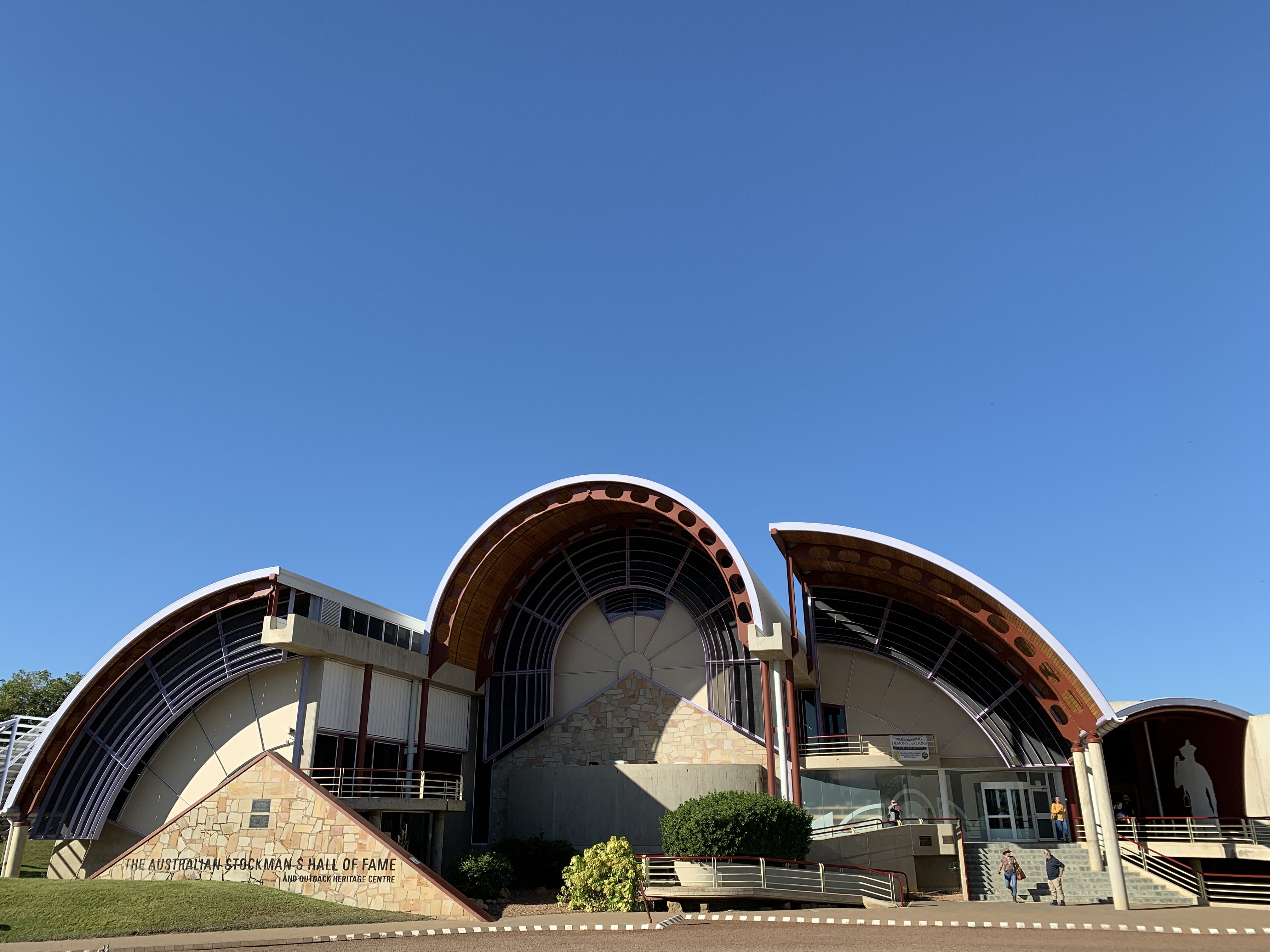
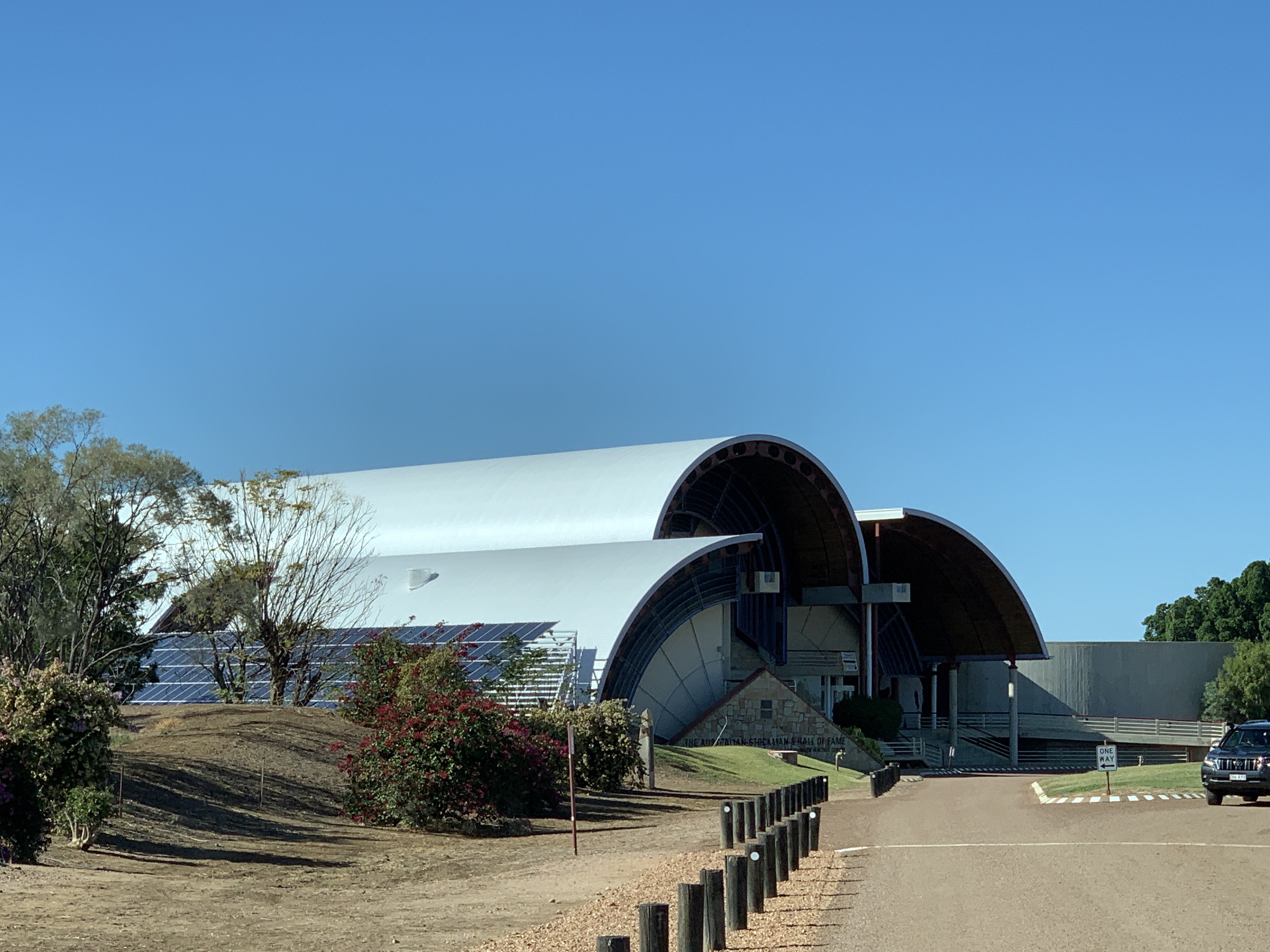
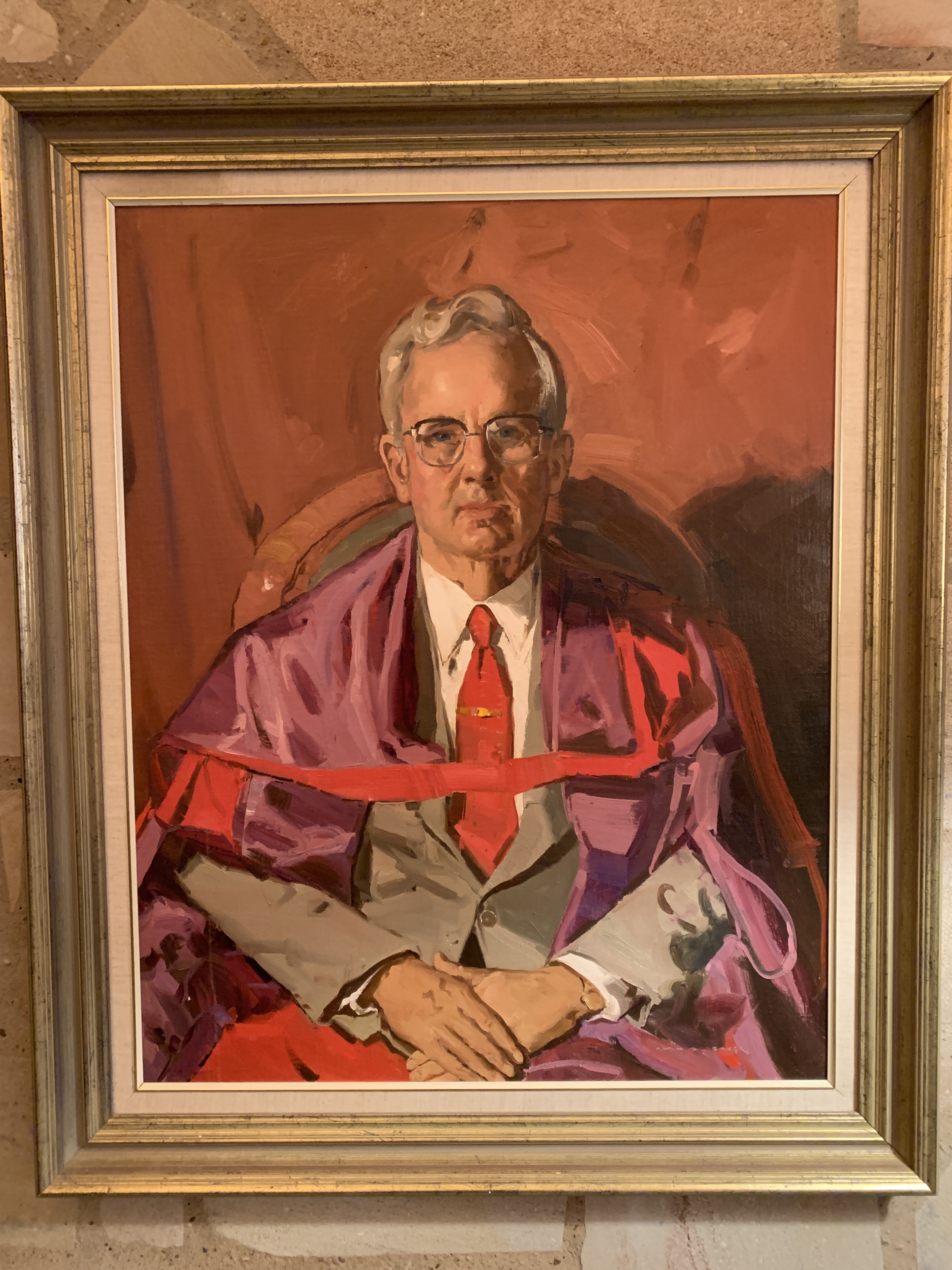
Luckily we had purchased tickets online before we left home for our Stockman’s Experience Tour at the Australian Stockman’s Hall of Fame & Outback Heritage Centre. When we arrived at 10.45am for our 11.00am tour people were leaving the building saying to us ‘hope you already have tickets, they are booked out’. Obviously they’d chanced rocking up and being able to get in. The car park was nearly full when we arrived however we were able to find a spot to park next to some other motorhomes. We were quite excited to be visiting one of Australia’s best known attractions.
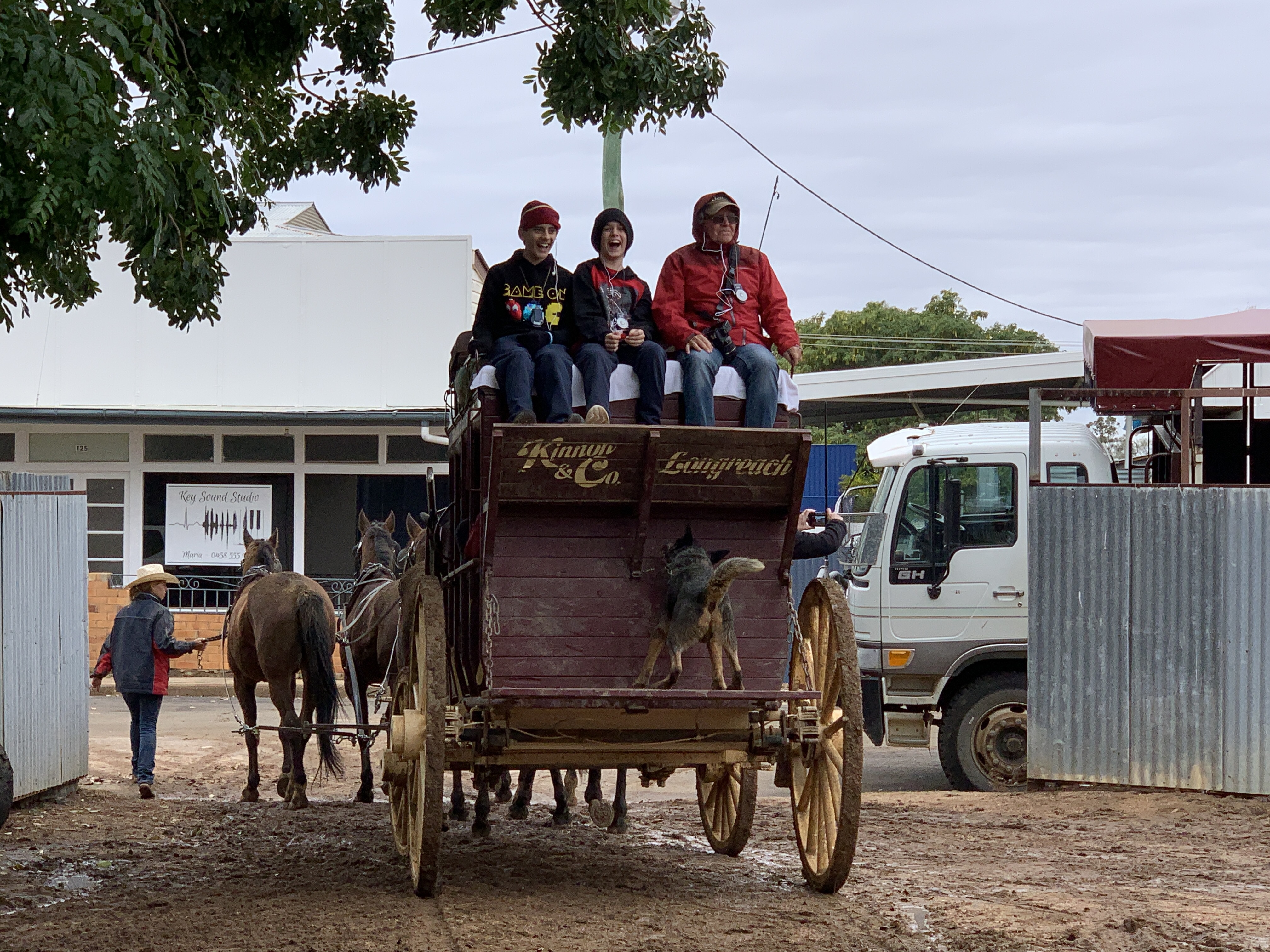
The iconic building is one that most Australians and many overseas visitors will recognise. It was established in 1988 to celebrate and recognise the contribution that people in the bush have made to Australia. The world class museum attracts over 1,000,000 visitors every year to learn, see and listen to stories of the many tales of outback history.
The whole centre was refurbished in 2020 and the centre today is an outstanding interactive museum.
Our Stockman’s Experience Tour began with a movie in the Cinema. The movie was called The Stockman’s Tale and told the story of the development of a livestock industry in Australia and the importance of the stockman in that story.
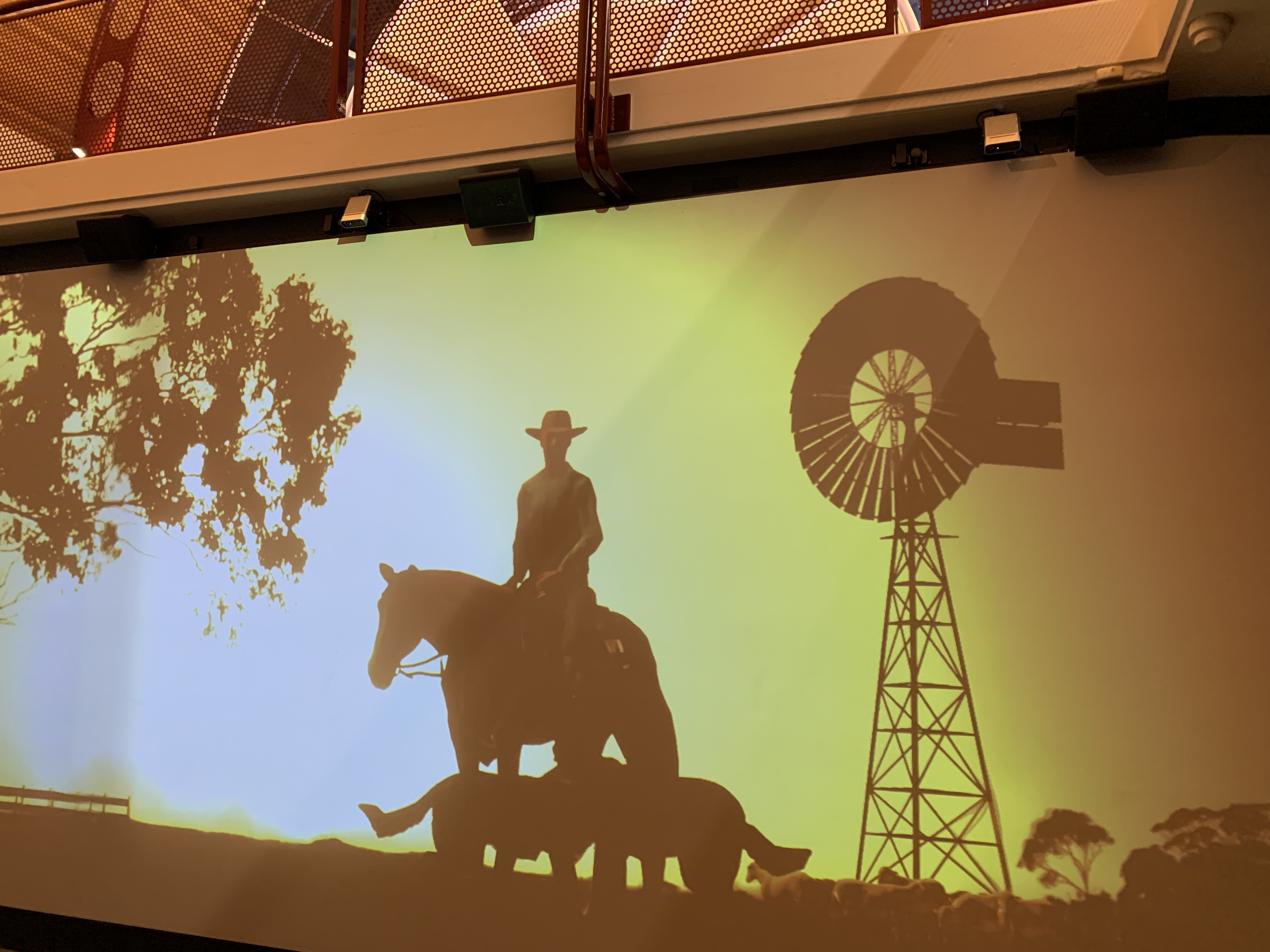
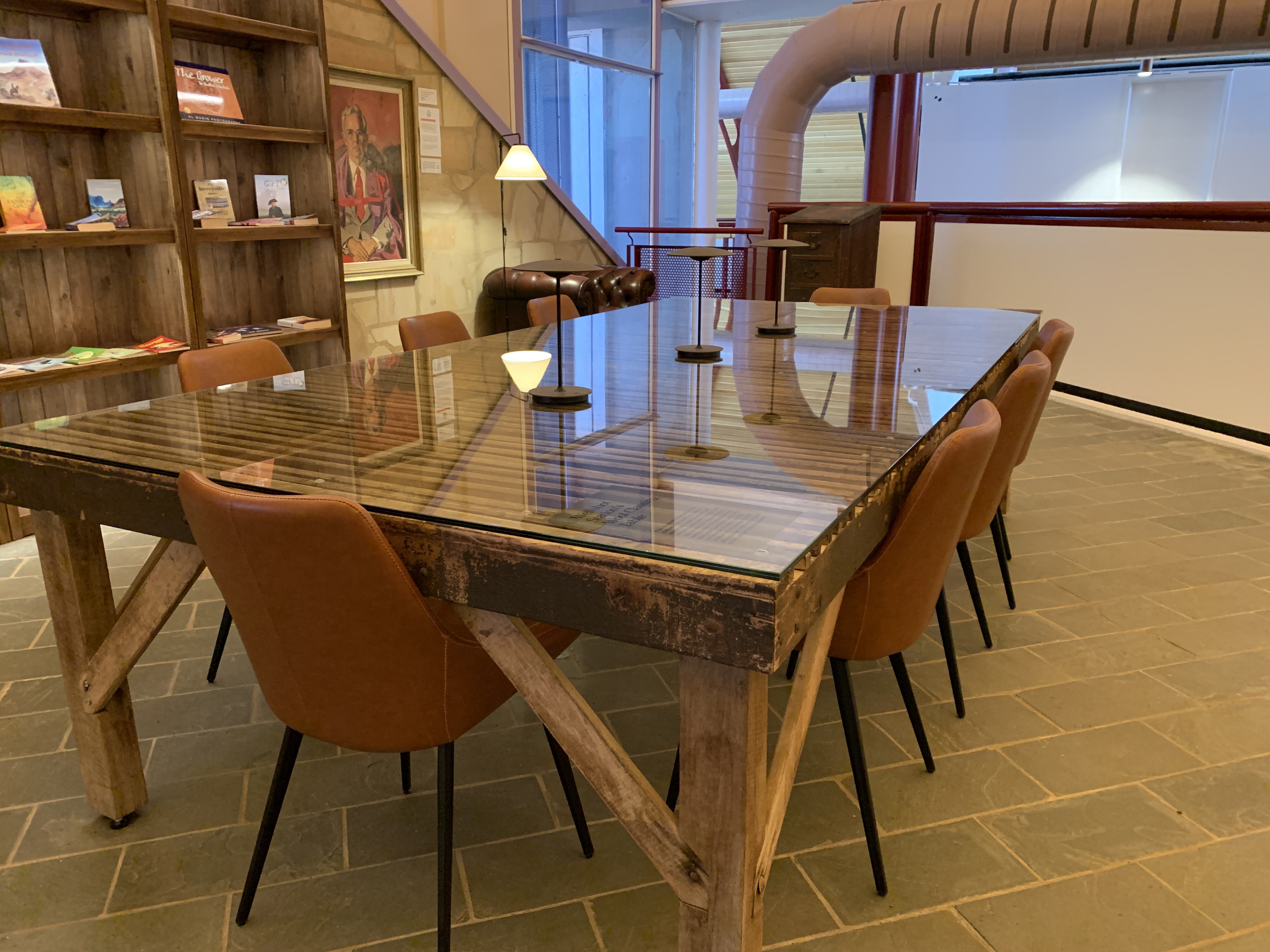
Following the movie we moved back into the foyer area where we each received an iPod on a lanyard and a set of headphones. These were needed for the next part of the tour. We entered the main exhibit area of the museum and as you walk along and stand close to an exhibit your iPod immediately begins to tell the story of that exhibit. You can immerse yourself listening to further tales by pressing on the different icons on the iPod. As you move from exhibit to exhibit the iPod recognises where you are and begins to play the appropriate story.
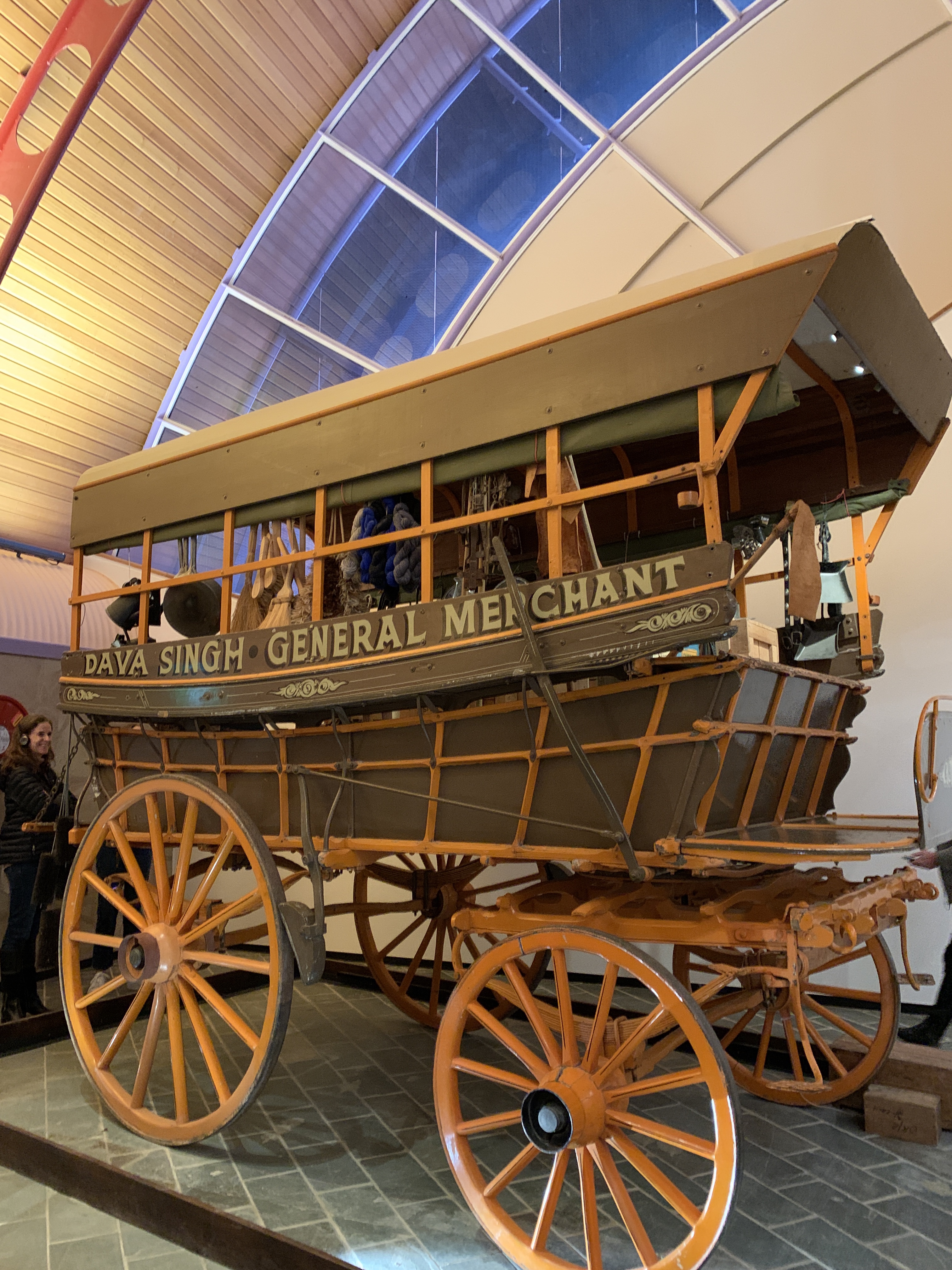
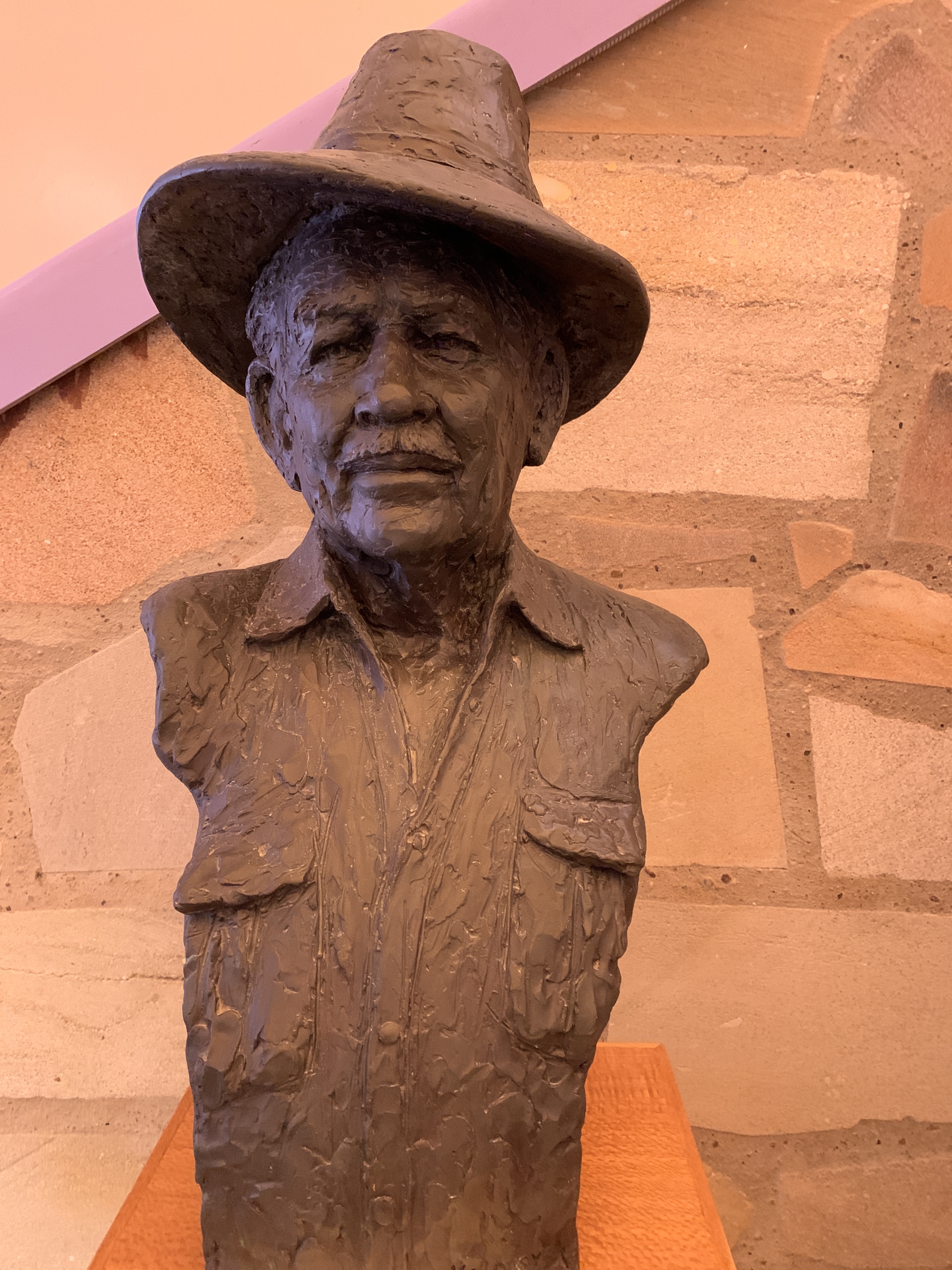
I listened to many tales from Mary Durack, RM Williams, some Aboriginal drovers and stockmen, even an Aboriginal woman that became a Head Stockman. The tales are short and relate to the area of the museum you are in. I loved the tales of the ‘Afghan’ tinkers who used to ply their wares all across the outback pulling their large cart with camels. There is a fine example of a tinkers cart inside the museum.
There are exhibits on the rise and fall of the wool industry and a large wool wagon that would have been pulled by a large team of horses or bullocks or camels is on display. There are tales from shearers and of course, there is the tale of Jackie Howe, the gun shearer who is claimed to have invented the singlet.
There is a large display devoted to the Royal Flying Doctor Service and a original Beechcraft Queen Air plane hangs from the ceiling above.
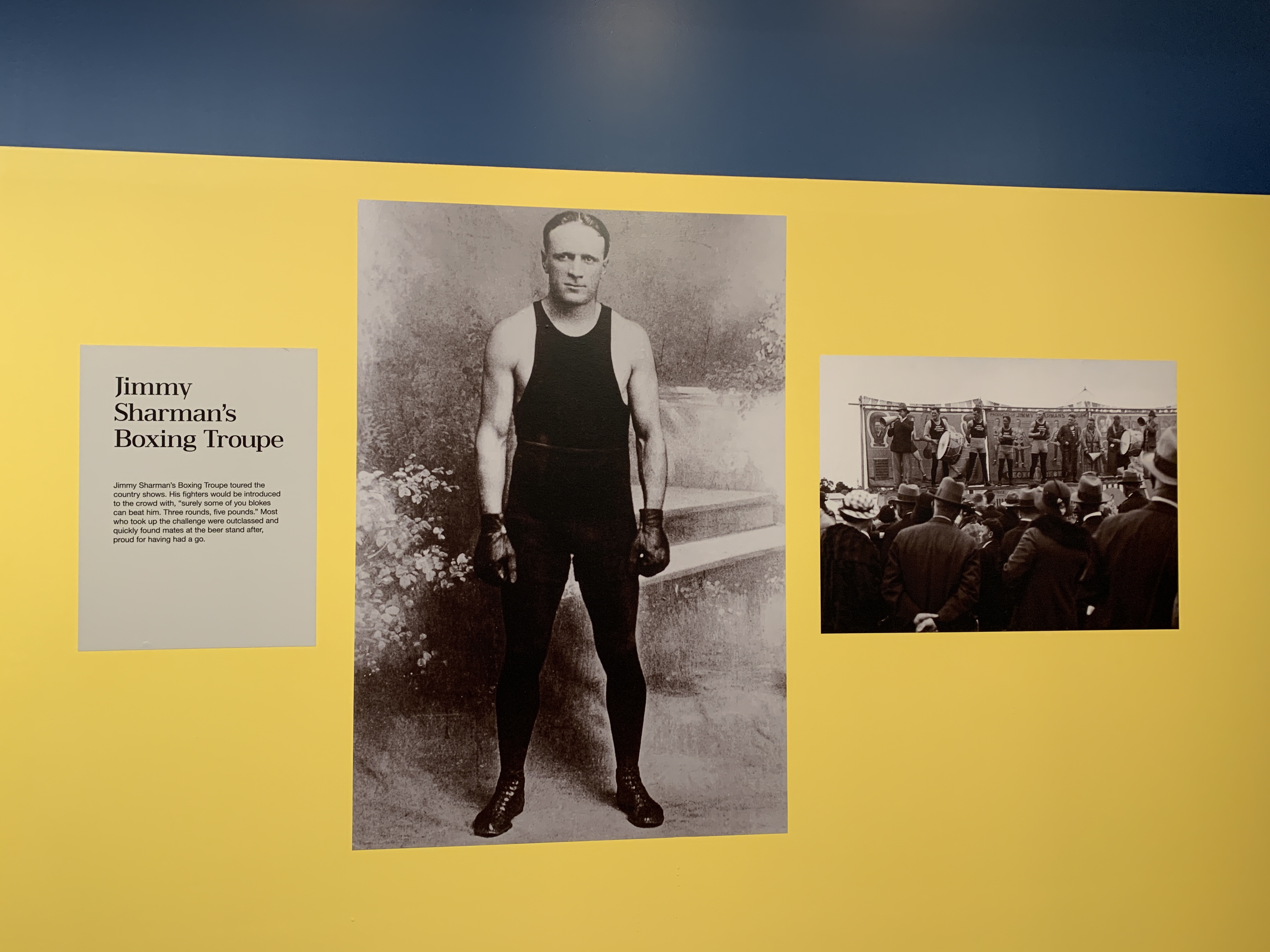
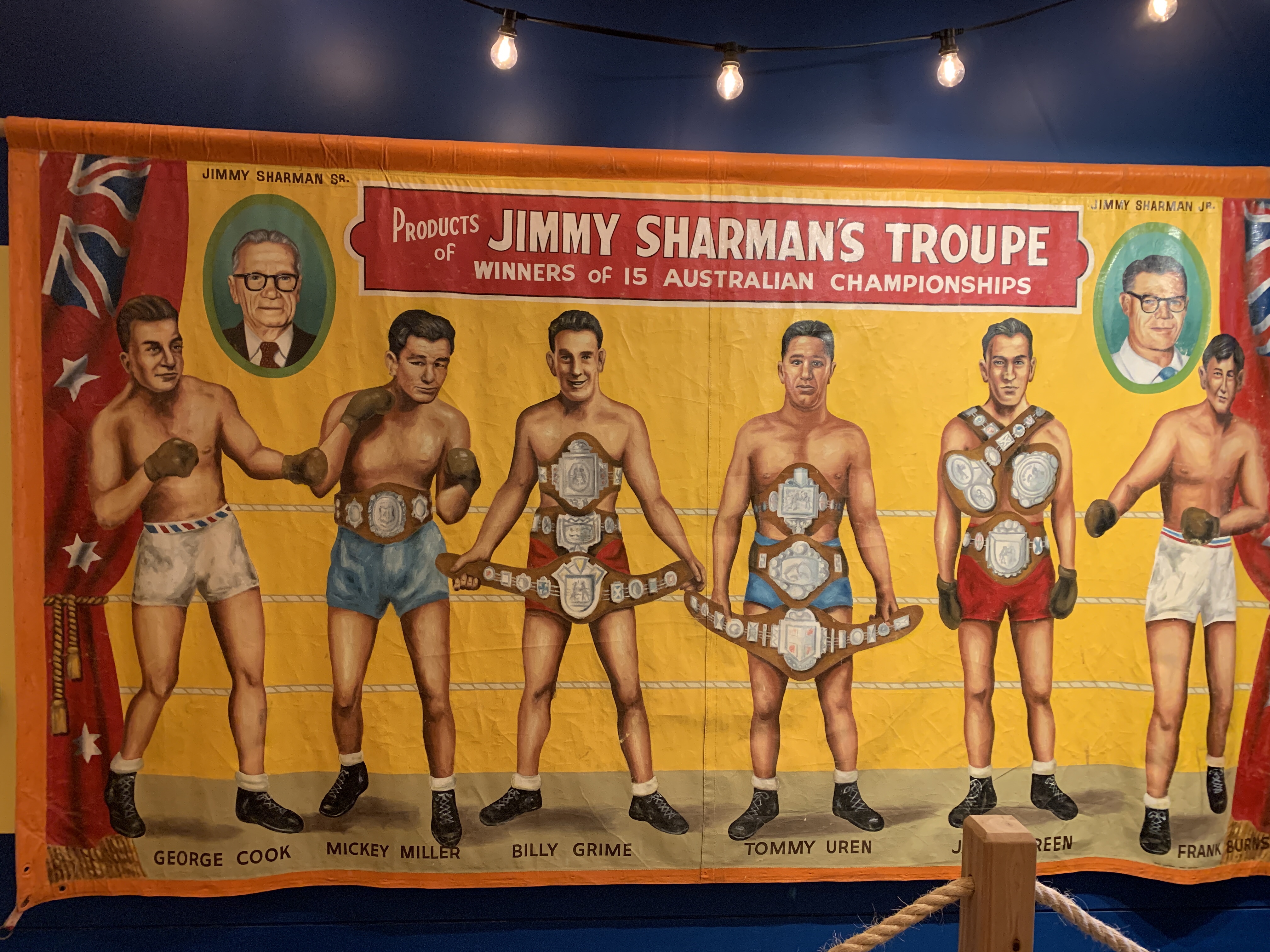
A display on the second floor is all about the traveling showmen and famous boxing tents. Many of Australia’s most famous boxers talents were uncovered in those traveling tents. Lionel Rose is one I remember.
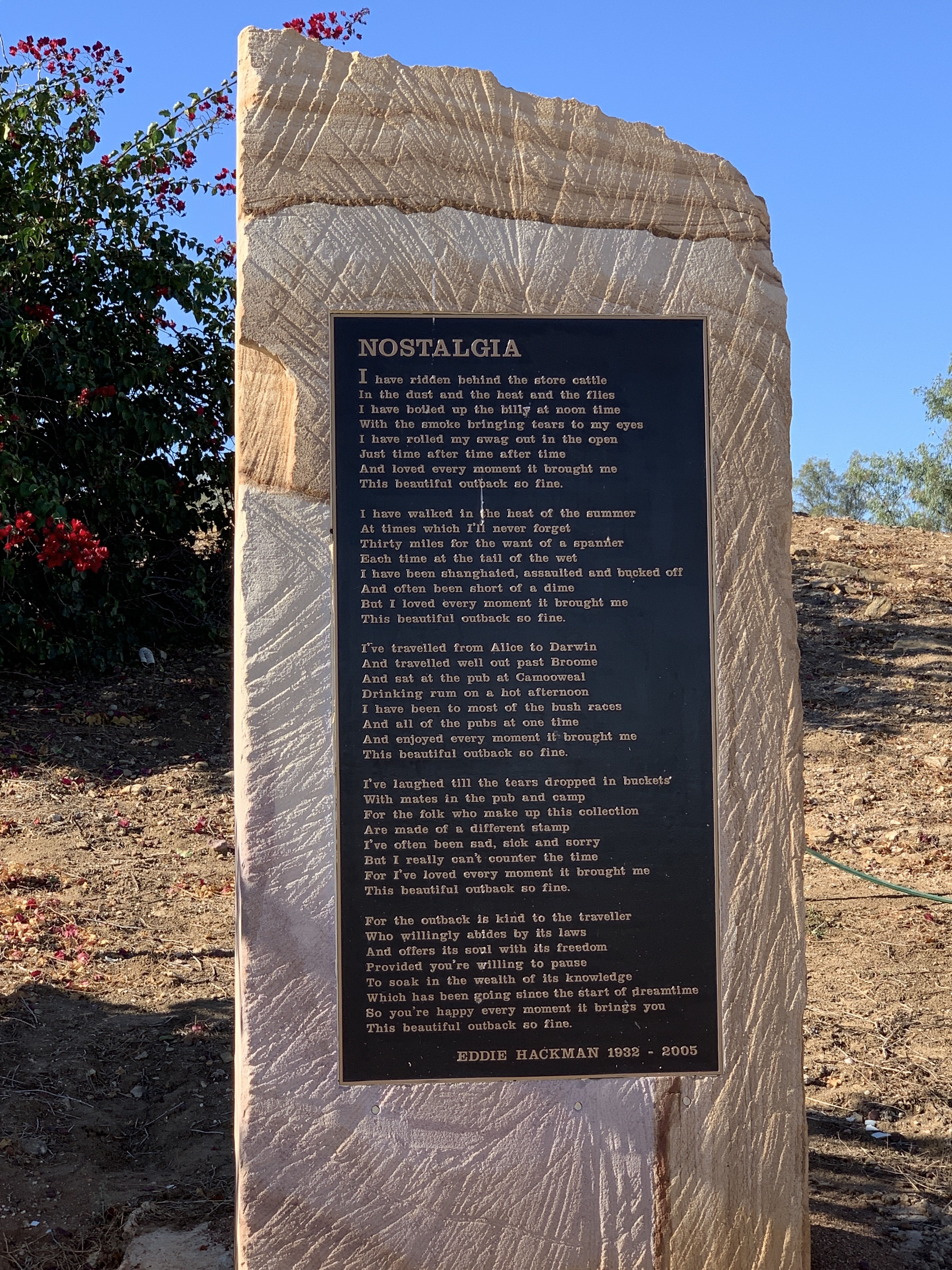
Another display upstairs is dedicated to bush poets and here you can spend time listening to some of the most famous ones.
At the exit you hand in your iPod and headphones and are given an ear tag to be used as your ticket to the live show before making your way out into the cafe. We stopped in here for a ham & cheese toastie and a coffee before making our way outside to the Billabong. The Billabong is a recreation of a billabong and is the meeting place for those waiting to attend the live stockman show in the covered arena.
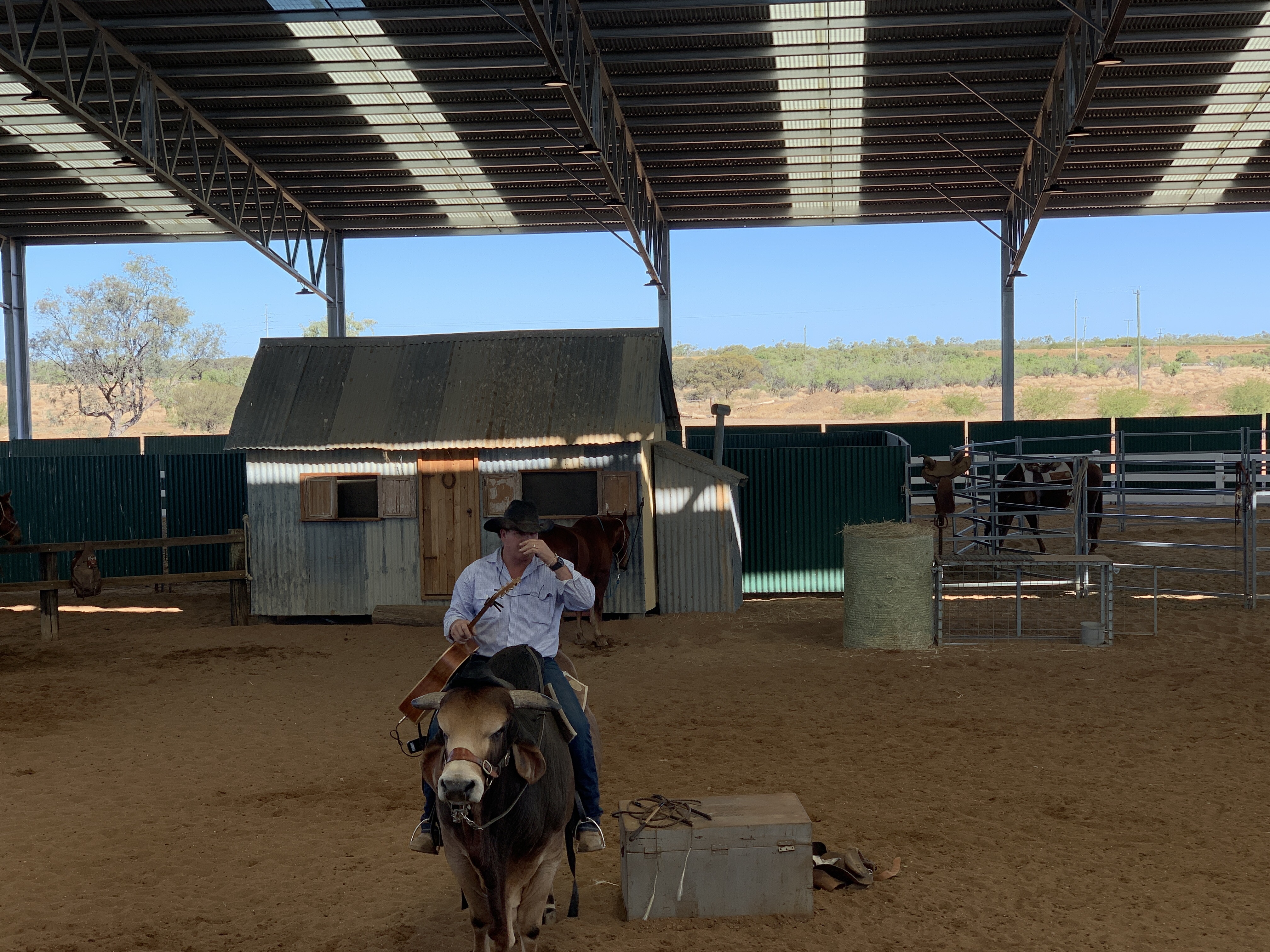
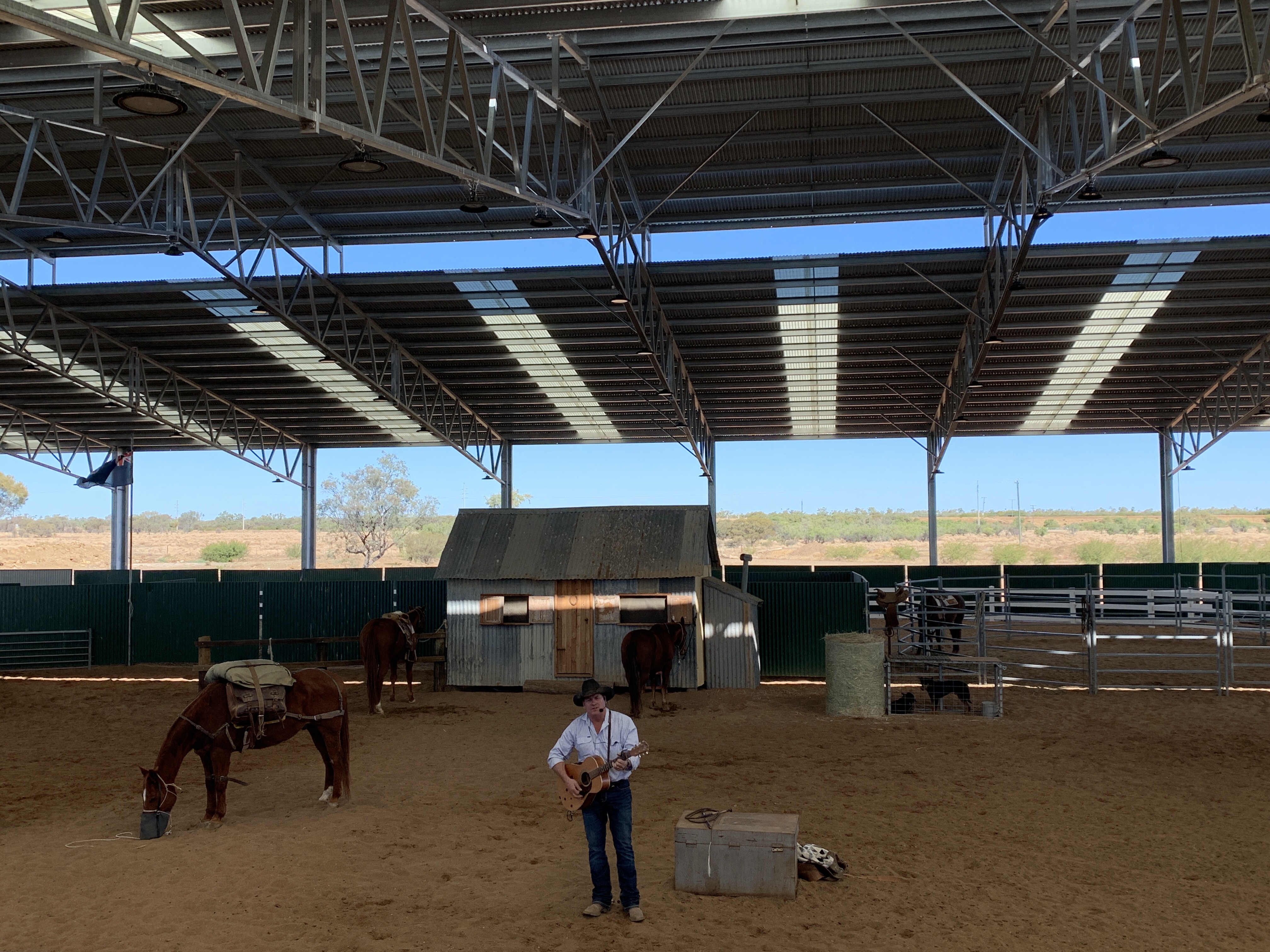
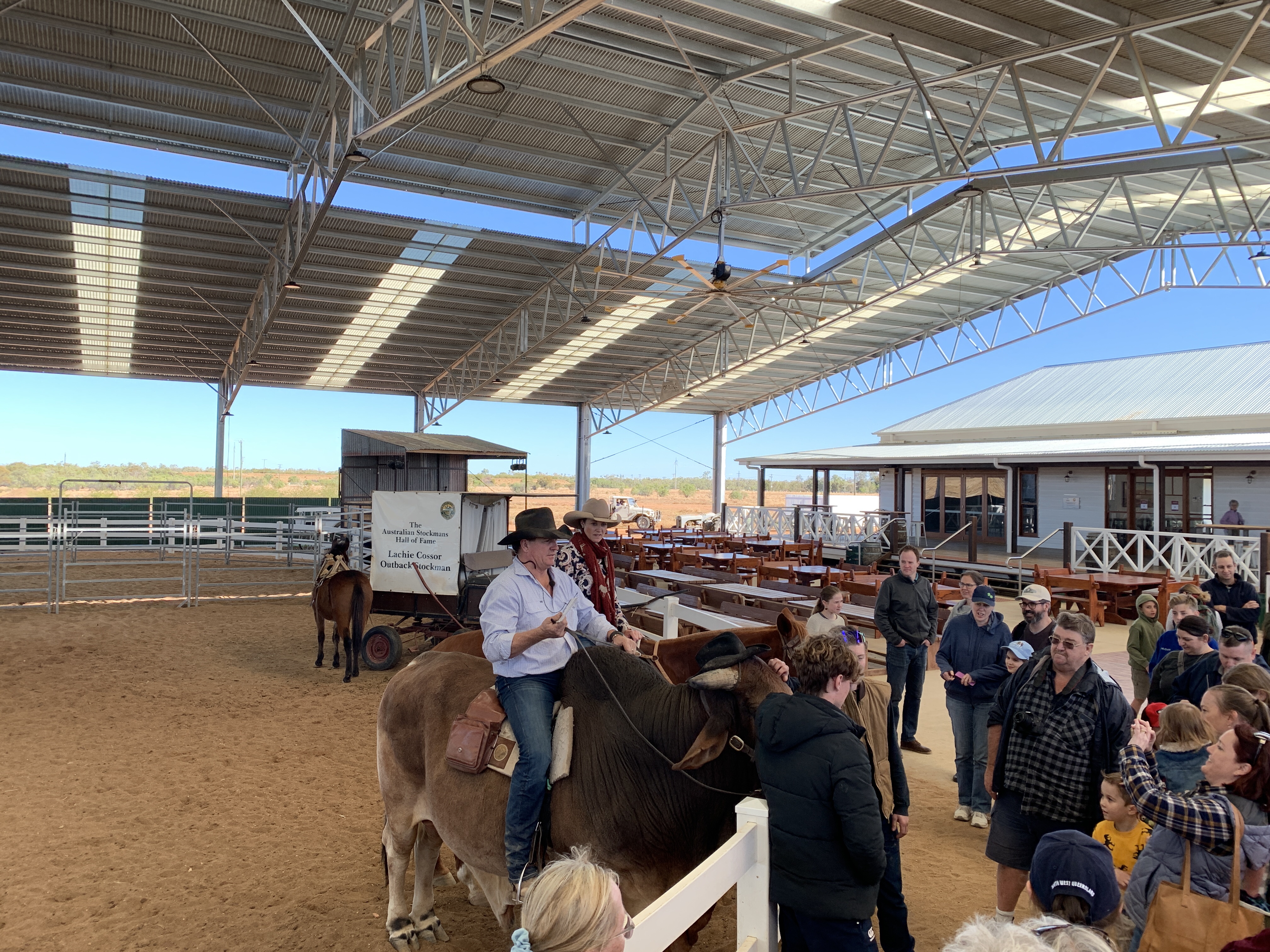
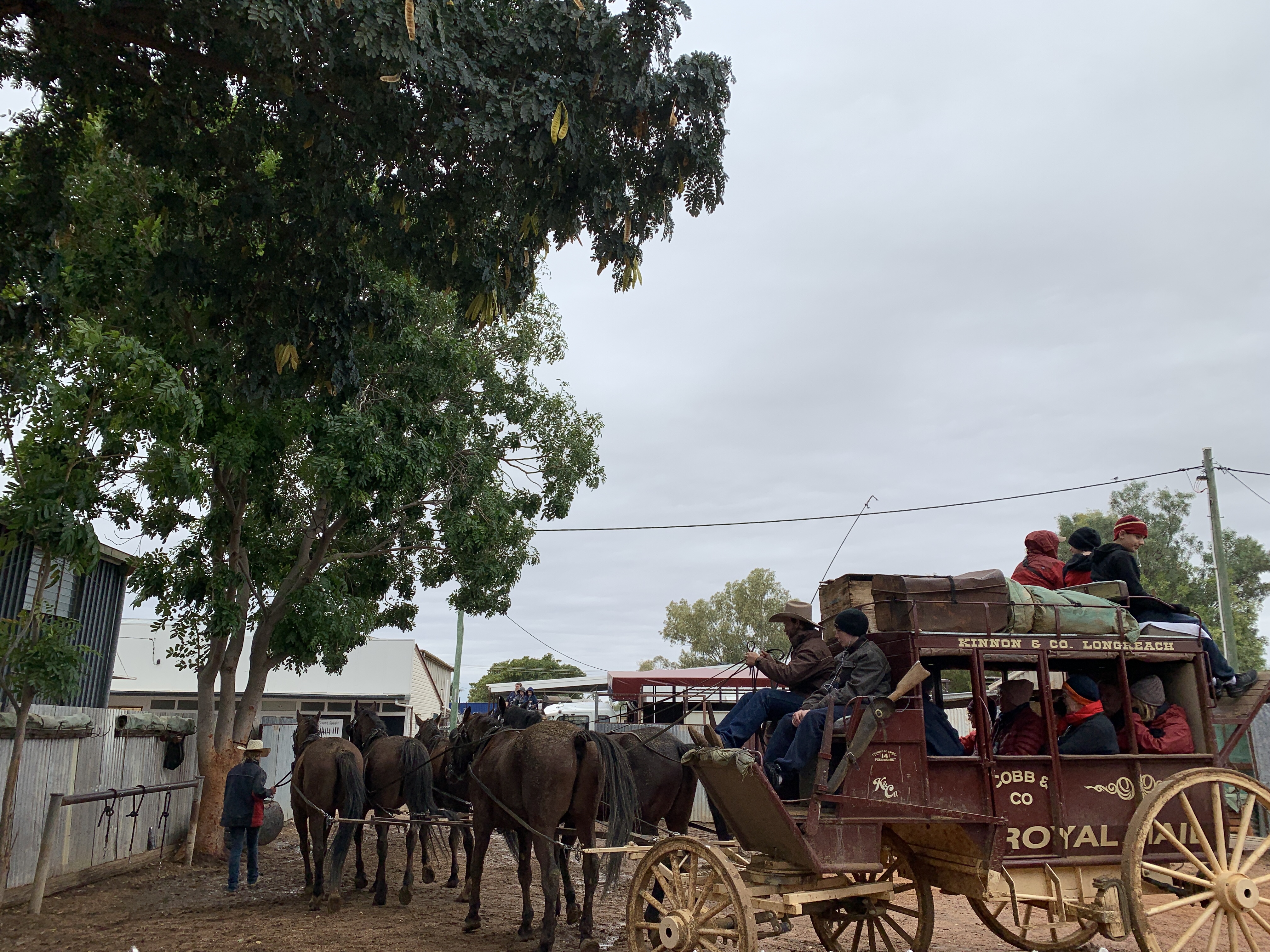
Our entry ticket to the live show was the ear tag given to us earlier. The large crowd entered the covered arena and filed in an orderly fashion to sit on the grandstand. The show was a fabulous display of horsemanship and stockman’s skills by Lachie Cossor ably assisted by his lovely wife and a variety of horses, dogs, sheep, a mule and even a Brahman bull. Lachie and his animals really put on a fabulous show including some of Lachie’s original songs that he sings accompanied by his guitar.
When Lachie is not doing this show at Longreach, he and his family take it all over Australia so if you get a chance to see it I would recommend you go. It was a great show. At one point his horse was being ‘naughty’ and kept lying down on the job. There was a small child sitting not far from us and each time the horse did something ‘naughty’ this child would get the giggles. It made everyone around him get the giggles too.
The show went for an hour and a half and we were captivated throughout. It was an enthusiastic crowd that gave applause at the end of the show. Lachie and his wife lined up near the fence, he riding the Brahman bull and she on her Australian Stockhorse, so that people could give them a pat on the way out. We just had to buy one of Lachie’s CD’s to listen to later.
By the time we got back to the motorhome it was 3.30pm and time to find a camp for the night seeing as the caravan parks are booked out. We drove out to the Thomson River to see if the Apex Riverside Park had dried out enough for us but we thought it looked too muddy still and was not worth the risk of getting bogged. Maybe another sunny day would help. So back to town and we got a park in one of the dedicated caravan parking spots next to the Rotary Park and set up there. While I blogged Rich went for a walk up the town and came back all excited that he’d made a reservation at a ‘fancy’ restaurant for dinner. ‘Oh no….not Chinese’ I thought. He wouldn’t tell me anymore so I, and you, will have to wait and see.
2021/06 – Big Red Bash & Beyond














More Longreach
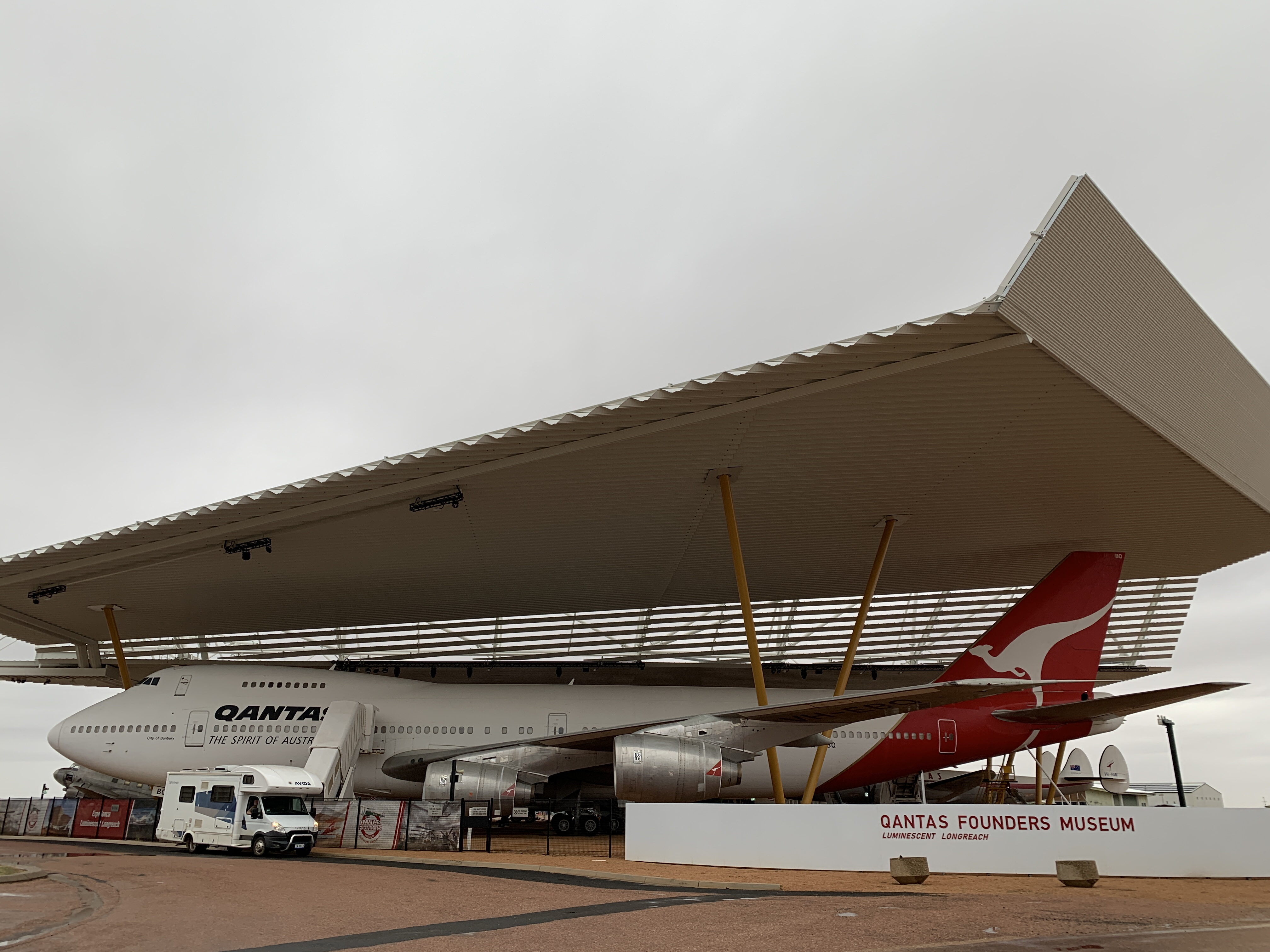
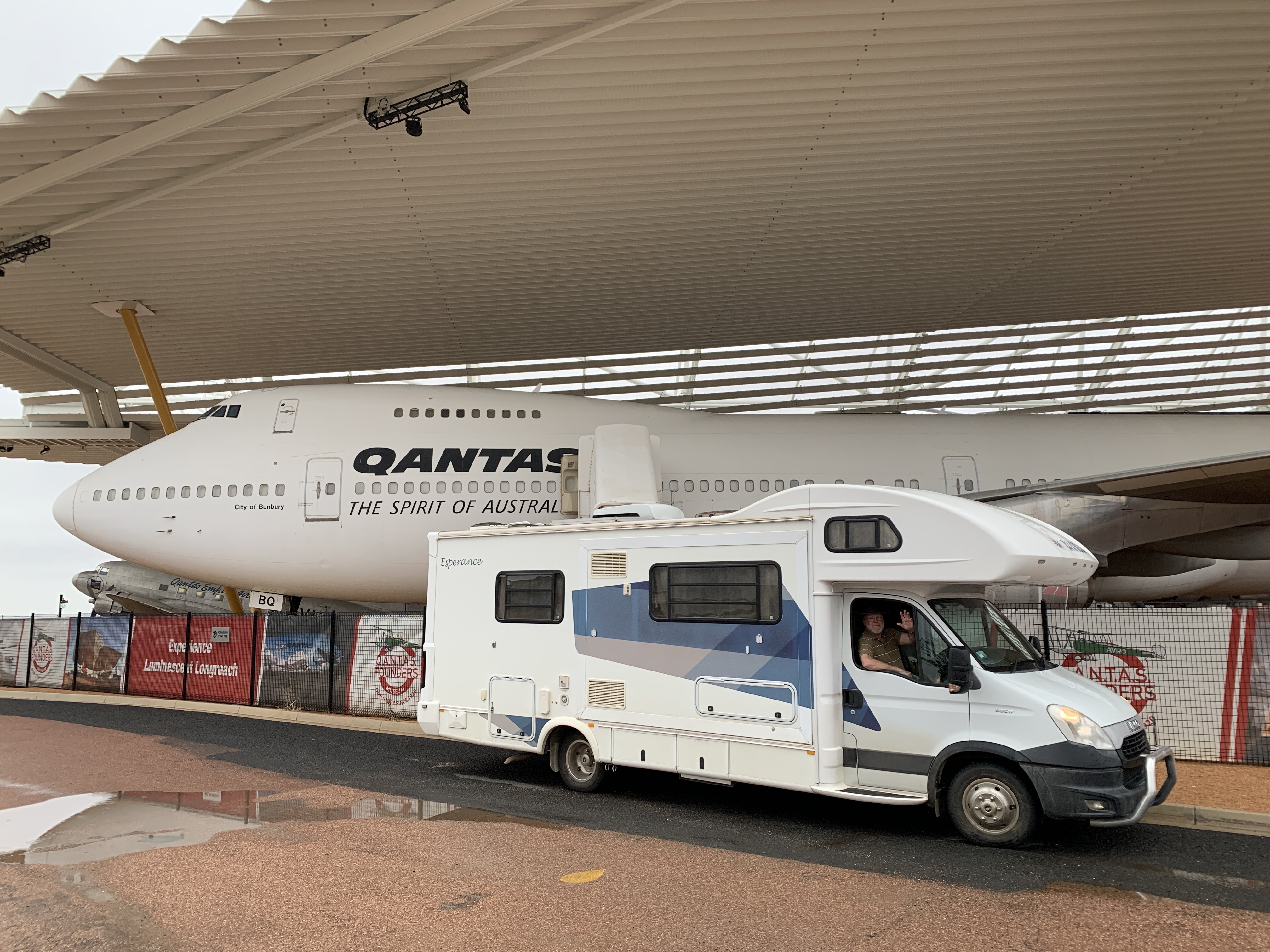
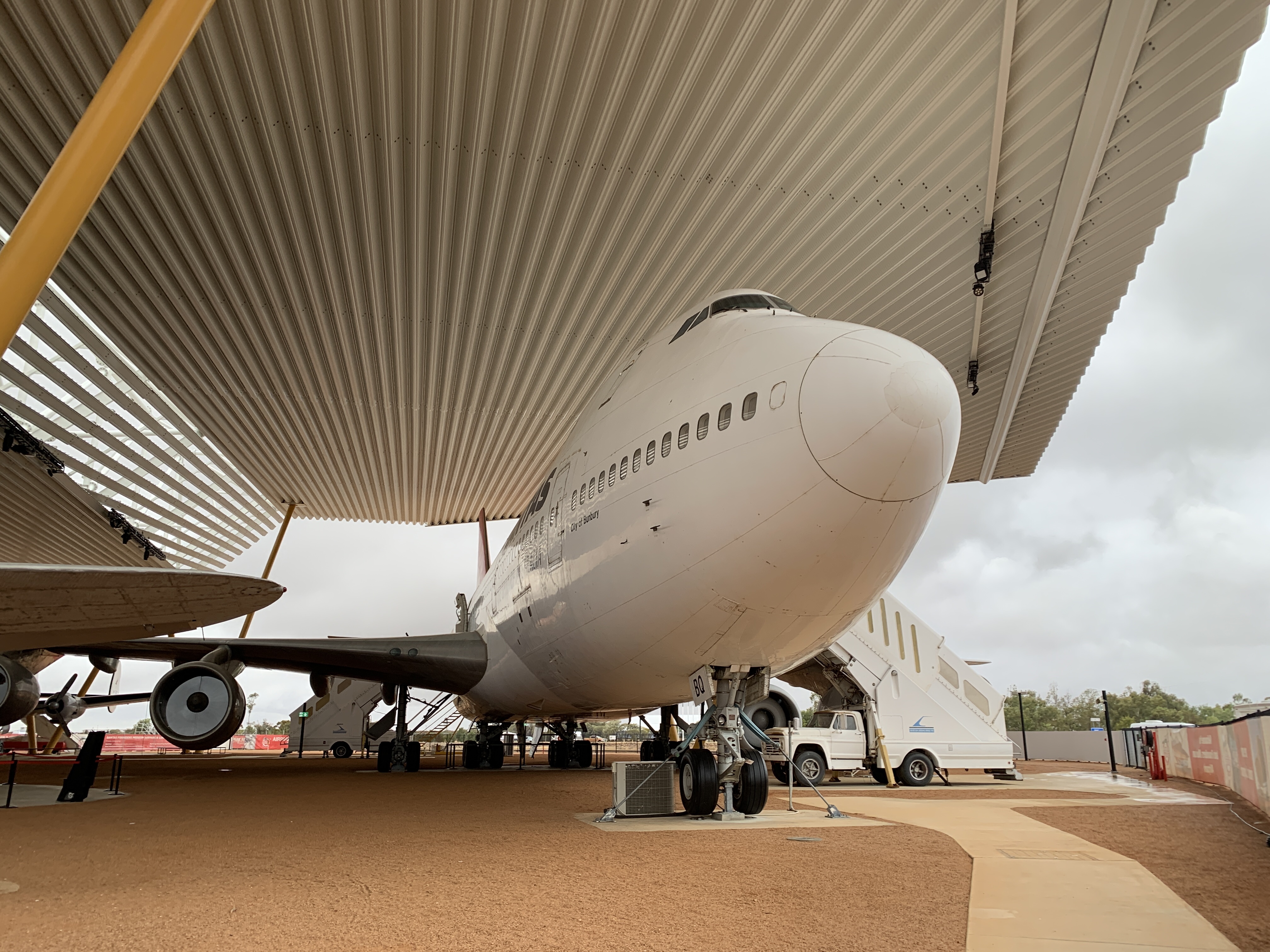
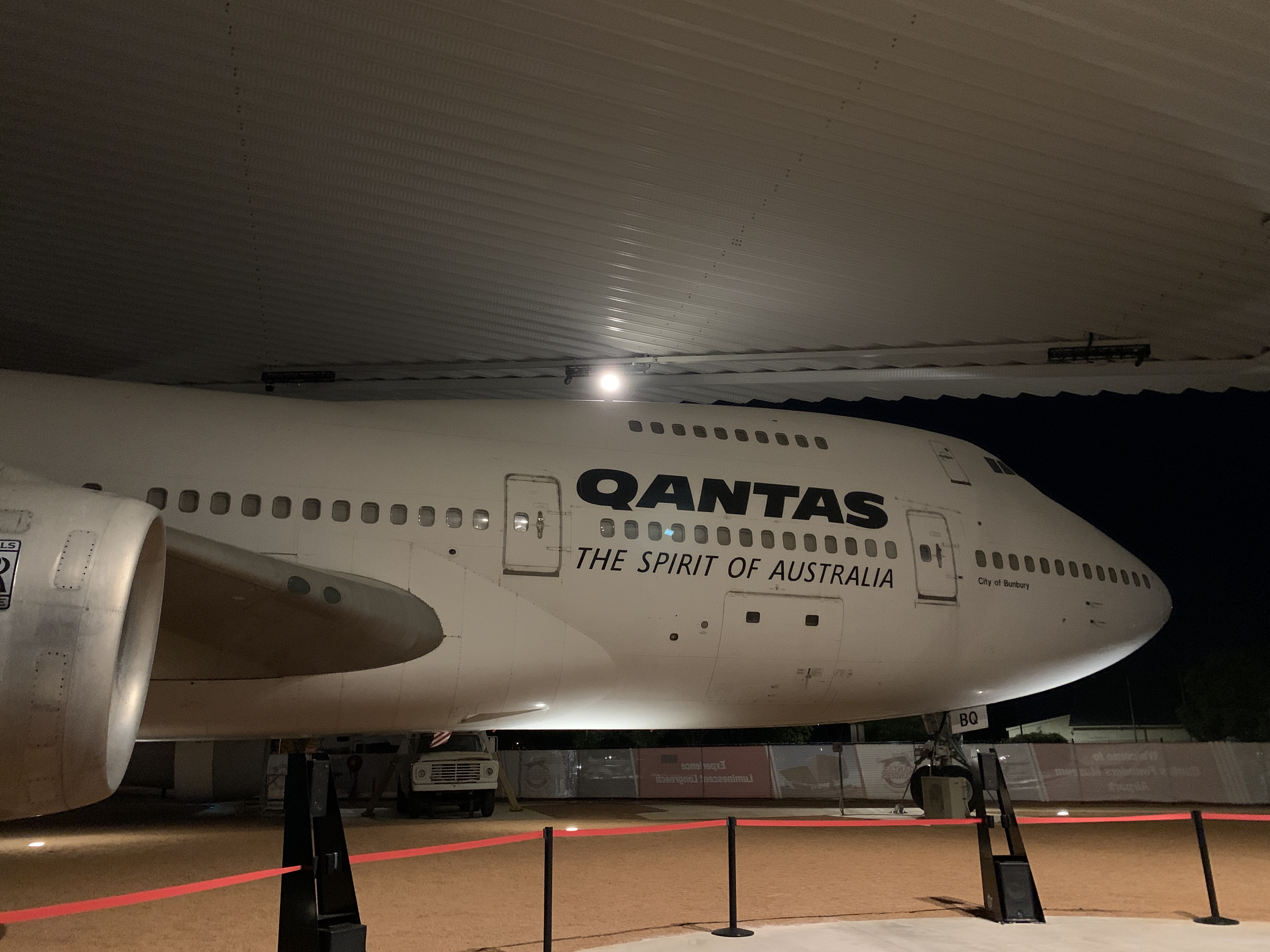
Stealth camping in Longreach. That will be something to remember! We were not disturbed at a our spot in the carpark at the Qantas Founders Museum. How small does our motorhome look next to the Boeing 747?
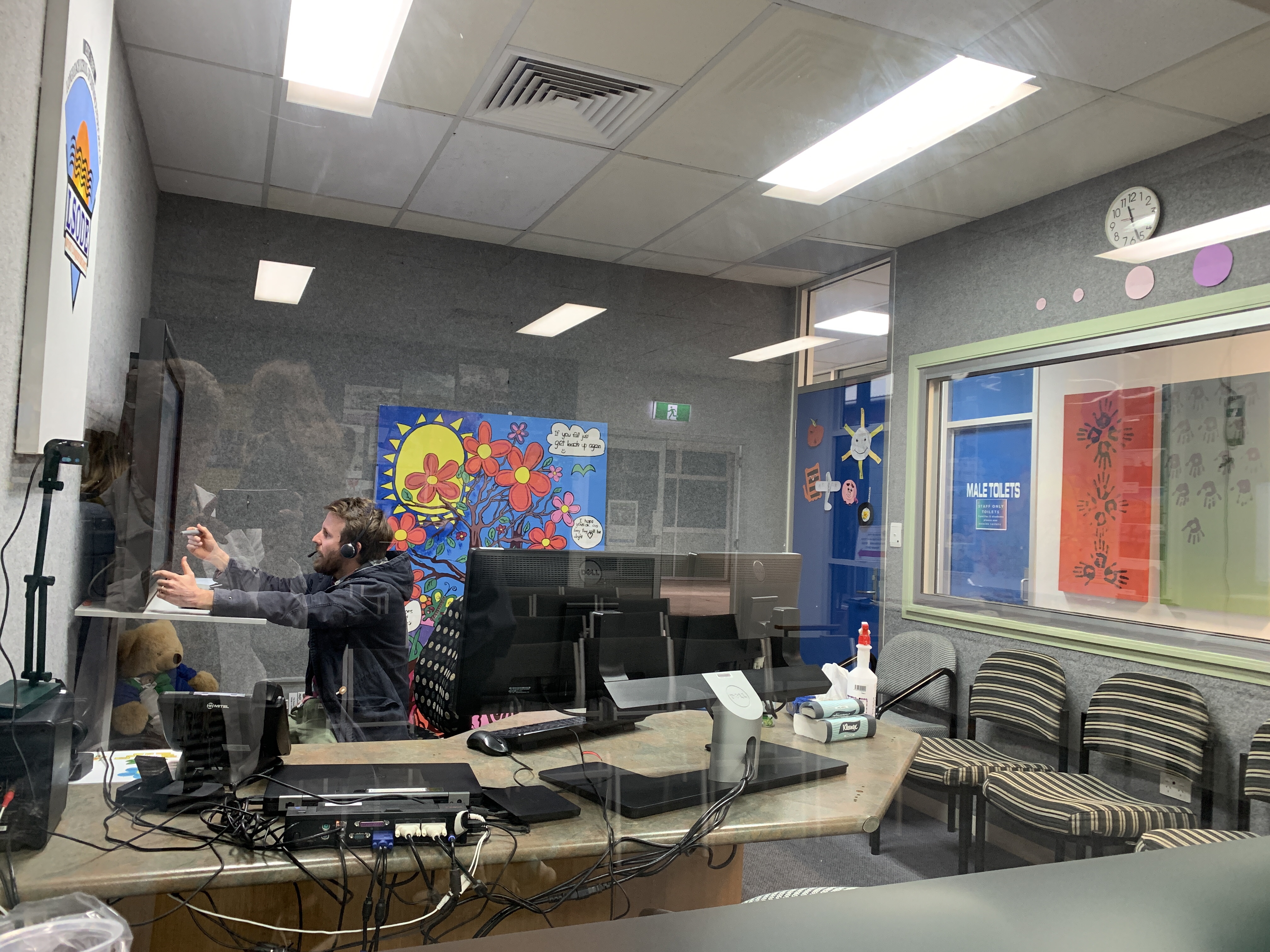
We spent the morning checking out the Main Street until it was time to do our tour at the Longreach School of Distance Education (LSODE). Our tour was to commence at 10.30am. We were quite surprised by the number of people that were there for the tour. There are so many tourists in Longreach at the moment.
What a tour! I loved this place. We were shown a short video of how the school works and how it all started using radio. With the advances in technology the school now uses the internet and video conferencing for classes. Each class has there own teacher but sometimes the children may do lessons with a different teacher for a special skill such as maths or music. Yes they even have music lessons and dance and PE. I was amazed to learn that the school puts on an bi-annual musical production and it involves every child in the school. Due to the long distances the students are from each other they only get about 6 practices together before they come together for the final production. The standard is very high.
The video interviewed children and teachers and the children obviously love their school. On a regular basis the school holds Cluster Meetings. This is an opportunity for the students and their home tutor, sometimes a paid governess or govie but usually the mother, to get together with the teachers in a central location. This getting together face to face helps the children with socialisation and making friends and it also helps the home tutors network and discuss common issues.
We were taken on a guided tour of the well resourced school with its classrooms, conference rooms, teacher spaces and studios where the teachers conduct the online classes, and the fabulous library that not only has books but also toys and games, videos and learning support materials.
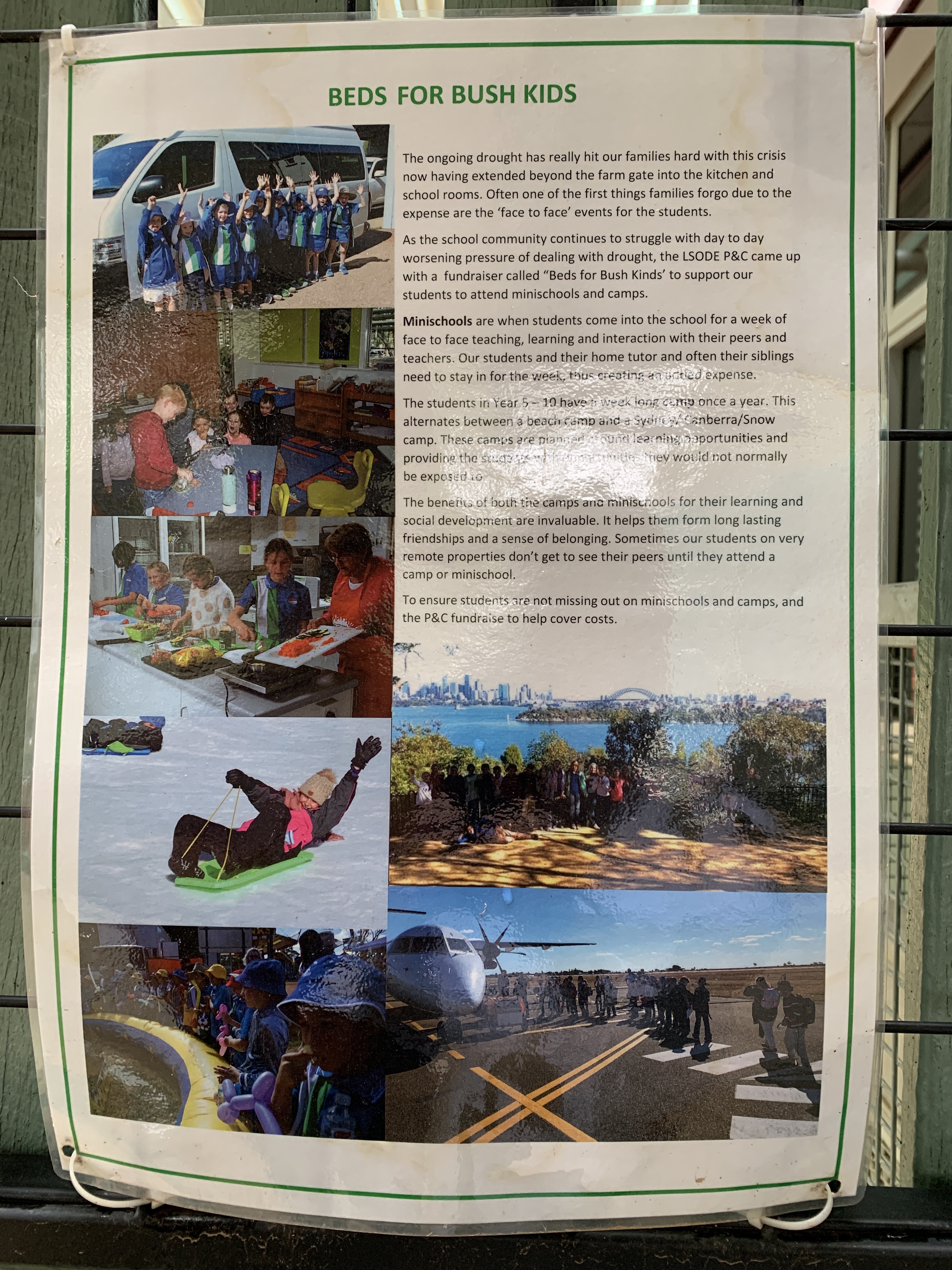
At the rear of the site is a group of buildings called The Quarters. This is where the students and their home tutor or parents could come to the school for Mini School sessions and had overnight accomodation for them with a kitchen and living space. This facility is much loved by the school community and sadly it has been shut down by some bureaucrat in the Depart of Education. Apparently the excuse is that the building has asbestos. The building is in good condition and does not need any modification so I fail to understand how having asbestos can affect the use of the building. There are probably millions of buildings that have asbestos and as long as the asbestos is not disturbed they are still perfectly OK to use. But not according to the education department AND they have no plans to replace the facility.
I was so angry when I heard this part of the tour. Does the department not realise how vital it is for these remote families to come together in an environment like this one? The P&C have commenced a fund raising drive to raise money to build a new facility however the department of education has come back and said they can raise the money but it can’t be built on department land. Are they kidding? This just does not seem at all right to us.
However we were very impressed with the school and the dedication to learning that the teachers and families showed. We thoroughly enjoyed our hour long visit and made a donation to the Beds for the Bush fundraiser to go towards a new accomodation centre.
In the grounds around the school are many sculptures. Each year the school holds a competition for the best sculpture. They are made by the kids with help from their parents. Some of them were fabulous.
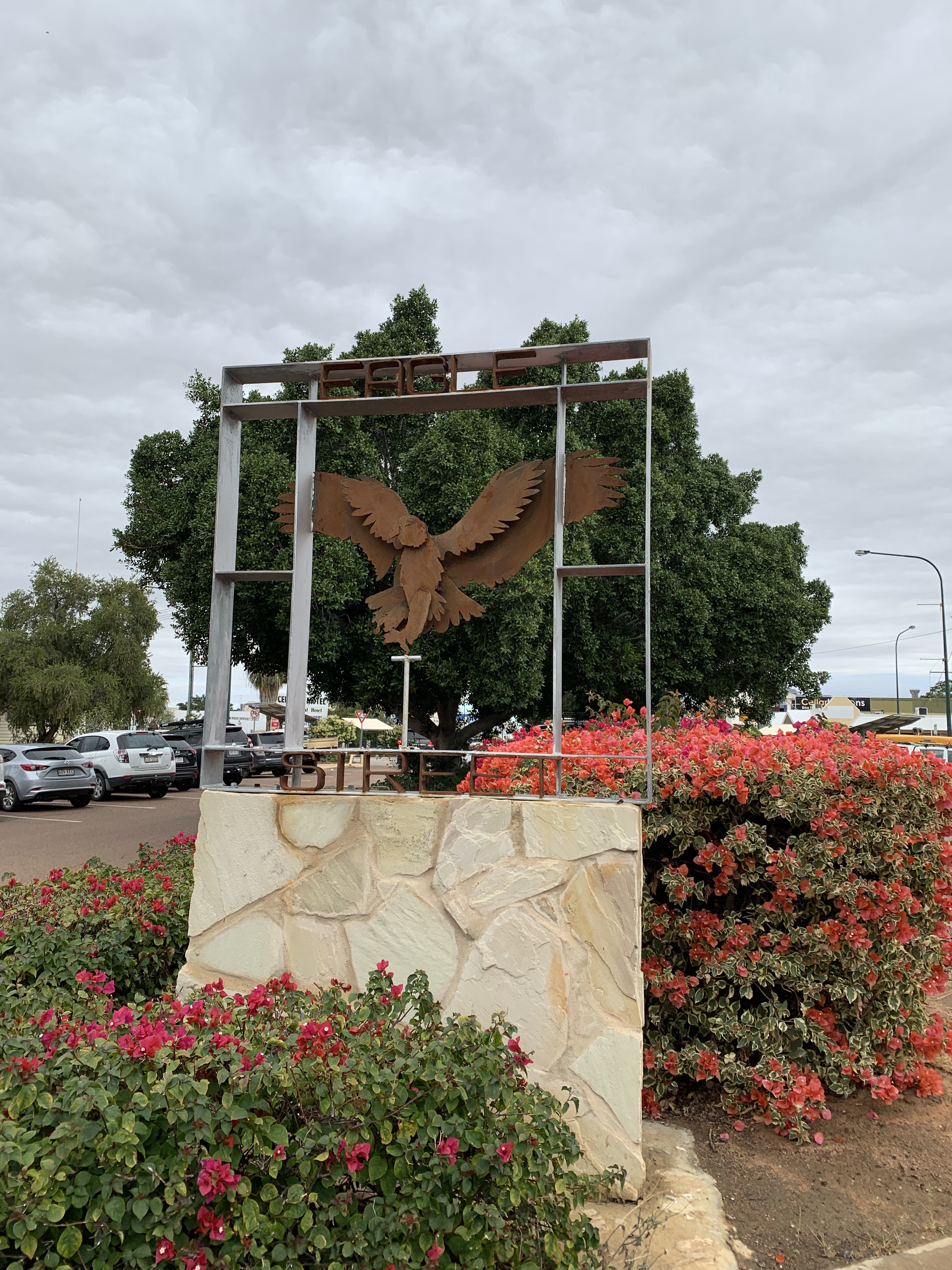
We went back into the main part of town and stocked up on some groceries, wine and went to the pub for lunch. Interesting fact about Longreach…the streets are all named after birds. The north/south ones are named after land birds and east/west streets are named after water birds.
In the afternoon we checked in at the Longreach Tourist Caravan Park and I spent the afternoon doing lots of washing and cooking. Richard got his MacBook out and was glad to have some internet again. We hadn’t had any service ever since we left Charleville.
The Tourist Caravan Park in Longreach is huge. There are some 306 van sites, some with ensuite, some drive-thru but all of them just on gravel. They also have some cabins.
After the rain there was a lot of mud but I was surprised how quickly it was drying out. We did think it odd that there was no drainage for sullage at all in most of the park and you are told to just let your grey water out on the ground. I understand this if it is grass or gardens but there it was just gravel. The newer section of the park has sullage points at each site and as a result was not as muddy as the rest of the park. It costs $40 for a medium size powered site. Our site was not too muddy. The park was booked out again and they are for weeks ahead. They are raking in the money this season!











Lara Wetlands
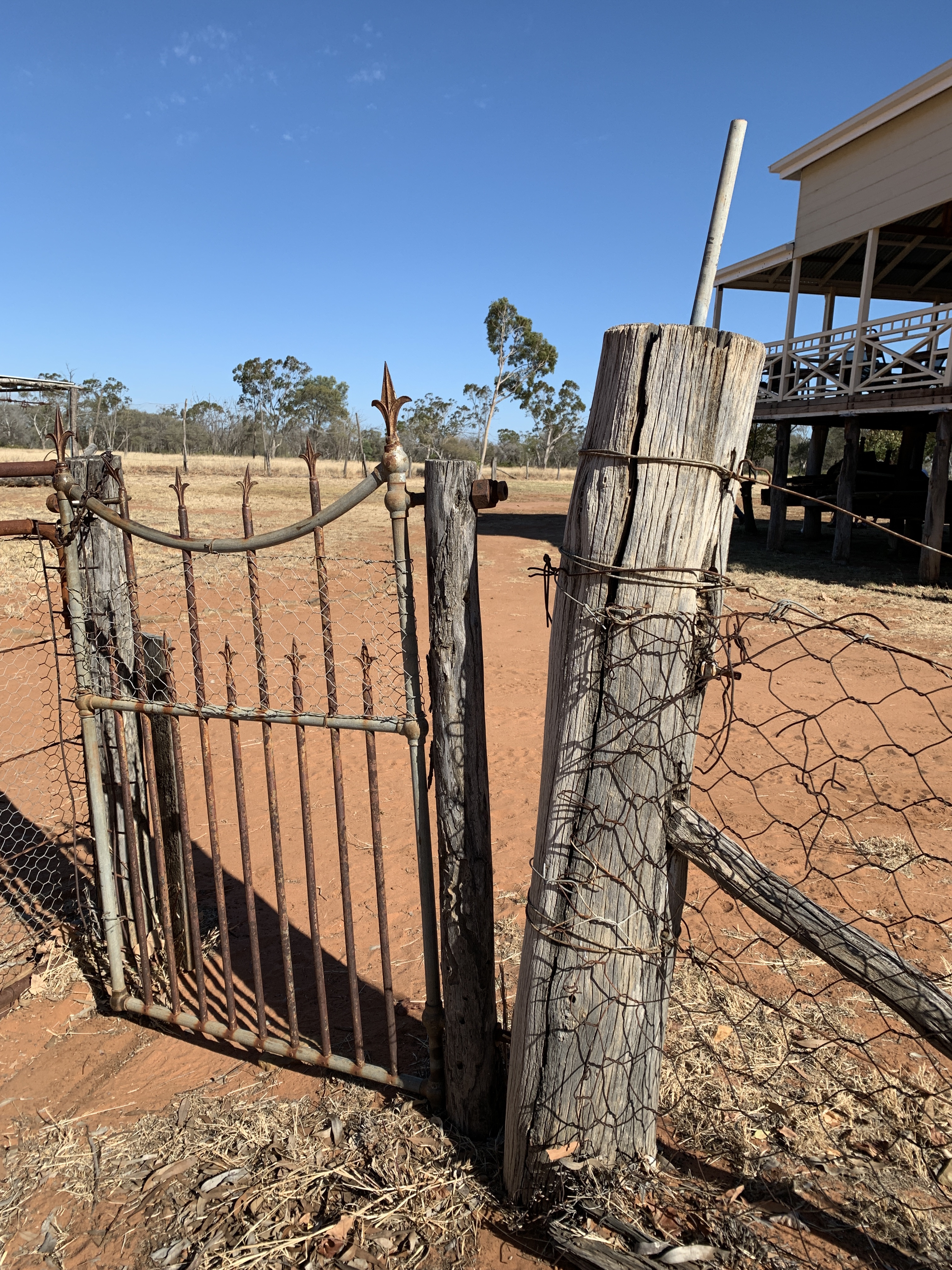
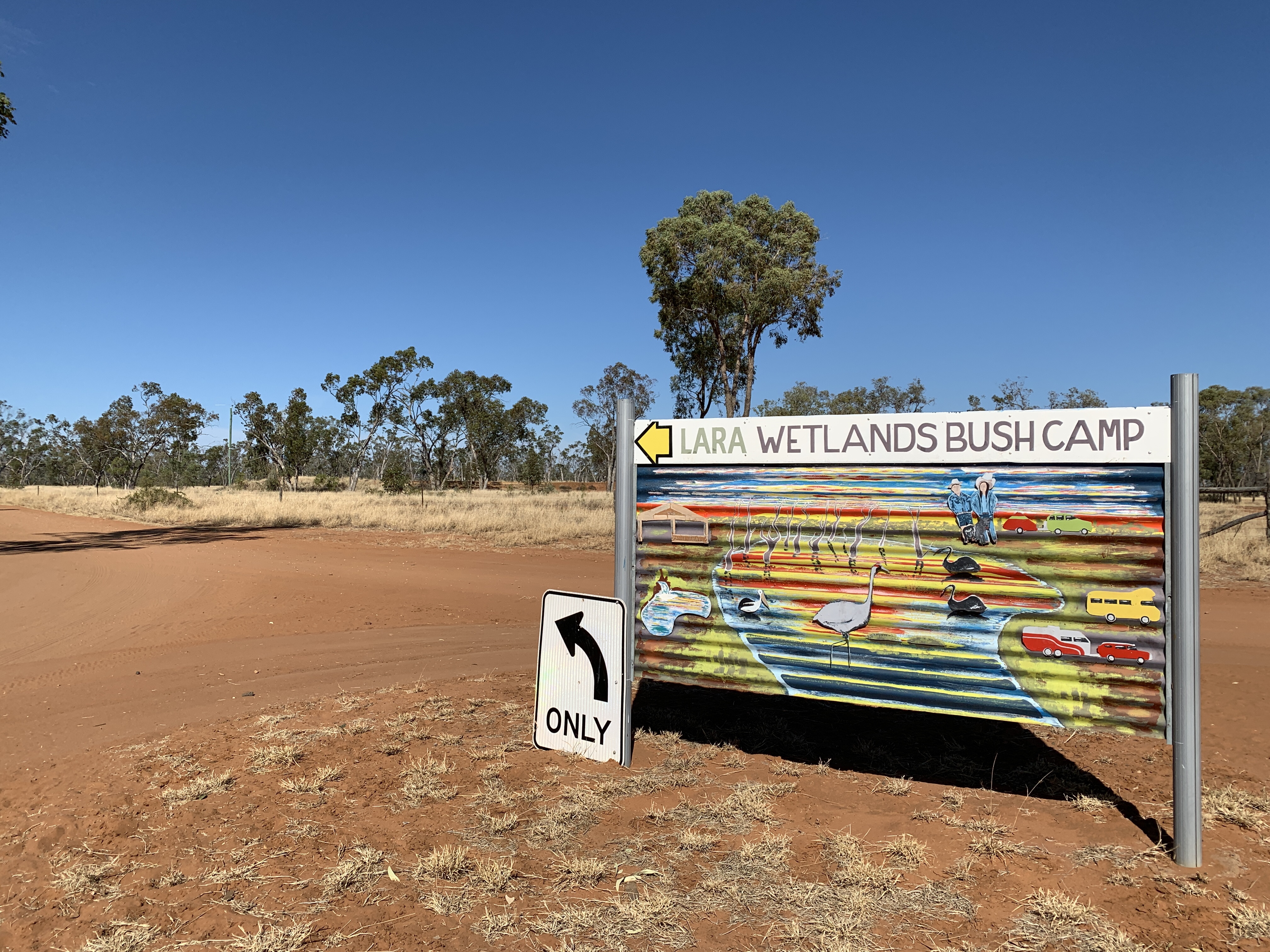
Lara Station is a 15,000 acre cattle property located 28km south of Barcaldine and 78km north of Blackall. We arrived at the turn to Lara off the Landsborough Highway coming from Blackall. The turn off is well signposted. You follow a well graded (a bit corrugated) road made of red sandy loam for 13km to arrive at the Wetlands Campground. What an oasis in the middle of this arid landscape.
On Mondays and Wednesdays you can do a tour of the Homestead and hear the story of Lara Station, how it was started and the setting up of the wetland camping area. Luckily we were there on Tuesday and Wednesday so we were able to book for the Wednesday tour. Everyone on the tour meets in front of the office and from there you can choose how you will get to the homestead. You can ride in the back of a trailer sitting on hay bales (which we did), be driven in a car or you can take the short walk through the Gidgee scrub.
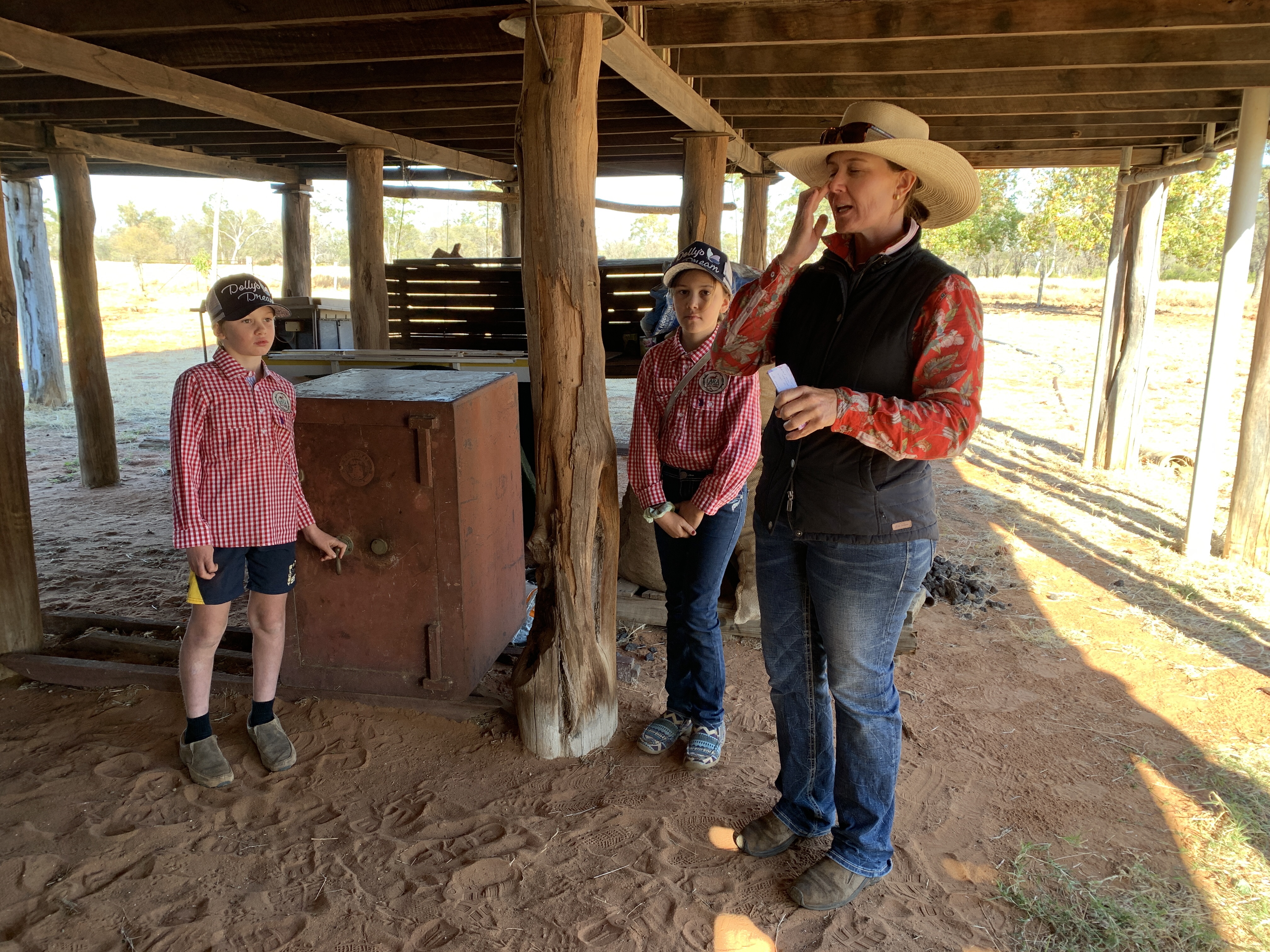
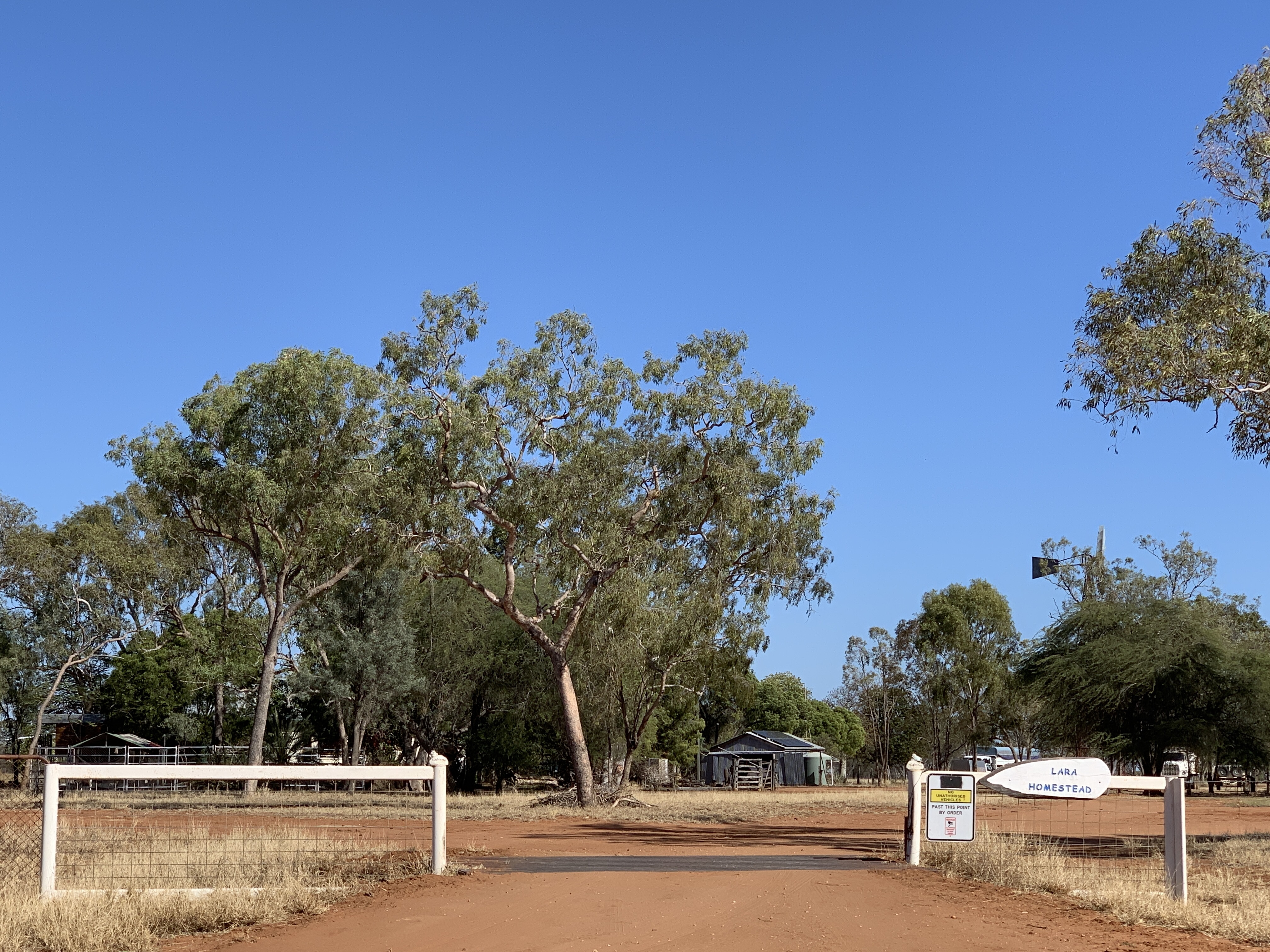
When you arrive at Lara Homestead the group is met by the current owner of Lara, a young woman named Jodie. Jodie only purchased the property in September 2020 as a home for her and her three young children. Jodie had grown up on the land and she is ably assisted on the property by her parents and her brother who also have properties in the area. The previous owners were the ones who got the Wetlands Campground up and running but tragically the husband was killed whilst flying his own helicopter. The lady ran the property on her own for many years before selling out to Jodie last year.
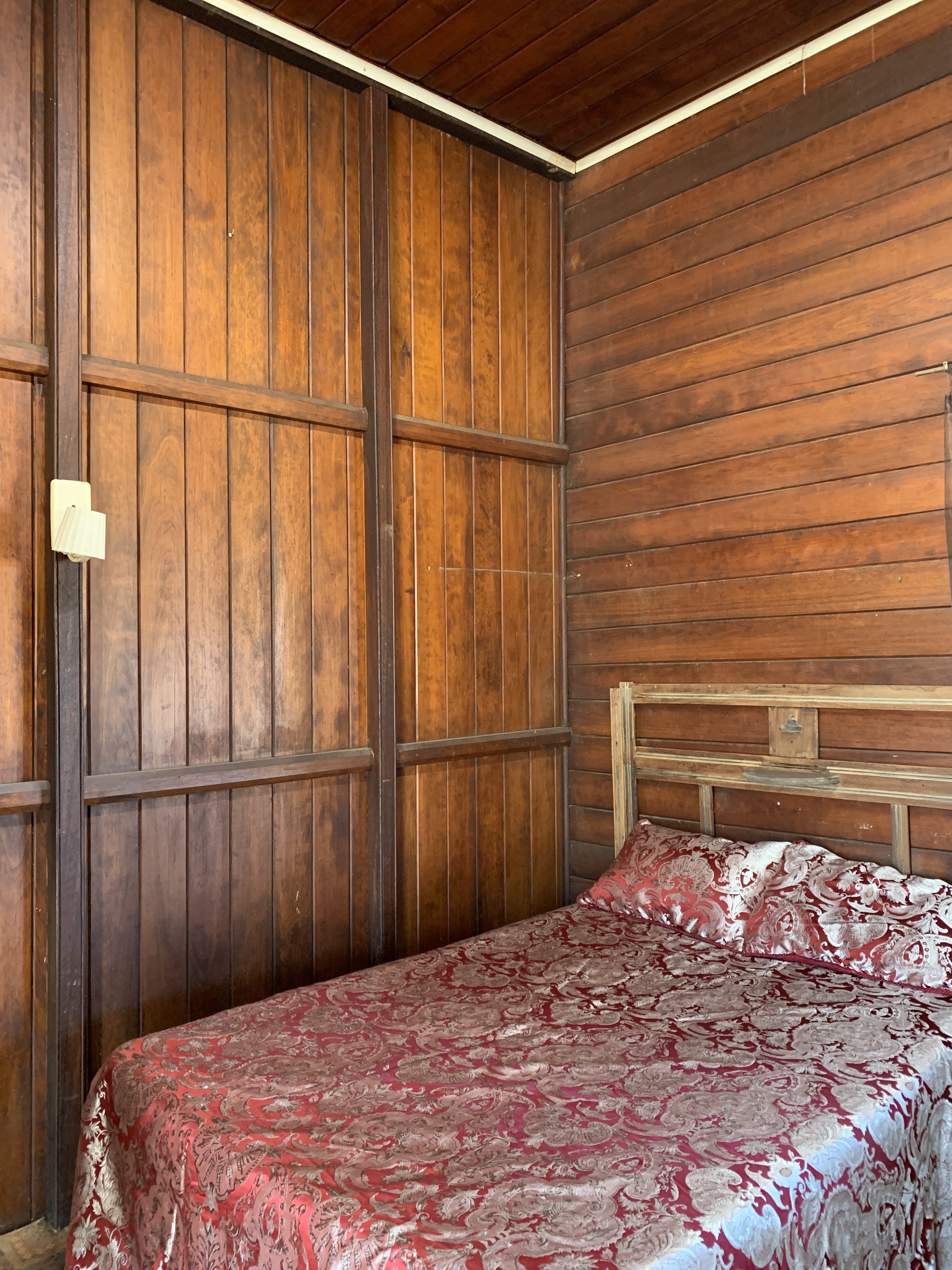
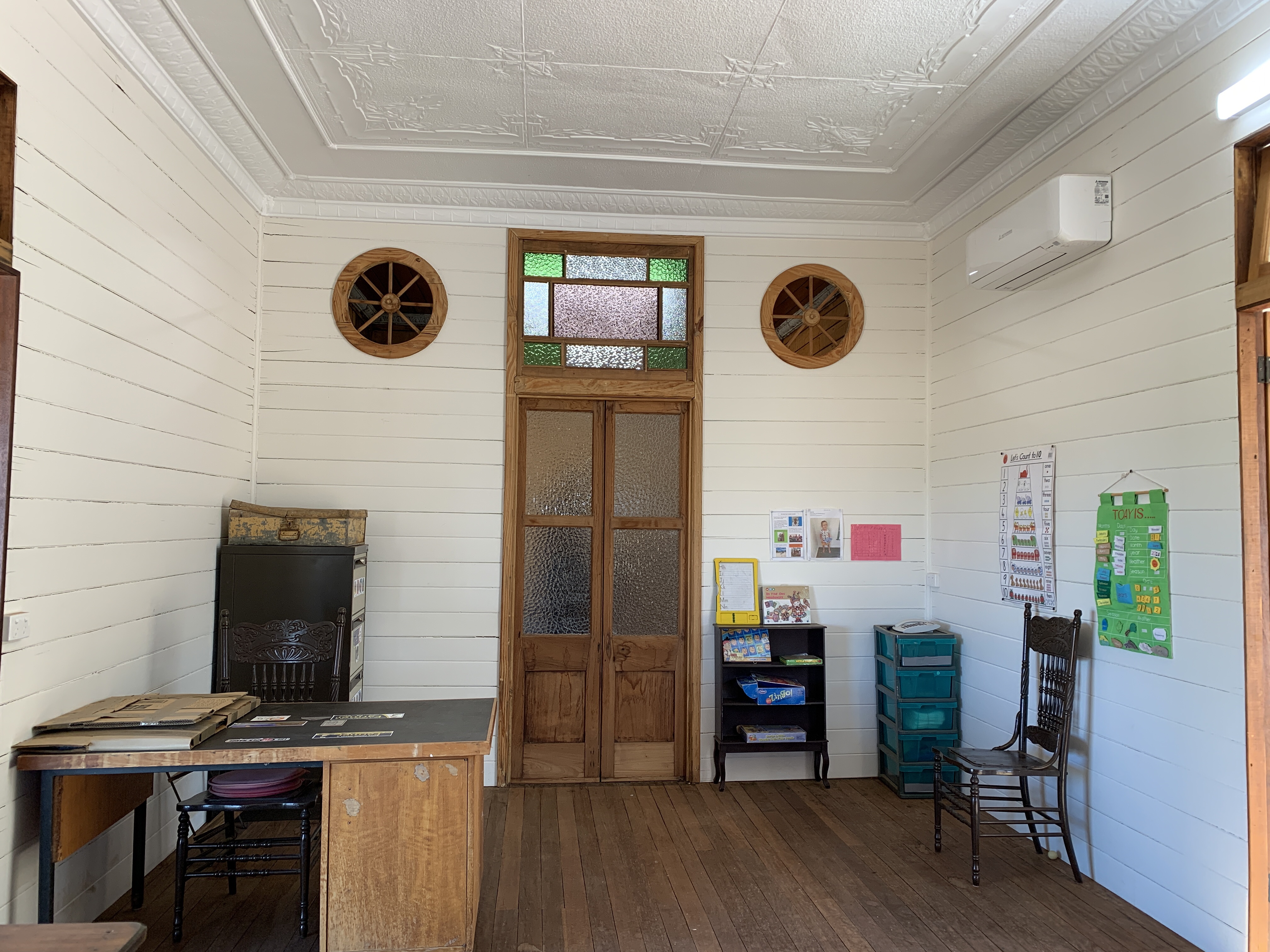
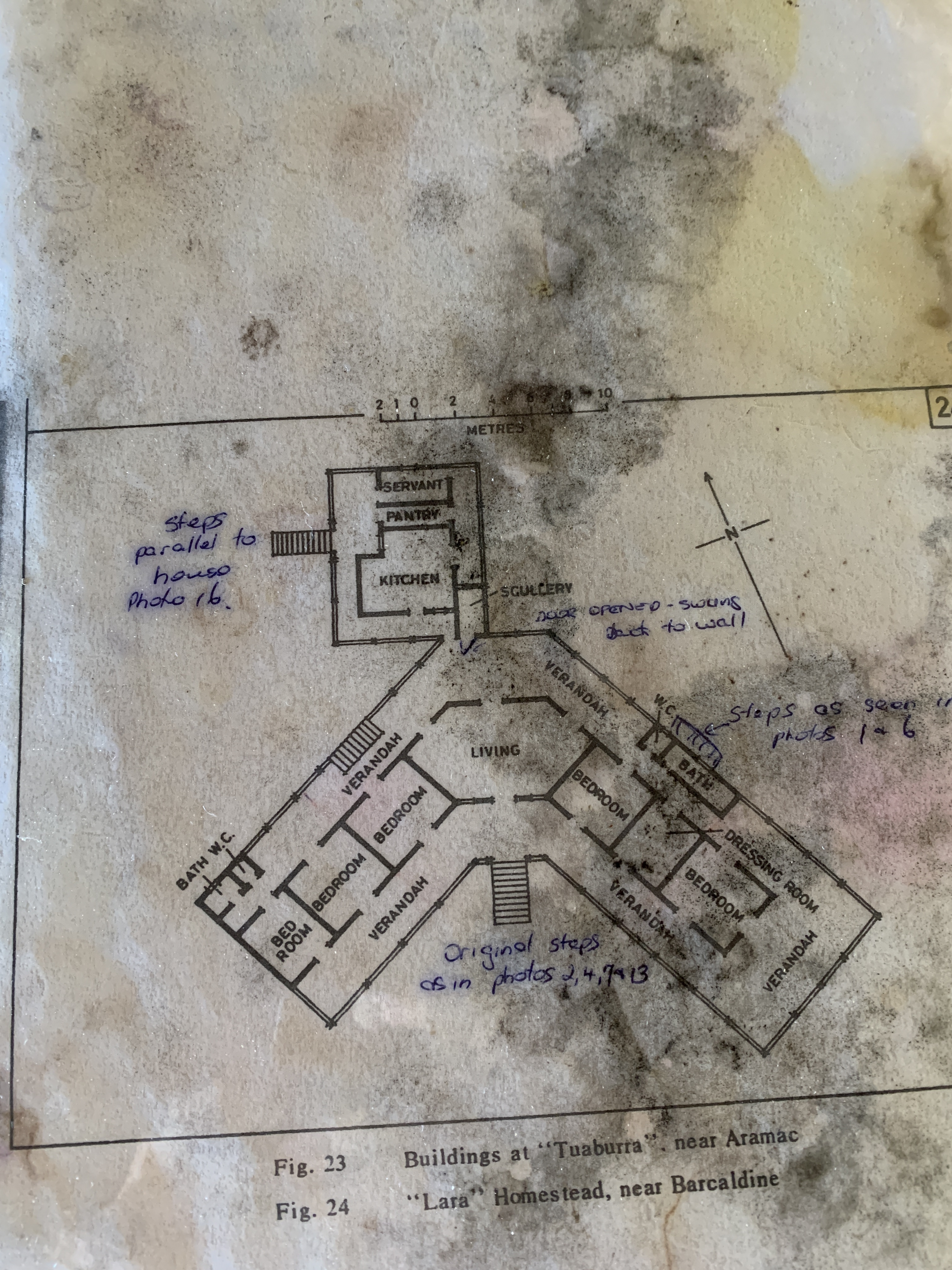
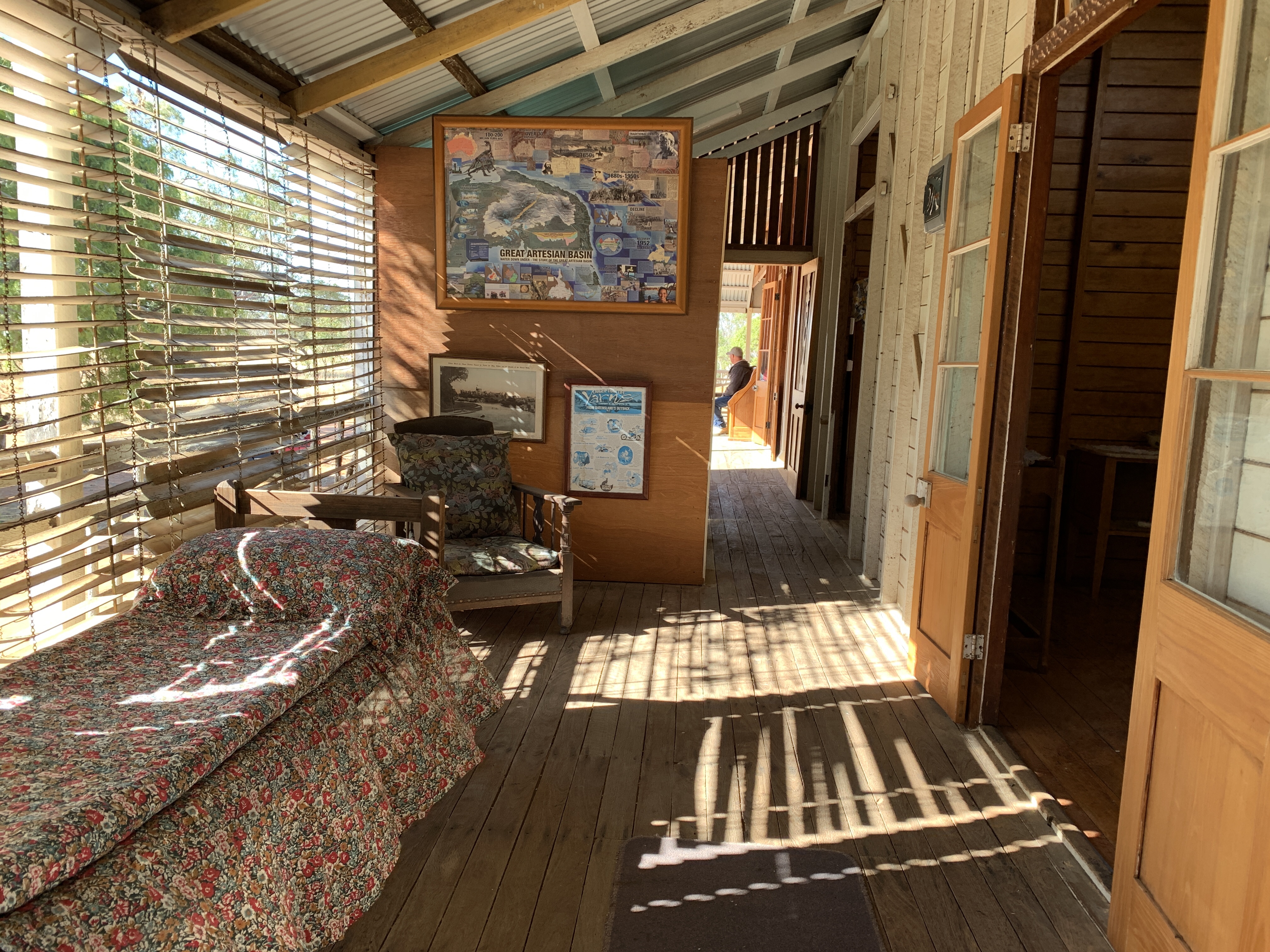
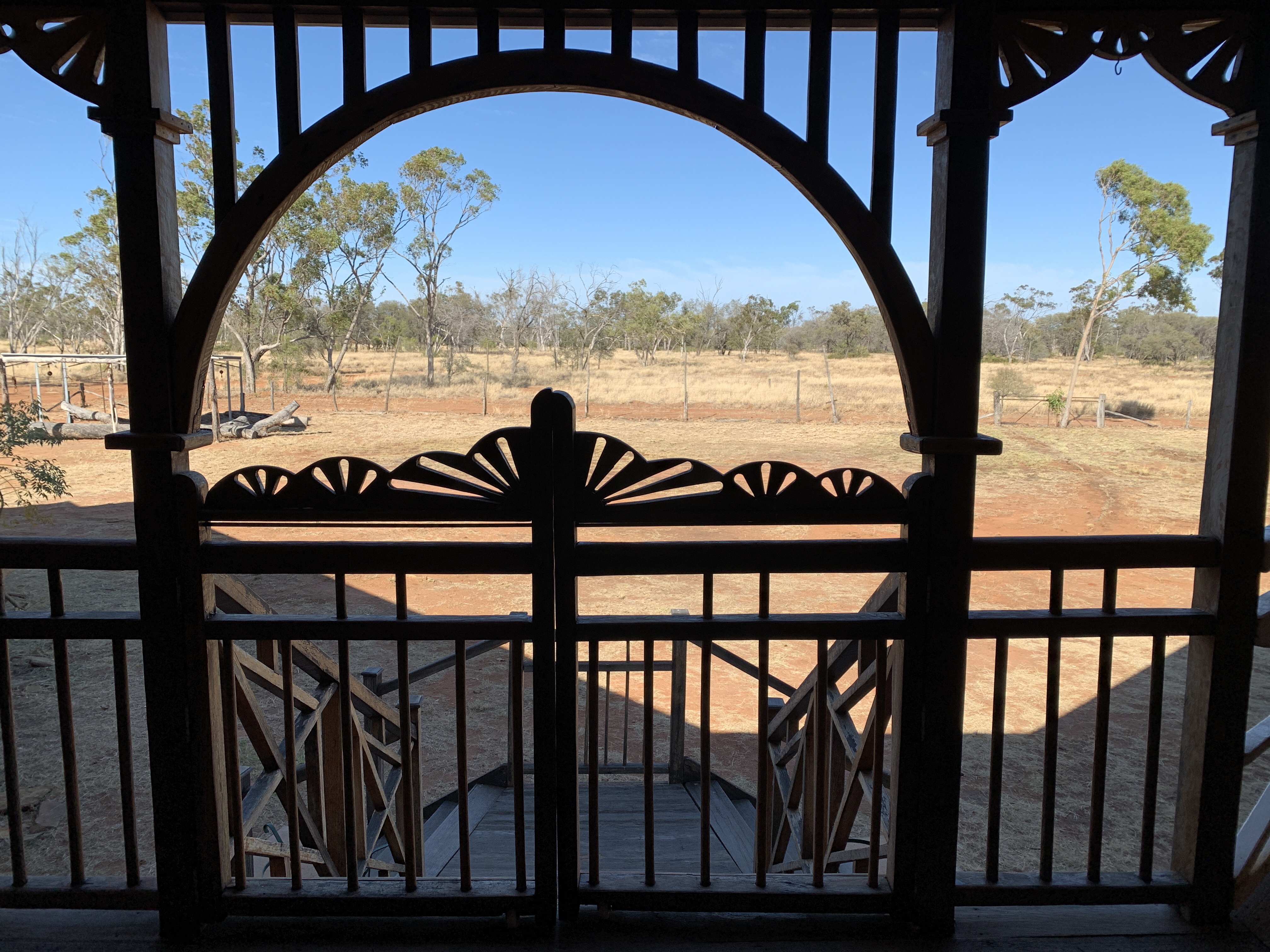
We learnt that Lara homestead was built in 1914 by Eric Sealy. The house is a Queenslander style built up on tall Gidgee stumps and has a verandah almost all the way around. The house itself was originally a Y shape however the tail of the Y was where the original kitchen, and servants quarters were and this has all been removed as it was falling down. Only the Gidgee stumps remain. A small kitchenette has been built in the verandah that was once the breezeway between the main house and the kitchen.
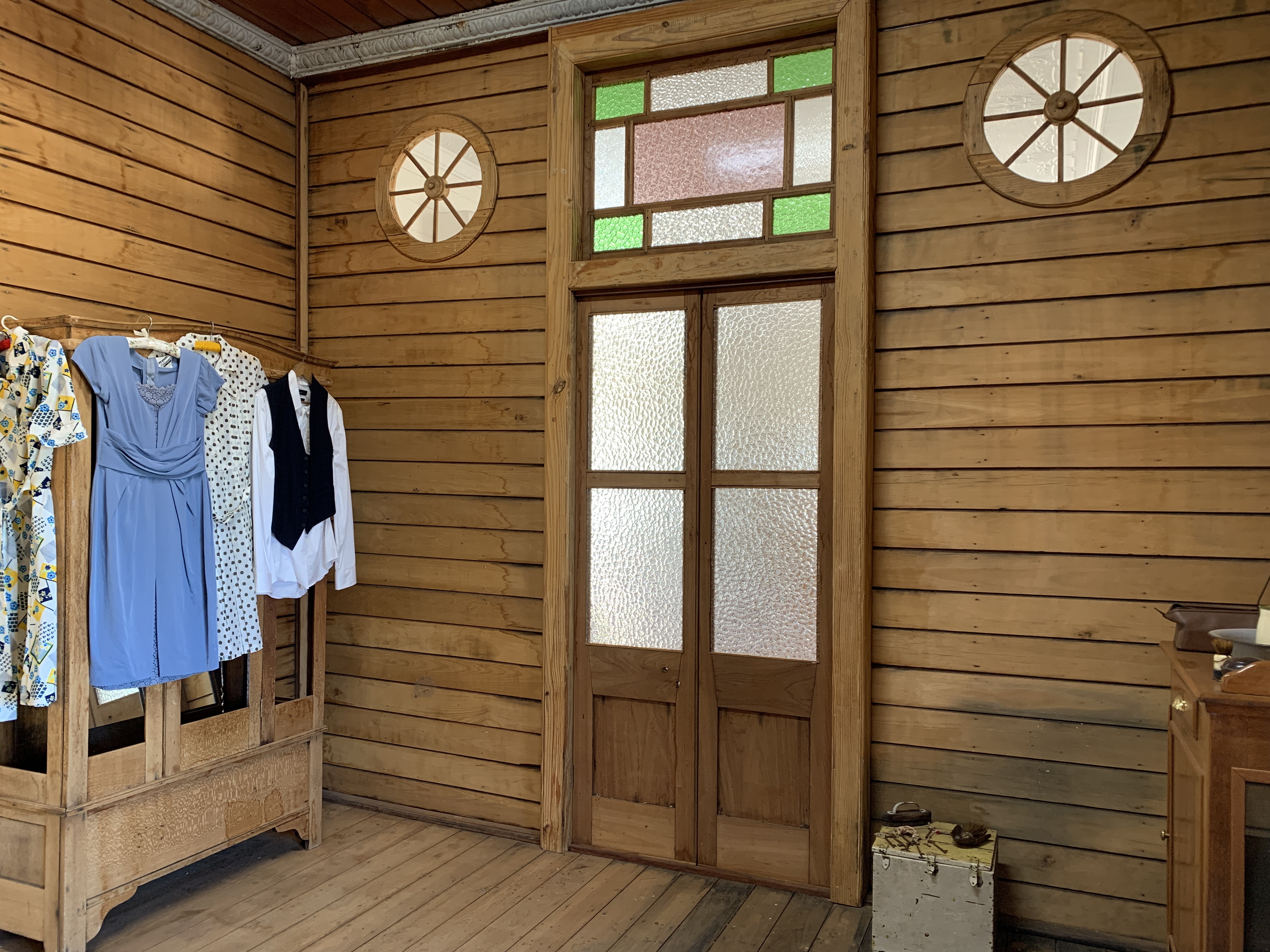
The remaining house is only one room wide and each room has a set of double doors on both sides. This, as well as the verandah and being raised up on piers, allowed cooling breezes to help beat the summer heat.
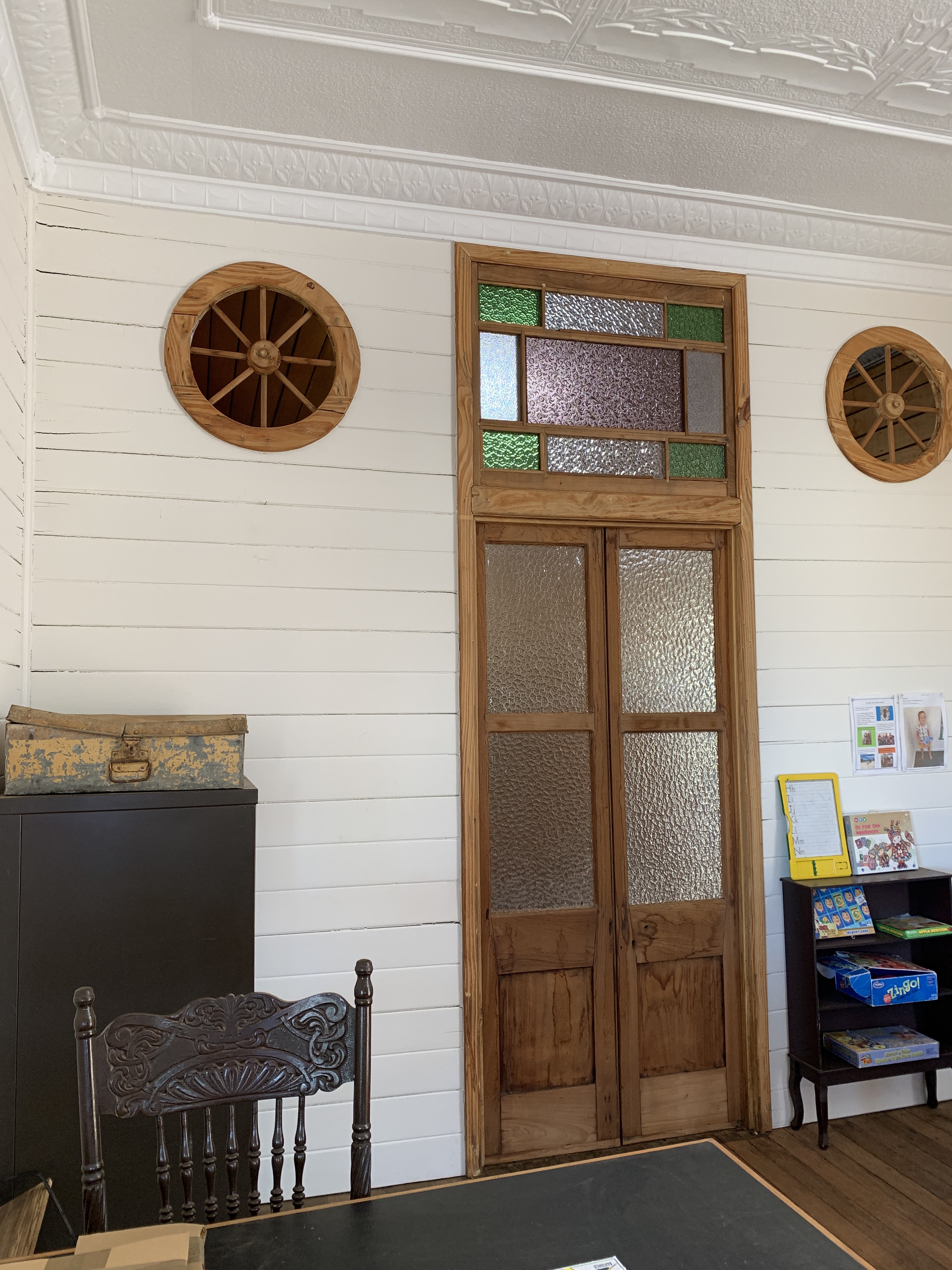
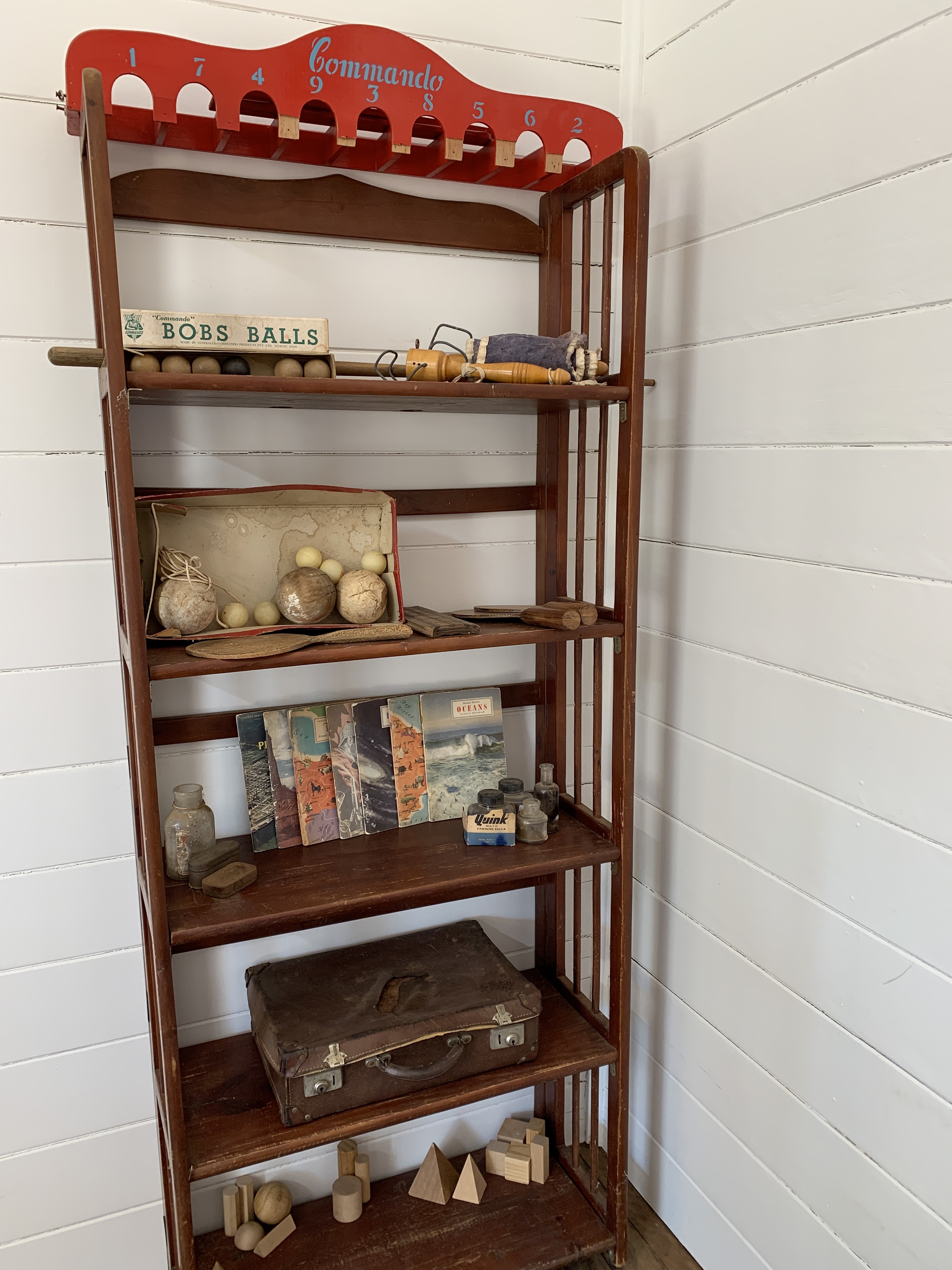
The house is constructed of timber and some of the rooms have lovely pressed metal ceilings. A couple of the bedrooms have the original Lino flooring. Sadly all the fine furniture, and even the fixtures and fittings were all sold off in a big clearing sale years ago. Eric Sealy became a very wealthy man at Lara as a wool producer in the time that ‘Australia ran off the sheep’s back’. There were old photographs on display of the homestead in its hey day with a tennis court and gardens. There was even an old photo of the verandah with tables set for a wedding reception.
Following the tour of the house the group was offered tea or coffee and scones with jam and cream on the verandah. The big wide verandah has plenty of chairs for people to sit and enjoy their Devonshire Tea.
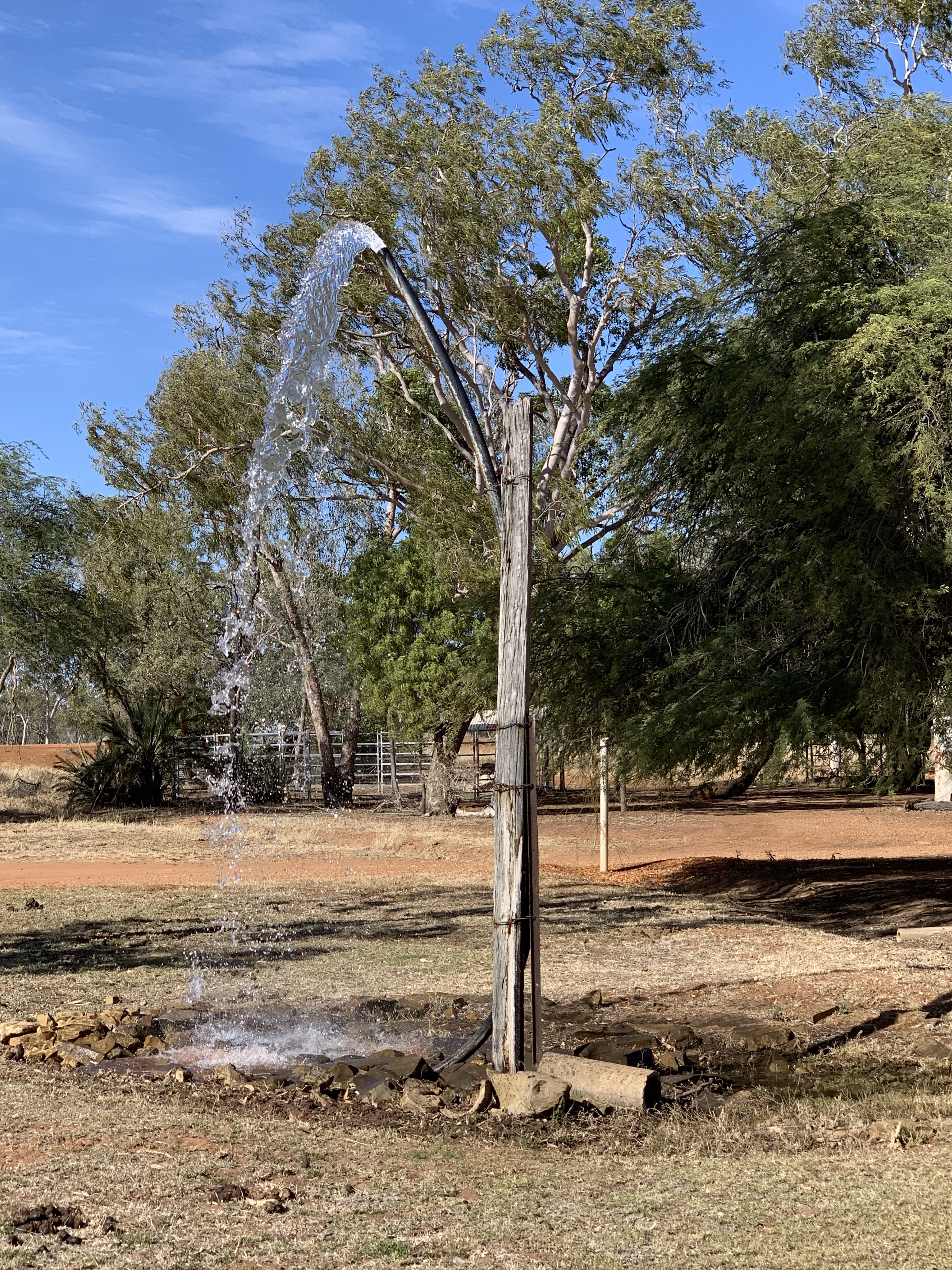
Following morning tea Jodie led the group across the house yard and stopped in front of the original bore. She explained the importance of the Artesian water to the property and that open bore drains once led from the original bore off in all directions towards troughs, to the next door neighbours house and down to the wetlands. A new bore has been sunk and the water is now all piped to where it has to go. Jodie’s assistant Amber, one of the farmhands, turned a handle on the new bore and water started to pour out of the old bore at around 25psi and 68 degrees. It’s hot! Water is sent to a cooling dam before being used around the property.
We were then shown to an old shed that the family call ‘The Museum’ and it is really just an old corrugated shed full of old stuff. There was even an identical kerosene fridge to the ones we have up at Mikala although this one was in sad need of some TLC.
The tour ends there and people can either walk back or be driven. I elected to walk back and it’s just a short walk along a dusty red sandy track back to the oasis that is the Wetlands.
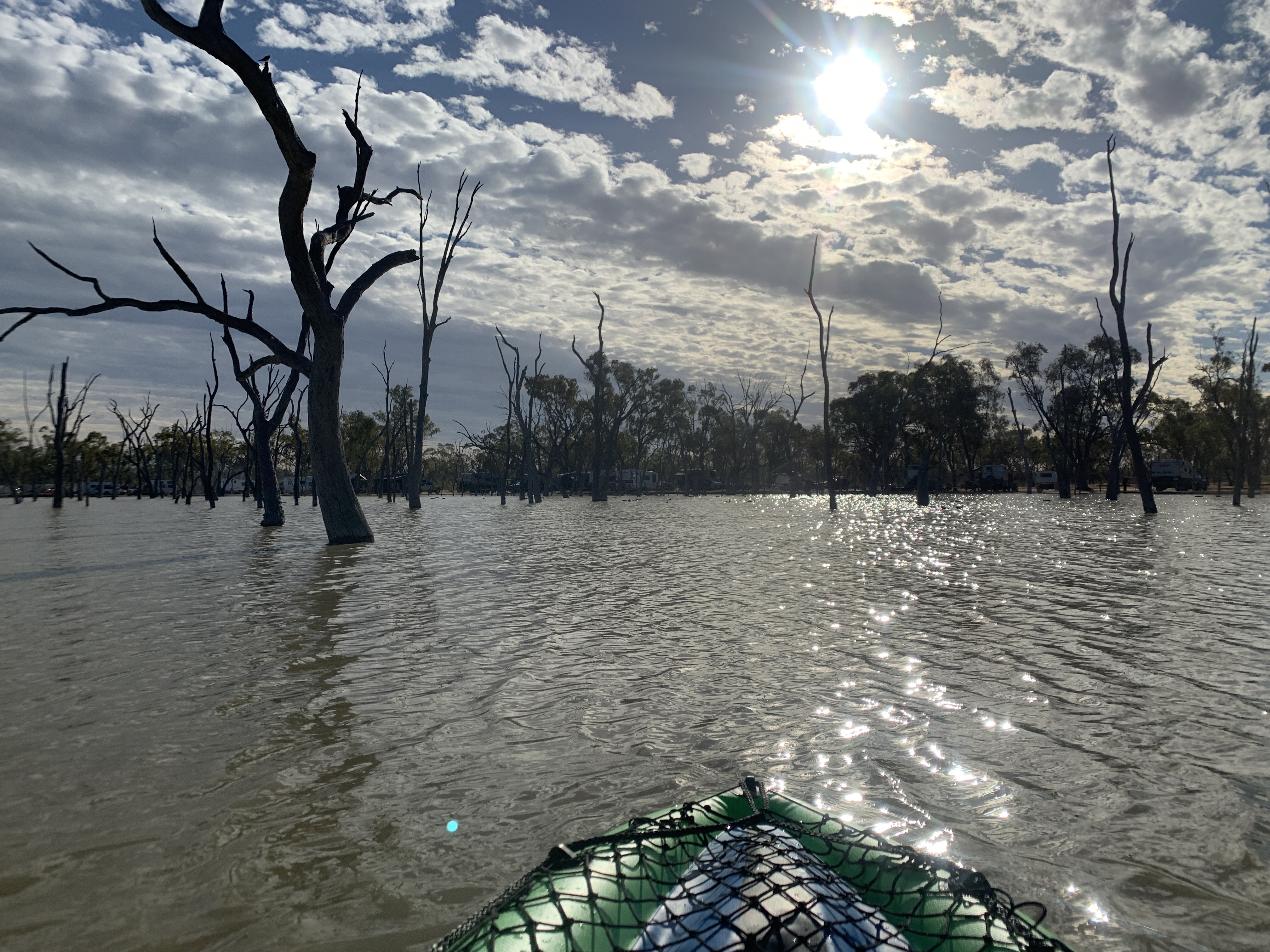
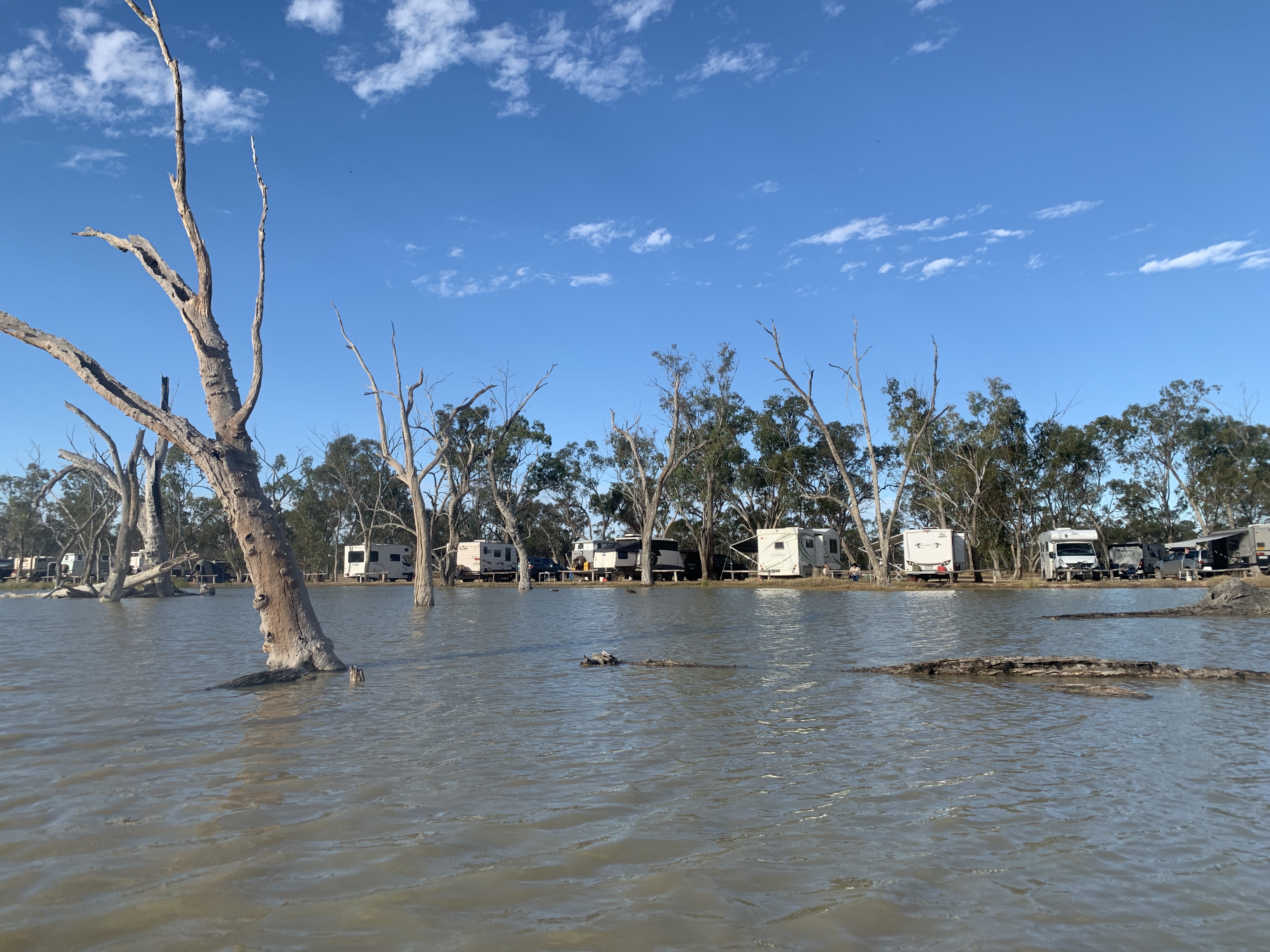
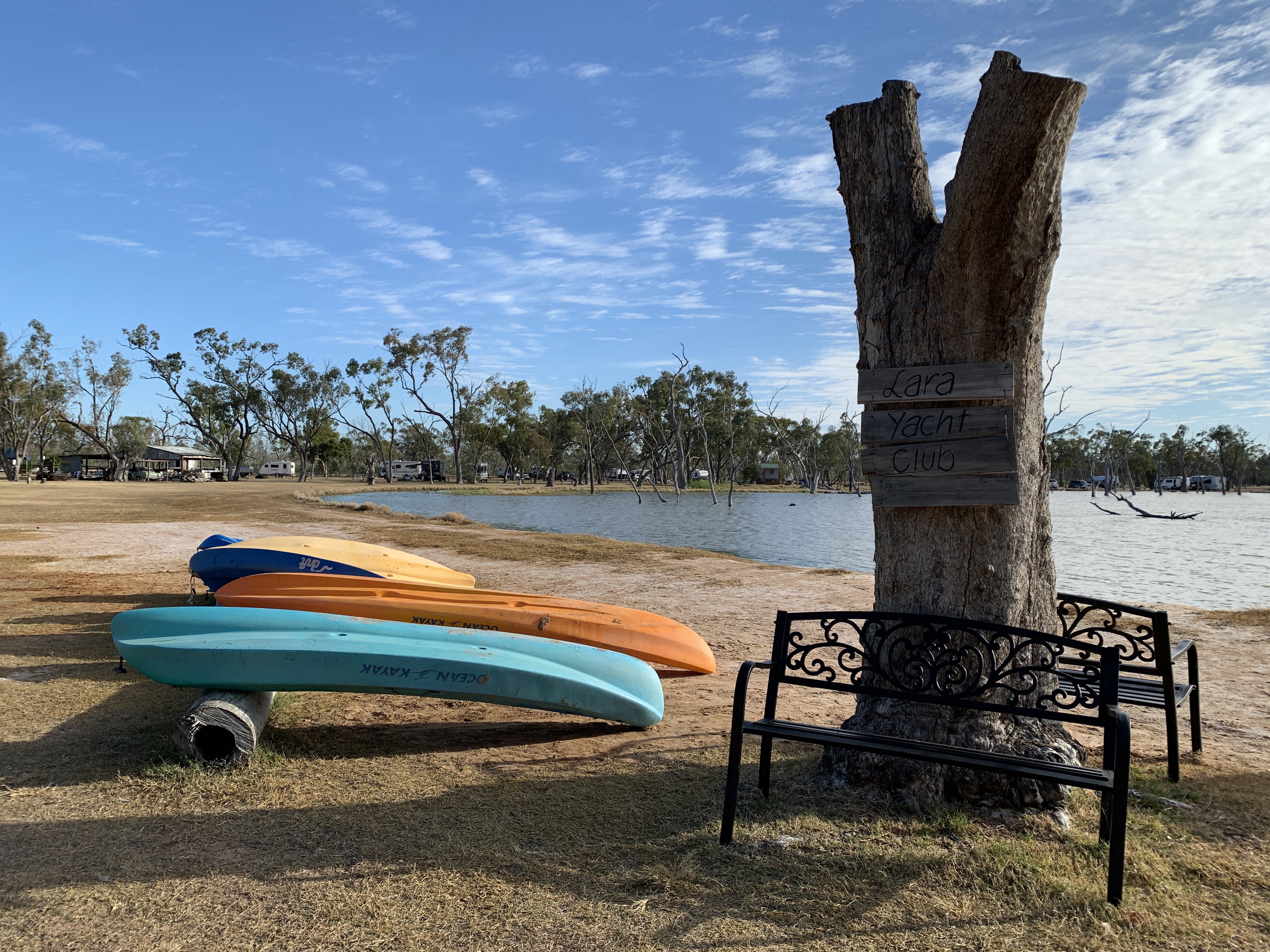
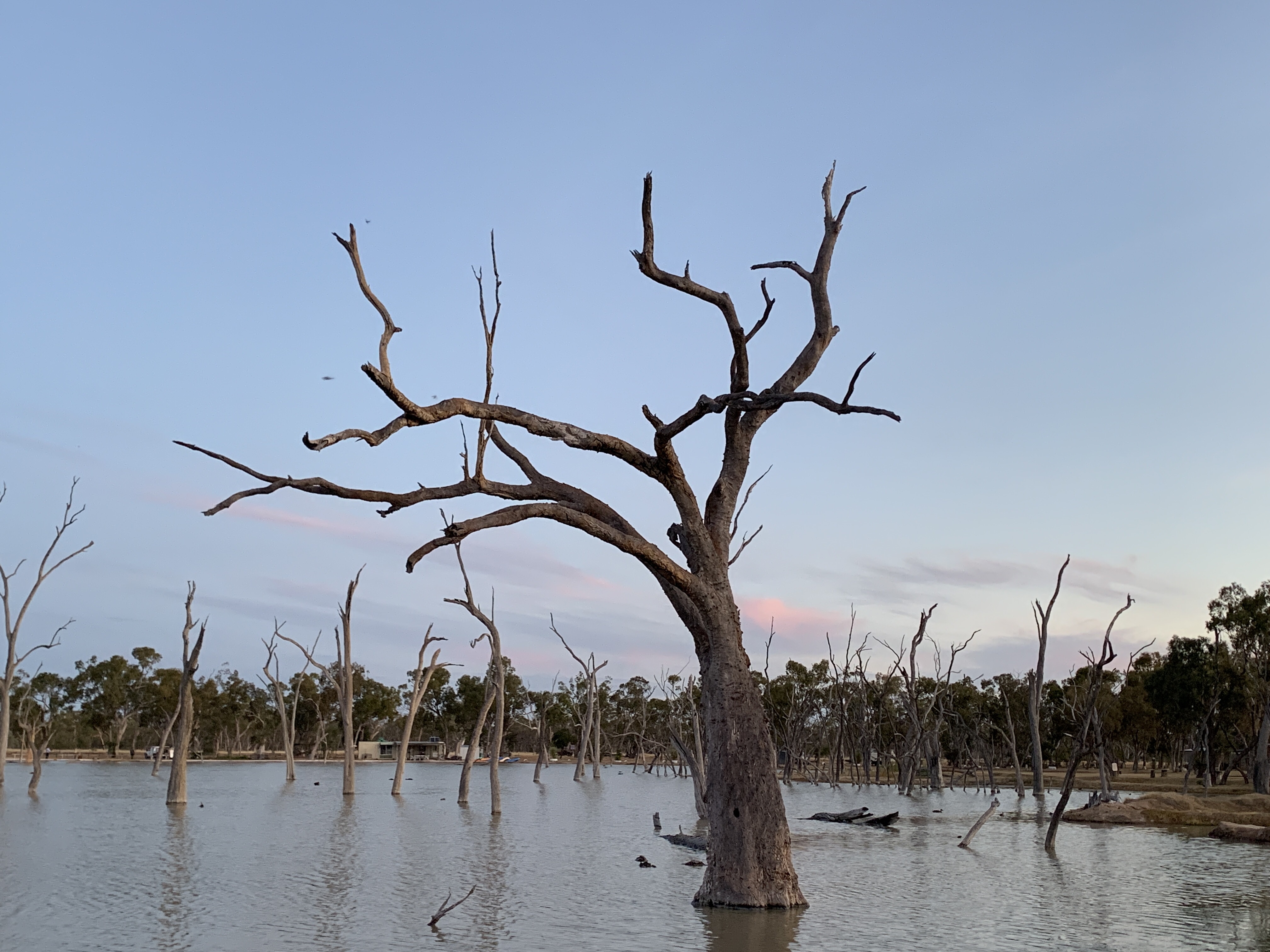
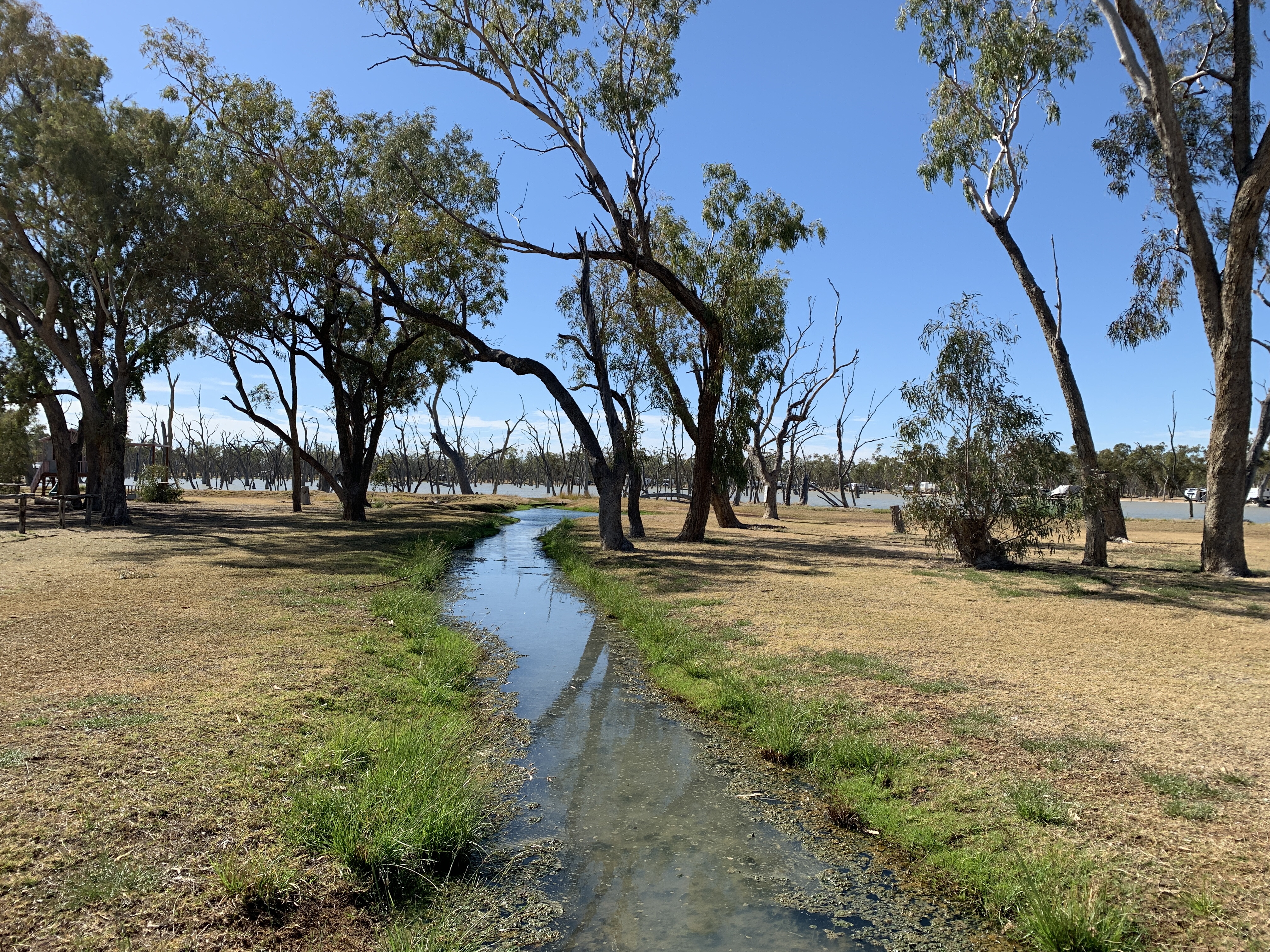
The Wetlands was originally a natural depression where water gathered after big rains. The previous owners saw potential in doing some landscaping and setting up the campground. The large roughly circular wetlands is home to many birds and other wildlife. When you arrive at Lara Wetlands you come to the office building. Here you pay your $25 per night for 2 people, the rules are explained, and you are given a map and instructions to drive around and find your spot. If you park on the waters edge you must park straight in or reverse in. Sideways is not acceptable as it limits the number of campers.
There is no power at the Campground but water is available at various taps around the place. Grey water can be let go on trees or the grass and all rubbish must be taken out with you.
There are push bikes and kayaks available from the office and there are three amenities blocks and a dump point. There is a large camp kitchen and a communal fire pit area where every Saturday night they hold 3-course camp oven dinners for $25 per person.
Next to the Camp Kitchen is the Thermal Pool and there is another cool pool not far away. The Thermal Pool is kept at 38 degrees and most campers make use of it. It is recommended not to stay in it for more than 15 minutes. A 15 minute soak in the hot artesian water eases many aches and pains.
On Tuesday nights ‘happy hour’ is held with live Country music and although we didn’t walk around to that we could clearly hear the music from across the water.
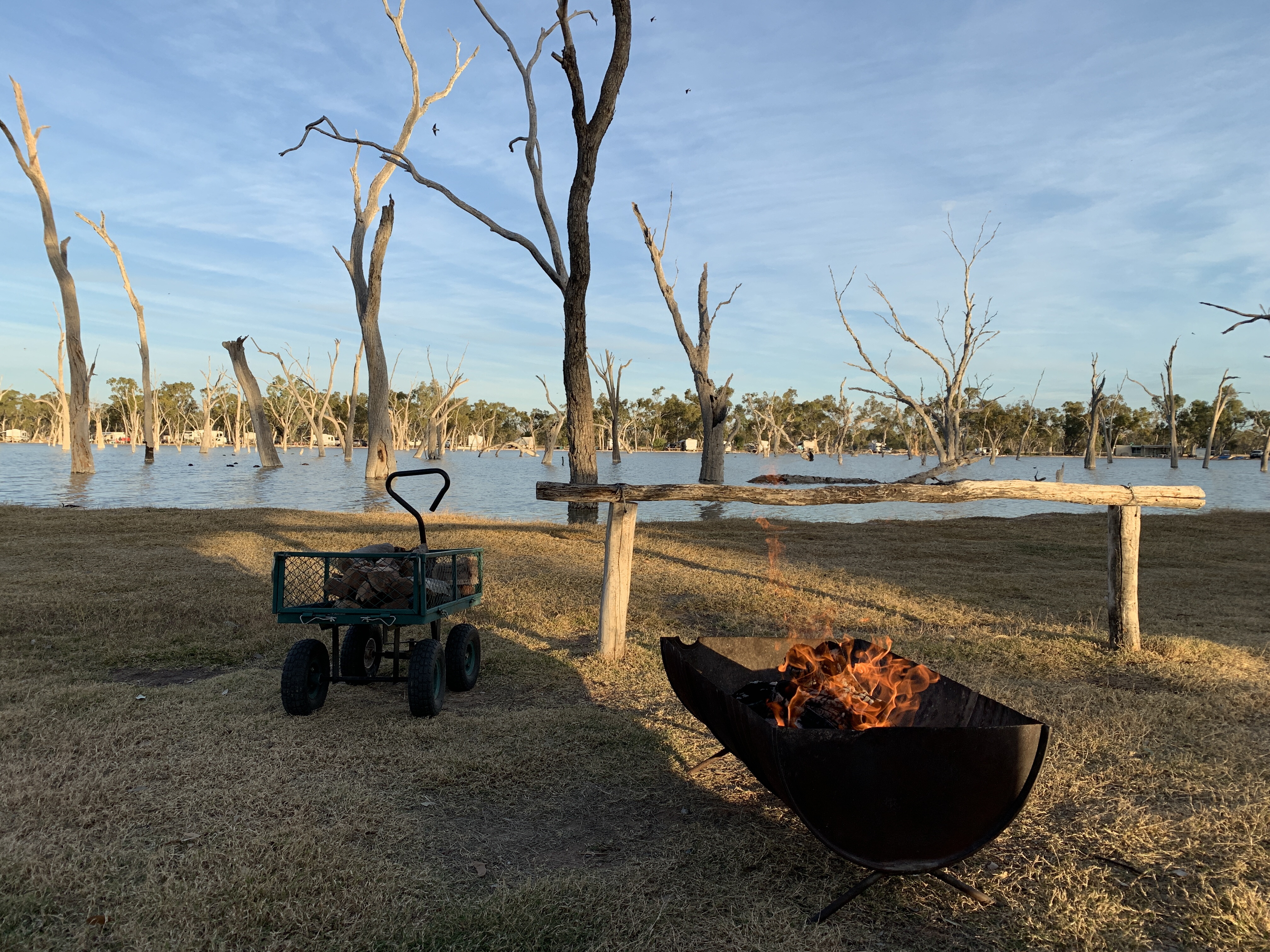
Fire drums are scattered around the campground for campers to use and you can buy a trolley load of cut Gidgee wood for $15.
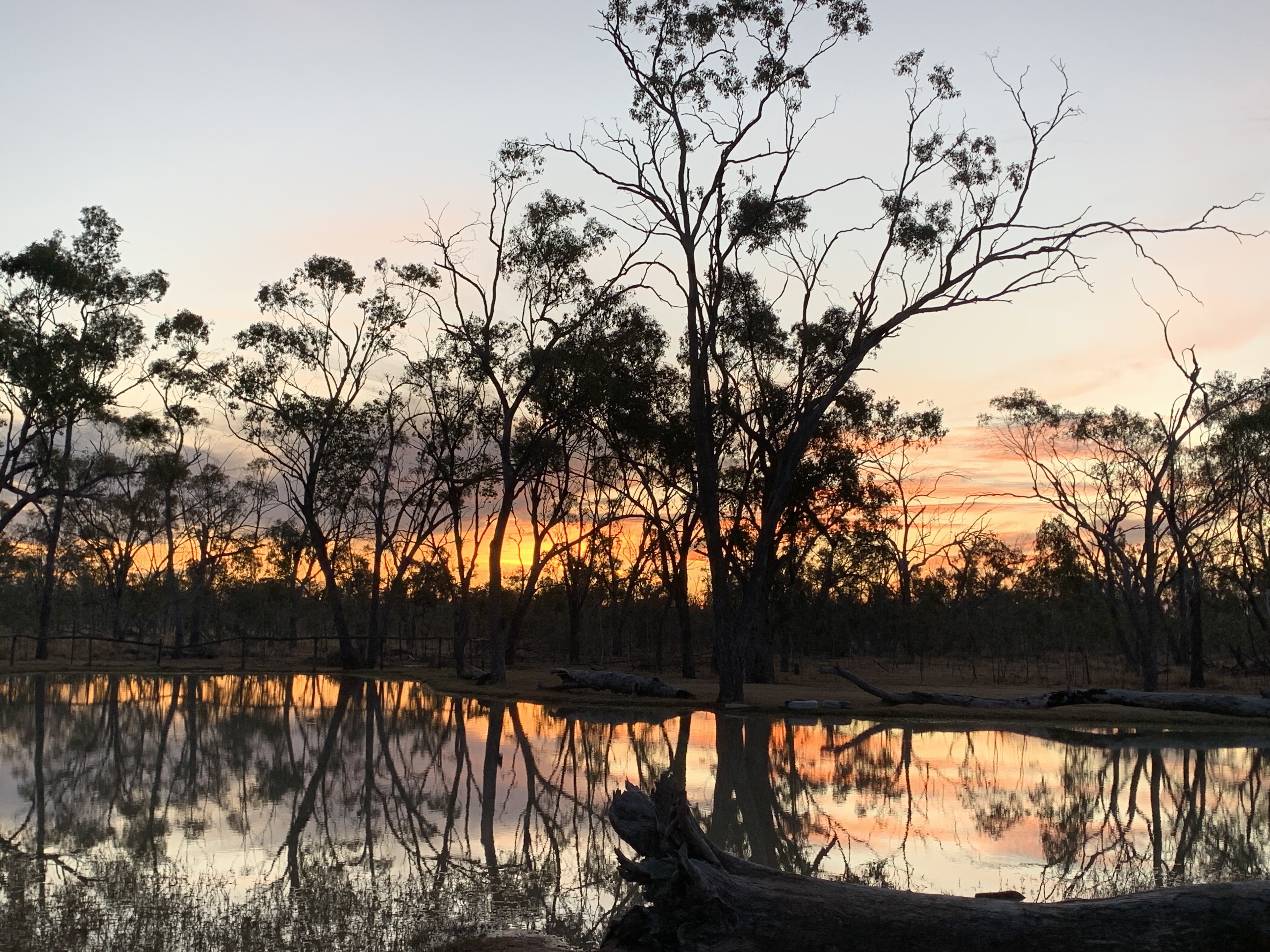
Lara Wetlands is a magic place and I thoroughly recommend it to anyone passing through this area. It is popular though and we reckon there must have been over 100 camps there each night we were there.
I spent the afternoon paddling my inflatable kayak around the lagoon. It was a very relaxing afternoon. Rich was reading a book. We enjoyed a nice hot Indian Curry & Rice for dinner by the fire pit. Magic!






















Lara Wetlands to Longreach
It was an interesting day the day we left Lara Wetlands and headed to Longreach. Lara is only 28km south of Barcaldine and as we got back onto the highway and went in that direction we were amazed at how many RV’s were on the road. RV’s of all descriptions. Caravans old and new, camper trailers towed by 4WD’s, whizzbangers, and motorhomes of all sizes. It seems that Australia is on the move and they are all heading to the Outback.
As we drove through Barcaldine we were astonished to see a line of about 20 RV’s waiting to fill up with fuel. Luckily we didn’t need any and drove right by. We didn’t stop in Barcy as we plan to come back that way after we’ve been north to Lawn Hill so we will check out their little town on the way back.
It was a very overcast morning when we left Lara and it started to sprinkle lightly as we drove out on the dirt. By the time we passed Barcy it really started coming down and it poured all the way to Longreach.
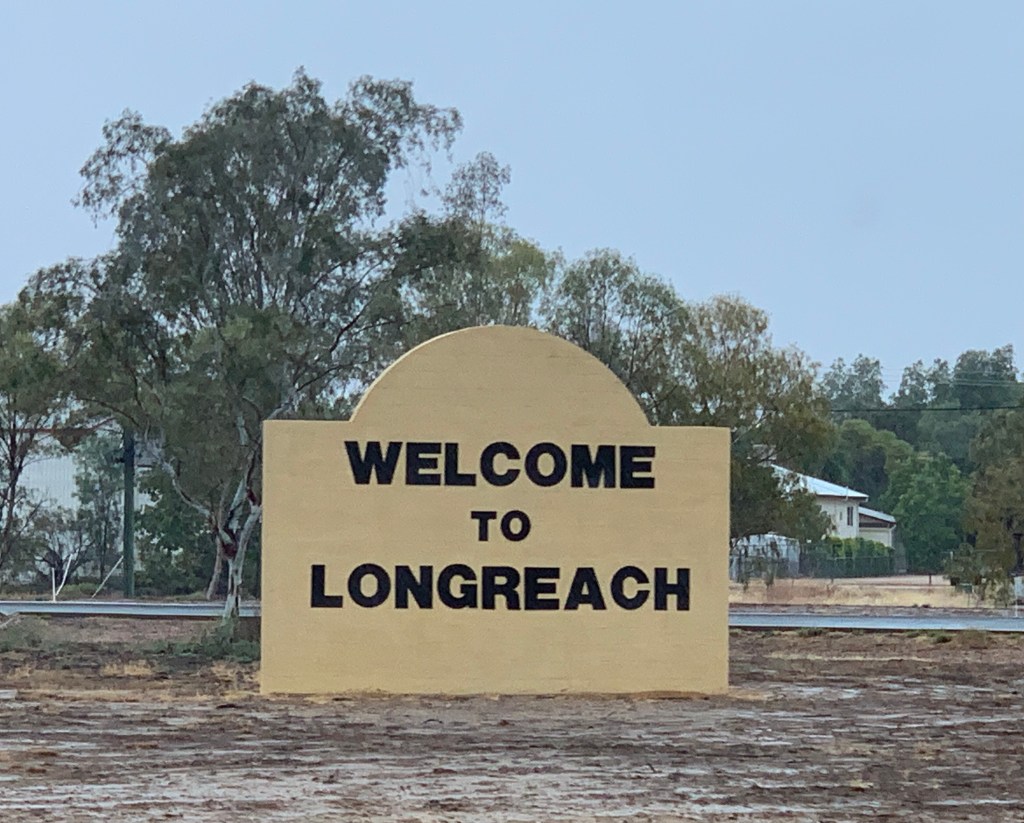
We had some tours booked for the next few days in Longreach so we needed to find somewhere to stay. I searched online and was only able to get a spot at the Tourist CP for one night for the next night so we thought we’d call in and check. When we turned into the street where the park is there was another line of RV’s. After waiting patiently for a turn at the counter we found that the site we had booked online was the only one they have that can fit us and it was only available for the one night. OK that was the next night sorted. Now to find somewhere for this night. And it was still raining!
We drove out to Apex Riverside Park only to find it full already and the overflow parking on the other side of the road was mud. We watched as a car and van were being towed out of being bogged and there was another 4WD bogged too. We couldn’t park there!
Back into town and both the caravan parking car parks were full of people and they all look like they were camping for the night. And it was still raining!
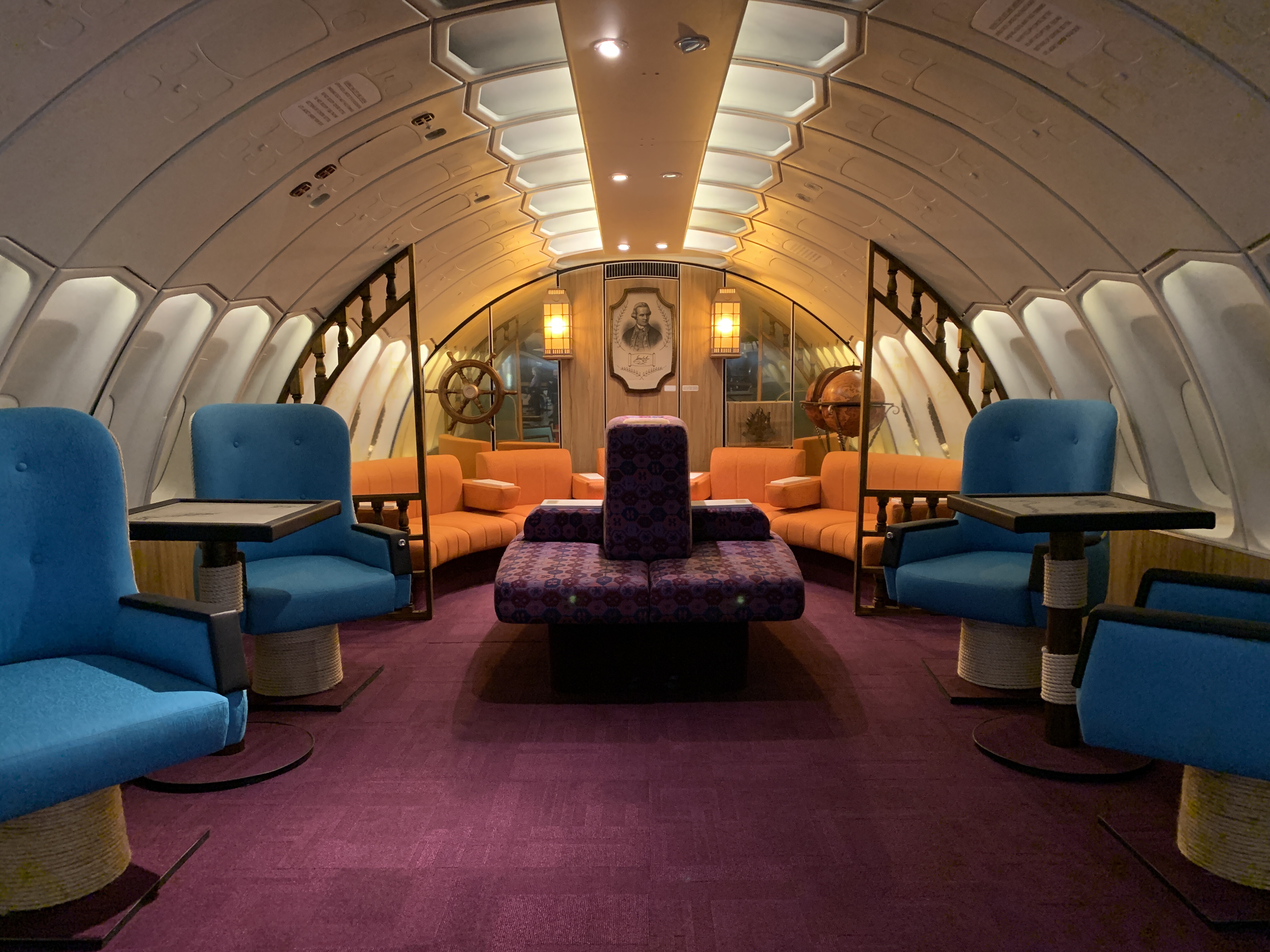
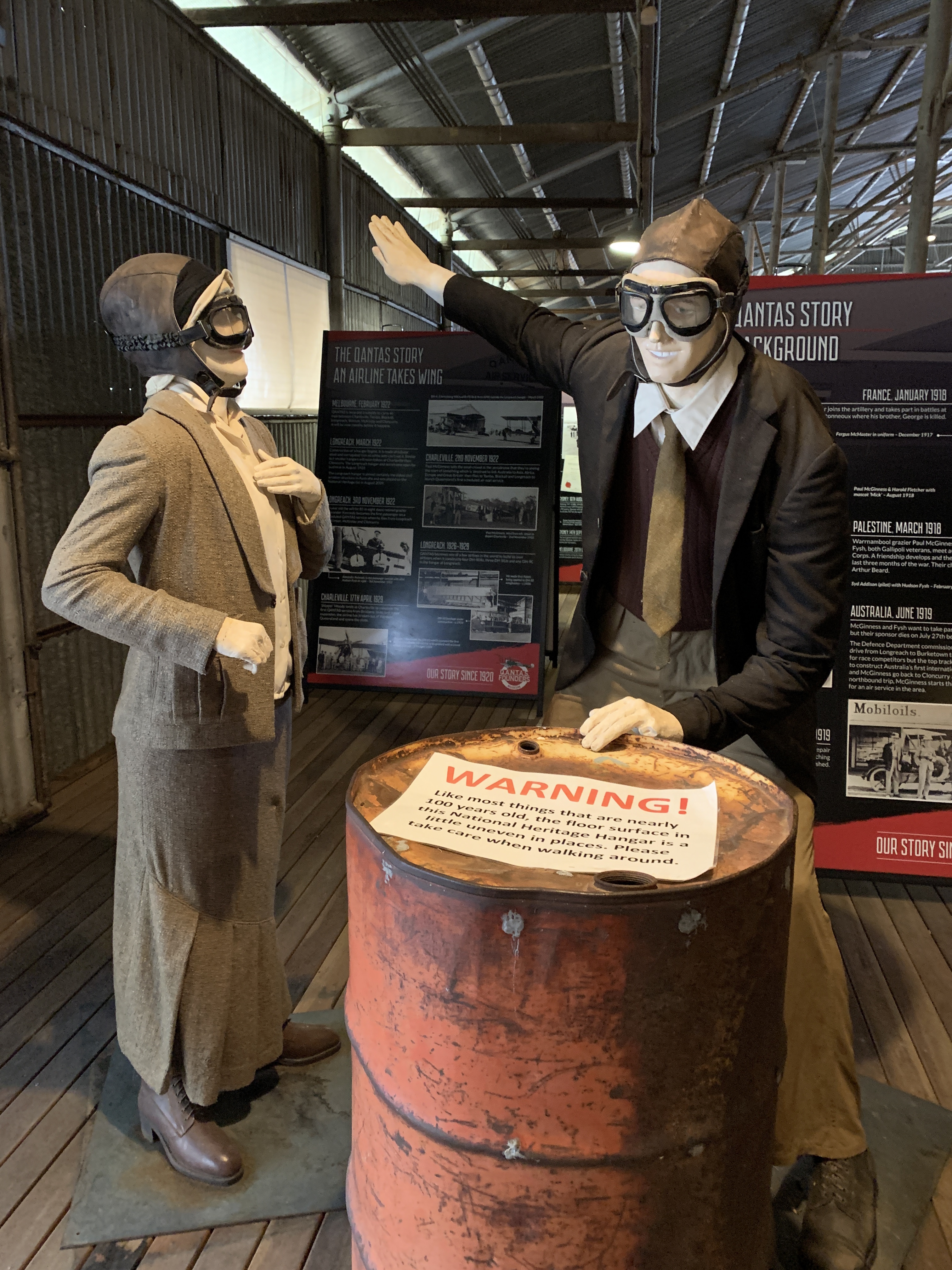
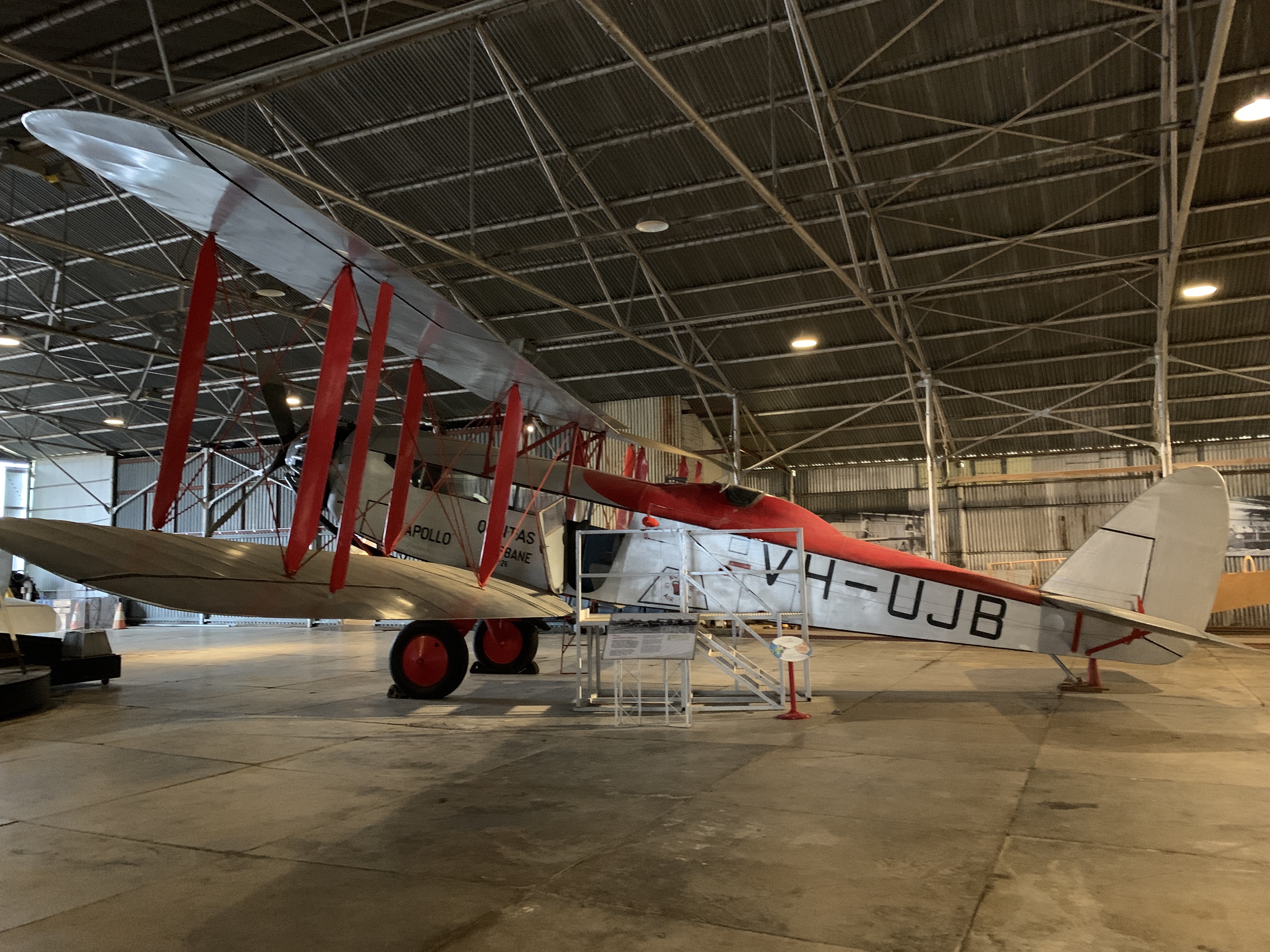
We spent the afternoon at the Qantas Founders Museum where we had lunch in their cafe, visited the museum and did the Airpark Tour. This tour takes you into the large covered area with a guide to show you through the four planes on display. They are a DC3, a 747, a ‘Connie’ or Super Constellation and a 707 private jet. The tour was really good and we learnt a bit about the history of Qantas and each plane then we got to go inside each one. I loved the furnishings in the private jet. Now that’s the way to fly! It even had a bedroom and flash ensuite bathroom.
Following the tour we spent more time checking out the museum until we were kicked out because they close at 4pm! And it was still raining!




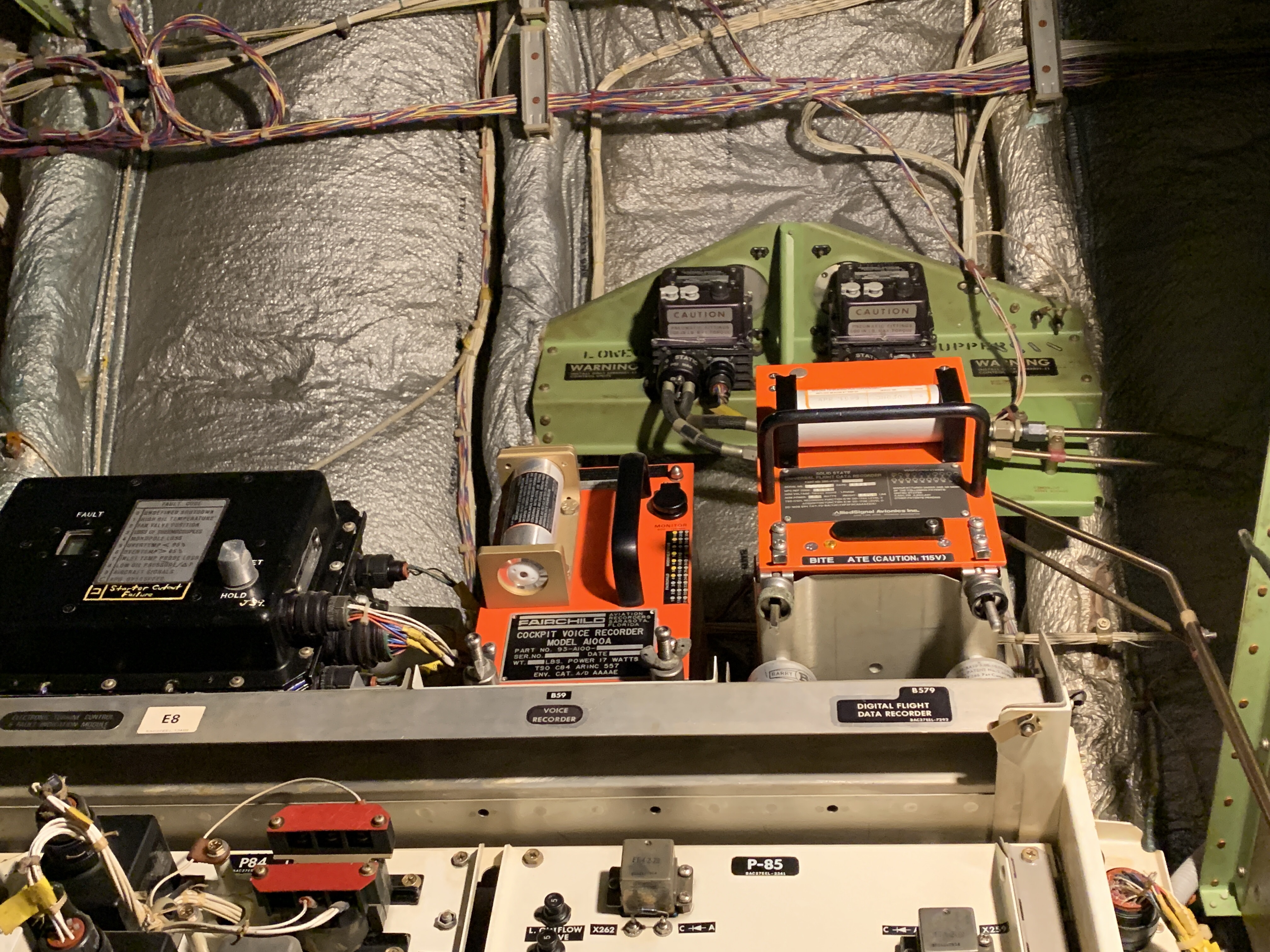


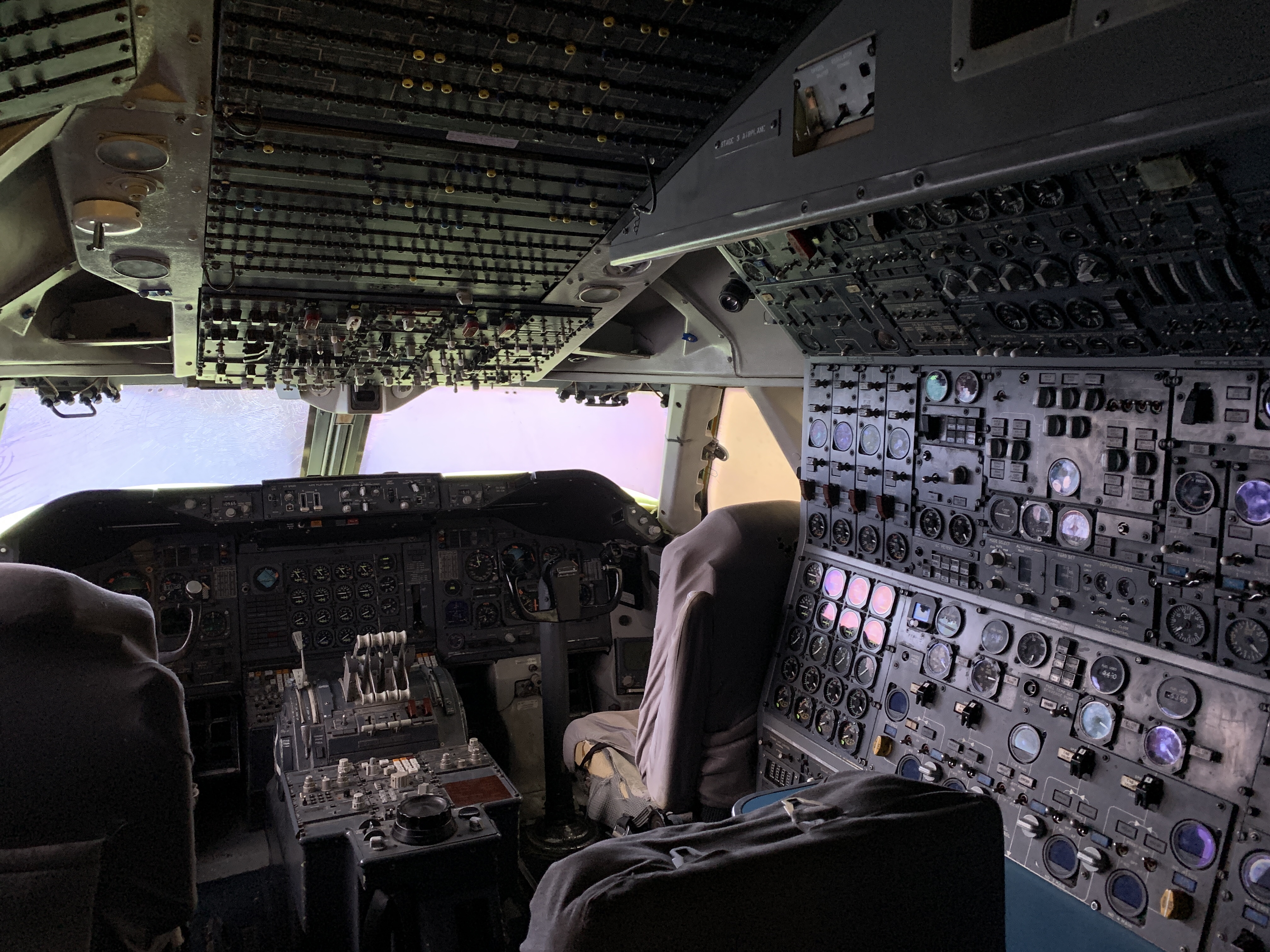


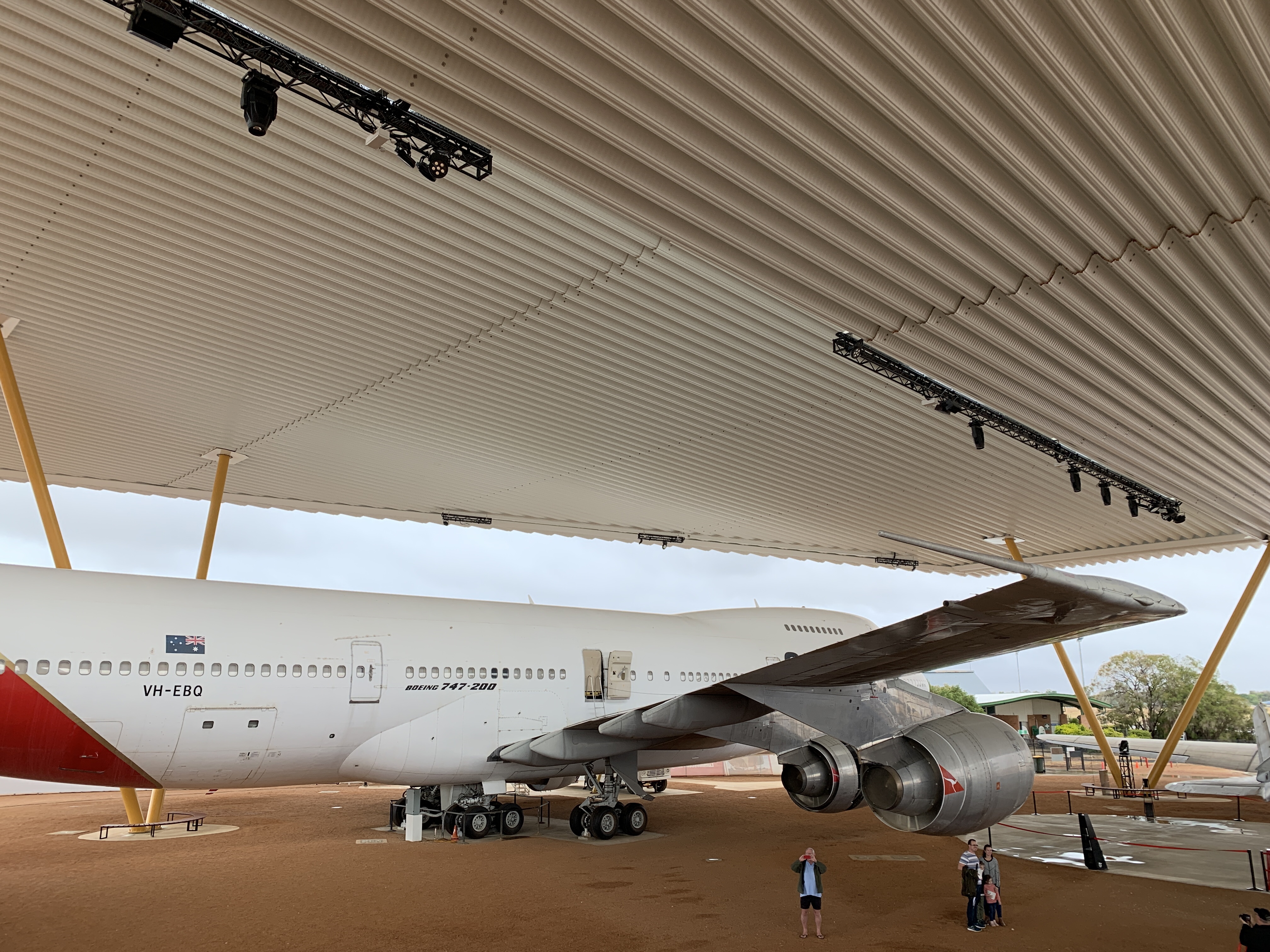
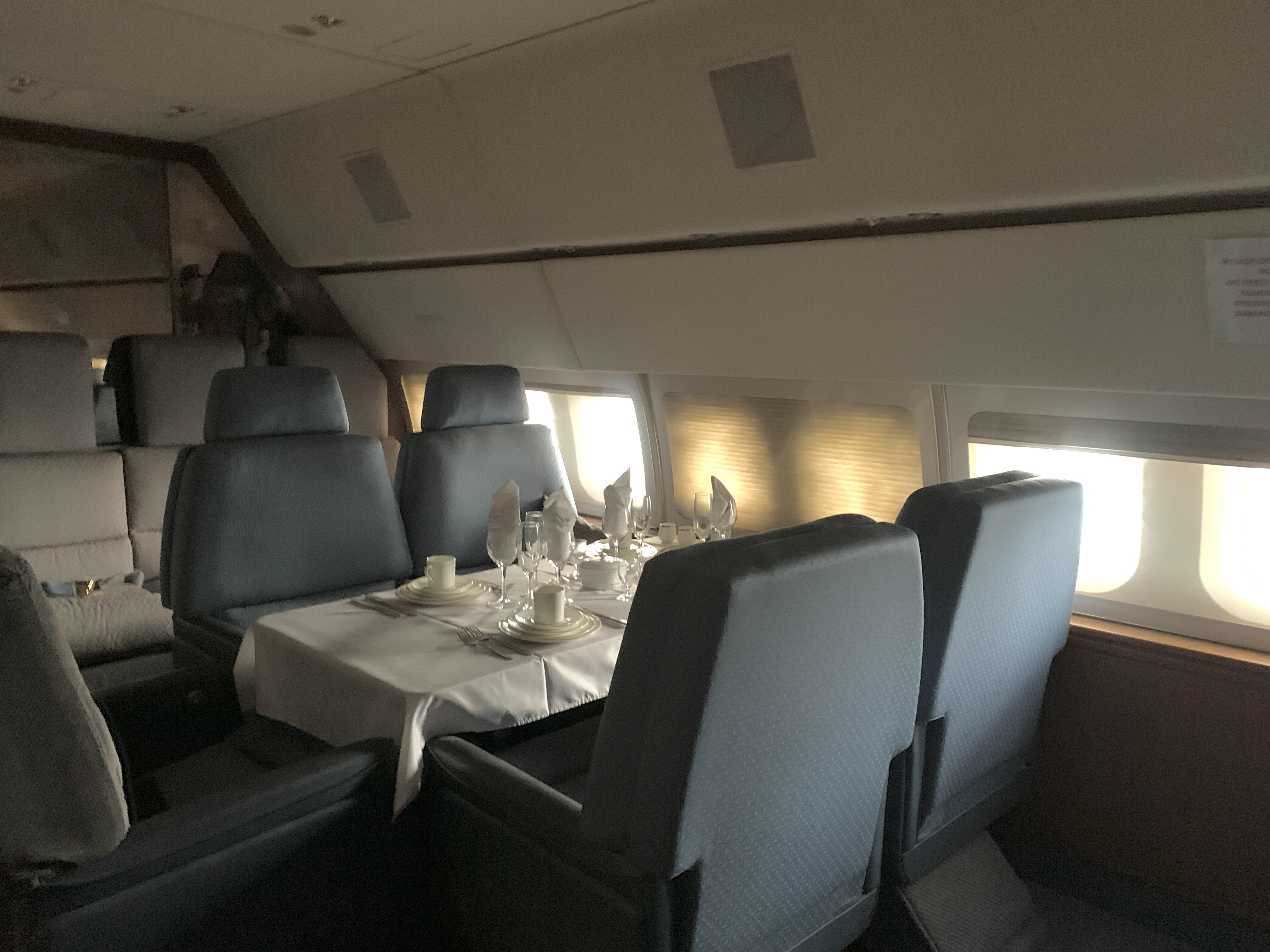

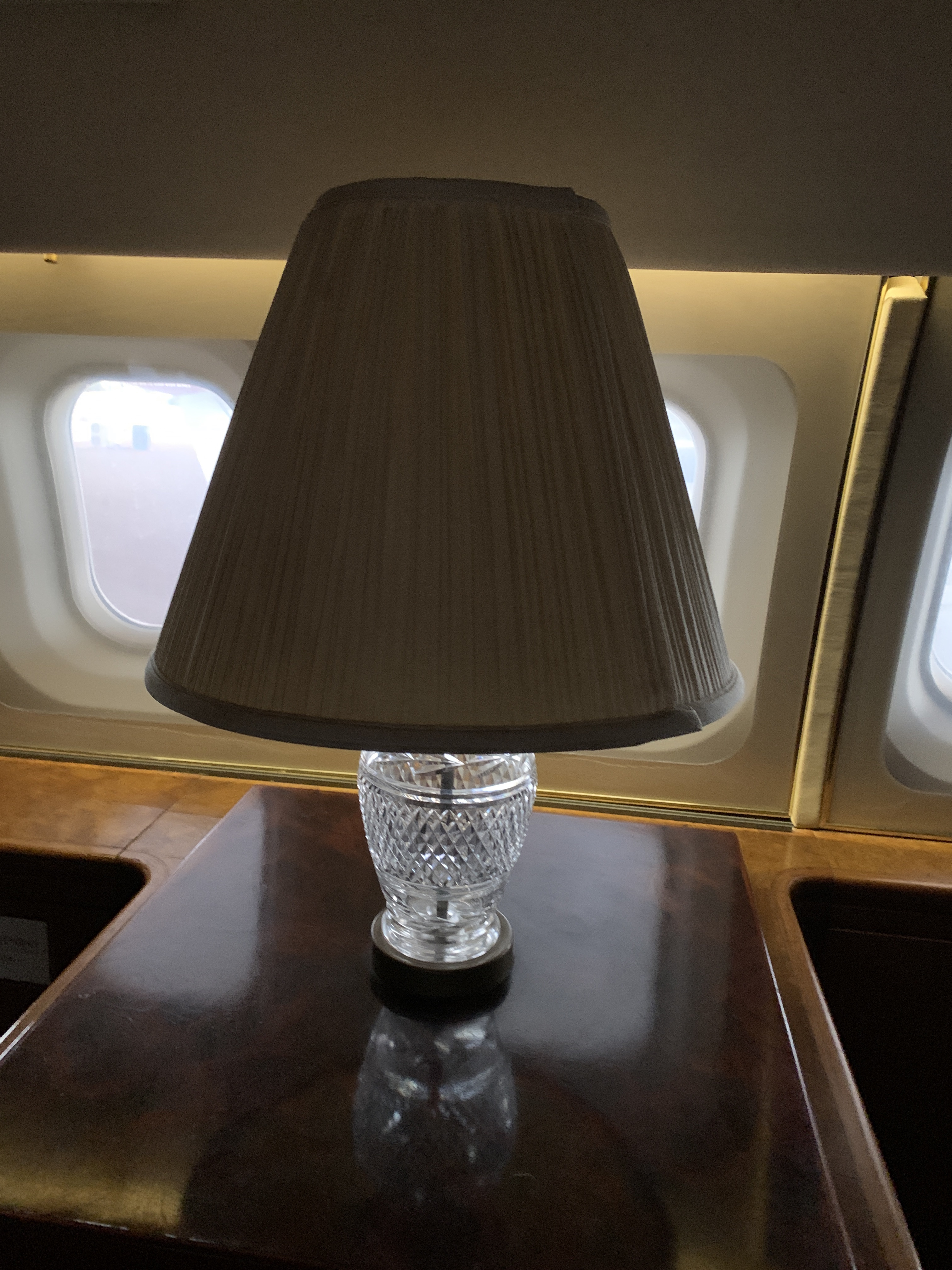




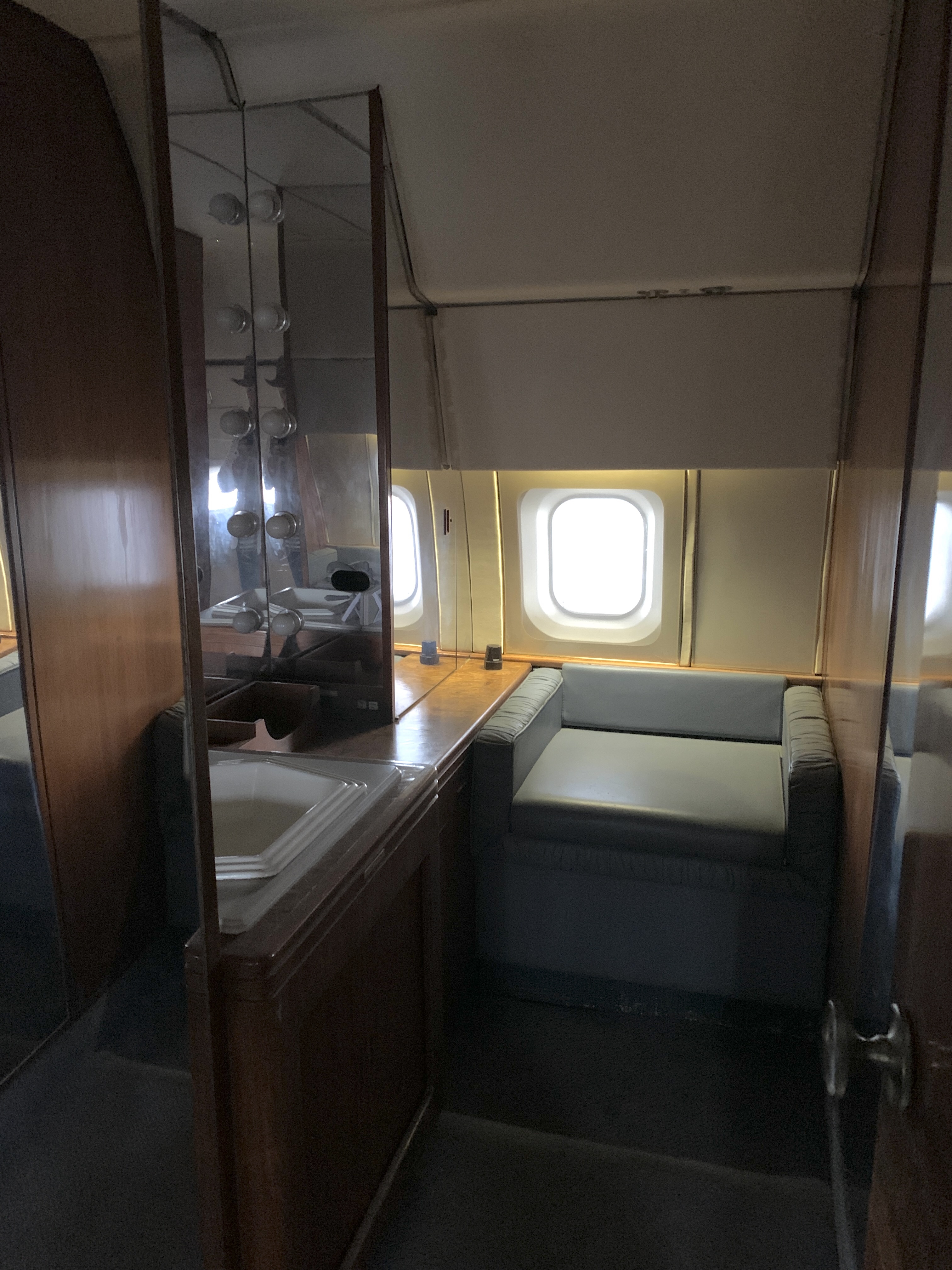
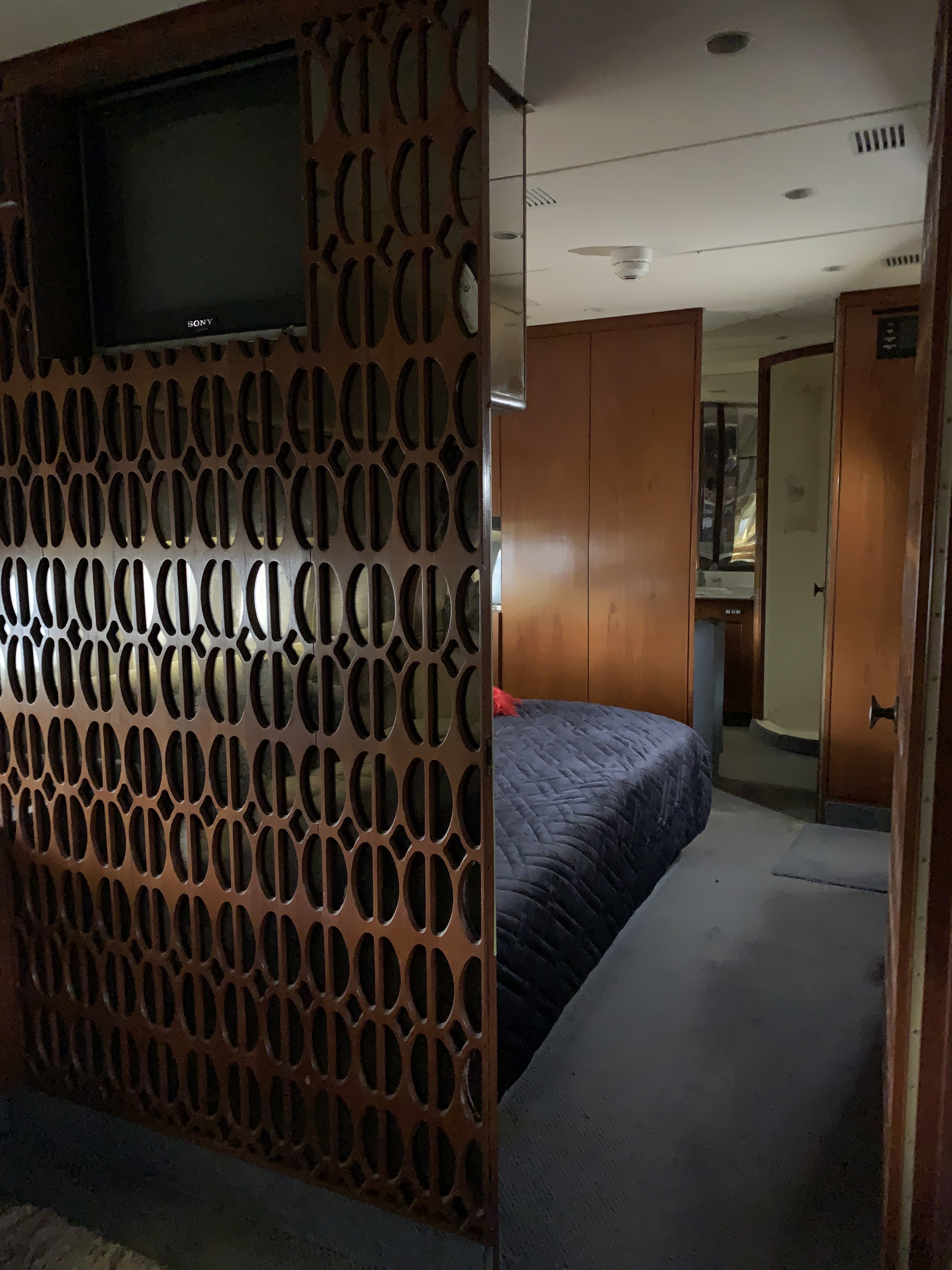

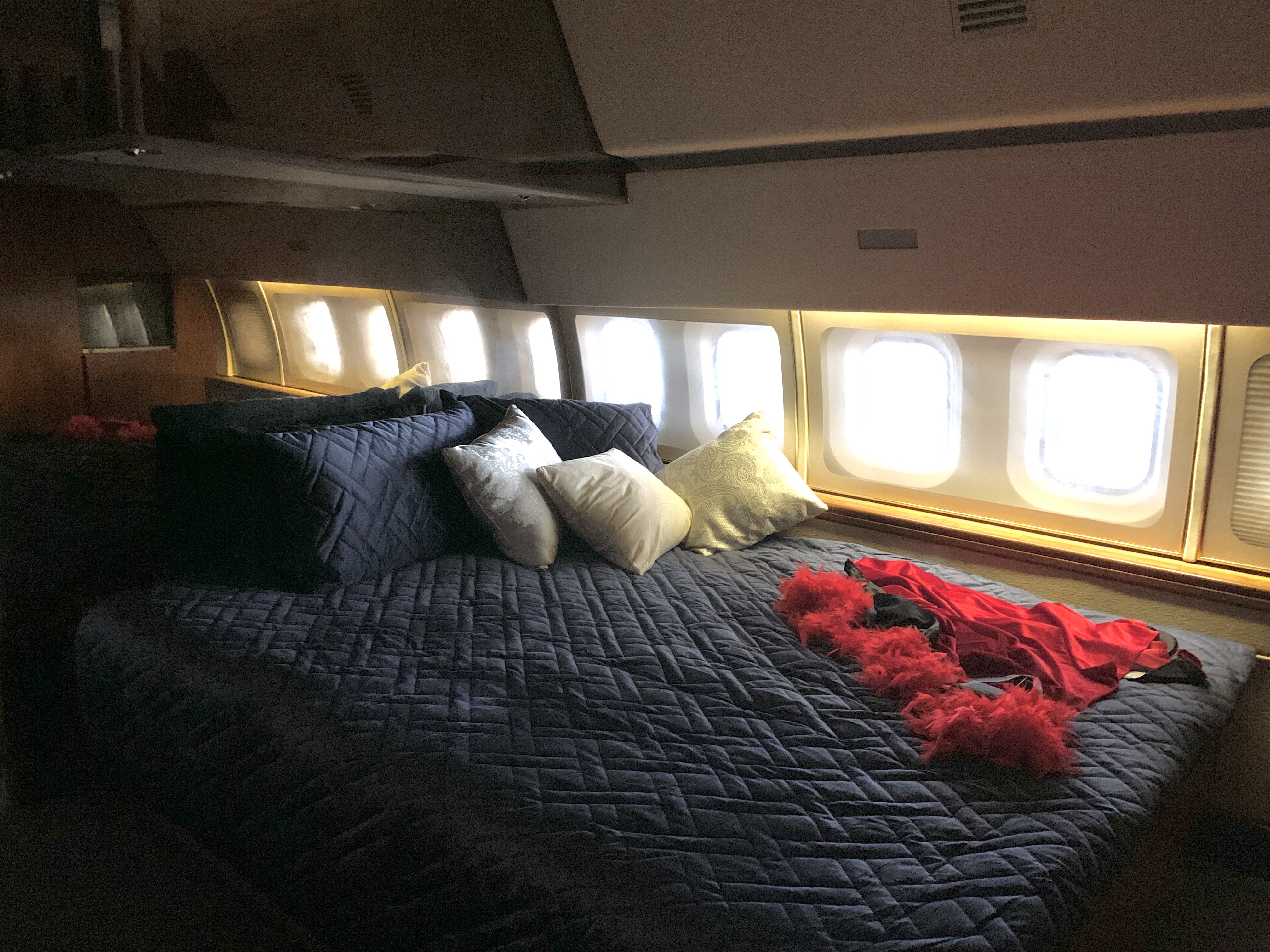
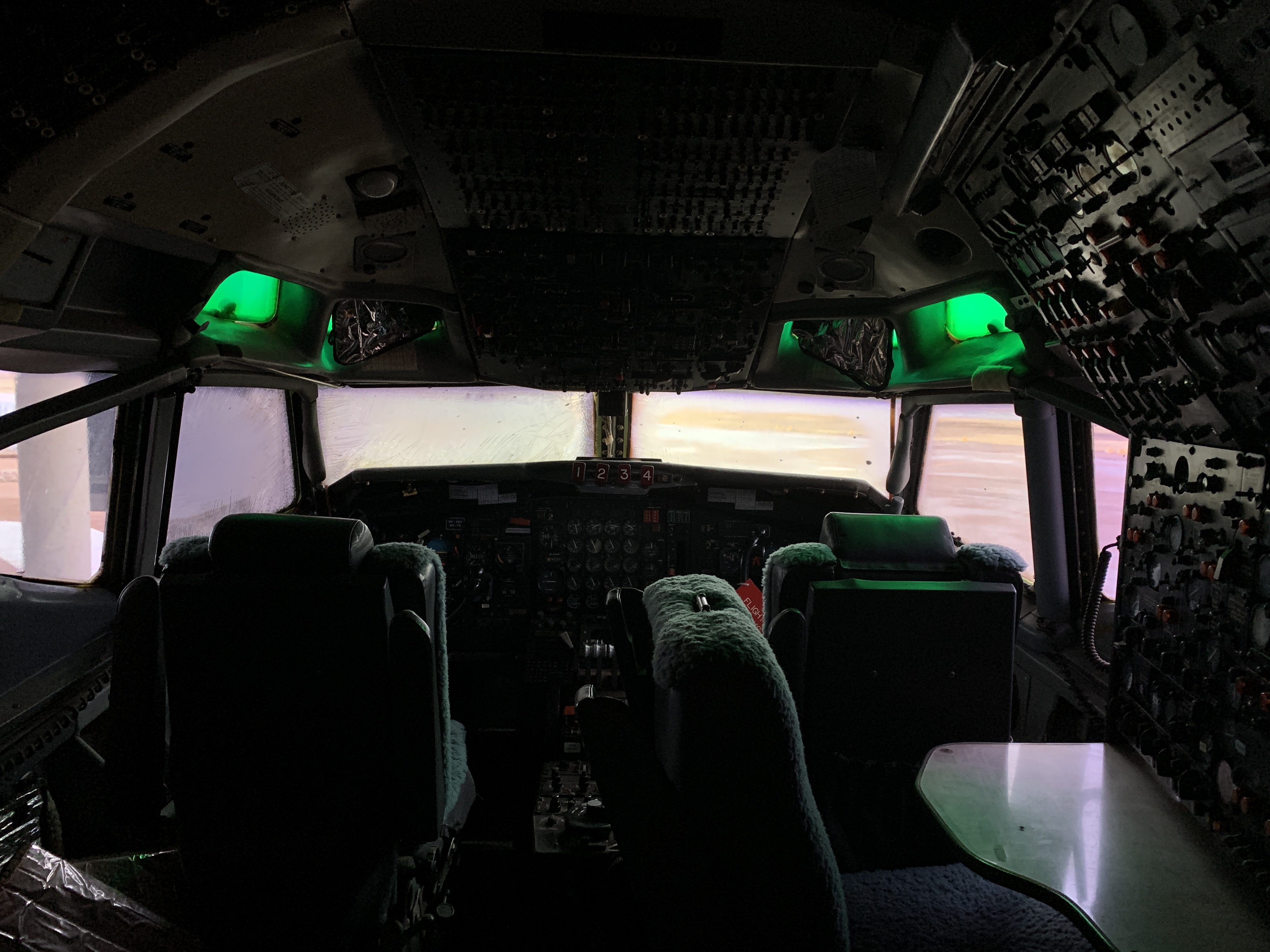

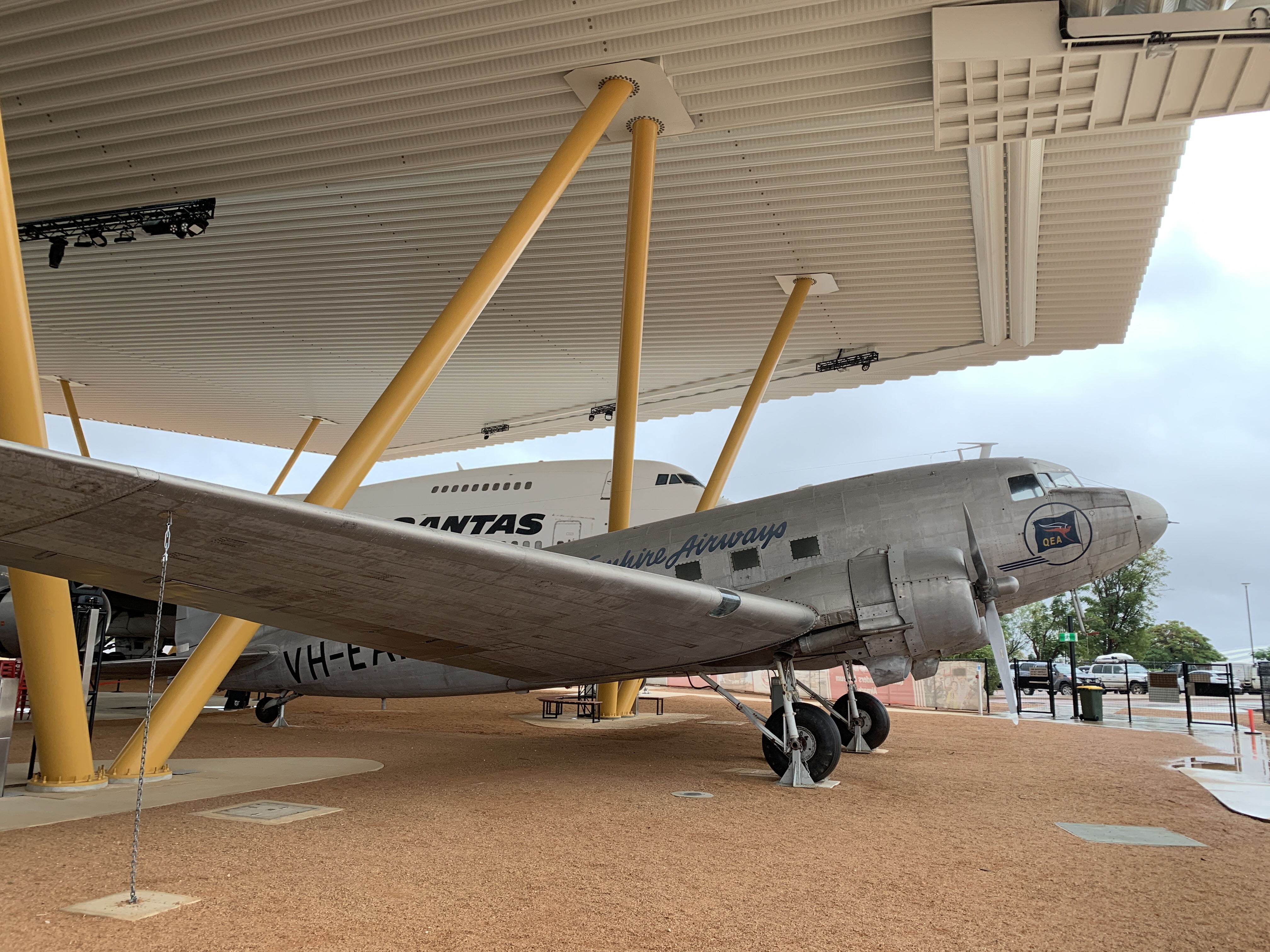
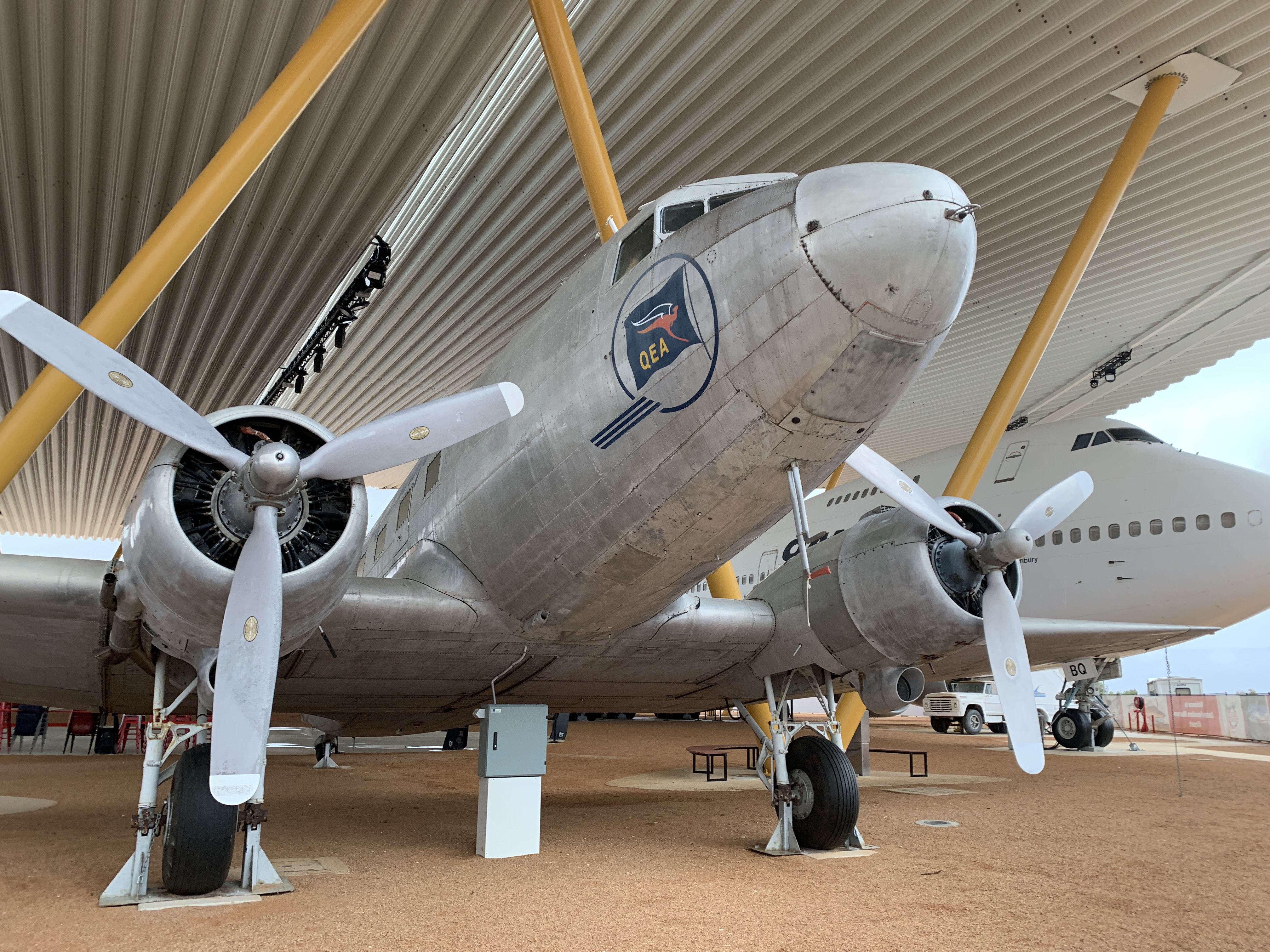

We set off again to see if we could find somewhere to park for the night. I had a bright idea and we found the Showground. I called the caretaker who said to call the council. I did that only to be told that we couldn’t camp there as they have a big function there on the Saturday. Looked like we’d have to stealth camp.
We had tickets for the Luminescent Longreach show at the Qantas Founders Museum so back we went, parked in their carpark and went to the show. I recommend this audio visual show if you are in Longreach. It is world class. It only goes for 25 minutes but you are engaged from the minute it started until it finishes. Fabulous show.
We went back to the motorhome and sat around and waited until the second show finished and those people all left then we just stayed in the carpark for the night. May as well stealth camp in a tarred car park than have to find somewhere else. The rain finally stopped about 9.30pm so we hoped that would be it and the roads will have a chance to dry out.


Charleville to Tambo
I had booked online for a tagalong tour of the Secret WWII Base and we had to be out at the Airport before the tour started at 9am. We had enjoyed our first stay in a CMCA RV Park and will definitely stay in one of those again. Such a bargain…a flat spot to park, a dump point, rubbish bin, potable water and happy hour around a campfire. All for $6 per night for two. If you are not members of the CMCA is costs more so why wouldn’t you become a member? It’s only $44 per year.
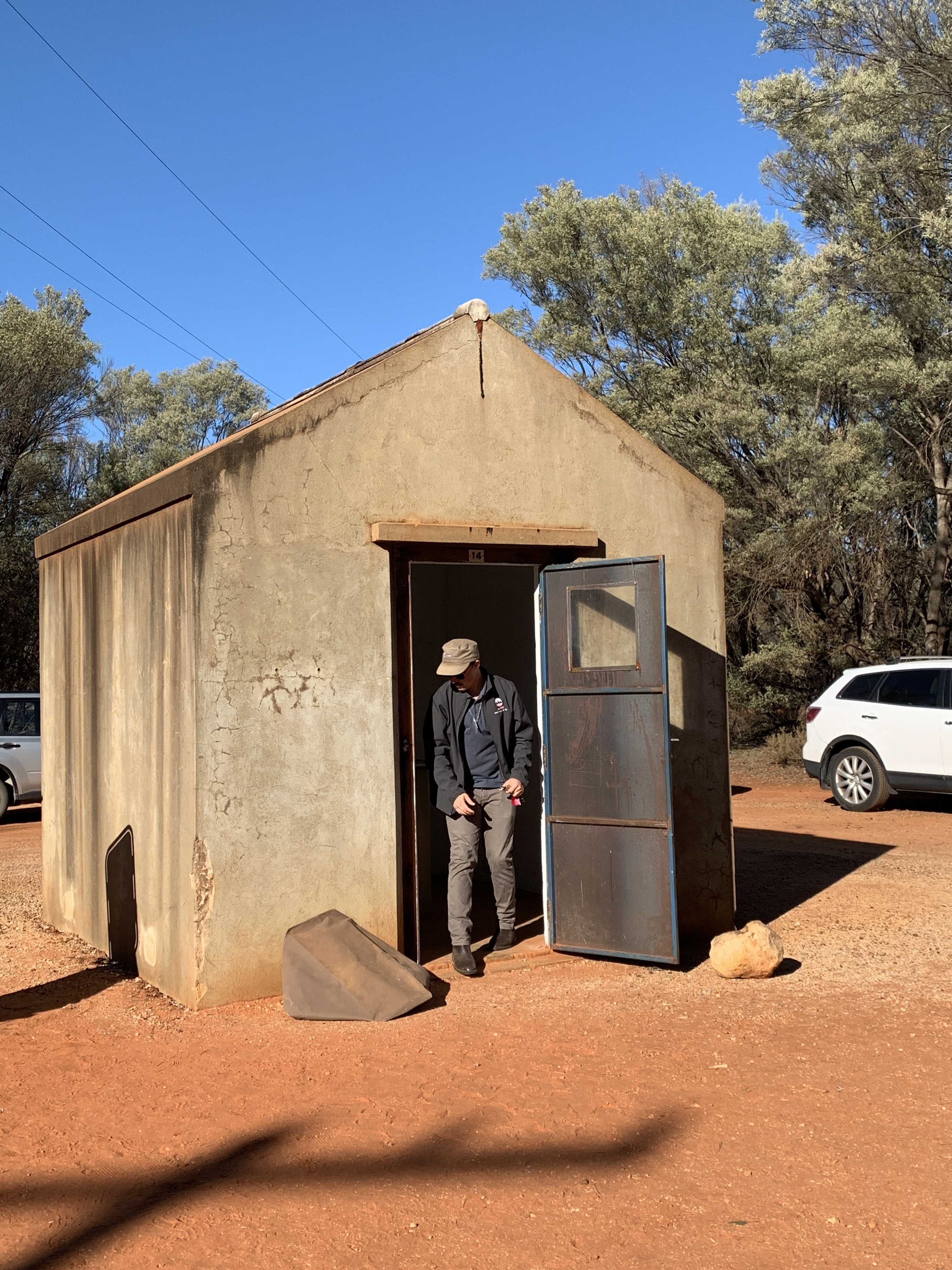
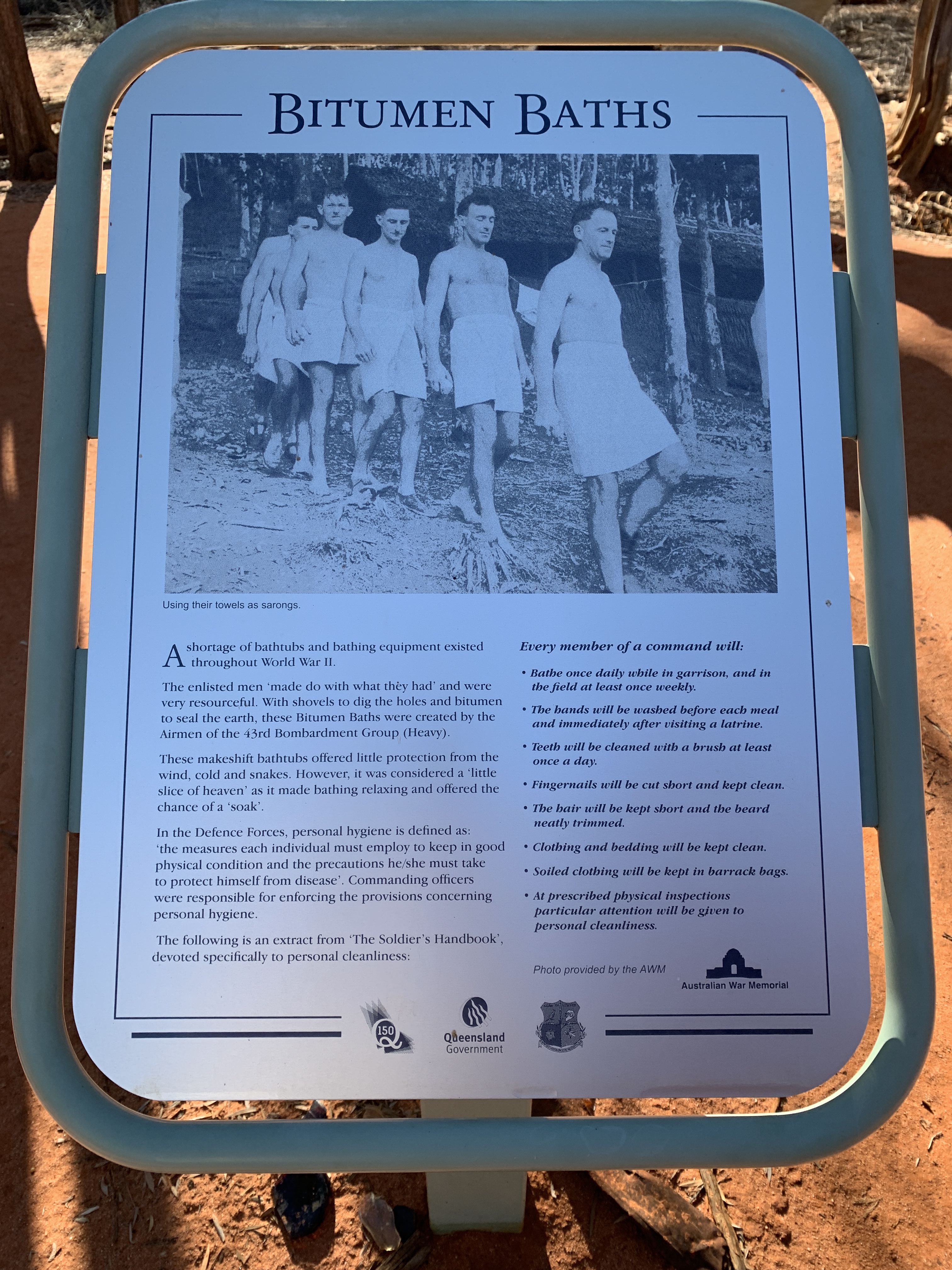
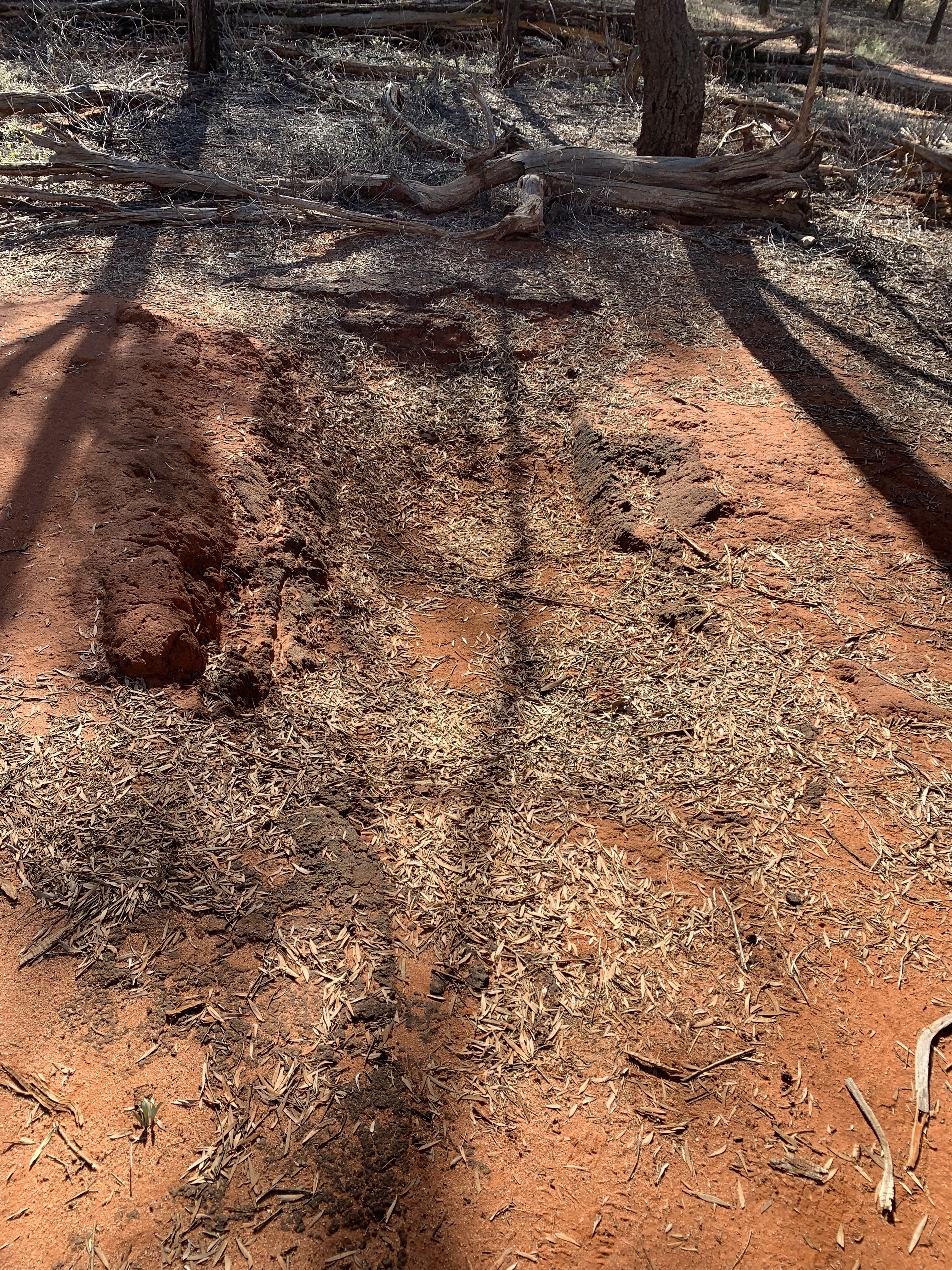
So we arrived out at the WWII Secret Base and parked near the main building. Not long after a little car drove up with Secret Base signage. A young guy hopped out and he turned out to be our tour guide for the morning. The way this tour works is the guide drives his car to each of the seven locations around the huge airport site and at each one he stops to give a talk about the significance of each location. Everyone follows in their own vehicle.
The Secret Base was a United States Army/Air Force base and during the war around 3,500 US servicemen were stationed there. Why was it secret? And why was it built in Charleville?
The base was built in Charleville as the conditions were exactly right for a large airport. It was flat, it was the right distance from the coast and it was within flying distance from the theatre of war. Also it was too far for Japanese planes to fly to and attack without refuelling making unlikely that it would be attacked by the Japanese. The base was built in a very short time and became the base for the famous B17 Bomber plane as well as many others. The planes were scattered around the base hidden between the Mulga trees and camouflaged with netting and vegetation. At this base the planes would be serviced and repaired.
Now the secret is a different story. The Americans had invented a machine that was used to accurately pinpoint a target location and drop a bomb on that location. It was called the Norden Bomb Sight, named after it’s Dutch/American inventor. The Norden Bomb Sight was top secret and was one of the US military’s most closely guarded secrets during WWII. The Sights were kept locked in a bunker with an armed guard at all times and when they were taken to the planes it was with an armed guard. The Sights were kept covered so they could not be viewed from the air and once the mission had been completed the Sight was removed from the plane and taken back to the bunker to be locked up again. It was such a special invention that gave the allies an advantage in the war. It was supposedly accurate enough to hit a target in a 100 foot circle from 21,000 feet. By the end of the war over 45,000 bombardiers had been trained to use the Sight and each of them had to sign an oath of secrecy.
The tour lasts for a couple of hours and ends back in front of the WWII Secret Base museum. This is a new museum dedicated to showcasing the story of this amazing place. It cost $8 per person to visit the museum and it is well worth a visit. At the time of our visit only Stage 1 had been completed and when they get Stage 2 & 3 finished this will be a world class museum. Because the base was top secret a lot of information is only being uncovered now and more stories will be found and told.



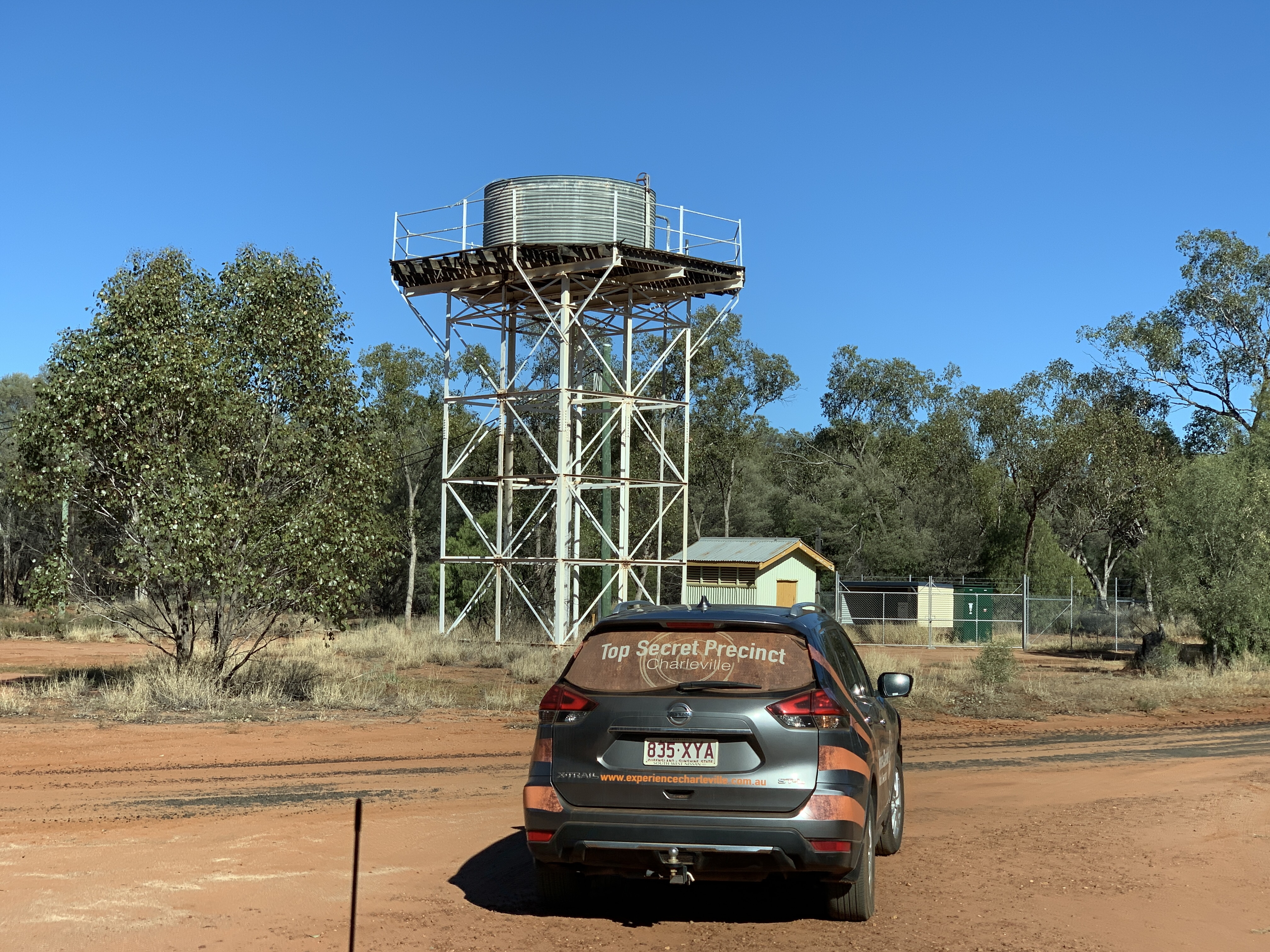
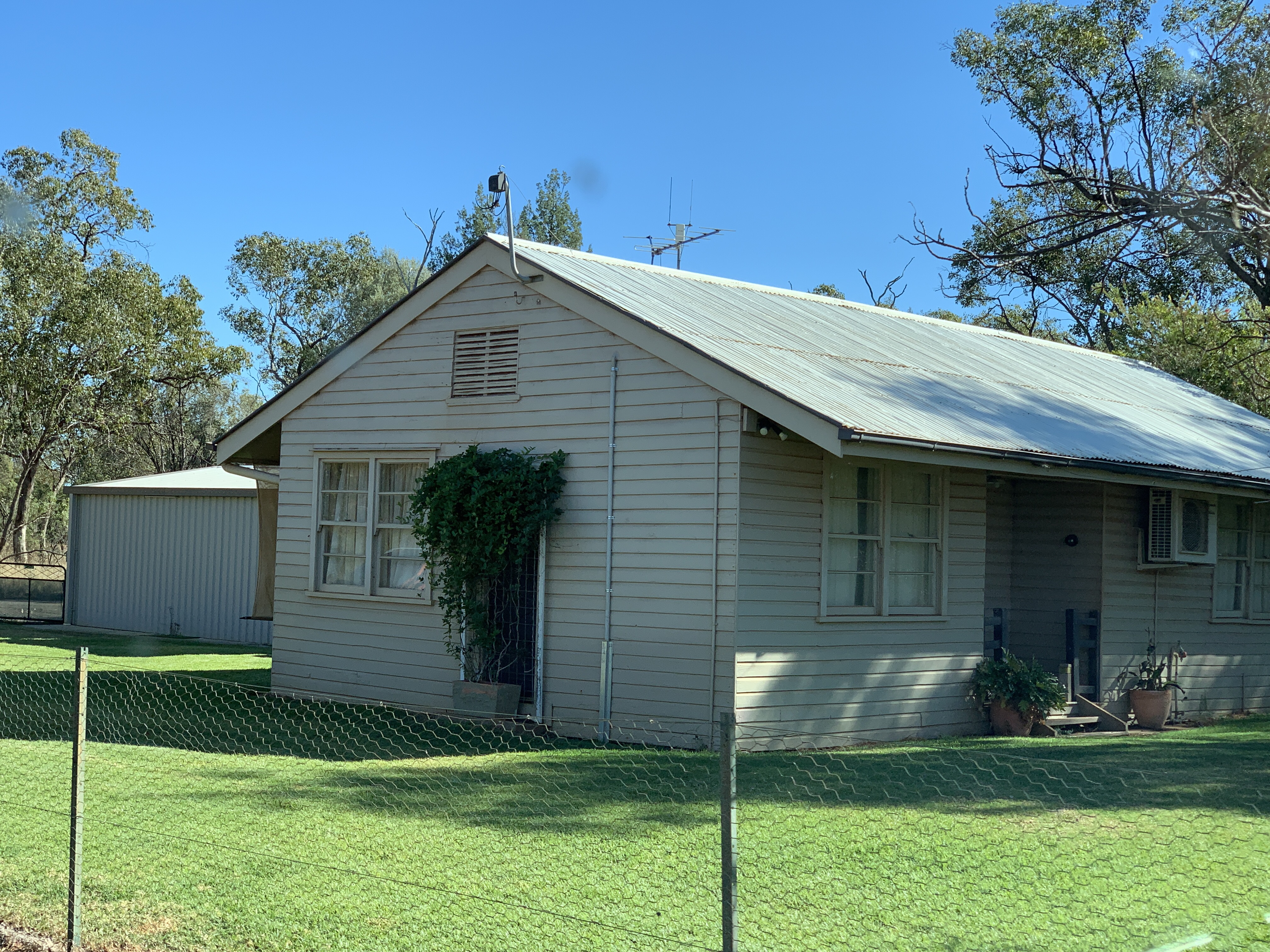
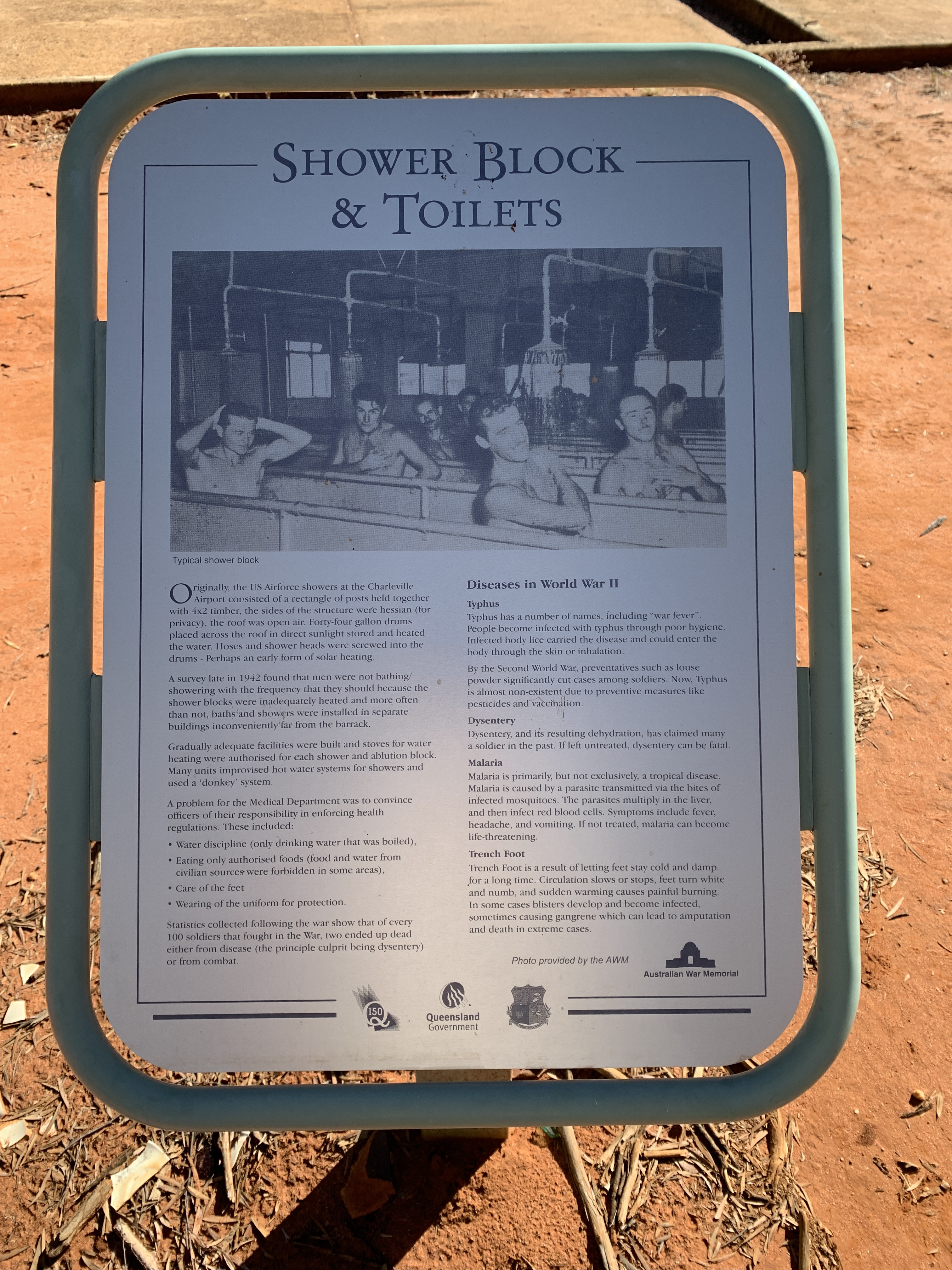

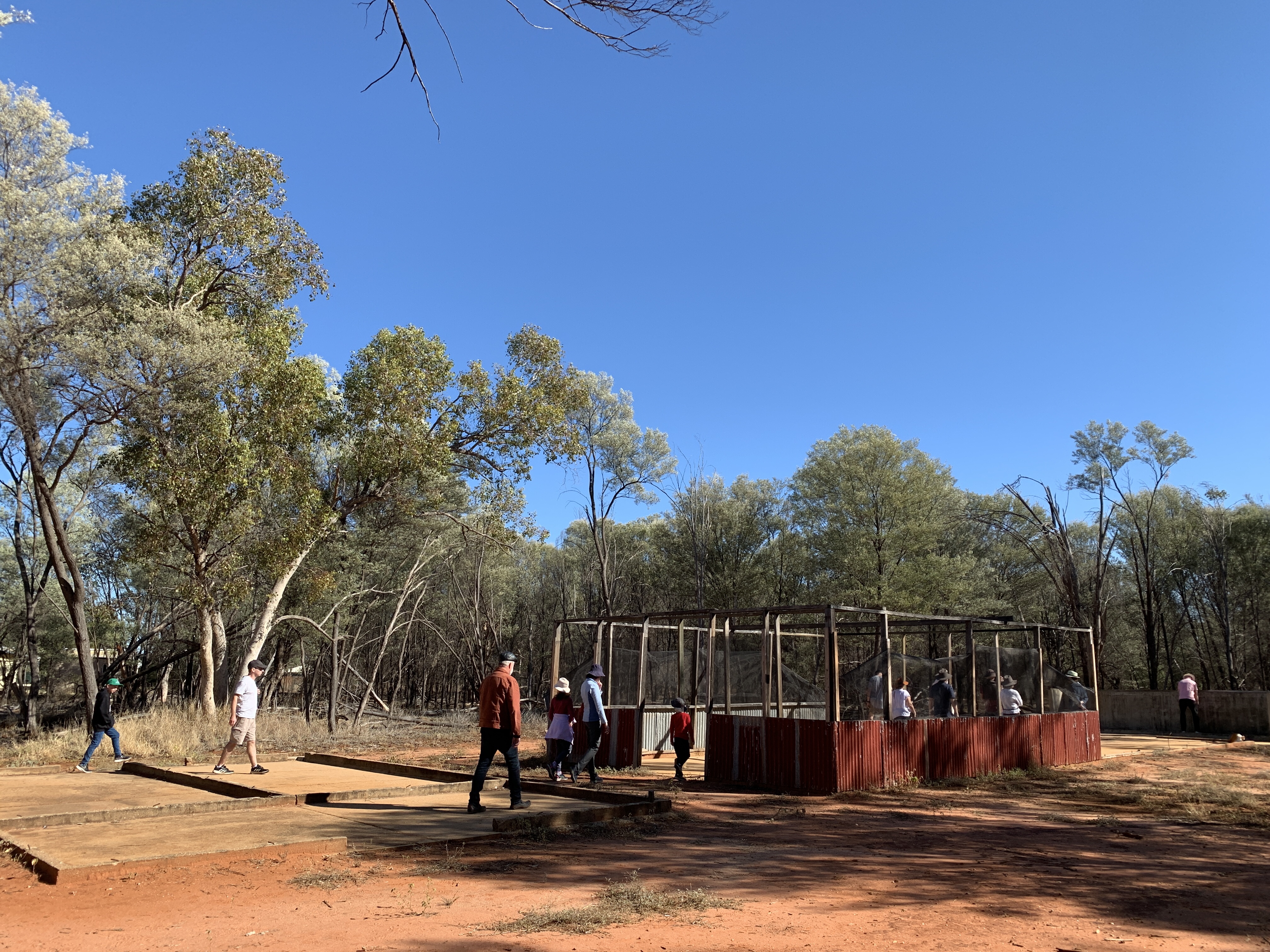

As we thought we’d head on north we took some time to use the dump point and fill up with water at facilities at the airport. Then it was off to the local IGA for some groceries. A short drive around town followed so I could get some photos for my blog and then we headed across the Warrego River again and northwards towards Blackall.




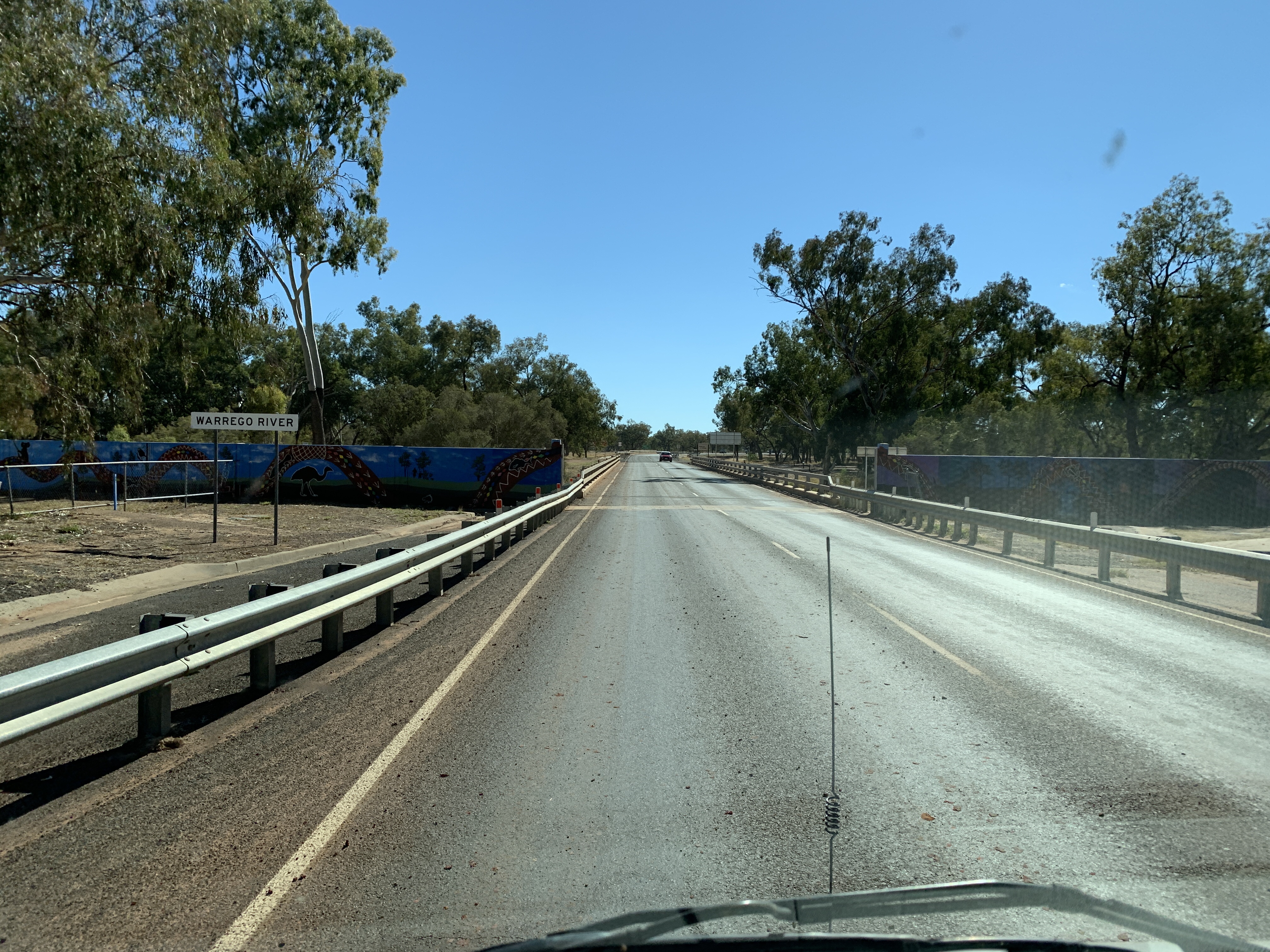
The road was a good wide tar road with quite thick bush on either side.
I found what looked like a good spot to stop for lunch on WikiCamps and we eagerly looked for a pole on the side of the road that had tinsel wrapped around it. This was the marker for a track down to the 10 Mile Waterhole. We found the tinsel-wrapped pole, followed the track down to the river and enjoyed a nice lunch break with water views of the Warrego River. I do love a water view. I think I might have said that before!
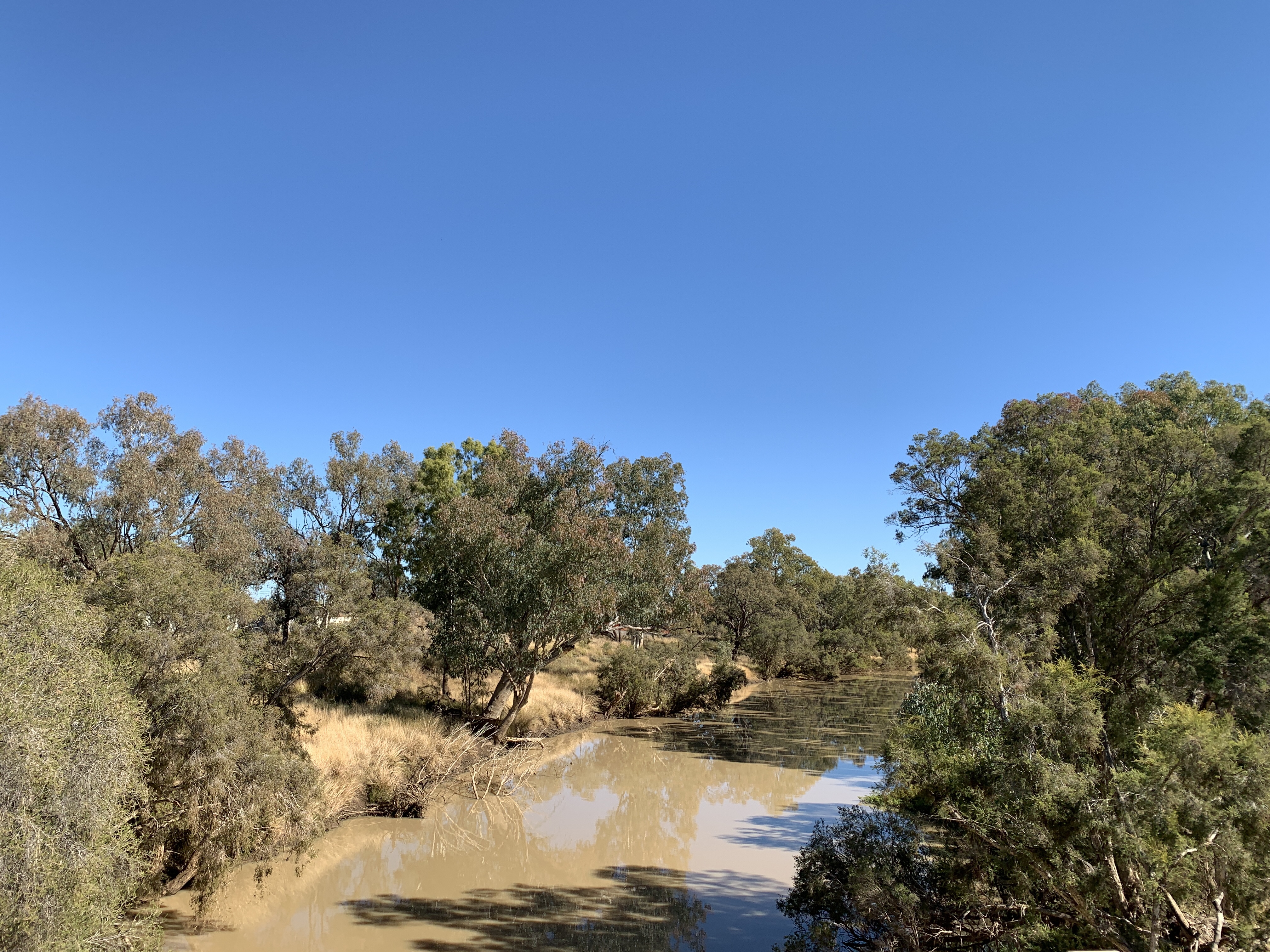

Onwards after our lunch stop and the dense bush was home to lots of kangaroos. We had to keep a sharp eye out as they jump across the road without a care in the world. Once we saw a wild white pig eating from some road kill. I haven’t seen that before!
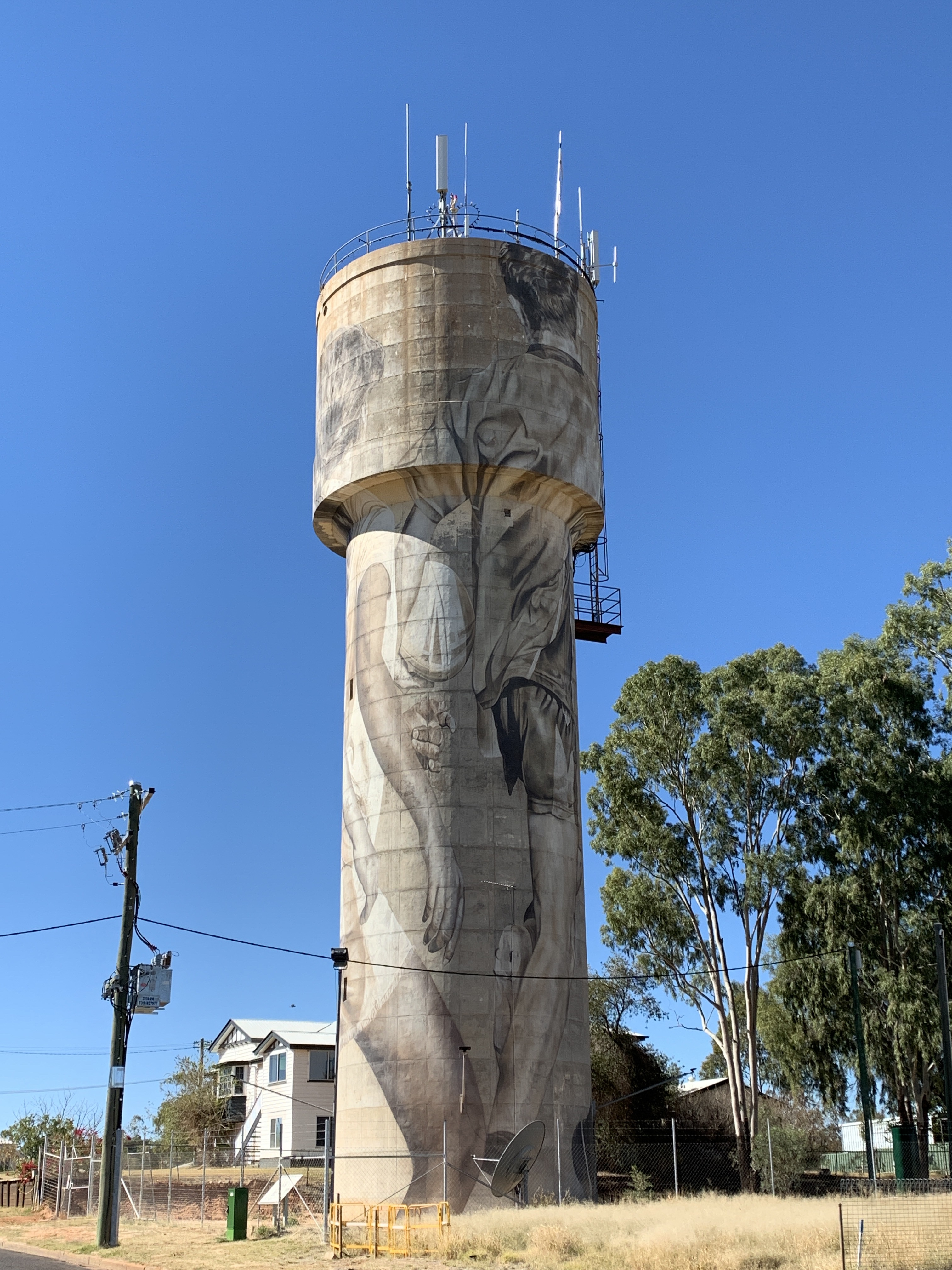
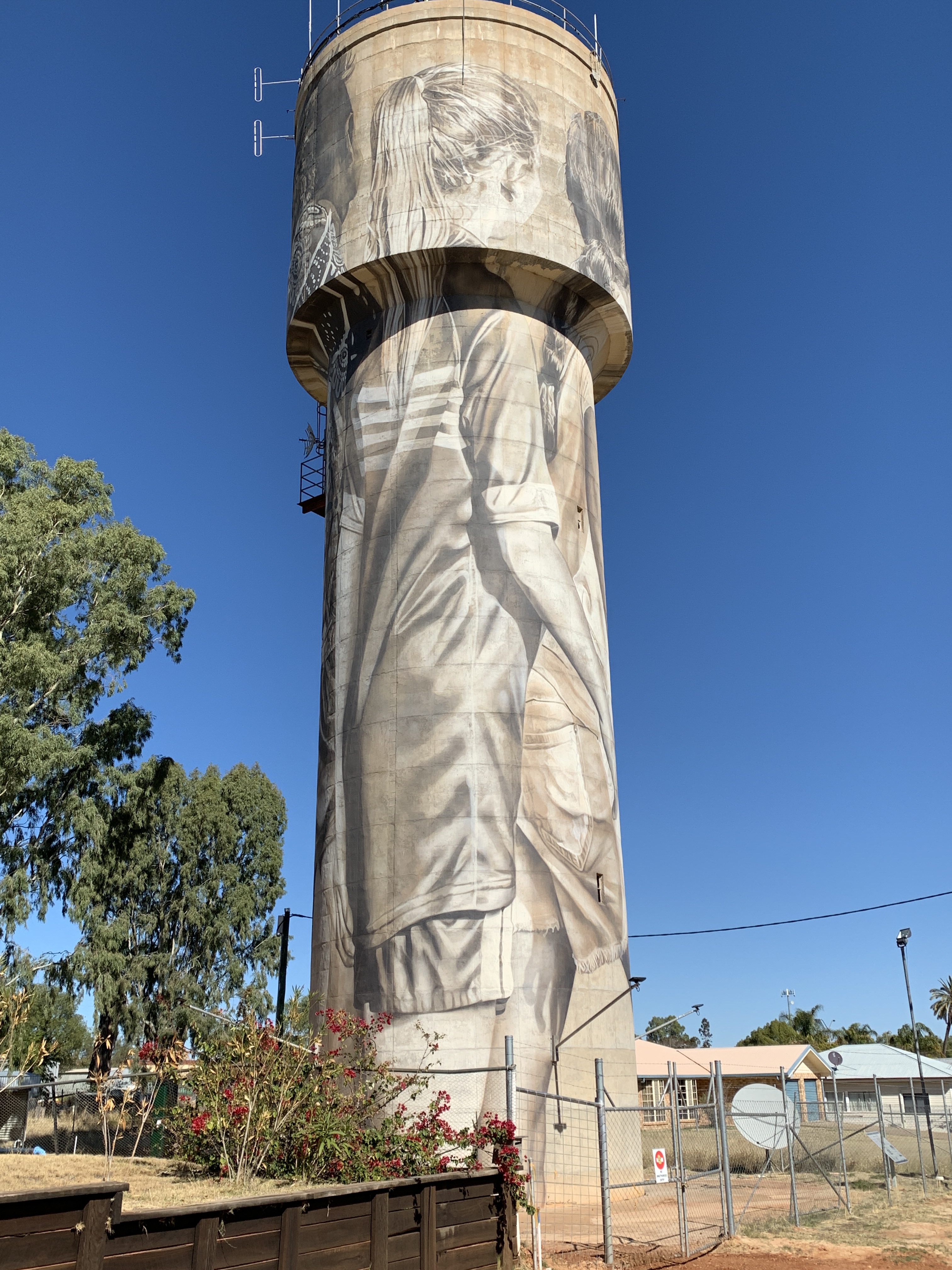
We did a little detour through the tiny town of Augathella to view their painted water tower and then continued on.


Later as we approached Tambo we came over a rise and there was a sign saying we were entering the Lake Eyre Basin. Fancy that! We are a long way from Lake Eyre but the water in this catchment ends up there!
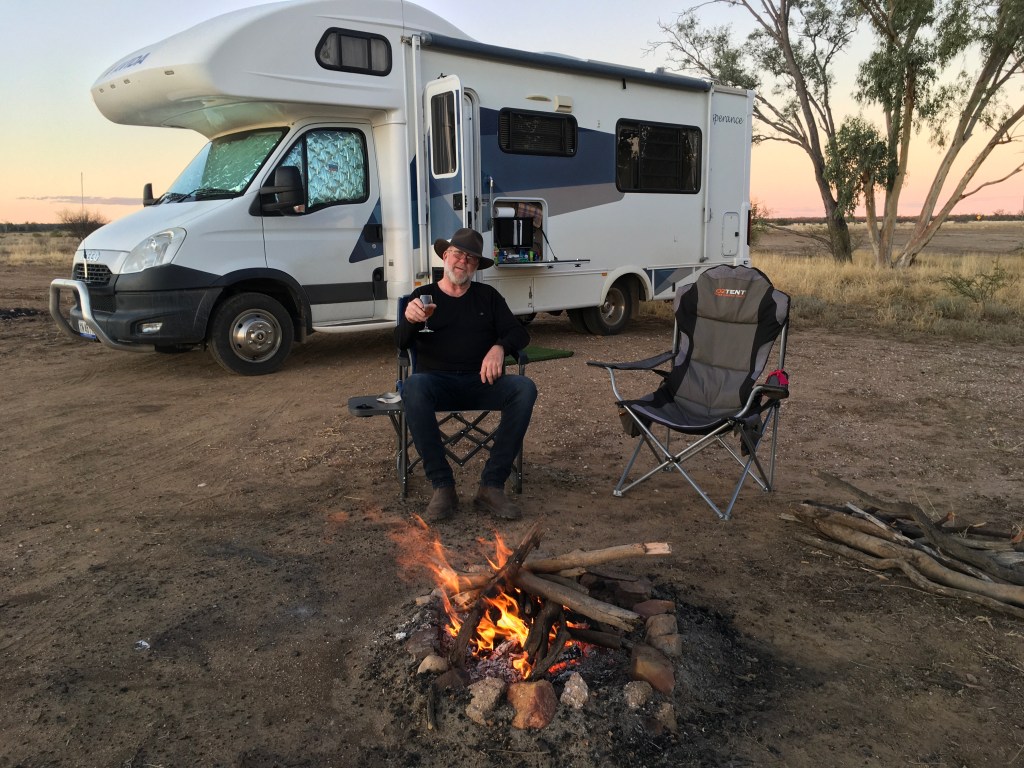
We arrived in Tambo in the late afternoon and headed out along the Barcoo River to find a camp. It was around 5ish by this time and most of the good spots were already taken by campers but we found a spot right at the end and set up camp. Sadly the Barcoo River is empty so we didn’t have water views for this camp but we did enjoy a roast pork baked dinner, a lovely campfire and watched the sun go down on the low, flat horizon.
For the first time on this trip we have no mobile service at all. Our Nighthawk modem has an Aldi SIM which uses the Telstra Network…..nothing. Our mobile phones and my iPad have Optus SIMs…..again nothing. This is unusual as we usually have one or the other but in Tambo neither network has a signal. Fortunately I can continue to write this blog however it won’t upload until we have signal again.
Bourke
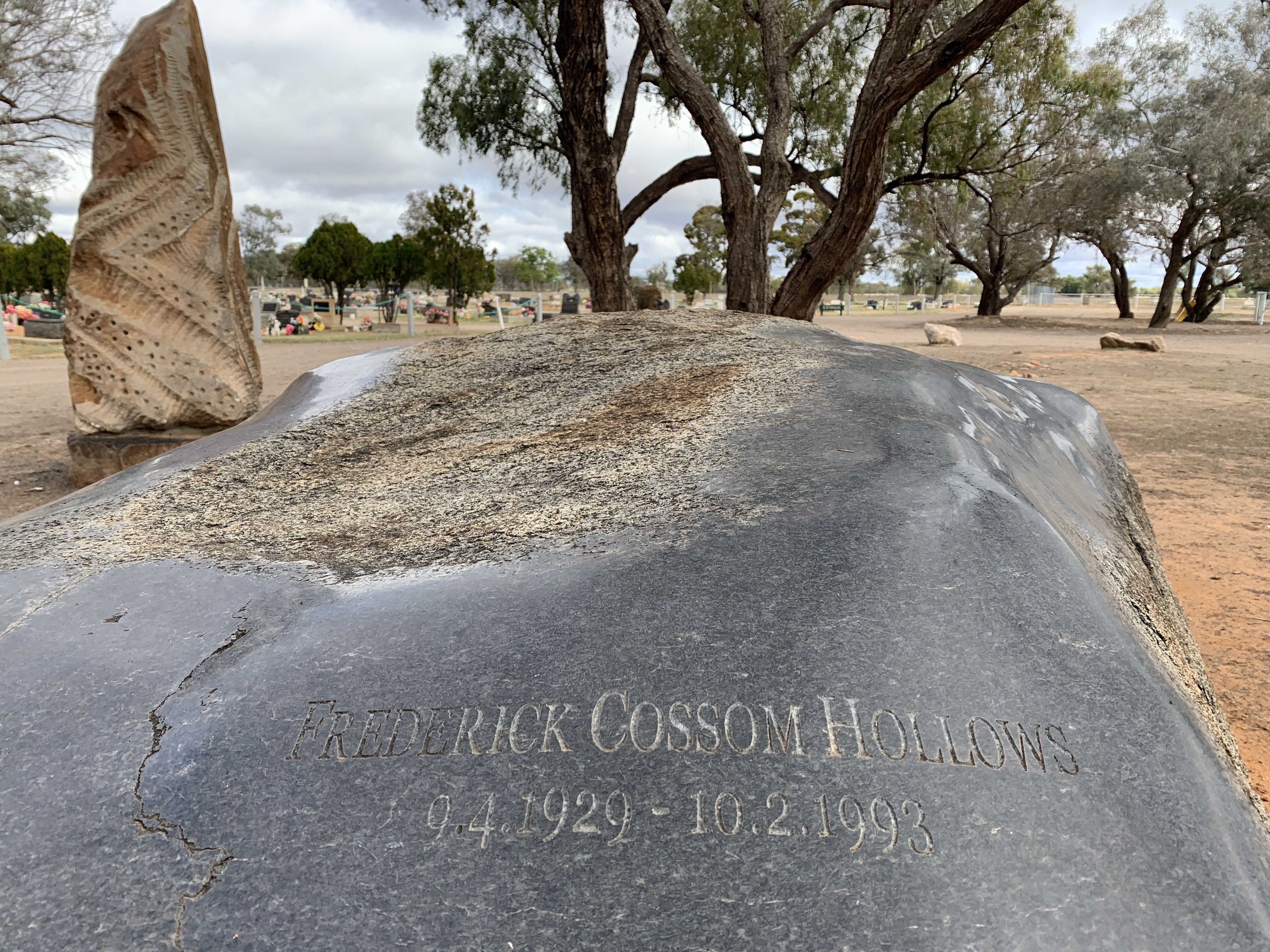
We arrived in Bourke on Friday 18 June 2021. Our first stop on arriving at the outskirts of the outback town of Bourke was the Historic Cemetery. This was a fascinating place to visit. The Historic part of the cemetery is the burial site of many of the districts pioneers. You can pick up a brochure that includes a map that guides you to some of the most significant graves. The most famous person buried here is Professor Fred Hollows. Fred was an eye doctor and became famous for his treatment of cataracts mainly working with indigenous and the poorer people in communities. Fred loved Bourke and its people and it was his wish to be buried in Bourke. His family have had a huge granite rock placed over his grave with his name engraved on it. It is their wish that people touch, climb and sit on the rock.

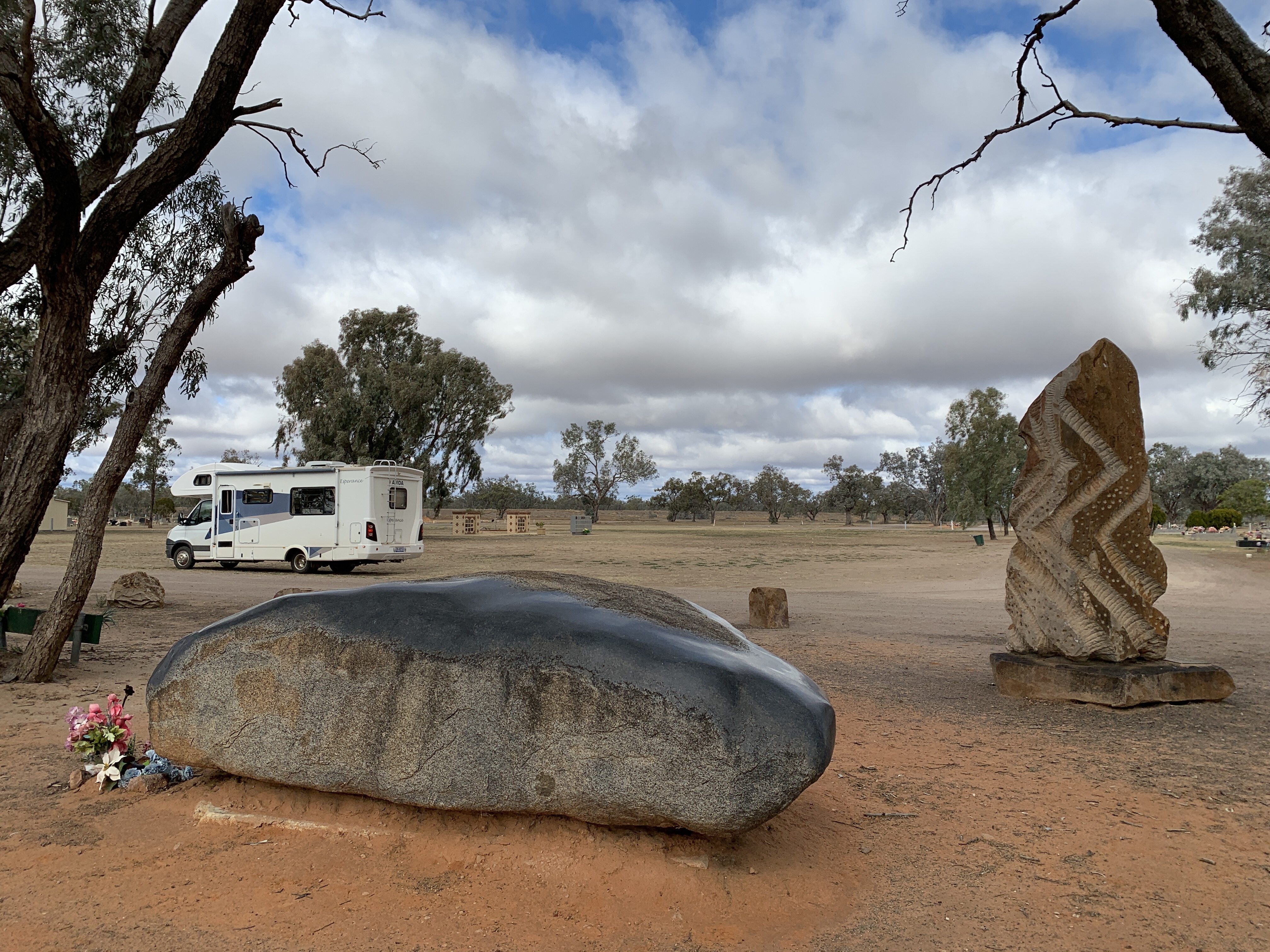

Other interesting graves are those of the Afghan Cameleers. These Afghan Muslims came to Australia with their camels and became an integral part of their communities. Camels could carry heavy loads for long distances. The cemetery even has a tiny corrugated iron building that the Afghans once used as their mosque. The Afghans are all buried facing Mecca.

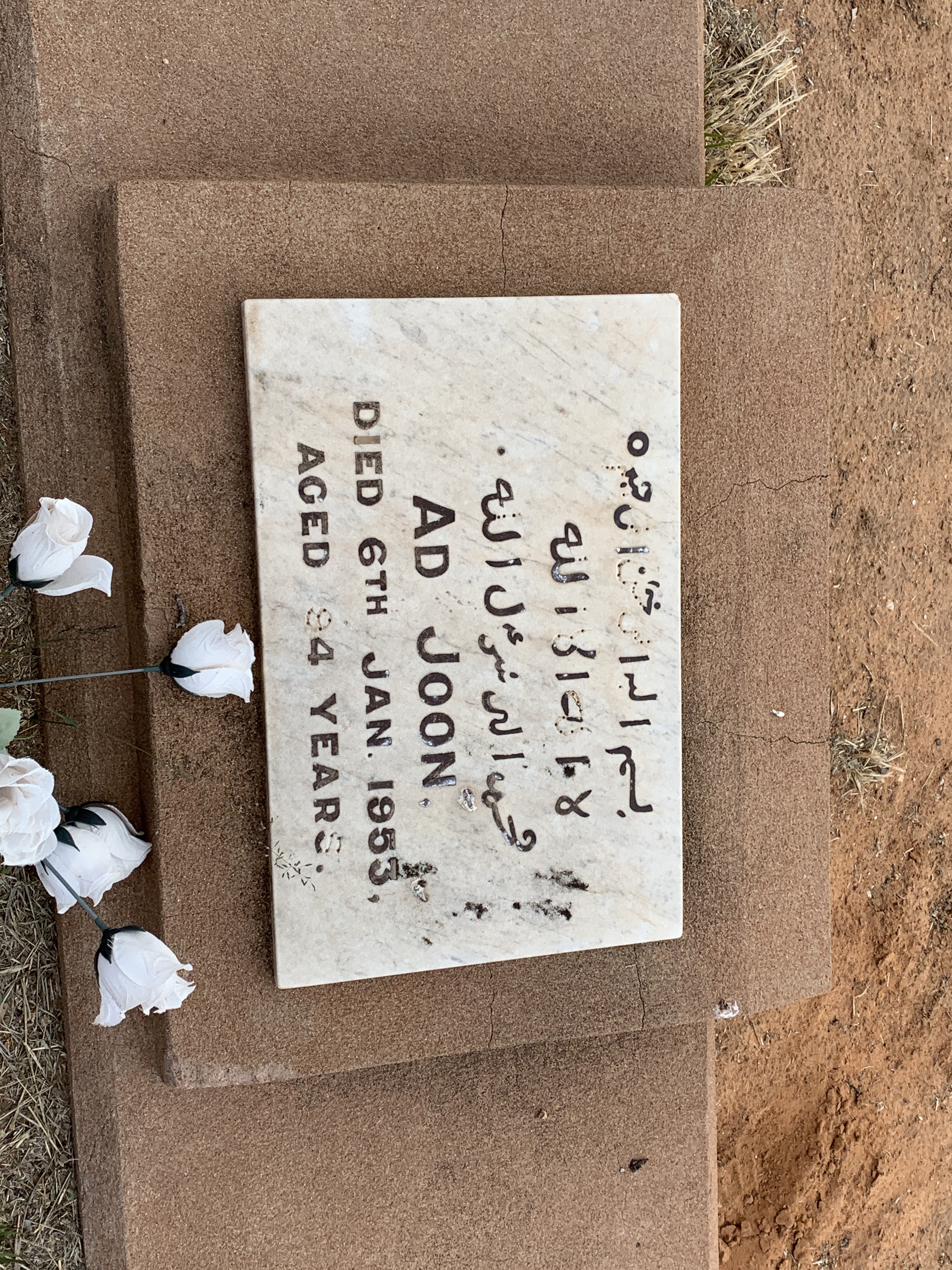

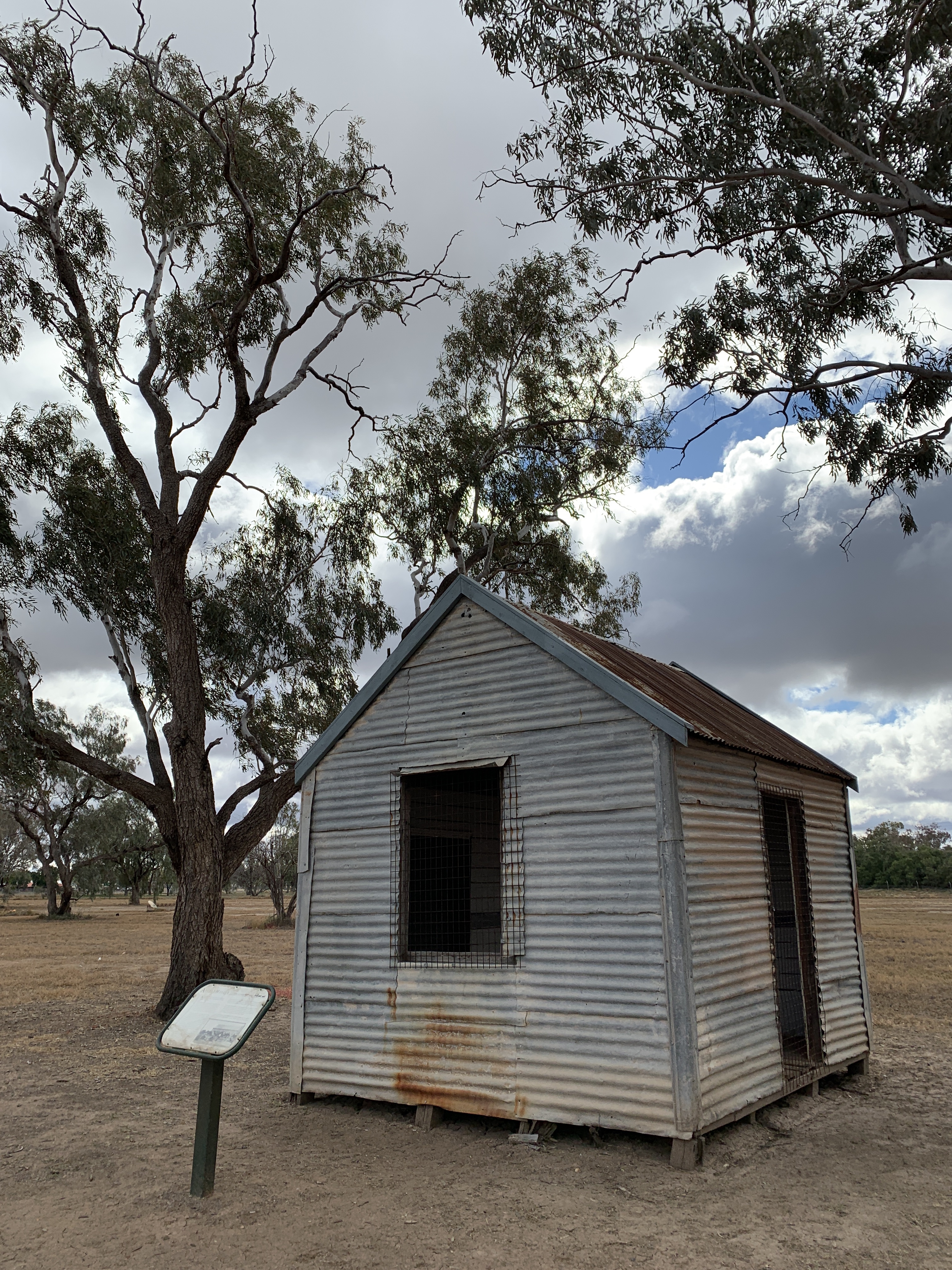

In a far corner of the historic cemetery are the graves of a couple of Chinese men. These men created a market garden and supplied the town with fresh vegetables. They even went as far as Mt Hope with their horse and cart taking much needed fresh vegetables to that community.


One grave is the burial place of Sgt John McCabe who was badly wounded in a shoot out with the infamous bush ranger Captain Starlight at Enngonia. Sgt McCabe died a lingering death.

The historic cemetery houses many small graves of young children that show how disease and accidents were once the cause of many childhood deaths.
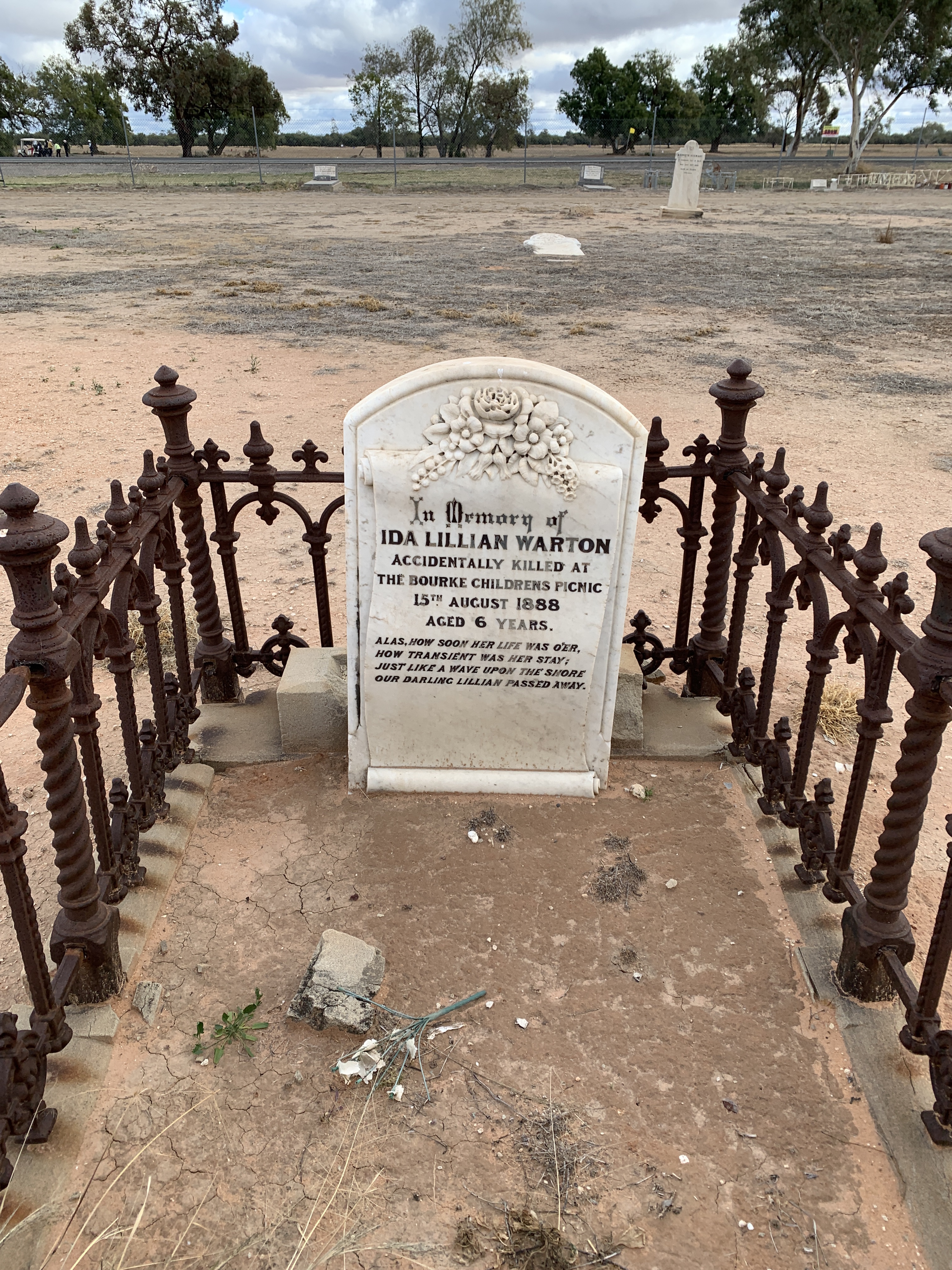

There is a row of white headstones that are the graves of some of the Sisters of Mercy nuns that once lived in Bourke.

I spent an hour wandering around this amazing place and on the way out I met the caretaker of the cemetery, a young Aboriginal man, and when I mentioned how neat and tidy the whole cemetery was he beamed with pride. He obviously takes his caretaker role very seriously.

Our next stop was the Historic Lock & Weir. This is out of town on the western side and the road is only tar for a little way and then becomes a gravel road for the last couple of kilometres. The road was awful. It was very corrugated and we did wonder for a bit if it was worth shaking our motorhome that much. We went very slowly and finally made it to the weir. This lock and weir was the first one ever built on the Murray/Darling Rivers and was built in 1897. The lock measures 59.5 metres between the gates and is 11m wide. The lock is no longer usable but the weir still functions as it did when built. We found some old pipes that were obviously once used to pump water from the river.
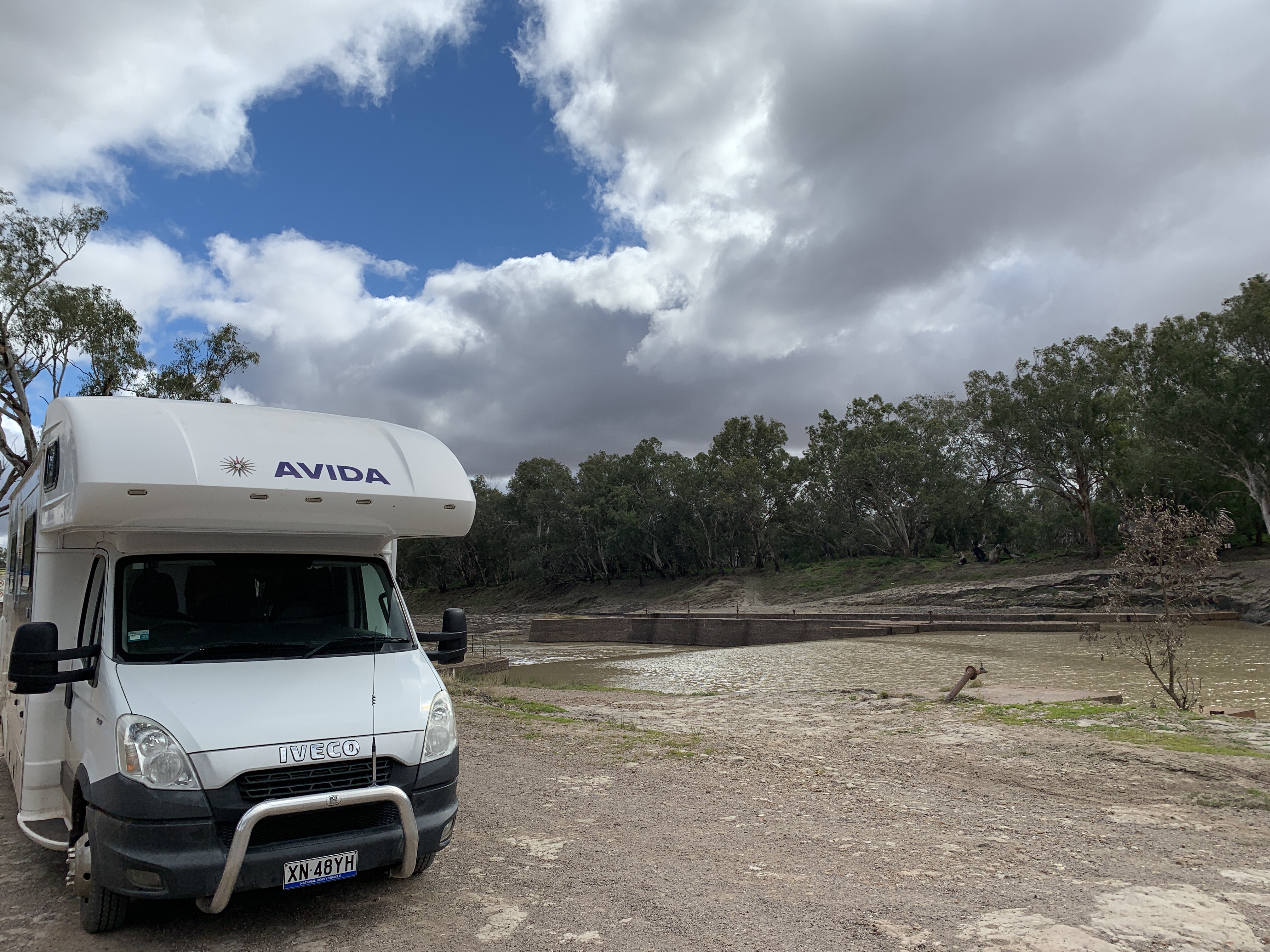


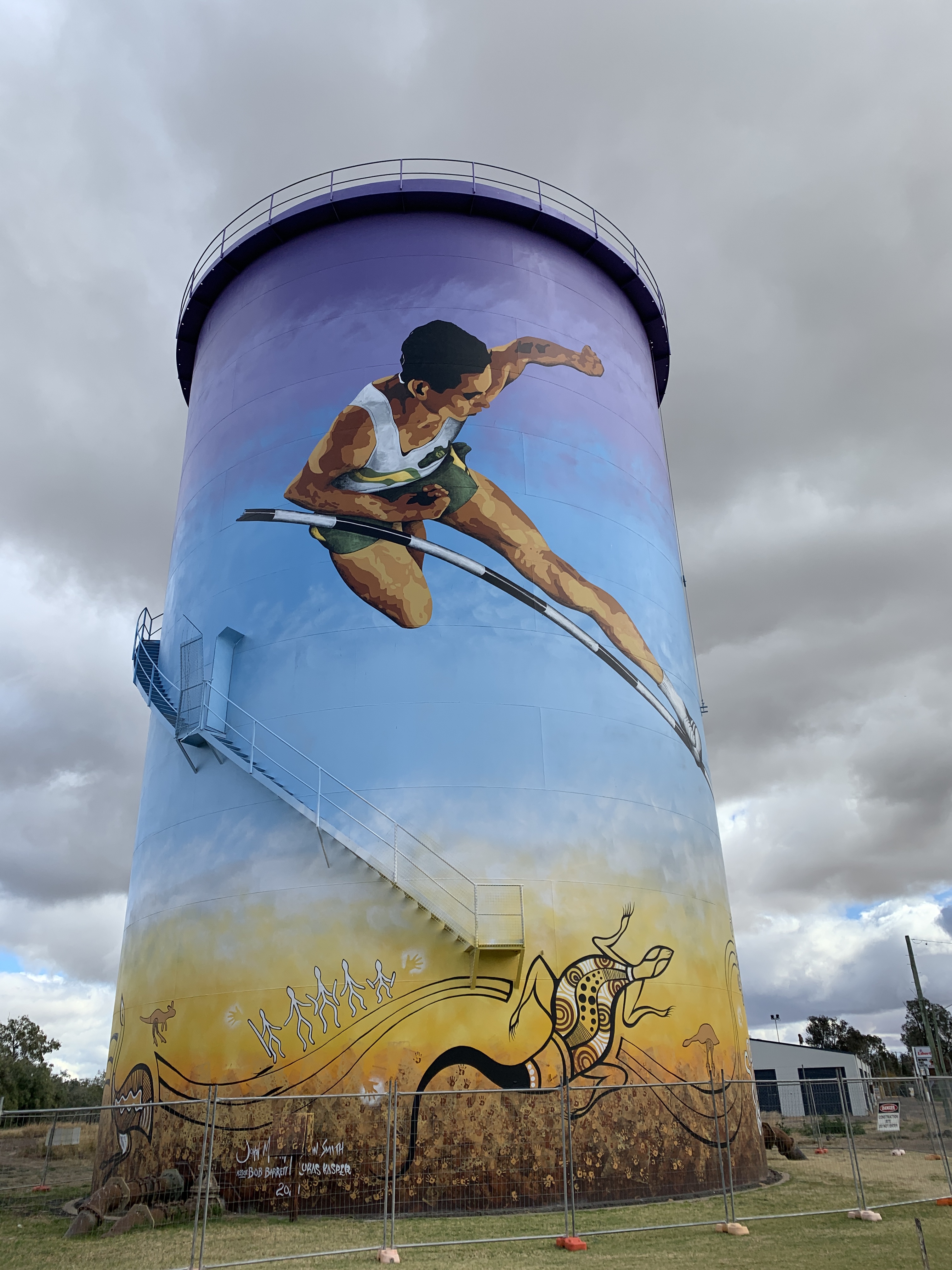
Back into town and our next stop was the painted water tower. The tower shows the image of one of Bourke’s most famous residents, Percy Hobson. The park that the water tower sits beside is also named after Percy and there is a plaque in the park commemorating his achievements.
Percy Hobson was the first indigenous Australian to win a gold medal for Australia at the Commonwealth Games. He broke the games record for high jump with a jump of 6’11” or 2.11m at the games in Perth 1962 and his record stood for 8 years.
He did all this while working full time in Bourke and doing his own training with the help of a coach in Sydney via correspondence. He would often take the train to Sydney, compete the next day then take the train back to Bourke so he could go to work. Amazing what an athlete!



Leaving the water tower we drove around the little outback town and admired some of the historic buildings such as the Post Office Hotel, the Western Lands Department building and the old Court House built in 1900 at a cost of 9,500 pounds.
We parked up near the Historic Wharf precinct and went for a walk. This area was being renovated and there were barricade fences up around the work site. The area is getting all new paving, bollards and landscaping. There is a new walkway along the river bank. This project is providing employment for local youth.
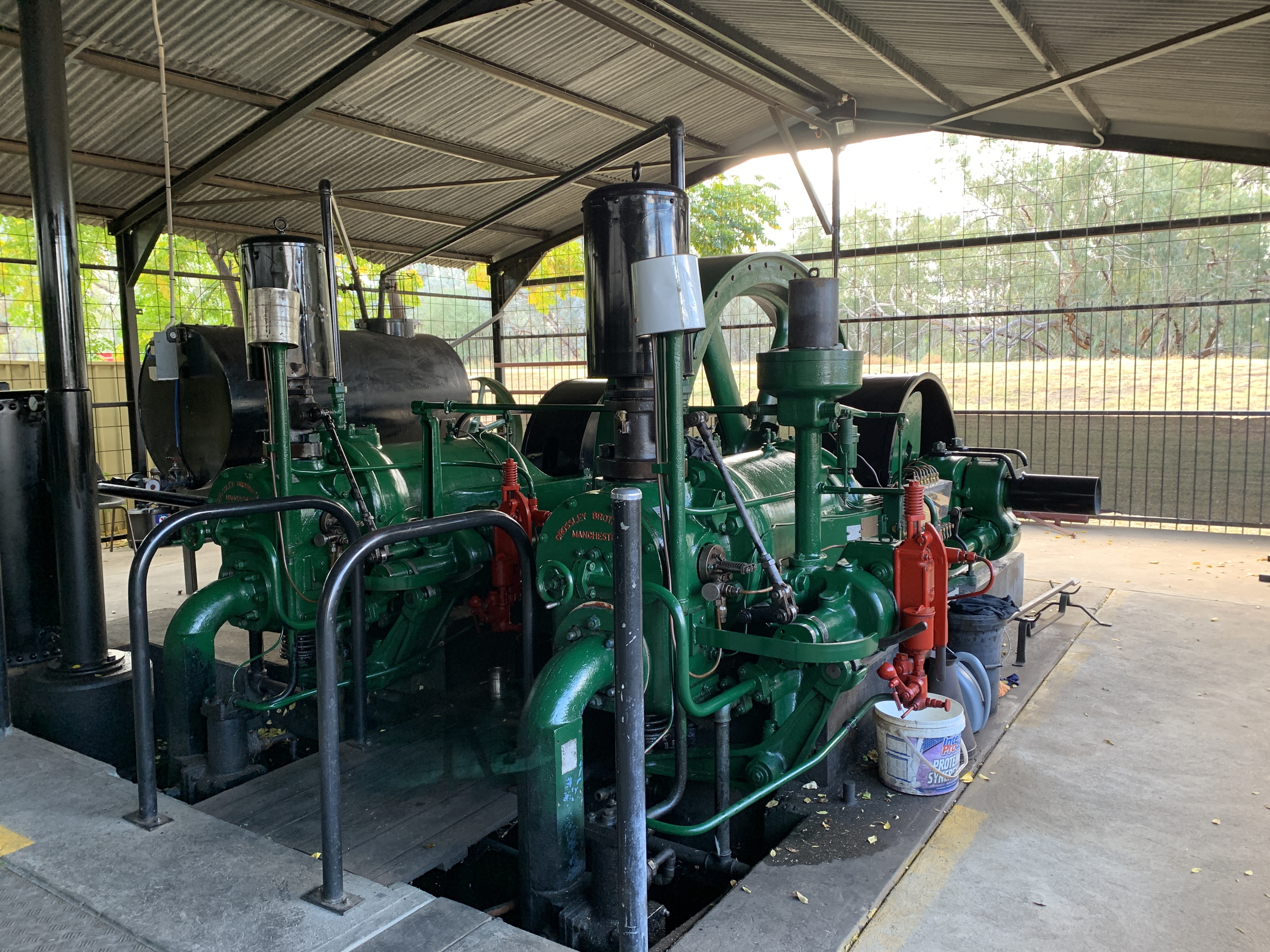
In a shed near the river is the Crossley Engine built in 1923 in Manchester, England, that has been fully restored by the Bourke Shire Council. It is an amazing piece of engineering and these engines were used for such things as electricity generation, water pumping and factory machine operation. This particular engine was used in the Sydney Power House from 1923 to 1938 to generate power for Sydney. It was later used at a Butter Factory in Coffs Harbour then at a Narromine property from 1949 to 1964 to pump water for irrigation.


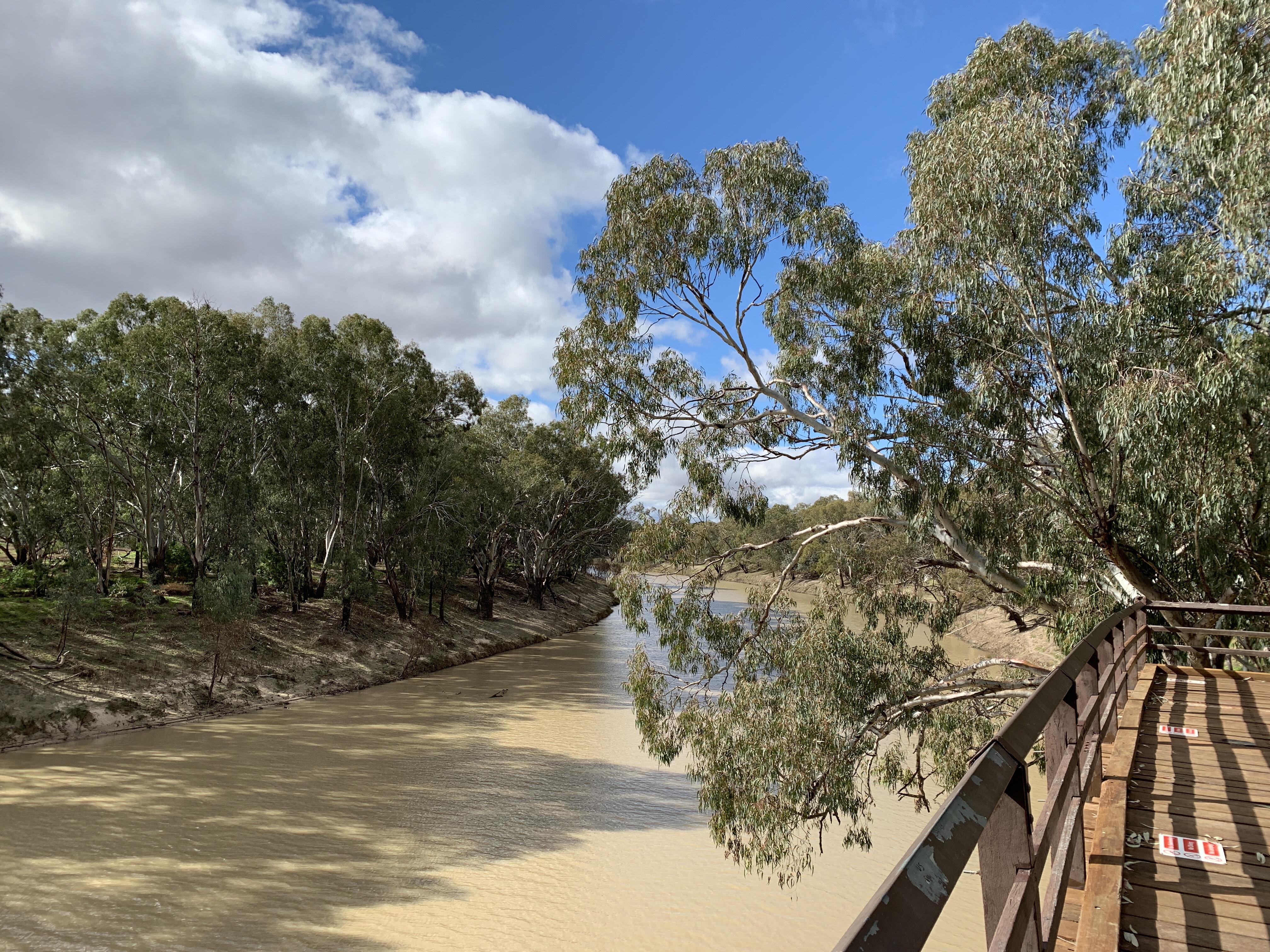
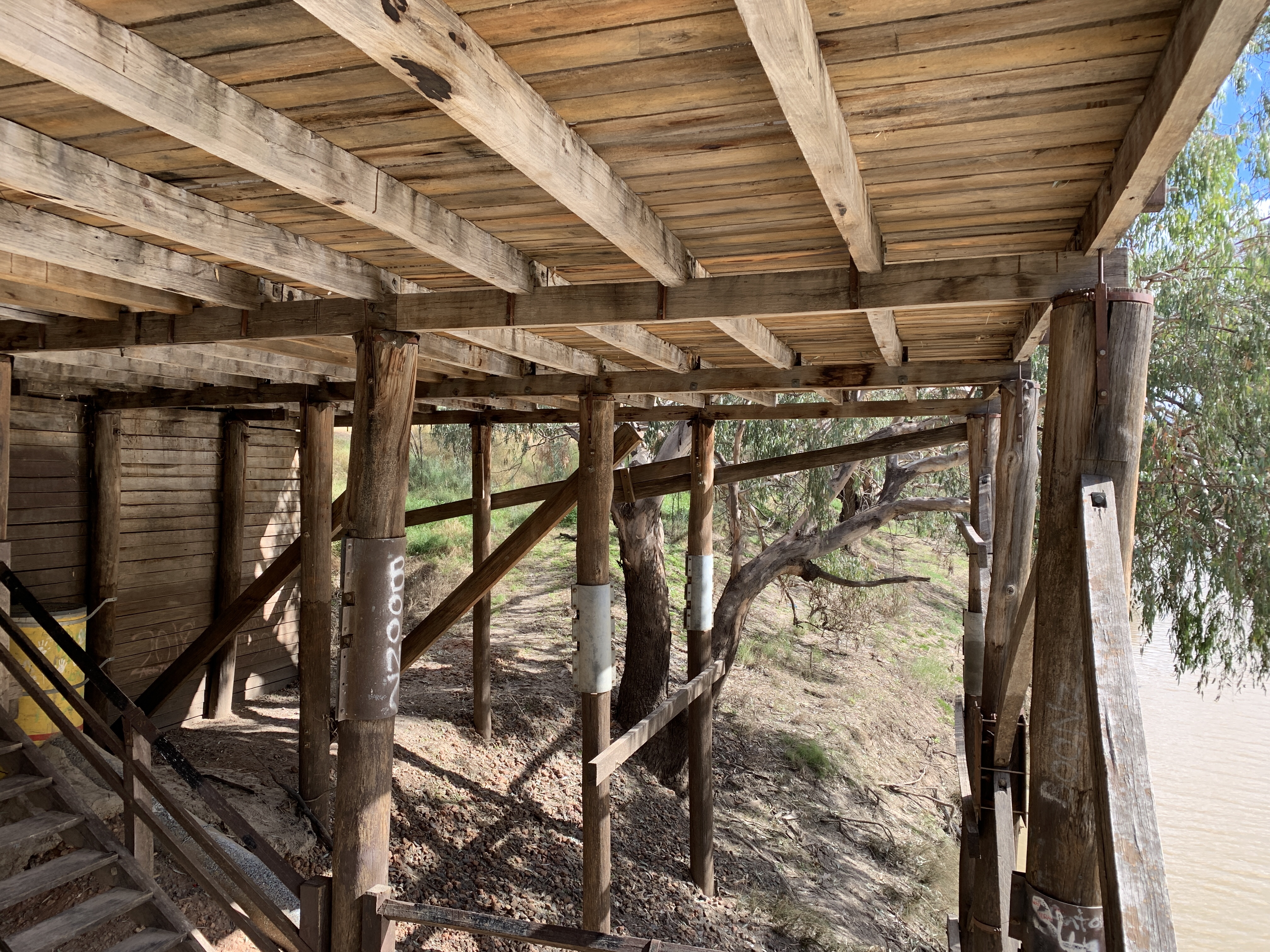
Part of the historic wharf has been rebuilt and restored on the river bank. It is constructed from River Red Gum and has a staircase that leads to different levels so you could access your boat no matter what the river level was. The wharf is a fraction of what it was in years gone by. At one time the wharf had three steam driven cranes that would load over 40,000 bales of wool each year onto the barges and paddle steamers to be taken down river and exported all over the world. Bourke was once a very busy river port and saw boats of all sizes


Walking back to the motorhome we came across a lovely young couple walking to their 4WD and camper trailer that was parked in front of us. We got chatting and found they are at the tail end of a six week trip and were on their honeymoon. What a fabulous way to have a honeymoon. We told them that 43 years ago we borrowed my parents caravan and had a three week trip up the NSW north coast for our own honeymoon.
Our next stop was the Back O’ Bourke Exhibiton and Visitors Centre. We took advantage of their Dump Point and emptied our cassette and grey water tank before parking the motorhome in their large paved carpark and heading inside out of the cold.
The Exhibition commences with a 20 minute film in a theatre and as it had just started we had to wait for the next one. We bought our tickets for the next one and made use of the time by having coffee and a toastie at their cafe. They were both good.
We were called over when the next tour was to start and we entered the theatre to watch a short movie based on the Dreamtime stories of the local Aboriginal people of the area and the importance of the river they know as the Baaka (Darling). Once the movie finishes you move through the next couple of buildings that house a world class audio and interactive display of the history of the area around Bourke. During your visit you can learn about the riverboat era, the development of a pastoral industry, early conflicts with bush rangers, shearers and the cameleers, poets such as Henry Lawson and Will Ogilvie, Cobb & Co, the explorers, the wool trade and so much more.
The Back O’ Bourke Exhibition is a must see on any visit to Bourke.
For a small outback town with a population of only 1,200 people Bourke certainly has a lot to offer visitors.


Tambo to Lara Wetlands
We set off from camp after a long leisurely breakfast and discovered that we couldn’t access the track that leads to the site of the 1927 Qantas plane crash as the bridge across the Barcoo is being replaced and the whole section of road including access to the walking track to the crash site is blocked off. Oh well. Have to do that one if we ever come this way again.
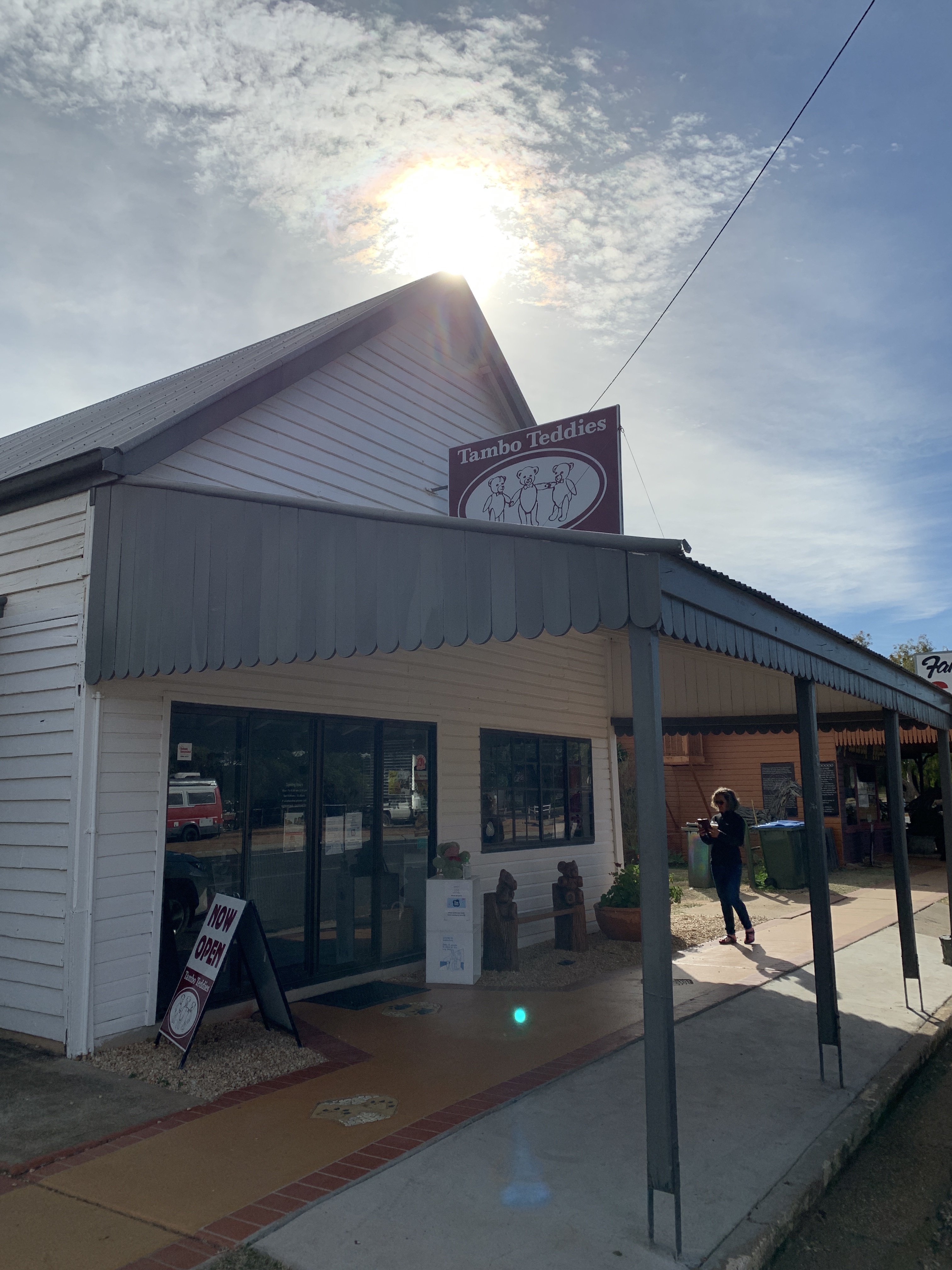
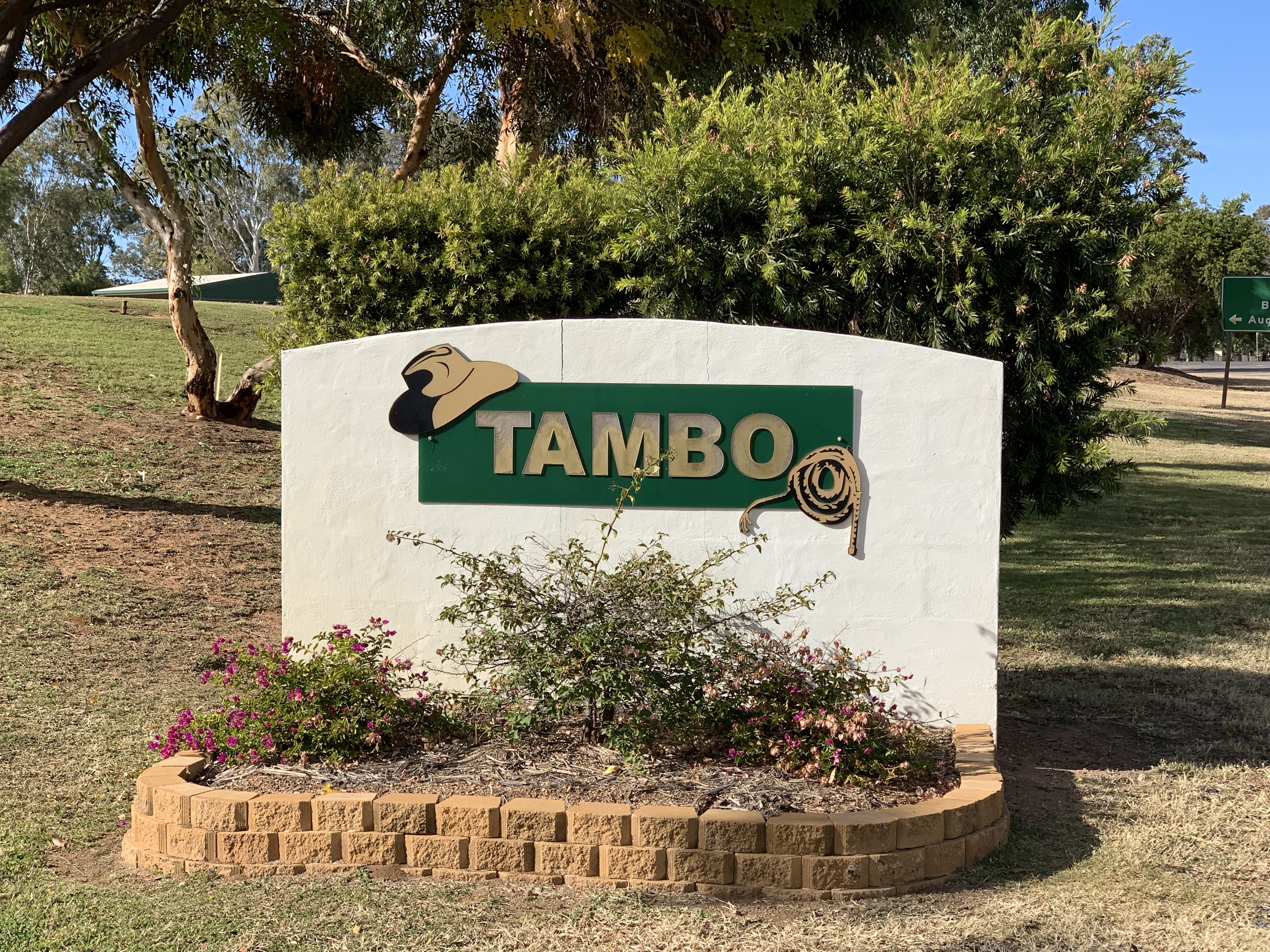
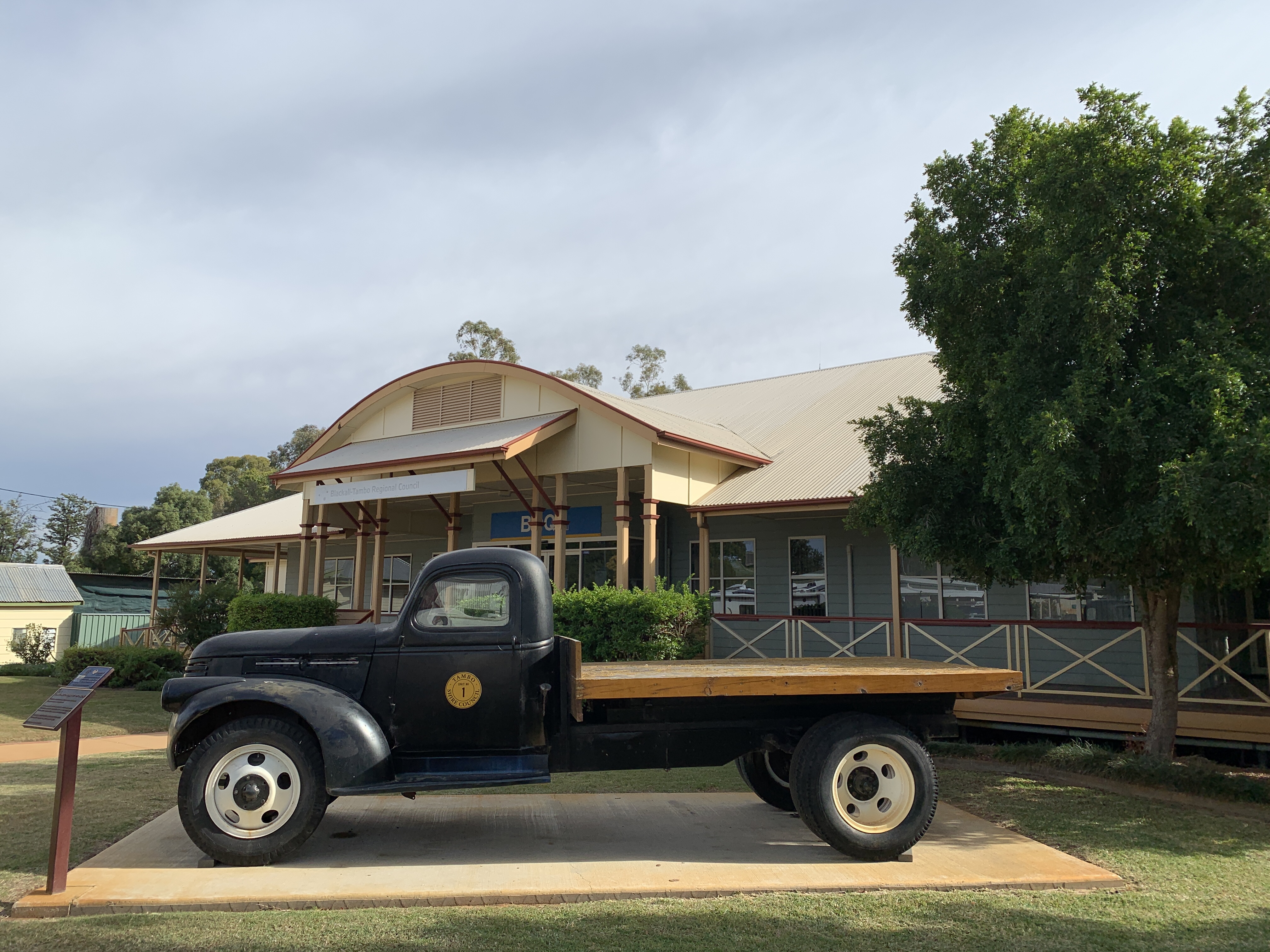
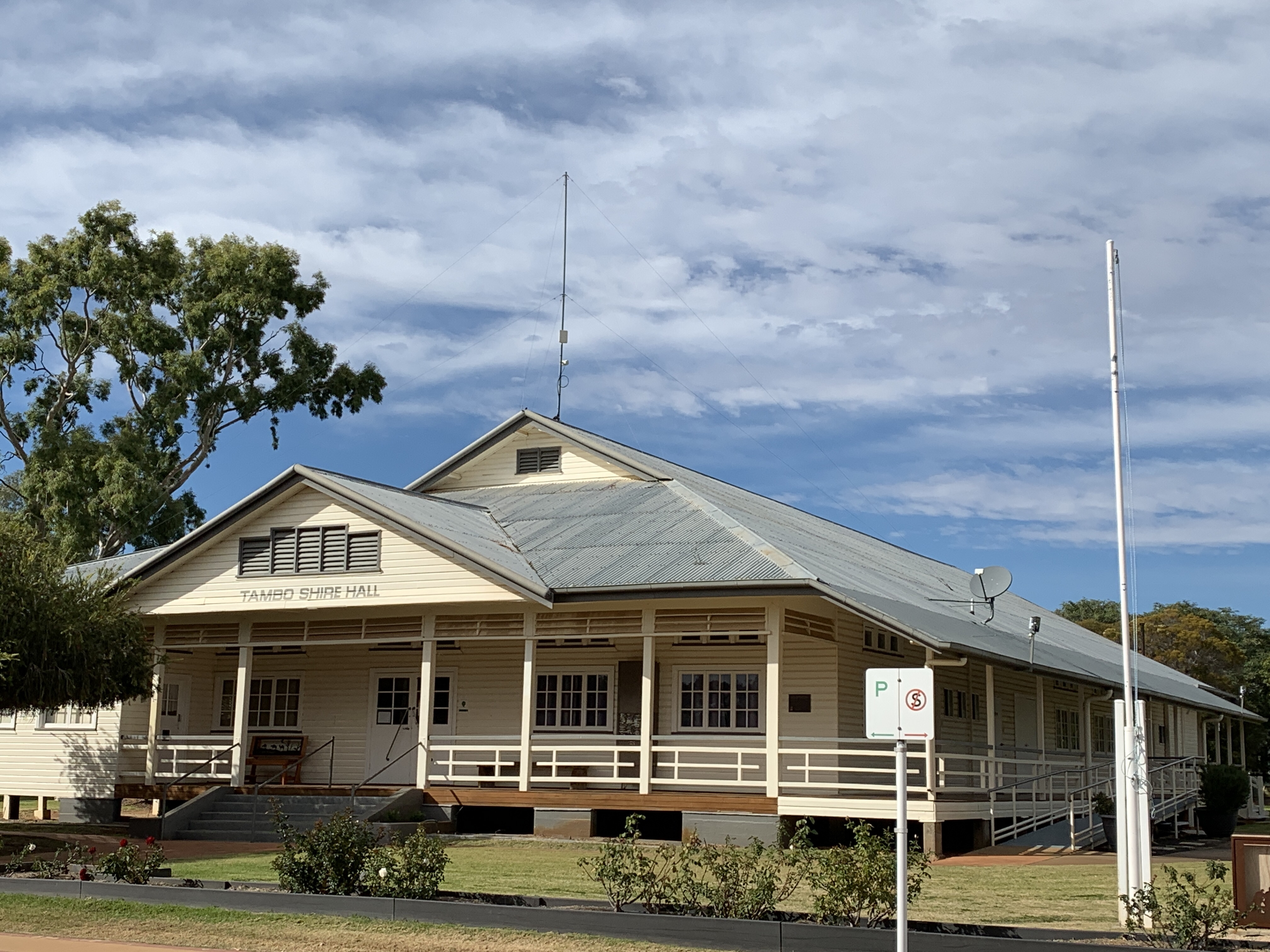
We filled up with fuel and then spent an hour or so exploring the little Main Street of Tambo. Tambo is famous for its Tambo Teddies. This is a local success story. Tambo Teddies was born in 1993 when three local ladies decided to assist the ailing wool industry, encourage tourists and create employment by making teddy bears from wool pelts and stuffing them with wool. Tambo Teddies took off. The teddies were a big hit. The last of the three ladies retired in 2014 and sold the business to two other local ladies and these two are continuing the tradition of Tambo Teddies.
Every teddy sold is unique, has their own personality and they are all named after Tambo farming properties. Each teddy has its own name and number. Tambo Teddys were gifted to the Duke & Duchess of Cambridge and the Duke & Duchess of Sussex during their 2014 and 2018 royal tours.


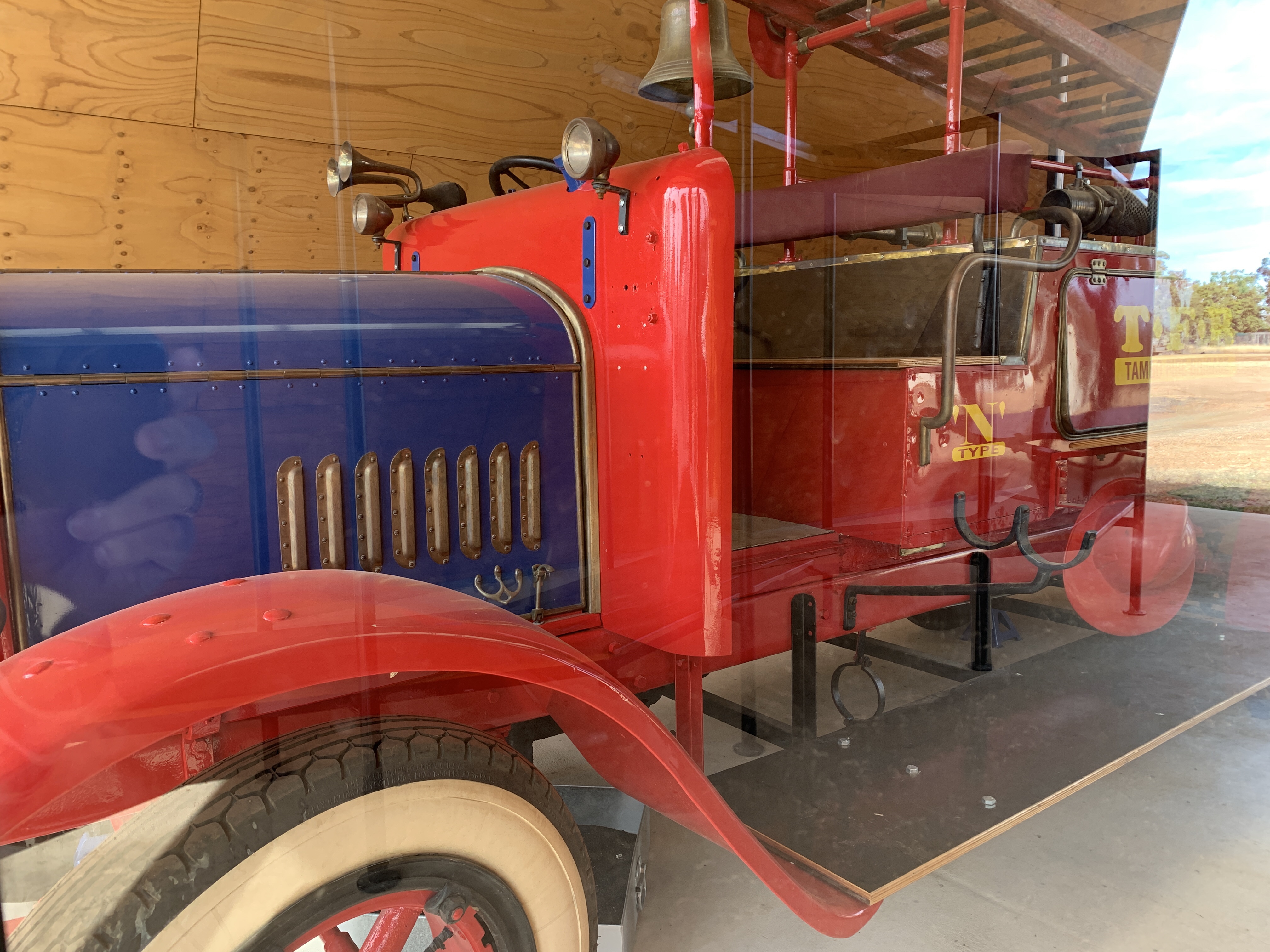
In the Main Street is a building housing ‘Flo’ a restored Dennis Fire Engine built in Surrey in 1921. Flo was once part of the Tambo Fire Brigade however she was notoriously unreliable and difficult to start. Rumour has it that she was so slow to start that before she even arrived at a fire on Albert Street the fire was already out.
The historic Post Office built in 1876 is now the town museum. On the other side of the road is the new Post Office built in 1904.
The Historic Court House built in 1888 is now the town Library and Visitors Centre.
This little town has two caravan parks as well as the free camp on the Barcoo River where we camped last night. They are obviously doing everything they can to attract visitors to the town and it was working. We saw many RV’s pulled up and lots of visitors walking along the Main Street checking out the shops, buying a teddy or two, having a coffee, buying fuel and all adding to the town’s economy.
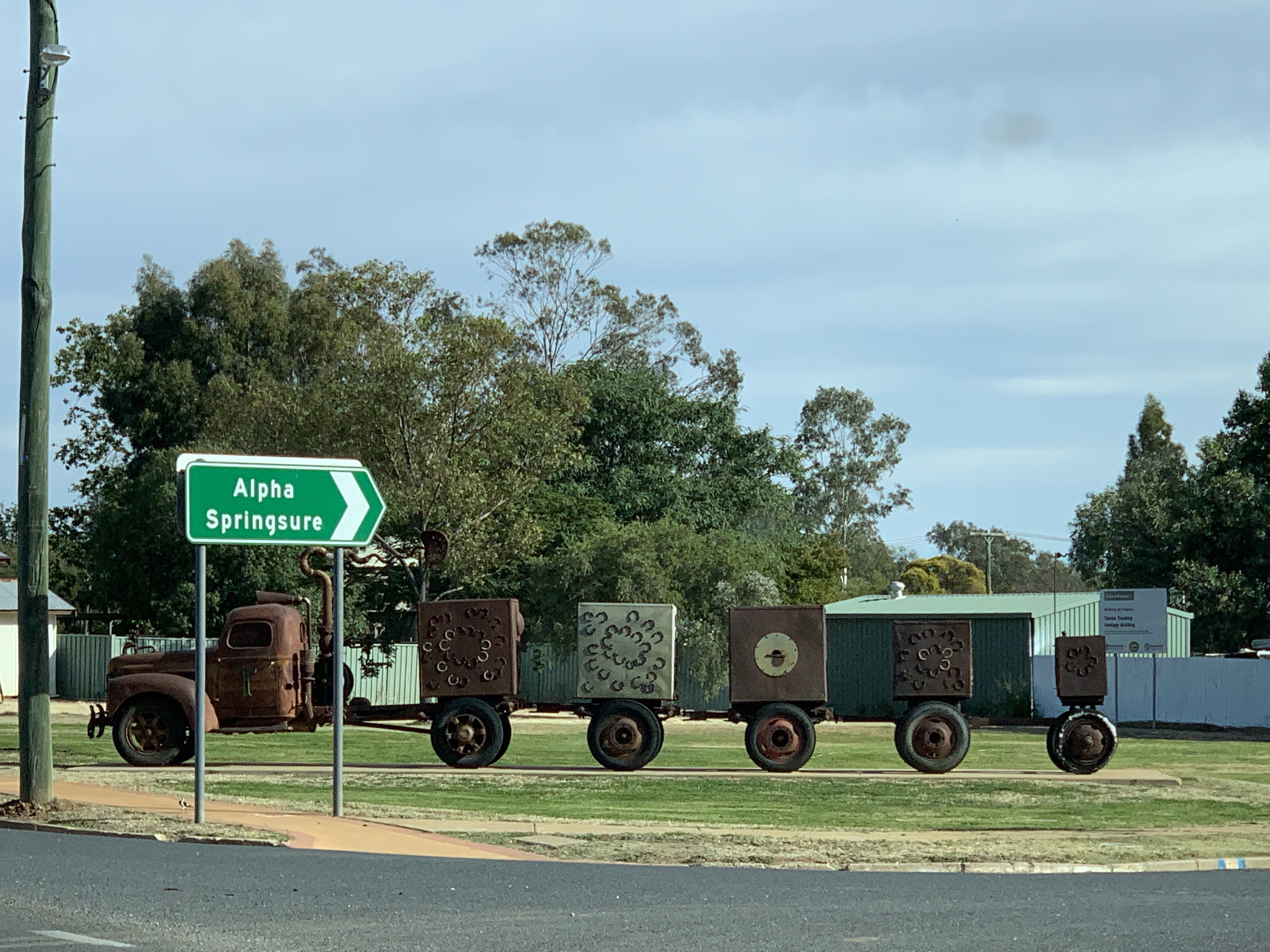




The road between Tambo and Blackall is a wide two lane tar road but it’s a rough one. It’s a road train route and these heavy vehicles really are hard on road surfaces. The motorhome shook and bounced over this rough road. We crossed the Barcoo River again and this time there was a little muddy water in it. We didn’t see many animals on this part of the road just a few mobs of cattle. What we did see was lots of RV’s of all descriptions. Every man and his dog must be travelling the Outback!


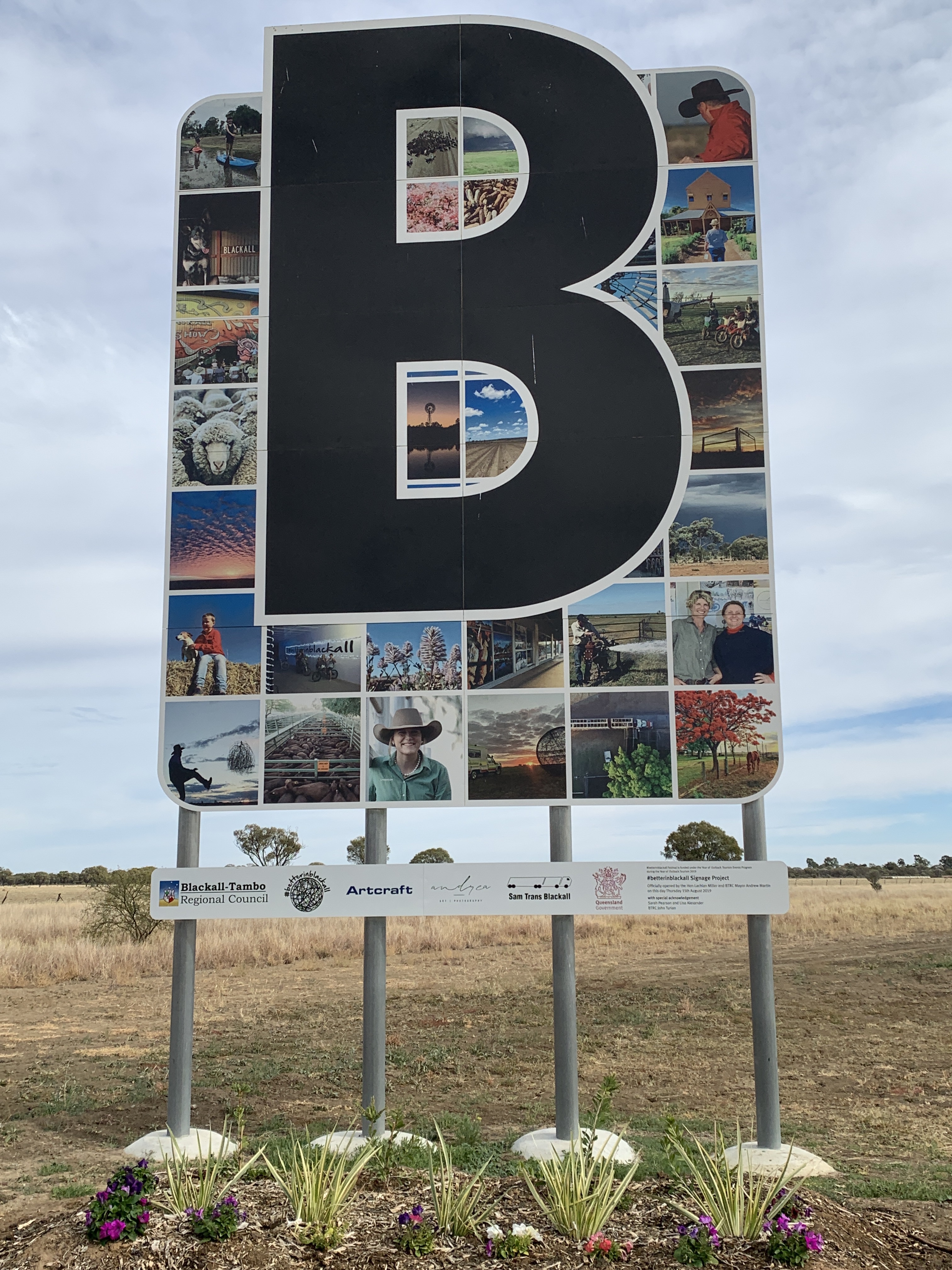
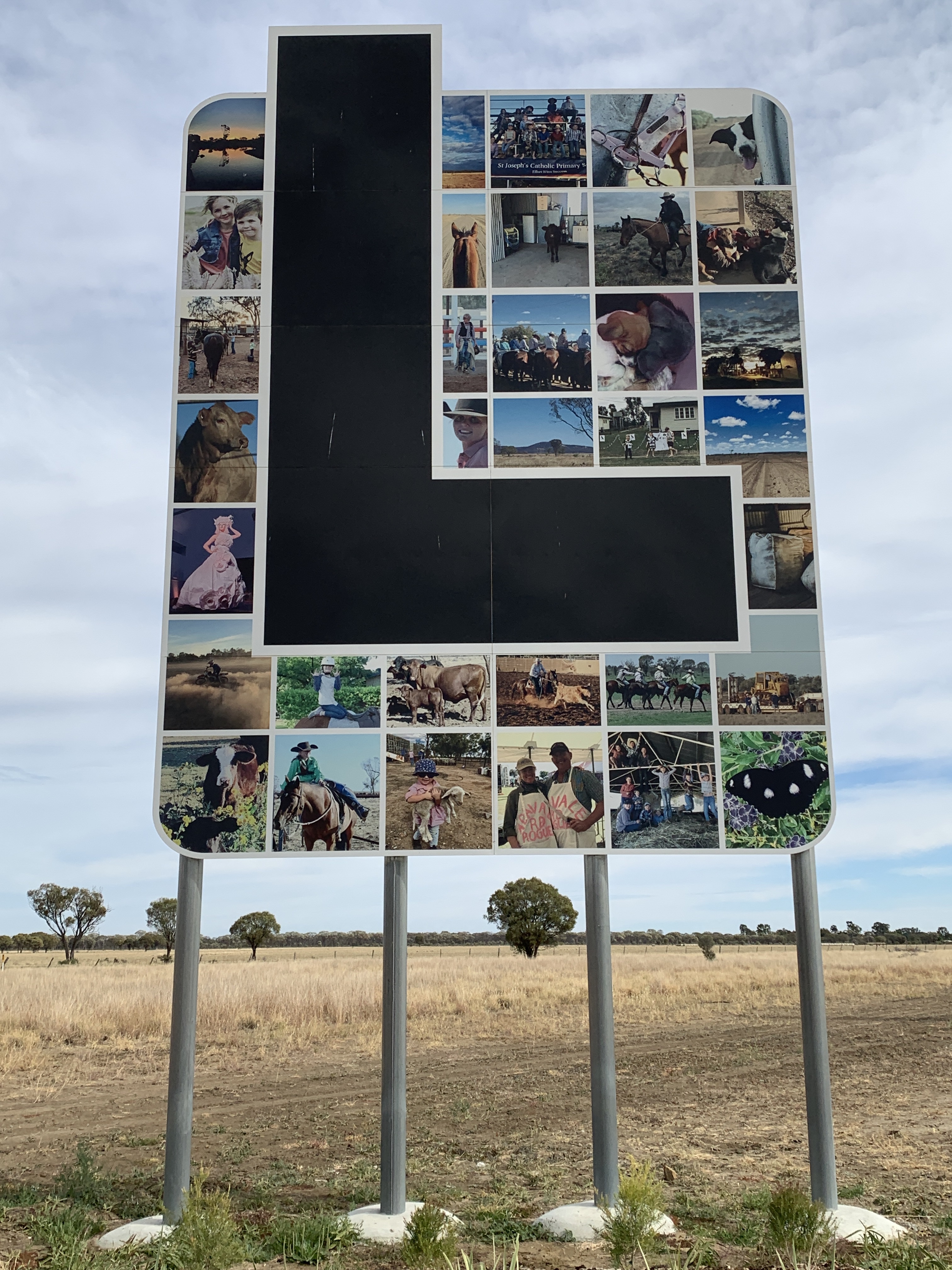
We arrived in Blackall around 11.30am and had to stop and take photos of their fabulous signs at the entry to the town. The town name is spelt out in very large single black letters on a background of images. The images include local people, buildings, local activities and flora and fauna of the area. They are fabulous!

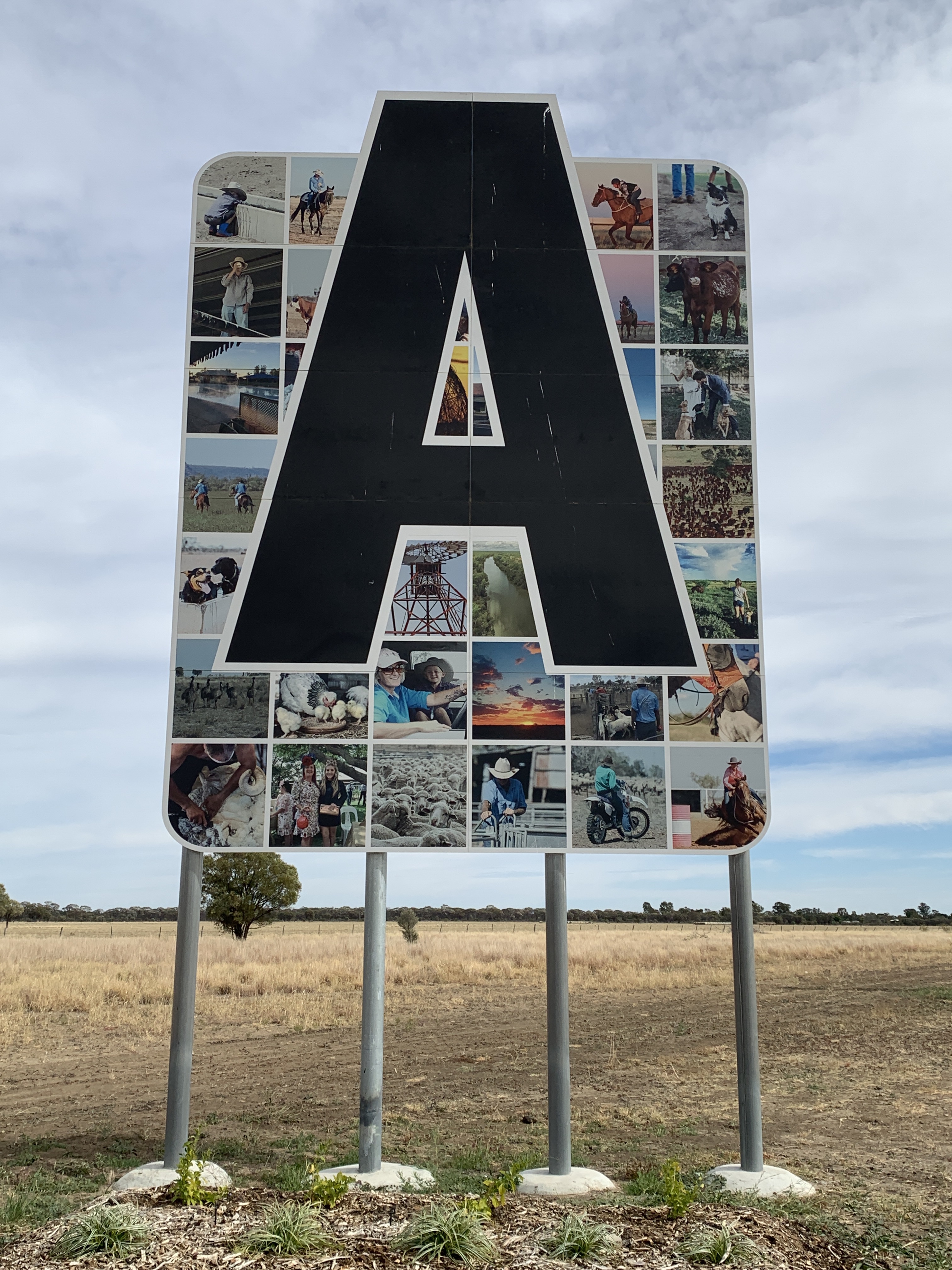
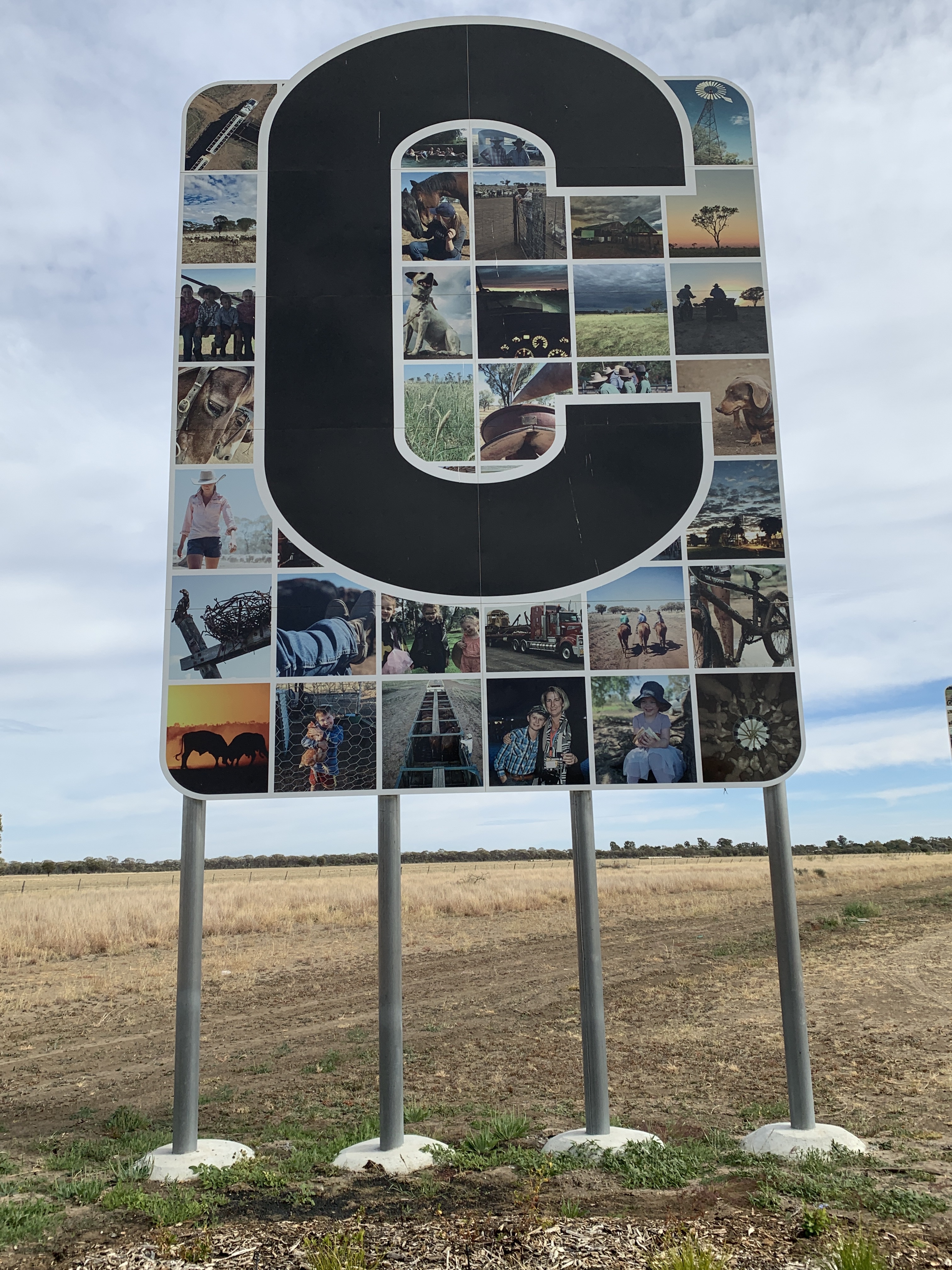
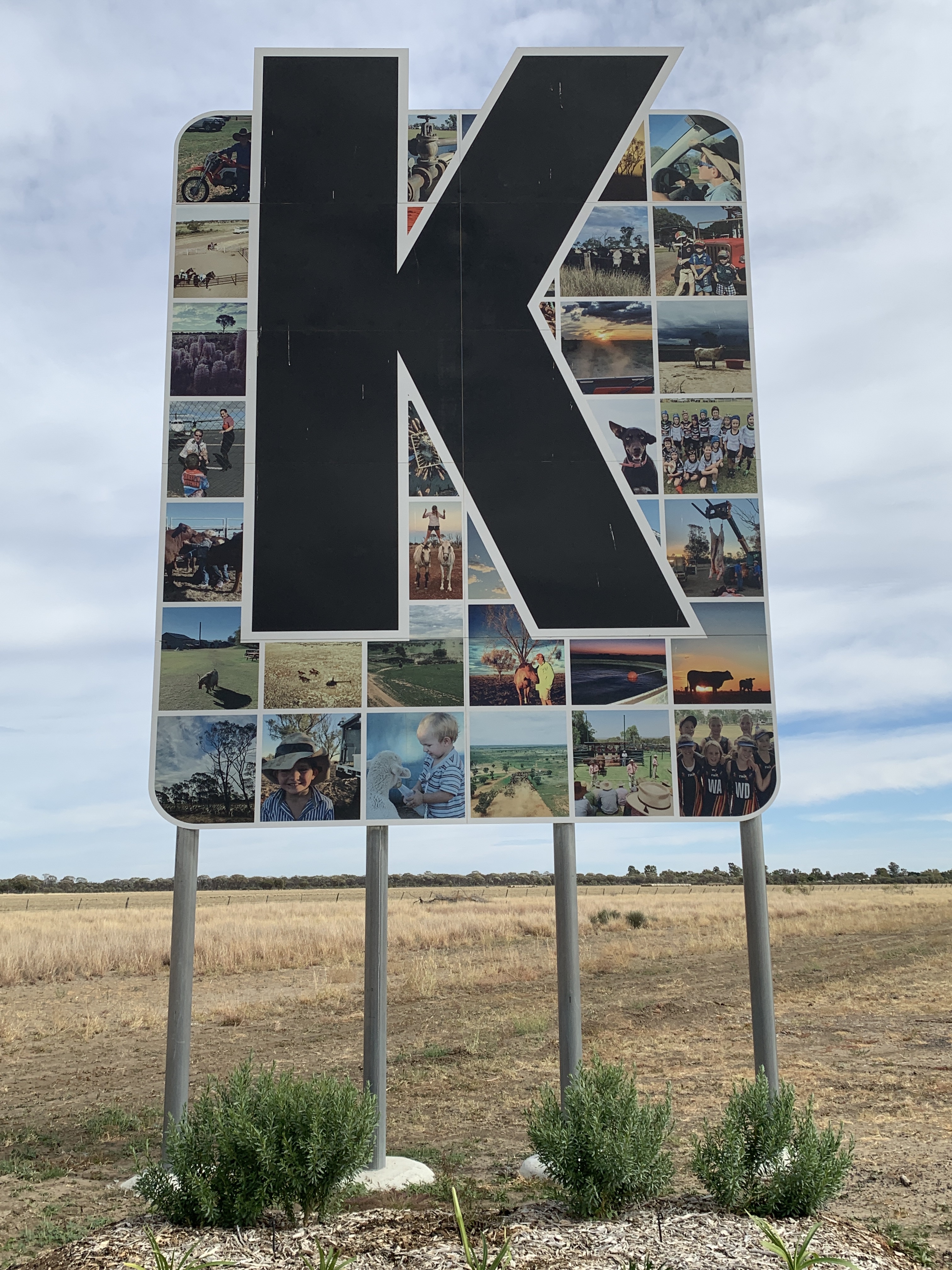


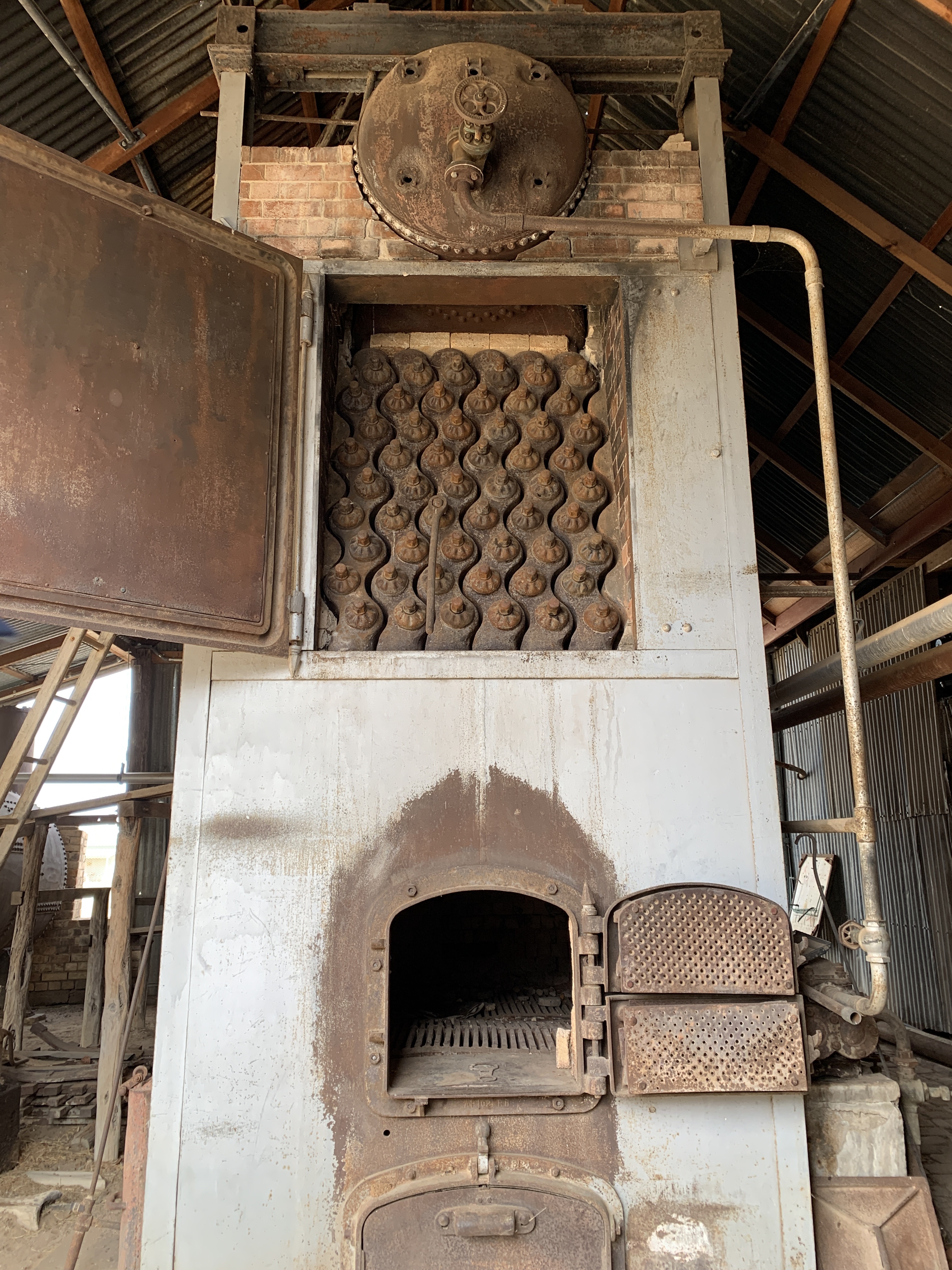
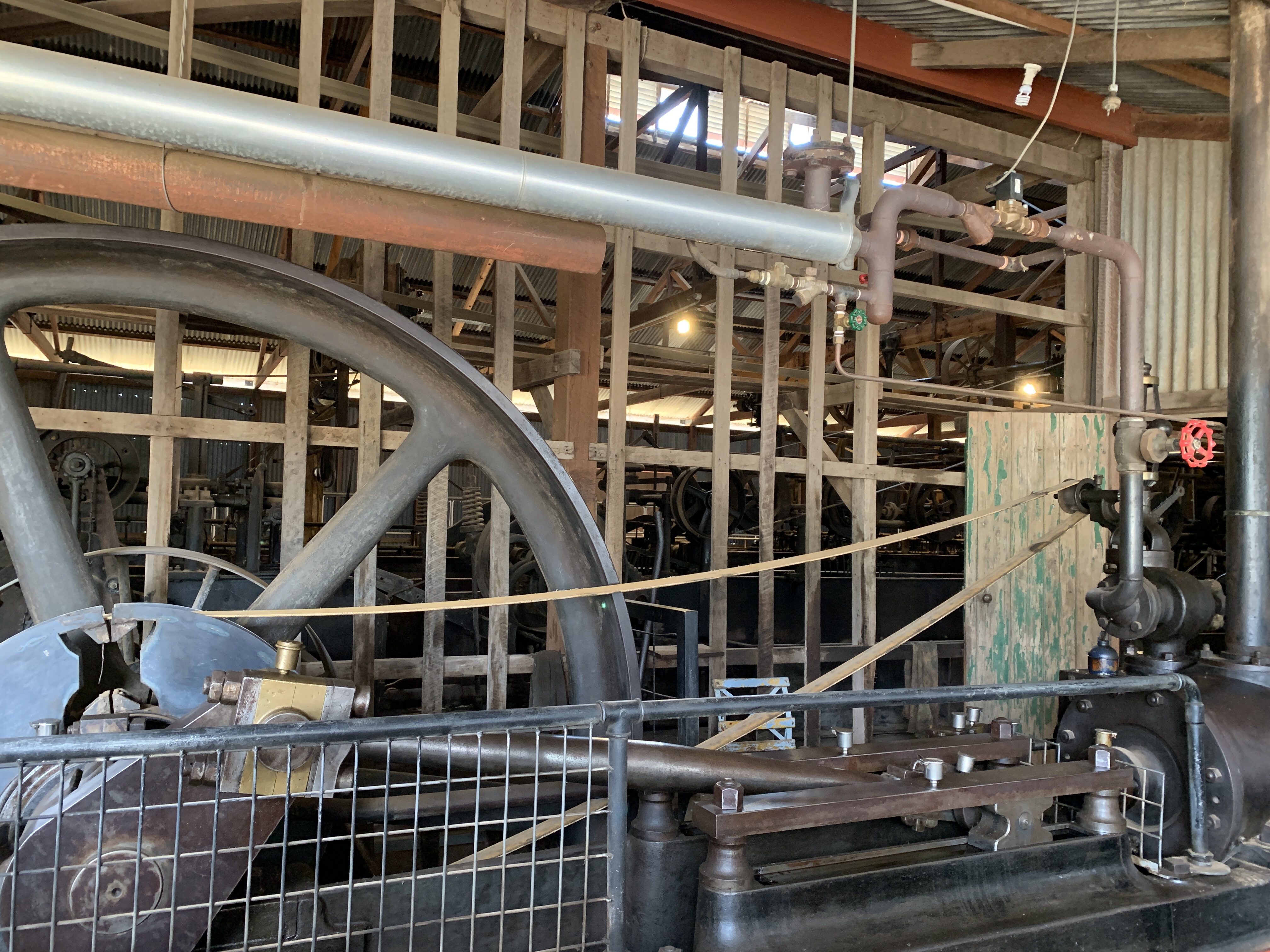
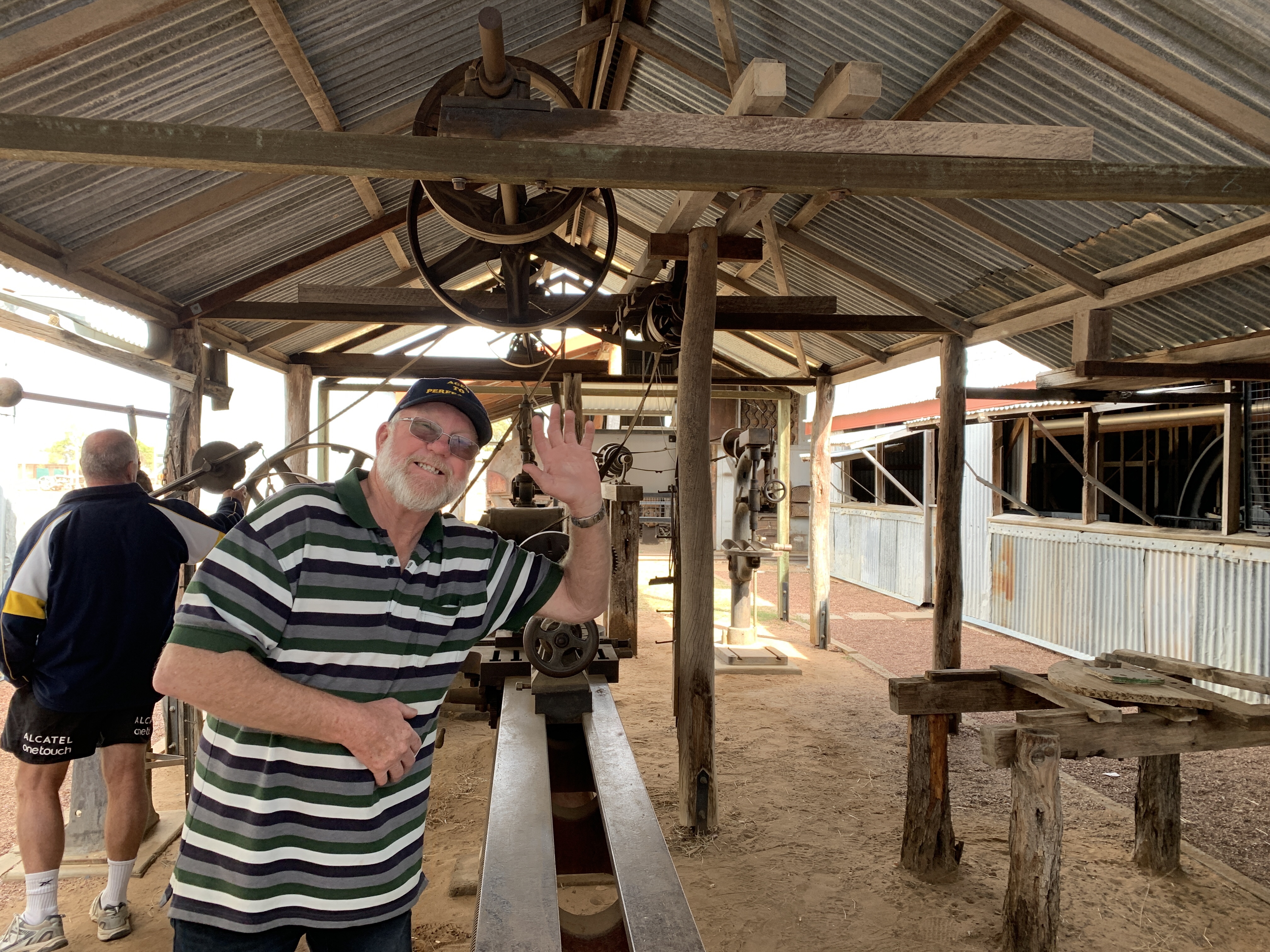
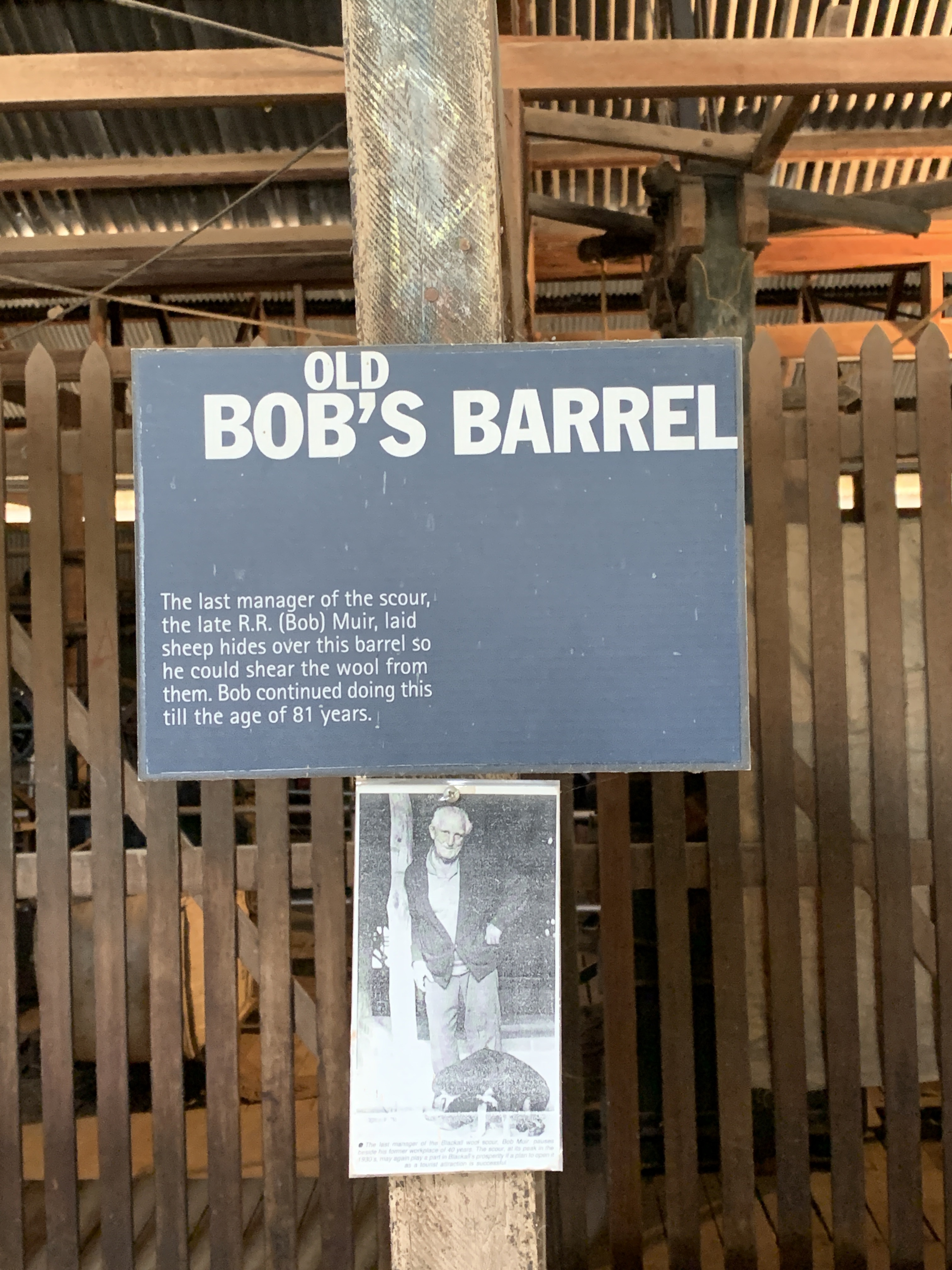
Our next stop was just out of town to visit the Historic Woolscour. We timed it just right to catch the tour which runs on the hour every day. The tour commences with a short video on the wool industry, how it began, developed, waned and what the industry is like today. It was a very informative 15 minute movie. Then the group moved outside to be taken on a tour of the actual Woolscour building. Our guide for the our tour was a man named Darryl Dash and we were fortunate to have Dashy as he left school at 13 on a Friday and the following Monday commenced work at the Woolscour. He knows the place inside out.




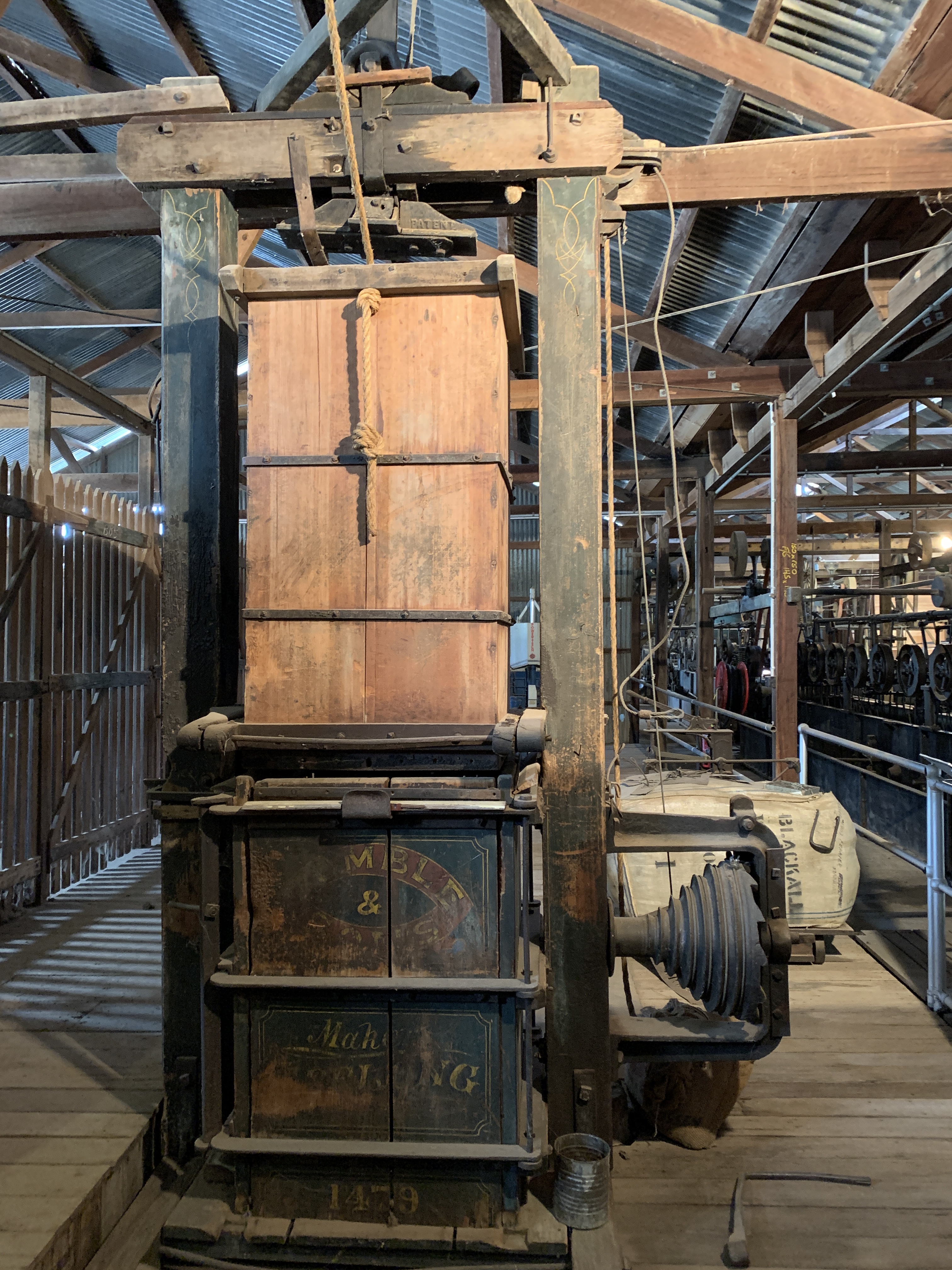
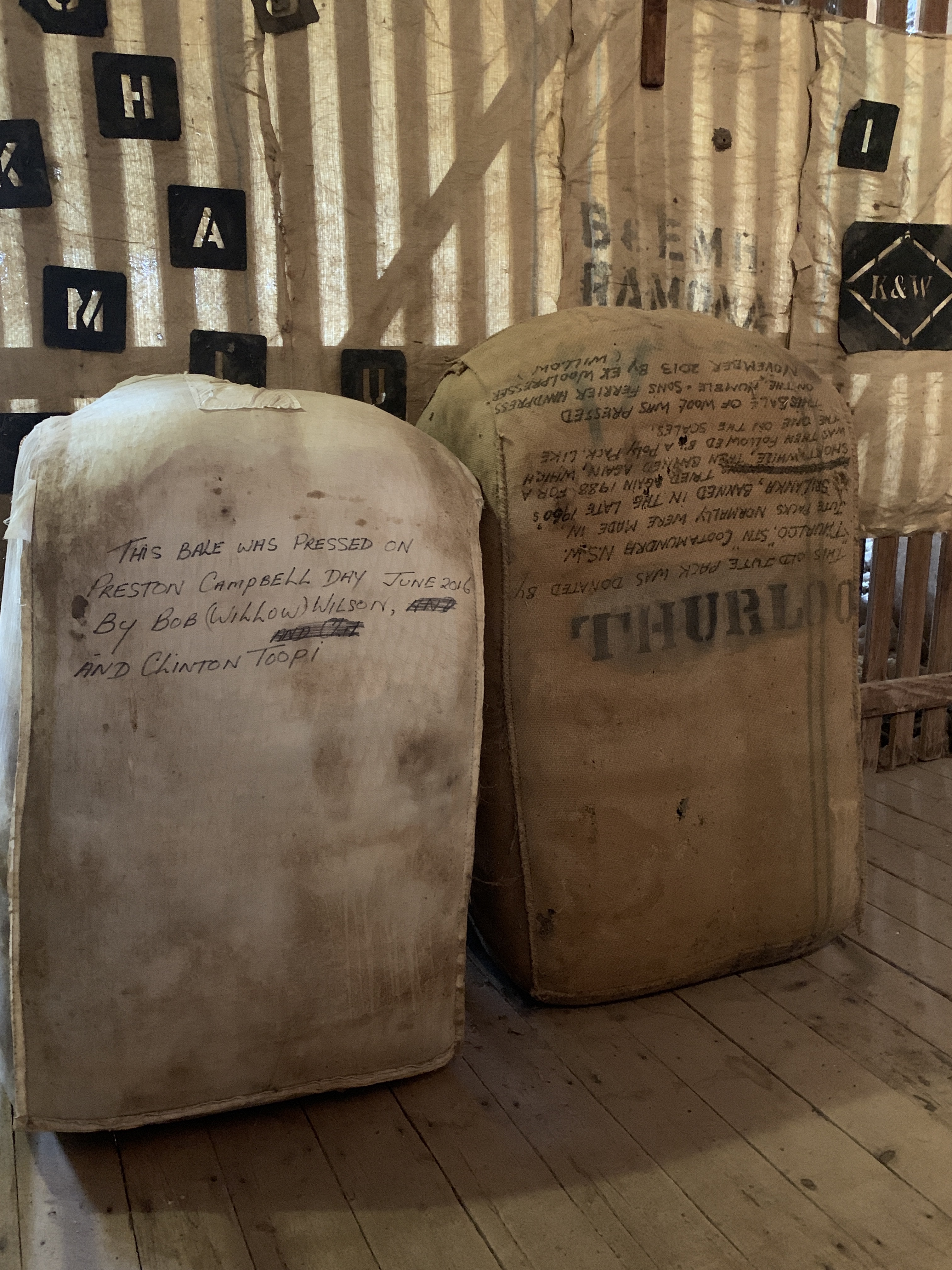

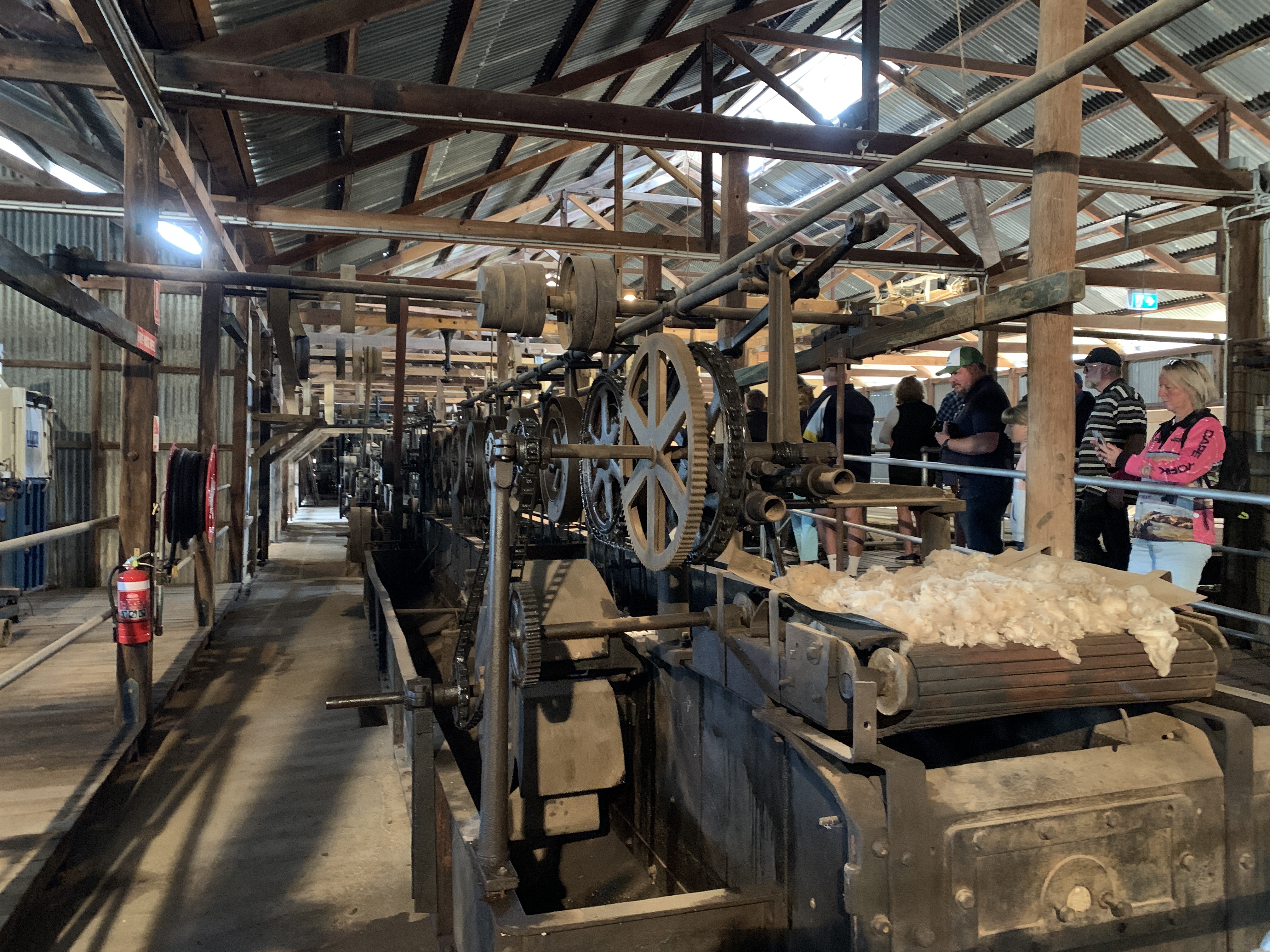

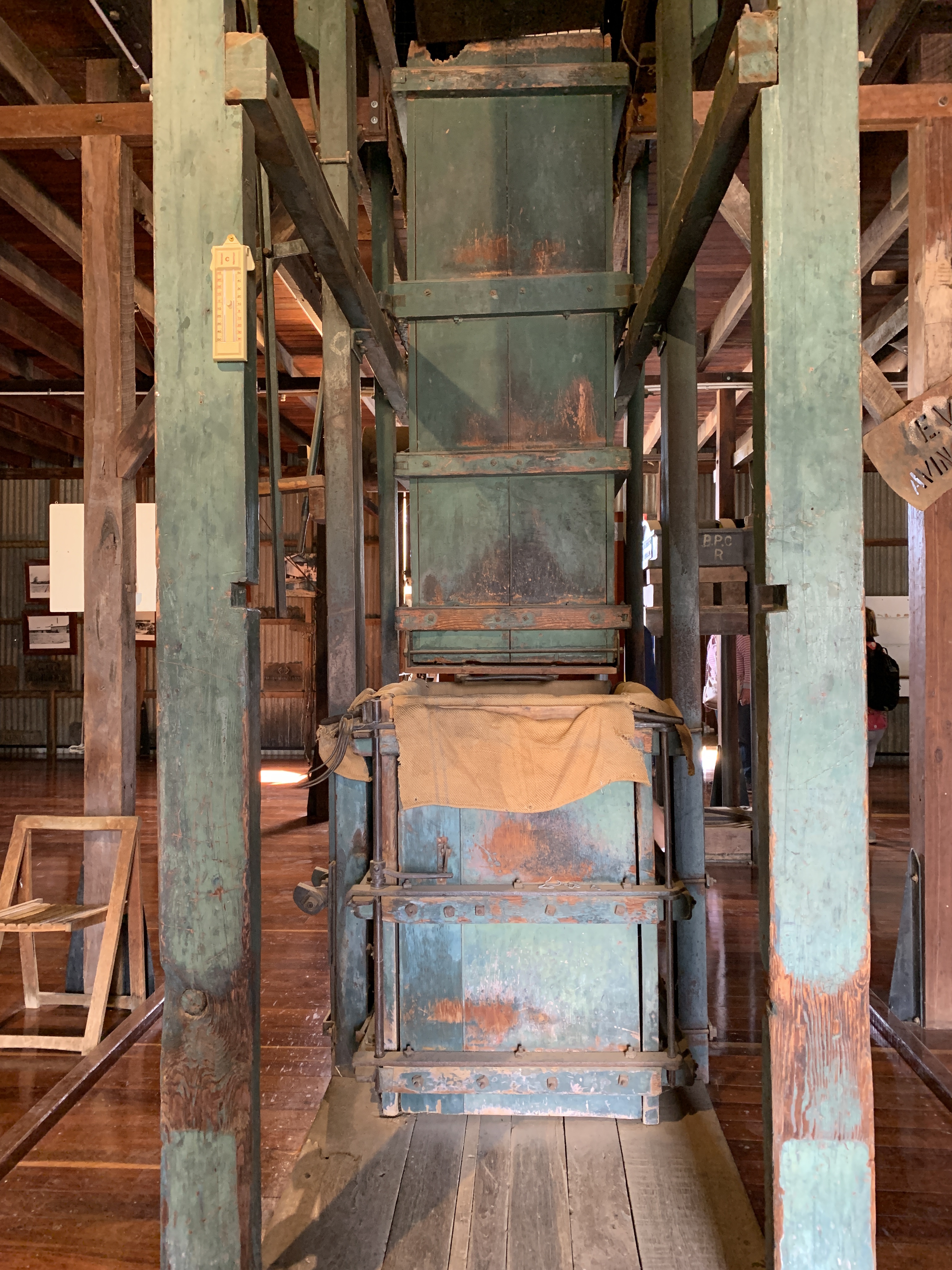


We drove the 4km back into town and visited the statue of the famous Jackie Howe, gun shearer. Jackie is famous for blade shearing 321 sheep in one 8 hour day in 1892 at ‘Alice Downs’. Jackie retired from shearing at 39 and became a publican of the Universal Hotel in Blackall. A replica of the Universal Hotel is now the Visitors Centre. Jackie’s statue is out the front.
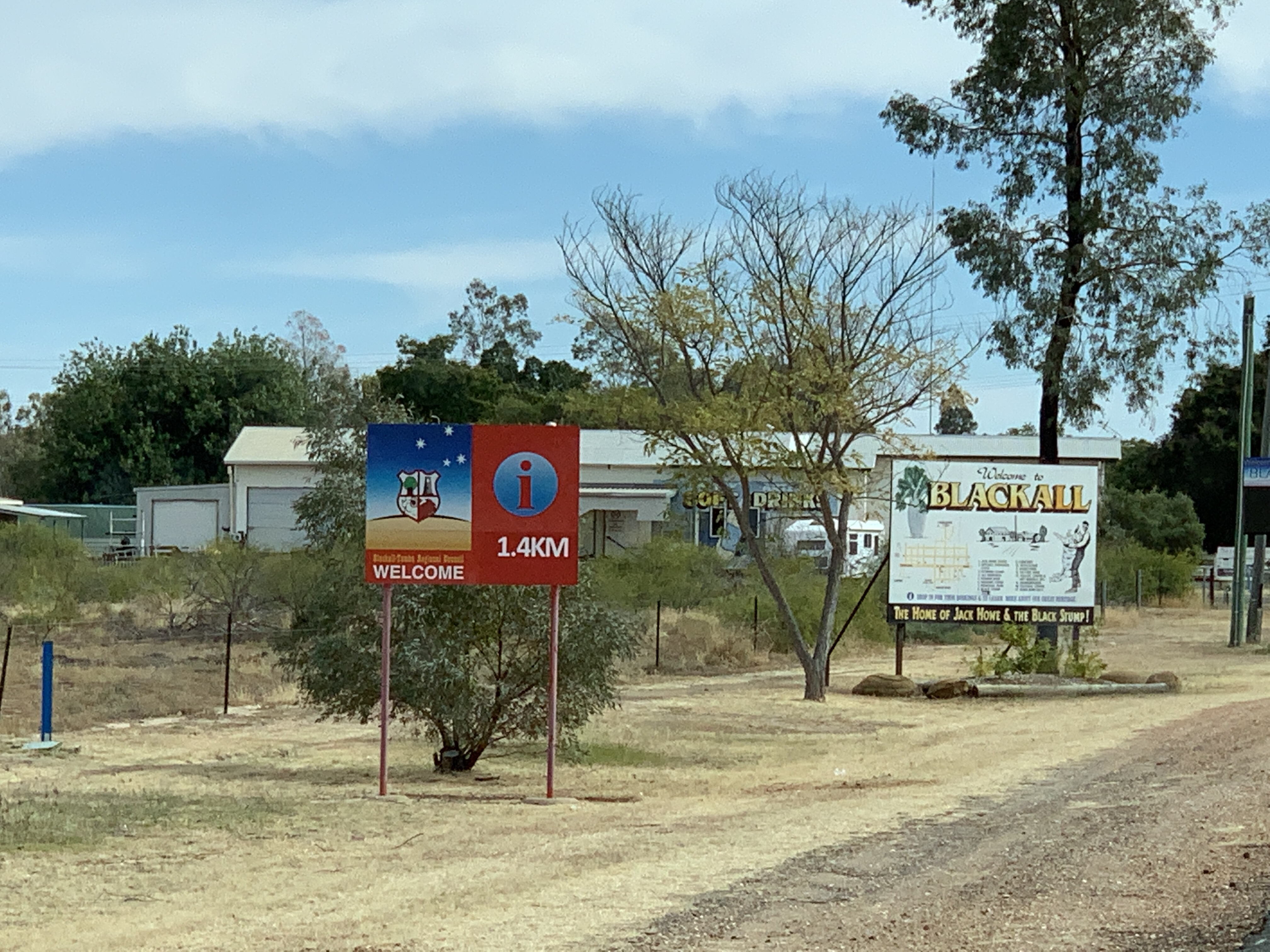

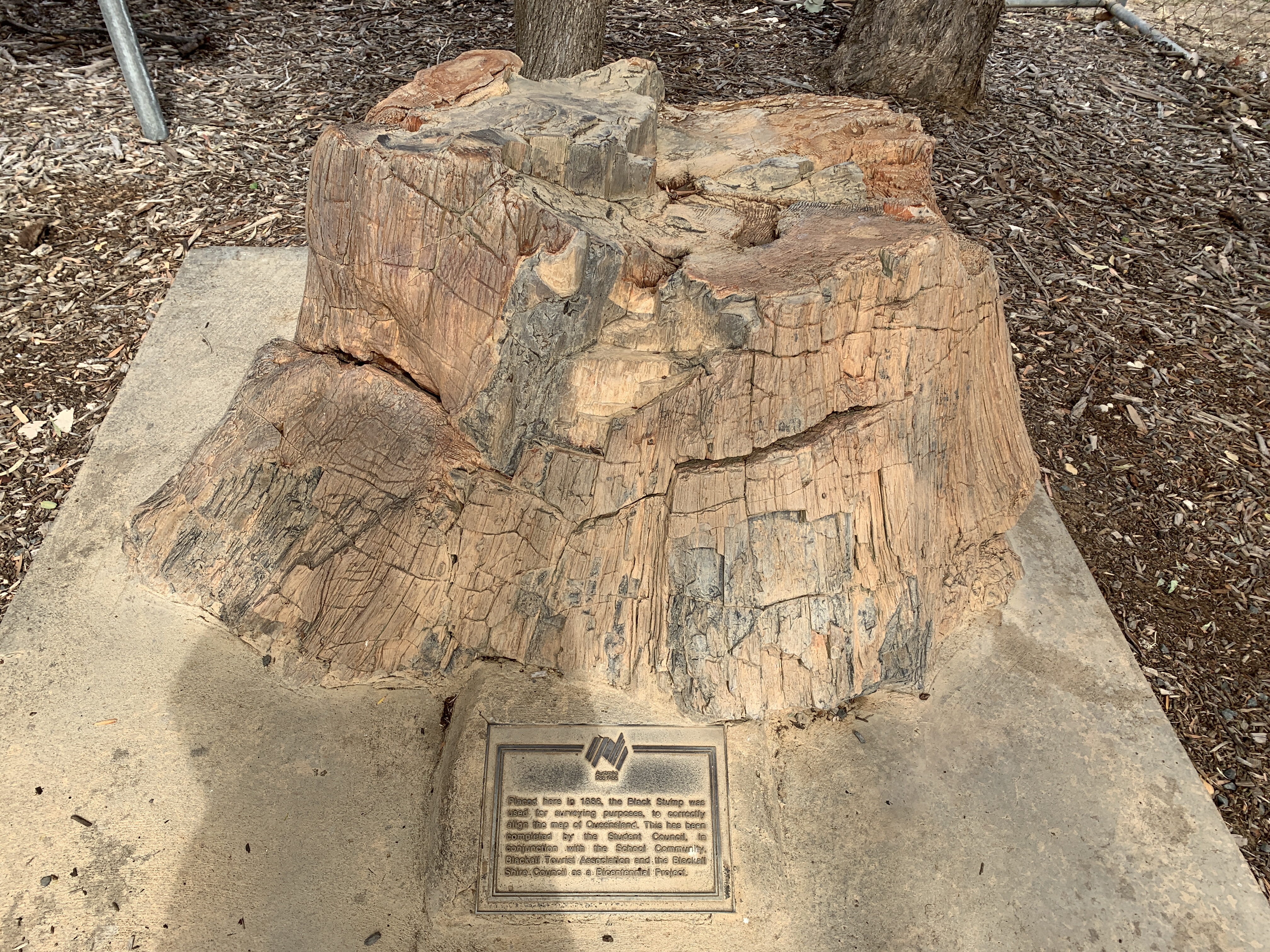
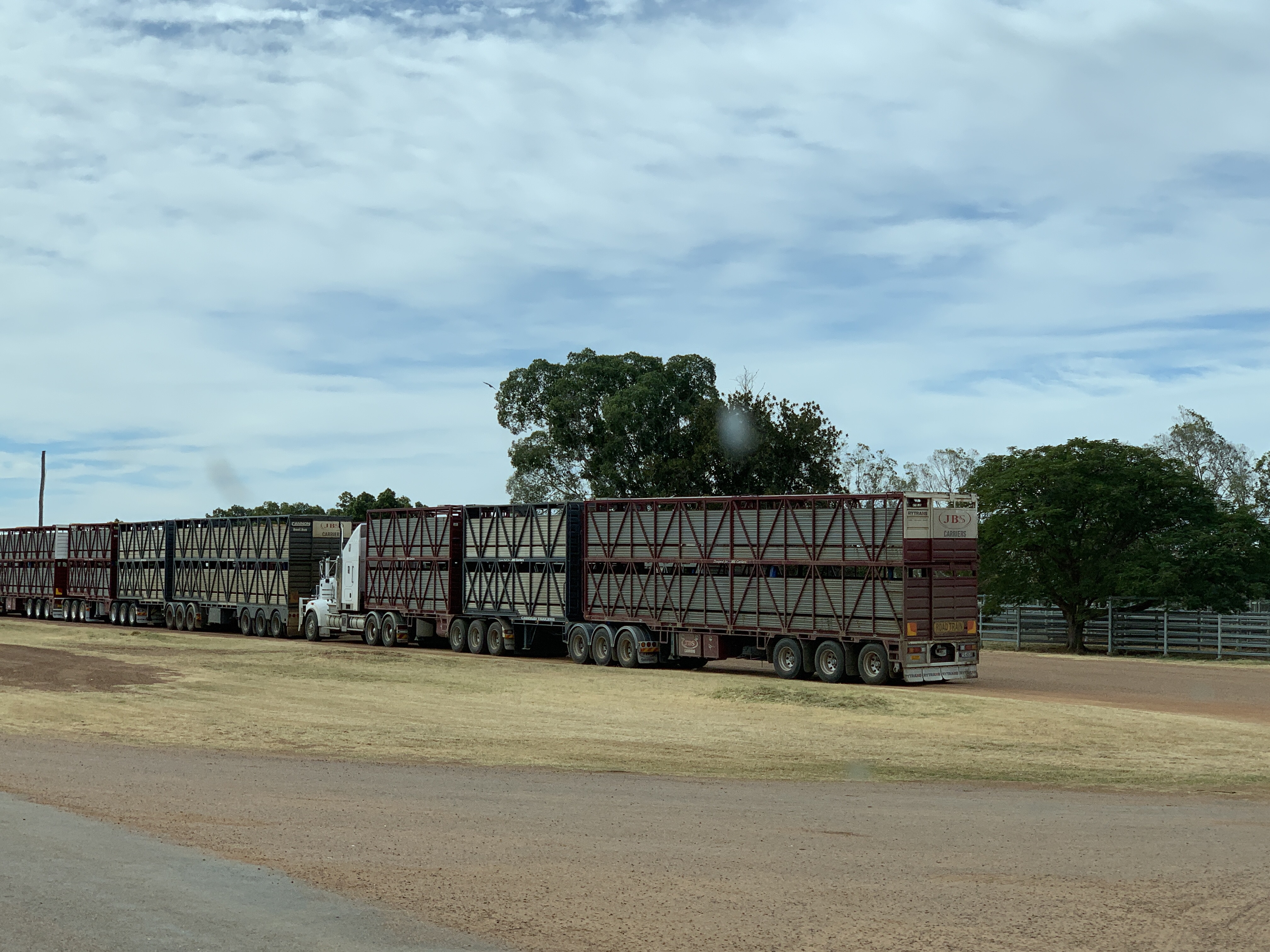


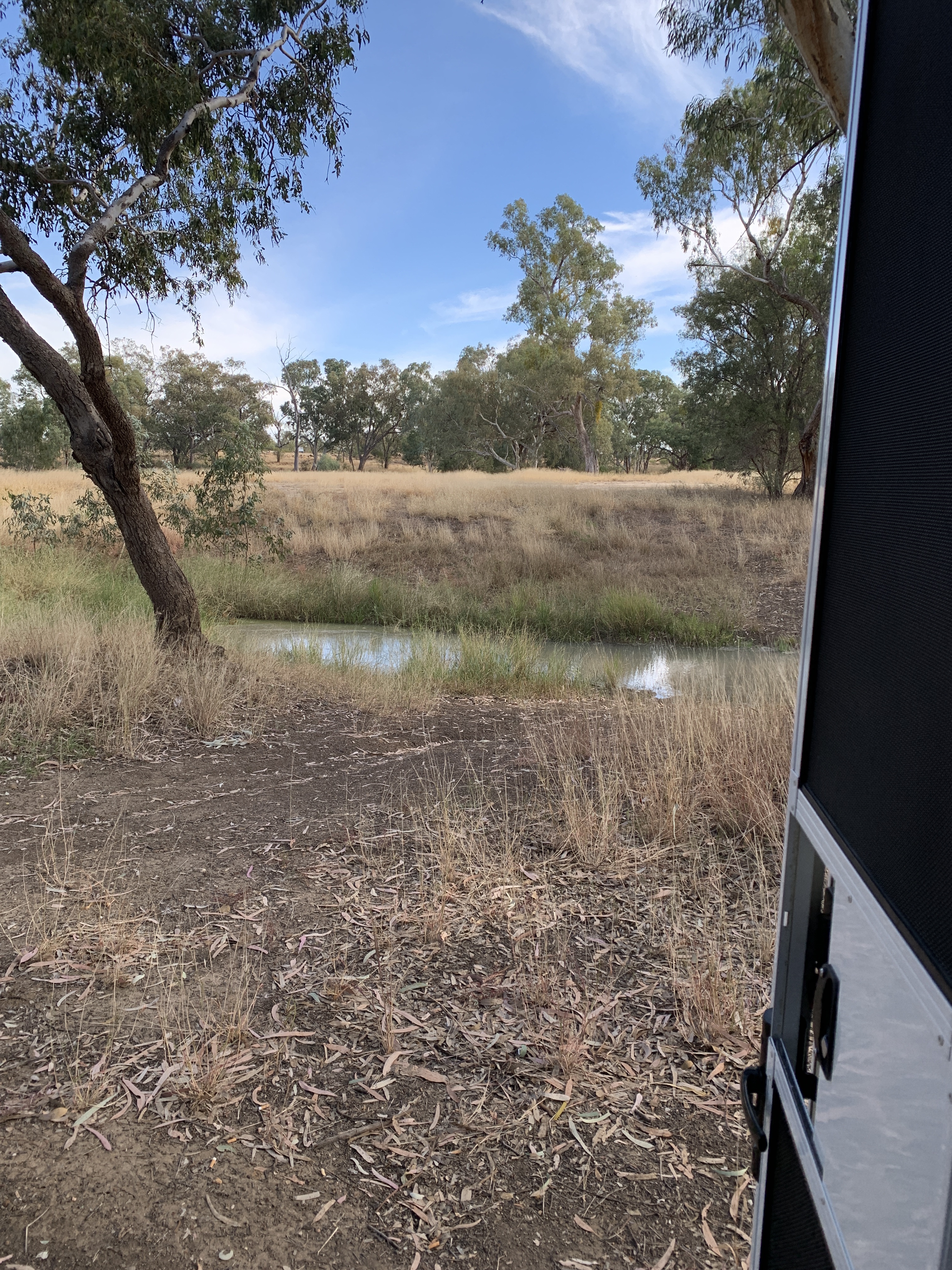
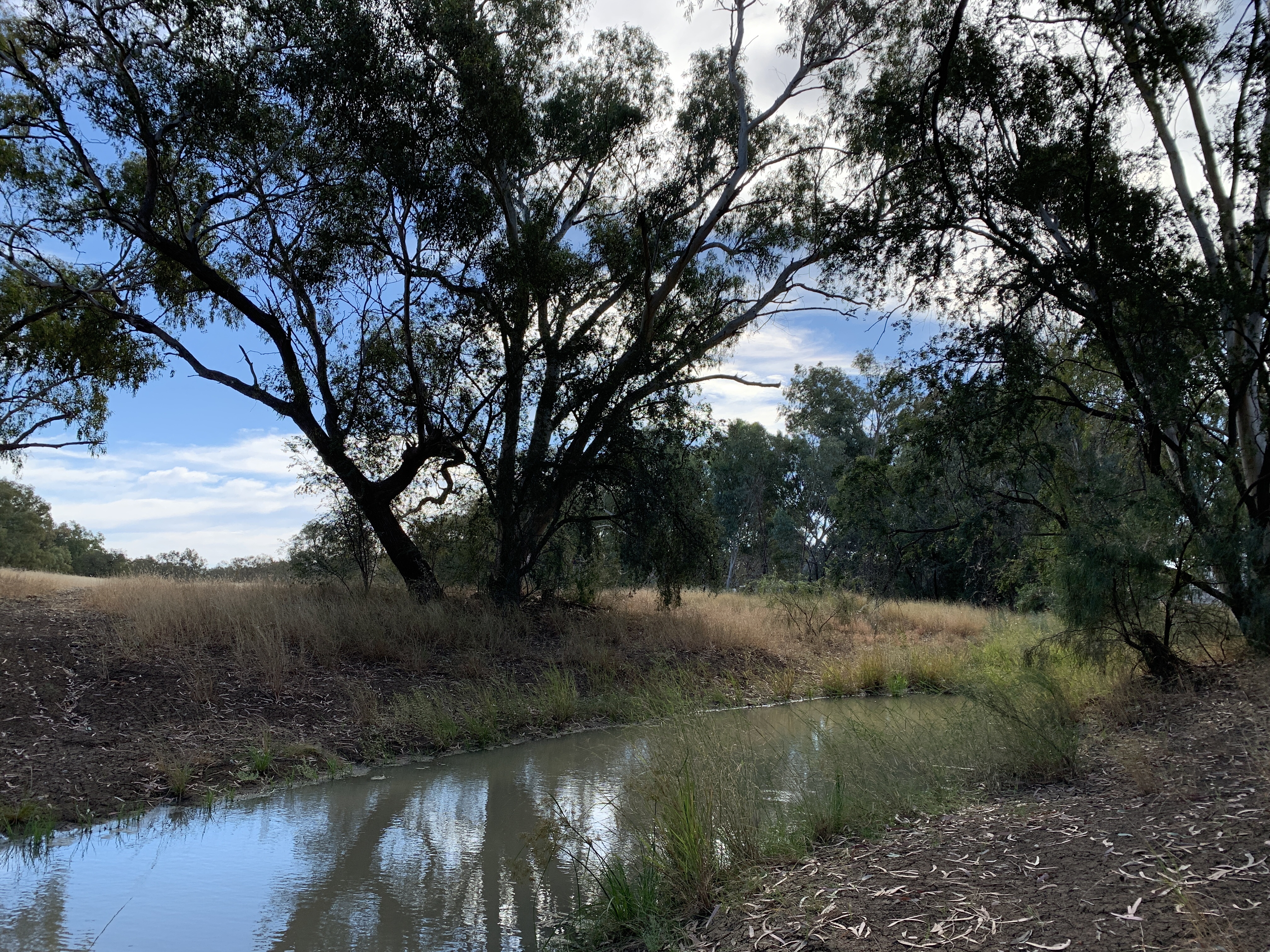
The township has a low cost campground on the banks of the Barcoo and when we stopped for a lunch break we were amazed at the number of campers. We counted at least 50 RV’s of all types set up and it was only lunchtime. More would arrive in the afternoon. To camp at this spot you purchase a permit at the Visitors Centre and it costs $10 per vehicle per night.
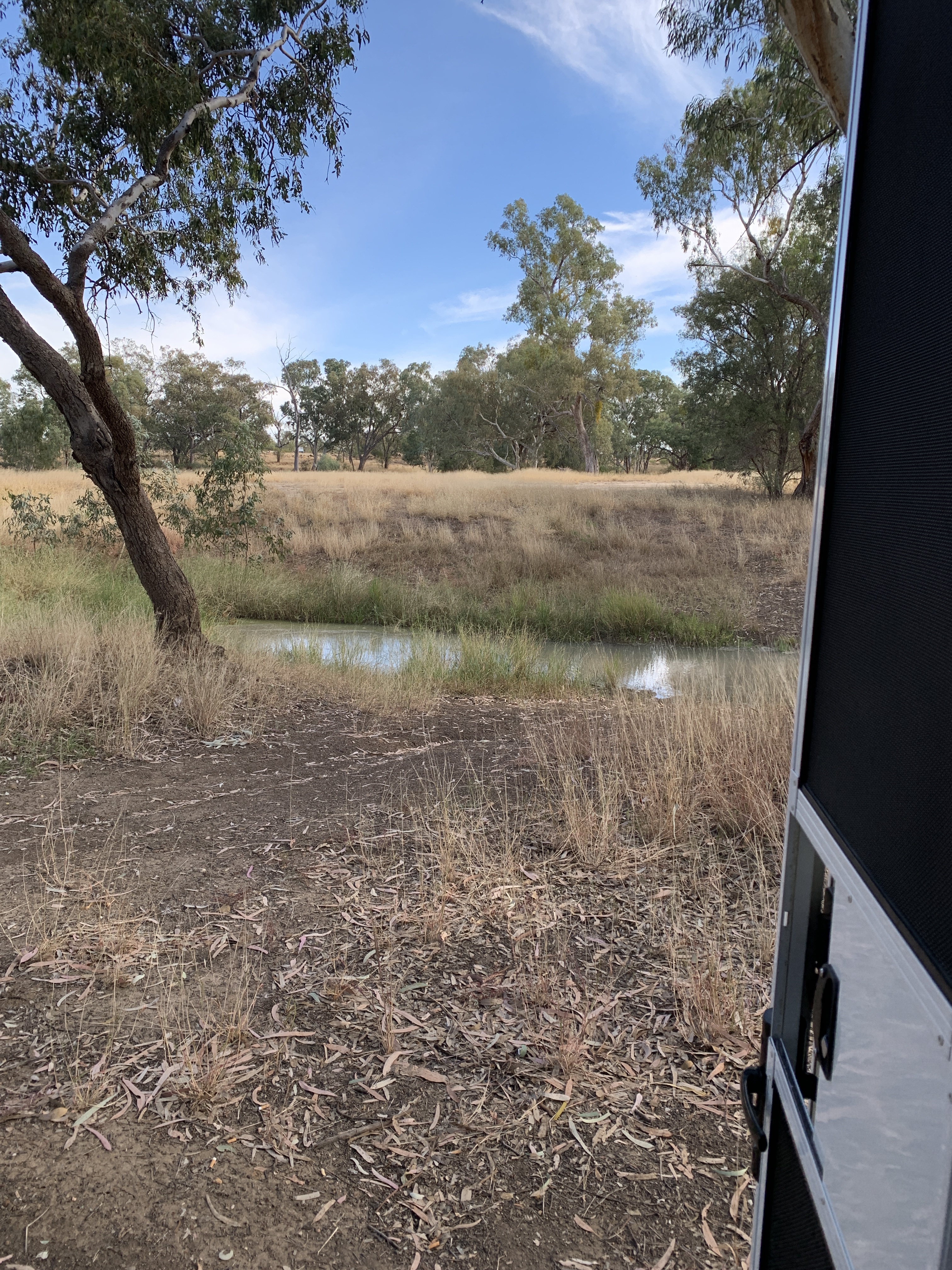
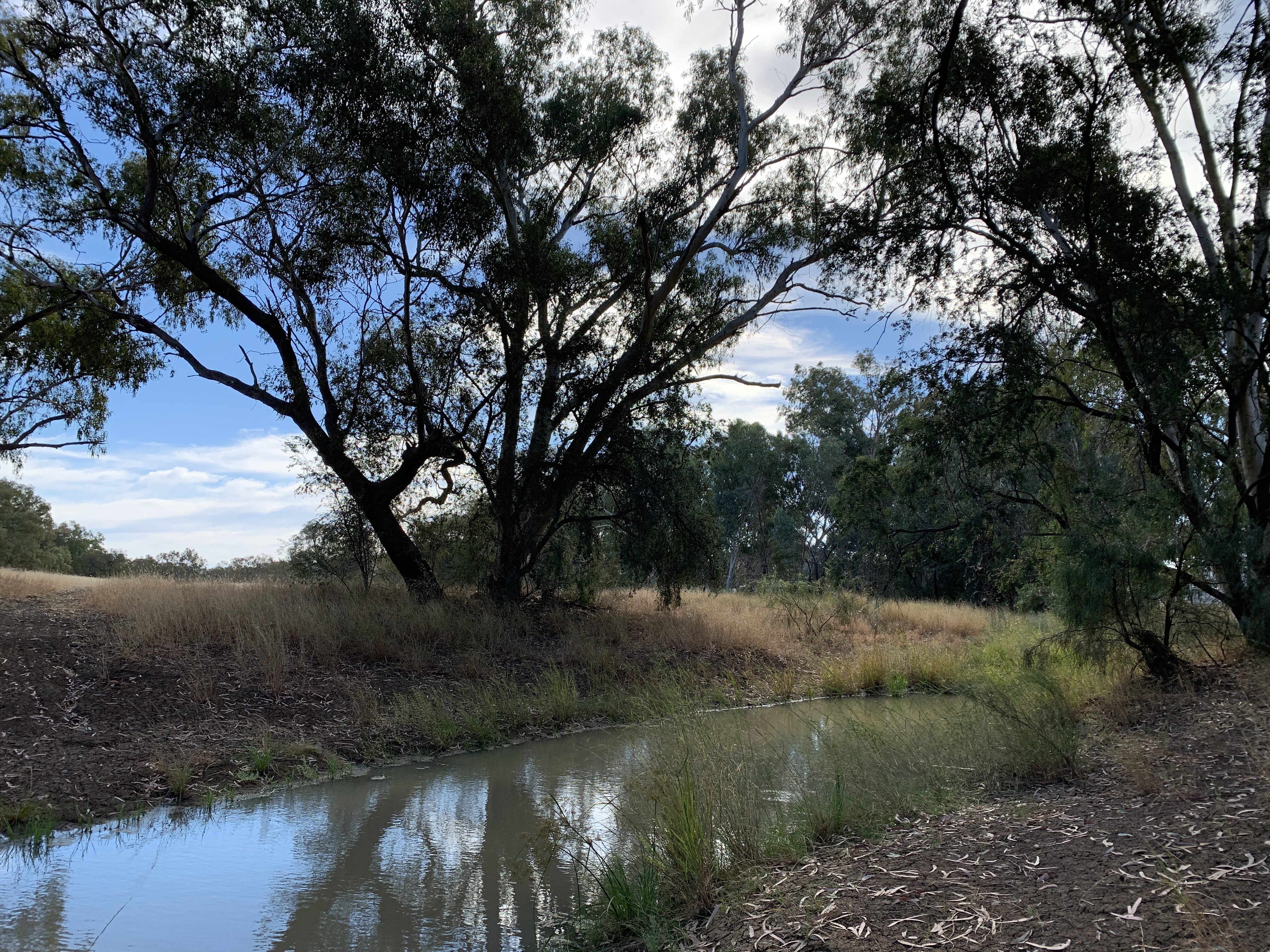
We left Blackall and continued heading northwards for another 78km and then turned off towards Lara Wetlands Campground. The road in to Lara is a dirt one and it was quite corrugated in places. It’s only 13km but it took us 1/2 an hour to travel in to the main entrance. What a surprise it is to arrive. To get there you travel through very dry red sandy scrub and all of a sudden you are greeted by this large body of water teeming with bird life. It’s magic. The roughly circular wetlands has been landscaped in such a way that it all looks natural. The area was originally a natural depression so it didn’t take much imagination to enlarge it. There is an access road all around the wetlands and campsites all the way around as well.
We booked in for one night (although I suspect we’ll stay for two) and set off around the water to find a camp site. We managed to find a water side spot with a fire drum and quickly set up camp. We met the neighbours on either side of us and the four of them later joined us around the campfire.
Geoff and Chris on one side were from Lakes Entrance and they are on their way home after traveling to Darwin and back. Paul and Janine are on the other side and they are from the Sunshine Coast. They were all interested to hear we are going to the Big Red Bash and thought it sounded fun. We enjoyed a lovely convivial evening around the fire. Paul even shared his homemade vegetable pizza! It was delicious.
We’d booked in to do the Homestead Tour in the morning, then we planned to use the Thermal Pool and I was hoping to get my kayak out for a paddle on the Wetlands. I really think we’ll be here two nights!





Wyandra to Charleville
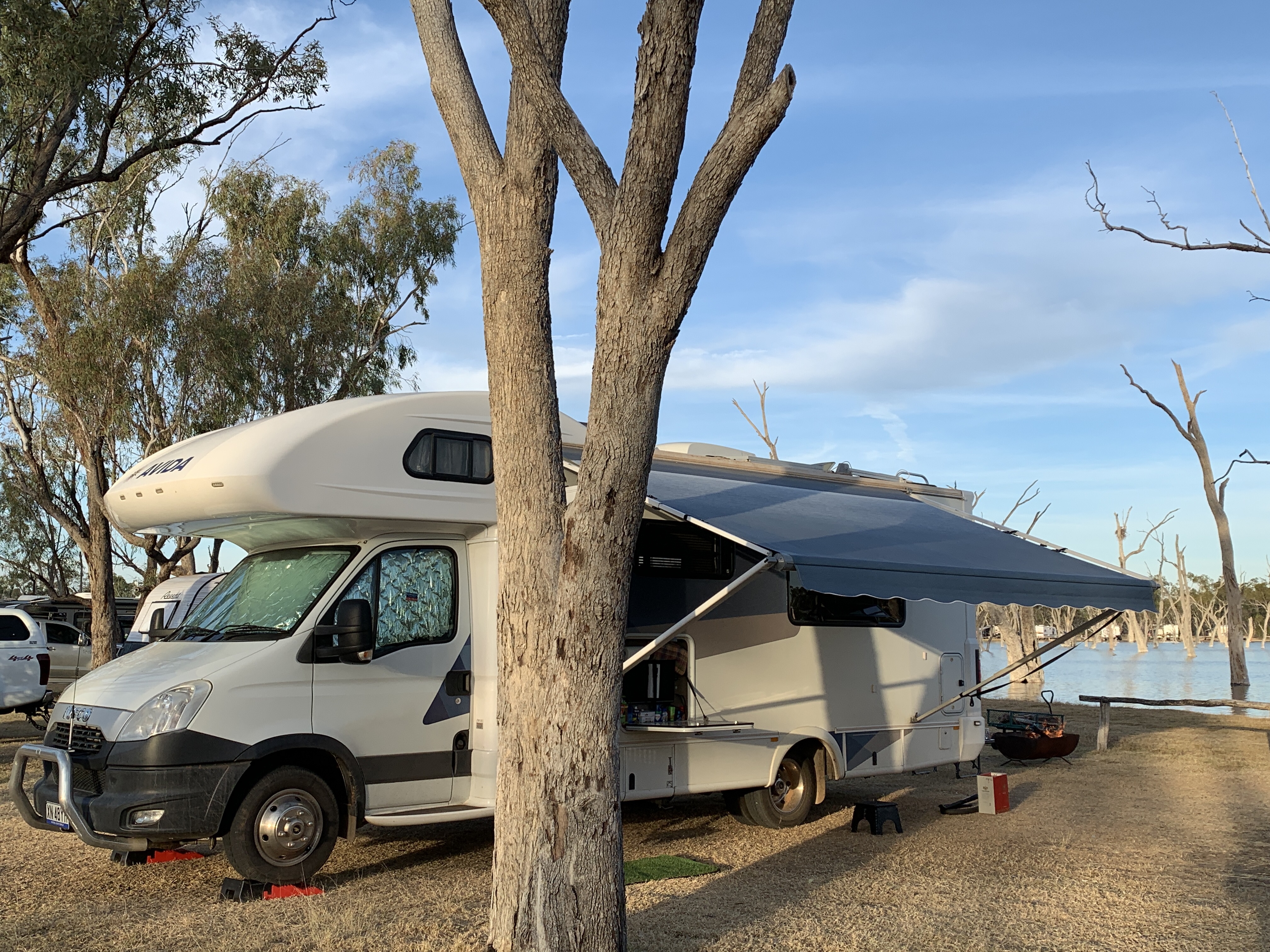
After another great night at our fabulous free camp on the banks of the Warrego River we woke to a glorious sunny day. That made for a nice change from the overcast mornings we’d had so far. Our plan for the day was to make it Charleville.
We set off heading north and the road after Wyandra was a two lane road but quite skinny and rough. Still plenty of room for trucks to pass though and we were able to drive at our limit of 100km/h. Now that we are Light Rigid our maximum speed is 100km/h.
Again we didn’t see much livestock apart from the usual goats and emus however we did see a couple of mobs of cattle on this stretch.
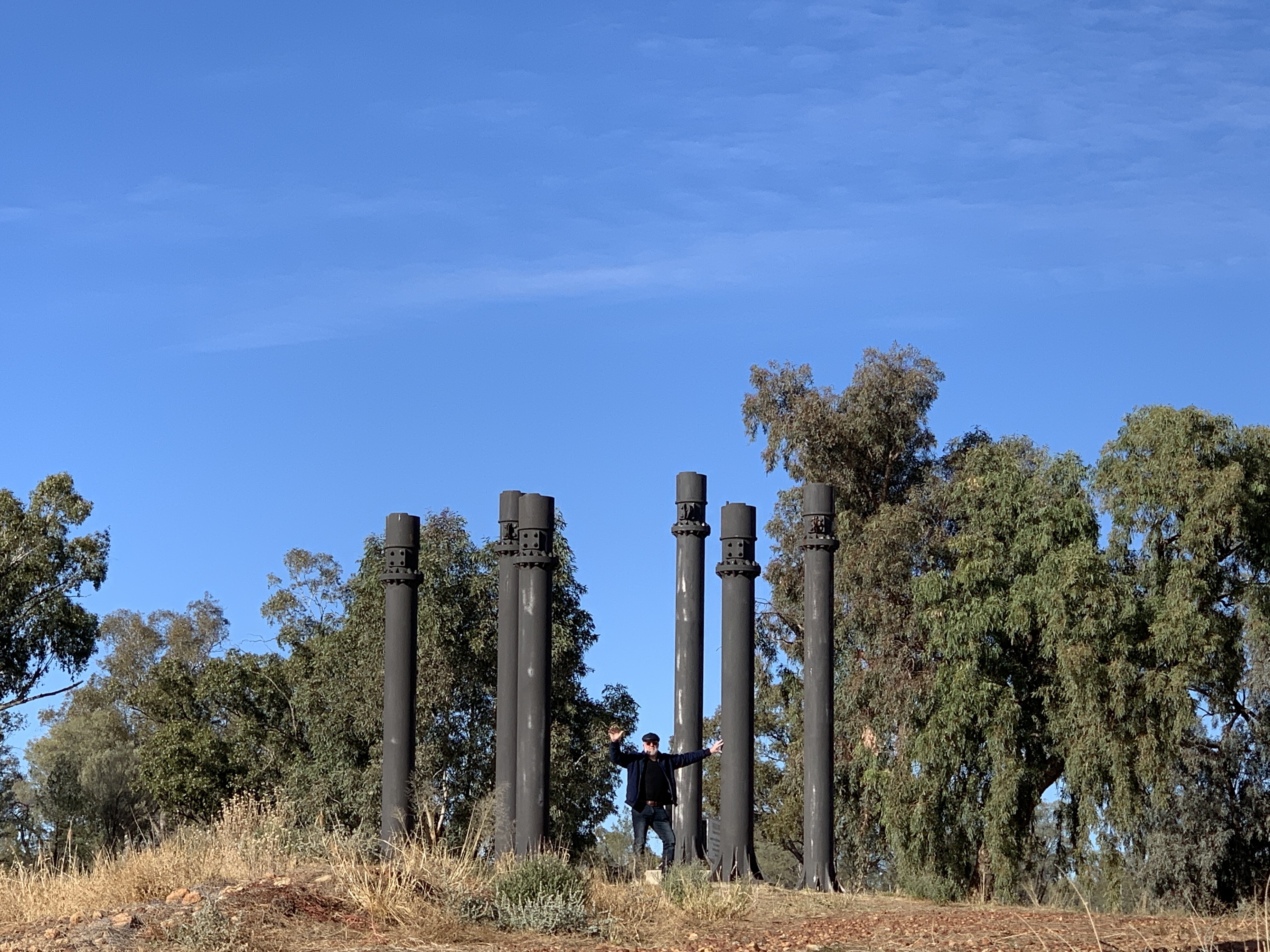
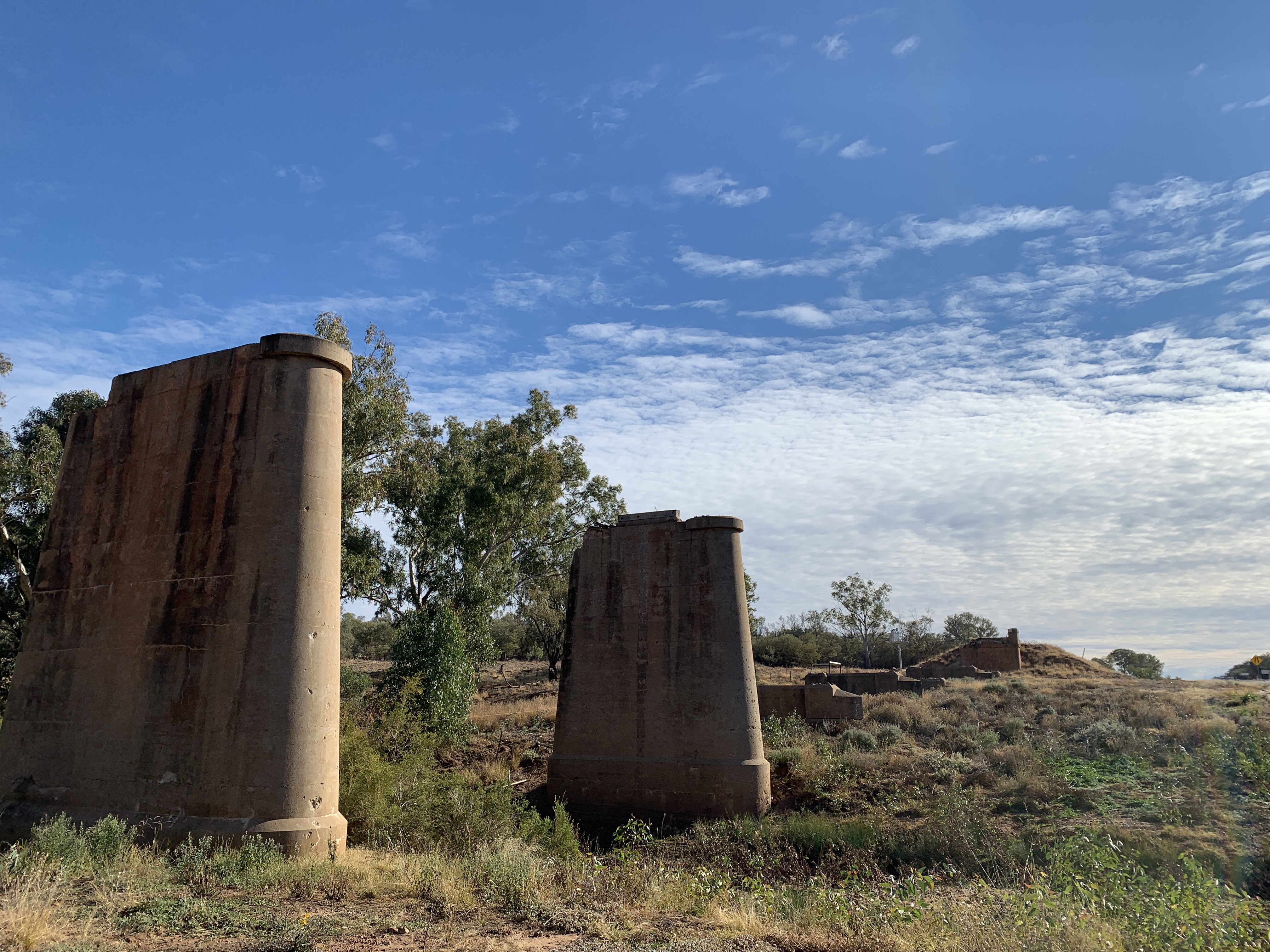
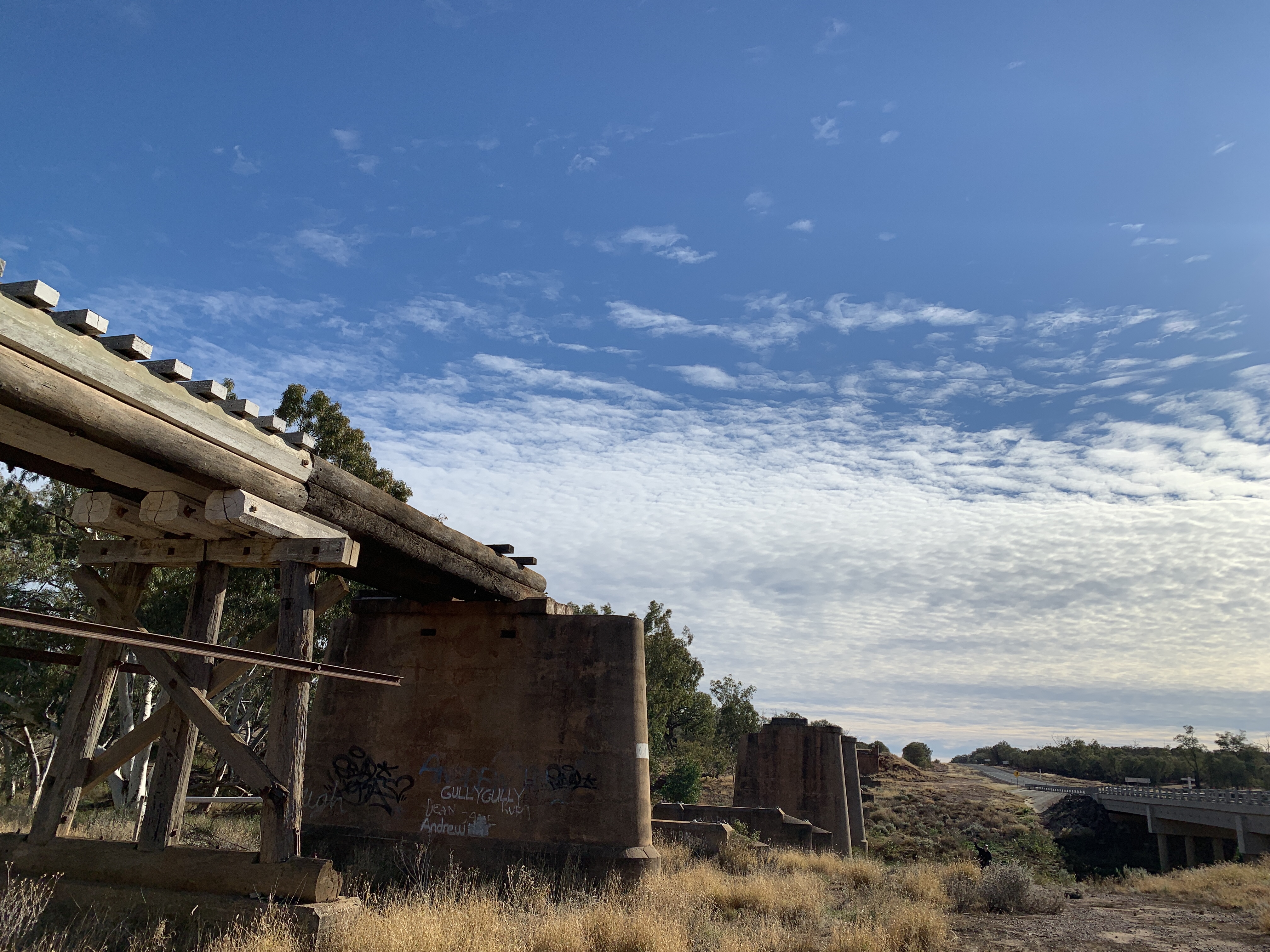
About 30km south of Charleville is the site of one of Australia’s most horrendous accidents at Angellala Bridge. Around 9.00pm on Friday 5 September 2014 a truck carrying 52.8 tonnes of ammonium nitrate crashed at the Angellala Bridge. The following explosion was measured on the Richter scale as a 2.1 seismic event. The explosion was so powerful that residents of Charleville 30km away thought there’d been an earthquake. Amazingly no lives were lost although the truck driver received burns to 35% of his body and others were injured. The railway bridge was completely destroyed and will probably never be rebuilt. On the side of the road there are signs and a pull over area for tourists to stop and read the story of the remarkable event.



We arrived in Charleville and had a drive around the little town to orient ourselves. There is a CMCA RV Park just out of town so we drove out to check it out. It is a very large park, really just a bush camp but it has potable water, a dump point and a big rubbish bin. There is a communal area with central fire pit and free BBQ’s. This is where Happy Hour is held each night led by the current resident caretaker. It looked like a good spot to camp so we’d book online to stay there that night. It costs $3 per person per night for CMCA members. So a whopping $6 to camp the night.
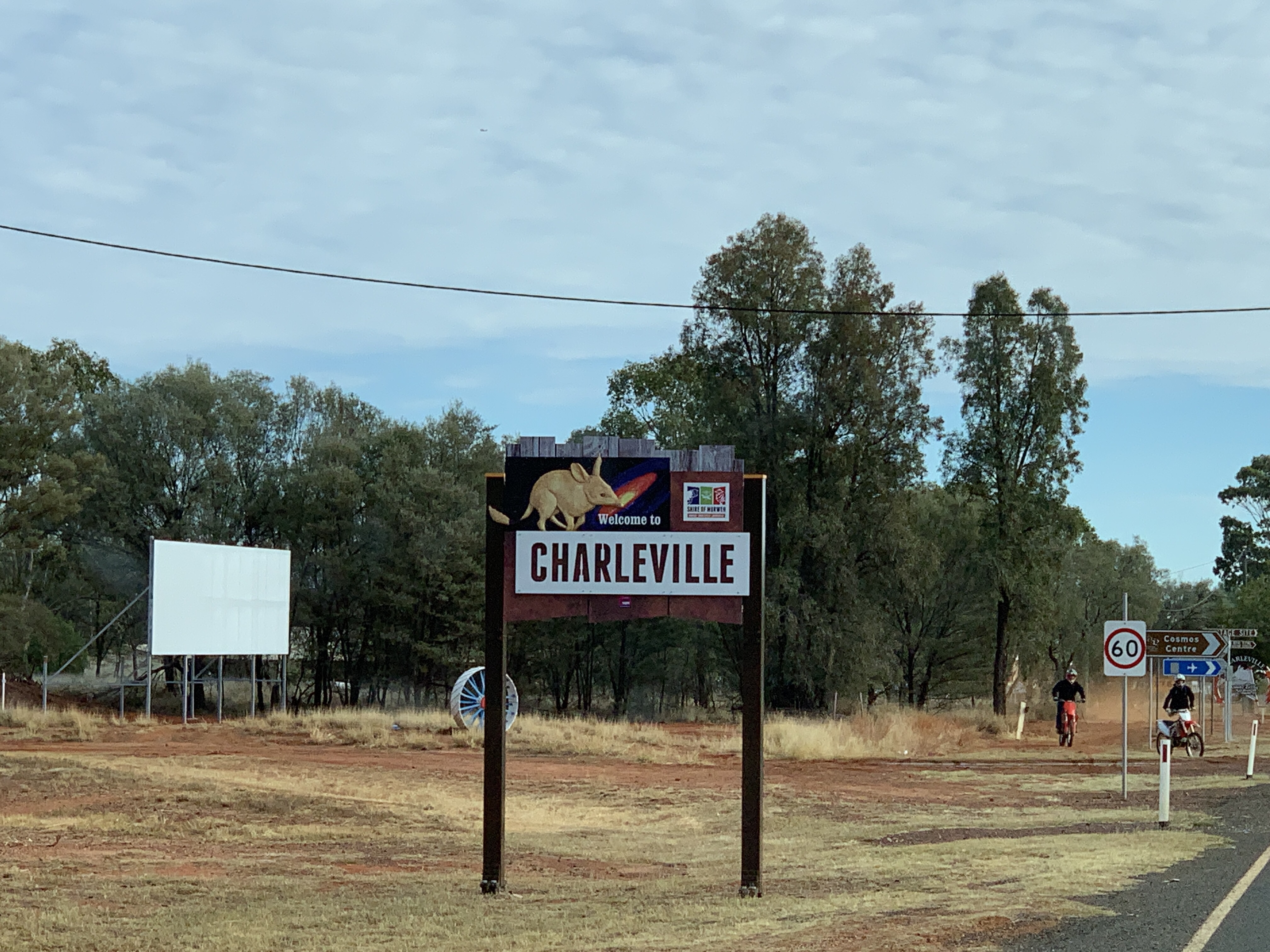
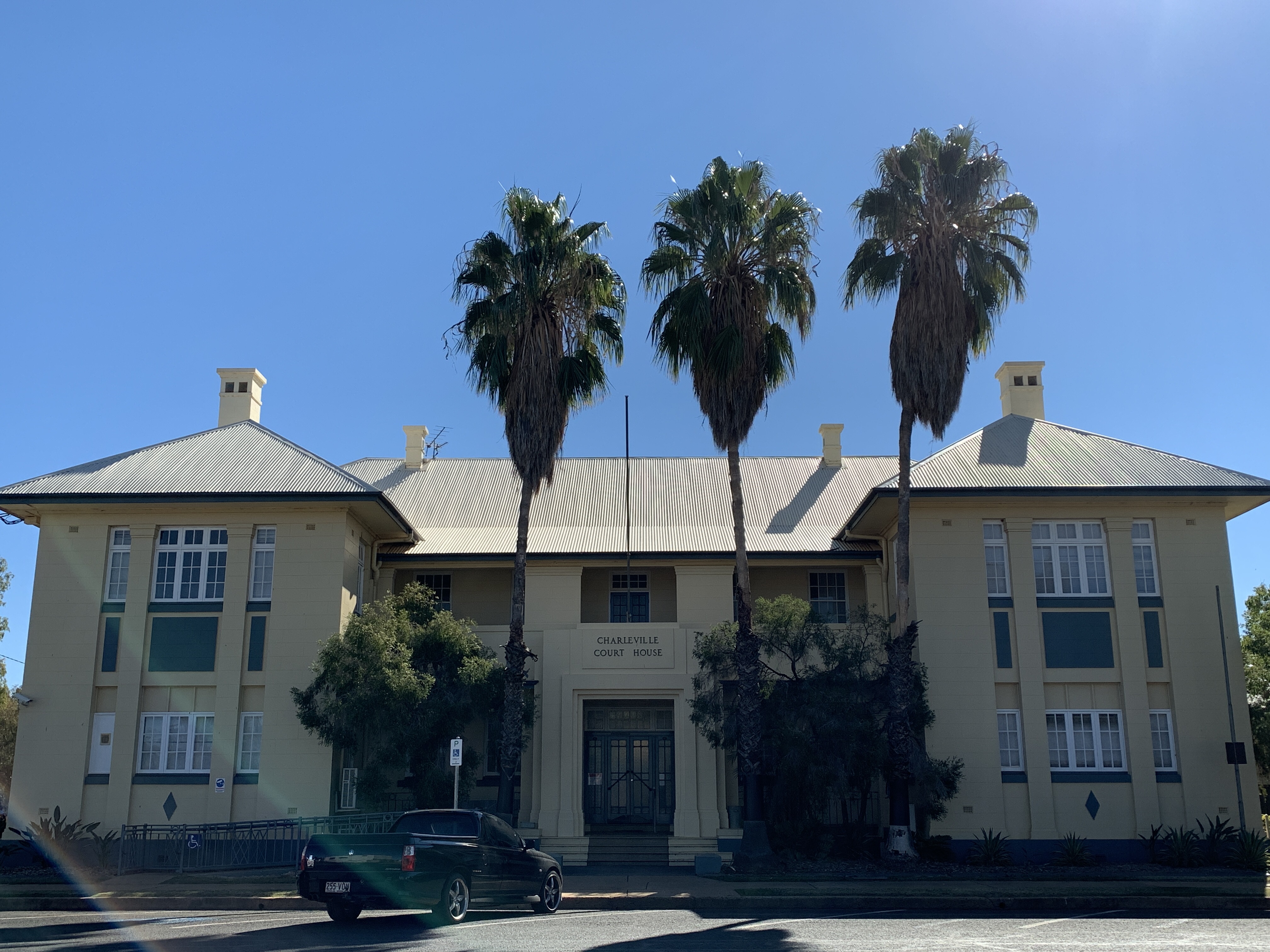
Back in town we drove around the town centre and I was surprised by the number of lovely Art Deco buildings especially the Court House. The Visitors Centre is housed in the Charleville Station and we visited and bought tickets for the afternoon tour at Hotel Corones. Unfortunately the Bilby Experience , where you get to see some actual Bilbys is booked out for the next few days so we won’t be able to do that. Likewise the Cosmos Centre Night Viewing so we won’t be doing that either. We have seen so many motorhomes, camper trailers and caravans on the road. Every second vehicle is a caravan. With so many visitors many of the tours and attractions are sold out and caravan parks are full. This is fabulous for these small communities.
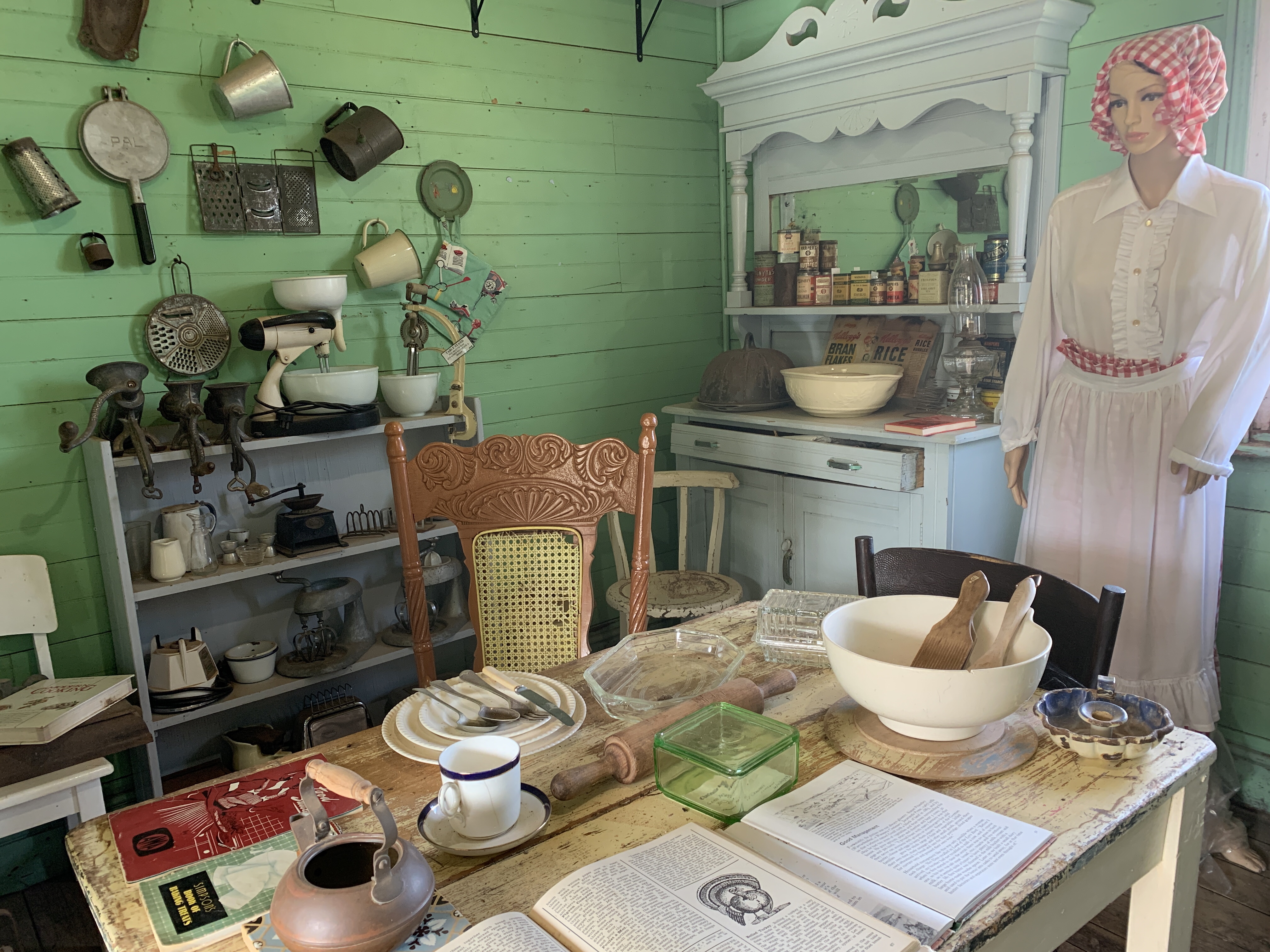
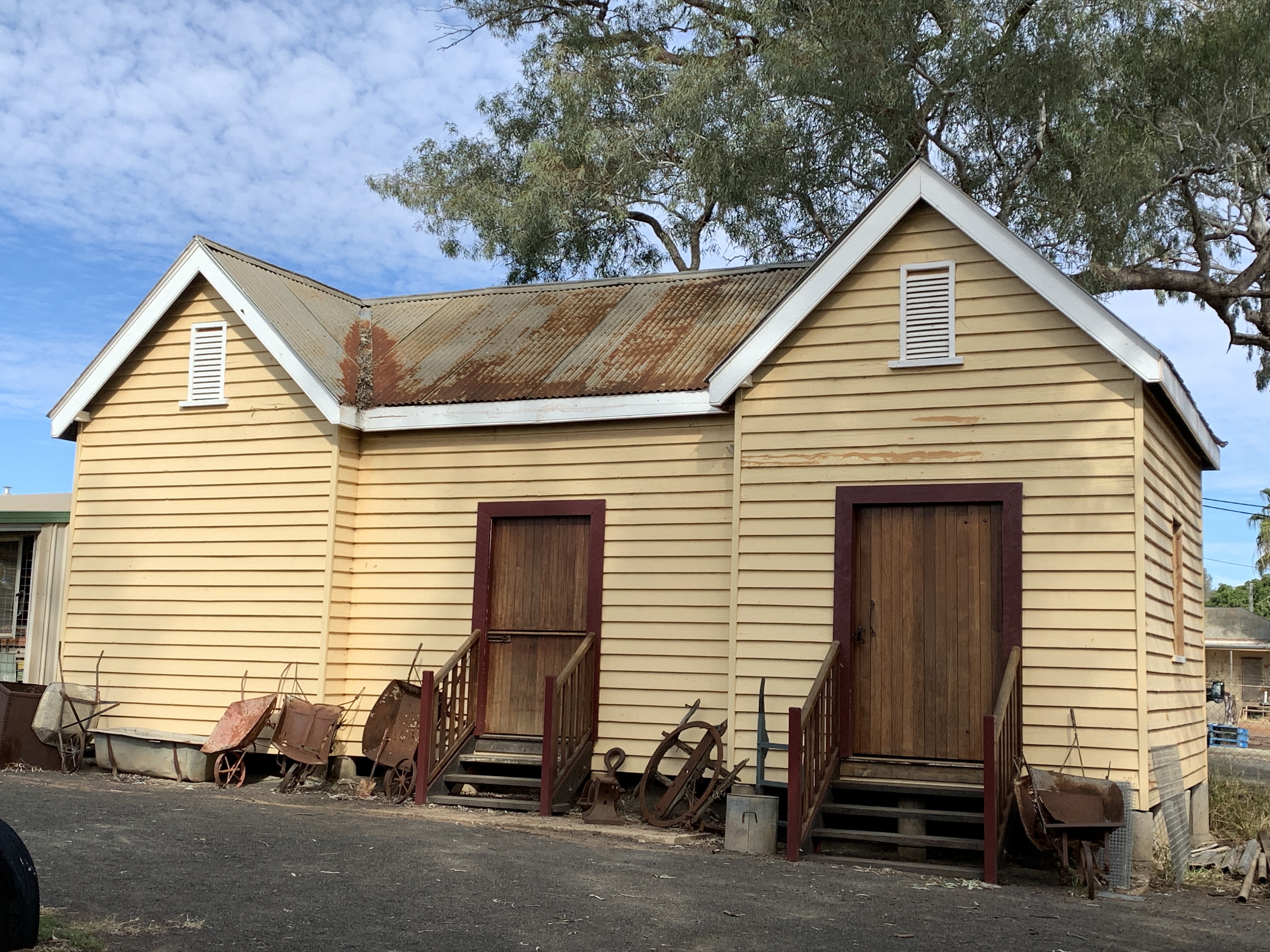
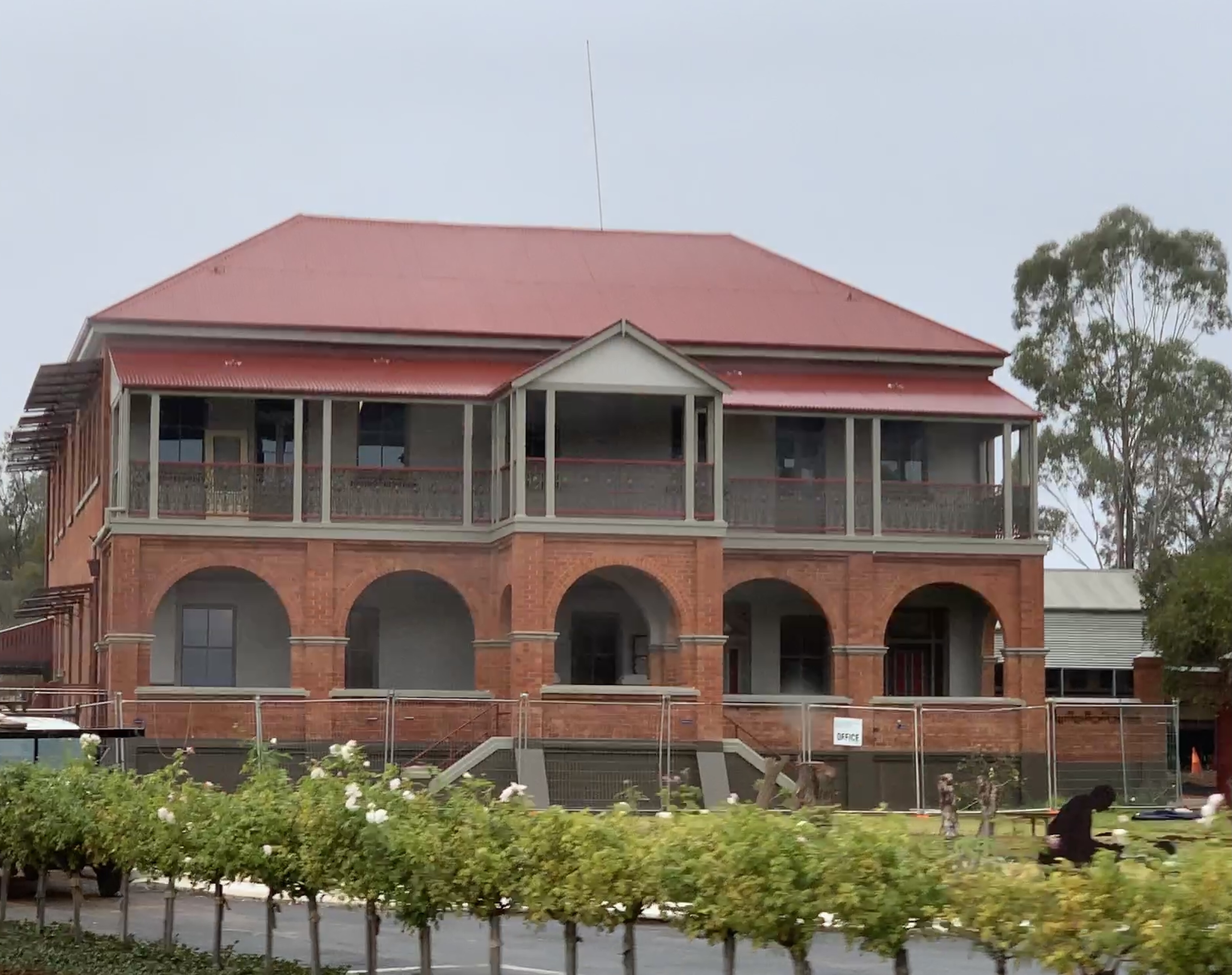
We visited the bakery for some fresh bread and across the road is the Historic House Museum. While Rich had some morning tea I visited the museum. The museum was built in 1889 as the Queensland National Bank with the bank at the front including a huge safe, and a residence for the bank manager and his family at the back. Across the yard at the rear were stables, tack rooms, and a buggy shelter. The property even had its own well. No expense was spared for the bank in the construction and the house features marble fireplaces, ceramic door knobs, cedar doorways and architraves and classic high ceilings. Today the house is home to a huge collection of local memorabilia including historical photographs, antique clothing, musical instruments, gramophones, and even the typewriter used by Rev. John Flynn (co-founder of the Royal Flying Doctor Service). Out the back are some fine examples of horse drawn vehicles and motor vehicles. If you love old stuff and history then this is a must do stop in Charleville.





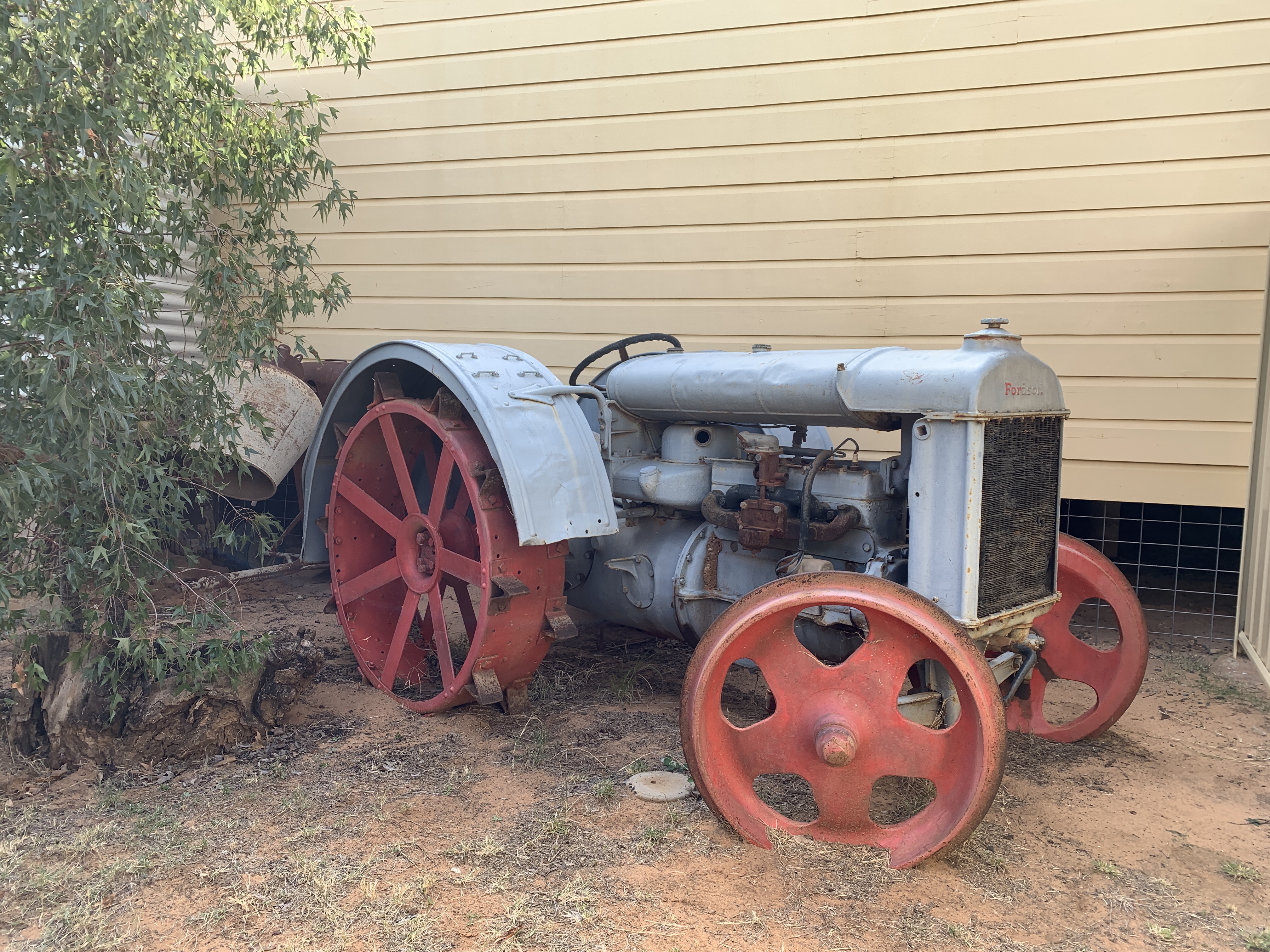
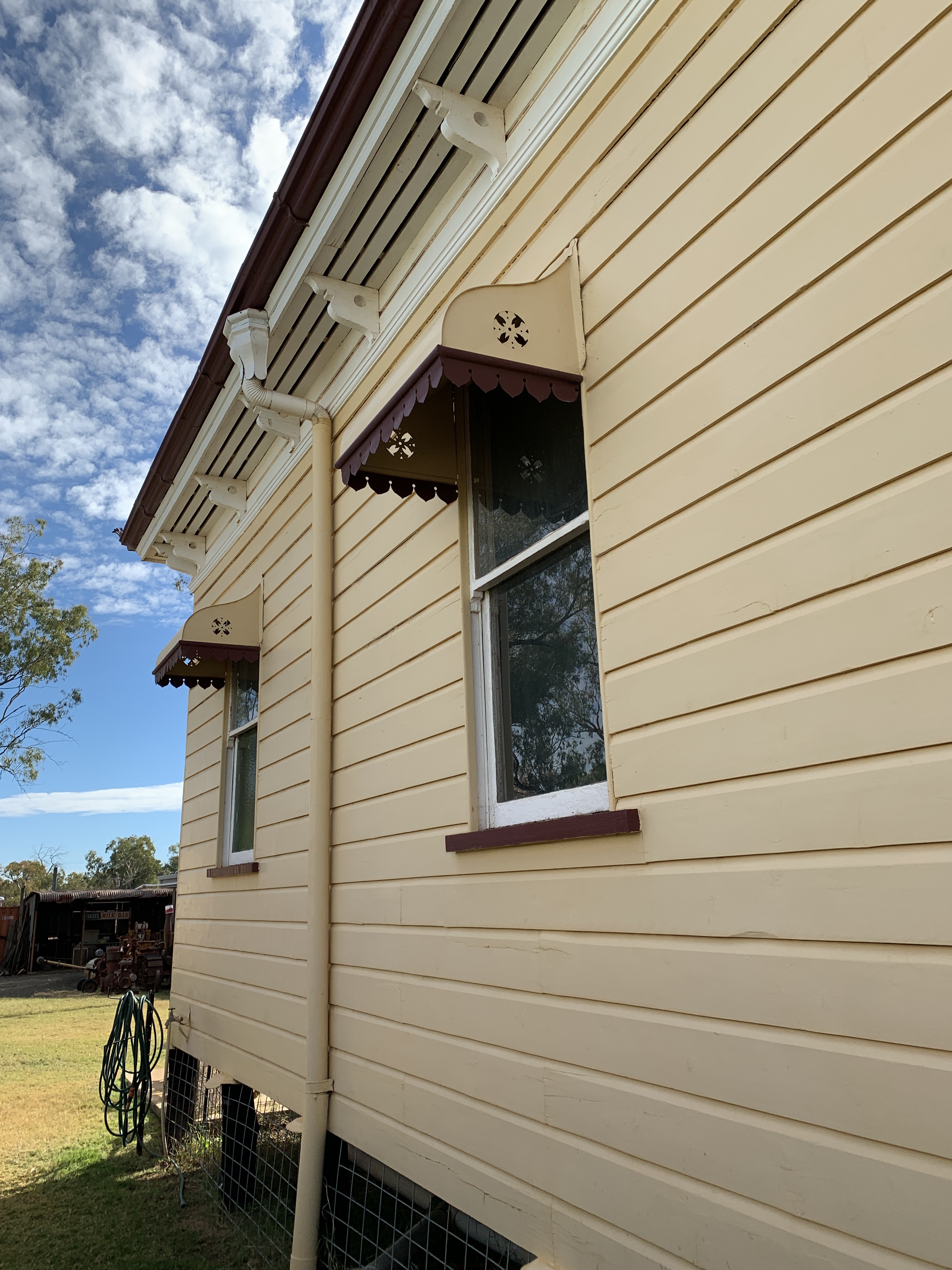
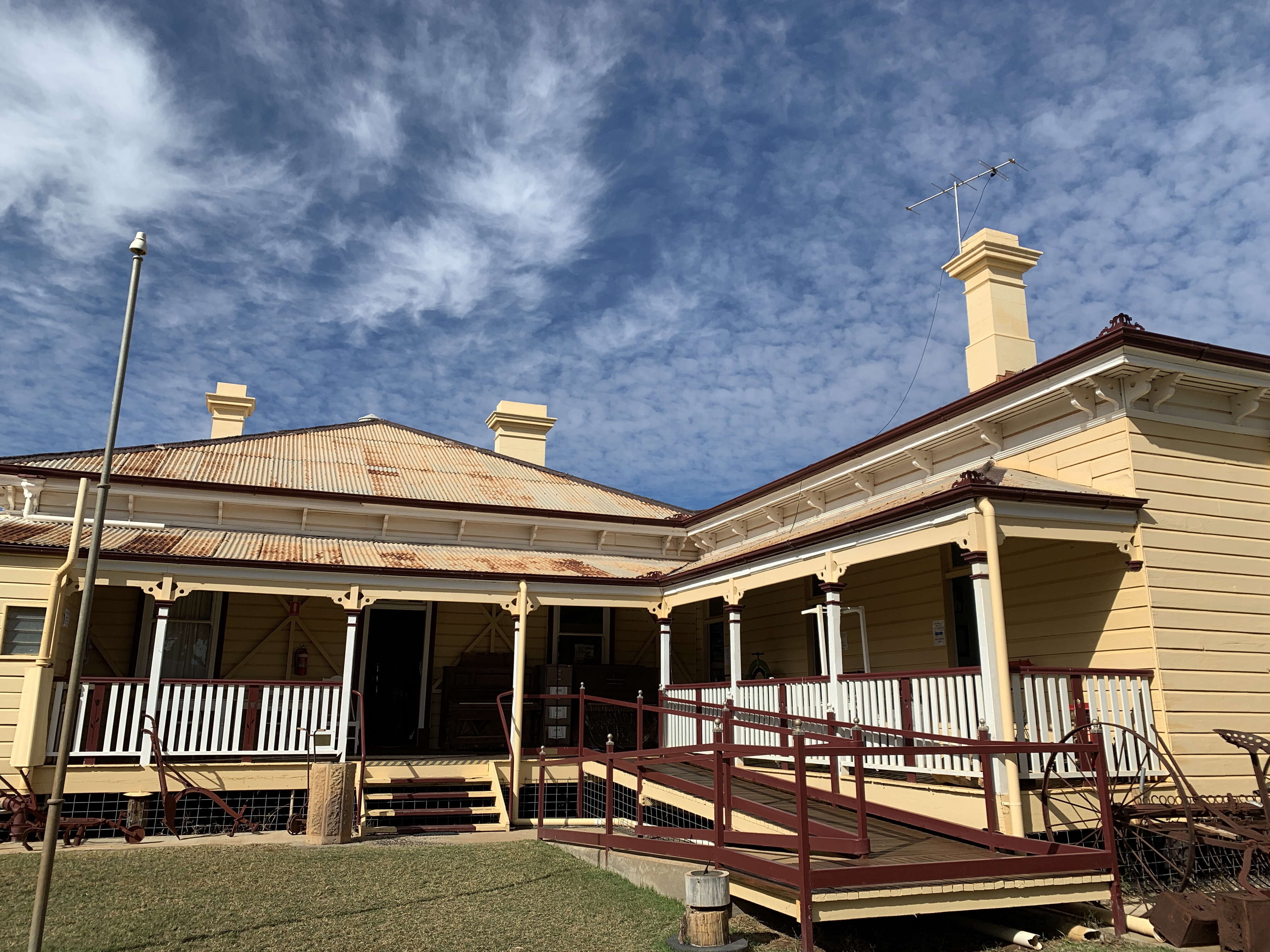
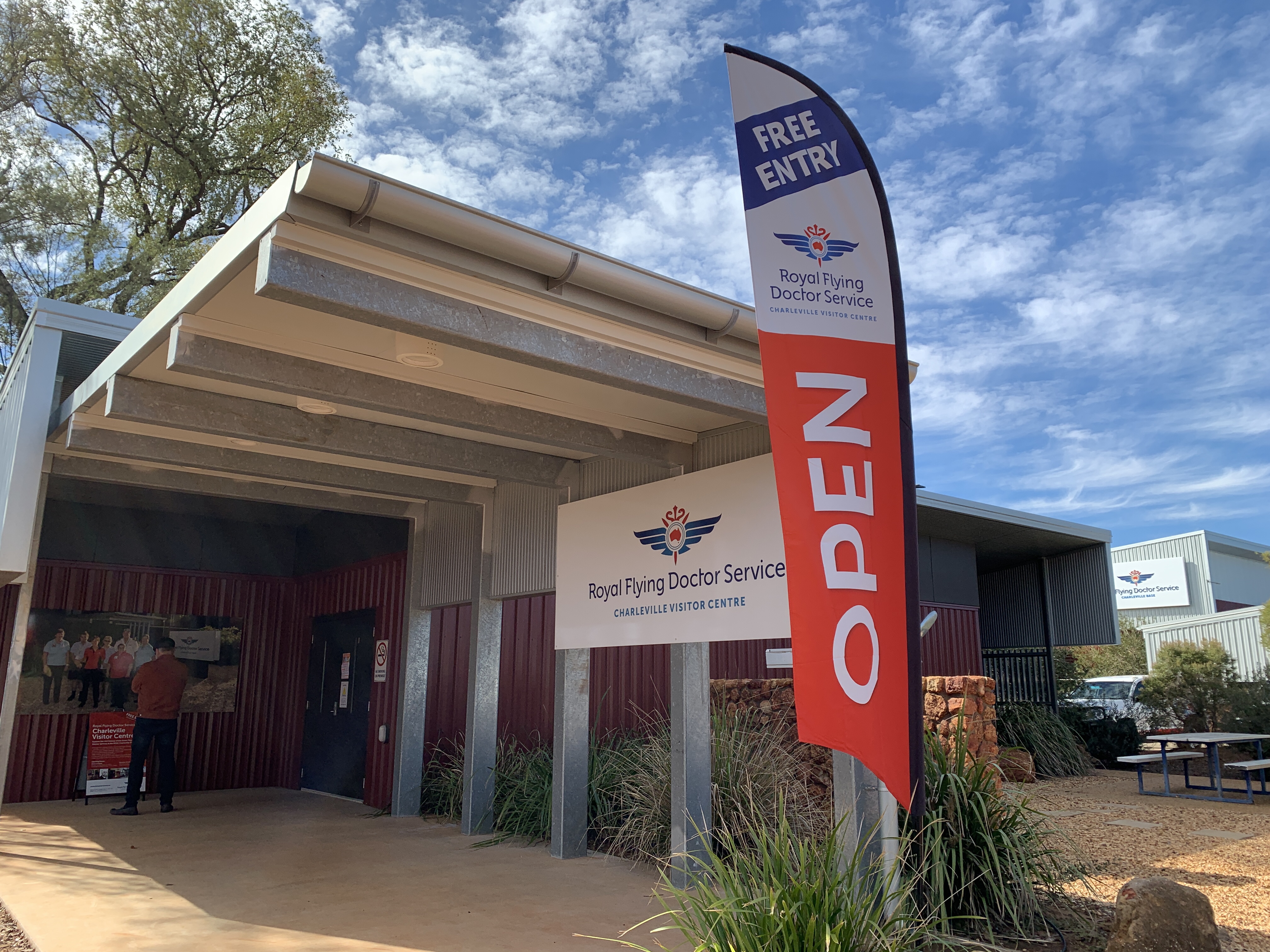
We drove out to the Charleville Airport Complex and this is where we were booked to do a tour of the Secret WWII Base the next day. There is a Dump Point and potable water available here for visitors. The area is also home to the Royal Flying Doctor Service Visitors Centre and the
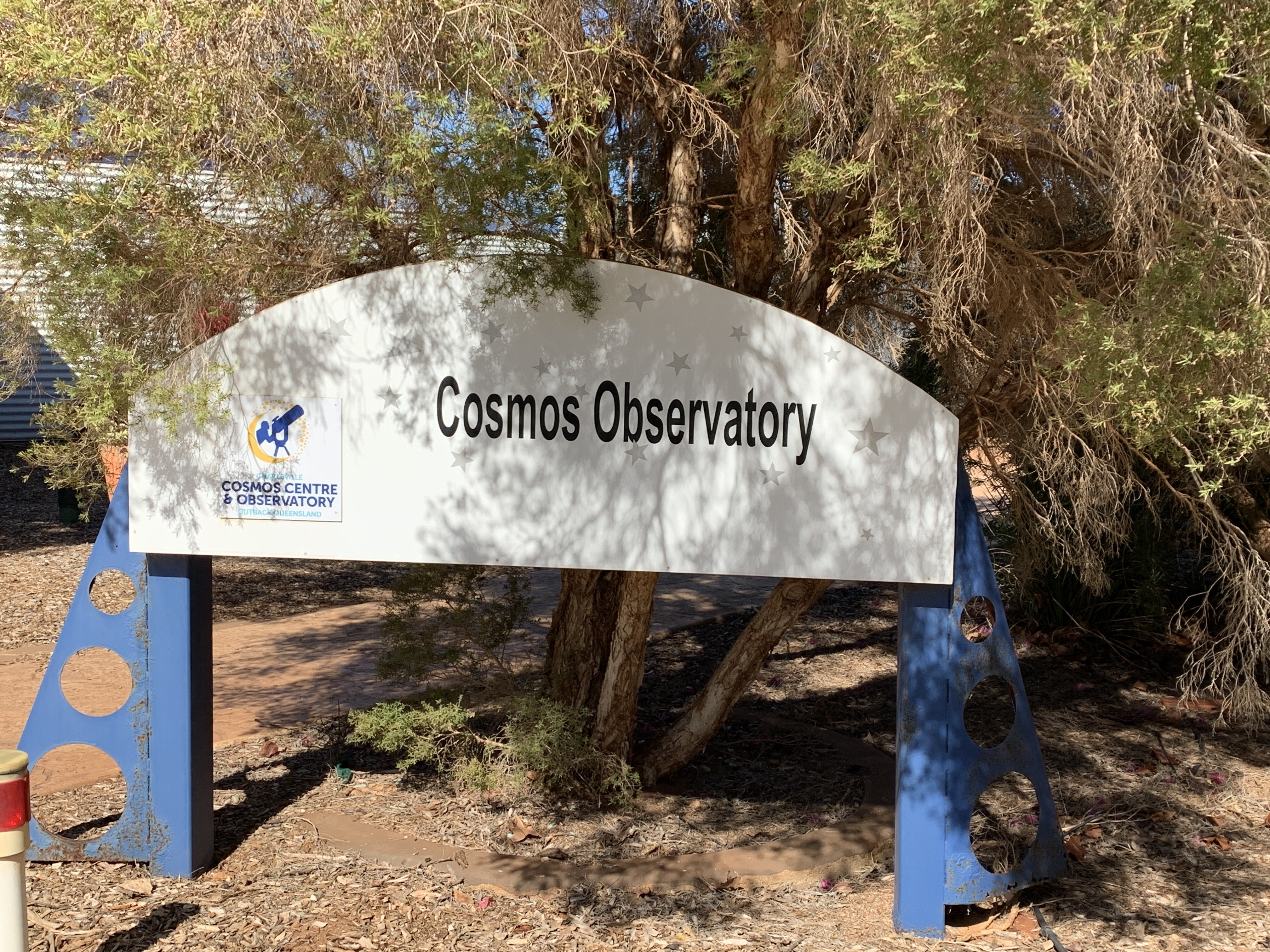
Cosmos Centre & Observatory. We paid a visit to the Royal Flying Doctor Service Visitors Centre and this was a great little exhibition showcasing the wonderful work that this organisation has been providing for remote Australians for many years. Well worth a visit.
We also paid a visit to the Cosmos Centre and this too is a great Exhibition of all things astronomical and space. Lots of great displays. Kids would love visiting this place.
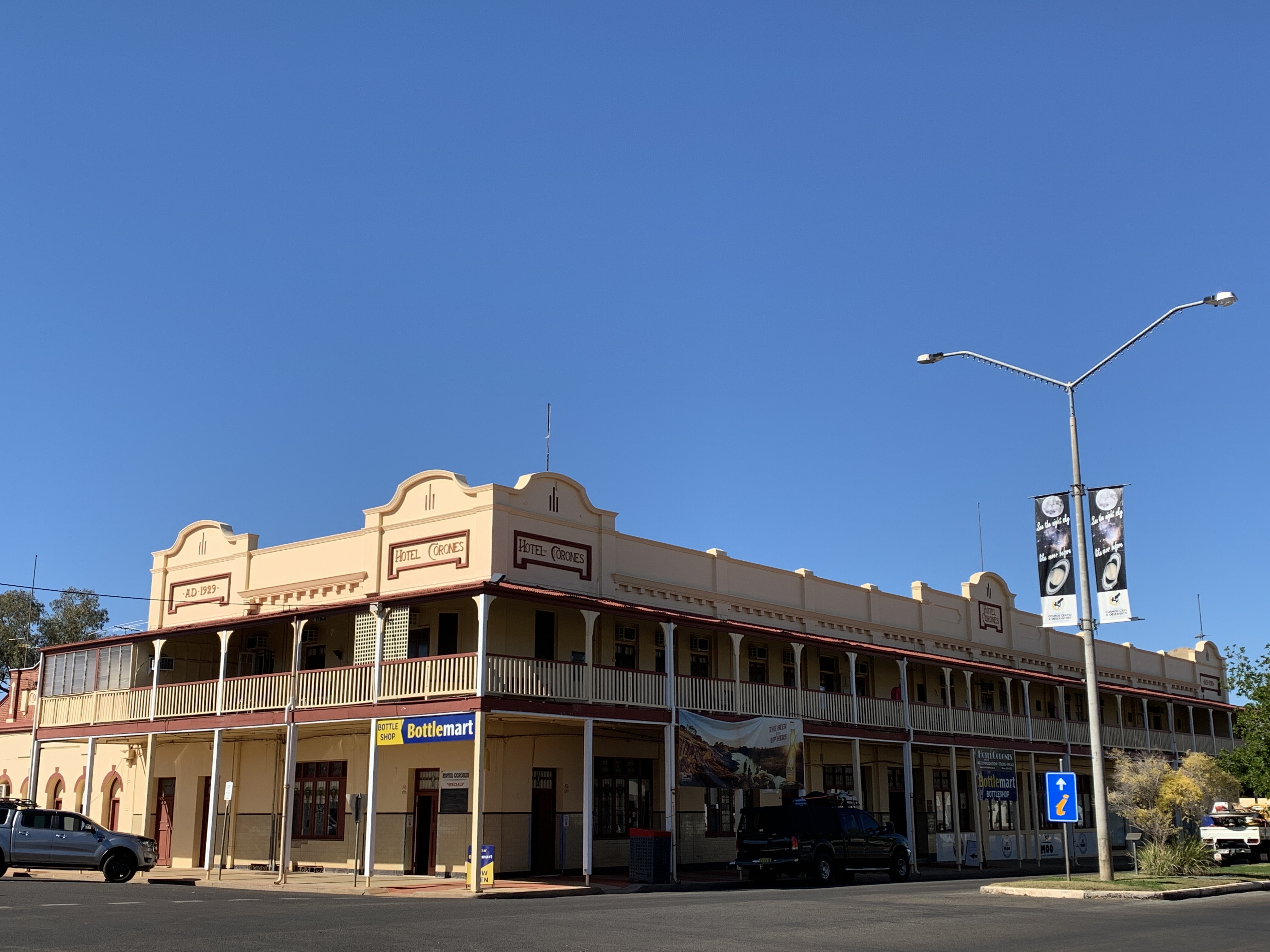
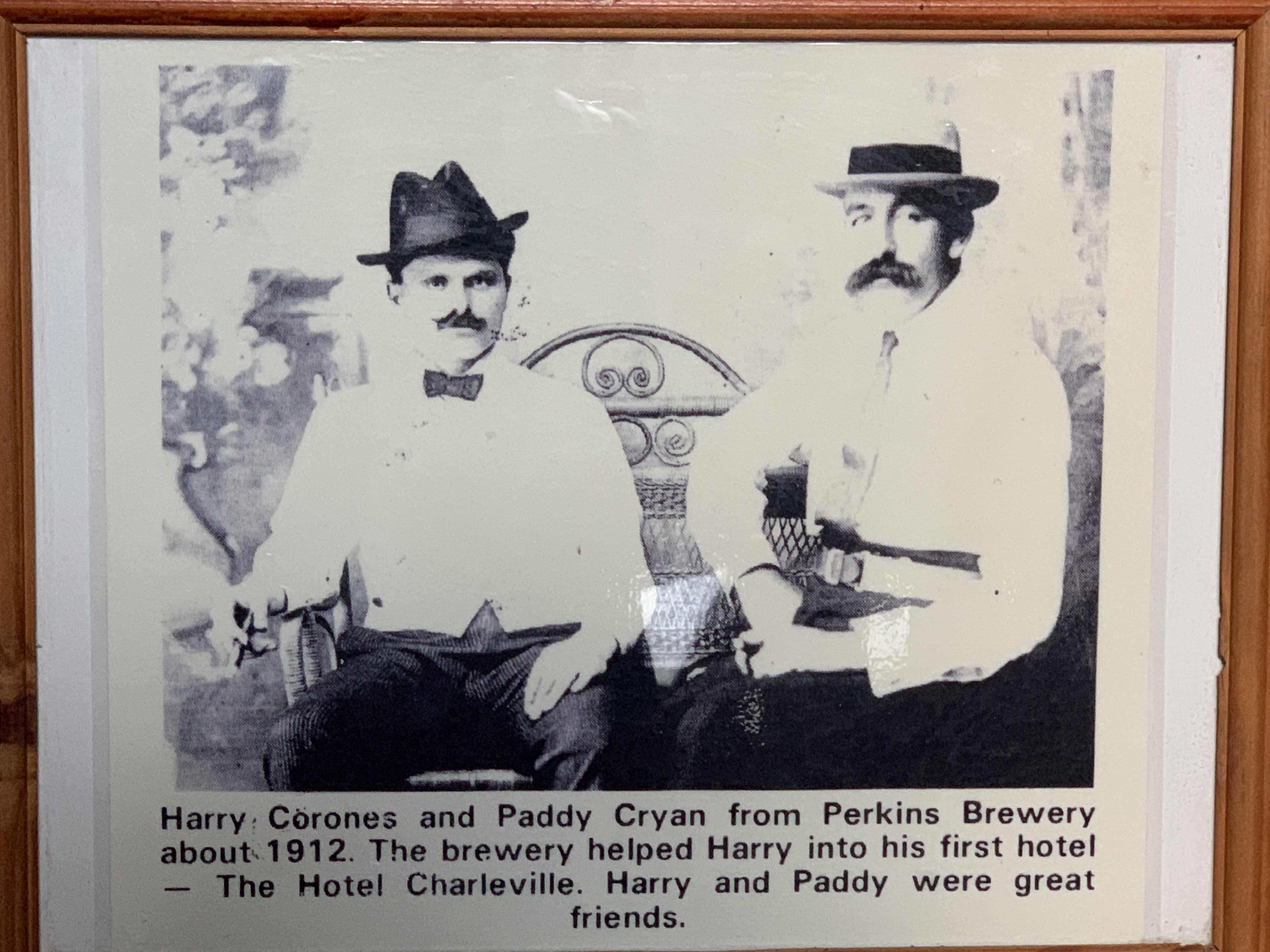
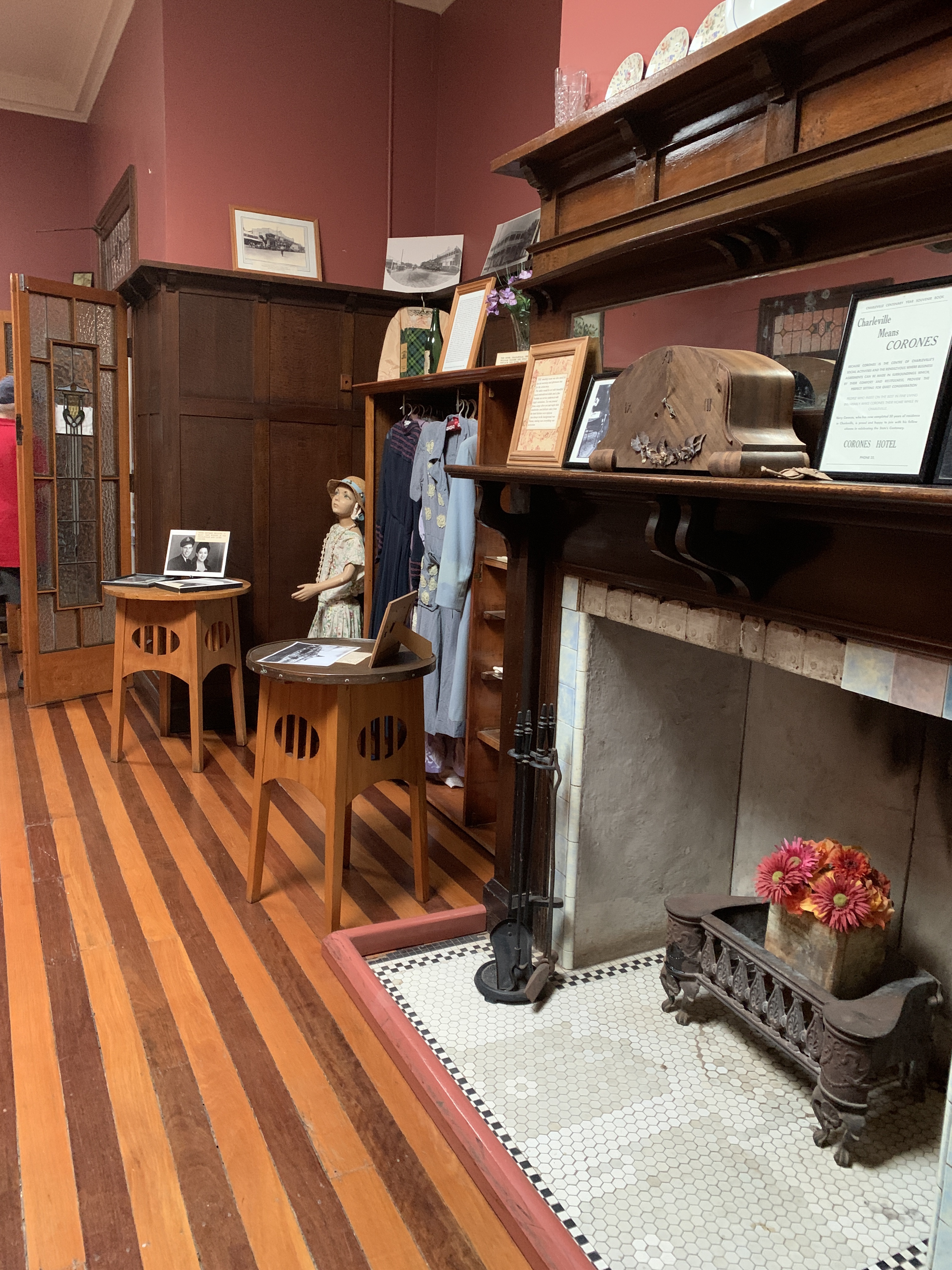
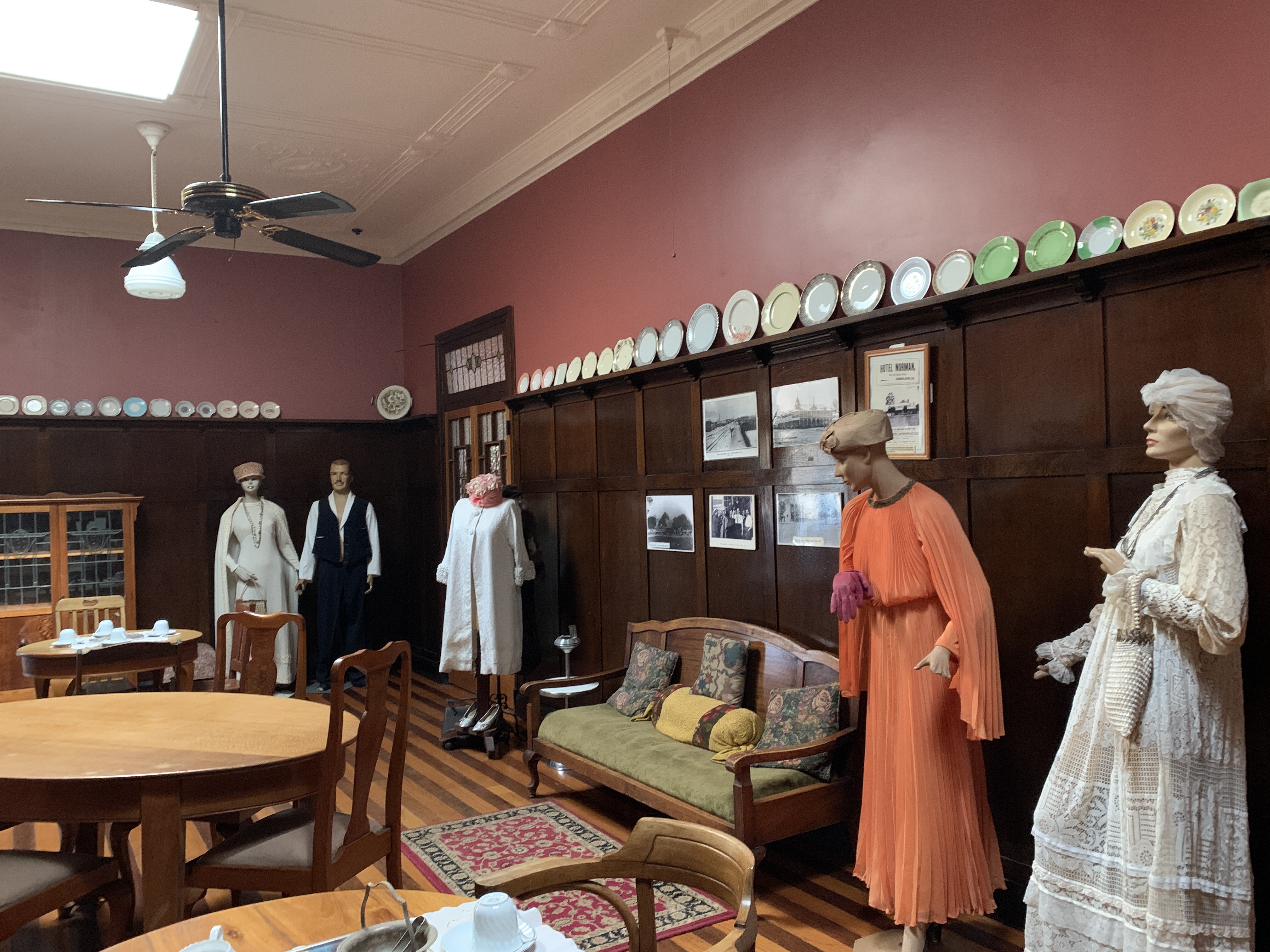
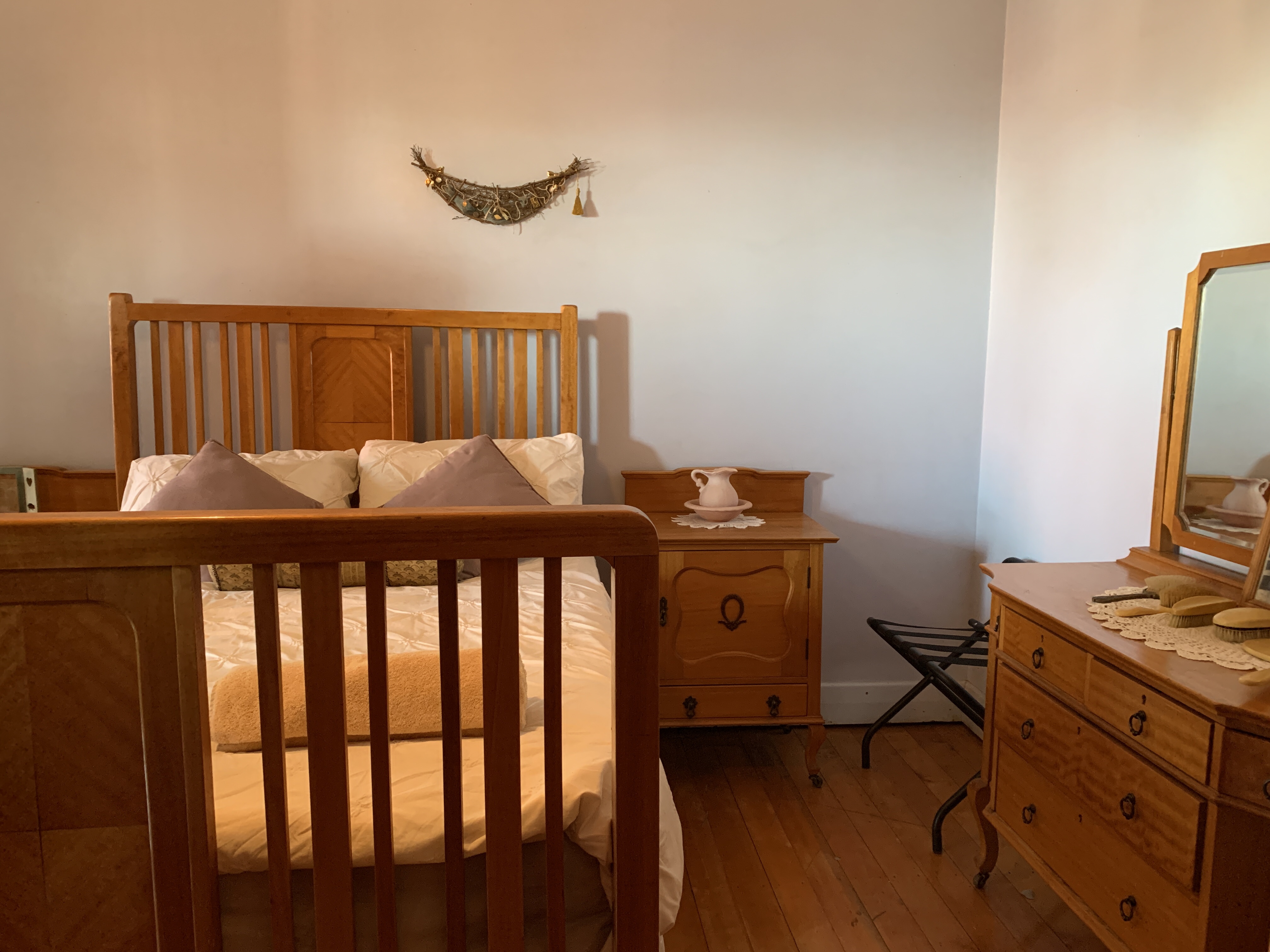
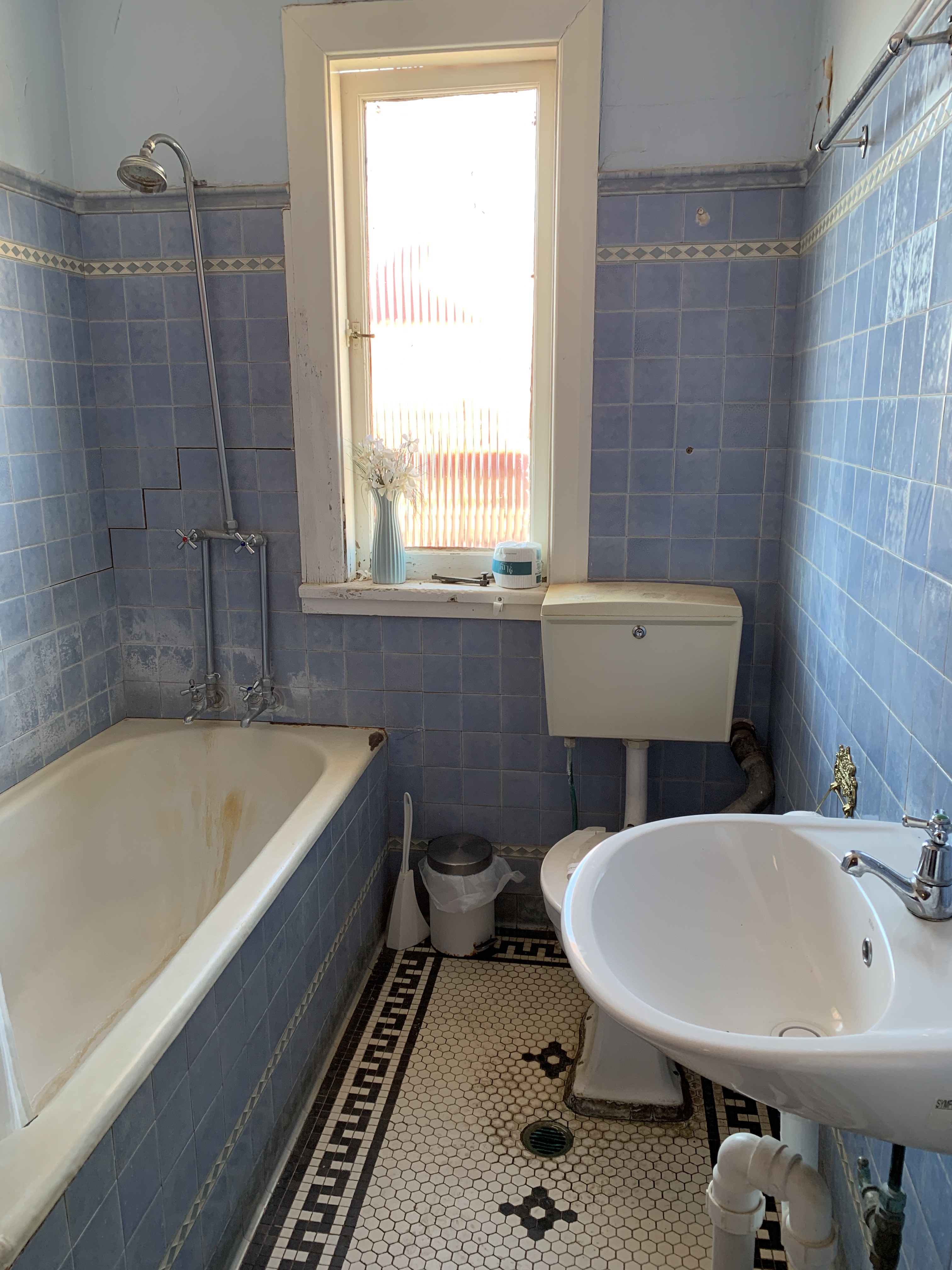
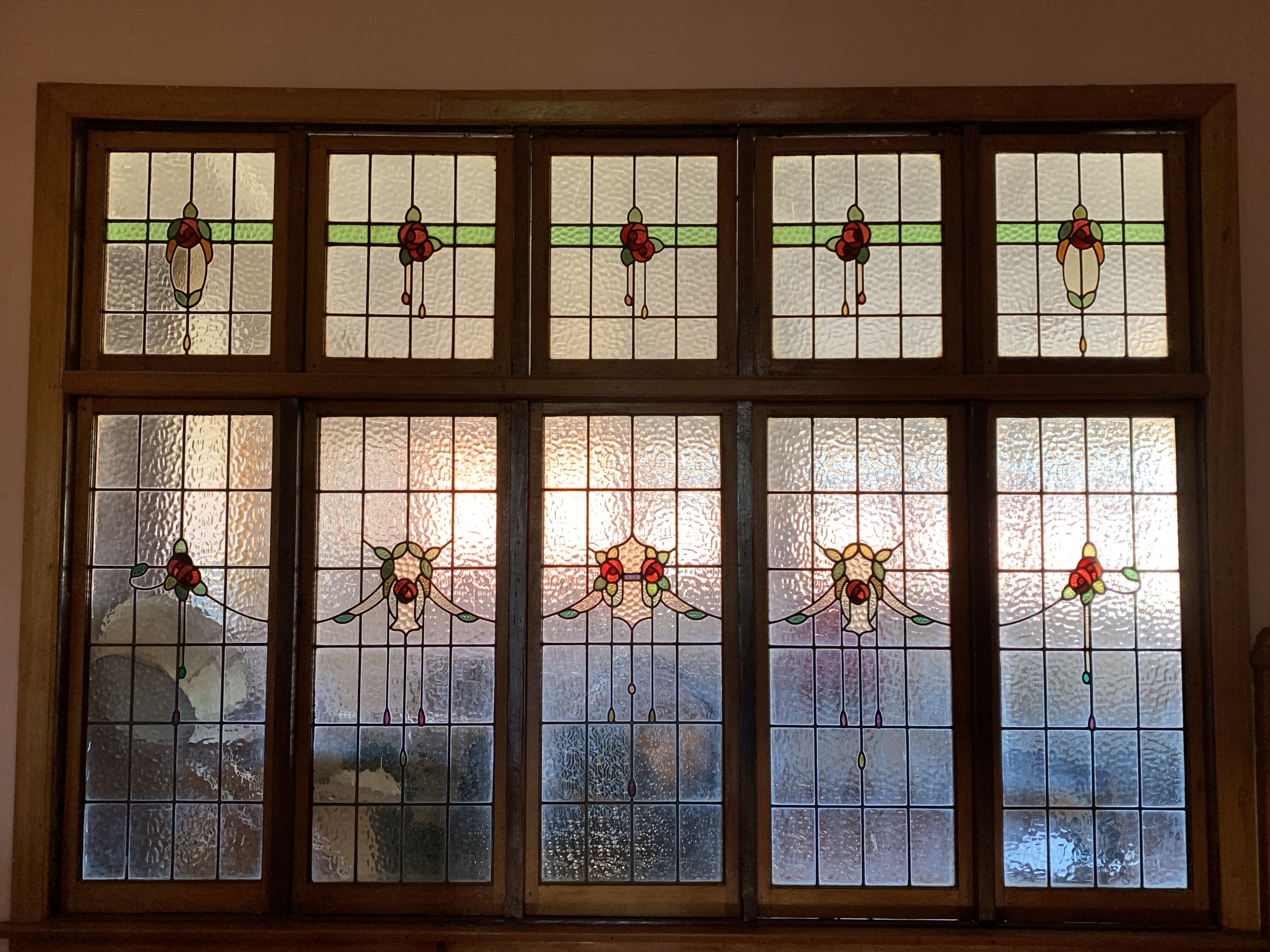
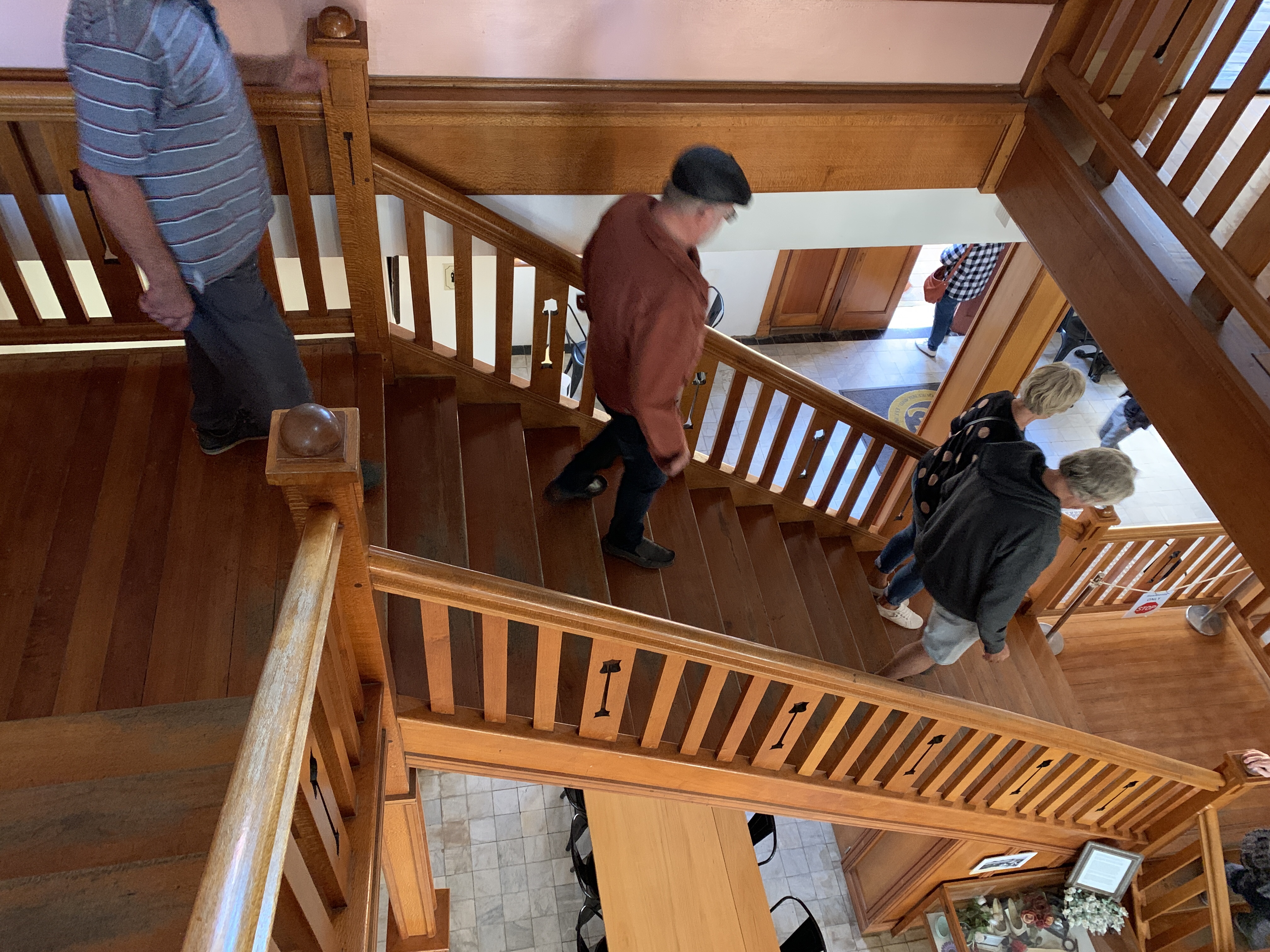
Back in town is was time for us to do our Hotel Corones Tour. This tour is run daily at 2.00pm between April and October and is a guided tour of the most famous building in Charleville. We rocked up for this tour with no real knowledge and thoroughly enjoyed our tour. The Hotel Corones was the crown jewel of Greek immigrant Harry Corones life. He migrated from a small Greek fishing island to Australia and through his own hard work and vision created an icon. Harry became a Charleville legend and was into everything. He made a fortune from his hotel but wasn’t shy of sharing his good fortune with his community. Many famous guests have stayed at the Hotel Corones over the years including aviator Amy Johnson, Robert Menzies, and even the Duke and Duchess of Gloucester. Harry’s story is one of a migrant made good and is a great story happily shared by our tour guide whose great great grandfather was the builder of the hotel. A drink of your choice at the famous long bar is your reward at the end of the 3 hour tour. We recommend any visitor to Charleville take this tour. It is full of fabulous little anecdotes about Harry, his family, guests of the hotel and we loved hearing how enterprising Harry was. This tour gets a big thumbs up from us.





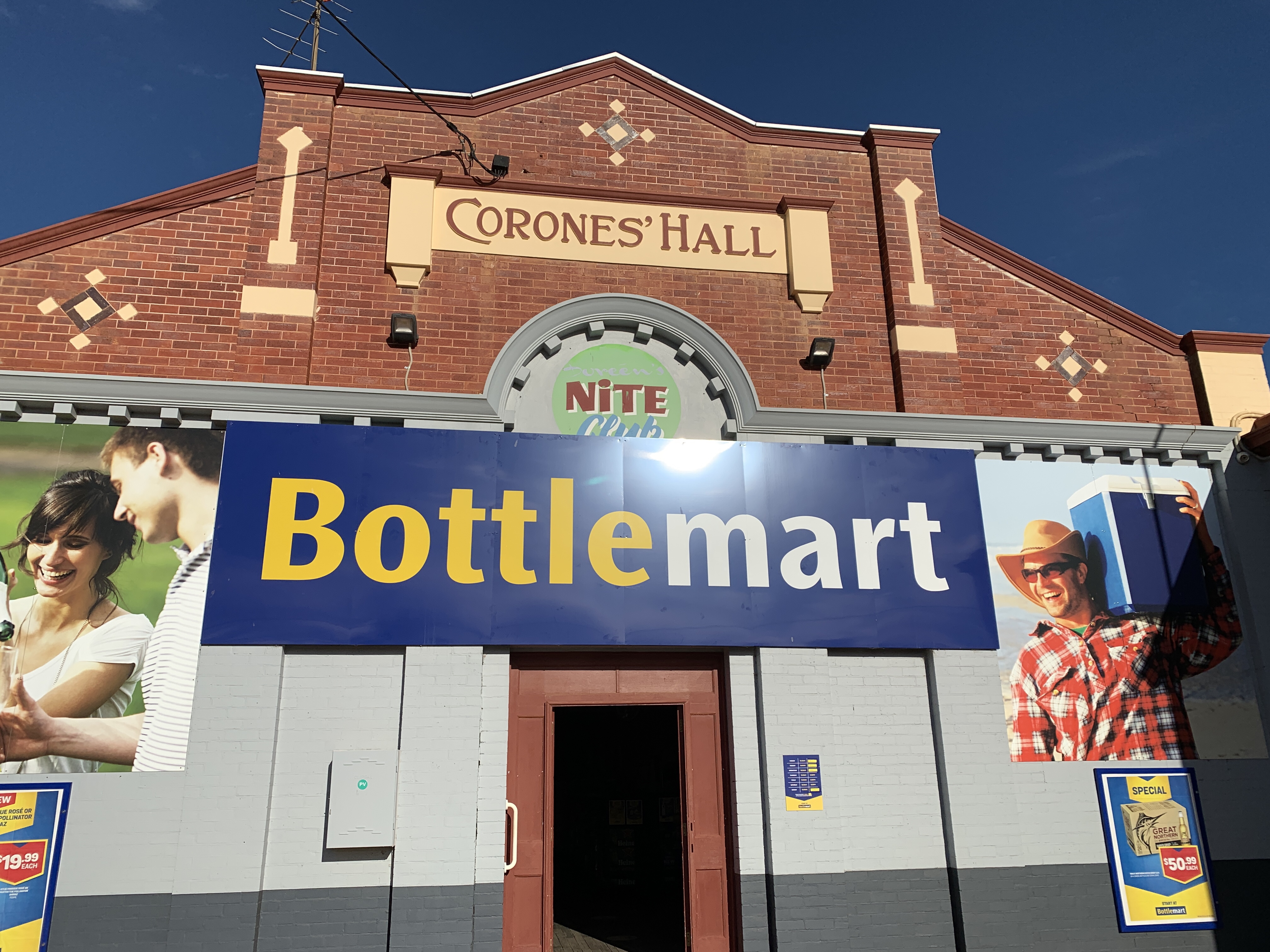
By the time we finished the tour it was time to find a camp for the night and we traveled back out to the CMCA Park where we were met and checked in by caretaker, Craig. The park had filled up while we’d been out sightseeing and there was a huge variety of motorhomes, campers and caravans, even a couple of fifth wheelers. After setting up camp we carried our chairs and a drink across to the communal area for happy hour. There were already about 20 people sitting around the fire and we enjoyed the next hour or so chatting and listening to others before heading back to camp for some hot soup and an early night.
Bourke to Cunnamulla
We set off excitedly from our great overnight camp alongside the Darling River at North Bourke. This day we would cross the border into Queensland.
Travellers into Queensland must apply online for travel passes and I had done that a couple of days ago however I received a text from the Qld Govt to say our travel passes had been revoked because there was now a new Covid-19 hotspot in NSW. This meant we had to apply for passes again. They were granted immediately as we hadn’t been in any hotspot area so we were now able to cross the border.
The countryside between Bourke and Cunnamulla is very flat and the road is long and straight. We didn’t see much livestock, only a few goats and Emus. When we reached the border at Berringun we stopped to take photos of our border crossing. There were no officials manning the border to check if we had the correct travel pass.
On the Queensland side of the border was a large billboard with stories about the Exclusion Fences. These fences are built to keep wild dogs away from valuable livestock. Each year wild dogs are responsible for killing or maiming tens of thousands of dollars of livestock and the fences are part of the control management of these pests. One famous fence, usually called the Dingo Fence, is 5,500km long and stretches from near Dalby in Qld to the Great Australian Bight in South Australia.
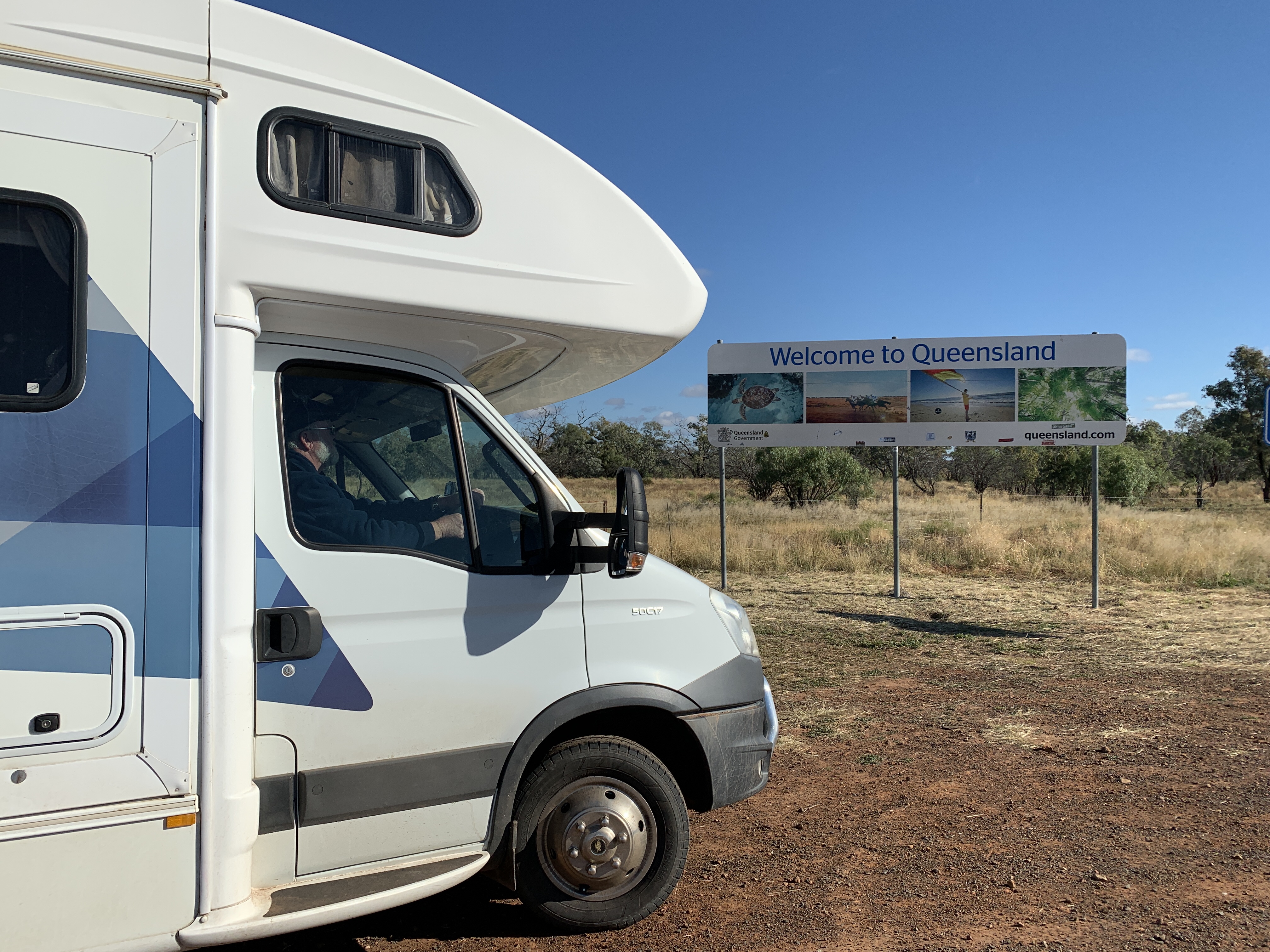
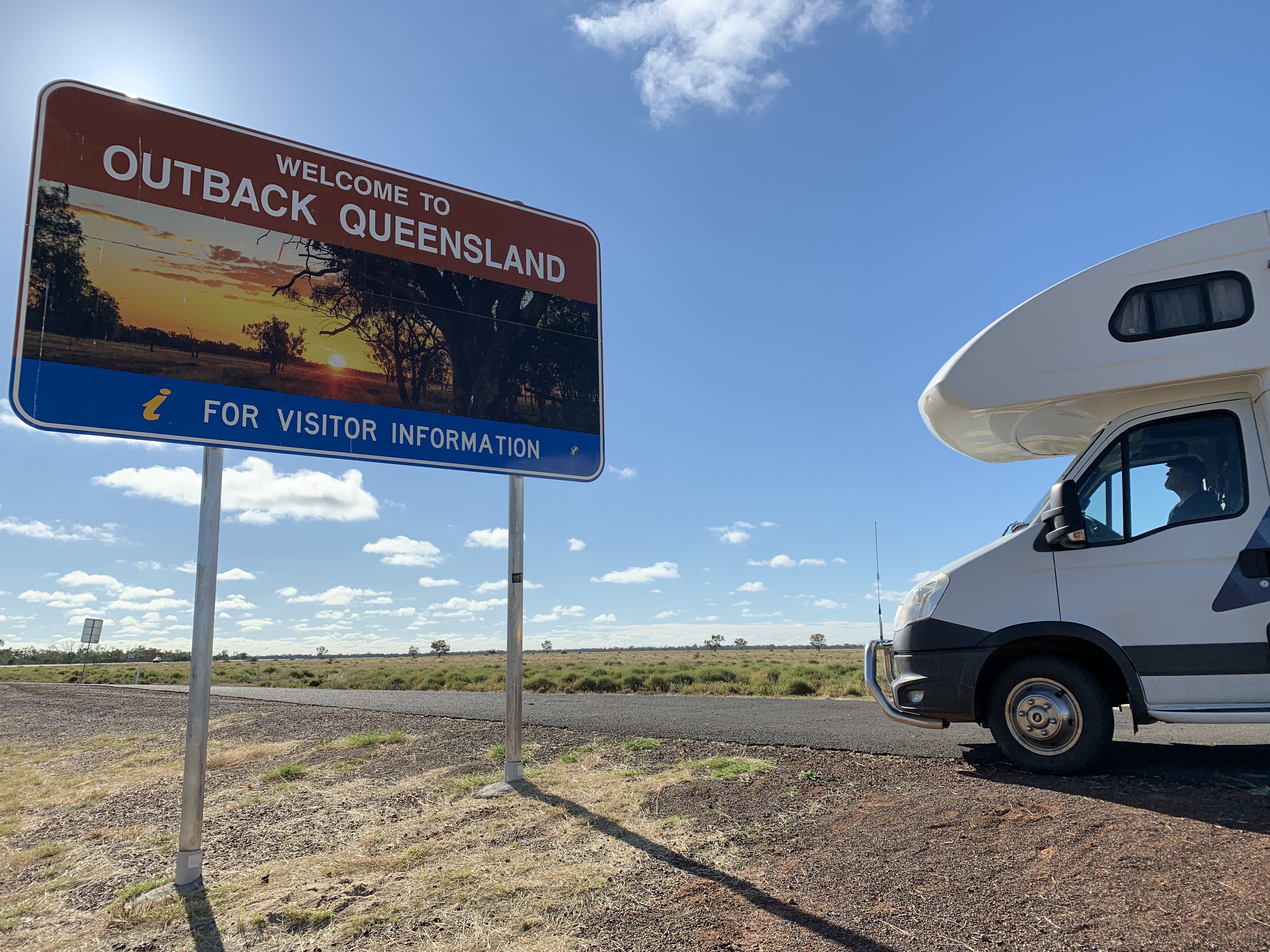

We arrived at the the small outback town of Cunnamulla around 11.30am and went directly to the Visitors Centre where we were just in time for the next screening to the Great Artesian Basin movie. This great little movie talks about how the basin was formed over time, the indigenous usage of the water, the explorers, early pioneers and settlers, the sinking of bores and the current scheme that incentivises property owners to cap their bores and use pipes to prevent wastage of this precious resource. It was a very informative little movie.
The Visitors Centre also houses a fabulous collection of memorabilia and it is well displayed and labeled.
The current show in the Art Gallery is works by Wayne Rasmussen. He has used the iconic road sign as the base for his works. We see these road signs everywhere when we travel and they just become part of the surrounding environment. The artist has cleverly used different paint so when the paintings are viewed in different light you see something different. In normal light you see road signs, ones we see all the time however view them using a black light torch and you see a whole different painting in fluorescent colours. Quite clever!
The Visitor Centre is housed in Cunnamulla’s original school building built in 1885. It was repurposed as the Visitors Centre in 1995.

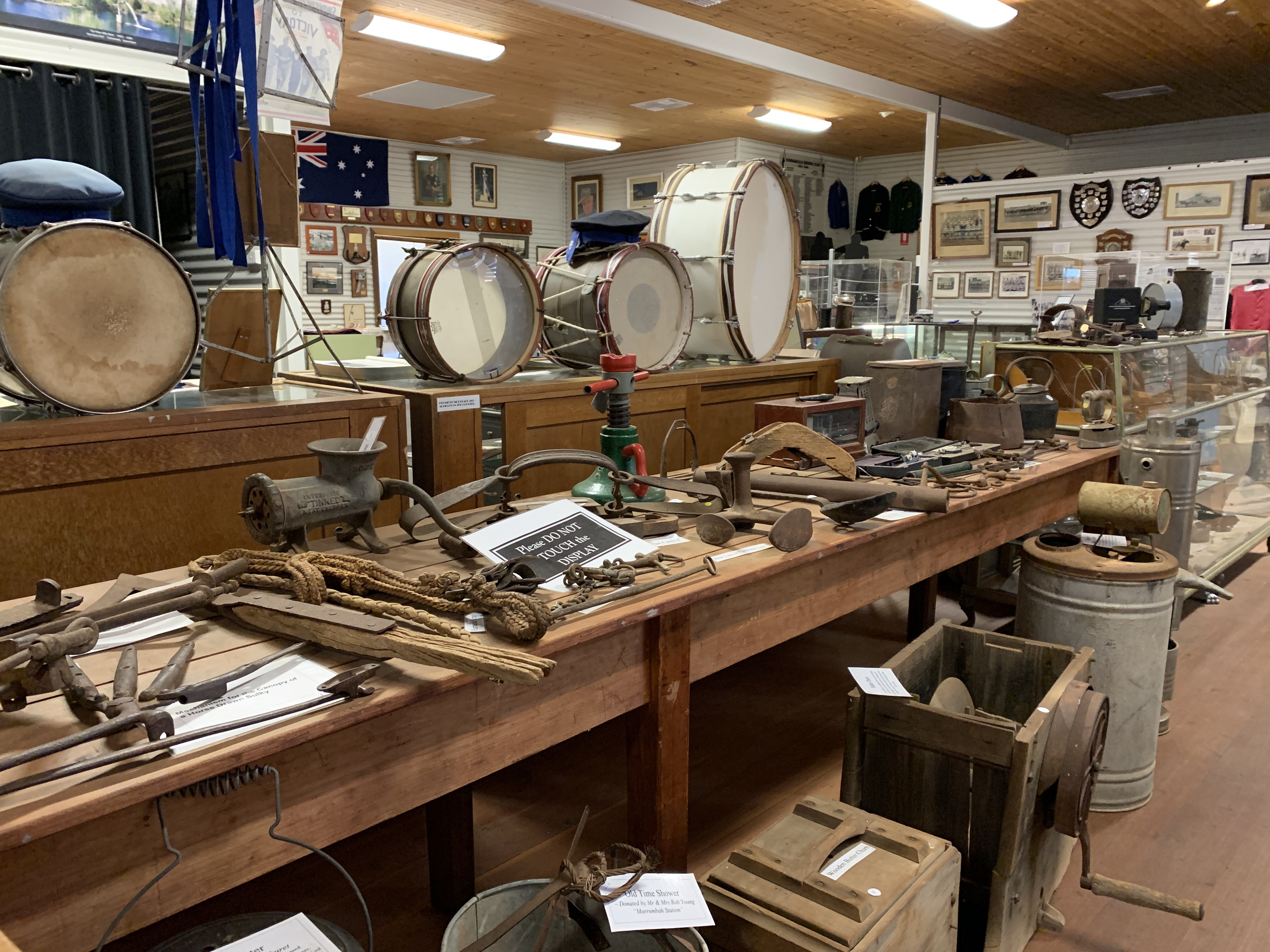
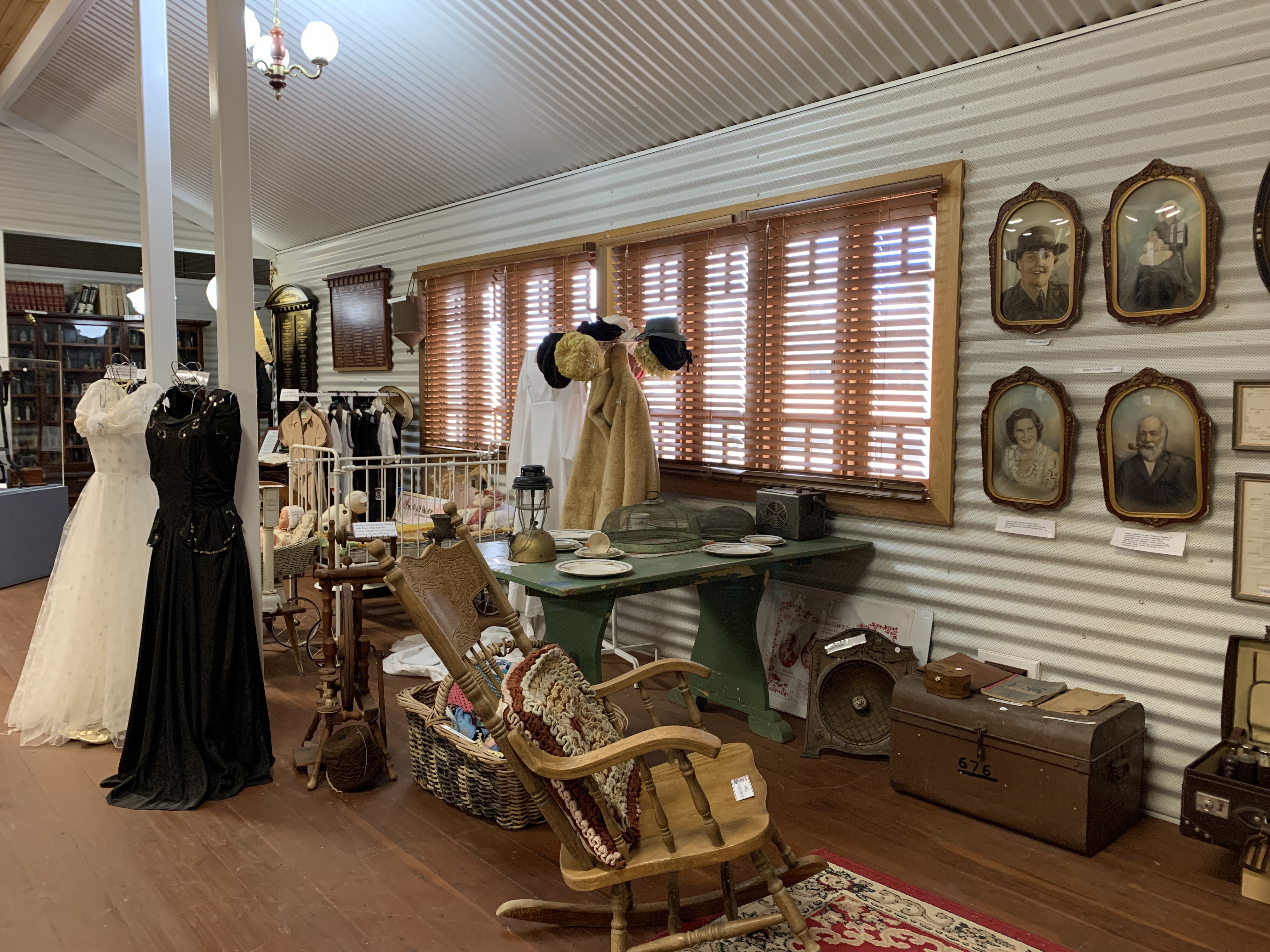

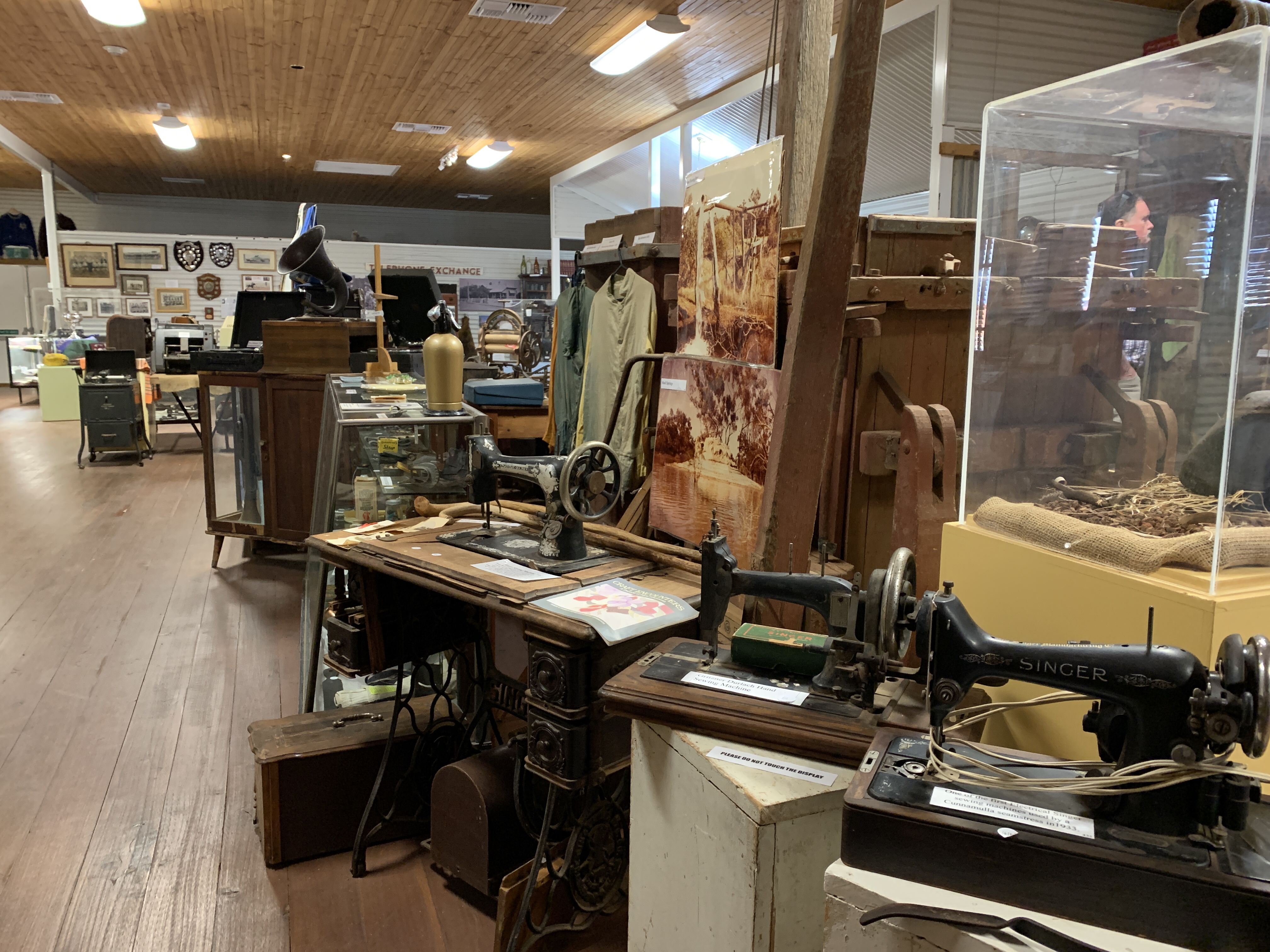
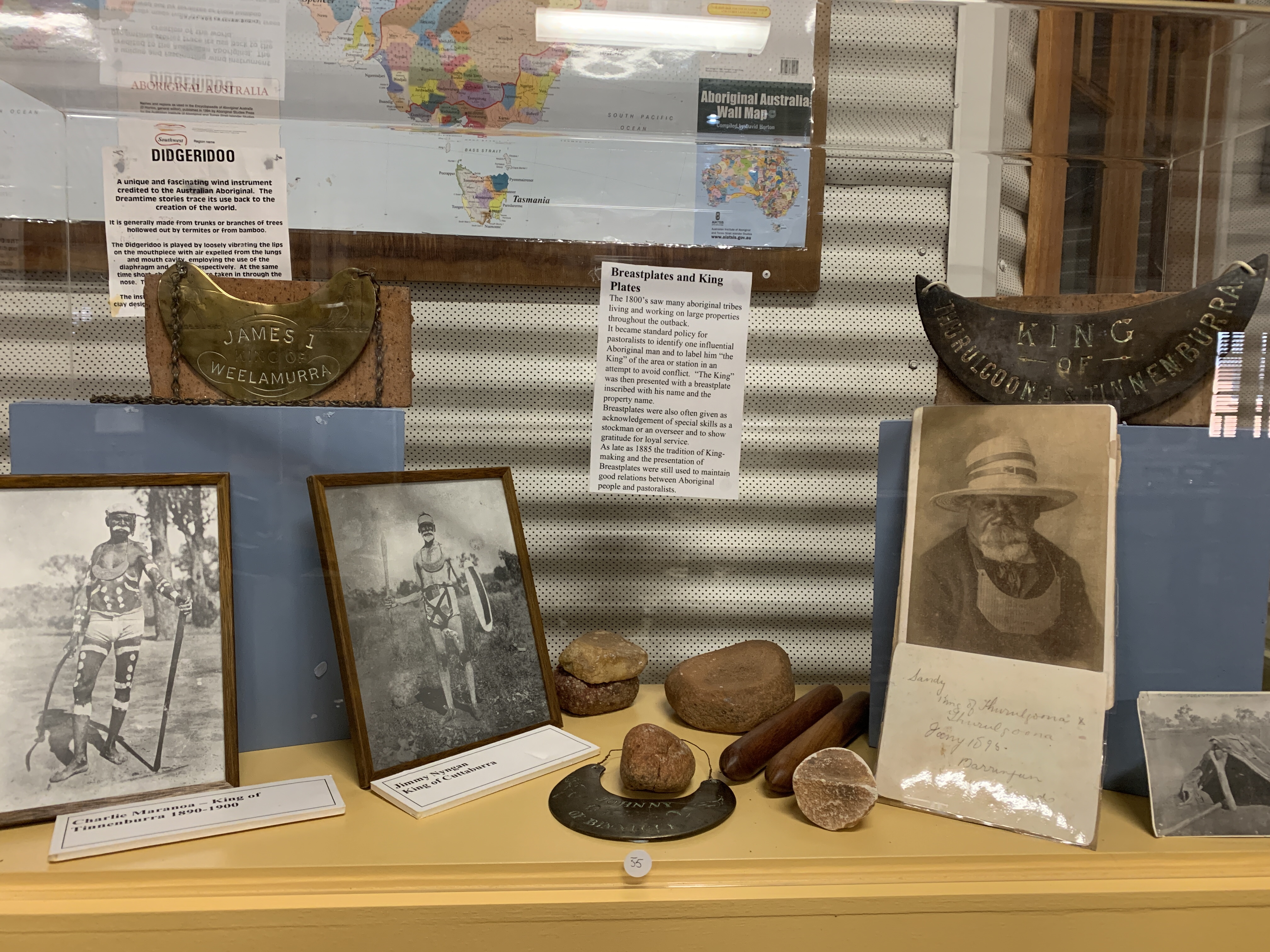
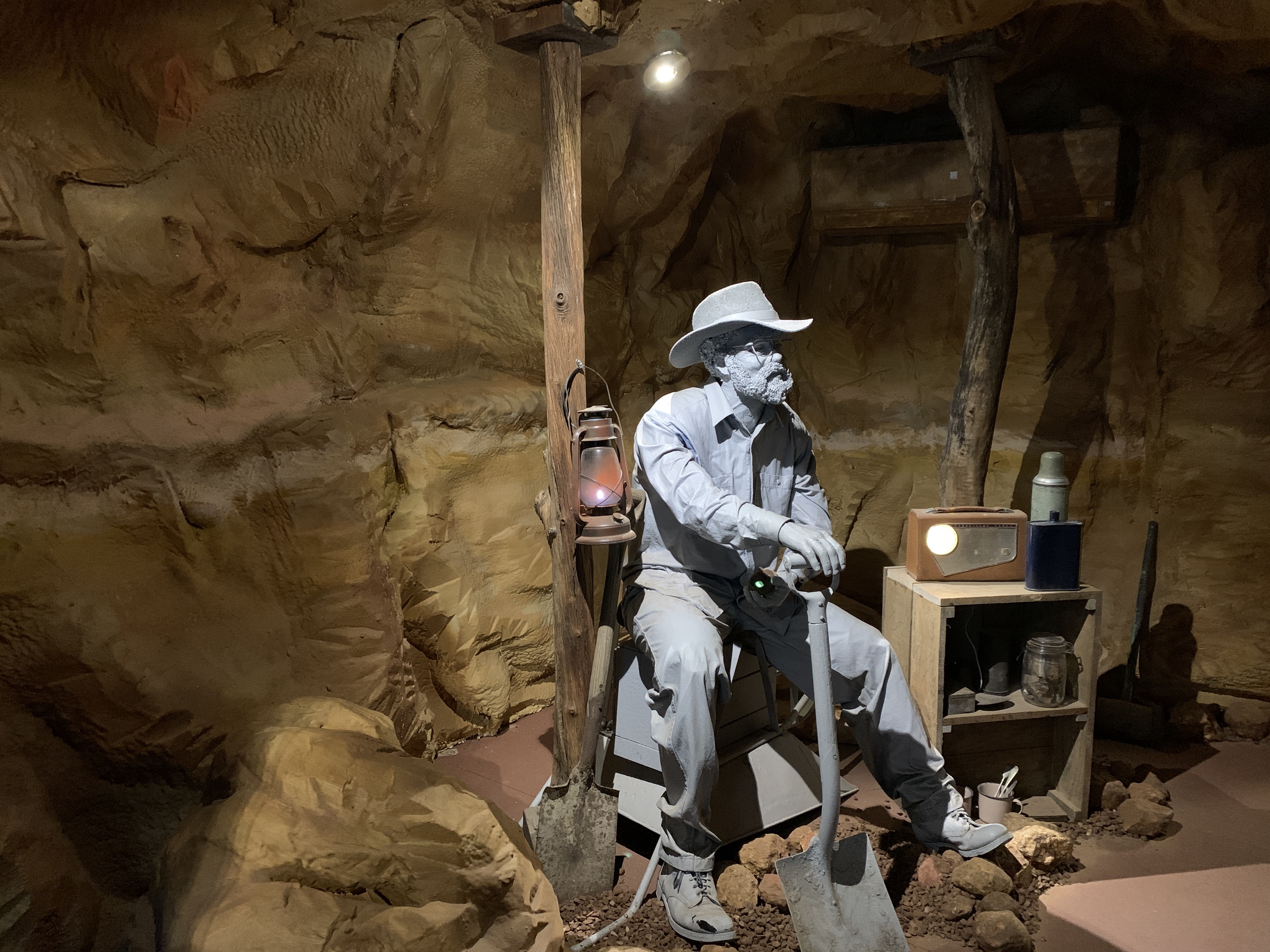
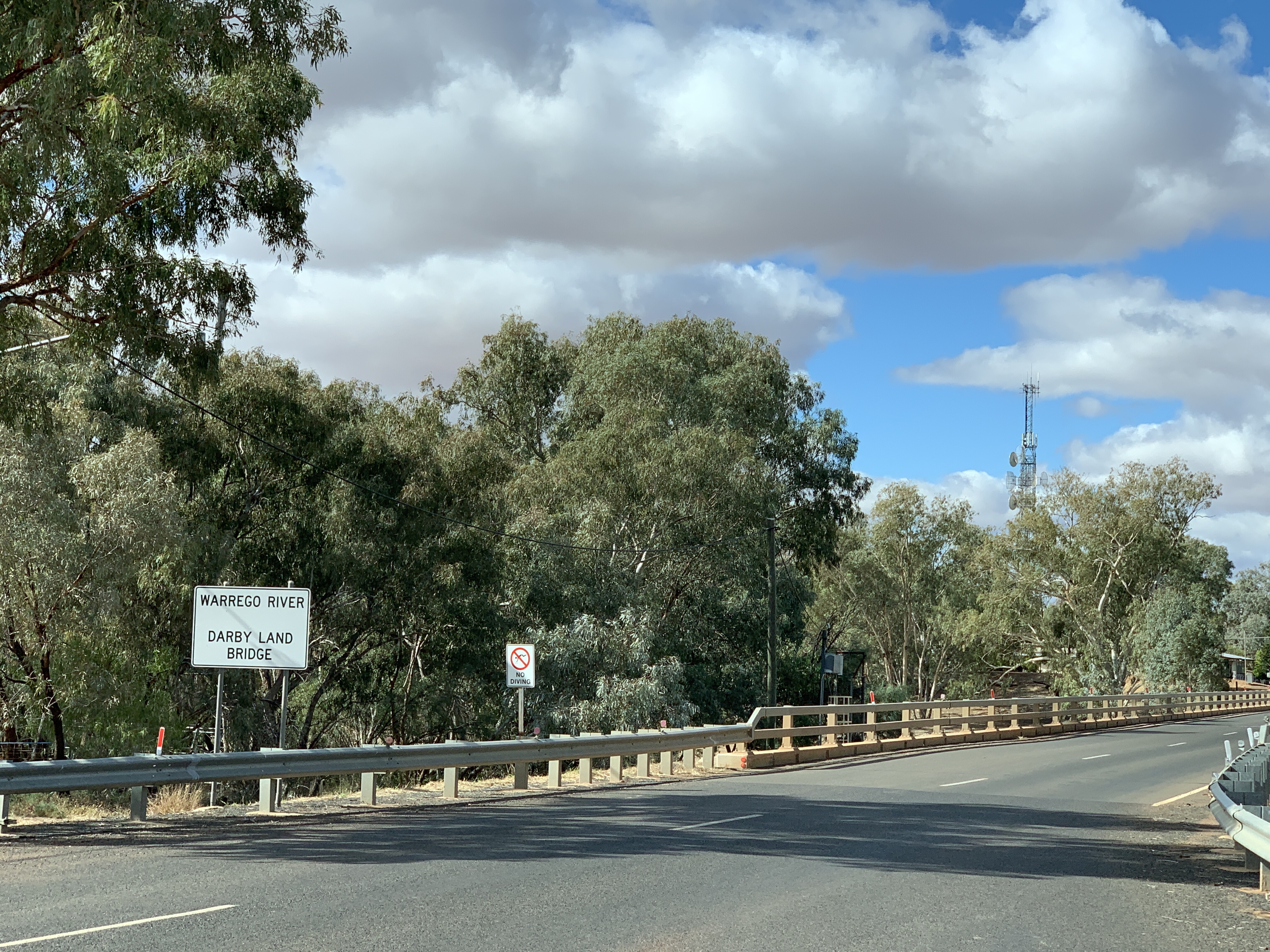
Cunnamulla is a small town on the Warrego River. The Warrego regularly floods and the town is protected all around by an 11m high levee bank. The town was originally a Cobb & Co stop established in 1879. Today it is home to some 1200 people, 37% of whom are Aboriginal or Torres Straight Islanders.

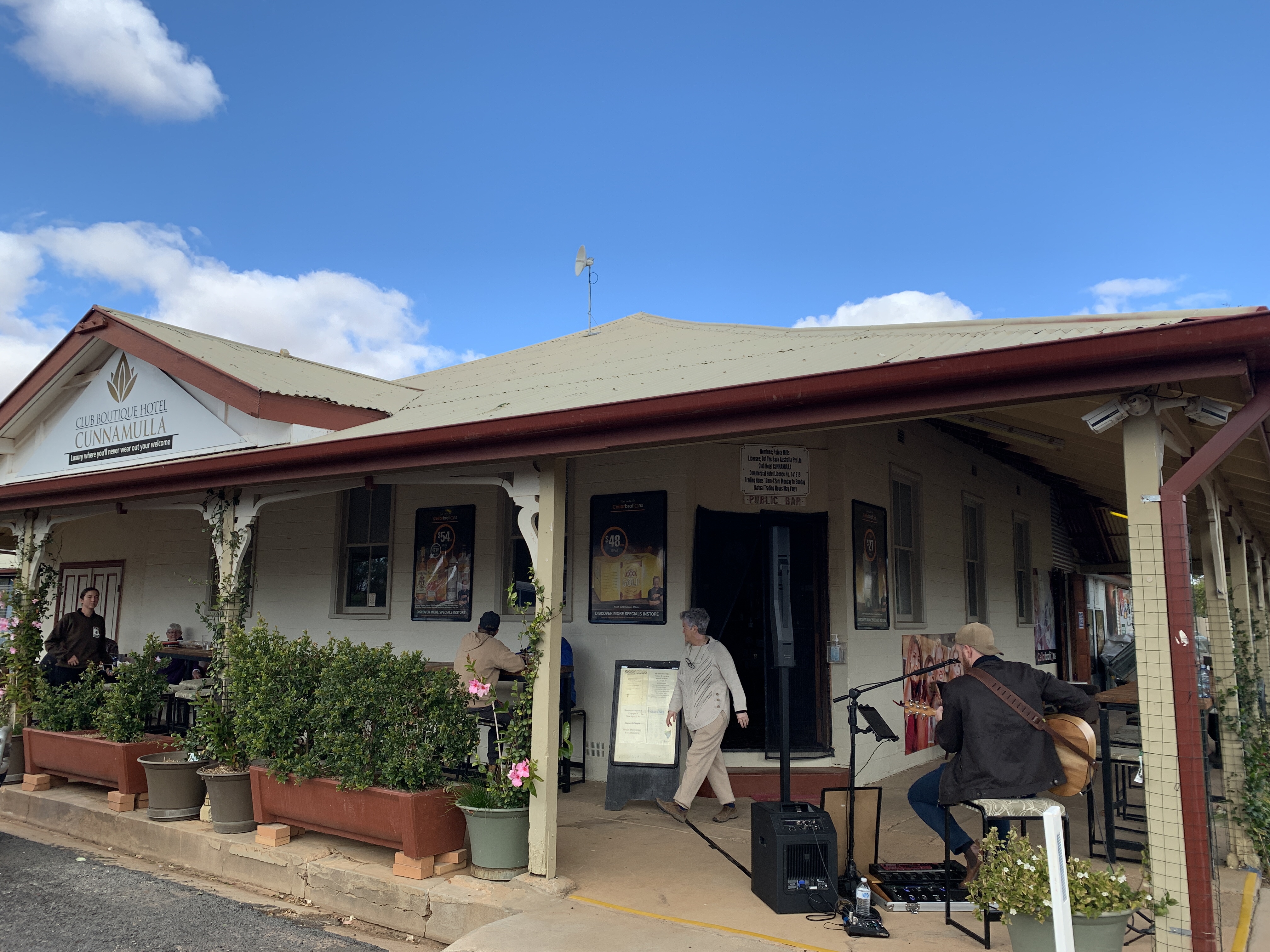
We left the Visitors Centre and went to the IGA to pick up supplies and by this time our stomachs were grumbling. We drove around and saw a pub that had a nice verandah and looked busy with diners. As an added bonus there was also live music playing. We find that the busiest places usually have the best food and we enjoyed a couple of delicious steak sandwiches accompanied by the live music provided by a young bloke named Ken Dustin at the Club Boutique Hotel.
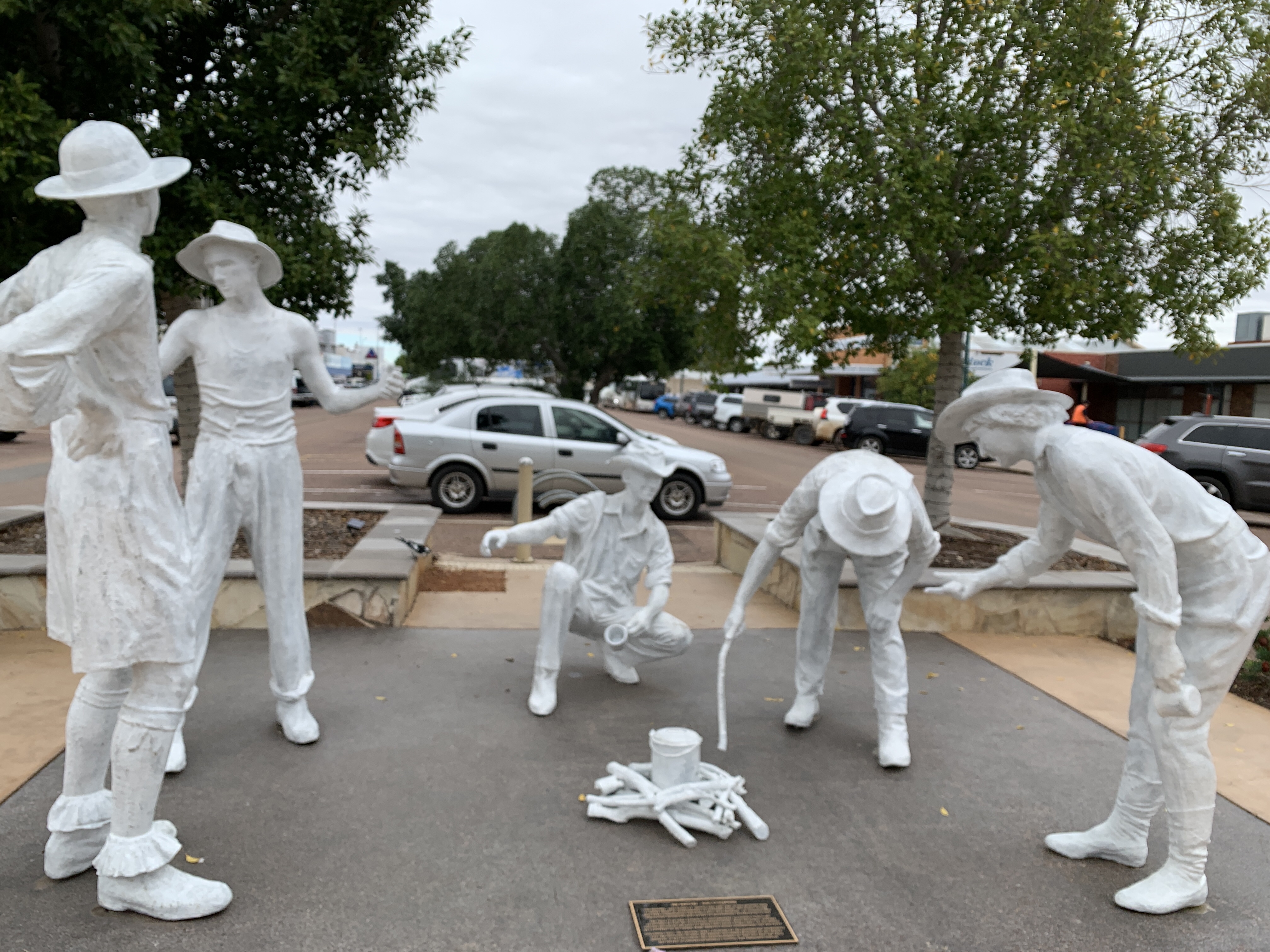
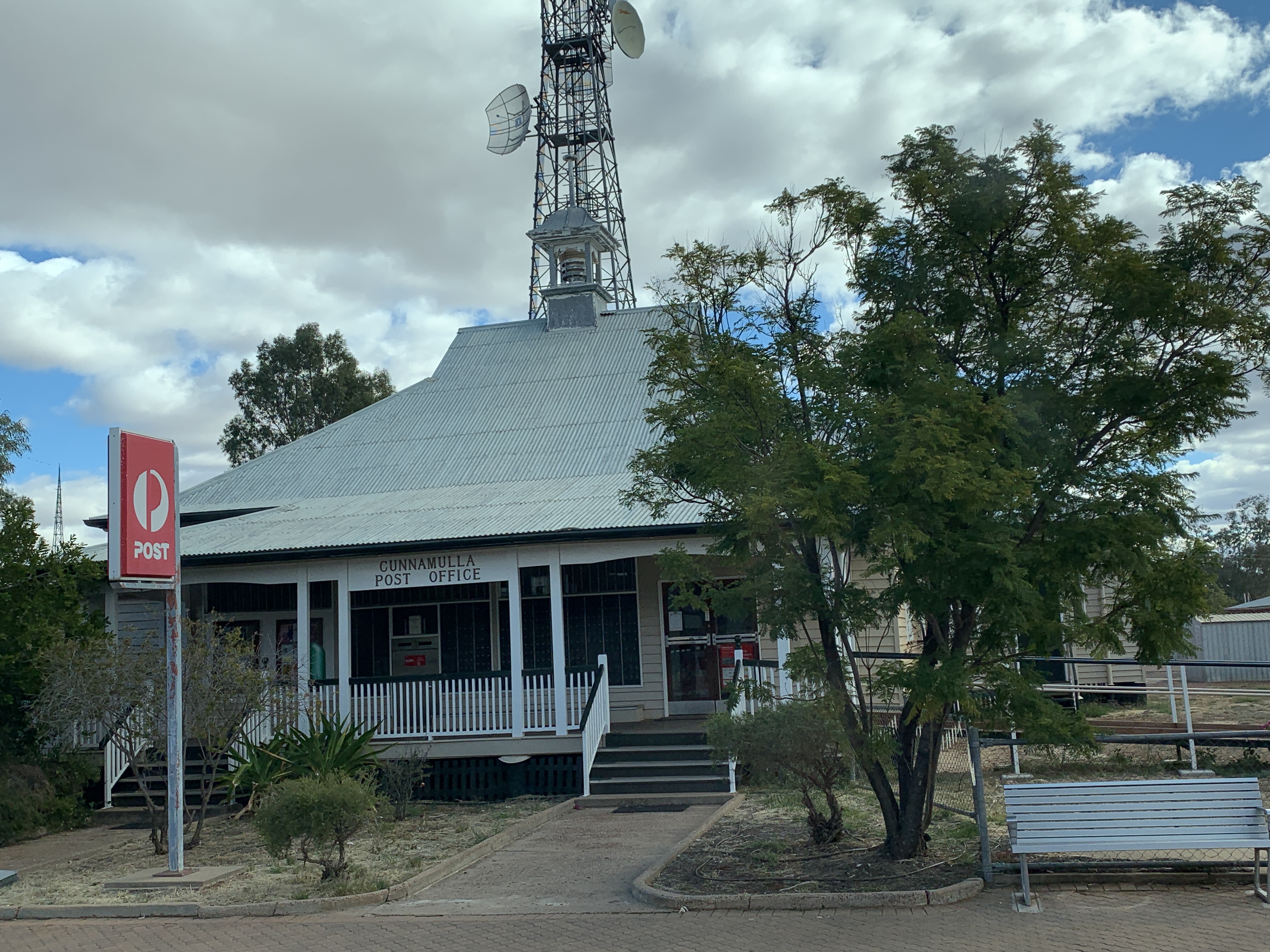
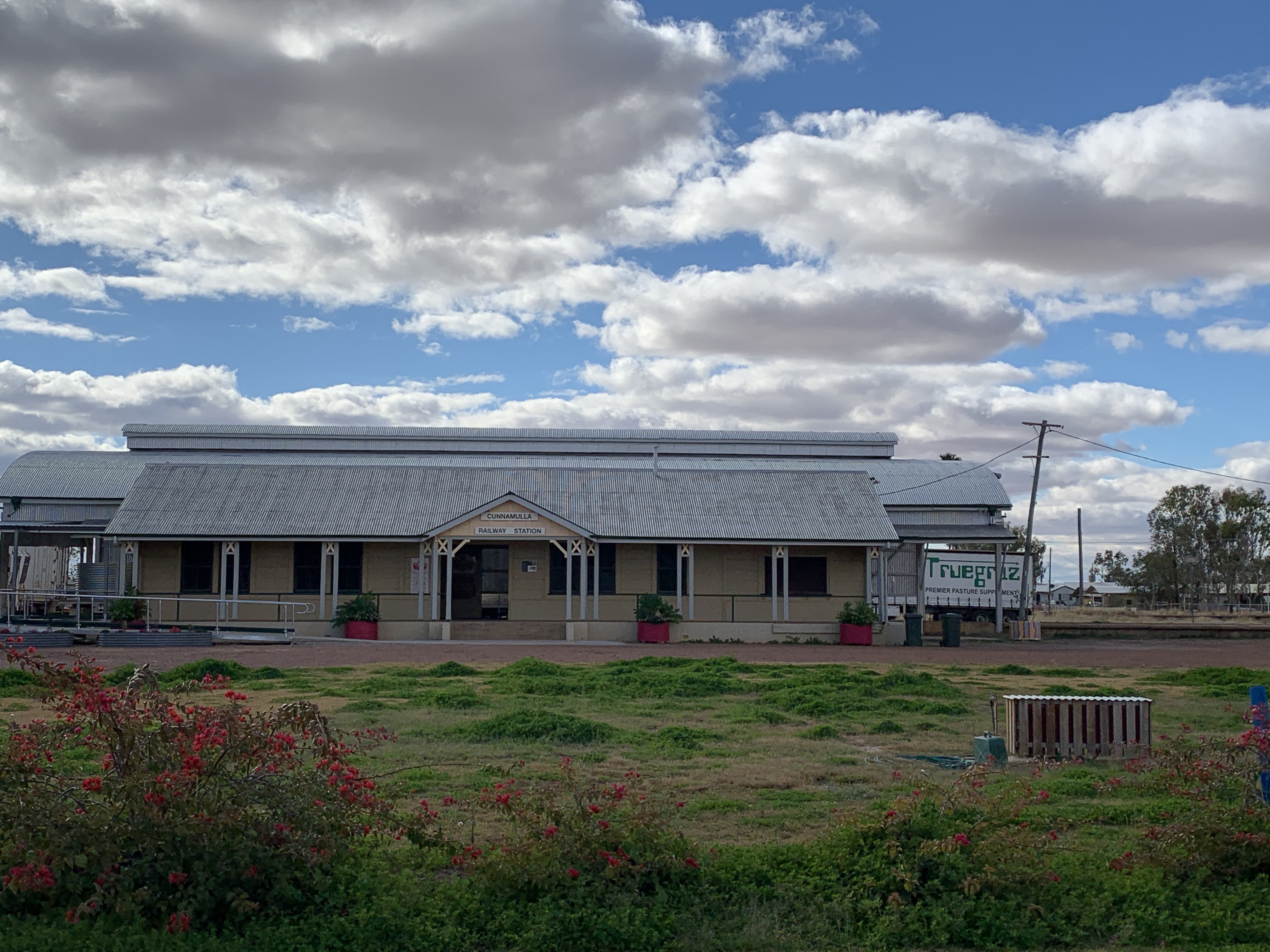
After lunch we drove around the little town and saw the Cunnamulla Fella, a statue of a swaggie immortalised in a Slim Dusty song called ‘The Cunnamulla Fella’, the old Post Office built in 1890 on the site of the Cobb & Co stockyards, the art nouveau Memorial Fountain built in 1919 to commemorate all the soldiers who died at Gallipoli, the painted water tower painted by artist Guido Van Helton depicting local children playing sport, and the old Railway Station built in 1930 that replaced an earlier building built in 1898 that was destroyed by fire.


Leaving Cunnamulla we got back onto The Matilda Way heading northwards again. Interestingly, the road in NSW is called The Kidman Way but once we crossed the border it is now called The Matilda Way. It was 100km of very flat countryside with long straight roads and only Emus. Does this sound familiar? The road was a pretty good wide tar road and there was not a lot of traffic. We swapped drivers and I was driving as we came to the tiny community of Wyandra. This enterprising little community offers a small caravan park with powered sites for $20 per night as well as a free (make a donation) camp in the large paddock behind the public school. There were quite a few vans and motorhomes already set up there as we drove by.
However this didn’t really appeal to us and we went a little further west, crossed the bridge over the very full Warrego River and saw a track leading off to the right. It looked like it might lead to the riverside so we parked up and walked down the track to check it out. Sure enough there was a perfect spot, just big enough for one RV like ours or two small vans. It’s obviously a popular camp site as there is evidence of multiple fires along the riverbank. We quickly set up camp and got a fire going. I wrote this post while sitting outside next to the fire and feeling the serenity of camping with a water view. I think that’s the best campsite….one with a water view.


Cobar to Bourke
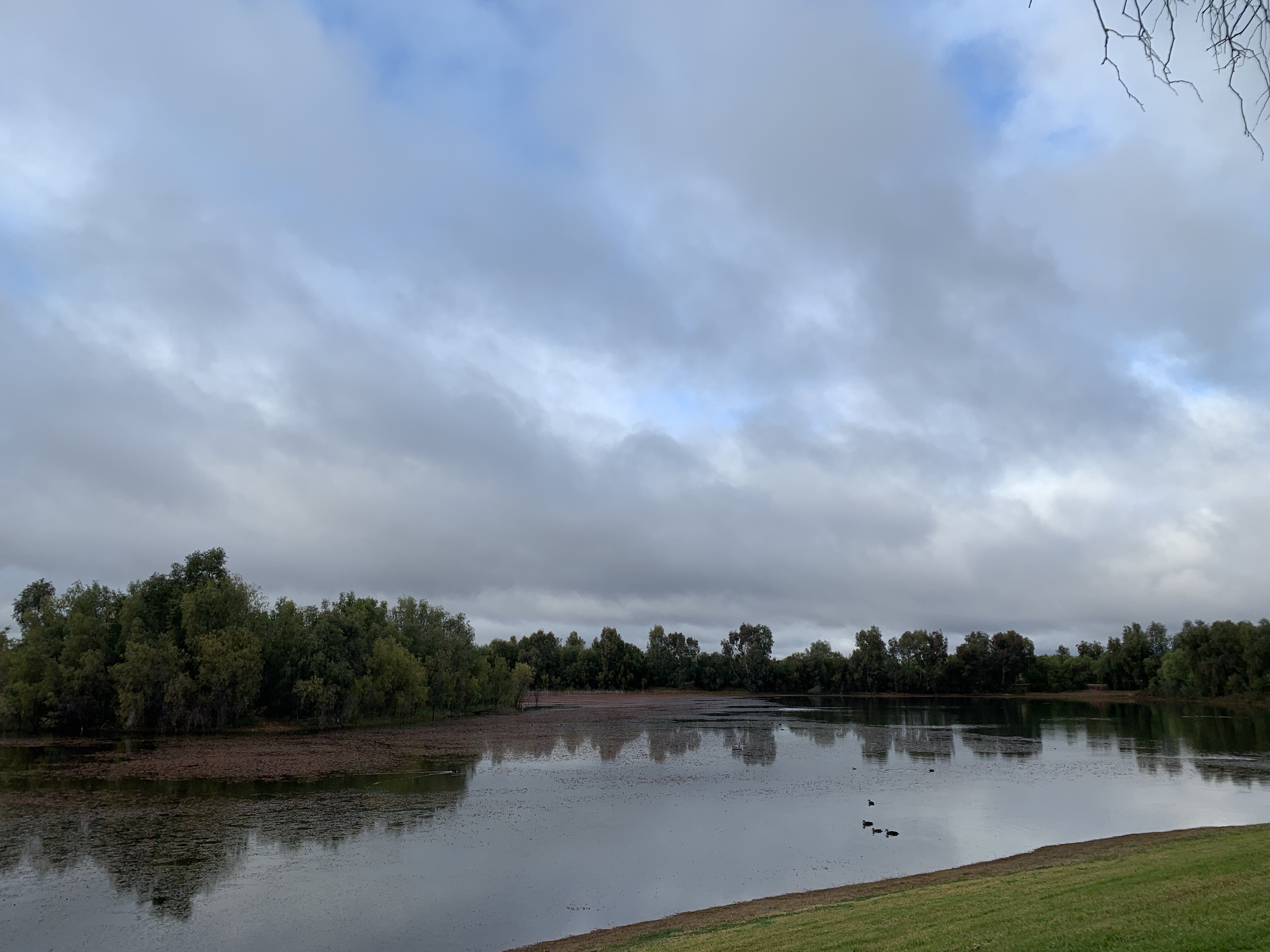
It rained a couple of times overnight. Just light rain and nothing to give us concern about the dirt road to get out of the camp area at the Cobar Old Reservoir. We both enjoyed listening to the patter on the roof while snuggled warm in our very comfy bed.
It was raining in the morning. Just a misty rain and it looked cold outside. I’d had a message from one of our son, Michael’s old school mates who lives in Cobar with his young family. I contacted him and he said he’d call out to catch up with us before we left.
Chilli arrived not long after. He’d just come off a night shift working at one of the mines in Cobar and was ready for a good sleep. He came in while we finished cleaning up after breakfast and getting ready to move. We followed him to his house with a stop to check out the Newey Reservoir. What a lovely spot for a picnic on a nice day, I thought.
We had a lovely visit with his young family. The little boys were excited to see us. I think they remember visiting with us in Griffith not long ago.
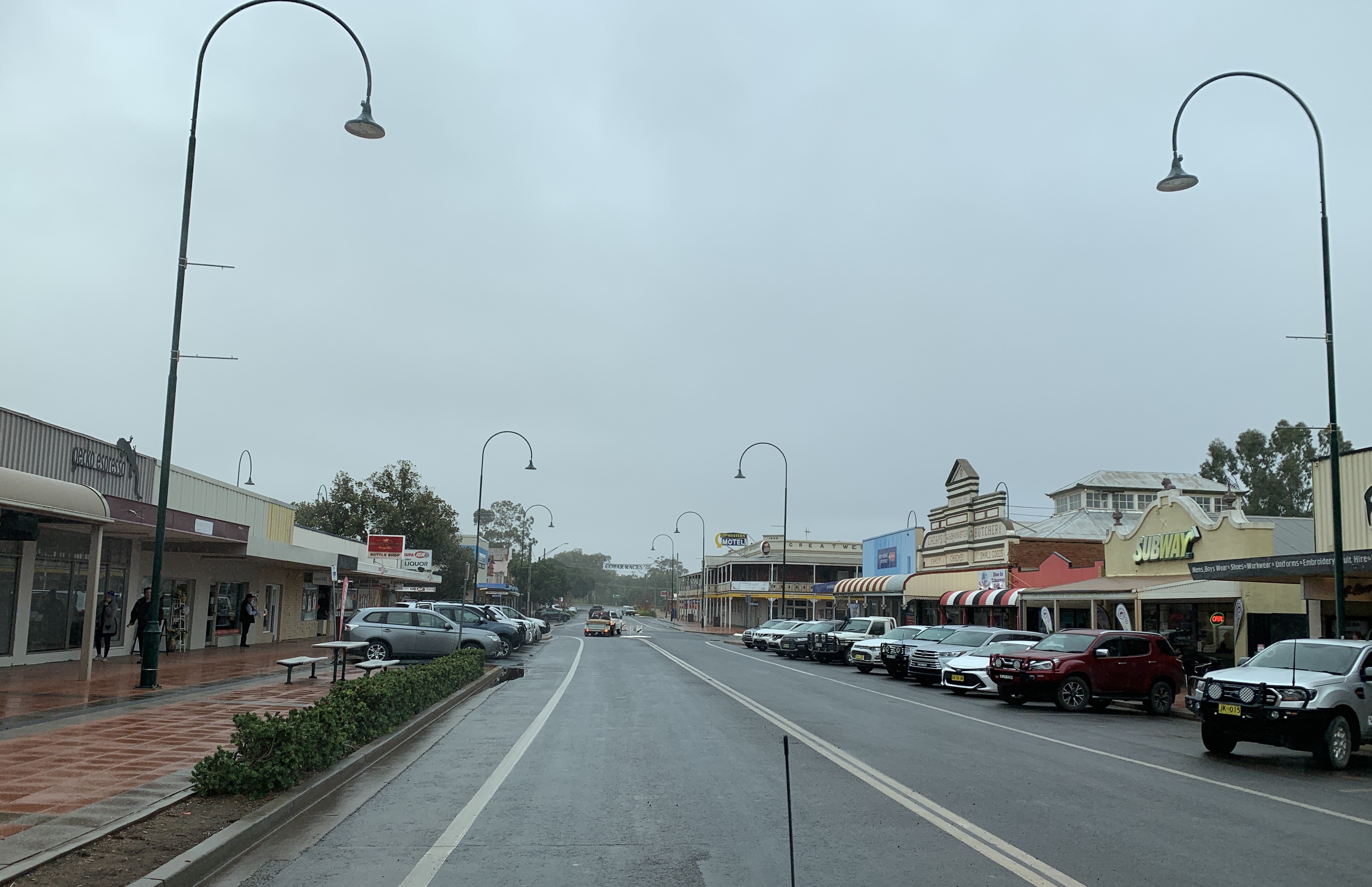
We left an overcast and rainy Cobar behind at 9.30am and headed northwards towards Bourke.
After leaving Cobar we were on a road that neither of us had been on before. From here on we would be exploring places new to us.
The countryside between Cobar and Bourke became progressively flatter. There were lots of feral goats along this stretch of the road. We also saw a few Emus.
As we neared Bourke there was scattering of cotton along the edge of the road. It’s obviously a large cotton growing area
We arrived in Bourke around 12ish and spent the afternoon exploring this little river town. We visited the following:
* The Historic Bourke Cemetery
* The Lock & Weir on the Darling River.
* The Historic Wharf
* The Crossley Engine
* Historic Bourke buildings
* The painted water tower
* Back O’ Bourke Exhibition Centre & Information Centre
After that very busy afternoon we topped up our fuel and got a gas bottle before heading to North Bourke to find a camp spot for the night. This Swap N Go gas bottle was the most expensive one we’ve ever encountered. $35 for a 4.5kg bottle. Diesel was $145.90/l. It was very windy and cold.
We crossed the Darling River over the ‘new’ bridge and from there we could see the original lift-span bridge. It is the oldest surviving lift-span bridge in Australia and was designed to allow paddle steamers and barges to pass under during periods of high water. The bridge was built over 100 years ago. It is now closed to all traffic. On the other side of the bridge is the Back O’ Bourke Gallery featuring works by local artist Jenny Greentree. Jen is fascinated with the outback and its extraordinary landscapes. She brings it to life in her beautiful works, mainly using pastels. I bought a print of a classic Darling River scene complete with River Red Gums. I’ll have it framed and put on my travel wall with the other paintings I’ve collected over our travels.
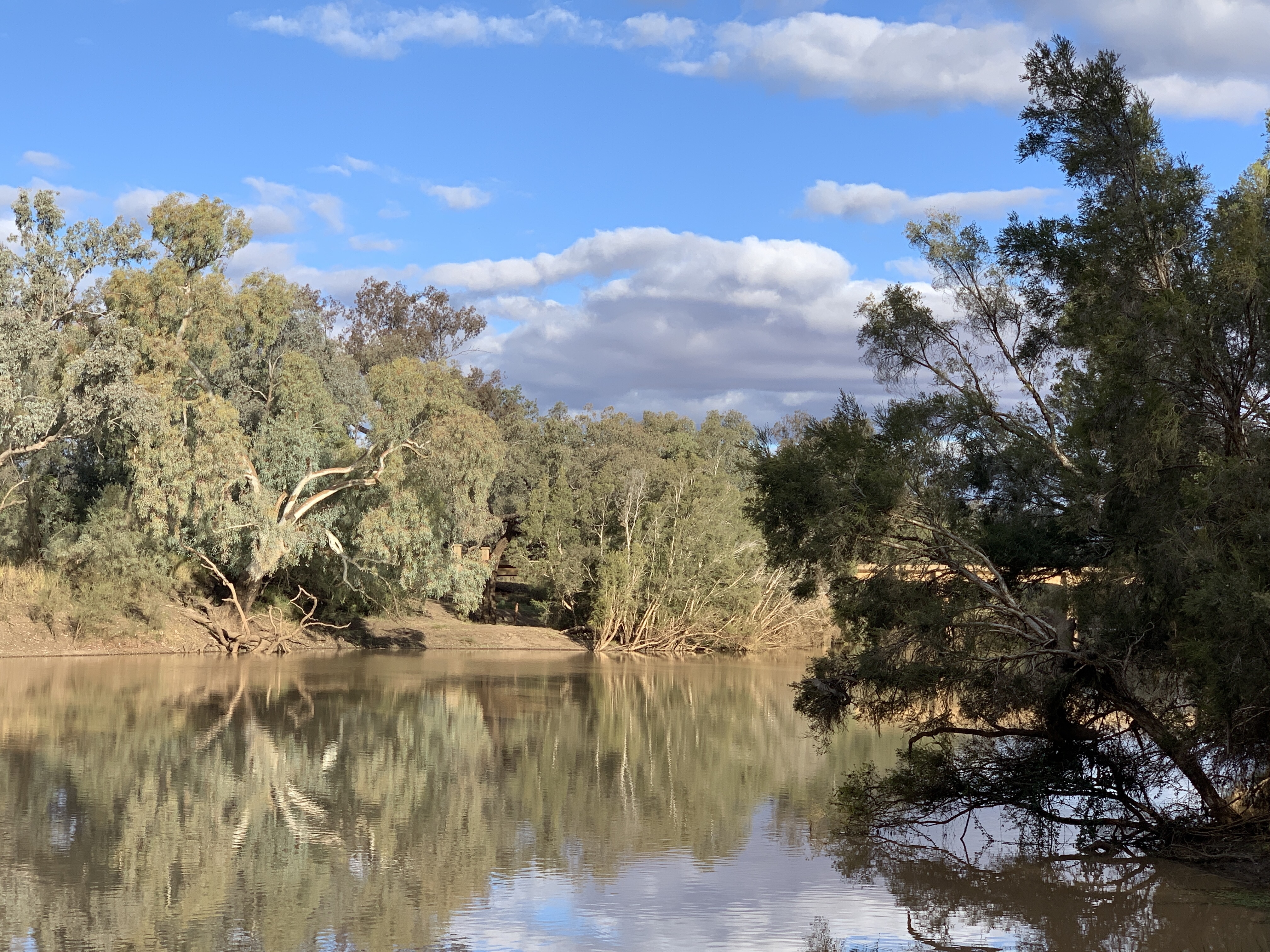
Back south across the ‘new’ bridge and this time I was on the right side of the motorhome to be able to get a photo of the old bridge. Just past the bridge is a turnoff to a boat ramp and this spot shows on WikiCamps as a great spot to free camp on the banks of the Darling. We found a fabulous flat spot right on the bank overlooking the muddy brown river. We quickly set up camp, got a fire going, put on our Apricot Chicken and potato bake to cook and settled in to enjoy the serenity. Rich pulled the top off a ten year old red, I’ve got a lovely dry Sauvignon Blanc. How good is life? What a great day we’d had.


 motorhomemeanders.com