Penola sits at the bottom of the Coonawarra Wine Region. Coonawarra is world famous for its Terra Rossa (Red Soil) soil that is perfect for grape growing. It has taken millions of years to form this layer of red soil rich in iron, silica and nutrients that sits upon ancient limestone bedrock. Combining this unique soil with the availability of underground water, cool nights and a long mild growing season makes this area known throughout the world as a premier wine area famous for its Cabernet Sauvignon.
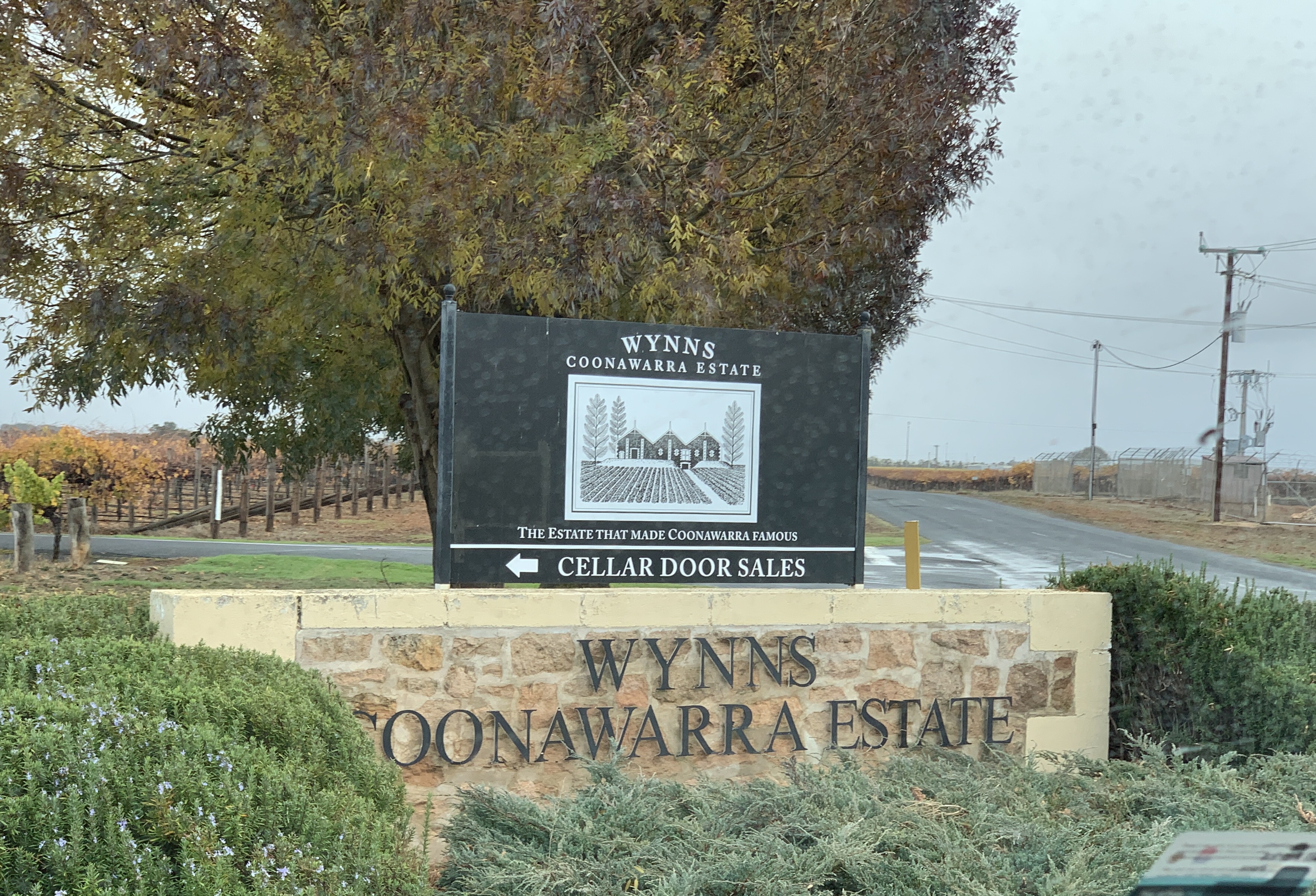
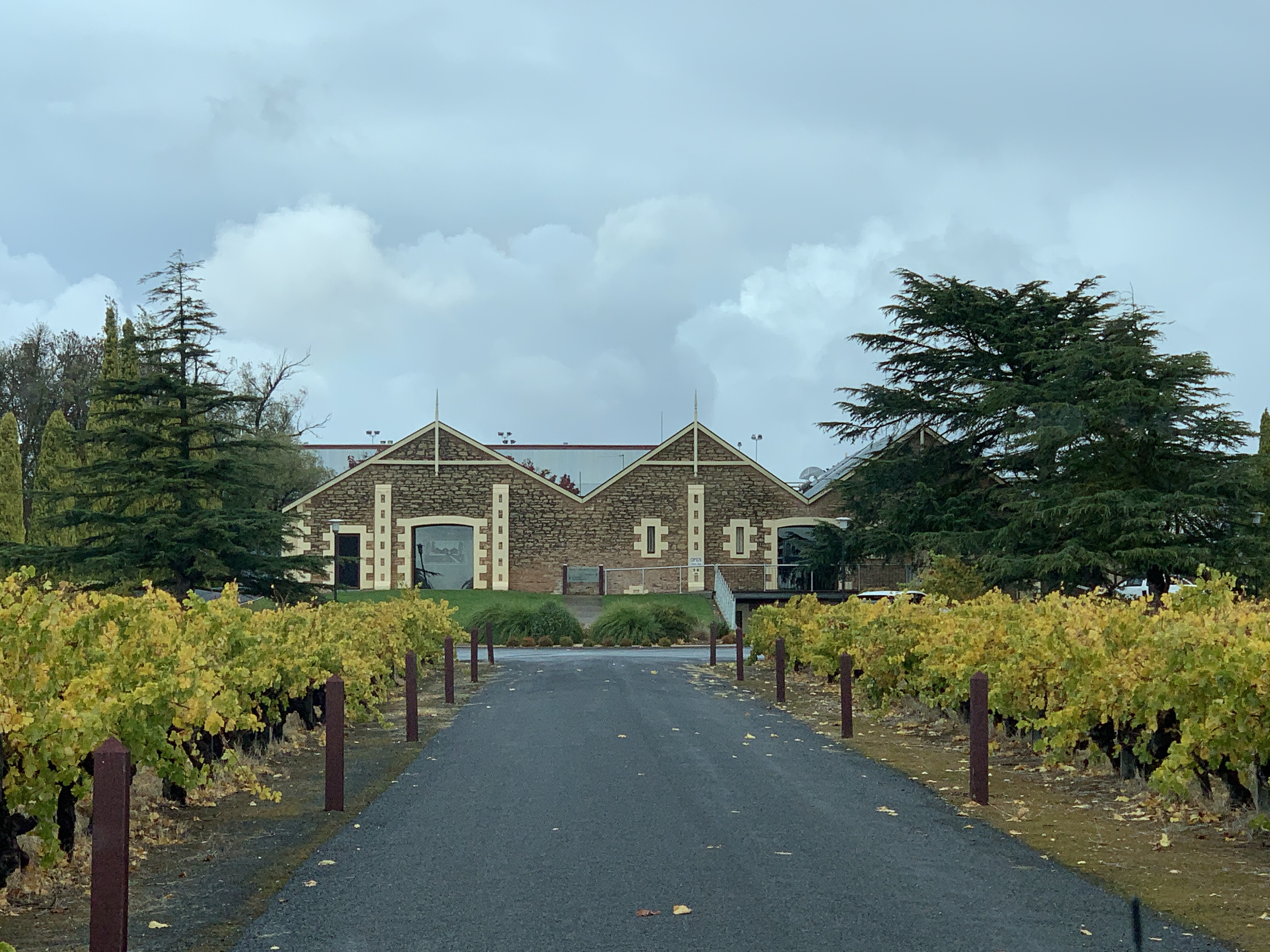
Pioneer John Riddoch first plated vines in 1890 and his legacy continues at Wynns Coonawarra Estate. John Riddoch had the famous three gabled winery built in 1896. Melbourne wine merchants Samuel and David Wynn bought the Riddoch vineyards and winery in 1951 and created the famous label including the three gabled winery and today they are one of the Coonewarra’s pre-eminent winemakers.
We pulled up in the carpark in front of the famous winery and quickly dashed inside as it was raining. The cellar door is fabulous and you can feel the history of the building with its exposed beams. They have a great history of the winery display around the walls. We enjoyed our visit to Wynns.
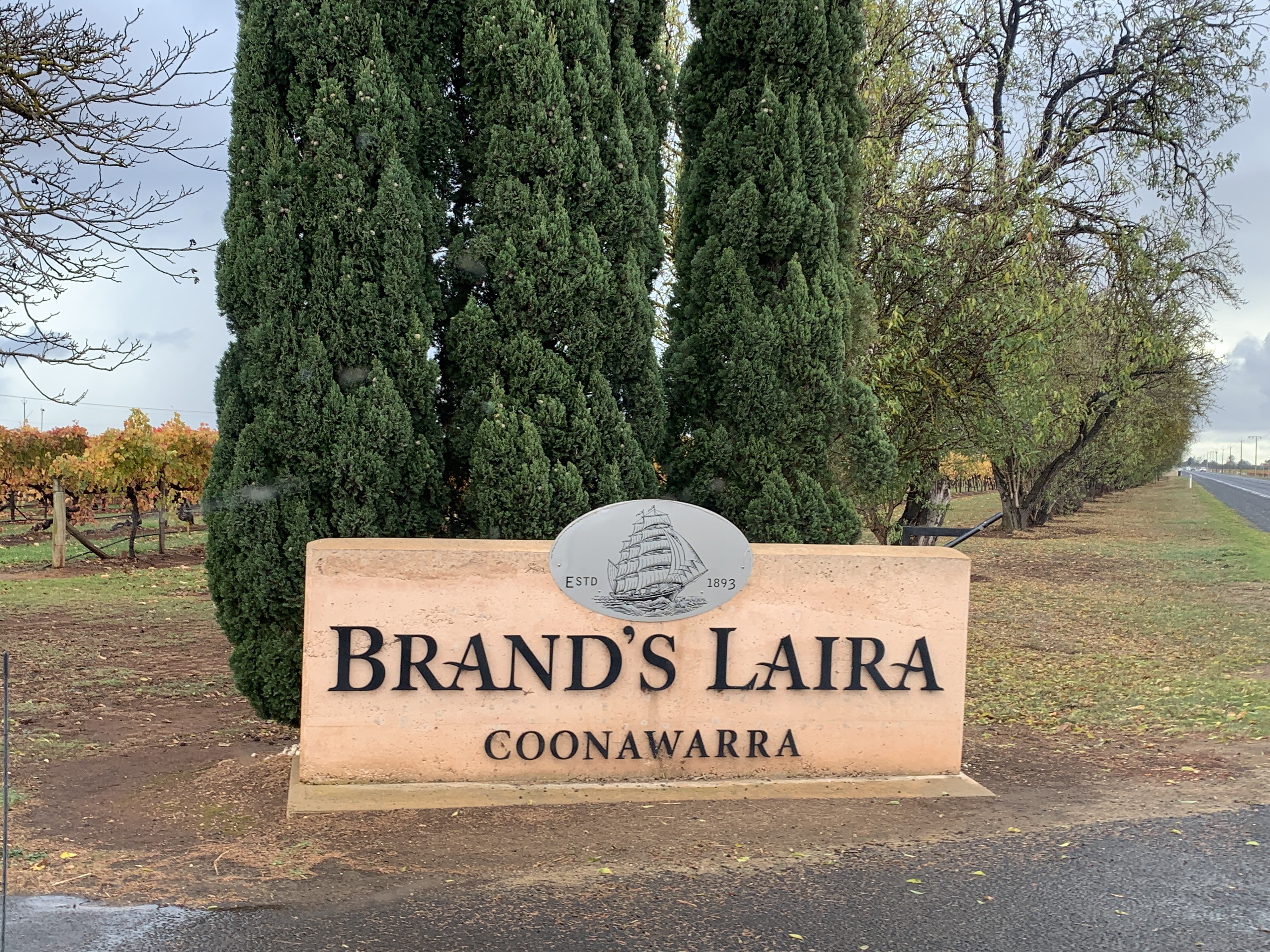
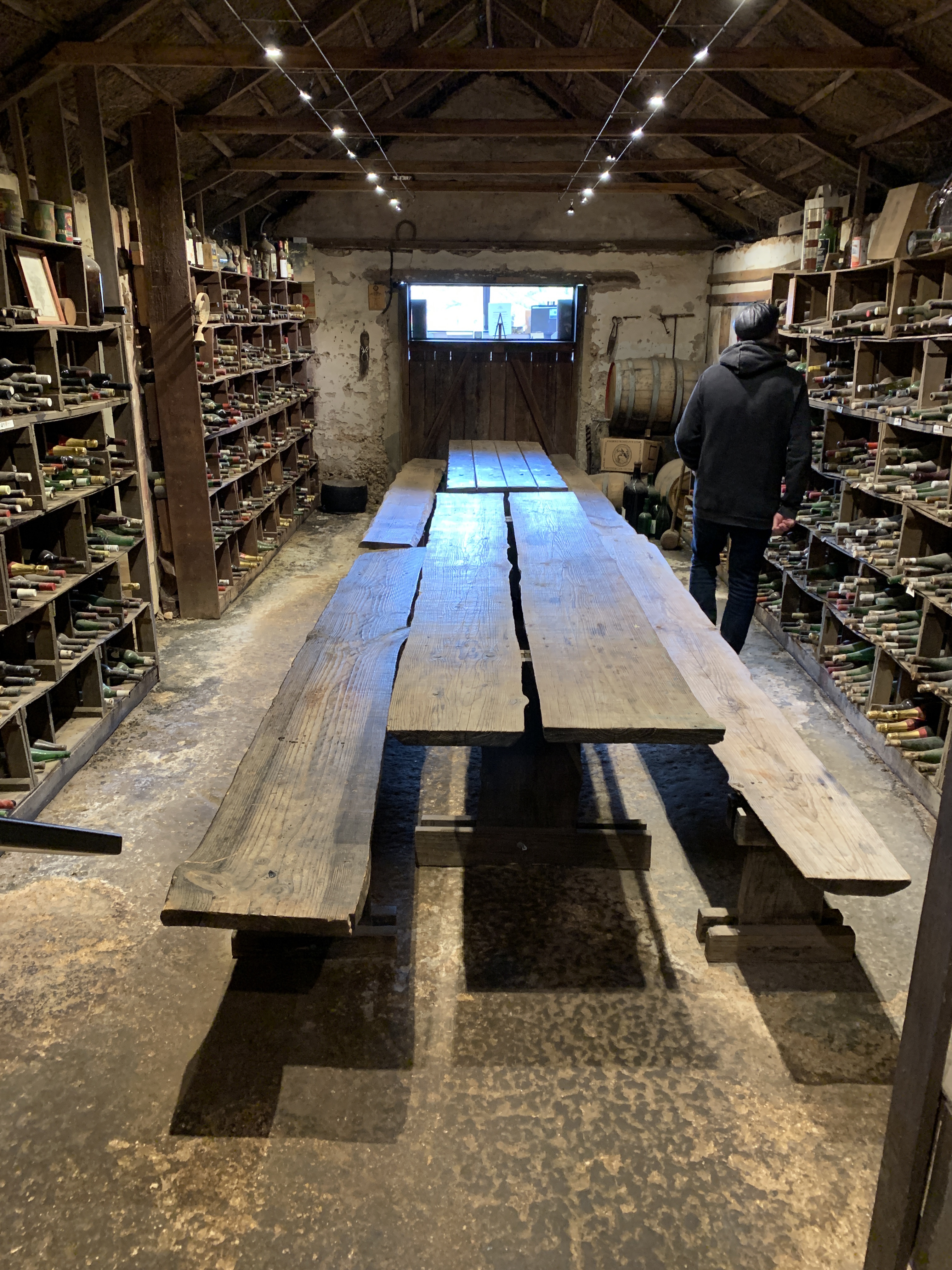
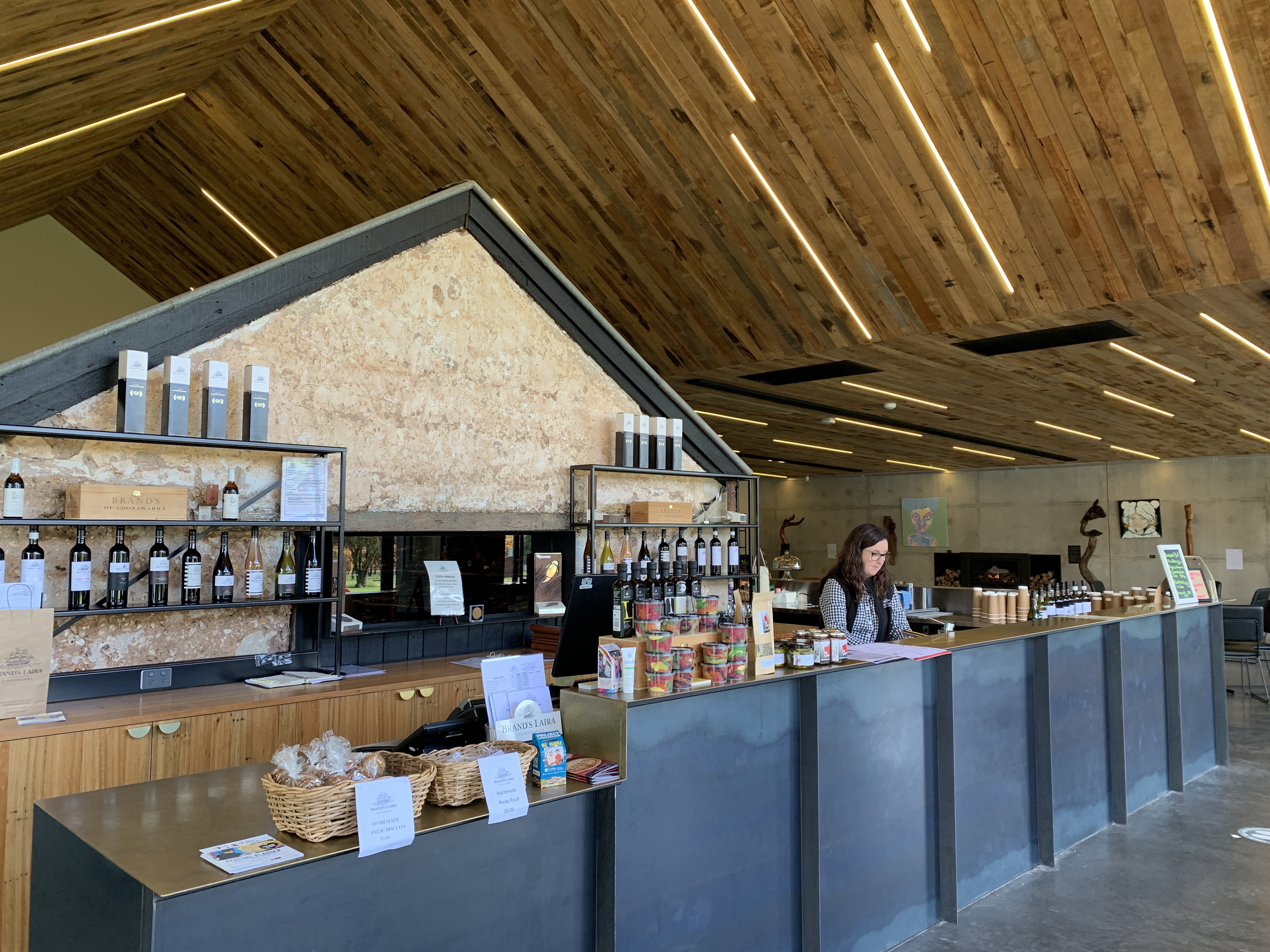
Our next stop along the Riddoch Highway was to one of Richard’s favourite wine labels Brands Laira. Brands Laira is an iconic winery in the Coonawarra and is now owned by the Casella Family Brands company from Griffith. The vineyards here date back to 1893. The recently constructed cellar door is fabulous with its polished concrete floors, rammed earth and concrete walls, Mountain Ash lined ceiling and fabulous bar made from steel with a brass sheet bench top. Inside the cellar door is the original Eric Brand’s cellar. This old building has been preserved inside the new one and its great to see this classic bit of history saved. The new cellar door has a lovely deck area that leads onto a lovely lawn with gorgeous roses that were still blooming. This would be a great spot for wine tasting and a Ploughmans Platter that you can preorder for $25 pp on a sunny day. Alas it was raining.
We continued on past many famous name wineries. Anyone who drinks wine would recognise these names such as Katnook Estate, Lindeman’s, Zema Estate, Parker Estate and Yalumba.
The vineyards were all golden and yellow still covered in leaves that have changed colour before they fall off.
The small town of Penola at the bottom of the Coonawarra Wine Region was where it all began for Mary McKillop. It was here that her vision for providing a Catholic education to poor children was realised.
Mary was born to Scottish parents in Melbourne in 1842, the eldest of eight children. Her father was not a successful business man and the family faced many hardships and she gladly accepted a position as governess to her small cousins at her Uncle Alexander Cameron and Aunt Margaret Cameron (née McKillop), at Penola Station. Mary was only 18 when she arrived in Penola.
In Penola Mary met the charismatic priest Father Julien Tenison Woods. Father Julien was a popular parish priest whose parish included a vast area of some 56,000 square kilometres in South Australia. Father Julien rode his horse all over his parish and was well loved by his parishioners. He could be found regularly celebrating Mass beneath the River Red Gums. He was an educated man and had an interest in geology, writing, map making, music and even the Theory of Evolution.
He and Mary were like-minded in wanting to provide a Catholic education to those children whose families could not afford to pay for a governess. They both felt it was every child’s right to a good Catholic education.
Their first school was set up in an old 6 stall horse stable in 1866. Mary’s brother helped remove the horse stalls and the school began. Mary’s two sisters, Annie and Lexie, came to help. This is the time the Mary made a declaration of her dedication to God and began wearing black.
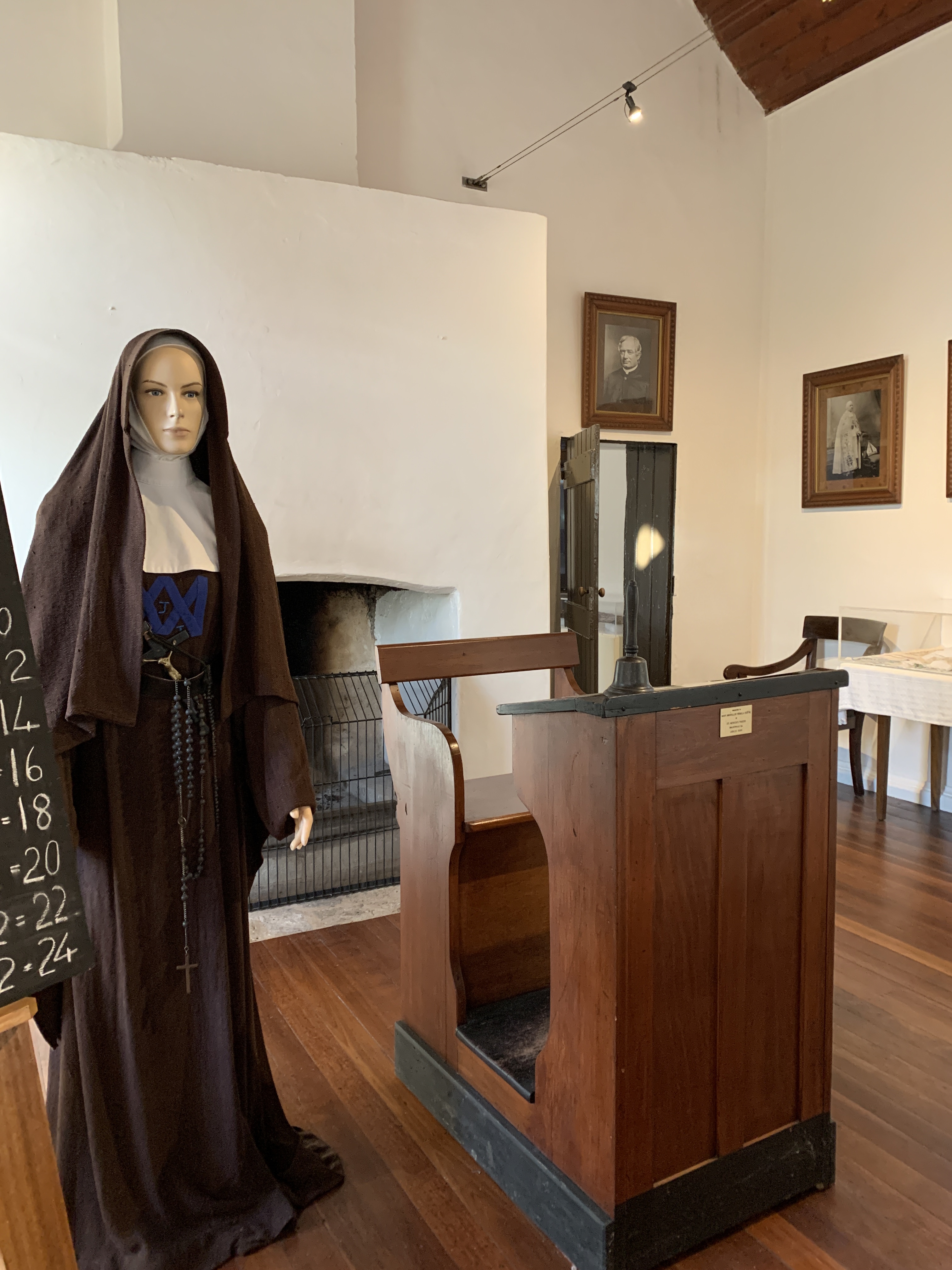
The school flourished and a new school was built out of stone in 1867. It had a large school room, a dormitory for the Sisters and a big kitchen. Mary insisted that all their furniture be as poor peoples so everything was plain and functional. By the end of 1867 10 other women had joined with Mary and they all adopted the plain brown religious habit and became known as the Sisters of St Joseph of the Sacred Heart. They were known locally as ‘the brown Joeys’. This was the first religious order founded by an Australian.
Mary’s school system was eventually taken up by the church and was the beginning of the Catholic Education system in Australia. By the end of 1869 more than 70 members of the Sisters of St Joseph were educating children at 21 schools in Adelaide and in the country.
Mary traveled widely and helped establish schools in Queensland and NSW. Mary’s untiring work in education was finally recognised by the church hierarchy and after her death in 1909 she was canonised and became Australia’s first Saint in 2010.
Penola is home to the Mary McKillop Penola Centre which includes the original 1867 Schoolhouse. The lives of Mary and Father Woods are celebrated in the excellent displays inside the centre. It is well worth a visit when you are in Penola.
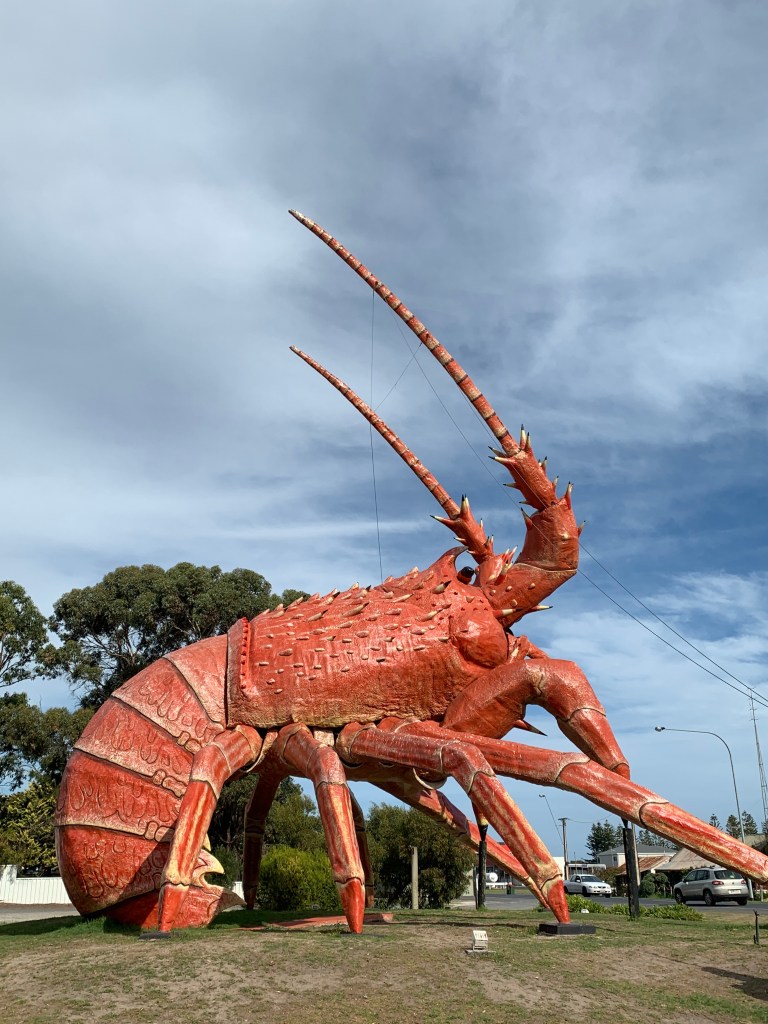
‘Larry’ the Big Lobster, Kingston SE, South Australia
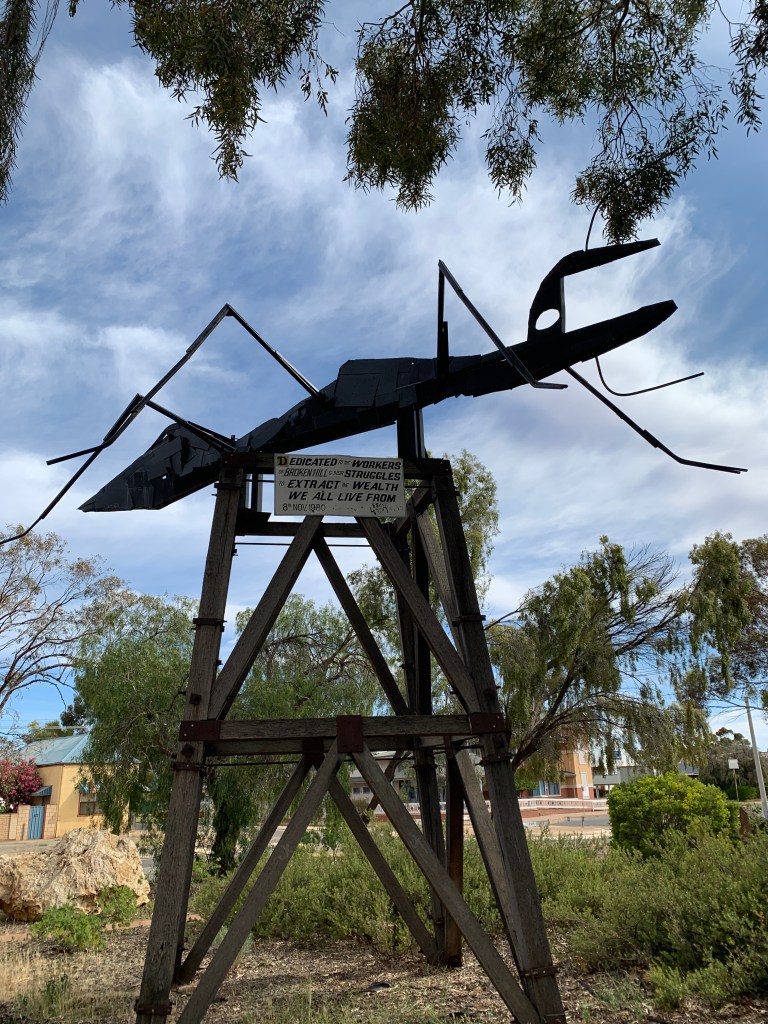
The ‘Big Ant’, a sculpture by Pro Hart, Broken Hill, NSW
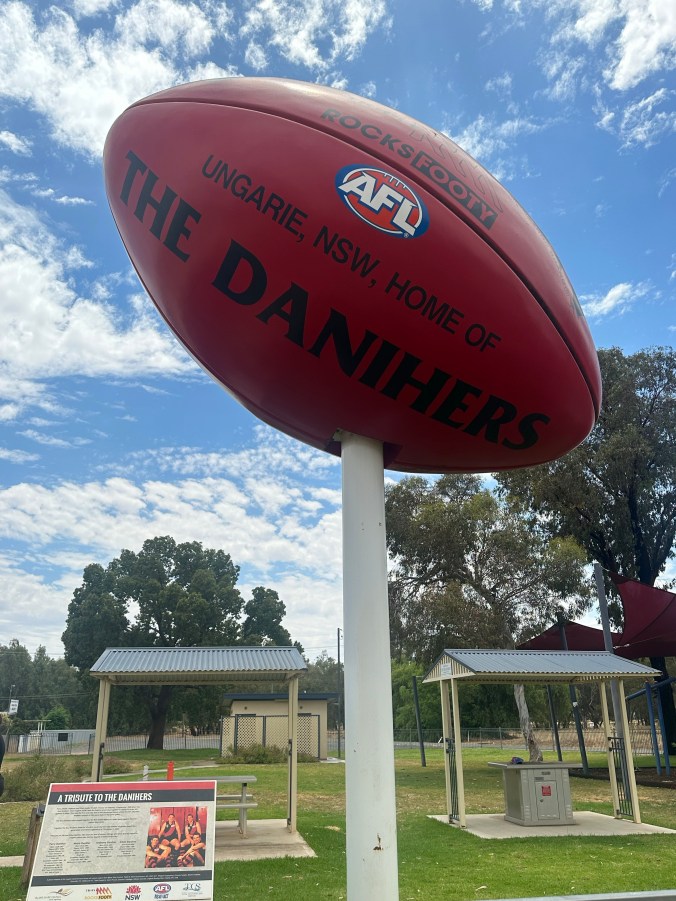
The Big Football, Ungarie, NSW. A tribute to the four Daniher brothers from Ungarie who played AFL for Essendon
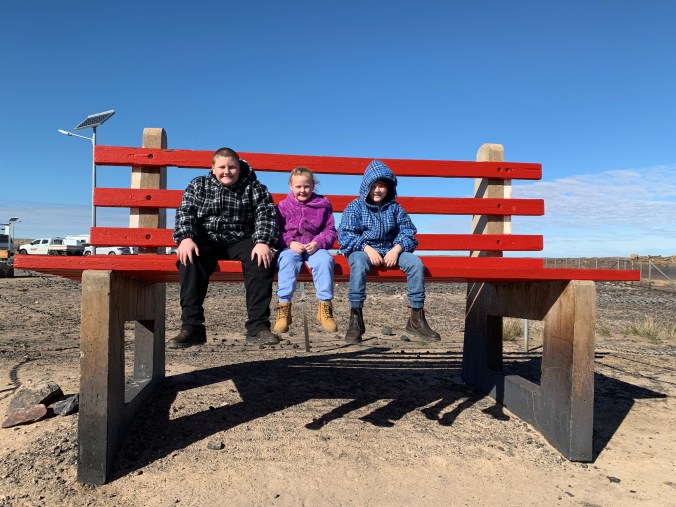
The Big Bench, Broken Hill NSW
The Big Galah, Kimba SA
The Giant Murray Cod, Swan Hill VIC
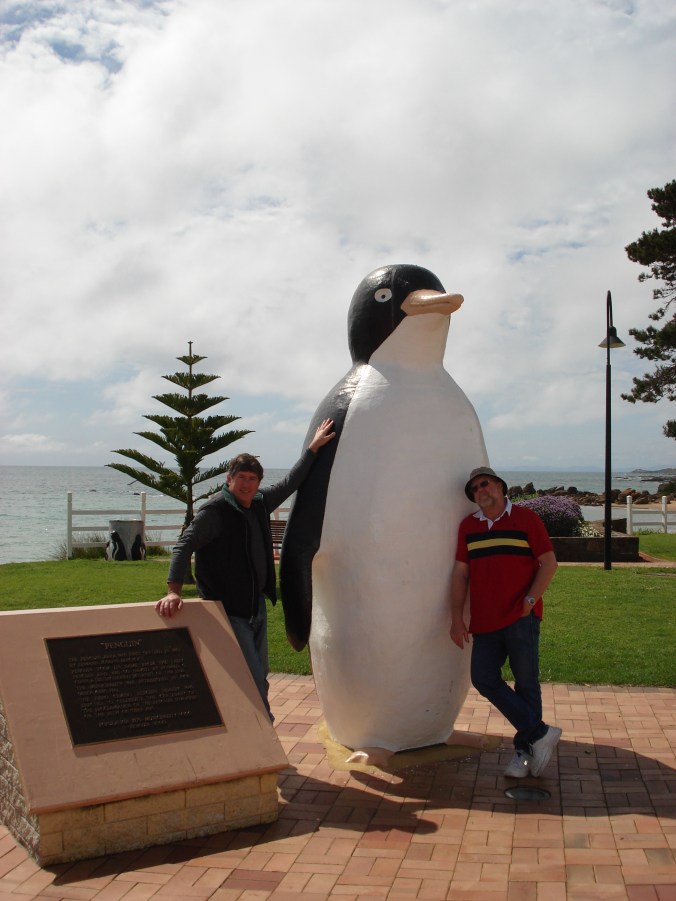
The Big Penguin, Penguin TAS
The Big Ned Kelly, Glenrowan VIC
The Big Toohey’s Can, Cobar NSW
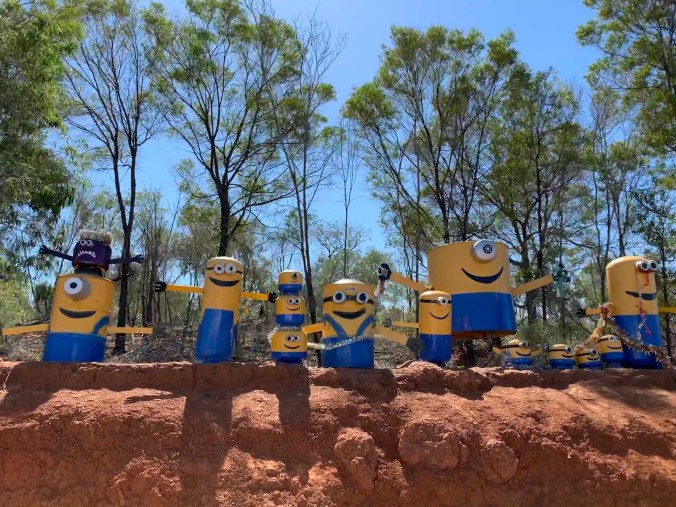
Roadside Minions, Blackwater, QLD
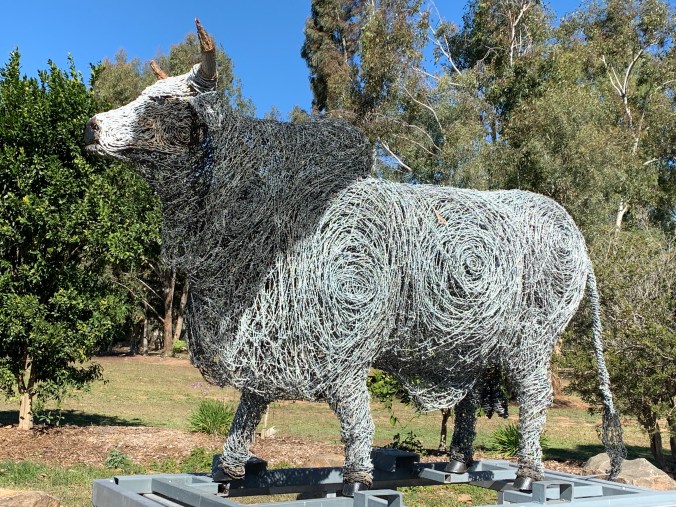
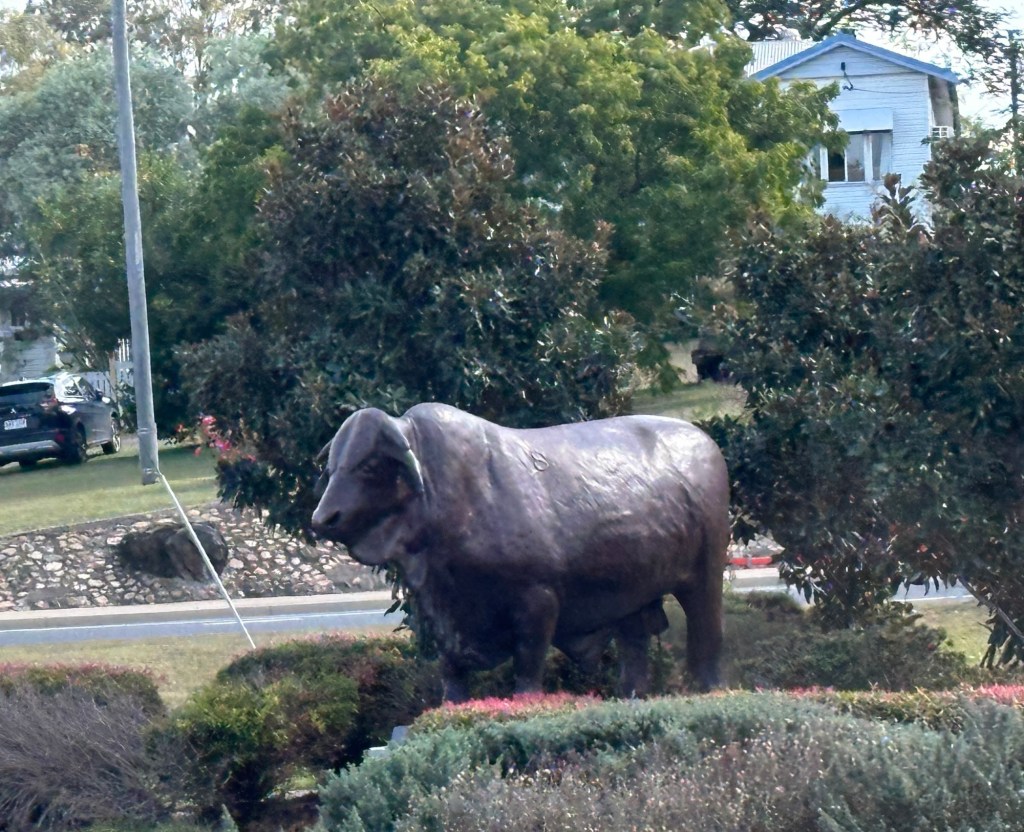
The Big Bull, Alpha QLD
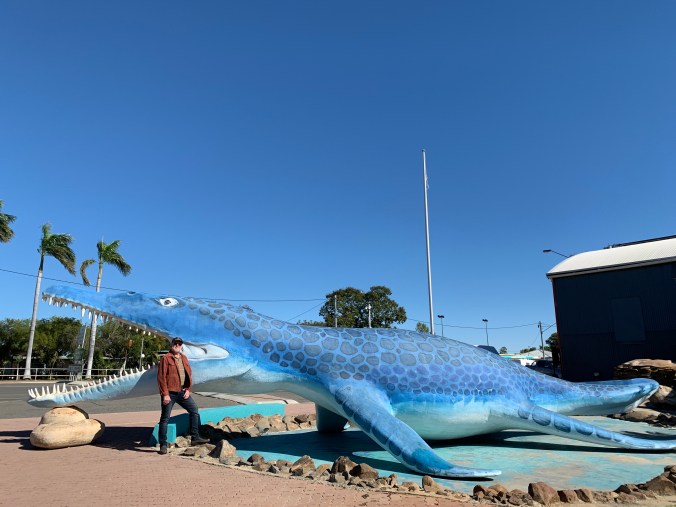
Kronosaurus, Richmond QLD
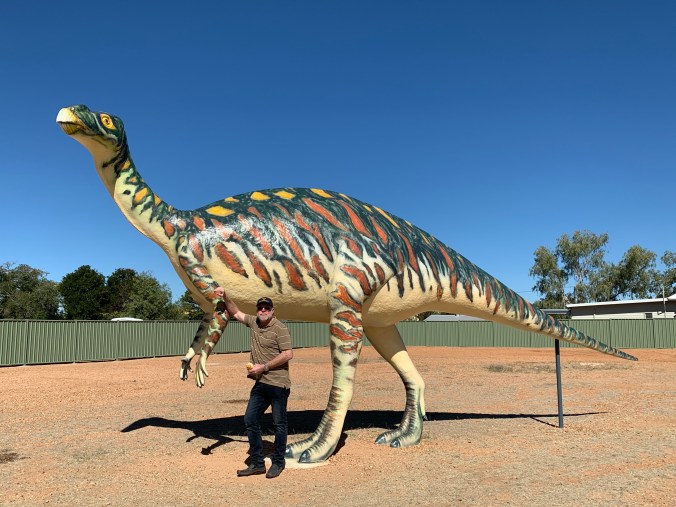
Muttaburrasaurus, Hughendon QLD
The Big Ammonite, Hughendon QLD
The Cunnamulla Fella, Cunnamulla QLD
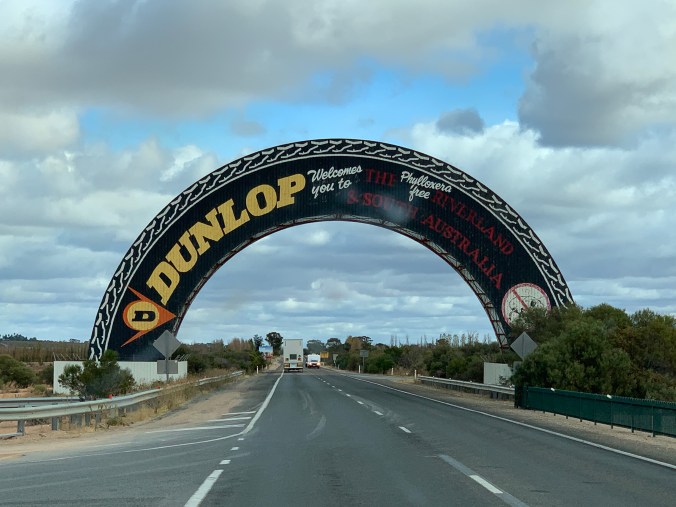
Big Dunlop Tyre, Yamba SA
The Big Winch, Coober Pedy SA
The Big Whale, Nullarbor Roadhouse SA
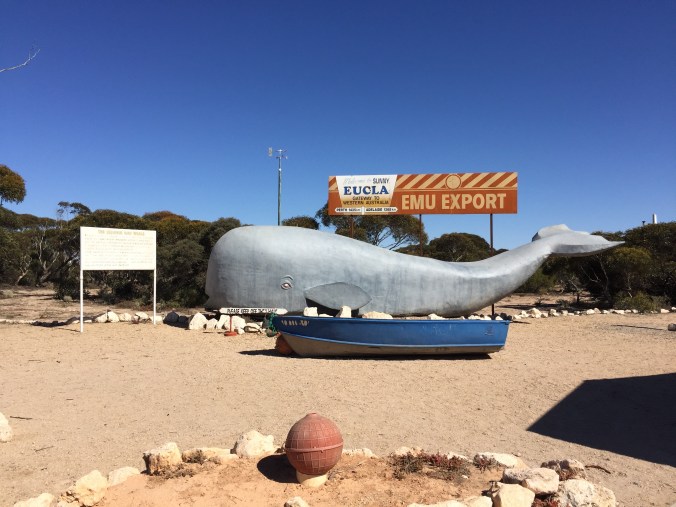
The Big Whale, Eucla WA
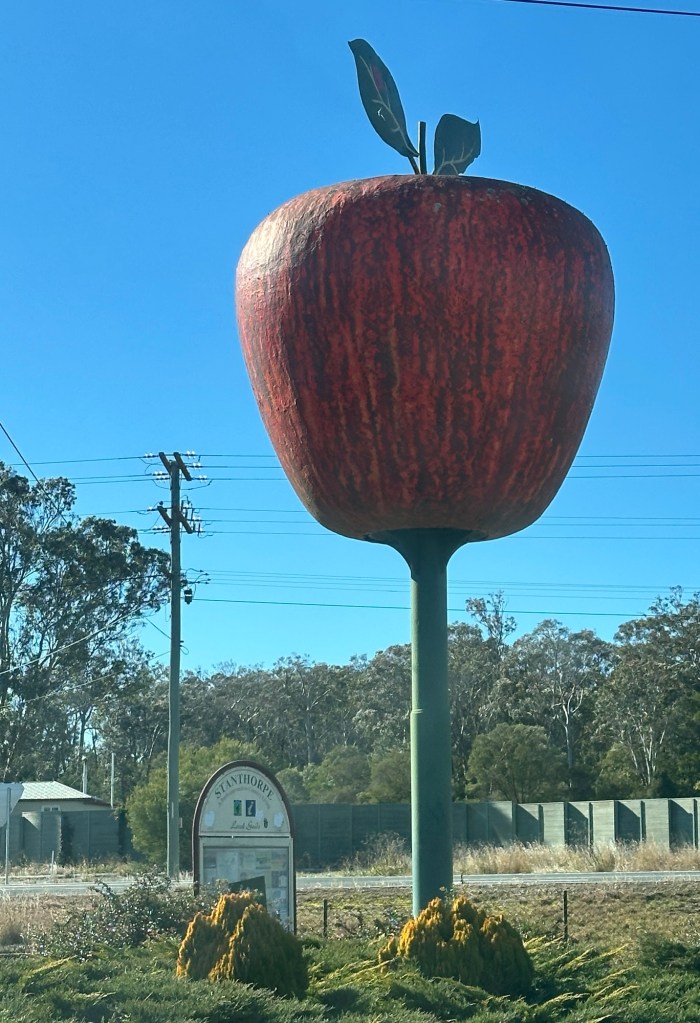
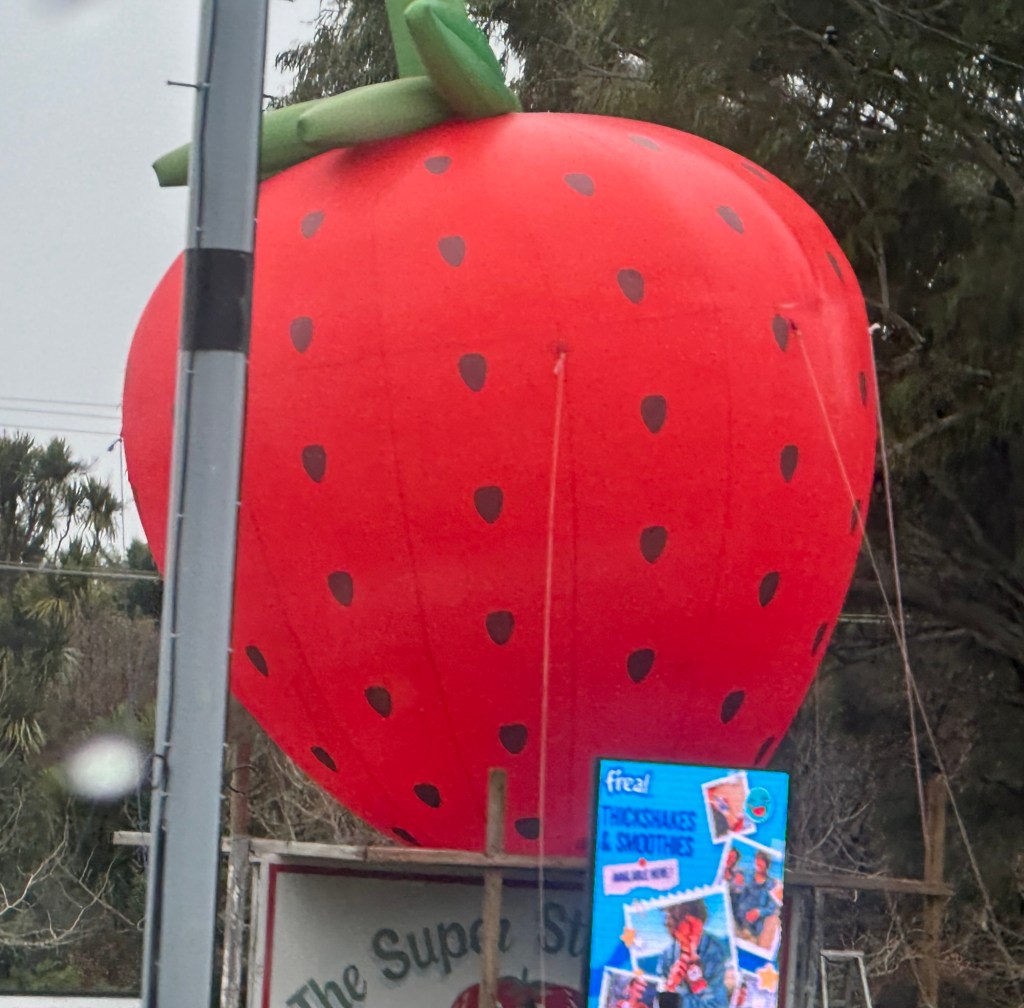
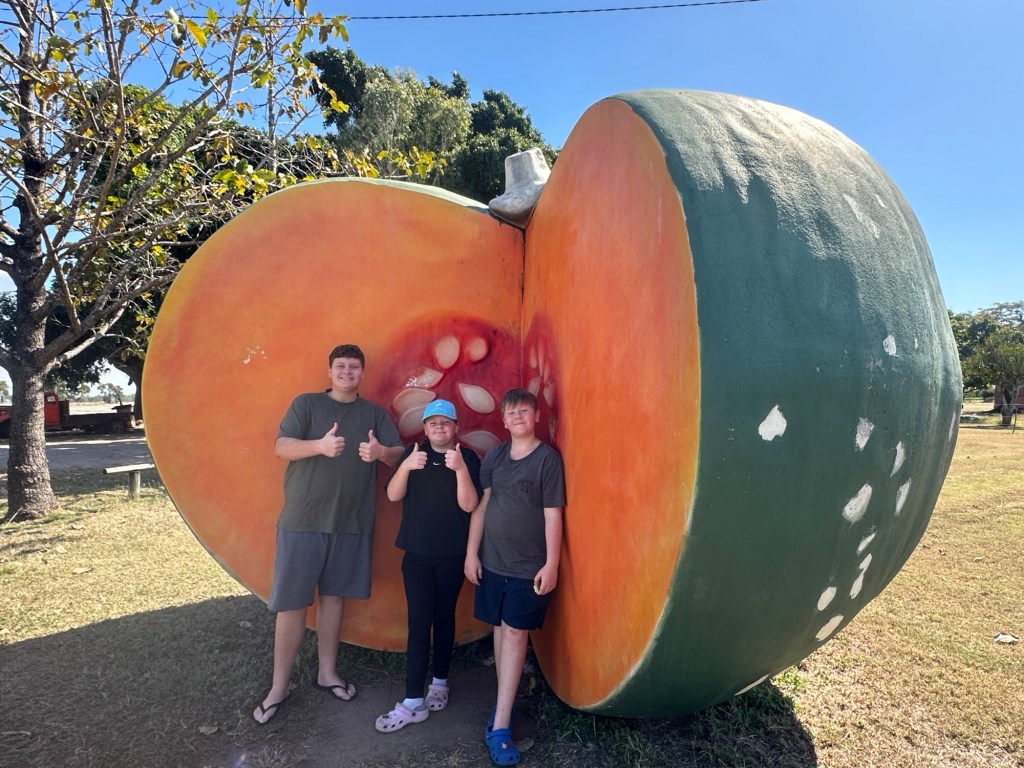
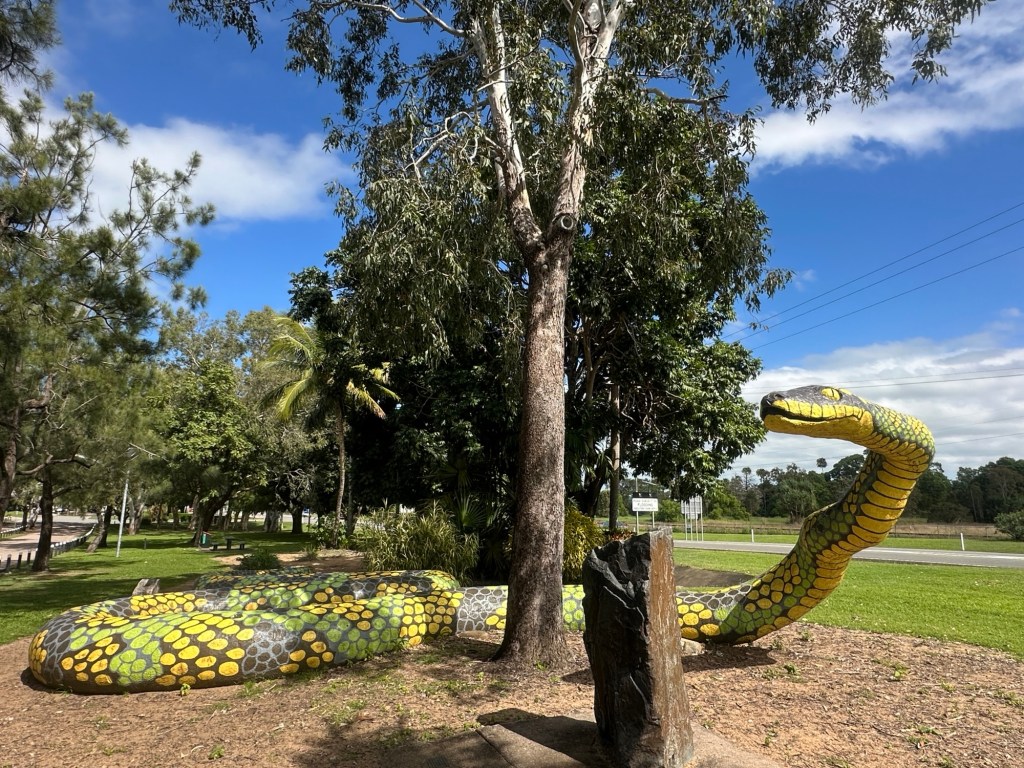
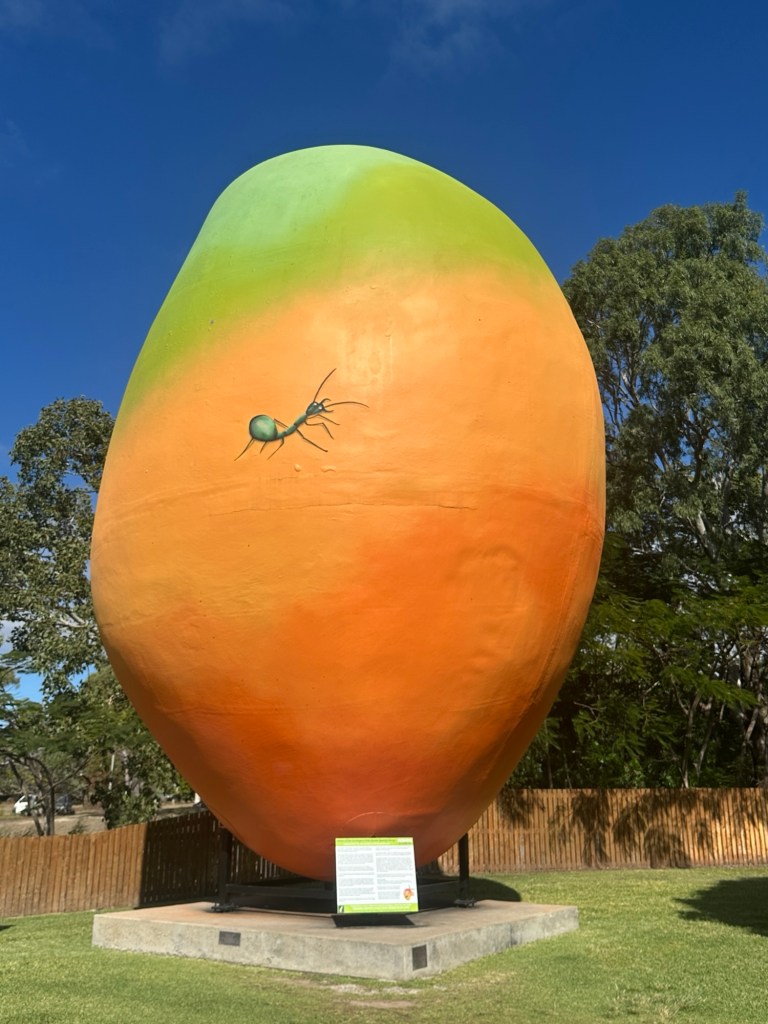
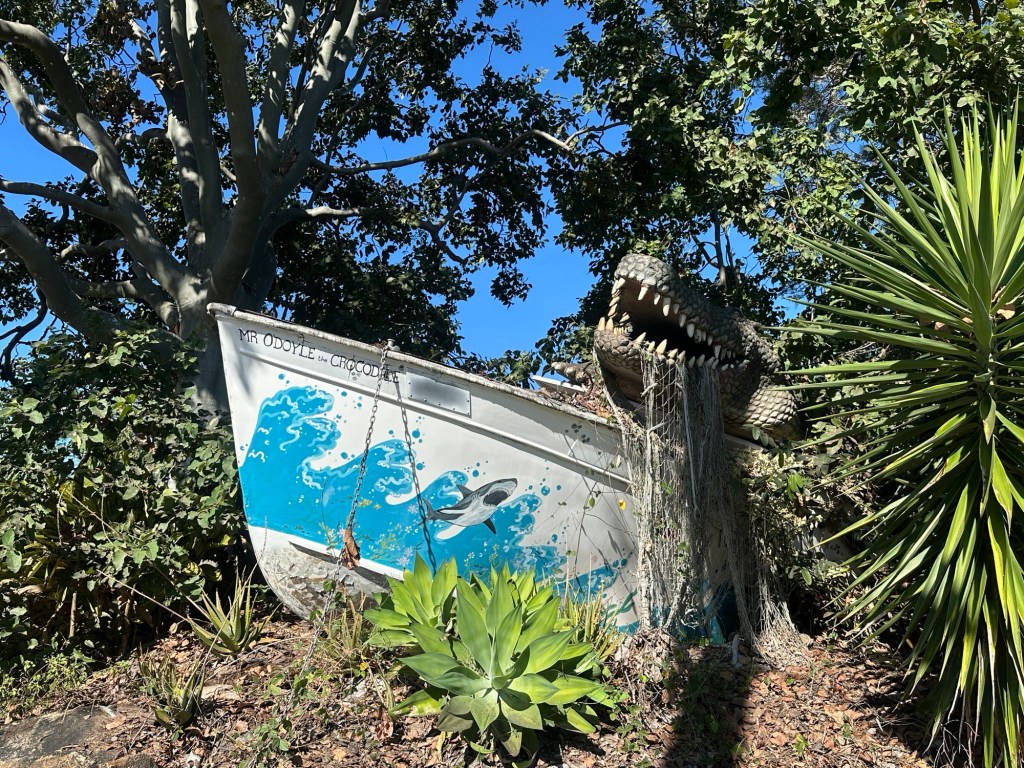
The Big Apple, Stanthorpe, QldThe Super Strawberry, Glen Innes, NSWGolden Guitar, Tamworth, NSWBig Bundy Bottle, Bundaberg, QldBig Pumpkin, Gumlu, QldBig Snake, Ayr, QLDBig Mango, Bowen, QLDBig Cane Toad, Sarina, QldBig Croc, St Lawrence, Qld (mostly hidden by foliage now)One of the 7 Big Bulls, Rockhampton, QldOne of the 7 Big Bulls, Rockhampton, QldBig Whale, Hervey Bay, QLD
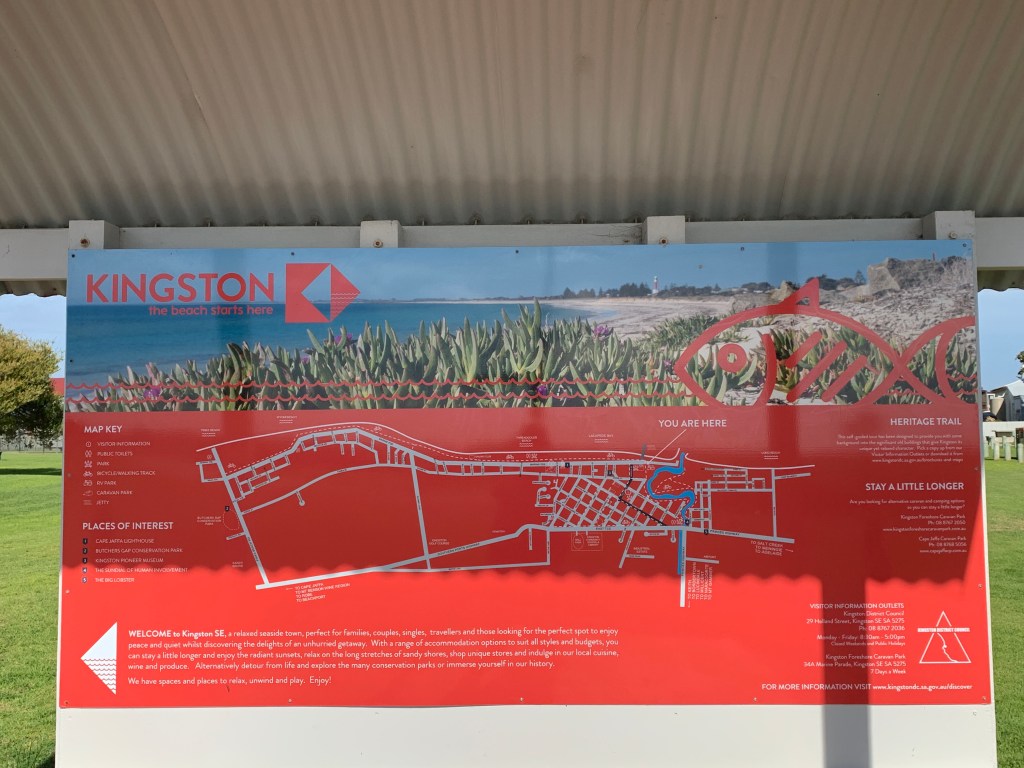
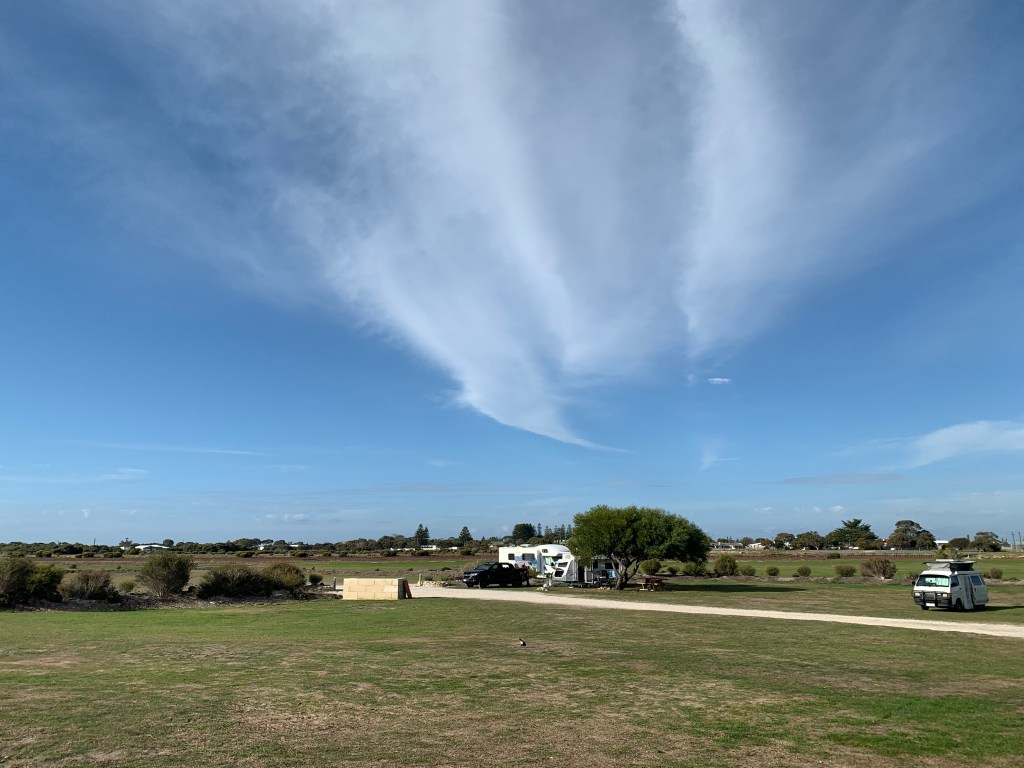
Wow Kingston SE, you have outdone yourself! Their RV Park is the best RV Park we have ever seen. It is right on the beachfront, walking distance to the Jetty, the Main Street, the Cape Jaffa Lighthouse and more.
The RV Park is for self-contained vehicles only and offers 72 hours for just $10. There is a parking meter that produces a timed ticket that you need to display on your windscreen.
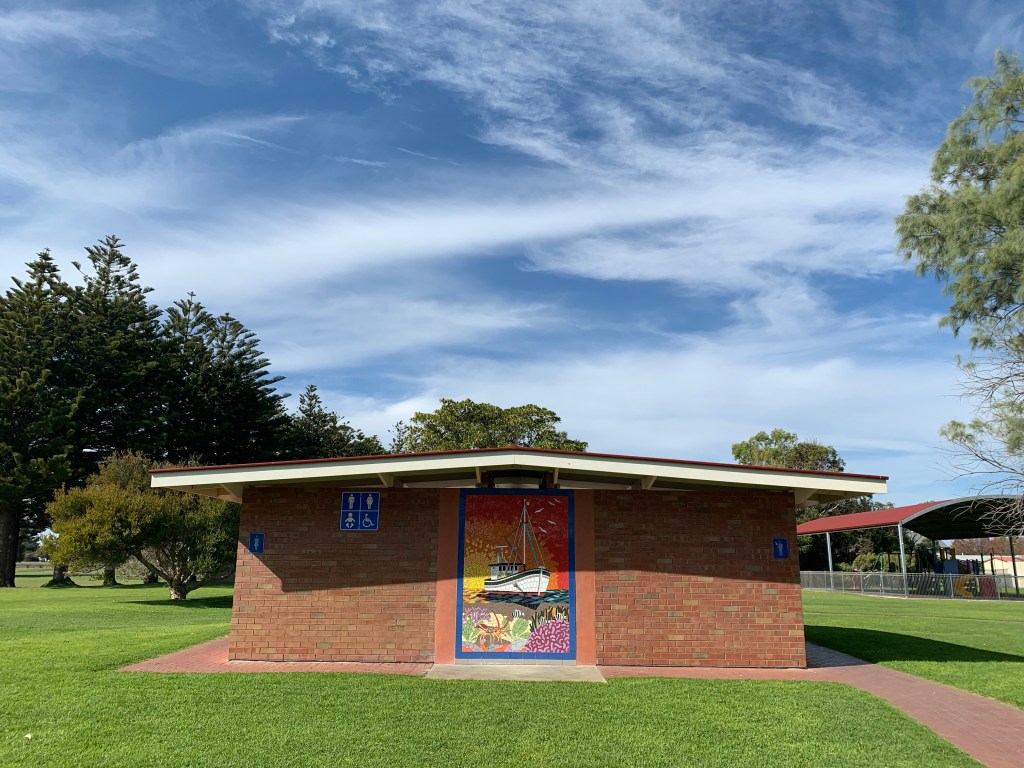
There is a toilet block and a children’s playground in the park close by.
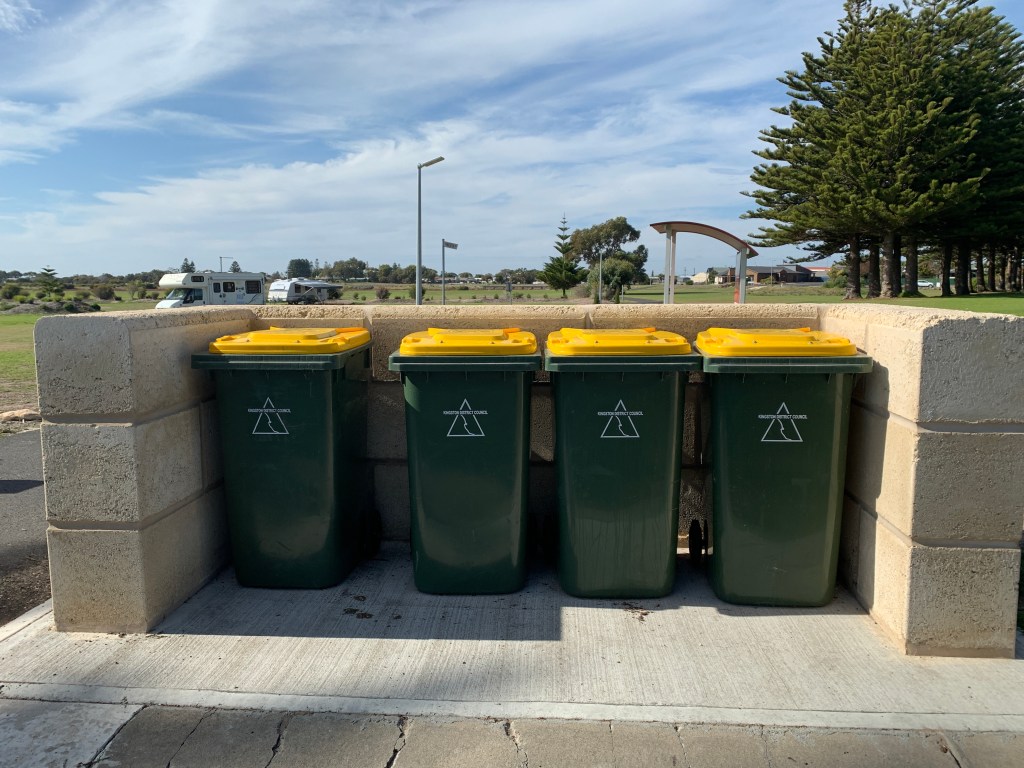
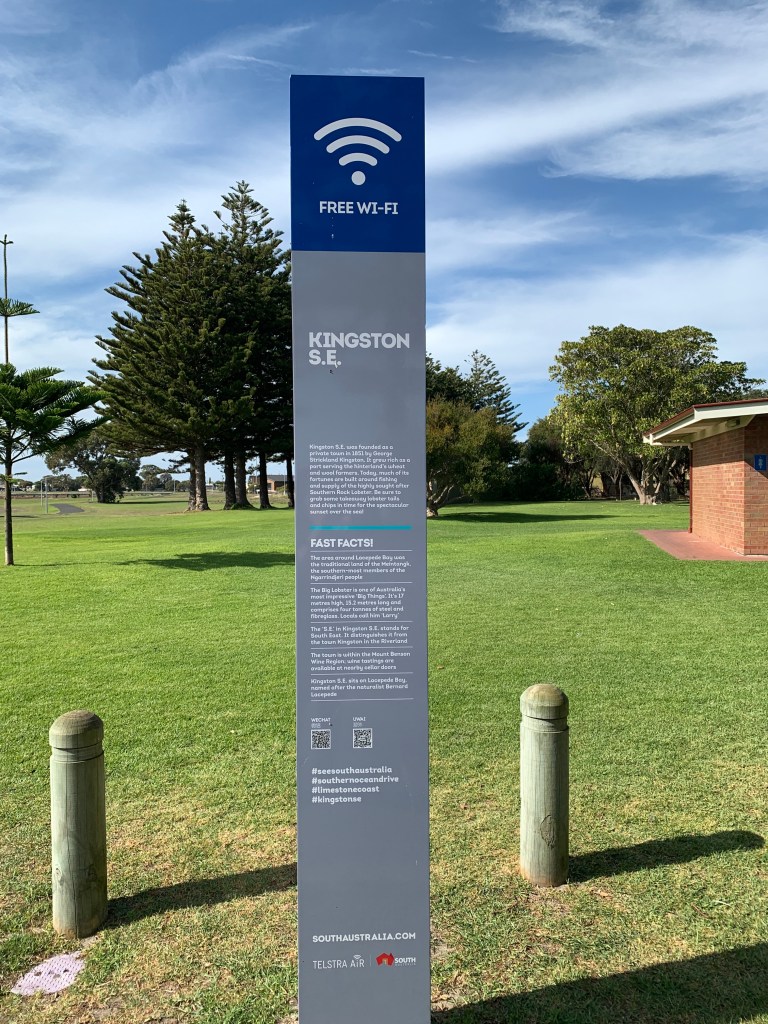
Potable water is available, multiple rubbish bins are provided and there is a Dump Ezy Dump Point. Grey water must be contained and not let out on the ground. A Ranger does a regular drive by to ensure people are doing the right thing. You can have an off the ground fire out of fire season. There is even free WiFi and an information bay with a map of the town.
The RV Park is flat, grassy and has been lovingly landscaped. It is a huge area so there is room for lots of campers without being on top of each other. Plenty of room for big rigs. For those who wish to stay longer in Kingston SE there is a caravan park further along the beach.
Well done Kingston SE!
RV Park parking meterRV Park entryRubbish bins aplentyToilet blockFree WiFiDump pointInformation BayCamped at Kingston SE RV Park
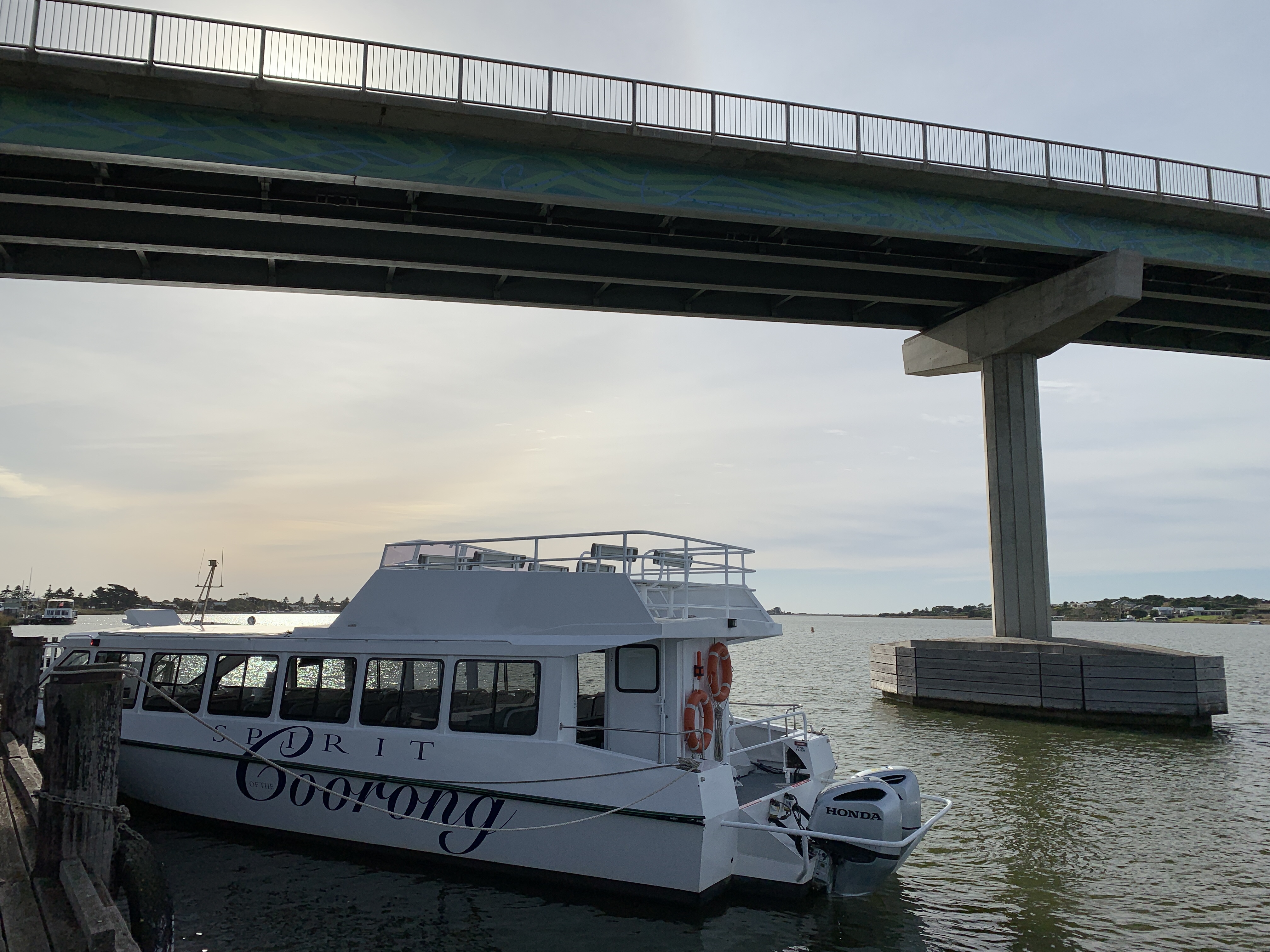
Big tick of our bucket list today. We cruised past the mouth of the Murray. We left home 19 days ago with the objective of following the Murray River from Albury in NSW to the mouth of the Murray in South Australia. Today we achieved that objective on a cruise with Spirit of the Coorong. We had booked the cruise online and it departed from the historic Wharf at Goolwa at 10.00am.
We stayed on grassy flat powered site at the Hindmarsh Island Caravan Park ($25 pn for Seniors) and were up bright and early to drive across the Hindmarsh Island Bridge to the wharf precinct. There is parking there for long vehicles so we parked the MH, left the fridge running on gas so nothing would thaw out, and went to check in.
Spirit of the Coorong was moored up and a group of people were gathering ready to board. Promptly at 9.45am boarding was announced and we were introduced to our skipper, Rupert, and crew, Jack. It was a quick boarding process and once everyone was on board we headed off down river towards the Goolwa Barrage and Lock.
We were blessed with a gorgeous sunny day for our cruise especially after the last few cold and windy days.
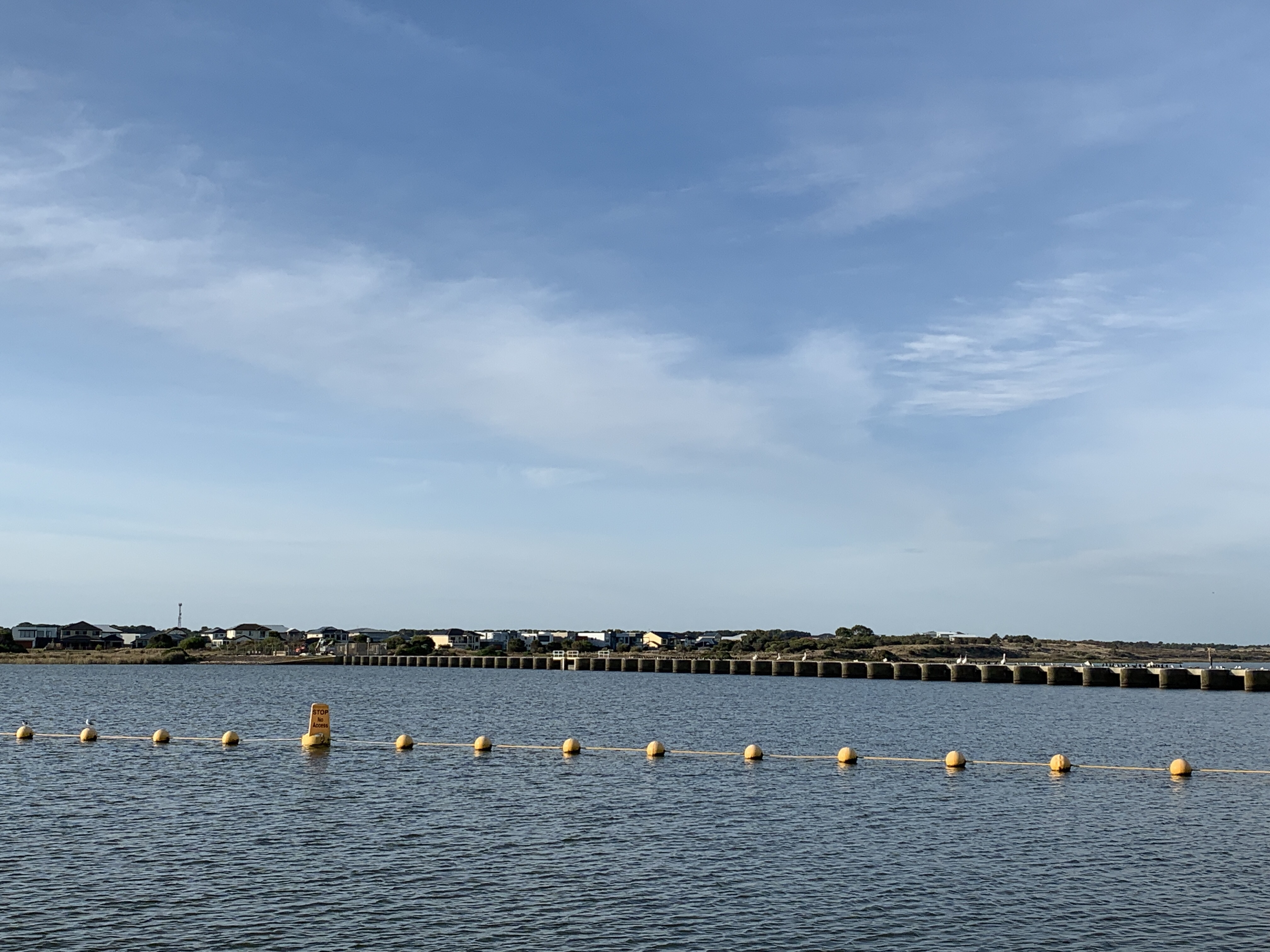
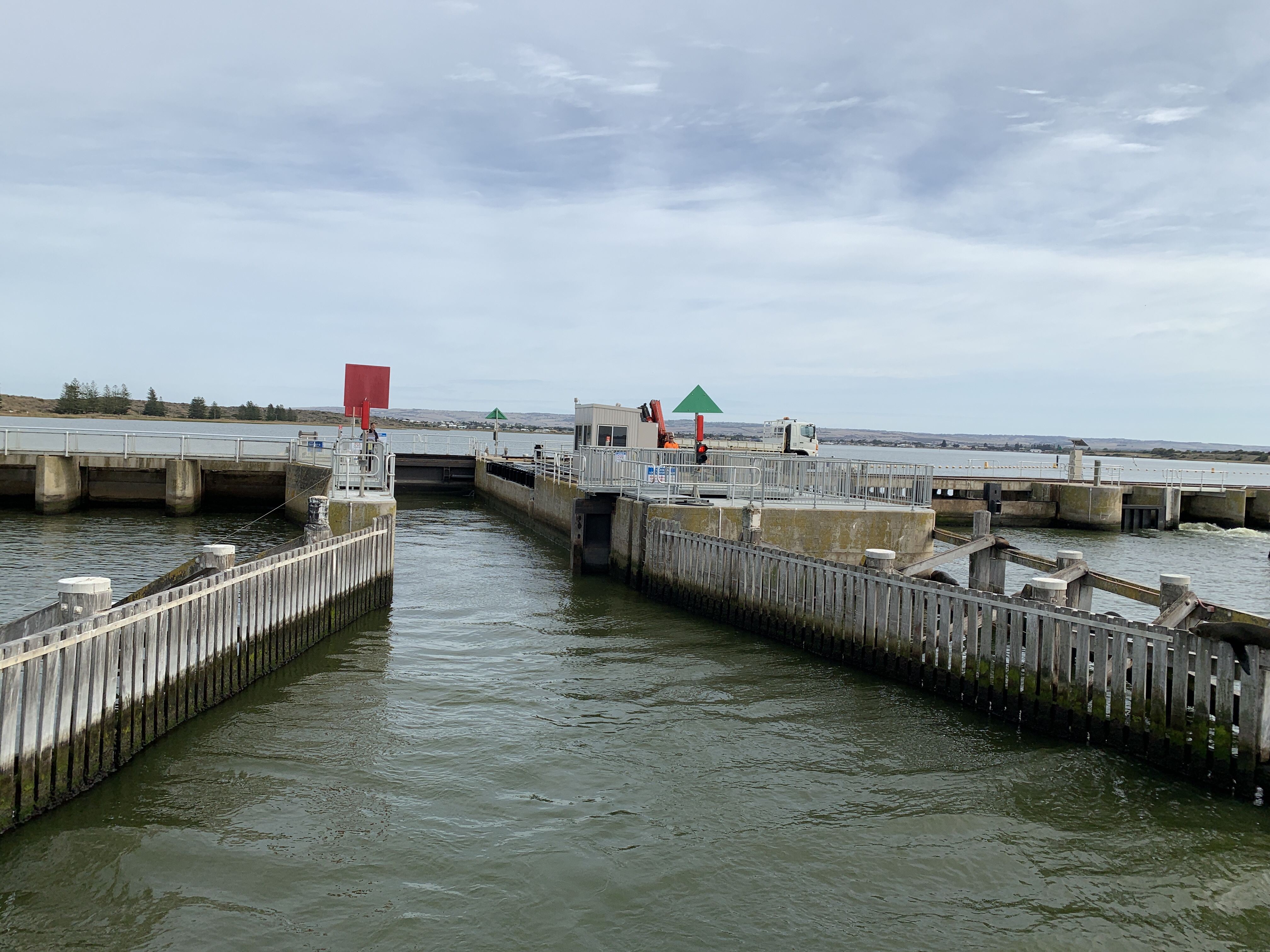
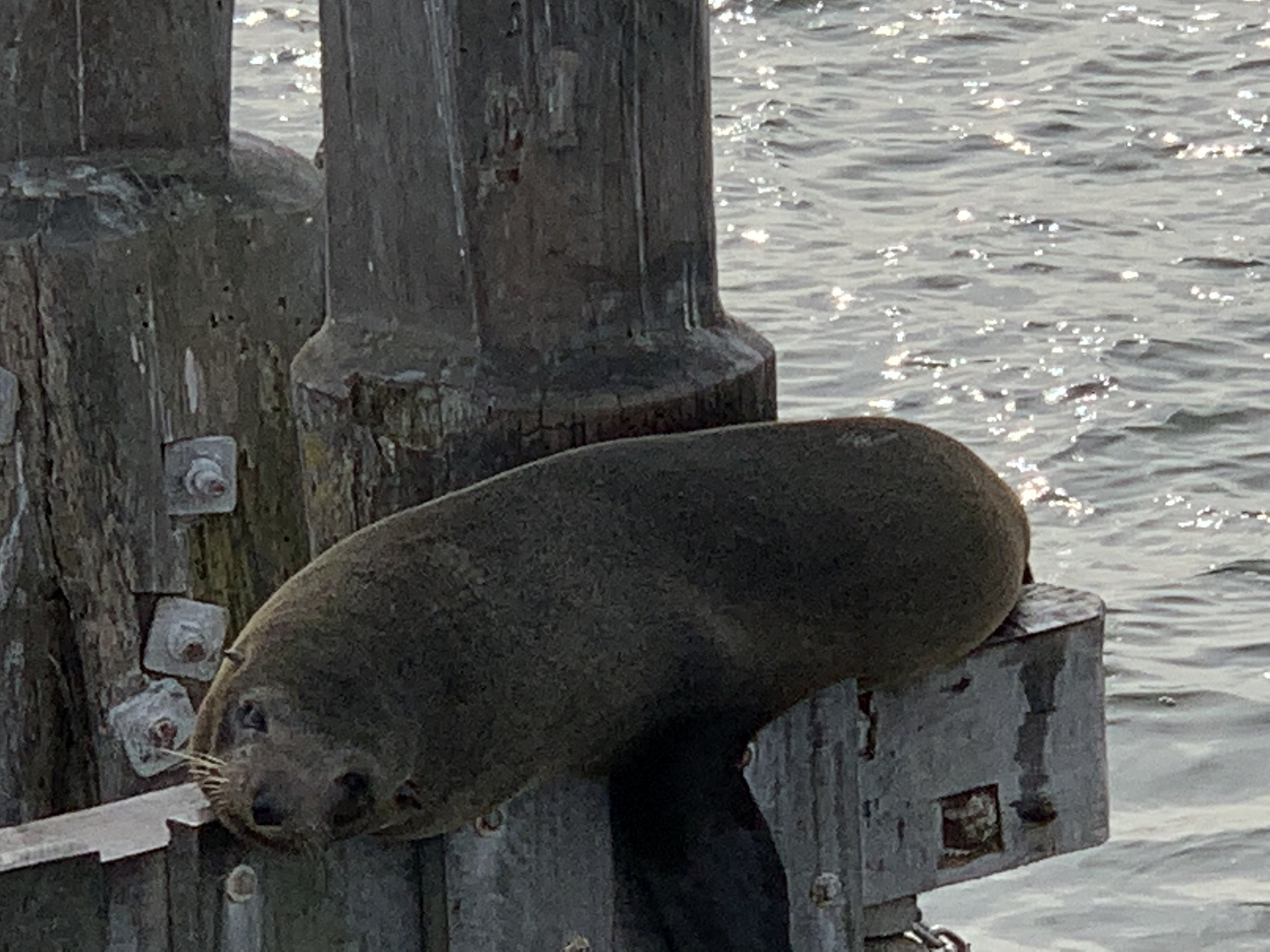
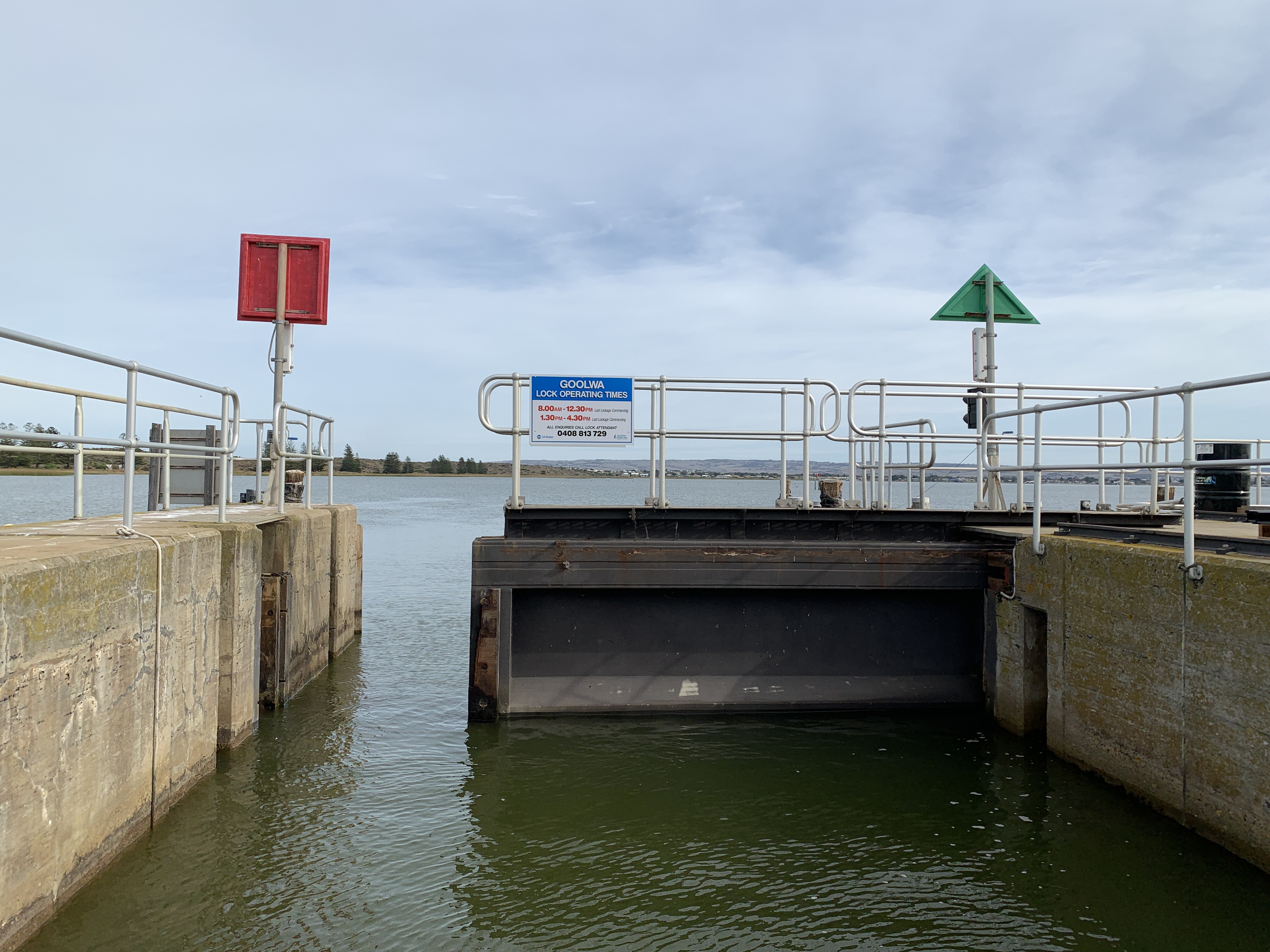
I love going through locks and this one was no exception. We had to be lowered from the fresh water river level to the sea water Coorong level. There was water flowing through one of the gates in the barrage and this is letting fresh water out into the Coorong. There was a group of sea lions at the lock hanging out on the wooden structure or playing in the water. They are funny to watch.
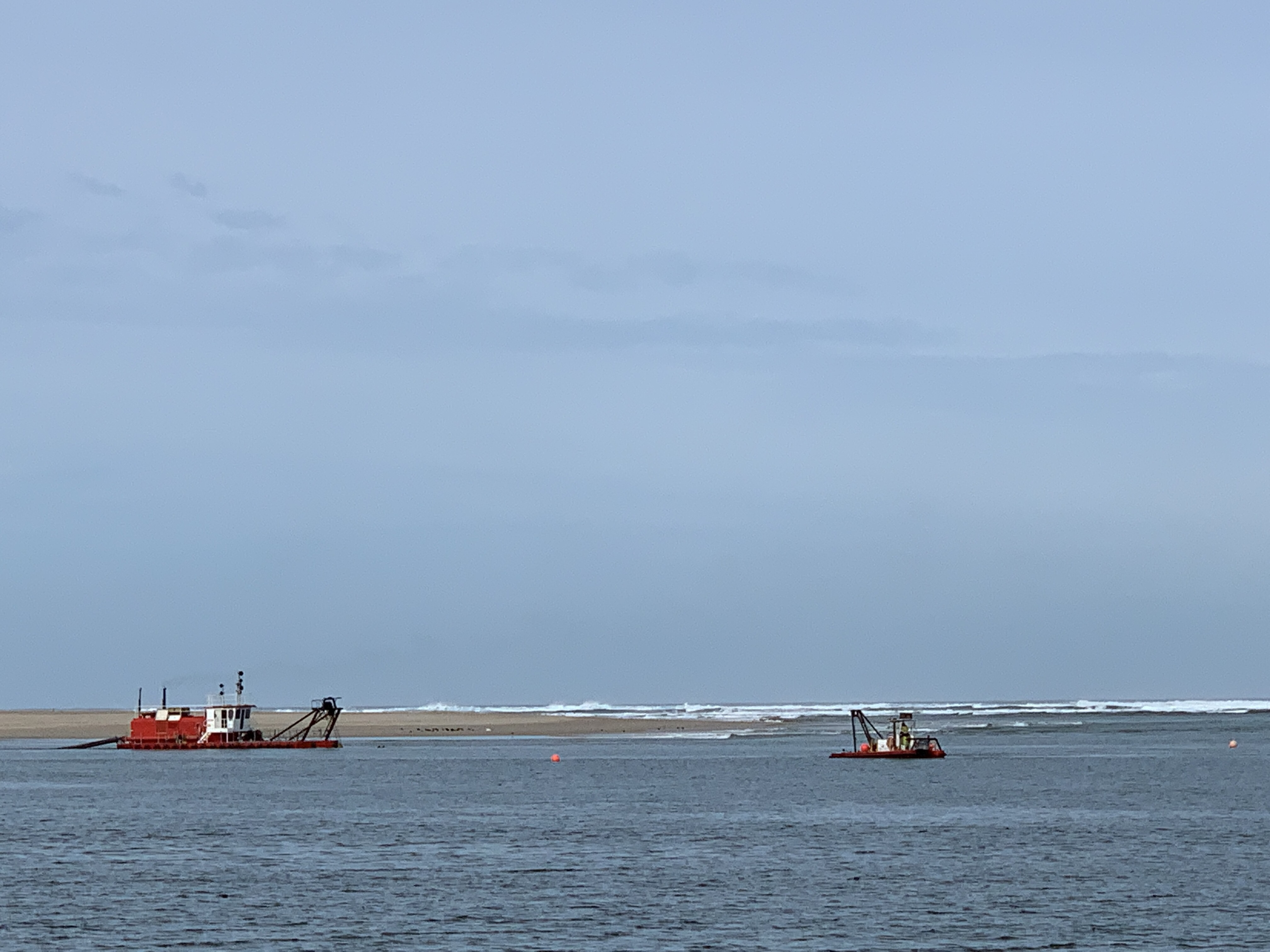
Once through the lock we cruised southwards alongside Hindmarsh Island on one side and the long thin peninsula separating us from the Southern Ocean until we reach the mouth of the Murray. The dredges were working dredging sand to keep the mouth of the Murray open to the sea.
Our first stop was at Barker’s Knoll where we went for a walk in the Coorong National Park and our guide Jack showed us the abundance of bush tucker that the Ngarrindjeri people made good use of. No wonder they lived there for thousands of years. Everything they needed was right there.
Our walk took us across the sand dunes and onto Ninety Mile Beach with the bright blue waters of the Southern Ocean crashing onto the beach. Ninety Mile Beach is the longest beach in Australia and seems to go on forever. Jake gave a demonstration of the ‘Goolwa Shuffle’ and showed us how to catch Pipis or Cockles by putting your feet firmly on the sand and twisting from side to side as the waves come in and out. The pipis rise and you can catch them as the waves retreat. To keep them they must be of commercial size. This area of the beach is for commercial pipi fishermen only so Jack threw back the ones he’d caught to show us.
Back on board and we had a treat waiting for us. Skipper Rupert had cooked up a big pan of Pipis in a delicious coconut milk, onion and garlic sauce. Everyone got to try them and they were scrumptious.
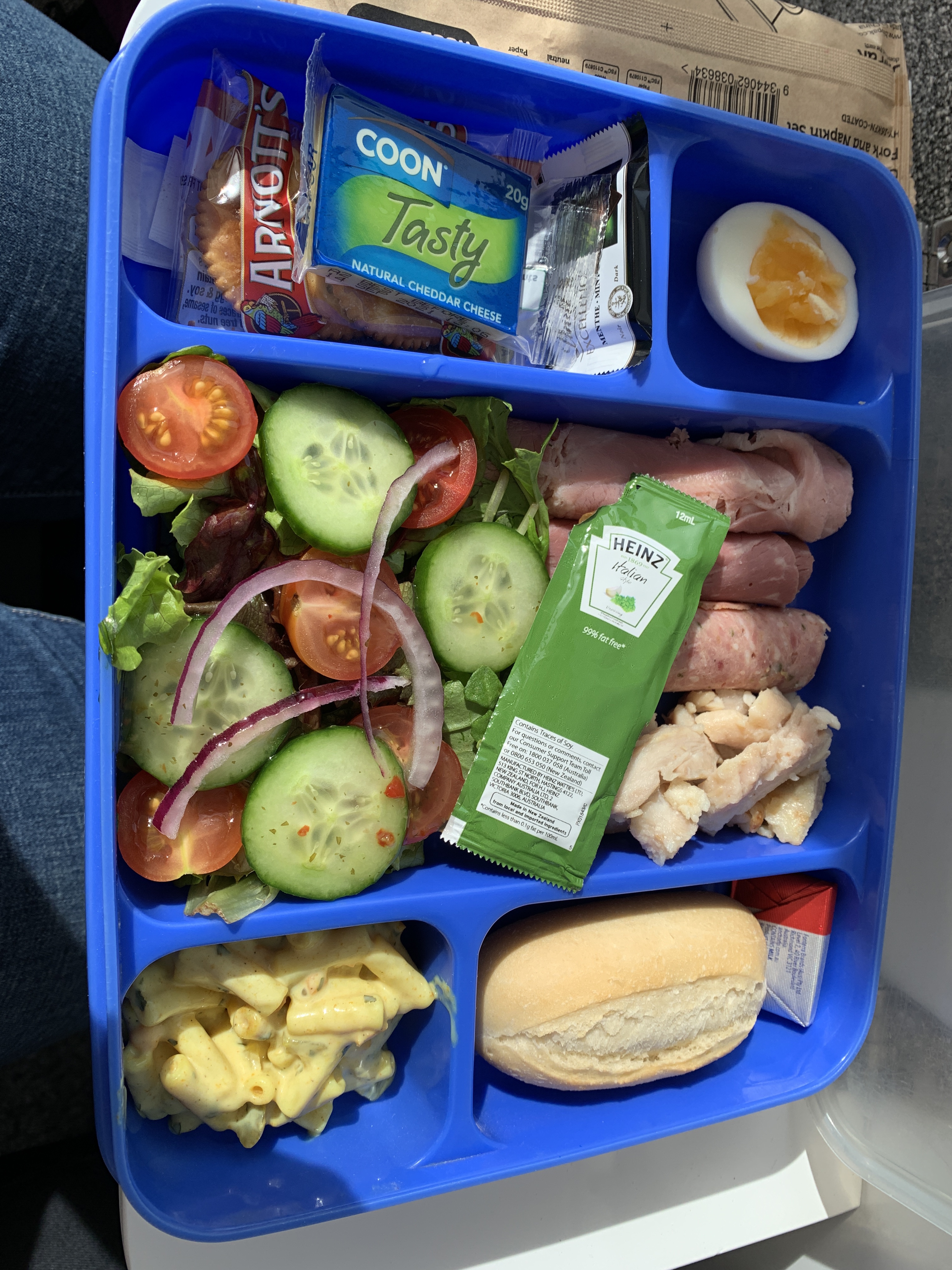
We continued our cruise down the Coorong and Jack served our lunch. Lunch was a delicious Bento Box lunch with a lovely variety of cold meats and salads. You could purchase drinks so we enjoyed a tiny bottle of wine with our yummy lunch.
Our cruise took us past the ‘shacks’ built on a point opposite Bird Island. Some of these shacks have been there for a very long time. Most from before the Coorong was made a National Park. They have now been put on leases and will eventually be removed from the park.
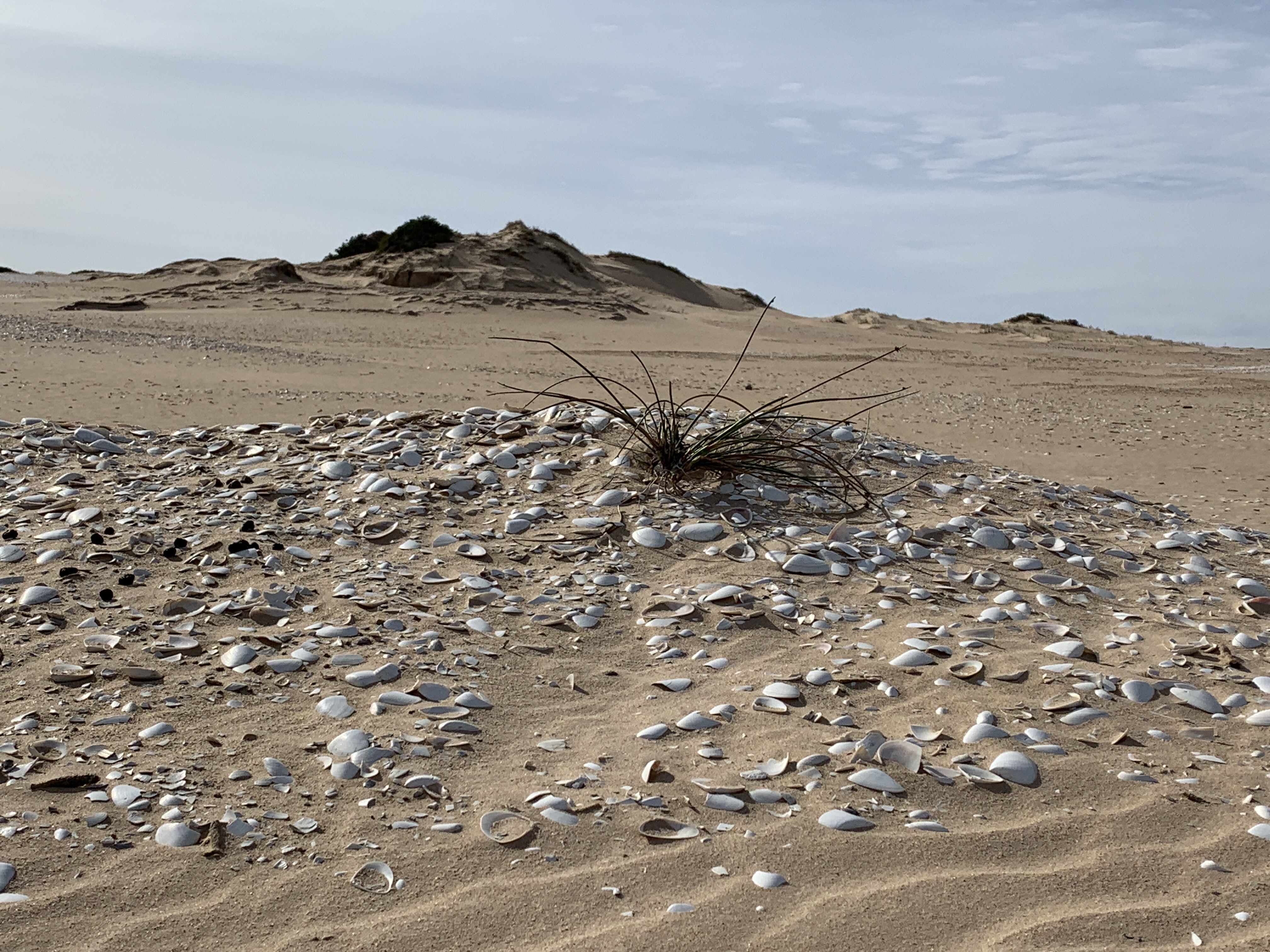
Our next stop was at Cattle Point where our guide this time was Skipper Rupert. We crossed the very high sand dunes and came to a huge wide area covered in broken shells. It is an Ngarrindjeri midden site and has obviously been used by them for thousands of years. We found blackened rocks that are not local to the area and these would have been traded for by the Ngarrindjeri to use for their fires. They were particularly good at basket weaving and would probably have traded baskets for these rocks. The local rocks are no good for fires as they just disintegrate.
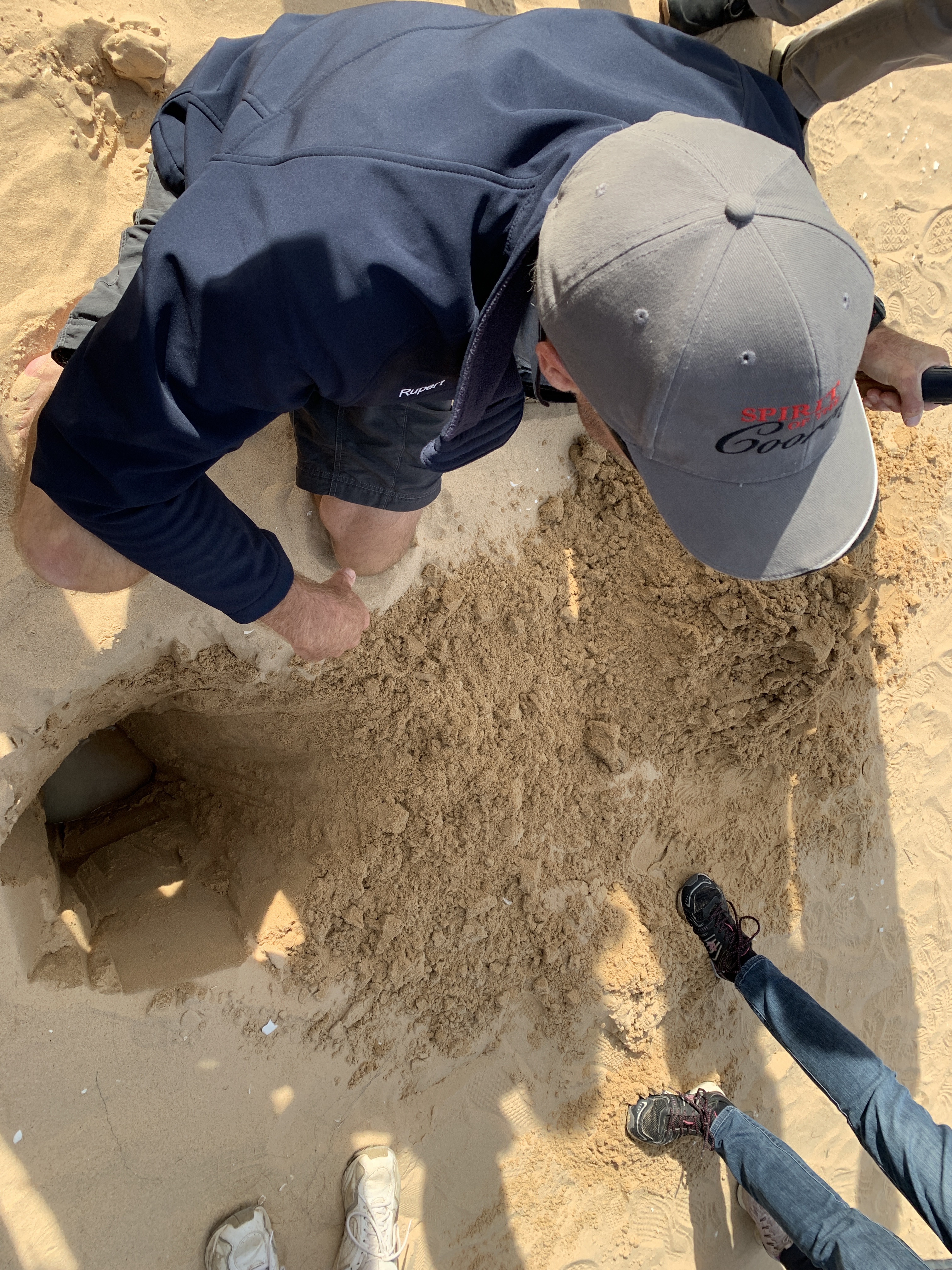
Rupert pulled a spade from out of the bushes that he’d left here previously and began to dig a hole in the sand. He only dug down about 600mm when the bottom began to fill up with water. Surprise surprise, the water is fresh. Here we were on sand dunes between the Southern Ocean on one side and the salty waters of the Coorong on the other and here was fresh water. Under the sand dunes is what’s called a lens. This is a water storage area for rainfall and it’s fresh water. So the Ngarrindjeri people really did have all they needed right there. Plenty of food in abundance and fresh water too.
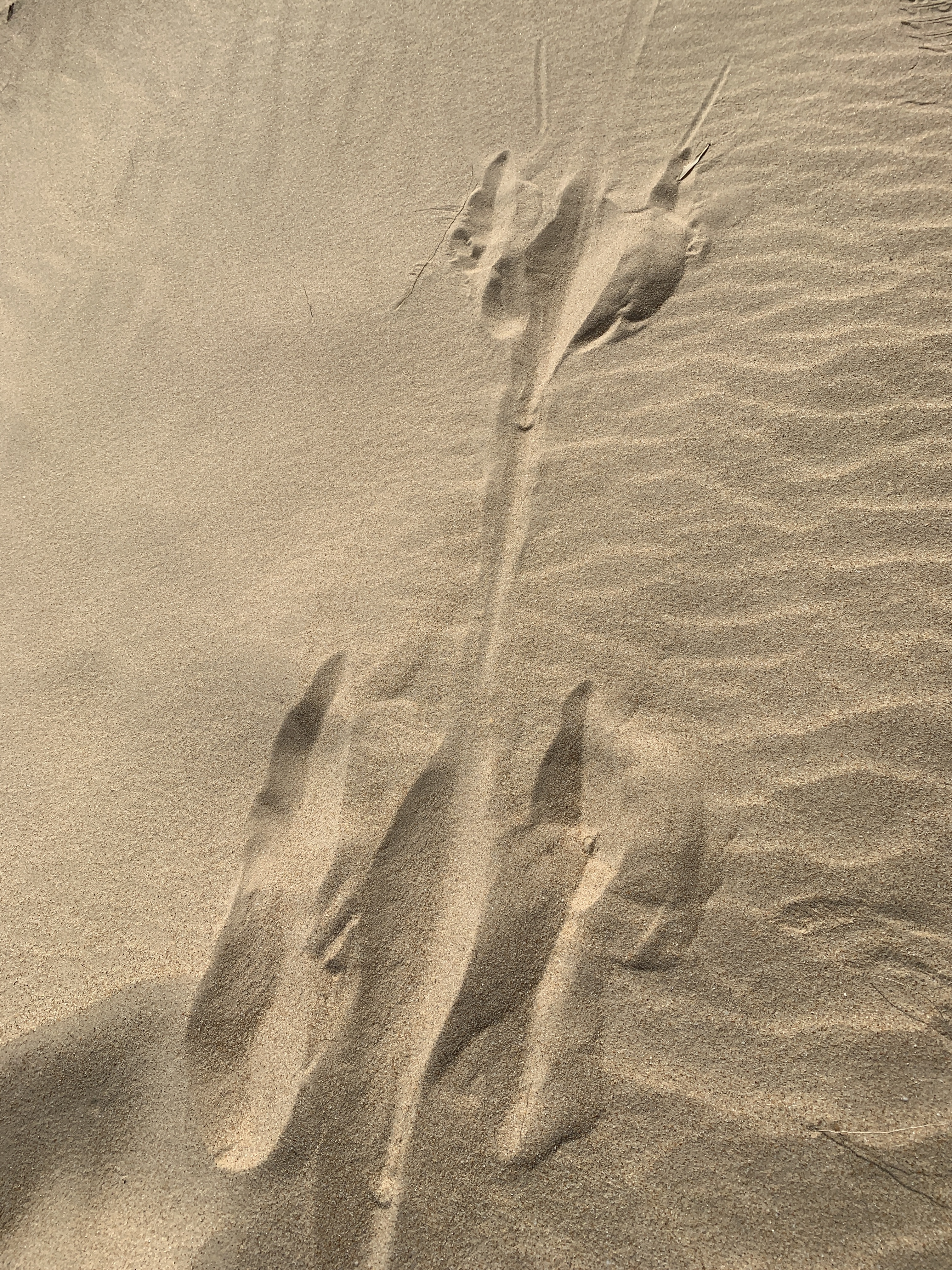
We found lots of animal tracks across the sand but the most disturbing ones were deer tracks. Wild deer have invaded the park and their numbers are increasing as they have no natural predators. They are becoming such a feral pest all across our country.
On our walk across the sand dunes at one point all you could see was sand and I thought I’d been transported to Egypt!
Back on board and we’d earn our afternoon tea all prepared for us by Jack while we were on our walk. A delicious slice and a cuppa was much appreciated by all.
It was a quieter trip on the way back to Goolwa with less chatter from the passengers. The walk had tired out quite a few. Back past the mouth of the Murray, back through the lock at Goolwa Barrage and eventually back to the wharf in Goolwa.
What a fabulous day out. We thoroughly recommend this tour if anyone is down this way. We felt it was great value for money at $118 per person for Seniors. The Skipper, Rupert and Crew, Jack, were friendly, knowledgeable and aimed to please. The Spirit of the Coorong is a comfortable boat with lots of seating inside and some seating upstairs outside. The only thing to be wary of is there are steps and stairs so for anyone with limited mobility it might be a challenge. You also need to be able to walk in sand up and down sand dunes. Good walking shoes are essential.
We camped at the Big4 Breeze Holiday Park in Port Elliot on a powered site. The cost for this was $40 per night. The park is a very large spacious one with lots of flat grassy and sandy sites. It has direct beach access to two beaches with the small Crockery Bay on one end and the larger Horseshoe Bay on the other side. This park has all the usual Big4 amenities such as a large children’s playground including a jumping pillow. There is an excellent Camp Kitchen with very clean stainless steel BBQ’s and a vegetable garden with lots of herbs for guests to pick and use. The park has some cabins and lots of shady trees. We don’t usually stay in caravan parks however we would recommend this one, although it would probably be packed in the school holidays.
Port Elliot is situated on Horseshoe Bay. A port was established here to provide a safe seaport for the Murray River trade which terminated at Goolwa. The mouth of the Murray was considered too treacherous and unpredictable for safe passage so goods and passengers were transported between Goolwa and Port Elliot on the first public railway built in Australia in 1854.
The railway was extended to Victor Harbor in 1864 after a number of disastrous shipwrecks in Horseshoe Bay and Victor Harbor provided a safer port.
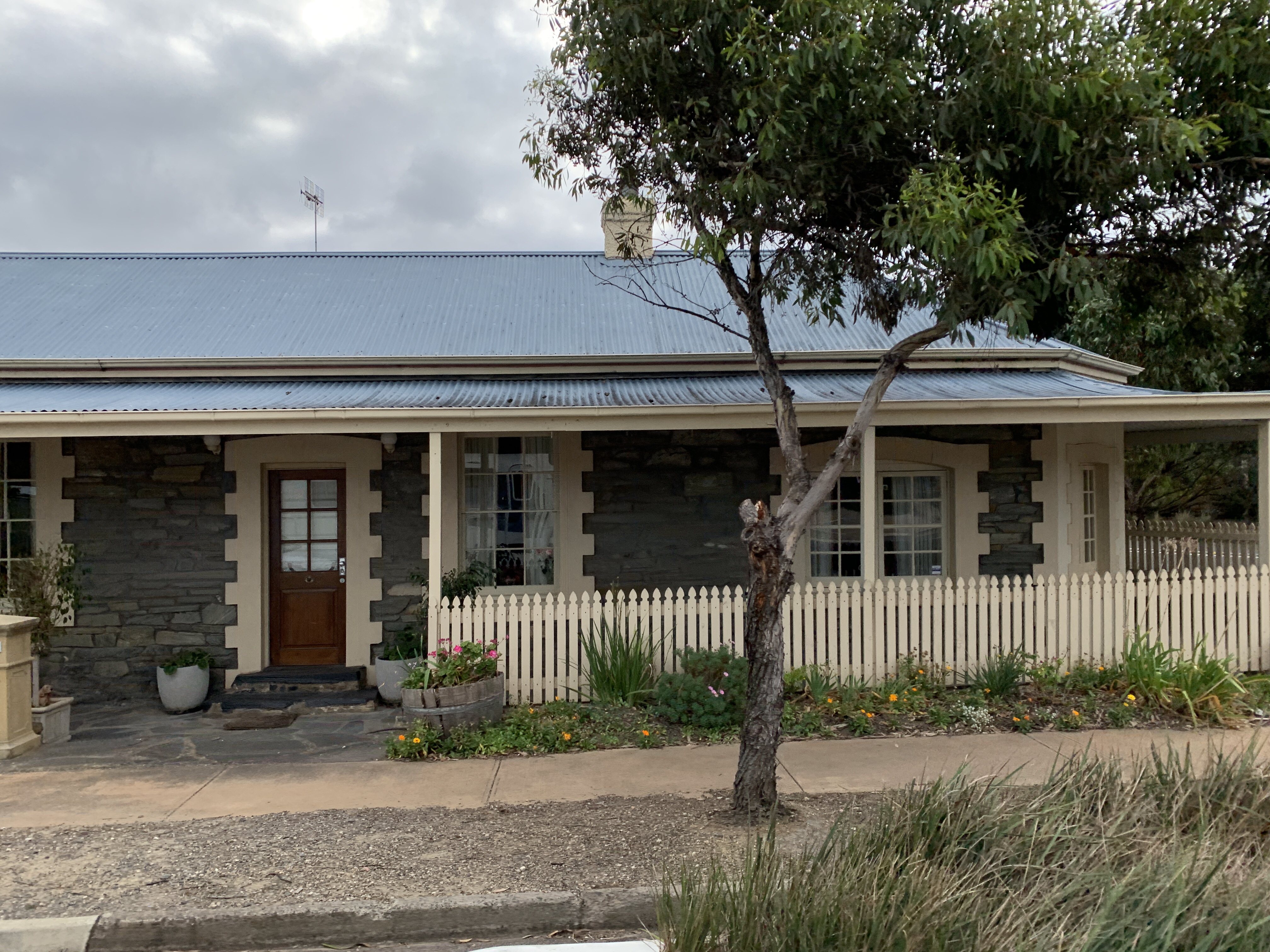
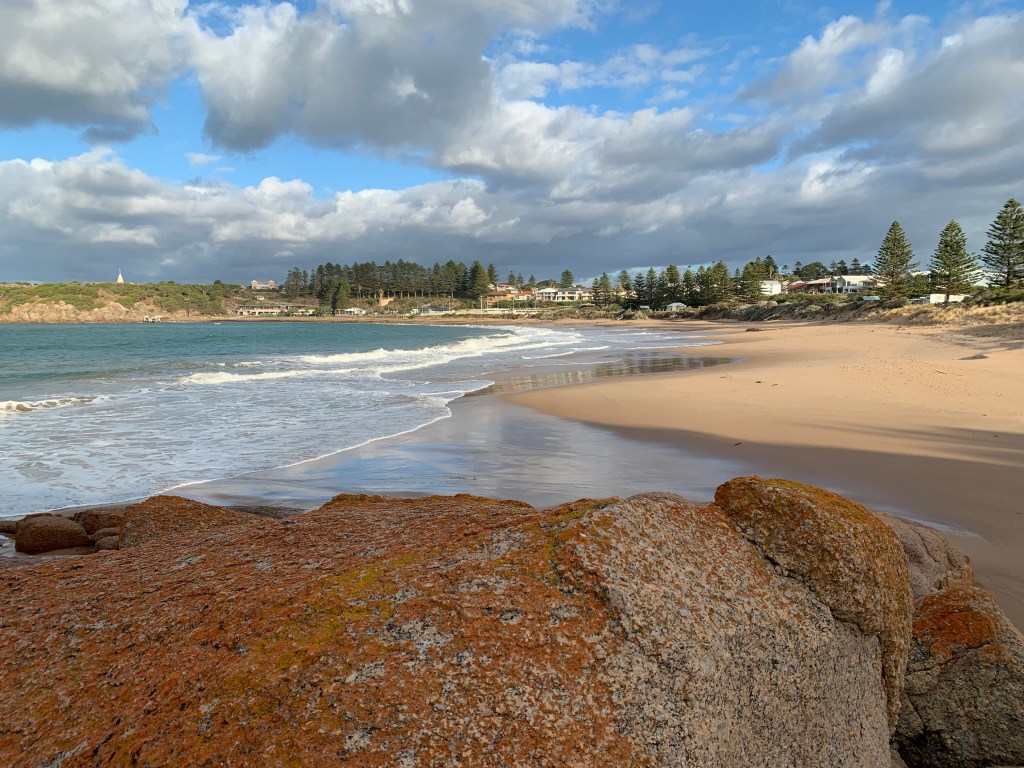
Today Port Elliot is a quiet town, home to many ‘sea-change retirees’ and is a popular holiday destination for Adelaide dwellers with the main attraction being that beautiful big beach. I love these little old historic towns with their mix of historic stone buildings amongst the modern ones.
Port Elliot
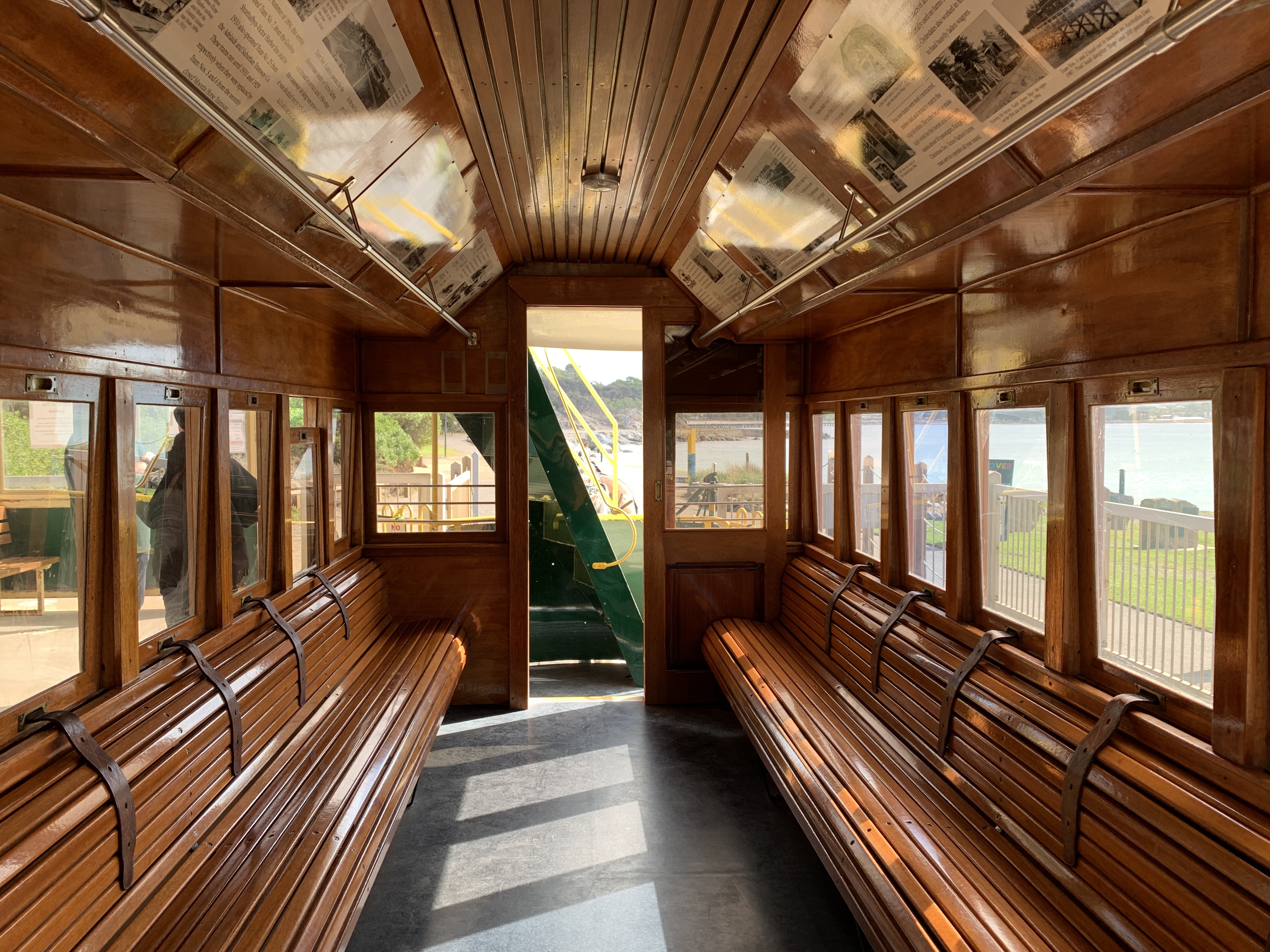
Only a few kilometres further along the coast is the historic Victor Harbor. Another beachside town with spectacular beaches. A highlight of a visit to ‘Victor’ is a ride on the Granite Island Tram. This is a horse drawn tram that takes passengers across the timber causeway to Granite Island. A Clydesdale horse pulls the historic tram and we thoroughly enjoyed our ride. We sat up the top in the sunshine and listened to those huge feet clopping along.
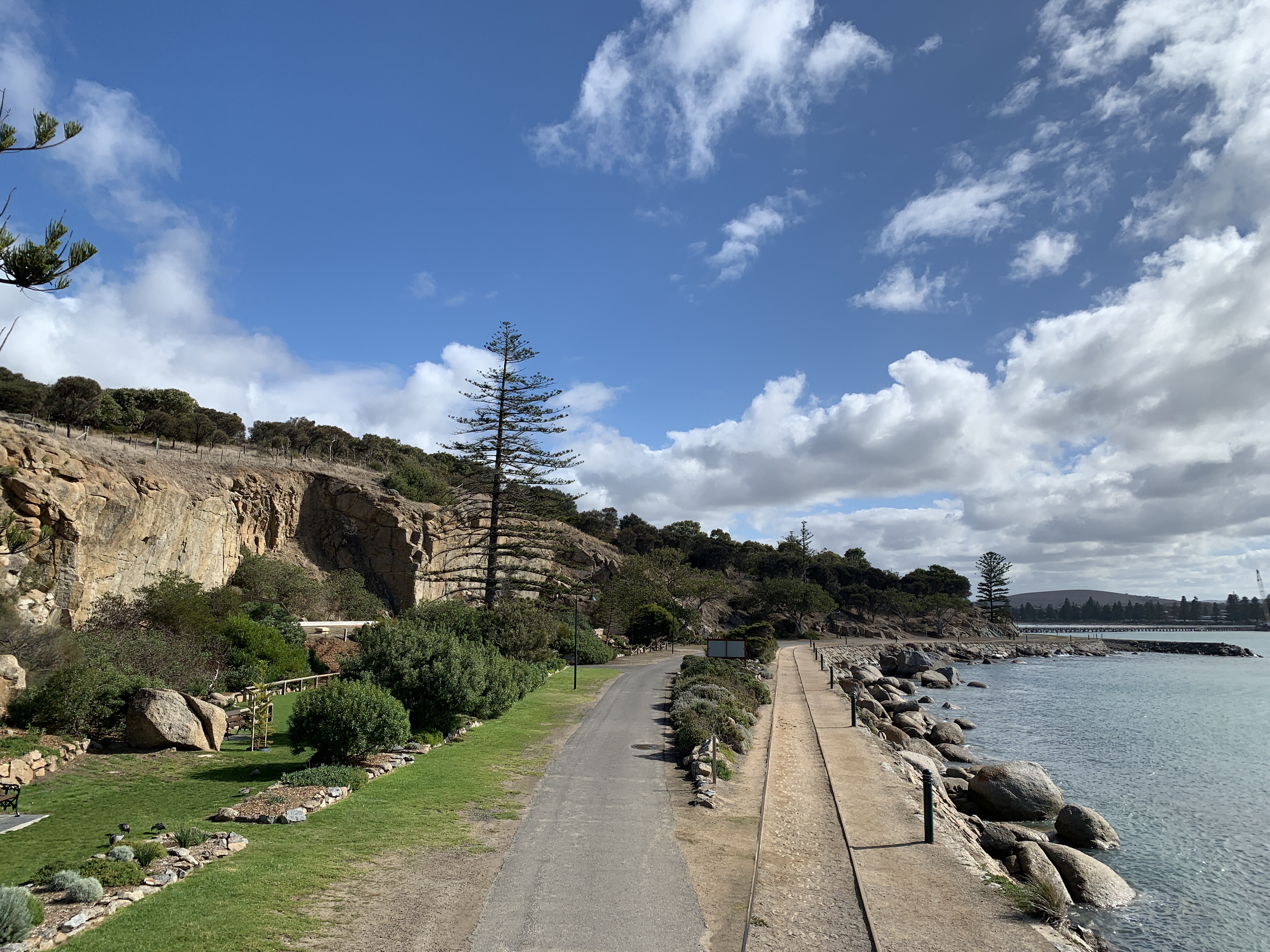
The timber causeway was built in 1875 and the tram went backwards and forwards transporting goods from the railway from Goolwa out to the waiting ships at Granite Island. By the1880’s 25,000 bales of wool were being transported down the Darling, Murrumbidgee and Murray Rivers by paddle steamers then by train from Goolwa to Port Victor and from there by ship around the world. As the river trade ended the Victor Harbor tram became a passenger tram and has been ferrying holiday makers to and from Granite Island since1894.
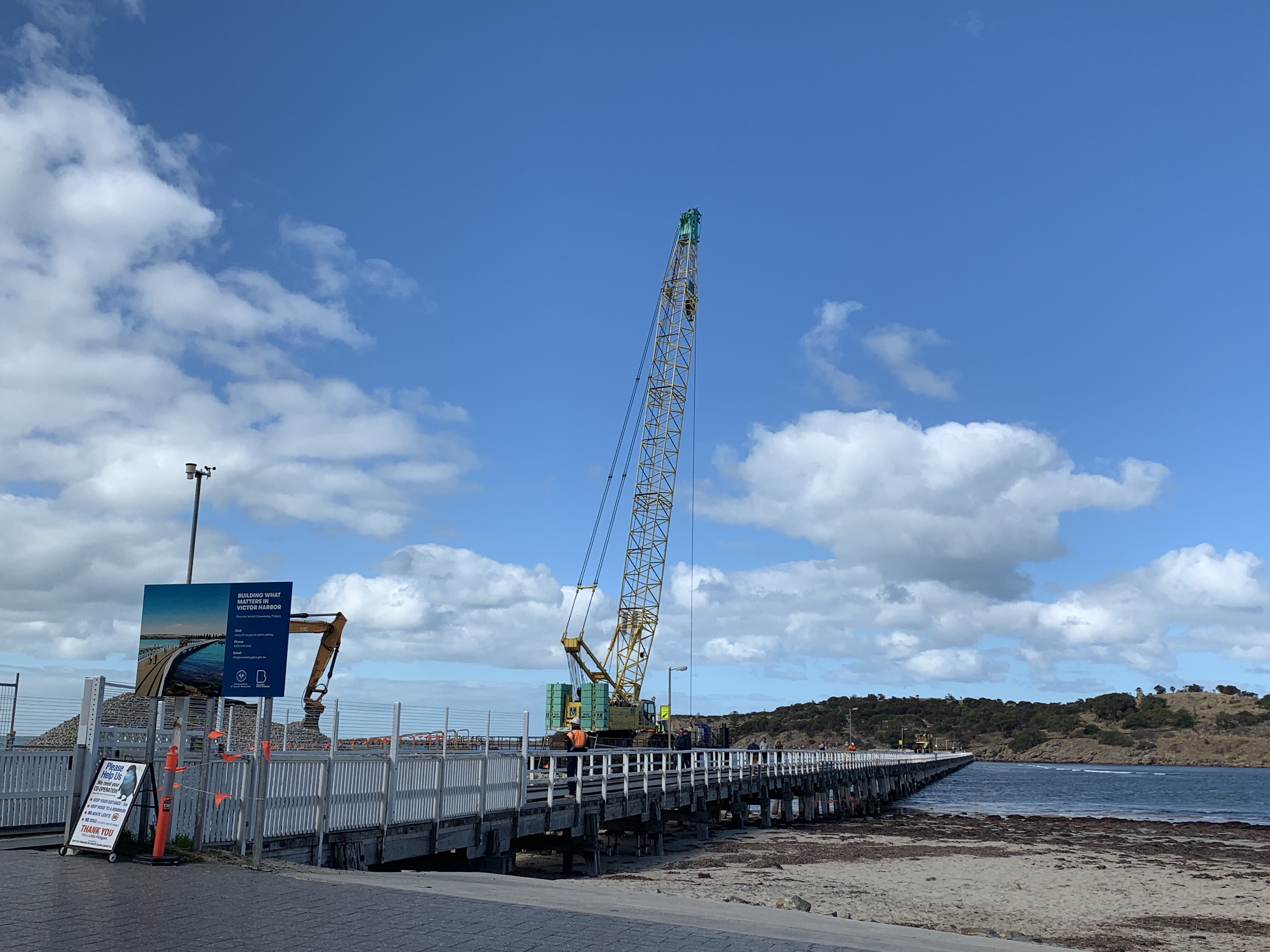
A huge redevelopment of the causeway is currently underway with a new causeway being built alongside the old timber one which will eventually be removed. I’m glad we got to ride across the old timber one while it was still there.
Granite Island is home to a colony of Little Penguins although a very bad storm a couple of years ago decimated the colony. Numbers are slowly growing again and you can do an evening tour to view these charming little creatures. Granite Island is 62 acres of huge granite boulders, many tinged with orange lichen. There are walking trails and a Sculpture Walk includes 10 sculptures. We saw one of those of a sea lion from the tram as we clopped along. It looked like a real sea lion lying on top of a boulder. Between May and October Granite Island is a popular spot for whale watching. Southern Right Whales are a common sighting. Camping is not permitted on the island nor are dogs allowed due to the Little Penguin colony.
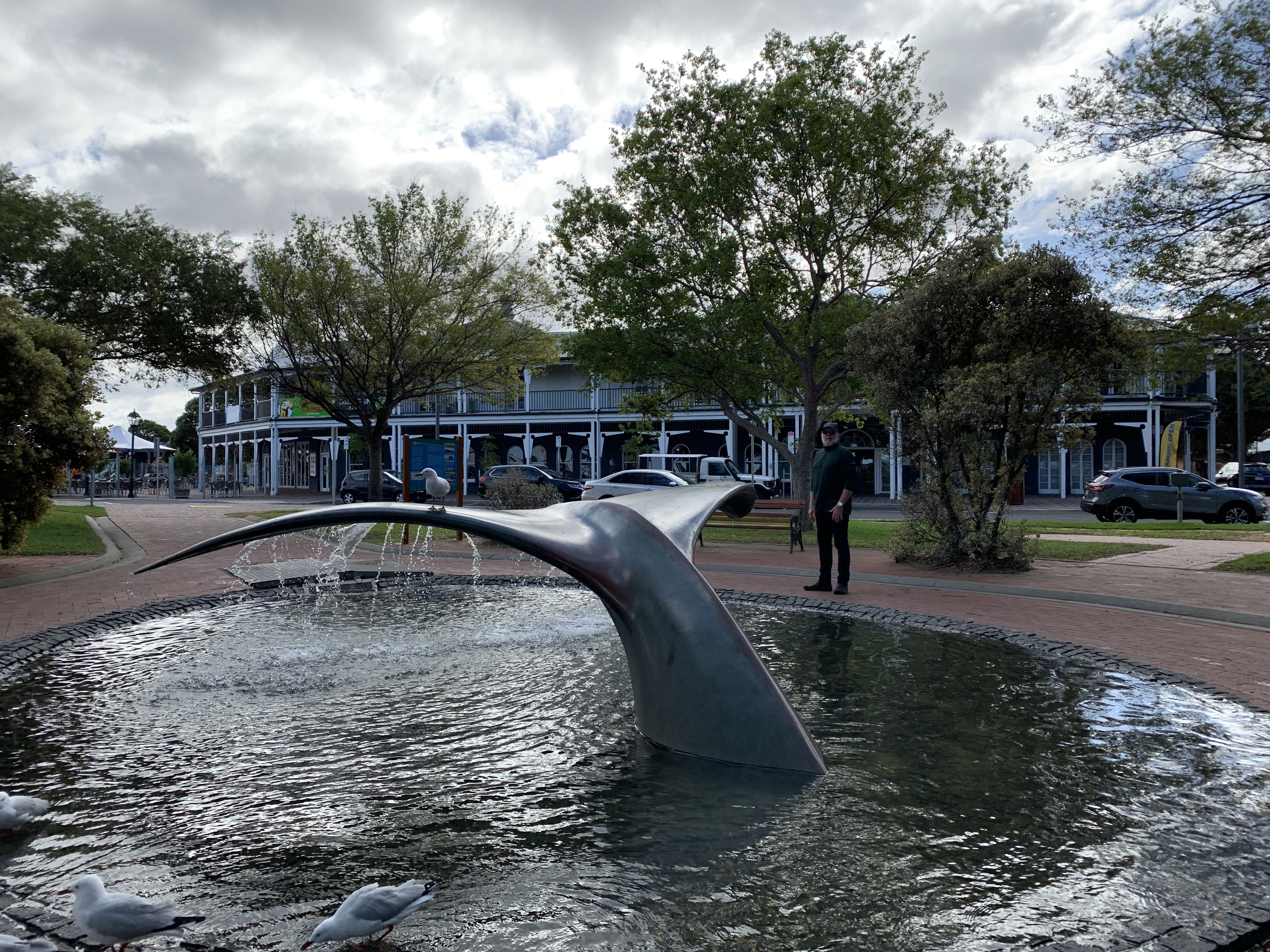
The centre of Victor Harbor also houses other historic buildings such as the Railway Goods Shed built in 1864 and Customs House which is now a National Trust Museum, built in1866. In the park nearby is a large water feature that includes a sculpture of a whale tail. The busy Main Street has been pedestrianised and houses the usual stores. We stopped for lunch at a popular Victor Harbor icon Nino’s Cafe and we were not disappointed with our lovely lunch. Nino’s Cafe has been dishing up delicious meals since 1974.
We ended our day by traveling back to Hindmarsh Island where we found a camp at the Hindmarsh Island Caravan Park for $25 for a flat, grassy powered site. We only have a short distance to go across the bridge to the Goolwa Wharf in the morning to catch our cruise of the Coorong.
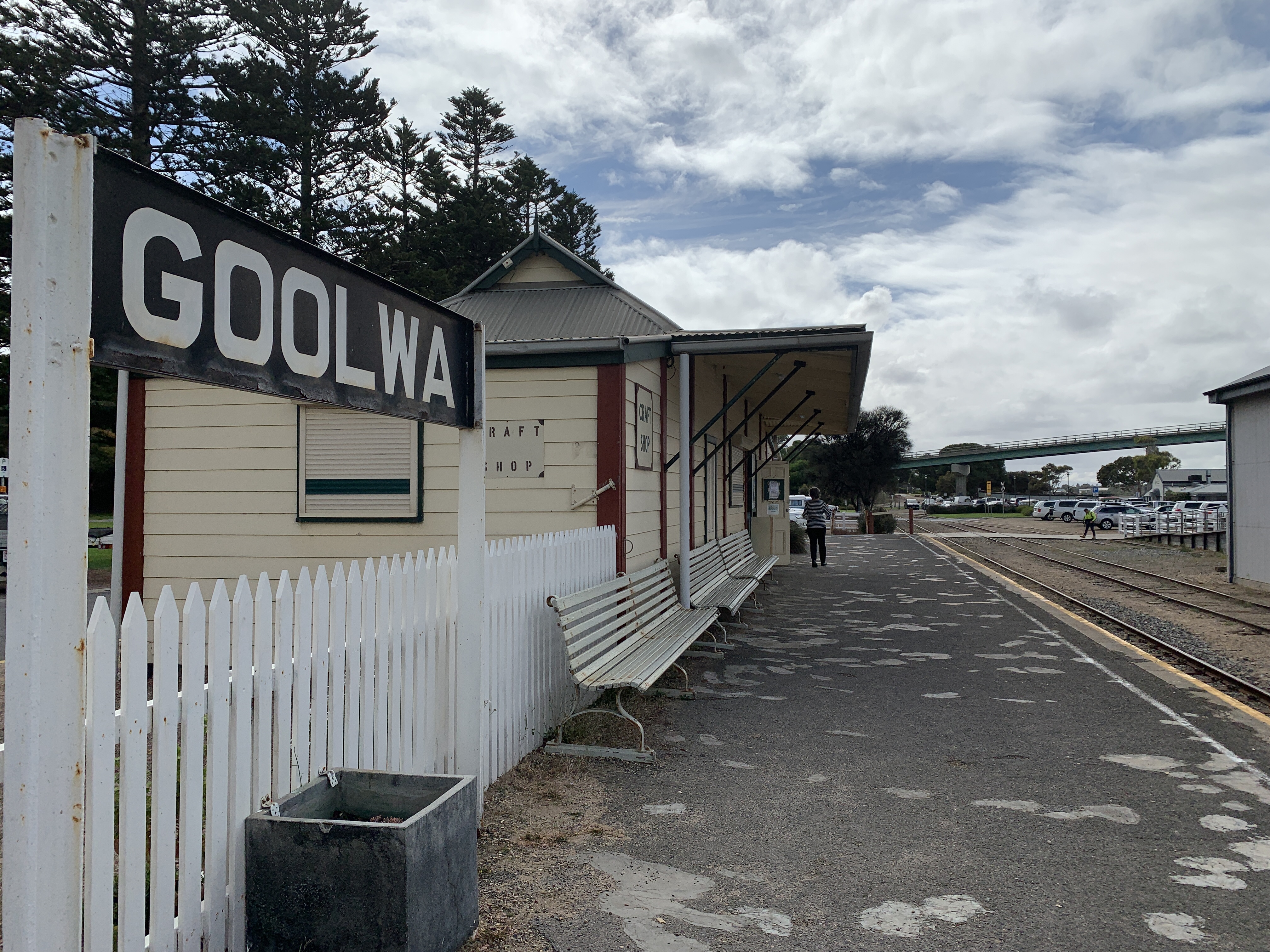
The historic river port of Goolwa began life as Goolawa, an Aboriginal word meaning elbow or bend. Goolwa was first settled by white men in 1841 and proclaimed a River Port in 1857. Goolwa was the centre for transport and trade between South Australia and the eastern colonies. The town is situated on both fresh and salt water as it is the last town on the river before it meets to sea.
Goolwa was the very first port on the Murray River and the first to engage in shipbuilding and repairs. Goolwa has another couple of firsts including the first public railway in Australia built between Goolwa and Port Elliot in 1854 and the first yacht club in Australia was established in Goolwa in 1854.
Goolwa was once an option to be the capital of South Australia and was the first Australian town to be granted Cittaslow status in 2007. Cittaslow is an organisation founded in Italy and inspired by the slow food movement. Its goals include improving the quality of life in towns by slowing down its overall pace especially in the use of spaces and the flow of life and traffic through them.
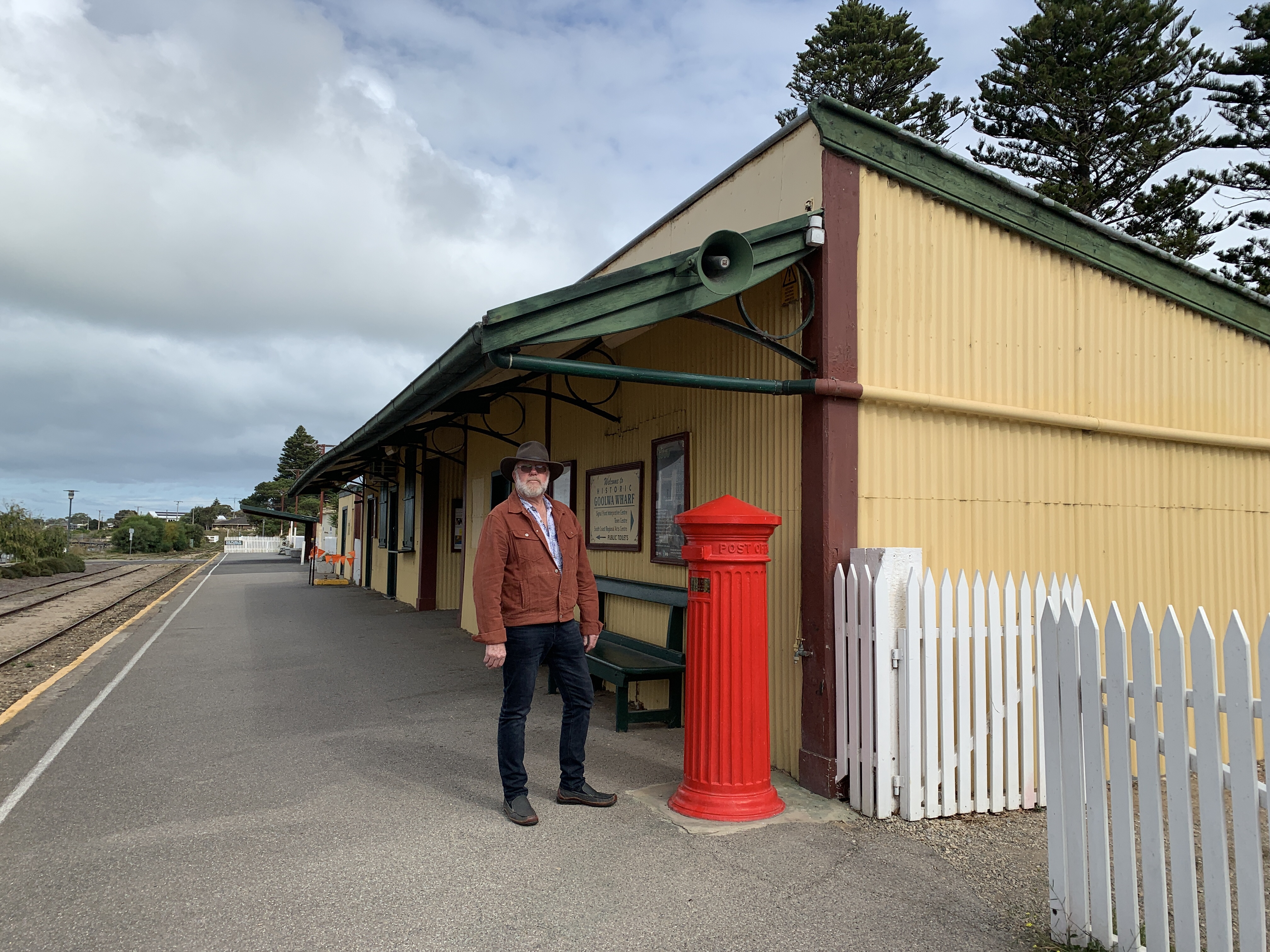
The historic Goolwa Wharf precinct provides great views of the Murray River and the Hindmarsh Island Bridge towers above. From the wharf you can ride a paddle steamer, take a cruise through the Coorong and learn more about the river trade at the Goolwa River Boat Centre. You can watch heritage trains go by or sample a drop at the brewery or wine at the cellar door. There is also a great looking cafe however it is closed on Mondays and Tuesdays.
The wharf is the home mooring for the historic paddle steamer the PS Oscar W built in Echuca in 1908 and it regularly takes visitors on 1 hour cruises up and down the river as it chugs along.
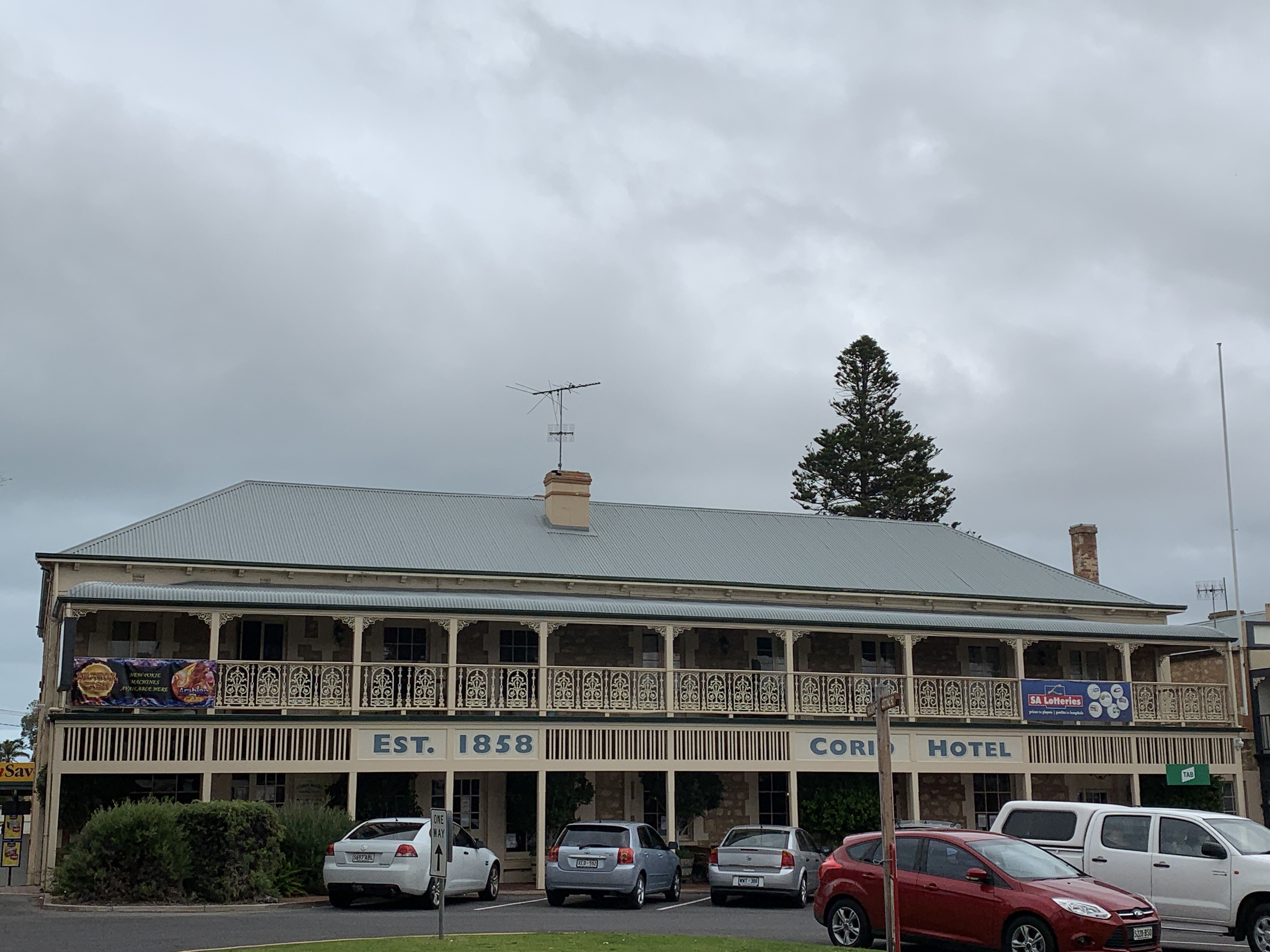
Not far from the historic Wharf Precint is the Goolwa Visitors Centre and right next door is the RSL Club which is housed in the historic Goolwa Railway Horse Stables building. It was built to house the railway horses in 1862 by local builder William Ray who had also constructed the Corio Hotel across the road in 1857. Horses were only used up until 1885 when steam locomotives had taken over and all the horses, tack and harnesses were sold. The building was purchased by the RSL in 1946 and renovated to become the current RSL Club.
On the other side of the road is another piece of history in the Goolwa Customs House built in 1859. William Ray was again the builder. It is a lovely stone building complete with offices and a residence. The Customs House was the chief collector of revenue for the government right up until 1894. The buildings were later used as the residence for the Railway Stationmaster and since 1983 has been owned by the local community.
We spent a couple of hours exploring this lovely part of Goolwa and have booked a 6 hour cruise, including lunch, on the Spirit of the Coorong to learn more about this amazing part of the world.
After completing a fabulous 4 night cruise on the PS Murray Princess we had a couple of days chilling out in Mannum before heading south on our Murray River run from Albury to the Mouth of the Murray.
Mannum is a lovely little town, population 3,000 and is known as the houseboat capital of Australia. We went for a ride on our ebikes around the town and discovered an whole marina development with hundreds of houseboats and other vessels. There were some very lovely homes in that area too many with rear access to the water and their own private jetties.
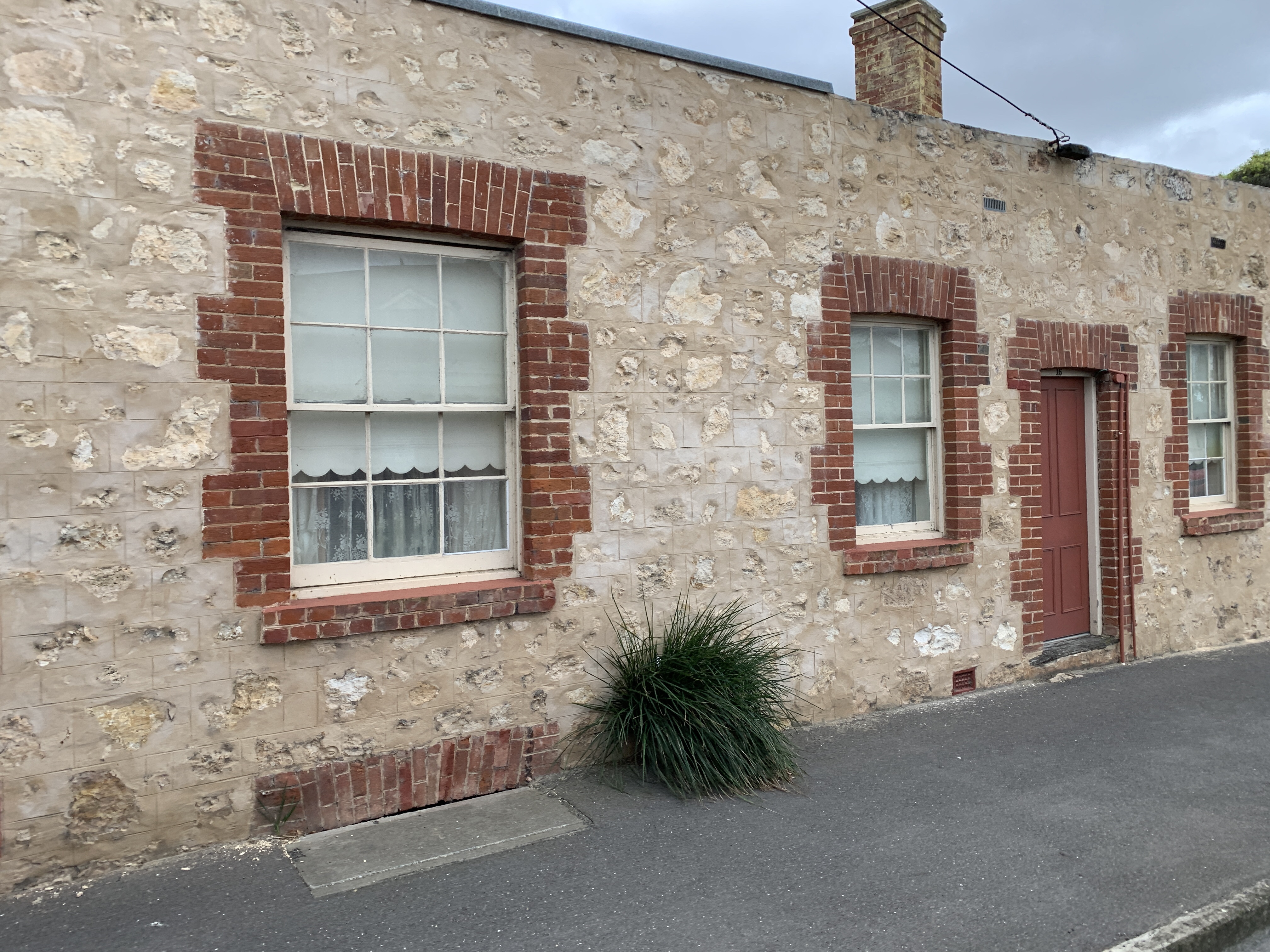
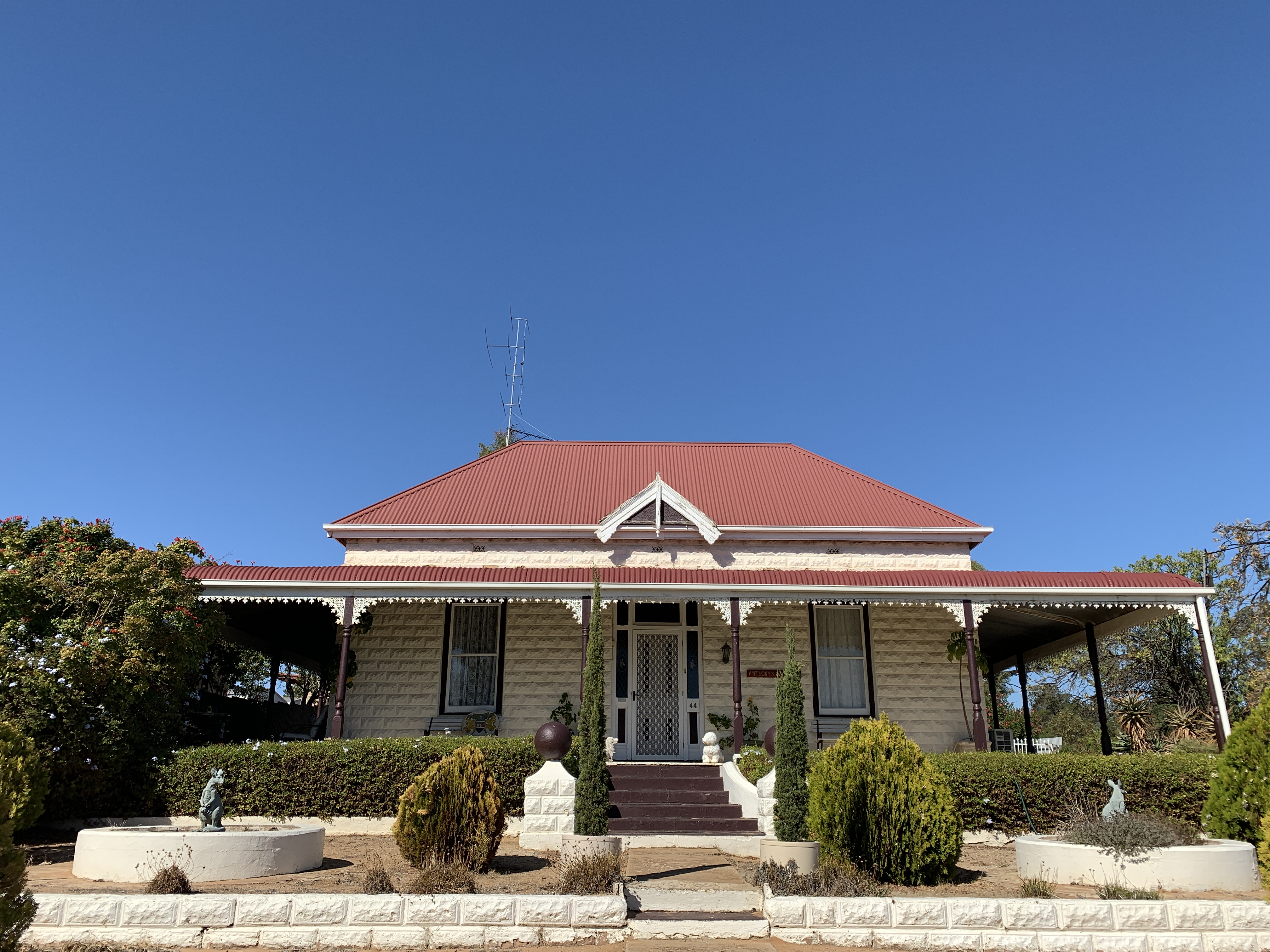
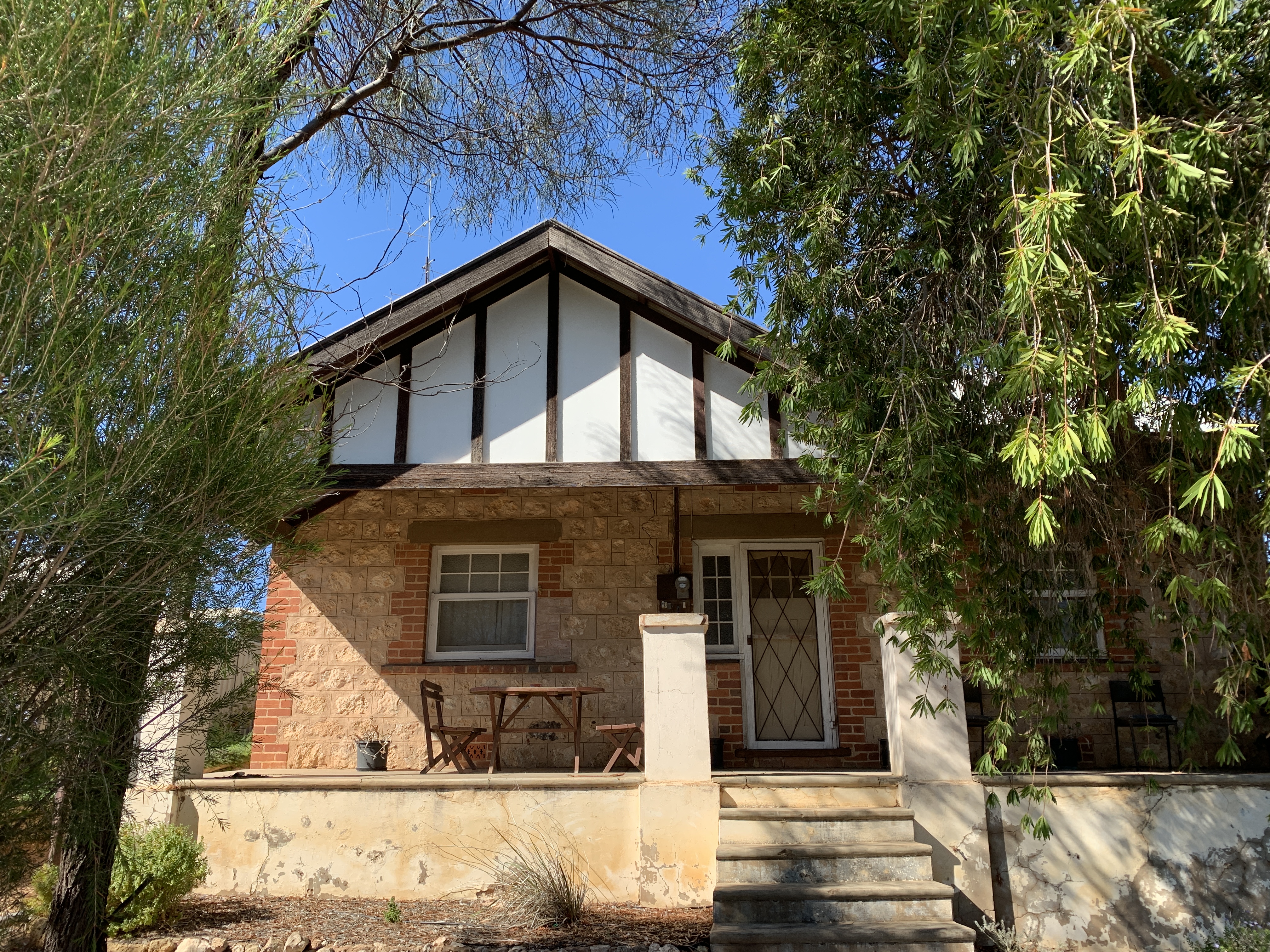
Of course, being an old river port, there are also little old houses constructed from stone scattered amongst the newer dwellings. These stone houses are the same style we have seen all along the river and most date back to the 1800’s. I do love to see those that have been restored and are obviously well cared for. We have seen a few derelict ones on our journey.
Mannum Information Centre is housed in an old wharf building that is also home to the Mannum Dock Museum. This wonderful little museum was opened in 2001 and includes the PS Marion, PW Mayflower, the historic Randell Dry Dock (the last serviving dry dock from the 1800’s), a steam engine display, and an excellent interactive display of river life. Children would love this interactive display where they could pretend to be the captain of a river boat and fire up the boiler, pull the whistle, steer the boat along the river and communicate with other crew. They could also learn to tie the various knots that the rivermen used.
A nationally acclaimed exhibition called Women of the River was also on display and featured stories of 19 women from the mid 1800’s to today is on show in one of the rooms. I was staggered by the hardship these pioneer river and farming women had to endure. Mostly along with have lots of children!
I recommend the Mannum Dock Museuam to any visitors to the town. It was definitely a highlight for us.
There are a couple of pubs and one Community Club in the Main Street and we had dinner one night in the beer garden of the Pretoria. The beer garden goes all the way to the river edge where a large houseboat had moored up. The Pretoria is a great pub with terrific pub food.
Mannum has a couple of supermarkets, bakeries, chemists and all the usual shops. As we were there on the first Sunday of the month we were able to go to the markets held in Arnold Park near the ferries. It was the usual eclectic mix of smallholders and we purchased some lovely fresh bread.
Continuing our journey along the Murray we left Mannum via the ferry heading to Goolwa. We crossed the river on a ferry again at Wellington and had a lunch stop at Murray Bridge.
Murray Bridge is a large town on the banks of the river and, as you would expect, there is a big bridge across the river. Murray Bridge is less than an hour from Adelaide and is a popular destination for those wanting to escape the city for some house boating, water sports, swimming and fishing.
We pulled up in a carpark for long vehicles in a large park alongside the river. The Sturt Reserve is a large park along the river and is home to some historic railway carriages, the Rowing Club, the RSL club, a restaurant, skate park, go-karts, and an adventure playground. It is also home to a cave wherein lies a Bunyip. Kids would love this. You have to press a button and the bunyip rises out of his pond making scary growling noises. There is a story board alongside with the Aboriginal origin of the Bunyip legend. It was considered dangerous to go to the river on your own and catching more fish than you can eat was unacceptable too so the bunyip legend was created to frighten children to prevent them from doing those.
We continued our journey through the Langhorne Creek wine area where we were surrounded by vineyards, on along the shores of Lake Alexandrina to the tiny town of Milang and on to Point Sturt. Point Sturt is on a long peninsula with Lake Alexandrina on both sides. Here we free camped with the big sky above us and twinkling lights of towns across the lake.
We arrived in Goolwa to find it is a large town on the riverside and is joined to Hindmarsh Island by a bridge. The Greater Goolwa area, including Victor Harbour, has a population of almost 30,000 people. After crossing the huge bridge over to Hindmarsh Island we found our way to the lookout for the Mouth of the Murray. We’d reached our goal of traveling along the mighty Murray River from Albury to the mouth. There it was with a huge sand dredge sitting in it. The wind was blowing strongly from across the Southern Ocean and causing white caps on the river. We have booked a cruise on the Spirit of the Coorong so we can learn more about this amazing part of Australia.
What an enjoyable 4 nights cruise! From the moment we were greeted by the crew at the red carpet as we boarded on our first day to the farewell to the crew as we departed on the last day this was an enjoyable cruise. The pace is relaxing with the right amount of down time, onboard and offshore activities.
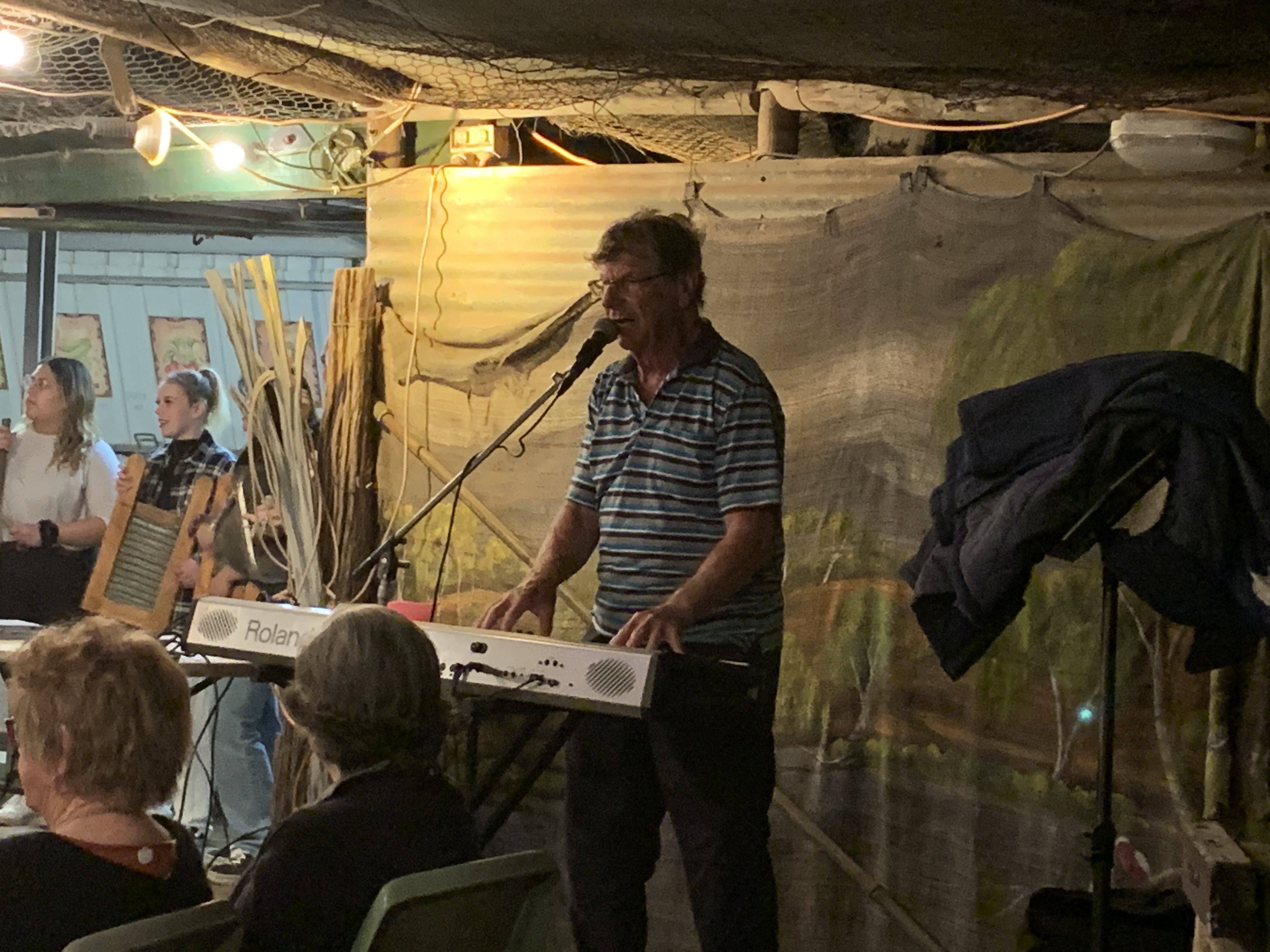
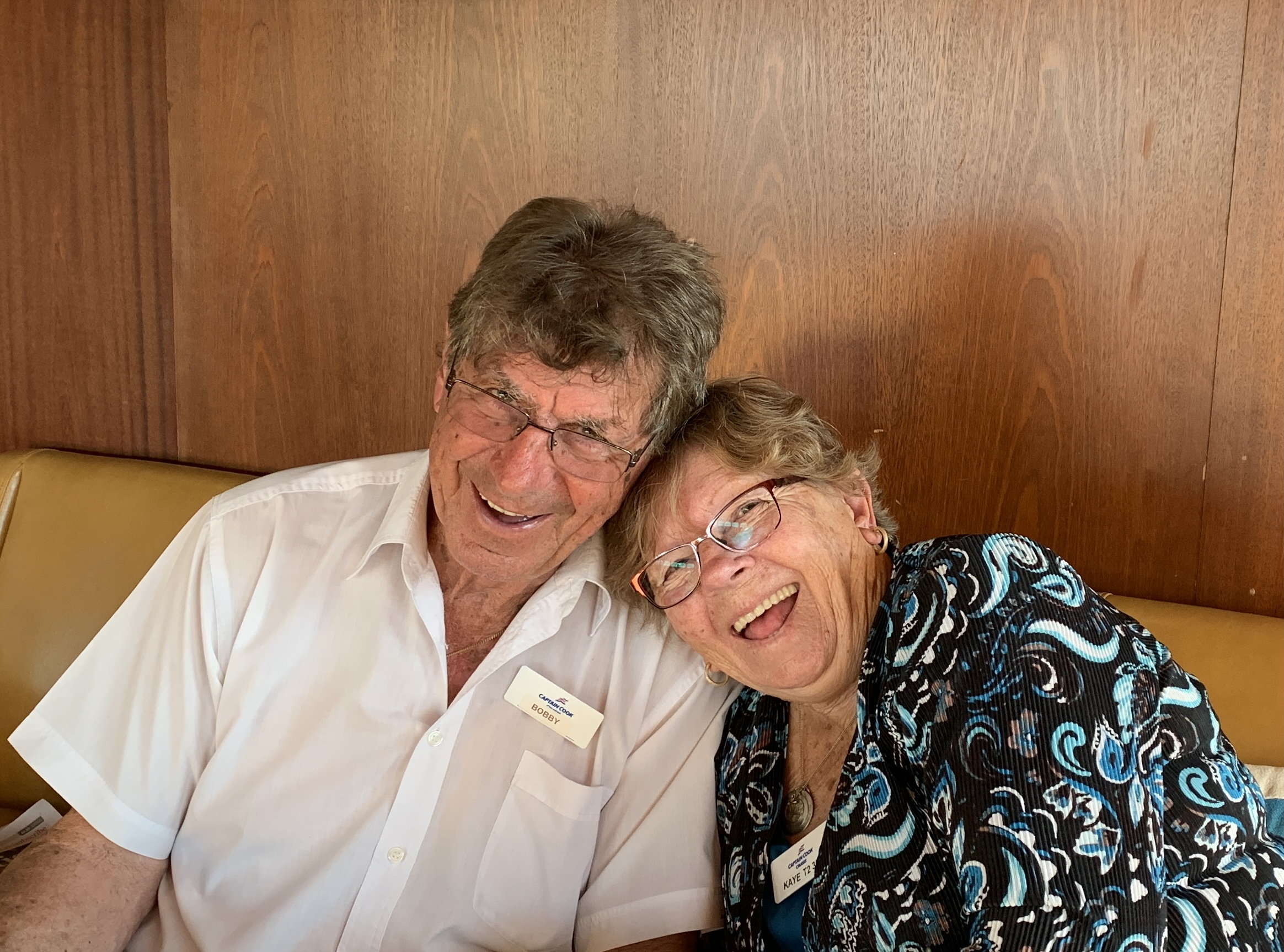
This is not the cruise for young people and there were no children on board. The cruisers were almost all retirees. Even the fabulous entertainer was in his late 70’s. You wouldn’t know it though as his energy levels would tire out a much younger person.
The 4 night cruise departs from Mannum at 4.30pm every Monday and returns again on Friday morning. The route goes upriver past the iconic cliffs at Big Bend, through Lock 1 at Blanchetown before turning around and coming back downriver.
The first day includes a compulsory safety briefing for all passengers and a Welcome Dinner in the Sturt Dining Room. The Dress Code for the dining room is sportswear and casual clothes during the day however smart casual evening wear is encouraged.
The vessel moors overnight near Cournamount. Day 2 has the ship leaving its mooring at 7.00am and continuing upriver. Breakfast is served from 8.00am. A morning stretch class is held on the Sun Deck each morning led by the young-at -heart entertainer.
This day includes a morning talk by the First Officer on the history of the paddle steamers, pioneers and engineers that tamed the river. Lunch is at 12.30 followed by a DVD presentation called ‘Source to the Sea’. This is a short documentary of an event that took place in 2001 and celebrated the Centenary of Federation.
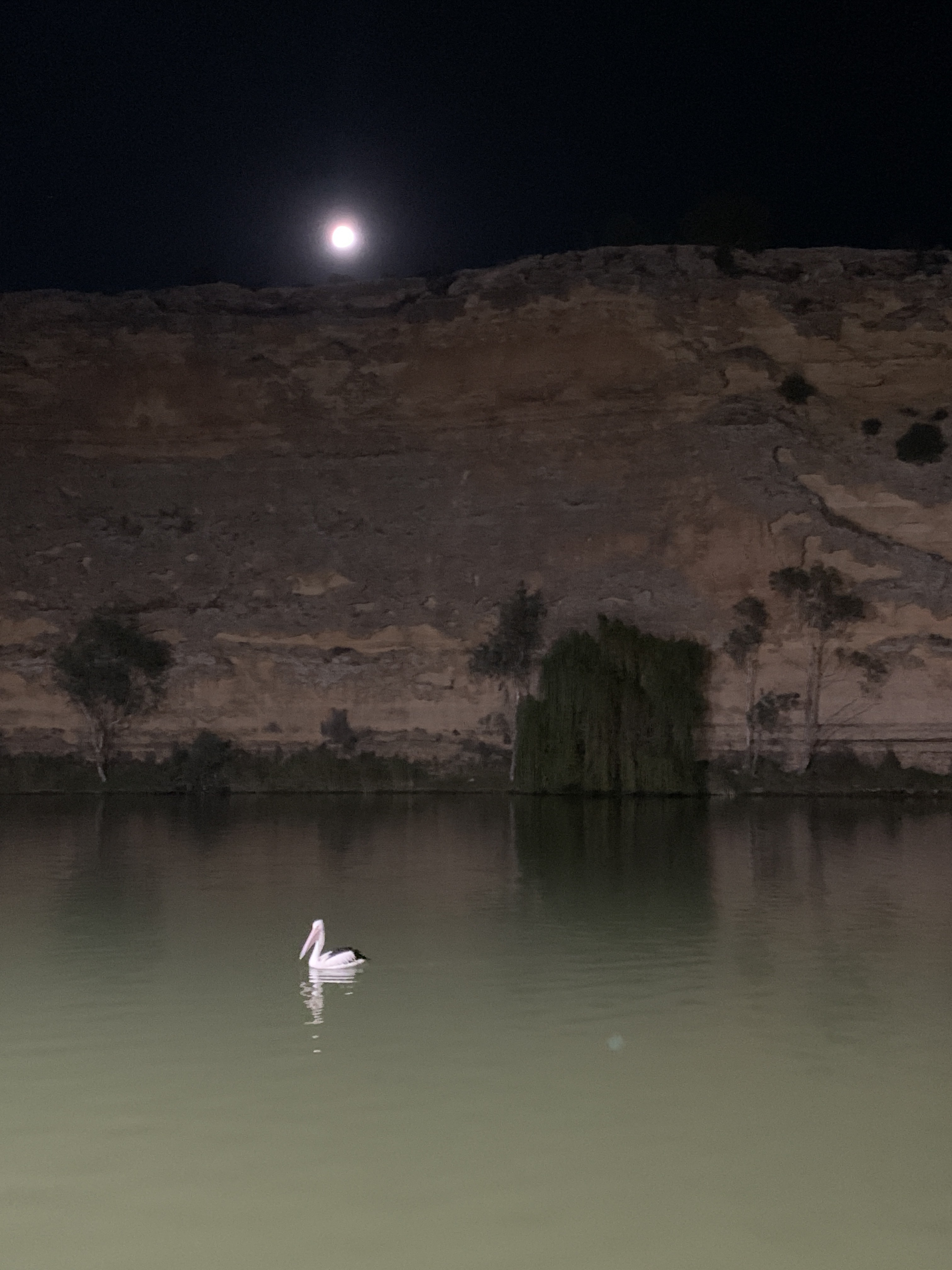
During the day the ship passes by the famous limestone cliffs of Big Bend. These giant cliffs tower over the four storey vessel below and are home to many thousands of birds.
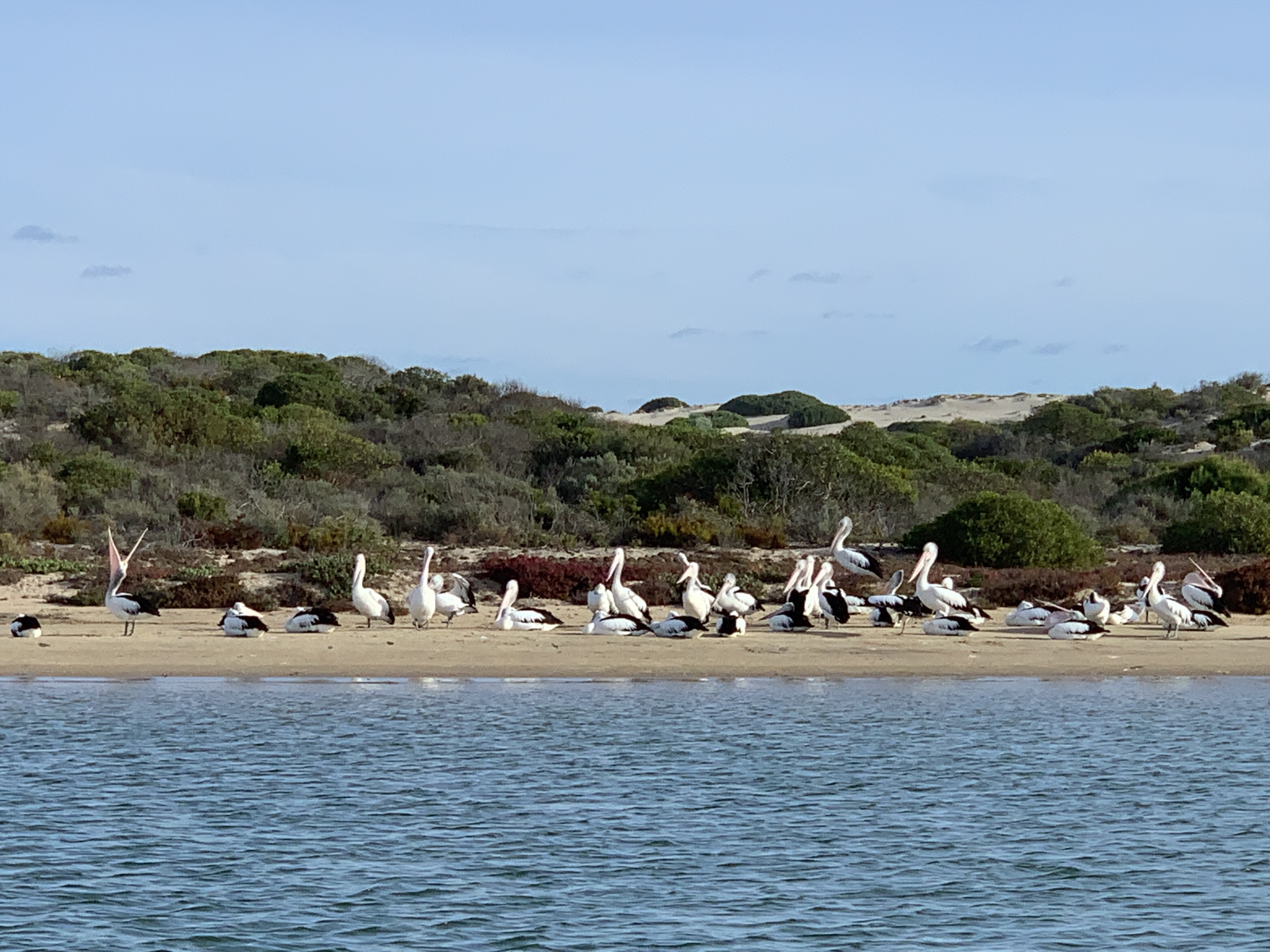
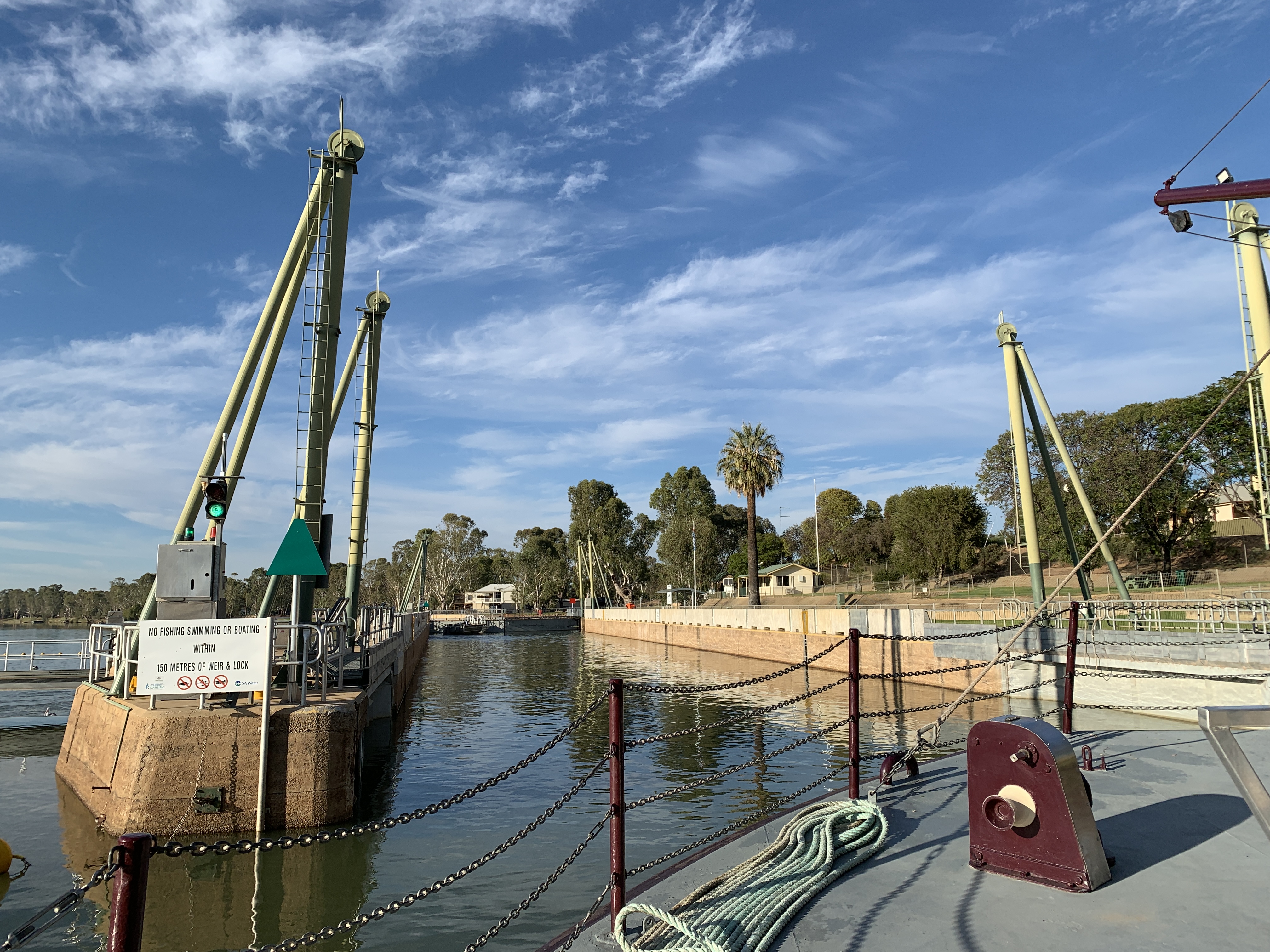
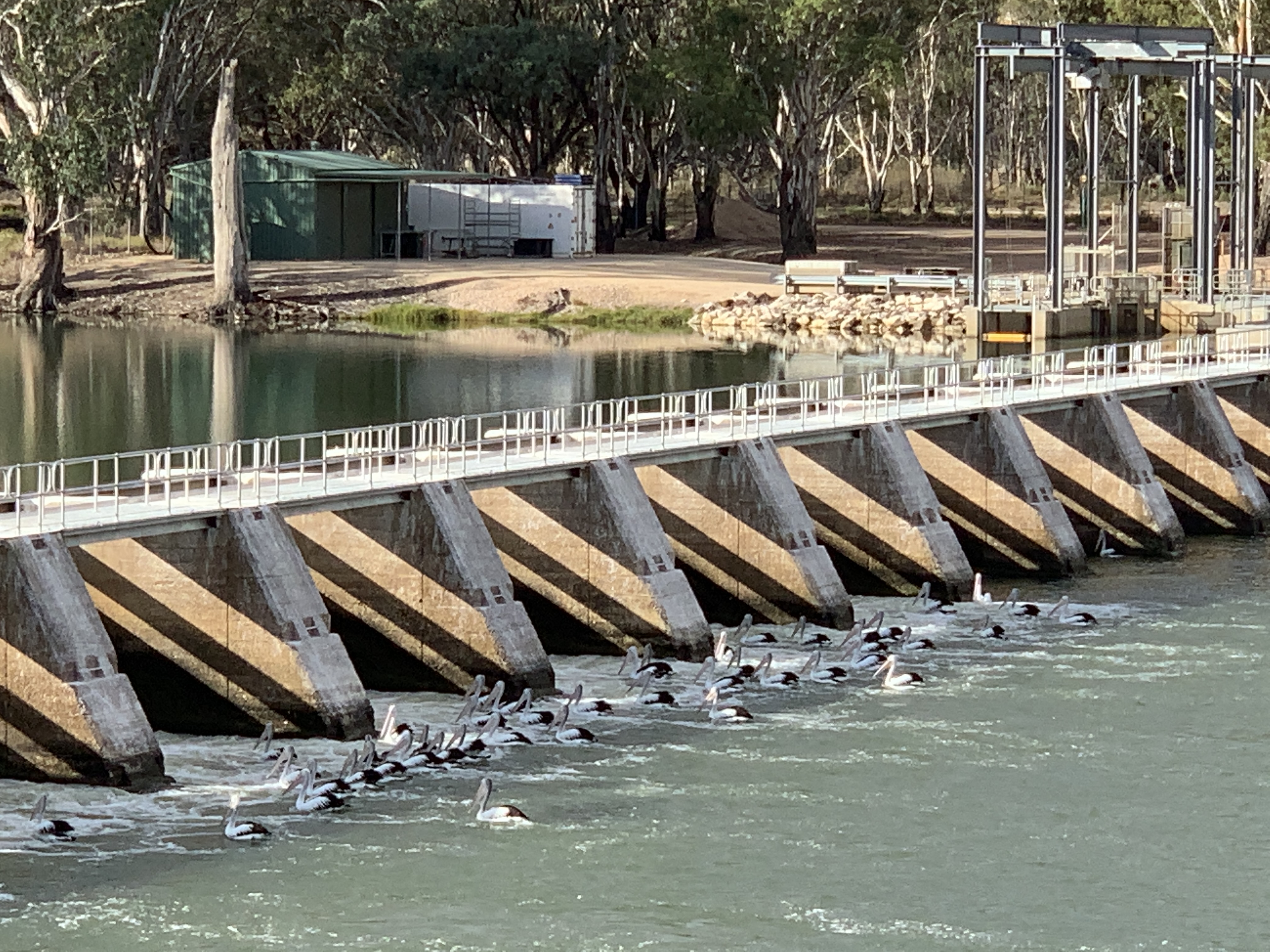
In the afternoon the ship passes through Lock 1 at Blanchetown and this is a sight not to be missed by all passengers. We were particularly amused by the antics of the scores of large Pelicans as they swoop in and land in the turbulent waters of the weir where they can catch any fish that come over the weir.
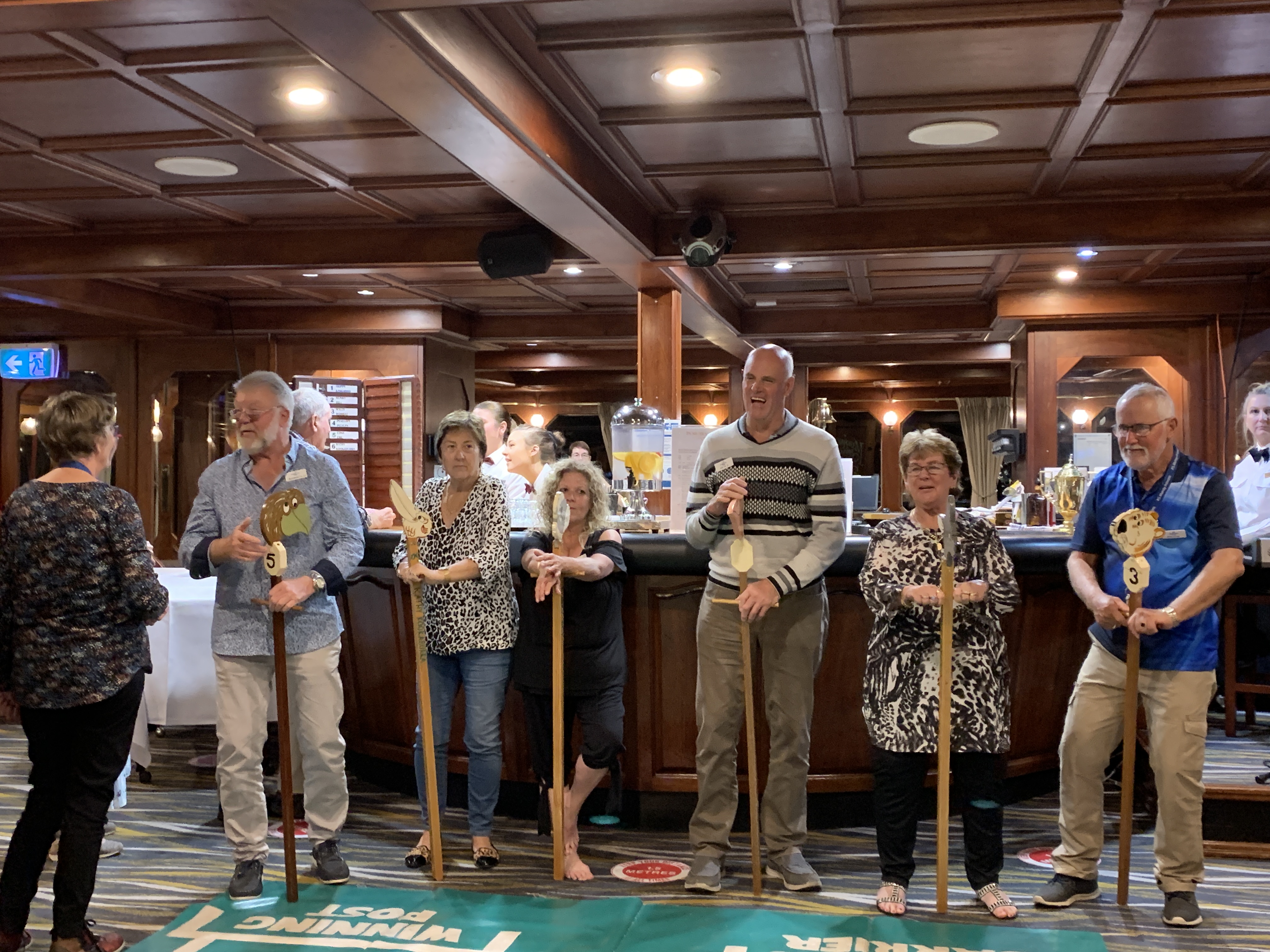
The ship moors for the night just past the double vehicle bridges at Blanchetown. Following dinner was a game of chance called the Murray Cup and this involved passenger participation. It was a lot of fun and the winner of the Murray Cup has to hold on to it day and night for the remainder of the cruise to redeem special privileges. If however they allow the Cup to be stolen the privileges go to the person who holds the Cup.
The third day of cruising sees the PS Murray Princess head back downriver through Lock 1 again. The morning exercise class was held and a game of Bingo was hotly contested in the dining room.
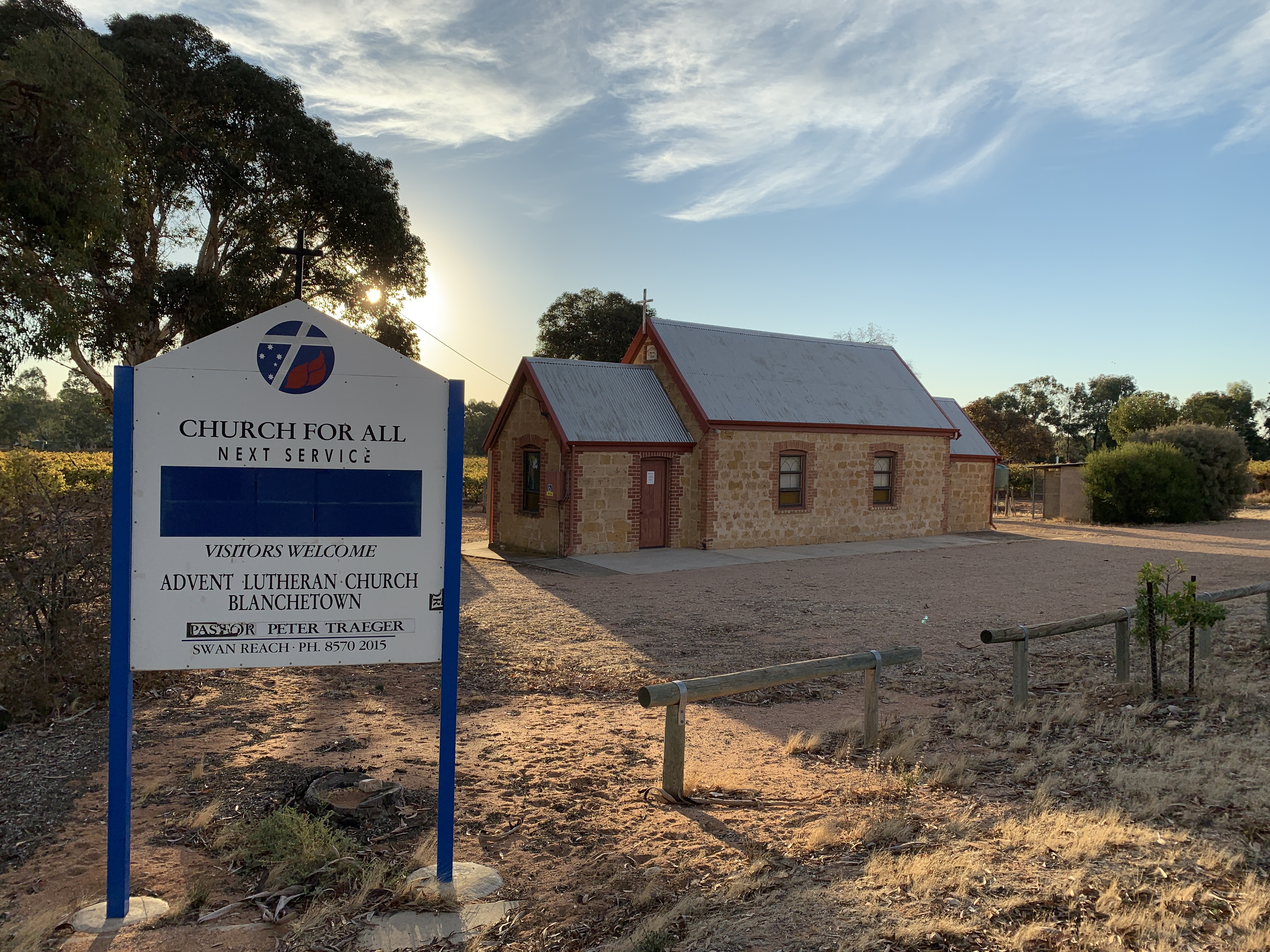
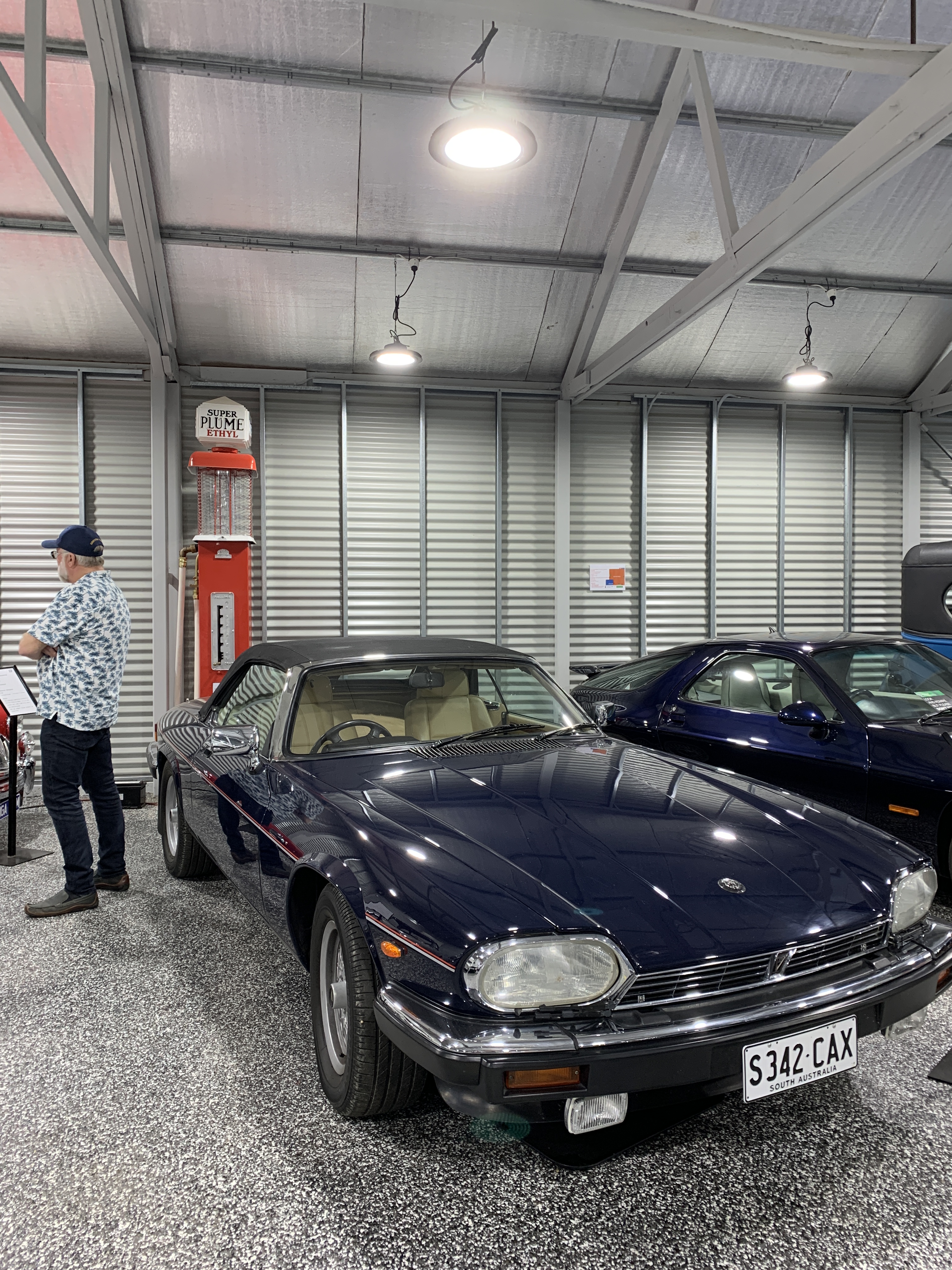
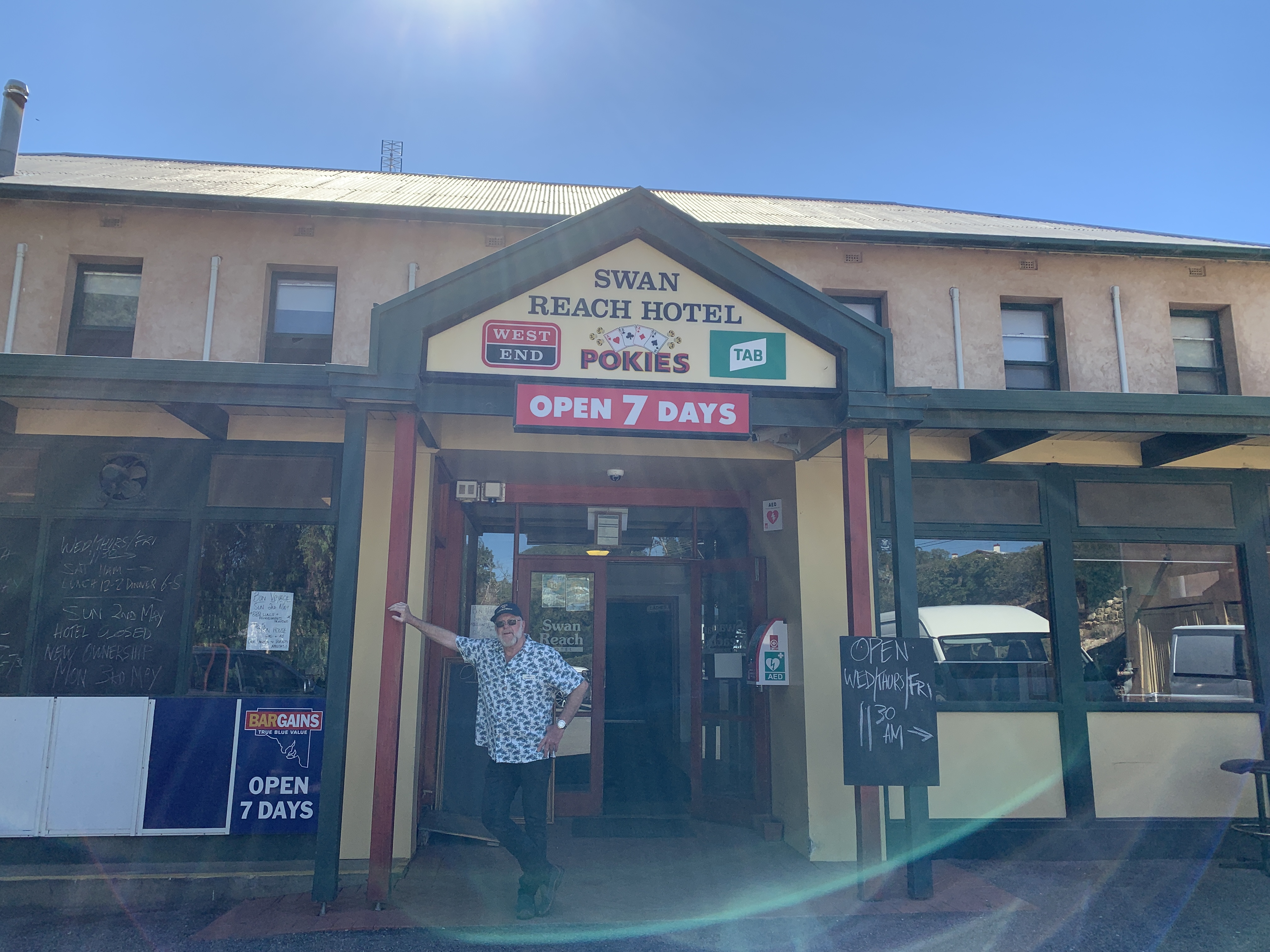
Around midday the vessel moors at the historic riverside town of Swan Reach. Passengers can alight and do a walking tour of the lovely little town. Swan Reach was settled, as many SA towns were, by German settlers in the early 1800’s. The little town has a museum, a private Classic Car Gallery, a Craft & Produce Shop and the Historic Swan Reach Hotel.
The Historic Swan Reach Hotel started life as the Swan Reach Homestead until 1899 when Emma Hasse, the wife of the then owner, applied for and was granted a liquor licence. The Hasse family ran the Hotel up until 1914 when it was purchased by its current owners. The Hotel has a lovely large outdoor area with great views of the river below. It’s a great spot for lunch and cool beverage.
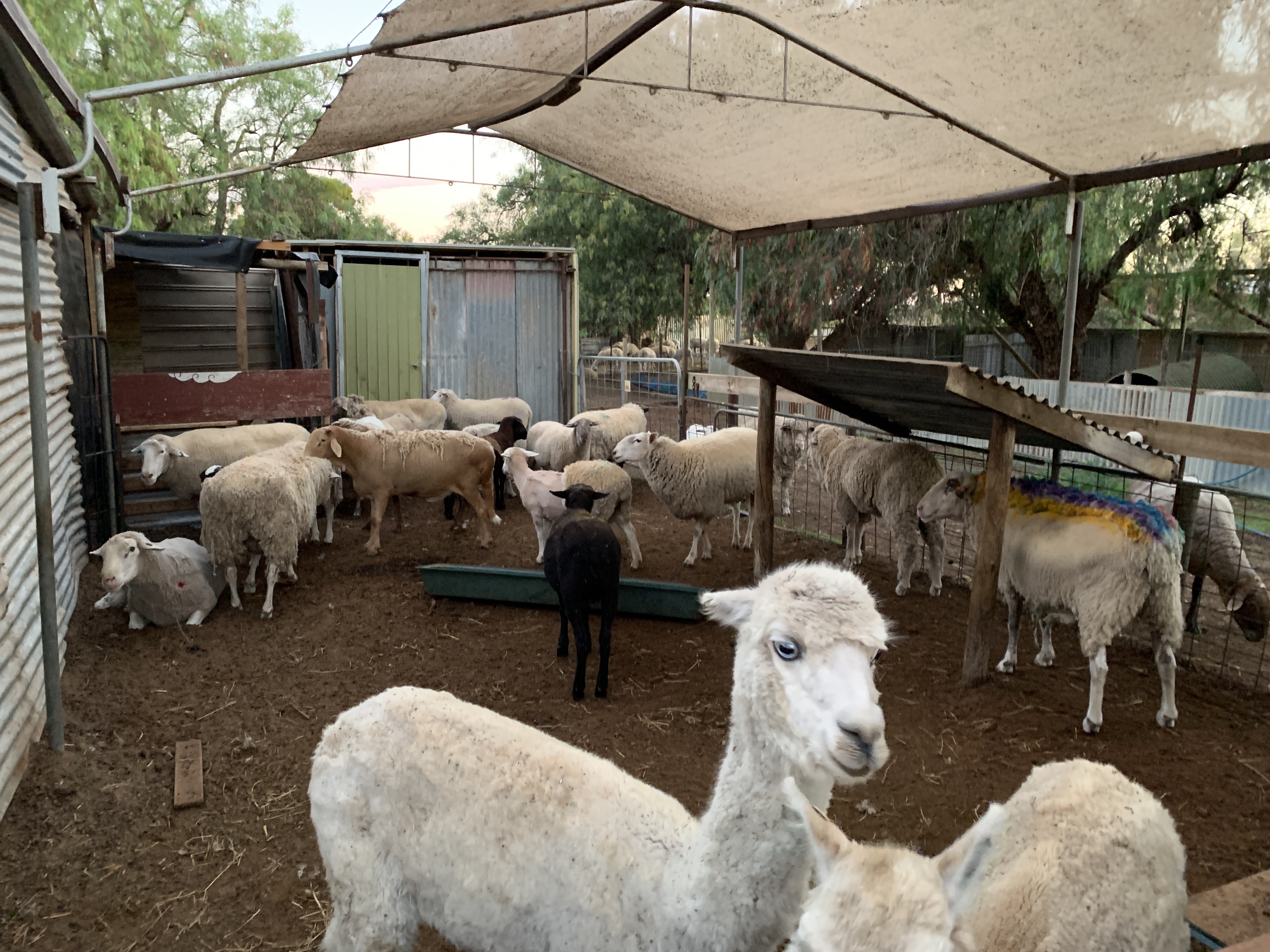
The vessel departs Swan Reach after lunch and travels downstream to the area known as Sunnydale right under the cliffs of Big Bend. The ship moors for the night at a permanent campsite. Here it was all aboard carts for the Sunnydale Woolshed Tour. All passengers are loaded onto carts for the short drive along the dusty track to the Woolshed where the family put on a great show in their historic Woolshed.
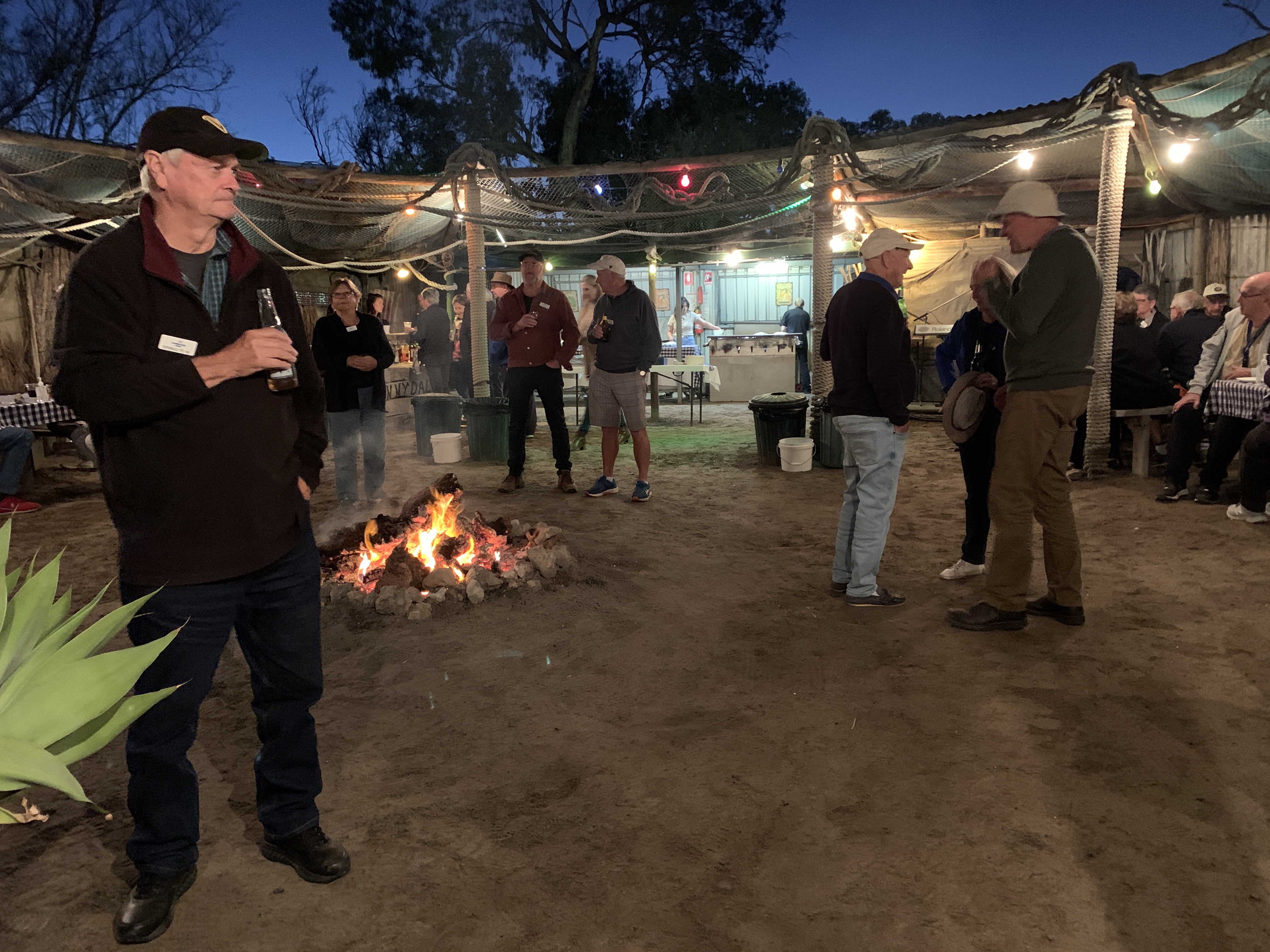
Back on the carts to the campsite and we found the crew had moved the bar into the camp and were busily preparing a scrumptious BBQ dinner. The long tables were set with colourful gingham tablecloths and there was a circular fire pit in the centre of the camp.
After dinner passengers could join a Nocturnal Tour. This was a cart ride through the bush where the guide pointed out the various wildlife using a spotlight.
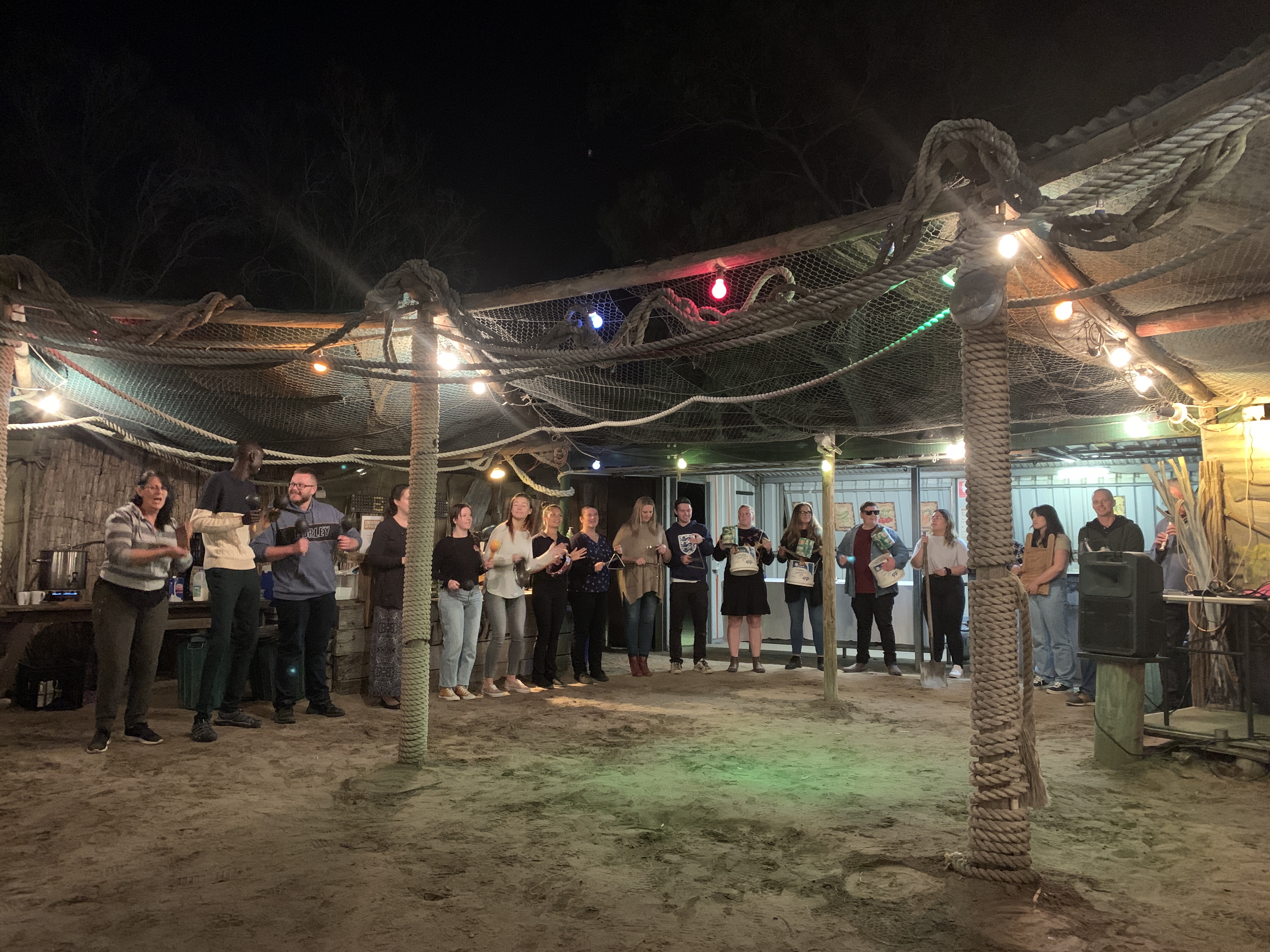
The delicious BBQ meal was served following a fabulous musical number put on by all the crew. The crew look like they really enjoy this night and their happy moods are infectious.
The next morning a Bush Tucker Breakfast is an optional extra for those who would like to try bush tucker or passengers can join the Captain for a bush walk after breakfast.
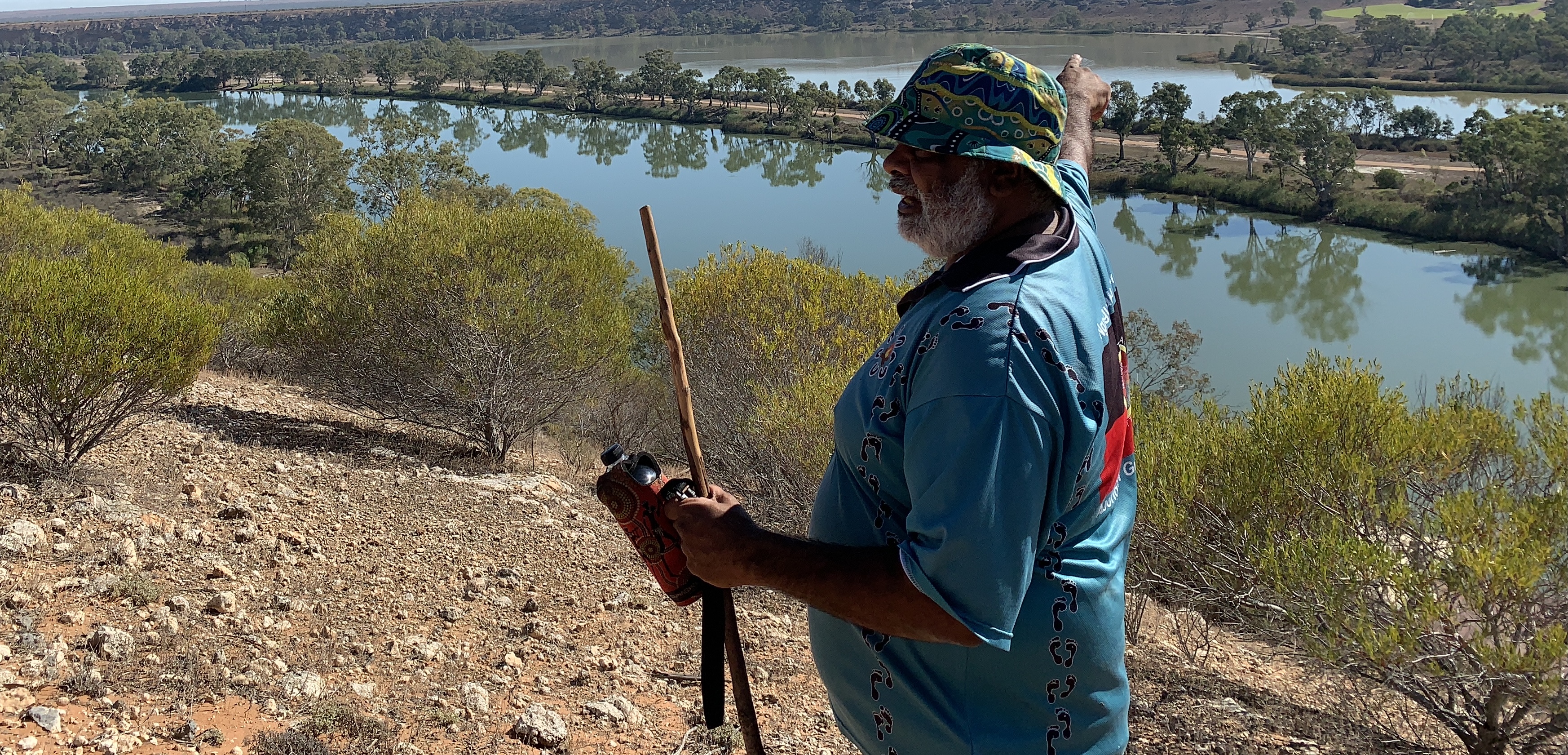
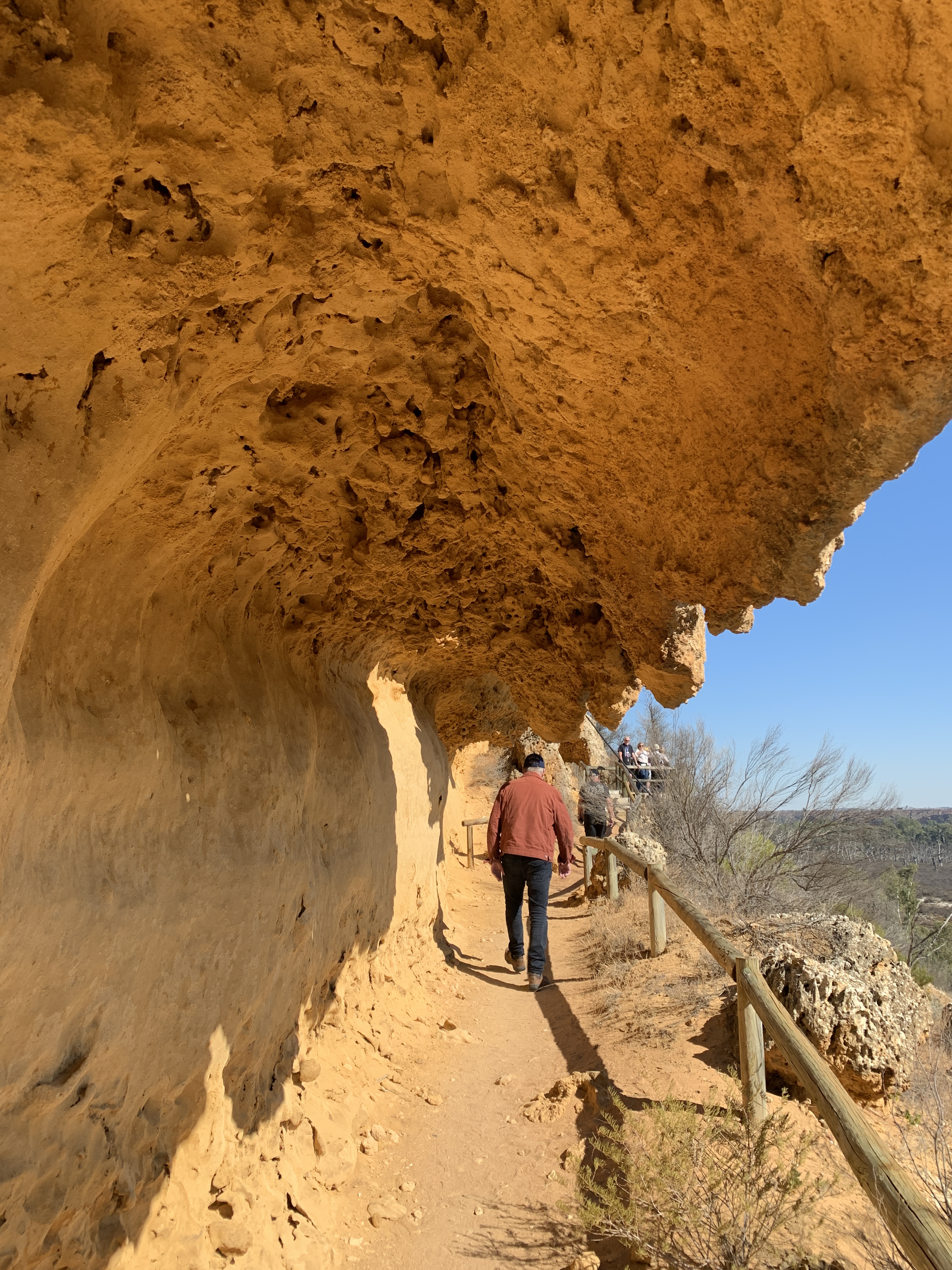
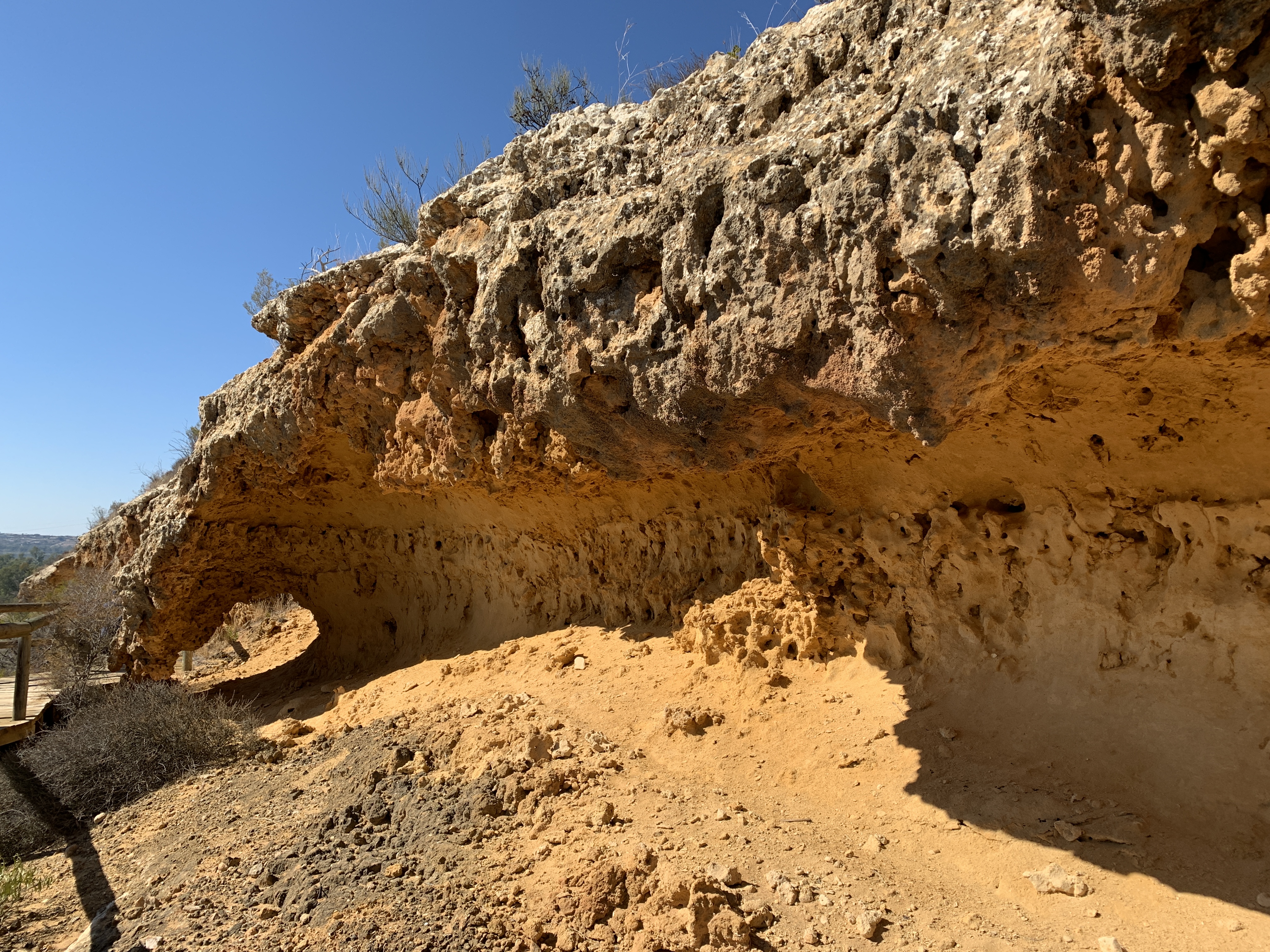
The ship departs from Big Bend and again you get a really good look at these incredible cliffs as we cruise slowly by. We arrived at Ngaut Ngaut Aboriginal Conservation Area mid morning and here we are treated to an excellent tour by the local Aboriginal people who are proud to share their stories and culture with passengers. Some of the rock carvings we were shown date back over 8,000 years and indicate continuous occupation of the area by Aboriginal people. Ngaut Ngaut was a meeting place for other tribes to come to trade and this is evidenced by stones from far away places such as Lake Mungo and even the Glasshouse Mountains in Queensland. This fabulous tour was a highlight for me.
The PS Murray Princess departs Ngaut Ngaut and continues to cruise downriver. Lunch is served followed by a Trivia Quiz. Later in the afternoon those passengers who like a bit of adventure can partake in a ride on the tender boat. Life jackets must be worn and the tender boat zooms along and around the Murray Princess, even crossing the huge wake a few times spraying the passengers. This was a bit of fun.
The ship moors up at an area known as Younghusband. The Farewell Dinner is held on this last night and is a six-course degustation meal. The food was fabulous and enjoyed by all. The evening was made memorable by most passengers making the effort to get dressed up and the great dancing music provided by our entertainer, Bobby.
The last morning is always a melancholy one as you need to have your packed bags outside your room by 7.00am before heading to the dining room for the last breakfast. The ship gets underway and a short two hours later is pulling up to the wharf in Mannum right on time.
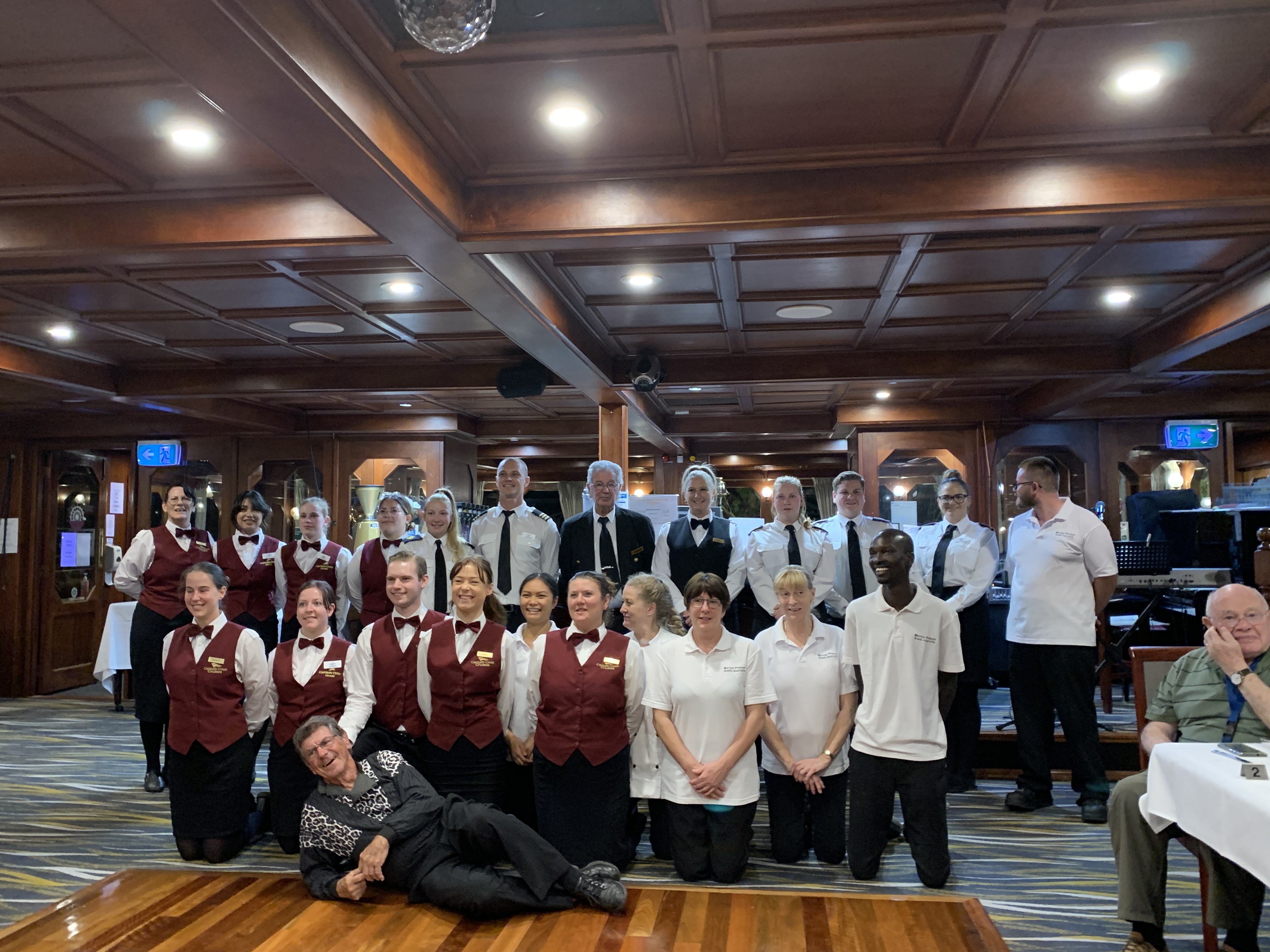
The red carpet is rolled out again and the crew line up to say a fond farewell to passengers as they depart to continue their travels. We had a fabulous time made more enjoyable by the crew who obviously enjoy what they do, the great food and wine and the spectacular scenery and natural beauty of the mighty Murray River.
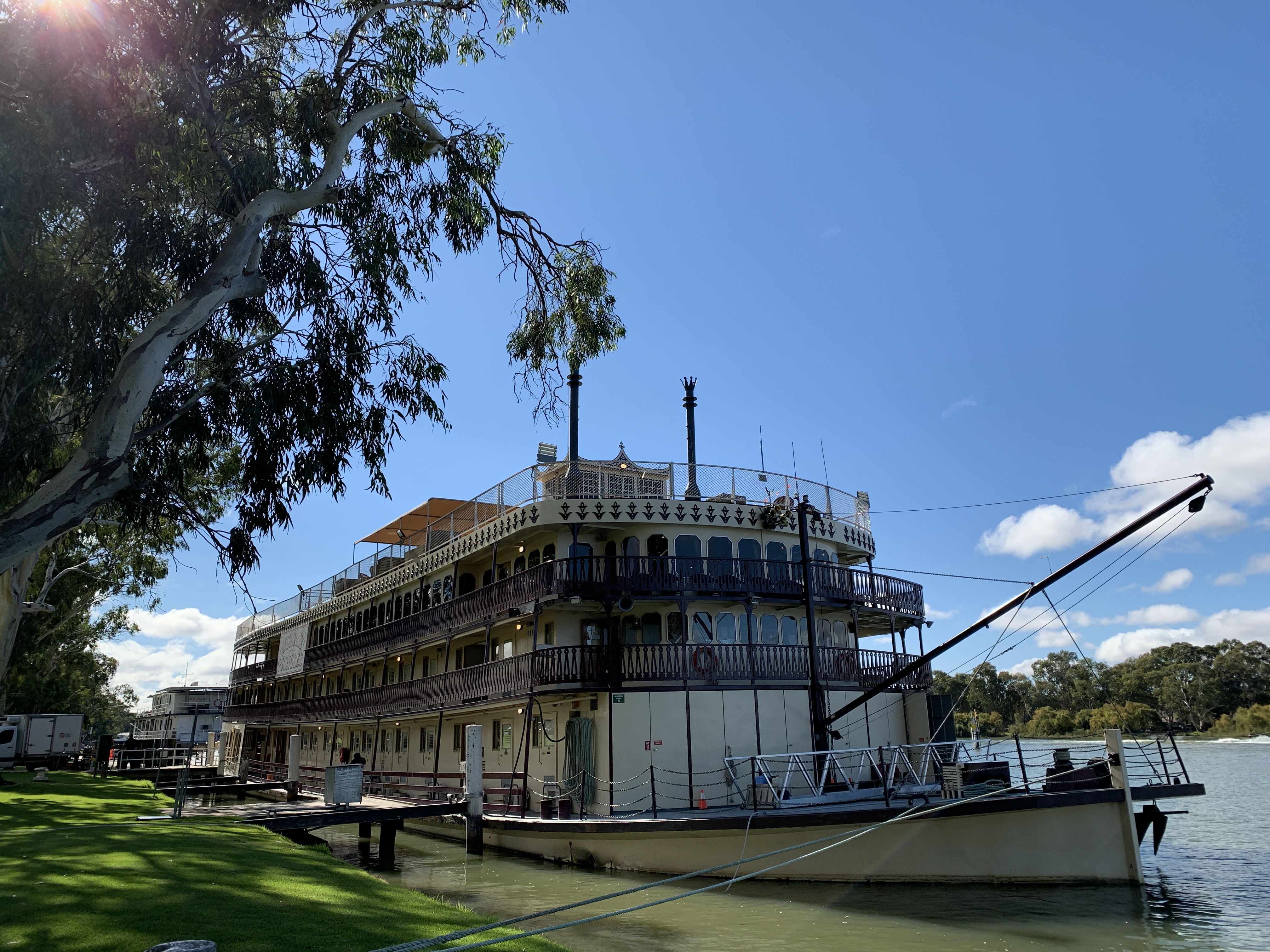
The paddle wheeler PS Murray Princess was built in 1986 by the Goolwa Ship Construction company. It is currently operated by Captain Cook Cruises which is part of the SeaLink Travel Group.
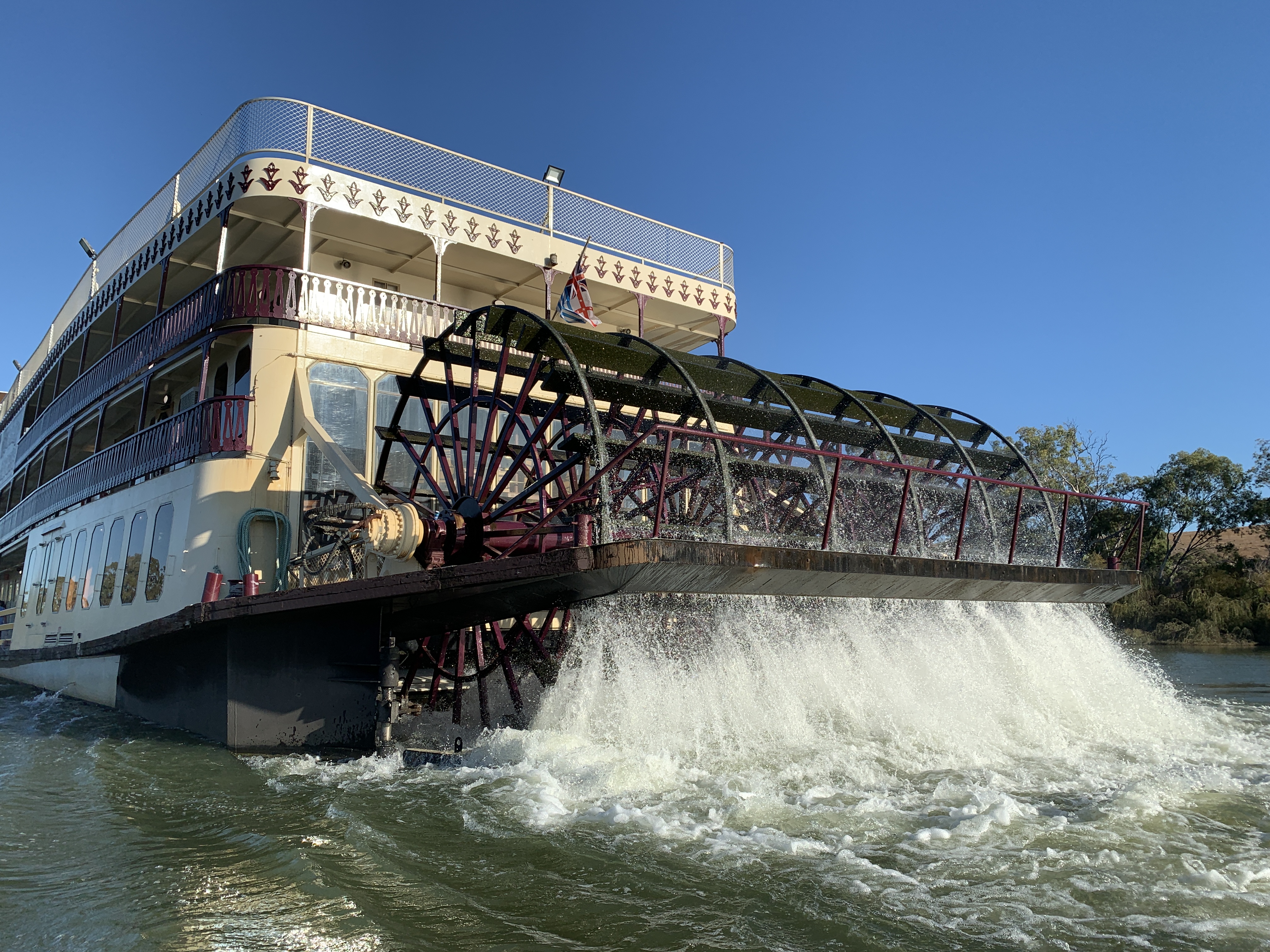
It has a stern paddlewheel and a steel hull. The ship has an overall length of 70 metres and a width of 14 metres. It was constructed so as to fit in all the locks along the Murray. Although it is quite a big ship it has a shallow draft of 1.1 metres making it suitable for river travel.
Murray Princess can carry 120 passengers in 60 cabins and 28 crew. It is powered by two large Diesel engines and also has forward and aft thrusters, useful for manoeuvring in and out of locks and around tight bends in the river.
The vessel has five decks and they are named after notable characters from the Murray River’s history. I’ll write more about them later.
The lowest deck is Chaffey deck and houses inside cabins 1-9 as well as crew quarters, a small gym and the all-important laundry. This deck is partly below the waterline so the cabins only have portholes. Chaffey Deck is accessed by a set of steep stairs.
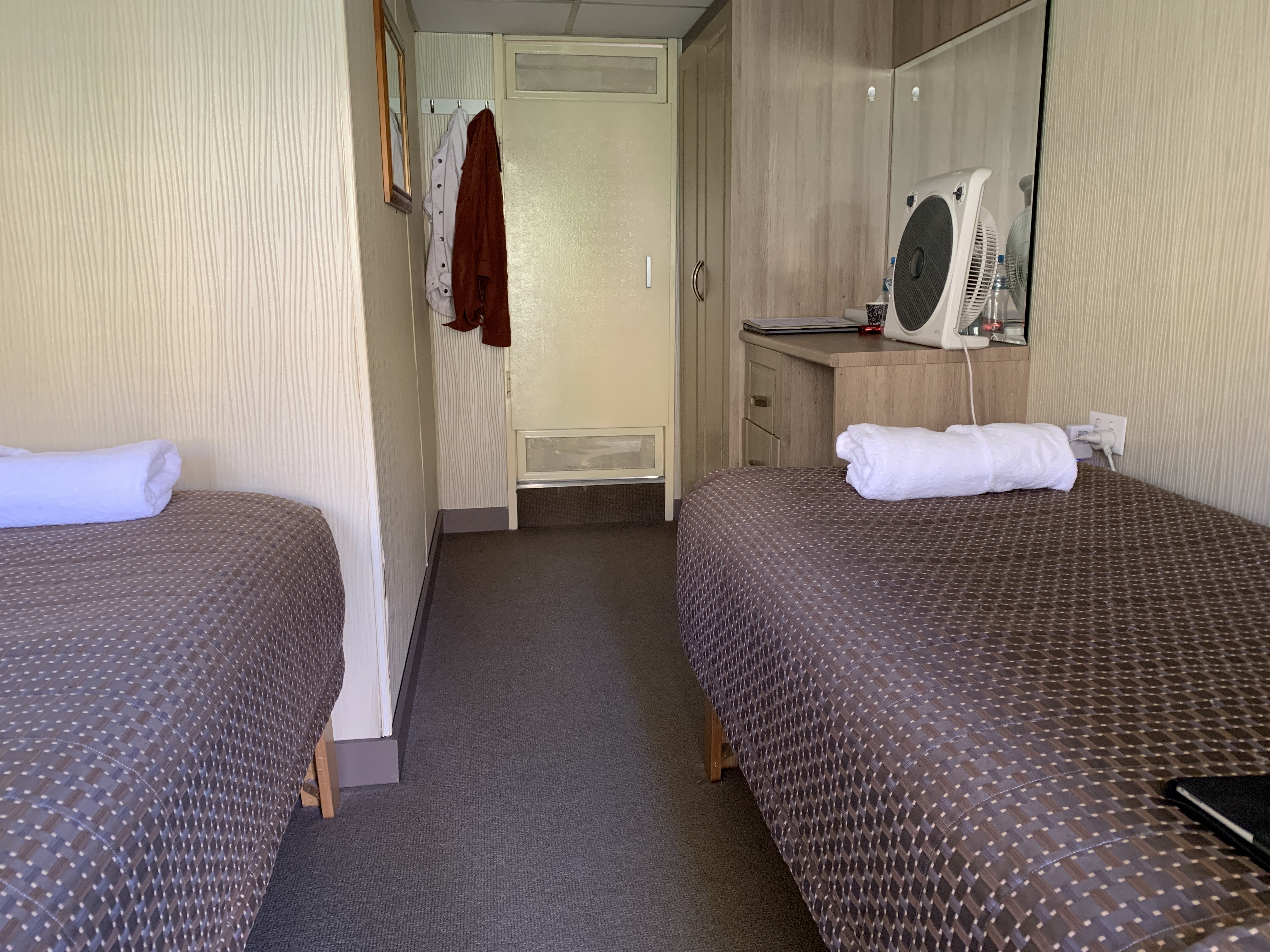
Randall Deck houses outside cabins 10 to 34. We are in Cabin 21 on the port side. Overlooking the huge paddlewheel at the back of the vessel is the Paddelwheel Lounge. Here you can make use of the tea/coffee station and bottled water is always available as well. There is a small gift shop and the staff will happily make you a cappuccino. Randell deck is the one you usually use to board and disembark from.
Cadell Deck houses outside cabins 35 to 60 and the Upper Lounge. The Upper Loung area provides excellent viewing of the large paddlewheel at the rear. In one corner of the Upper Lounge is a small library and puzzle table. A large jigsaw is underway. There is also a large wooden box filled with board games availabalbe for passenger use. At the front of Cadell Deck is the Wheelhouse and passengers are welcome to come on up and check out how the crew manage and work this large vessel. The crew are more than happy to show off their ship.
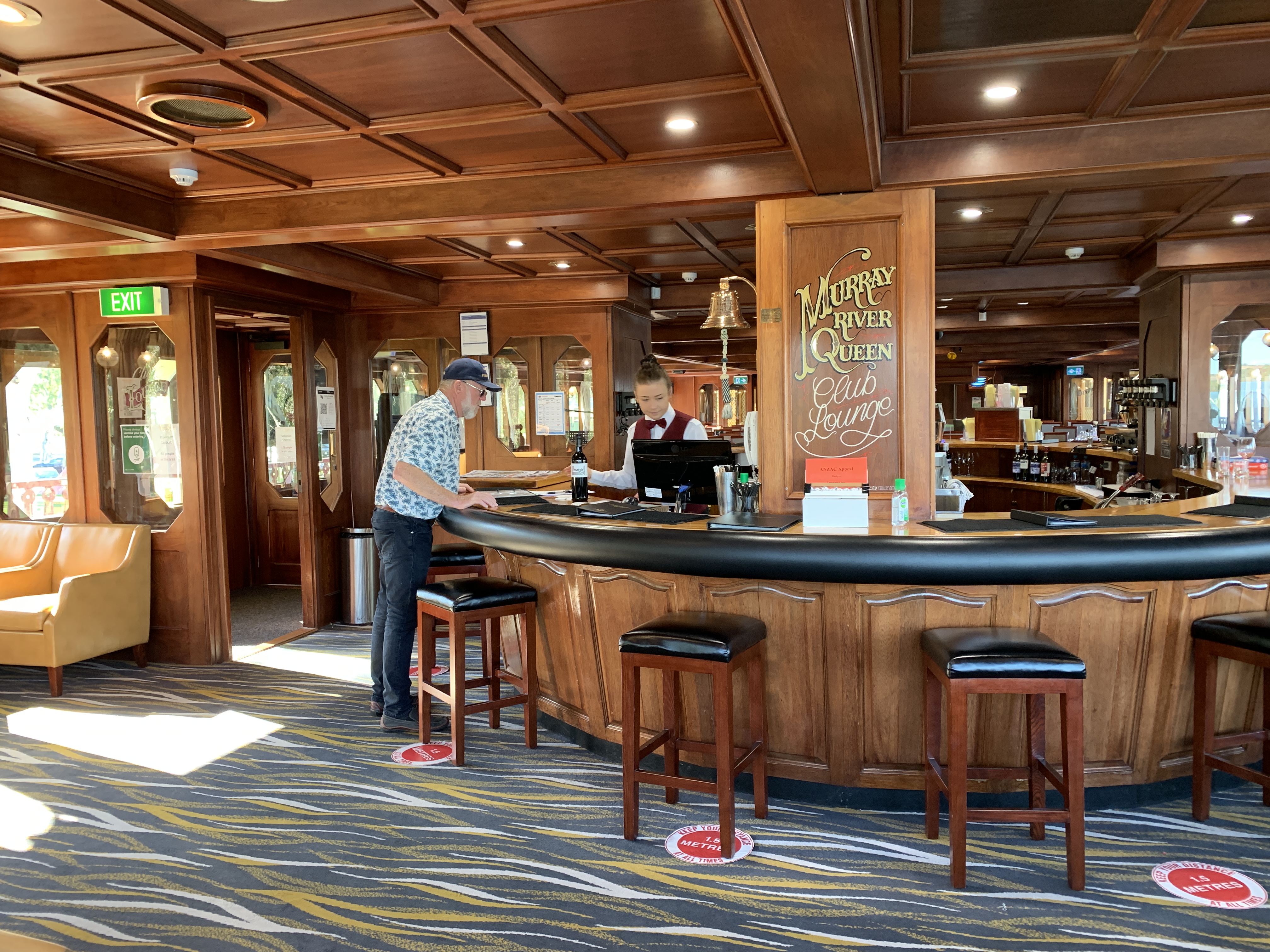
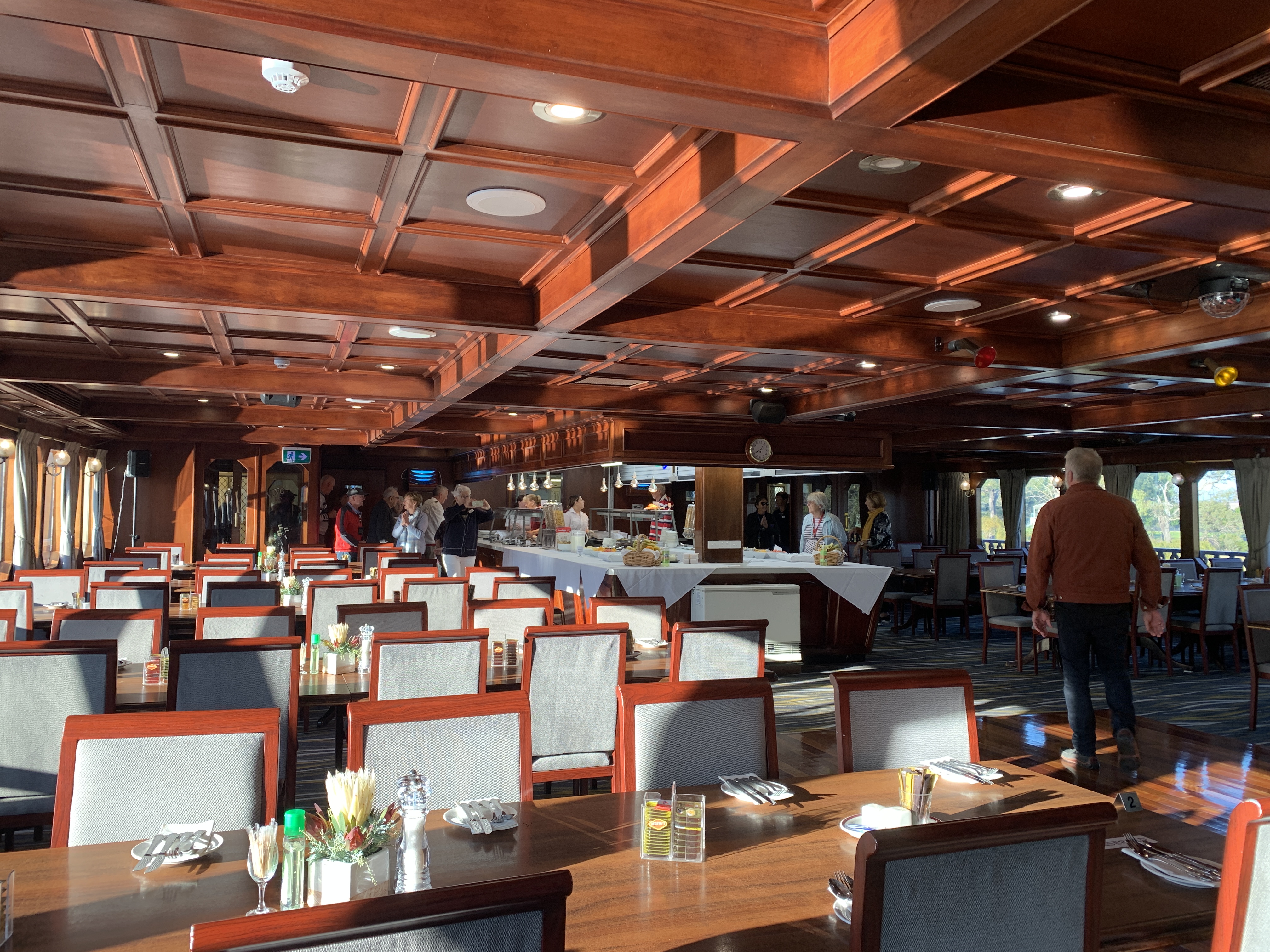
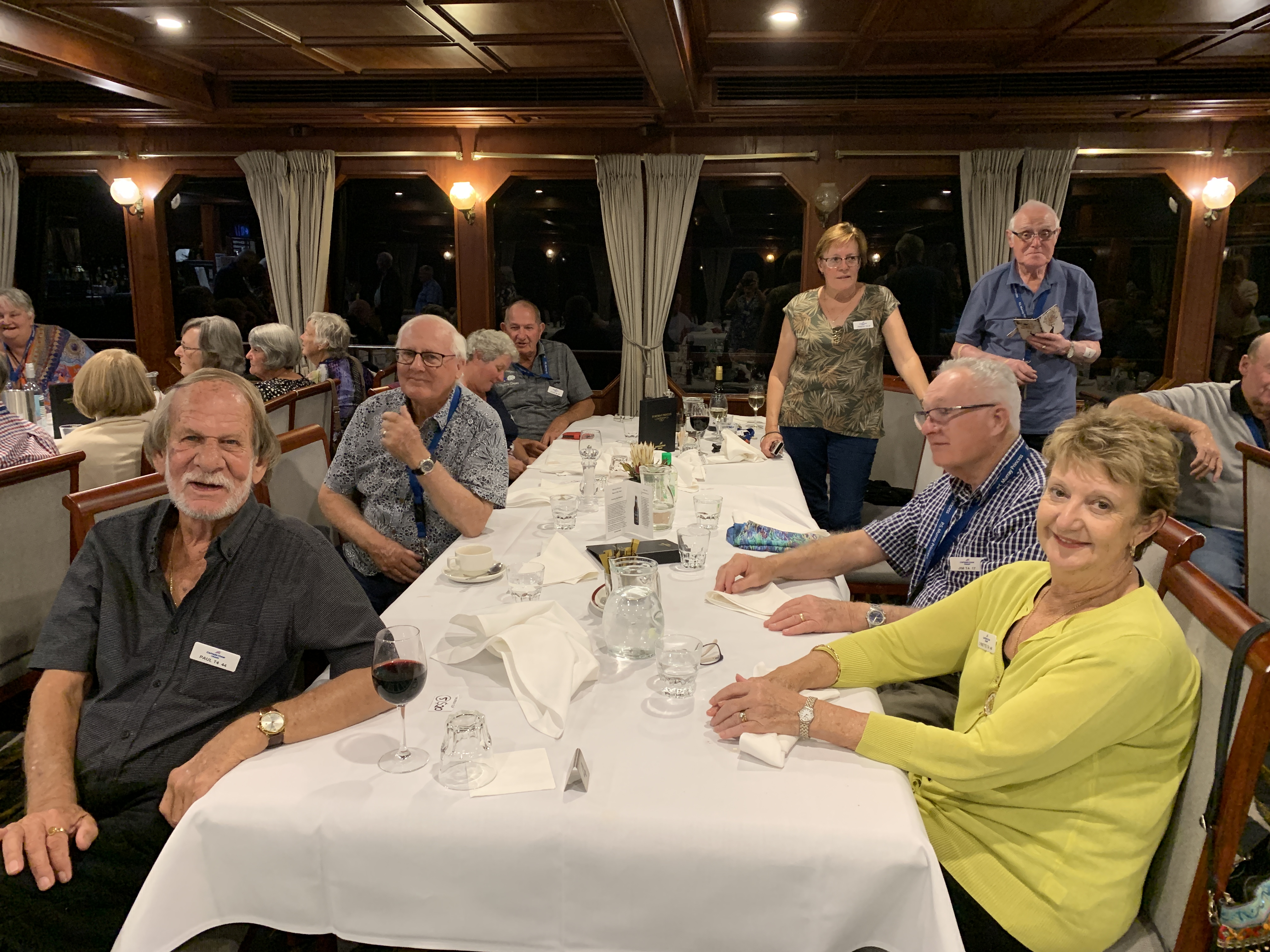
Sturt Deck is home to the large Sturt Dining Room where all meals are provided. When you board the ship you are given a name tag with your first name, your allocated dinner table and your cabin number. Passengers can sit anywhere for breakfast and lunch but at dinner you sit at your allocated table. There is a Bar right at the front of the ship. From the large windows at the front of the ship is a great view of the river as we cruise along. This is a comfortable area with comfy leather chairs and little tables. The perfect spot for a quiet chat, a read or just to watch to river go by. The Sturt Dining Room and the Bar are decorated with timber panelling and plush carpets. Sturt Deck also is home to the Crew Mess and offices.
The top deck is called the Sun Deck, apparently named after a Chinese cook whose name was Sun Lee. The Sun Deck has lots of rattan chairs, little tables and a large sun shade. When it is warm the Sun Deck is another lovely spot to enjoy the river scenery.
Four of the cabins are wheelchair accessible and there is a lift from Randell to Sturt Decks. Quite a few passengers use walking sticks but they seem to be able to get about the ship with no problems.
WiFi is available however due to the high cliffs and the remoteness of some of the areas we travel through the service can be very patchy.
We have had a few discussions with people over the last few days and we reckon the average age of passengers on board is probably around 80. We are probably the youngest on board. Most of the people we talk to have been retired for many years. One couple we spoke with have 14 great-grandchildren and one on the way. Most are ‘young at heart’ though and enjoying travelling. I wouldn’t recommend this trip for young people unless they were a large group that could make their own fun. It certainly isn’t a trip for children.











































































 motorhomemeanders.com