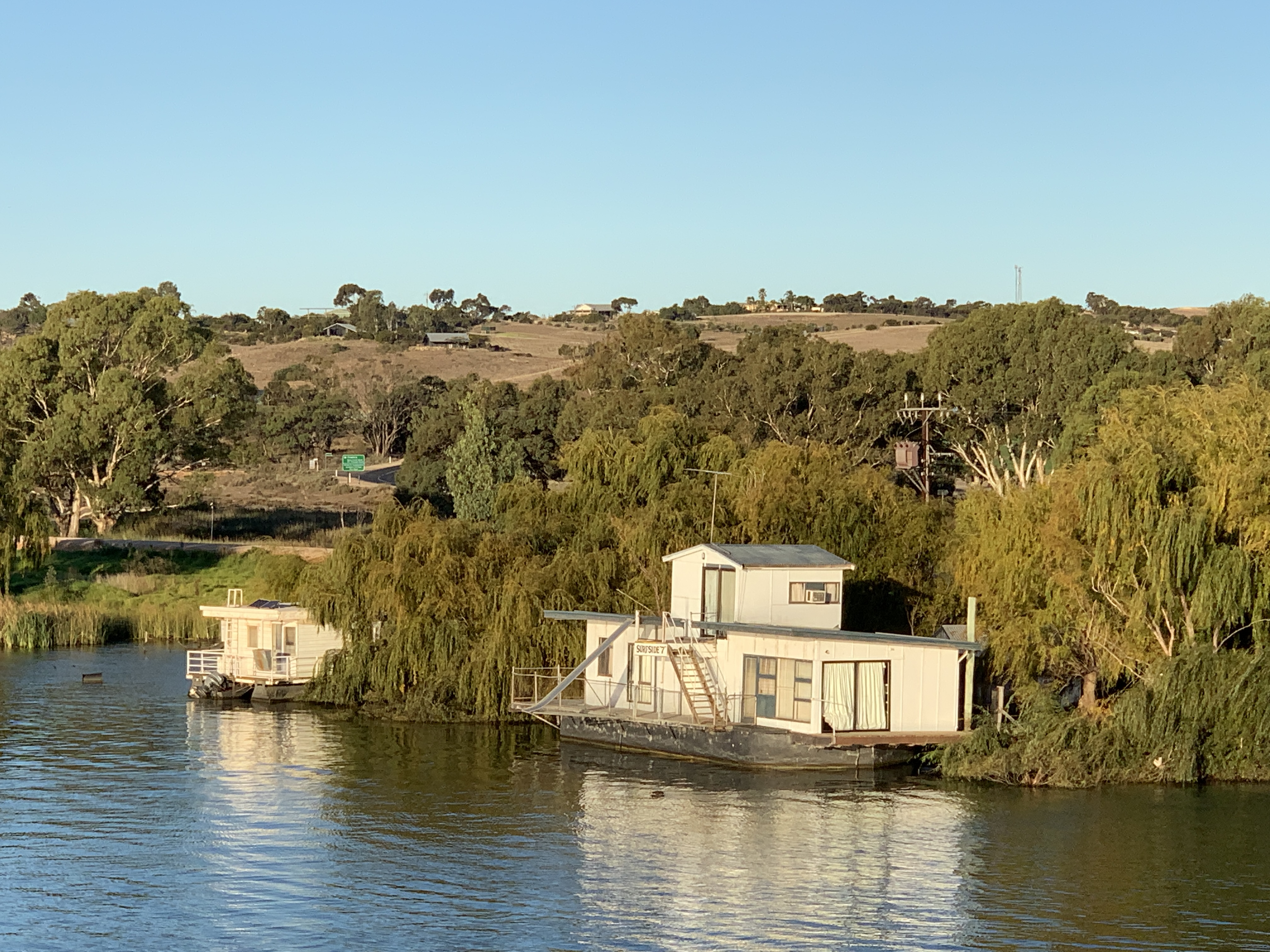
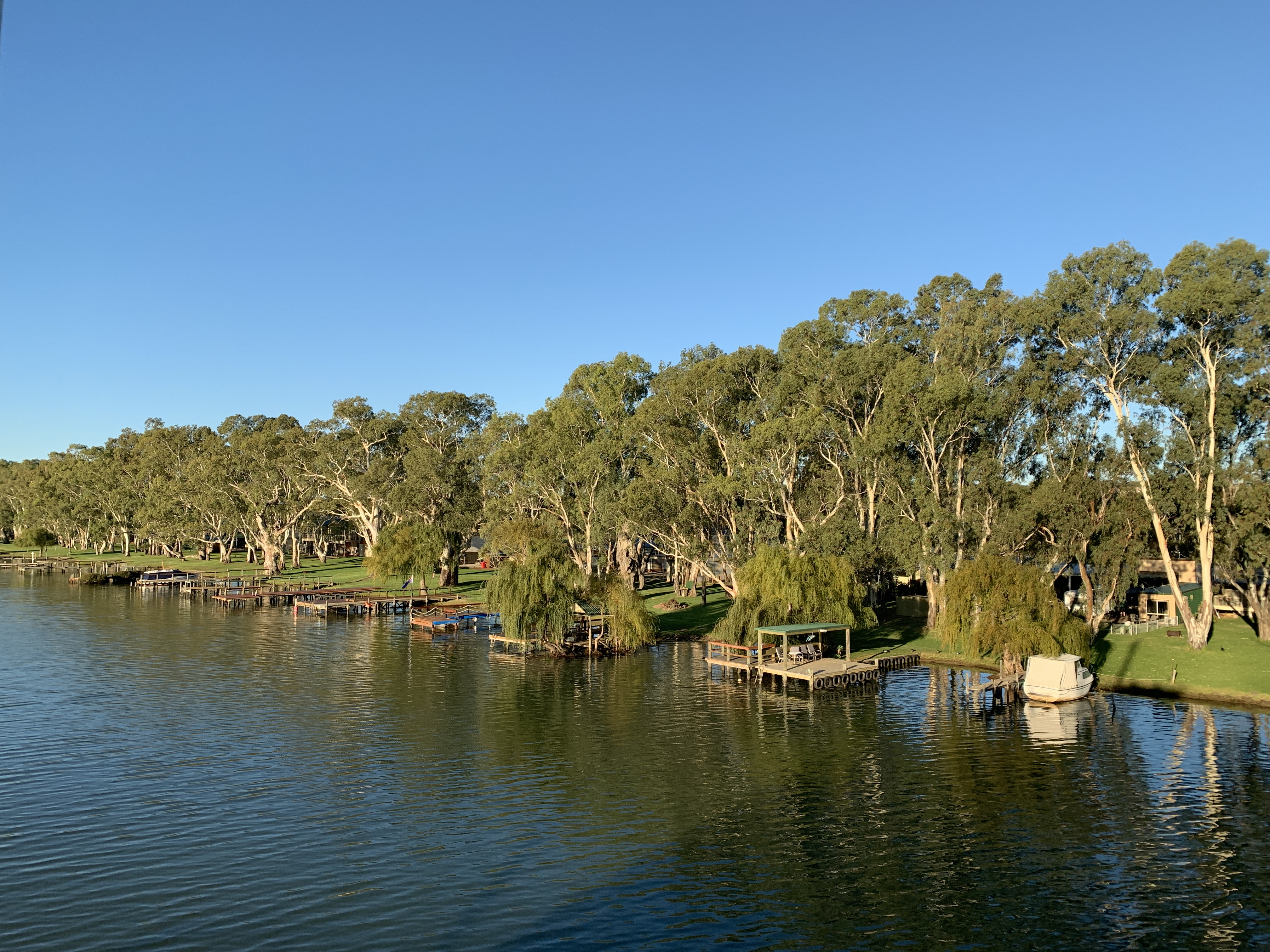
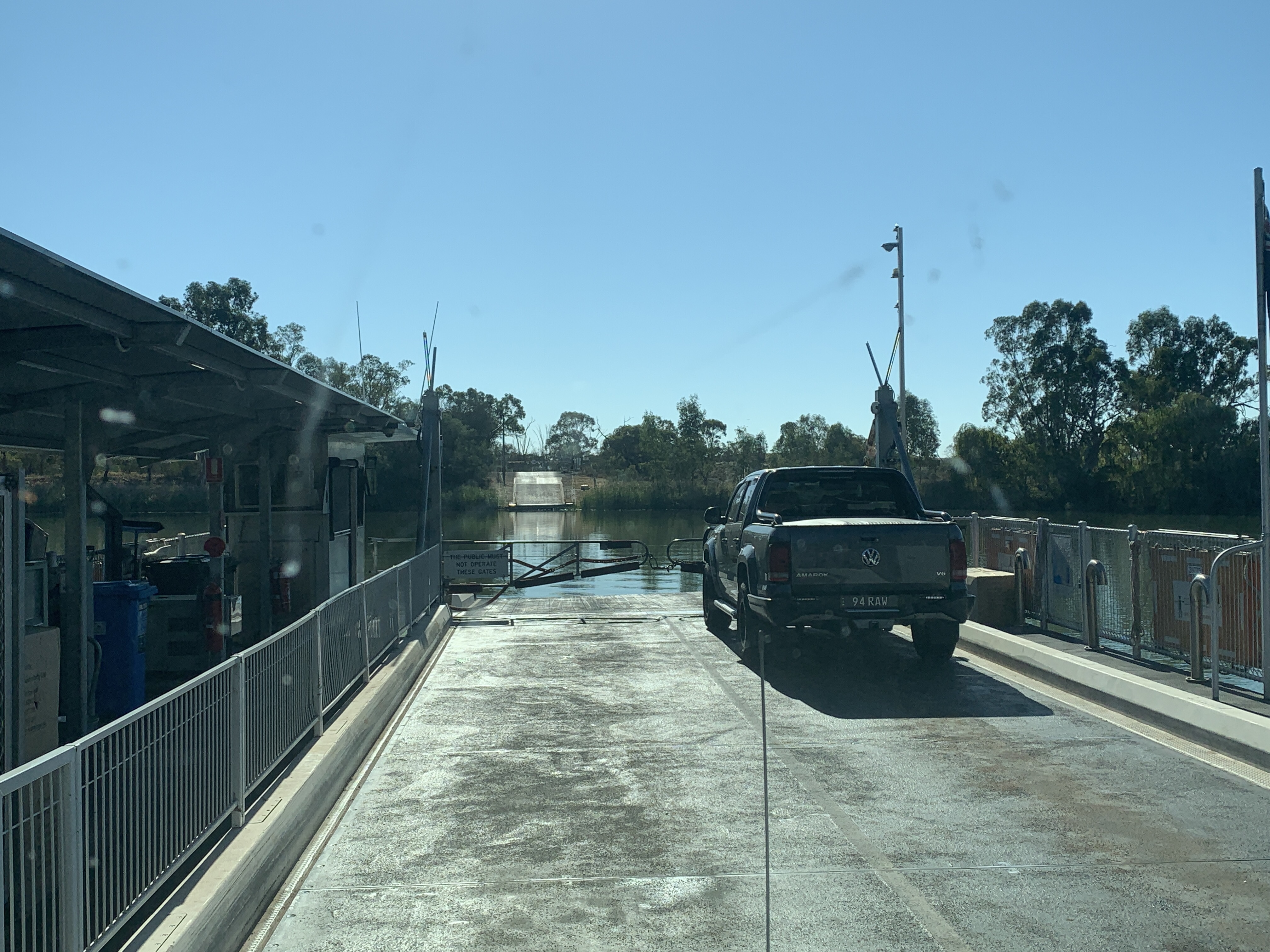
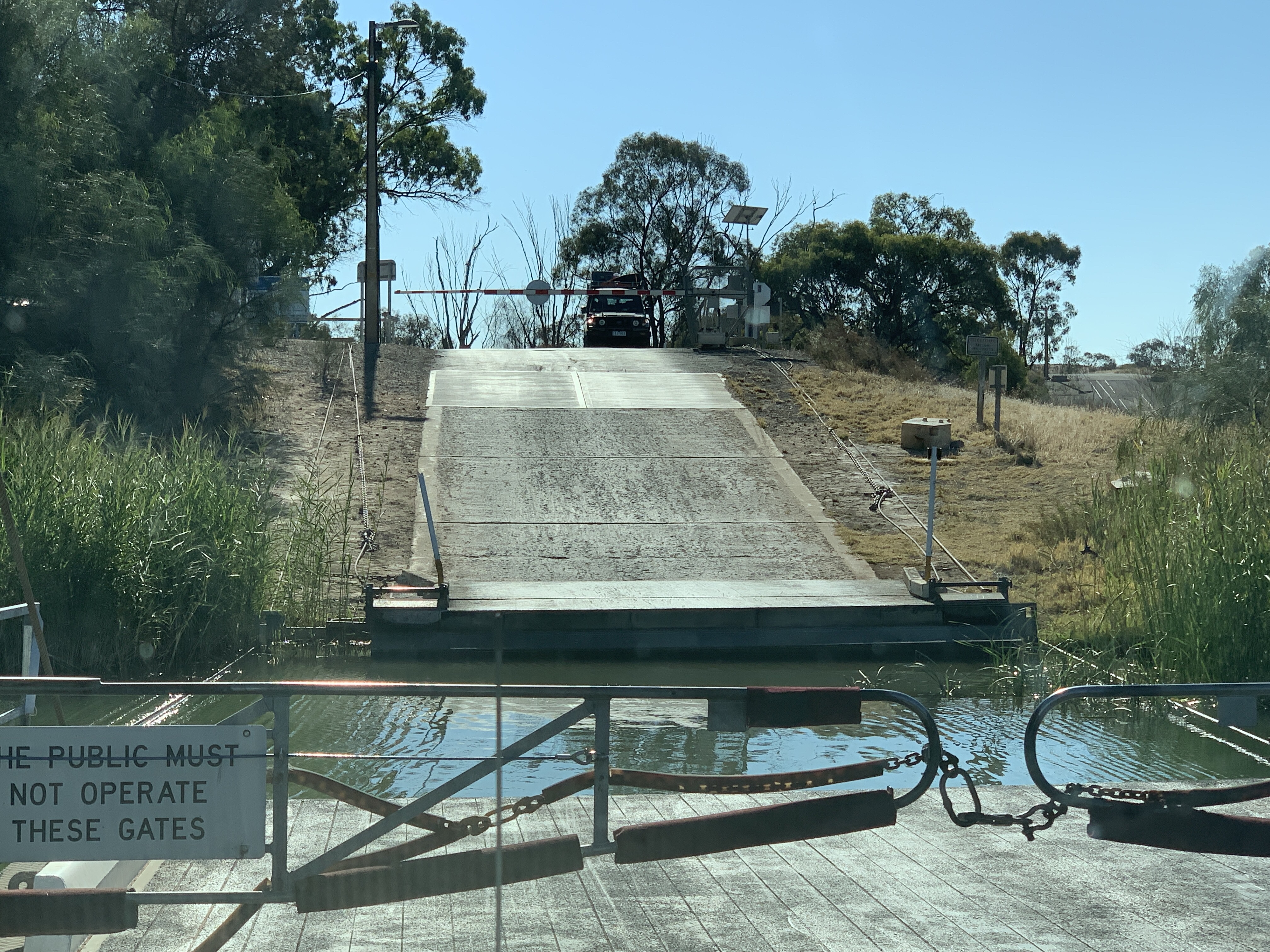
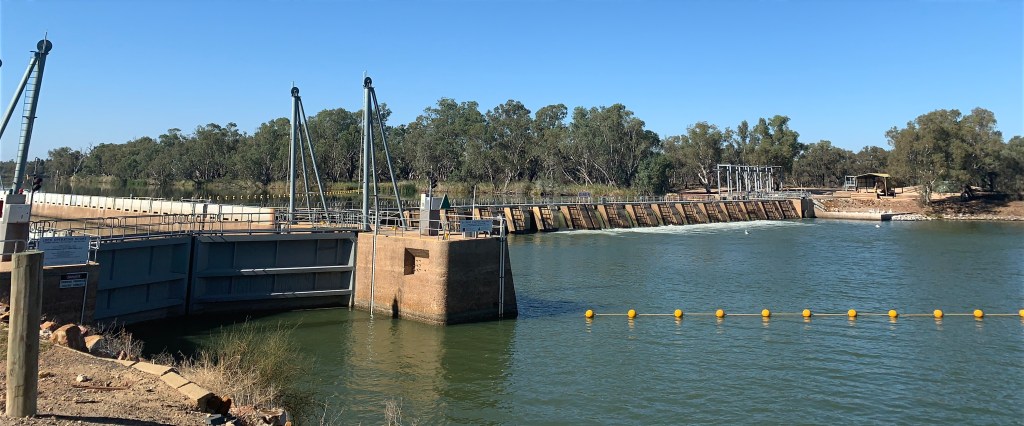
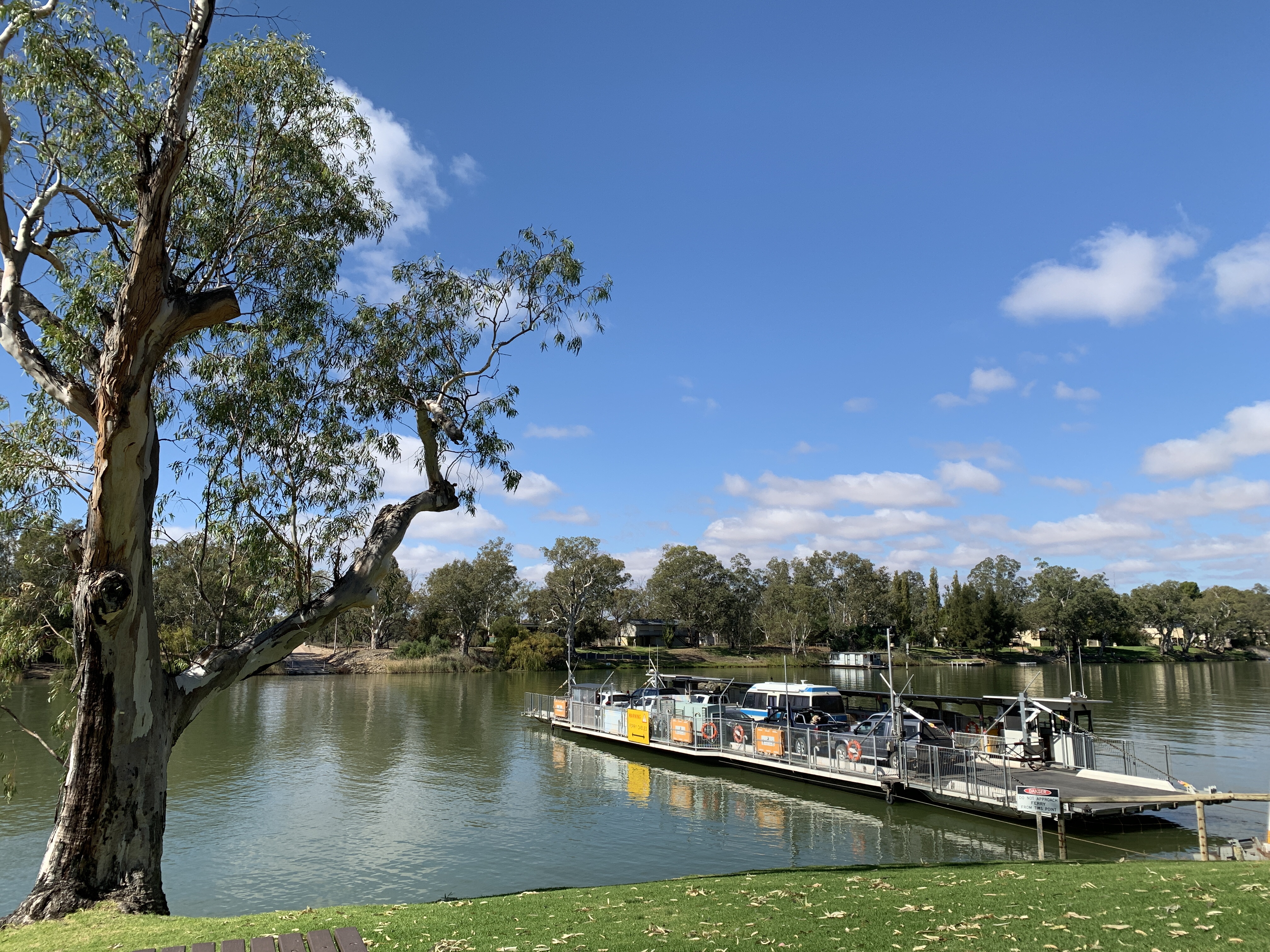
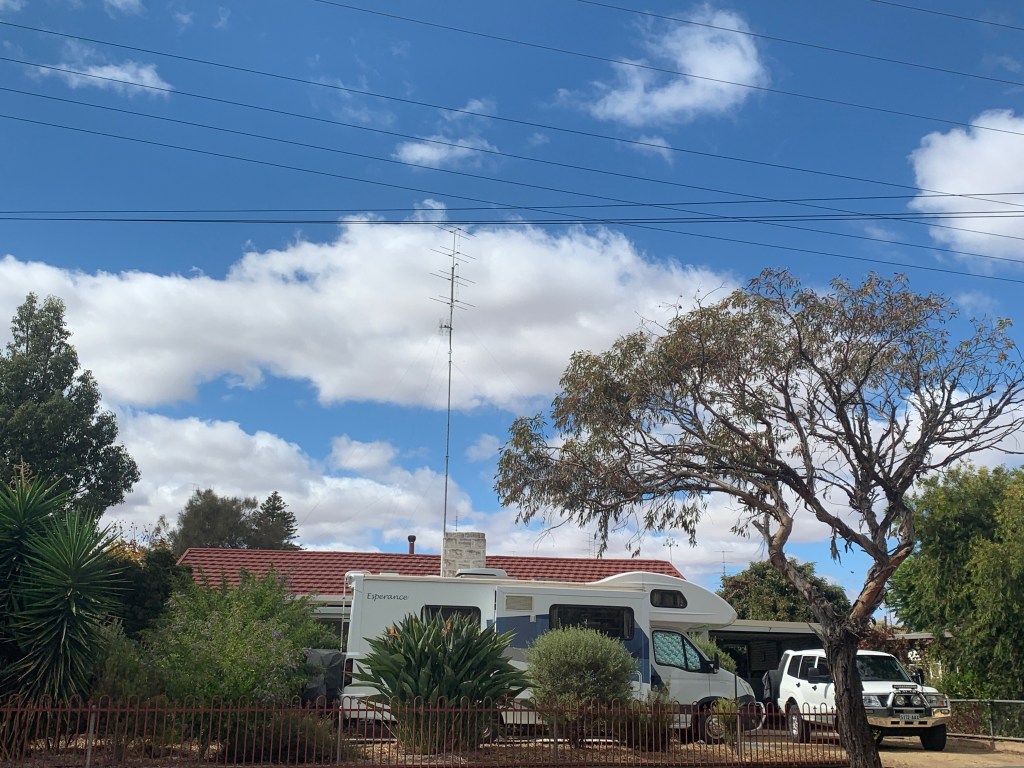
We were up bright and early to attend the Anzac Service in Waikerie, South Australia. As we were camped in the front yard of our friends Kathy & George and the service was to be held in the park just up the road, we walked to the park for the 8.00am service.
Although Waikerie is only a small town with a population of 2,684. There was a good turnout for the service held in the lovely little park. I was very pleased to see quite a few young people and young families in attendance. It’s great to see young people appreciating and valuing the Anzac Day traditions.
The catafalque party was a group of local cadets and some of them didn’t look very old. What a great job they did and they obviously took their role seriously. One poor lad nearly fainted about 3/4 the way through the service and a quick thinking comrade caught him before he fell to the ground. Poor kid. I’ll bet he hadn’t had any breakfast.
The service was similar to the many we have attended over the years and it was quite moving to hear a personal story of a soldier who fought in World War 1 and was the speakers grandfather.
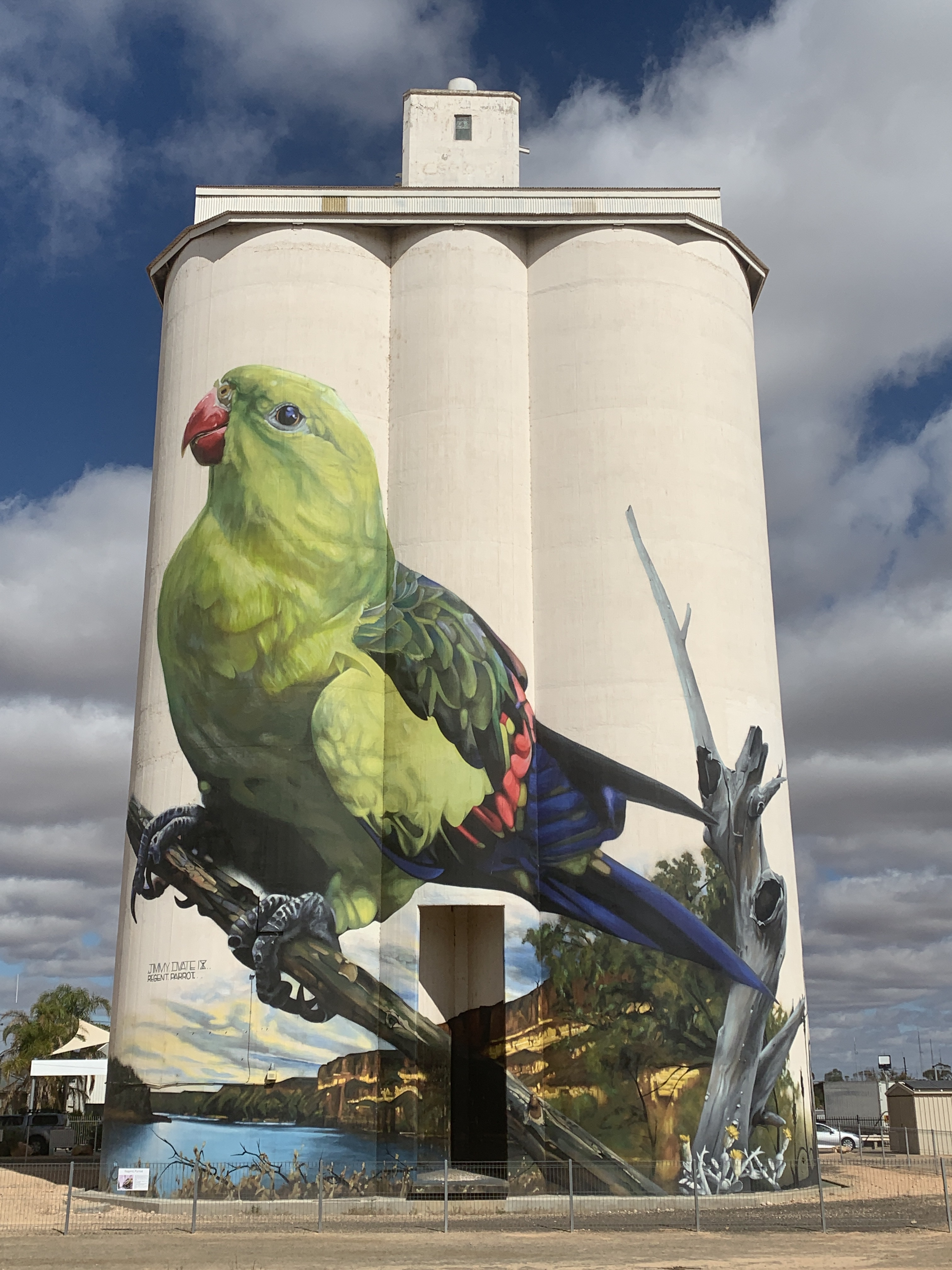
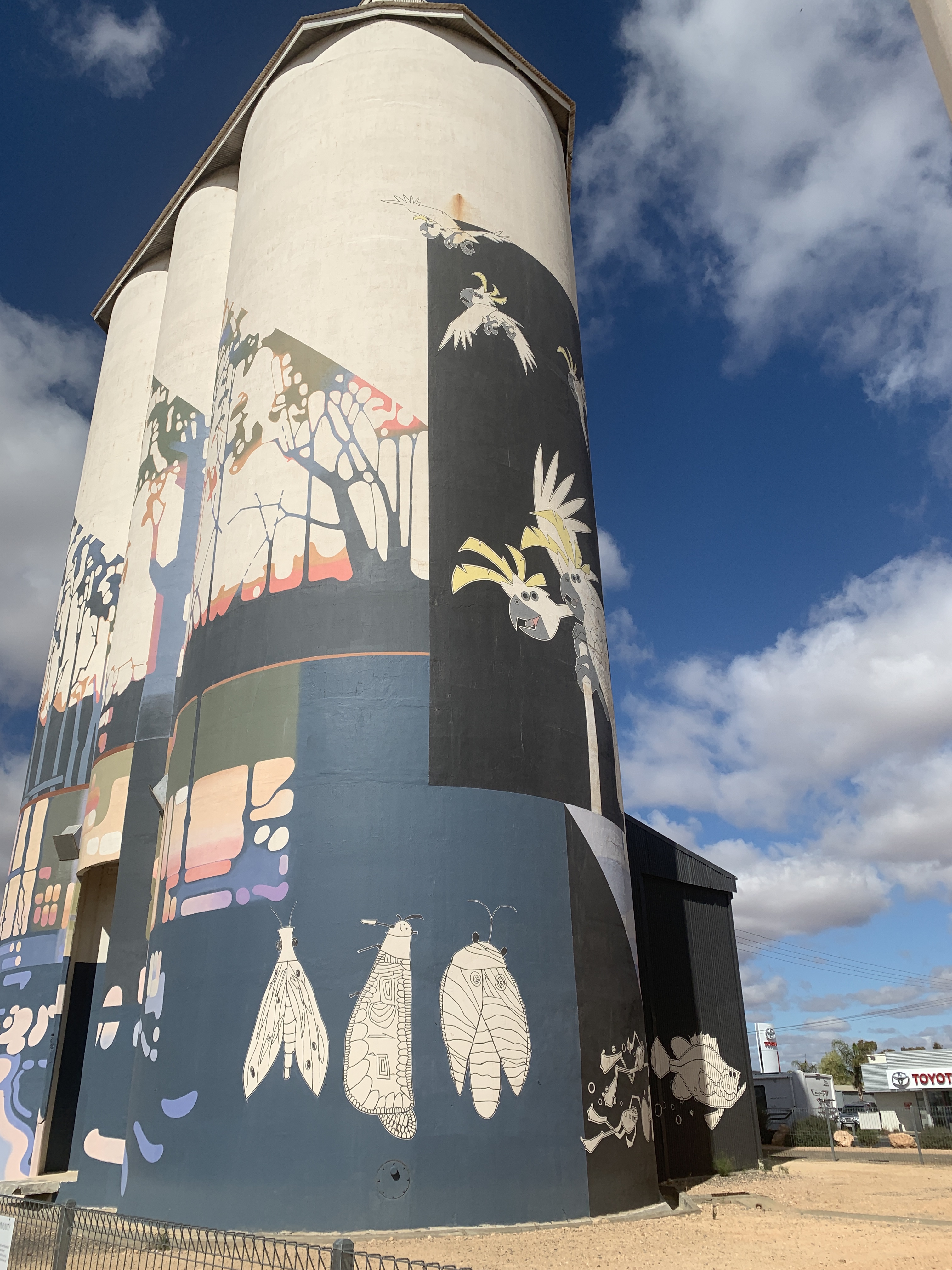
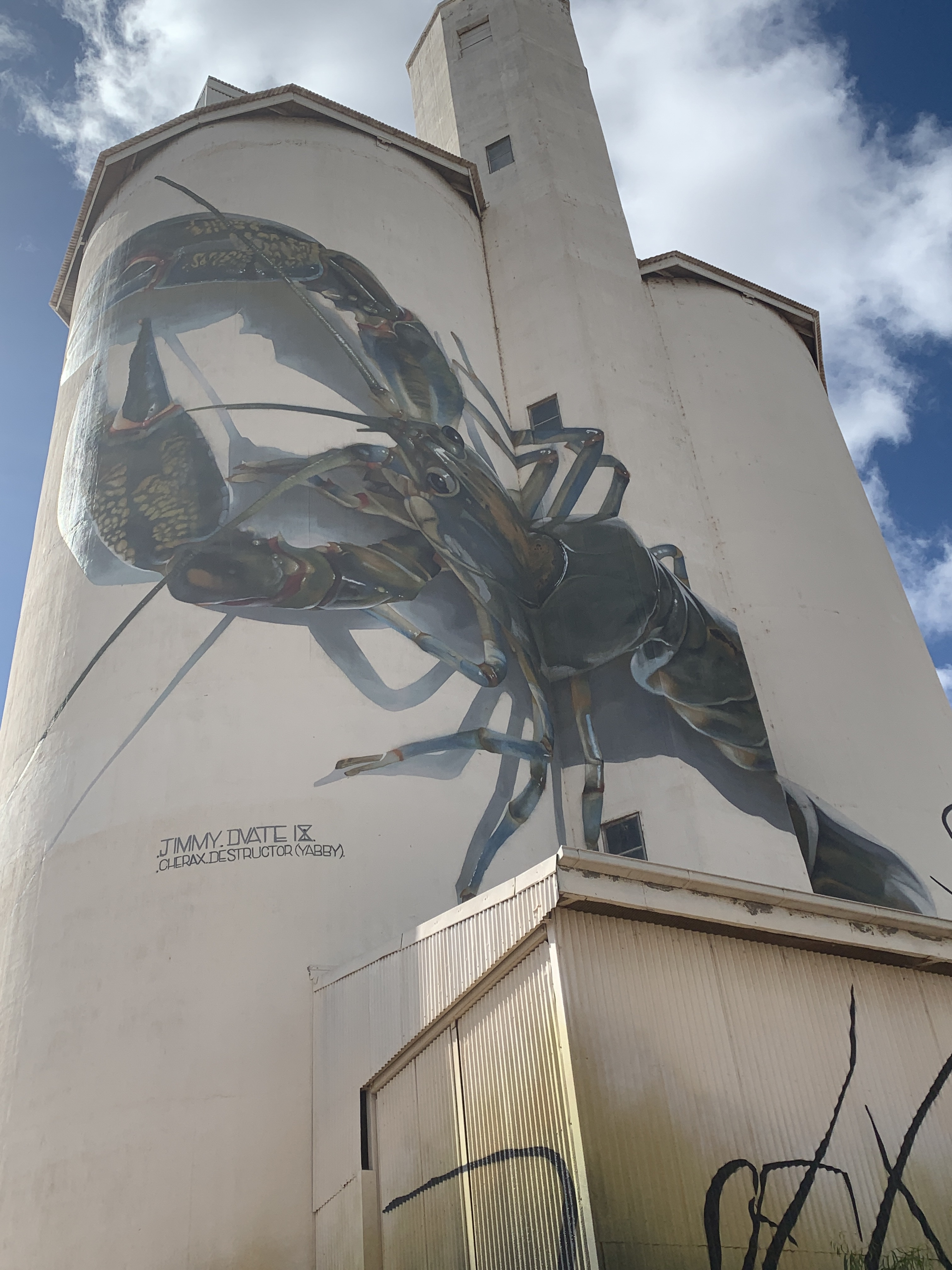
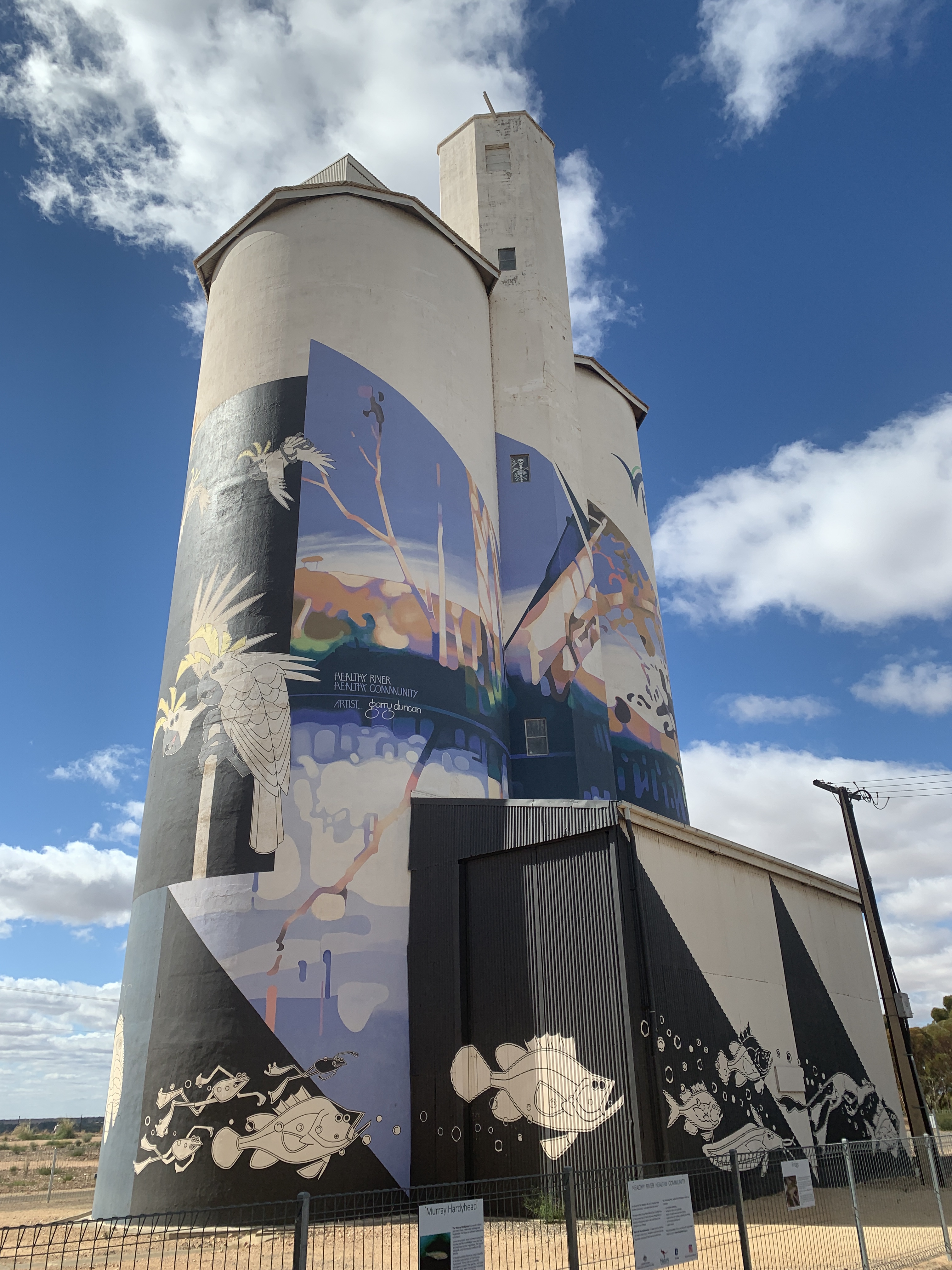
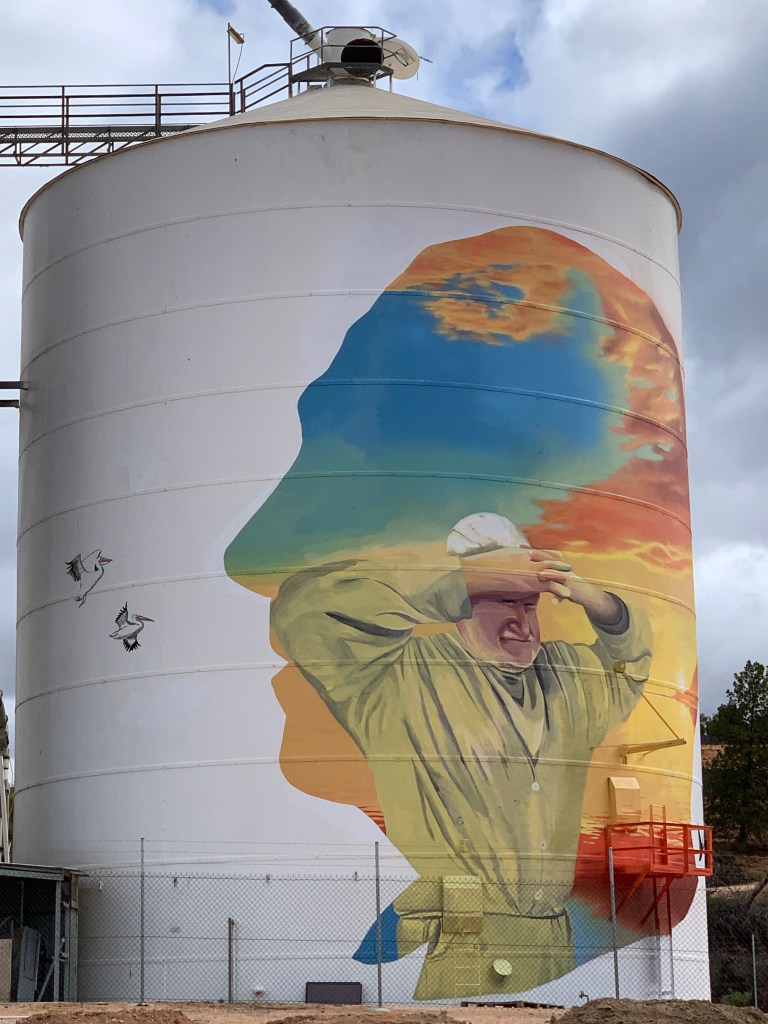
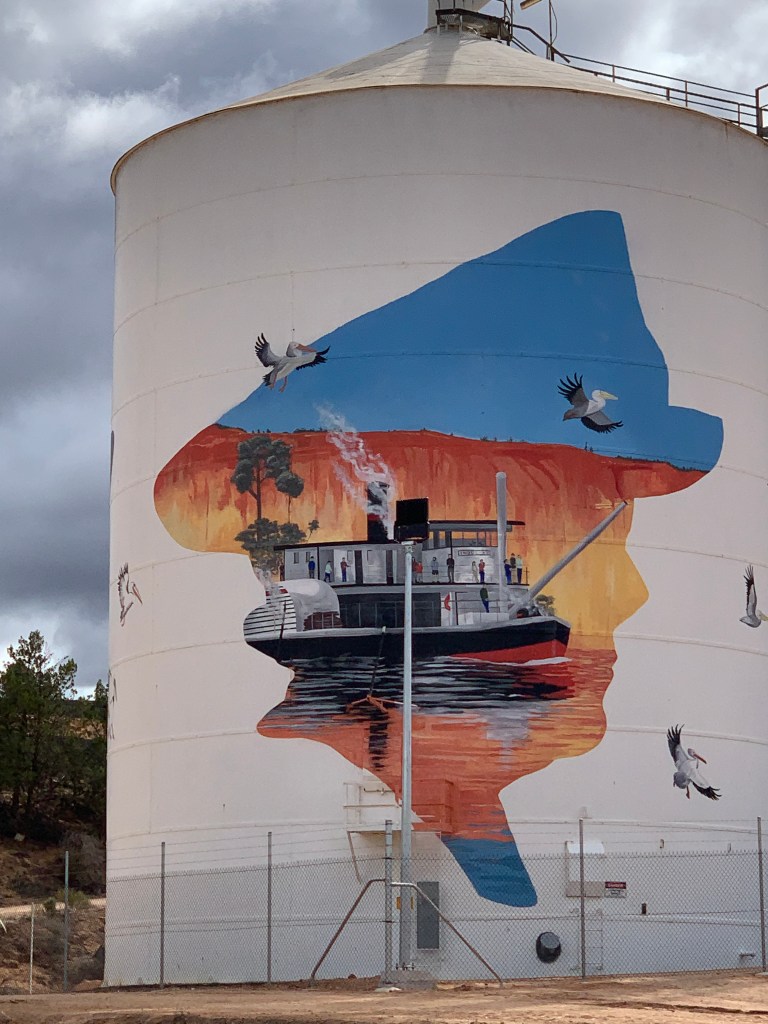
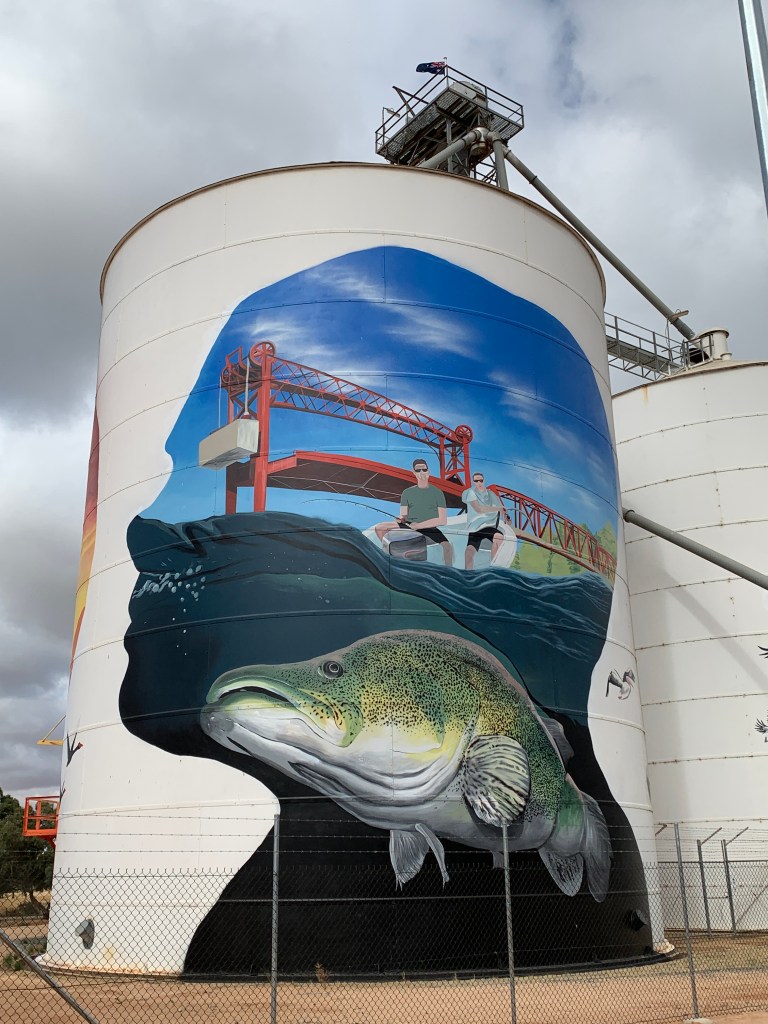
We found some more Silo Art in the Riverland town of Waikerie. Waikerie has a population of 2,684 and has long been regarded as the fruit capital of South Australia. Waikerie was established in 1894 when a group of 281 settlers were dropped off and started planting grapevines, citrus and stone fruit orchards. The town grew and is now one of the largest fruit processing operation in the Southern Hemisphere.
Waikerie is said to be named after the Aboriginal word for the Giant Swift Moth and means ‘many wings’.
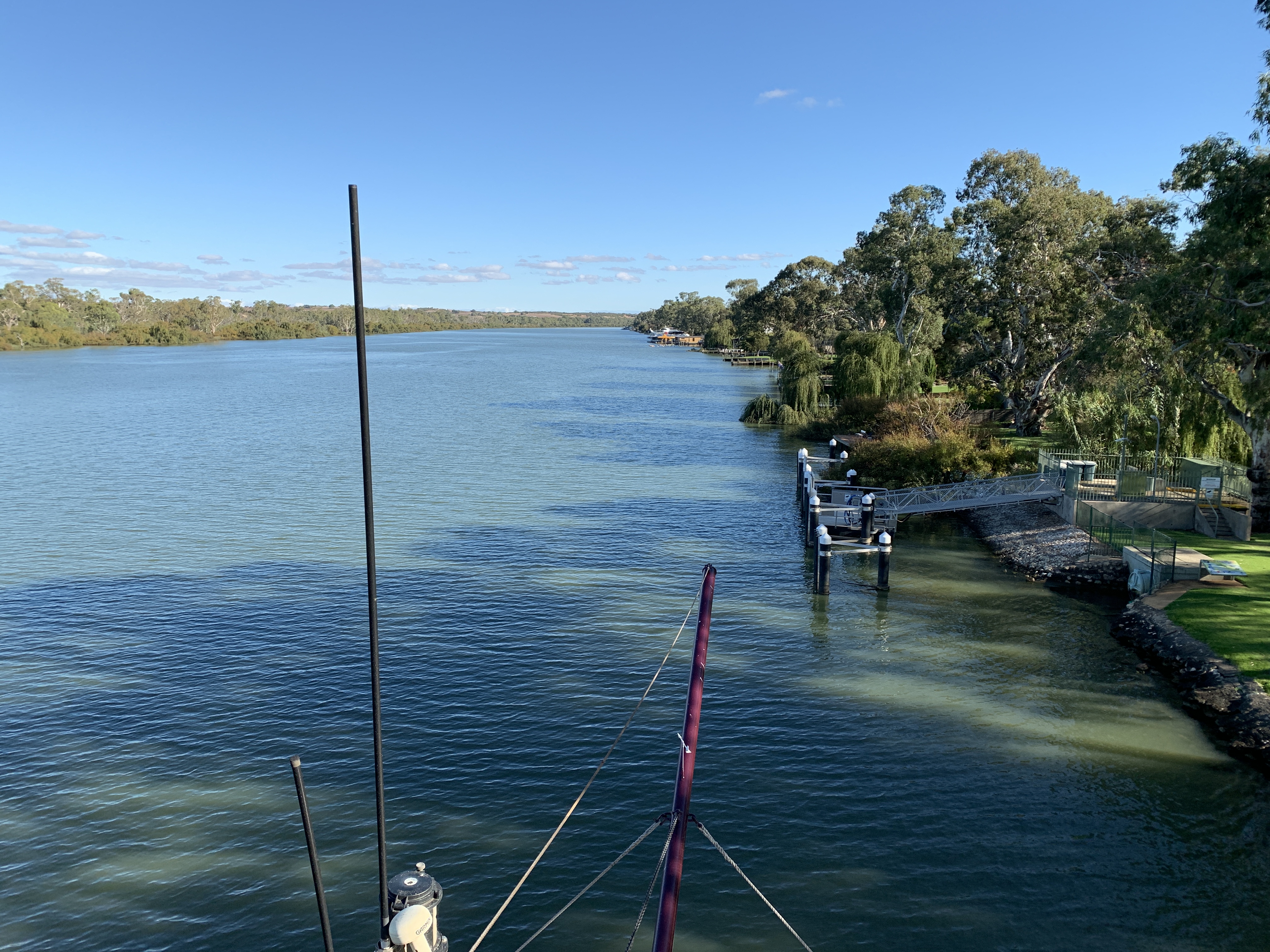
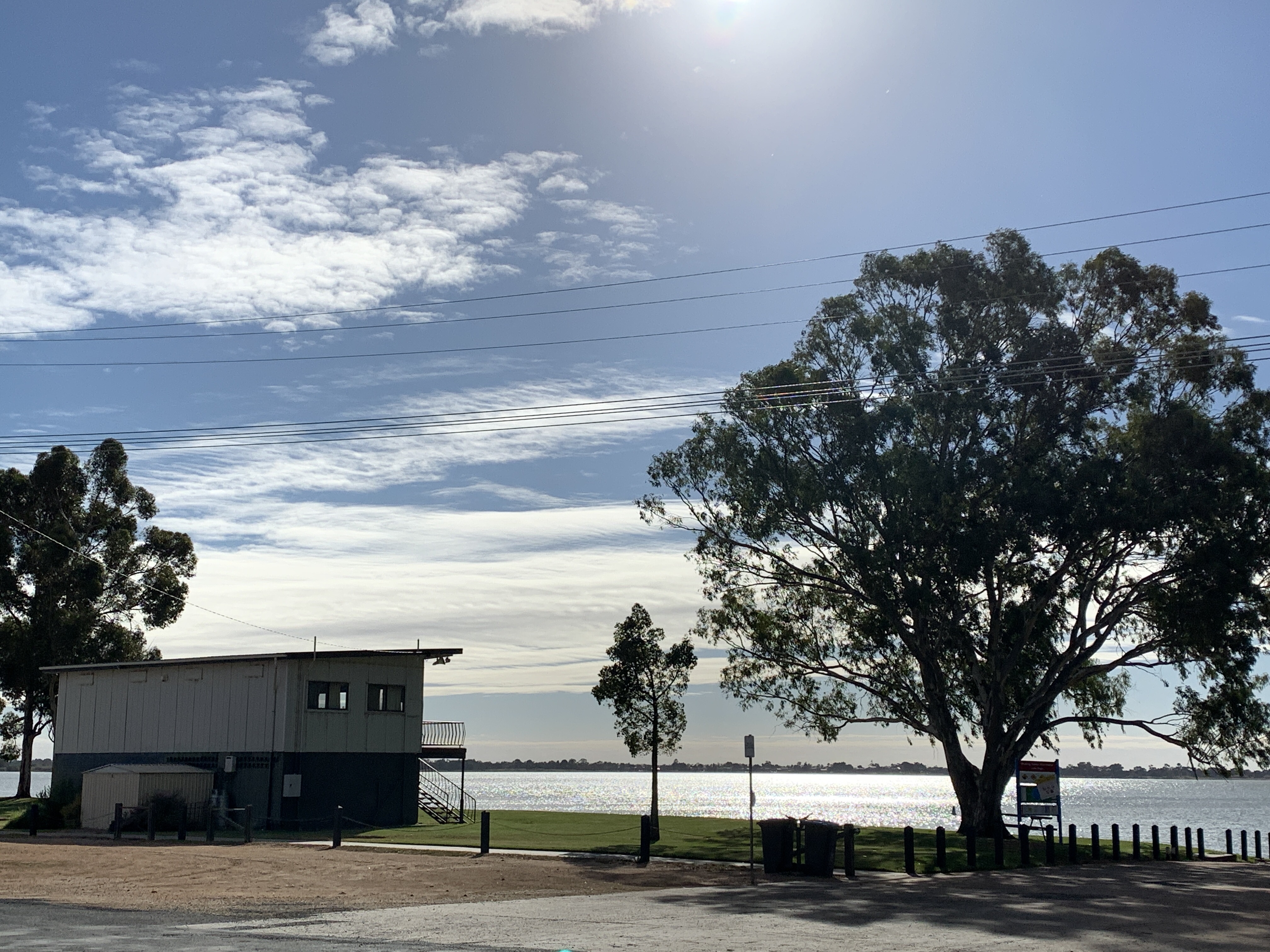
Waikerie riverfront is a long section of the river where water sports of all kinds take place. It is a really popular water skiing spot and you can hire houseboats at Waikerie.
There is a caravan park but for those who like free camping, like us, there are numerous camping spots right on the rivers edge. We were fortunate to be able to stay in our friends front yard whilst in Waikerie. Thank you Kathy & George for hosting us. We really enjoyed our stay in your lovely town.
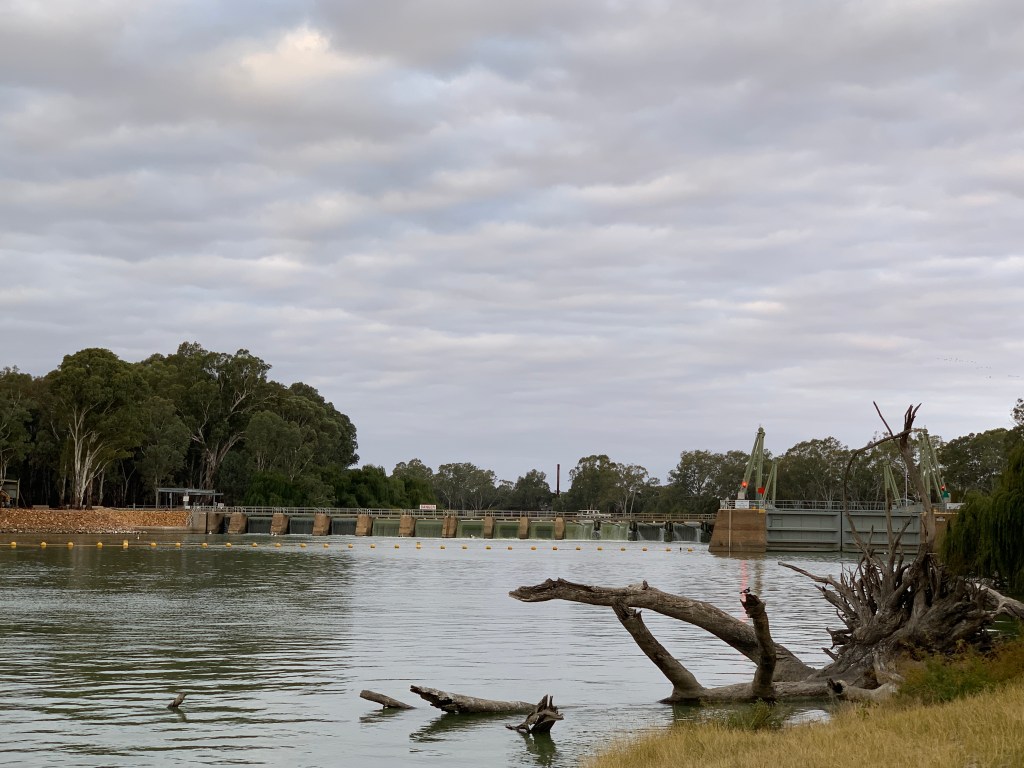
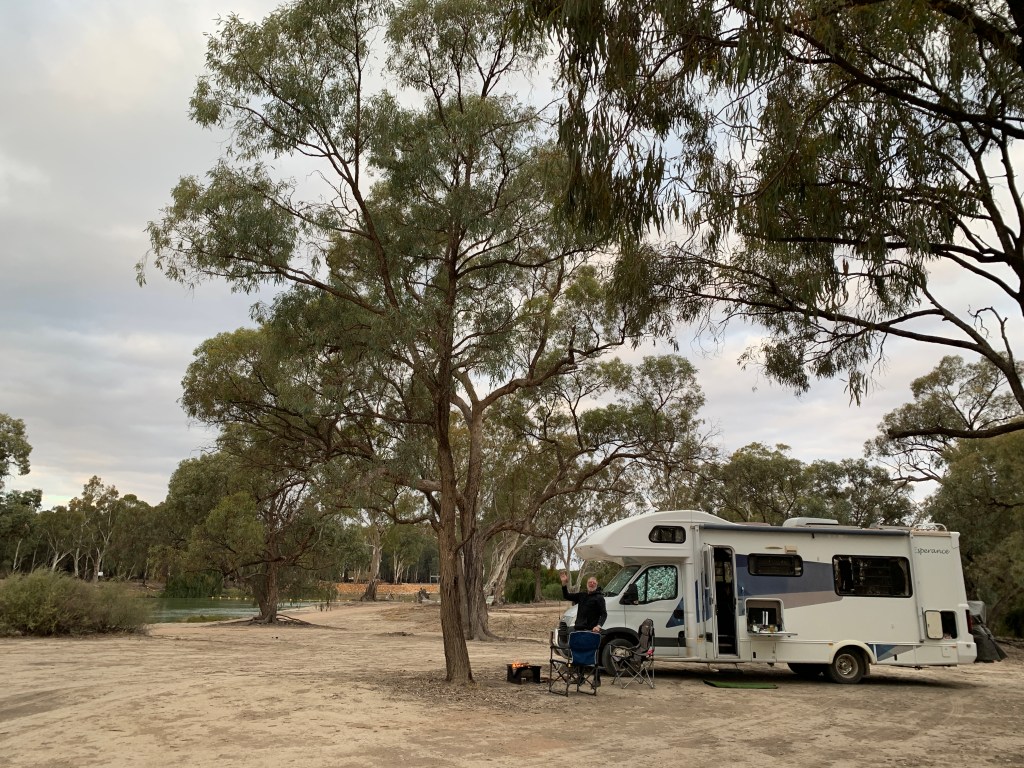
This is the second time we have camped beside the Murray River at Lock 9, Kulnine near Lake Cullulleraine. It is a bush camp with no amenities but there are toilets up at the lock if you feel like a bush walk to get there.
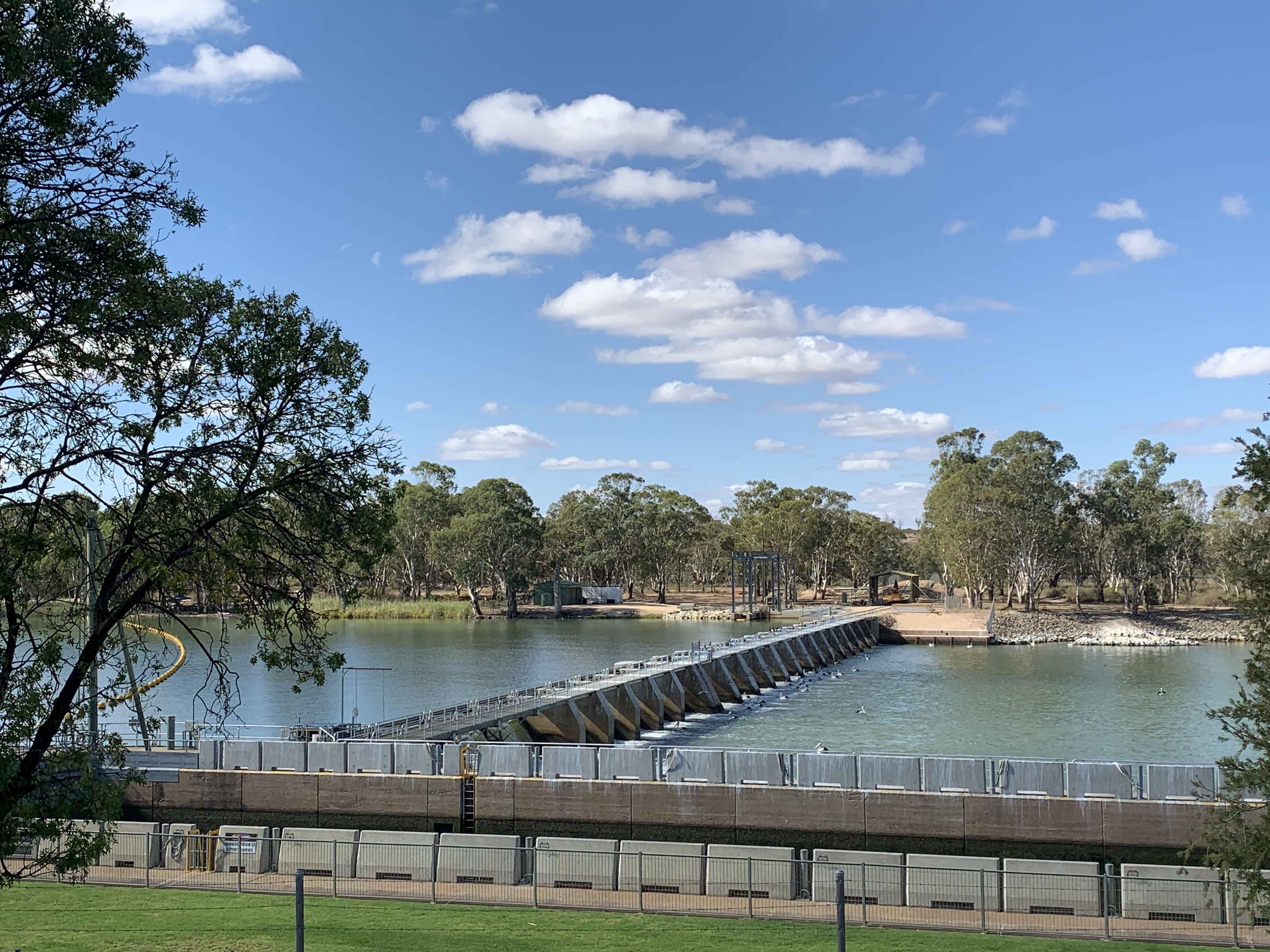
To get to this great campsite you turn off the Sturt Highway at Lake Cullulleraine and follow this road to its end at the river. It is some 8km of gravel road so we just have to go very slowly so we don’t rattle apart. Once at the Lock you take a left turn onto a track, follow this along until you reach the boat ramp. You can free camp anywhere in this spot. The track continues along the river to the end of the point but it crosses a steep water course and the angle of that is too steep for us. We would drag our rear end if we attempted to go down that! We chose a flat spot not far from the boat ramp where we could see the river and hear the water as it rushes over the weir.
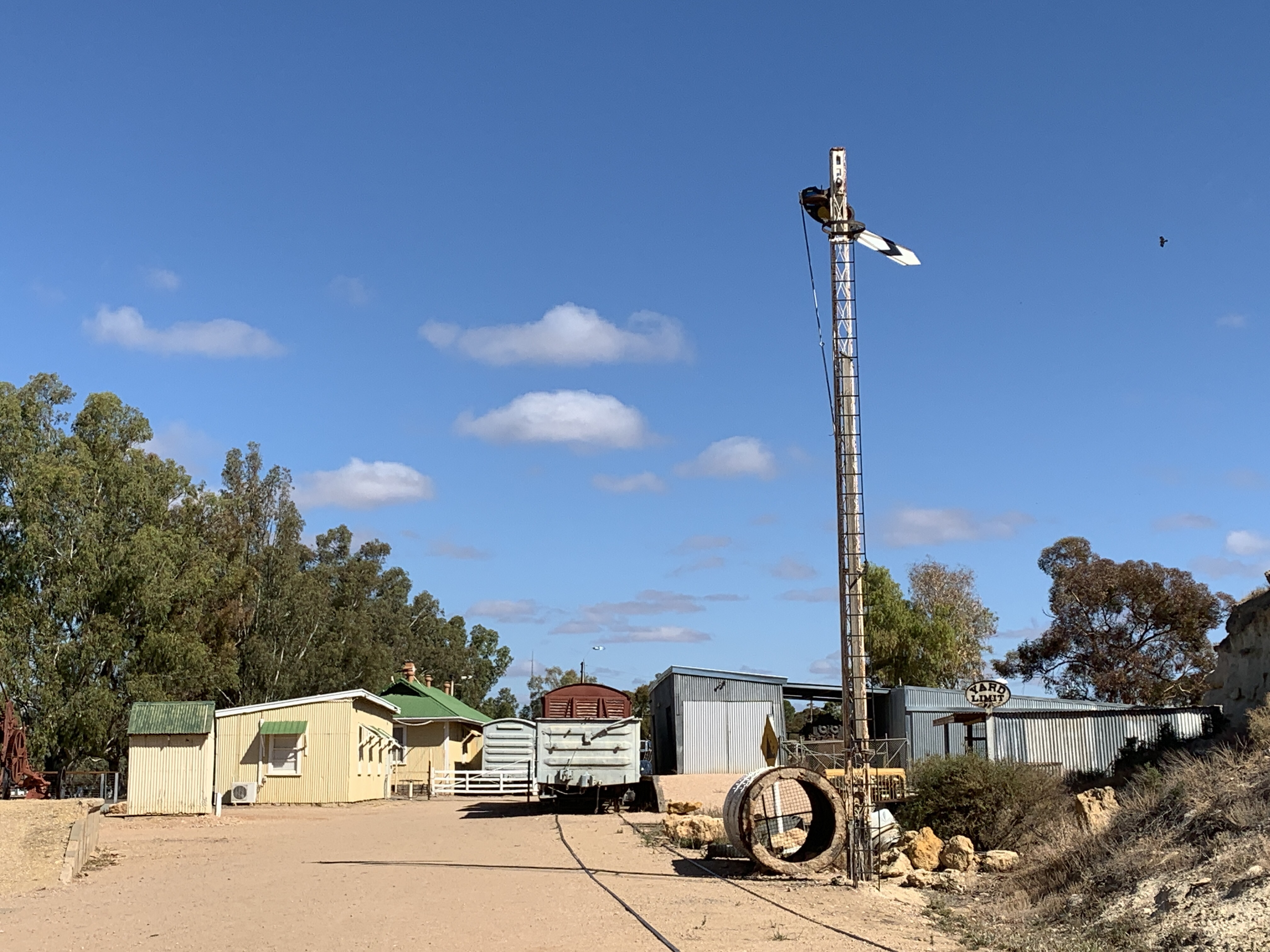
The lock system on the Murray is extensive and consists of 13 Locks starting with Lock 1 at Blanchetown, SA. The others are as follows:
Locks 12-14 and Locks 16-25 were never constructed.
The lock system enables boats to navigate up and down the river and the river is navigable for boats from the mouth of the Murray in South Australia to Yarrawonga Weir.
There are also two small locks on the barrages near the mouth of the Murray that were constructed in 1940.
The locks are manned by lockmasters and they usually live near the lock. There’s a great little video on a day in the life of a lockmaster here.
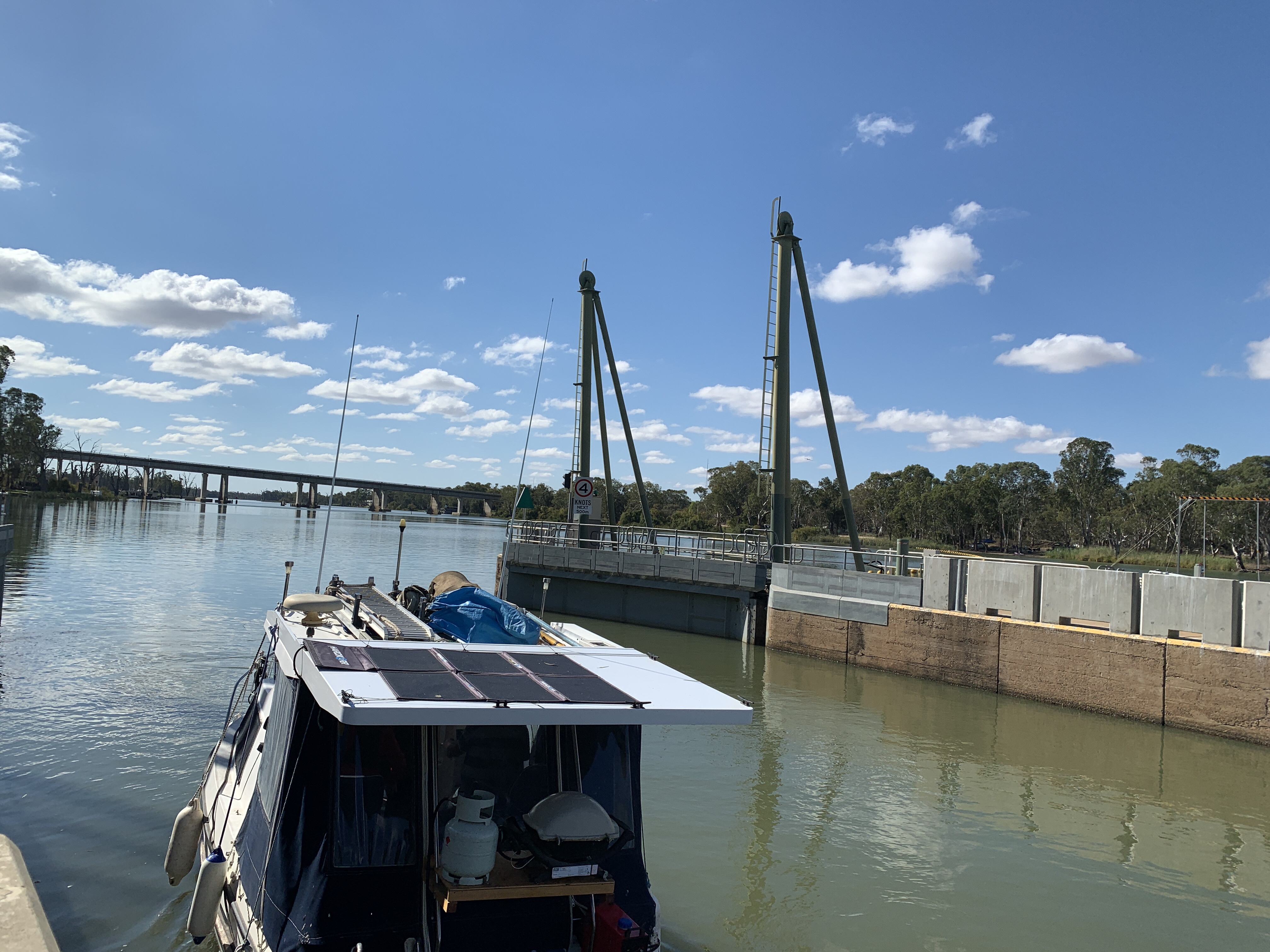
The locks are open from 8am – 11.30am and again in the afternoon from 1.00pm to 4.30pm. To let the lockmaster know you are arriving at the lock you blast three long sounds on your horn (or call him by phone, each lock has its own number to call). When he has heard or received your request the red light will start to flash. This lets you know the lock is being readied for you. Once the light changes to green you can enter the lock.
6-8 medium houseboats can use the lock at the same time. It only takes 5-7 minutes to empty or fill the lock but it can take up to 15-20 minutes for a craft to pass through the lock. There was a houseboat moored near the lock waiting for the lock to reopen in the morning.
Although the locks were built to allow river trade it is now the tourist industry that uses them. Houseboats, tour boats and other recreational craft are the users of the lock system today and the locks provide an enormous contribution to the tourism industry along the river.
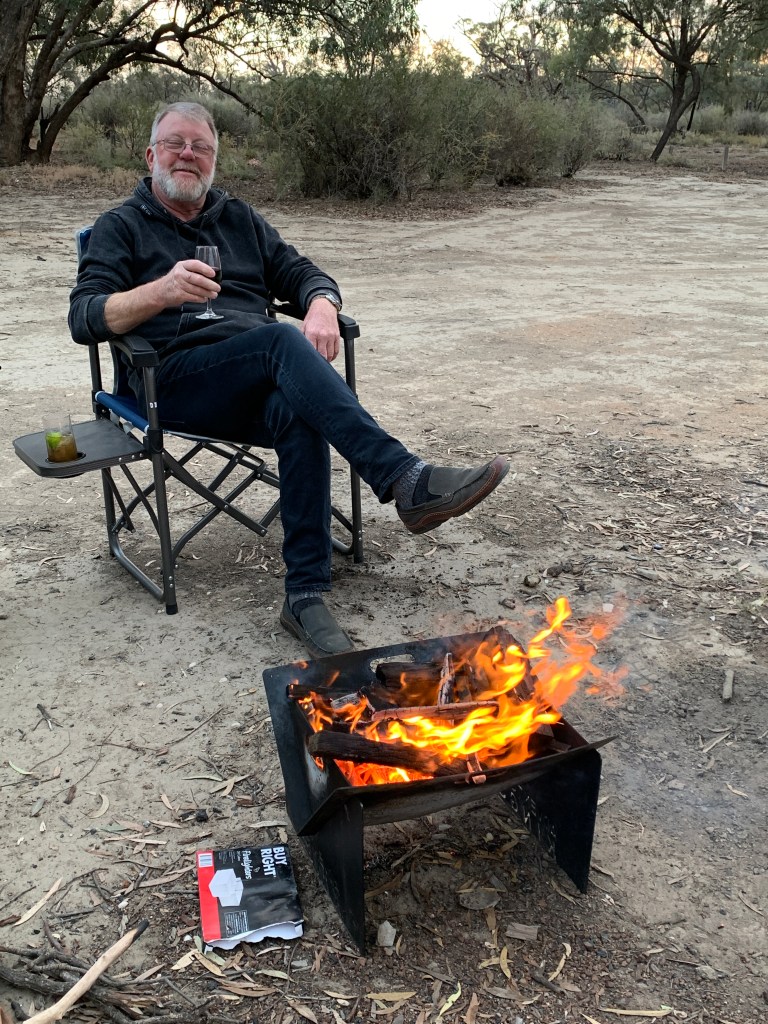
It is a very peaceful spot to camp. We were the only ones there, apart from the Pelicans and a couple of kangaroos that hopped by as we sat by our fire pit. I recommend this free camp to most, big rigs excepted as you would have trouble negotiating the narrow track in.
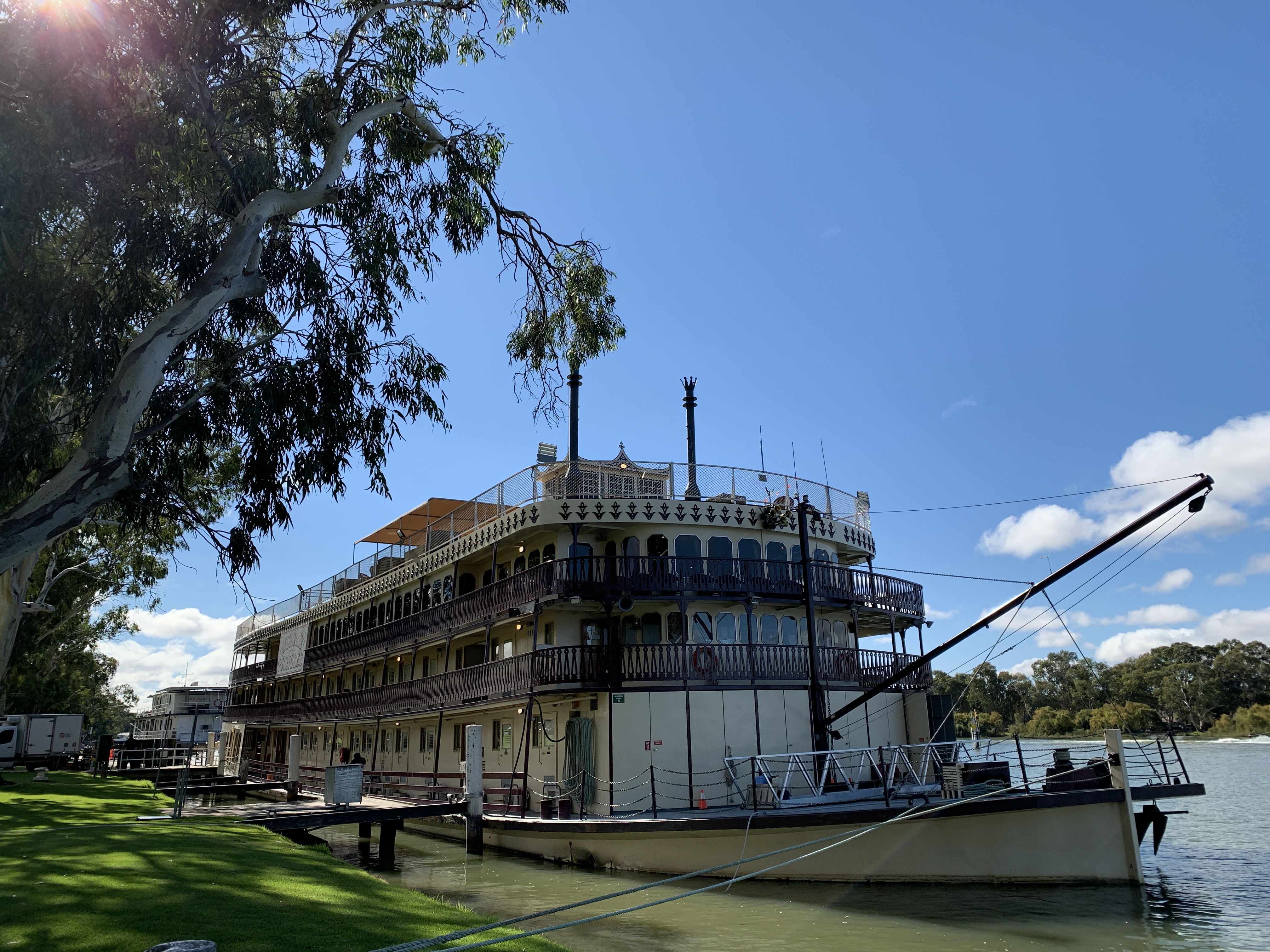
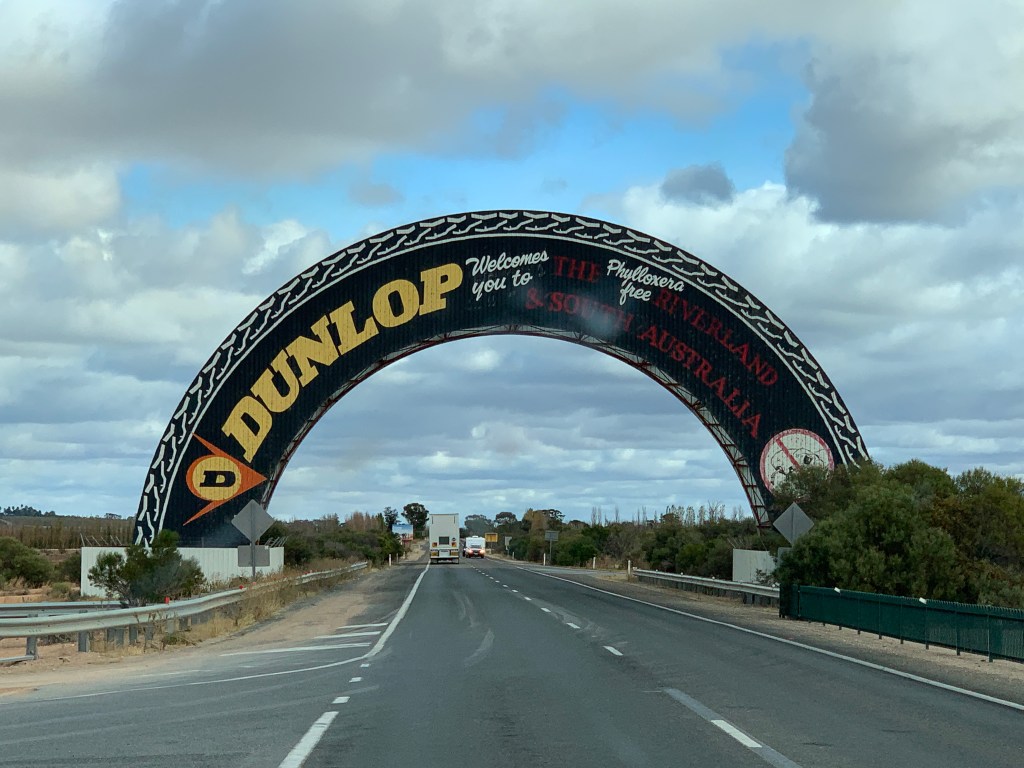
The next morning we continued our journey along the river, crossed the border into South Australia where we had to stop at the Fruit Fly Bin and leave any fruit and veggies behind that are on the banned list, before arriving in the town of Paringa. Paringa has some new Silo Art and around the corner near the general store is the The Black Stump. This giant River Red Gum root is the remains of a 600 year old tree and is 8m wide.
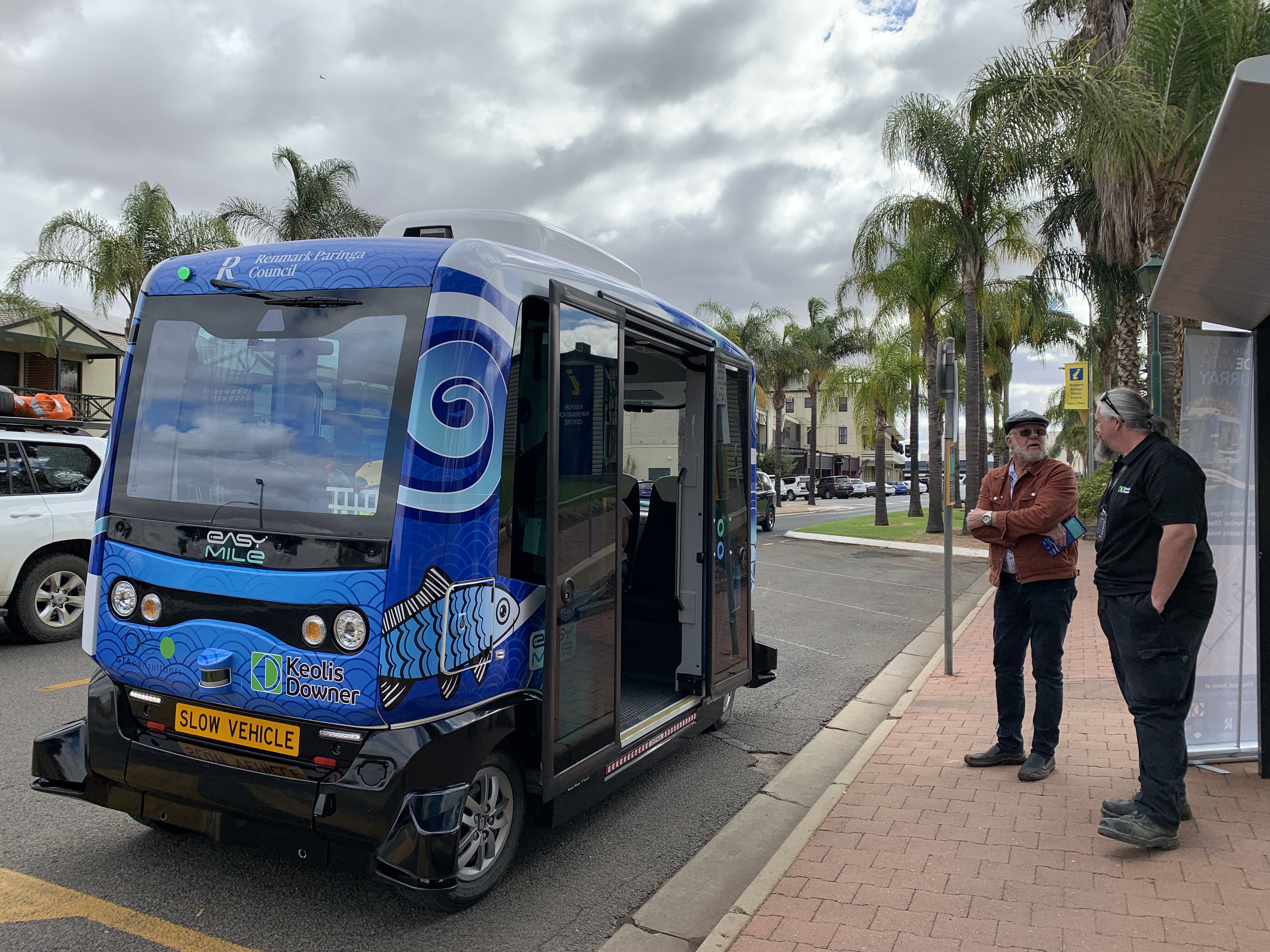
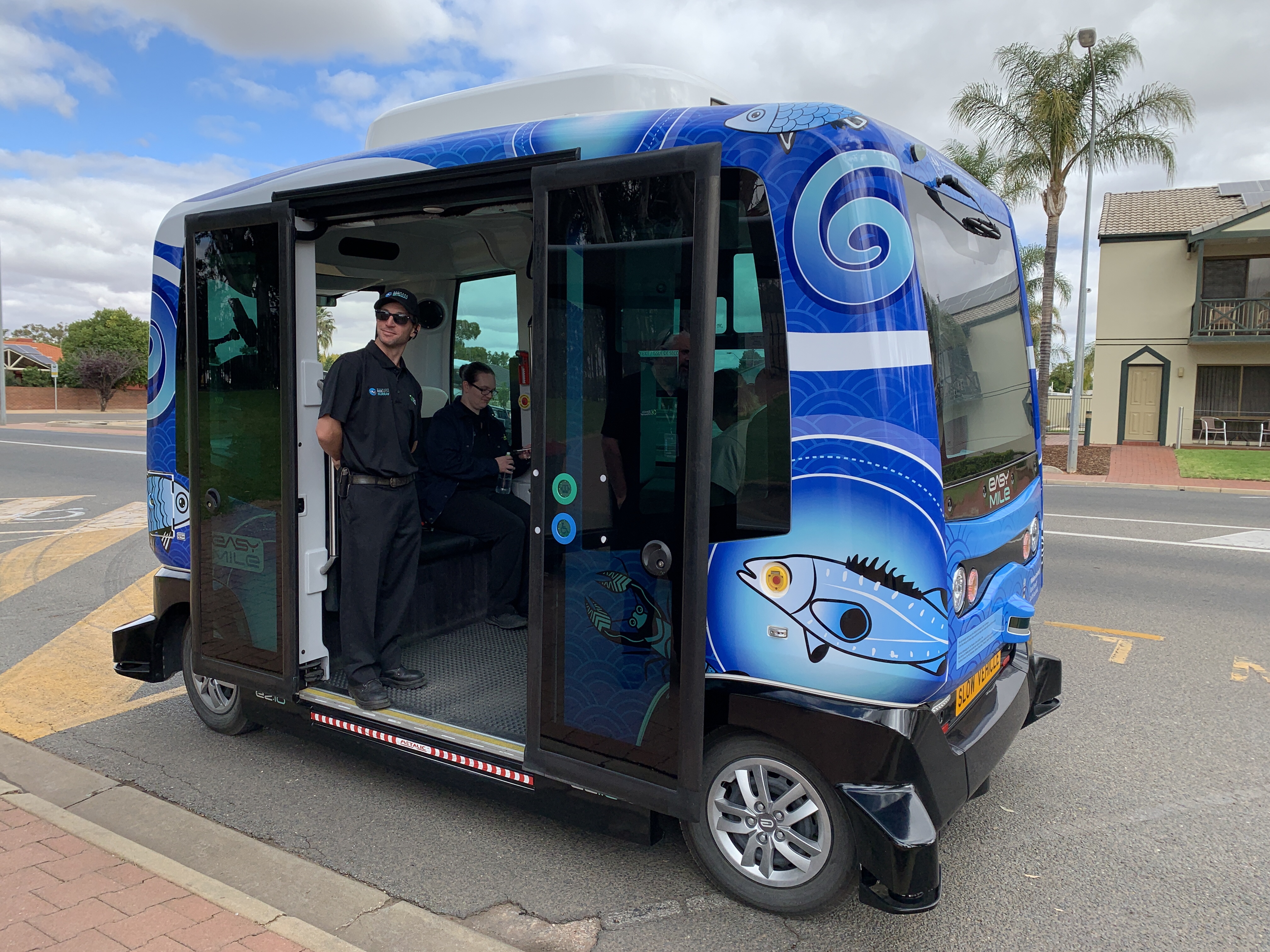
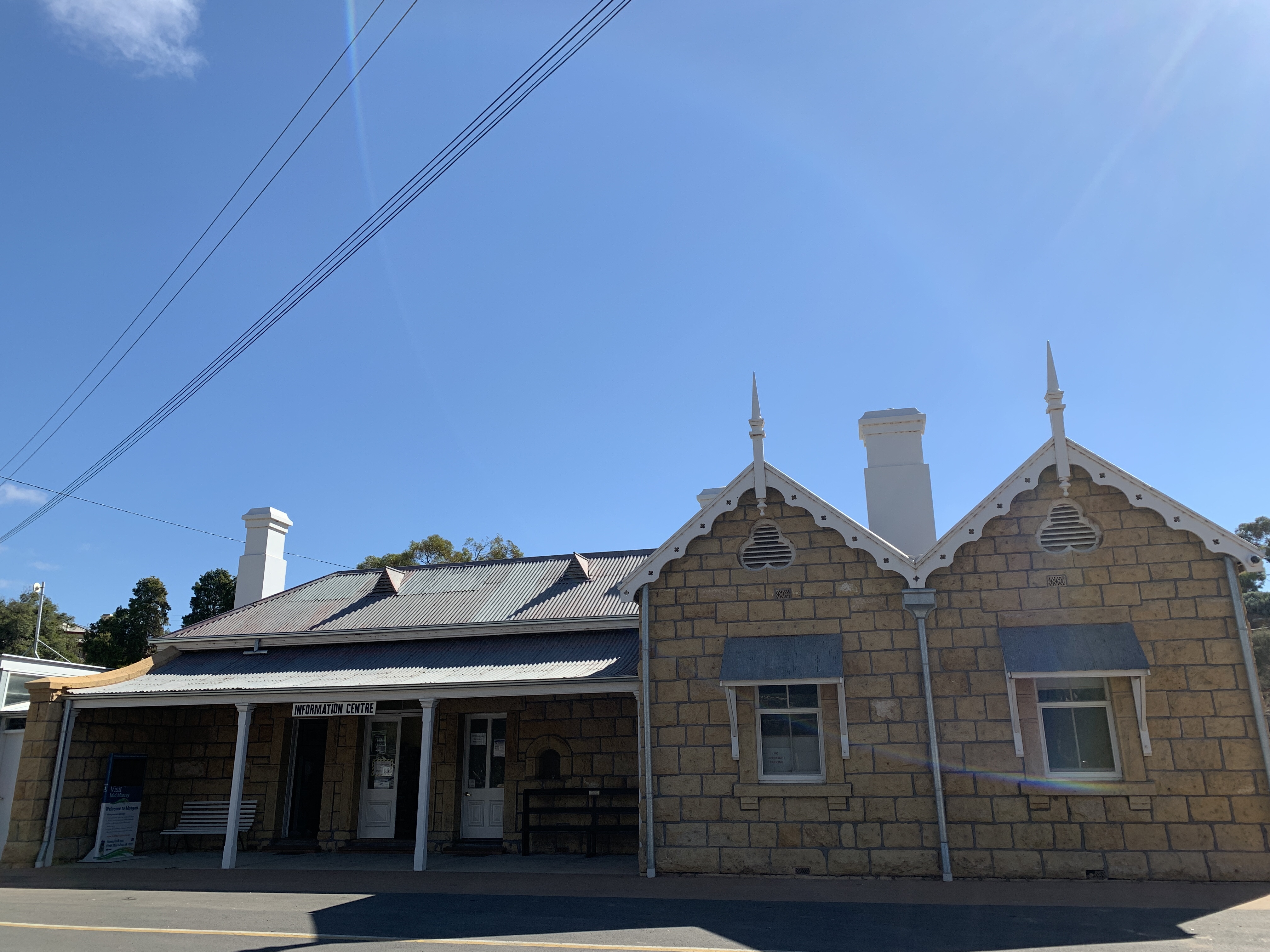
What a surprise we had in the lovely riverfront town of Renmark, SA. We were enjoying a pizza and coffee sitting outdoors at the Smokehouse Pizza Cafe. We looked up and both said ‘what’s that?’ As a little blue bus went by very slowly. Turns out it was Murray the driverless bus.
Murray is part of a Driverless Bus Trial service in Renmark and Murray runs a select route though the main part of town every 30 minutes. He runs on Tuesday from 10am to 1pm and from Wednesday to Saturday from 10am to 4pm. The service is free. You just wait at one of the six stops and get on when Murray comes to a stop. The stops all have river themed names: Cod Catfish River Wave Yabby Perch
Murray is an all electric vehicle and, although there is a person on board to explain how Murray works and what the trial is all about, he is completely automatic.
We talked to one of the guys at the stop near the Information Centre as Murray was stopped there picking up some passengers. He said one of the most popular questions they get asked is ‘Can Murray crash?’ The answer is no. He said Murray has even stopped for a butterfly to fly past!
After a peaceful camp alongside Lake Boga we set off to visit the Catalina Museum. I had no idea what to expect and didn’t really know anything about flying boats.
The museum is sponsored by the local Lions Club and they have done an incredible job. It’s a really fabulous little museum. I didn’t know that Lake Boga played a huge part in the war effort in Australia. I’d never heard of Lake Boga. The story goes that after the Japanese attack on Broome in 1941 both Lake Kangaroo and Lake Boga were inspected and Lake Boga was chosen to be the top secret site for the No 1 RAAF Flying Boart Repair Depot. Lake Boga was chosen mainly because it is round and the flying boats could land from any direction. It didn’t matter which way the wind was blowing.
Lake Boga saw its first flying boat on July 12, 1942 when a quantity of stores and equipment was flown in by a Catalina Flying Boat. Over the time of its operation the Lake Boga Flying Boat Repair Depot serviced over 416 aircraft with various aircraft such as Catalinas, Dorniers, Martin Mariners, Walrus, Kingfisher and Sunderlands.
The museum houses the original underground communications bunker and the bunker now displays communications equipment of the era. As the mission was top secret only personnel that had top security clearance could enter the bunker.
Lake Boga covers an area of 1000 heactares (2000 acres) and has only run dry twice in recorded history. The last was in 2008. This enabled the Lions Club to arrange to the removal from the lake bed of the huge concrete mooring buoys that had been left behind after the war. These huge blocks, some with chains still attached, weigh 2 tonnes each.
When you enter the museum, after passing past the huge concrete mooring blocks in the carpark, you are greeted by the volunteer staff. You are directed to the the outdoors first to view the underground bunker display. This is followed by a 20 minute film in their little theatrette. Then you go into the museum proper where they have an actual Catalina Flying Boat A24-30 on display as well as lots of memorabilia from the time that Lake Boga was part of the war effort.
You can actually climb up a ladder at the rear of the Catalina and look inside. It must have been very hot/or cold inside those things and I imagine when the engines were running it would have been very noisy.
Over the time the Repair Depot was active there were flying crews from Australia, the US and the Netherlands stationed there. There was also the repair and support crews of men and women of the RAAF and WAAF.
These flying boats played a significant part in Australia’s war effort by bombing, supplying troops on the ground, reconnaissance and ferrying equipment.
What a fabulous museum! We spent a good 2 hours there and could probably have spent longer but we had to continue our journey along the Murray River.
According to Trip Adviser this is the number one attraction in Echuca. We’d never heard of it before in spite having visited Echuca many times so we thought we’d better check it out.
It’s a little way out of town on a rural residential property and we arrived smack on their 9.30am opening time. There is a large carpark big enough for lots of cars and tour buses so we had no trouble finding a flat spot to park.
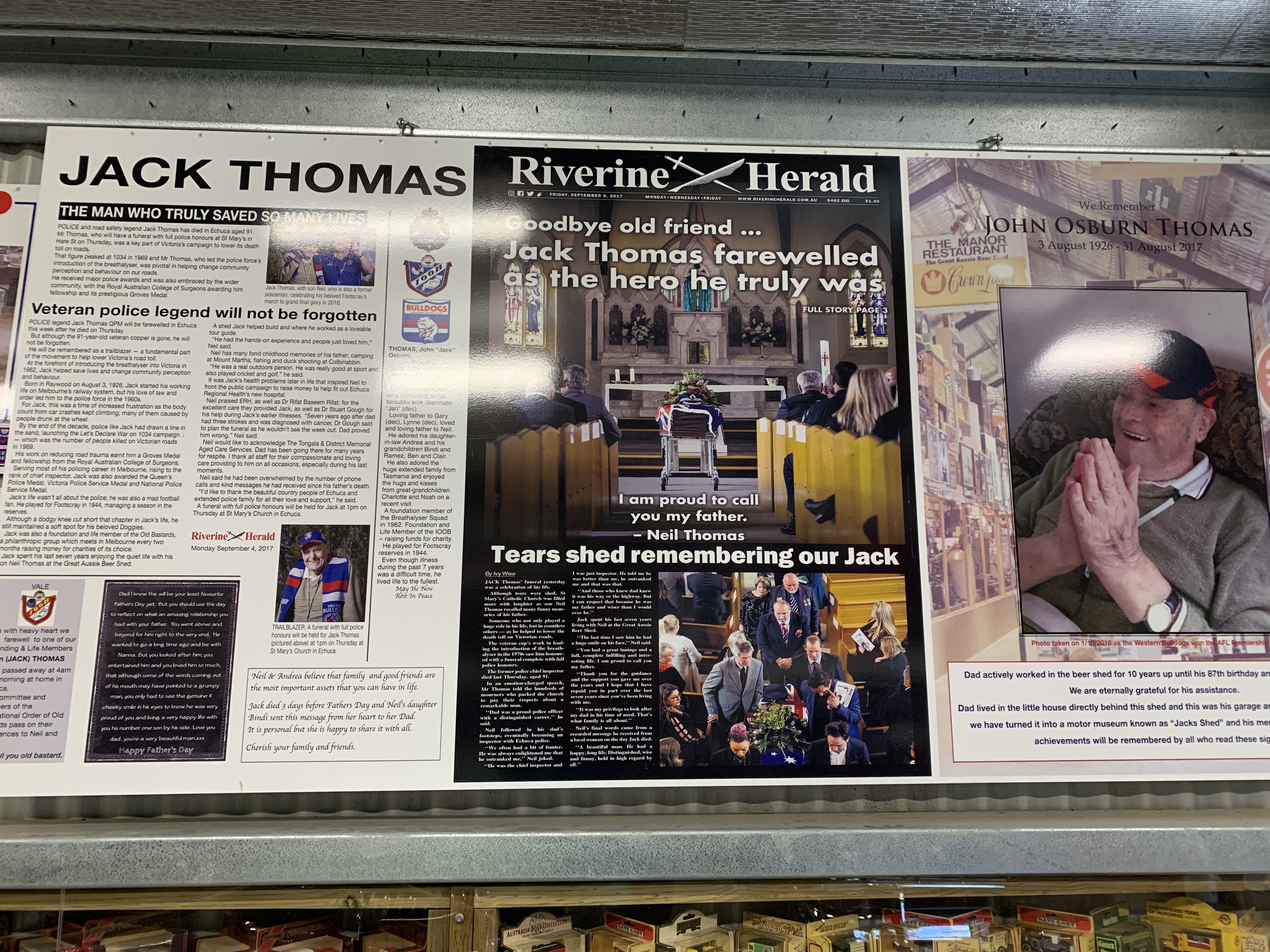
We were greeted at the door by a big, friendly bloke who explained that they are not really open on weekdays but he was expecting a bus in so we were welcome to stay and come on in. There were about 6 others who pulled up just after us and they hadn’t booked either so none of us are very good at reading the fine print! Neil Thomas is the owner of this amazing establishment and he was previously an Inspector with the Victorian Police for 37 years.
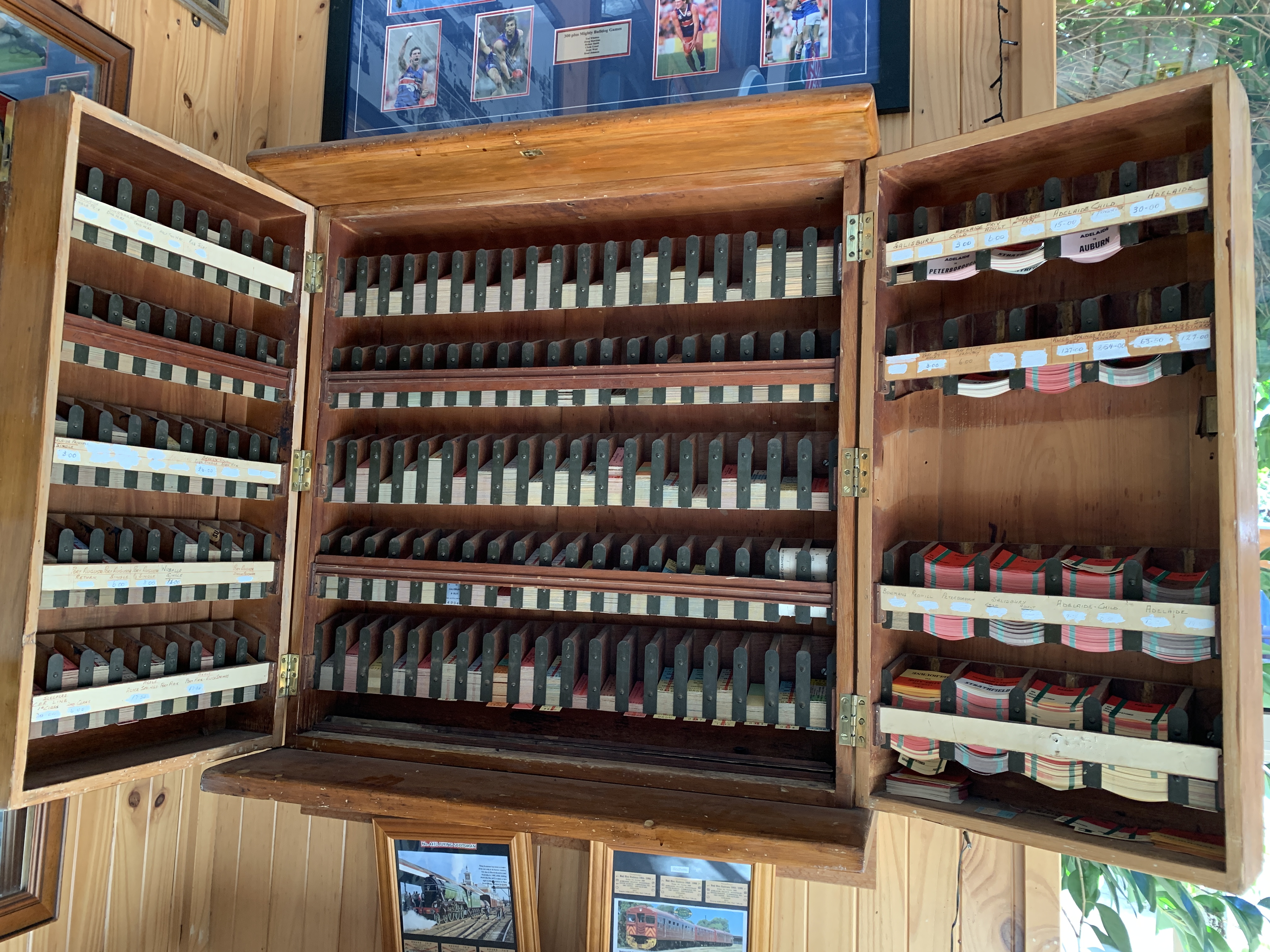
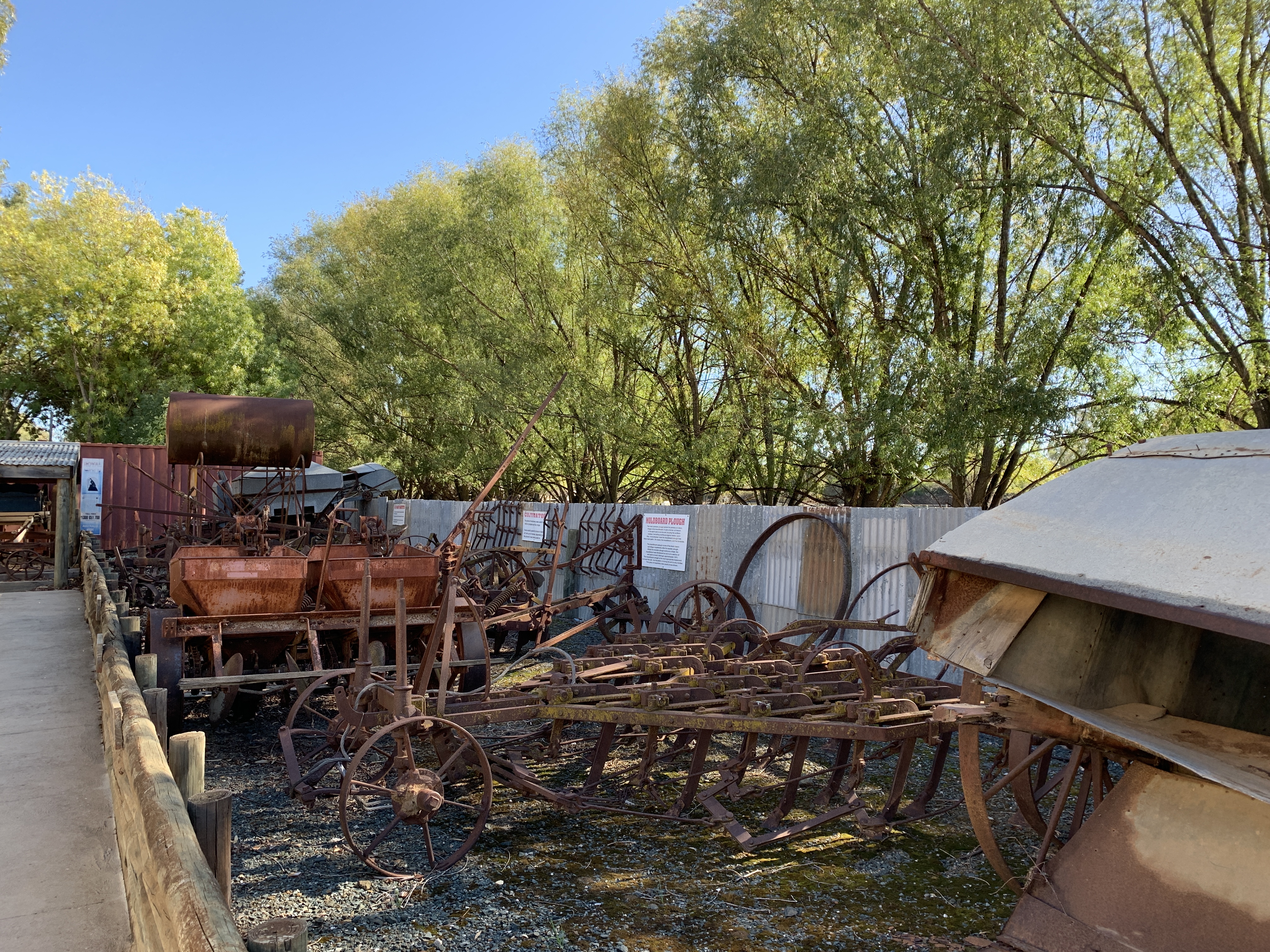
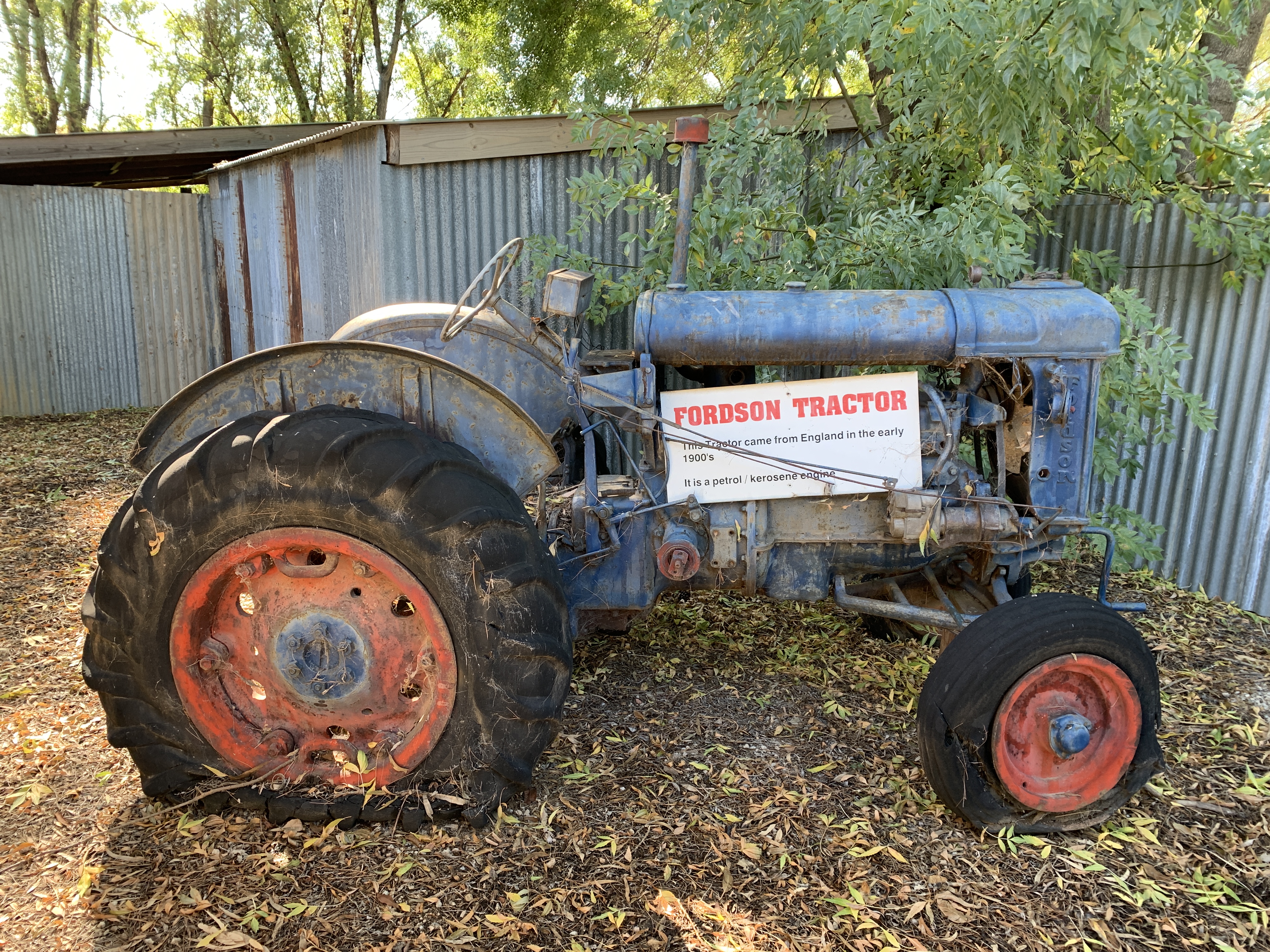
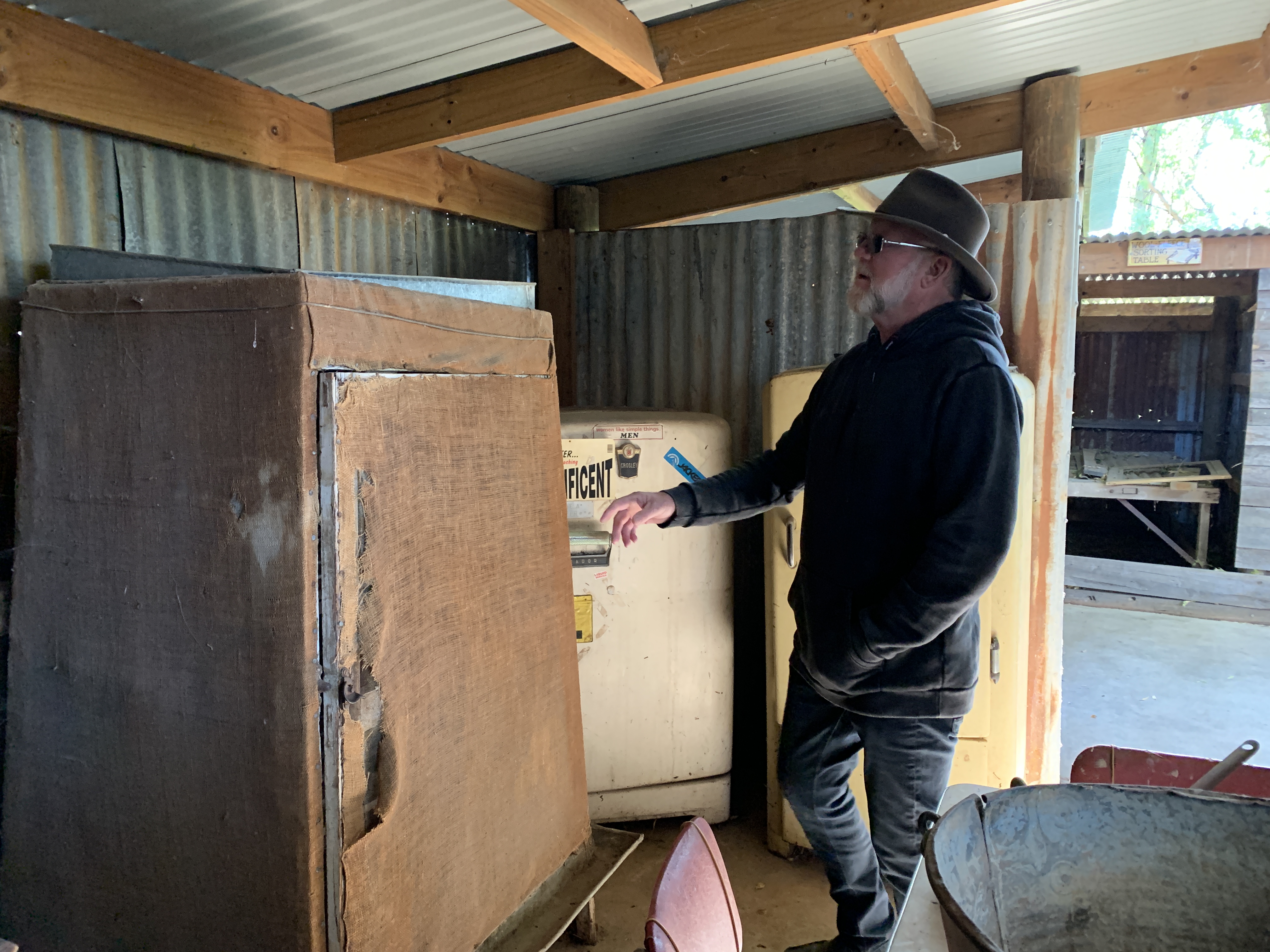
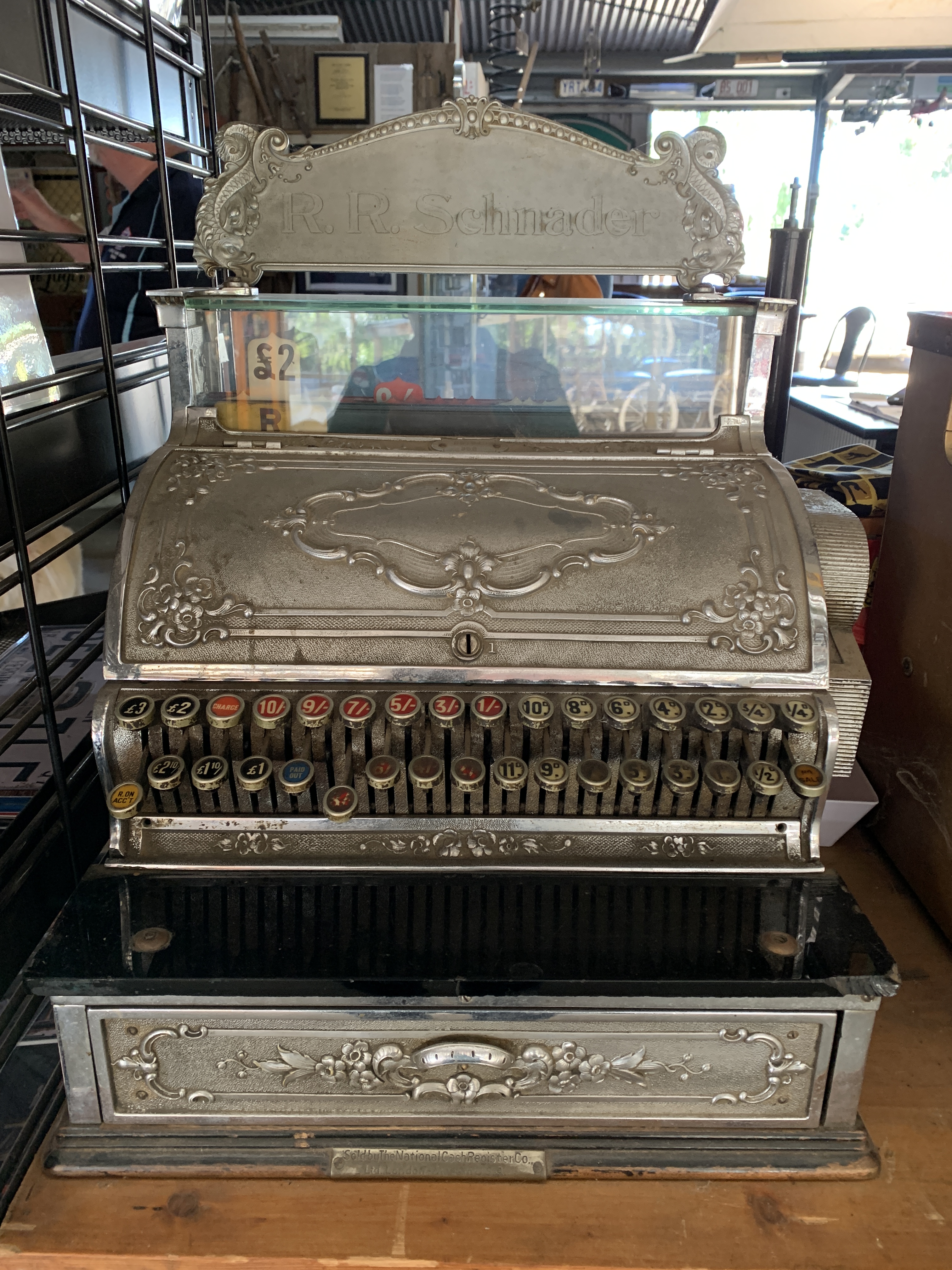
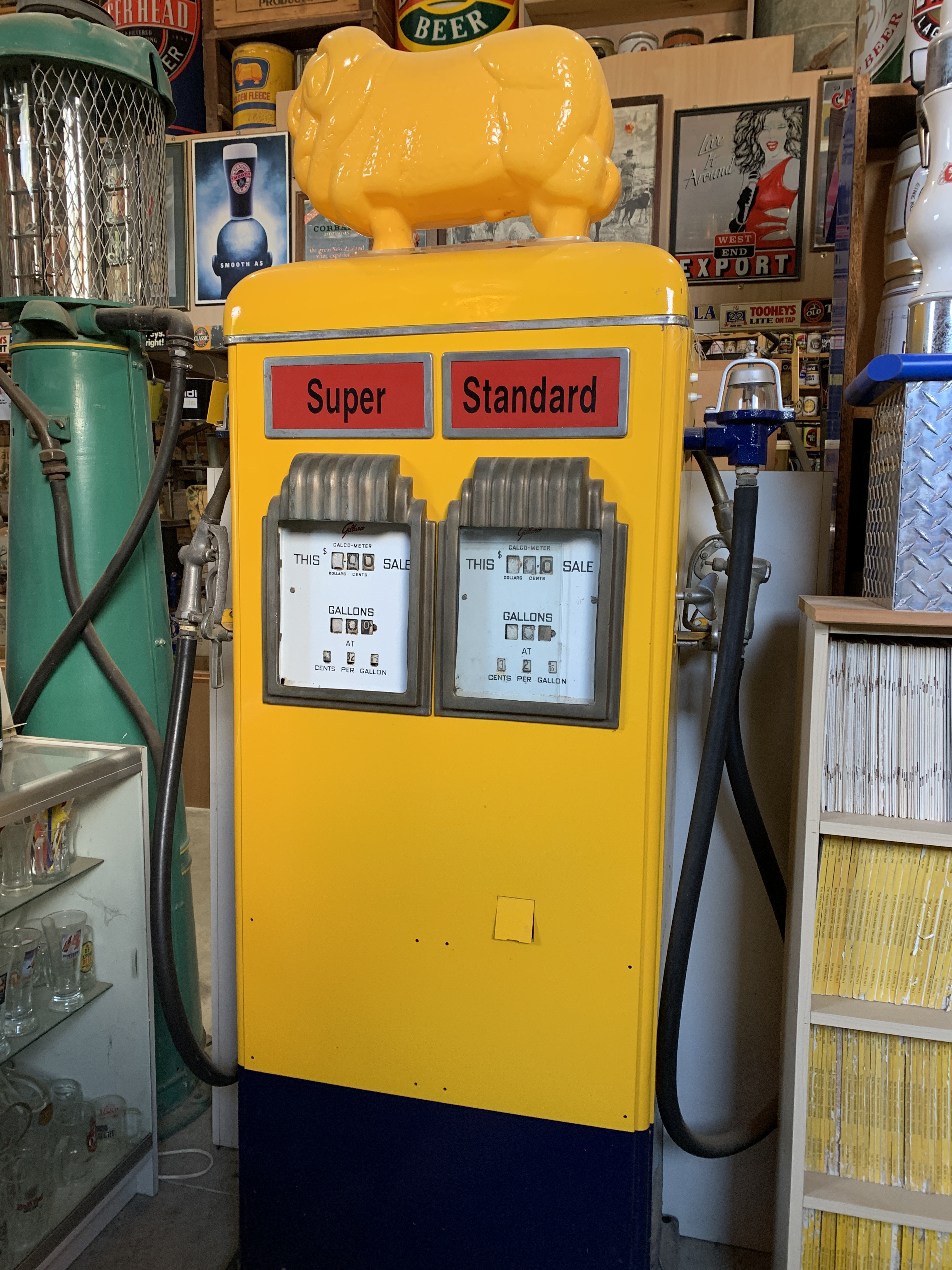
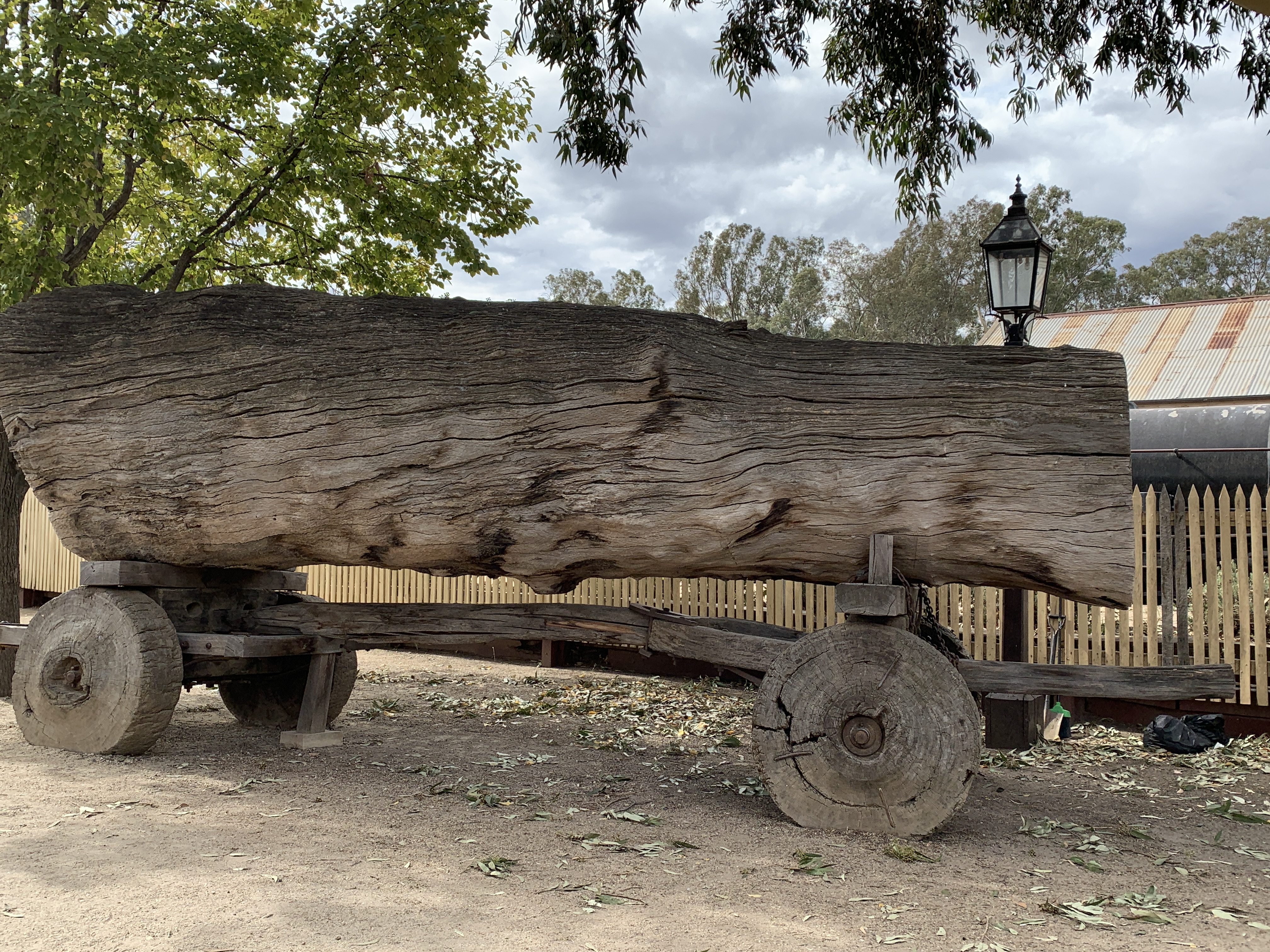
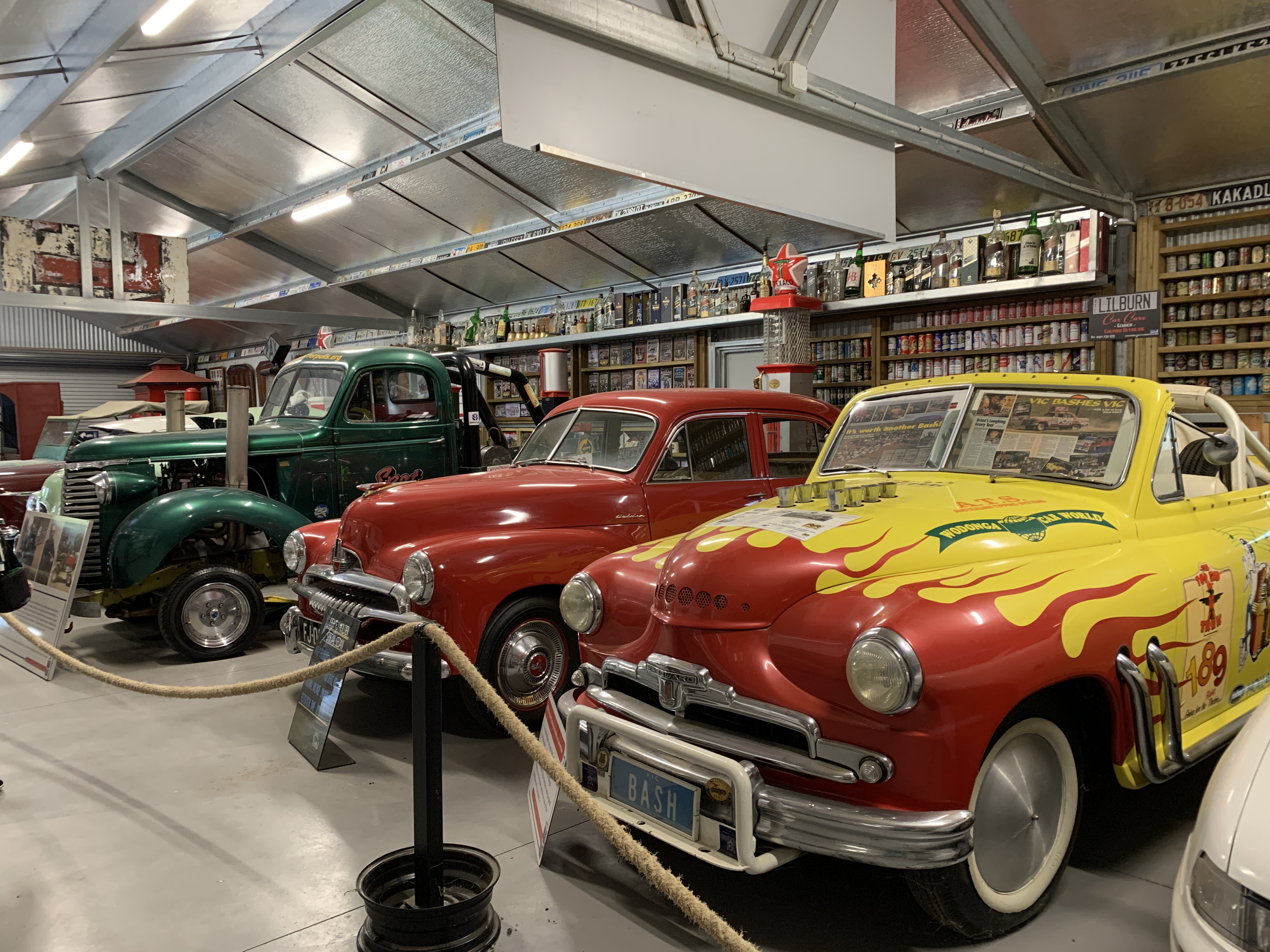
Well, what can I say about this museum? Firstly, it is one man’s obsessive collecting over 45 years. Secondly, I have never seen so much stuff and it’s such an eclectic mix. Outdoors he has collections of old farm machinery including quite a few Furphy Water Wagons. There is a mock up of a blacksmith’s workshop and even an old drovers wagon.
Further around past the farm machinery is The Car Museum. This is filled with old cars and other car memorabilia. The Car Shed is dedicated to Neil’s dad who was a Chief Inspector in the Victorian Police for 35 years. Right up to his old age when he needed a wheelchair he would ‘help’ out at the museum and delight visitors with his yarns.
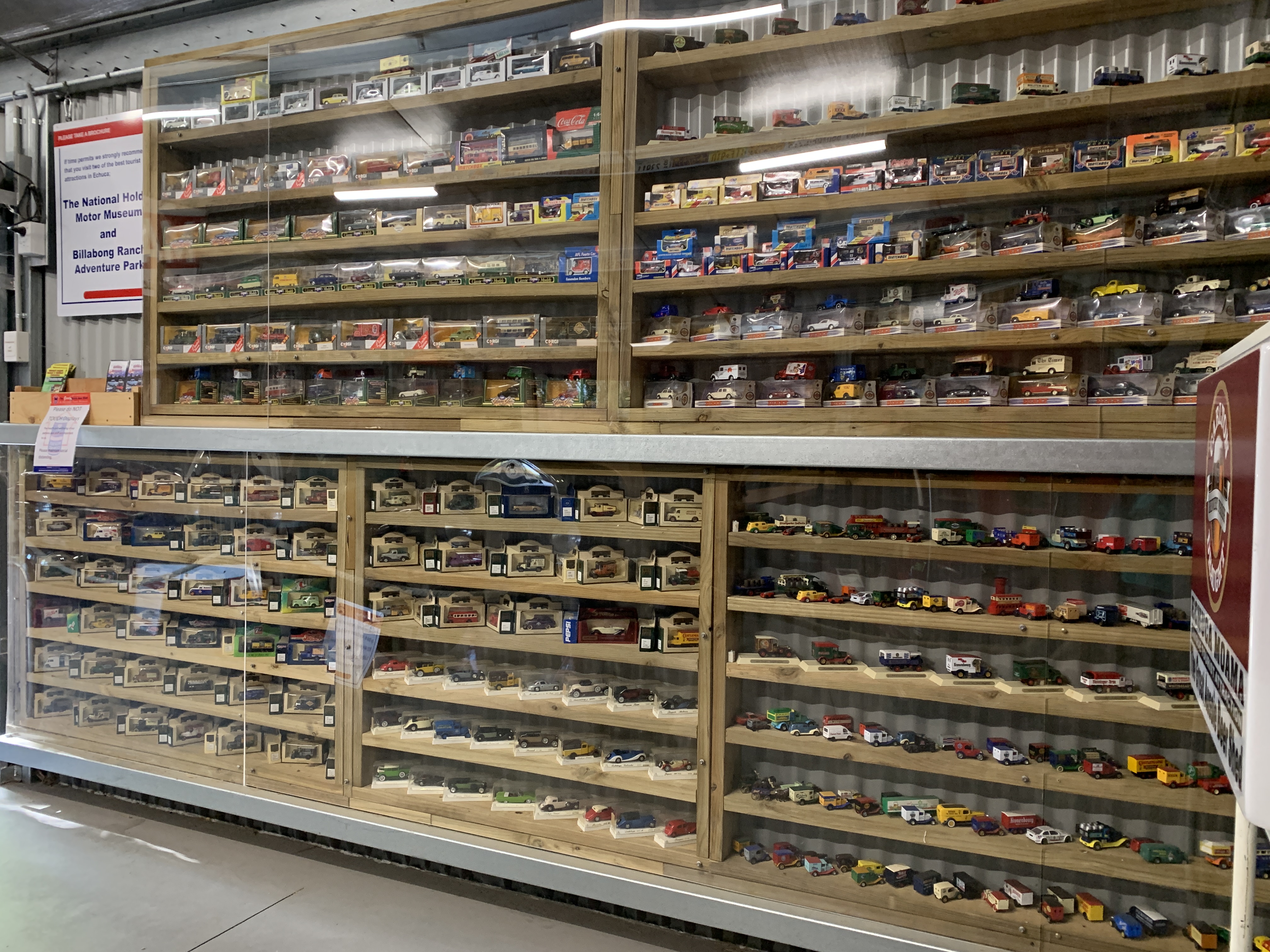
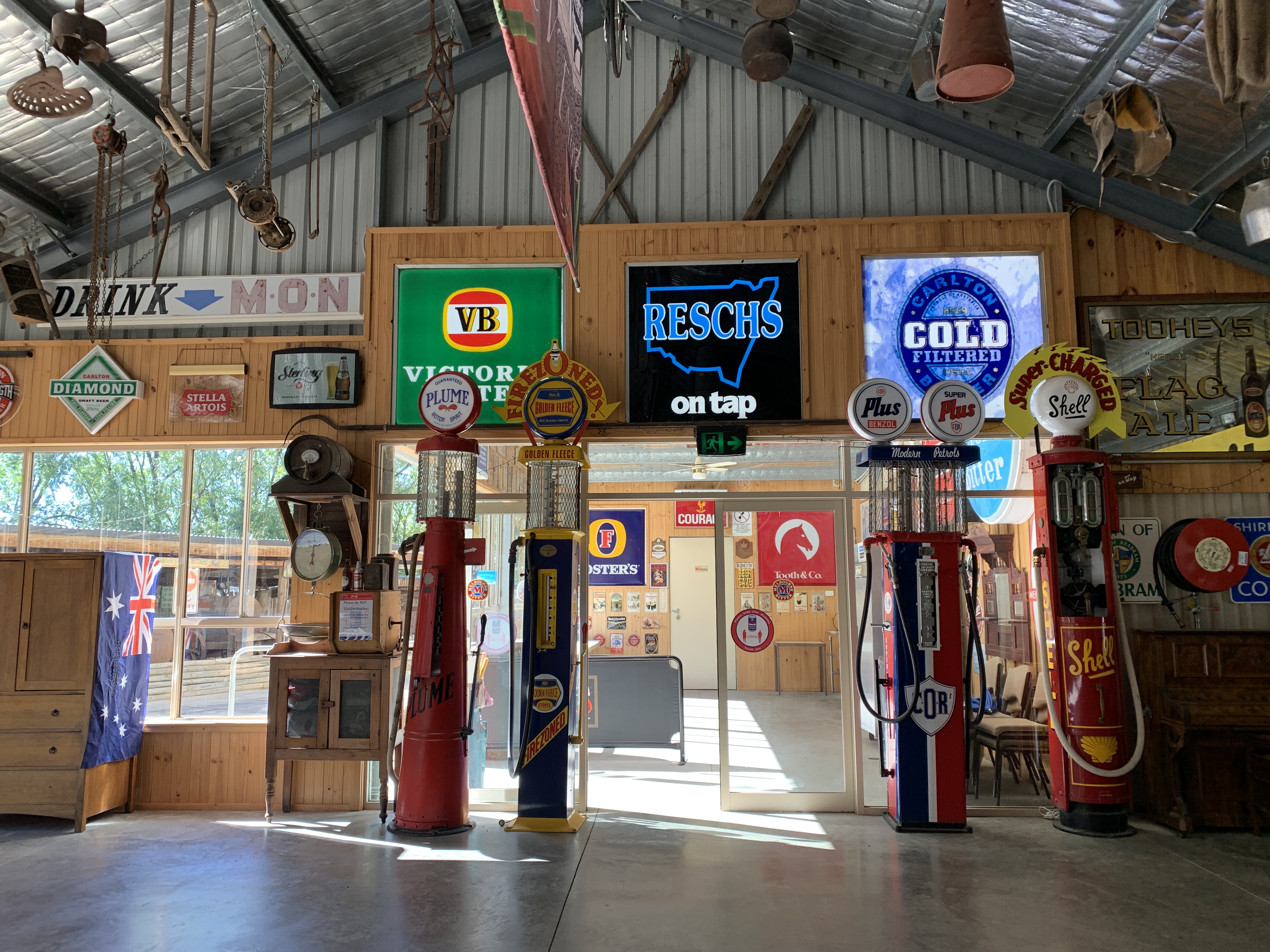
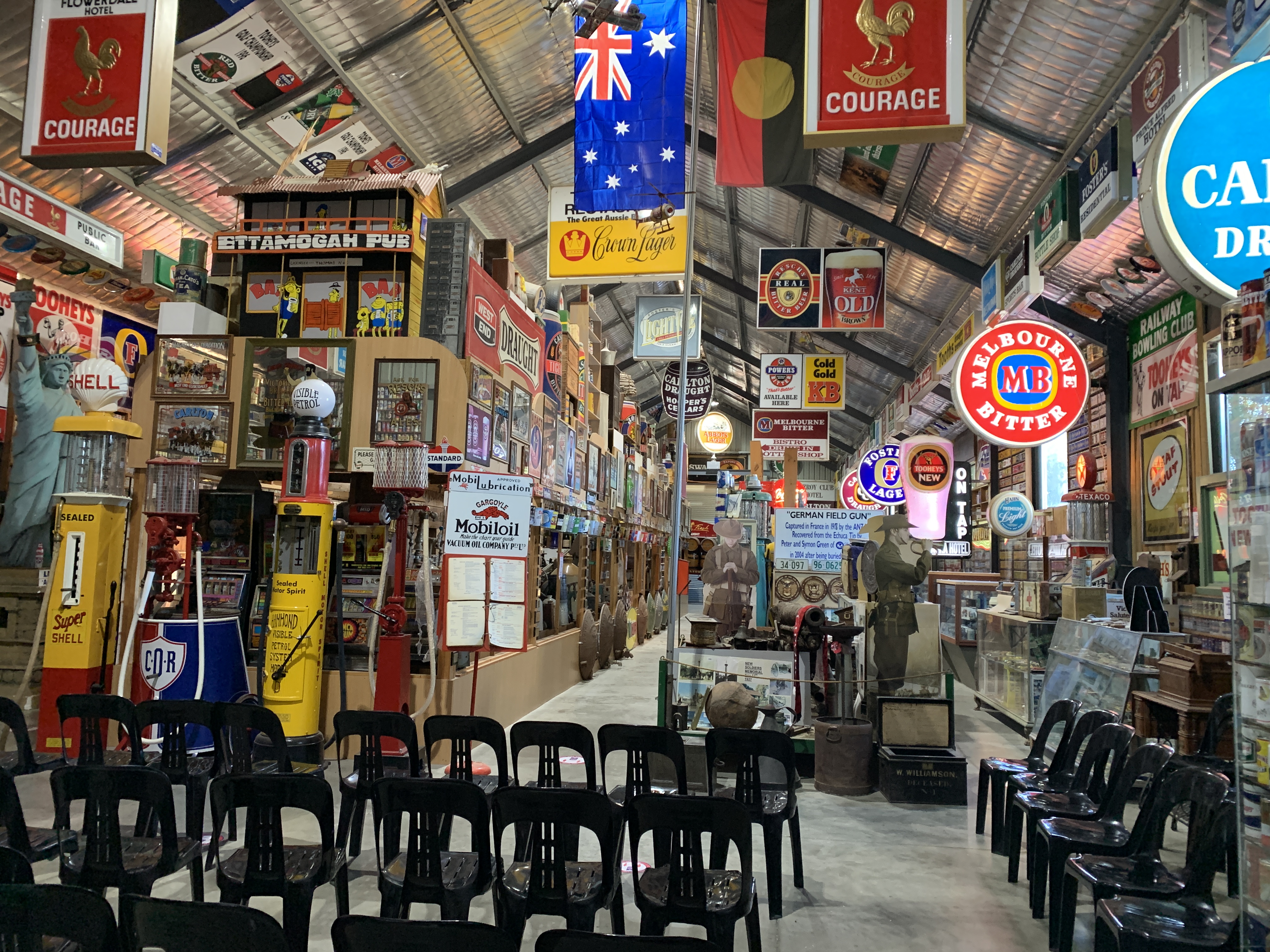
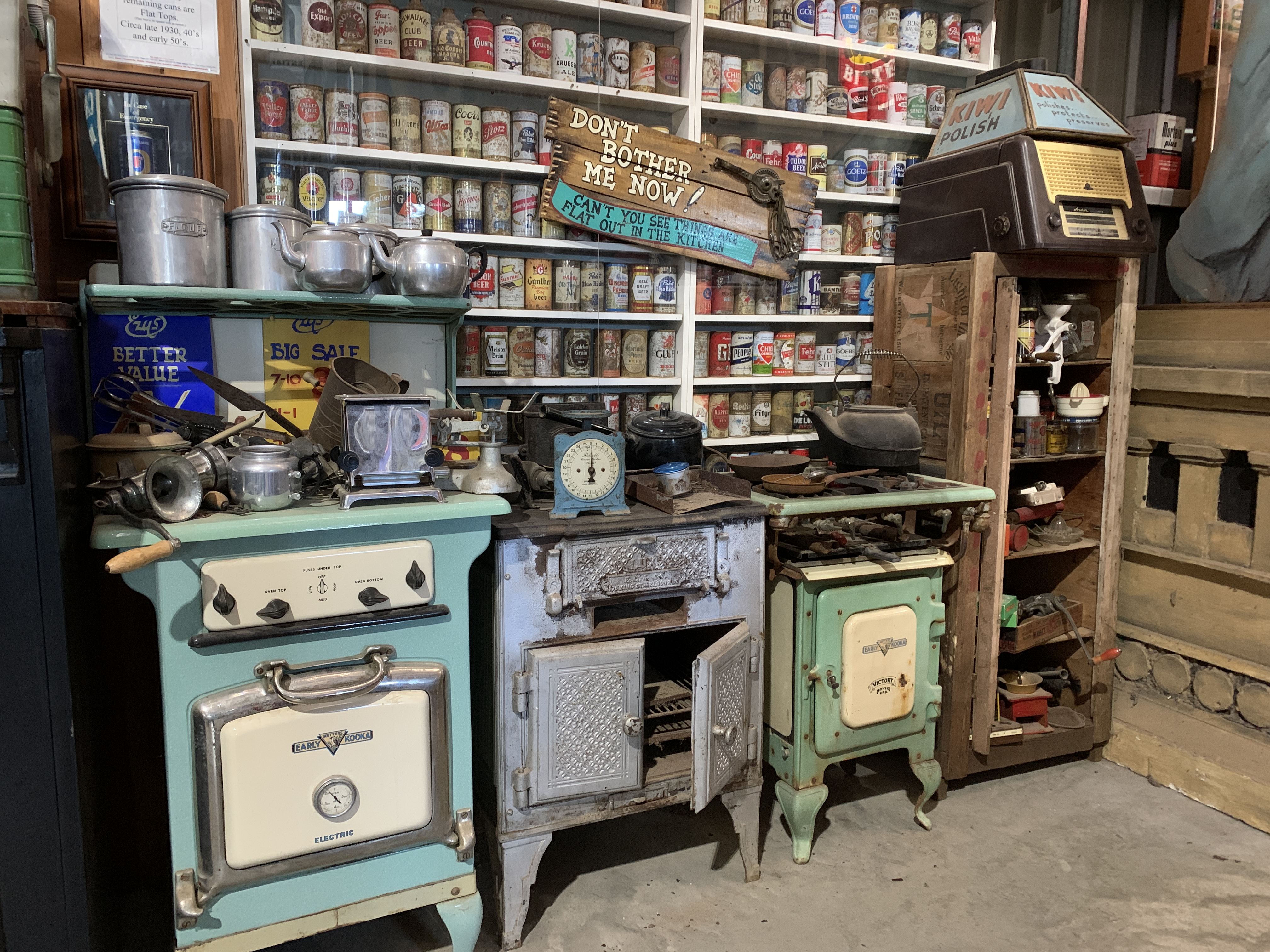
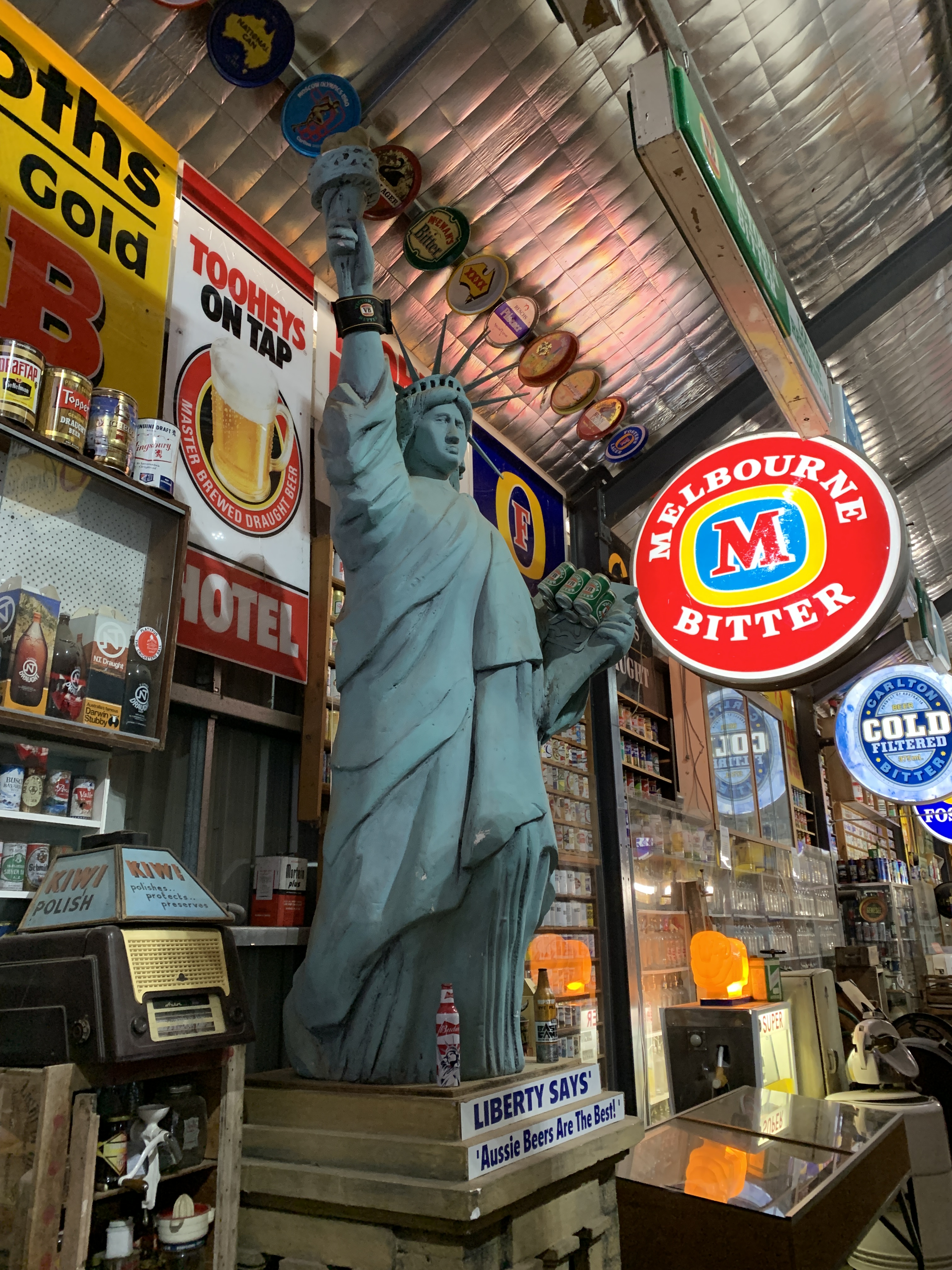
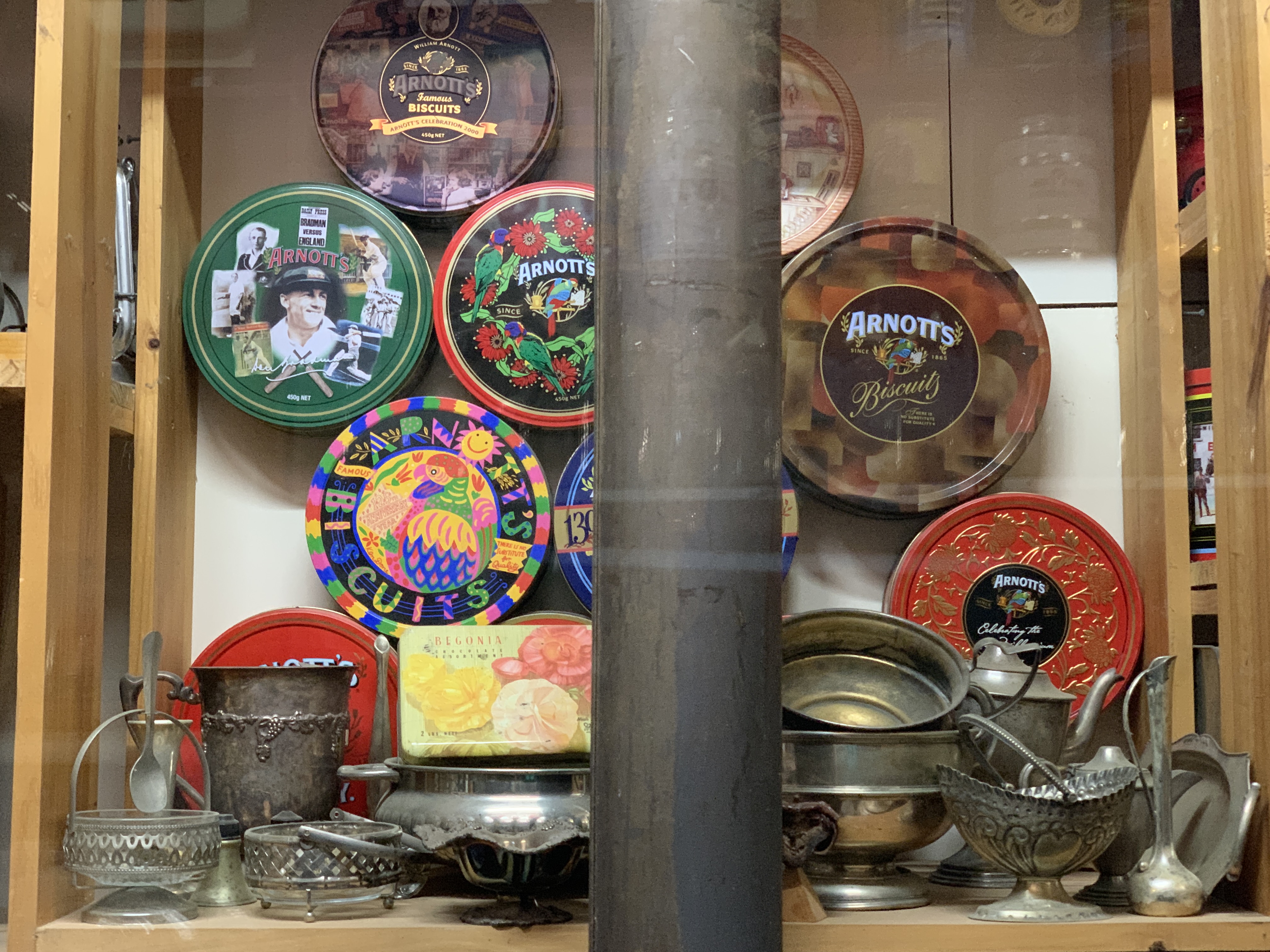
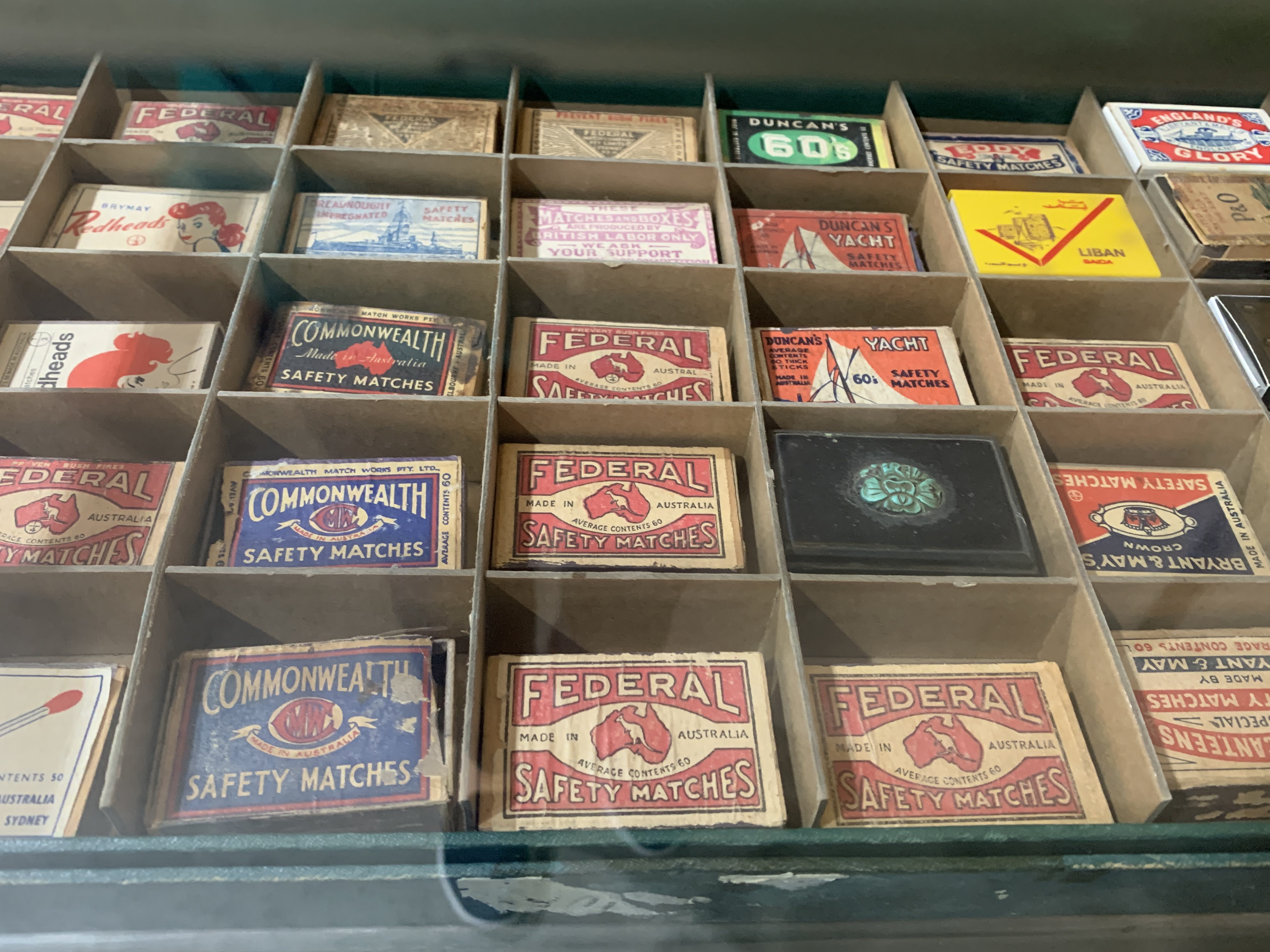
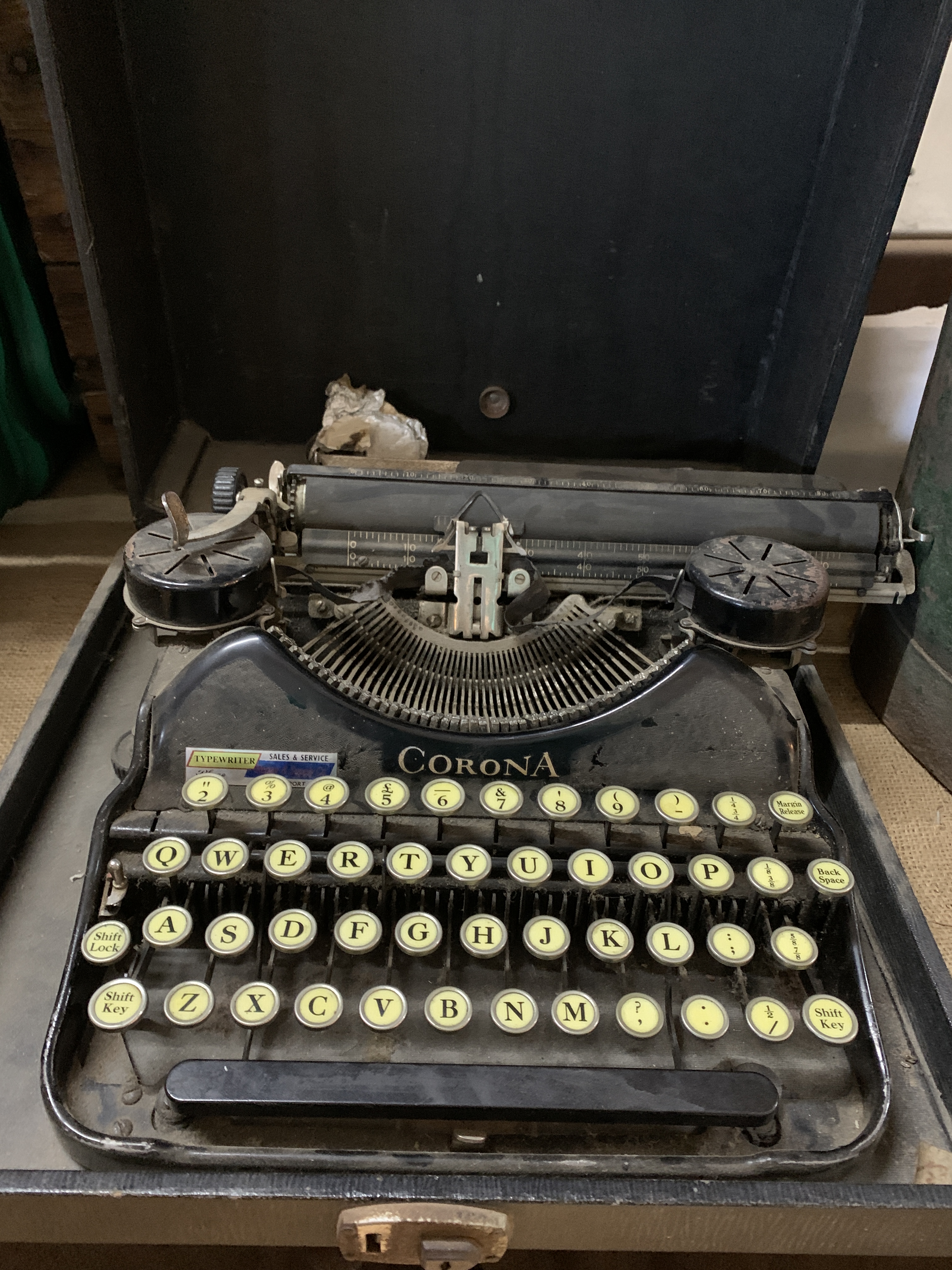
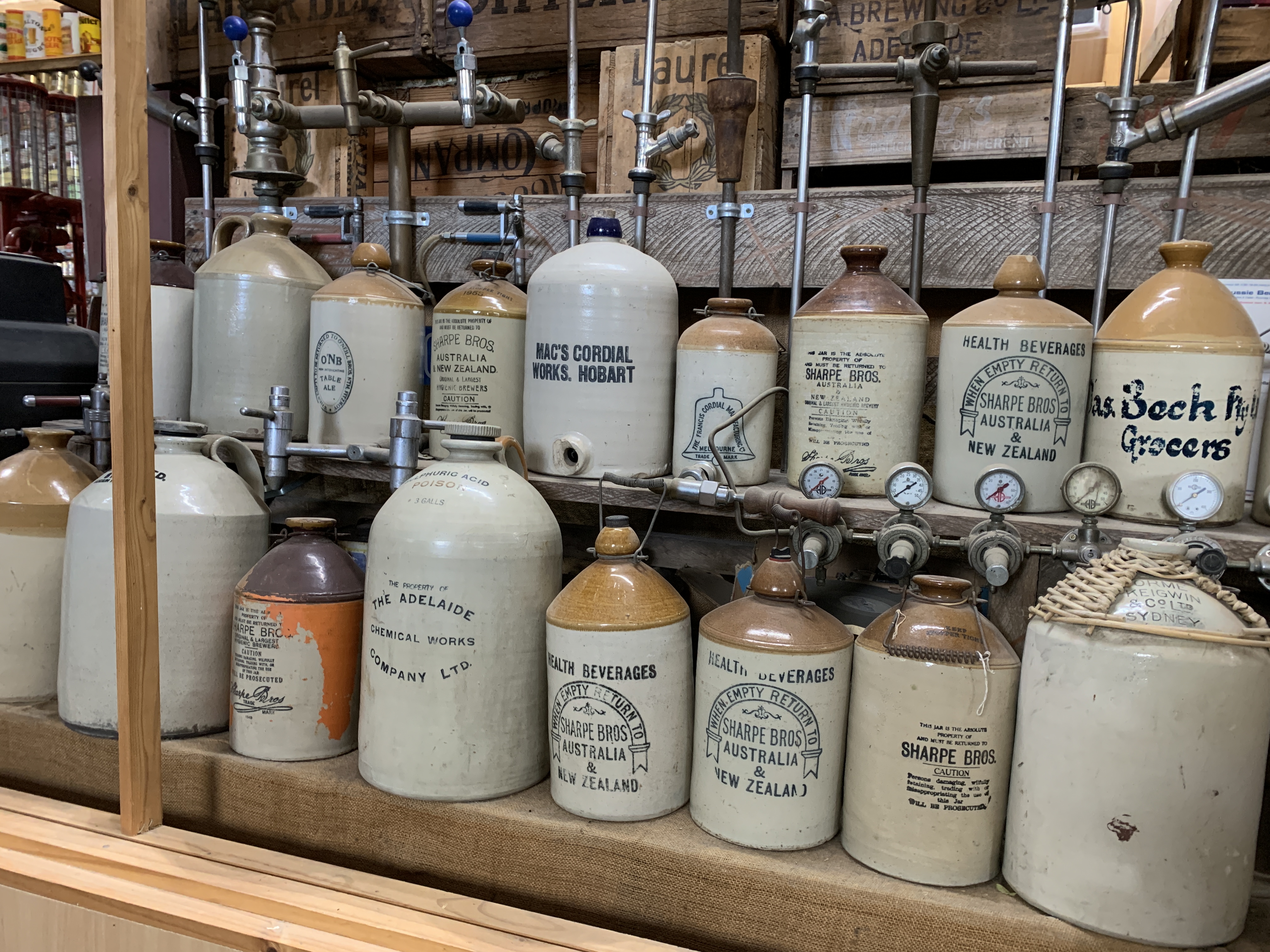
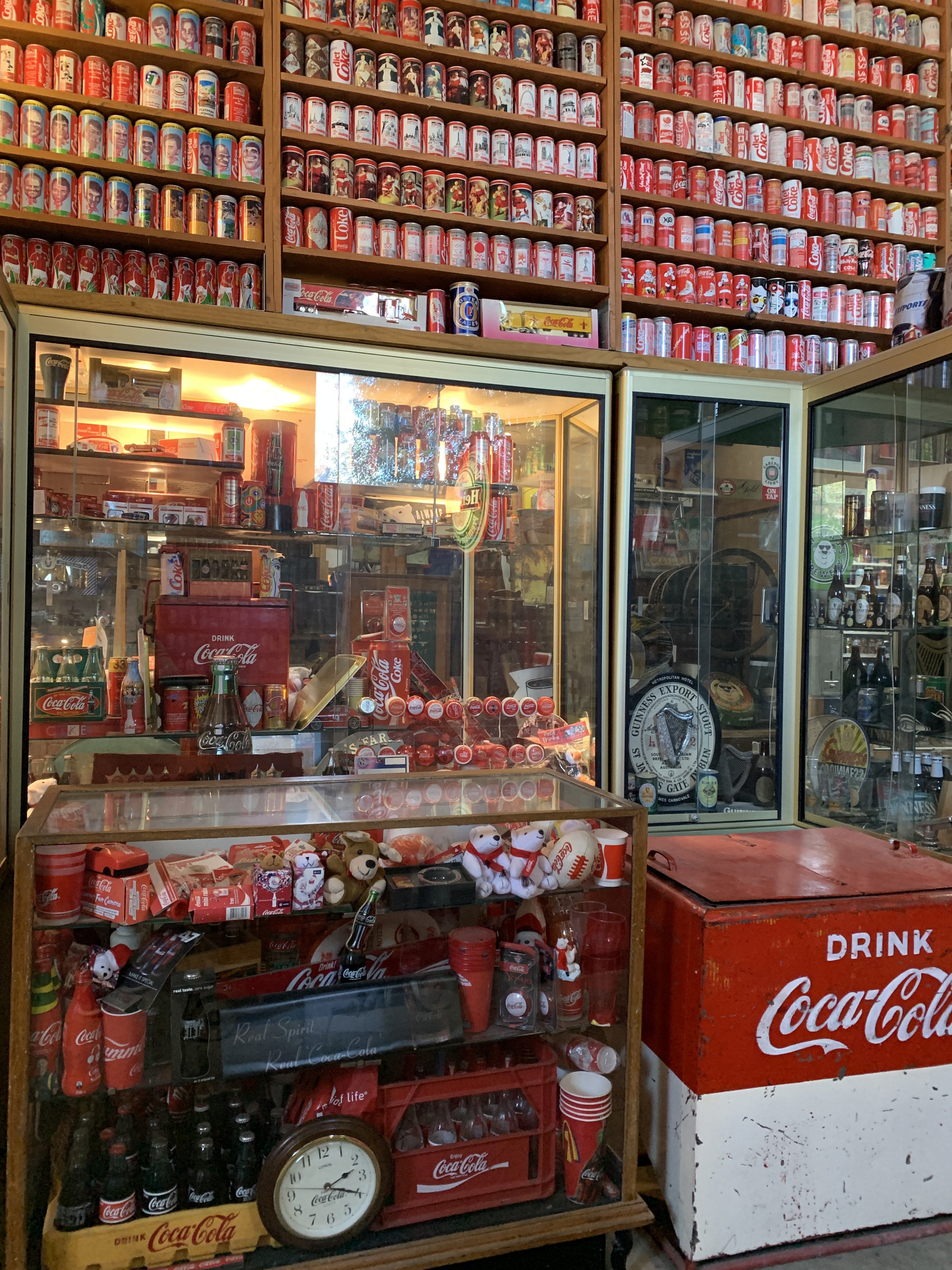
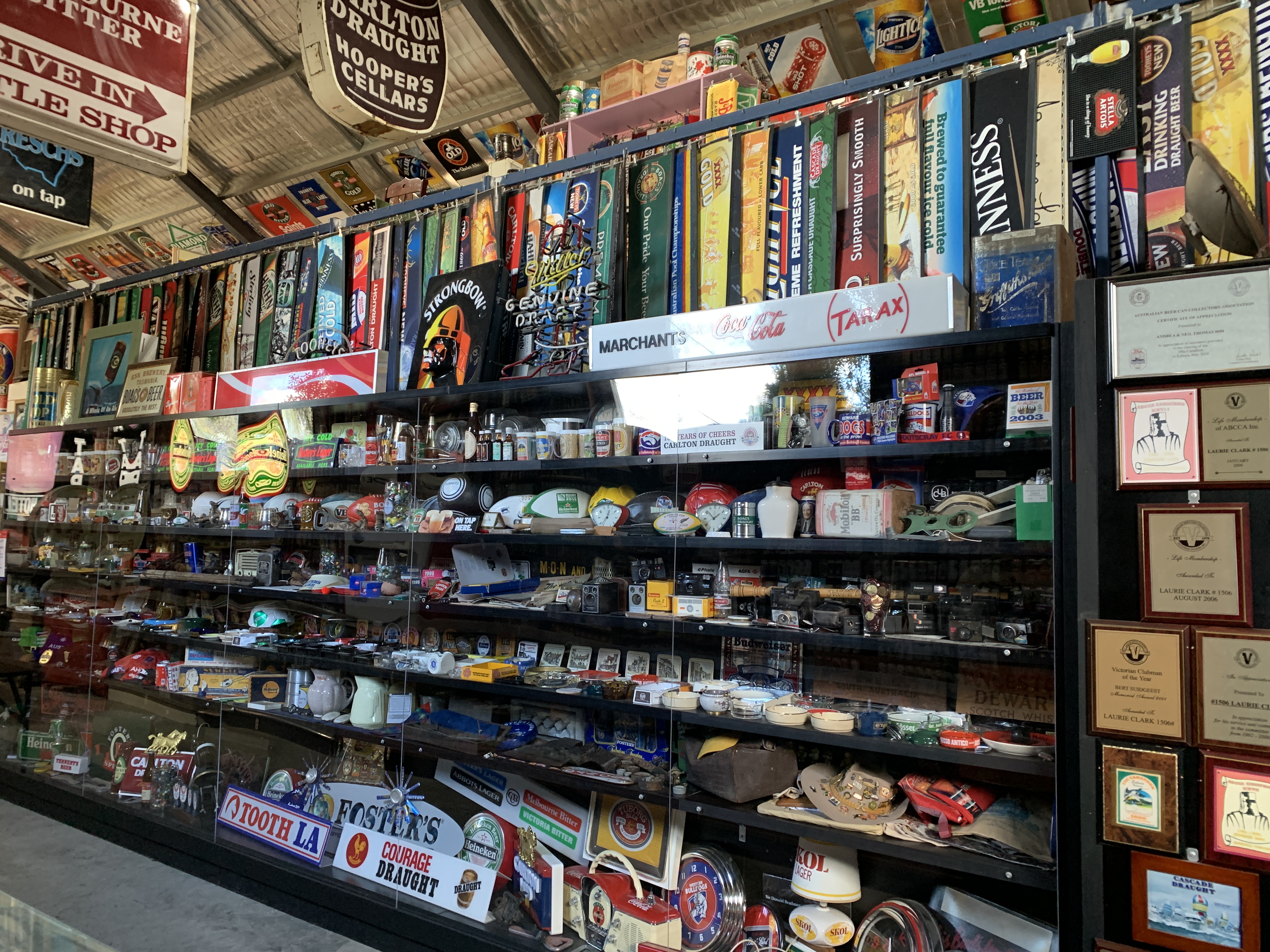
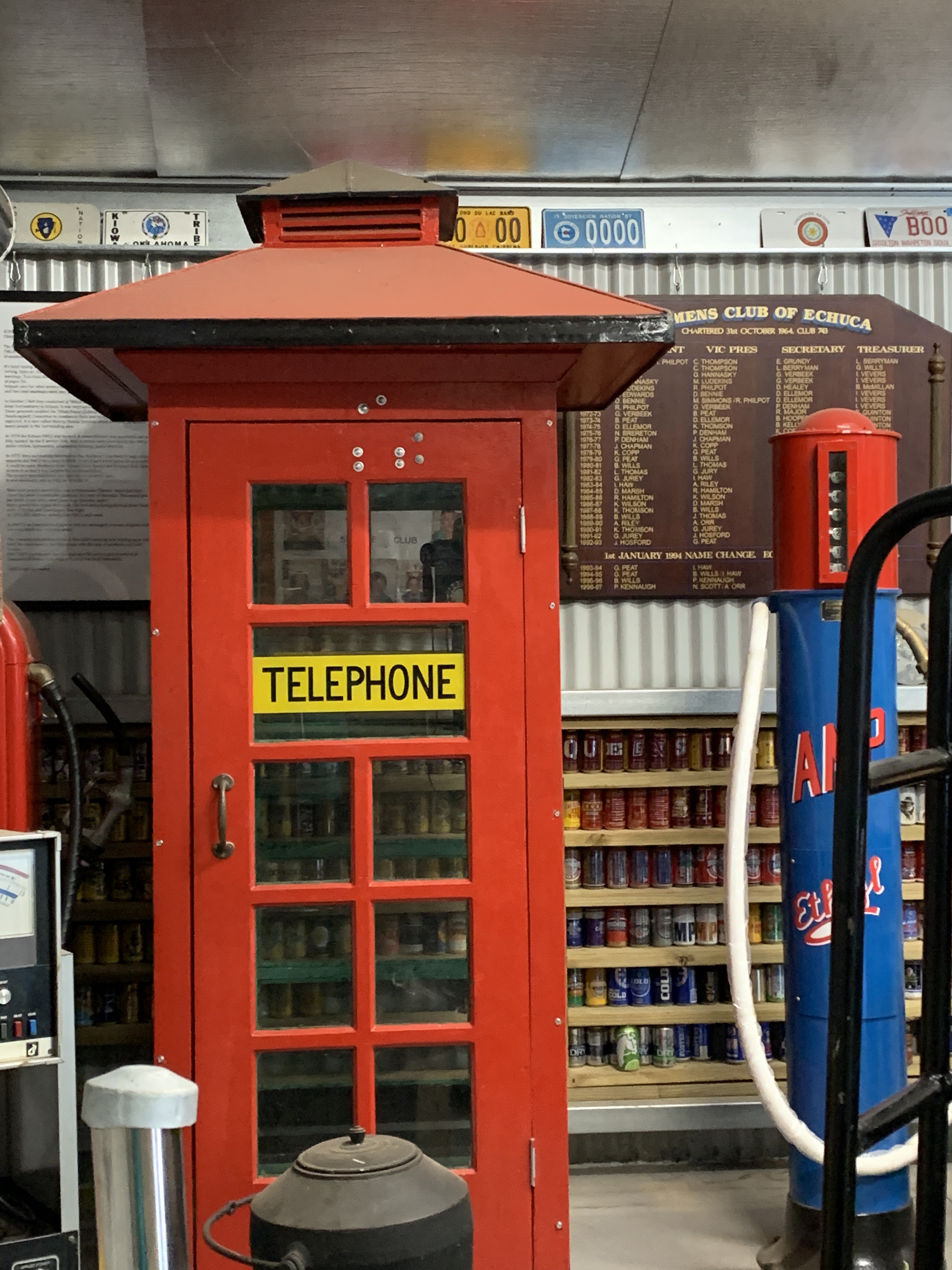
Entering the main shed is a bit mind blowing. There is so much stuff it is hard to know where to look. However everywhere you look is another quirky collection. Of course the first thing you notice is the beer cans. He has thousands of beer cans from all over the world. Neil did say it is the largest collection of beer cans in the world. I believe him!
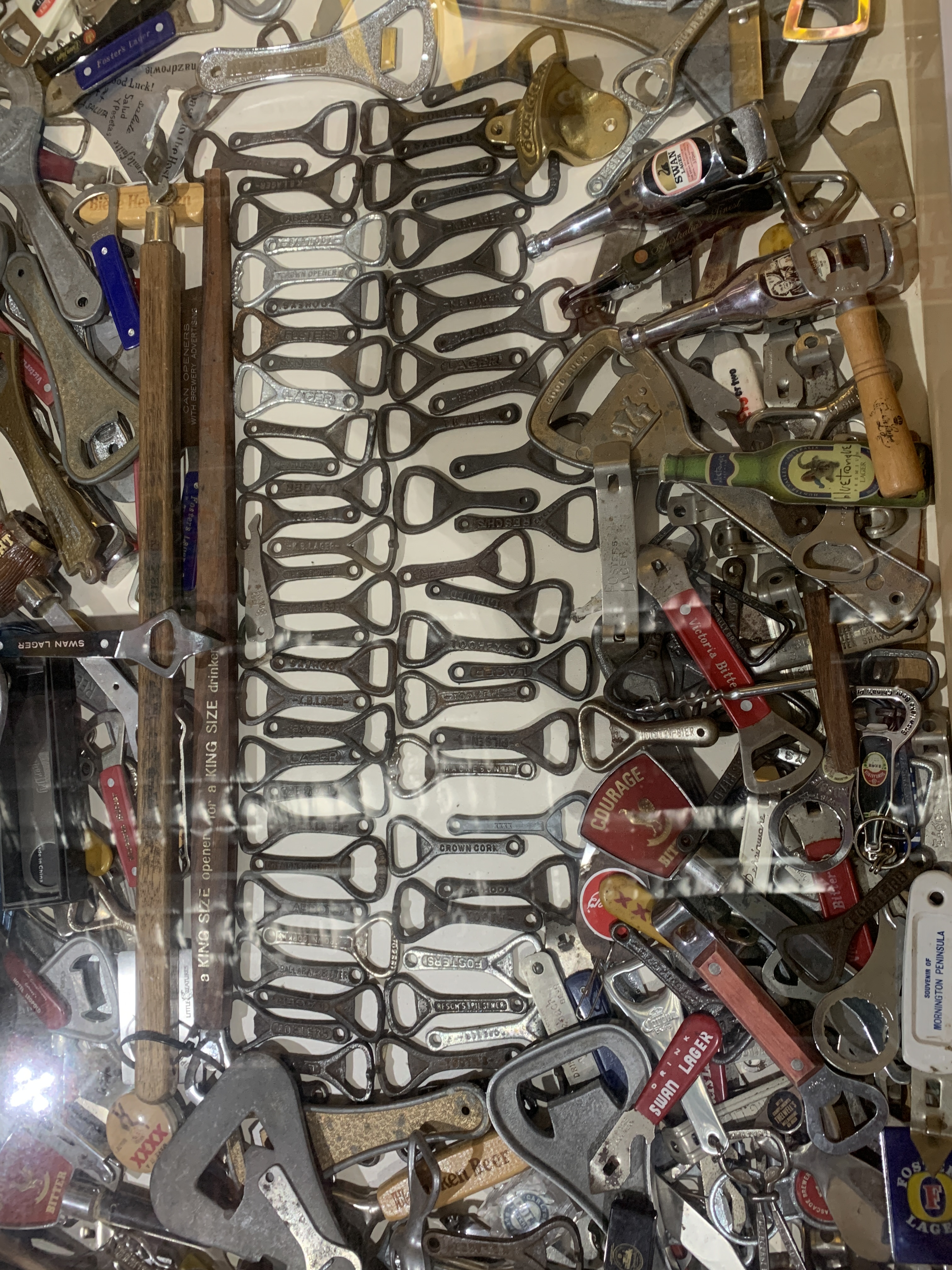
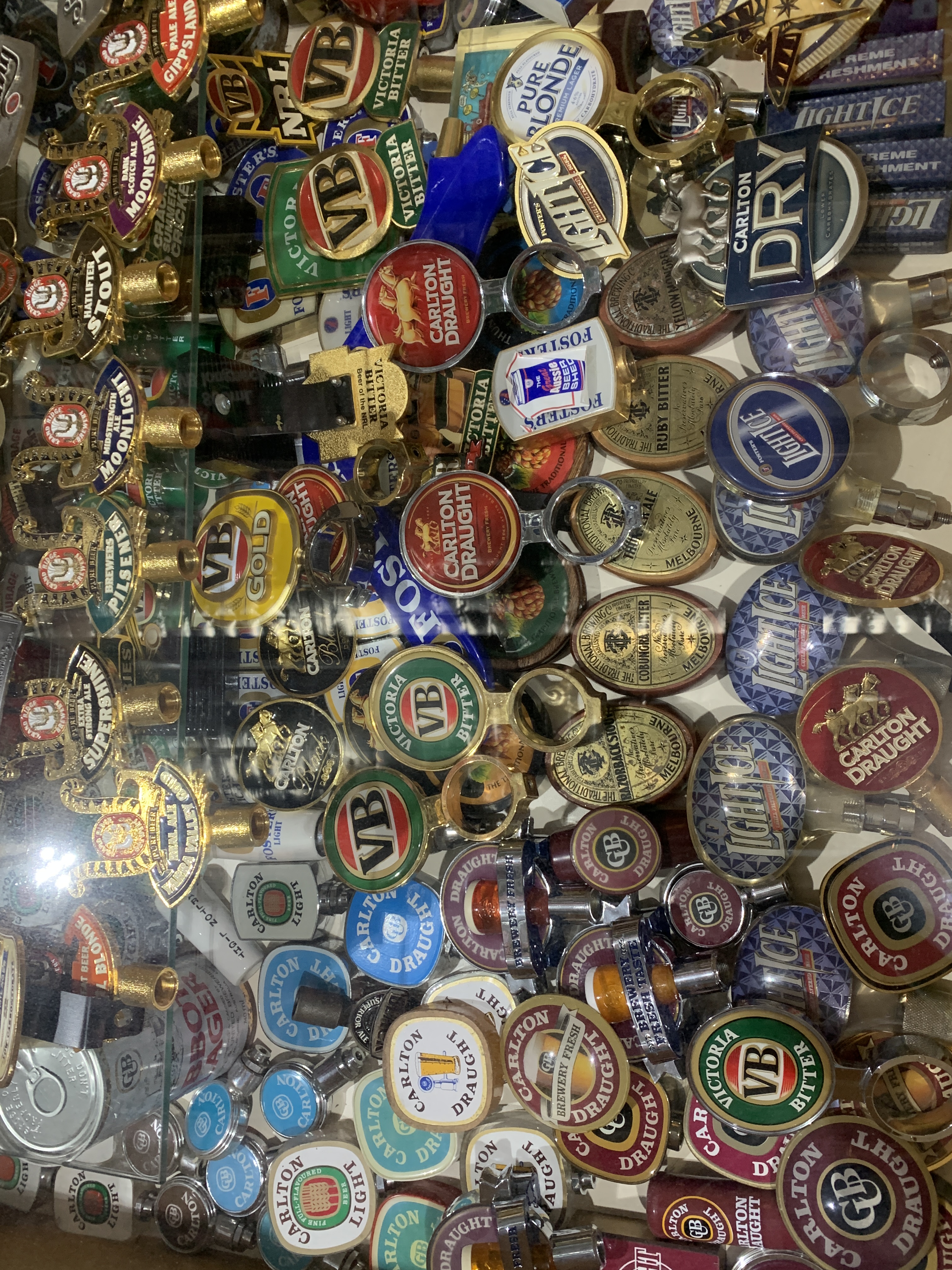
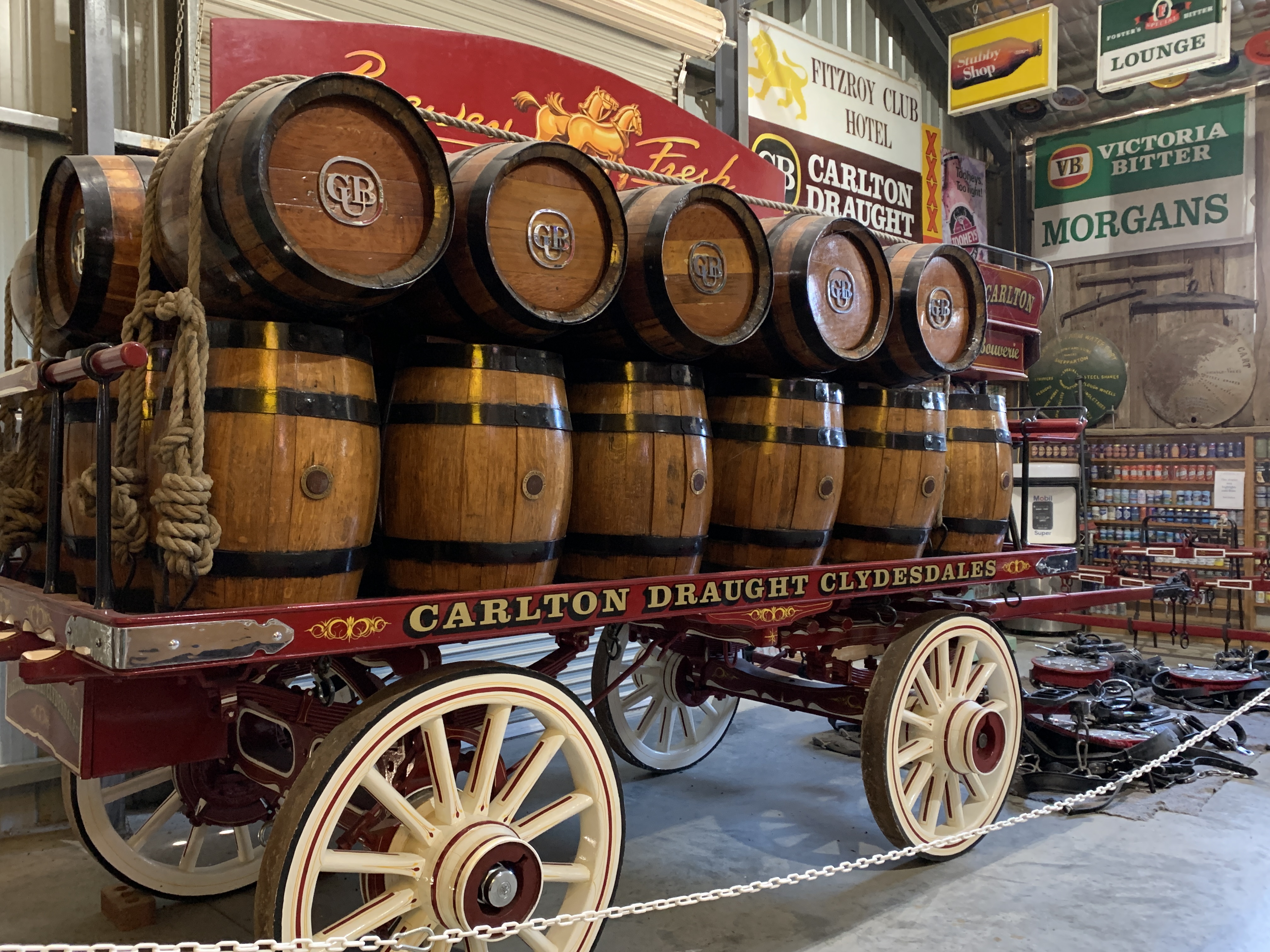
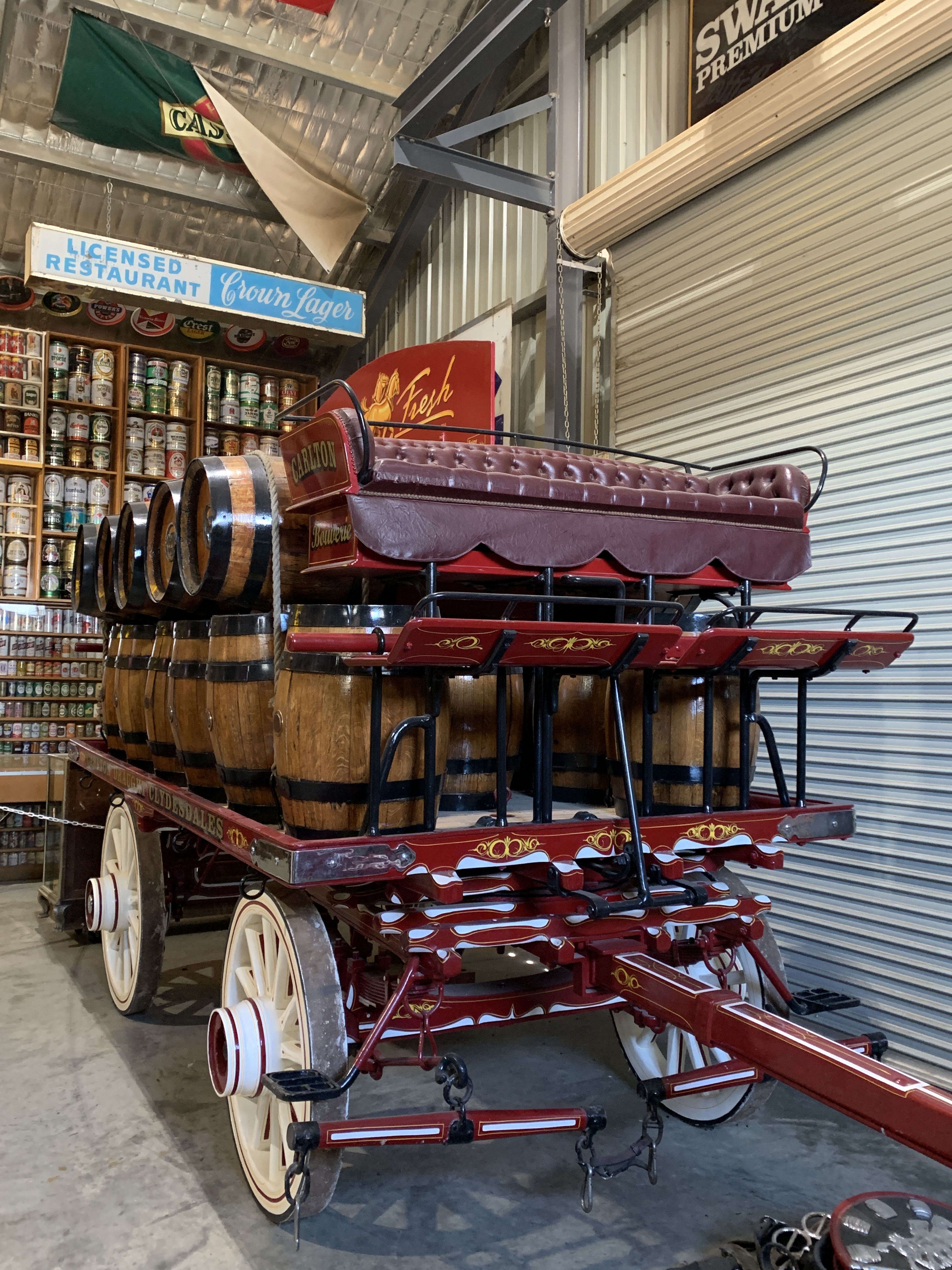
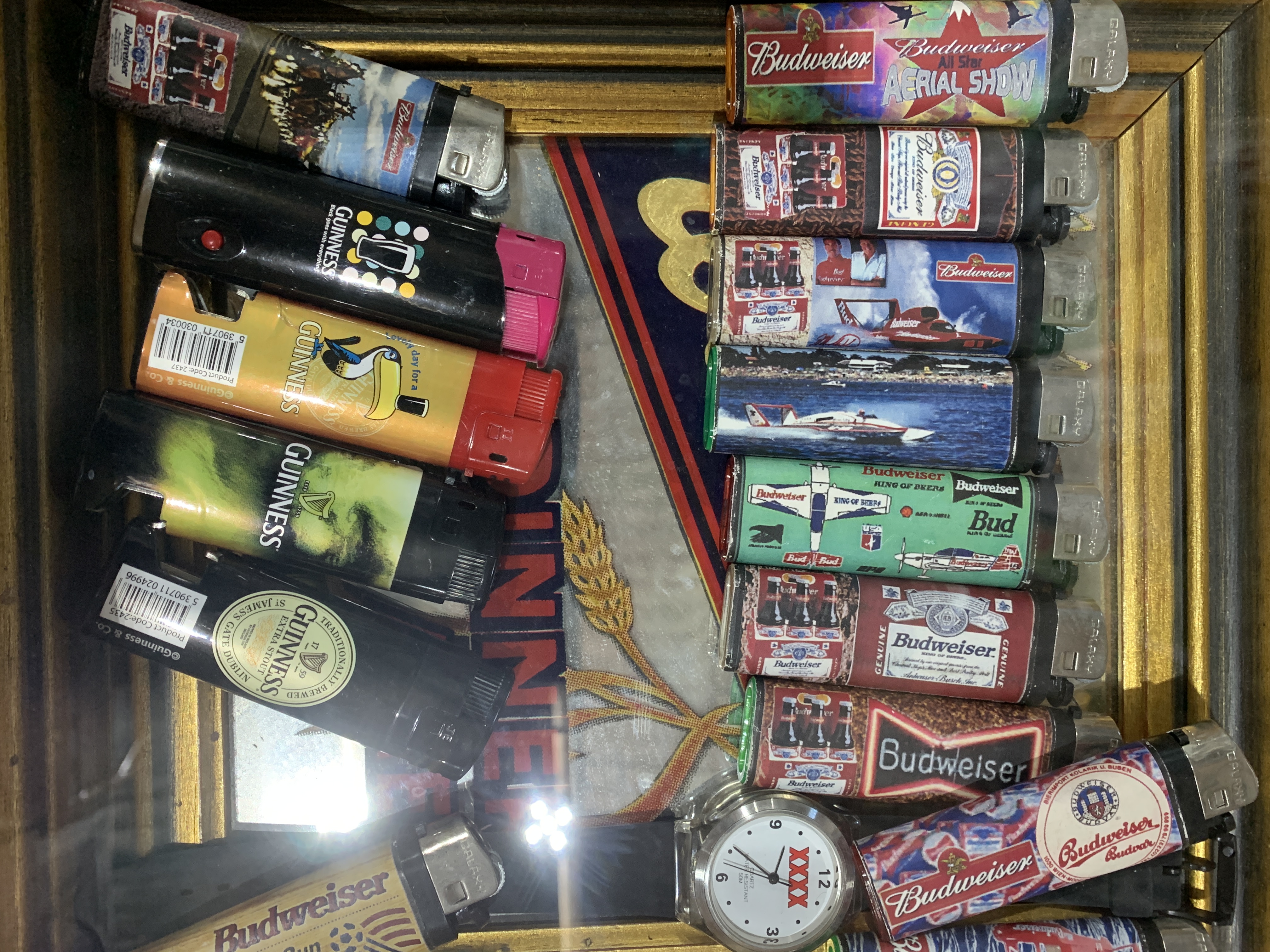
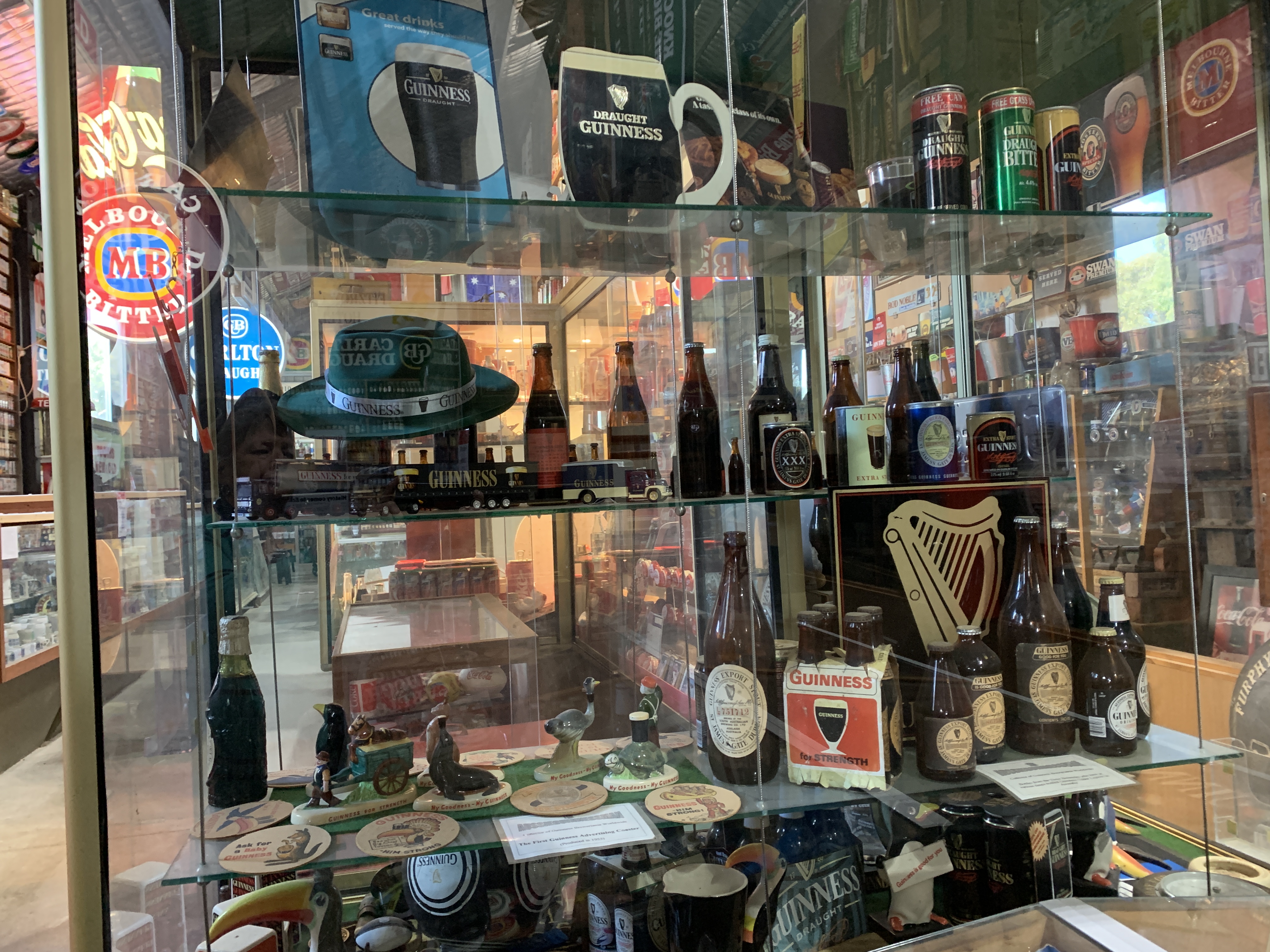
He not only has beer cans, he has all things beer such as an extensive collection of beer taps. You know the things you find at the pub where they pour the beer from? There is a beer mat collection, a collection of ashtrays with beer logos, a bottle cap collection, a collection of beer kegs, a huge collection of bottle openers and the pride of the collection is the magnificent Carlton Draught Clydesdales cart. This is on permanent loan from Carlton to the museum after Carlton decommissioned the horses and wagon.
Neil also has collections of other items such as a collection of ancient poker machines. As they are all in working order he has to have a poker machine licence to display them!
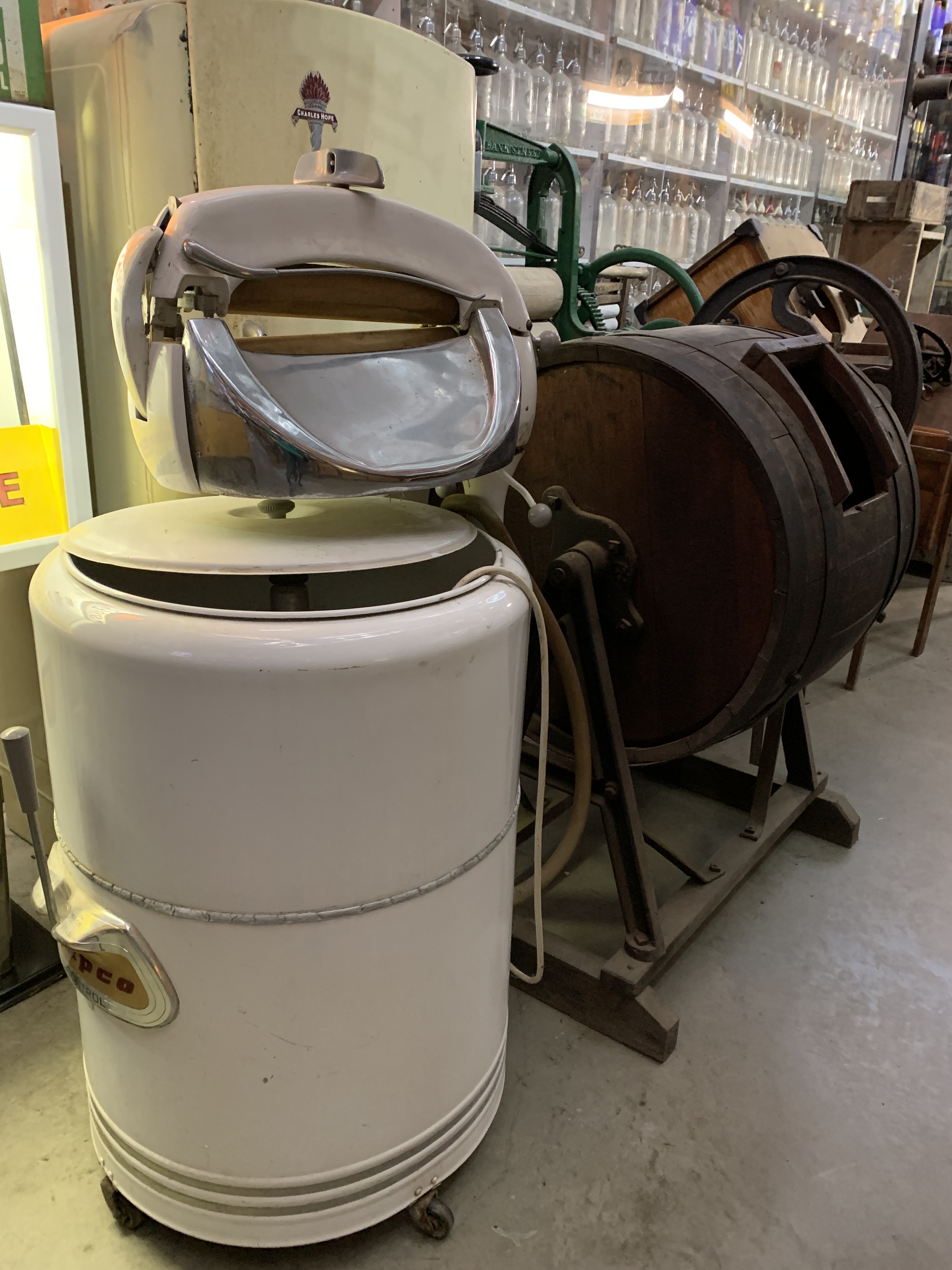
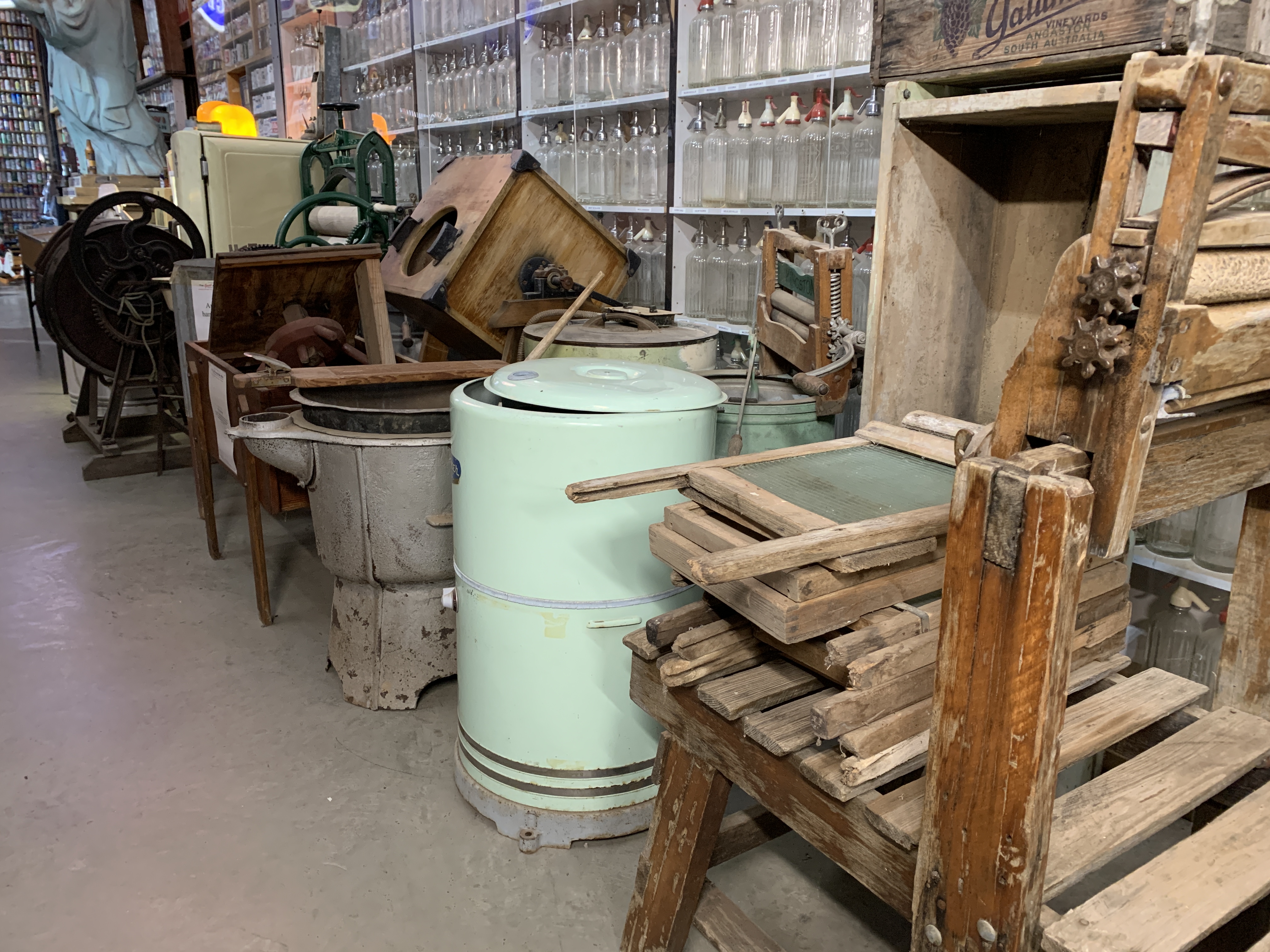
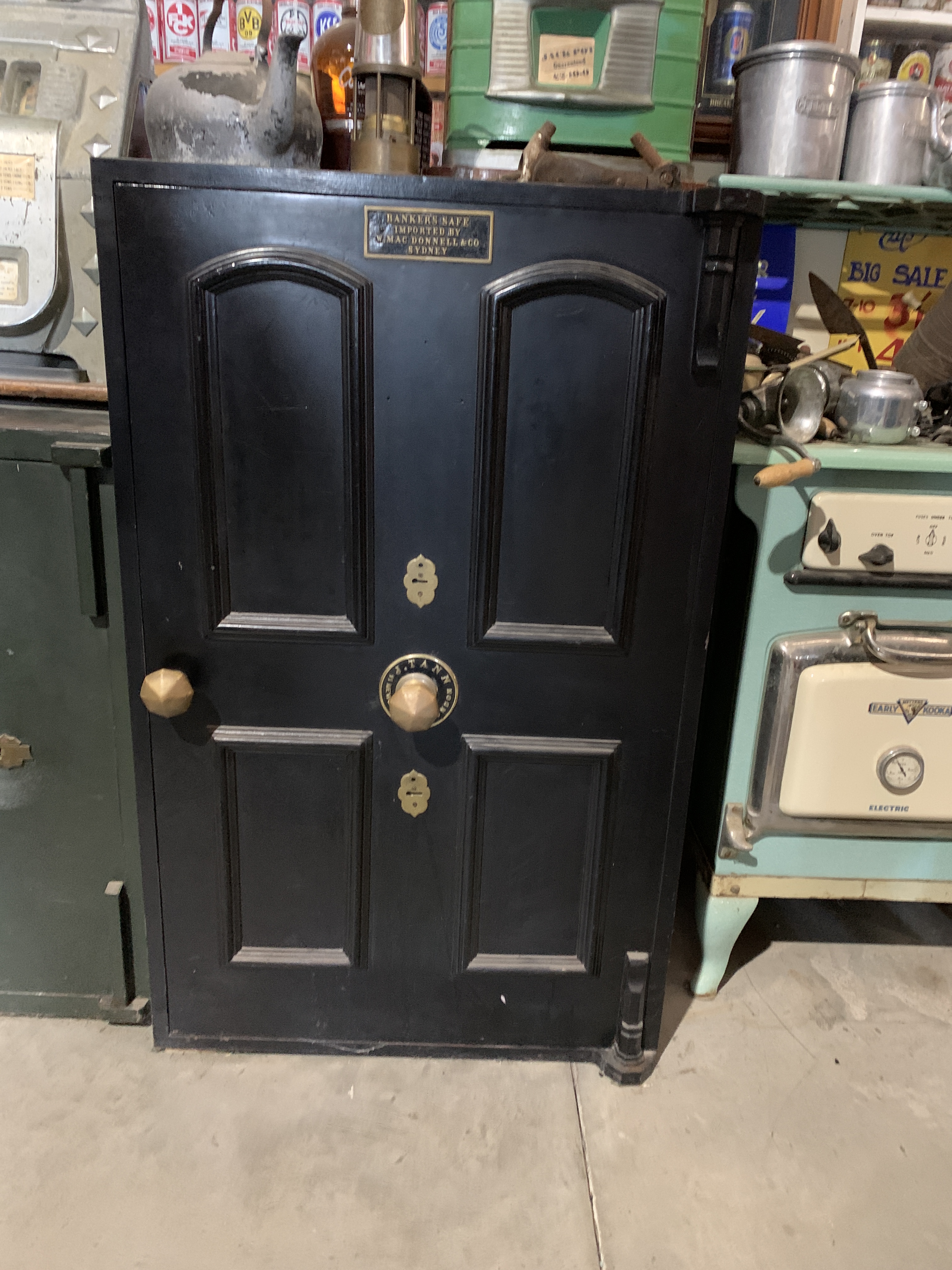
I found a collection of old irons, a collection of washing machines, a collection of coca-cola memorabilia, a collection of old fridges including kerosene fridges and Coolgardie safes. One item that stands out is the original safe from Flemington Racecourse. This is where the Melbourne Cup was stored each year before the big race.
Neil does a little talk and he has a wealth of knowledge about his collection. His talk is amusing and informative. He is obviously a ‘people’ person.
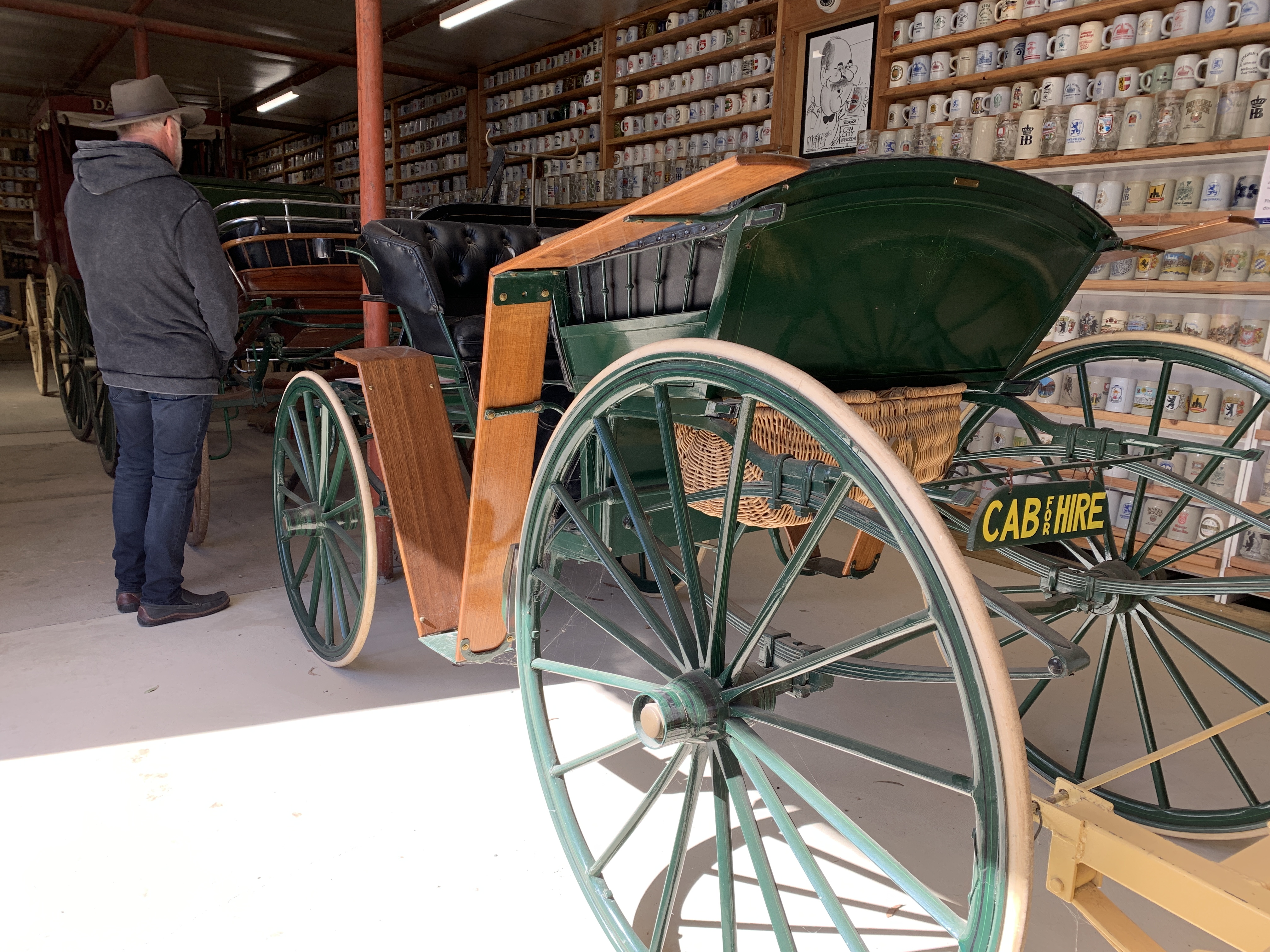
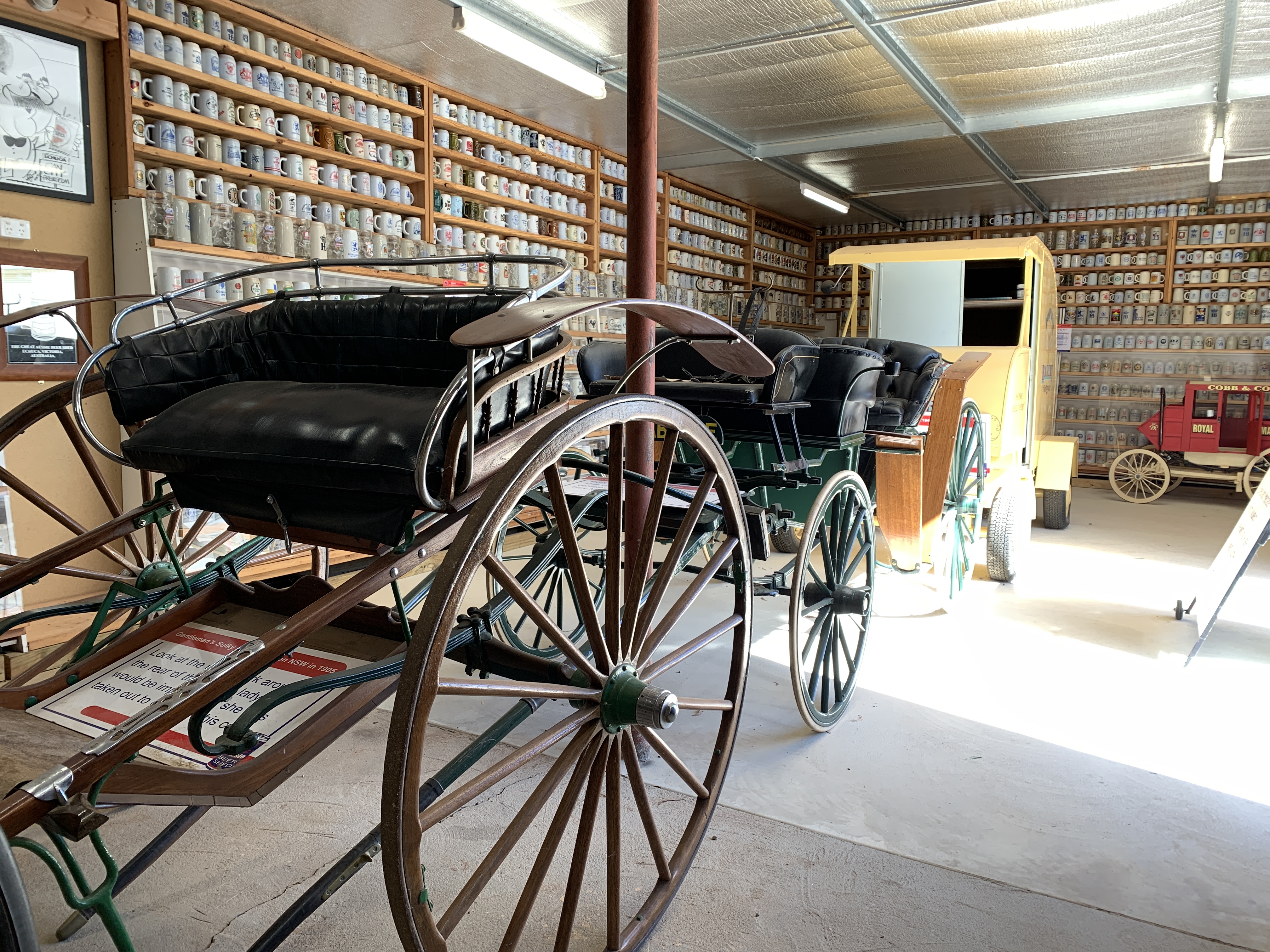
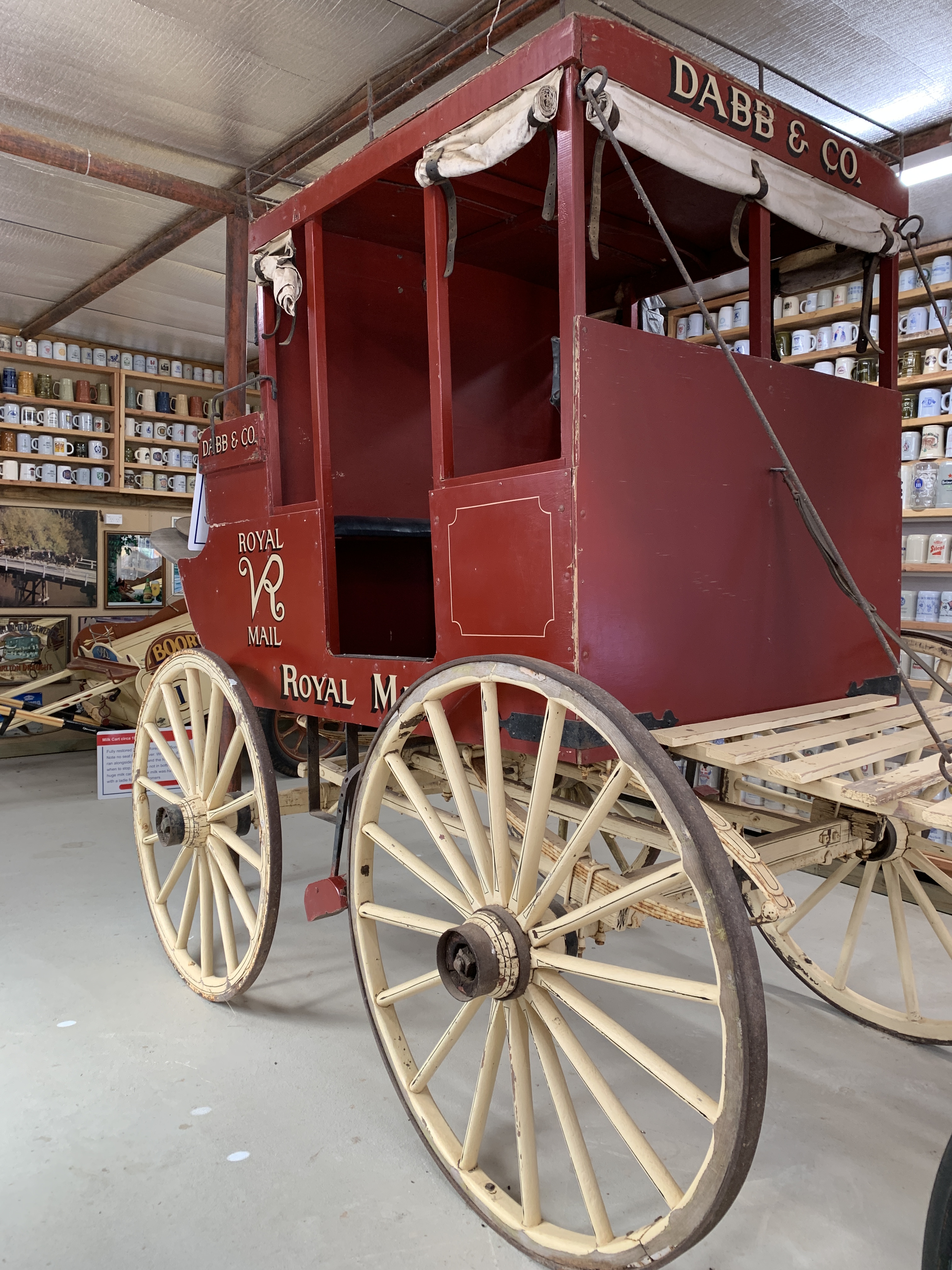
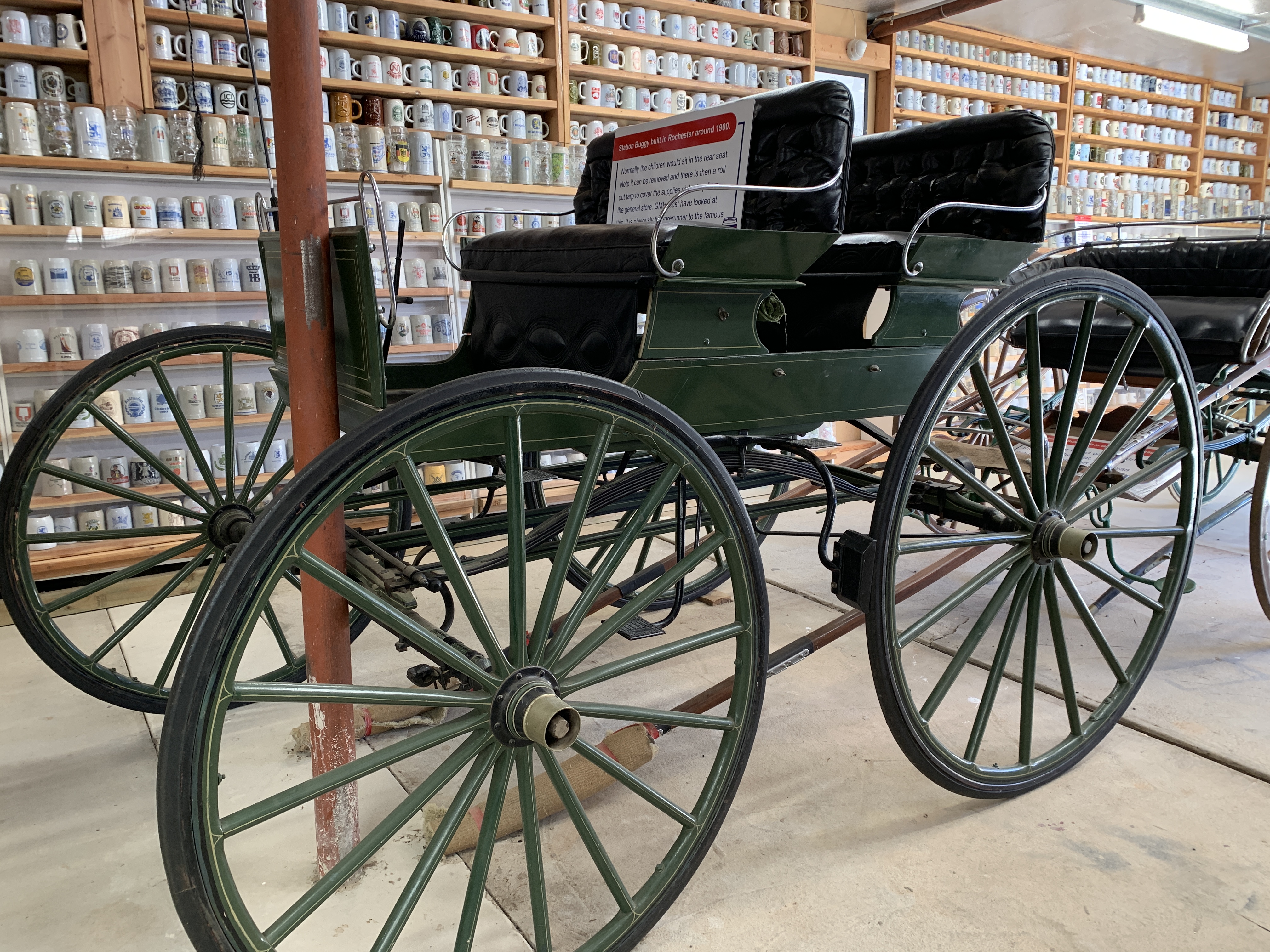
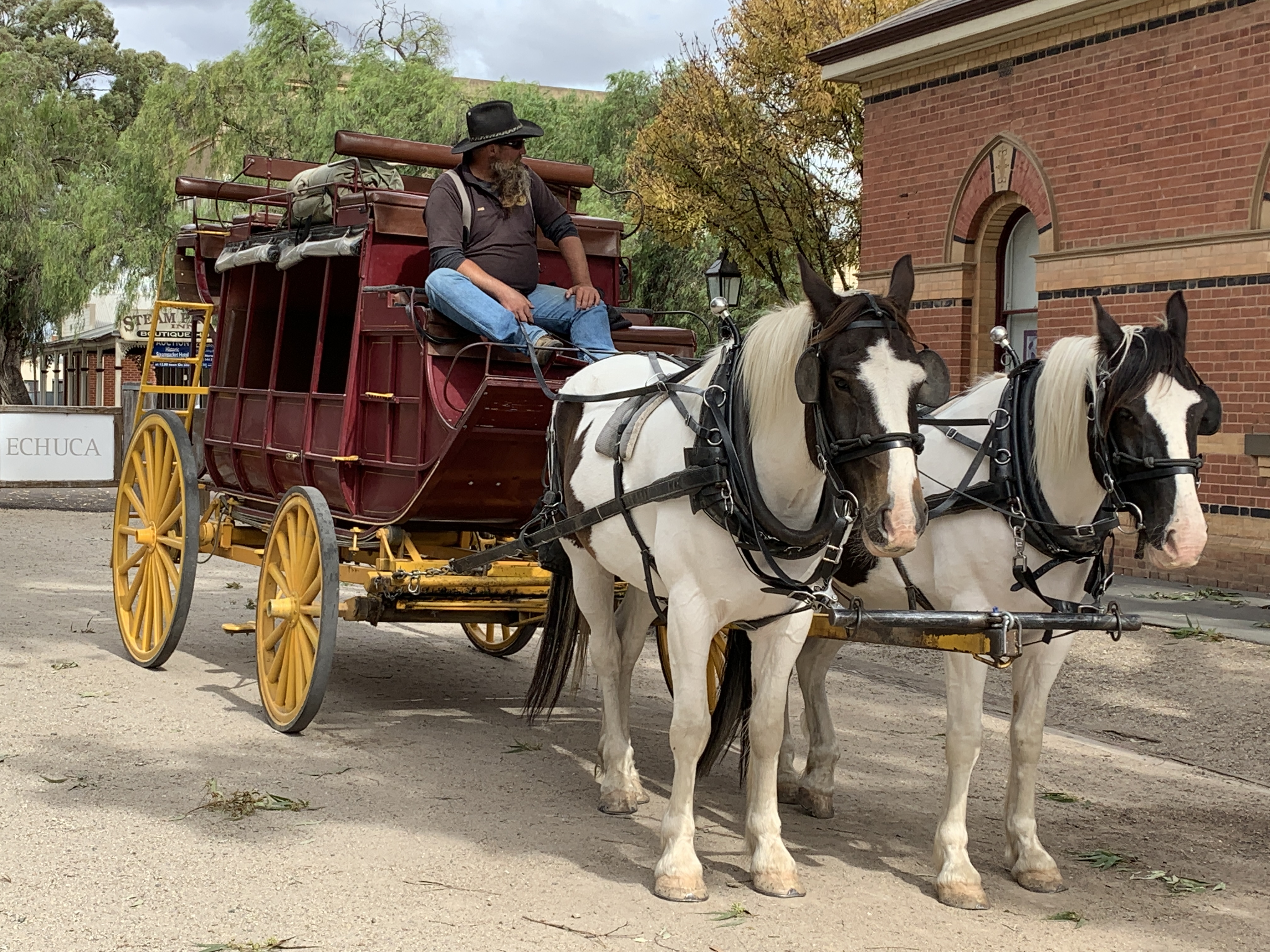
After exploring the big shed we went outside again to check out the Horse Drawn Carriage Display. There are some fine examples of horse drawn carriages and the walls are lined with a display of over 4000 beer steins from all over the world.
Apart from all that they also have accommodation and a large function centre that they hire out for weddings, birthdays and corporate events with seating for up to 100 people.
We spent about 2 1/2 hours at the Great Aussie Beer Shed &in Heritage Farm Museum and definitely recommend a visit if you are ever in Echuca.
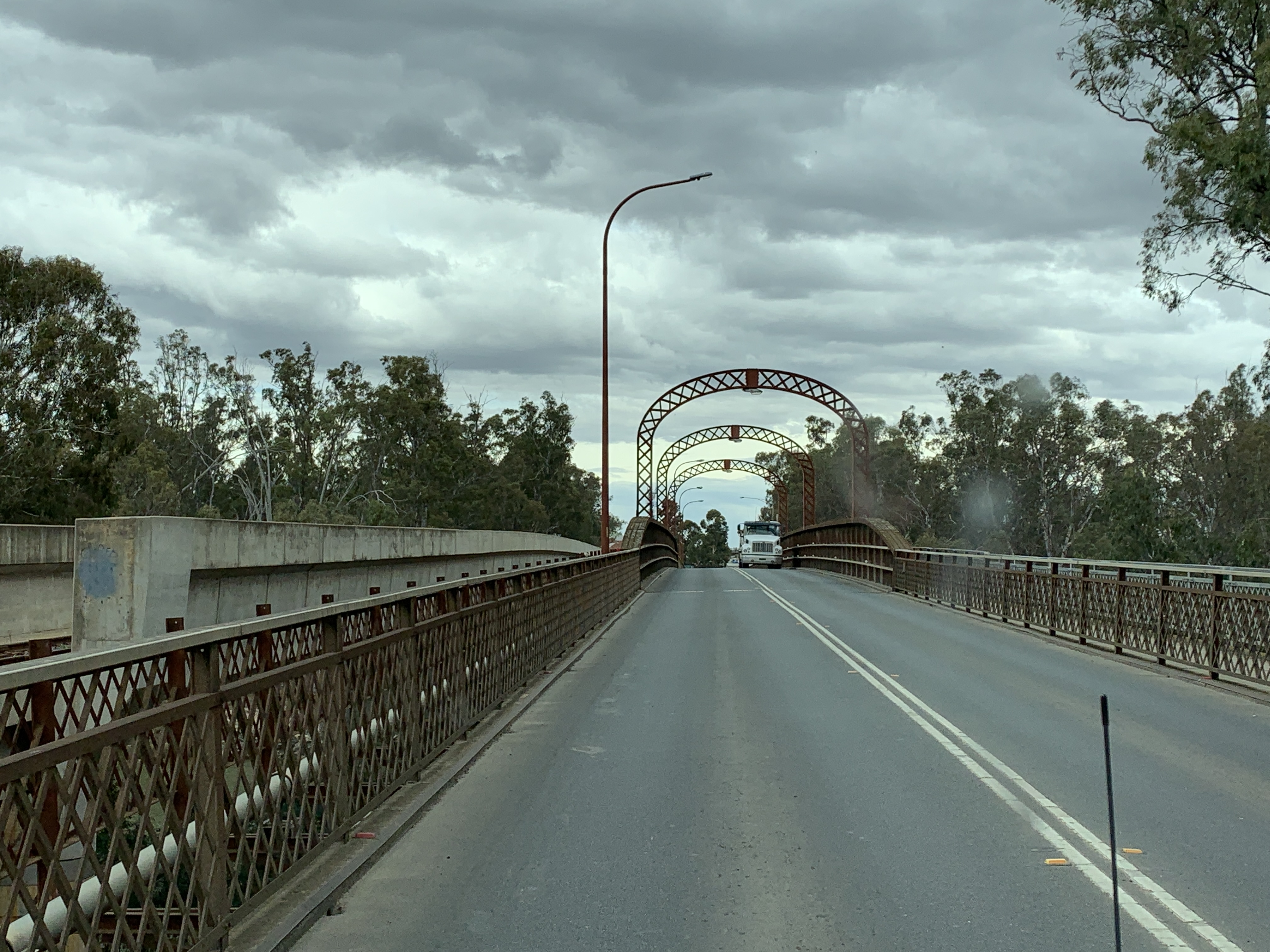
Crossing the bridge across the Murray River into Echuca
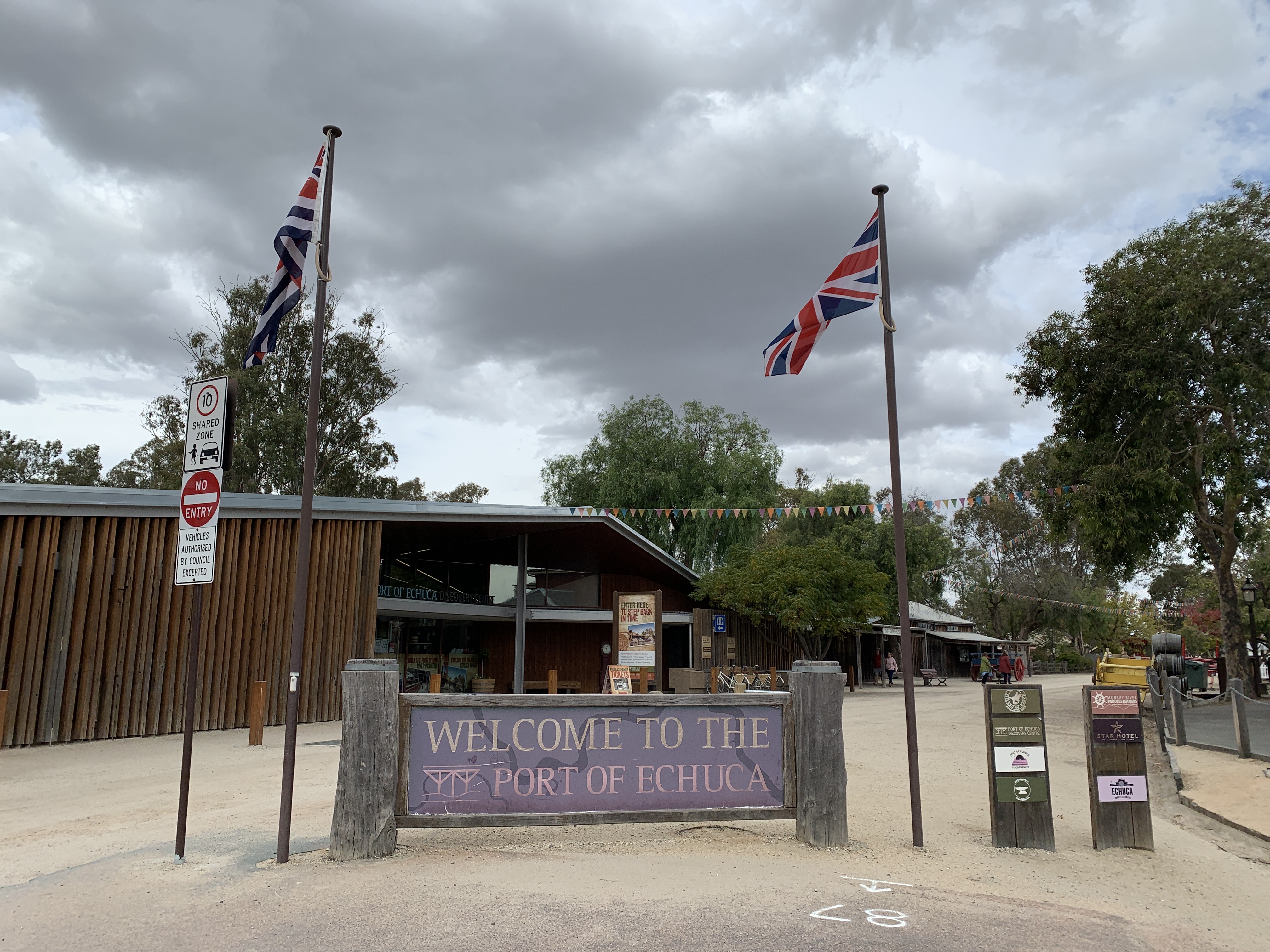
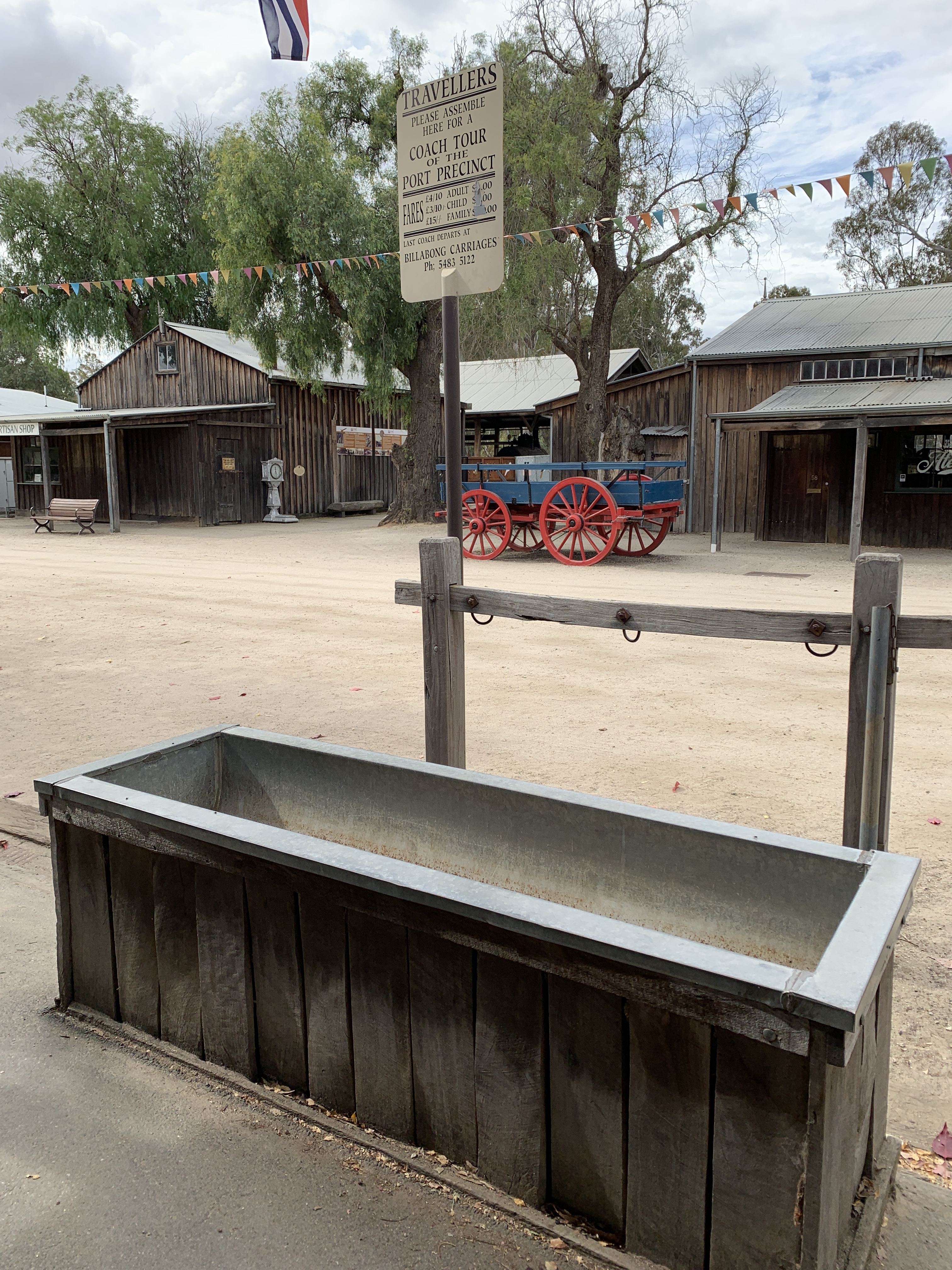
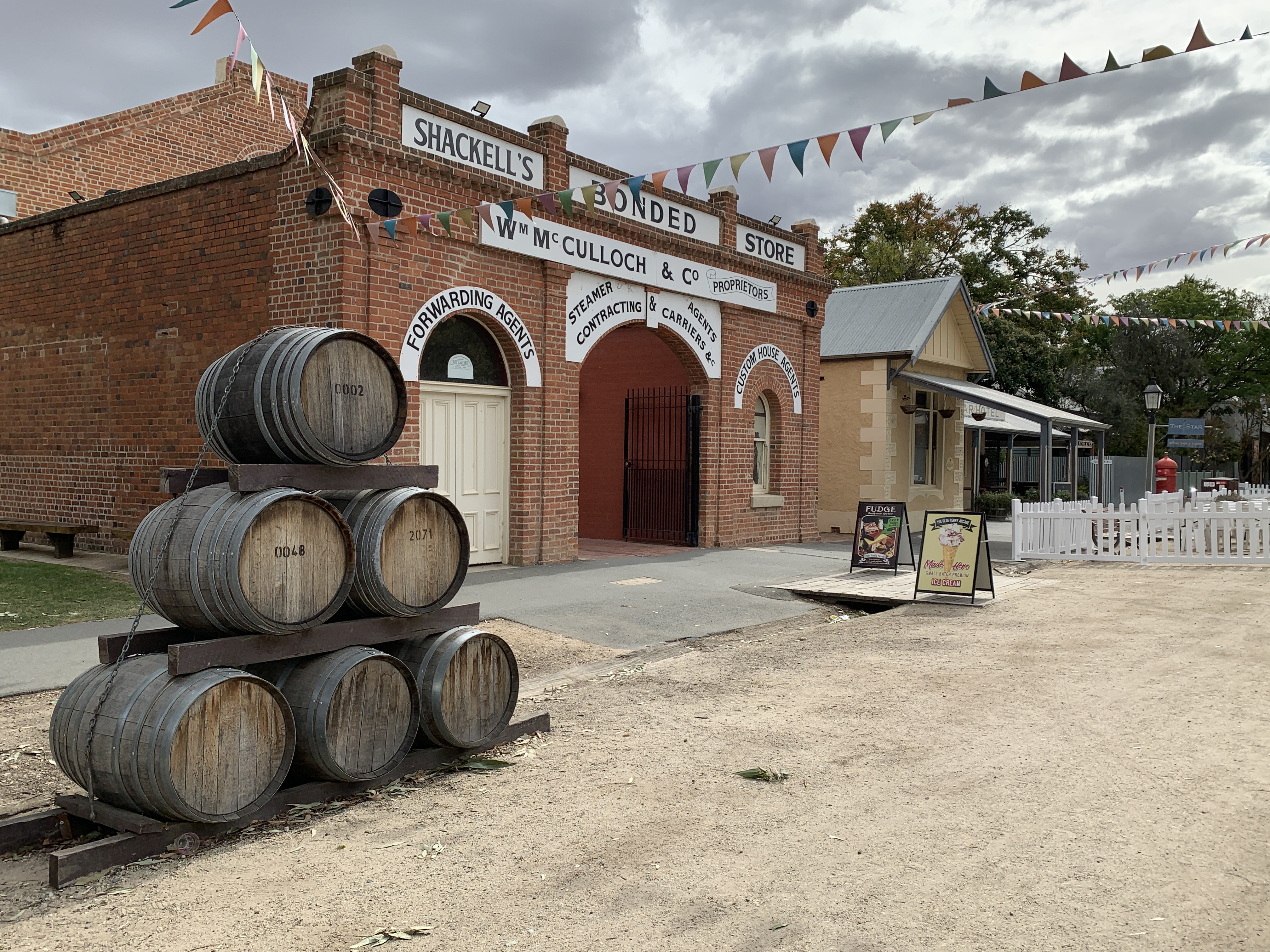
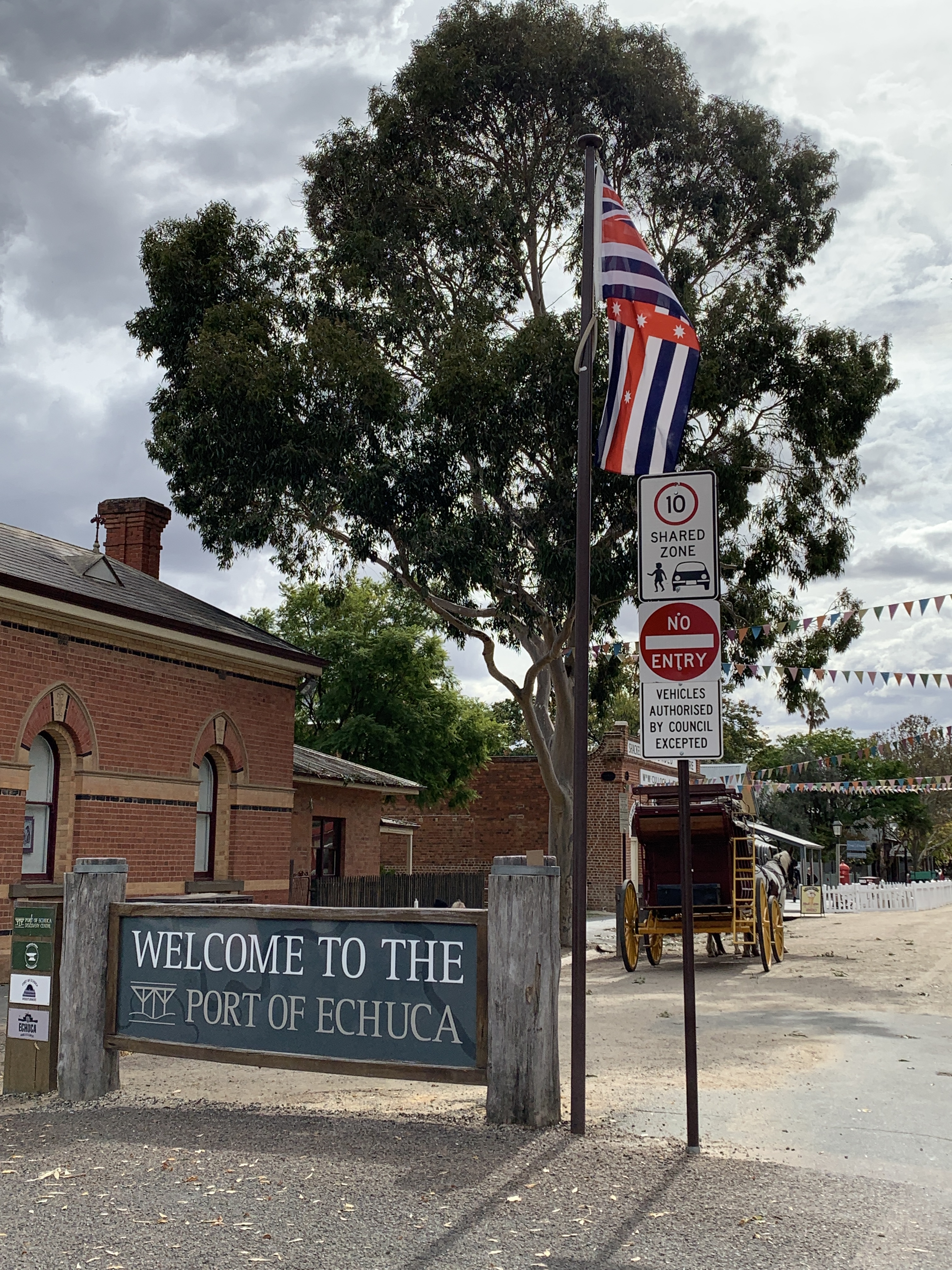
In the 1870’s the town was Australia’s largest inland port. Steam-driven paddle boats would arrive at the wharf where the goods were unloaded and then loaded onto trains to be taken to Melbourne. The historic wharf has been heritage listed. Echuca was a very busy place and at one time there were over 100 pubs/hotels in the district.
The expansion of the railways and the fickle river conditions combined to lesson the importance of the inland port and the population began to move elsewhere.
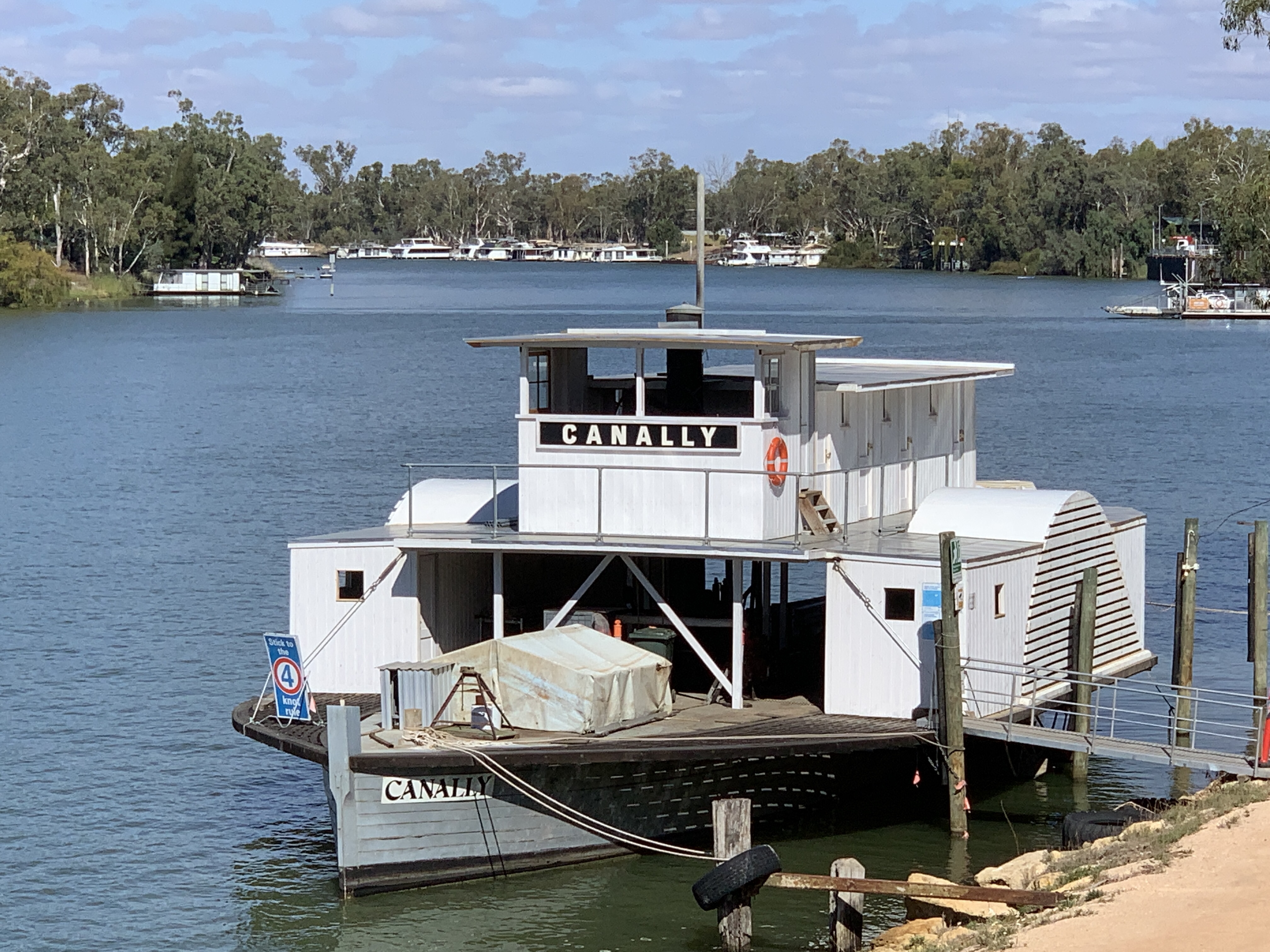
Today the major industry of Echuca is tourism which adds some $250 million a year to the Echuca economy. The Port of Echuca has one of the world’s largest fleet of operating paddle steamers and thousands of tourists each year take a cruise on the quaintly named paddle steamers. PS Emmylou, PS, Canberra, PS Pride of the Murray, PS Alexander Arbuthnot, PS Pevensey ply the river taking tourists for sightseeing, lunch and dinner cruises.
The historic wharf district contains many restored buildings and the Port of Echuca Discovery Centre which contains displays and access to the restored redgum wharf. Access to the Discovery Centre and the wharf is free.
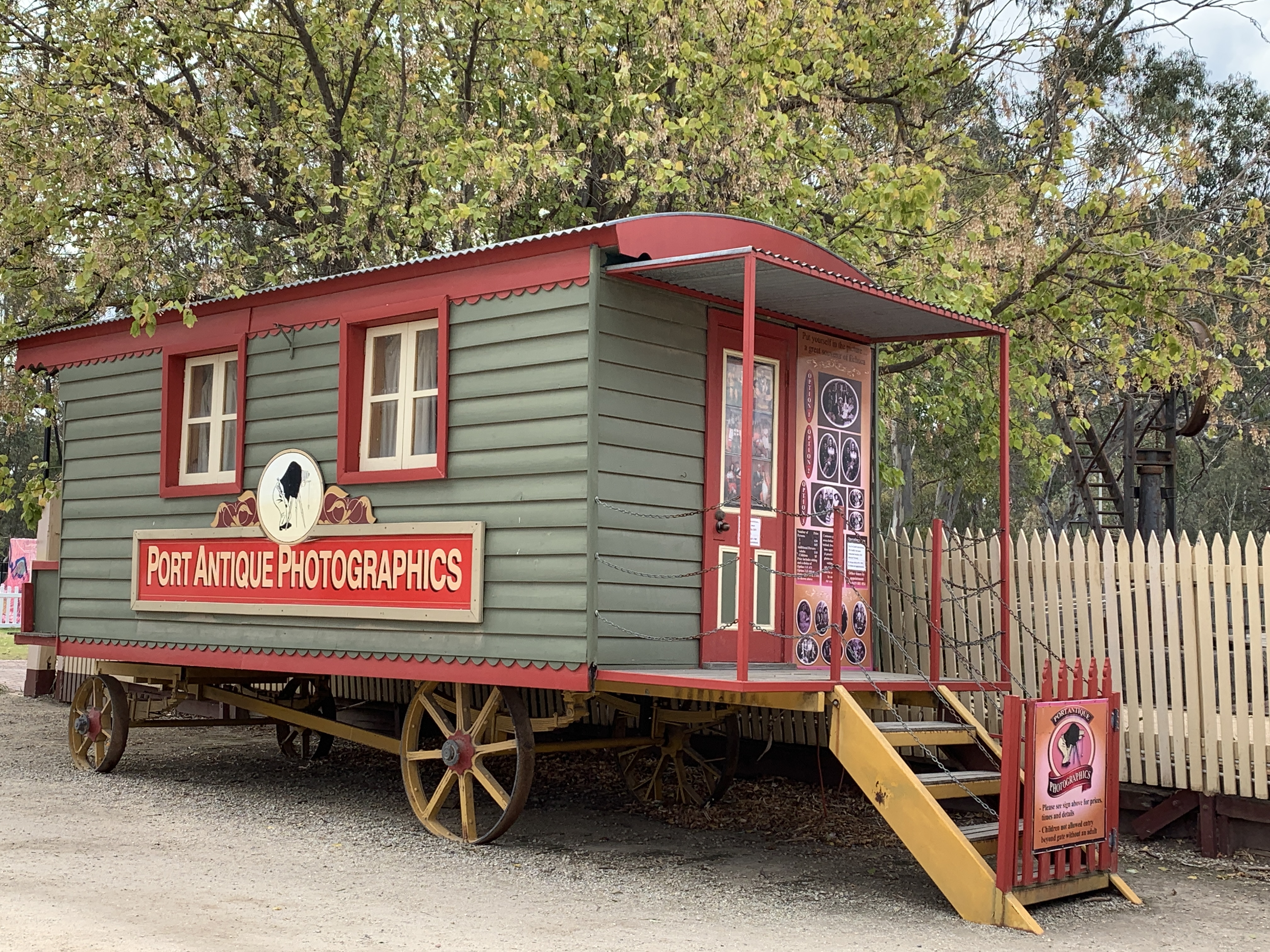
The Historic Port of Echuca
The town streets near the wharf area have retained their heritage feel with verandahs and heritage signage while the newer modern shopping area is a few blocks away. Echuca is a popular tourist destination all year round.
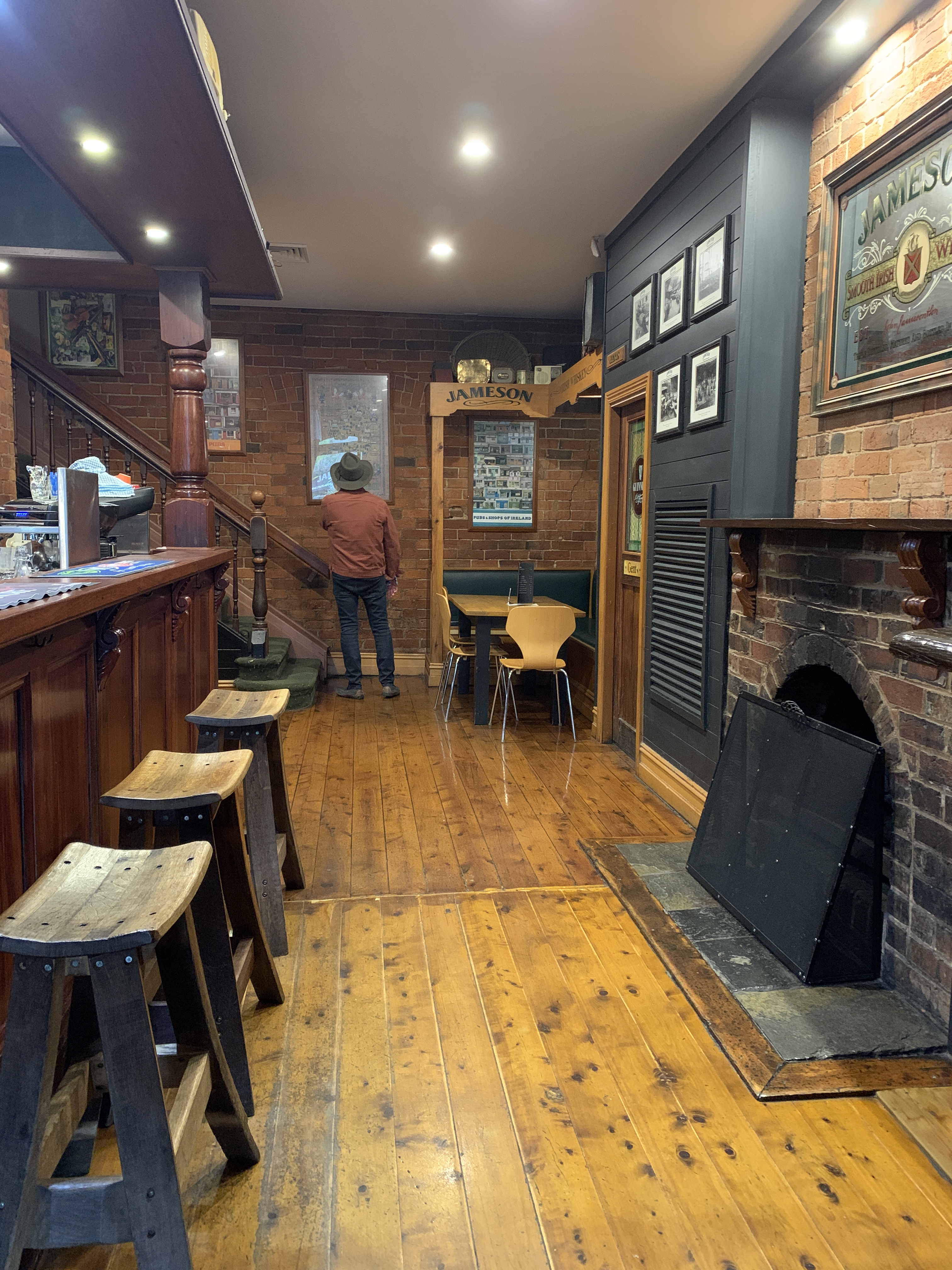
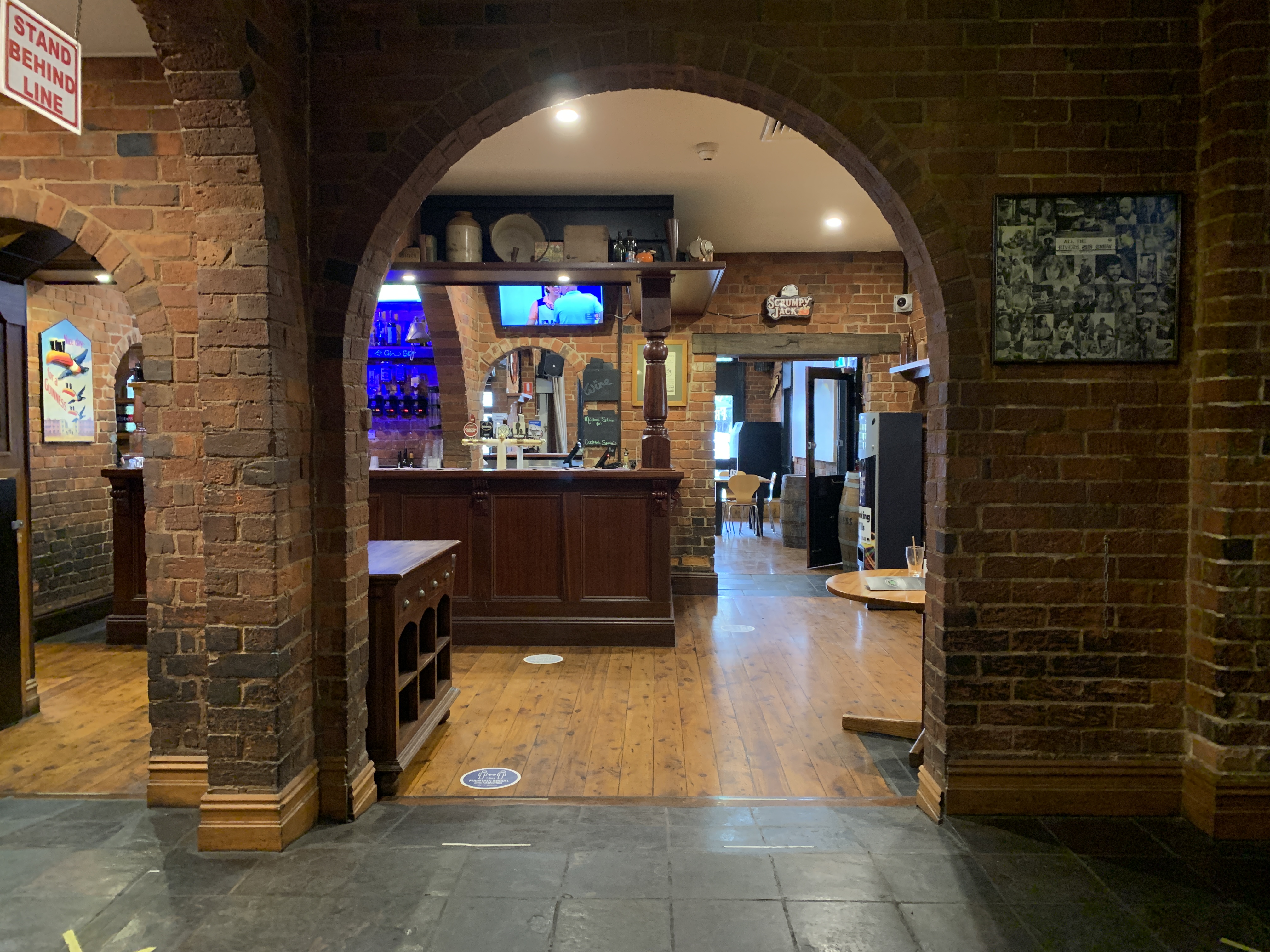
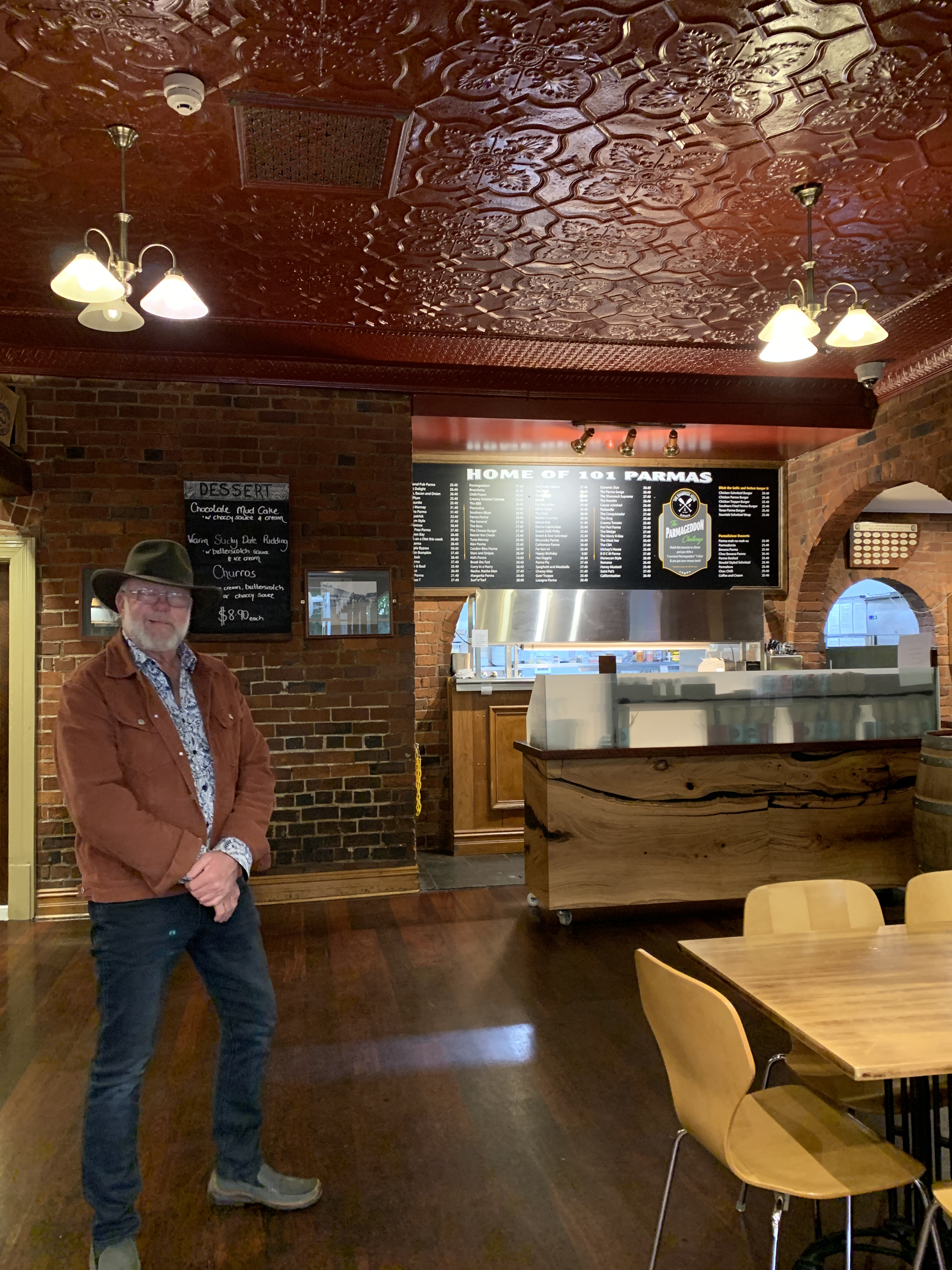
After a wander around the historic wharf we headed to The Shamrock Hotel for some lunch. These Irish Pubs just seem to draw us in. The Shamrock Hotel is well known for its Parmy menu. They have 101 Parmy dishes to choose from. It has a great atmosphere (almost like a pub in Ireland except much much bigger) and they even have Guinness on tap. I loved the red pressed metal ceiling in the bistro.
The Shamrock Hotel
We wandered along the historic shopping street but it was getting colder, more windy and looked like rain so we thought it might be a good idea to start looking for a camp for the night. WikiCamps showed a camp at the Rotary Park just 3km from the historic wharf so we thought we’d give that a look see.
The Echuca Rotary Park is huge with plenty of room for many rigs of all sizes. You must be self contained. It is a small donation of $10 for camping and $5 to use their dump point and fill up with water. We think that is very reasonable for this great facility. We used their dump point and filled up with water before finding a nice flat spot on the gravel down next to the Campaspe River. When I looked out the window I could count about 15 camps, mostly caravans but a few motorhomes too. There was another Esperance right behind us.
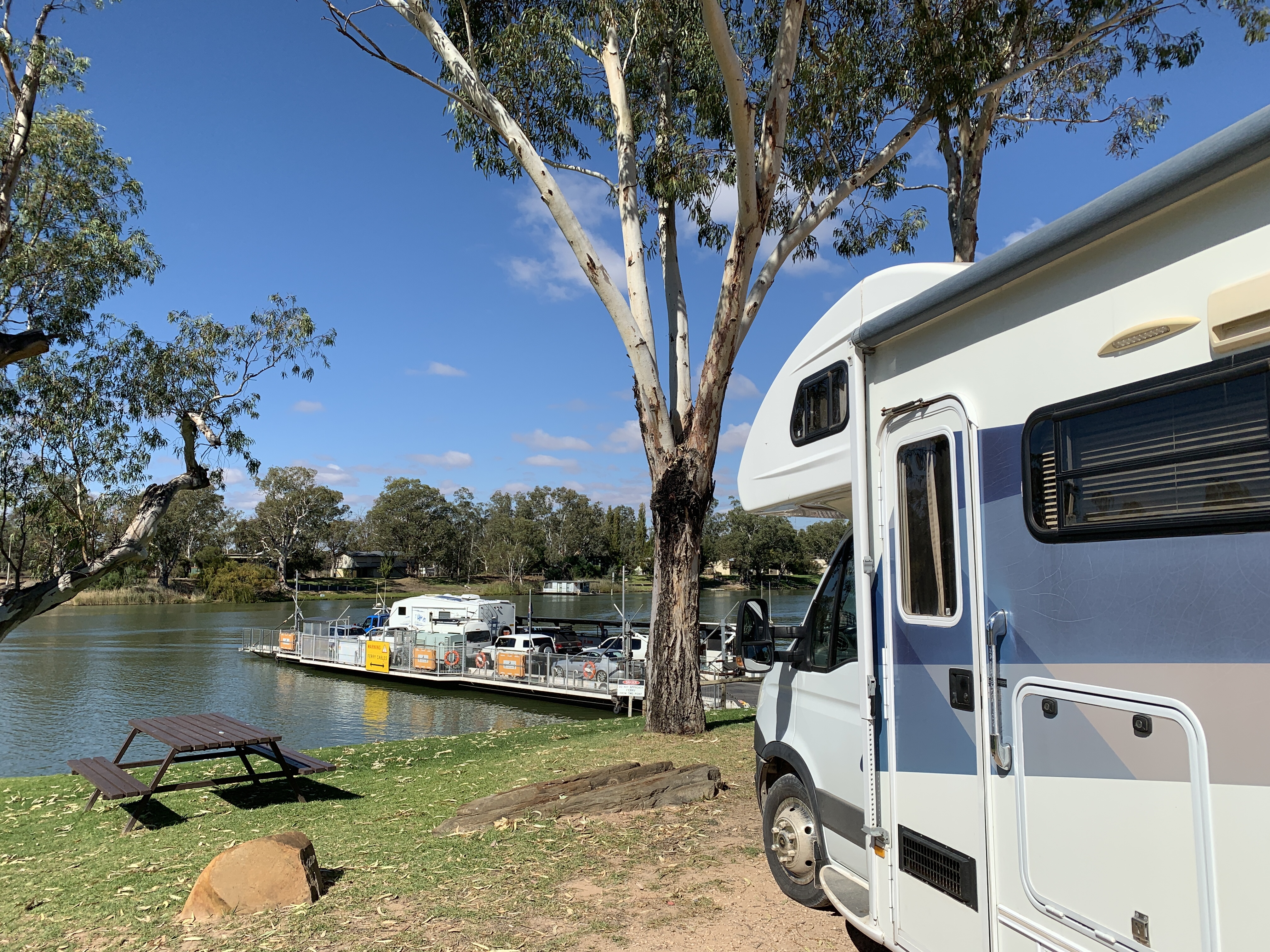
We had just set up camp when the rain came down however it did not last long but it was very cold so it was a good time to update my blogs and for Rich to catch up on the news.
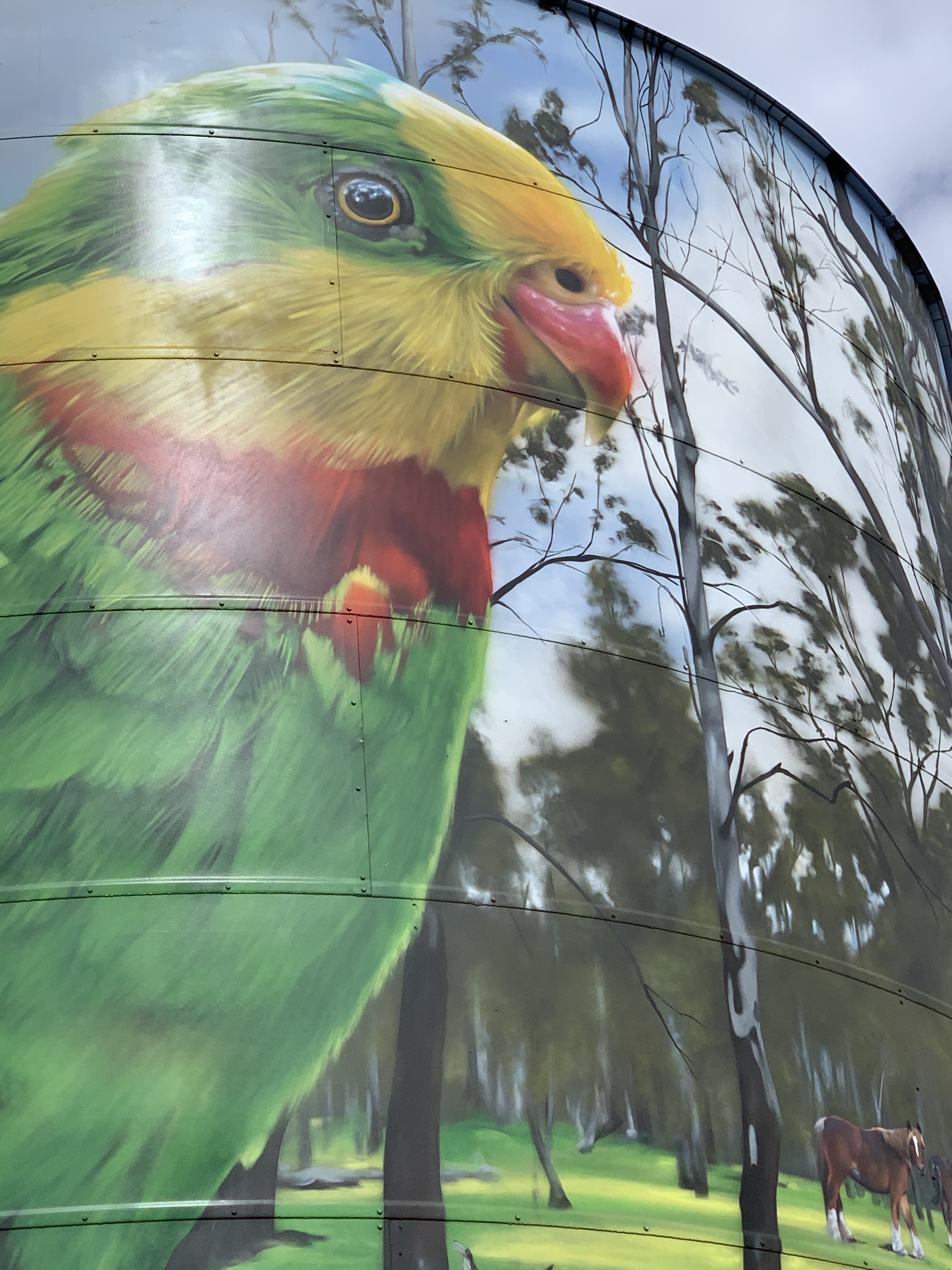
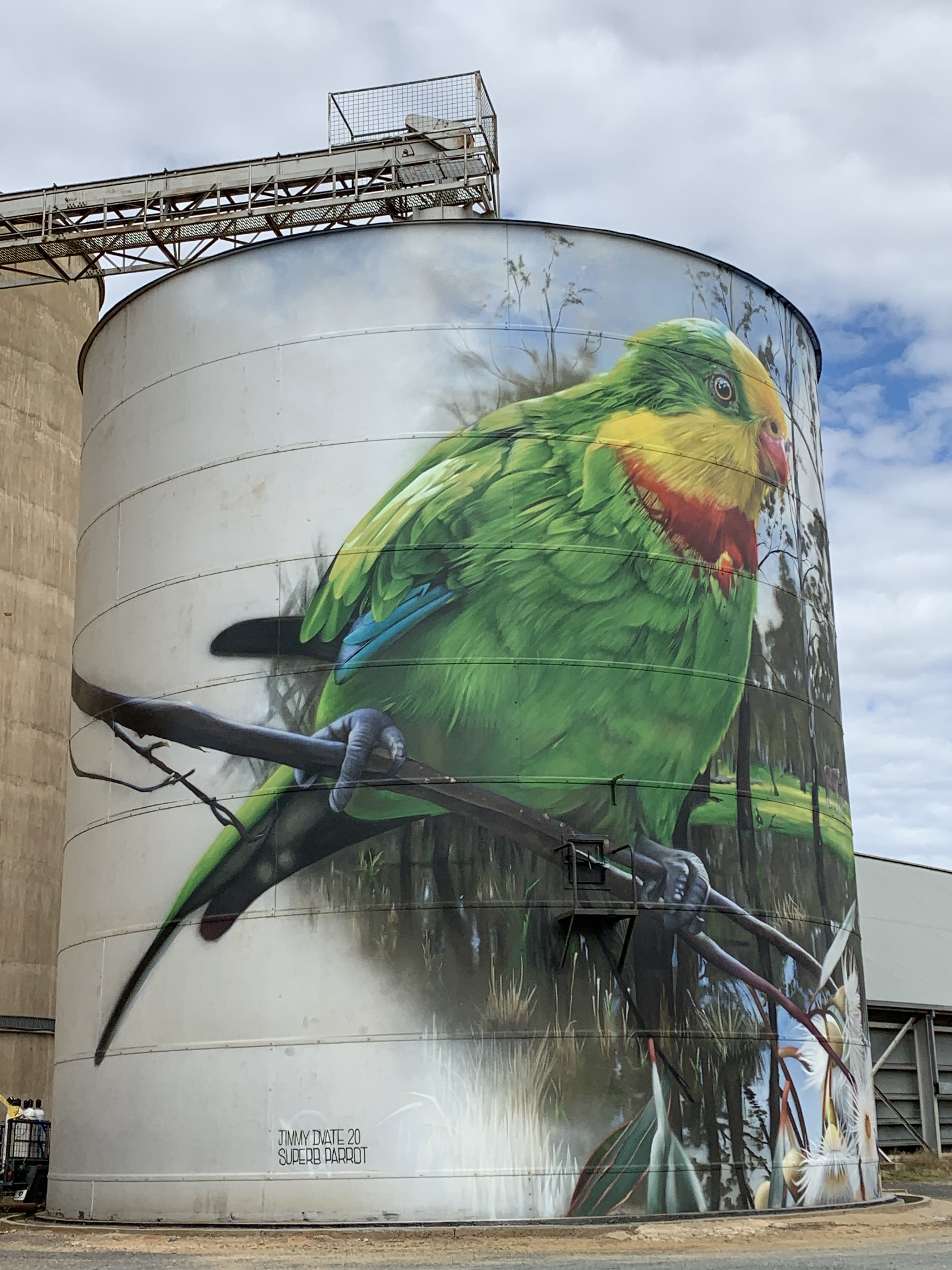
We stopped in the tiny town of Picola to view the Silo Art. The work is by Melbourne artist Jimmy DVate and depicts the flora and fauna of the nearby Barmah State Forest. The painting includes a Superb Parrot, brumbies, a Peregrine Falcon, a kangaroo & joey, a Freckled Duck, and Emu, an Eastern Great Egret and contains a hidden fishing hook. The artist included this because Picola was once known as ‘The Hook’ as it was the ‘end of the line’ when the railways were being built. It took a while to find the hook hidden on a branch in a tree.
Picola Silo Art
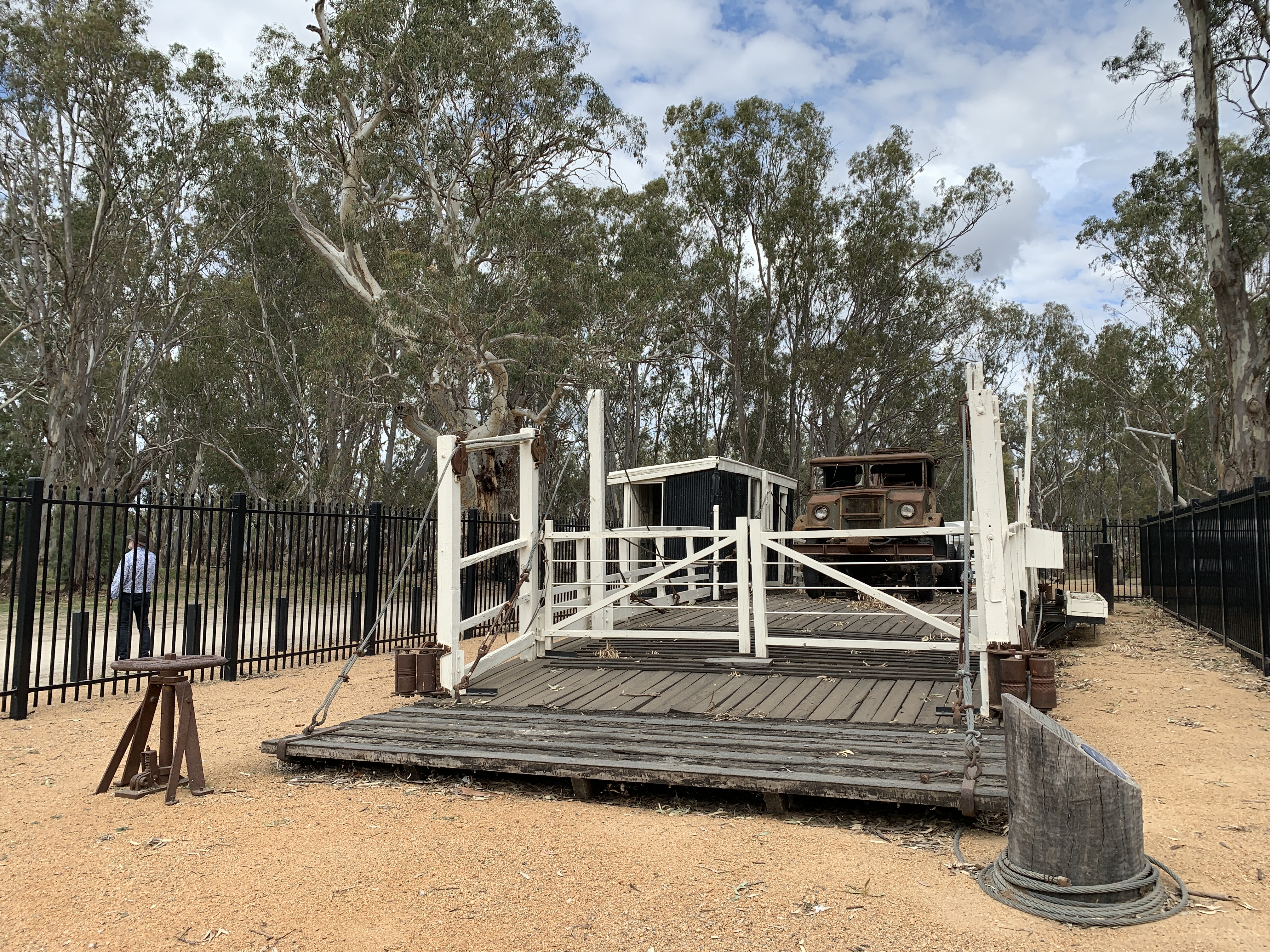
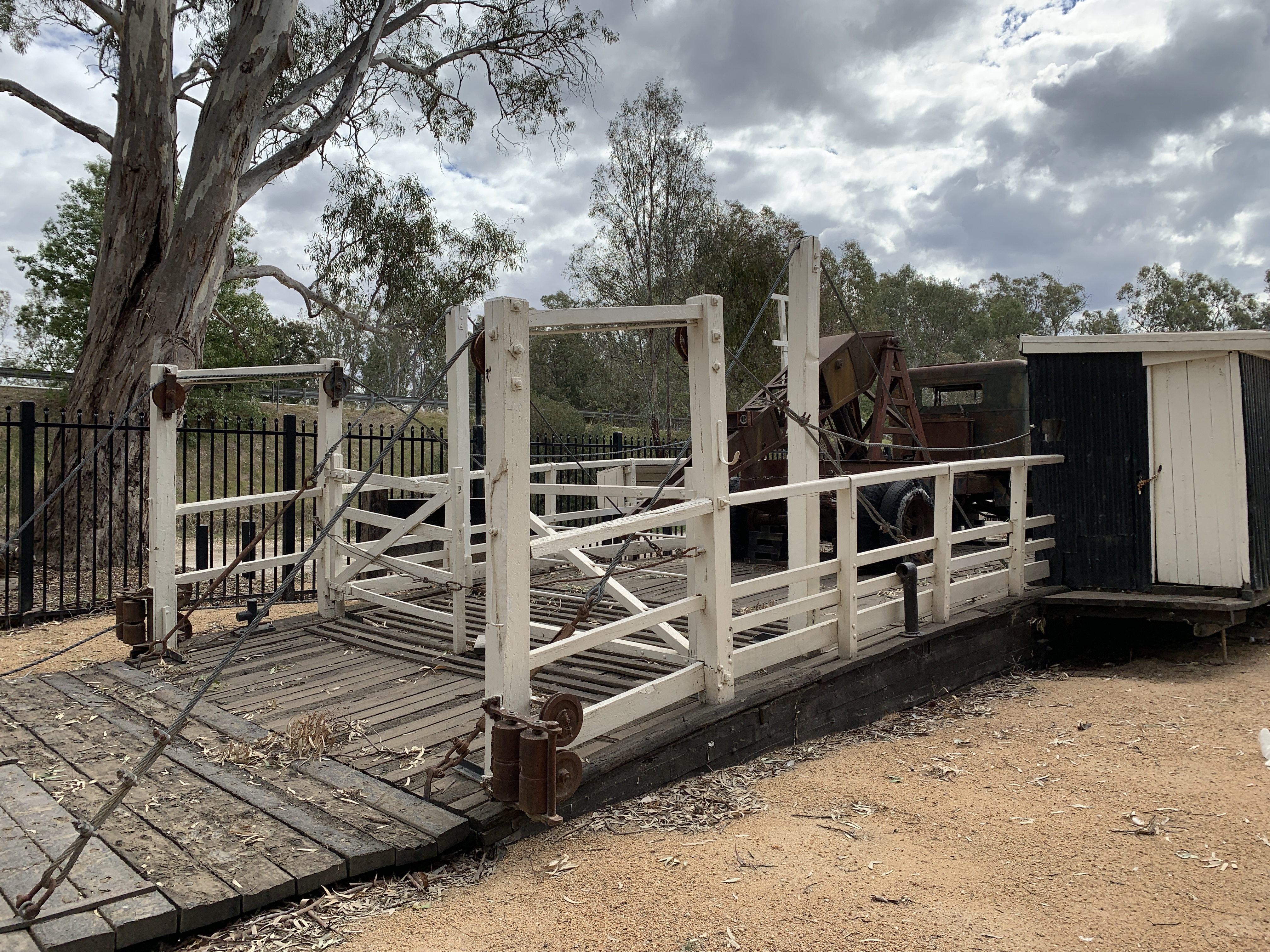
We stopped a little further along the road in the little town of Barmah to check out the River Punt that has been lovingly restored and put on display. The Barmah Punt is the earliest remaining example of a cable punt ferry crossing the Murray River. Punt ferries were once the most common form of deep river crossing.
The majority of the punt is made from red gum timber and put together with forged nails and spikes. It has a loading ramp on each end that was raised and lowered using steel cables and pulleys. Prior to 1953 the punt was manually hand winched across the river by the ferryman however the punt was motorised in 1953.
In 1929 the NSW Department of Main roads took over operations and commissioned the construction of this punt. The punt was in continuous use until the new bridge was built in 1966.
In 2017 a $200,000 grant was given for the conservation of the Barmah Punt and it has been lovingly restored and displayed next to the river where it used to make its regular crossings.
Interestingly the Ned Kelly Gang once used the punt to cross the river. They played a game of cards at the Barmah Hotel and Ned bought a horse for 50 pounds before continuing on their way to Jerilderee.
Crocodile tree
The old punt crossing
New bridge
The Barmah Punt
We crossed the new bridge over the Murray River that replaced the punt in 1966 and we were once again in NSW for a short time. It was even more windy than earlier in the day as we made our way to Moama. It was so dry that the wind was whipping up the sandy soil and blowing it around creating a hazy day.
One question we get asked repeatedly from people wanting to know more about motorhoming and particularly free camping is how safe is it. I have to say that in all the years we have been camping and mostly free camping we have never felt unsafe. That is until last night!
We were camped at a gorgeous spot right on the Murray River at Yarrawonga Common. This is a free camp provided by the local council. It is a loop road along the bank of the river and there are many campsites all the way along. There are no facilities so you must be self contained. There were no signs to say how long you could stay but it is a lovely spot for a few days. You can walk into town from there. Camp fires are permitted so we made use of that and got our little fire pit out and cooked our dinner on our Bidgee BBQ.
It was a lovely spot with fabulous views of the river. On the opposite bank is a golf course and we could occasionally see golfers as they made their way around the course.
We met some lovely people who were camped next to us along the river bank in their motorhome and they came over after dinner and joined us around the camp fire. This is one of the most enjoyable things about camping….meeting new people. We had a most enjoyable evening with lots of laughs and good conversation.
The only thing that spoilt this great spot was a camper further along the river who was either on drugs, had serious mental health issues or was very drunk. He has set up his camp and looks like he’s been there for a long time. Late at night when it was very dark he started yelling and oh my gosh! The language was very colourful. It was a bit scary listening to the rantings of this man, who sounded a little crazy, so we decided to call it a night and retreat to the safety of inside our motorhome.
We made sure we packed up everything outside and then locked ourselves safely inside. We have never felt the need to do this before so it was very disappointing that the actions of one person can affect so many. I’m sure all the other campers felt that same as we did.
The local ranger did a drive around the loop road just on dusk so they must be aware of this long term camper. It’s time they did something about him and moved him on so people can once again enjoy this lovely scenic spot.
I bought a kayak! After trying my cousin Catie’s kayak I really wanted to get one of my own but where to store one in our motorhome? Catie stores hers on the roof of their car as they have a 4WD and caravan. I don’t think I could get one up on the roof of the motorhome.
I did some research and discovered inflatable kayaks. I found one on Amazon for $120 and thought what have I got to lose? It looked like it would pack up neatly and maybe would fit in one of our outside bins. Not sure that Richard will happy to ditch the Webber but I could only ask. Turns out he was OK with that as we have our Bidgee BBQ if we want to cook outside. So the bin that used to house our Weber BabyQ now houses my kayak.
The kayak arrived in quick time from Amazon. It is an Intex Challenger and comes complete with collapsible paddle and hand pump. It is quick to inflate and the whole set up takes about 15 minutes to have it ready to put in the water. It has a detachable skeg that you put on last thing before you get in the water.
I tried it out on our dam at home and thought it was a lot of fun so next thing is to try it on a real river.
There was a good launching spot not far from our campsite at Yarrawonga Common so here I am on my first paddle on the Murray river.
All ready to go
Paddling up the river
The weir at Lake Mulwala
He wasn’t at all worried about me being so close
A fellow boater
Coming back to camp
My first kayak on the Murray River at Yarrawonga, VIC
I paddled for an hour, up to the weir where the water from Lake Mulwala enters back into the river. I got right up close to the buoys and the noise of the water as it comes across the gates was very loud. It is very peaceful out on the water and although there were a couple of fishermen on the bank and one in a little fishing boat, it was really only me and the birds on the water.
Great flocks of Corellas swarmed overhead as I was returning to camp. They are such noisy birds! I was glad to see Richard at the bank as I returned as I dont think I could have got it up the steep bank on my own. Back at camp her had the fire pit going and it did look inviting.
It took about half an hour to deflate the kayak, towel off the water and pack it back into its bag. By this time it was dusk and I was cold, wet and had sore arms. A hot shower was very welcome before I joined Rich out at the fire.