Farewell to The Outback

We packed up our camp at Lara Wetlands, said fond farewells to cousins Ross & Jenny, and departed Lara around 9am. What an enjoyable 3 days we’d had. Great company and one of our favourite camp spots.

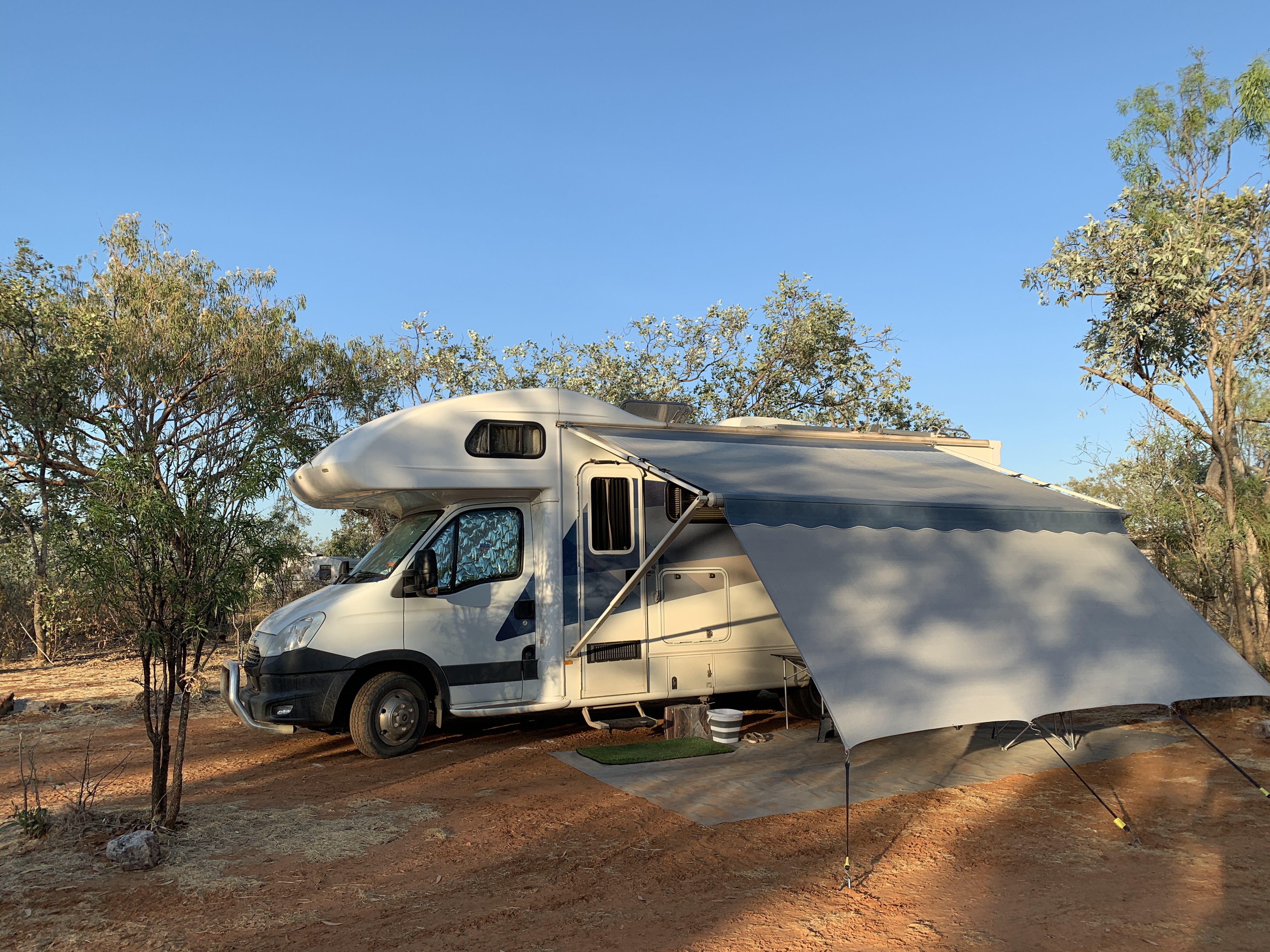
While Ross & Jenny went for a drive to see the Lake Dunn Sculpture Trail we spent the day reading and relaxing. It had been very windy during the night and the wind kept up most of the day. I ended up putting our awning down in the early afternoon.

The wind finally eased up in the late afternoon and I took my kayak out for a paddle. While I was out on the water Ross & Jenny returned from their drive. They only ended up doing half the sculpture trail as it would have taken them all day to do the whole 200km of trail. Jenny enjoyed seeing the sculpture however Ross thought it was a waste of time. He would much prefer to have the sculptures in a park where you can wander around and view them all instead of having to drive for miles. They did enjoy seeing Lake Dunn and thought it looked like a good place to camp.

Our first stop after leaving Lara was the small town of Barcaldine, only 28km north of Lara. Barcaldine has a population of 1,500 and was established in 1886. The little town sits on the junction of the Landsborough and Capricorn Highways. Barcaldine still has 5 pubs but at one time it had 11. All the streets of Barcaldine are named after trees.

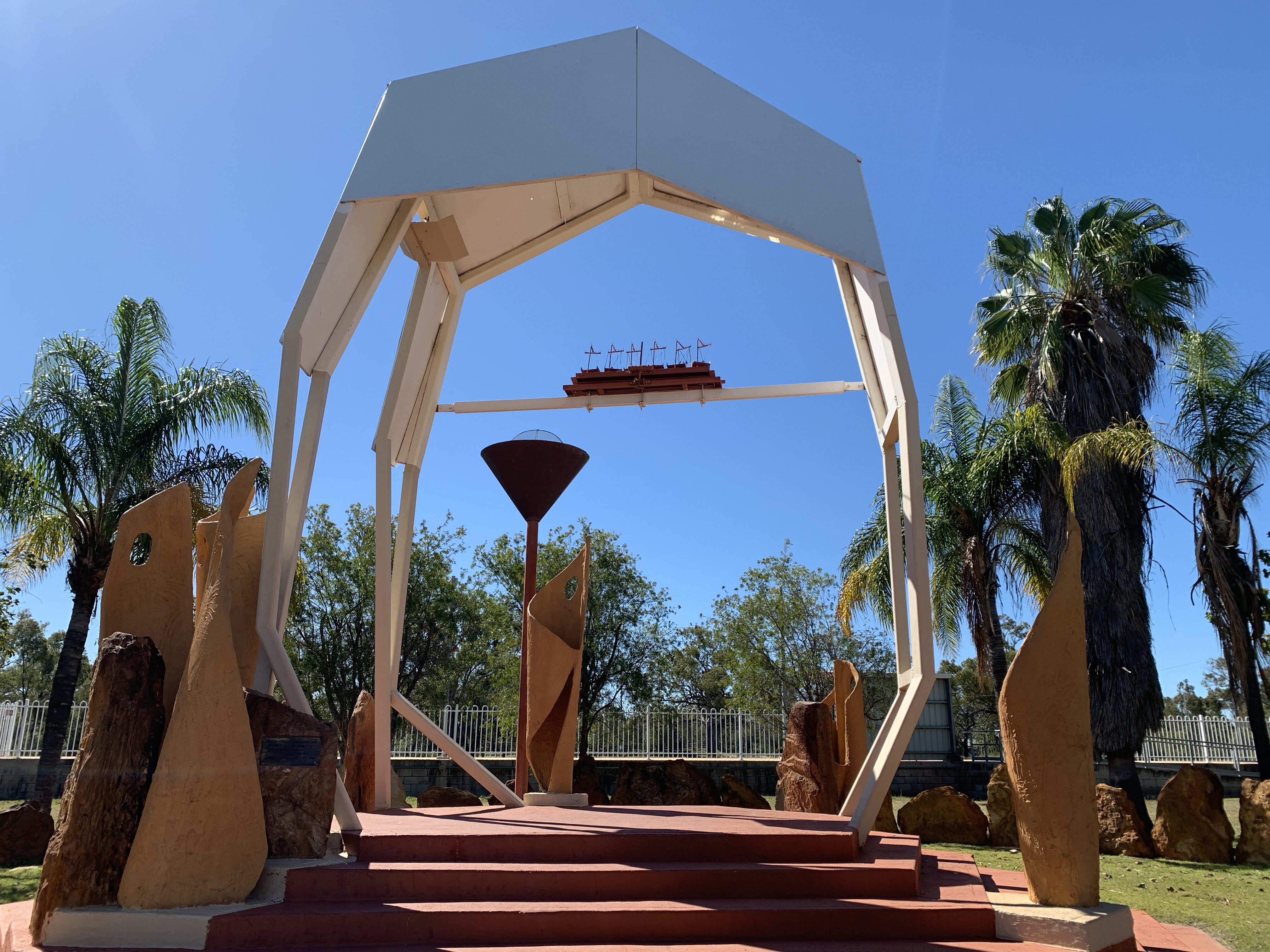
The Tree of Knowledge is Barcaldine’s most famous landmark and it sits right on the Main Street in front of the historic Railway Station. The tree, a Ghost Gum, became famous because it was there during the Shearer’s Strike in 1891 that shearers would meet to discuss their struggle for fair pay and better conditions. It was under this tree that the beginnings of the labor movement began.

Sadly the 200 year old tree was poisoned in 2006 and tree died. However the whole tree including its root ball was excavated and treated for chemical preservation. This process took over 12 months. The new memorial was constructed over the tree and the hanging timbers above represents the leaves of the tree.

My next stop was to visit the Australian Workers Heritage Centre. This fabulous museum is dedicated to Australian workers and our working history. The museum is housed on a few acres with 14 different buildings each housing displays. You can just wander at your own pace around the garden and into each building.

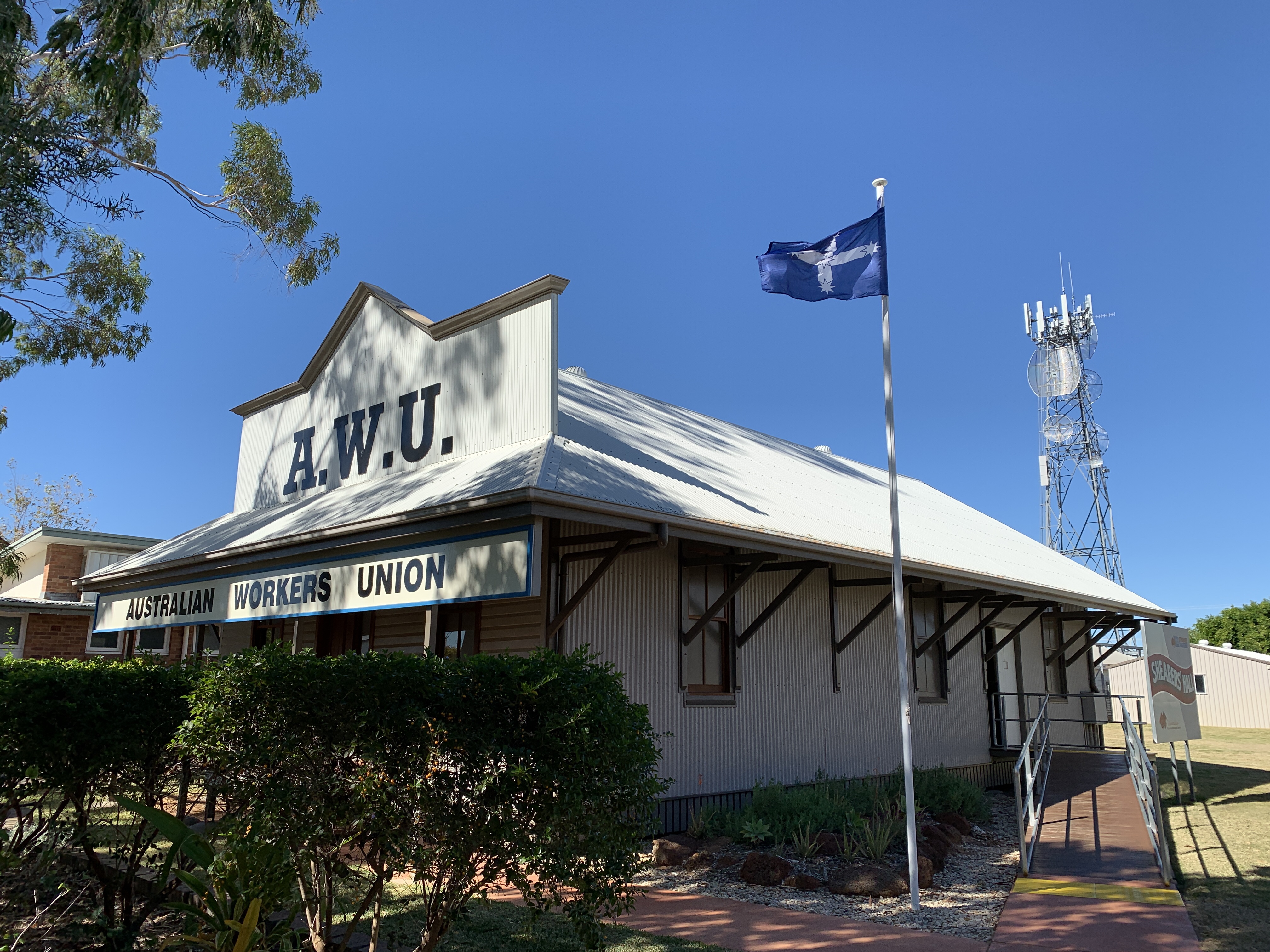
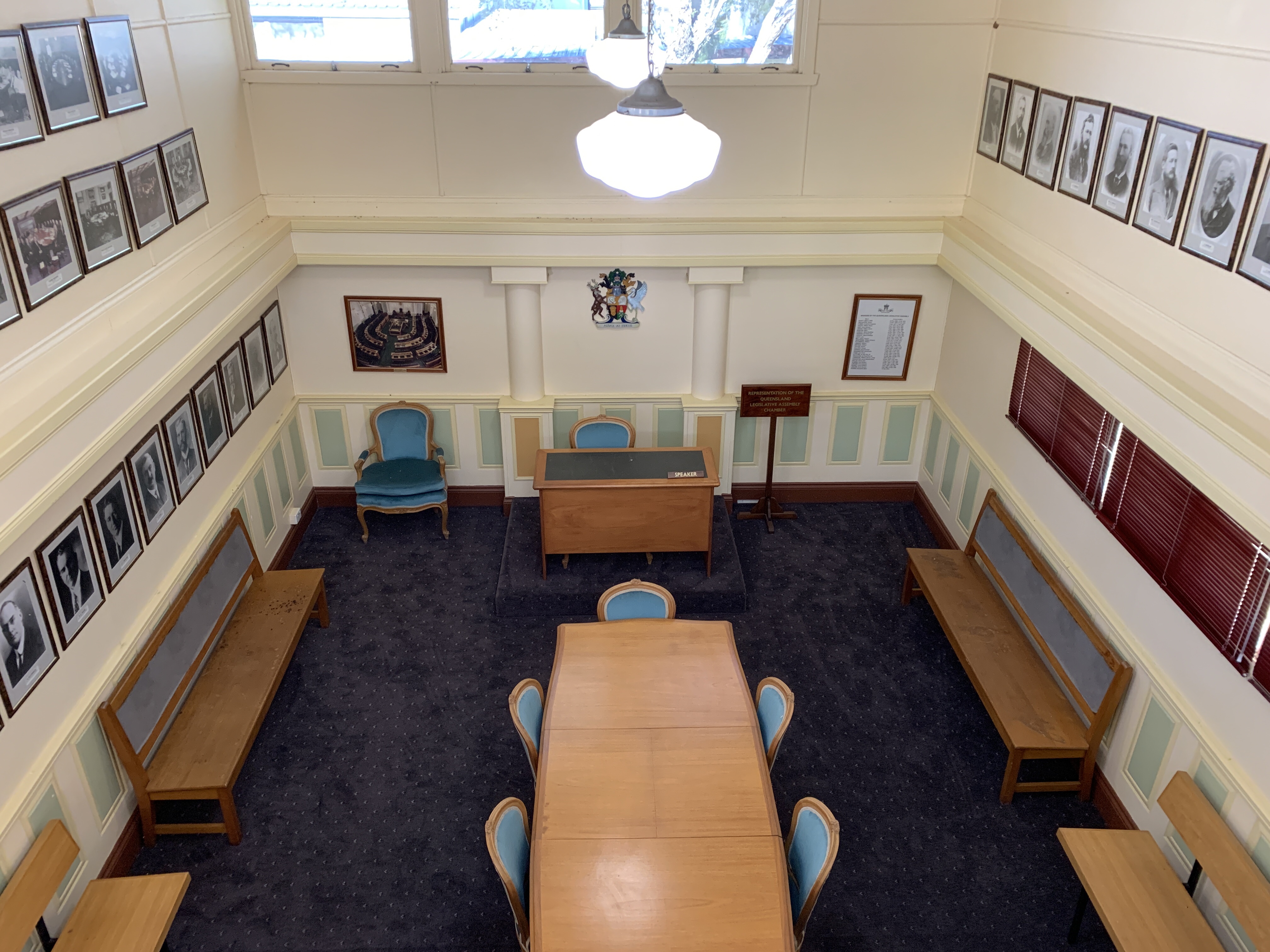
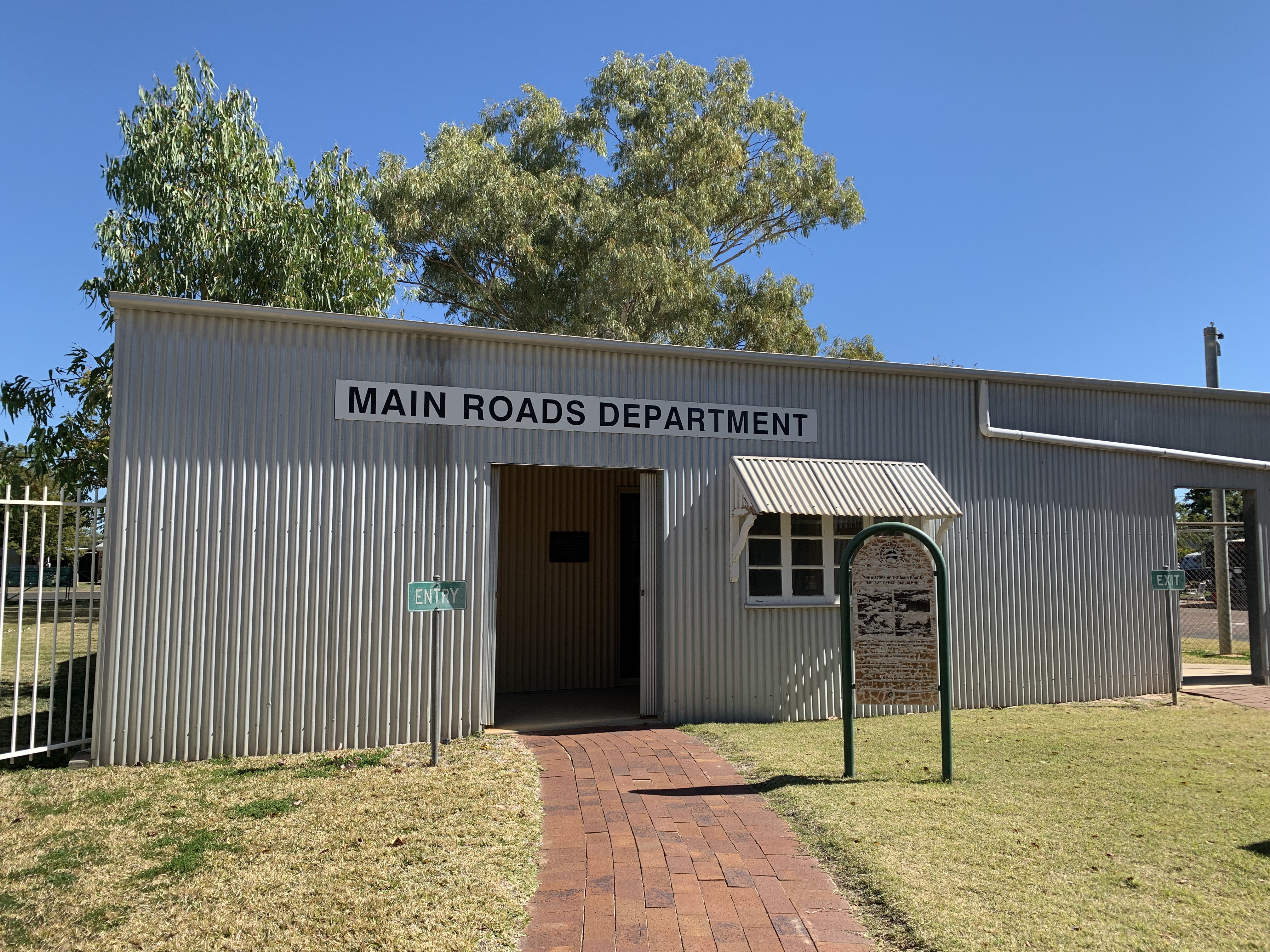
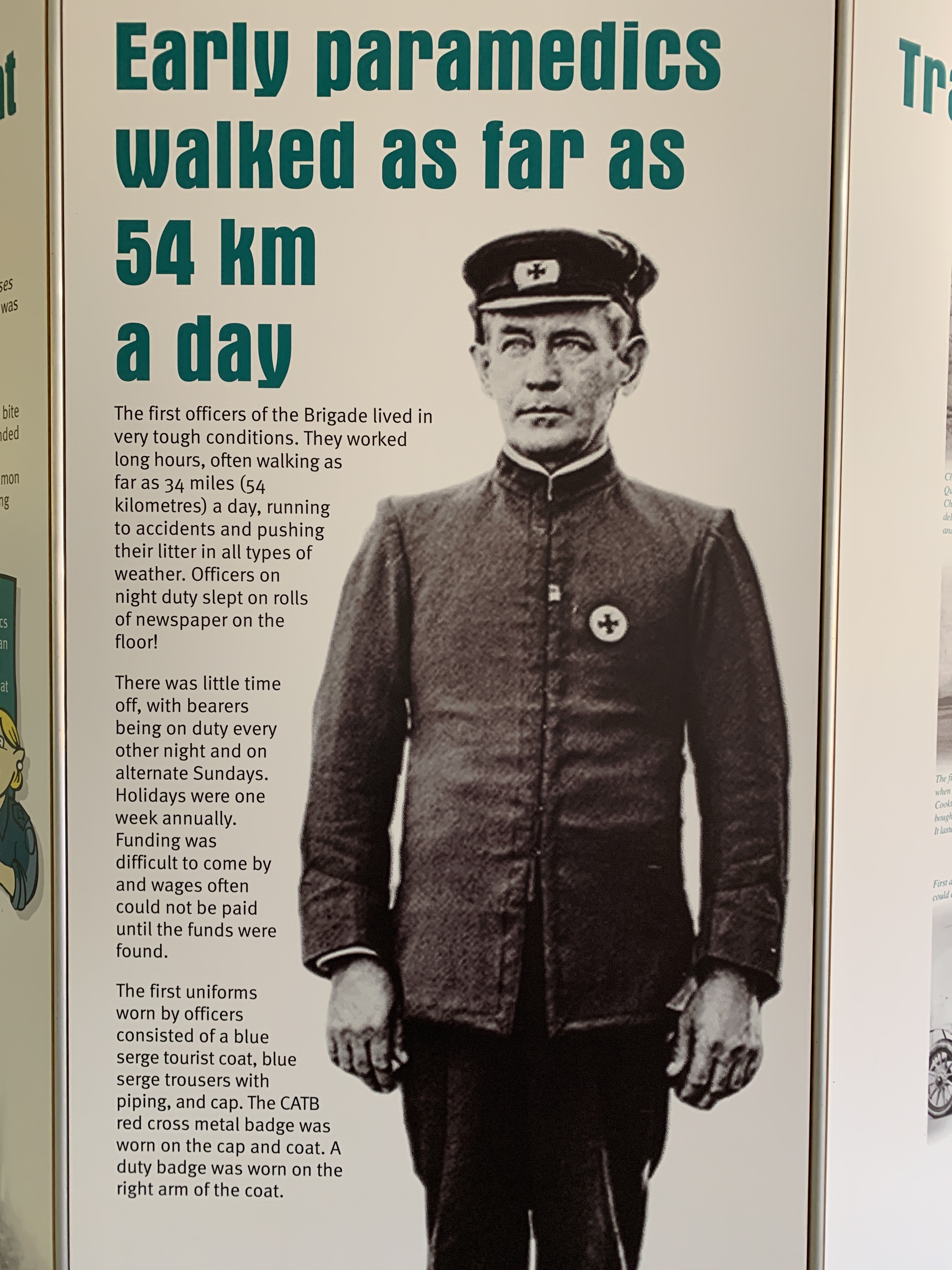
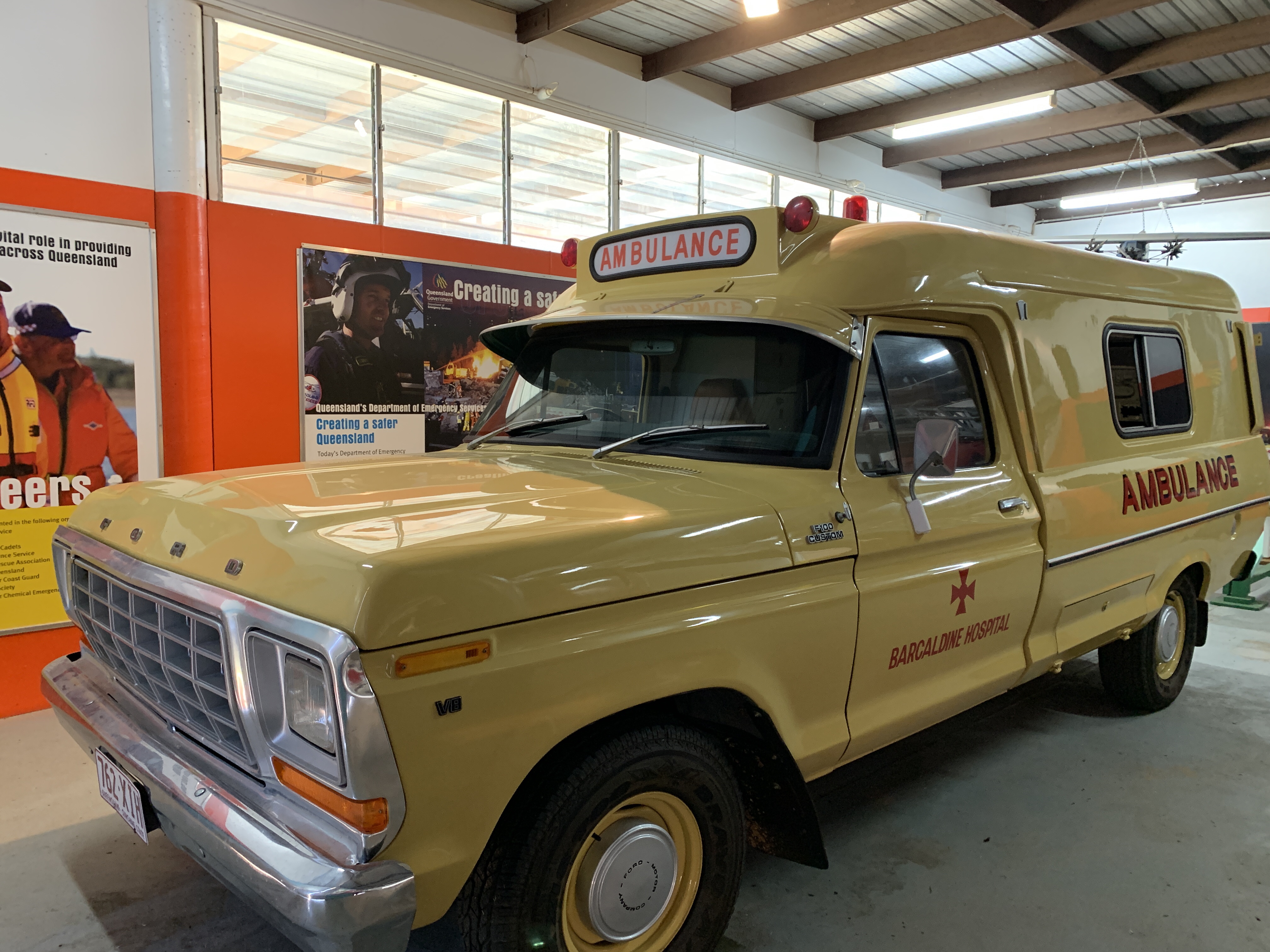
The buildings themselves are all of historical significance such as the Kunwarara Railway Station, The Toogoolawah Police Lock-up, The original Australian Bi-Centennial Tent Theatre, The AWU Shearers Hall, and the Torrens Creek one teacher school. The displays inside feature all manner of workers from police, railway, teaching, shearers, state politicians, postal workers, health workers, women in the workforce, roads workers, emergency services and even power workers such as those who worked on Snowy Hydro.

I spent a couple of hours wandering this fabulous centre.

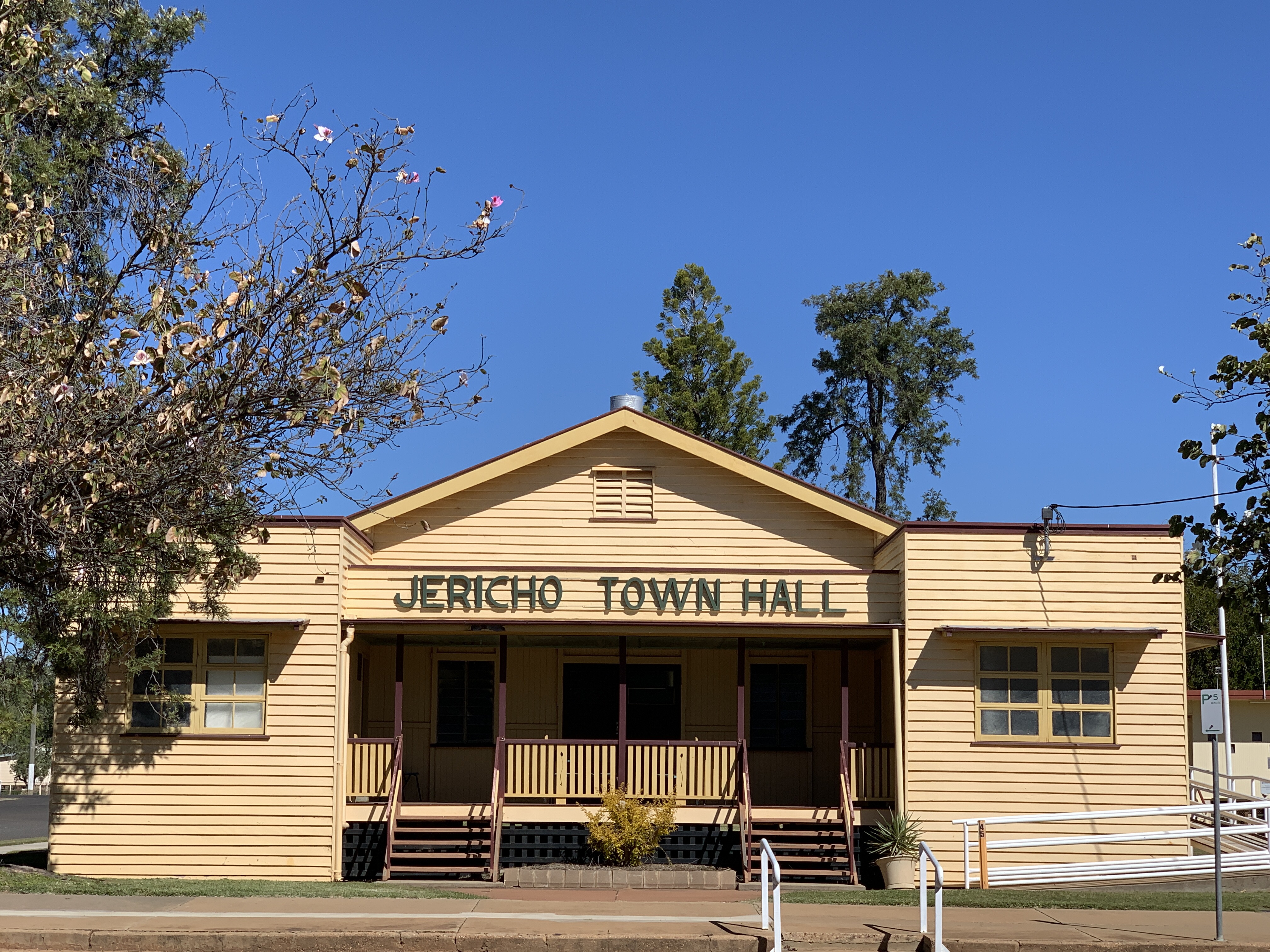
I met up with Rich back at the motorhome and we continued on the road east towards Jericho, The countryside had become thick grasslands with lots of trees. I felt we were leaving The Outback behind.

Along the way we saw lots of termite mounds but why do people feel they need to dress them in t-shirts and shirts? It just looks weird!

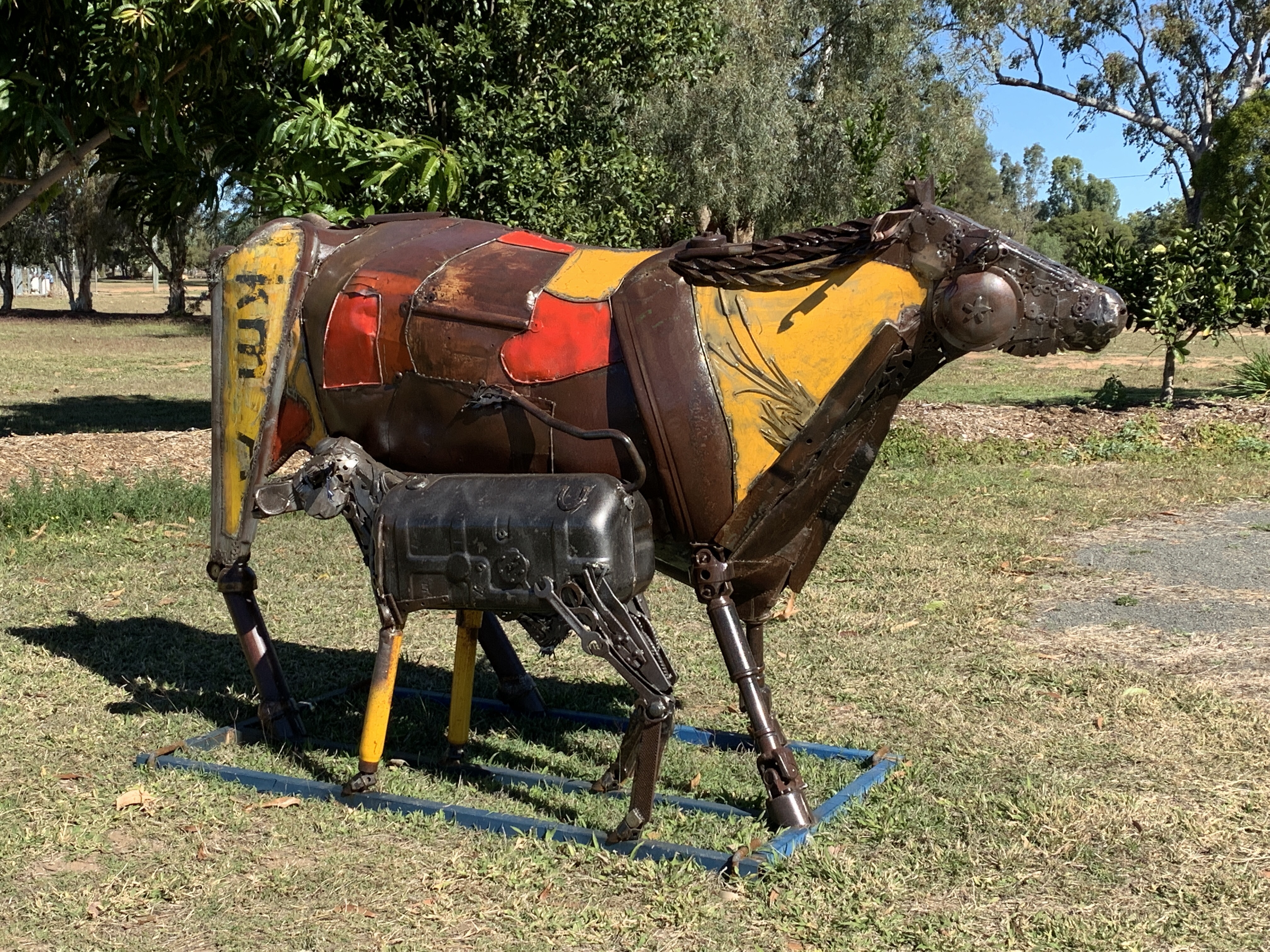
Stopped for fuel in the tiny town of Alpha and had to get a photo of the very clever sculpture of a bull, all made out of barbed wire. Next to him is a sculpture of a cow and calf made from scrap metal.

Alpha, population 350, is known as The Gateway to West. So heading east from Alpha we were no longer in what is considered The Outback. We were now in Central Queensland.

About 60km east of Alpha we came to an area of low hills and small mountains. These are the Drummond Range and we called in to check out the Drummond Range Lookout. There were a couple of caravans that looked like they were getting ready to camp the night but as it was only 3pm we decided to keep going.

We turned off the Capricornia Highway and went northwards into The Gemfields. We cruised into Sapphire and went to check out their RV Camp but unfortunately it was full and the only spots left were on a sloping hill. What to do? Looks like we’d be stealth camping again!

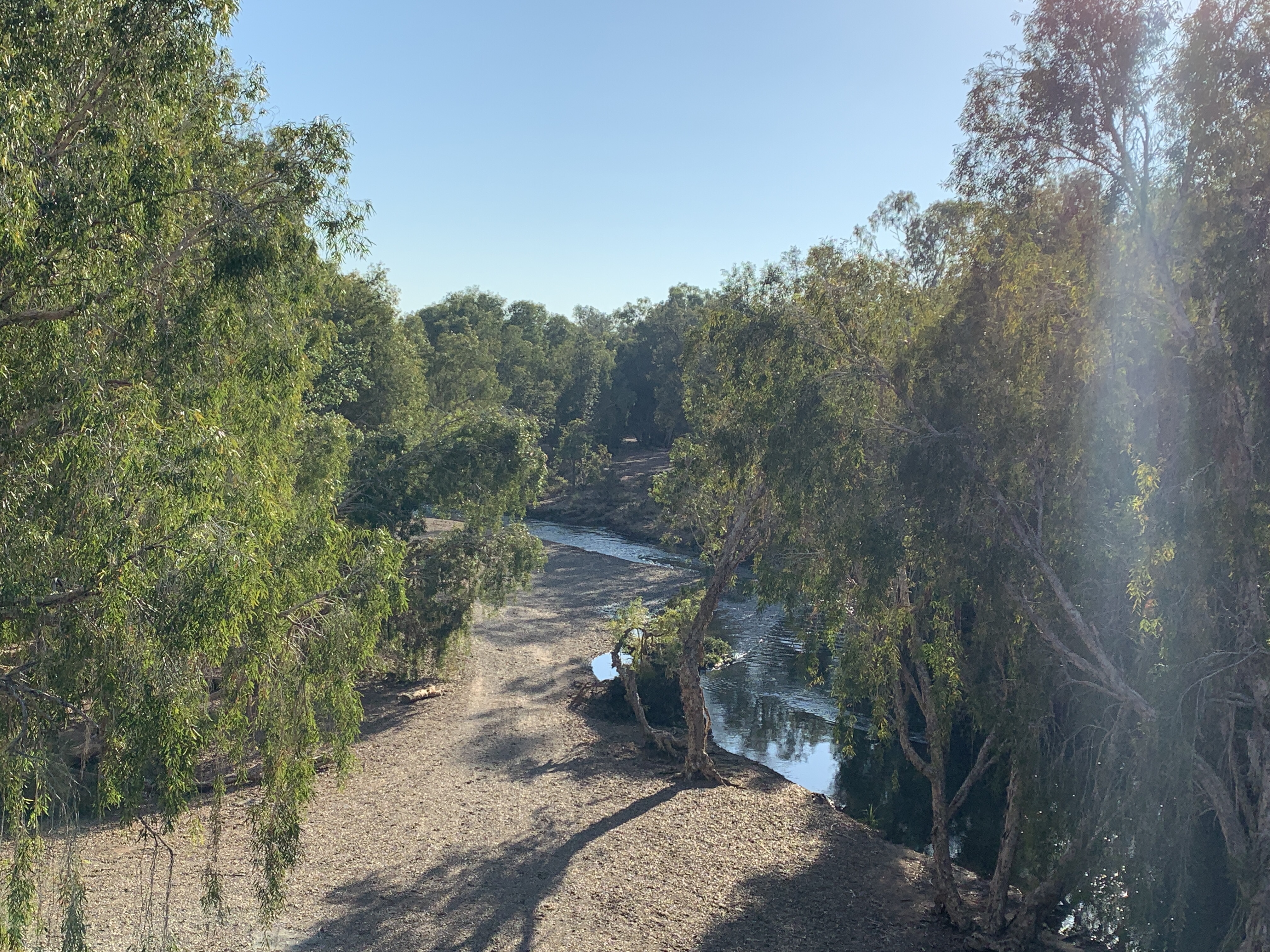
We turned back and took the gravel road out to the Cemetery that follows the banks of the dry river and we found a spot opposite the cemetery. It’s a no through road and there’s only a couple of houses at the end so I don’t think we’ll be disturbed at this spot.

We’d only just got our chairs out and dinner on when a car and camper came along. They were obviously looking for a camp spot too. They turned around and a little while later I spied them on the other side of the river still looking for a spot. I think I can just see the camper through the trees so they’ve found a camp for the night.

Oondooroo Station – Farm Stay

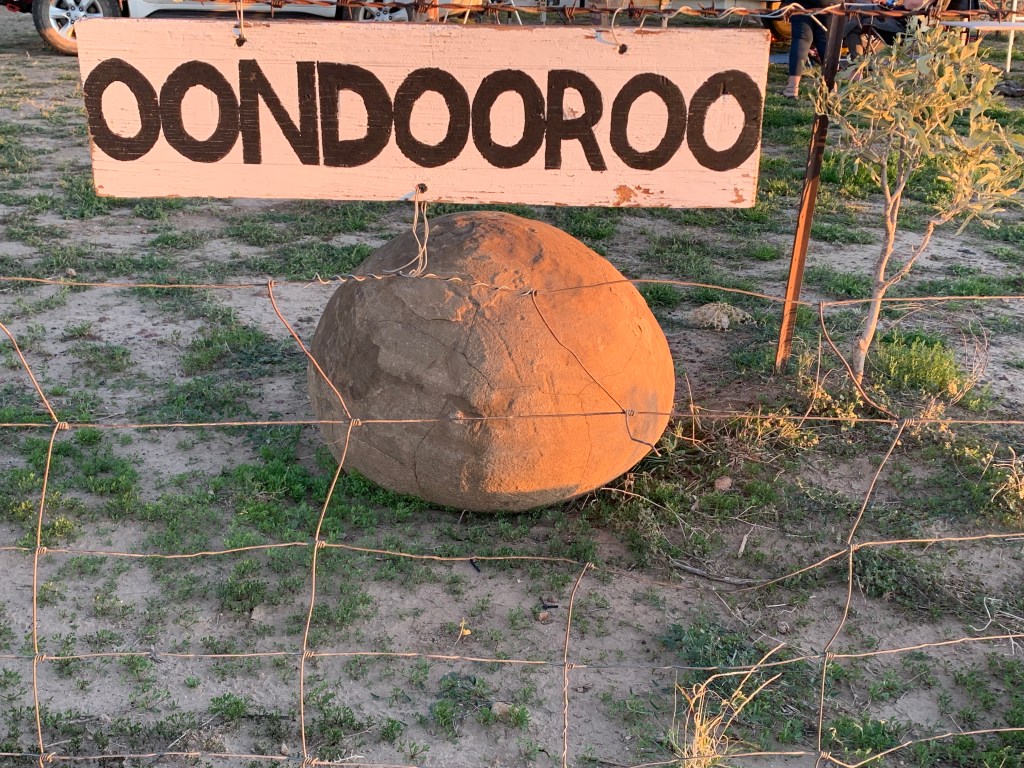
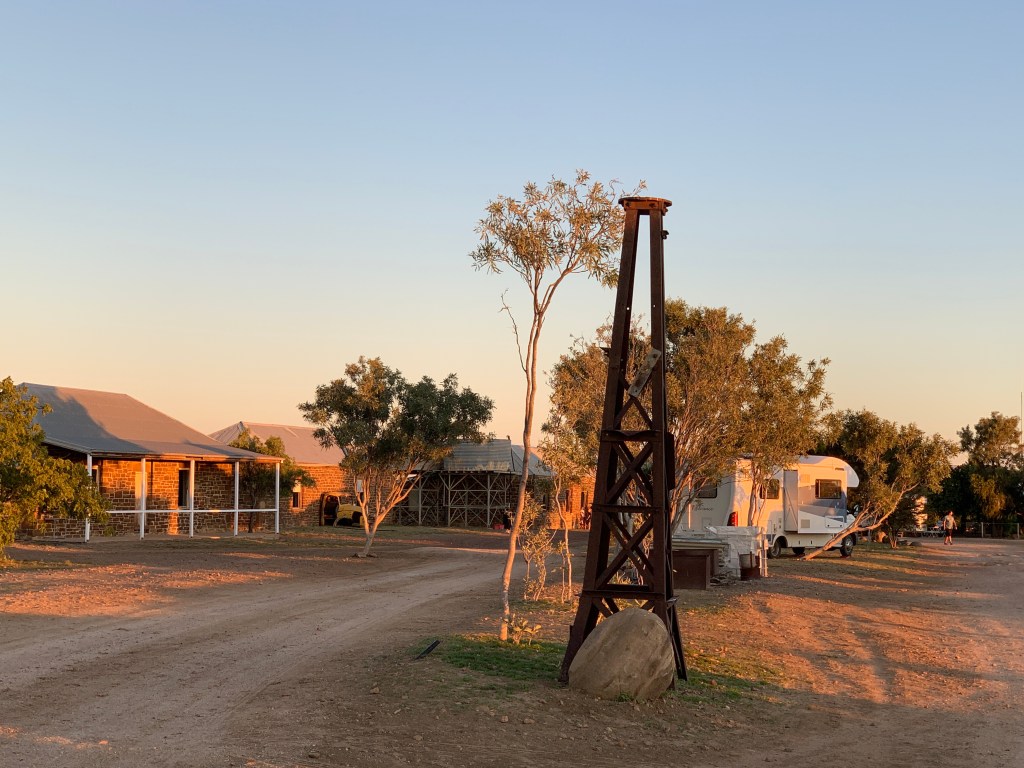
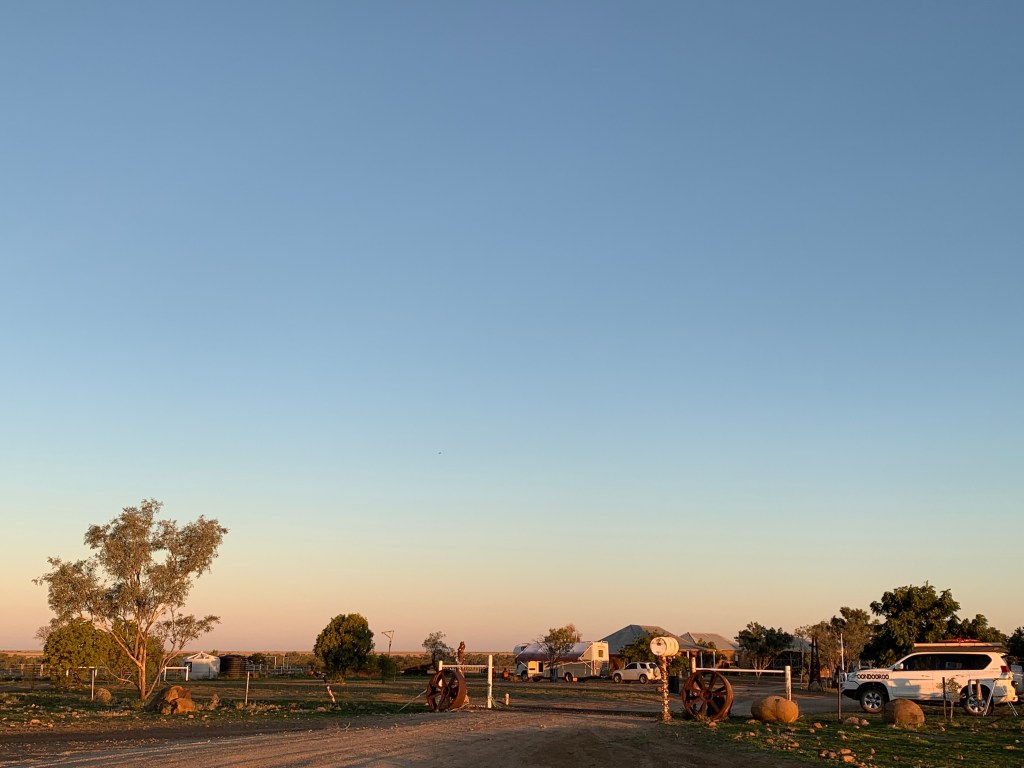
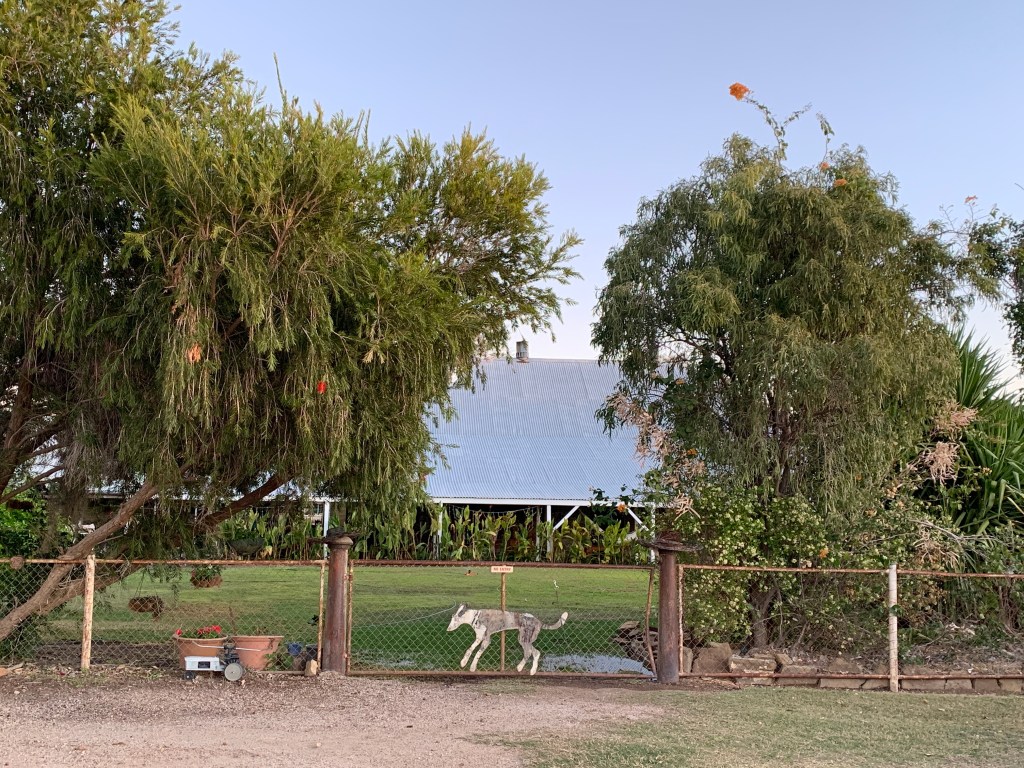
Oondooroo Station is situated north of the outback town of Winton on the Winton-Hughenden Road. You turn off the tar onto a dirt road and travel for 7km before reaching the entrance gates of Oondooroo. Oondooroo Station is a working cattle and sheep property but a few years ago the current owners, Jason and Kerry Turnbull added farm stay camping as another source of income.

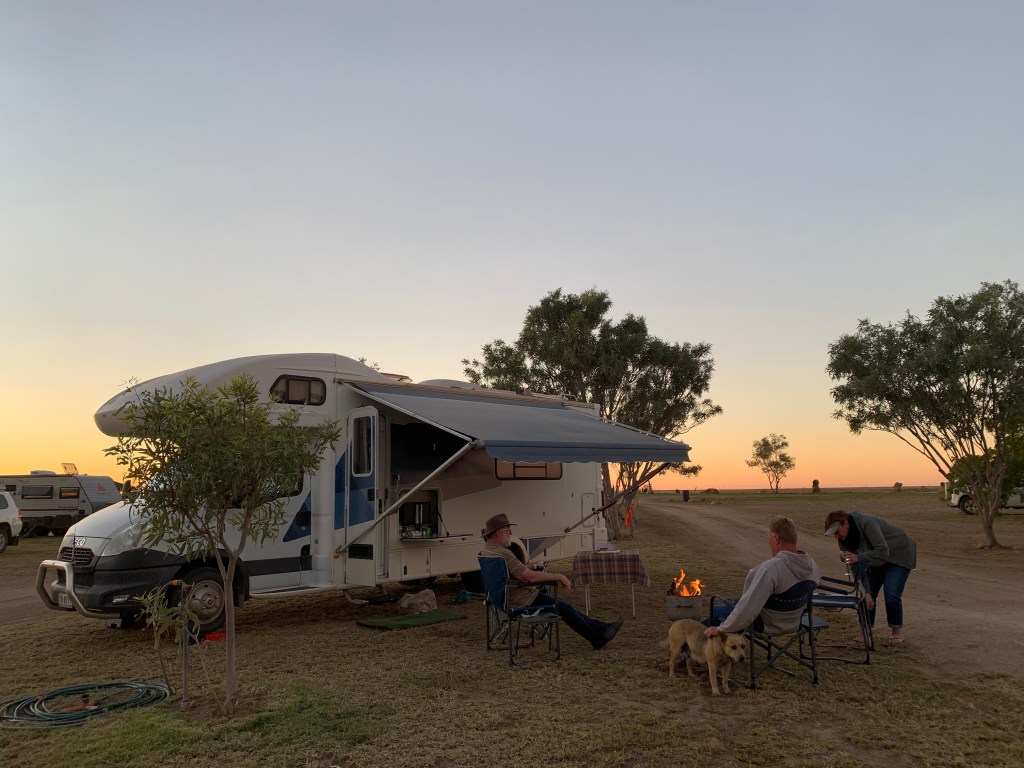
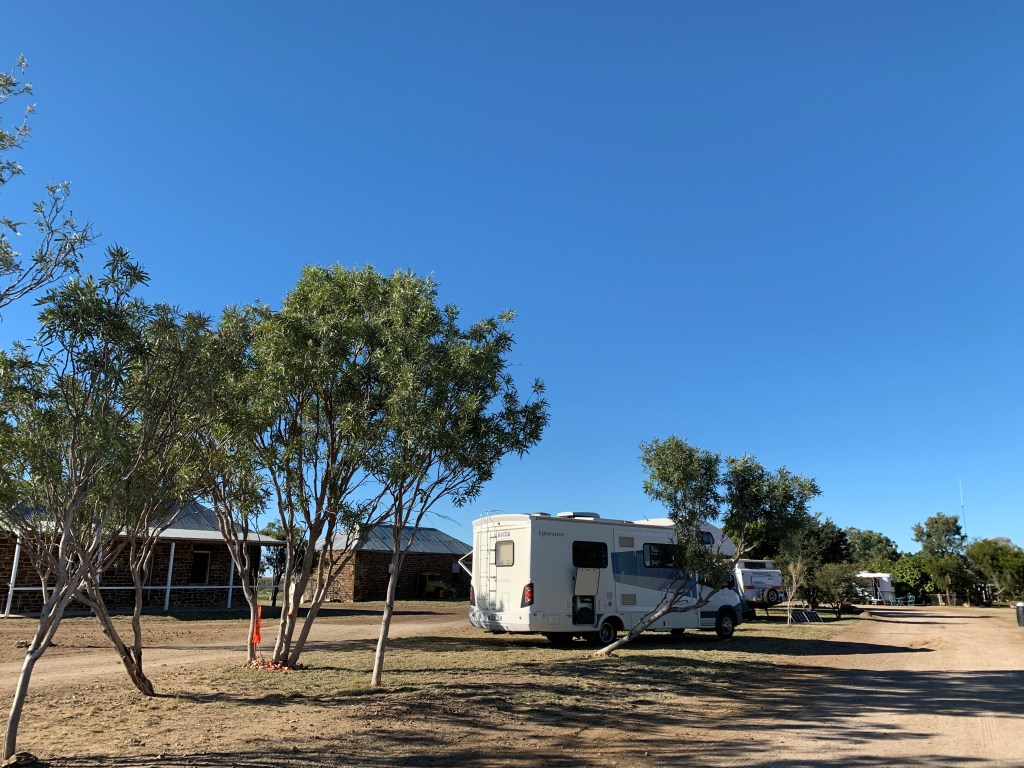
Upon arrival at Oondooroo Station we were met with a warm country welcome by Jason. We paid up and followed Jason on his 4 wheeler and he showed us to a grassy spot. It costs $25 per night for 2 people and they also have fire pits &to wood available for $10 per night.

There are two toilets and a shower available for campers use. Water taps are scattered around the campground and they are artesian water from their bore.

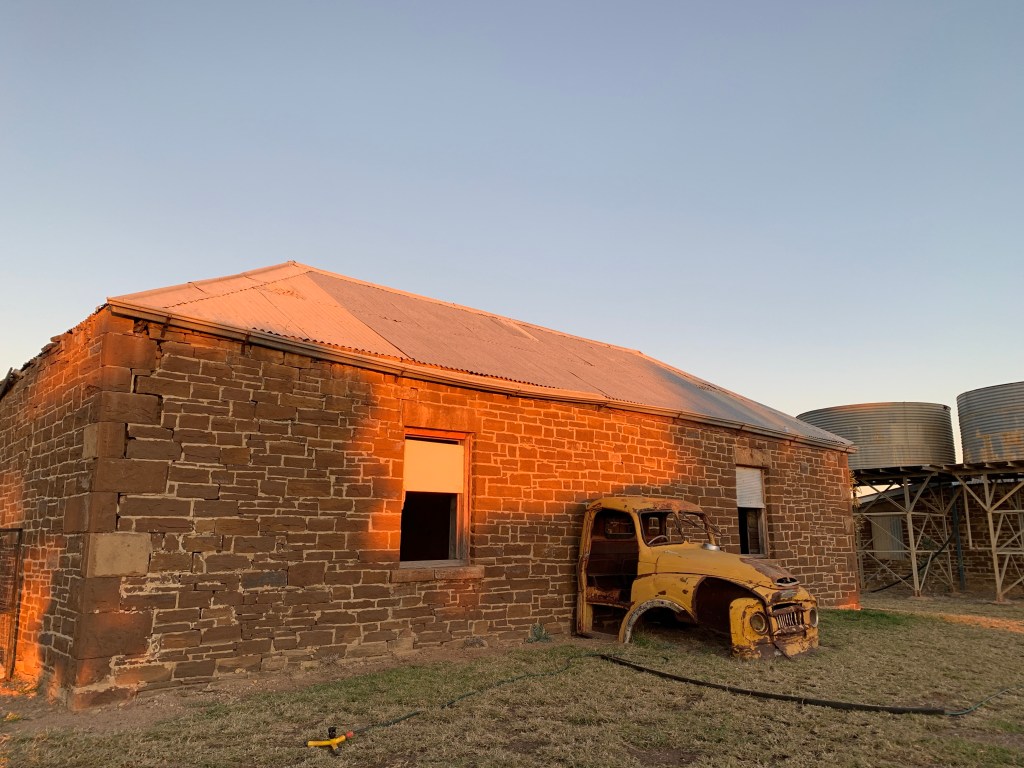
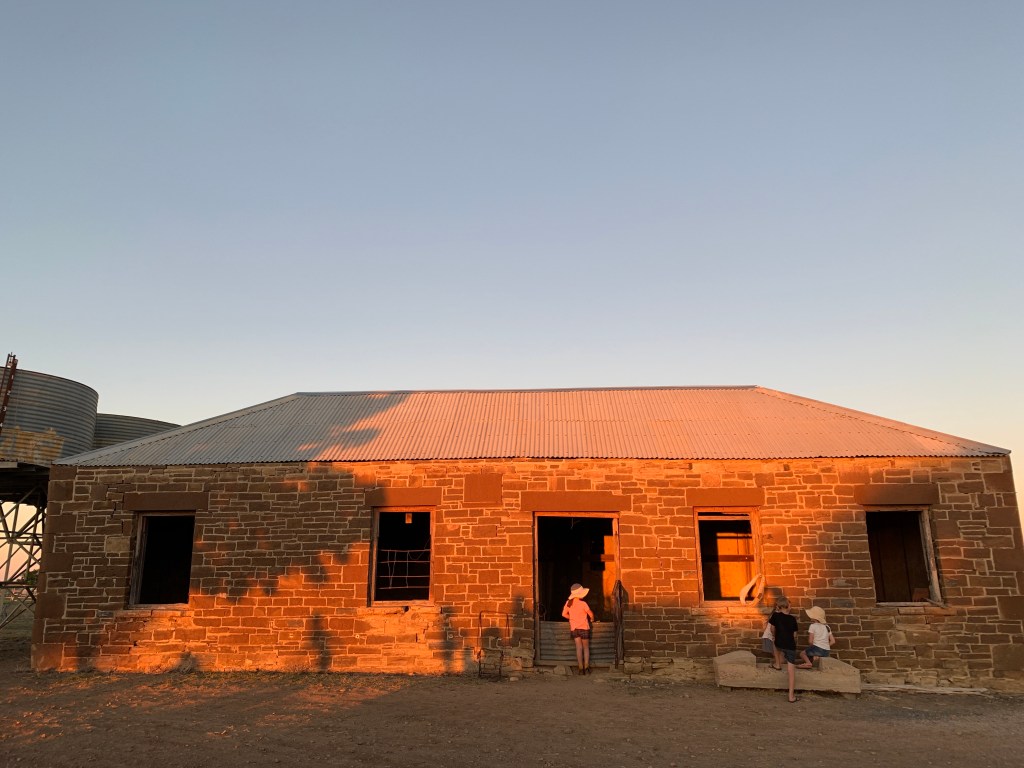
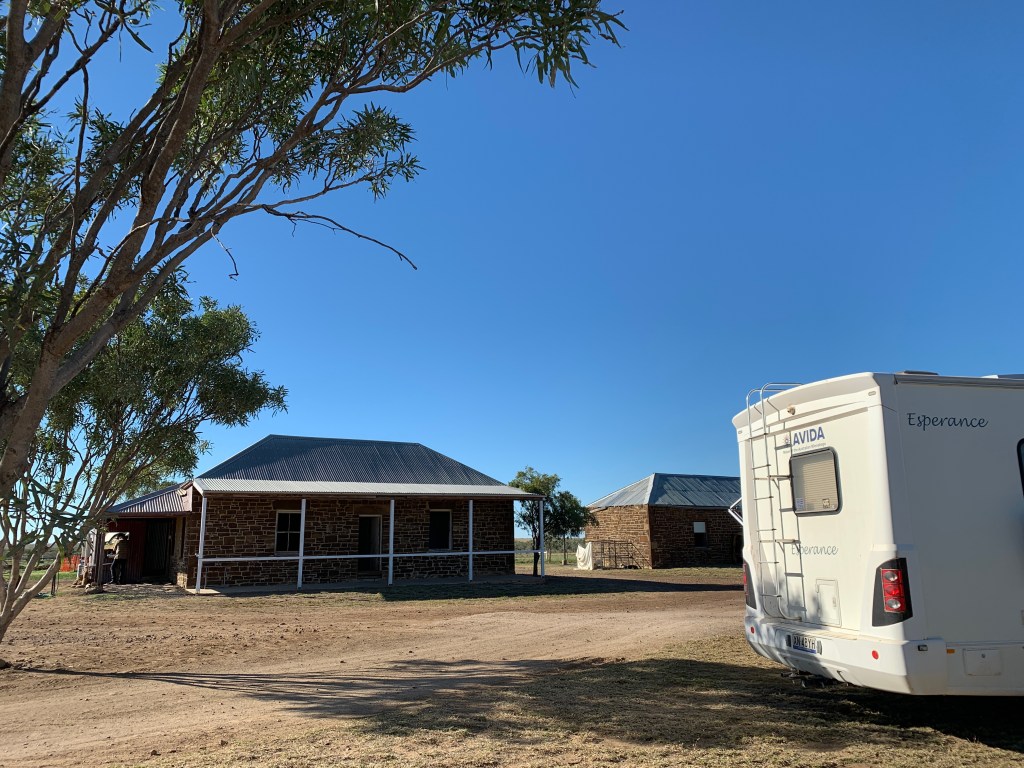
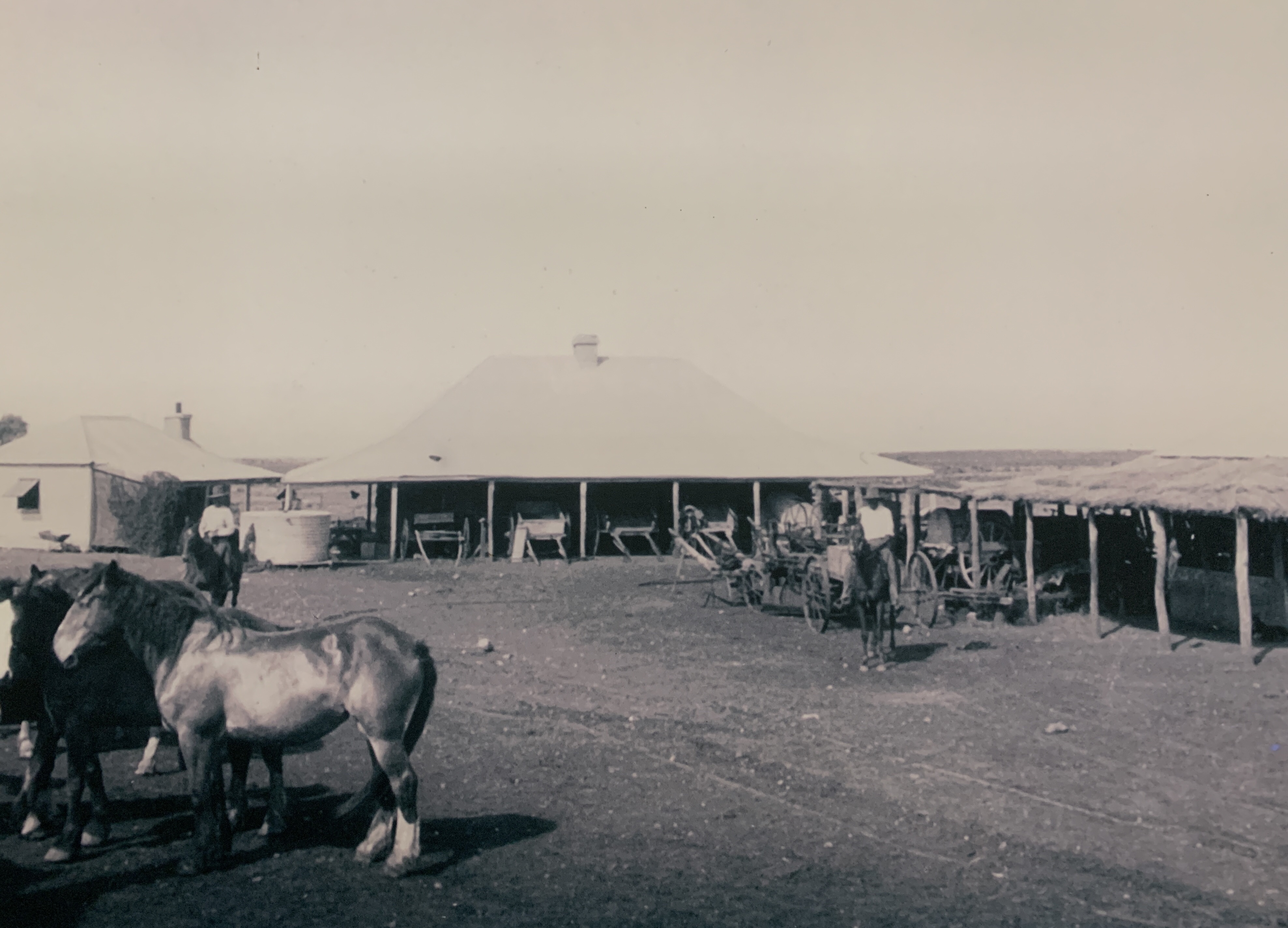
Oondooroo Station has a rich history and was originally purchased by the Shollock family in 1878 and they stocked it with 23,000 sheep. The Shollacks aim was to establish ‘refined living’ and the cost of constructing the many fine hand-hewn sandstone buildings almost left them penniless. They sold the property to the Ramsay family in 1886.

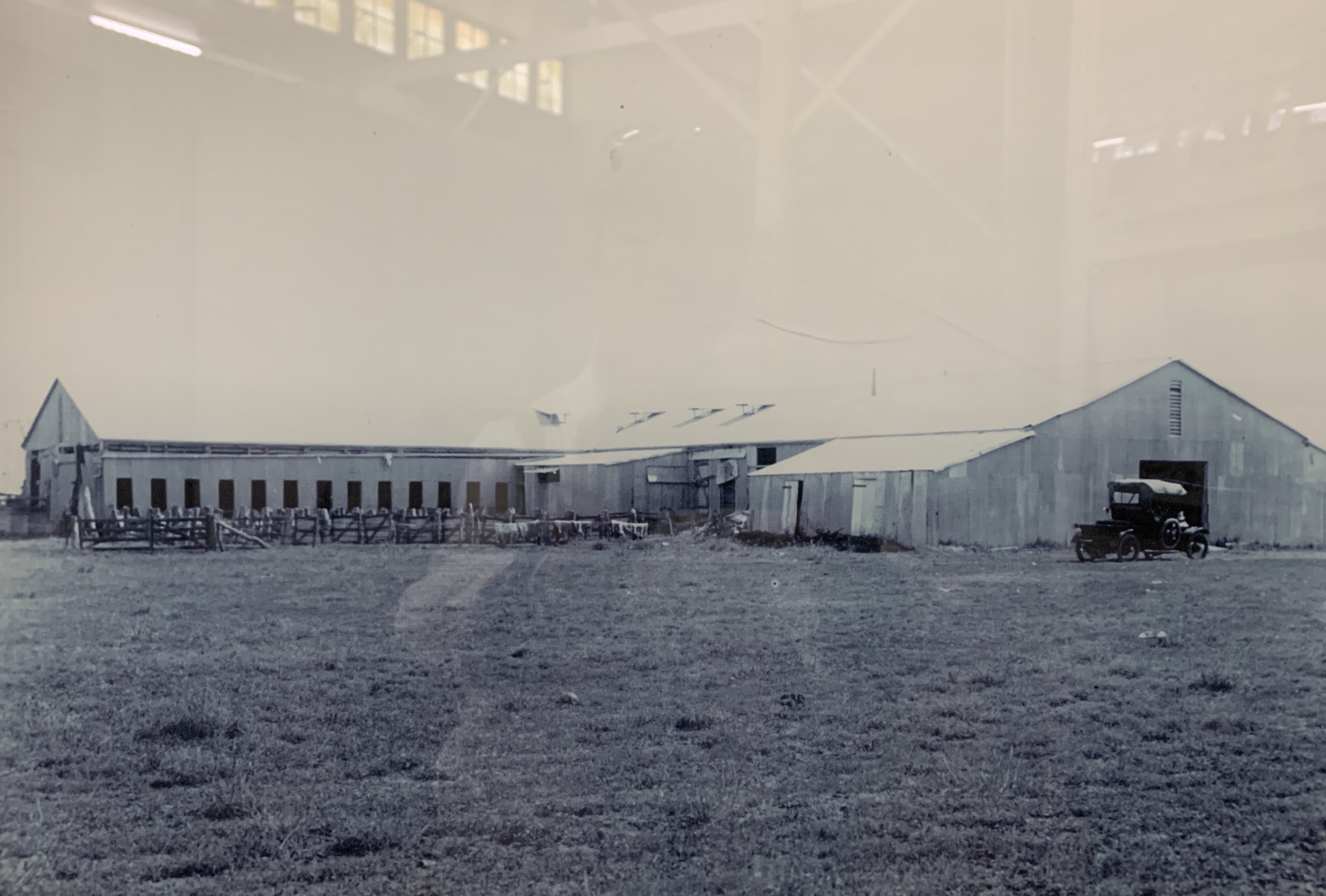
In 1886 a shearer’s strike for better pay and conditions commenced and it is said to have begun at Oondooroo Station. The original 26 stand Woolshed was burned down during the strike.

In 1895 Banjo Paterson was staying on nearby Dagworth Station where he met Christina McPherson. Together they put Banjo’s poem ‘Waltzing Matilda’ to music. However Dagworth Station didn’t have a piano but Oondooroo did, so it was in the lounge room of Oondooroo Station that Waltzing Matilda was sung for the first time.

In 1990 the family business, Landers Creek Pastoral Company, purchased Oondooroo and Bill & Jean Tudehope lived at Oondooroo for 17 years before the current custodians, Jason and Kerry (Bill & Jean’s granddaughter) Turnbull took over in 2004. Jason and Kerry continue to live at Oondooroo with their two children Toby and Chelsea.

Many of the historic buildings still stand at Oondooroo and the family continue to live in the homestead. The homestead has been added to over the years and now consists of the original central sandstone building which boasts pressed metal ceilings, a main living room and four bedrooms. Another two bedrooms and wide verandah have been added which help to keep the house cool.

Oondooroo is situated on grasslands and, although they have had droughts, in a good year the Mitchell Grass, which is rich in nutrients, can fatten livestock well.

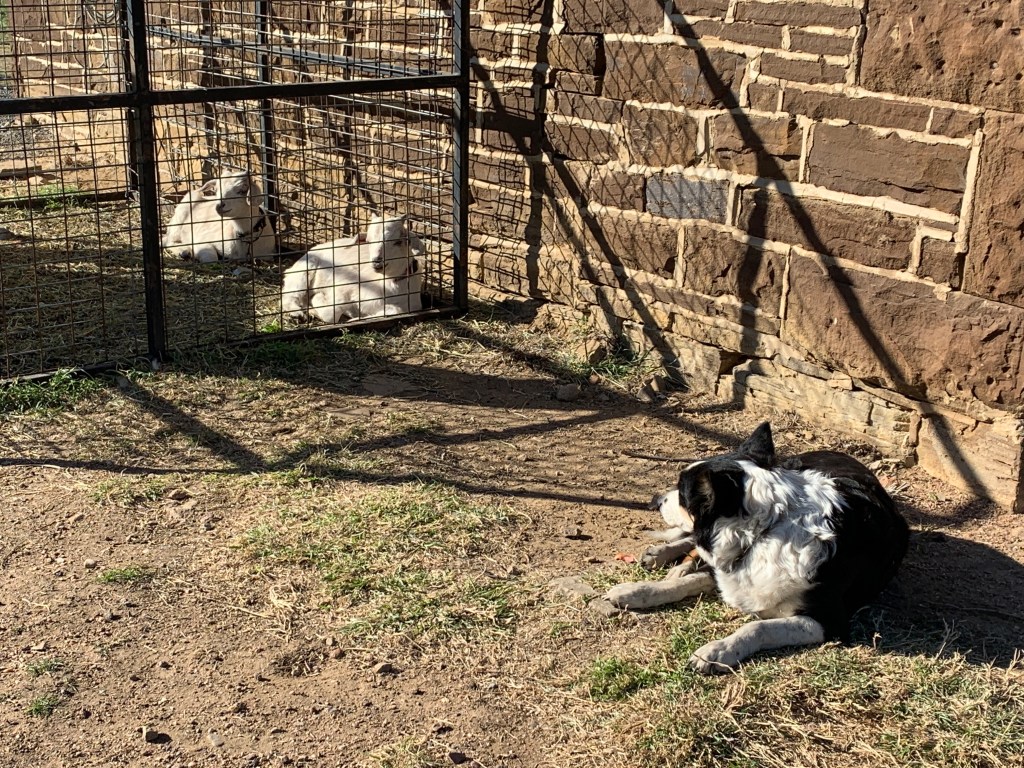
As a working property there is always something going on at Oondooroo and families will enjoy seeing the animals. During our stay there were kids (baby goats), puppies, many farm dogs, and friendly horses waiting for a pat.

You can take the short walk down to the Woolshed and see examples of the wool that is shorn at Oondooroo.

On the evening we arrived Jason told us they were trying something new. They were making hamburgers, using their own beef, and selling them to campers for $10 each and Jason would even deliver them to our camp. We said yes please to that and I’m glad we did. The hamburgers were excellent and beautifully presented wrapped in paper with a couple of onion rings on top. I hope this idea was a success and others get to experience one of those delicious burgers.

Oondooroo Station to Lara Wetlands

After a very pleasant evening around the fire pit with our neighbours, Allan and Toni, from the caravan next door we set off from Oondooroo Station heading to Longreach via Winton. We needed groceries, wine, fuel, a dump point and to fill up with water.

We arrived in mid-morning at Winton and I wanted to have a look at the Corfield Stores, something we didn’t do when we were there a month ago. The heritage listed store is now a local craft shop and houses a small museum that you can visit for a gold coin donation. The small museum has displays of boulder opal and opal mining equipment, a historic shop display showing goods that the store might have sold in the old days, a large life sized diorama of the dinosaur stampede at Lark Quarry and an excellent display of the history of wool and sheep in the area.

I even found an old photo of Oondooroo Station as it was in the height of the wool era.

We also paid a quick visit inside the historic North Gregory Hotel. The hotel was burnt down and rebuilt in the 1950’s. The architect must have liked the Art Deco period though as the building has many Art Deco features including light fittings, the railings on the staircase and the etched doors into the dining room.

Back on the road and we headed further south east to Longreach. The road is long and straight and traffic was heavy with lots of road trains. We noticed lots of roadkill along this stretch and each of them was being eaten by huge birds. We made pretty good time though and arrived in Longreach around 12.30pm. We went directly to the carpark where we knew there was a dump point and a water tap. We got those jobs done, had a bite to eat for lunch and continued on. Our next stop was the IGA then the bottleo. We were restocked, full of water, cassette empty and ready to go again.

We’d made contact with Richard’s cousins, Ross & Jenny, who had been in Emerald after visiting Carnarvon Gorge. We arranged to meet up with them at Lara Wetlands. It wasn’t really on our way as we’d planned to continue east to Emerald but hey, Lara Wetlands was one of our favourite spots on the way north and we were more than happy to detour to there for a few days.

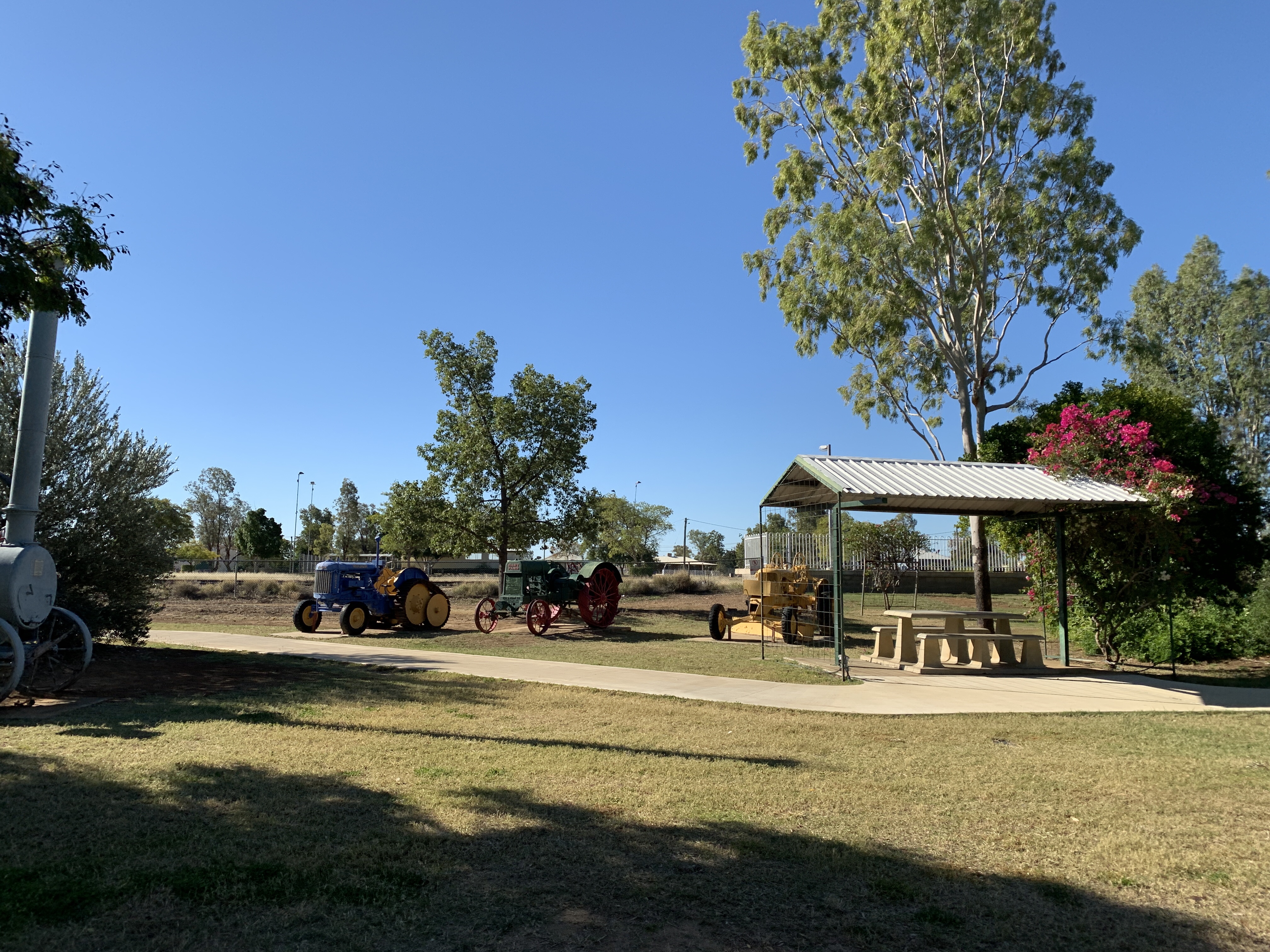
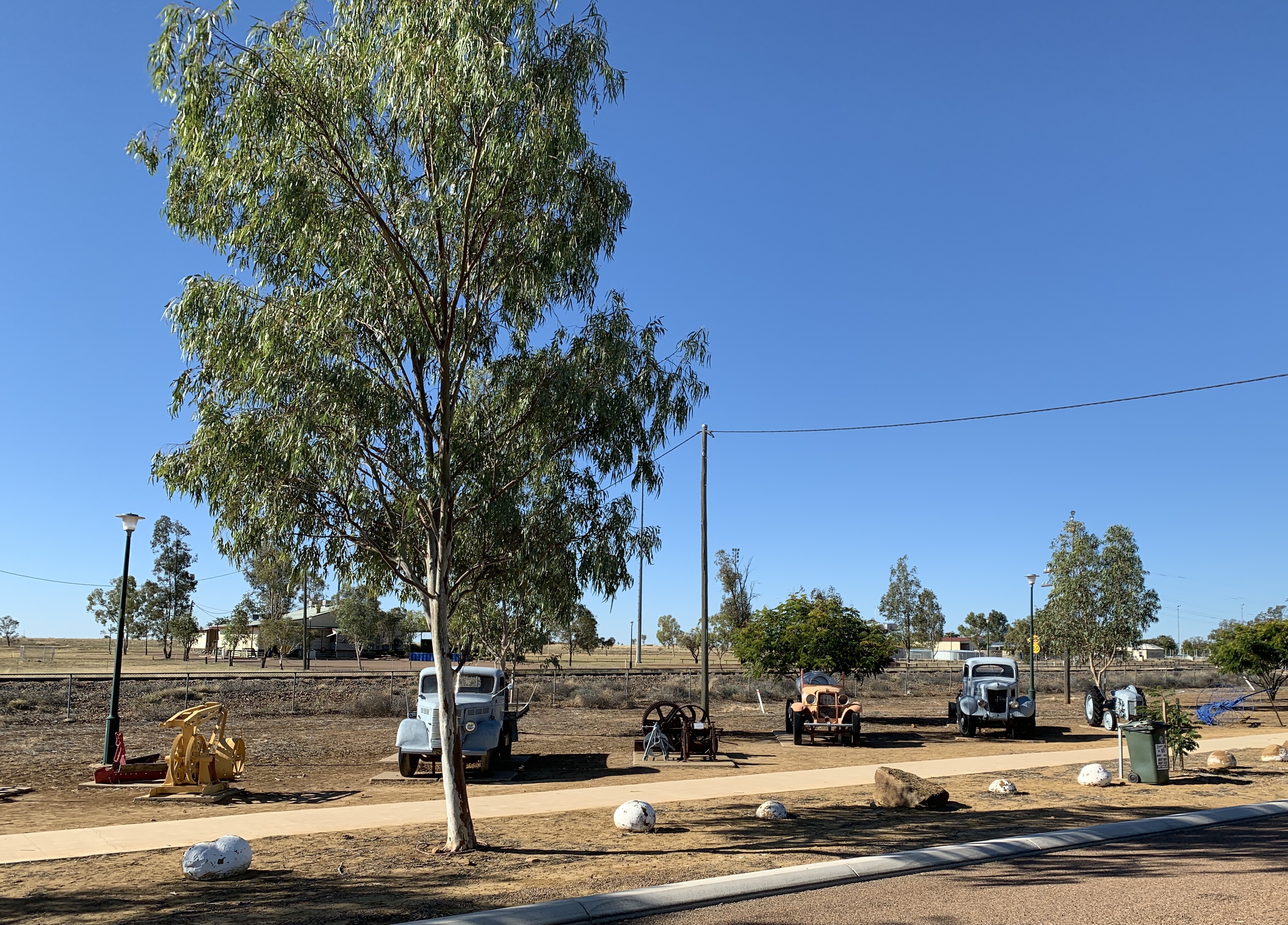
We passed through the tiny town of Ilfracombe with its Machinery Mile, a roadside display of old farm and earth moving machinery.

Further along we came to Barcaldine and, again, we just drove through, like last time, without stopping to explore. We wanted to get to Lara before the office closed at 5pm. We made it just in time and arrived at 4.45pm.

We were quickly checked in as we already knew the check in routine and we paid for a couple of nights. The owner, Jodie, was sitting outside the office and I said hello and told her we’d met her friend Jason at Oondooroo Station. She seemed pleased but sadly she was nursing a broken arm. I’m not sure how she did it but she’d broken it in the last month since we were here.

We found cousins Ross & Jenny all set up on a waterside spot and there was room next to them for our motorhome. They had reversed in so we drove in so that our awnings were facing each other and we all enjoyed the next few days relaxing, reading, going for walks around the wetlands, soaking in the thermal pool, paddling my kayak and meeting the neighbours. We love this place. It’s definitely one of our favourite camp spots. After two nights we decided to stay for one more.

On the third morning Ross & Jenny went off for the day in their car to check out the Lake Dunn Sculpture Trail. This is a 200km loop featuring over 38 metal sculptures by local artist Milynda Rogers. It is a gravel road so that was not on our list to do. We’d find out all about it when they got back.

We only had one bar of Telstra service at Lara which is really only enough to send text messages so uploading photos would have to wait.

Julia Creek to Oondooroo Station (near Winton)

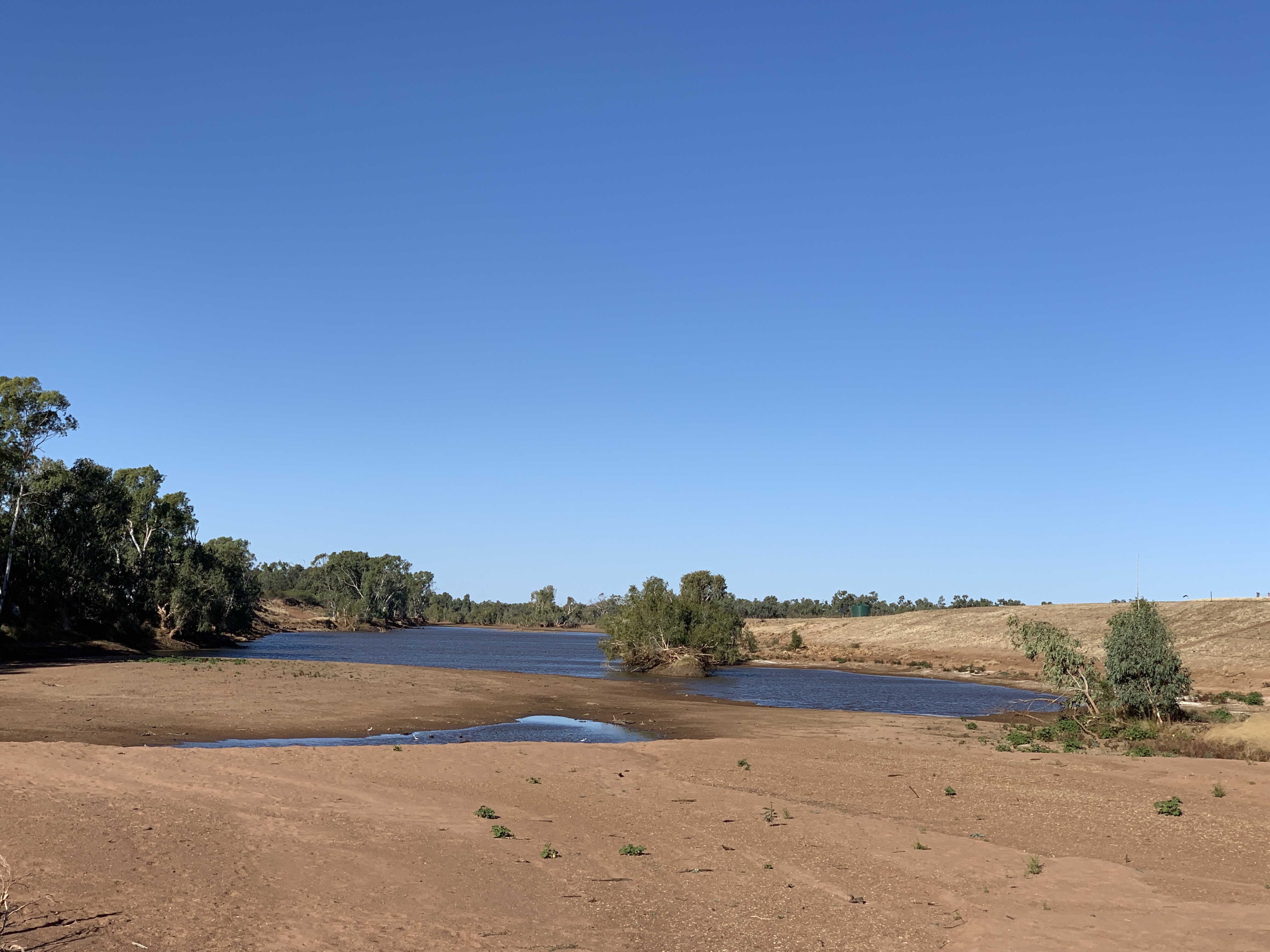
After a lovely couple of days staying at Julia Creek RV Park with our perfect camp spot right alongside the creek we set off on a clear sunny morning to head eastwards towards Richmond.

We’d enjoyed our little stay at Julia Creek RV Park and especially our socialising with our camping neighbours. We both love meeting people and hearing their life stories. One of our neighbours has spent a lot of time in the US going to music festivals and plays multiple instruments. He brought over a couple that he has made himself and we got to listen to the fabulous sounds of a ‘picking stick’ and a ‘cigar box guitar’. These fabulous instruments were beautifully made and it was a special night sitting outside under the stars listening to Tony picking out some familiar songs. What a clever man!

It was a cool morning, such a pleasant change after the heat at Adels Grove. The road eastwards was straight and the countryside was vey flat. The natural grasslands looked like good cattle country. There was lots of traffic including many road trains and many of those had four trailers. They create quite a wind and suction as you go past. The road was a wide one though so we didn’t have to leave the road to let those monsters go by.

Most of the way to Richmond the highway runs alongside a railway line and for quite a few kilometres the rail line was being repaired. Huge mounds of gravel and piles of new concrete sleepers were ready to be used. We came across where the crew were working and it was interesting to see how the rail line is lifted, the old sleeper removed, a new one put in place and then new gravel is put underneath and lastly, the line is lowered back down onto the new gravel bed. I haven’t seen that before.

We arrived in Richmond mid-morning and went directly to Kronosuarus Korner. Kronosaurus Korner houses the Information Centre, a cafe with toilets, and the fossil museum. We paid our entry fee for the museum then had a lovely morning tea in the cafe.

The museum displays many fine examples of fossilised marine reptiles and dinosaurs that once lived in the huge inland sea that covered most of inland Australia 100 million years ago. Kronosaurus was one of those and a life sized statue of one is out the front of the building. Richard was dwarfed by this massive creature. The massive jaws held rows of sharp teeth. It would have been a fearsome predator of the seas.

The highlight of the museum is the full skeleton of a 100 million year old pliosaur. Found in 1989. This precious piece of our history is housed in its own special glass display case with a life sized model hanging from the ceiling above it. It was another huge creature.

We spent a couple of hours exploring Kronosuarus Korner and recommend it to anyone with an interest in our earth’s history. It’s hard to believe that once Richmond was 40 metres underwater in the Eromanga Sea and these huge creatures swam above.

Richmond is a small town on the bank of the Flinders River, the longest river in Queensland. The river runs in ‘the wet’ but is mostly dry for the rest of the year. The town has a population of around 1,000 people. A recreational lake was constructed and named Lake Fred Tritton after a former mayor. The lake offers picnic areas, water skiing, fishing and swimming.

You can go fossil hunting just outside of Richmond. There are 2 Fossil Hunting Sites and once you have your permit from Kronosuarus Korner you can try your luck at unearthing a treasure. You never know you may find a new fossil.

On the drive into Richmond we couldn’t help but notice strange round rocks. These rocks, known as Moonrocks, are common in the area and range in size from a golf ball to huge boulders weighing several tonnes. They are found in the black spoil of the Downs country. Moonrocks are formed by the accumulation of limestone in the mud on the ancient sea floor. They are not fossils but can contain fossils.

We continued our journey eastwards to the next town on the Dinosaur Trail, Hughenden. The countryside was again quite flat open grasslands and we little signs of life apart from large hunting birds.

The Main Street of Hughenden was having a facelift with new kerb and guttering and brick paving of footpaths and centre medians. The street was blocked off to traffic so we had to go around the detour and park away from the shops and walk the short way back. After a snack for lunch, a sandwich for me and Chinese for Rich, I made my way to the Flinders Discovery Centre around the corner. The centre is home to the Information Center and a museum. It was a $5 entry fee to enter the museum and the first thing that greets you is a huge replica skeleton of ‘Hughie’, a Muttaburrasaurus. There are other fossil displays, a mini theatre showing a film on the formation of the earth and in particular the formation of Porcupine Gorge, located not far north of Hughenden.

There is a display called ‘Shearing the Stragglers’ and it tells the story of the demise of the sheep industry in the shire that once held over 1,000,00 sheep and now there are none.

Scattered around the town are sculptures by local artists. I found Darby the Dinosaur, a large wall sculpture of a Muttaburrasuarus, Leannosaur – a life sized sculpture of a pterosaur, and Ammonite sculpture made from windmill parts, and, of course, the huge sculpture of a Muttaburrasaurus.

The Federation Rotunda made from two huge Comet windmills sits in pride of place in the middle of the Main Street. However it was fenced off due to the street refurbishment so I couldn’t get a good photo. The two windmills are 20ft (6m) wide and were used to pump water at Bogunda Station for over 45 years. They make for an interesting sculpture.

Hugenden is another small town with a population of 1,136. It is also on the Flinders River and in 2019 a recreational lake was built to provide boating, fishing, water sports and picnic areas. Hughenden has a large RV park on the banks of the Flinders River but as the river was dry we decided to continue on and try to find a better spot.

Leaving Hughenden we headed south and on our east we could see the towering Mount Walker. Mount Walker, at 478 metres above sea level, is 152m above the level of the town. It is just 10km south of Hughenden and I’m sure the views from the top would be spectacular but the road is not suitable for motorhomes or towed vehicles so we’d give it a miss.

The road from Hughenden to Winton is a wide tar road but OMG it is a roller coaster of a ride along that road. We bounced up and down all the way to Winton. Again the countryside was flat open grasslands. The only thing to break the monotony was the occasional entry to a station or a large dam. We saw little signs of life. Nearing Corfield Rich excitedly pointed out a couple of emus near the fence on the roadside. They were the first emus we’d seen since around Bourke so long ago.

Looking in WikiCamps I found a farm stay along the Hughenden-Winton Road and thought we’d give them a try. I only had enough service to send a text so I sent a message to see if they had room for our 8m motorhome for one night and very quickly got a thumbs up reply. We turned off the main road onto a dirt track. We both commented that we wouldn’t like to be on that road if it had even just 1mm of rain. It would become impassable. However it was nice and dry and not too rough. After 7km along that track we arrived at the entrance gate to Oondooroo Station. We could see other vans camped from quite a long way away.

We were pleasantly surprised by the amount of green grass. They must had good access to artesian water out there. As we drove up to the homestead dogs barked and a young bloke wearing a hat came out to meet us. He introduced himself as Jason, the owner, and, after paying the fee, showed us where we could park for the night. We had a lovely stay at Oondooroo Station.


Adels Grove to Julia Creek

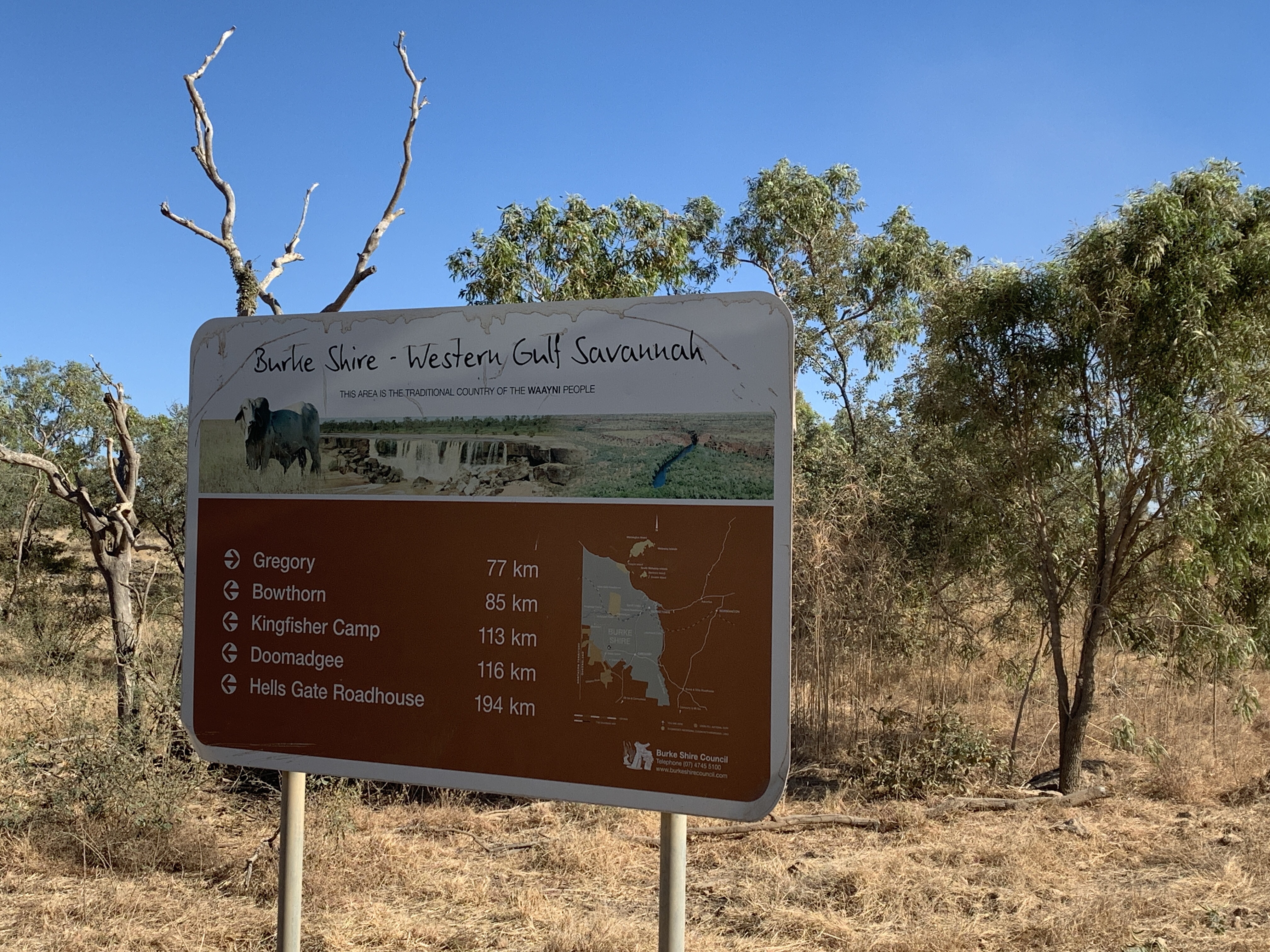
After 3 fabulous days camping at Adels Grove and exploring Boodjamulla National Park we packed up, filled one tank with water, used the dump point and headed off on the road back to Gregory Downs. It’s a shocker of a road in our motorhome with it’s rigid truck suspension. We crawled along at 15-30km/h and couldn’t wait until we got to the better section at the other end of the 90km trip.

Catie & Robert and Brian & Helen also set off however they are heading further into the gulf country towards Doomadgee and Hell’s Gate. Eventually they will make it to Burketown. We’d only gone about 5km when they both went past us. In their 4WD’s and caravans with off road suspension they can travel a lot faster than us on the rough.

Douglas’s leaving Adels Grove

Just after the intersection with the Doomadgee Road we came across a small herd of brumbies resting under a couple of trees. They were a pretty scrawny looking lot. They were not glossy and fat like the brumbies we are used to seeing at our mountain retreat in the Snowy Mountains.

We bumped and rattled over the rough road. At one point it was better to drive in the table drain. It was a shorter 2 hours 40 minutes later that we arrived in Gregory Downs.


We didn’t need to stop for anything so we continued on to Burke & Wills Roadhouse. It’s pretty monotonous driving along this road with only the odd Wedge-tailed Eagle to see.

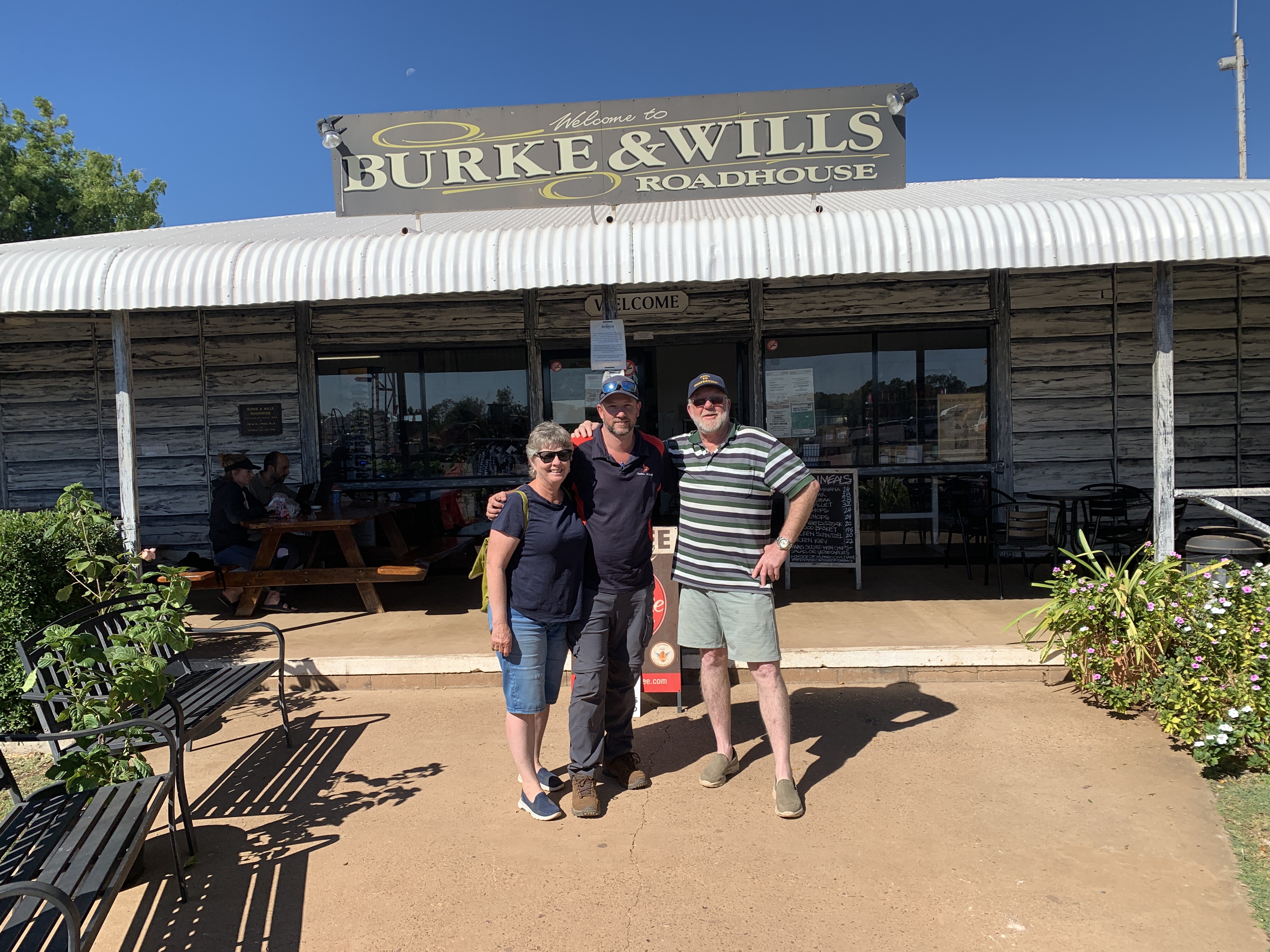
We arrived at Burke & Wills Roadhouse and while we were at the bowser topping up with fuel who should come along? Our friend Michael Brayne! What a surprise! Turns out he’s been working in the area for 2 months and is based at the Roadhouse. He sat with us while we had our lunch and we really enjoyed catching up with him.

After lunch we set off heading towards Julia Creek.

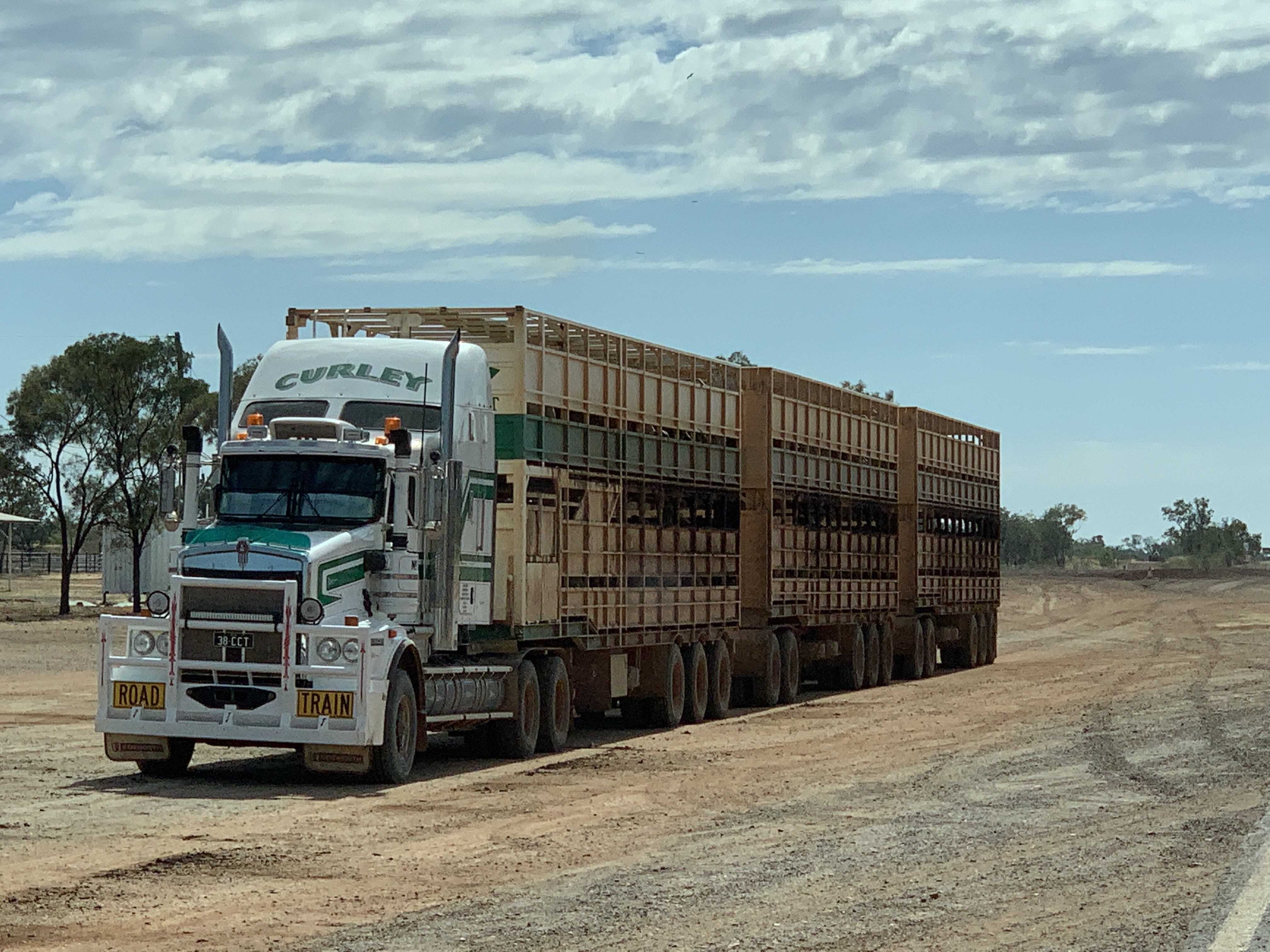
The road to Julia Creek is mostly a single lane tar road however there was not much traffic and we were able to make good time until about 100km from Julia Creek we caught two three trailer road trains. They were full of cattle and going slowly at 80km/h. We managed to get around one at a wide section but had to travel behind the other for quite awhile until we could get safely around.

The countryside is very flat grasslands and is home to large cattle stations. The occasional entry gate to properties and mob of cattle breaks the monotony.

It was quite exciting though to see lots of Brolgas and quite a few huge Wedge-tailed Eagles. We don’t often see those at home!

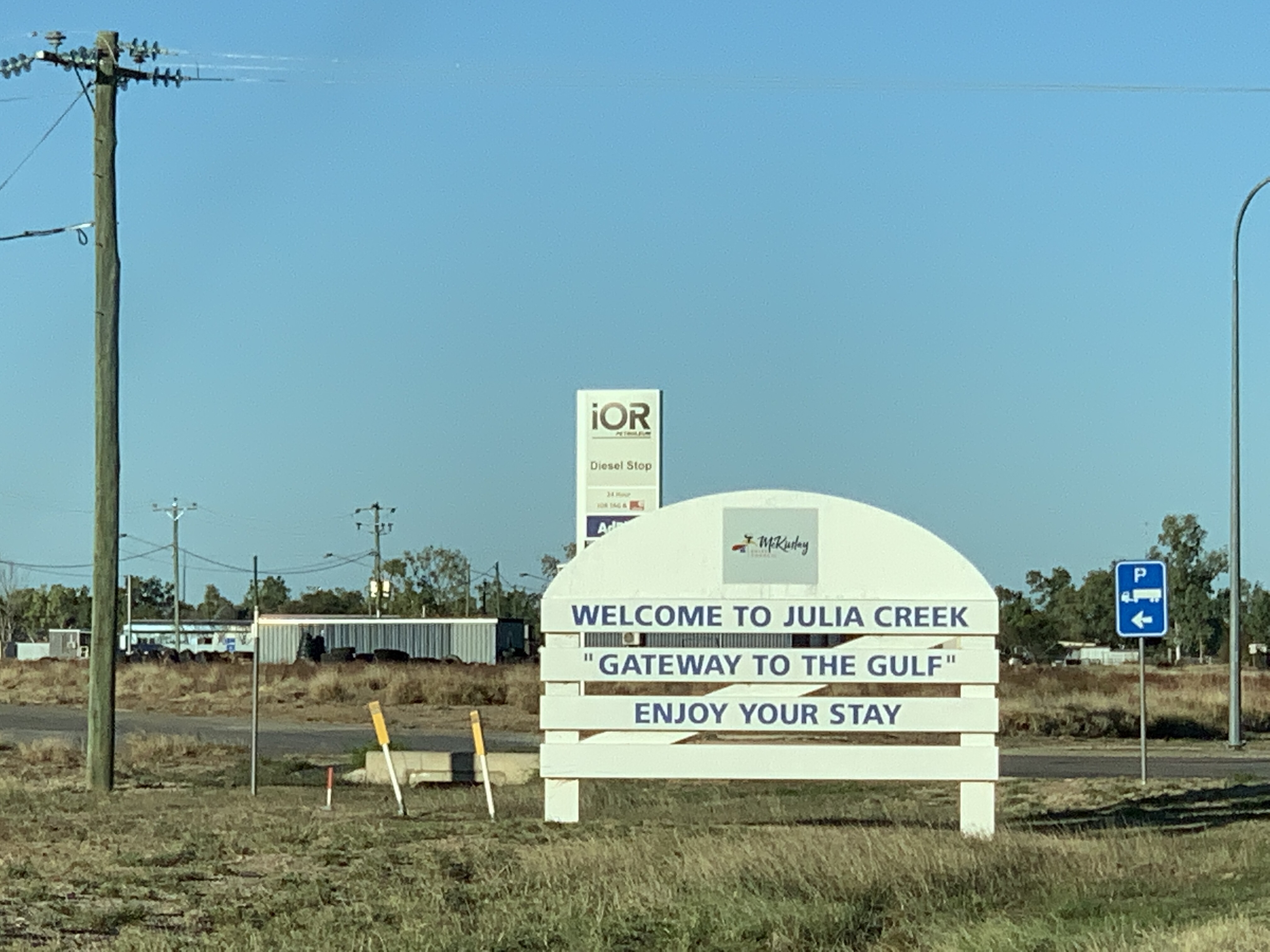
We arrived in the small town of Julia Creek and, as I wanted to do lots of washing, we tried the Caravan Park to see if they had any sites. They were full so we tried the RV Park. What a beauty! Provided by the Council the RV Park is on the outskirts of town beside Julia Creek. They have Camp Hosts on site to check you in and make sure you do the Covid check in. It is free to camp and they have rubbish bins and water taps are scattered around. As we were filling up with water a lady approached us and pointed to where their motorhome was parked and said there is room behind them to fit another motorhome. What a lovely spot we got. Right next to the creek.

I think you all know by now that I love a camp site with water views!

Our friendly neighbours, Pete and Sharon, were great company and I was able to get lots of washing done and dried.

It was quite chilly at night and we’ve changed the sheets back to flannelette ones. We only needed the cotton ones at Adels Grove where the day time temperature reached 35 degrees. However we are going further south and from here on it will become colder.

The next morning was a sunny but chilly morning and we were back in jeans again after only wearing shorts & T-shirts or swimmers for the last week. We needed gas and some groceries and I still had washing to do. We had reasonable internet too so we decided we’d stay another night at Julia Creek.

Our neighbours, Pete and Sharon, got their e-scooters out and were happy to show them off to us before they set off to town. Sharon said I could have a go on hers later. That might be fun.

The RV Park also has bikes with baskets that people can borrow to ride up to town but as we needed our gas bottles filled we thought we’d better go in the motorhome. The hardware store in Julia Creek fills gas bottles so we were able to top up our gas bottle there.

Back to the RV park after picking up some groceries and we settled in for a lazy afternoon by the creek. Perfect!

Adels Grove & Boodjamulla National Park

Adels Grove Campground is located just 10km from Boodjamulla National Park. It is set amongst a plantation of exotic trees originally planted in 1920 by French Botanist Albert de Lestang. The name comes from his initials….A de l.

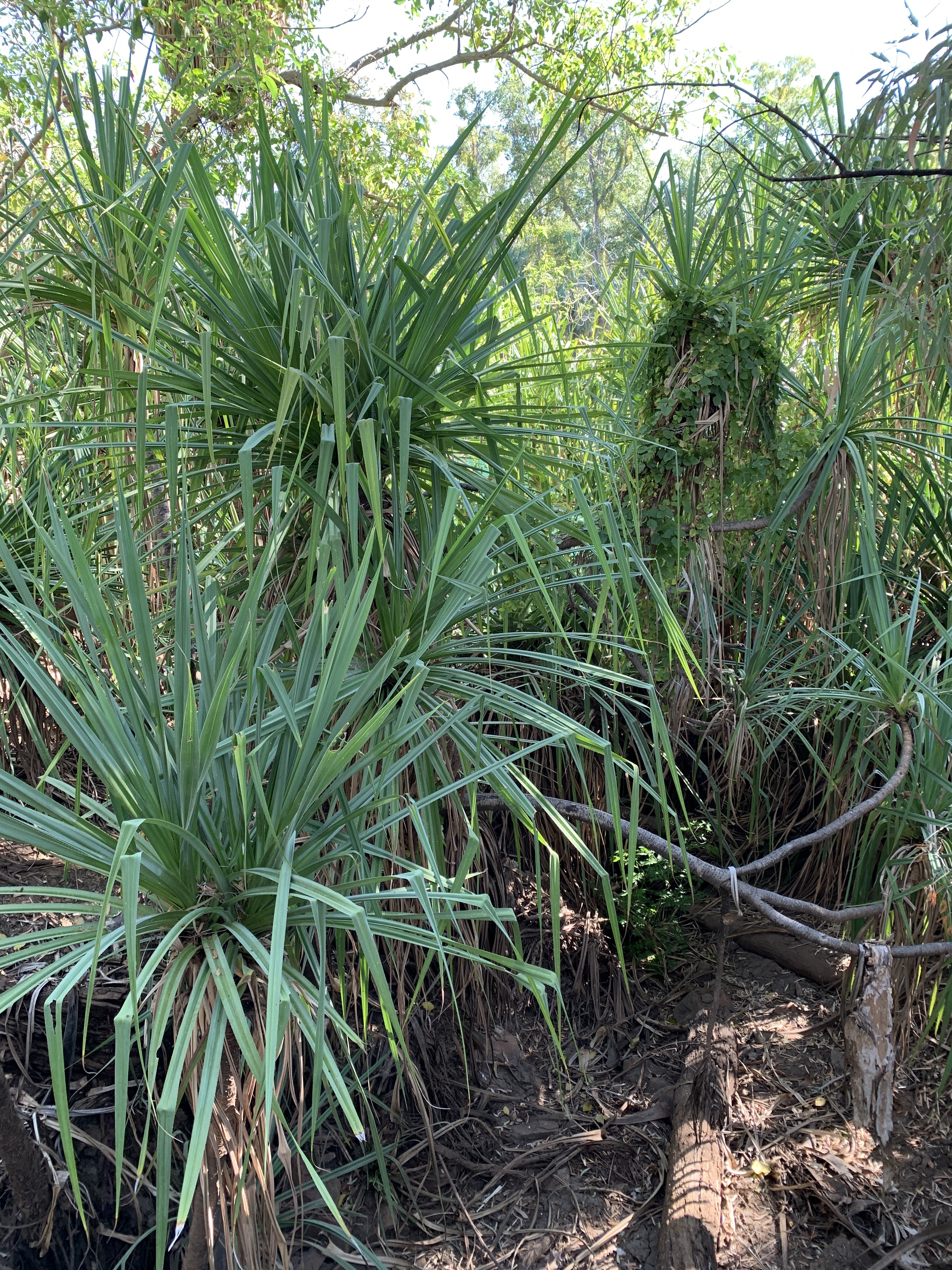
Albert was a keen botanist and collected plants from all over the world. He grew many and even sent seeds overseas. Hundred of samples of the seeds Albert grew remain in the Brisbane Botanical Gardens. Sadly a fire went through in the 1950’s and destroyed a lifetime’s work including all his meticulous notes. Albert was in his early 70’s by this time and the destruction of his property led to depression. He retired to town to live out his life. However many of the exotic plants he had planted regrew and the grove is now a mix of wild cabbage palms, pandanas, tea trees and the exotic plants that Albert planted.

It does make me wonder though, what on earth was a French botanist doing way out here in the outback? How did he come to be there and why would he stay there? It certainly is different to his native France!

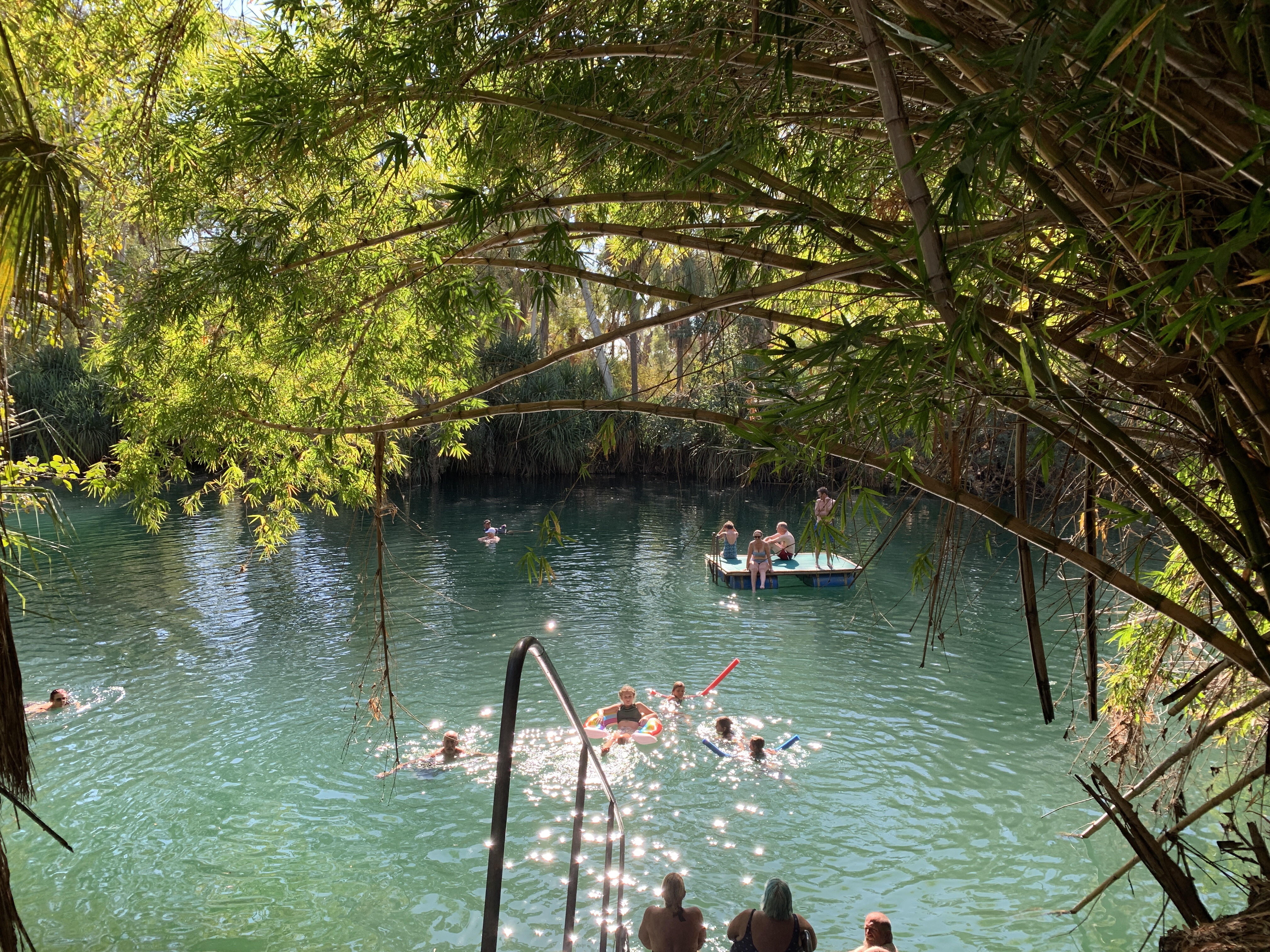
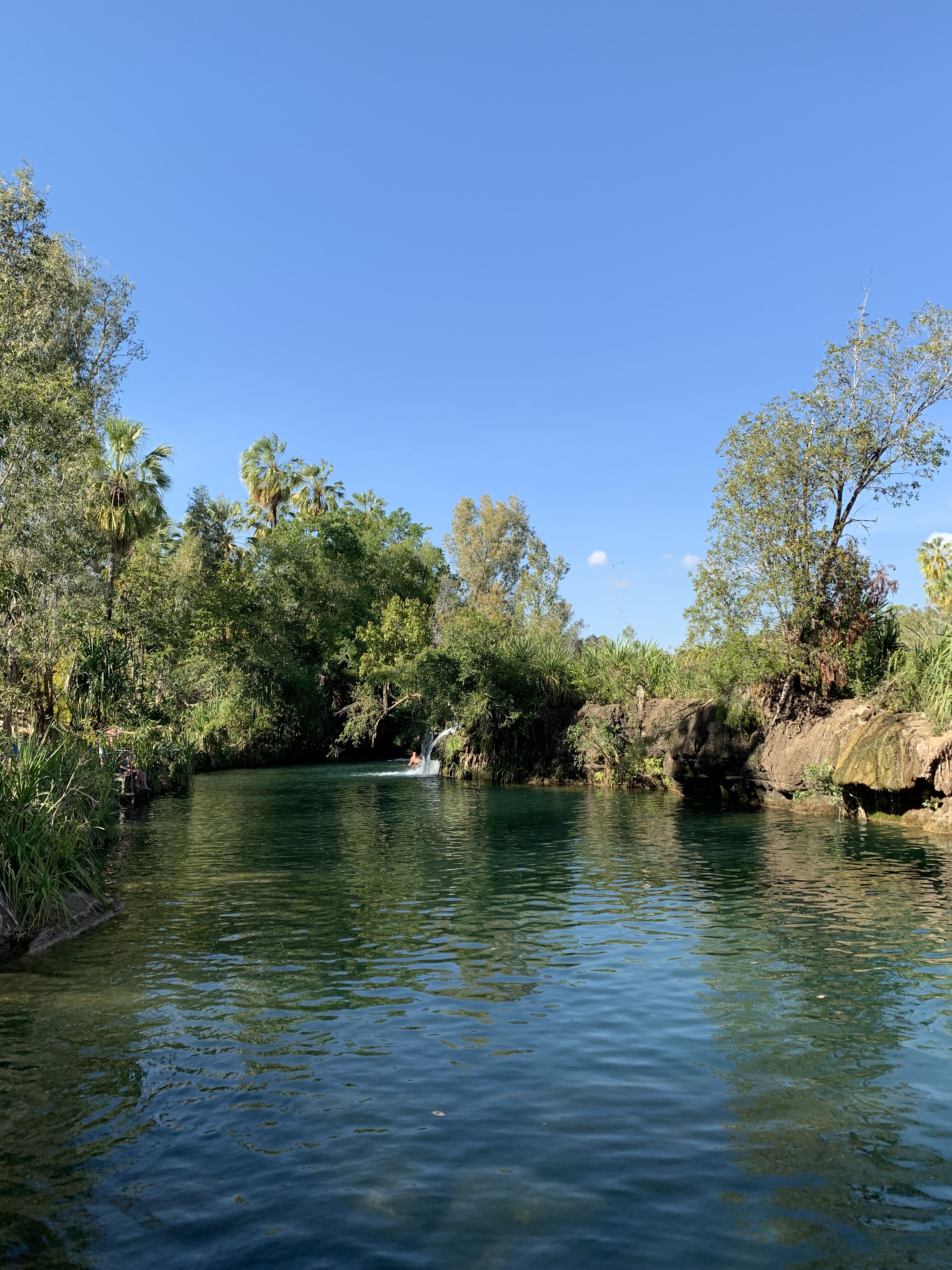
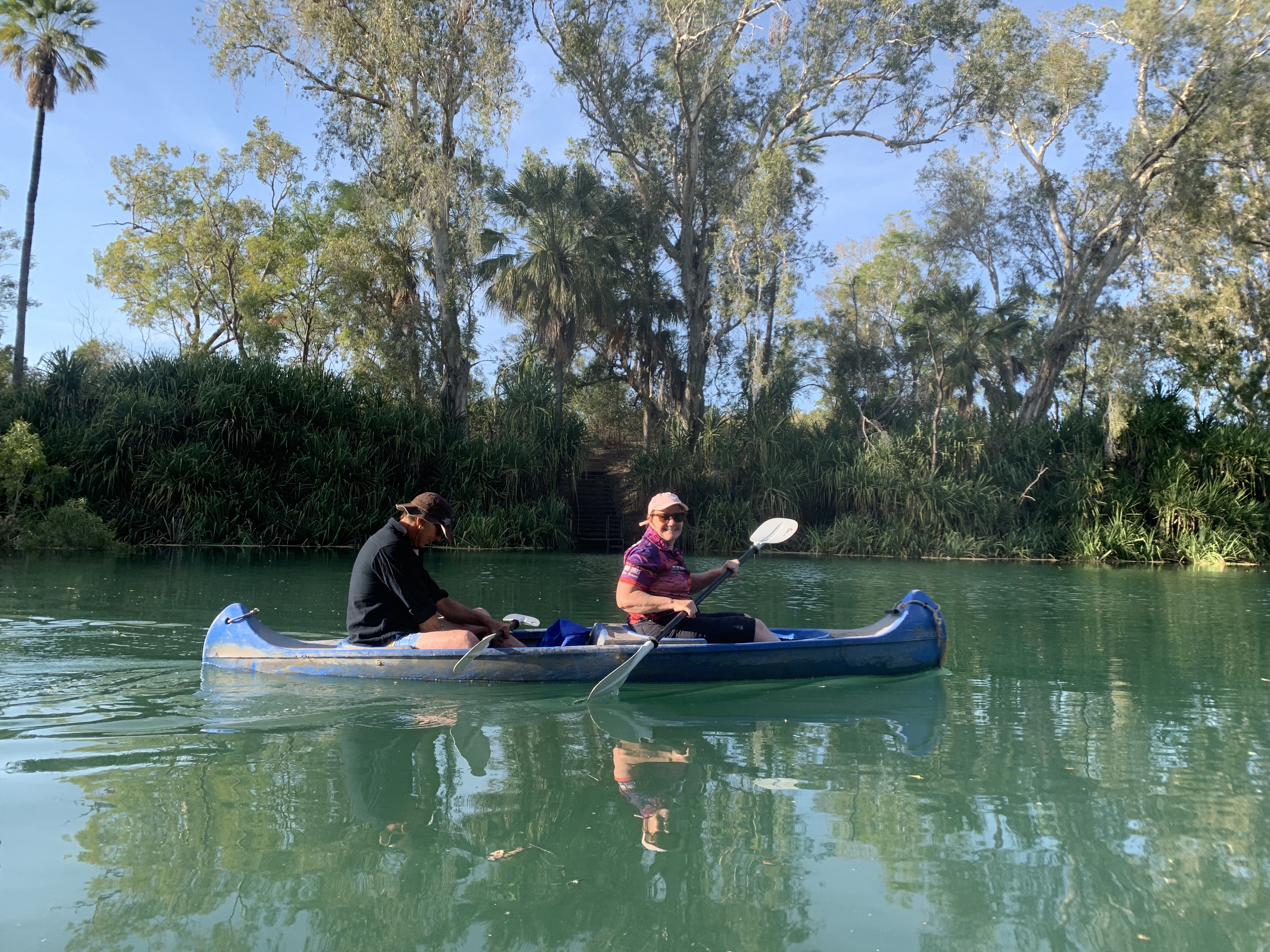
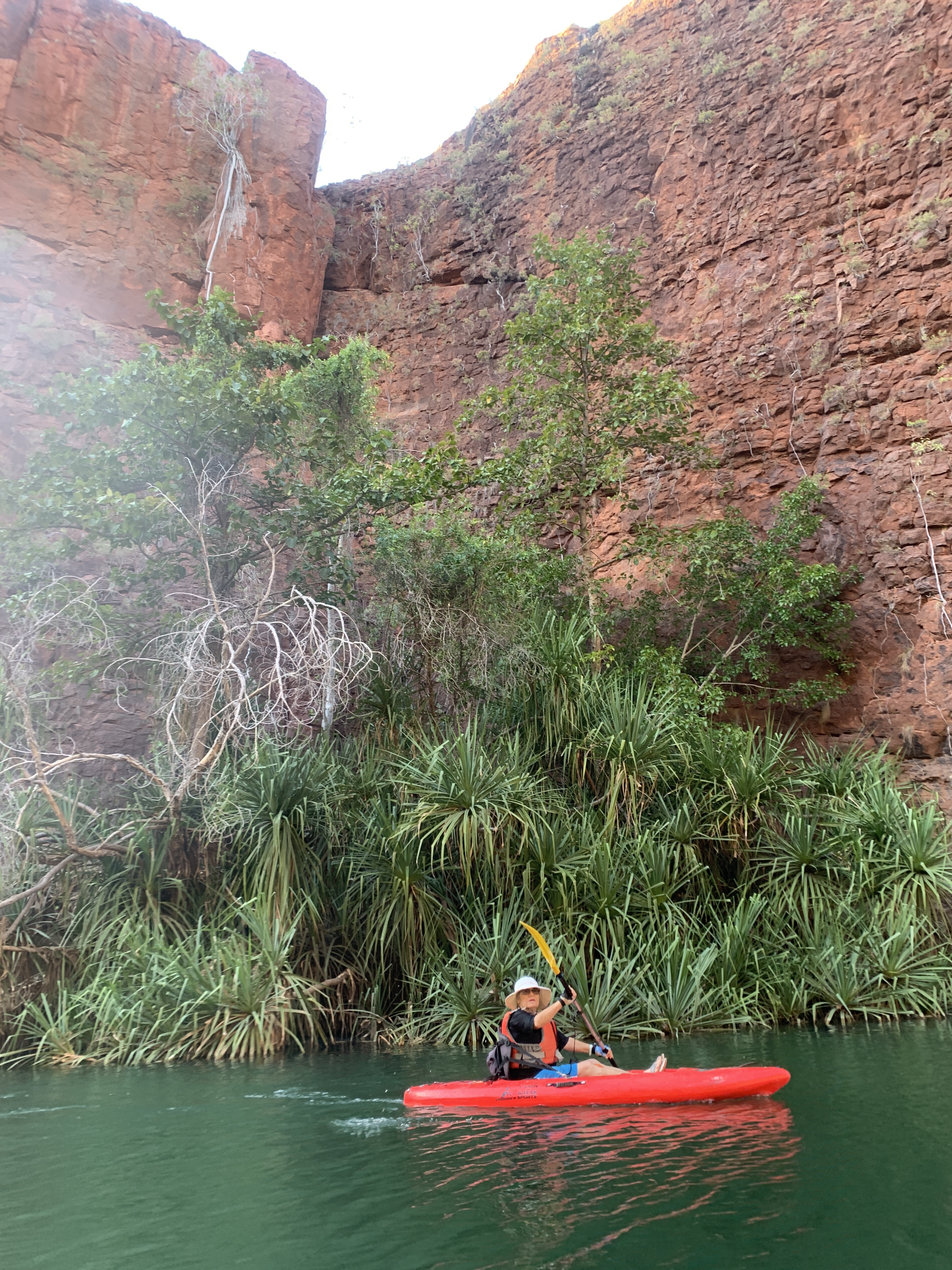
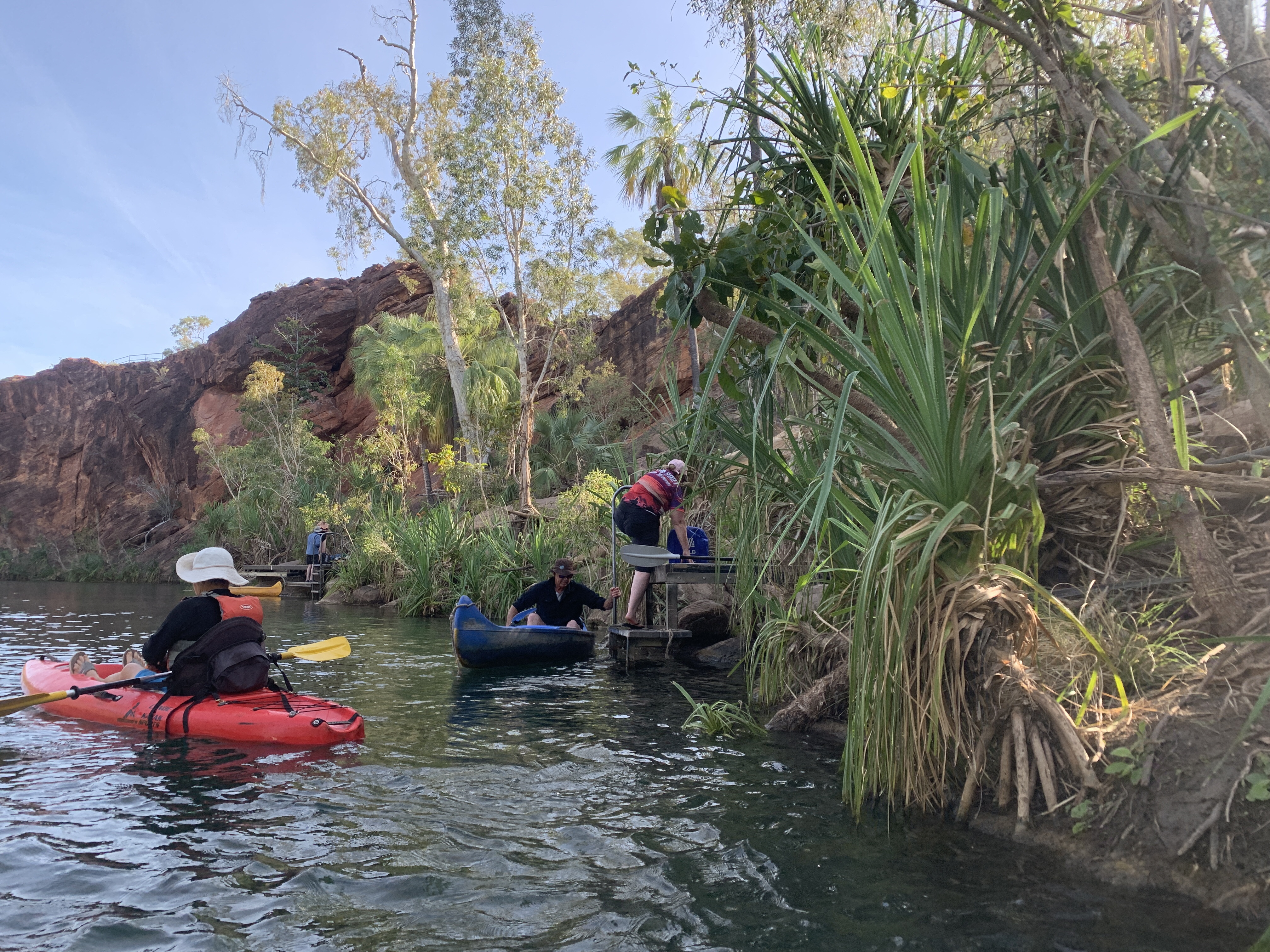
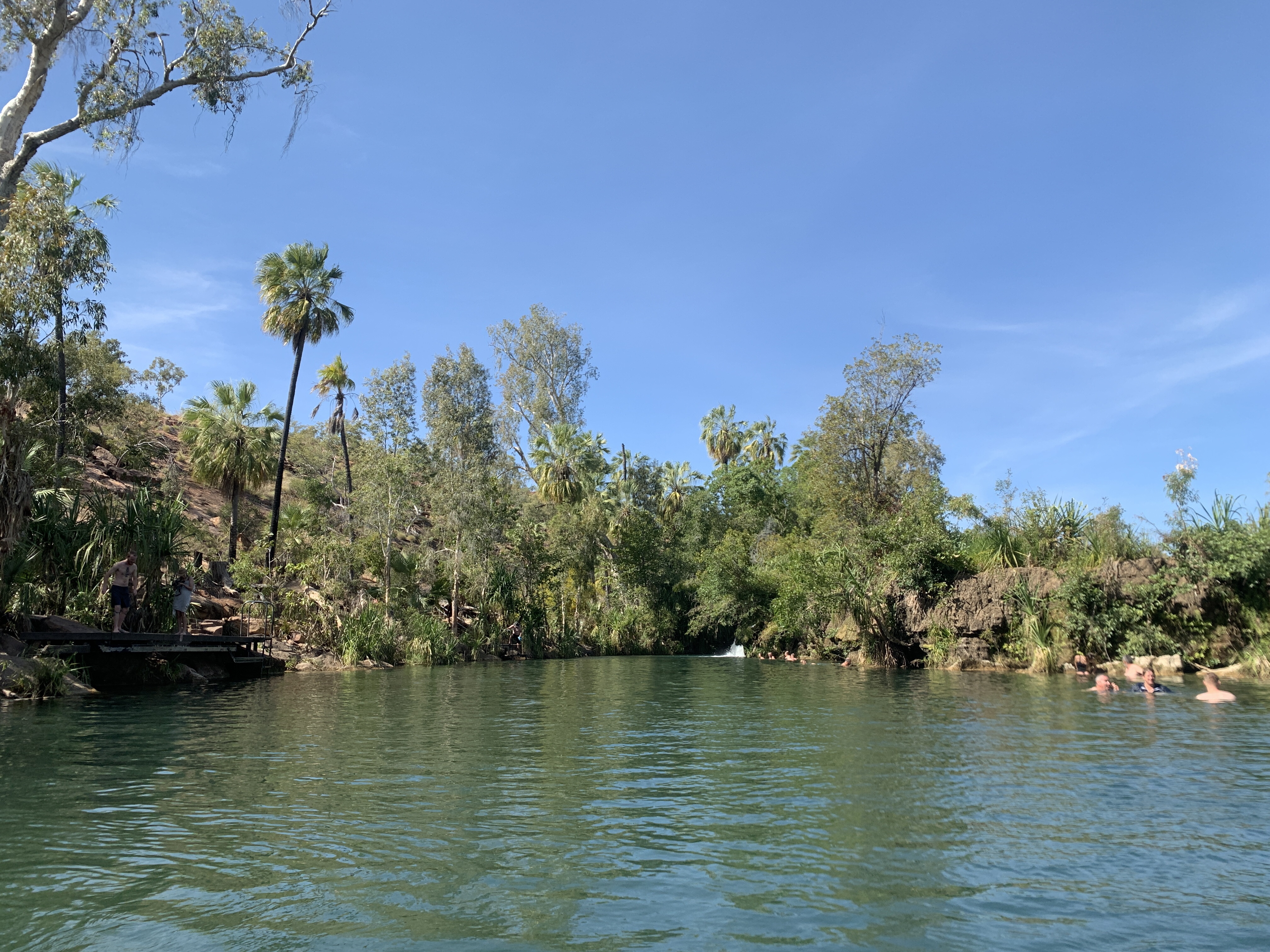
The waters of the creek are a clear blue or green depending on the sky and it is an oasis in the desert. You can hire a canoe or kayak and paddle your way along the creek or make use of the multiple stairways and ladders along the creek to allow access for swimming. At one of those stairways there is a pontoon in the middle of the creek.

One of the local people assured me that there are only freshwater crocodiles as saltwater crocs don’t like the limestone in the water. I hoped he was correct.

Today Adels Grove is part of Lawn Hill Station, an indigenous owned and operated cattle farm. They have recently, in October 2020, taken over the running of the campground as well. I feel that most of the staff don’t really have an idea of how to run a hospitality venue but they will learn and I hope they do well. It is such a beautiful place but already I can see that maintenance has not been happening. It will be sad if it is all let go and people stop coming to this amazing place.

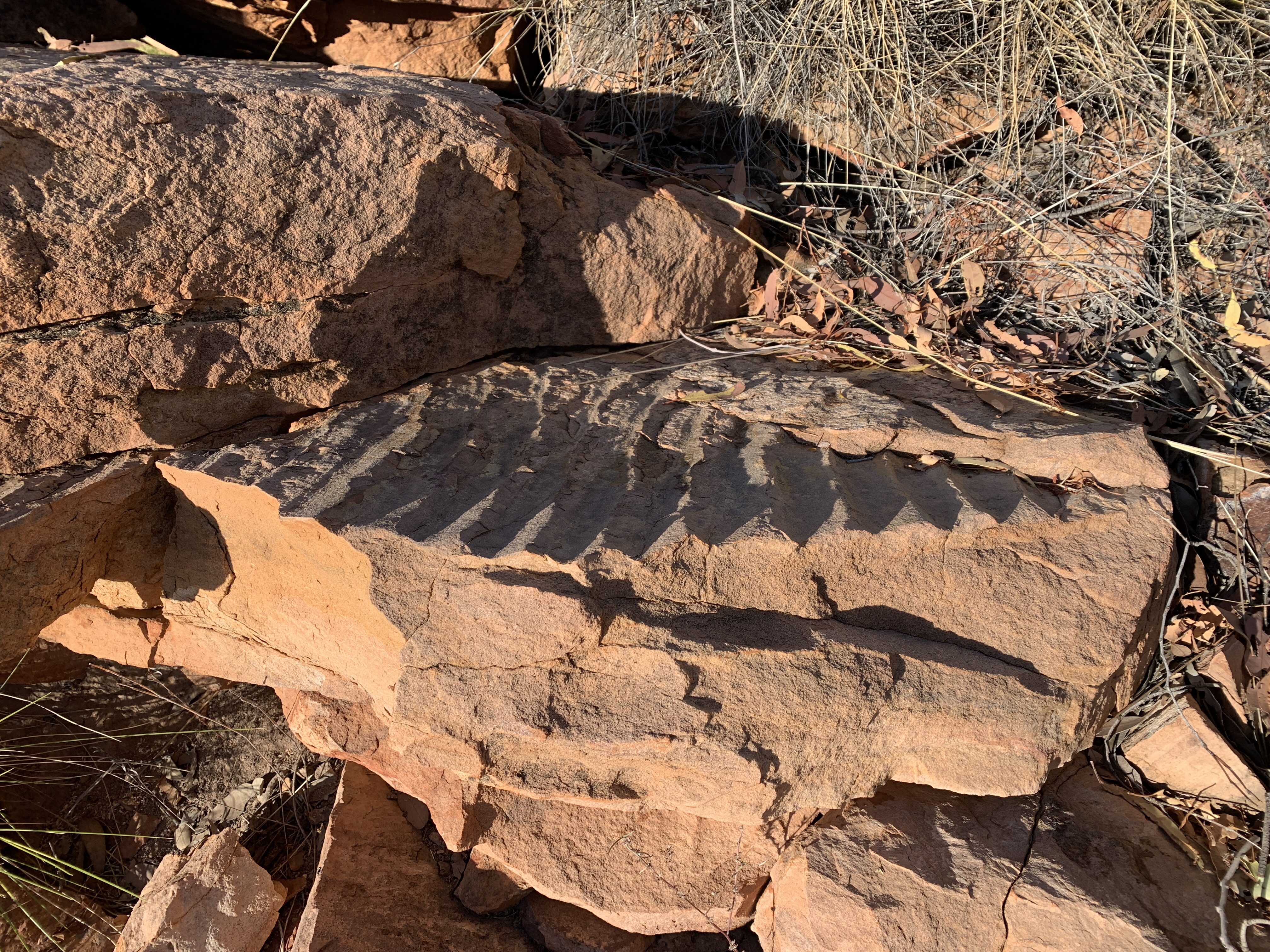
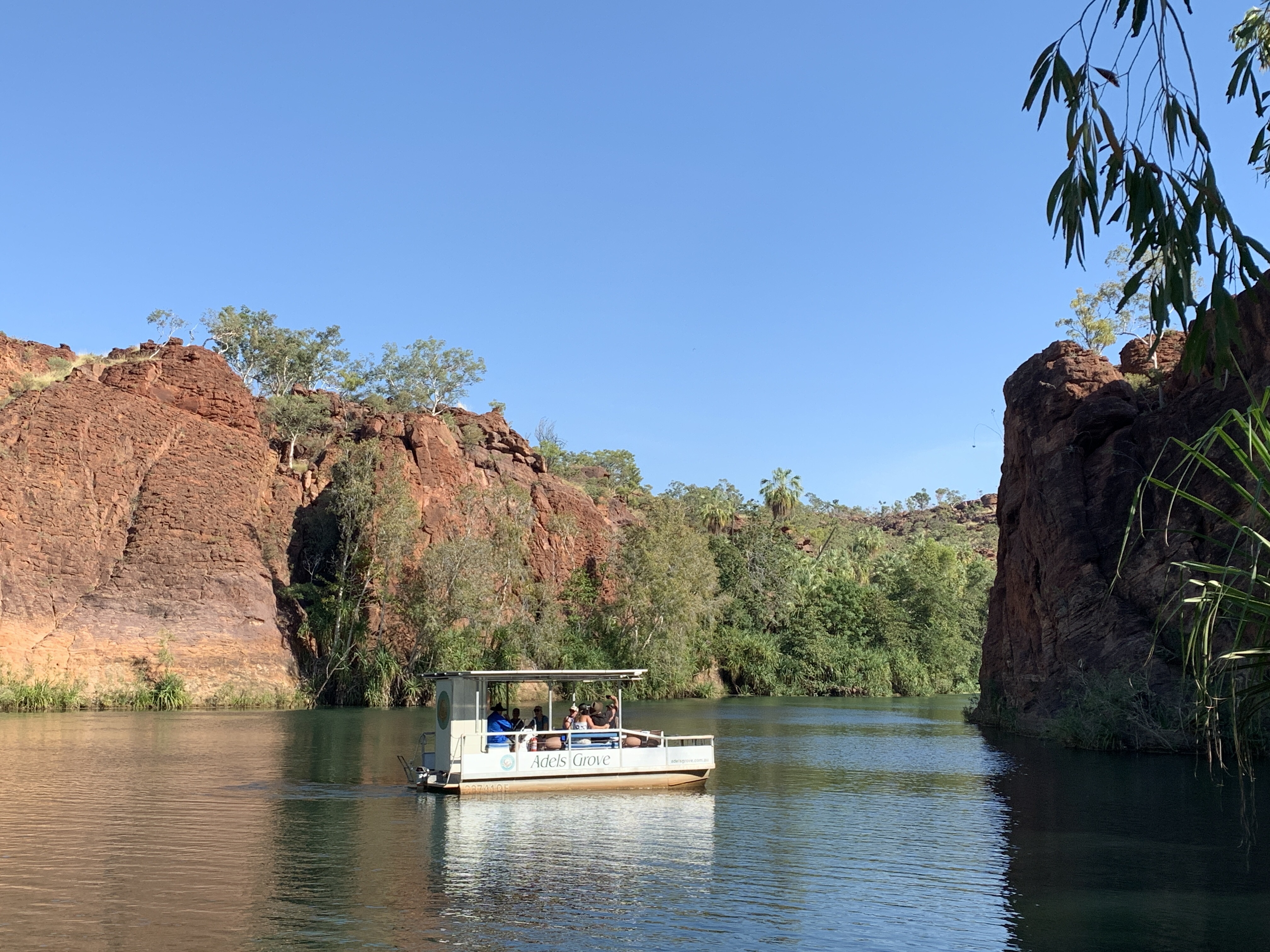
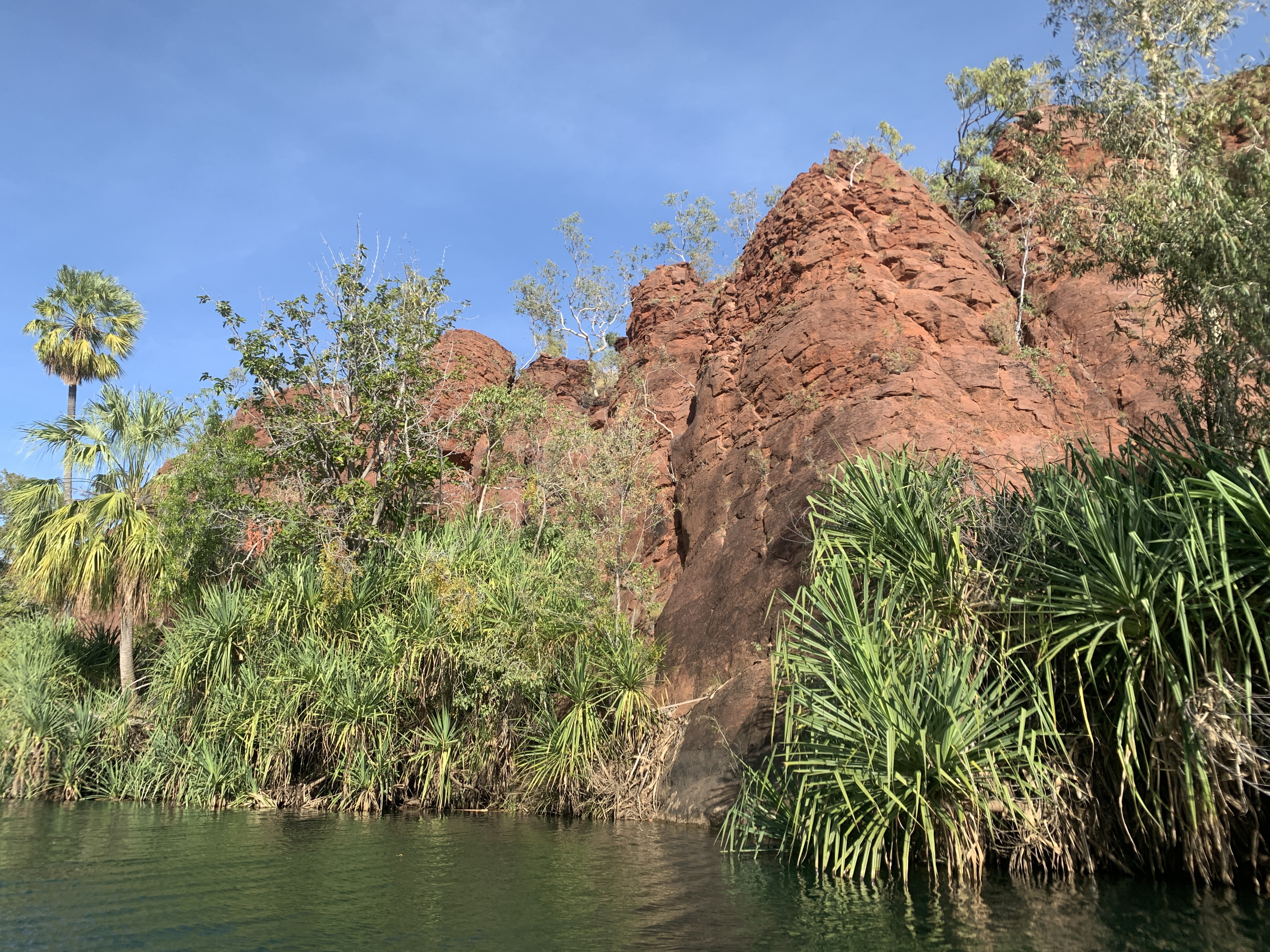
Just 10km down the road, which is half good tar road and half dreadful rough gravel, is Boodjamulla National Park. This park is famous as the site of Lawn Hill Gorge. The gorge has been carved out of the red sandstone over millions of years and some of the cliffs towers 60 metres above the water of the creek below. There is a limestone plateau above and freshwater springs flow over that to form the creek.

The park is 290,000 hectares and has another 130,000 hectares of resource reserve. The area has been home for 17,000 years for the Waanyi people who consider Lawn Hill Gorge to be sacred. Today the Waanyi people are involved in managing the park and showing it off to tourists.

There are a number of walking tracks along the gorge that lead to various lookouts. Mandie, Pete, Richard and I drove the short distance into the park and did the walk to Indarri Falls. Wow. It was spectacular. It was hot so a refreshing swim at the falls was a great way to cool off. When you first jump in the cold water takes your breath away but then your body gets used to it and it’s very pleasant. It’s also fun trying to manoeuvre yourself underneath the falls.

Indarri Falls separates the gorge into Upper and Lower and looks spectacular from the lookout high on the cliff above.

Back at camp we enjoyed drinks down at the waters edge before another little campfire and as a special treat Helen made scones again in their camp oven served hot with jam and whipped cream. Now the whipped cream is a trick. Did you know you can whip cream in a jar? You put a jar, a jam or peanut butter jar, in the fridge or freezer to get it cold, add the cream and a little icing sugar and a dash of vanilla, then shake vigorously. You have to try and hold the jar by its ends so the heat from your hands doesn’t warm it up. It takes about 15-20 minutes and, ta dah…whipped cream.

After 5 drinks at the waters edge

On our third day at Adels Catie and I packed our kayaks and headed into the park to paddle both gorges. Mandie and Pete also went in their vehicle as they had hired a double canoe from 9-11am. It’s a 10-15 minute drive from Adels into the park. We all met up at the canoe launching area after I’d spent 10 minutes inflating my kayak.

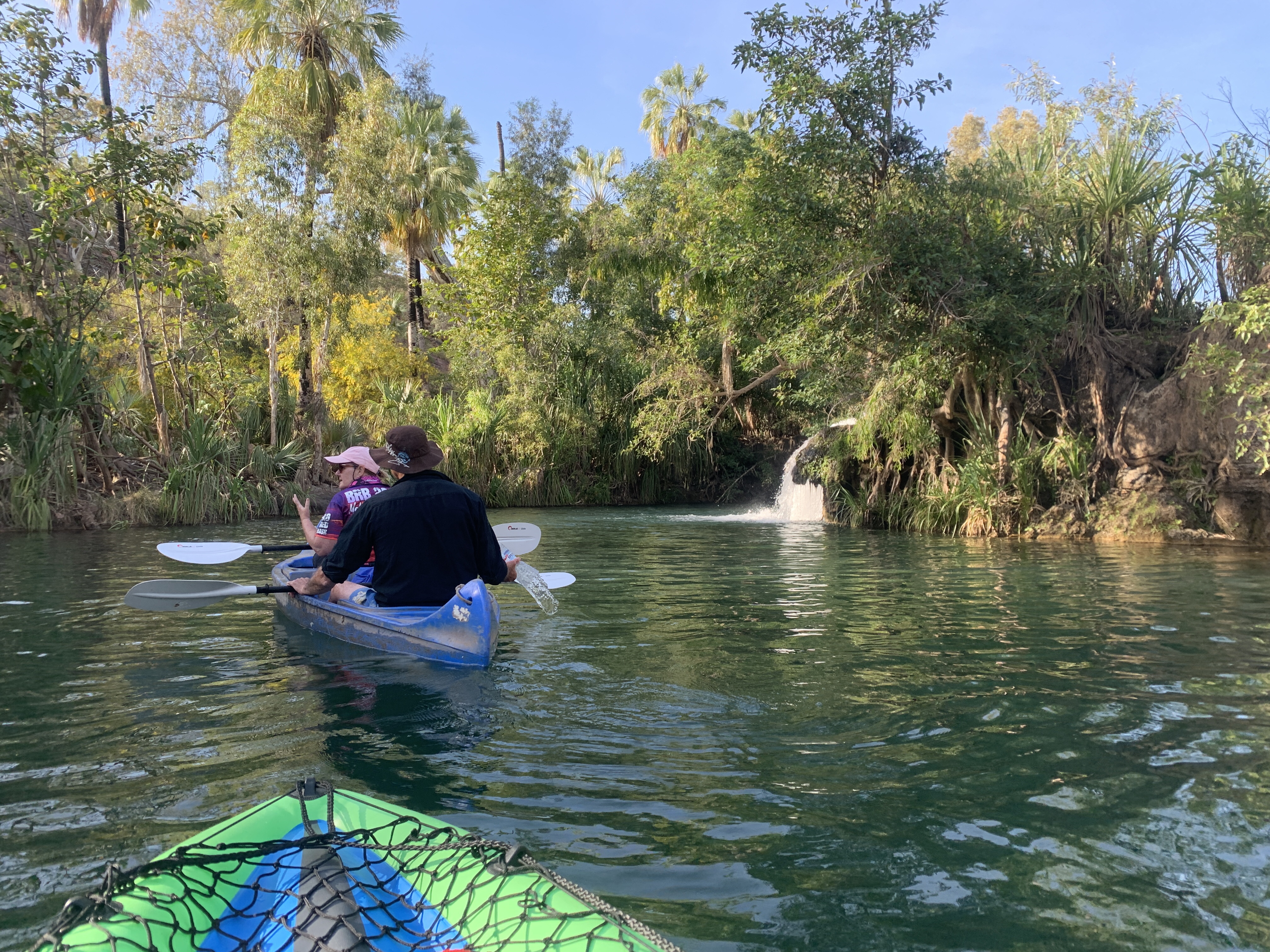
We set off paddling together and we’d only gone about 50 metres when Pete had to commence bailing water out of the bottom of their canoe. Oh dear! That wasn’t a promising start having a leaky canoe. They decided to keep going anyway with Pete having to regularly bail out water.

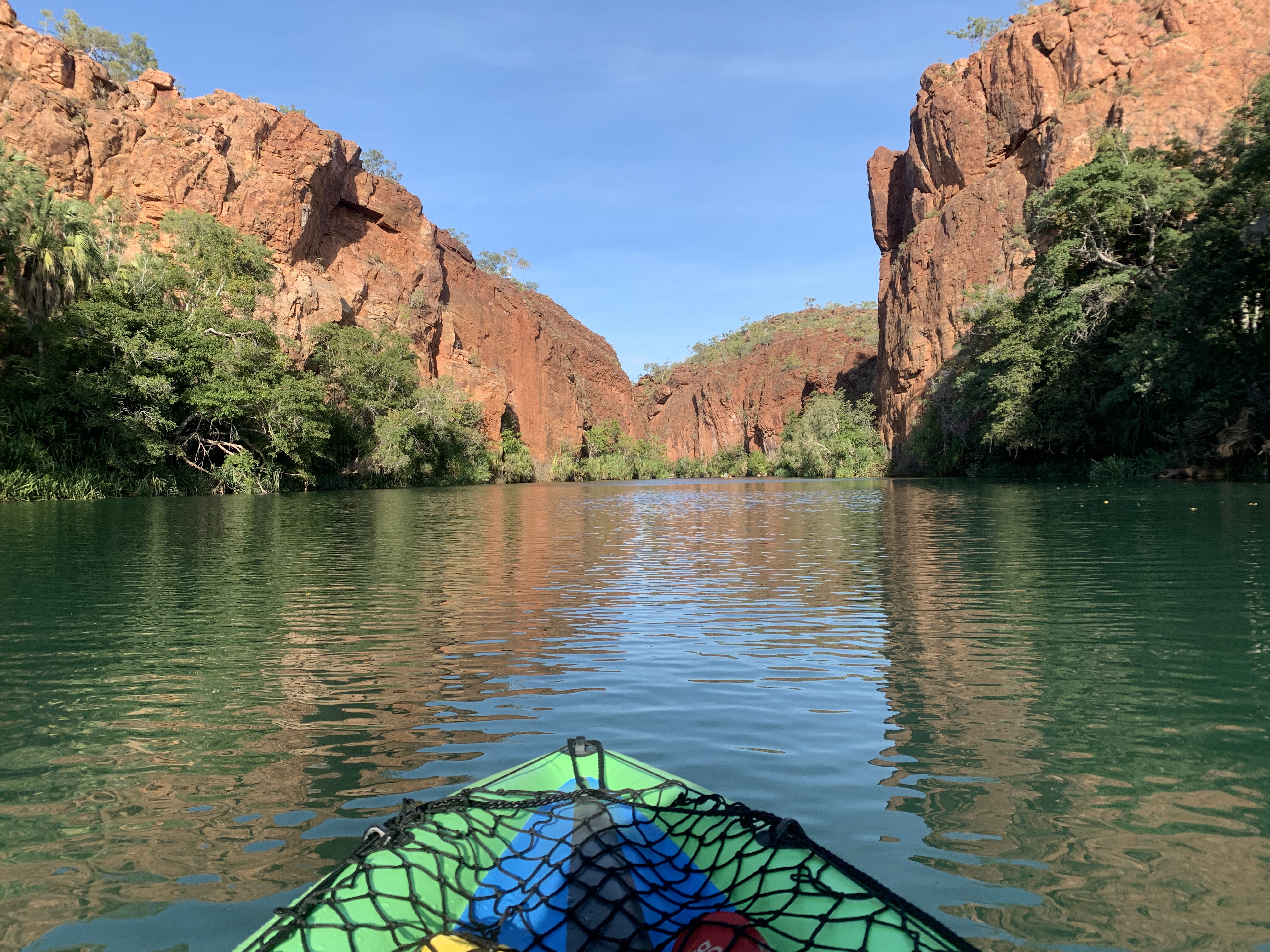
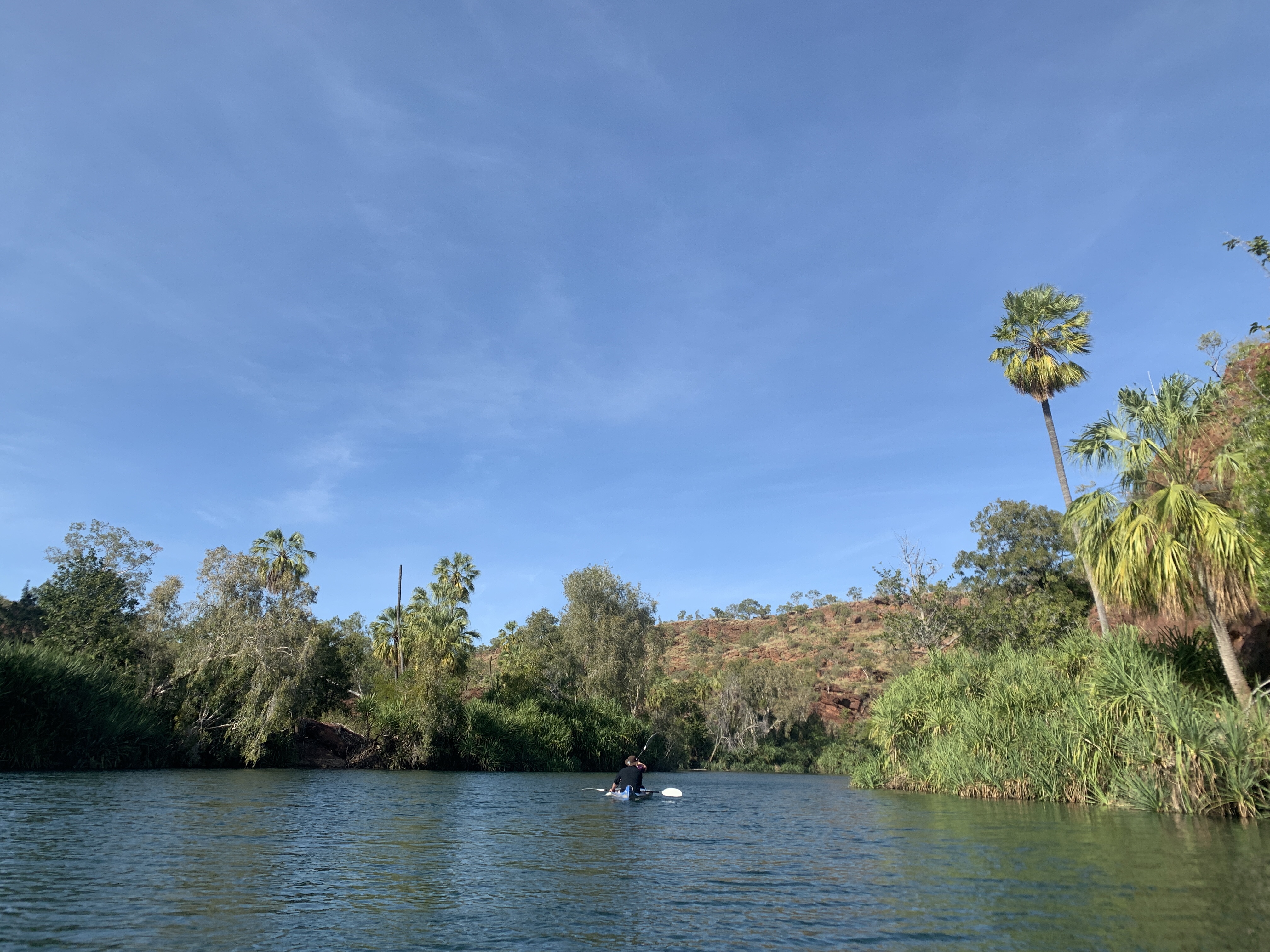
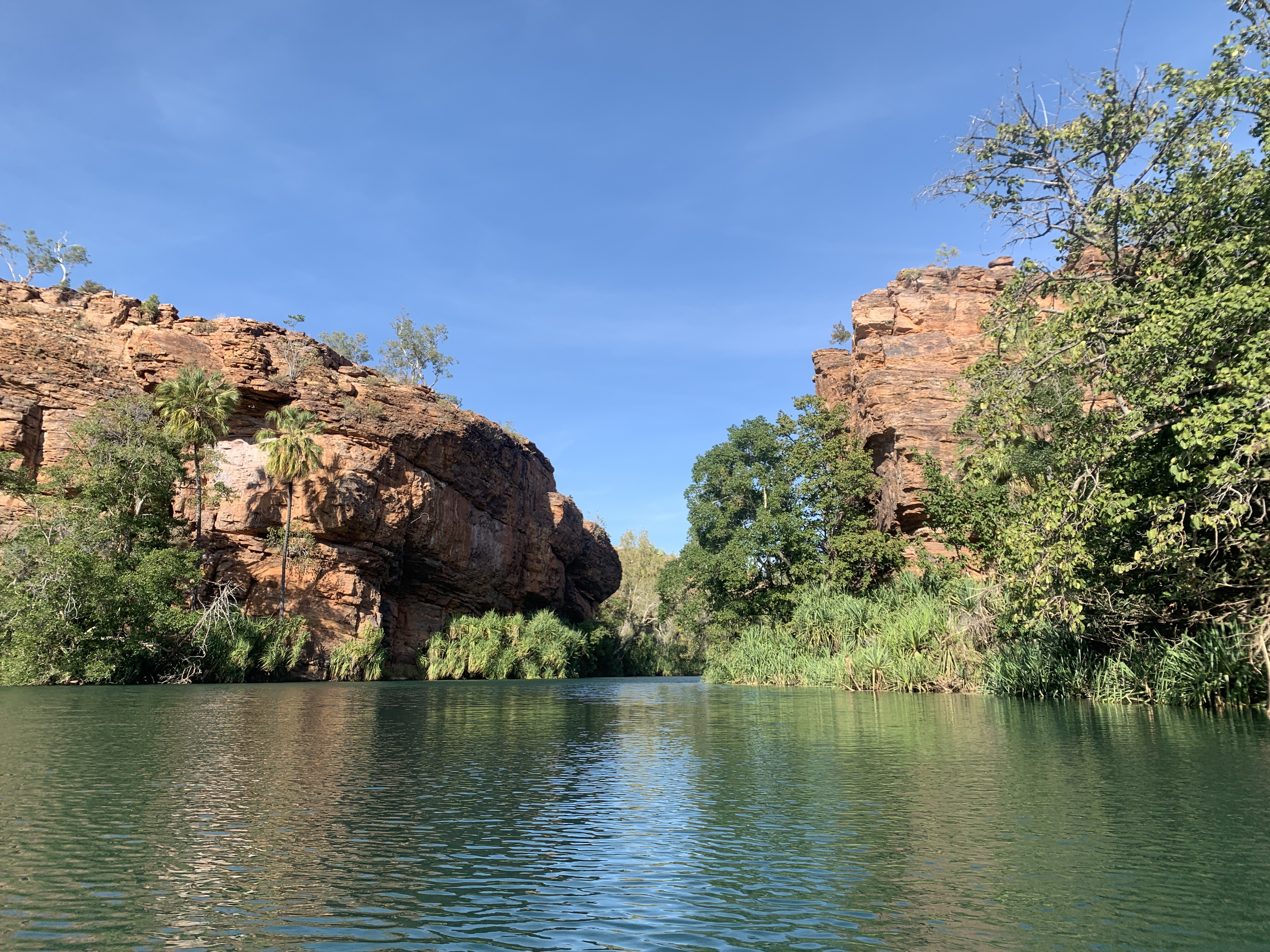
How to describe the gorge from the water. Incredible, amazing, stunning, beautiful are all words I could use. The water is clear and a gorgeous aqua colour. The creek is lined on either side by high red sandstone cliffs.

The flora along the gorge is incredible. Giant, tall cabbage palms tower over the pandanas and other palms below. Wattle trees were flowering all along the gorge and their bright yellow flowers contrasted with the aqua water. I marveled at the tenacity of nature as some small trees clung to the cliffs and sent their long roots down to the water.

It is very peaceful paddling along the gorge and it’s very quiet down there. If you rest your paddle for a while and just take in the serenity of the place it is easy to see why the Waanyi people believed that their creator, Boodjamulla, lives in the gorge.

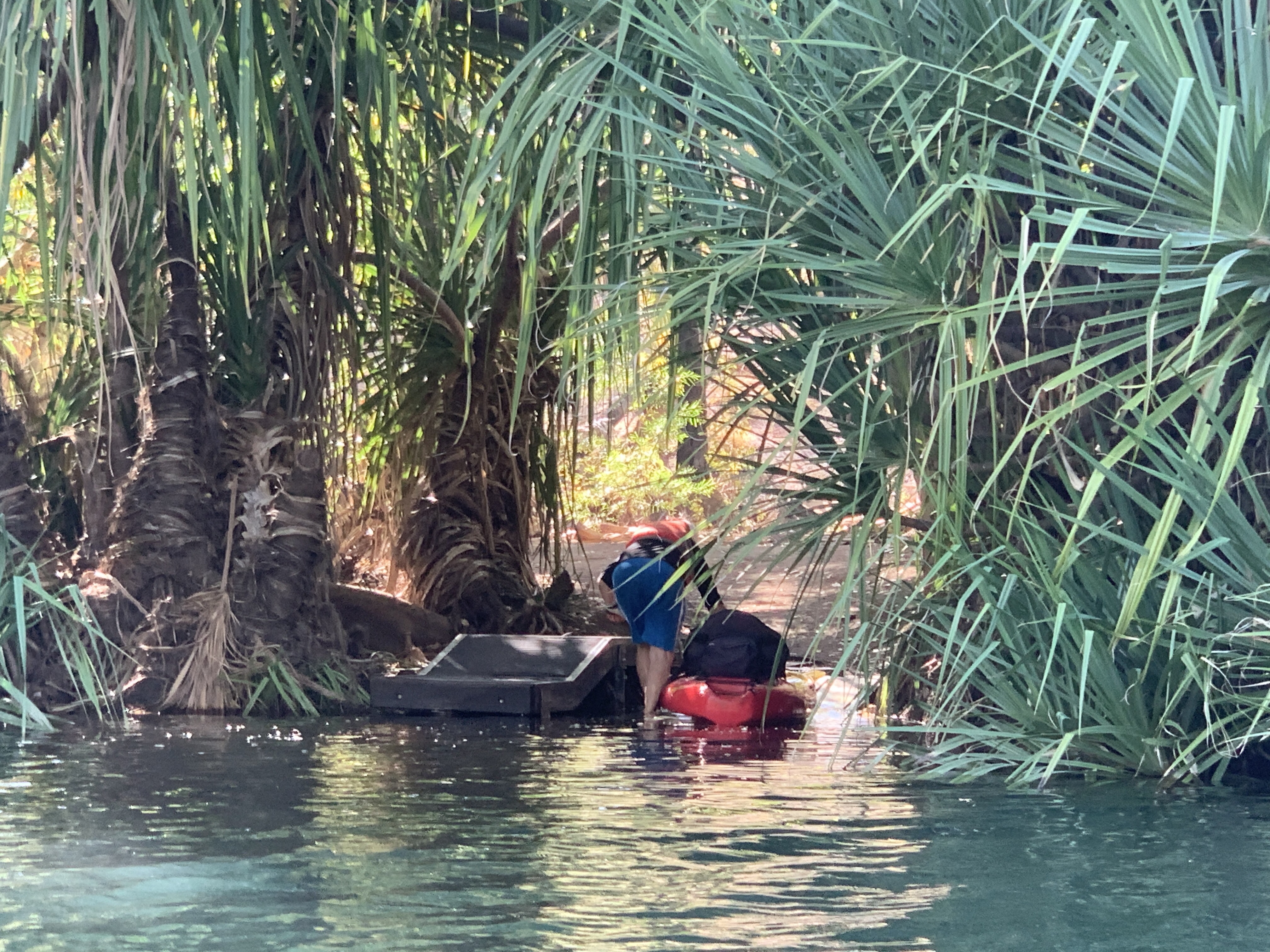
After paddling the lower gorge we arrived at Indarri Falls. Here you have to lift your kayaks and canoes out of the water and up onto the bank. Thankfully a couple of stainless steel rails have been put in place to help drag the kayaks and canoes up the short slope. Once at the top you then have to portage your kayak or canoe along the 20m track to bypass the falls and gain access to the upper gorge. It didn’t take us all long to manage to portage our kayaks and canoe and we set off again paddling the upper gorge.

The cliffs are not as tall in the upper gorge however there is more plants life. We kept our eyes peeled for freshwater crocodiles however all we saw were ‘logodiles’, a log that we thought looked like a croc. There was lots of different birds flitting about the trees and we could here the bird song of many others as we paddled quietly along.

The creek narrows in the upper gorge and eventually we had to pass through a very narrow opening under the palms. This led into another wider section with low banks on either side. Perfect for crocs I thought but alas we didn’t see any there either.

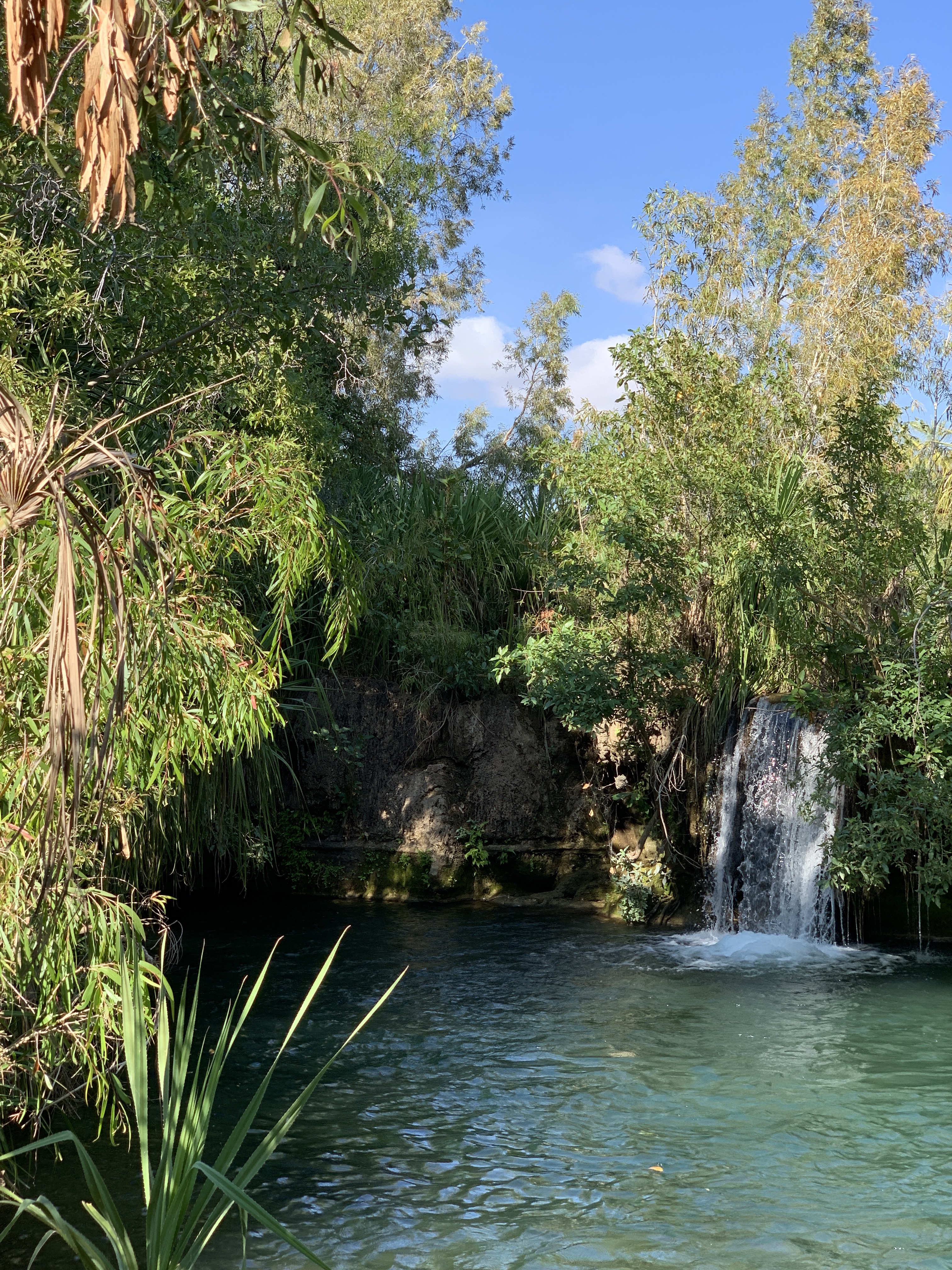
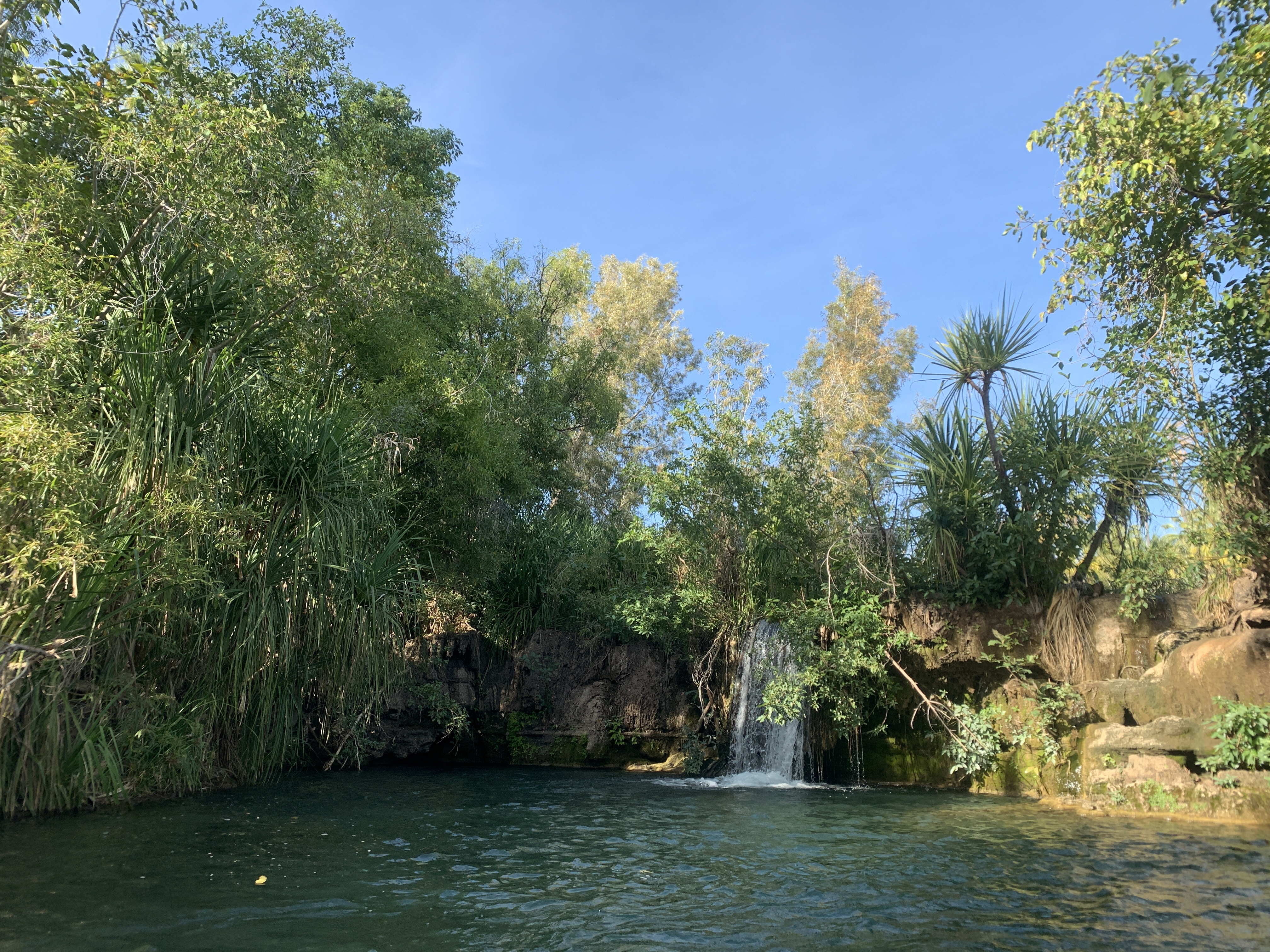
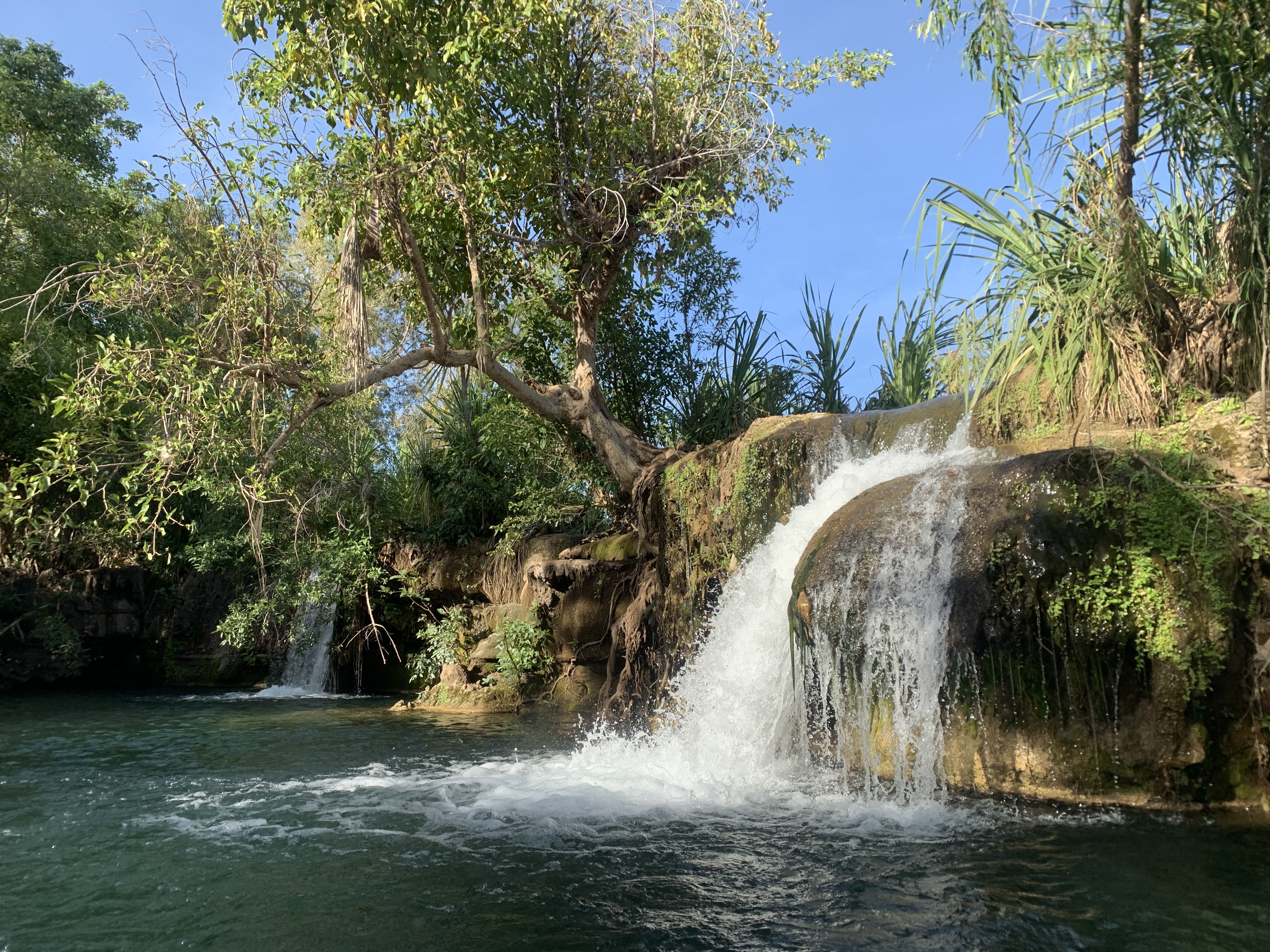
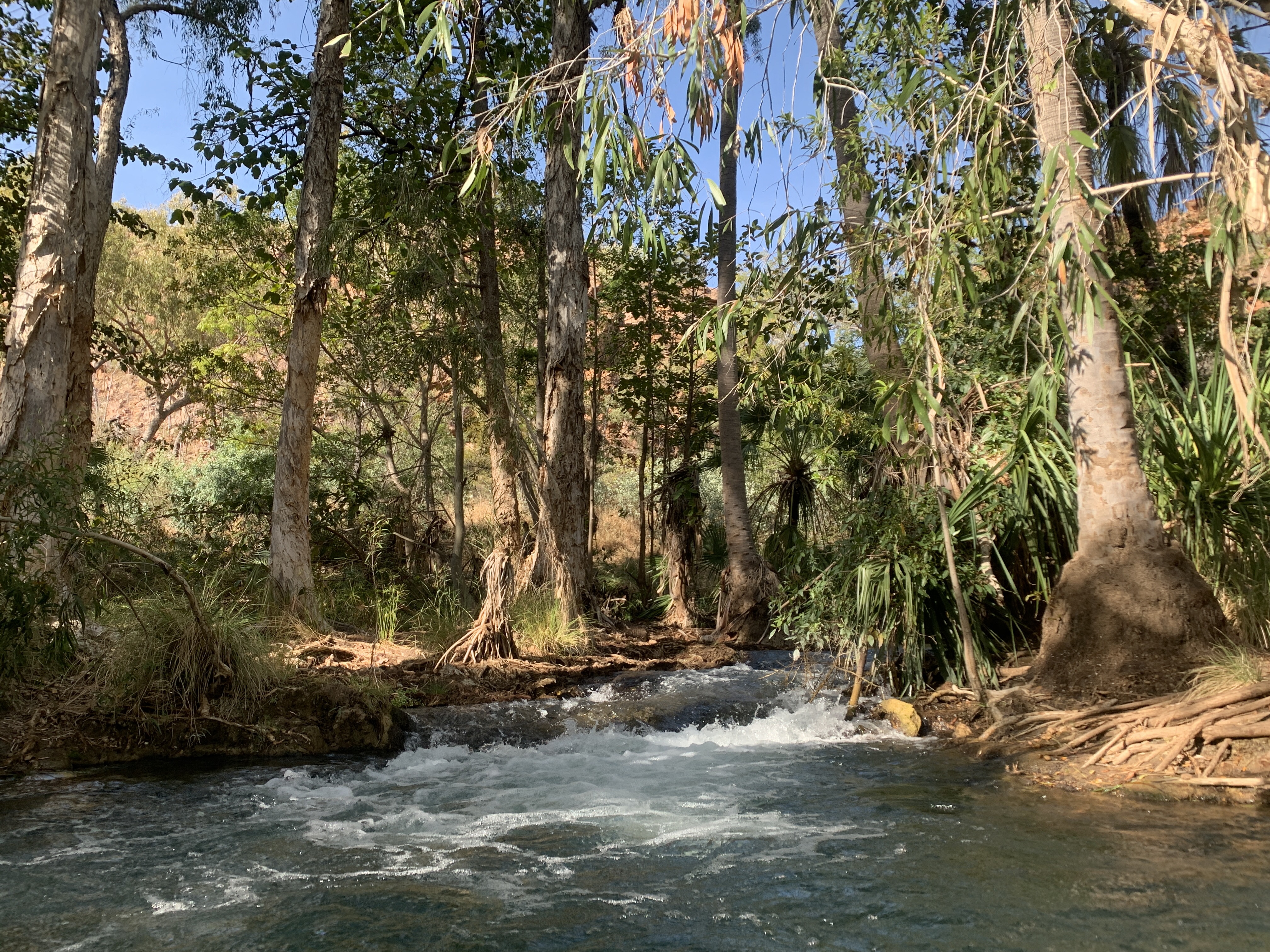
The gorge ends at a pretty spot where the freshwater spring bubbles up out of the ground and cascades over rocks into the creek. This is the beginning of Lawn Hill Creek. The water felt warm to the touch. It was a very peaceful spot with the noise of the water as it rushed over the rocks so we stopped for a drink and something to eat.

We had to part company at this spot as Mandie and Pete had to get their canoe back by 11am and then they would be packing up and heading off. They have 8 days to get home before they have to get back to work and it’s a long way. We said sad farewells and they set off quickly paddling back and it was not long before they were out of sight.

Catie and I took a leisurely paddle back and when we arrived back at Indarri Falls we left the kayaks on the track and jumped in for a swim. It’s fun trying to swim and get under the falls. The noise of the water is thunderous when you can get right behind the falls and look out at the water in front of you.

We had a lovely long swim and when we swam back to the steps where the rails are for canoe and kayak access there was an elderly couple. The man was standing on the bottom step plucking up the courage to enter the water. He eventually jumped in. His partner sat on the top step and she didn’t look like she was going to move any time soon. She kept telling us there was another set of steps further down. I think she meant for us to go there to get out. We had to explain to her that she is sitting right where we have to bring our kayaks to get them back in the water and it took a while for that to sink in. She reluctantly moved when the penny dropped that she was right in the way.

We quickly got our kayaks back in the water and set off back down the lower gorge still marveling at how beautiful it is. Many people were out paddling and one funny sight was a mum and two children in a large canoe. They each had short paddles and they looked like they had no idea how to use them. Their canoe kept going around in circles because they were all paddling in different directions and the little girl in front kept putting her paddle in the water which meant they turned on the spot. We had a chuckle at that and wondered how far they would get.

We came across a lady having a long swim in the creek and she called out to ask about my inflatable kayak. She was very interested in it and wanted to know all about it. I explained that it is an Intex Challenger K1 and I’d bought it from Amazon for $129. She was impressed.

All too soon our paddle was over and we were back at the canoe entry/exit spot. This is where I’m glad my kayak is not very heavy as I had to carry it back up to the carpark. Catie has a set of wheels that connect under her kayak and once the wheels are under it she can pull it along by the handle at the front. The tricky thing for us vertically challenged pair was getting it back on the roof rack of Robert’s 4WD. We managed to get it up there OK but it took a while to get the ratchet straps on. My kayak was soon deflated and I just folded it up and stashed it in the back until we got back to camp where I could dry it out and pack it up properly.

Back at camp and we just caught Mandie & Pete as they were leaving. I was sad to see them go and hope they had safe travels home. By then it was time for a welcome hot shower. Around 5ish we all walked down to the creek with our sundowner drinks and enjoyed a little time sitting in the cool, watching the water and chatting.

The six of us remaining enjoyed another night around a little campfire for our last night together. I cooked a pork roast in the oven in our motorhome and even got the crackling just right. It was delicious.

We would have to say goodbye to the others the next morning as they were heading further north into the gulf and we were heading south towards Julia Creek.


Gregory Downs to Adels Grove

We got up early after a great nights sleep accompanied by the sounds of the gurgling Gregory River. I was excited as this day we would be crossing another place off our bucket list….Adels Grove and Boodjamulla National Park. I have long wanted to go to this remote oasis and finally we were doing it.

I had read that the road from Gregory to Adels was not great so our expectations were not high. We were surprised at the first third of the way though. It’s 90km from Gregory Downs to Adels Grove and the first 20km is a good tar road. The next 10km is a good gravel road. Sadly the road gets worse after that. It alternated being a rough corrugated gravel road with intermittent tar sections. The gravel sections were awful and on a lot of those we were down to 15km/h. We let some air out of our tyres and that helped a bit but it was still slow going.

Finally, after 3 1/2 bone jarring hours we arrived at Adels Grove. We pulled up at reception and I went in armed with a print out of our booking. It didn’t take long and we were told to just go and find a camp spot. There are two camping options at Adels Grove. One is The Grove and this is a beautiful shady area alongside Lawn Hill Creek. The trees are very close together and there are lots of low hanging branches. Also it is very shady so our solar panels wouldn’t get much charge.

We chose the other option which is just called The Top Campground. It is a huge area, higher up from the creek on the red sandy soil. There are lots of sites marked out with rocks. Taps are scattered around the whole area although you are not meant to connect to them permanently. They are really only for filling your vehicle. There are amenities blocks with toilets and showers.

We found Catie & Robert, Brian & Helen, and Mandie & Pete all set up on sites so we found one close by and were relieved to be out of the vehicle. It was hot! I think it was 34 degrees when we arrived.

We spent the afternoon swimming in the cold creek to get cool. There is a restaurant at Adels and the others had booked our group in for dinner. What a disappointment that was. There was only three menu items. You could have grilled barramundi, steak or chicken schnitzel, all served with coleslaw and wedges. That was it! Oh well. Fletch and I ordered the Barra and I have to say it was pretty good. It wasn’t overcooked and the wedges were cooked just right too.

Everyone got their meals except Brian & Helen. We’d all finished ours before Brian went to check. Oh no…..they’d been forgotten and now there was no Barra, no wedges and no coleslaw left. They got a steak and an overcooked schnitzel served with sliced tomato. Not great! Customer service was woeful and there didn’t seem to be any organisation.

We won’t be eating at the restaurant again!

Quamby to Gregory Downs

After a delightful camp at Quamby Rodeo Grounds where there were no other campers, just us, we set off heading northwards. We saw a communication tower and as we had one bar of service we pulled over to call our dear friend Peter who is recovering from major surgery. We had a lovely long chat and were delighted with their news of a new grandson born on 30th June. Another boy in their family of boys! The birth of a grandchild is a magic thing!

We continued on and the countryside was very scrubby, with dense low shrubs, short trees, lots of rocky ground and still more termite mounds. Needing a cuppa we pulled up at a Rest Area where there was a motorhome camped already. Whilst we made our cuppa a group of three caravans pulled in and after a short chat we realised that they were the vans camped in the Rest Area opposite the abandoned Quamby Hotel. They asked where we camped and when we told them I think they were a bit disappointed they didn’t continue along the road a bit further and camped where we did. I suggested they get WikiCamps.

I think that modern communication is amazing. One of the ladies sat down at a picnic table so she could watch her friends funeral via live stream on her iPad. Isn’t that amazing!

The road to Burke & Wills Roadhouse is a good, wide, two-lane tar road as it is the major road up to Normanton in the Gulf. We made really good time along that stretch.

Around noon we arrived at Burke & Wills Roadhouse and OMG the queues for fuel. So many caravans and campers lined up to get fuel. Richard noticed there was a hi-flow diesel pump separate from the other pumps and there was no one at it. We pulled in and fueled up, easy peasy. Just as I was finished using the pump another vehicle pulled up behind us and the lady came over and asked if the pump was OK. When I replied “yes, but it is a hi-flow pump’ she replied that was OK for them and she wondered why all those other vehicles were queued up. I responded that we wondered the same thing when this pump was sitting there not being used. I guess it’s that herd mentality that humans have. We see a line and we just have to join it.

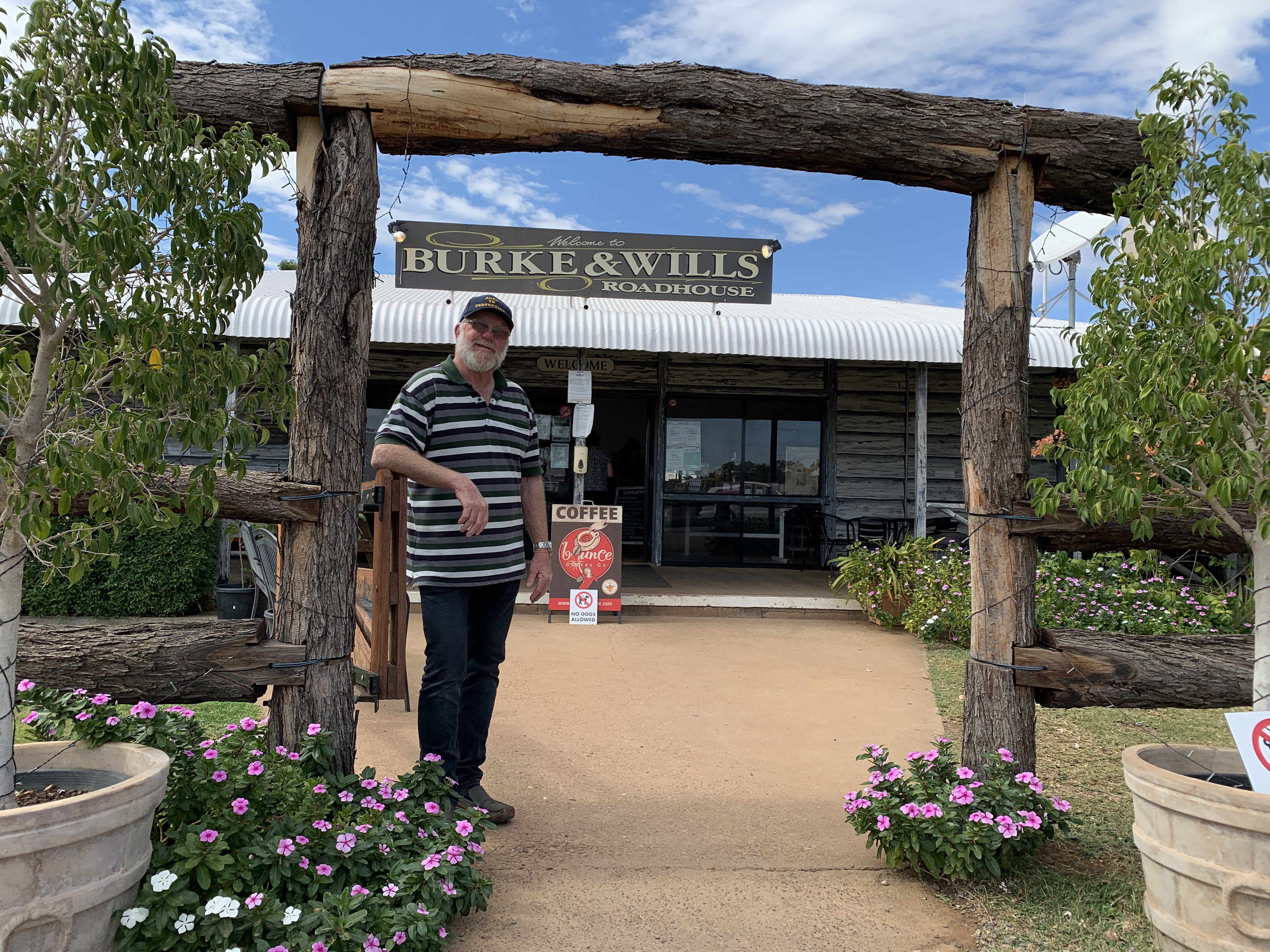
We had a quick look at the famous roadhouse that looks like it is a transportable building clad to look old. They did have lovely gardens out the front with green grass and flowering bougainvillea. The green grass was an unusual sight in The Outback. The caravan park alongside the roadhouse looked pretty full and I imagine it would be full by nightfall.

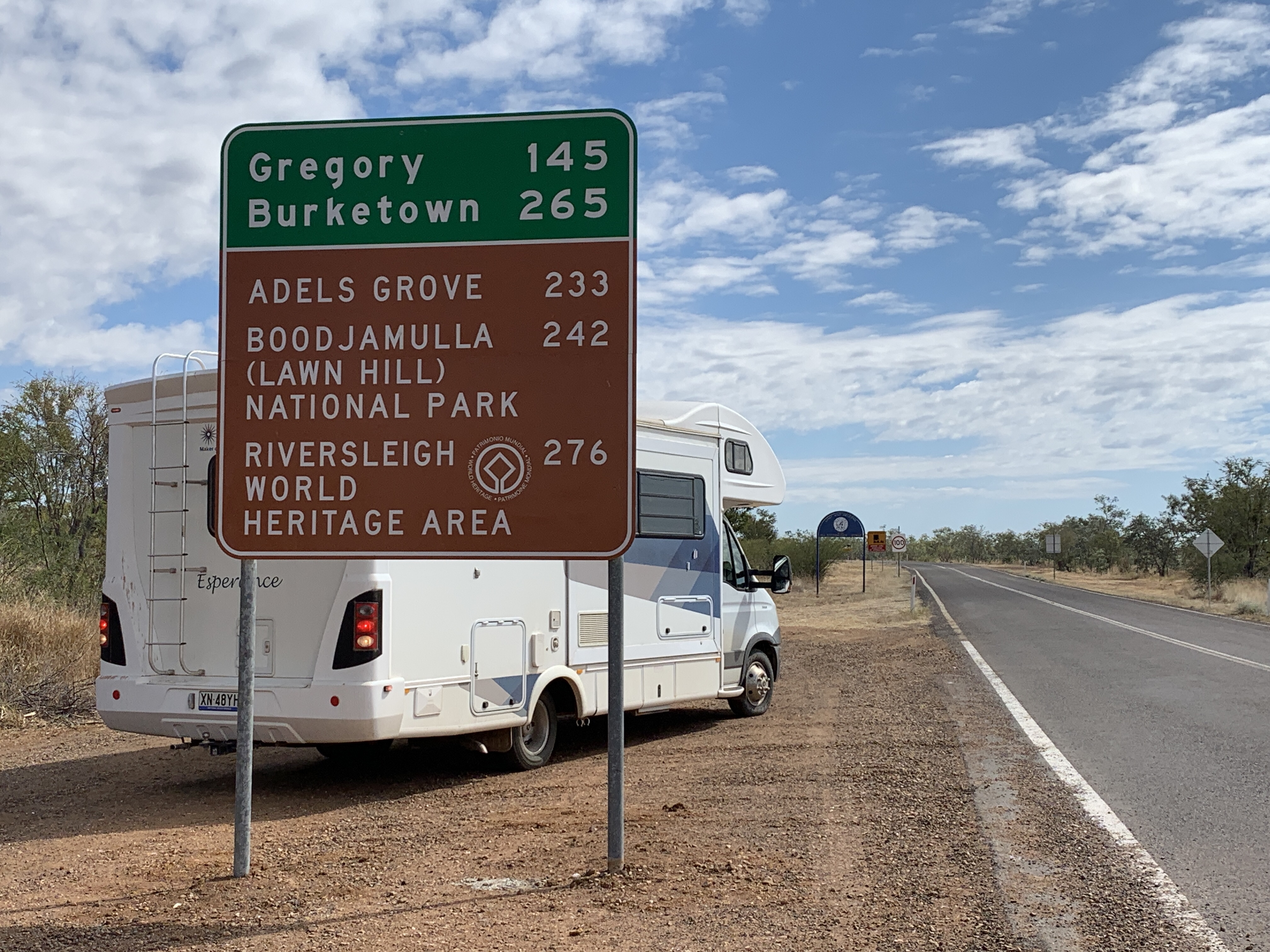
Back in the motorhome we took a left turn onto the Burketown Road. It was 145km to Gregory Downs, our destination for the day. The countryside had changed again to large grassland paddocks. It looked like sandy soil and not as many rocks. We were pleasantly surprised by the road. We were expecting another single lane outback road however we found a wide two lane road most of the way to Gregory. There were a few short sections of single lane but mostly it was a really good wide road with little traffic.

We stopped off for a lunch break at a large flat spot near Muttigudi Creek. Muttigudi Creek had no water in it but it is a very deep creek so it must carry a lot of water in the wet season. Back on the road after lunch and Rich made the comment that it was 32 degrees outside. Lovely winter’s day in the north!

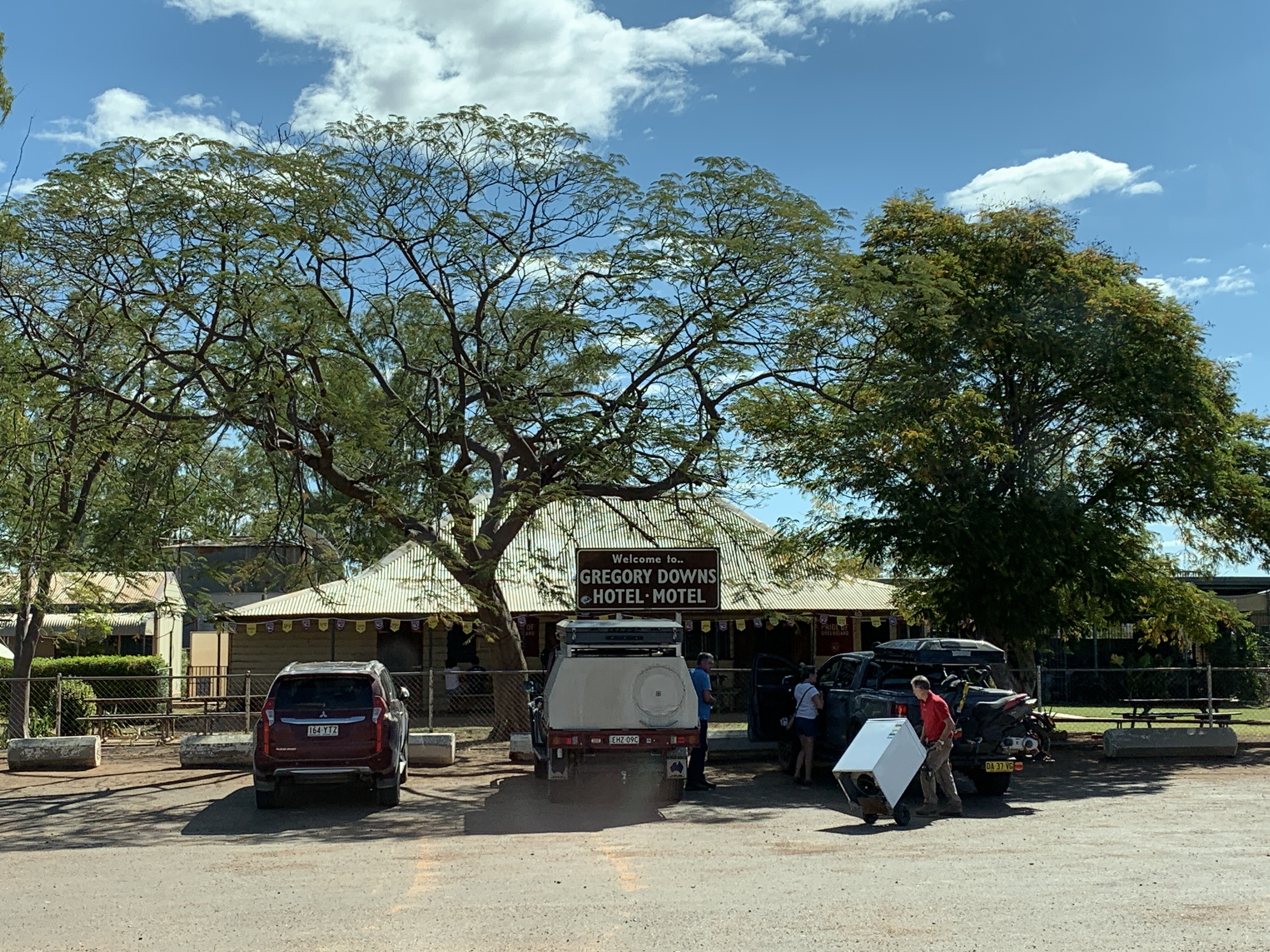
Around 2.30pm we arrived in the tiny community of Gregory Downs, population 40. The hotel usually has fuel however they were having some electrical work done and there was no fuel until after 4.30pm. Glad we filled up at Burke & Wills Roadhouse earlier. We enjoyed a cold beer at the hotel and checked it out. It looked like a good spot for dinner maybe. They have tables out the front under the wide verandah and more tables out the back under a covered area, those even have tablecloths.

The Gregory Downs Hotel was once a coach house and changing station for Cobb & Co coaches on their route to Burketown in the gulf. The pub still offers accomodation and even has a small caravan park out the back.

We drove past the free camp up the top of the Gregory River. The free camp has water available. This would be a good spot to camp if you wanted to have a meal at the pub but it was hot and we thought we’d try and get a camp down below right next to the river. We were in luck. There was a great spot just right for the motorhome. Not quite riverside but good enough. We could see the river from our windows and hear the fast flowing water as it rushed past the trees on the rivers edge.

After setting up camp we donned our swimmers and headed straight to the river. OMG the water was freezing but so refreshing on a hot afternoon. The bottom is sandy with lots of round rocks and pebbles. The water is crystal clear. The river is lined on both sides by cabbage palms, pandanas and tea trees with deep sandy banks. It is an outback oasis!

There are lots of campers all the way along the river and people regularly walked by carrying all sorts of floating apparatus so they can get in at one end and float down the river. Every now and then a group of floaters drifted by. Even a couple in a kayak went by. What a beautiful camp spot. I really liked this one and could easily have stayed here for a few days.

I put on a chicken korma for our dinner and got it simmering and we spent the rest of the afternoon reading and relaxing.

Hard Times Mine Tour & off to Cloncurry

Wow wow wow. The Hard Times Mine Tour at Outback at Isa is fabulous. We were so fortunate that an extra tour was being run at 11am as the usual 9am and. 2pm tours had been all booked out. We had to arrive and checkin 15 minutes before, so, after packing up the motorhome, we left the Argylla Caravan Park and went directly to the RV parking near Coles to stock up on groceries. Once this was done we left the MH in the car park and walked the short distance to Outback at Isa where we met up with Mandie and Pete.

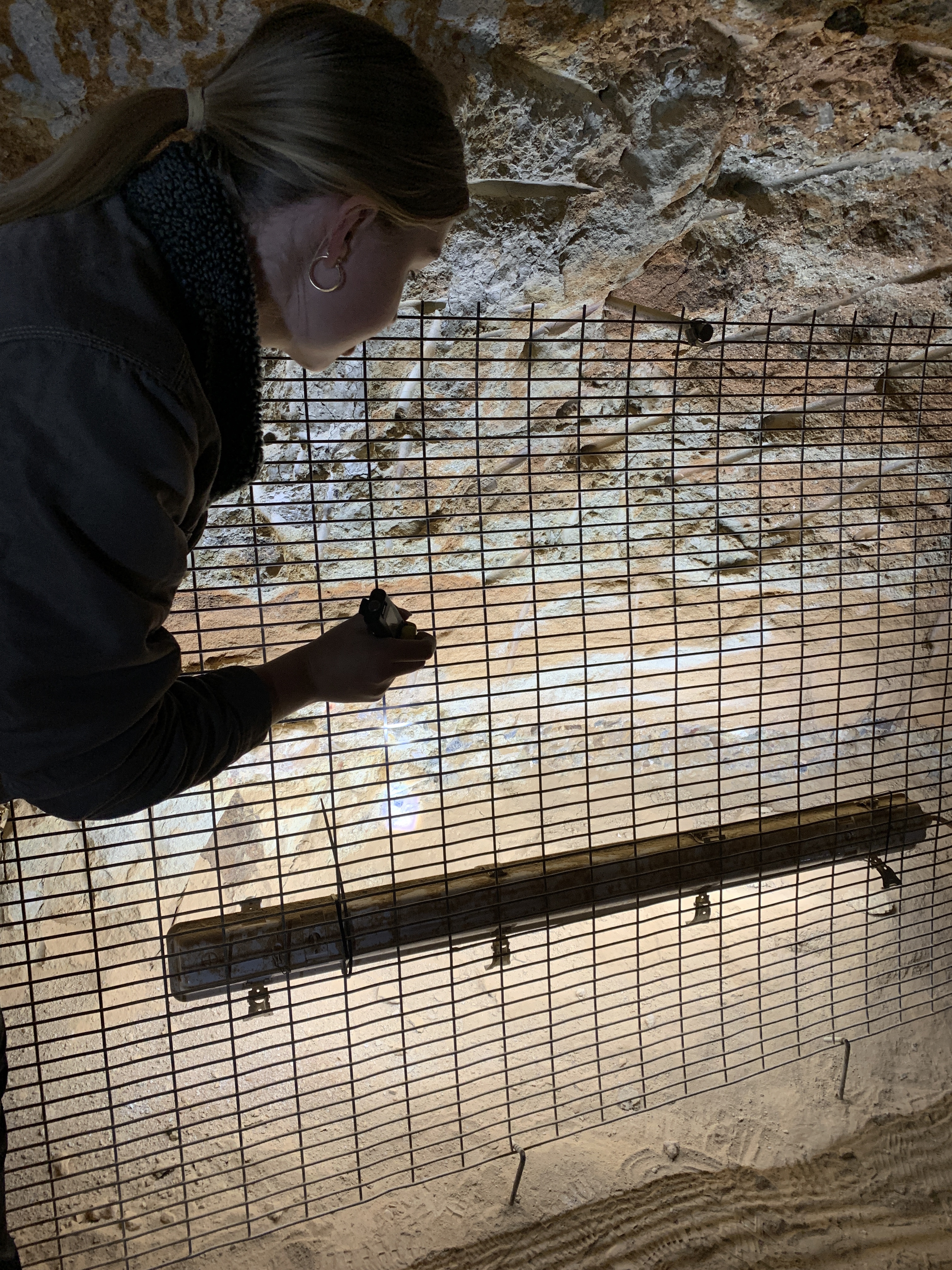
After checking in for our tour we were given little hanging tags with our names on them and our tour guide introduced himself as Allan. We were led down to the tour start and here Allan gave a short talk about the history of Mt Isa Mines (MIM). Then we were each given a bright orange hard hat and a set of disposable overalls (one size fits all). Change rooms are available to put on this most unglamorous outfit and lockers are available to store your stuff in. Next you were supplied with steel capped gum boots however Mandie and I were allowed to keep our own boots. Once everyone was kitted out we were led outside and around the various mining machinery on display.

Allan stopped at a few of the different machines and explained their use before he led us into a large tin shed. This big shed houses the winch mechanism for the cage that would lower us underground. But first we had to receive our lamps which were clipped onto our hard hats then before we were allowed ot go underground we had to hang our name tags on a board. Everyone that goes underground must hang their tag on the board. This is still the case in underground mines around the world. If your tag is on the board, you are underground and only you can remove the tag. If, for some reason, you forgot to remove your tag at the end of your shift and went home to bed, probably a mine supervisor would be knocking on your door to escort you back to the mine to remove your tag.

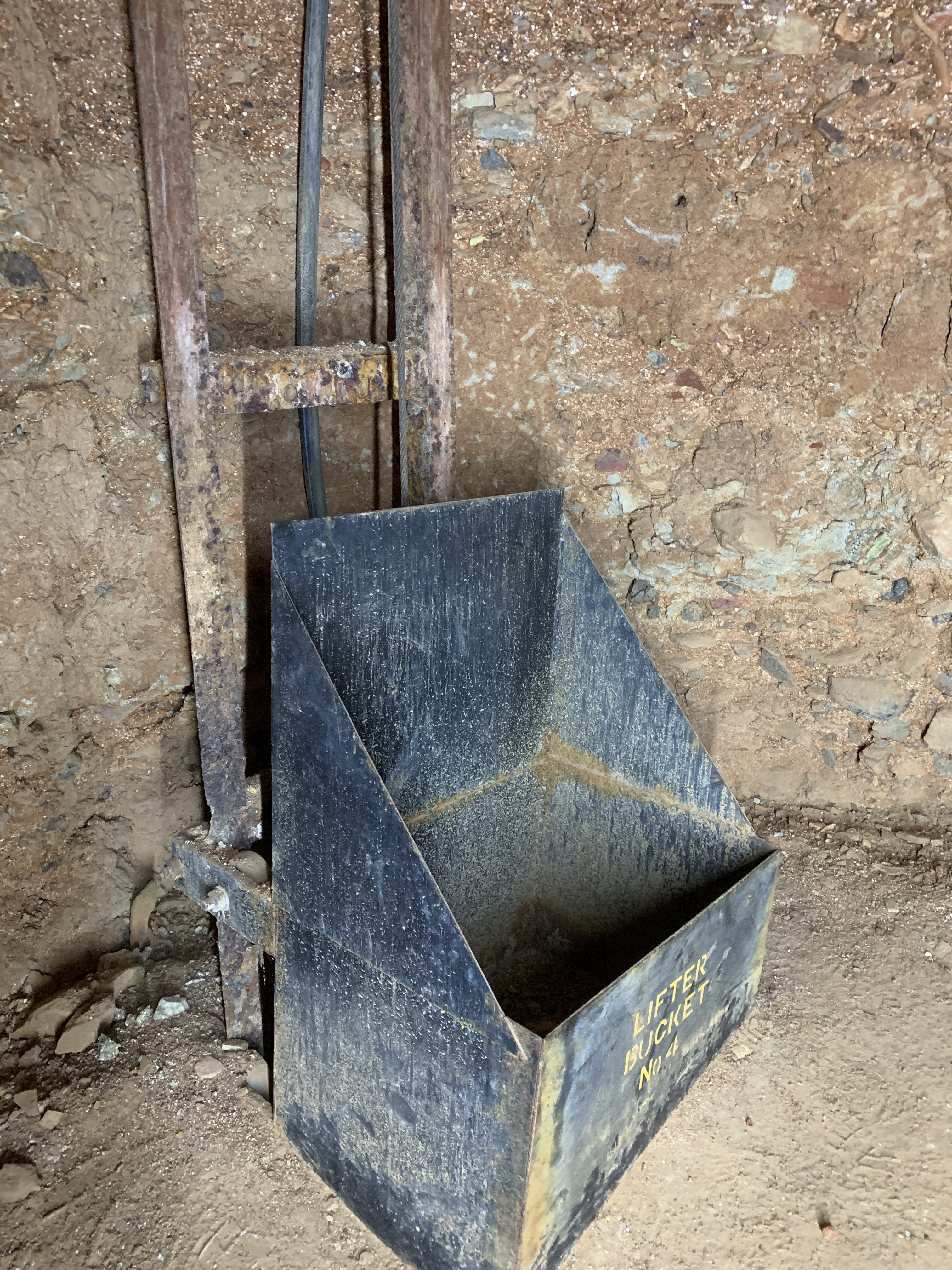
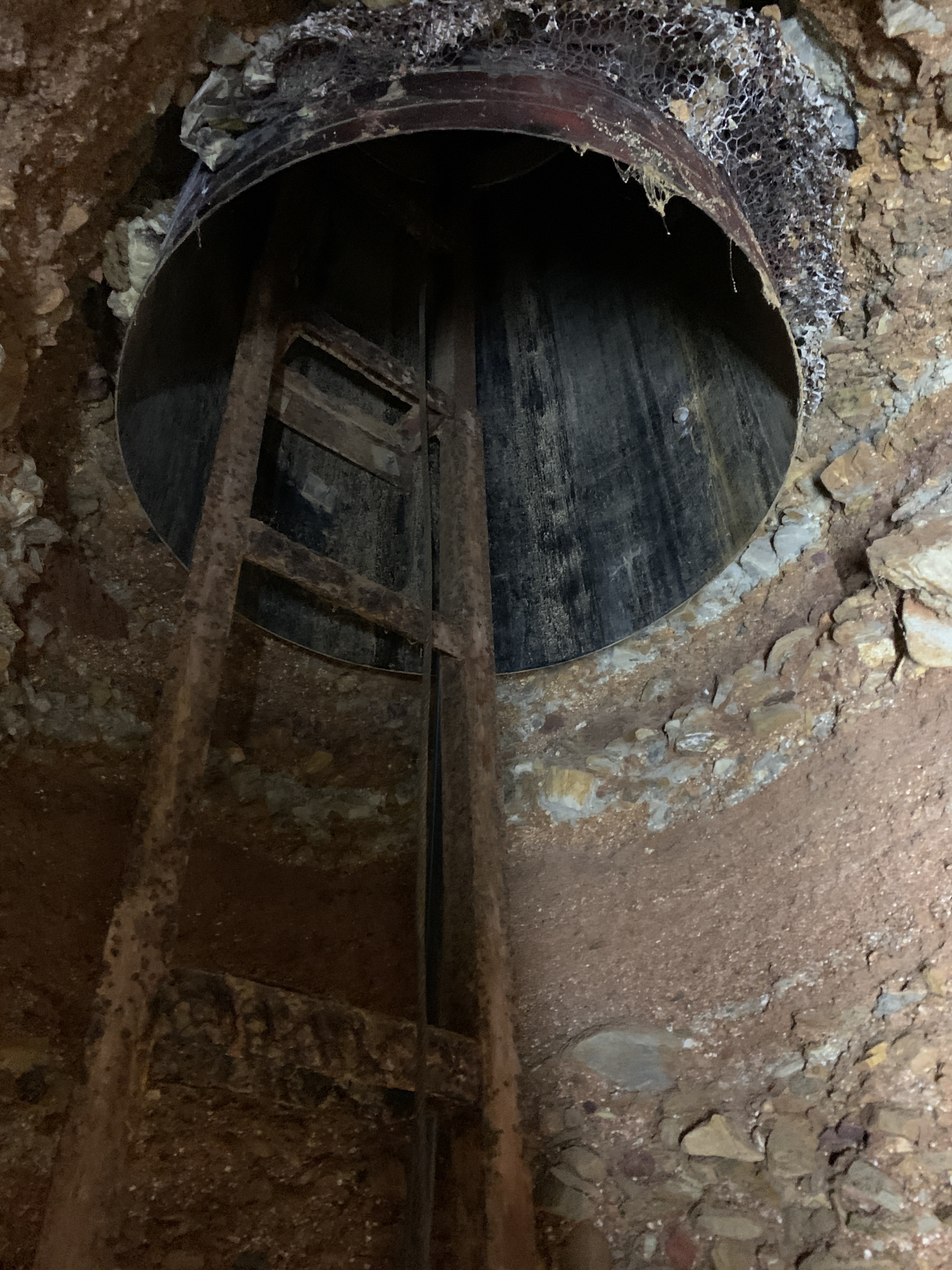
We were led back outside and 10 at a time went into the cage (an elevator) and down we went. The Hard Times Mine is about 20m underground and contains some 1.2km of tunnels. The Mt Isa Mine is 1900 metres deep. The Mt Isa Mine has many levels with access tunnels leading from one to the other. Allan explained that he’d worked underground for 30 years and the Hard Times Mine has been created so well that it looks the same as if you were in a real working mine. It certainly felt authentic.

There were two little boys aged 8 and 10 on the tour with their dad. Our guide encouraged people to ask questions and every time he asked if anyone had any one of the boys put their hand up. They asked good questions too. One funny occasion was when the youngest one asked what do the miners eat when they are underground. The tour guide looked directly at the boy and said “small children’. The look on the young boy’s face was priceless. He looked like he wasn’t sure if Allan was kidding or not.

We visited a number of sites underground and were shown how the rock face is drilled and exploded, then ‘bogged’ out and then the tunnels are covered in reinforcing on the sides and the backs (what I would call the roof). Allan explained that no one is allowed to work underground now without the backs being supported.

At one site there was a big pneumatic drill set up and everyone who wanted to could have a go at drilling a hole. We all had to wear ear muffs for that. It was so noisy!. Pete, Mandie and Richard all had a go.

Our last stop on the tour underground was the crib room. This is where the miners gather to enjoy their breaks and have something to eat. Allan explained that modern crib rooms have all the amenities one would expect above ground such as kitchens and flushing toilets.

In the crib room were samples of ore for us to see and we could all enjoy a cuppa and a Cornish Pastie. They were delicious. They serve Cornish Pasties as Cornish miners were some of the first miners in Australia and they brought their traditions with them such as calling the break room a ‘crib’. The Cornish miners pasties were originally made with a thick pie crust filled with vegetables. The miners could hold the pastie in their dirty hands but the veggies in the middle stayed clean. These days most pasties are made with flaky pastry.

A little tray back Ute pulled up in front of the crib room and in groups of 10 we were piled in the back of the Ute and driven up a long incline tunnel back to the surface. We were instructed to go back into the shed and put our lights back on the rack and most importantly, remove our tag from the board. Once all the tags had been removed we were free to end the tour and return inside where we took off our overalls and changed out of the heavy gum boots. Lastly our helmets were returned.

Allan had taken photos of everyone as we were ready to board the cage and those photos were available at the front desk for us to collect. We got a great photo as a memento. We farewelled Mandie and Pete as they are going to travel to Adels Grove via the 4WD Riversleigh track. It has 3 creek crossings and is not suitable for the motorhome. We would meet up with them in a couple of days time at Adels Grove.

We left Mt Isa following the end of our Hard Times Mine Tour and headed eastwards towards Cloncurry. The countryside was rugged rocky hills and steep valleys. This was the Barkly Highway and is the main road from Townsville on the Queensland coast to the Northern Territory and, as such, it is a wide two lane road. Through the ranges though there were double lines in the middle so no overtaking and we were following a line of RV’s.

Some of the road trains here are four trailers long. They create quite a wind as they go by us and the whole motorhome shudders.

Every now and then there are vast areas of land covered in red termite mounds. There are thousands and thousands of them.

We called in to check out the once thriving, now abandoned, town of Mary Kathleen. Mary Kathleen was a mining town of some 1,000 people after uranium was discovered in the area in 1954. The water filled open cut mine can be viewed today and lots of people travel the 4WD road just to see the colour of the vivid blue water. The uranium deposit ran out in 1982 and all the town buildings were sold and relocated elsewhere by 1984. All that remains are the concrete foundations of the many buildings. It is now a very popular free camp for self contained campers. We had a drive around then got back on the highway.

Next stop was Corella Dam. I’ve read on many other travel blogs that this is a beautiful spot to camp so even though we had no intention of camping we called in to check it out. Sure enough it is a lovely spot and it was very full with campers.

In the late afternoon we drove into the small outback town of Cloncurry. Cloncurry is famous for being the town where Qantas’s first flight from Longreach landed in 1922. The original hanger used is still standing at the airport.

We topped up with fuel but we couldn’t get a gas bottle even though we tried both service stations. We have one full one though and that should see us through for the next week. Maybe we’ll be able to get one at Burke & Wills Roadhouse.

We decided not to camp in another caravan park and headed northwards on the road to Normanton. A little way along we came to the abandoned ruins of the Quamby Hotel. It is falling down and has a safety fence all around it to prevent people getting too close. It looks like it could fall down any second. Opposite the old hotel is a large Rest Area and there were three caravans pulled up and looked like they were camping for the night. It was a bit too close to the road for us so we went a couple of kilometres further on and turned into the track leading to the Quamby Rodeo Grounds. Now that looked a good spot for a camp. It was a huge flat area that looked like it had cattle grazing on it recently as the grass was chewed right down and there were cow pats. However there was no one else there so we could set up our little fire pit and camp on our own. Perfect.

We enjoyed the ambiance of being out bush with just us and the stars. For the first time this trip we got out our Bidgee BBQ and Richard cooked up a great meal that we ate outside under that amazing night sky.

Being tourists in Mt Isa

We spent the day with Mandie and Pete being tourists. First up we visited the fabulous Outback at Isa. This complex houses the Tourist Information Centre, a Cafe, The Riversleigh Fossil Centre & Laboratory, The Isa Experience (a museum to the history of Mt Isa) and the Hard Times Mine (an underground mine tour experience).

We did a fabulous one hour tour at the Riversleigh Fossil Centre. This was really good and we learnt so much about Riversleigh which is a World Heritage listed Fossil Site. It is said to be one of the best fossil sites in the world, according to Sir David Attenborough.

Most of the fossils at Riversleigh relate to 25-30 million years ago when giant mammals wandered this land. Scary big creatures such as diprotodon, marsupial lions, giant koalas and more. We were shown into the laboratory and the painstaking work it is to release the fossils from the limestone they are embedded in. It was fascinating.

Following our fossil tour we enjoyed morning tea in the cafe. Best coffee and worst scones!

We spent the next hour or so in The Isa Experience. This is a museum dedicated to the history of Mt Isa and has a wonderful gem stone collection. It is a self-guided display and has fascinating exhibits detailing the history of Mt Isa from its earliest people, through the discovery of ore by John Cameron Miles who staked the first claim in 1923, and on to how the town grew from a small mining town to the outback city it is today.

It is also home to the Mt Isa Rodeo Hall of Fame. The Annual Rodeo is a big deal in Mt Isa. The first rodeo was held in 1959 and since then the Isa Rodeo has become a major event on the Rodeo calendar. It is now the biggest and riches rodeo in the Southern Hemisphere. The Mt Isa Rodeo is held on the second weekend in August each year. A special purpose rodeo arena at Buchanan Park has been built in the town to world Rodeo standards and many of the cowboys that compete at Isa also compete in other countries. The Hall of Fame celebrates those that have made a significant contribution to the Rodeo over the years.

After all this reading and museum exploring it was time to get out and about. We’d heard about Lake Moondarra which is some 16km from town and apparently is a large man made lake and also the town water supply. In this extremely dry climate a lake would be a welcome sight. The road out to the lake was well signposted and we got such a surprise when we came to it. It is huge! Much bigger than we expected. You could water ski here and always be able to find good water because of the numerous islands.

Lake Moondarra was constructed in 1956 and its Aboriginal name means ‘plenty of rain and thunder’. The lake is popular with locals and is famous for its fishing, water skiing, canoeing and dragon boating, The view of the dam wall from the lookout is quite a sight. All that dry country and that huge lake below.

Back in town we drove to the Mt Isa Lookout to check out the view and the painted water tower. It is painted with native birds and fish. The view from the lookout across the town is a good one from that elevation. You can clearly see Mt Isa Mines on the western side of the Leichhardt River and the town on the eastern side.

Mt Isa is a mining town and as we drove around we noticed that most of the homes are transportable. I guess if the mine ever closes the houses can be moved somewhere else, although I read that the Mt Isa Mine is not likely to close any time soon. It is one of the worlds largest producers of lead, zinc, silver and copper. The mine was commenced in 1923 so it is almost 100 years old and it remains one of the worlds most productive single mines. The mine was acquired by Glencore in 2013 and Glencore employs around 3,200 employees and contractors today. It is a mixture of open-cut and underground mining and the copper mining section is 1980 metres deep.

Back at the caravan park and I took the time to do more washing and finally wash the dusty floor. You’ve no idea how good that made me feel to be rid of that BRB dust!
Our little BRB Makin’ Memories group of four couples went out for dinner to the Overlander Hotel and we enjoyed a last night together.