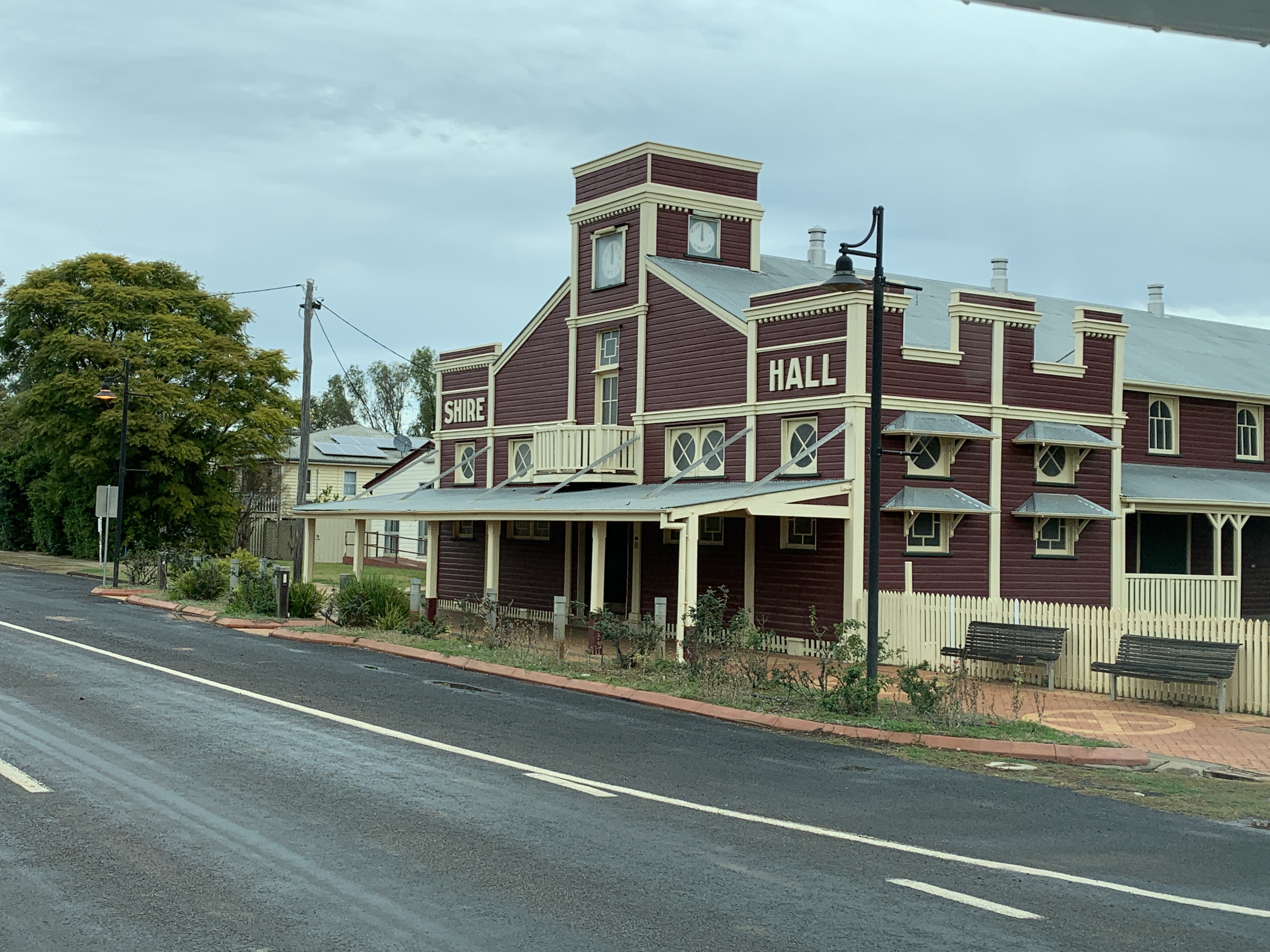
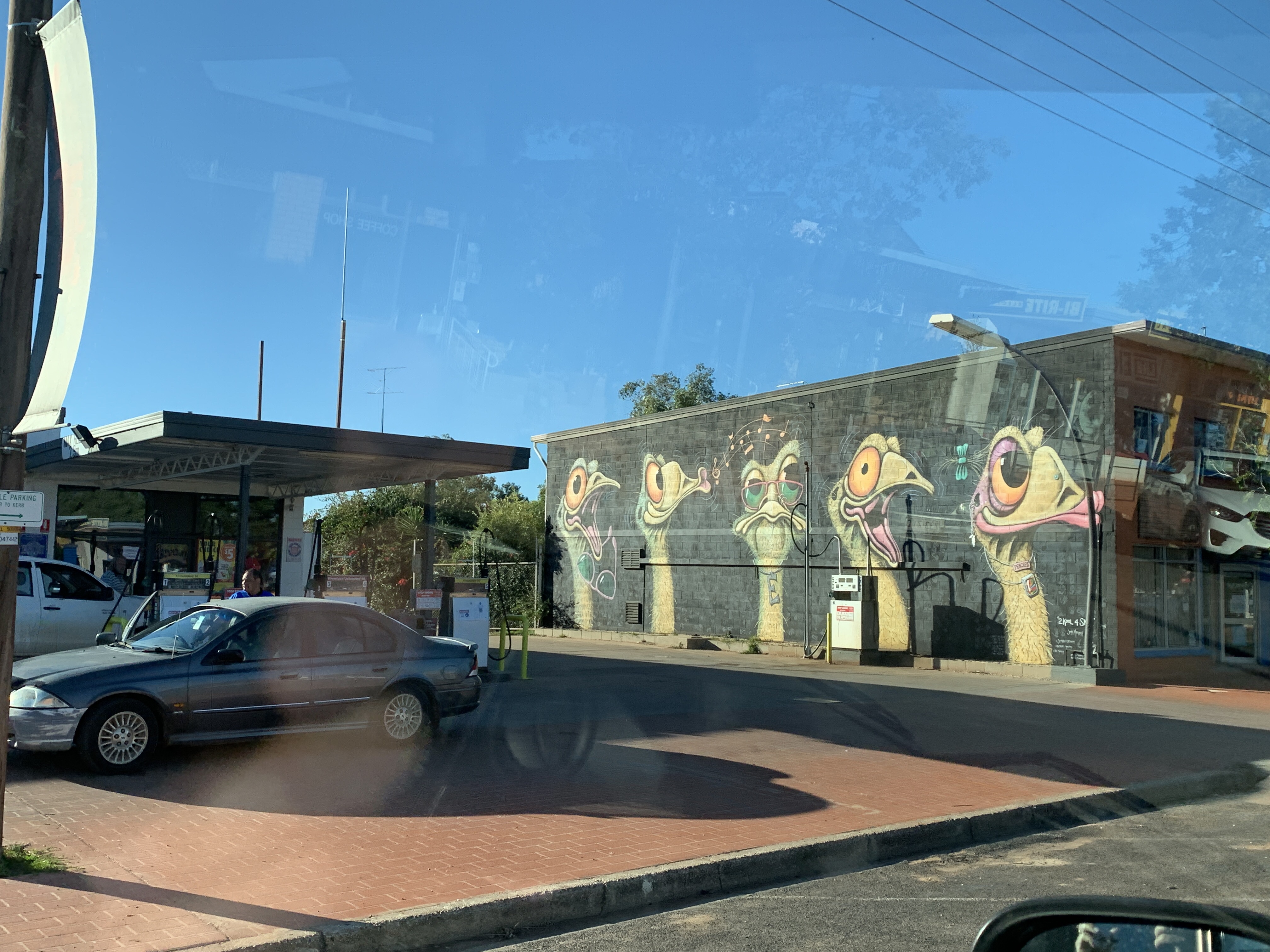
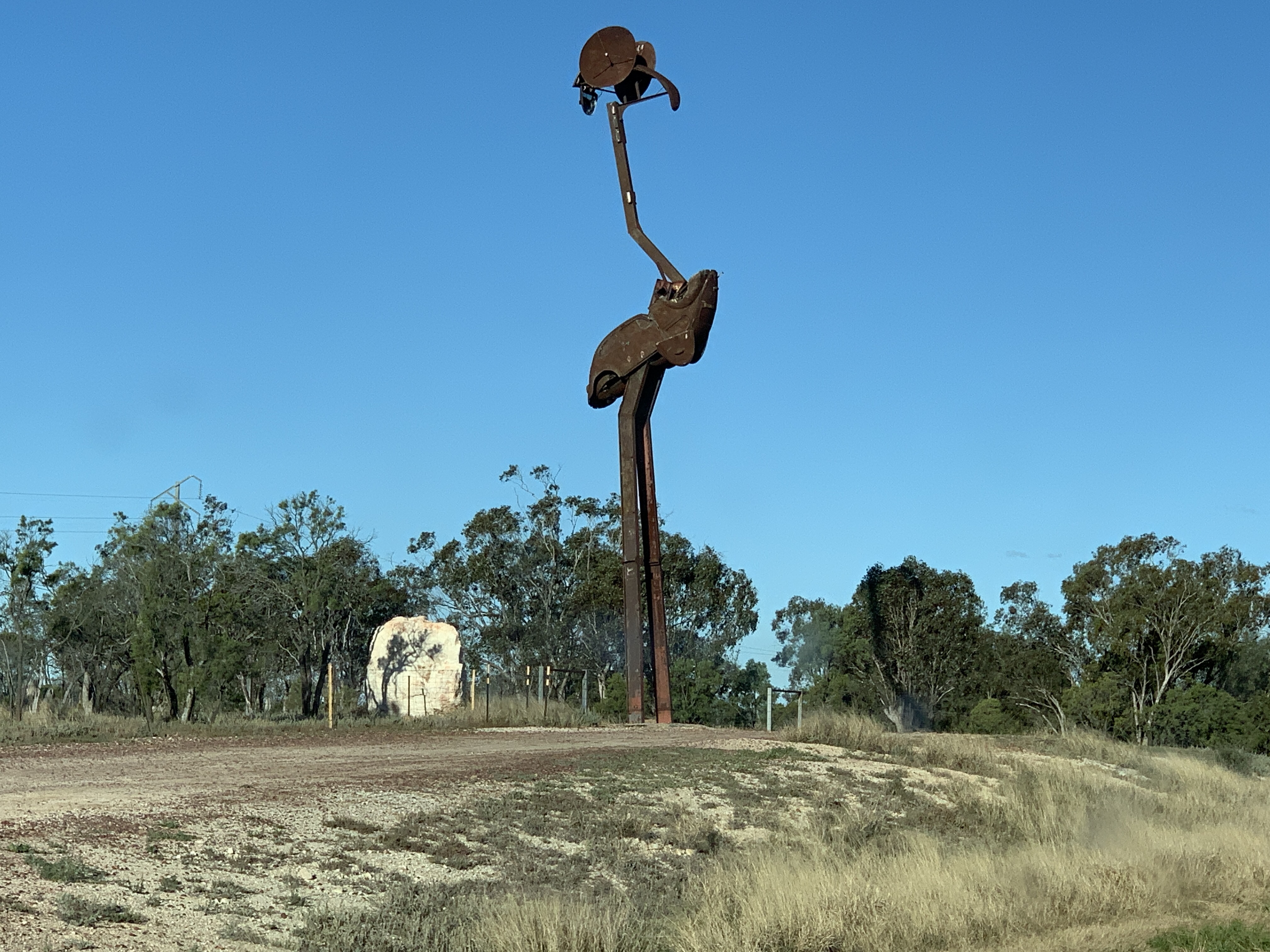
Roma, Qld

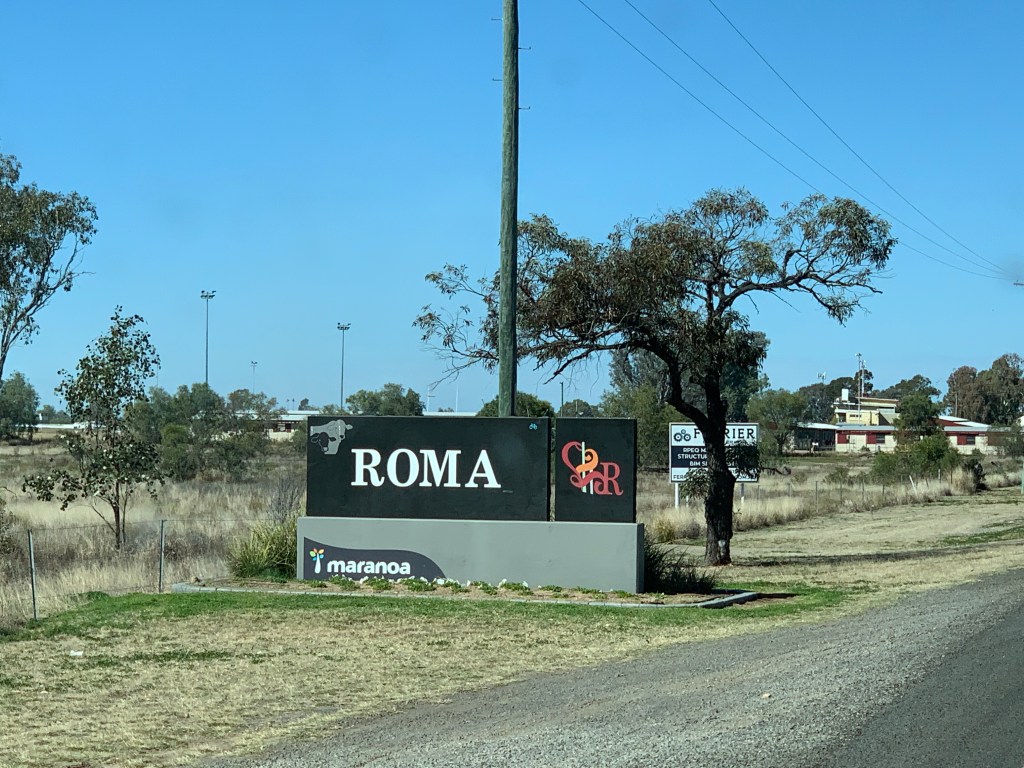
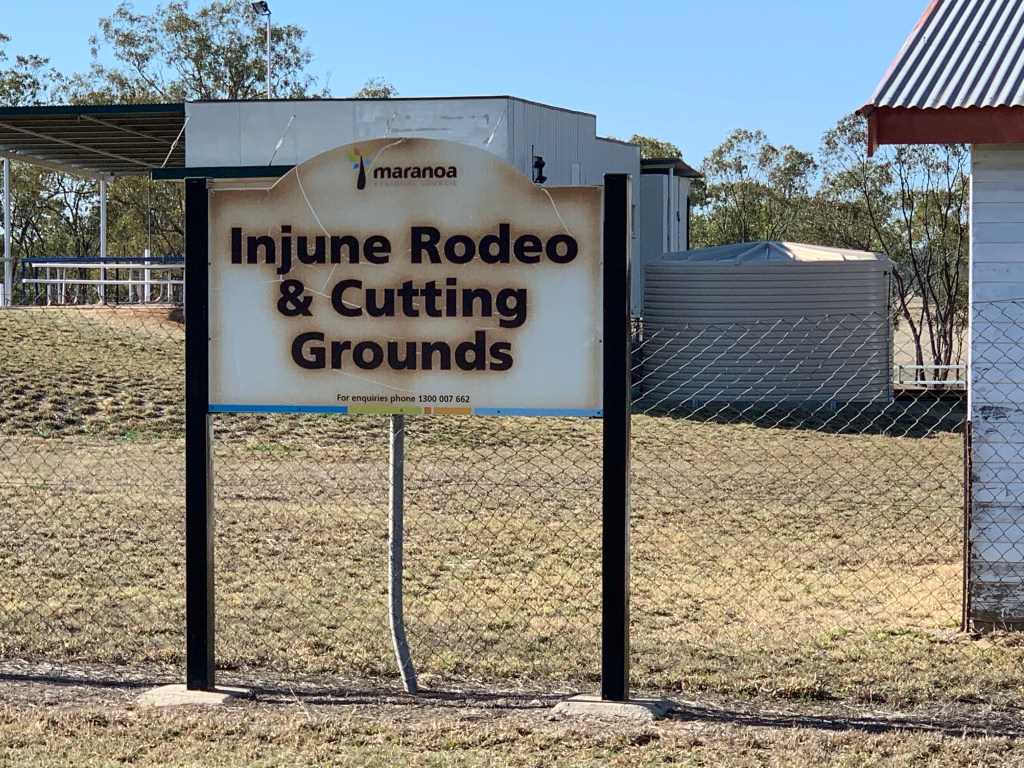
After a good overnight stay at Injune Rodeo Grounds we continued our journey south and into the town of Roma.

Neither of us knew much about the town of Roma and were surprised to see how large and affluent it was. The town had a really nice feel about it. Roma has a population of about 7,000 people and a large central shopping district.

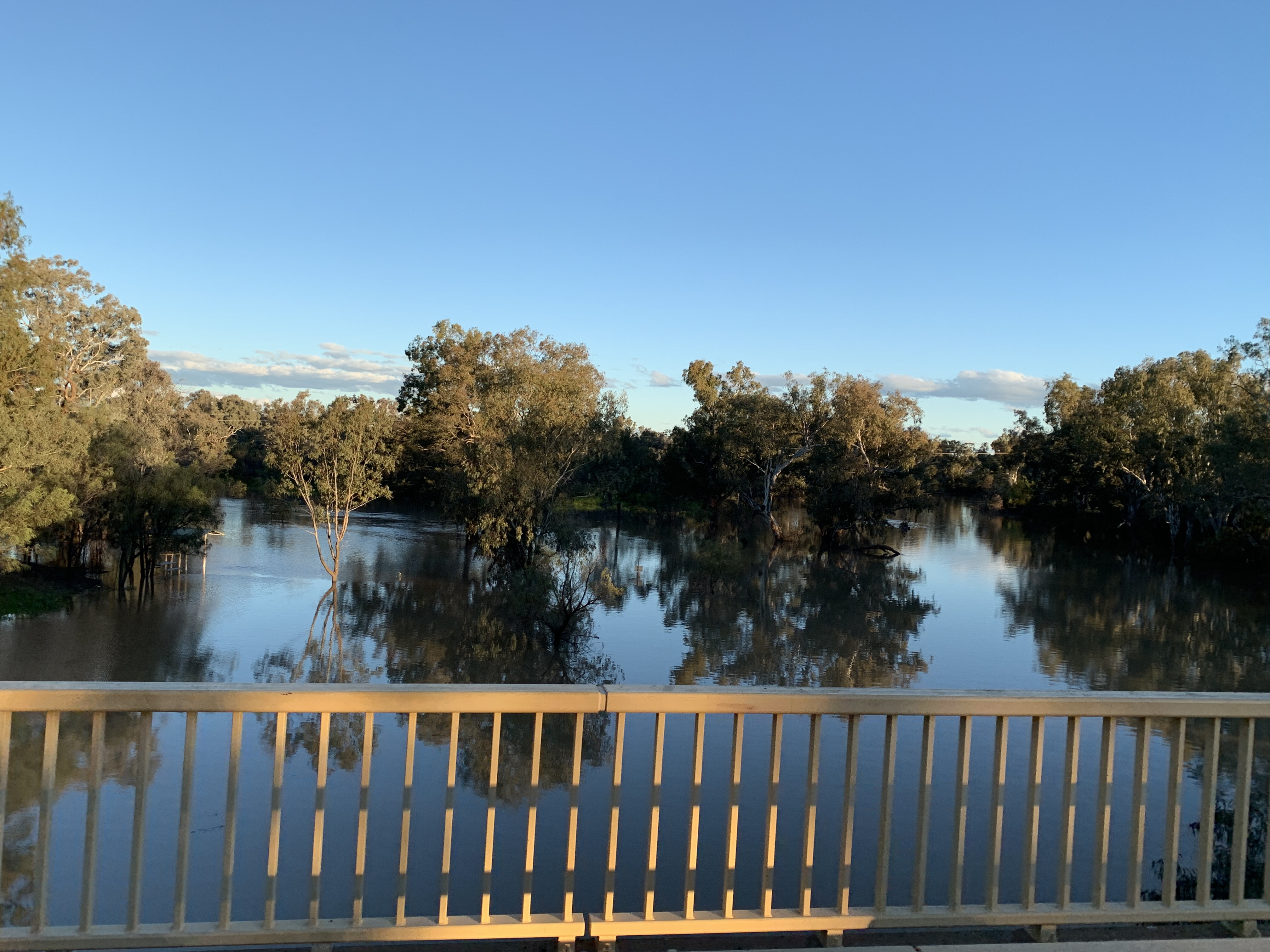
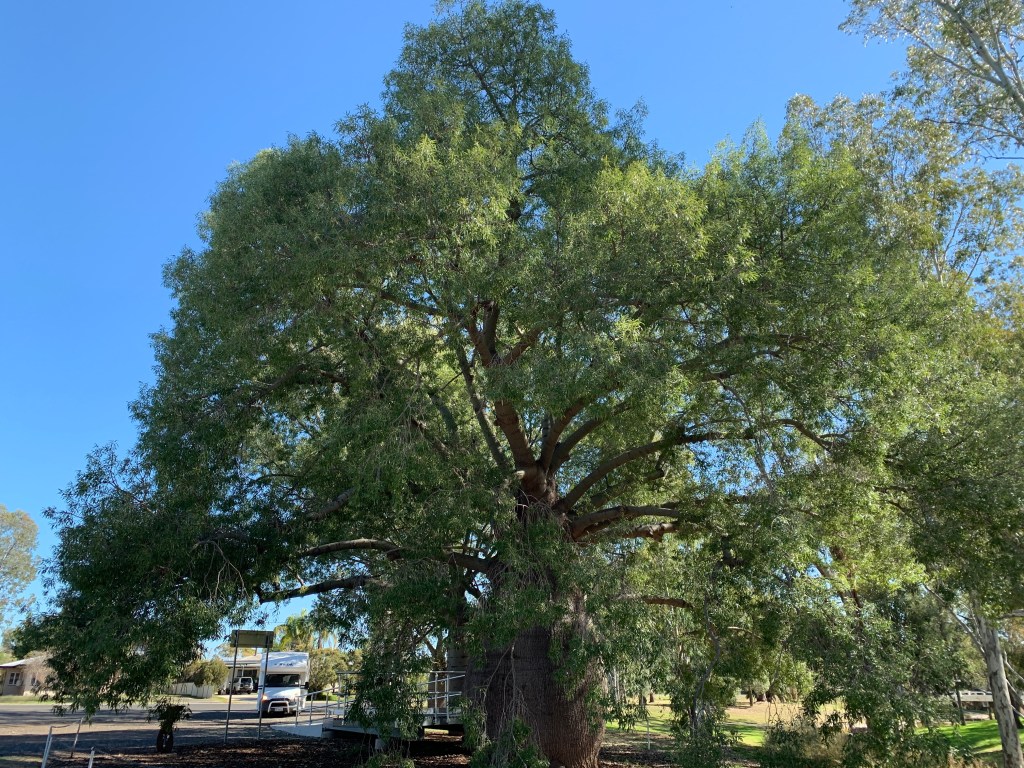
Our first stop in Roma was to check out Roma’s Big Bottle Tree. It is enormous. It has a height of 6m and a crown of 20m and the trunk is 9.51m in diameter. Bottle trees are planted all around Roma. They are not to be confused with Boab trees, although both get called bottle trees. They are different species. Australia has 12 species of Bottle trees however there is only 1 Boab. The Boab is only found in the remote Kimberley region in the northern part of Western Australia. Boabs are one of the oldest living things in Australia and in the rest of the world. The bottle trees planted around Roma are Queensland Bottle Trees or Narrow-leafed Bottle Trees and as they age the trunk becomes fatter and ‘bottle’ shaped’. The trees are not hollow and the swelling is due to water being held in the fibrous truck. They are very long lived trees and can live naturally for over 200 years. Roma’s Big bottle Tree was transplanted from a local property in 1927 and is over 100 years old.

Our next stop was the Big Rig Visitors Centre. I had thought that Big Rig must have referred to trucks however we discovered that Roma is at the heart of Queensland’s oils and gas industry. Big Rig refers to the the drilling rigs they use to drill for the oil and gas. Well who knew that!

The centre has a guided tour each day at 2pm of their outdoor display called ‘The Oil Patch” so we thought that would be good to do later. We used the time in the meantime to go and get some fuel, groceries, wine and we stopped beside the Big Bottle Tree to have some lunch. There is a lovely park that runs along the Bungil Creek so it was a nice spot for lunch.

Back at The Big Rig Centre we arrived in time for the 2pm tour. The outdoor displays are very good and begin with an acknowledgement of the Marandanji people, the traditional custodians of the land around Roma.

Oil and gas were discovered in the 1920’s when drillers were looking for water for the town. They didn’t find water but they did find coal seam oil and gas. Our guide explained the process used for drilling for oil and gas and showed us the equipment that has been used over time. They do have a very good display of mining equipment. The centre is in the process of having a huge metal construction built. It is being built to resemble a drilling rig. It will have stairs and a lift to access the platform at the top and there is going to be a bridge going out over the Bungil Creek. It looks like it will be a fantastic addition to the museum. Mining makes a large contribution to the economy in Roma and many businesses support the mining industry.

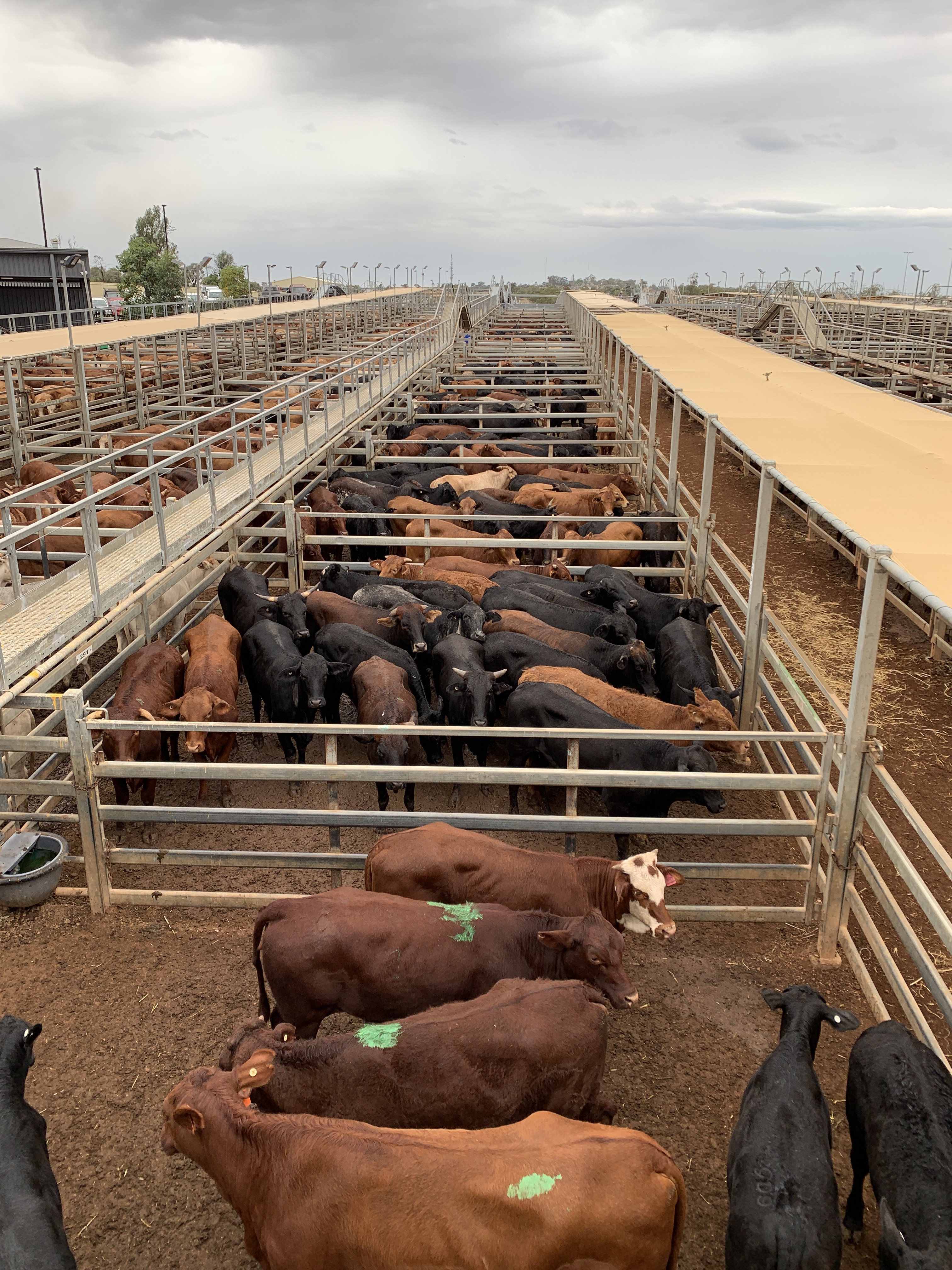
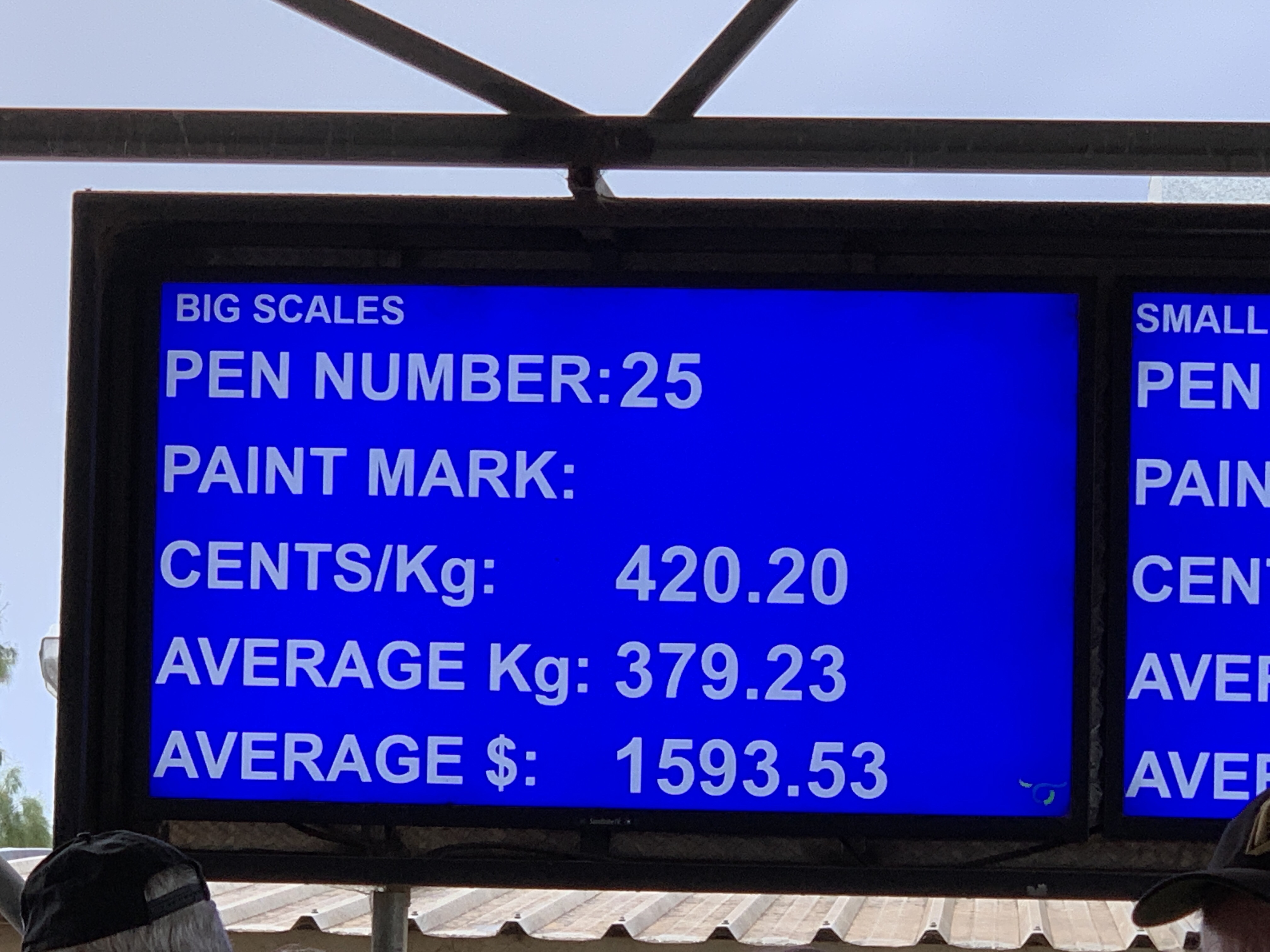
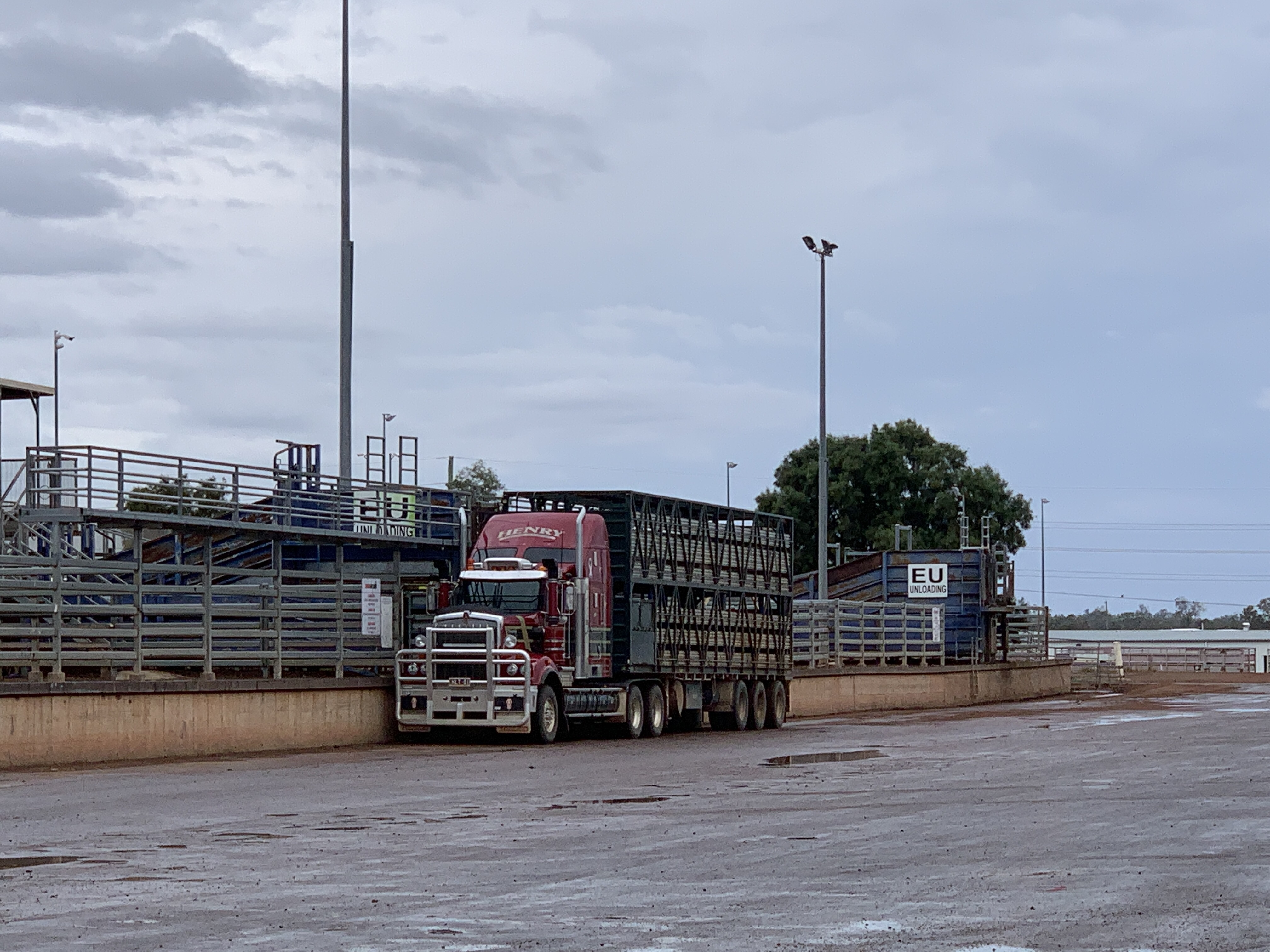
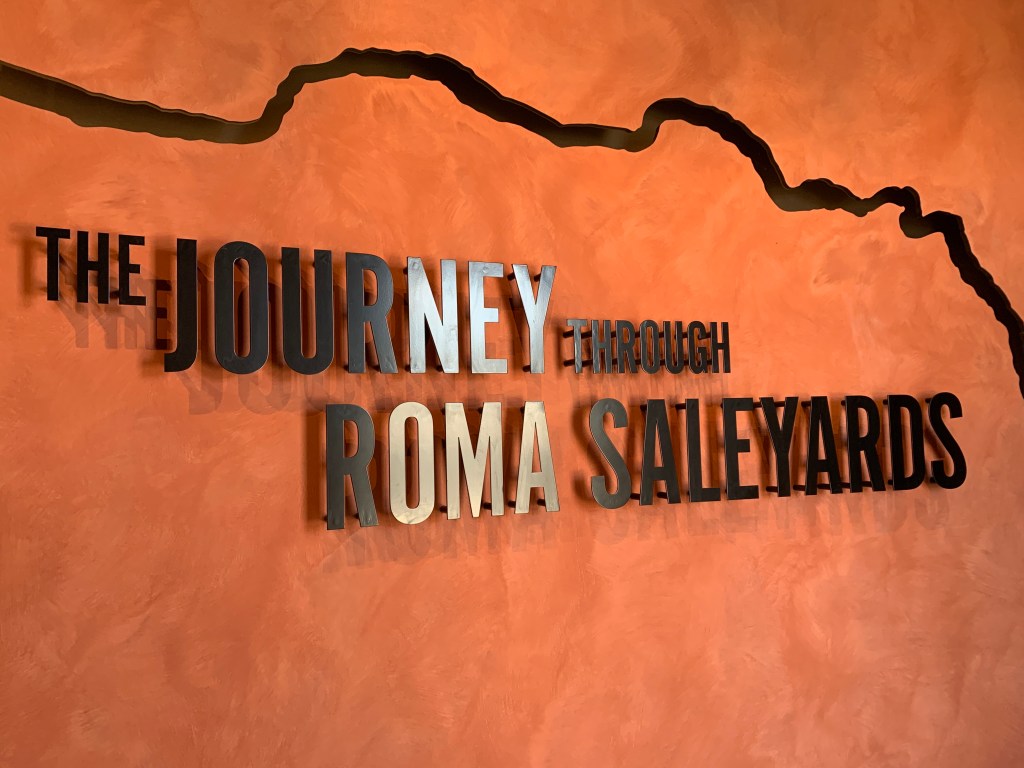
After the informative tour we drove out of town to the Roma Saleyards to visit their Interpretive Centre. This fabulous centre houses a world class interactive display of the development of cattle production in Australia and it is free for visitors. The Interpretive Centre is part of new additions to the Saleyards that include the Interpretive Centre, Public Toilets, a Cafe, offices and the new Bull Sale Arena. There is a very large carpark alongside with especially marked spaces for caravans, motorhomes and vehicles with trailers. We spent a couple of hours at the centre and decided we would go back the next morning to do the guided Saleyard Tour. The tours run every Tuesday and Thursday (on cattle sale days) at 8.30am. I recommend a visit to the Interpretive Centre to any visitors to Roma.

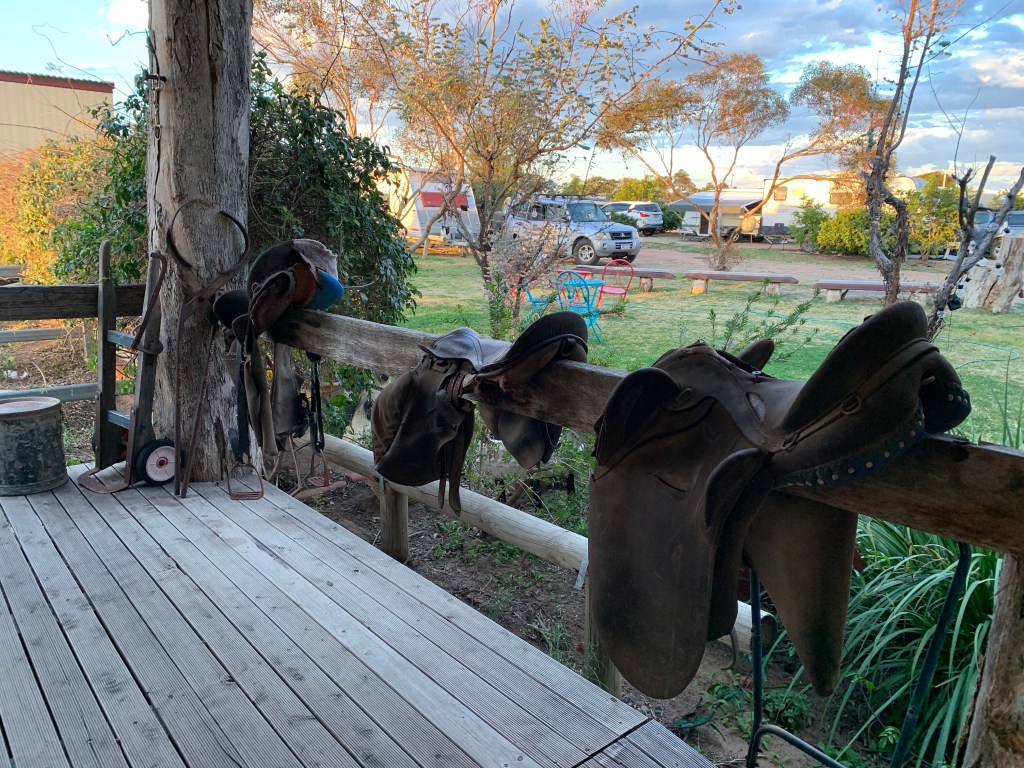
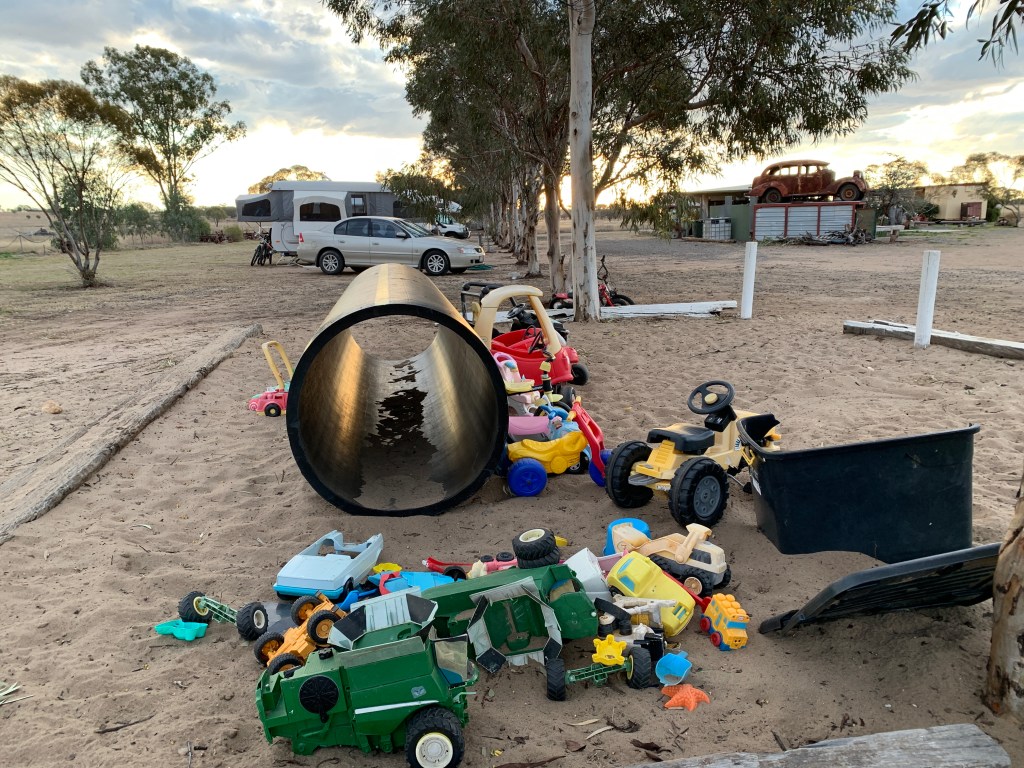
We camped the night at a farmstay we found on WikiCamps called Ups & Downs Farmstay. This is a small caravan park about 6km out of town on a 200 acre working farm. They’ve turned their front paddock into a small caravan park with 10 powered sites and 14 unpowered sites. They also have a donga with three rooms and a shared bathroom. There is a rustic camp kitchen and another donga set up near the camp kitchen with 3 unisex bathrooms and a laundry. The place was almost full when we arrived and were greeted by the resident caretaker. It cost $20 for an unpowered site but each site has access to a water tap.

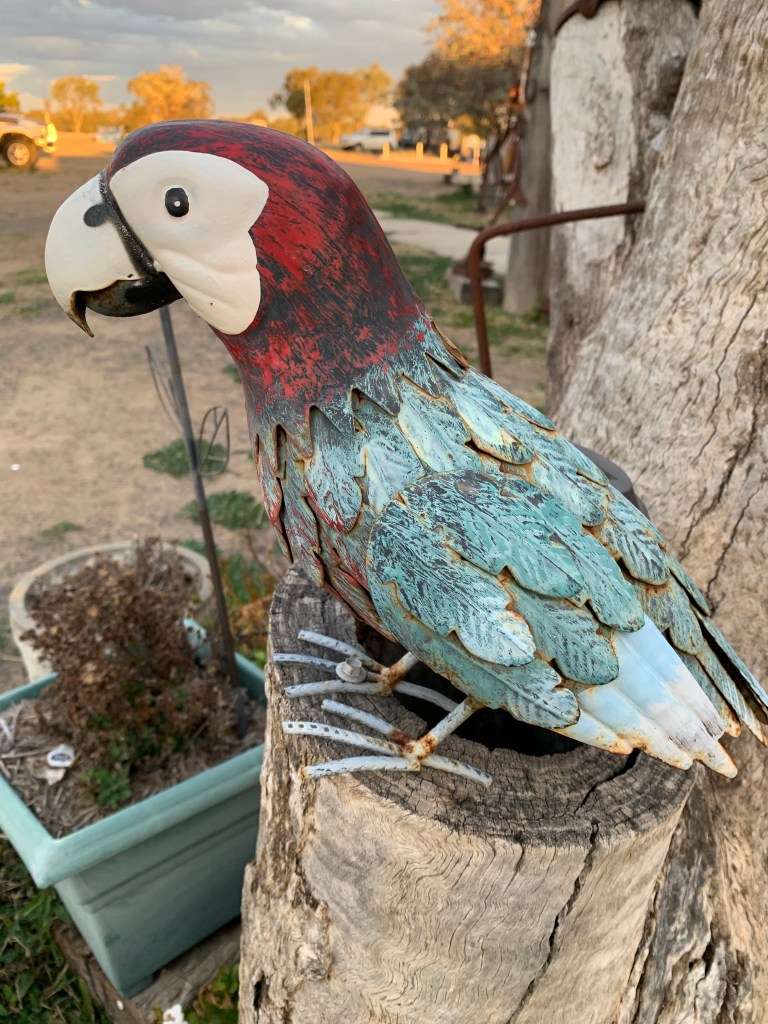
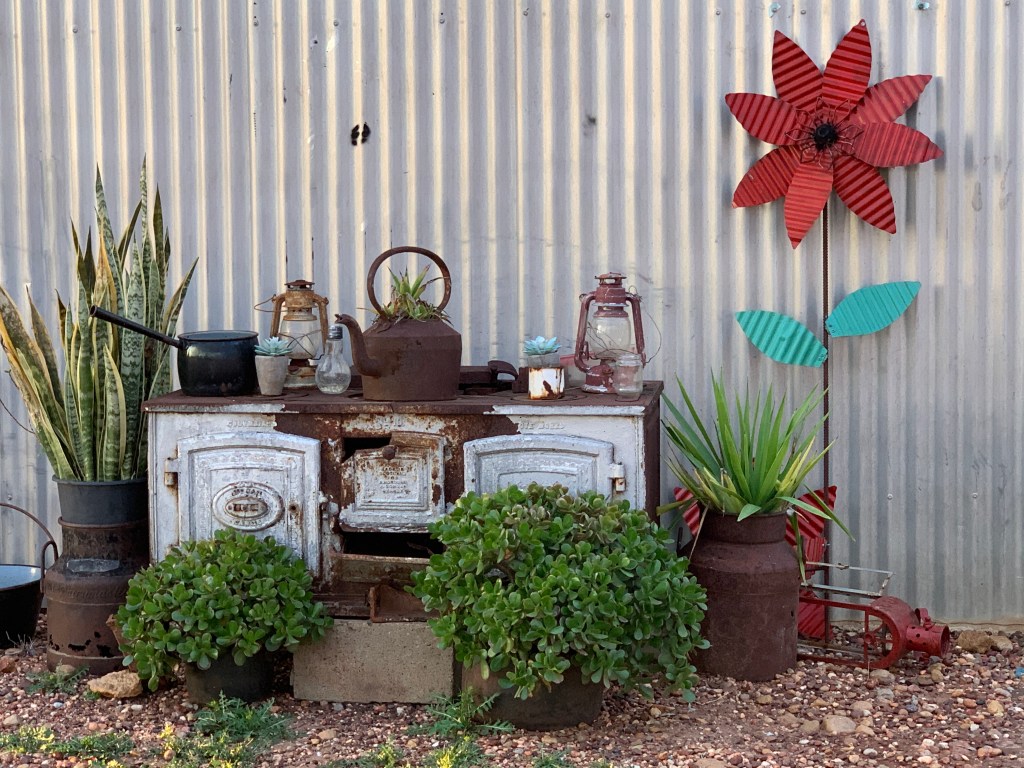
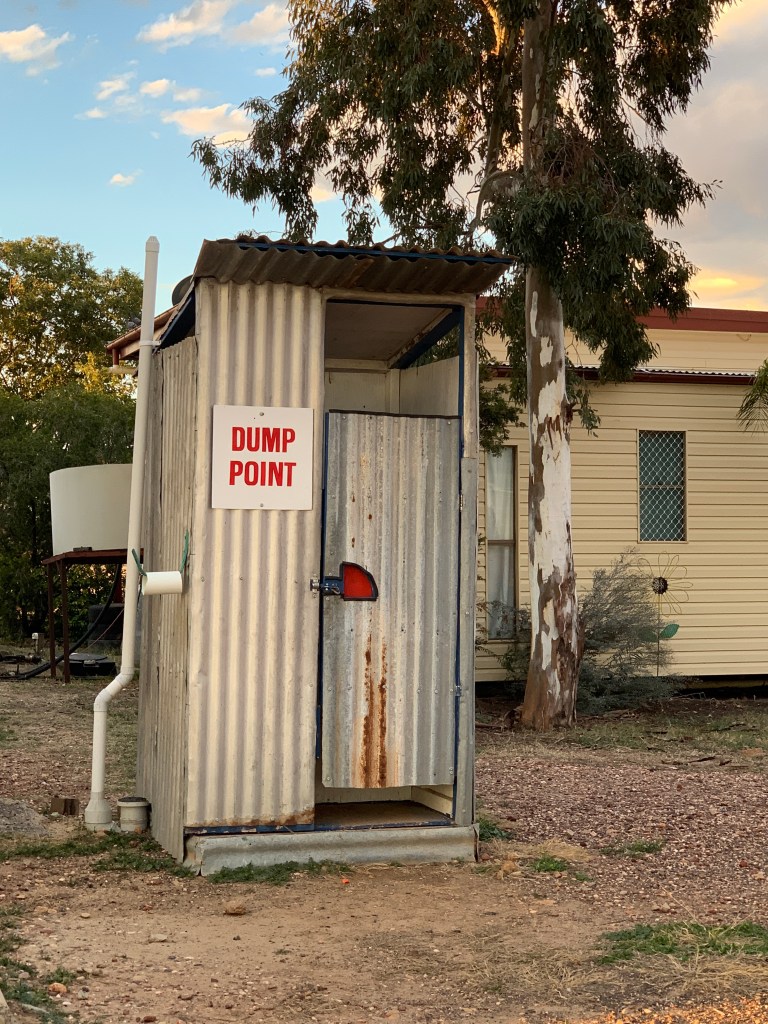
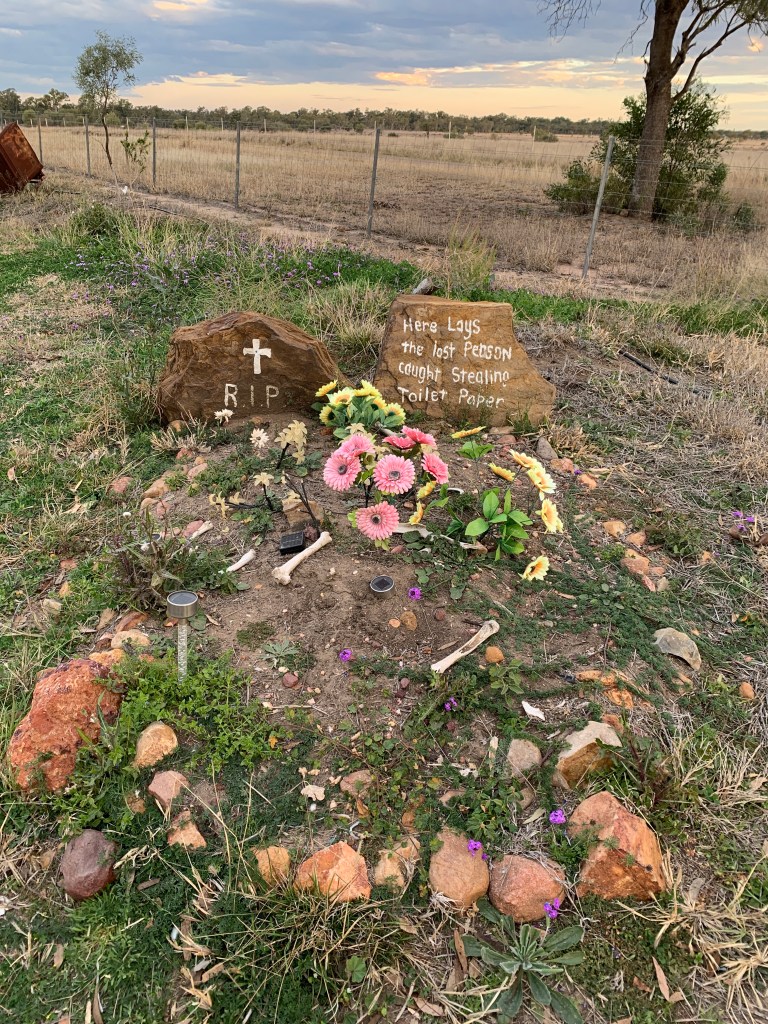
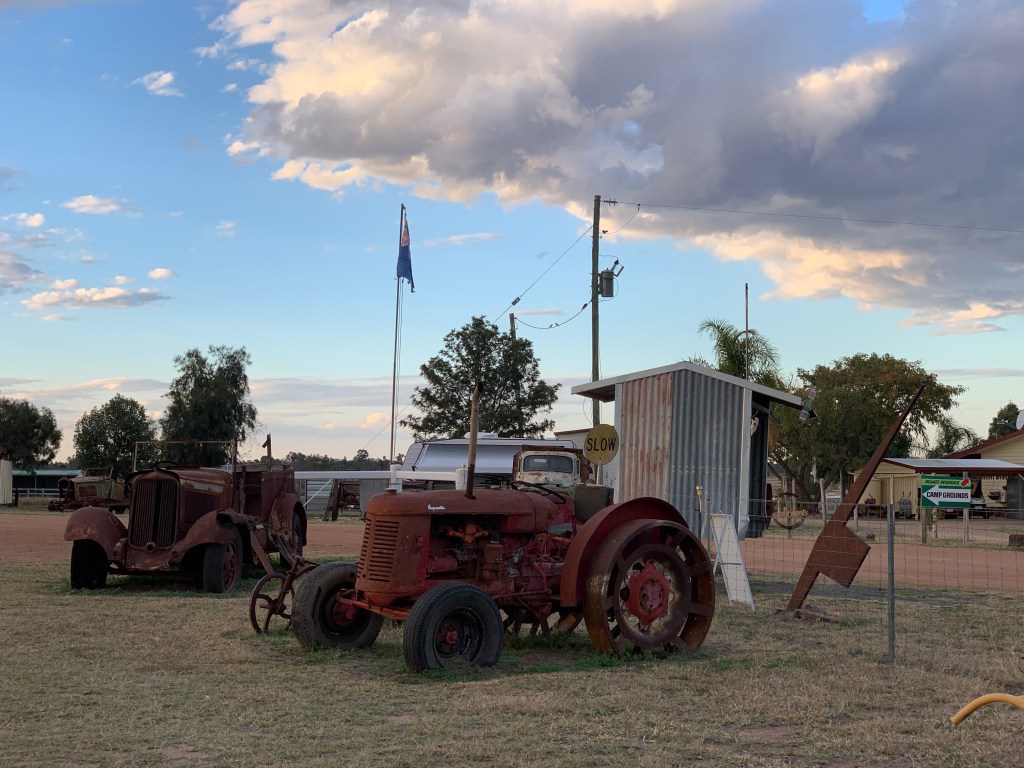
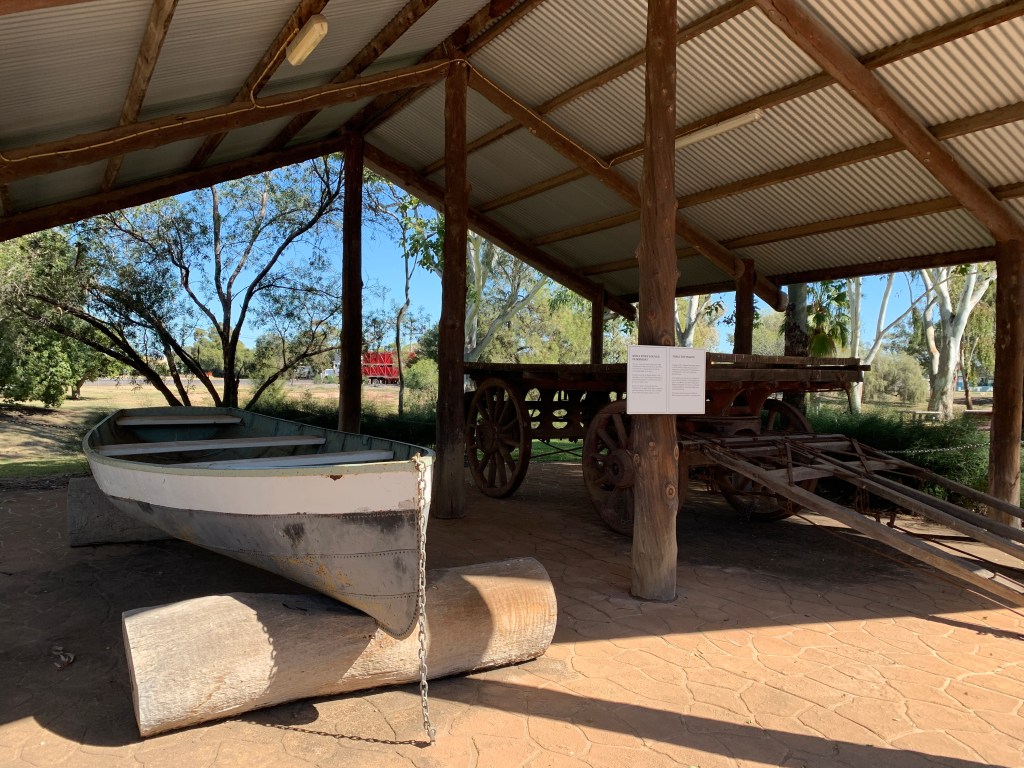
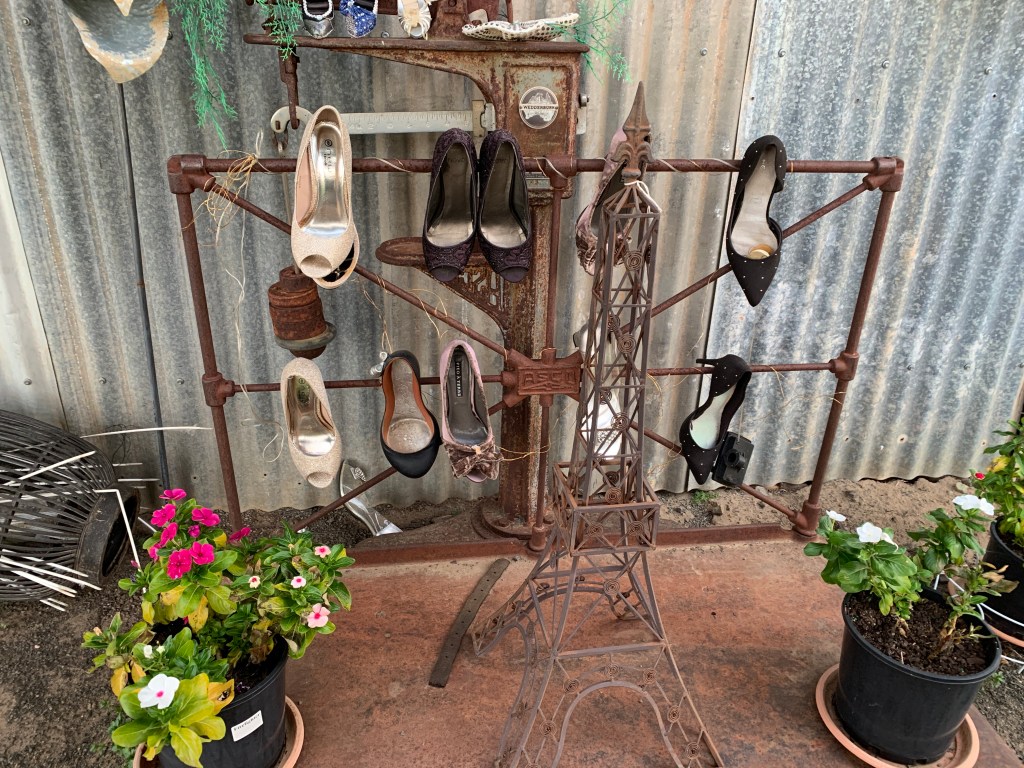
It was a quirky place and the whole farm has old machinery on display as well as lots of quirky displays of other odd stuff.

The caretaker lights the fire at 5pm each night so that people can gather and chat around the fire. We enjoyed a couple of hours around the communal campfire meeting the other guests.

Last day at Carnarvon Gorge

We both got a lovely surprise in the morning. Tony called over with a small gift for us. It was a lovely card with a few sentences thanking us for our company and especially to the ‘master’ (Richard) for showing Tony how to light a campfire. How thoughtful. What a lovely young couple.

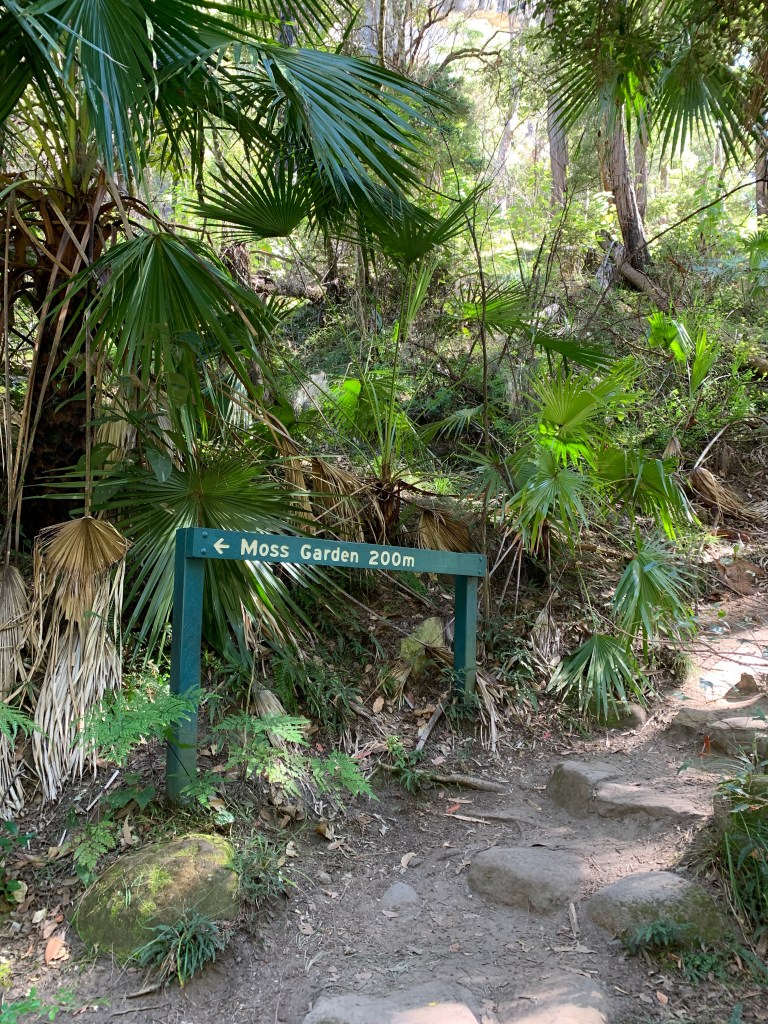
We packed up and left the lovely Takarakka Bush Retreat and headed into the NP again for a last walk in Carnarvon Gorge. This time we wanted to make it to Moss Garden.

It was very cool and overcast when we set off on the walk but by the time we returned a few hours later the sun had come out and it was quite hot.

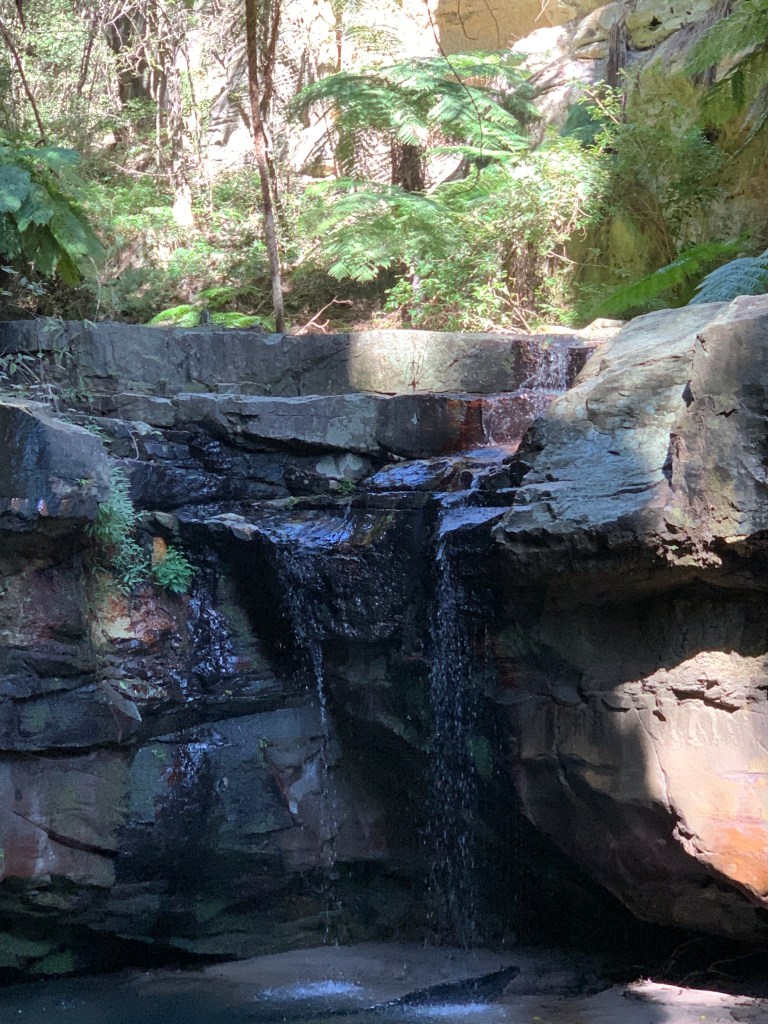
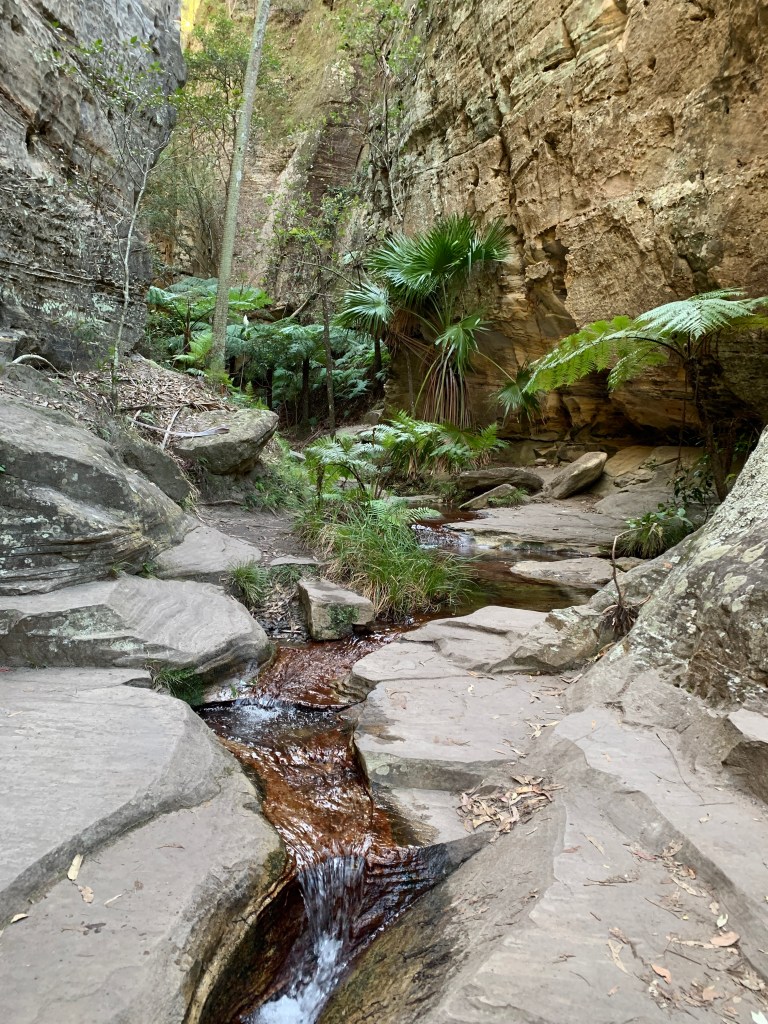
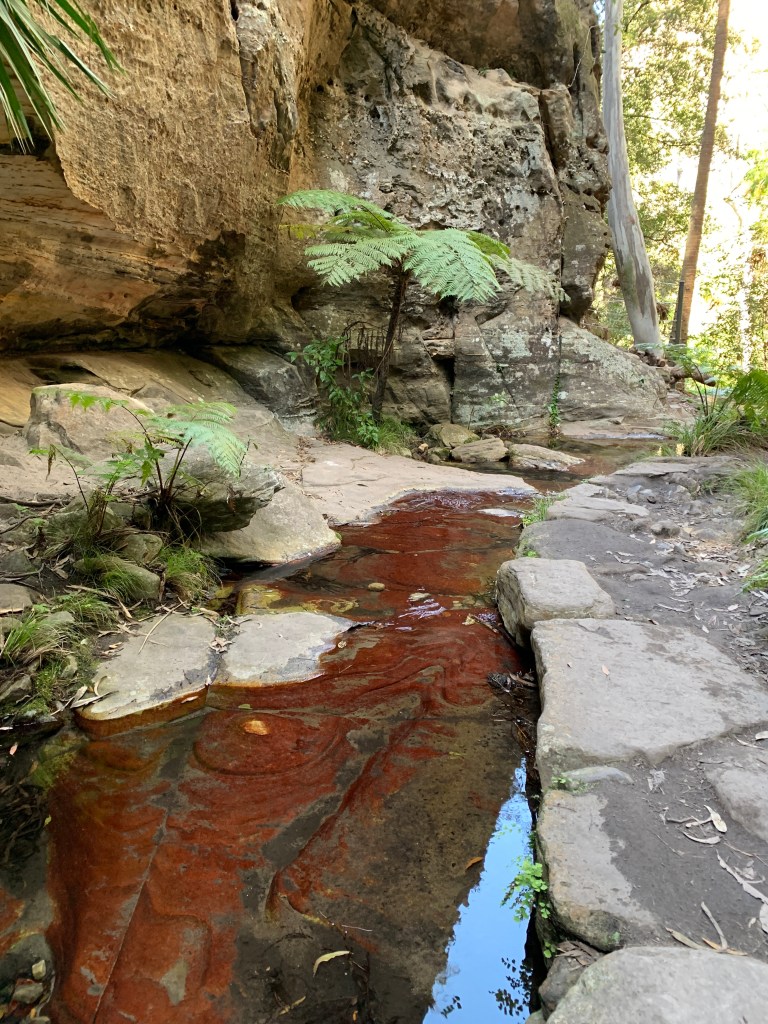
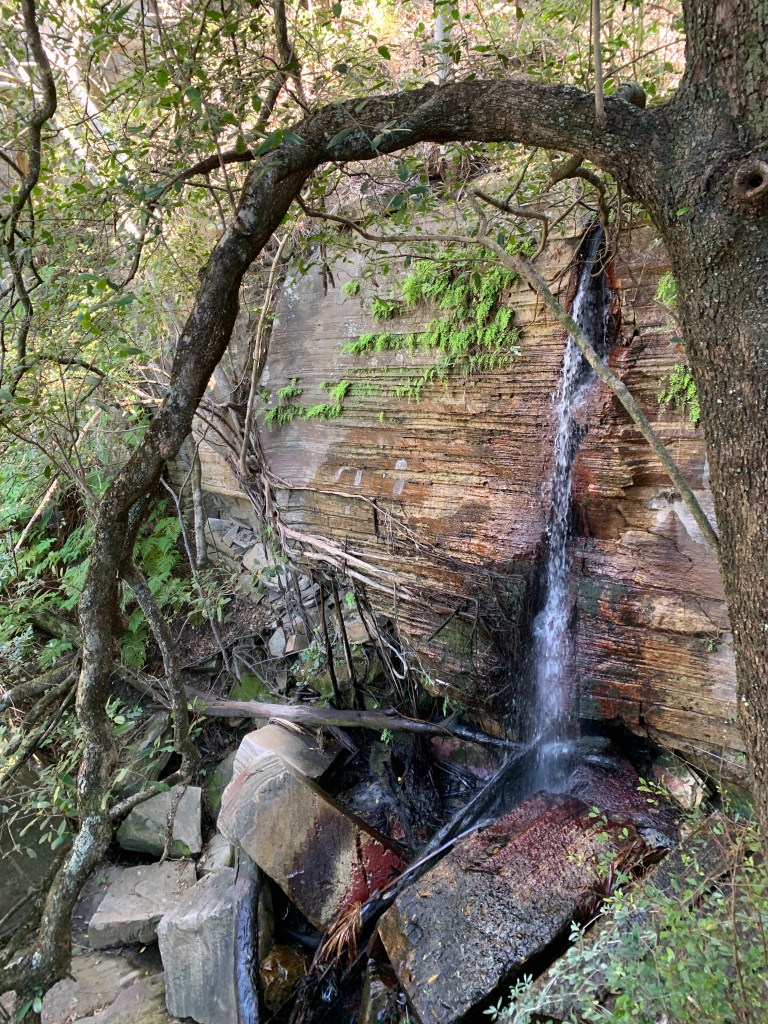
We made it to Moss Garden and it was worth the walk. It is just a beautiful spot. The permanent creek tumbles over a little waterfall and water constantly drips from the limestone above making it a perfect spot for moss and ferns to grow. It is a very peaceful spot. We met another lovely couple on the boardwalk in Moss Garden and quickly discovered they are fellow motorhomers.

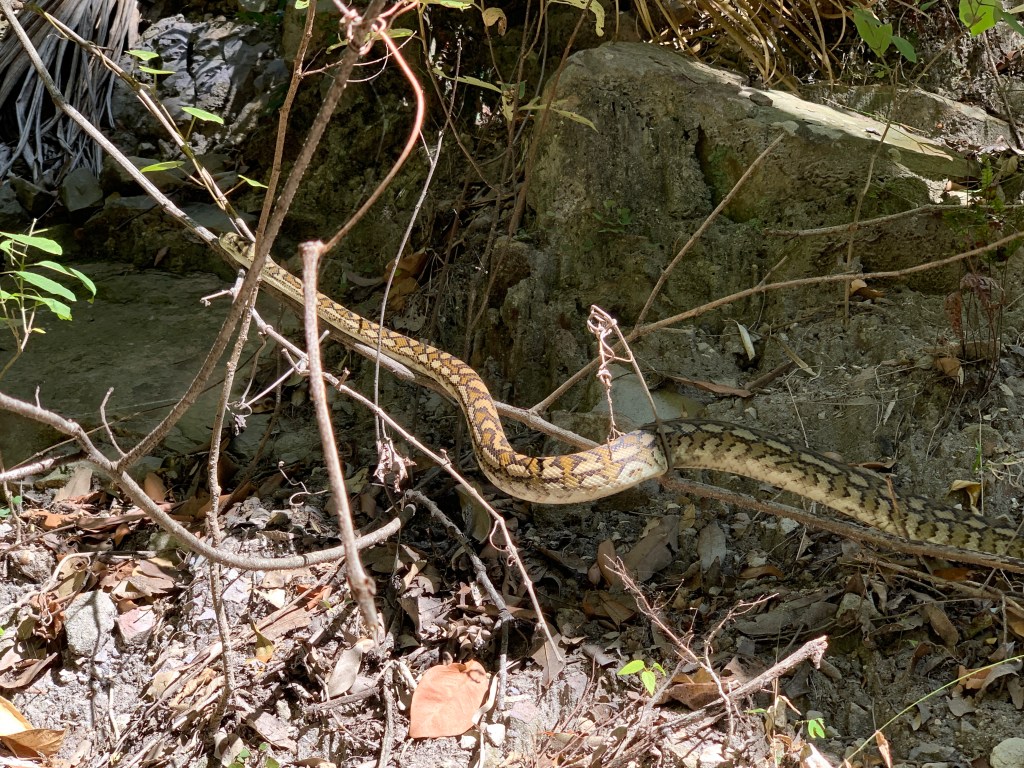
On the way back we came across a gorgeous python wriggling his way across the track and up the hillside. What a stunning creature.

Earlier we’d seen a couple of wallabies bounding away up the hillside.

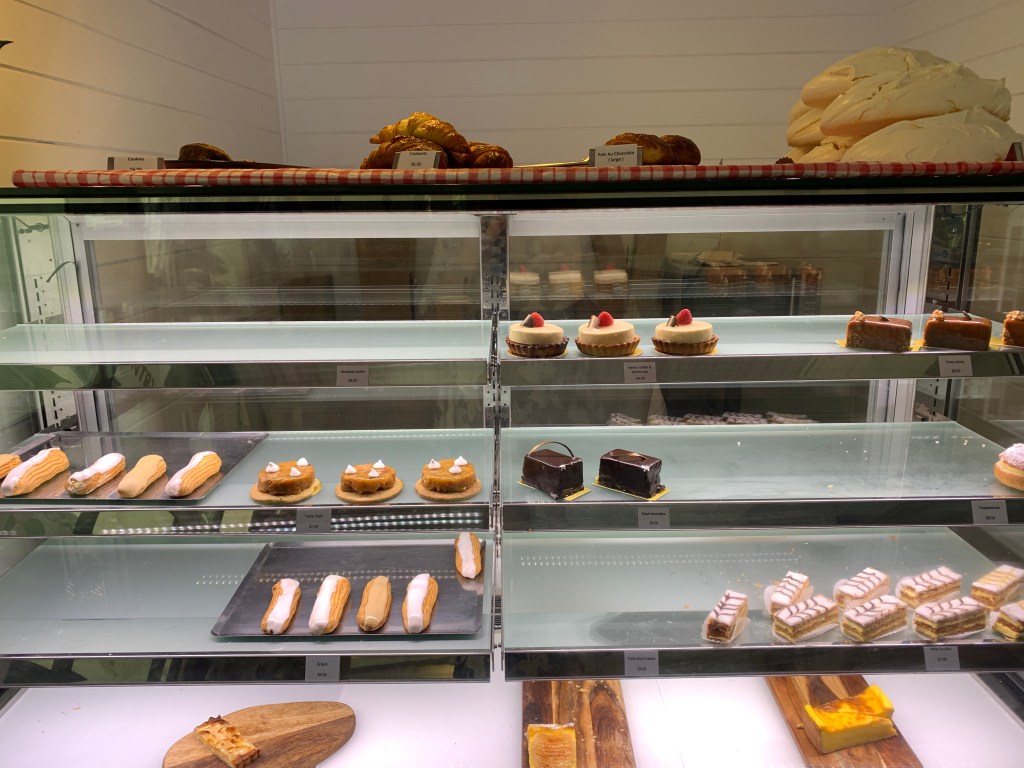
After a 12km walk we were hot and sweaty by the time we arrived back at the motorhome. Time for a cool shower and change before driving back to the Wilderness Lodge to have some lunch. We’d heard that they have a French chef and the food was good. We were not disappointed. The food was good, the beer was cold and the French pastries were scrumptious. I definitely recommend a stop at this spot if you are in the area. Even just for coffee and a pastry.

Check out those French pastries!

We set off after our delicious lunch and our first stop was to drive into Sandstone Park to check out the camp area. Sandstone Park is a large private campground set on top of a ridge with 360 degree views. There is a loop road along the top with well marked out sites on either side. All the sites have amazing views. There is a dump point, rubbish bins and portaloos. John & Robyn that we’d met at Moss Garden were camped right on the end of the ridge with a fantastic view across to Moolyamber Gorge. We stopped for a chat and swapped phone details. We were very happy to be shown though their very lovely Latitude 27 motorhome.

We left the Carnarvon area and headed south again. The road is a wide tar road and there was quite a bit of traffic and a lot of road trains. The road surface is a bit of a roller coaster probably due to those huge heavy vehicles using it all the time. A little while later I received a message from Robyn including a picture she’d taken of our motorhome as we left Sandstone. How cool!

We arrived in the tiny town of Injune, We found the dump point near a huge truck stop. There was a huge paved area where road trains can park and manoeuvre to change trailers. I find that fascinating to watch.

We found a camp at the Injune Rodeo Grounds. This is a free camp and has a large area for campers to park and also has access to potable water. Injune also has a caravan park and low cost camping is available at the Showgrounds.

Carnarvon Gorge – Day 3 A ‘down’ day

Every now and then you need to have a ‘down’ day. One of those days where you just do jobs around the motorhome, clean stuff, read a book and generally have a relaxing day.

That was our day at the lovely Takarakka Bush Retreat. I spent most of the morning washing everything. It was time to change the sheets and towels etc. Richard just doesn’t ‘get’ why I love my little washing machine so much!

Once everything I could wash had been washed it was time for some maintenance. A cover strip was coming off the laminate in the bathroom so that had to be glued. The screen door was becoming hard to keep closed so that needed attending to. The electric step is playing up so Rich got underneath and sprayed all the fittings with Silicon spray to see if that helped. The floors got washed.

How good are MukMats? Have you got one? We have three. We bought a large one to put on the ground at our doorway and I am amazed how much sand, dirt and leaves are trapped on the mat and no longer make their way inside. I was forever sweeping the floor inside but no longer have to do it as often. We loved out big mat so much we bought two small ones to use as car mats in the cab of our motorhome. They make brilliant car mats and trap dirt, grass and leaves from our shoes BEFORE we move inside the motorhome and take those things with us. A quick shake of the mat and it’s all clean again.

‘Down’ day at Takarakka Bush Retreat

In the late afternoon we both went for a wander around the lovely park. I did the walk along the creek but I didn’t see any platypus.

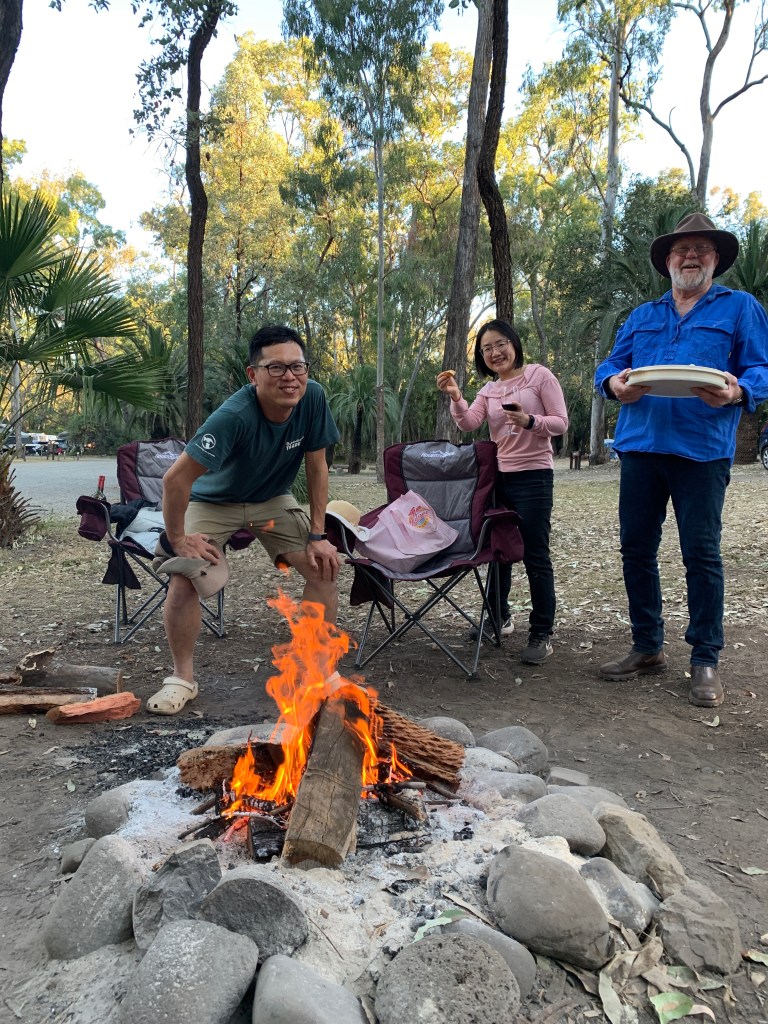
While we were sitting outside reading our books one of our neighbours that we’d sat next to at the bar the other night, Tony, came over to see if we had any matches. He had never made a camp fire before and wanted to give it a try. Richard asked if he wanted some help so off they went to organise a camp fire. At Takarakka you can have a camp fire but only in their designated fire pits. Tony chose the fire pit that was closest to the bar area and around 5pm we took our chairs and some drinks and nibbles across and set up around the fire pit.

Richard showed Tony how to stack the small twigs and then the bigger twigs so that the fire would draw. He used a small piece of fire lighter and lit them up with our gas lighter. Tony was so pleased to have ‘made a fire’. Tony and Clare set up their tripod so it was all recorded on video. The four of us then sat around the lovely little fire for the next few hours and shared stories. We heard more about life in Taiwan and what it was like to move to Australia having only school English. Clare told very funny stories of going to language school and how she got her first job in Australia. They have both traveled a lot and we loved hearing about Tony and Clare’s world travels.

We were later joined by another young couple Al and Kat who were camping in their tent not far away. We both love meeting people on our travels and hearing their stories. Kat is originally from Austria and came to Australia seeking adventure. When I asked them how they had met they replied ‘Tinder’. That is such a common way that young people meet these days. What a lovely young couple. They are both software engineers and live in Brisbane.
What a lovely relaxing day with a perfect finish sitting around a campfire sharing stories.


Takarakka Bush Retreat

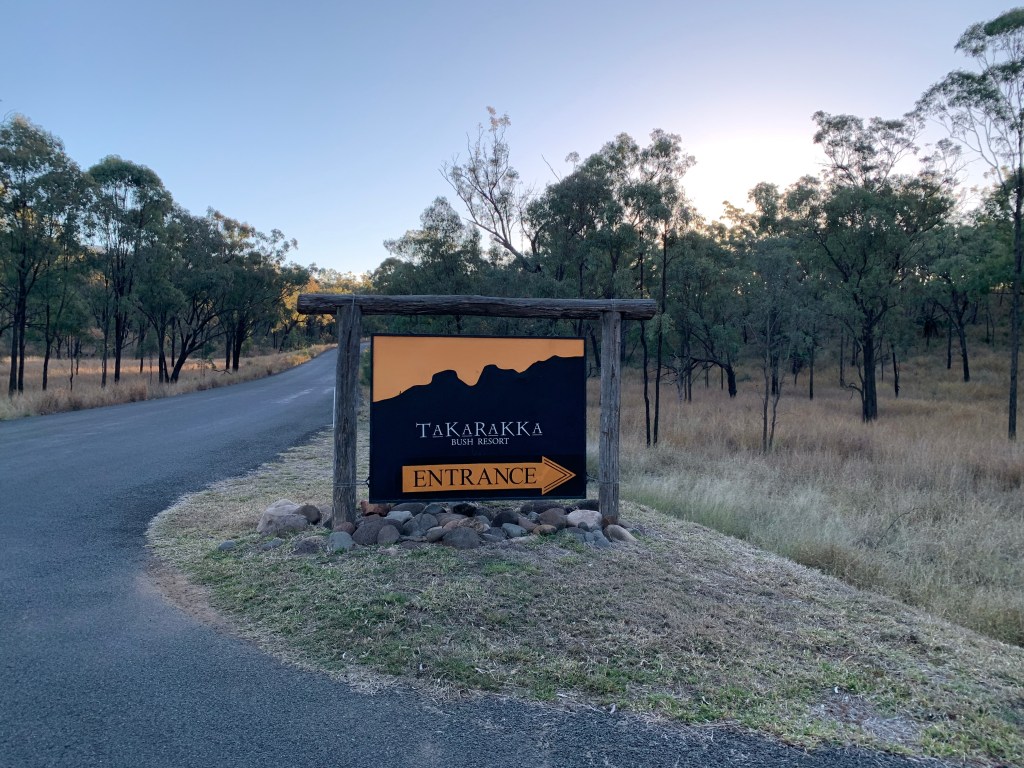
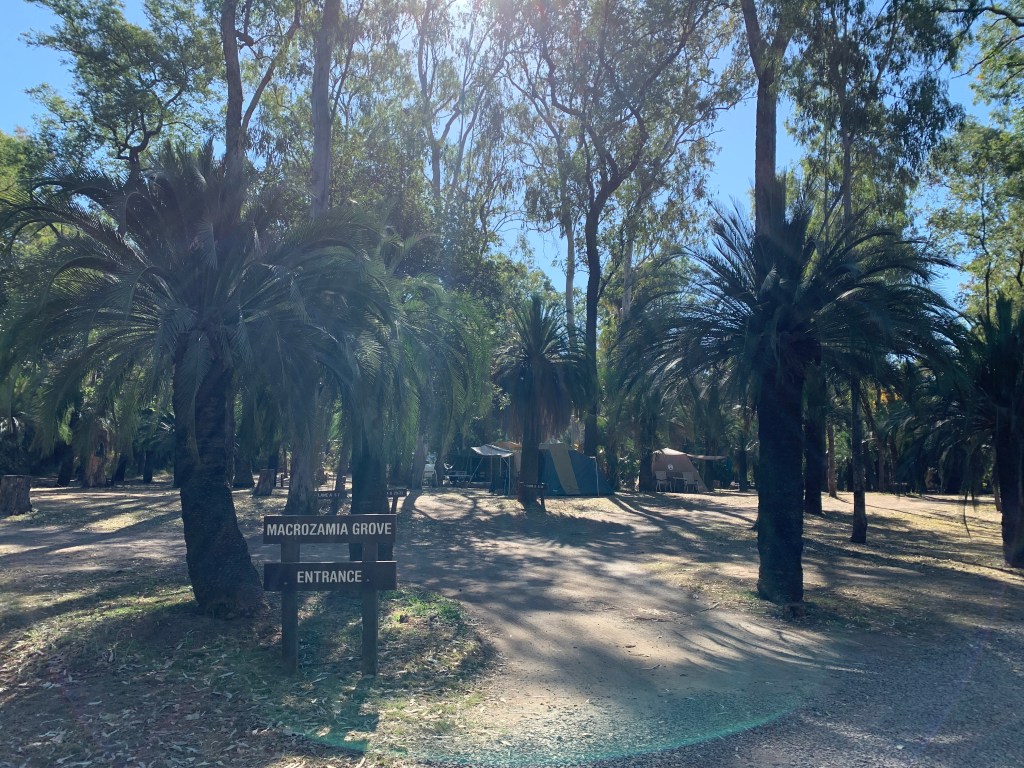
Takarakka Bush Retreat is situated near the boundary of Carnarvon Gorge National Park. The grounds are natural bush with a large loop of the Carnarvon Creek as the eastern boundary of the park. There is an abundance of wildlife including birds and the very cute Pretty Faced Wallaby.
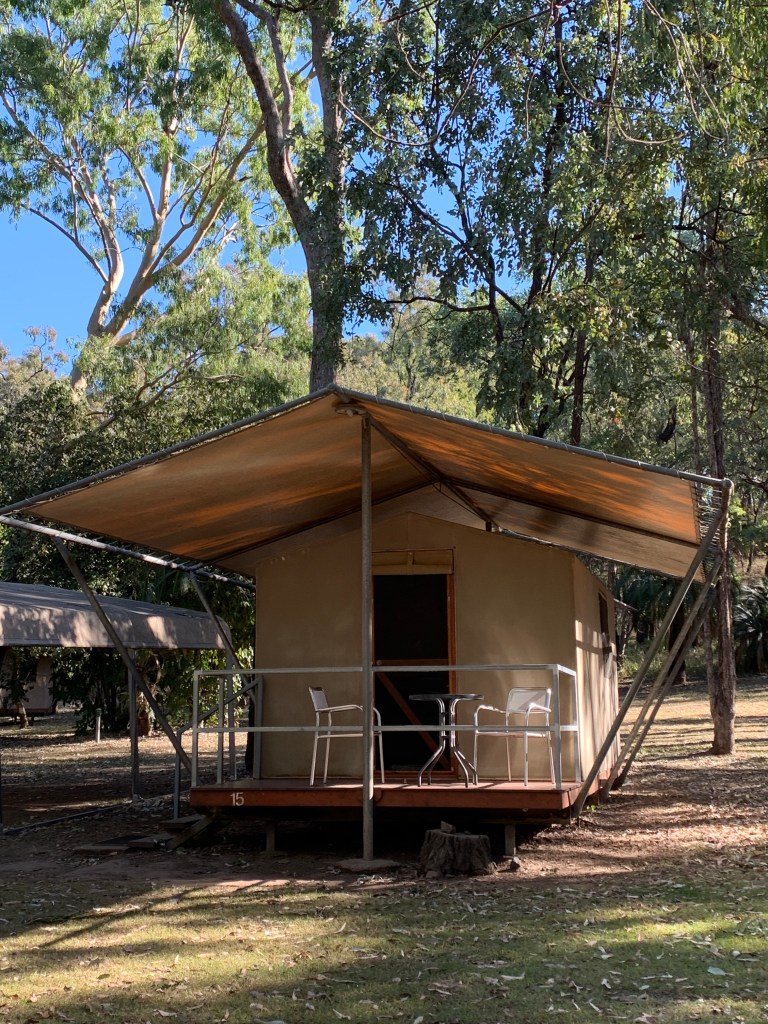
There is a variety of accomodation options including, studios, a country cottage, ensuite cabins, Taka Safari Tents (some with ensuite), and powered and unpowered campsites. The sites are very spacious and spread out thoughout the bush land. It doesn’t feel crowded.
There are modern amenities blocks with laundry facilities. Fully equipped camp kitchens are available. The Taka General Store has basic groceries and a range of souvenirs. WiFi is available on the deck outside the store.

Sometimes a spit roast dinner is available on the deck. You have to bring your own plate, bowl and cutlery and a delicious 2 course dinner can be had for $20 per person.

Happy hour is held in the area near the deck where the Taka Bar is set up. A daily video presentation happens here as well at 5pm. Learn about the park and Carnarvon Gorge so you can plan your walks.

Camp fires are allowed but only in the purpose built fire pits. Wood is supplied.

A couple of walks are available in the park. One goes up to a lookout and the other follows the creek where you might spy a platypus if you are lucky.

Takarakka does have a dump point however, due to their remote location, they would prefer if people use the dump points at the towns of Rolleston or Injune before they make their way out to Takarakka. This puts less pressure on their septic system.

Although, at $55 per night for a powered site, it is not the cheapest of places, it is a beautiful park to stay in while visiting Carnarvon Gorge.

We thoroughly recommend Takarakka Bush Retreat.

Carnarvon Gorge – Day 2

We slept like logs again! Our bed in the motorhome is so comfortable.

After breakfast I packed some lunch and filled our water bottles. We were making good use of our Scenic backpacks that were a gift from Scenic when we did our European River Cruise. Thank you Scenic!

We unhooked all our connections but left everything set up for our return then we set off to Carnarvon Gorge again. It takes about 15 minutes to drive to the National Park Car Park then it’s a 300 metre walk to the Visitors Centre.

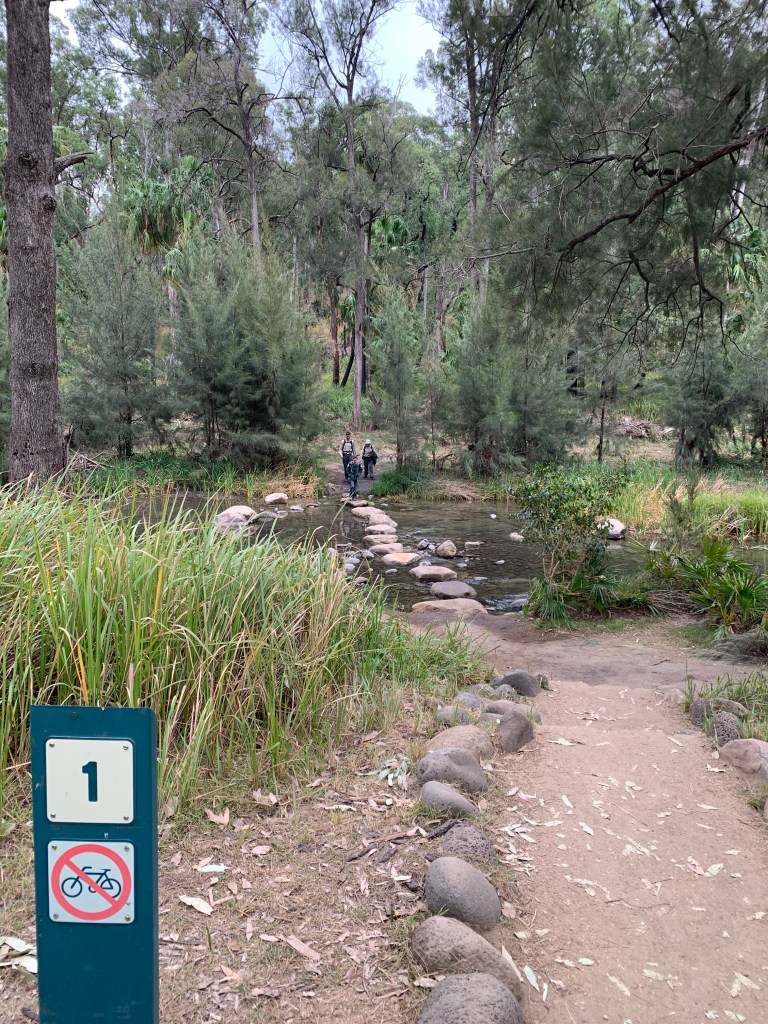
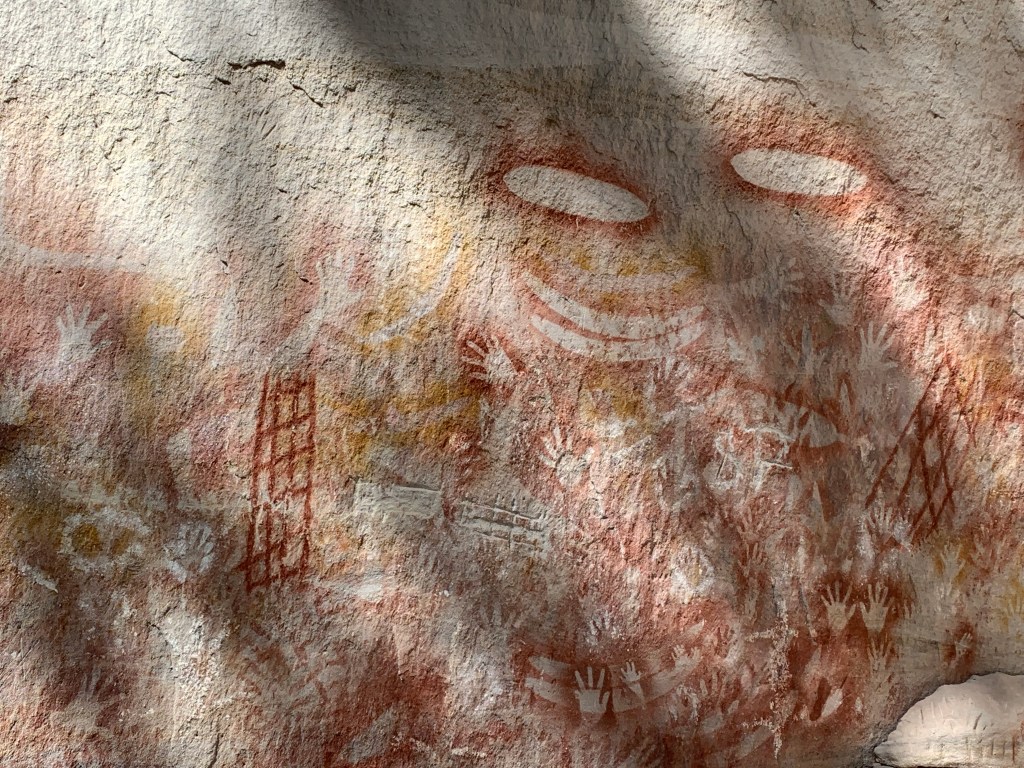
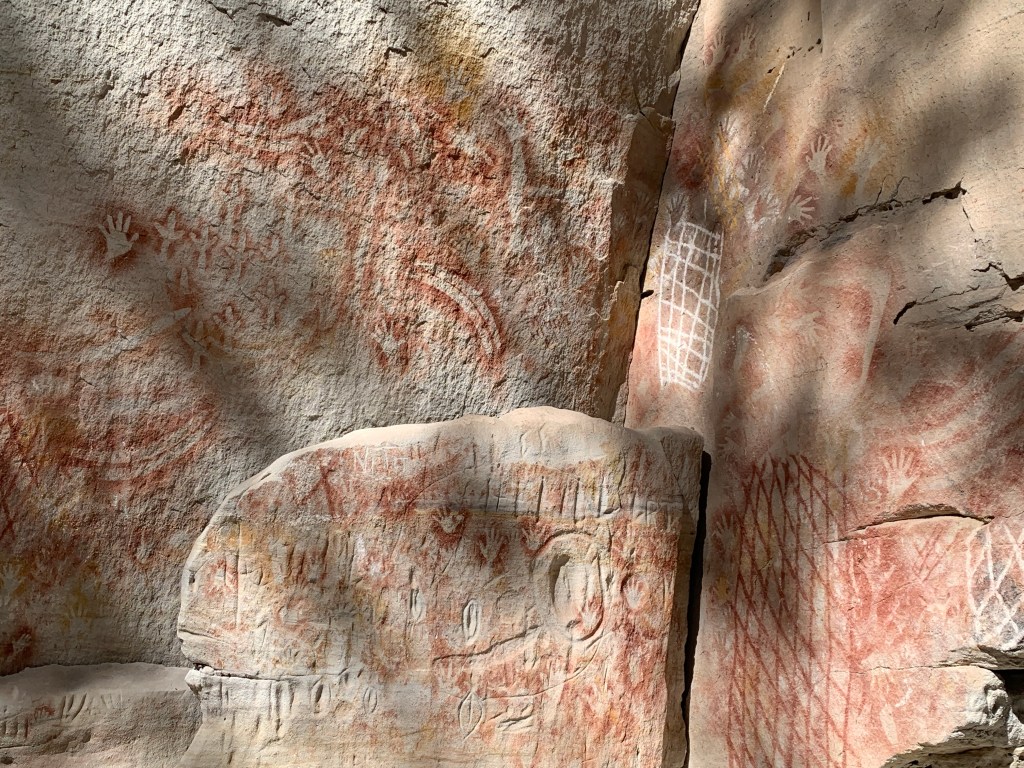
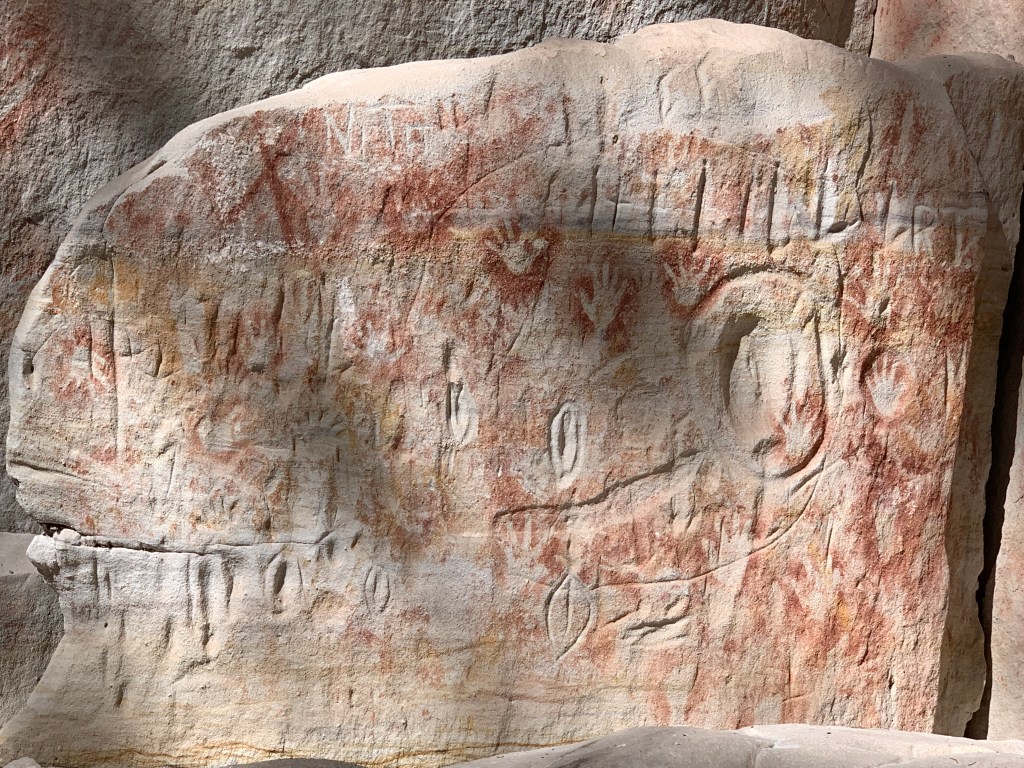
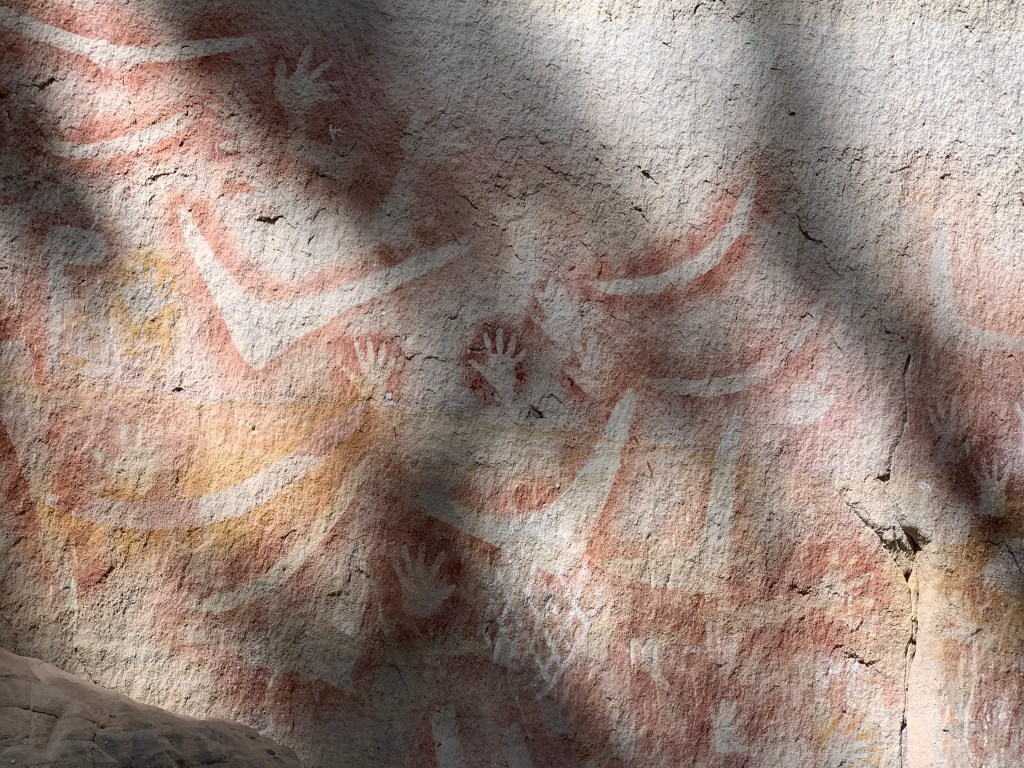
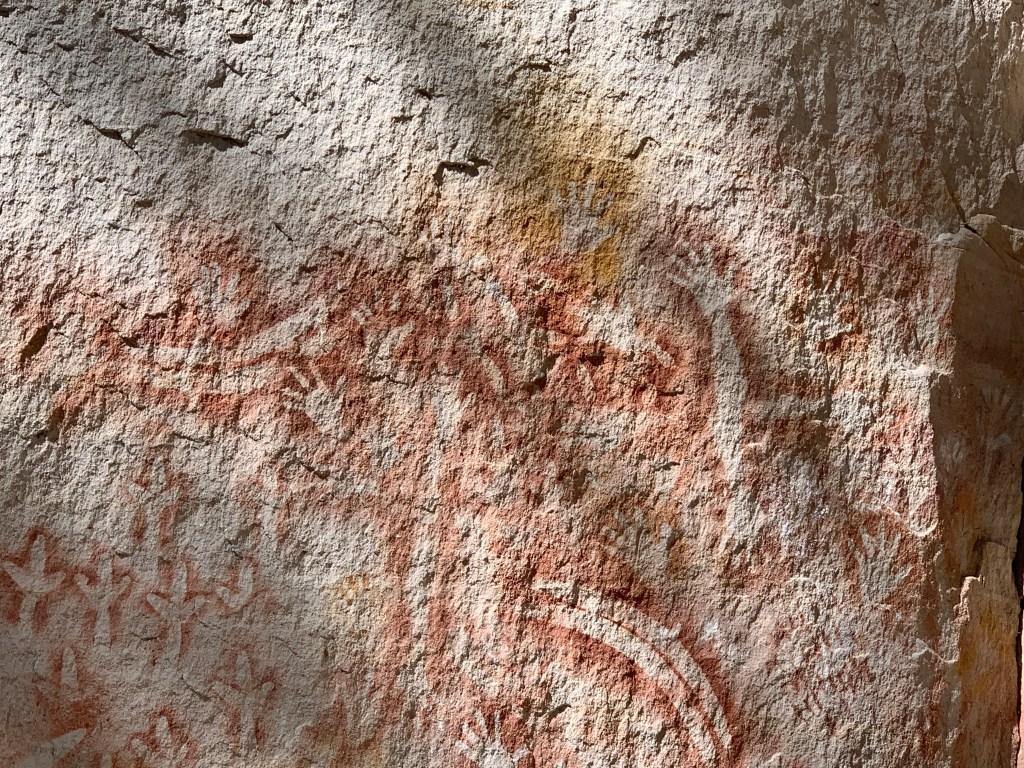
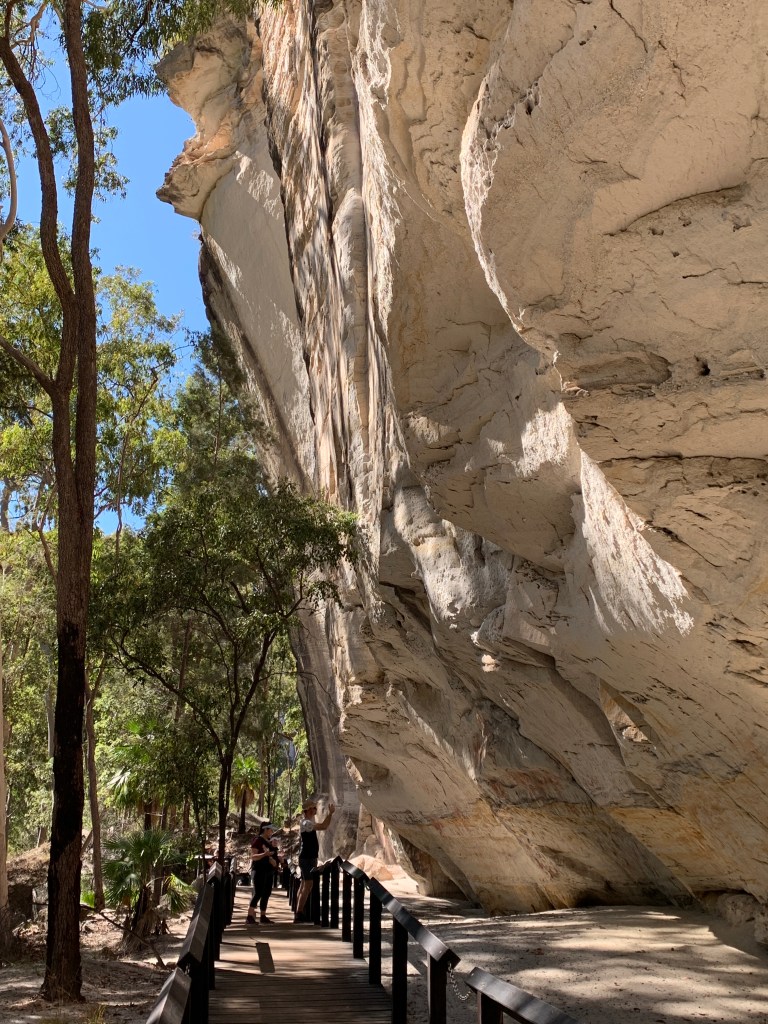
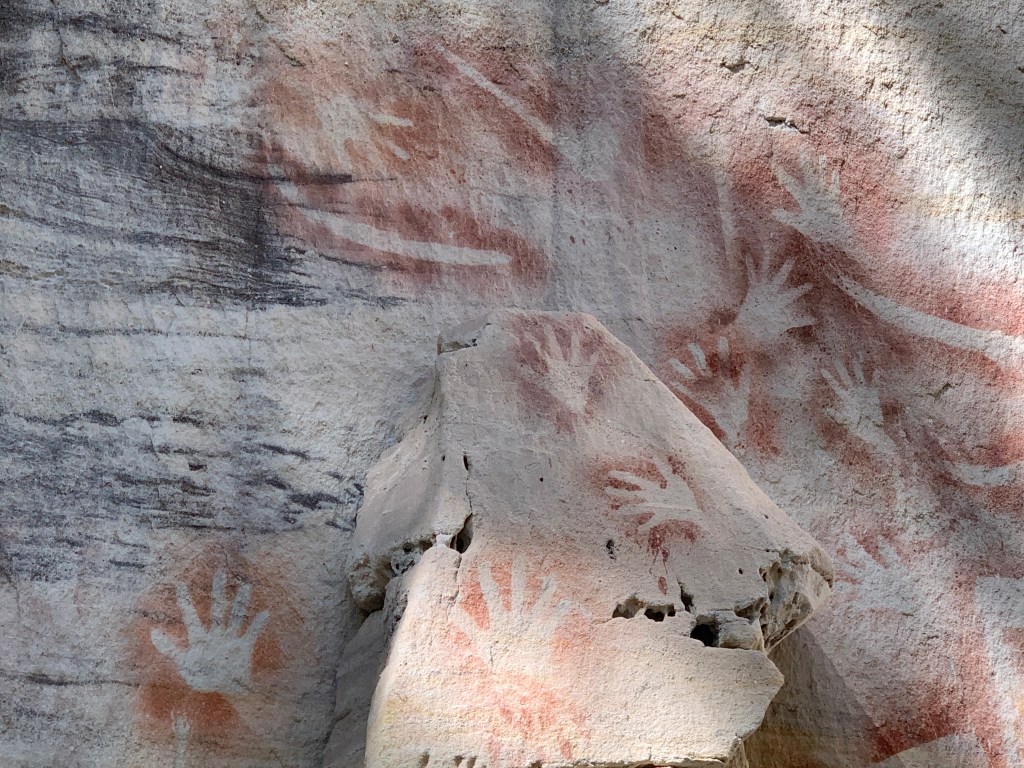
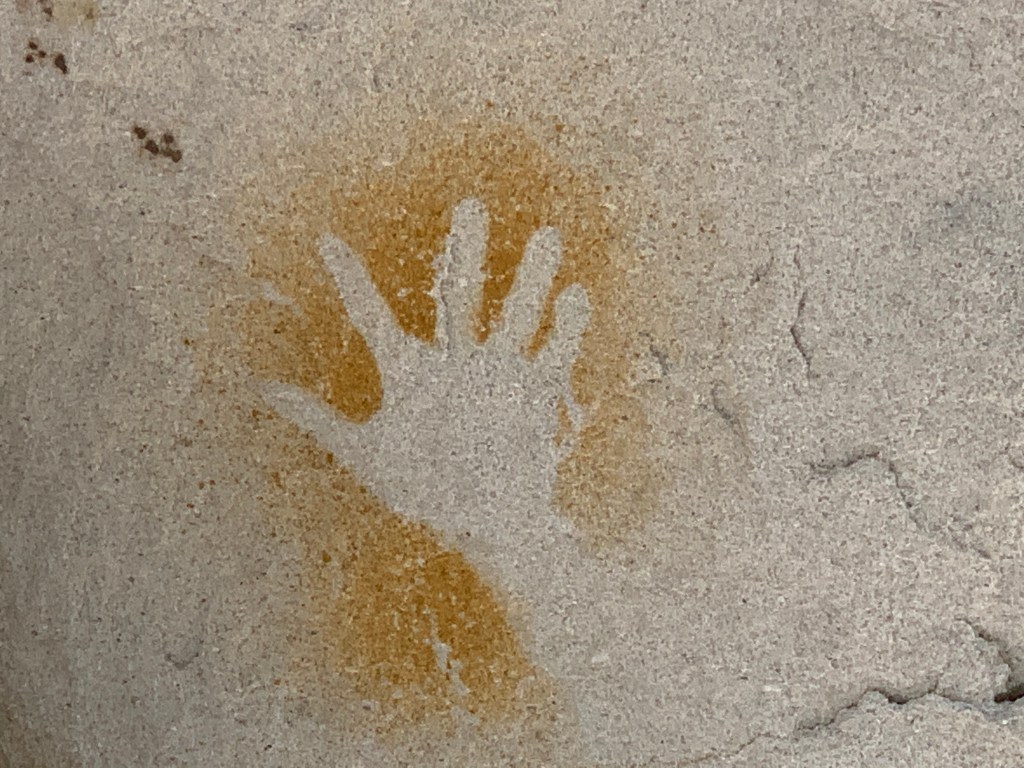
We did a 16km walk to The Art Gallery and Wards Canyon. We left the carpark at 9.30am and finally returned at 1.45pm. To get to Art Gallery you have to cross Carnarvon Creek 6 times, each time having to use the stepping stones to cross the fast flowing creek. It was worth the walk though. Art Gallery has over 2,000 engravings, ochre stencils and free-hand paintings along a 62m long overhang in the sandstone wall of the canyon. Art Gallery contains some of the best examples of stencil art in all of the country.

Art Gallery has been a spiritual place for thousands of years for the Bidjara and Karingbal people and all of the images have symbolic meaning and purpose. The free-hand paintings that look like fishing nets tell us that this is also a burial site and there is a sign before you approach asking that you treat the site with the same care and respect that you would when visiting your own family’s burial ground. The area does have a sense of mystery and, I guess, spirituality, about it. I noticed that people spoke in quiet voices whilst there.

On the way back to the main track we came across a conveniently placed seat and stopped for a bite to eat and a well-earned rest. It was very peaceful sitting and just taking in the beauty of this special place.

We decided that Art Gallery was as far into the gorge as we were going to go. We’d leave the rest for the experienced bushwalkers.

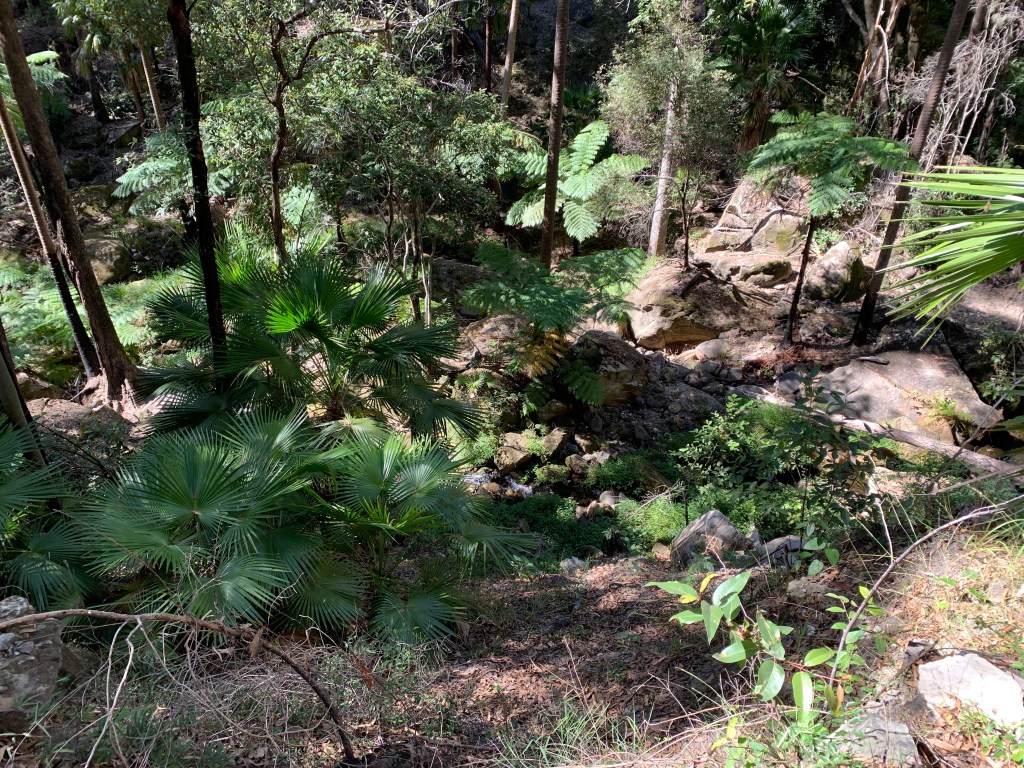
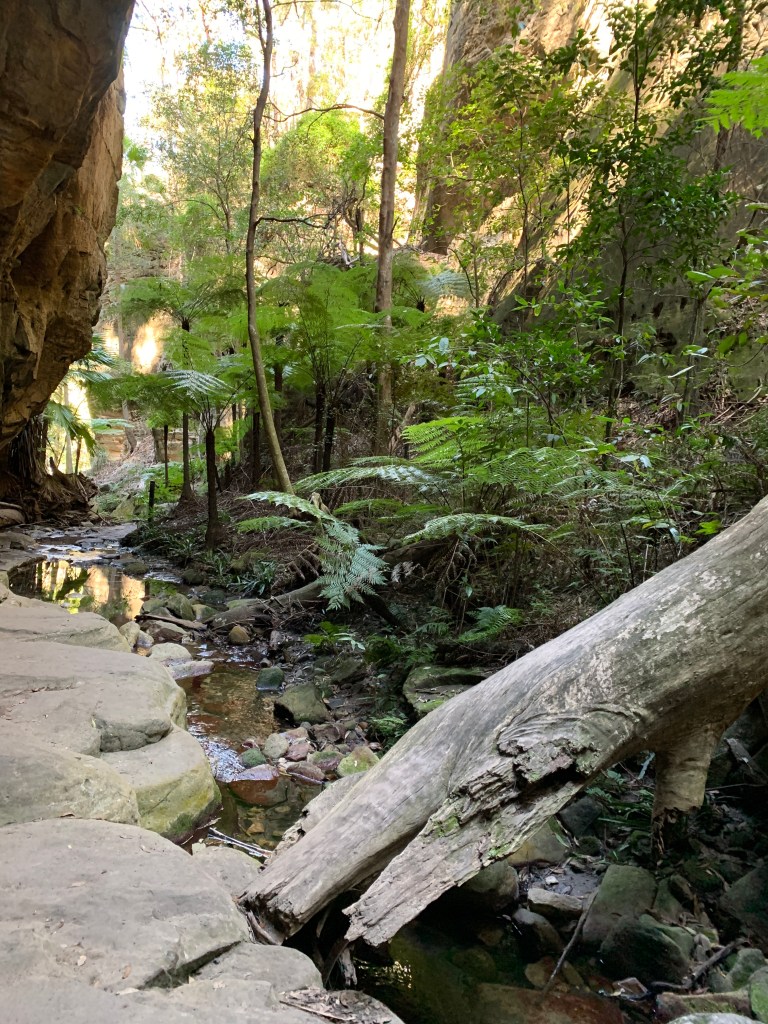
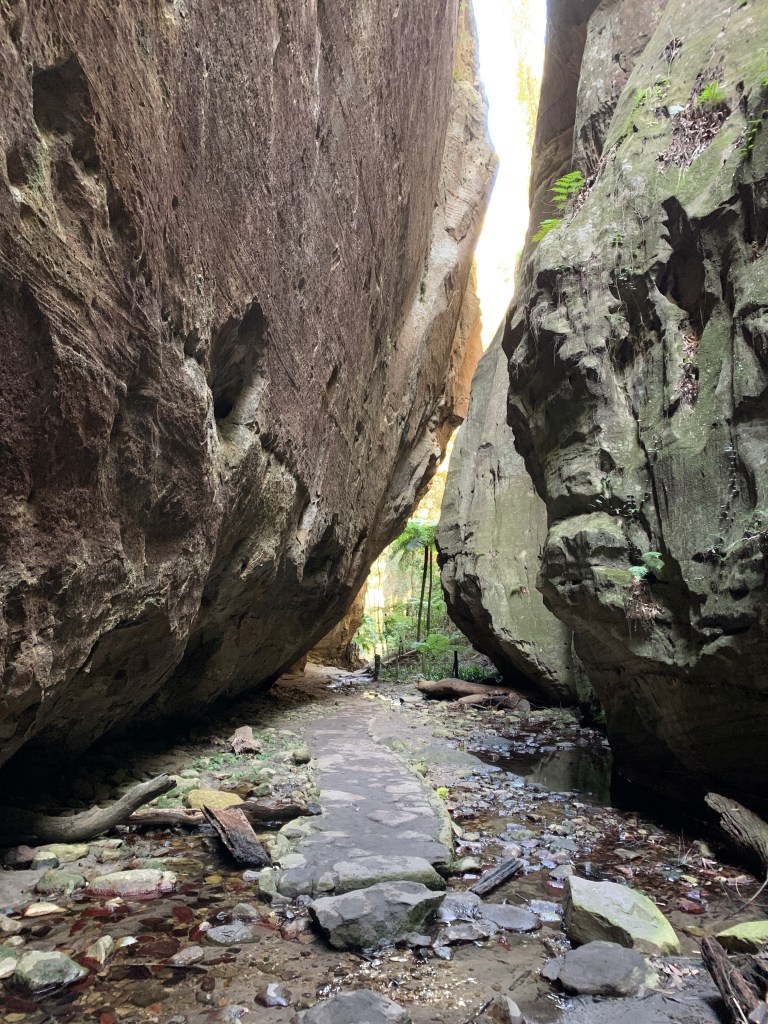
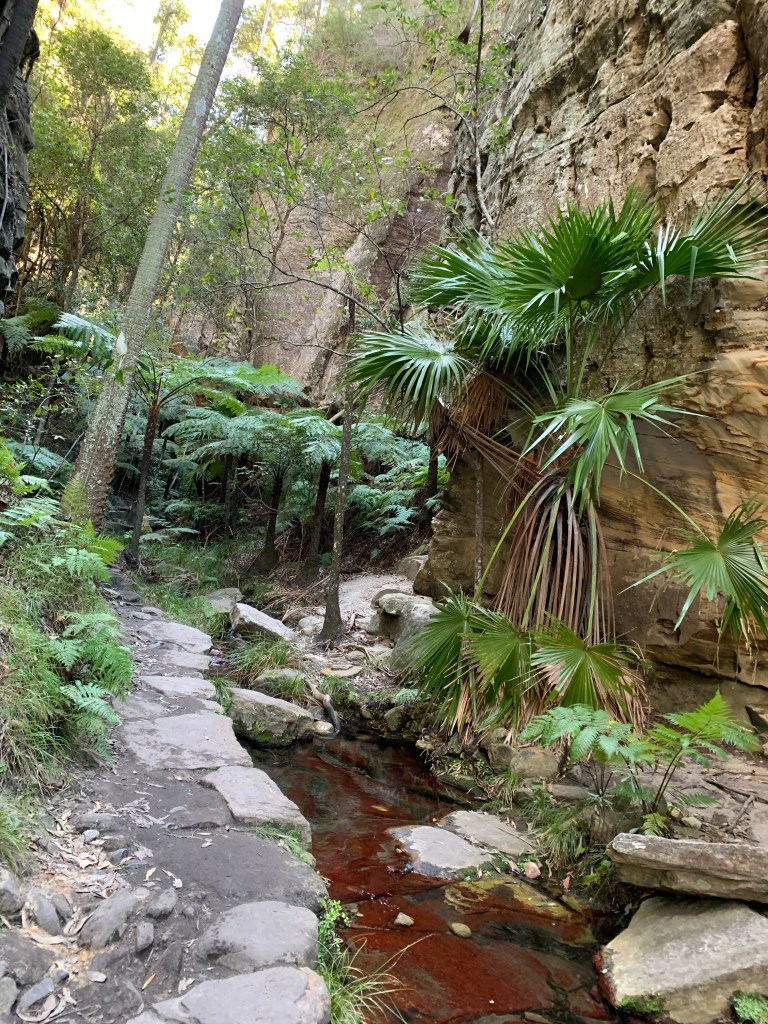
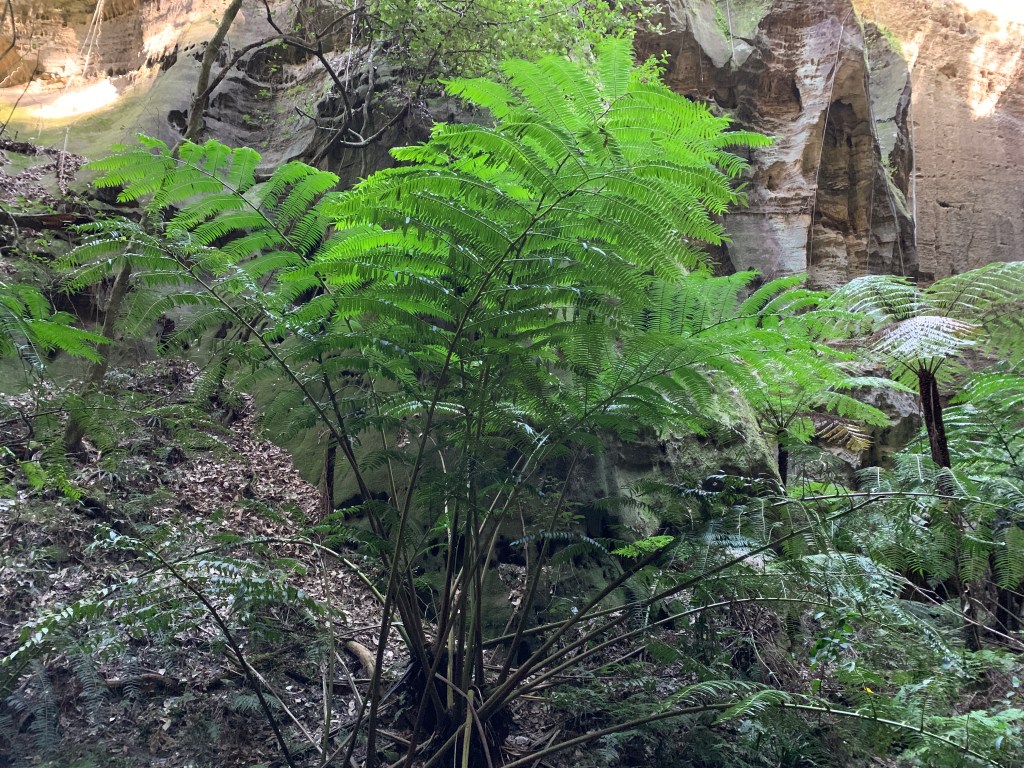
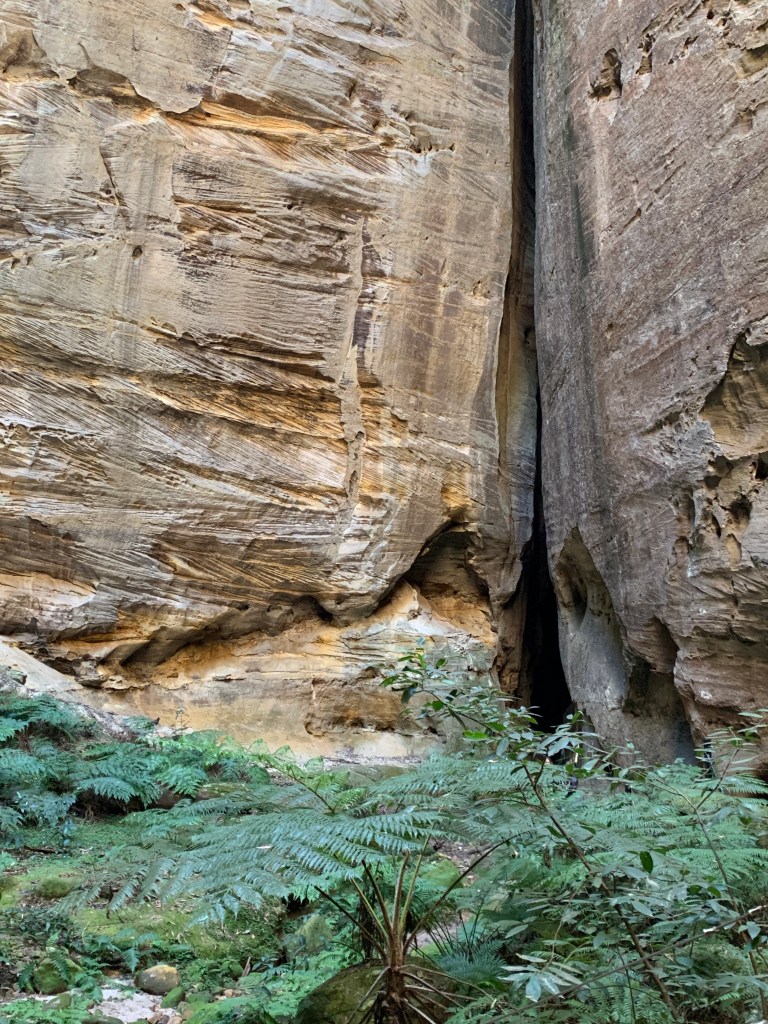
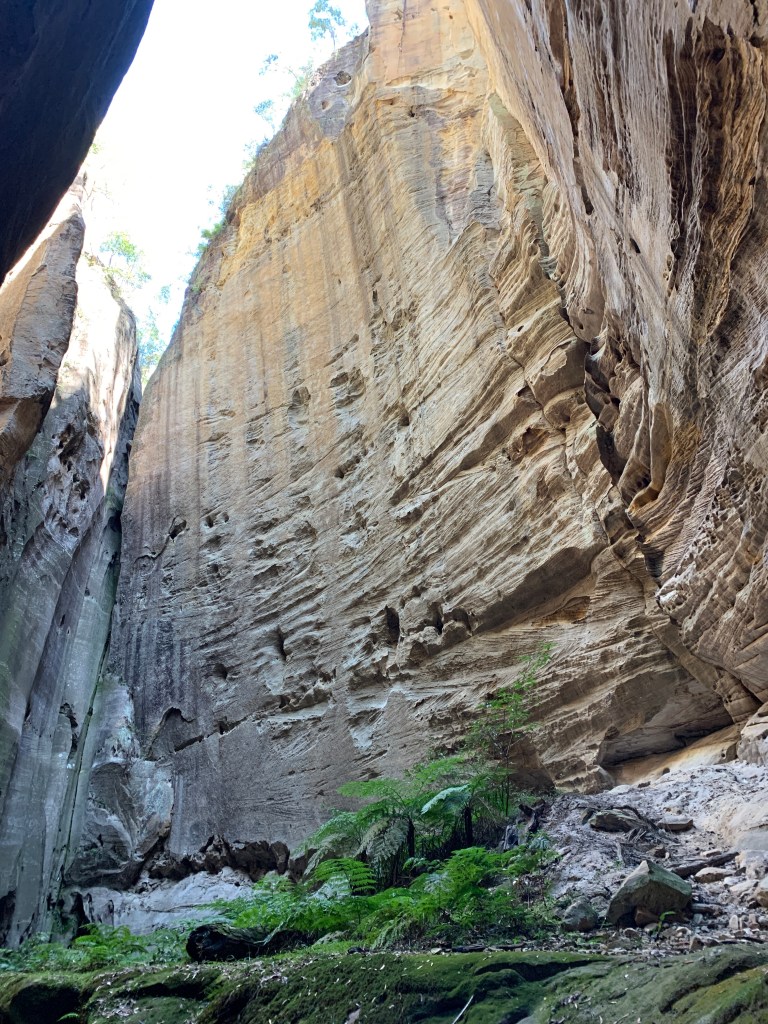
As we made our way back along the main track we came to the turnoff to Wards Canyon. It’s a 540m round trip up a very steep climb around a waterfall to arrive at Wards Canyon. My legs were screaming by the time I climbed to the top of the steps. The sight of the waterfall was just a sign of things to come. Oh my! If I thought we’d stepped back in time before, now I knew we had. This narrow canyon with its beautiful creek tumbling along the bottom is home to the most spectacular ferns. This tiny canyon holds the last remaining inland remnant of the once great rainforest that grew all across the eastern coast.

It is cool inside the canyon and the little creek tumbles along over the rocks and makes that beautiful noise of running water. Don’t you love that sound? I do.

King Ferns only survive here because they have access to permanent water. The fronds of the King Fern have no woody tissue. Water fills the fronds keeping them rigid much like a fire hose full of water. The fronds can be up to 5m in length and they are amongst the largest ferns in the world. The King Fern shares the canyon with tree ferns. These magnificent plants are just stunning.

It didn’t take much imagination to see dinosaurs running around in this magical spot. This was my favourite spot so far in the gorge, however Richard’s favourite was still the Ampitheatre.

The walk back seemed to take longer on our tired legs and we were glad to see the number 1 creek crossing. That meant we were almost back at the Visitors Centre. We had a well earned rest here and ate the rest of our sandwiches.

Back at the motorhome we really enjoyed a cup of tea and a shower to freshen up. We left the park behind and drove for about 15 minutes to the site of the Helicopter Flights. The Helicpoter setup is on Bandana Station just out of the park. We arrived there to find other people waiting for their flight so the flights were running behind. We would just have to wait our turn. We checked in, got weighed, listened to the short safety briefing then waited our turn.

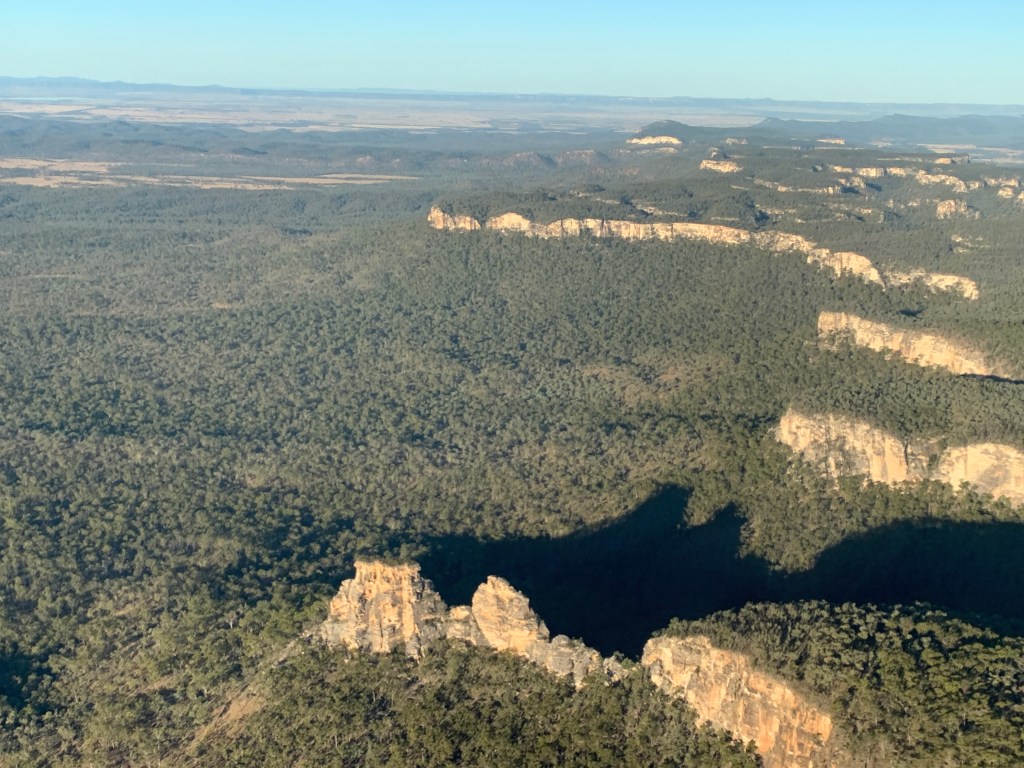
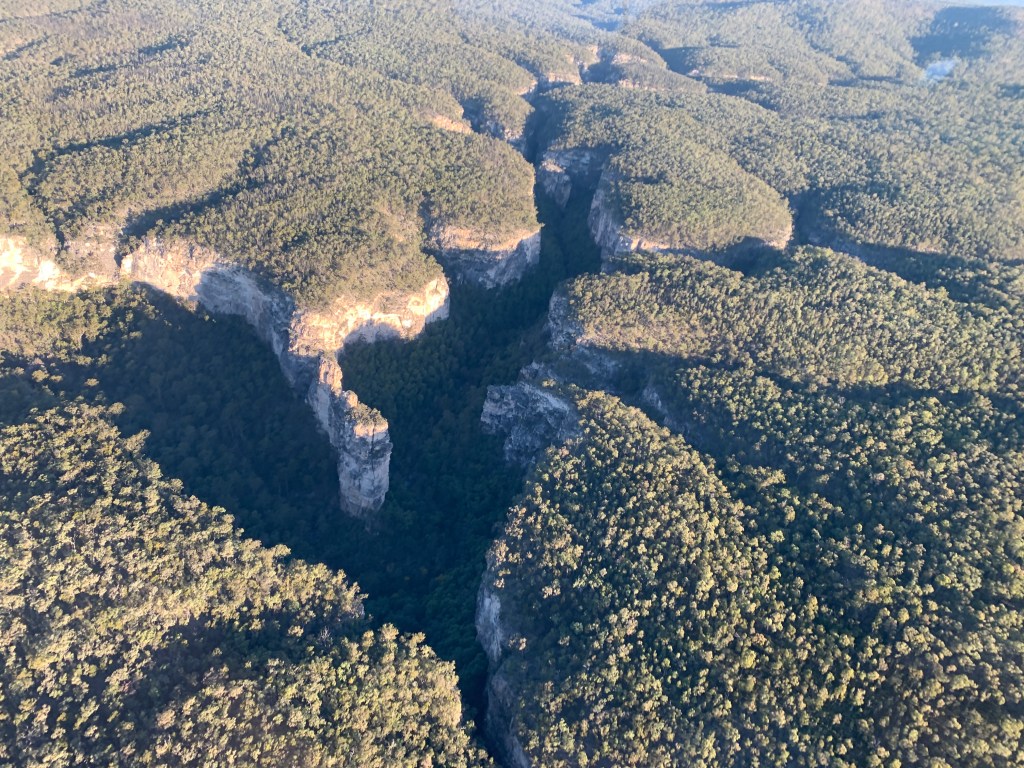
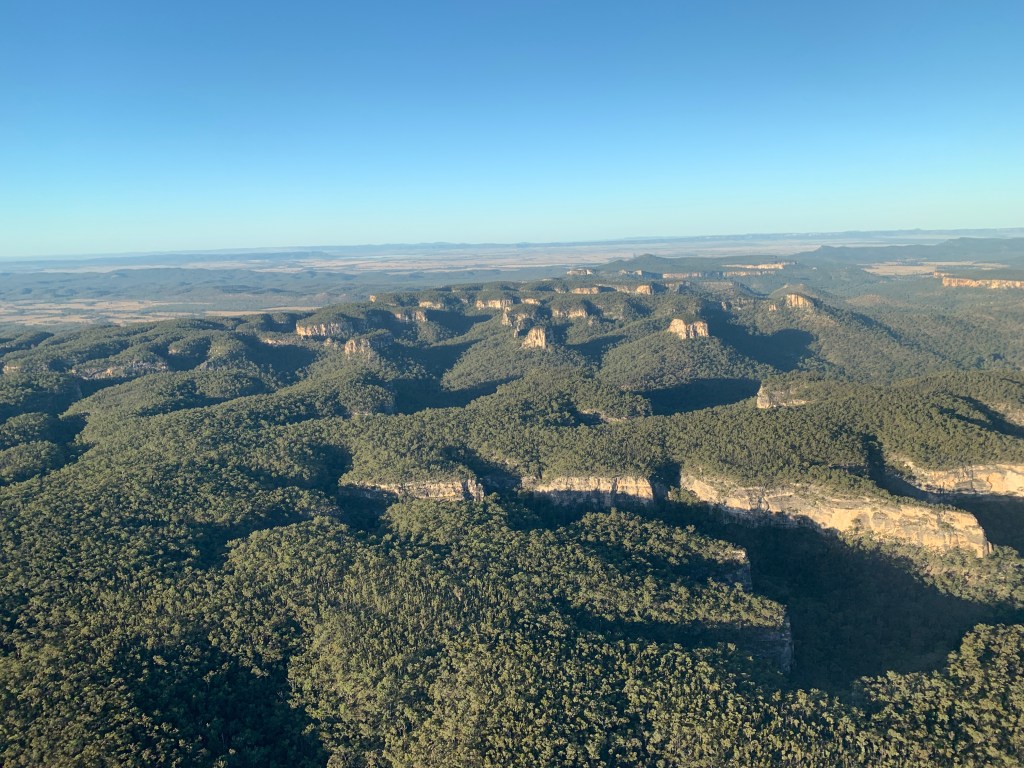
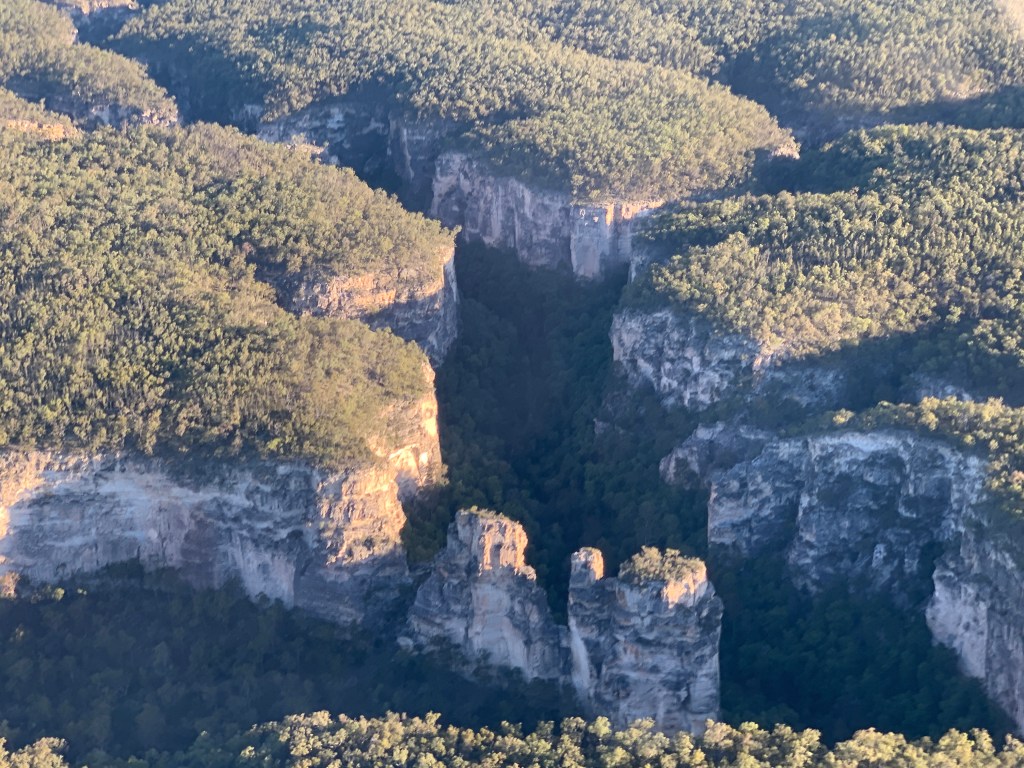
Our 20 minute flight in the lovely little, 4 person, Robinson R44 took us over Bandana Station, a 44,000 acre cattle property and the a cross the spectacular Moolayember Gorge. This gorge is part of Carnarvon National Park however unlike its more famous neighbour this gorge is still largely unexplored. Who knows what treasures lie down there. There may be even more spectacular things yet to be discovered. Our pilot, Travis, talked non-stop about what we were seeing below. He banked the helicopter so I could get great photos of the Three Sisters and the stunning sandstone cliffs. All too soon it was over and we were skids down and back on the ground.

Back at camp we enjoyed a lovely evening chatting with our neighbours Greg and Deb before retiring to a welcome rest.

While I was typing away at this blog post I was sitting outside under our awning. I had spent the morning being domestic (the bloke in the van next door even sang a few lines of ‘Sadie the Cleaning Lady’) and Richard was sitting under the awning reading a book. I had just made a cuppa when along came a very friendly wallaby who must have decided that we were no threat at all as she wandered right between our chairs then plonked herself down to have a snooze. She remained there for a couple of hours. How special is that?

Carnarvon Gorge

Wow Carnarvon Gorge, you did not disappoint! Carnarvon Gorge is stunning.

We left our lovely quiet little camp site at the Dakota Air Crash Memorial and traveled into Carnarvon Gorge National Park. On the way we passed the Helicopter Flight Centre, the entrance to Sandstone Park Campground, the entrance to Takarakka Bush Retreat and finally, just before the park, the Carnarvon Gorge Wilderness Lodge.

We arrived at the car park of the National Park and found a flat spot to park the MH. We put the fridge on gas so it would stay cold while we were away on our walk. About 300 metres from the car park is the Visitors Centre. This centre is usually unmanned, except in school holidays, but houses displays of the history, flora and fauna on Carnarvon Gorge. There were quite a few animal specimens in jars and I always find them very creepy for some reason.

Outside the visitors centre are a few storyboards displaying maps of the gorge and the various walks, how long they are and what you can expect to see there. The walks are graded for difficulty. As we are not experienced bush walkers we opted for the Grade 3 track. This is for people with some bushwalking experience and is suited to most ages and fitness levels.

The main gorge walking track is 9.7km long and winds its way, criss-crossing Carnarvon Creek until it reaches Big Bend. From there the graded track system ends and the remote hiking trail begins. Branching off the Main Track are side tracks including the Nature Trail, Boolimba Bluff, Moss Garden, Amphitheatre, Wards Canyon, Art Gallery, Cathedral Cave, Boowinda Gorge and finally Big Bend. From Art Gallery the track becomes a Grade 4 track for experienced bushwalkers so most people end their walk at Art Gallery before turning around and making their way back.

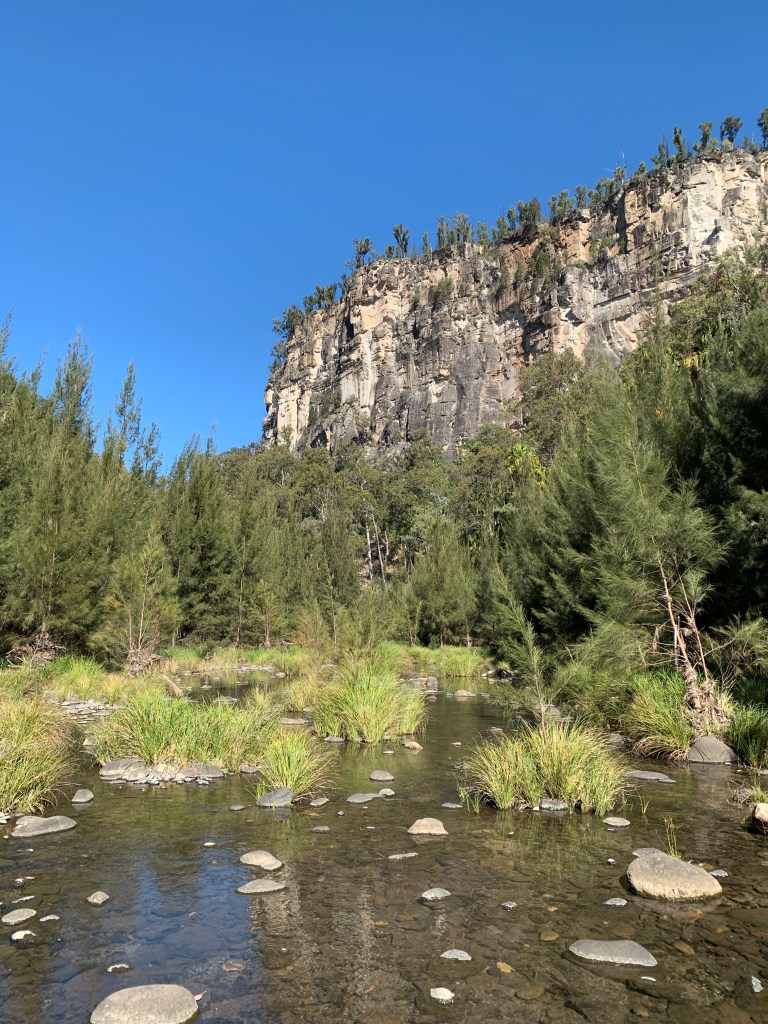
Our first walk into the gorge saw us walk to Ampitheatre. This is an 8.6km round trip. Wow. The gorge is truly an oasis. It feels like you are stepping back in time to when the mega fauna roamed the land. Carnarvon Creek runs through the gorge and on either side are the high sandstone and limestone cliffs, some over 200 metres high. It is cool down in the gorge as the tree canopy and the high cliffs keep the temperature down. The track crosses the creek many times and you need to be quite nimble to cross on the stepping stones.

The fauna is spectacular with huge cycads, some as tall as a house, and tall cabbage palms and the usual eucalyptus providing the canopy. The ground cover is reedy grasses and ferns. I’d never seen so many cycads in one place and they all looked amazingly healthy.

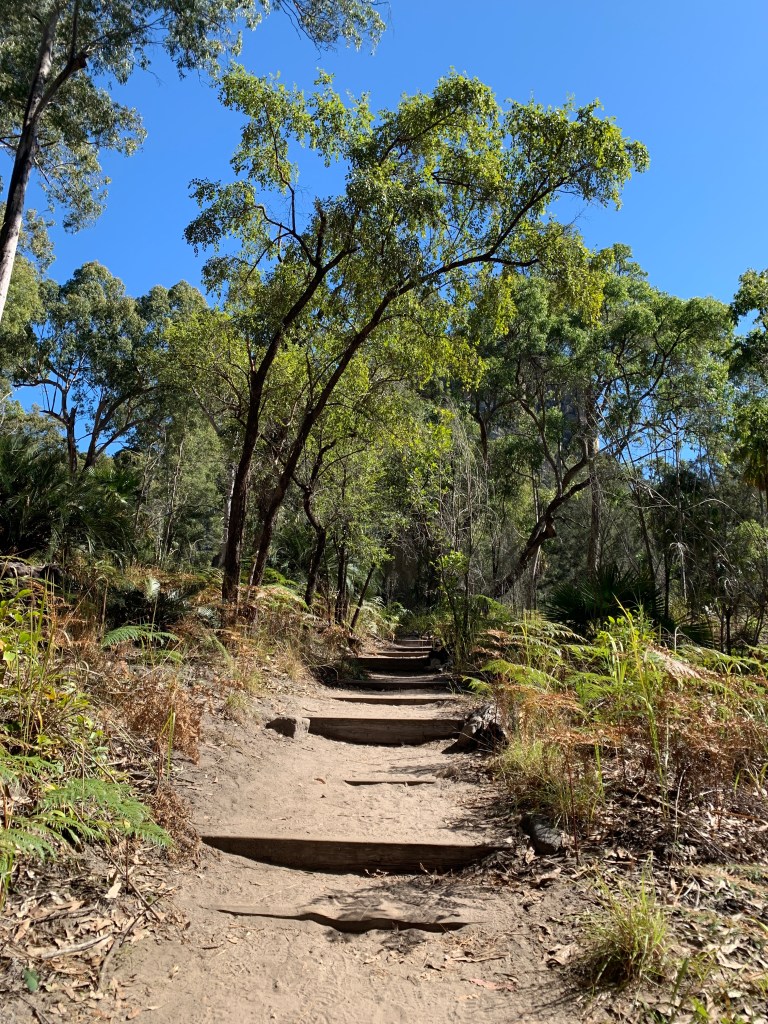
The track is a mix of flat, packed, sandy track with occasional steps made from stone. Where the track crosses the creek you have to be careful as you have to walk across the round pebbles and boulders.

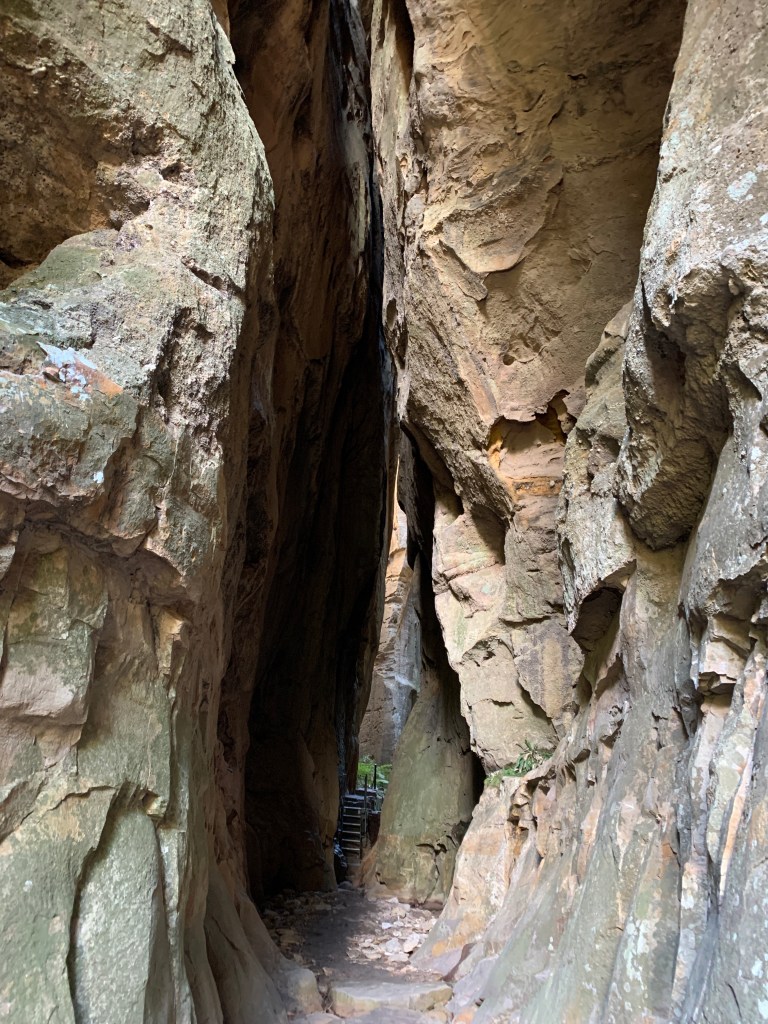
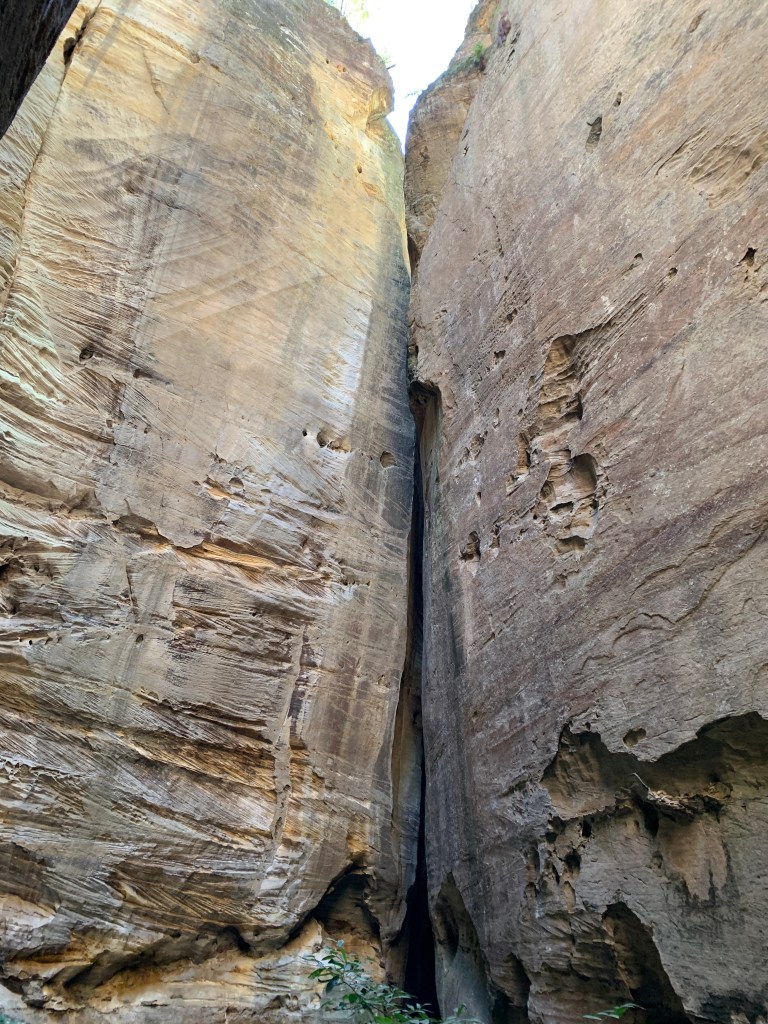
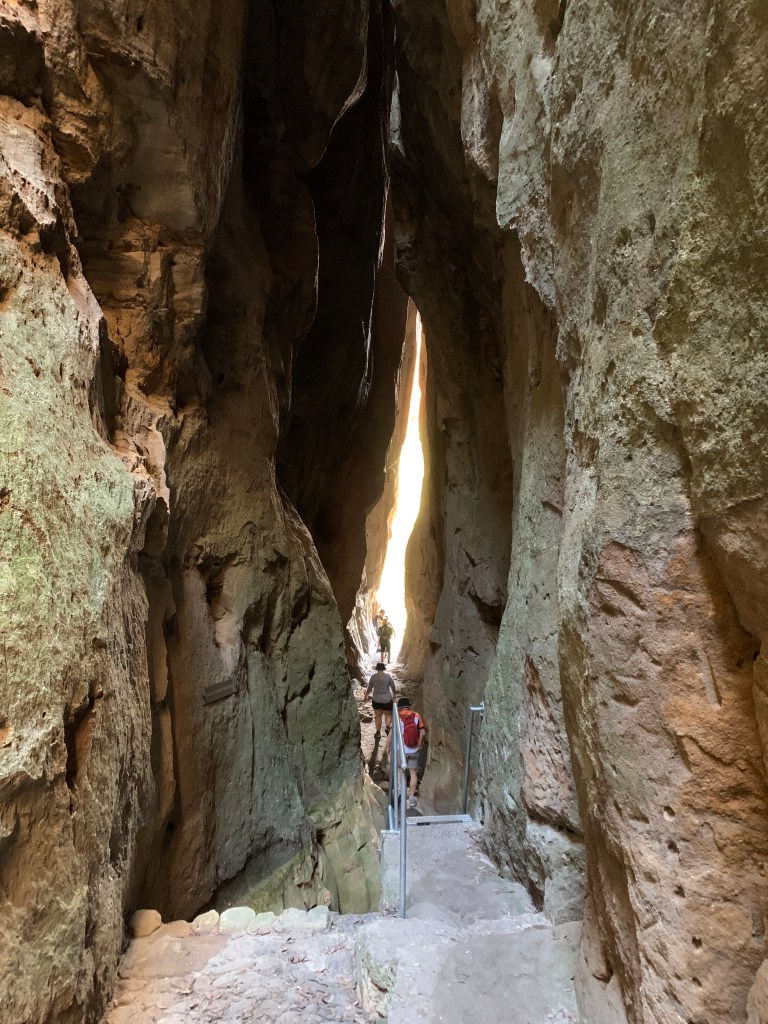
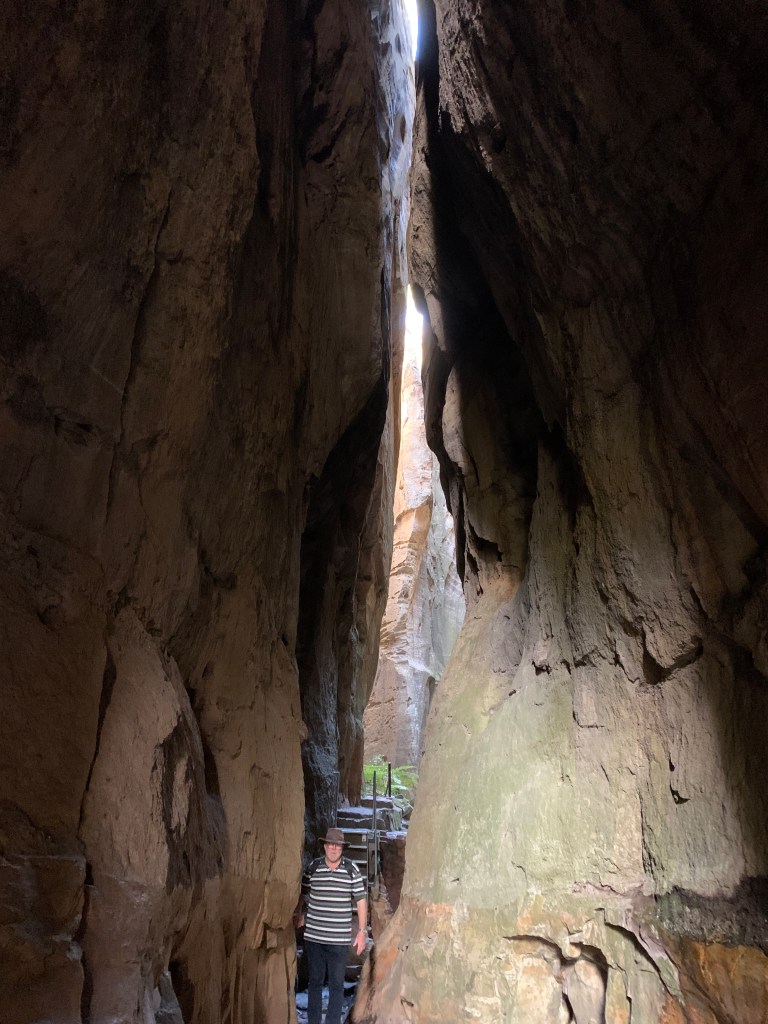
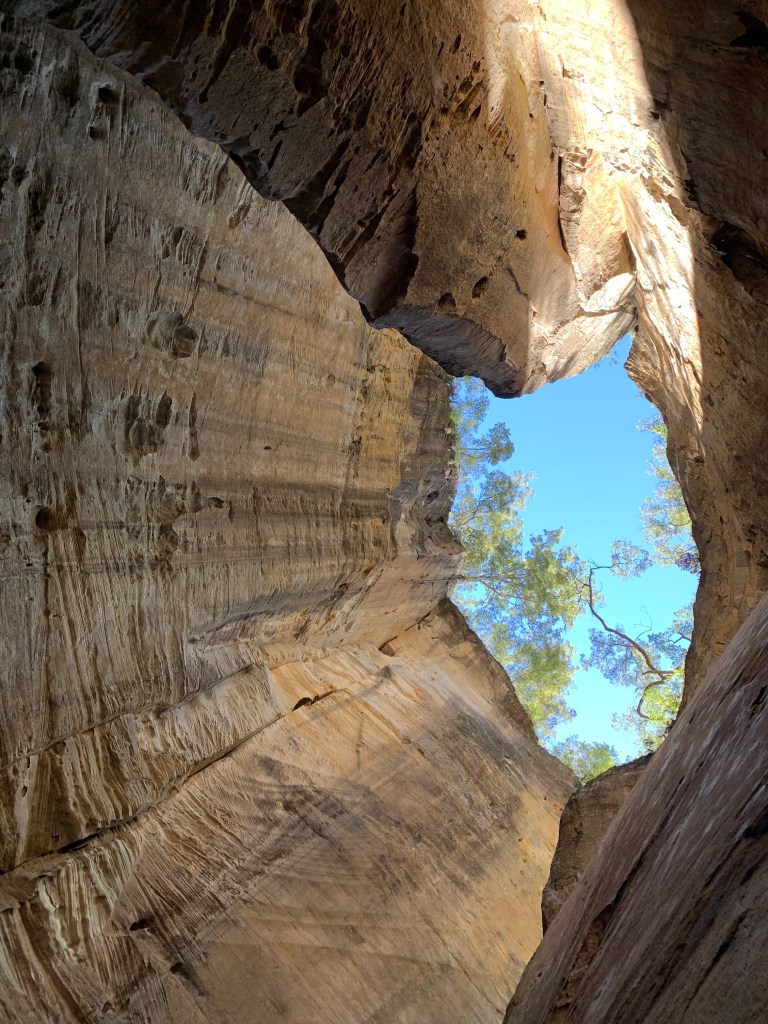
We made it to Ampitheatre and here you have to scale a metal staircase ladder up into the chasm. The ladder is probably about 10m high. Wow. Once you get to the top you walk though the chasm with tall cliffs on either side, at this point the chasm is only about a metre wide, and then it opens out into a wide chamber with towering 60m cliffs all around. It is very serene in there. A great spot for some quiet reflection, that is until a school group of Year 9 students arrived and totally spoilt the atmosphere! They were all very well behaved and polite but a large group of teenagers really don’t know how to be quiet so we ate our sandwiches and left them to it.

There is only one way back to the carpark and that is back along the main track. Lots of people were walking the track and we saw people of all ages.

After our long walk we left the Gorge and traveled back along the tar road to Takarakka Bush Retreat. We were booked in for 3 nights at Takarakka. Takarakka Bush Retreat is situated on private land just out of the park and it is a large bush park. As we drove in in the late afternoon a mob of very cute wallabies were munching on grass along the side of the road.

The Reception Centre is in the middle of the park and we were quickly checked in. They had given us a large drive through site opposite the amenities block. We noticed a sign as we entered reception that they do a spit roast 2 course dinner for $20 pp. We thought that sounded really good so paid for that. There is a little bar near Reception that is open from 4-6 each night. At 5pm each day a video presentation is shown on a big screen in the bar area. The presentation is all about Takarakka and Carnarvon Gorge.

The spit roast dinner was to be served at the tables on the deck later that evening.

Takarakka has a variety of accomodation options including powered and unpowered camp sites, studio cabins, a cottage and a couple of ensuite cabins and safari tents, some of which have ensuites.

The Reception Centre is also a General Store and stocks basic grocery items and a range of souvenirs. The park has three amenities blocks, camp kitchens and a few campfires. Fires are only allowed in the permanent fire pits.

There are a couple of nature walks as well. One goes upwards to a lookout and the other follows the creek where you might be lucky to spy a platypus.

We quickly set up camp on our very large site and I took advantage of power and water to do some washing. We met our neighbours Greg and Deb who are from Tasmania. They are on their shakedown trip in their new off-road van. It is all set up for off-grid camping and even has a composting toilet. You do meet interesting people traveling.

Around 4.30pm we packed up our plates, bowls, & cutlery and some drinks and wandered down to the bar so we could be settled in to watch the 5pm presentation. The video was very professionally done and showed all the different walks you can go in the Gorge. A friendly wallaby wandered amongst the tables. He wasn’t the least afraid of any of the humans.

We met a lovely young couple from Brisbane who were sitting behind us. Tony & Clare were both originally from Taiwan but they’ve lived in Australia for 12 years. They are traveling in their caravan and they love it although they have to store it at Tony’s parents place in Brisbane as their place is only on a 400sqm block. They asked about where we lived and Clare was amazed that we live on 6 acres and have a 3 acre garden. They only have a courtyard!

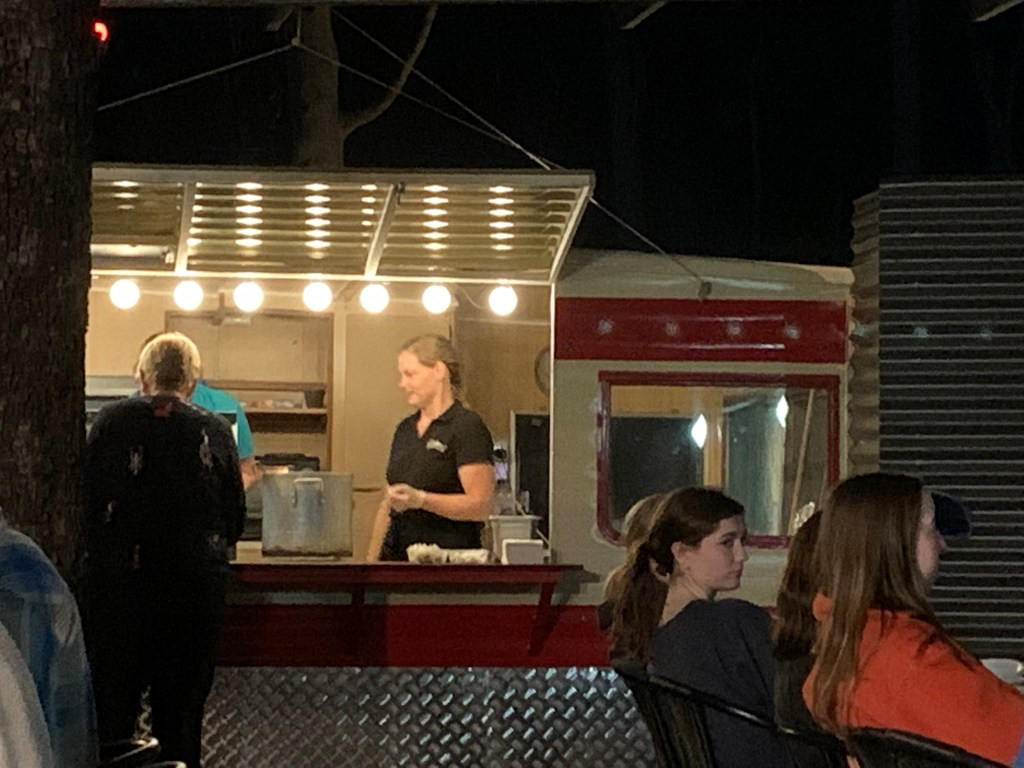
At 6pm we looked and found a little table up on the deck reserved for us. You have to bring your own plates, bowl & cutlery and when dinner is announced you line up at the end of the deck in front of the old caravan that has been turned into a servery. Dinner was roast beef, potatoes, pumpkin, peas and gravy followed by rhubarb crumble or chocolate brownie and cream. It was delicious AND I didn’t have to cook!

We wandered back through the bush to the MH and we were all settled into bed by 8pm. I think I was asleep by 8.10pm.

Springsure & Rolleston

We came to the small town of Springsure, south of Emerald and set about finding the Fort that we’d heard about.

The Old Rainworth Fort complex is situated on private property at Old Rainworth. We had to open the front gate as cattle were grazing in the front paddock. We arrived at the complex after traveling a couple of kilometres along a dusty track and crossing a couple of floodways. There were already a couple of campers parked. There is a little tin shed manned by a grouchy old lady who explained that she was the sister of the current owner. She was obviously on for a chat but we curtailed that, paid our $20 and went to explore the old buildings.

The main building at Rainworth was built in 1862 by an English stonemason employed but the owner of Rainworth. The building was primarily used as a store house. The stone used is local basalt and the wall plates and bearers are hand hewn cypress pine. The rocks are joined using an adobe mix of sand, lime and crushed rocks. The iron roof was the first one installed west of Rockhampton. Paving stones were used for the floor. There is a ladder staircase leading to a mezzanine and steps lead down to a cellar below. It is a remarkable building.

It was to Rainworth that the survivors of the nearby Wills Massacre fled to for help in 1861. The story goes that the main building was built to withstand attacks by Aborigines and that is how it came by the ‘fort’ name however there is no evidence that this ever happened.

Also in the complex is the original Cairdbeign Homestead and the original Sandy Creek School. Both of these historic buildings were moved to this site so they could be preserved. The homestead is a slab building and the school is clapboard. They are both filled with fabulous historic pieces and memorabilia.

Back in town we visited the Historic Woolshed & Visitors Centre. Outside is a huge Comet Windmill. This windmill was built in 1935 and has a diameter of 2 feet. It had a pumping capacity of 8200 gallons per day.

The historic Woolshed was recreated from the original roof trusses of the Arcturus Woolshed. The original building was brought to Arcturus Downs form England in 1901. It was sent out as a kit. In 2001 it was reassembled to be used as the visitors centre and museum.

It now houses local memorabilia and is manned by a group of dedicated volunteers.

We stocked up on groceries at the Spar and bought some meat at the butcher. As we walked past the public school the children were all outside under the COLA eating their lunch. I love to hear the happy sound of chattering children. Missing out grandchildren again!!

Between Springsure and Rolleston we crossed over a range of hills called the Staircase Range. We stopped for a lunch break at the lookout. What a lovely view across the valley and there was a nice breeze.

We continued on and the road was a very bumpy roller coaster of a ride. There was quite a lot of traffic including road trains and wide loads carrying mining equipment. Nearing Rolleston we passed the entrance roads to two coal mines.

Entering Rolleston we stopped for fuel then looked for the dump point. There was a queue of caravans waiting at the dump point and water point. We would just have to wait our turn. Mr Have-a-chat did his usual thing and got chatting to the caravan ears whilst I checked out the historic Post Office and slab hut that are displayed in the park next to the dump point.

By the time I got back to the dump point he’d found out they were all travelling together and they were from Parkes in NSW. They would also be going out to Carnarvon Gorge. Maybe we’d see them all there. Richard dumped our cassette and we waited for the water point to be ready. It didn’t take very long and they were all full. One of the guys said just move your motorhome up and use our hose before we take it off. That was very kind and appreciated by us. We only had one empty tank so we were full in no time.

The caravaners all set off and we waved them goodbye. Our next task was to find a camp spot for the night.


We left Rolleston heading towards Injune. We took the turnoff to Carnarvon Gorge and not long along that road we came to an historic marker. It was at this spot in 1943 that a C47B Dakota aircraft carrying US Airmen, Australian Airmen and Australian Army men crashed. There were no survivors. The plane was enroute from Darwin to Brisbane and ran into a violent electrical storm. A memorial to those brave men who served their countries has been erected on the spot using some of the wreckage of the downed plane. There were some picnic tables and chairs around the little area and it looked like a good spot to camp. There were no signs saying we couldn’t so we pulled up next to one of the picnic tables that also had a little fire pit and set up camp. Although it was close to the road we didn’t think the road would be busy after dark. We were surrounded by bush land and were not far from a creek that had fast flowing water. Apart from the occasional vehicle all we could hear were birds. It was very peaceful.

Blackwater & The Australian Coal Centre

The Capricorn Highway leads from Emerald towards Rockhampton. We followed this road to the town of Blackwater. Along the roadside were lots of small fluffy pieces of cotton left over from the recent cotton harvest.

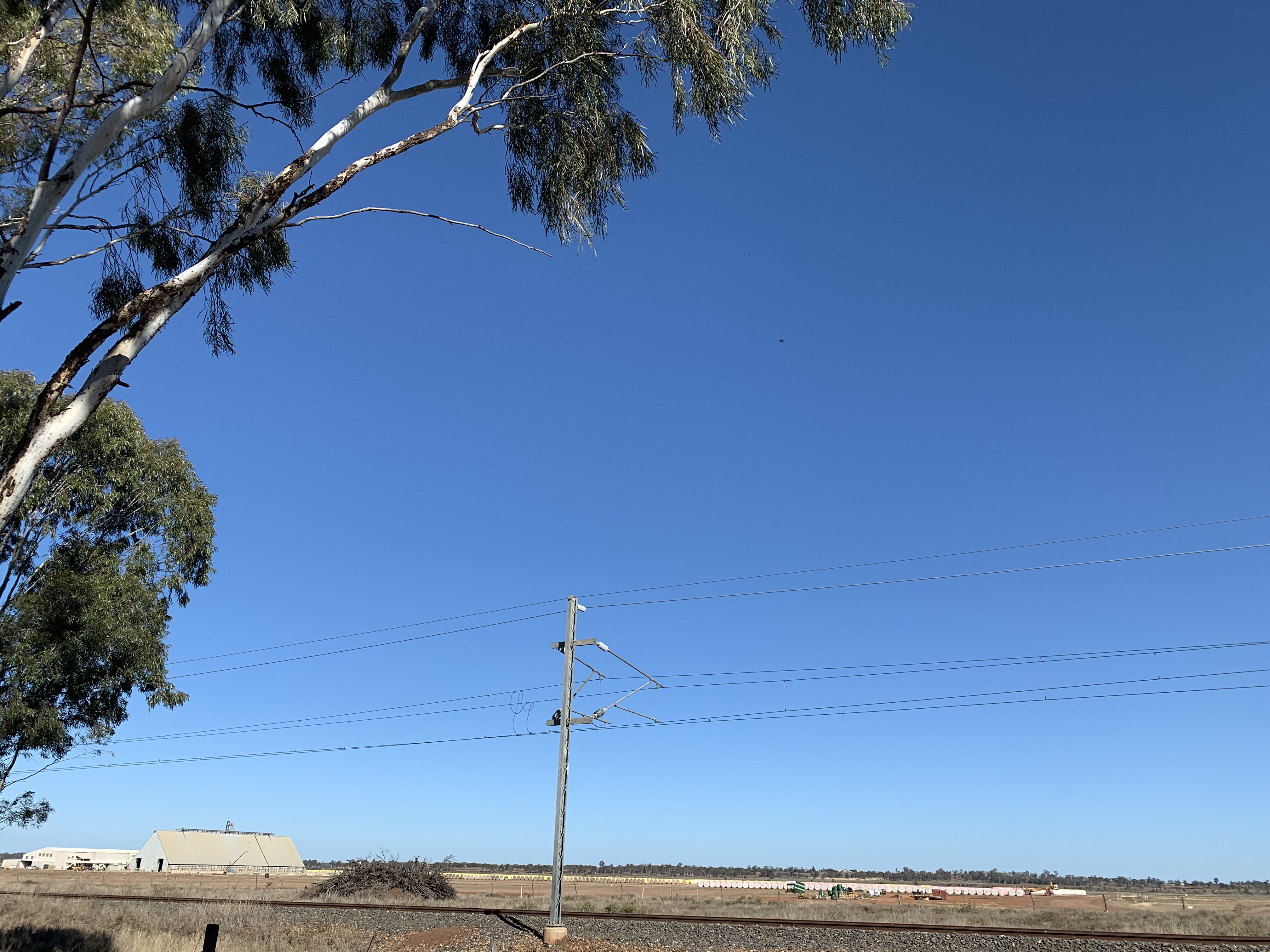
We saw quite a few trucks carrying the huge bales of cotton. As we went through Yamala we passed a huge cotton gin and outside there were hundreds of those huge bales of cotton waiting to be processed. I’d never seen so many in one place before.

Doesn’t it amuse you to see the strange things on the roadside that people have created? We’ve seen all sorts of things on this trip like the Bra Fence, the Shoe Tree and even a Bicylce Tree. Along to road to Blackwater from emerald, perched on top of a road cutting are The Magnificent Minions. These are a group of very clever sculptures that looked like they had been made out of various sized gas bottles. Some people are very clever.

We arrived in the small town of Blackwater, population 4,749. Our first stop was to visit the Blackwater International Coal Centre. The centre is home to the visitors centre, a Japanese Garden, a cinema, a cafe, a craft shop and the Australian Coal Museum.

The museum houses over 20 seperate exhibits that explore the past, present and future of the Australian Coal industry. It also has modern training facilities and conference rooms. While we were visiting we saw a group of miners in one of the training rooms that looked like they were taking some sort of test.

There was a really interesting display that showed a tree and all the different branches showed things that are made from coal and coal byproducts. I didn’t know billiard balls were made from a coal product called Bakelite.

We learnt all about the Bowen Basin. Bowen Basin is a long narrow basin on the eastern side of Australia that subsided in the Early Pemian period about 290 million years ago. In the Mid Permian much of the basin was flooded by sea. In the Mid Triassic 235 million years ago the basin was cut off from the sea permanently by earth movement. Today the basin extends from Collinsville in the north all the way to Theodore in the south and covers and area of 60,000 square kilometres.

The coal in the basin was formed in Mid to Late Permian times and the basin has the largest coal reserves in Australia. It is also the largest bituminous (black) coal deposits in the world.

Coal was first discovered near Blackwater but the explorer Ludwig Leichhardt in 1845. Early attempts at mining in the 19th and early 20th centuries were not successful. In the 1960’s large coal reserves were discovered near the town and the first large scale open cut mining began. Long trains transport the coal to Rockhampton.

Australia is currently the 5th largest producer of coal in the world but only the 10th consumer. China, India, US and Indonesia are the four countries ranked higher. We have an estimated coal reserve that, at current consumption levels, could last for 1,231 years.

After touring the museum we had lunch in their cafe then visited the lovely little Japanese Gardens. I’m afraid we’ve been very lucky to have seen one of the best Japanese Gardens in the world at the Irish National Stud in Kildare, Ireland so this one was a little disappointing but we still enjoyed the walk.

We had a little drive around Blackwater and it looks like a mining town with most of the houses being transportable.

On the way back to Emerald we came across a huge coal train with two engines up front and two more in the middle. It must have been at least 2 kilometres long.

You have to take care on these roads, especially when there are mines about as the machinery they use is huge. Check out this huge wide load that we had to get off the road for.

Back in Emerald we stopped off at the Botanic Gardens to do more of the walking trails. I found the Maze, the Palm Grove, the Rose Garden, the Rainforest Walk and the Marbles in the Park sculpture.

We needed gas so ran around to all the service stations in town, none of whom had any small bottles, only to end up back at the Emerald Cabin & Caravan Park where we stayed the other night. They fill gas bottles and we were able to get our filled for $18.

We needed some firewood and, after calling the local Mitre10 to see if they had any, went to get some from their garden centre. We got 2 bags of hardwood for $12.95 each. One to fill up our wood bin and the other for a fire that night.

We finally headed out of town on the Springsure Road and found a great spot just past Gindie. It looks like it was an old gravel storage area but was nice and flat with a good lot of trees between us and the road. We set up as far back off the road as possible and Rich quickly got a lovely little fire going. I was so surprised that there was no one else already camped at that spot. Everywhere we’d been lately there was such a crowd. How peaceful to be just us. Shame there was no water view!

Hanging around in Emerald

After another great night’s sleep we woke to find it was a gorgeous sunny day. I took advantage of being in a caravan park and got a couple more loads of washing done. I hung them in the motorhome and they could dry during the day. Richard sat outside for a bit and lots of brightly coloured parrots instantly became his friends especially when he found some dried fruit loaf to feed them.
Our Tyre Pressure Management System (TPMS) let us know that we had a tyre with a slow leak so we thought we’d better get that seen to before we did anything else. We set off and found the local Bridgstone service however they couldn’t look at it until 11am so we heade out to the Botanic Gardens for a wander.

We wandered through the lovely gardens for an hour until it was time to return to Bridgestone. The Botanic Gardens in Emerald are very large and situated on both sides of the Nogoa River. There are many paved pathways and most of the plantings have names so you can identify the tree or shrub. Emerald also provide a free camp in the car park at the entrance to the Botanic Gardens. It’s not the best one we’ve seen as it is just an asphalt car park and it’s right below the main highway so it would be noisy. However over the couple of days we spent in Emerald it the RV Park always had lots of campers.
Back at Bridgestone it was quickly detriment that the problem was the valve, not the tyre itself. This was the same problem we’d had right at the beginning of this trip. Luckily Richard had bought a couple of spare valves and it was fixed in no time at all for the grand sum of $38.

Richard really wanted a haircut so our next stop was the Central Highlands Marketplace where we were able to book him in for a haircut at 3pm.

We had spied an Irish pub called The Irish Village in the Main Street opposite the historic railway station and thought it might be a good spot for some lunch. We did enjoy our lunch. I had Guinness pie and Rich had Bangers & Mash and I washed mine down with a pint of Kilkenny. The pub has a real Irish feel about it, apart from being way too big. Real Irish pubs are not usually that big.

Next stop was to Mitre 10 for some stuff that we needed for odd jobs on the motorhome and then it was time to go back to the shopping centre for Rich to get his haircut. While that was happening I took the time to enjoy a little retail therapy. I hadn’t done that for a while.

I did go to BIGW and got some photos of our grandchildren printed so I could update the photo wall in our motorhome. We didn’t even have a photo of our youngest, Theo, and the one of our second youngest was a baby photo. Victor is now nearly 2. It was time to update them.

We decided to drive out to Lake Maraboon and see if that would be a good camp for the night. Not far out of town we came across an orange orchard. That’s the first one we’d seen since we left home over 6 weeks ago.

The name of the dam is Fairbairn Dam but the name of the lake is Lake Maraboon and when full holds three times the water in Sydney Harbour. We found the water level was very low.

You cannot camp around the lake and Lake Maraboon Holiday Park was very full. The vans were all so close together that didn’t appeal at all to us so we turned around in the driveway and headed back to a place we’d see on the way called Higher Ground Farmstay. For $8 per night we got to camp in a sandy paddock. We had a fire pit and a friendly horse for company. Much better than being jammed in like sardines!


Sapphire, Rubyvale & Emerald

Don’t you love the names of these towns? I do.

Sapphire and Rubyvale are twin small towns only 6km apart that sit in the heart of the Queensland Gemfields. The Minors Common is an 11,000 acre property that contains both towns. The property was created in the 1890’s and within the boundary a miner was able to mine, build a dwelling and run a few livestock. The Miners Common is the last of such titles remaining in Queensland. Miners are still able to access these rules and build a dwelling but current mining laws do not allow for permanent dwellings on mining claims so there are some very interesting buildings in both towns.

We had booked via phone to do the Miners Heritage Centre Mine Tour and arrived about half an hour early and found a park near a huge dump truck. The Heritage Centre is also a jewellery store and we browsed thier collection of gorgeous jewellery while we waited for the tour to commence.

Our guide for the tour was a 3rd generation local lady named Kate and, after giving our group a short safety talk, proceeded to lead us down into the mine. The first part was easy, it was a set of low steps that led down to an underground museum that we could check out on our way out. Then we went further downwards until we were 17m underground.

Kate explained that the main diggings in the area are to be found along Retreat Creek at Sapphire and Policemans Creek at Rubyvale.

John Archibald Richardson first discovered sapphires in the area in the 1870’s and by 1890 commercial mining had begun in Retreat Creek. Kate also explained how in the old days mines were dug with a pick and shovel in open pits or trenches. Sometimes they also built square shafts that they would climb with their back braced against the wall of the shaft.

We were shown where to find gems in the layer of ground called ‘wash’. This is the layer just above the granite bedrock. This layer can be just inches thick or five or six feet wide.

During the 1970’s the price for rough sapphires led to large scale mechanised mining which resulted in huge amounts of gems. During this time Australia produced over 80% of the worlds sapphires. This amount has declined however we still produce around 50% of the worlds sapphires.

Sapphires are very hard, only diamonds are harder gems. This makes sapphires very suitable for jewellery. I didn’t know that sapphires come in all sorts of colours. I always thought they were blue but they can be all shades of blue, green, yellow and even pink and purple. They can also be multi coloured. Yellow sapphires are very rare so they are highly valued.

Some very famous gems have been found in the area including the ‘Pride of Queensland’, the largest cut yellow sapphire in the world and is 169 carats. It is owned by a private collector in the US.

These days tourists have a big role to play on the Gemfields and can come out, purchase a fossicking permit and can fossick at the 5 different designated fossicking sites. You never know when you might find a beauty.

In 2000 a lady tourist found a 200 carat sapphire and she named it ‘The Millenium Sapphire’. She said it was just lying there. It was sold the following week at the annual Gemfest for $85,000.

Kate showed us some tiny ‘microbats’ that live in the tunnels and cling to the roof. They are tiny little creatures only a couple of centimetres long and they like to snuggle into the holes made by the jackhammers.

Our mine tour lasted for about 45 minutes and we thoroughly enjoyed it. I was glad to get back above ground though as it was quite dusty down in the mine.

We had a bit of a laugh at some of the amazing dwellings in these little towns. Kate had explained that while there are some freehold blocks in the towns you cannot mine where there is a house and you cannot build a permanent dwelling where there is a mine. So many of the houses are put together using all sorts of scrap. There was a lot of caravans plonked on sites. When a mining lease is over all tunnels have to be filled in and the site has to be cleared hence nothing permanent can be built.

The gorgeous looking pub in Rubyvale is built from logs and local stones. We loved the look of it.

We left The Gemfields and headed further east to the town of Emerald. As we neared Emerald we came across the first irrigated paddocks that we’d seen for a long time. Irrigated wheat and cotton is grown there. We saw huge round bales of cotton that had obviously just been harvested being loaded onto trucks to be taken away for processing or sale. We passed a few B-Doubles with up to 10 of those huge bales on the trailers.

After a drive around the town to orient ourselves we stopped off at Coles to pick up some groceries then found a lovely shady spot next to a large park for a spot of lunch. Prawns, salad and fresh crunchy bread…yum.

We decided that we would book into the Emerald Cabin & Caravan Park for the night so that we could go to the movies. That’s something we hadn’t done in a very long time. The new Avengers movie Black Widow was showing at 6pm.

However we really wanted to give our motorhome a good wash first. We tried both the car washes in town however we were too tall to fit in either of those. What to do??? We spied the Showground where there is a public Dump Point. Maybe they would have a tap we could use to hose the motorhome down. Sure enough we found a good grassy spot, not far from the dump point, where there was a set of taps and set to work cleaning off ‘The Outback’ dust from our little home on wheels. Wow….she looks so much better now. All sparkling and white again.

We checked into the caravan park and quickly got set up on the grassy site. We even had a concrete slab for under our awning. Oh it is nice to have a long shower without having to worry about running out of water. That’s probably the thing I enjoy most about staying in a caravan park but I would still much prefer to be on our own camped near a creek, river or billabong.

Off to the movies we went. It was about a five block walk to get there and we met a friendly lady along the way who was on her way to work at one of the local motels. She walked some of the way with us chatting away. What a friendly lady. Just the sort of person who should be in hospitality.

Black Widow was certainly an action movie. I haven’t seen all The Avengers movies but Richard has and apparently they are all like that. Action action action. It was full on. It did have a bit of a storyline though.

Back at the motorhome I got some washing done, Richard checked our portfolio on his MacBook and I sat down to write this post.

We’ve booked into Takarakka Caravan Park at Carnarvon Gorge for three nights from Thursday so we’ve got three days to explore around the area. Wonder what we’ll discover tomorrow?