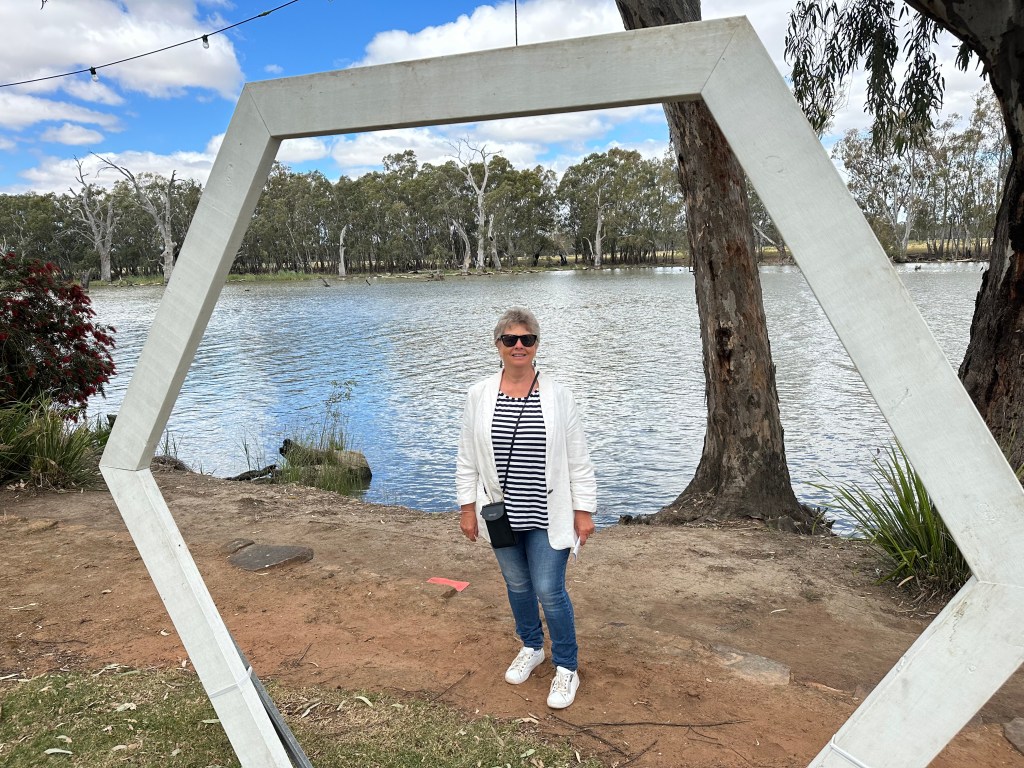
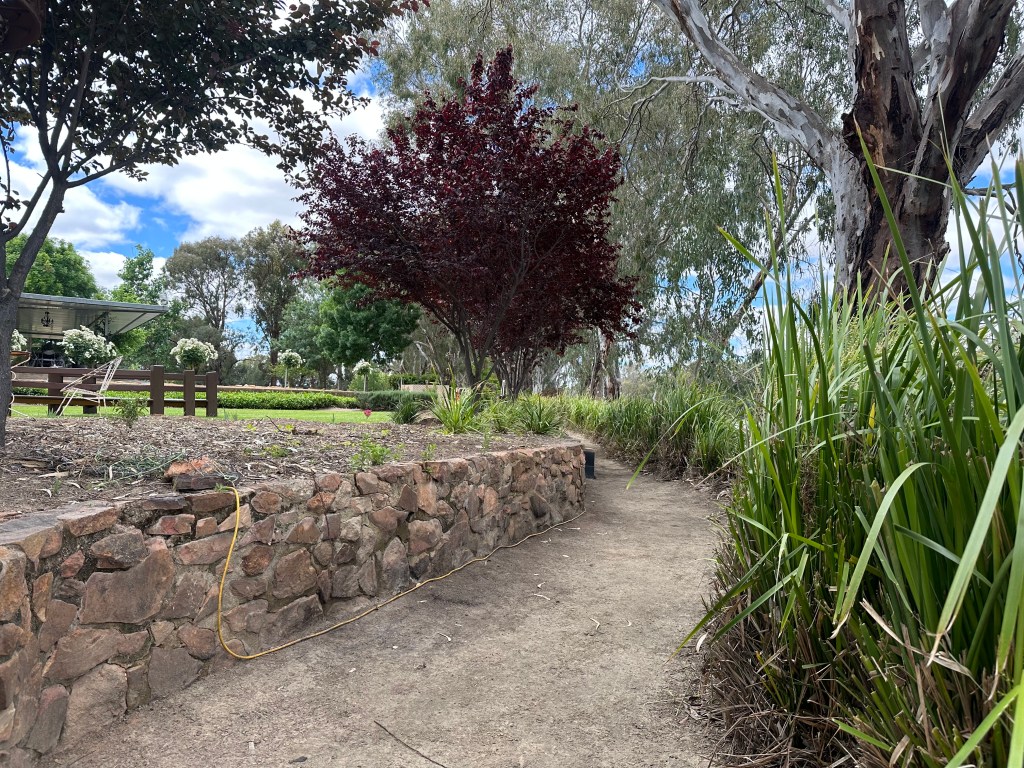
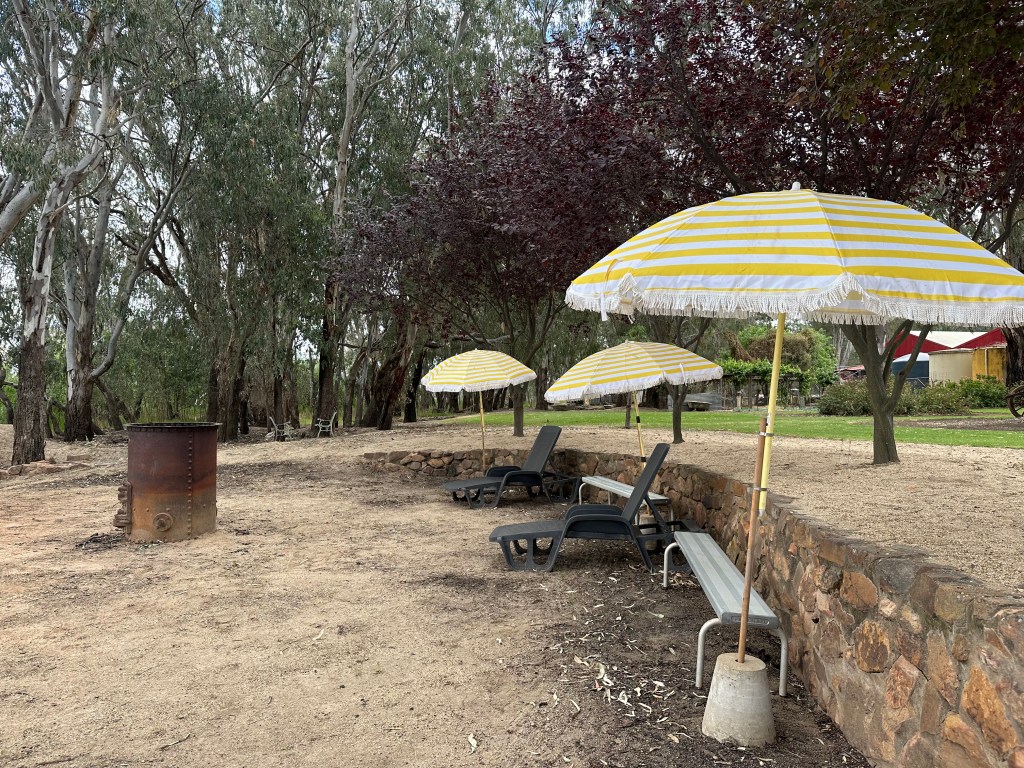
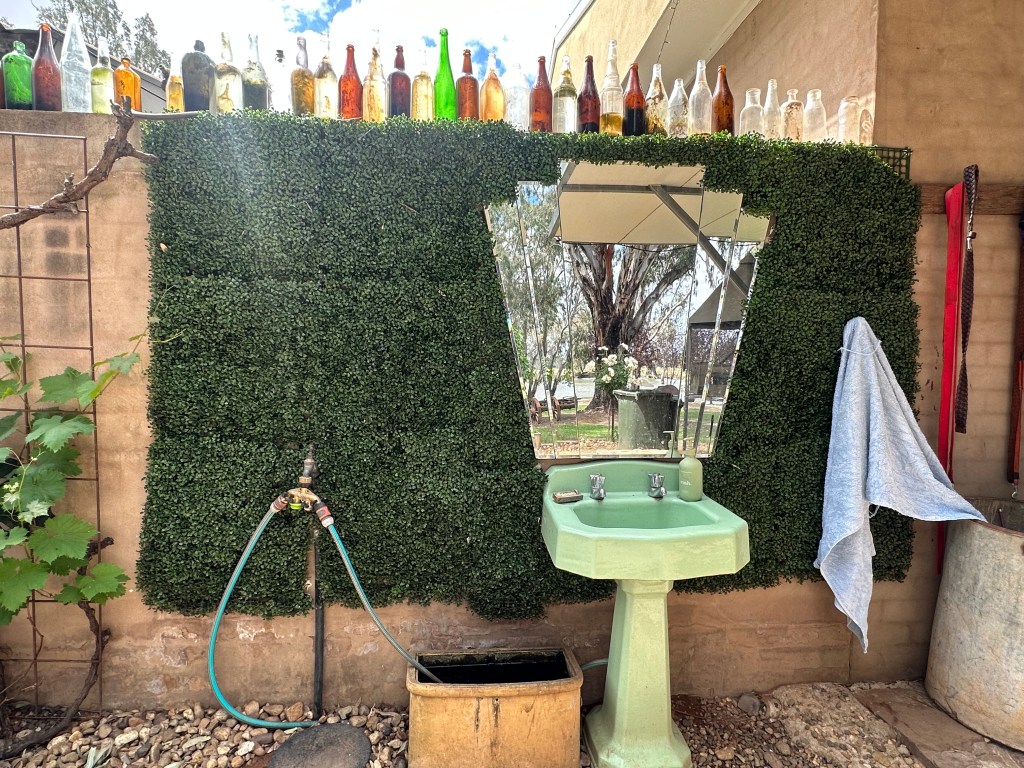
St Anne’s Open Gardens, Temora

After visiting the open gardens on our home town of Griffith over the weekend 14/14th October we followed up by taking the car across to Narrandera to visit their open gardens on 22nd October. We spent a lovely day visiting the six gardens and appreciating the hard work and time spent creating them. It cost $25 per person to view the gardens and this also included a Devonshire Tea in the Uniting Church hall.

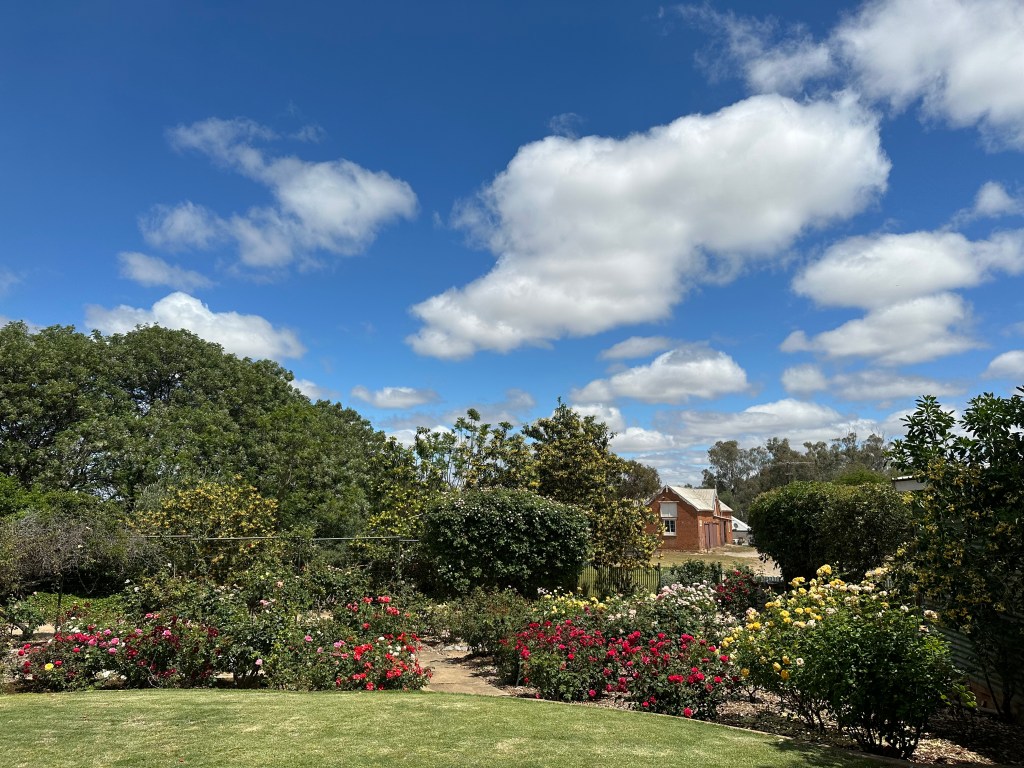
I found St Anne’s Open Gardens, Temora to be held on 30th October on Facebook and as Temora is only 100km away, we thought it would be another great opportunity to take the motorhome out of its shed again.

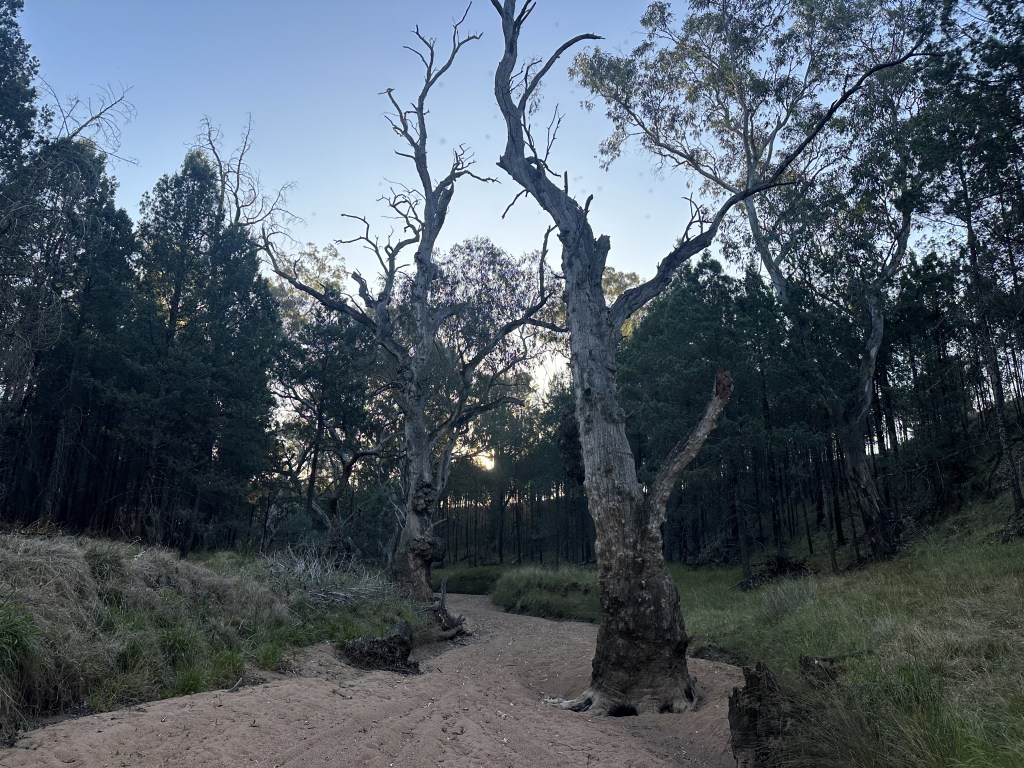
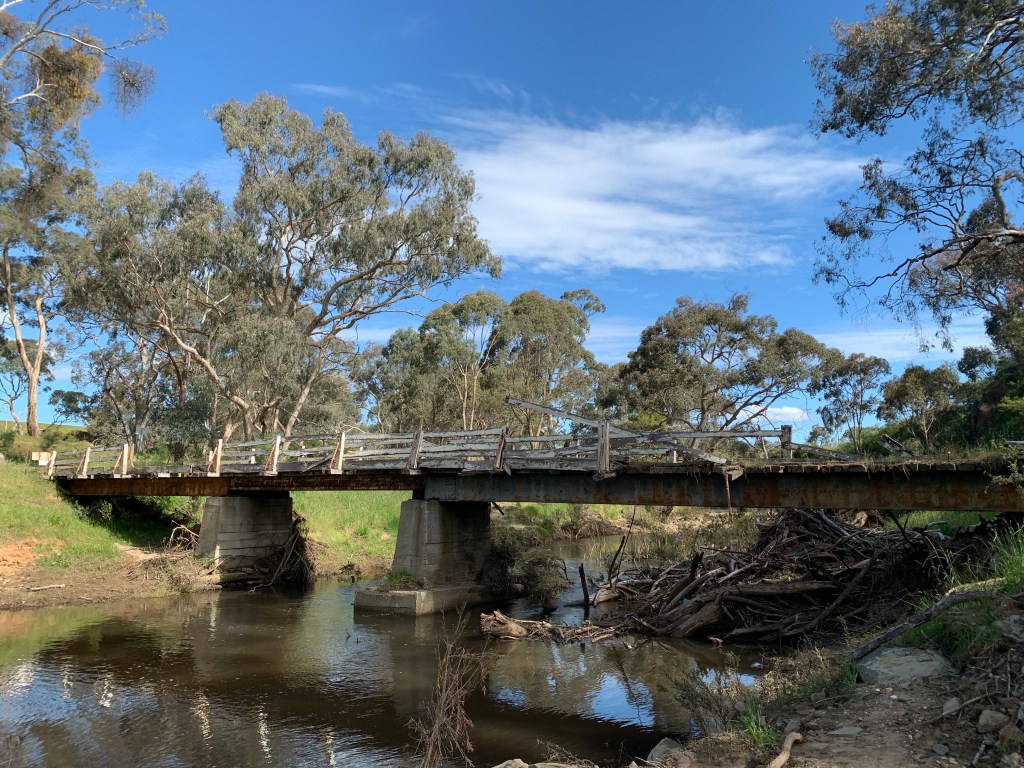
We set off late on a Friday afternoon after minding our 2 year old grandson for the day and headed eastwards towards Temora. We wanted a campsite with water views, somewhere we could have a fire and hopefully where there was no one else. Thanks to WikiCamps we found a perfect spot. Just north of the tiny town of Ariah Park is the Broken Dam Rest Area. This rest area is right next to the Mirrool Creek and if you are careful and take the track between the rest area and the bridge it takes you to a large, relatively flat, area situated on a huge bend in the creek. Sadly the creek was dry so no water views for us!

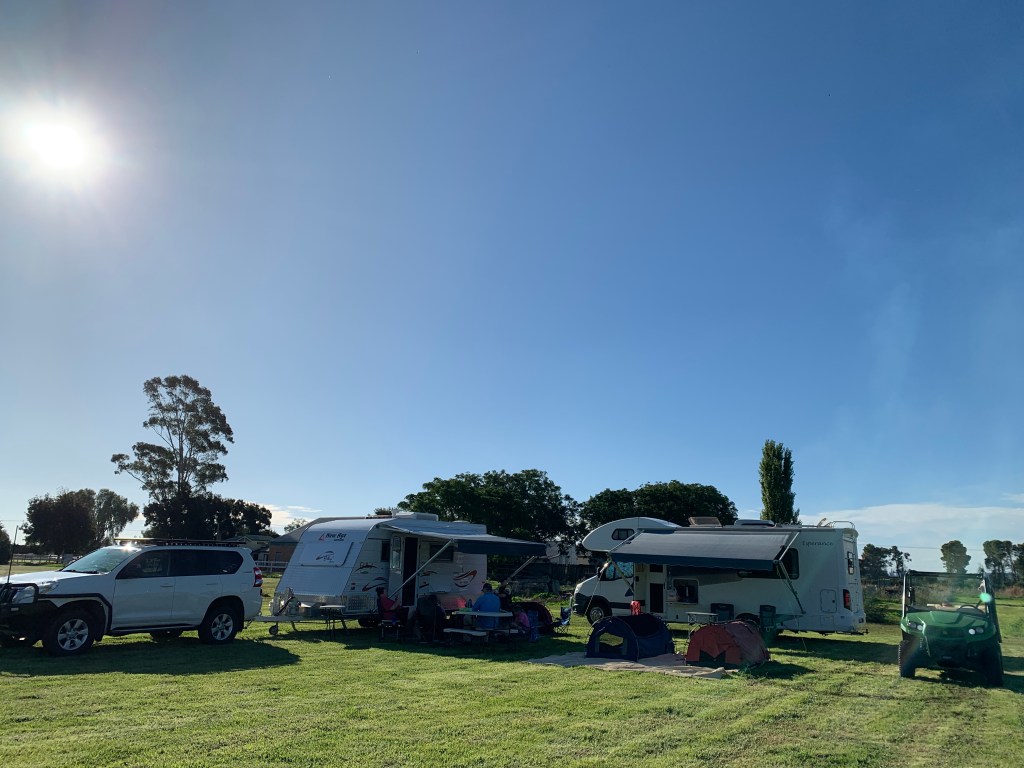
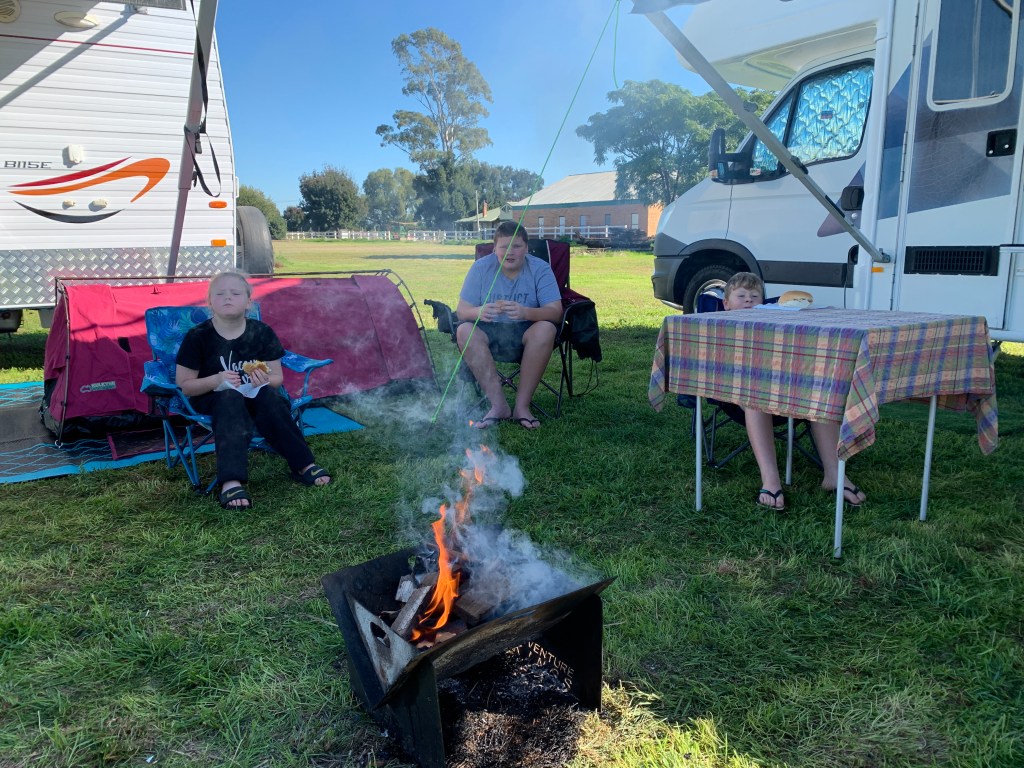
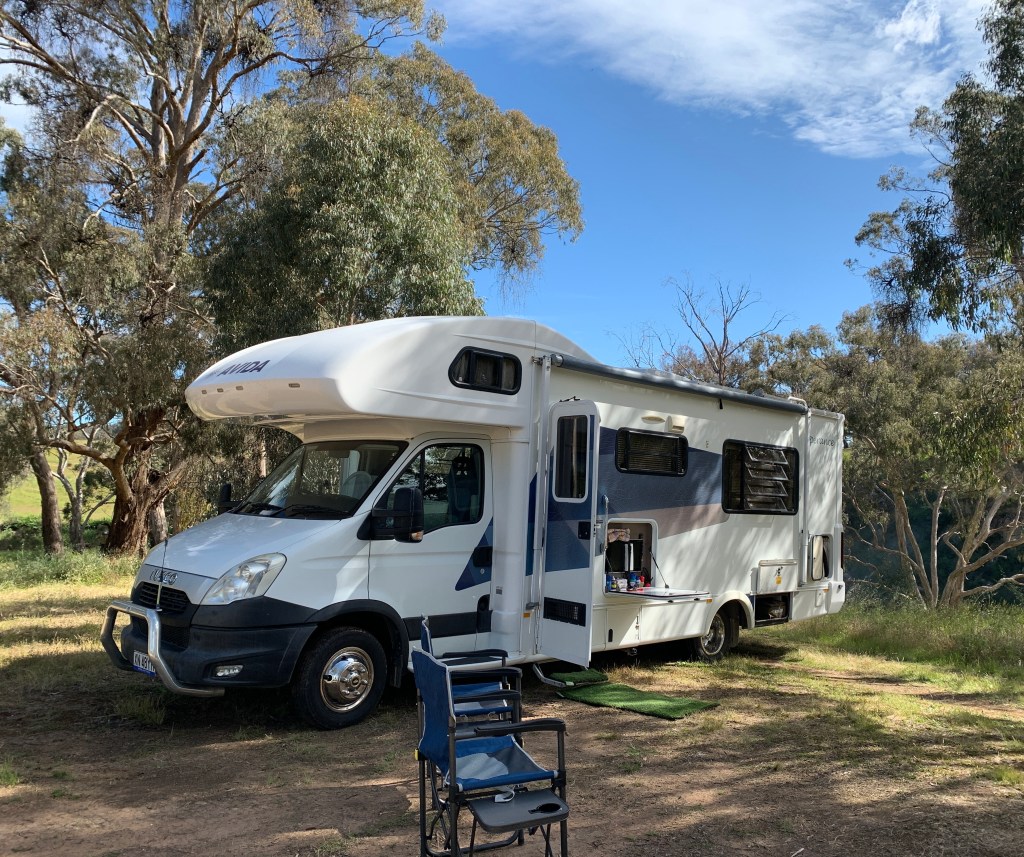
We made camp on a good spot near the creek and Rich quickly set up a fire in an existing fire pit. Fortunately there was plenty on dry wood from the mostly pine trees in the area and we soon had a lovely fire going. It was quite cold so it was lovely to sit outside, eat our nibbles and enjoy a wine or two sitting by a lovely fire. Perfect! Not a another soul for miles, apart from the occasional car going by on Mary Gilmore Way.

The Mirrool Creek wanders across the vast western plains between the Lachlan and Murrumbidgee Rivers before it eventually joins the Lachlan River. A George Harmon of Quandary Station dammed the creek in the 1860’s to provide a more reliable source of water. You can still see the remains o the earthen wall on the bank of the creek. The dam quickly became a meeting point between Wagga Wagga and Condobolin and the east/west traffic between Narrandera and Young.

Sadly, the dam was washed away in the floods of 1869 however the intersection had become quite established by then. In about 1870 the Weldon family of Ariah Station dammed the creek one mile further downstream. Weldon also commissioned Thomas Sanderson to build a bridge which sadly failed in its first flood.

Finally in 1888 the NSW Public Works constructed a bridge at Broken Dam and it served until 1917, until carried away by flood in 1918. A new bridge was opened in 1933 and it lasted until 2005 and was replaced by the current bridge, opened in April 2005.

Quite a little settlement had grown up around the crossing with its various dams and bridges. There was a general store, post office, a hotel, and a few houses. There’s not much left of this little settlement at Broken Dam. What is left can be found if you follow the Broken Dam Walking Track. There is good signage, picnic tables and rubbish bins provided. It’s a fascinating little piece of our local history and shows the importance of water in this very dry land of ours.

The next morning we set off towards Barmedman to see if the Mineral Pool had any water in it. Last time we went through it was July and the pool is emptied each year for the winter. We arrived to find a group of enthusiastic volunteers getting the pool ready for filling. They told us it takes several weeks for the pool to fill up and recommended we come back in late November. They keep it full until around Easter each year.

The Mineral Pool is filled from an underground stream and the water is saltier that Sydney Harbour! The minerals are said to help soothe aches and pains and, although the water is cold, people come to just soak in it.

Oh well. We’ve visited twice now and haven’t seen any water. Another time!

On arrival in Temora we made a couple of stops at the Chemist and the IGA before heading to Lake Centenary where we parked up to have some lunch. Amazing to think that Richard was one of the earthmovers that built the lake over 45 years ago. It is a beautiful spot. There were a couple of ski boats and we enjoyed watching the skiers from our window.

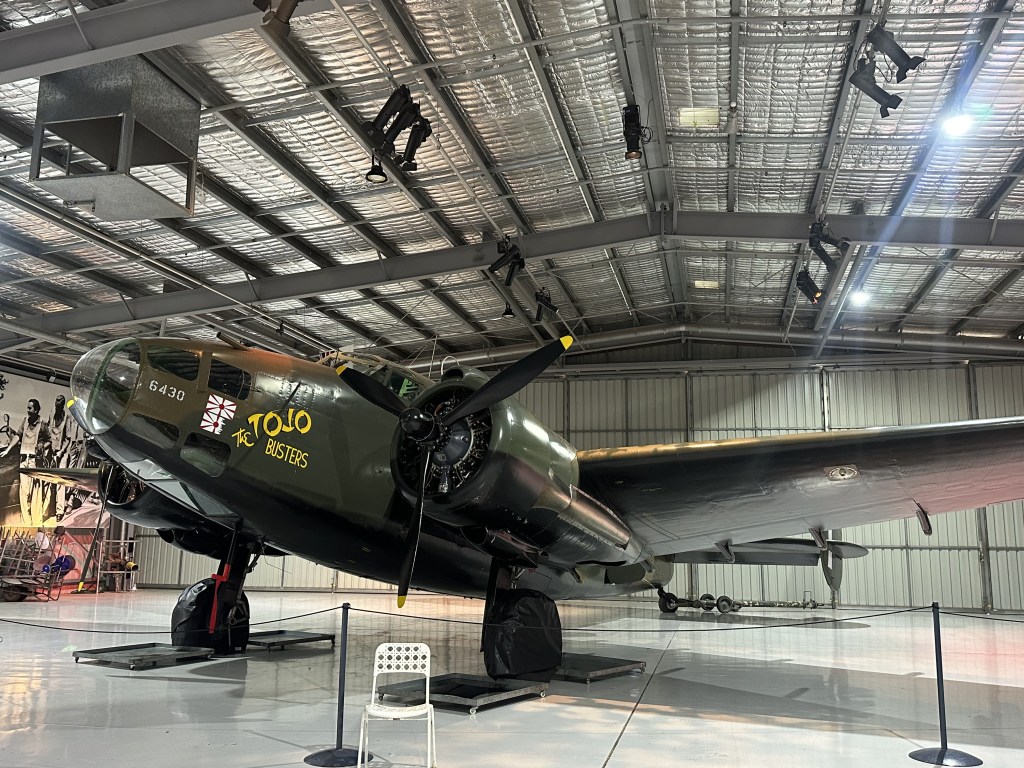
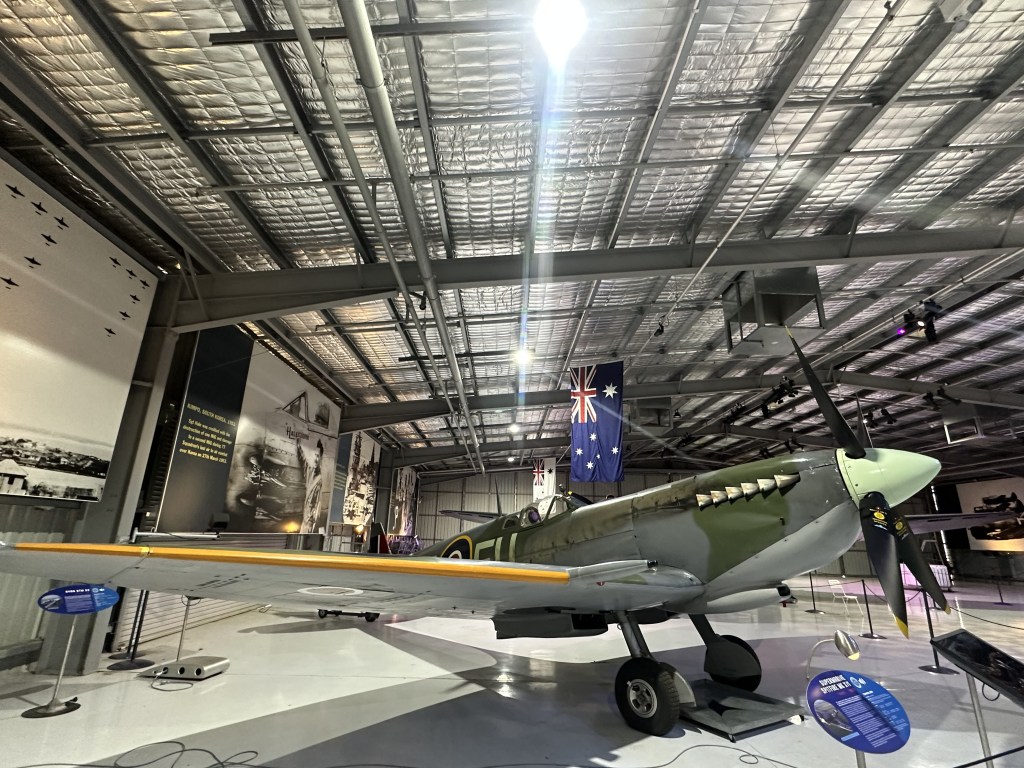
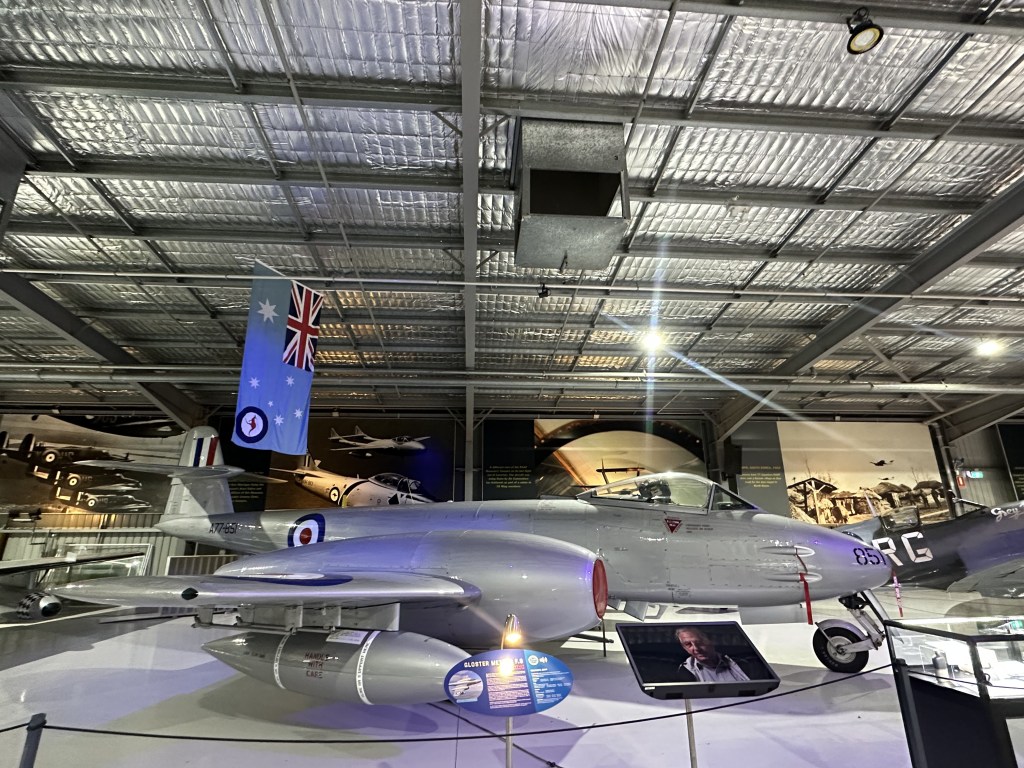
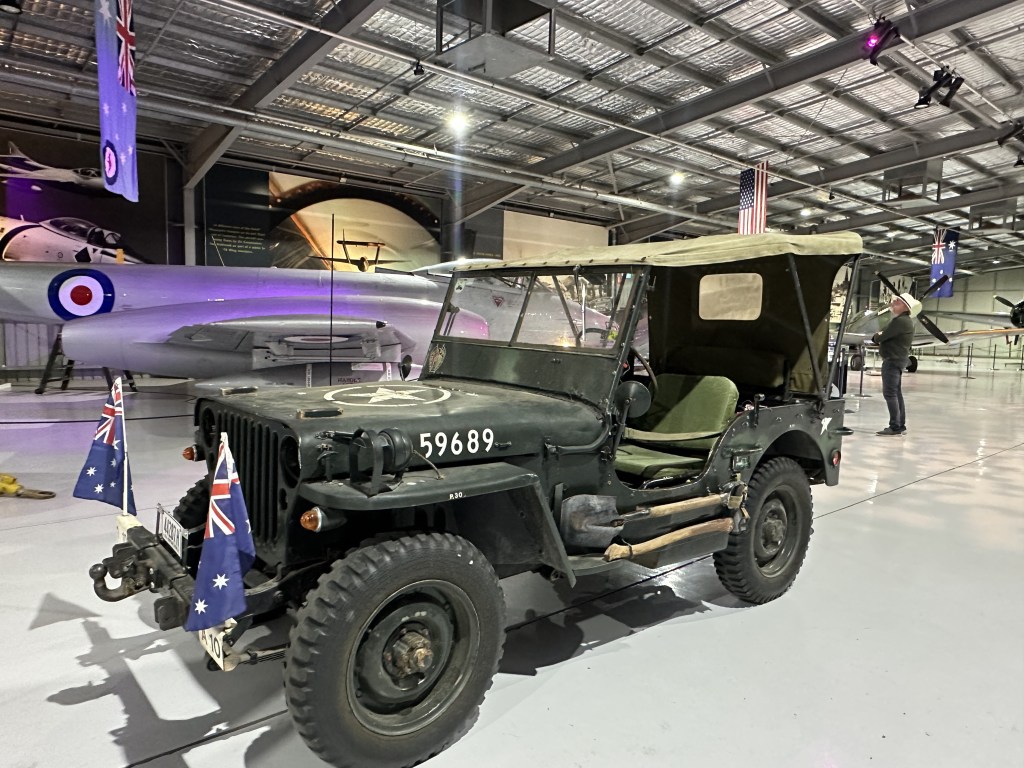
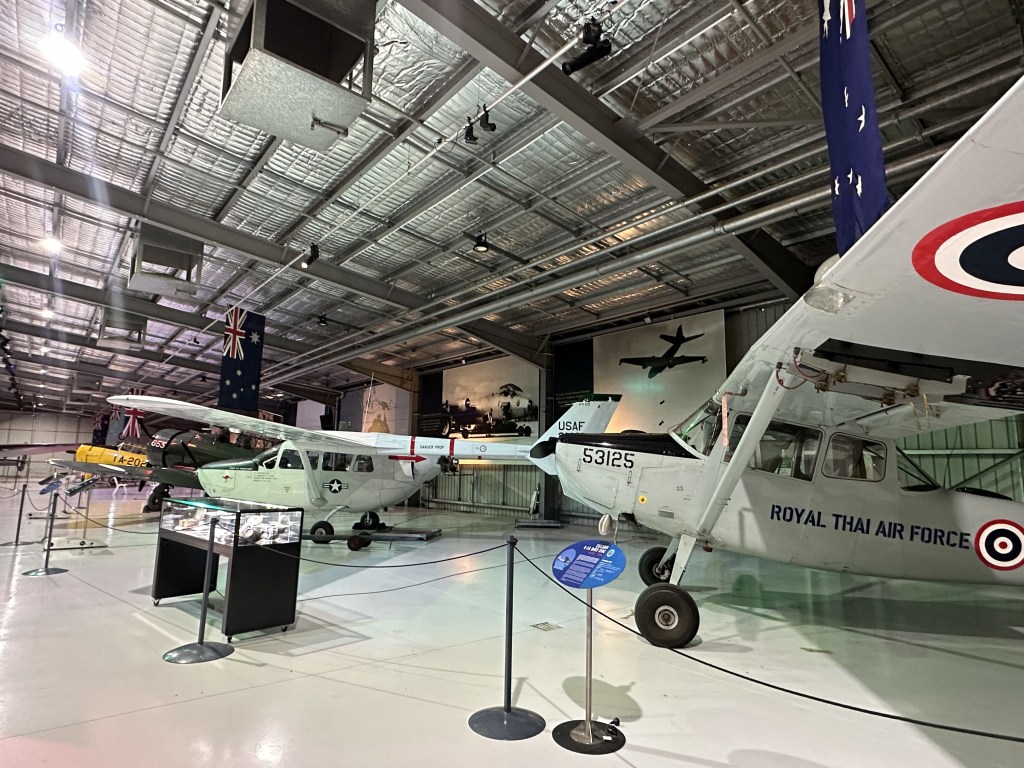
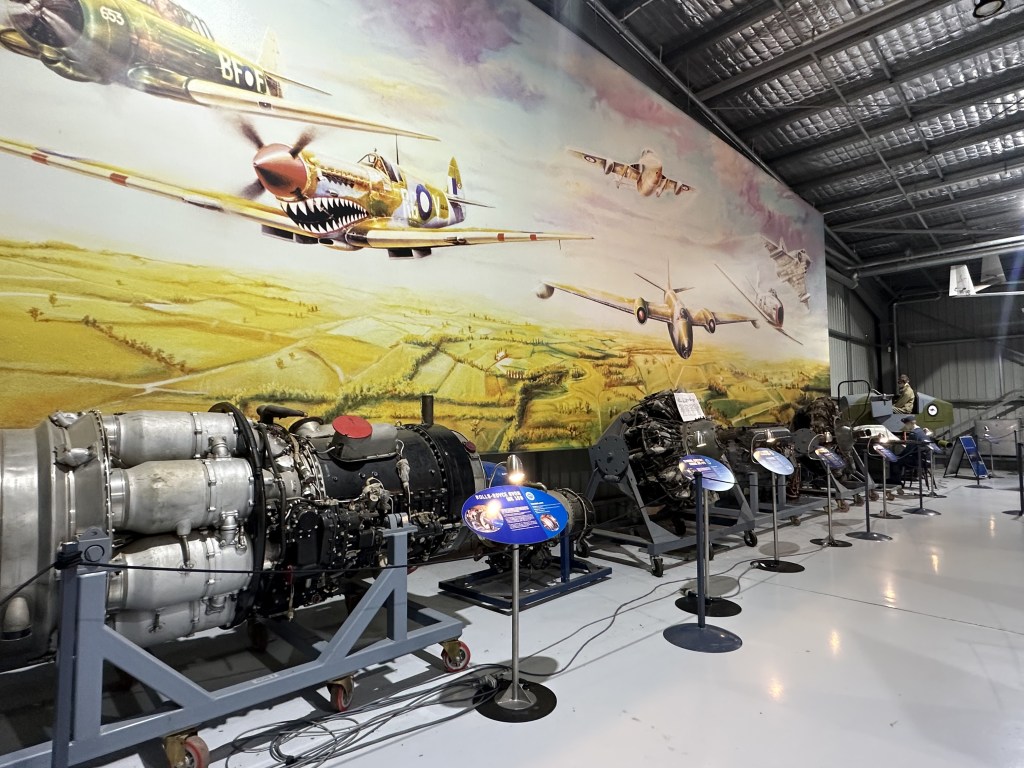
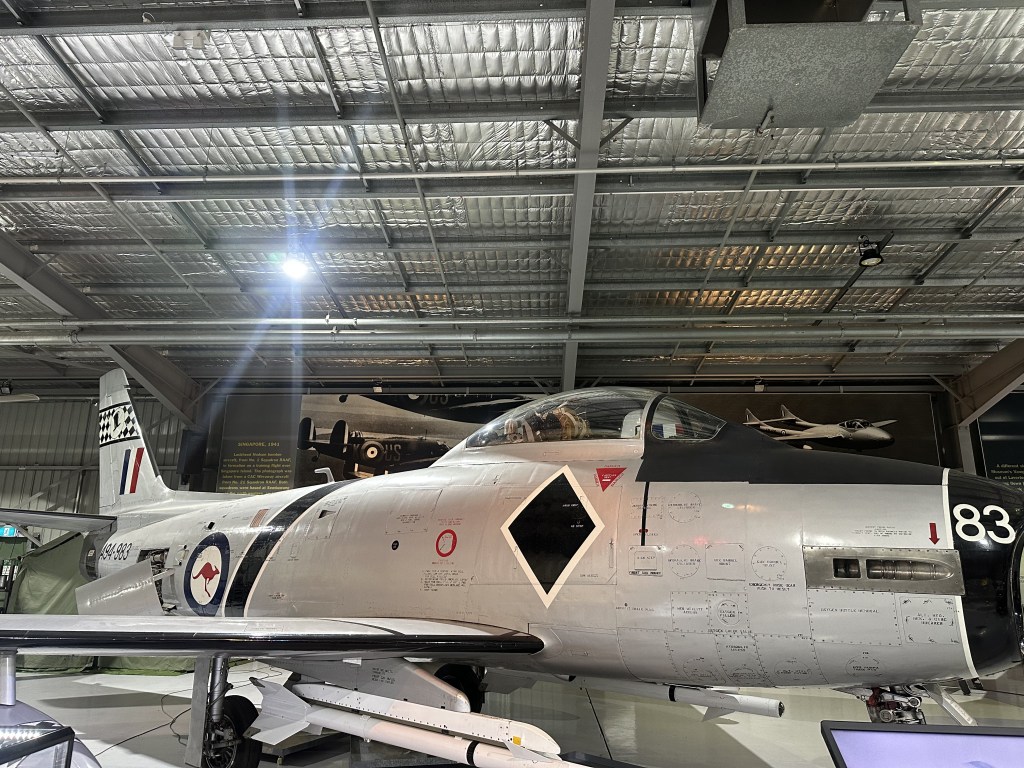
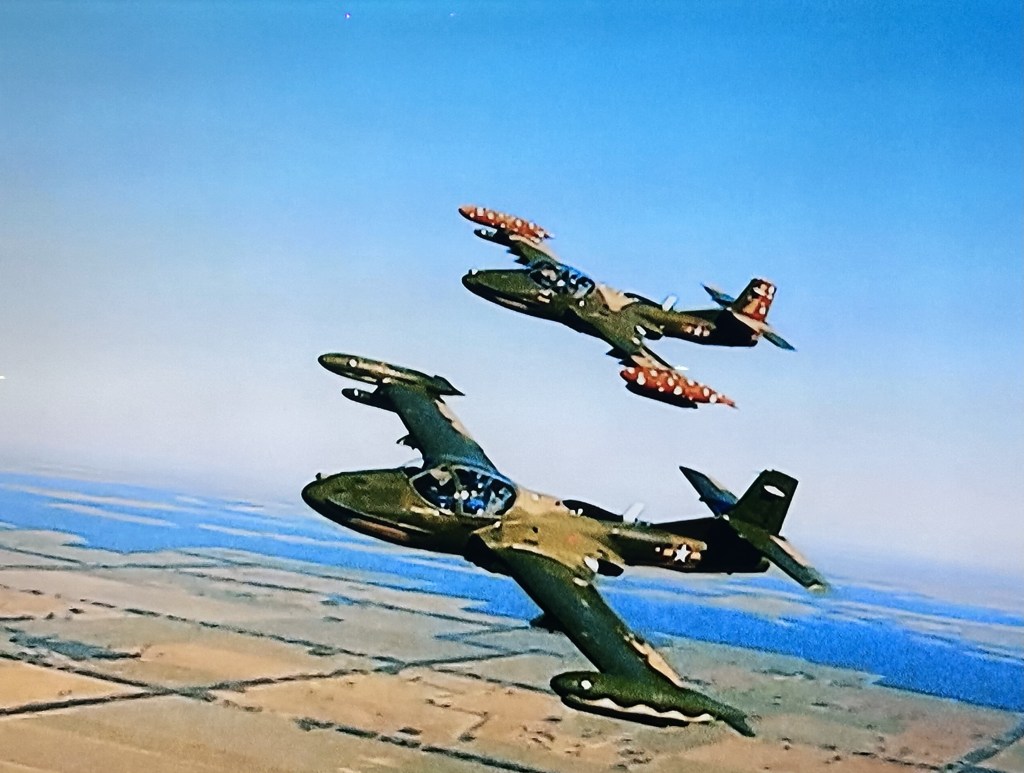
We spent a couple of hours at the Temora Aviation Museum in the afternoon. I wasn’t particularly interested in going as I don’t really have an interest in planes (Unless it is taking me somewhere exciting) but I was surprised how good and well laid out the museum is. It kept me interested for a couple of hours. I appreciate all the work and effort put in by volunteers and in particular David Lowy who was one of the original founders of the museum.

I found it fascinating that all the planes on display are still flyable and come out each year for the annual air show. That would be a spectacular occasion. Must put it on the list!

The Temora Aviation Museum is well worth a visit, even if, like me, you are not particularly into aircraft.
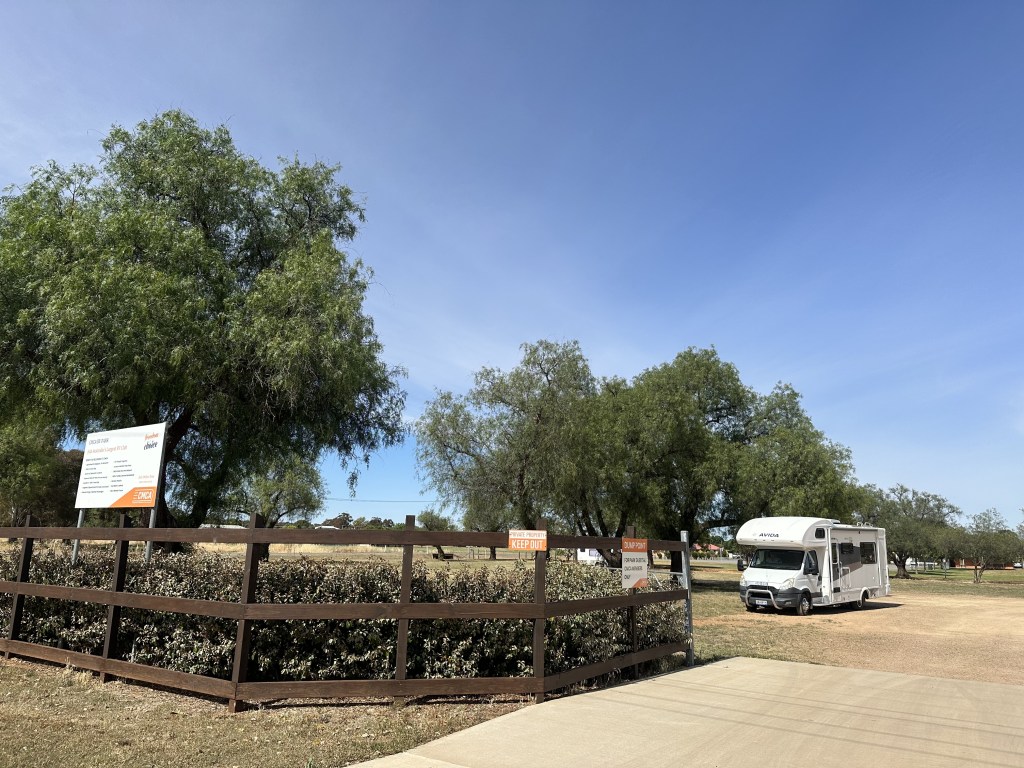
Temora is home to one of the Campervan & Motorhome Club of Australia (CMCA) RV Parks. These fabulous campgrounds are for self contained vehicles and usually consist of a flat fenced area with a dump point and potable water tap. Often they also have a communal fire pit for happy hour and they are manned by volunteer custodians. As we are members it cost us the grand sum of $7 to camp the night.

Oh dear!! We ran out of gas whilst half way through cooking a roast lamb dinner and had to quickly pack up and drive into town to find some gas. Fortunately we were able to get our gas bottles filled and were quickly back at the RV park with dinner cooking again.
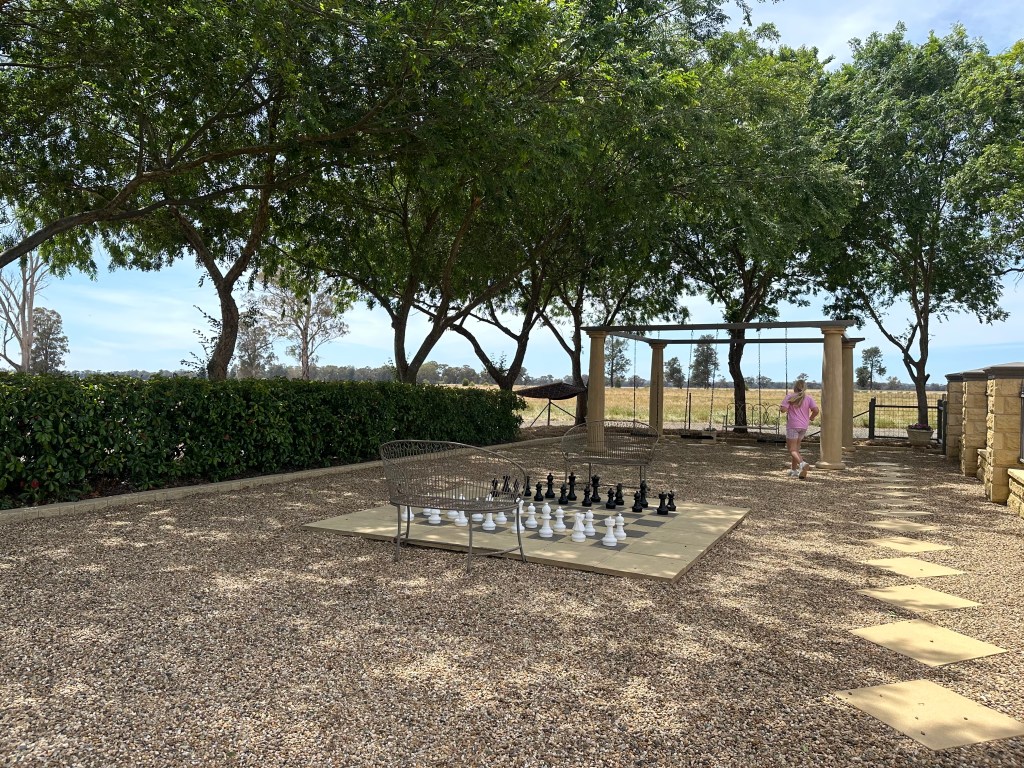
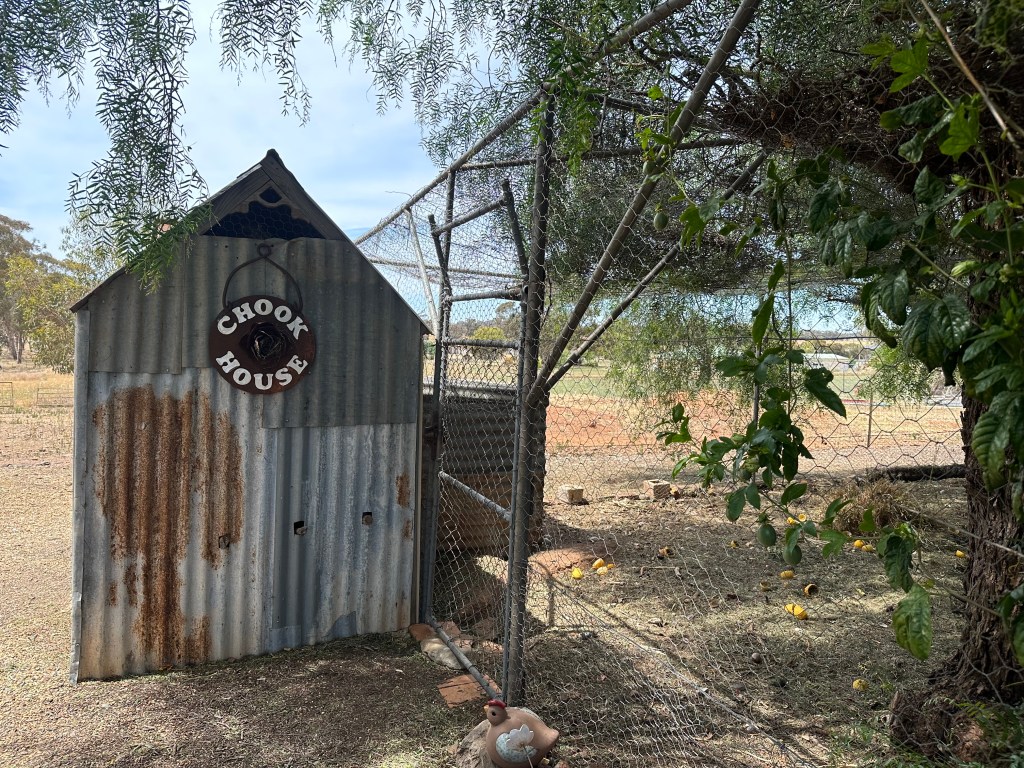
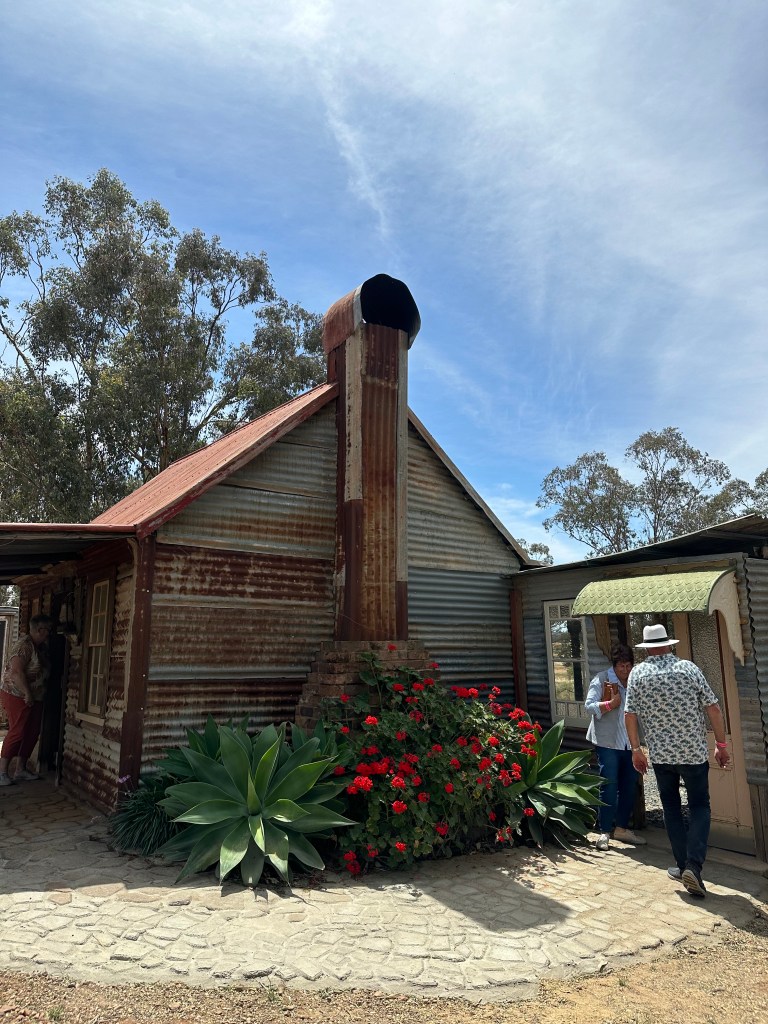
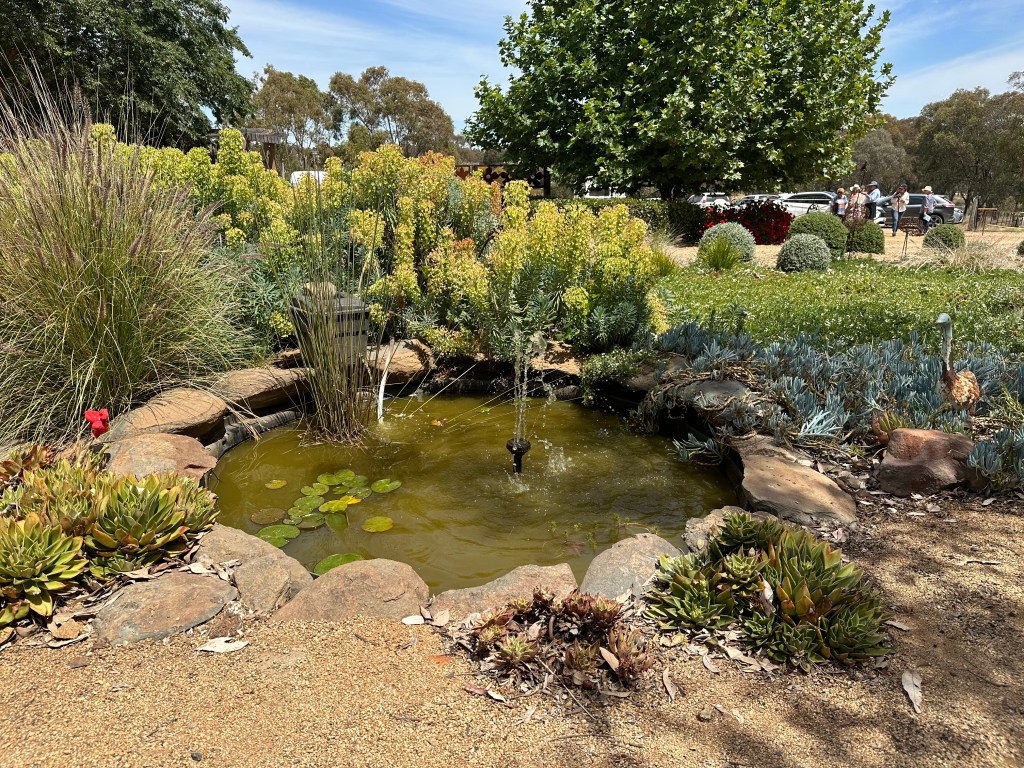
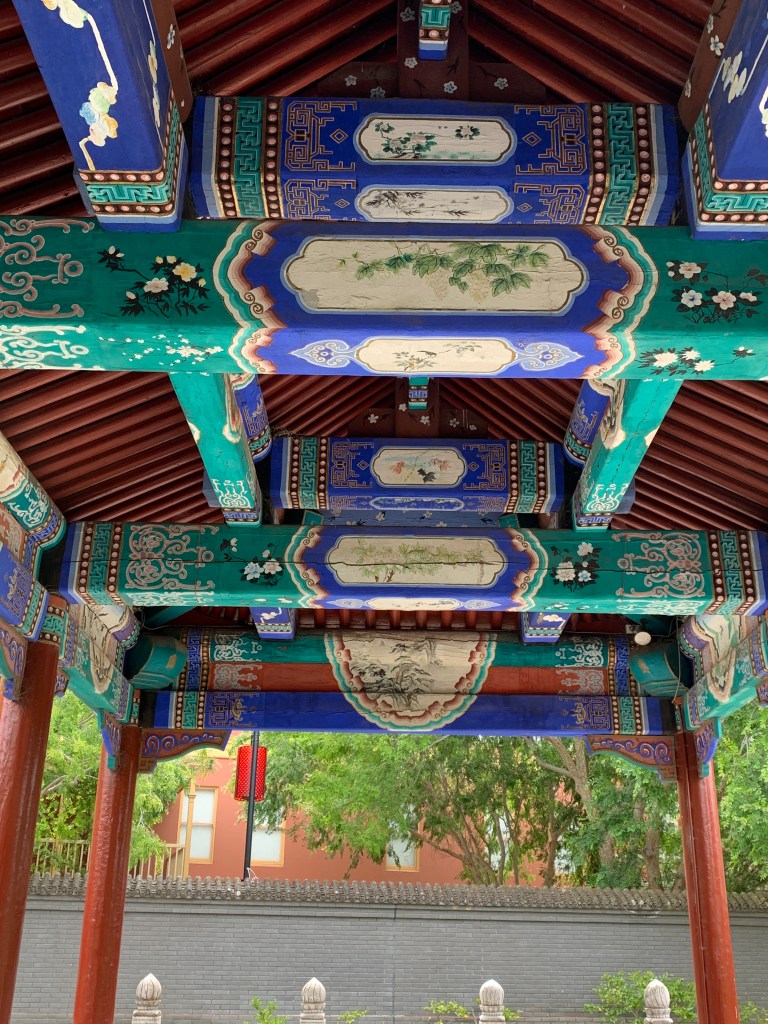
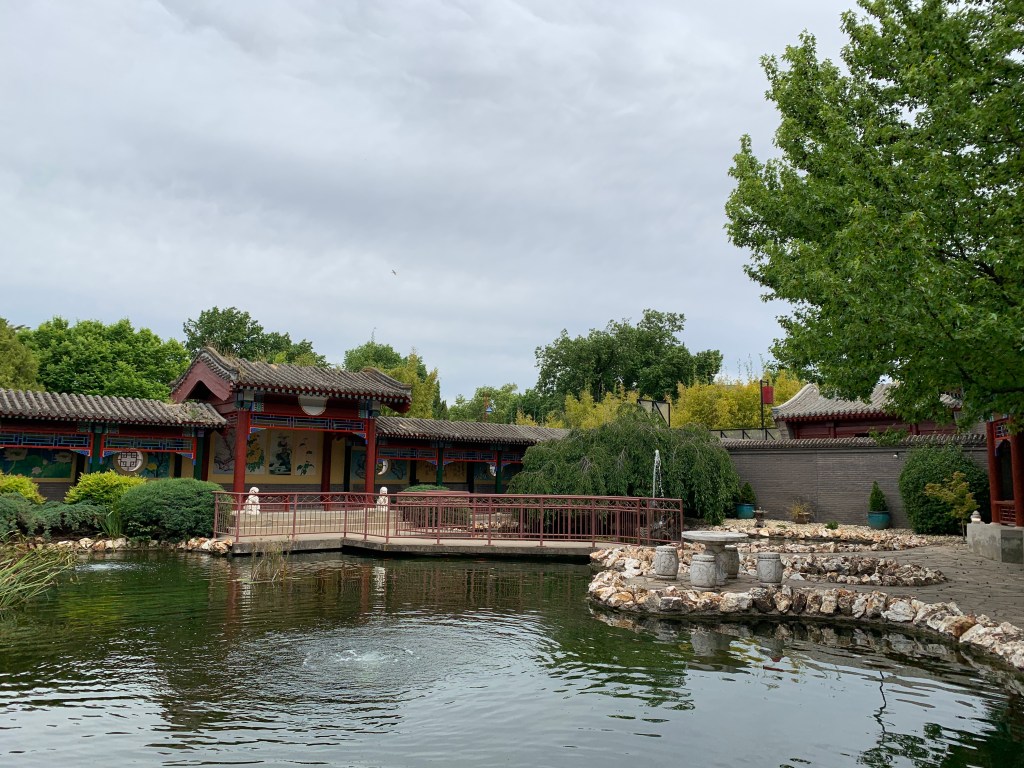
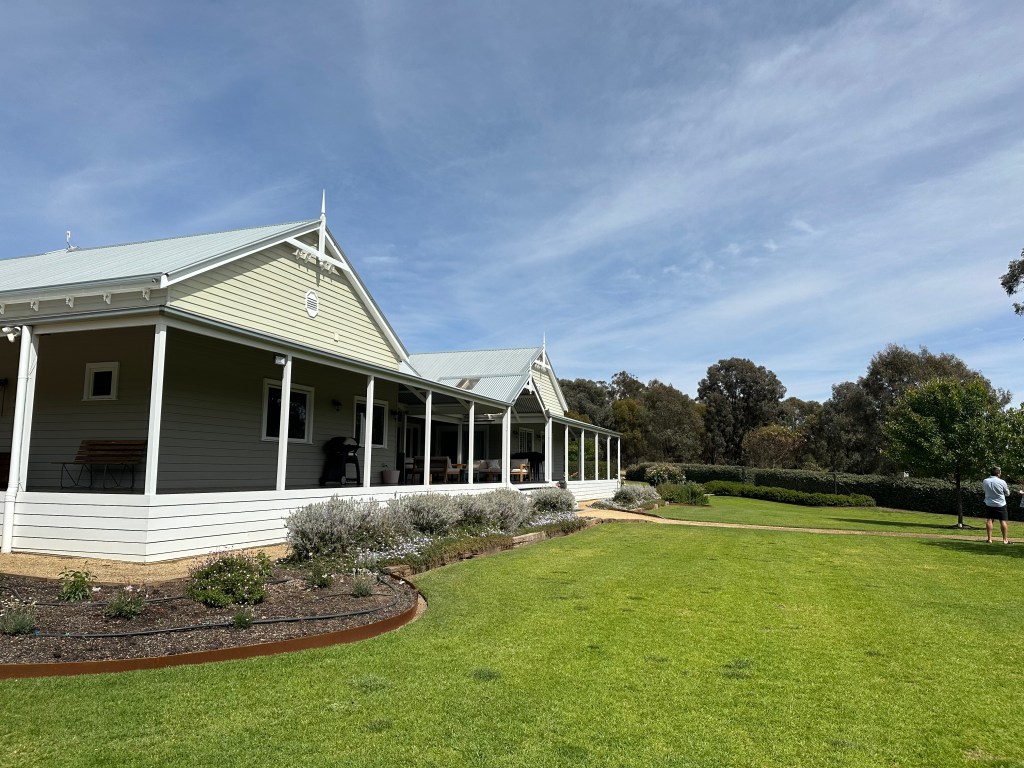
The next turned out to be a lovely sunny one and we spent the day visiting the six St Anne’s Open Gardens. St Anne’s is a school in Temora. To visit the open gardens you must first go to the school to purchase your entry to the gardens and are given a map to follow.
After a lovely day visiting the gardens we headed for home.

Spirit of the Land Festival, Lockhart NSW

We made a spur of the moment decision to get the motorhome out of its shed and go somewhere. I’d read on Facebook about the Spirit of the Land Festival in Lockhart, which is only 155km from our home town, and thought it sounded like fun. The motorhome had been sitting in its shed for a while and needed a good clean before we could go anywhere. Our poor motorhome was covered in dust and had spiderwebs growing!

After spending a whole day washing and cleaning (I even washed the roof!) she was spick and span and ready for travel. A quick pack of some clothes and food and we were heading off. Oh, what a great feeling that is….driving out the gate, perched up high, and everything we needed travelling with us.

I’d had a phone call the day before we left from Richard’s cousins and our intrepid travel companions on many previous trips in Australia and overseas. They were planning to come to Griffith on their way south to Victoria and spend the night at our place. After I explained that we wouldn’t be there as we were going to Lockhart it was decided they’d travel there too and meet us there. Excellent!

We set off on Saturday morning after the four grandchildren, who’d had a sleepover at our house, had been collected by their parents. They all wanted to come with us!

We had an uneventful journey to Lockhart via Darlington Point and arrived around lunchtime. The Main Street was blocked off for the festival, the park looked busy with lots of stalls and a good crowd of people.

Minor Disaster!

As we were driving into town I heard a clunk. As first I though something had fallen on the floor but had a quick look behind me and couldn’t see anything. I put the noise down to a pothole in the road. We drove through town to the Showground where we planned to stay the night and where Catie and Robert would meet up with us.

We quickly found a spot to camp with plenty of room for Catie and Robert’s rig with their Ranger and caravan and started to set up camp. This was when I noticed something odd. On the drivers side, just in front of where the gas bottles are stored, is one of our two water tanks. It was hanging down almost touching the ground. Oh no! That didnt look good!

We investigated further and found the bolts holding one side of the tank to our chassis had let go and the full water tank was only hanging on on one side. There was 90kg of water in there!

What to do? We spent the next few hours emptying the tank and jacking it back up so we could somehow tie it back up temporarily. This meant we had no water as our two tanks are connected and to drain one drained the other. Good thing the showground had toilets and showers.

Catie and Robert arrived around 4 o’clock and we borrowed a ratchet strap from Robert’s stash to tie the tank back to the chassis. Richard and Robert achieved this crawling underneath in that small space. That would get us home where we could get it repaired.

The four of us walked into town as the sun was setting and headed to Hodgson Park on the western side of Brooking Lagoon, where there were food vans and tables and chairs set up for visitors. The fireworks display was to be held there later once it was dark.

We found a table and moved it to a position that we thought would be good so we could watch the fireworks from there and settled in to enjoy the festival atmosphere. We’d brought our own wine with us so just need to buy some food. It was lovely sitting in the park and catching up with Catie and Robert again.

The fireworks went off after dark and they went for around 15 minutes. We were impressed at the awesome display especially for a small town festival. When they were over the four of us walked back to camp at the showground and headed off to bed.

The next morning, after a quick breakfast and packing up camp, we drove into town, parked our vehicles and walked to the Main Street to check out all the stalls. What a great variety of stalls there were. Very impressive.

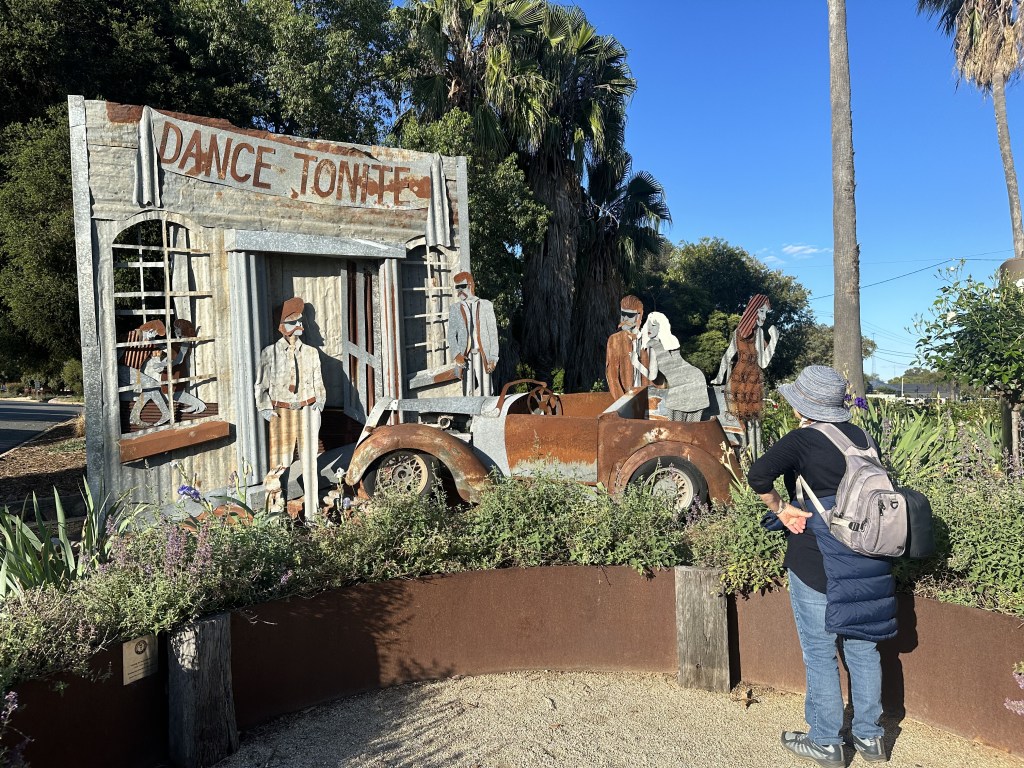
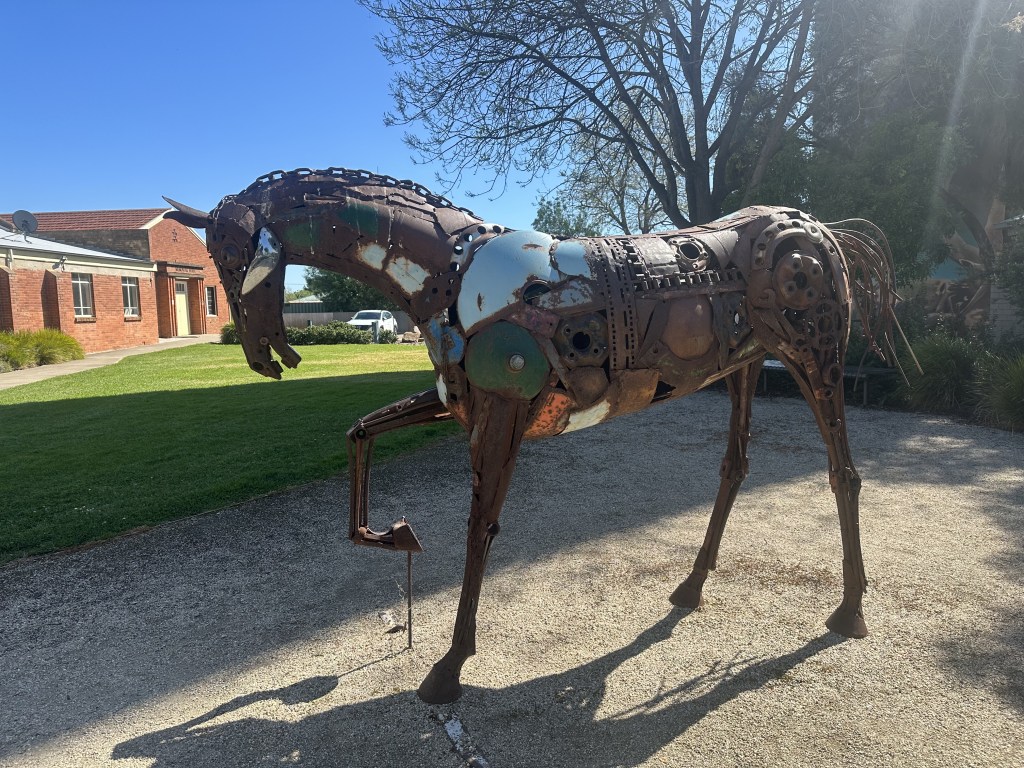
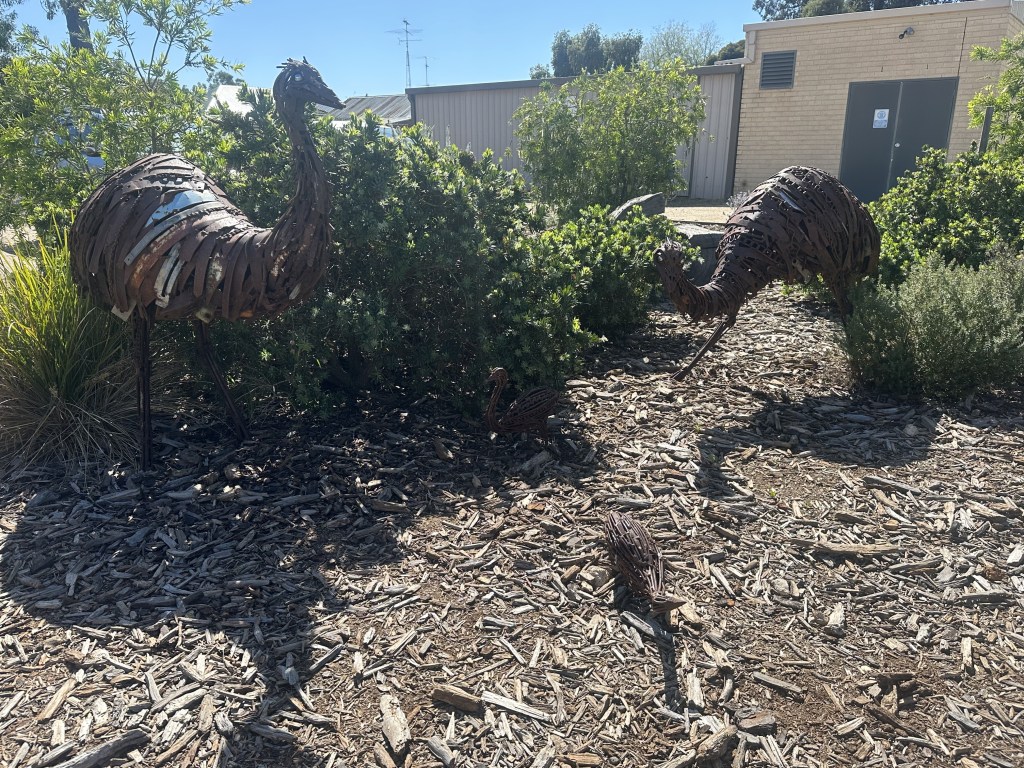
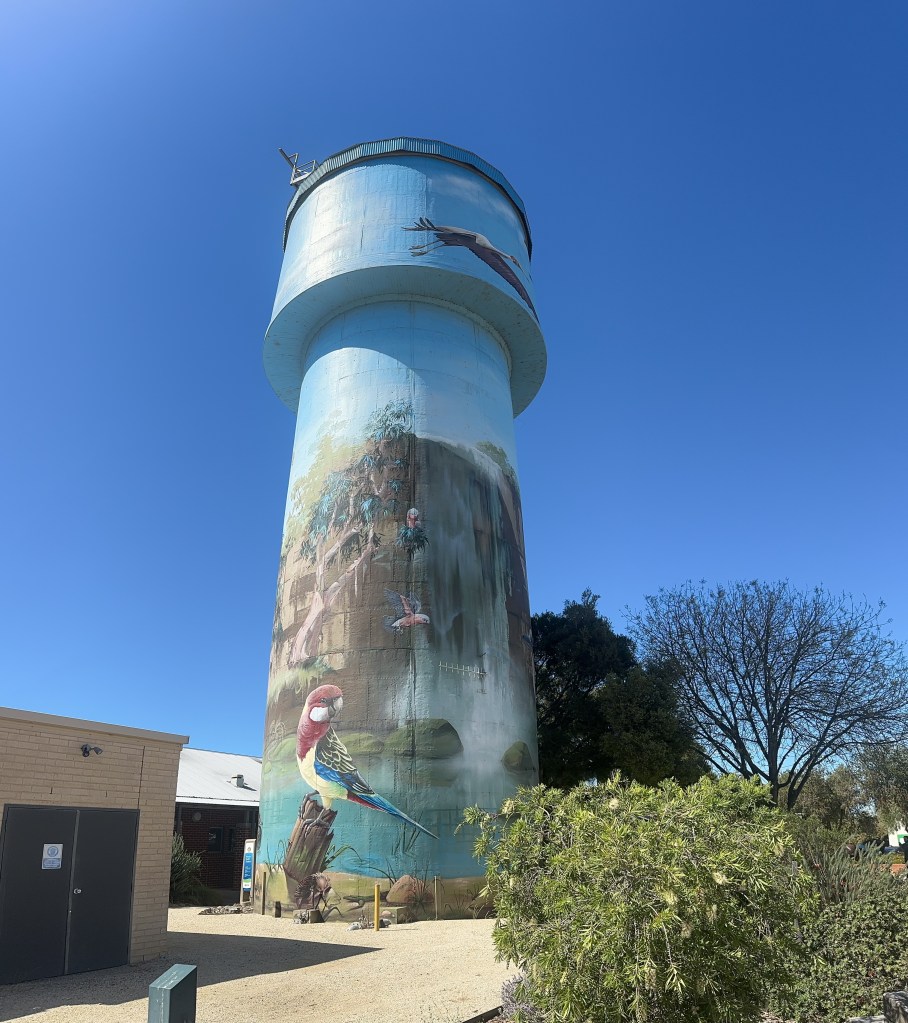
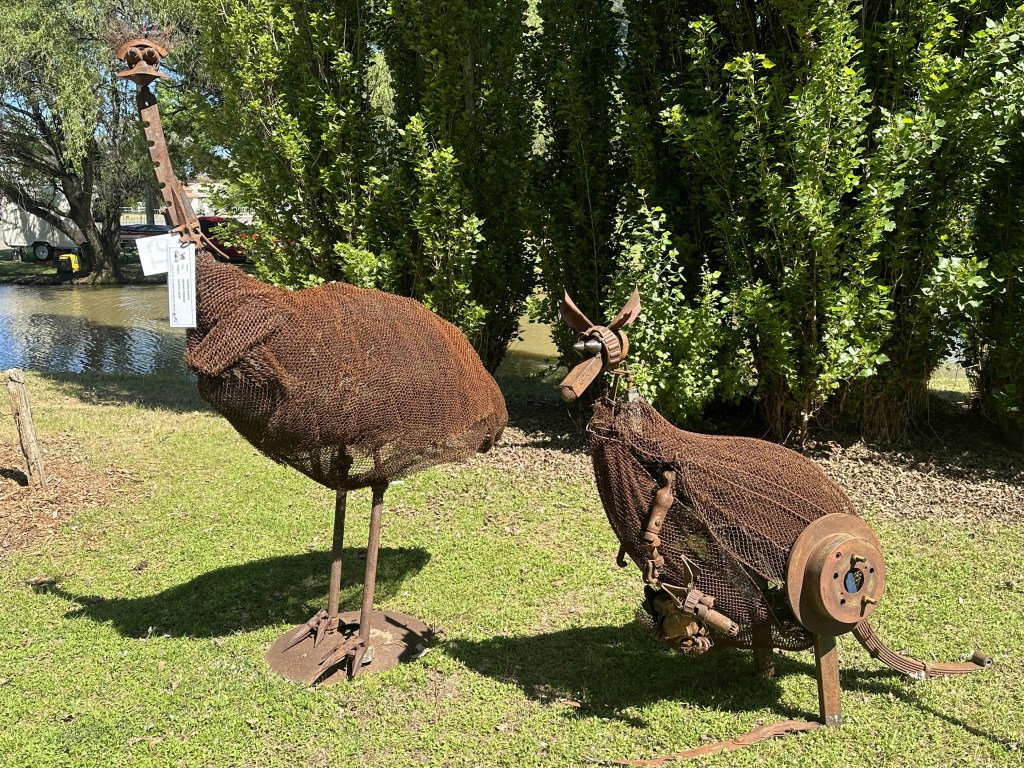
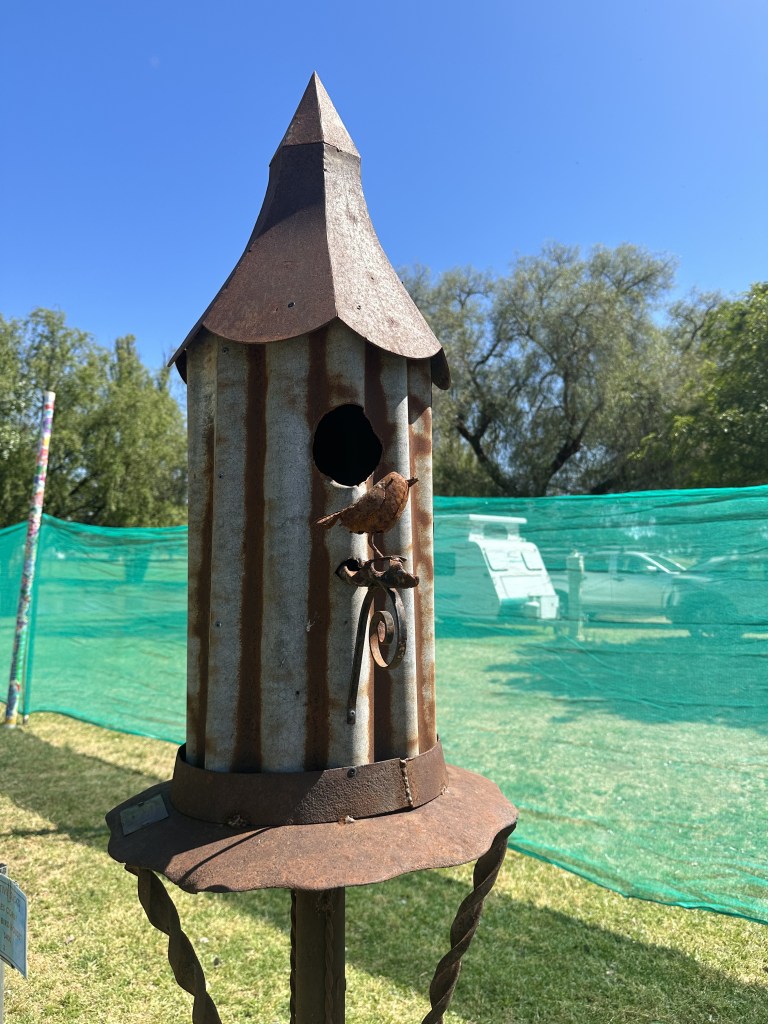
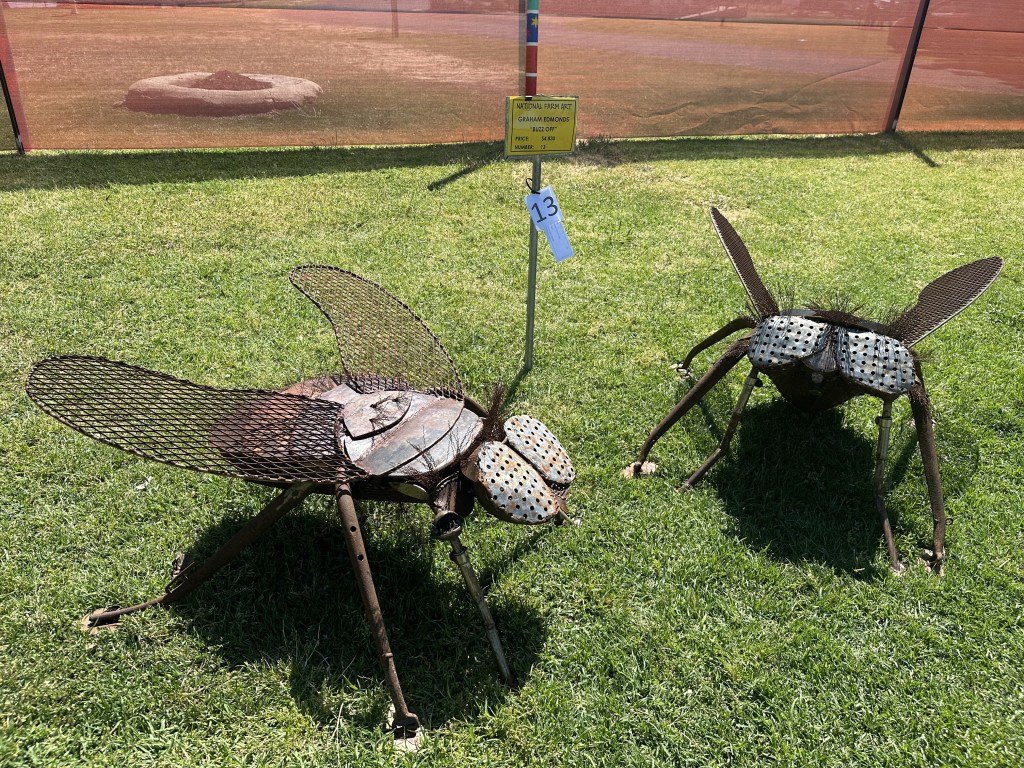
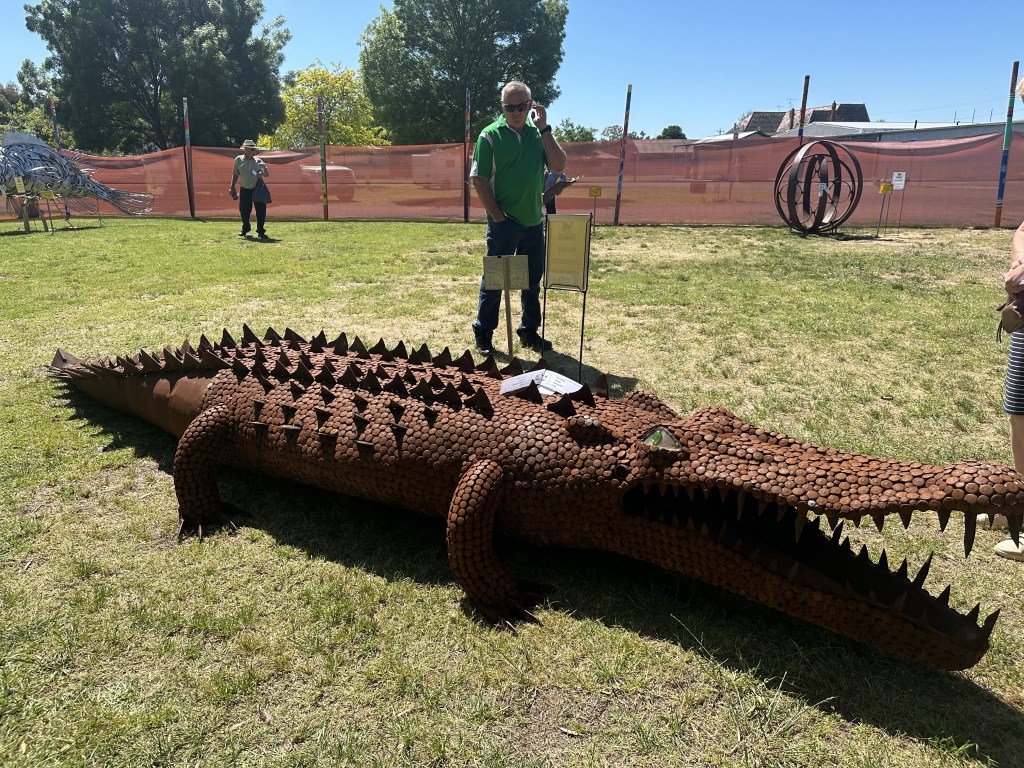
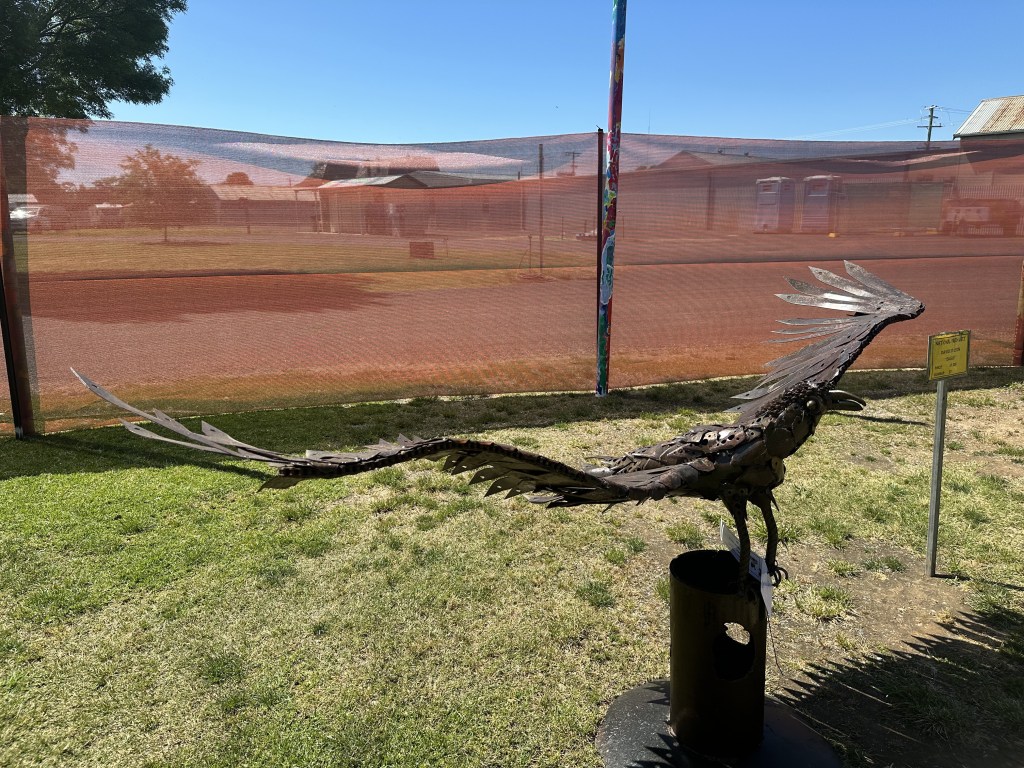
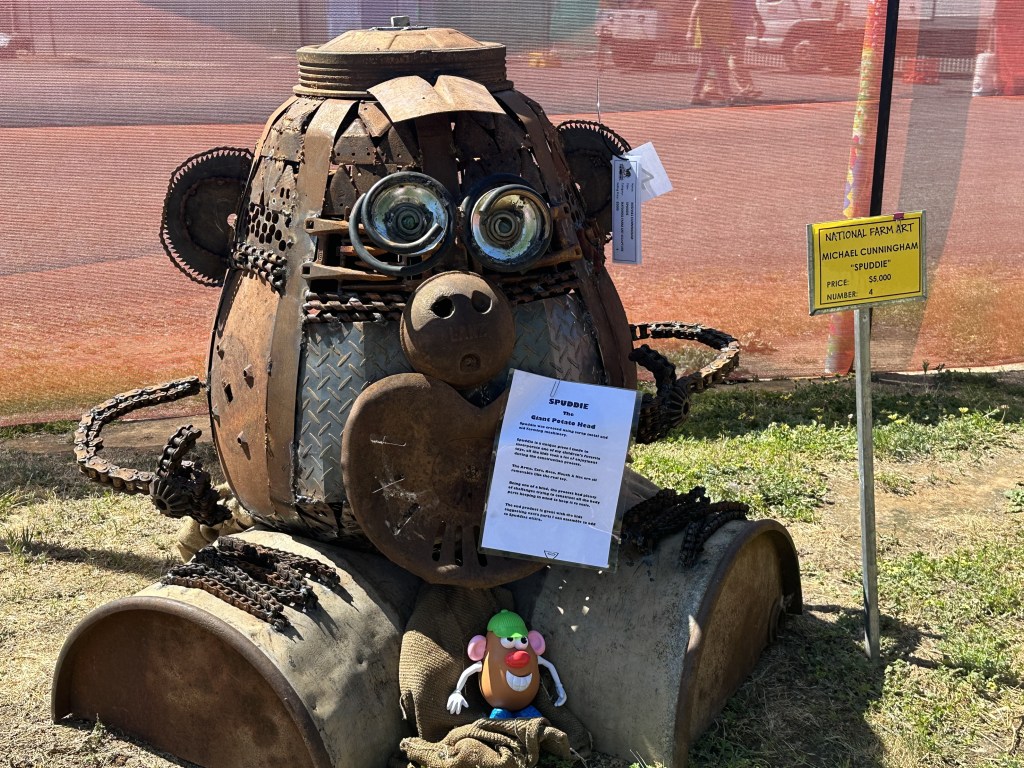
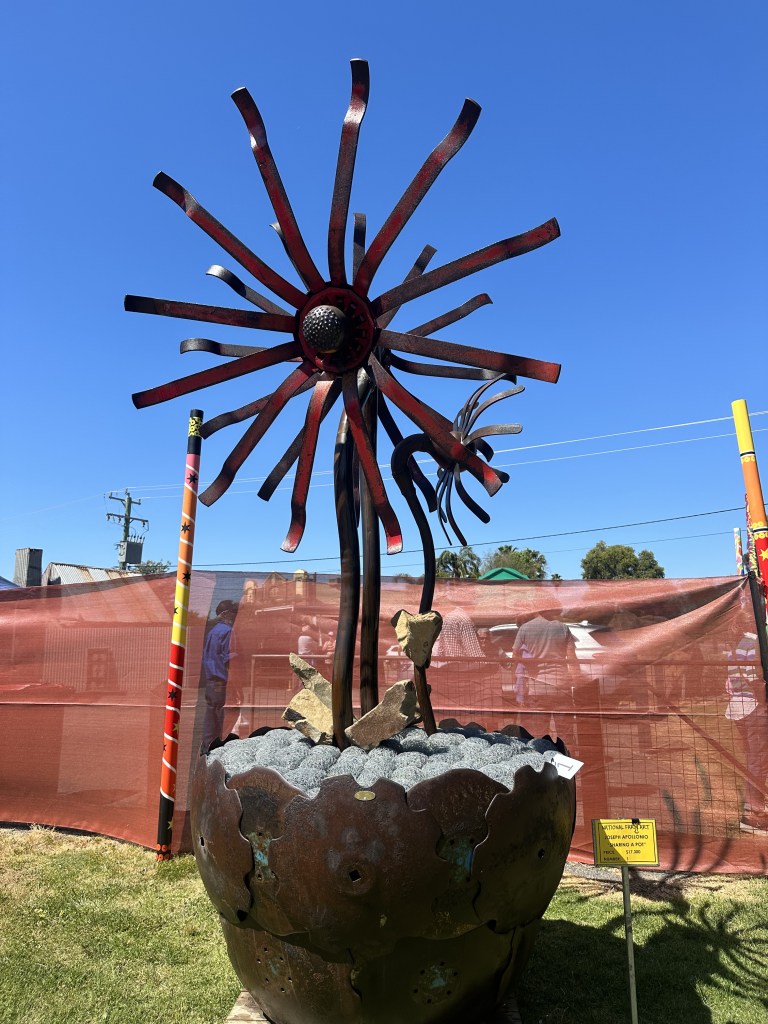
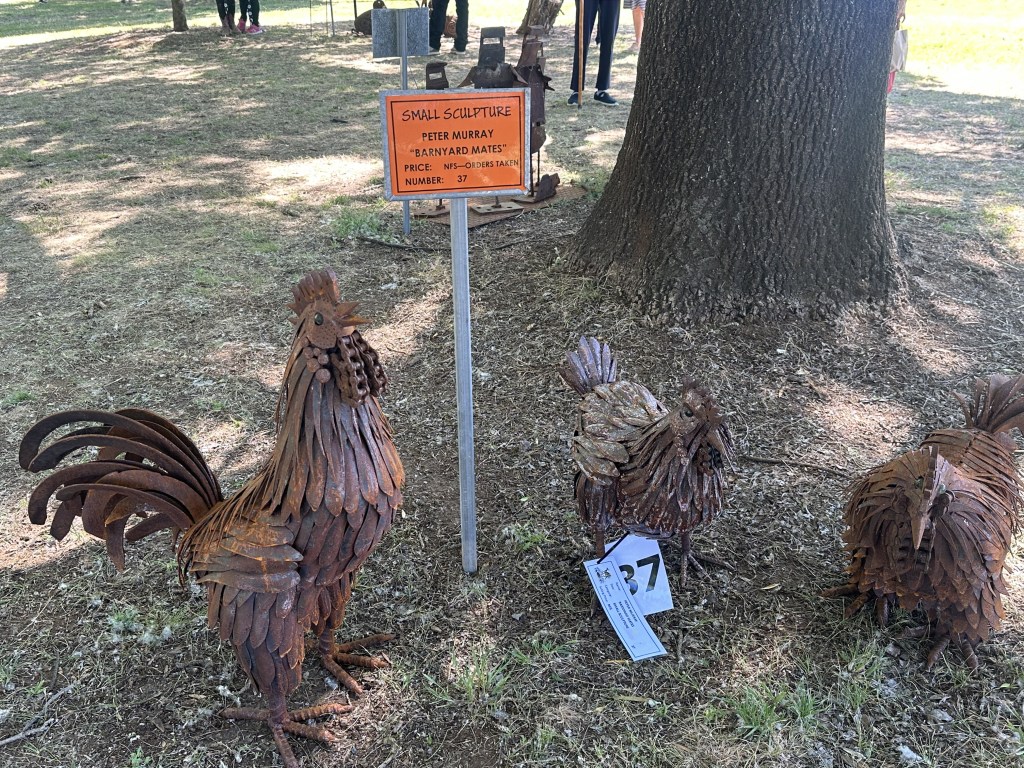
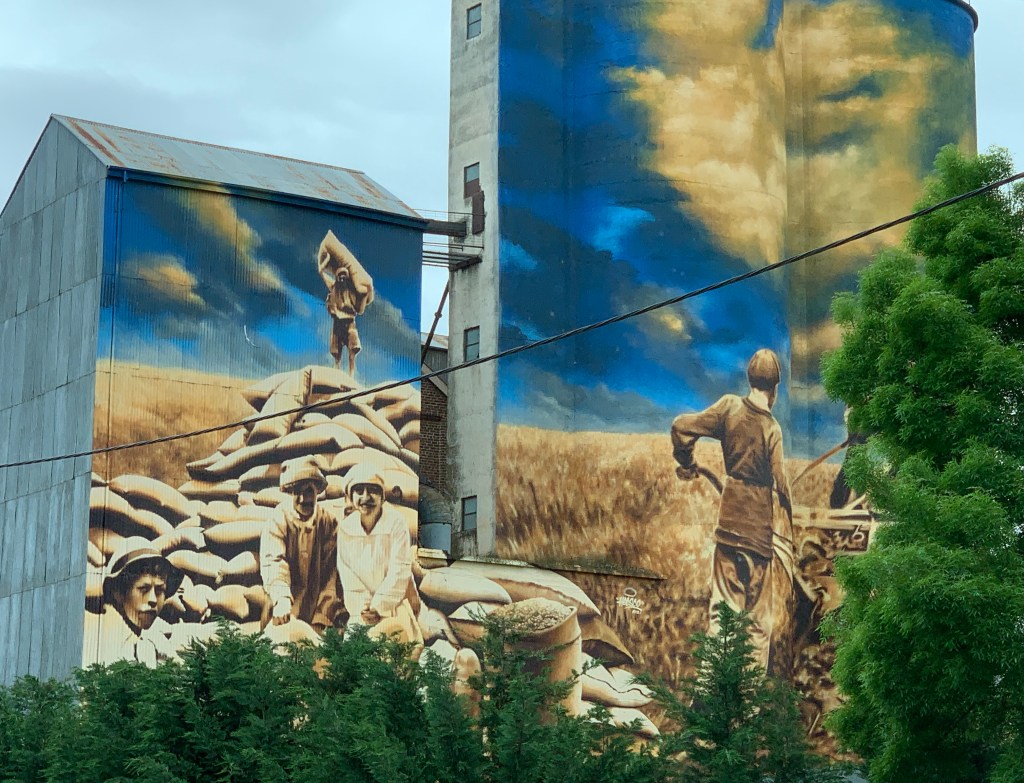
We visited the towns painted water tower and admired the amazing sculputures around the town. We also visited the Town Hall to check out the entries in the art and photography competitions. Some truly incredible paintings and photos. Some people are just so clever.

The $10 entry also enabled us to enter the area near the park that was fenced off and housed the sculpture competition. These amazing sculptures blow me away. The big ones must take hours and hours of work to complete. They really are fantastic creations.

The winner of this year’s competition was a statue of a large bull. He was made from scraps around the farm and included such things as spanners, spark plugs, screwdrivers, old discs and chains. It was a worthy entry for first prize.

I especially liked seeing the ones created by kids under 12. Fantastic effort by the kids creating sculptures.

We decided we’d better head for home as it would be slow going with our broken water tank so we said goodbye to Catie and Robert who were going to stay on for a bit and visit the Art Gallery. We might catch up again after they’ve been south and are on their way home to Dubbo in a few weeks time.

Fortunately our trip home was uneventful. We pulled up at Brewery Flat in Narrandera for some lunch. Rich checked the strap was holding and it hadn’t moved at all so we were good to continue.

We arrived home in the afternoon with no further adventures and the next morning booked the motorhome in to have the water tank repaired. $165 later and it was all fixed and ready to go on our next meander.

Easter School Holidays – Camping in our paddock

After spending a couple of weeks over Easter in the Snowy Mountains we came home to glorious autumn weather. It’s a lovely time of the year in the Riverina. We usually have sunny warm days and cold nights. Trees are changing colour and starting to lose their leaves for winter.

Our daughter and her three kids were keen to do a camping trip in their van and swags and we racked our brains as to where we could go just for a couple of days. The solution……….camping in our own paddock!

We live on a 7 acre hobby farm. The front 3 acres is our large farm garden and the back is divided into a couple of paddocks. Our paddocks consist of pasture that we mow regularly and at this time of year they are all lovely and green…..makes for a great camp spot!

Katie and the kids arrived with their little van and quickly set up camp. The kids set up their swags on a large mat and we set up the motorhome alongside. There we spent the next couple of days and 2 nights camping. What fun!

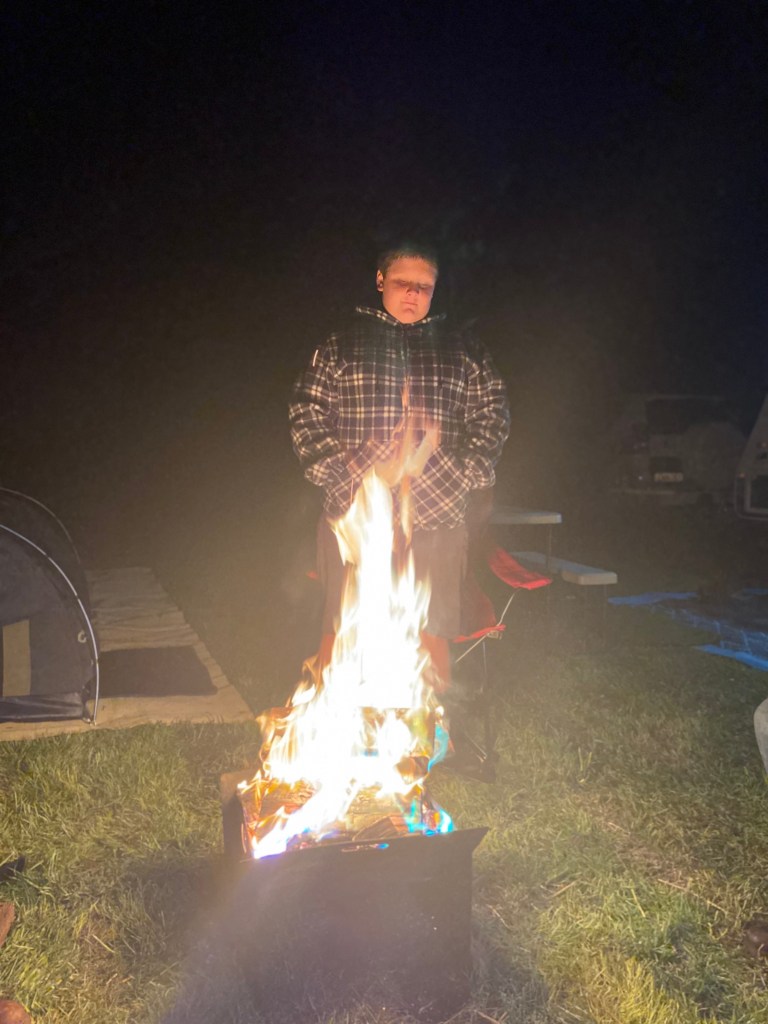
We had a bonfire the first night burning off a pile of prunings we’d been adding to over the last couple of years and we also made use of our little Kings fire pit. Excellent for cooking spuds in foil and baked bean & cheese jaffles for lunch.

What did your family do in the school holidays?

Who takes grandchildren camping?

We do!

On many occasions we have taken one or more of our 7 grandchildren away on a trip in the motorhome with us. Each year in January our large extended family get together for a week of waterskiing and catching up. In 2023 we were expecting some 72 family members to make the trek to ‘The Dam”. How epic is that?

For the last few years one grandchild has traveled with us on the Friday and camped with us overnight before continuing on our journey to ‘The Dam’ and meeting up with the rest of the family. This year it was our 6 year old grandson Henry’s turn and boy, was he one excited boy when we set of from home in the morning. How lovely it is to see excitement in children!

He arrived at our house bright and early with his bag, books, drink bottle and teddy all set for the big adventure of going in the motorhome with Gran and Pa.

I think he was a bit disappointed that we weren’t ready to leave and we didn’t drive out the gate until 10.30am.

It’s some 460km from our home to ‘The Dam’ at Grabine Lakeside State Park situated on Wyangala Dam in the central west of NSW. We don’t tend to travel that far in one day so we like to leave the day before everyone else and take our time getting there. Most of the others arrive at ‘The Dam’ on the Saturday.

Last year we must have left earlier because we made it to Gunning by lunch time and ended up camping at Bigga Recreation Ground however, because of our late start we arrived in Gunning late in the afternoon and decided to make camp at the Gunning Showground.

Gunning Showground is one of two free camps in that lovely historic town. The other is at Barbour Park next to the creek and close to the town swimming pool however we like the open spaces at the Showground. There is no power but water taps are scattered around the site. We don’t use the amenities but passed them by on the way in.

It was a busy campground with some 20 RV’s of all shapes and sizes from C class motorhomes like ours, a whizbanger, a coaster, a variety of caravans and a tent. It’s a large area so there is room to spread out.

As soon as we pulled up Henry was bursting to try out the adventure playground and fitness equipment. There’s also a small skate park next to the playground. That needed to be tried out too.

What to cook for a 6 year old? I asked him yesterday what his favourite was and the reply “nuggets and chips” so nuggets and chips it was. Glad to say the meal was eaten with much gusto and lots of lively chatter.

While Pa settled in with his book after dinner I showed Henry how we have a quick shower in the motorhome by wetting all over, turning off the taps, washing all over with soap then rinsing off. The end result one lovely clean boy who quickly jumped up on the bed with Pa. A movie was chosen and while I was typing this blog the sounds of Despicable Me 3 played in the background.

16 Guidelines for Life

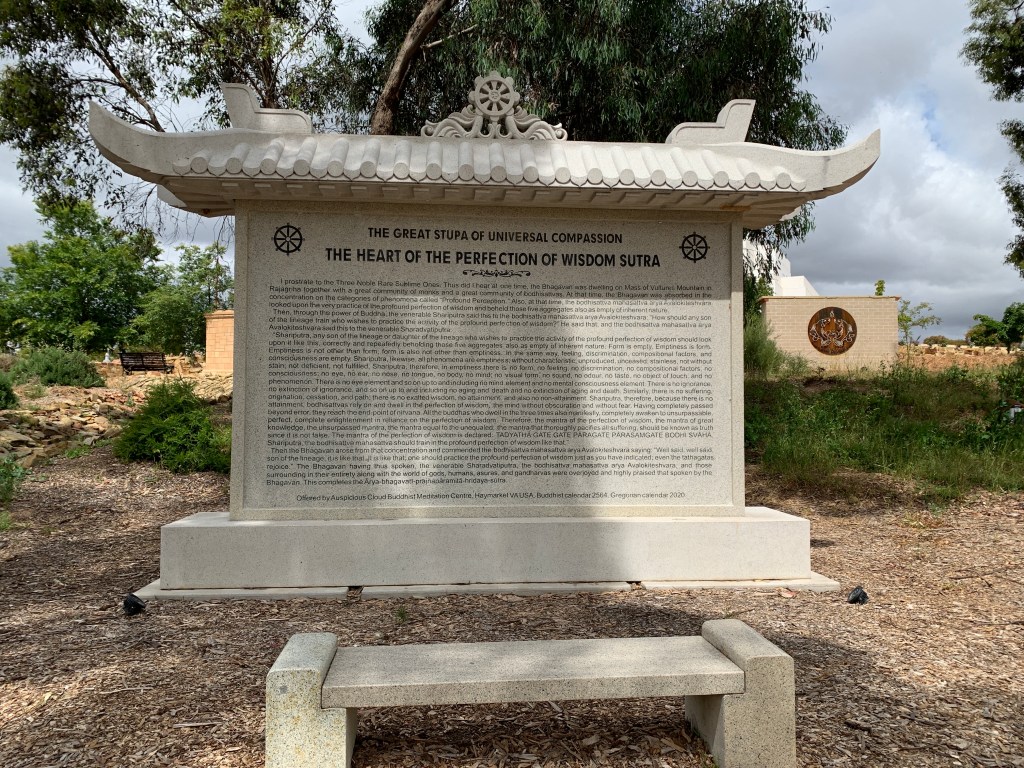
I picked up a leaflet while visiting the Great Stupa of Universal Compassion and it just resonated with me. Wouldn’t the world be a better place if everyone lived by these guidelines. I’ll share them below.

  1. HUMILITY – I am willing and able to learn from others
  2. PATIENCE – I have a calm and spacious mind
  3. CONTENTMENT – I enjoy who I am and what I have
  4. DELIGHT – I rejoice in the good fortune of others
  5. KINDNESS – I am friendly, caring and considerate
  6. HONESTY – I act with transparency and fairness
  7. GENEROSITY – I give without expecting anything in return
  8. RIGHT SPEECH – I speak with insight and sensitivity
  9. RESPECT – I honour people with a deeper understanding and experience of life
  10. FORGIVENESS – I let go of resentment and anger towards myself and others
  11. GRATITUDE – I acknowledge and repay the kindness of others
  12. LOYALTY – I am good-hearted and dependable in all relationships
  13. ASPIRATION – I seek a fulfilling way of life that avoids causing harm
  14. PRINCIPLES – I develop sincere and stable inner values
  15. SERVICE – I help and benefit others in whatever way I can
  16. COURAGE – I accept responsibilities and challenges with a calm determination

    from http://www.compassionandwisdom.org

From Bendigo to home via Echuca

After a busy day being tourists in Bendigo we went looking for a place to camp. Sadly we could find no safe place to camp due to floods having passed through Happy Jacks Reserve and Bullocks Camp so we ended up in a little Caravan Park in Maiden Gully called Avondel Caravan Park

We’d just got everything all set up and were enjoying drinks and nibbles sitting under the awning when down came the rain. There was thunder and lightening as well so we packed away the awning, getting drenched in the process. It was better to be safe than have an awning ripped off in a storm. So we spent the night indoors listening to the rain.

The next morning we set off to explore the the Great Stupa of Universal Compassion. What an amazing place that is. It deserves a post all of its own!

After a busy morning and a delicious lunch at the Great Stupa we set off northwards for home. It was very sad driving through the small town of Rochester as it had been completed devastated by a wall of floodwater. The nature strips were piled high with household belongings. Many of the residents were still living in caravans and other short term accomodation at the nearby Elmore Field Day site as their homes were not safe to return to.

It was also sad driving into Echuca where the rivers had also overflowed. Sandbags were everywhere. What a mess!

In Deniliquin the lovely little caravan park that we’d stayed in not long ago was completely underwater. A funny thing happened as we drove into town. A huge kangaroo hopped in front of us and proceeded to hop his way down the road. He was surely lost!

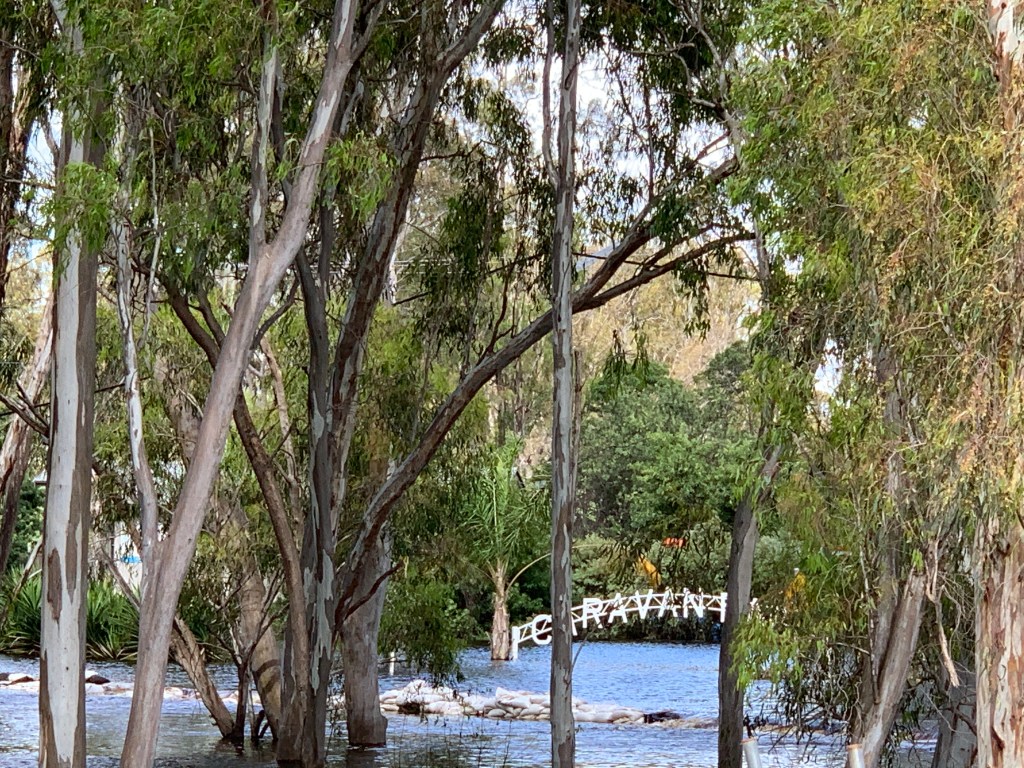
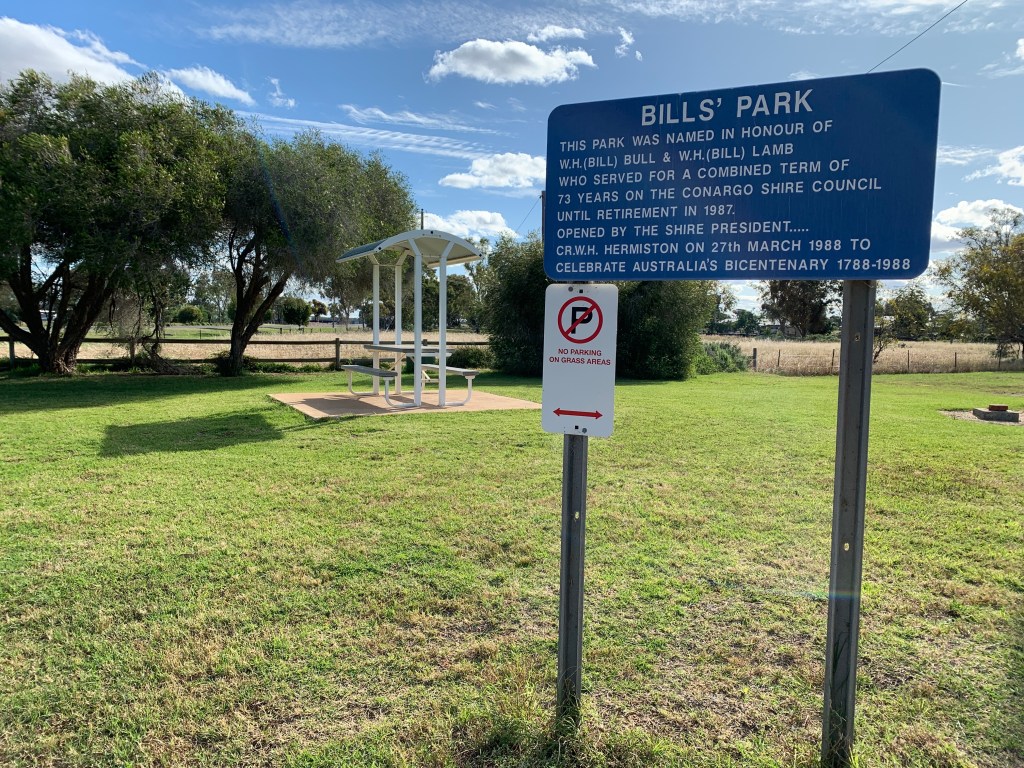
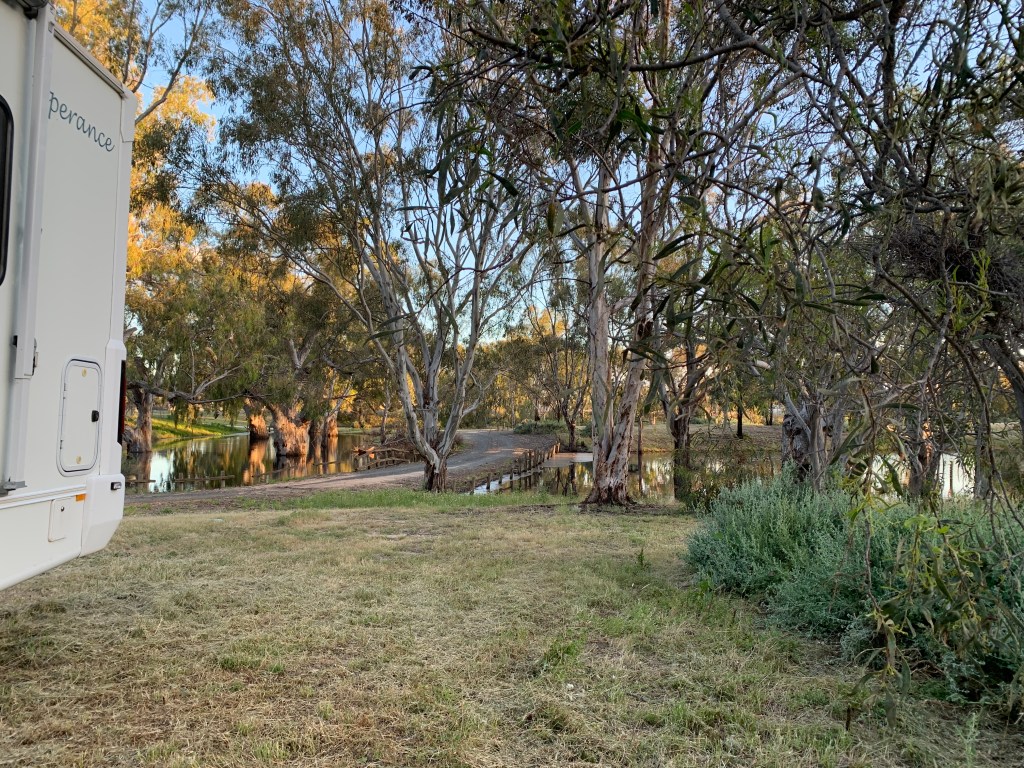
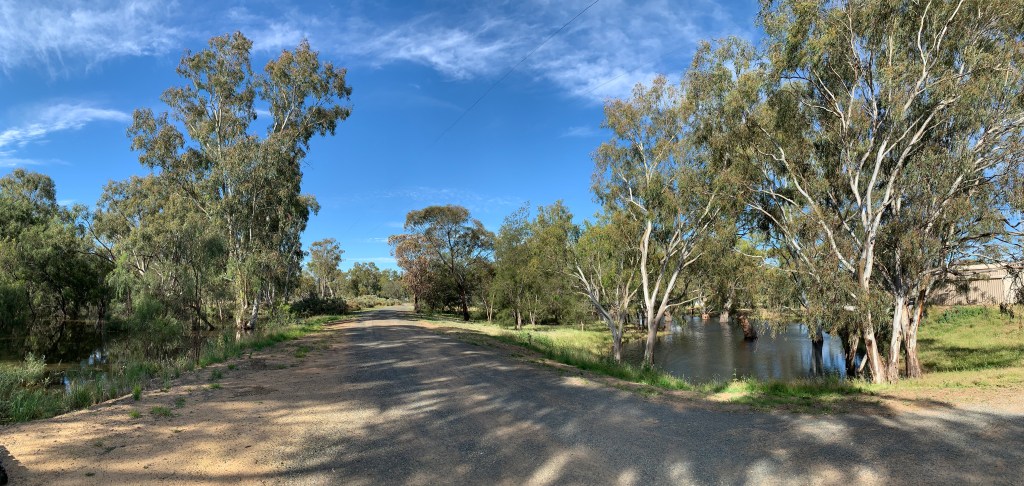
We continued on through Deniliquin and stopped in Conargo where we camped at Bills’ Park. Bills’ Park is one of two free camps in that tiny place. Little Billabong Creek was in flood but we managed to find a good spot with water views in front of us and also behind us. Bills’ Park is a lovely little park that is also home to the local Bush Fire Brigade sheds. There’s water available and a dump point, picnic tables and rubbish bins. You can even camp in tents.

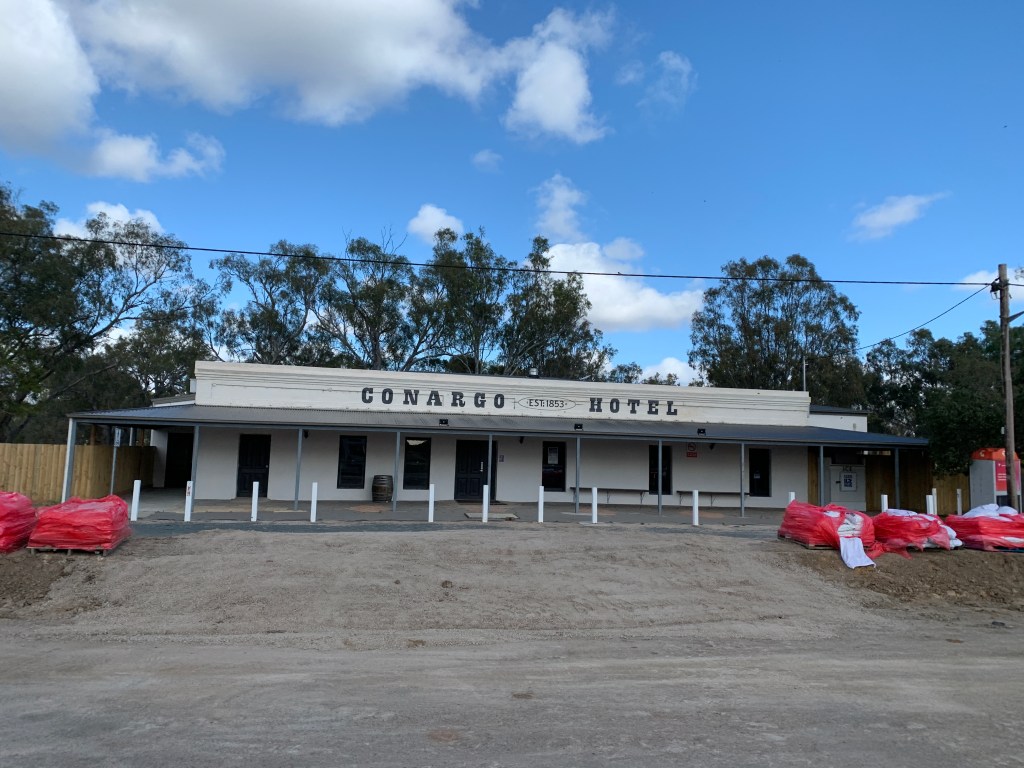
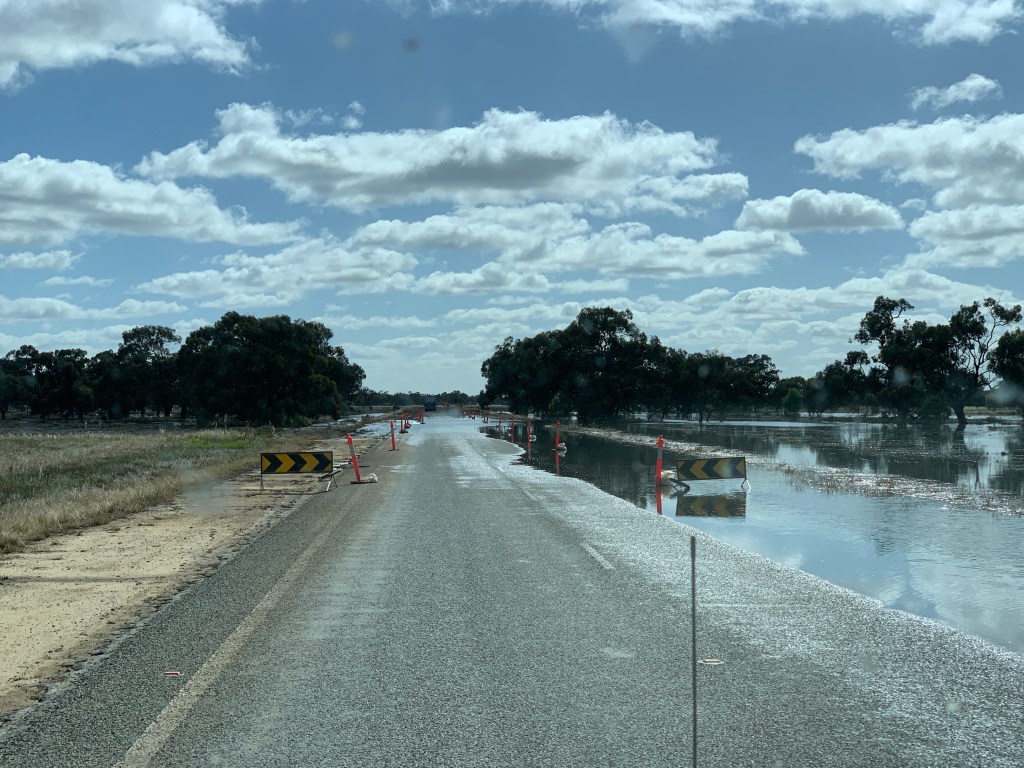
Just up the road is the famous Conargo Pub that had recently been rebuilt following the terrible fire that almost completely destroyed the building in 2014. There were sandbags all around the building to stop the creek waters from entering and the road to Carathool was closed. We continued our journey towards home and there was quite a lot of water along the sides of the road so it was a slow trip home.

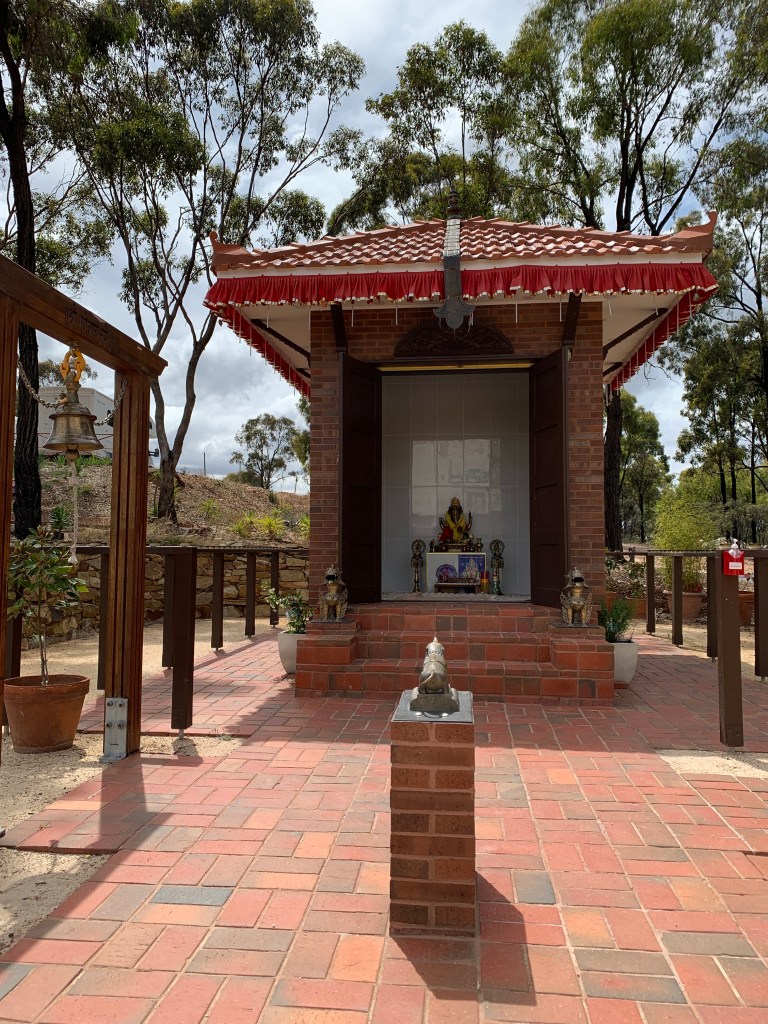
The Great Stupa of Universal Compassion

Did you know we had a Great Stupa of Universal Compassion in Australia? Neither did we.

We found it searching on TripAdviser when we were looking at what to do in our short time in Bendigo. After spending the day being tourists and hopping on and off the Talking Tram we thought we’d spend the next morning checking out the Great Stupa.

What a surprise it was! I really had no idea what to expect apart from the brochure I’d picked up in town with a photo of a large white, rather oriental looking building.

What is a stupa?
Wikipedia says that “A stupa is a mound-like or hemispherical structure containing relics (……typically the remains of Buddhist monks or nuns) that is used as a place of meditation.”

But what is it doing here near Bendigo?
Well it’s really a story of two men, one a local boy whose family have lived in Bendigo for over 150 years, Ian Green. The other is Ian’s teacher a Tibetan monk Lama Thubten Yeshe. After a successful career in advertising where Ian admits to ‘burning a candle at both ends’ he undertook a trip to India in 1971 where he saw first-hand spiritualism in everyday life and began reading Buddhist texts. He joined a Tibetan Buddhist group in Melbourne and, when it began searching for somewhere to build a retreat, Ian’s late father offered them a 20-hectare bush block near Bendigo.

Ian, his partner Judy (a Buddhist since the 1970’s) and her three young sons left Melbourne in 1981 and moved onto the block into an old railway carriage to establish a mediation centre. For a few years they had no running water or electricity. Lama Thubten Yeshe visited two years later and shared his vision of building a Buddhist village and stupa on the site. Since then more land has been donated to the project and the grounds now cover some 86 hectares.

After Lama Thubten Yeshe’s death his disciple Lama Zopa Rinpoche chose the 600-year-old Great Stupa of Gyantse in Tibet as the model for the project. When complete the Great Stupa of Universal Compassion will be 50 metres tall and 50 metres square at its base. This will make it the largest stupa outside of Asia. The outside of the stupa will look like the Tibetan one, however, inside it will have 80 ornate shrine rooms, teaching spaces, a central temple and a library, as well as holy relics on display.

The stupa has been engineered to last more than a 1000 years and has an estimated cost of $20 million dollars funded by donations. To date, the Victorian government has contributed $2.5 million in regional development funds.

There are ambitious plans for the site which you can view on their website at https://stupa.org.au/master-plan. These plans include a museum, restaurant, a hotel, Peace Park, monastery, nunnery, village, event rooms, an aged care facility, a school and all built to be off-grid and sustainable.

The Great Stupa is located on 14km outside of Bendigo and, after turning into the entrance, you wind your way through the bush to the carpark. From there you get your first really good view of the stupa. It is HUGE. The carpark is large and there was plenty of space for the motorhome. You enter through the visitors centre that currently houses a shop, a cafe, toilets and a small theatre where you can watch a short video on the Great Stupa. It’s a good idea to start with this. It is free to enter and you are given a map to guide you.

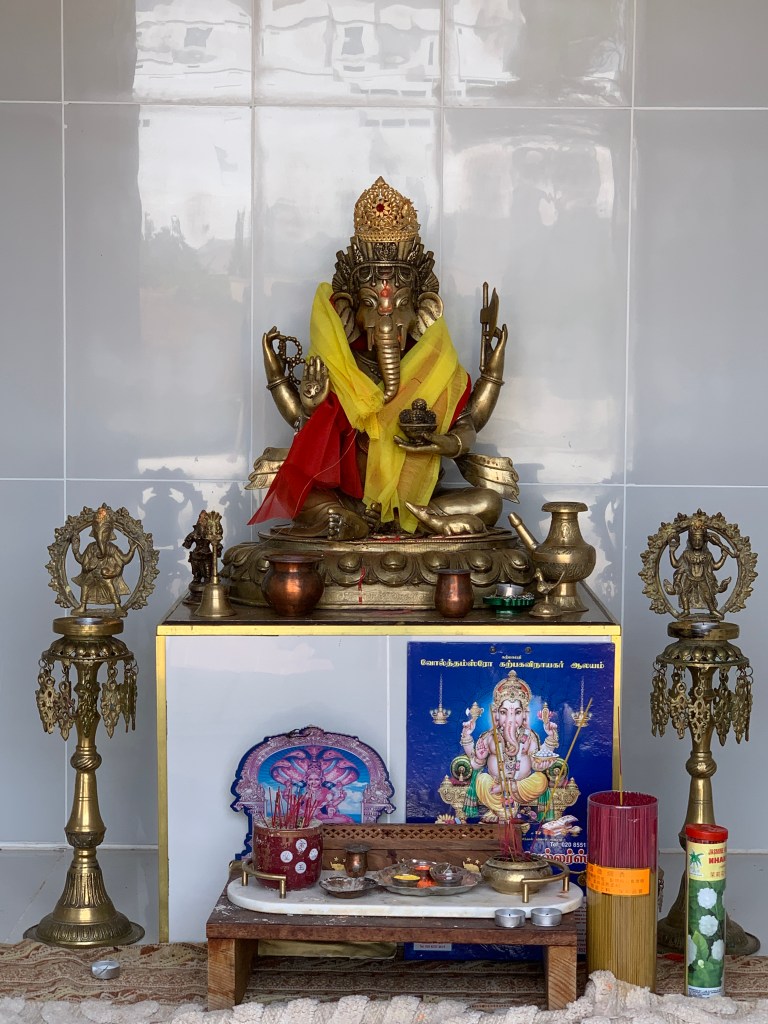
Leaving the Visitors Centre on foot you arrive in the Peace Park. You follow your map to each display from many different faiths around the world. All faiths are welcome.

Through the Peace Park you arrive higher in the gardens to an area surrounding the Great Stupa. Three great circles of gardens encircle the stupa. Along the outer circle are the Memorial Walls. On top of each wall are Stupas that are filled with holy objects and are consecrated. Below that ashes of the deceased or momentos are placed in the niches which are then sealed with a bronze plaque. Alternatively you can choose a tree Memorial for your loved ones. Their remains are mixed with the earth at the base of a tree and a bronze plaque is placed on a block of sandstone below the tree.

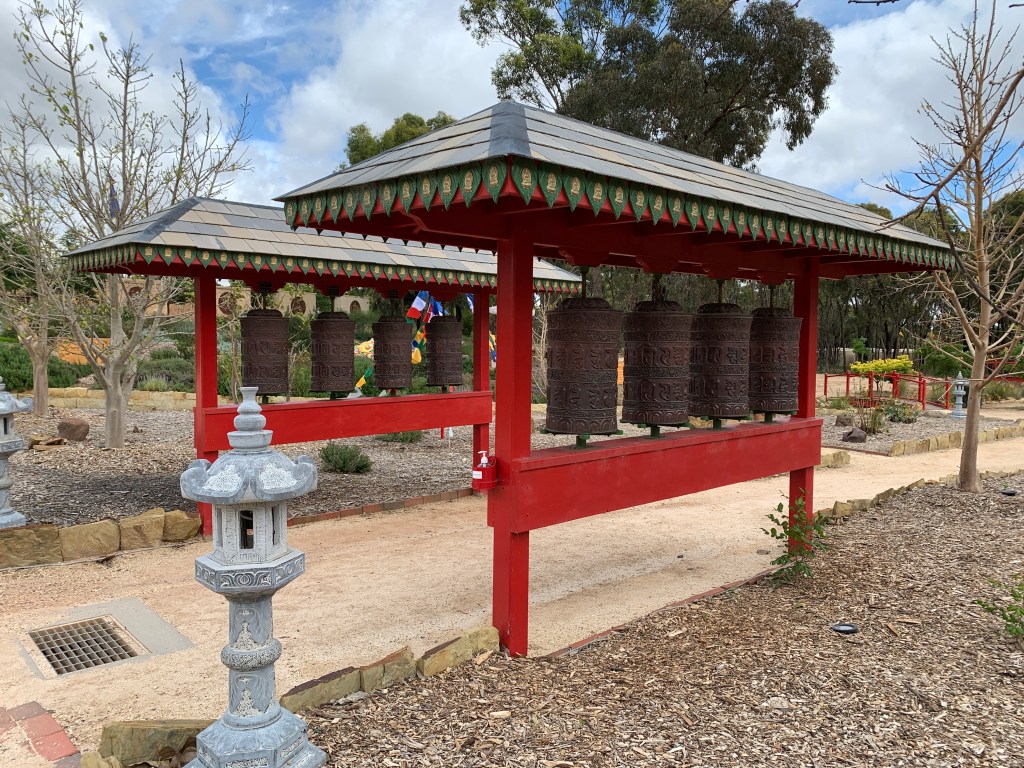
Finally you reach the imposing Great Stupa. Around the outside are lots of golden prayer wheels. The size of the stupa was a bit mind-boggling. It is so high. Decoration of the outside has commenced but so far only the top few levels have been completed.

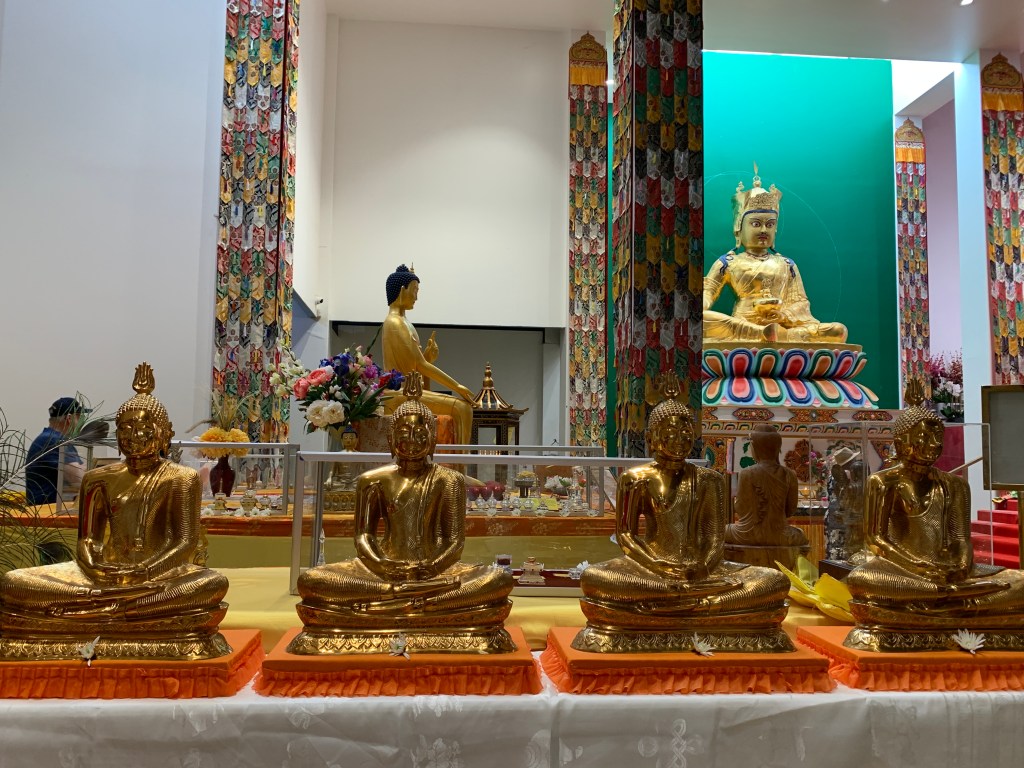
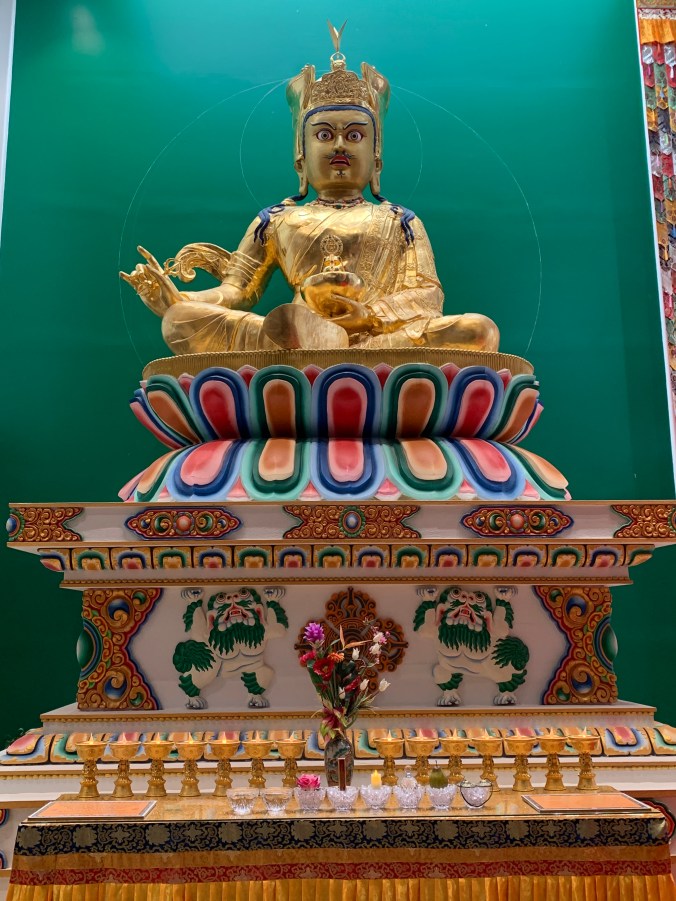
Then you walk inside and it is HUGE. A big open hall with huge smaller shrines around the outside. One thing strikes you immediately, it’s so colourful. Colour is everywhere. The tall pillars are covered in colourful silk banners in the five colours that represent the five Wisdom Buddhas, Blue, White, Red, Green and Yellow. Each colour is associated with an element and a Buddha. For example Yellow symbolises rootedness and renunciation, the element of earth. Buddha Ratnasambhava is associated with yellow. Meditation on humility and equanimity transforms pride into wisdom.

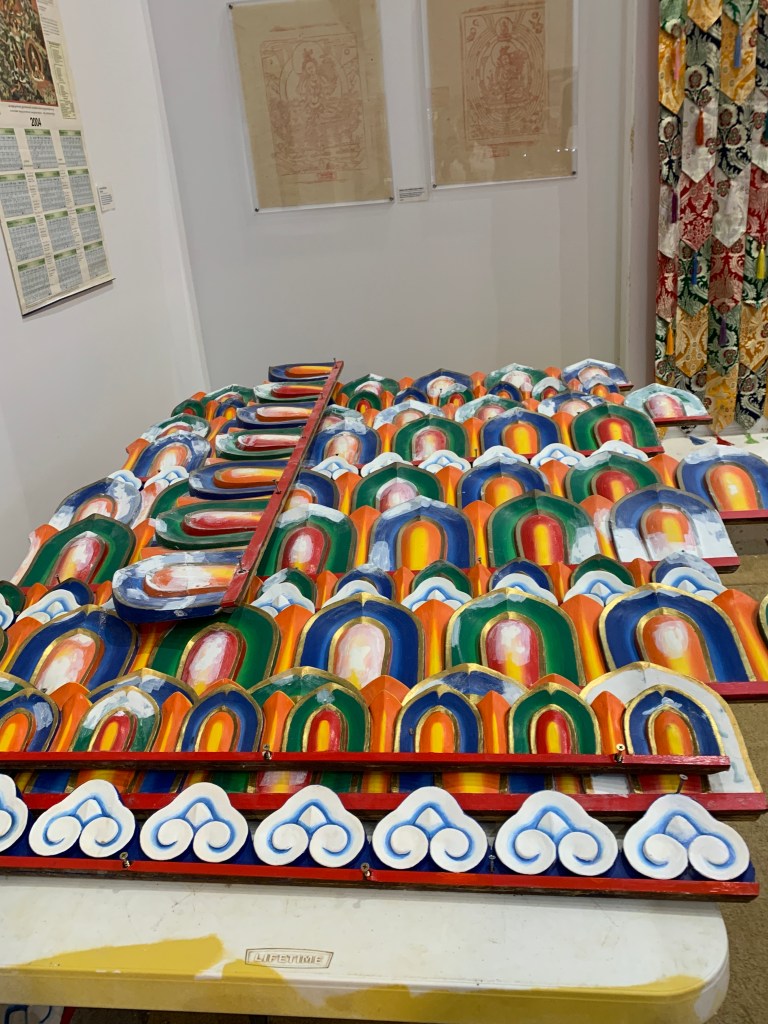
The very high ceiling was unfinished and there is scaffolding surrounding one of the giant figures. Alongside it was an area filled with objects in the process of being painted. All this work is done by volunteers.

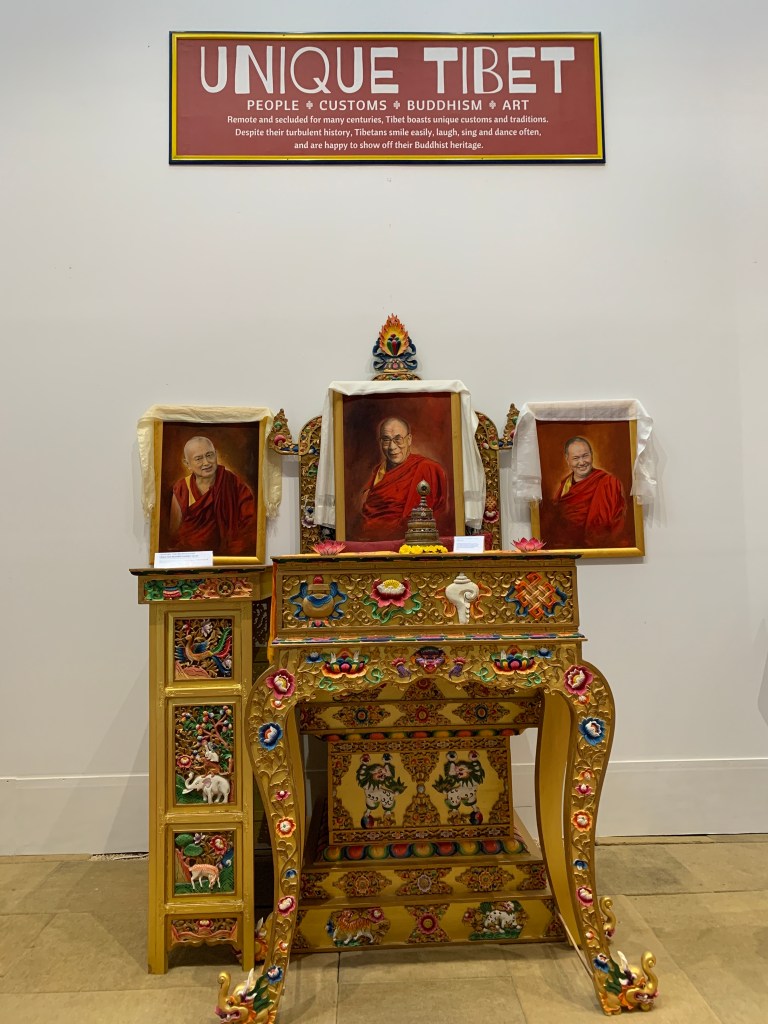
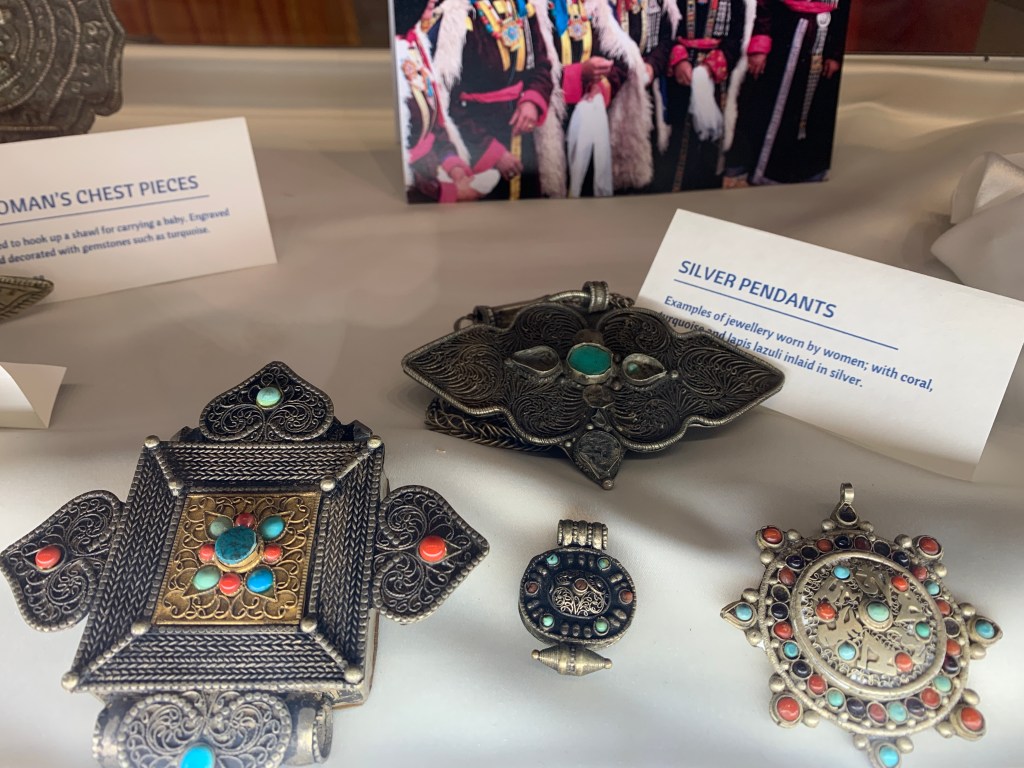
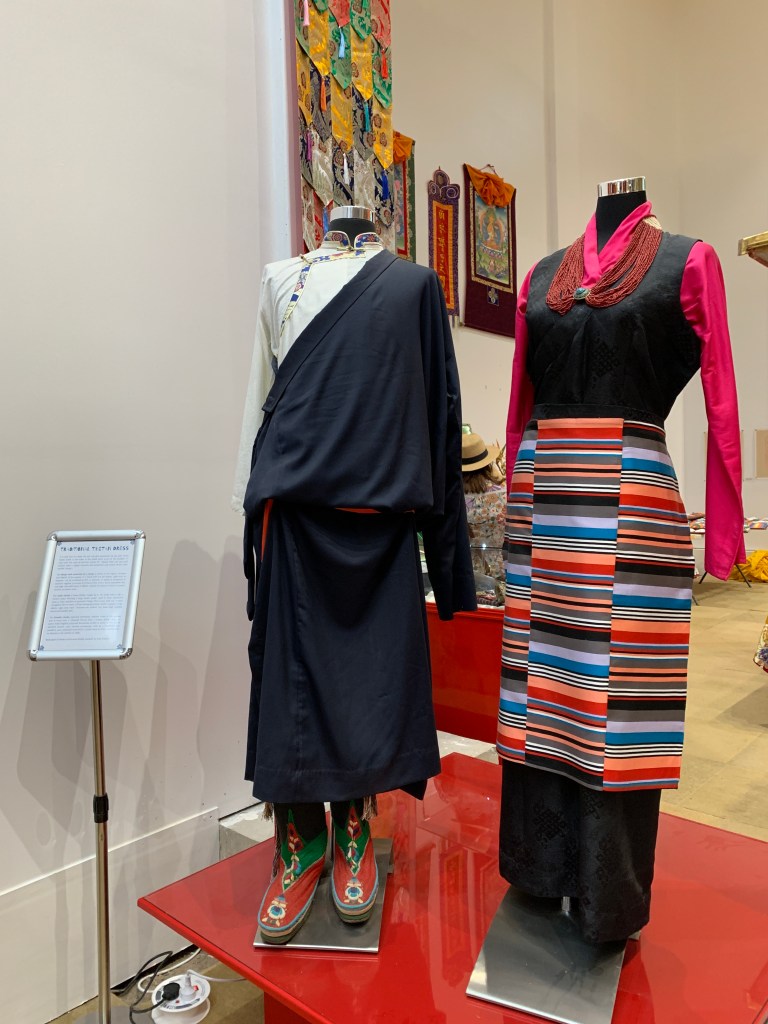
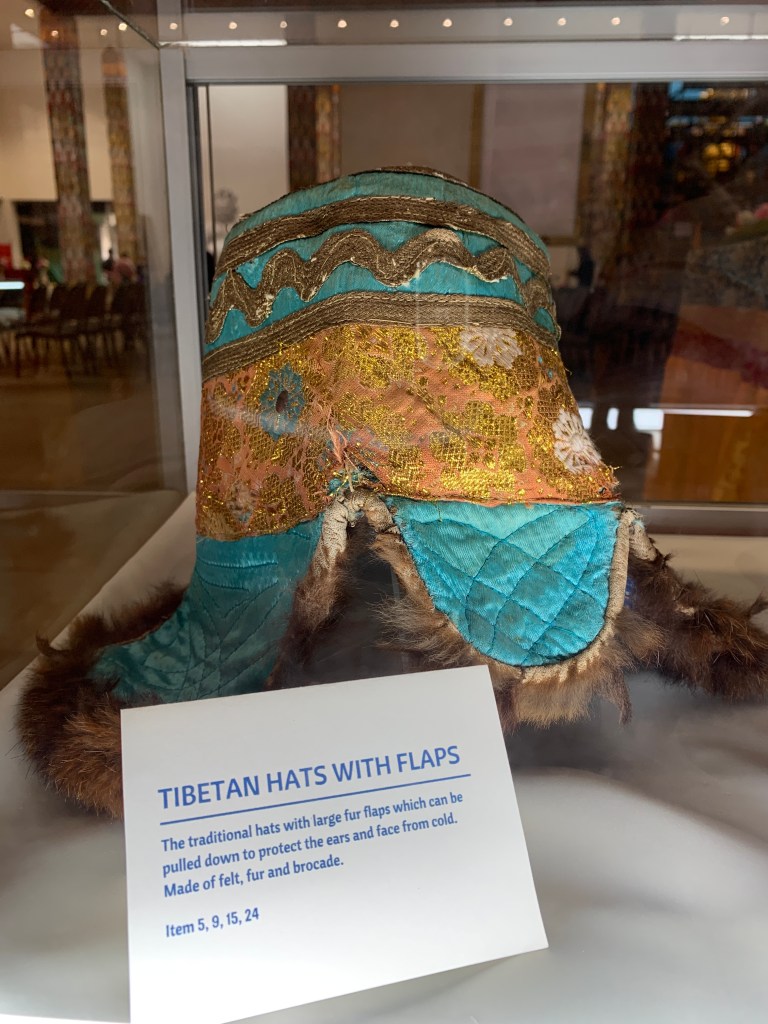
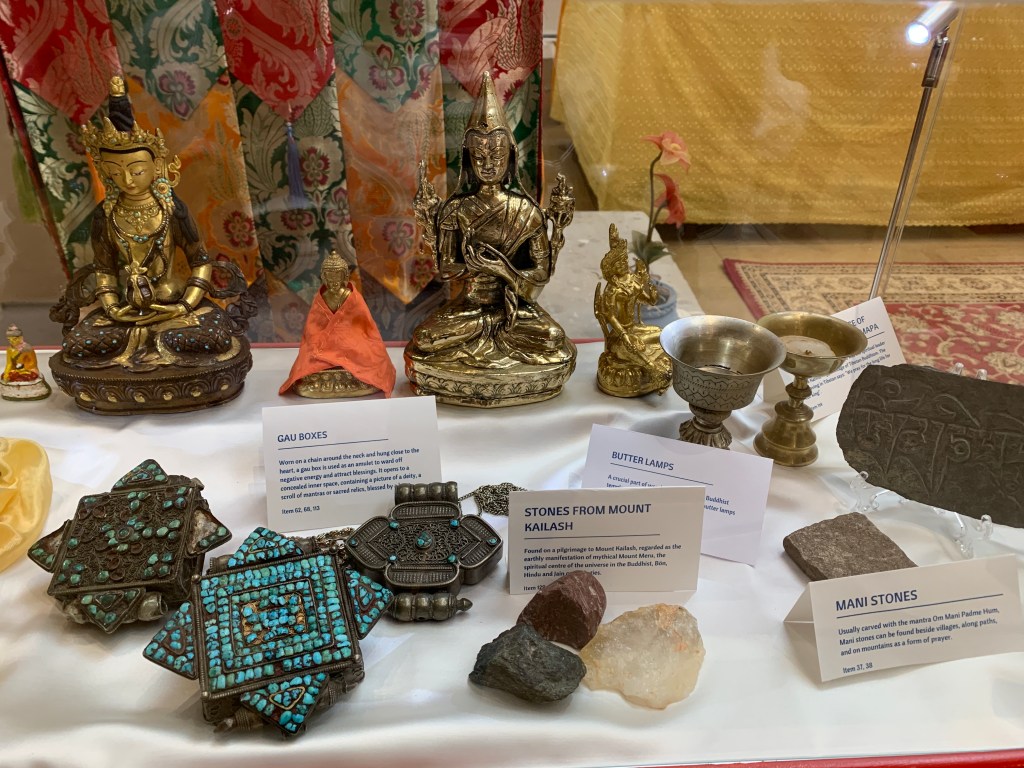
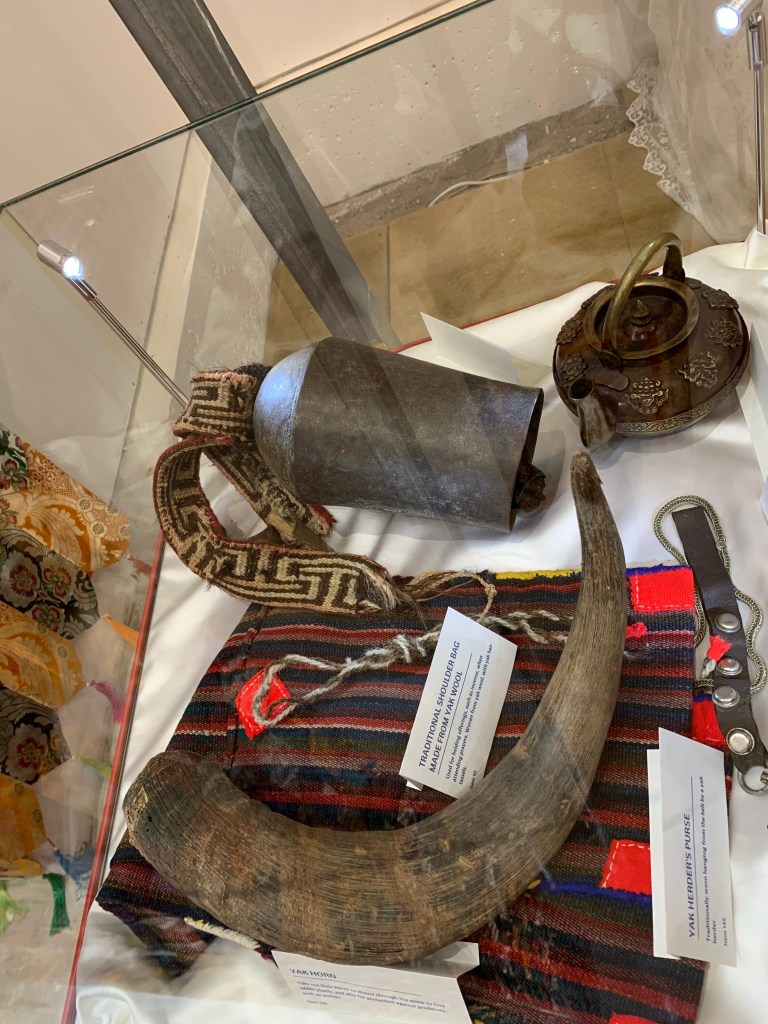
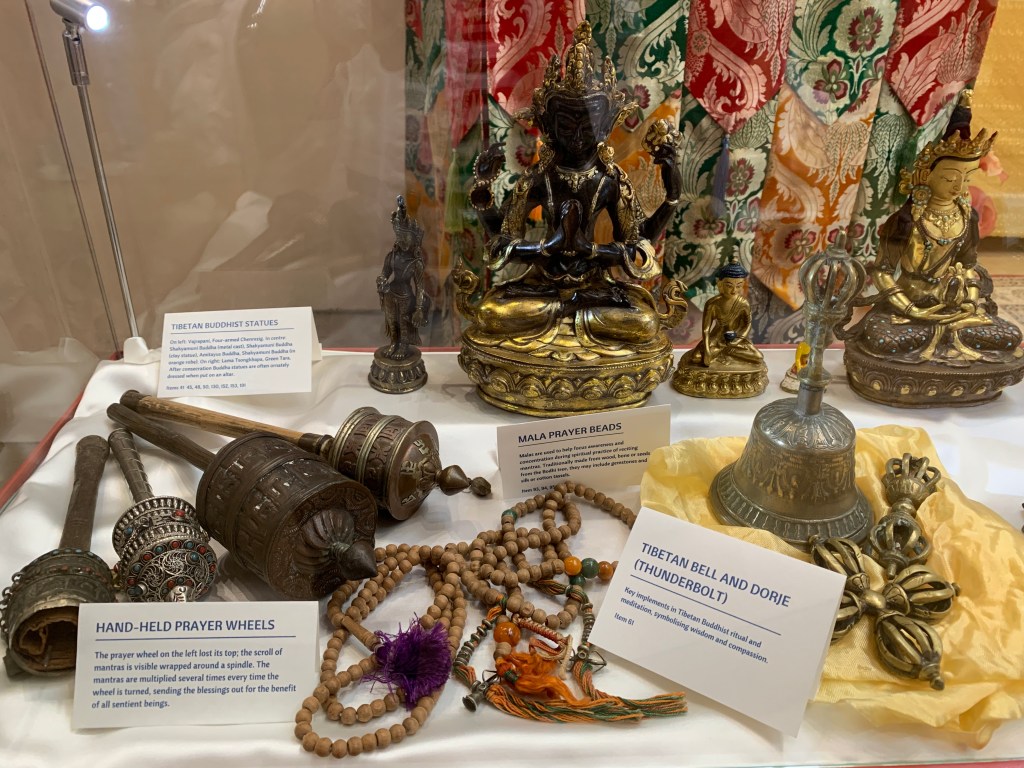
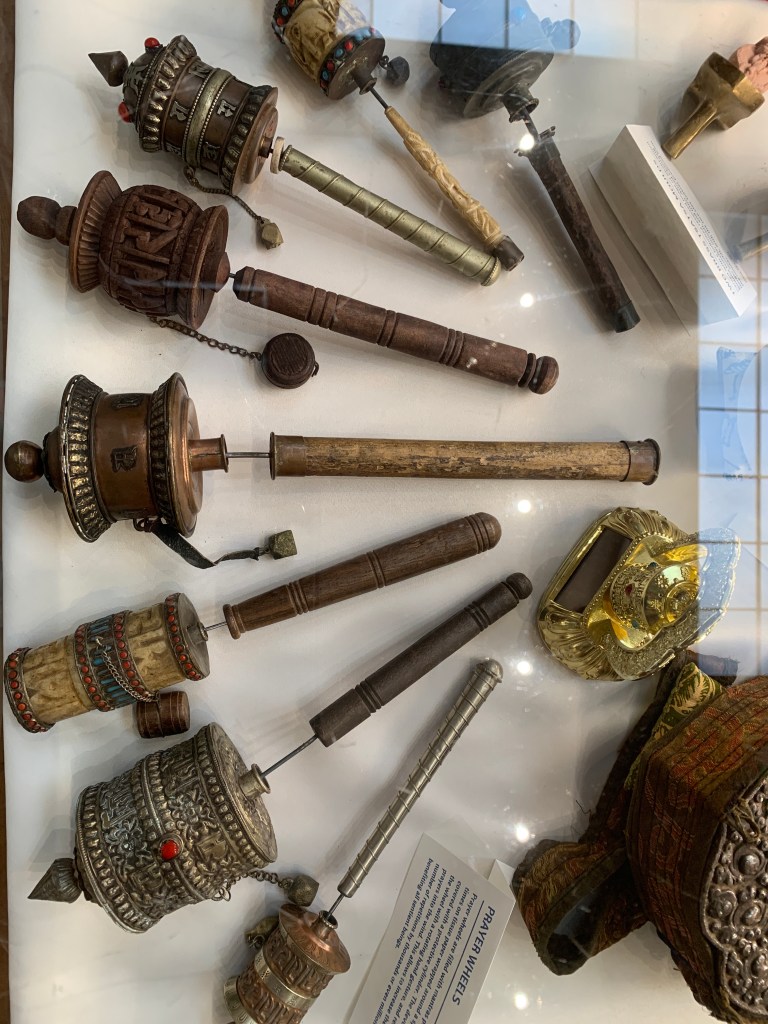
In one corner is a museum, Unique Tibet, housing wonderful displays of Tibetan clothing, objects of everyday life, and their faith. Arguably the most famous Tibetan of all, His Holiness the Dalai Lama visited the Great Stupa in 2007. While there he blessed the Great Stupa.

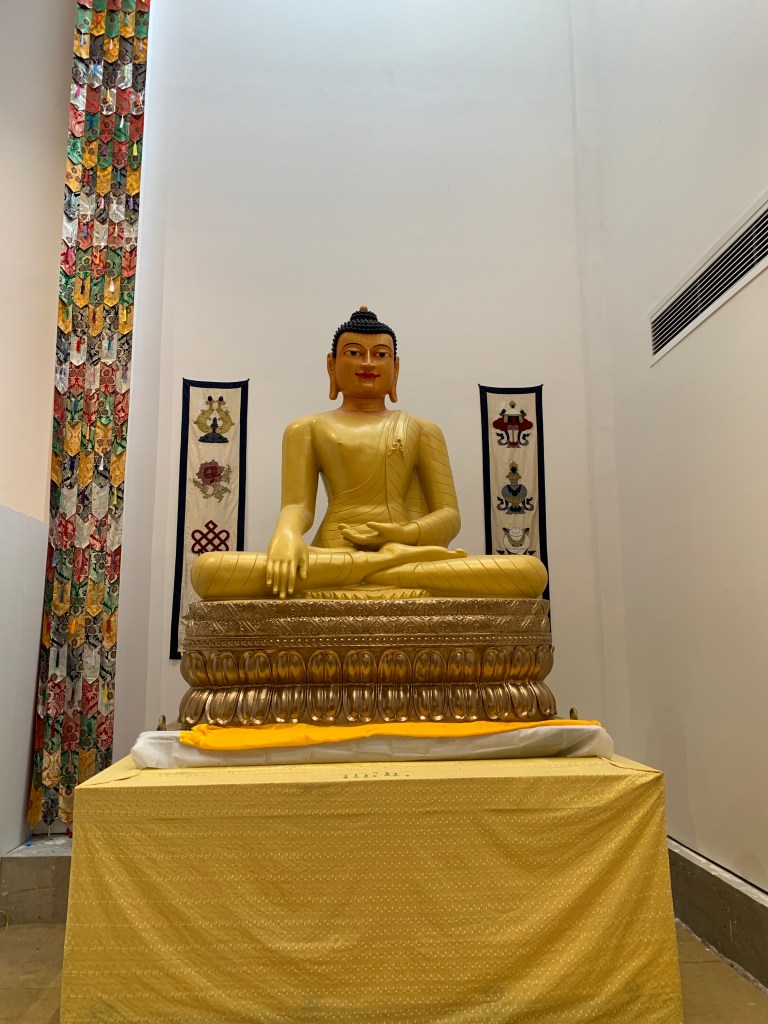
The Great Stupa is home to many holy objects and the most valuable is the incredible Jade Buddha. The Jade Buddha for Universal Peace is the largest Buddha carved from gemstone quality jade in the world. The size and beauty of the statue make it a wonder of the world. The Buddha has been carved from a rare boulder of translucent jade (“Polar Pride”) which was discovered in Canada in the year 2000. The Jade Buddha is 2.5 metres high and sits on an alabaster throne of close to 1.6 metres high. The Jade Buddha itself weighs around 4 tonne and is considered to be priceless. The jade halo of the Jade Buddha is also on display but ironically it is too heavy to be put in place on the buddha itself.

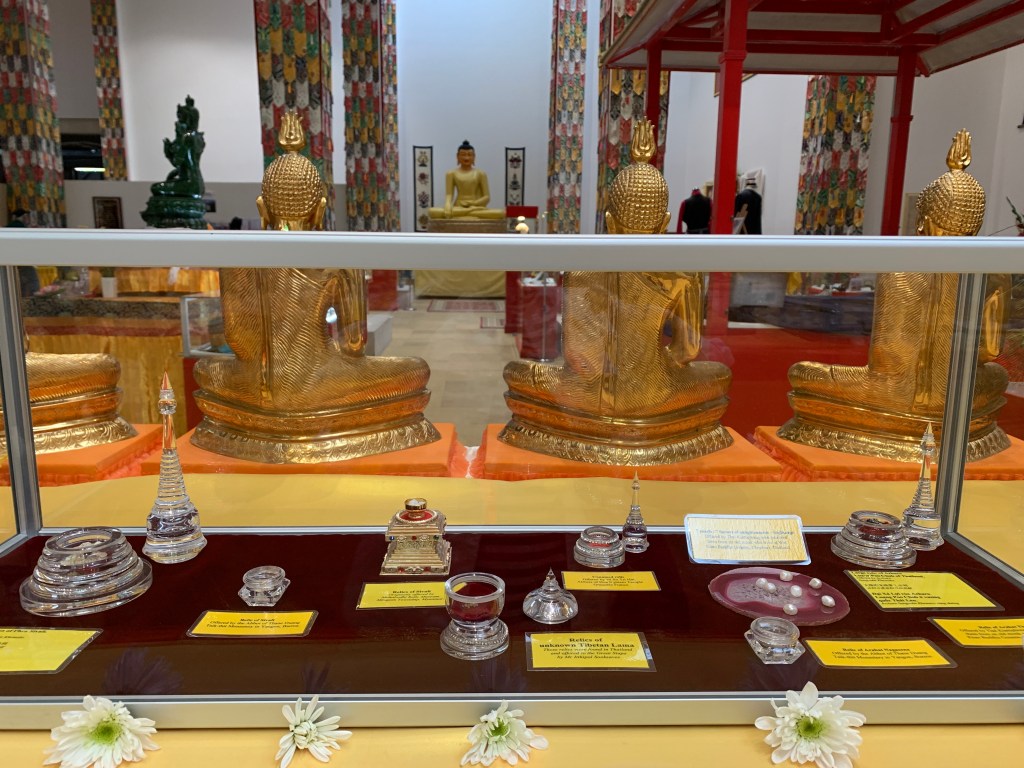
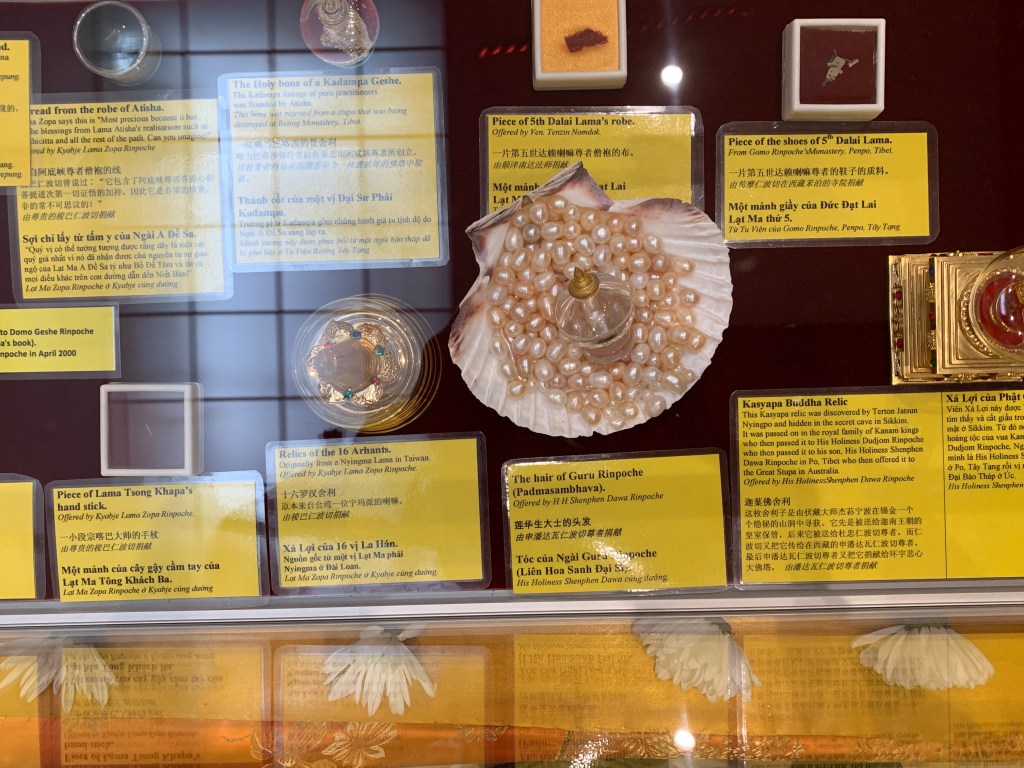
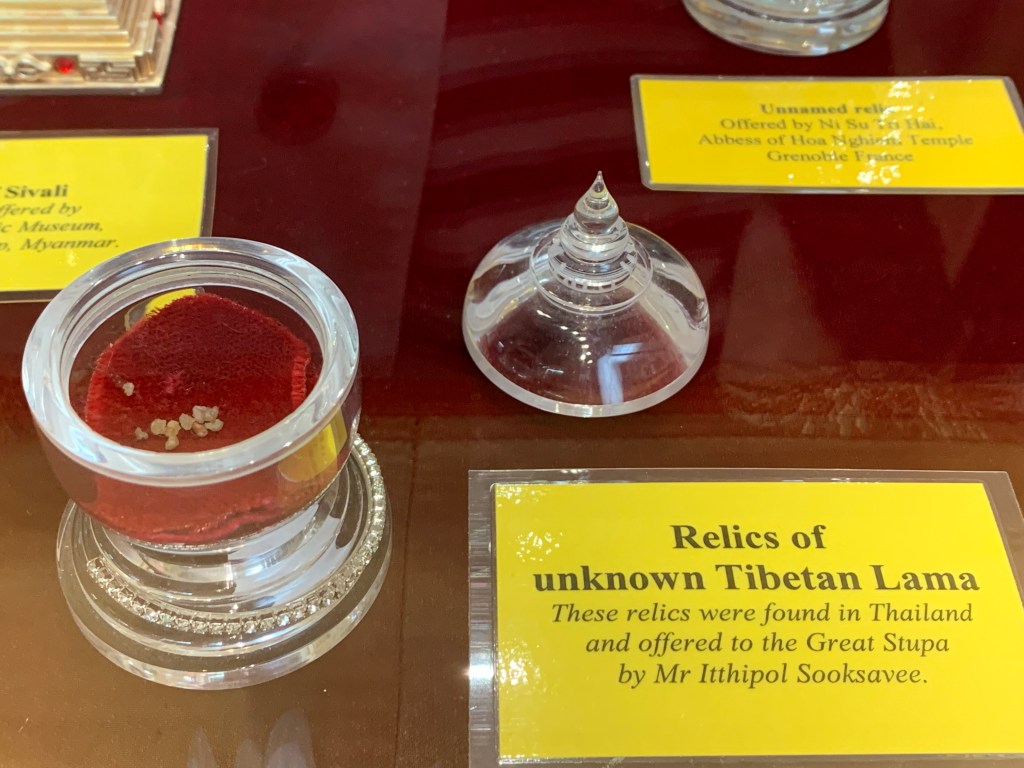
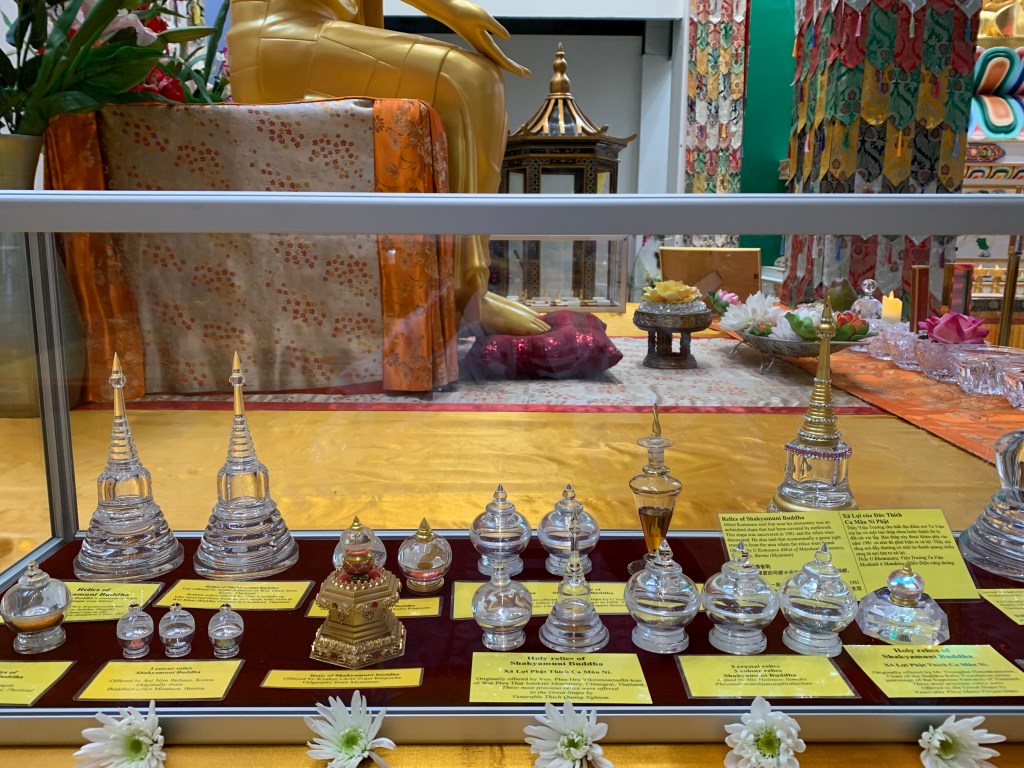
The Great Stupa also houses a huge collection of holy relics. These have come from all around the world. Relics are found in the ashes after a great spiritual master has been cremated. They sometimes look like crystals or pearls and are said to hold the essence of the holy person. These holy relics are venerated in Buddhism. Eventually it is planned that the holy relics will be housed on the sixth level of the Great Stupa.

One of the monks who lives onsite at the monastery was the tour guide for that day and he gave a short talk about the Stupa and what we could see around us. He then wandered amongst the people and was happy to answer questions. The monks live at the Thubten Shedrup Ling Monastery, a place where they can devote themselves to study, meditation and spiritual transformation. It’s the first Tibetan Buddhist monastery to be established in Australia to help preserve and disseminate Tibetan Buddhist teachings.

Not far from the Great Stupa is the Atisha Centre. The Atisha Centre is a Buddhist meditation and teaching centre in the Tibetan tradition. The Centre holds regular one-day courses and five-day retreats as well as study groups and community days.

A new library was under construction to house the Great Stupa’s collection. The Library aims to encourage study and research in the areas of science, philosophy and religion by making its resources and facilities available to scholars, researchers and the public. 

After spending at least an hour soaking it all in inside the Great Stupa we made our way back through the Peace Park and into the cafe where we ordered some coffee and a tasty vegetarian lunch. Buddhists are all vegetarian as one of their beliefs is that all animals can be reincarnated as a person so you wouldn’t want to eat one! Our food was delicious.

If you are planning a visit to the Great Stupa you need to allow at least an hour and half to see it (we were there for three) and even then you’ll want to return to see it all again. I know we will put it on our list to visit again to see how much more has been completed.

Being tourists in Bendigo

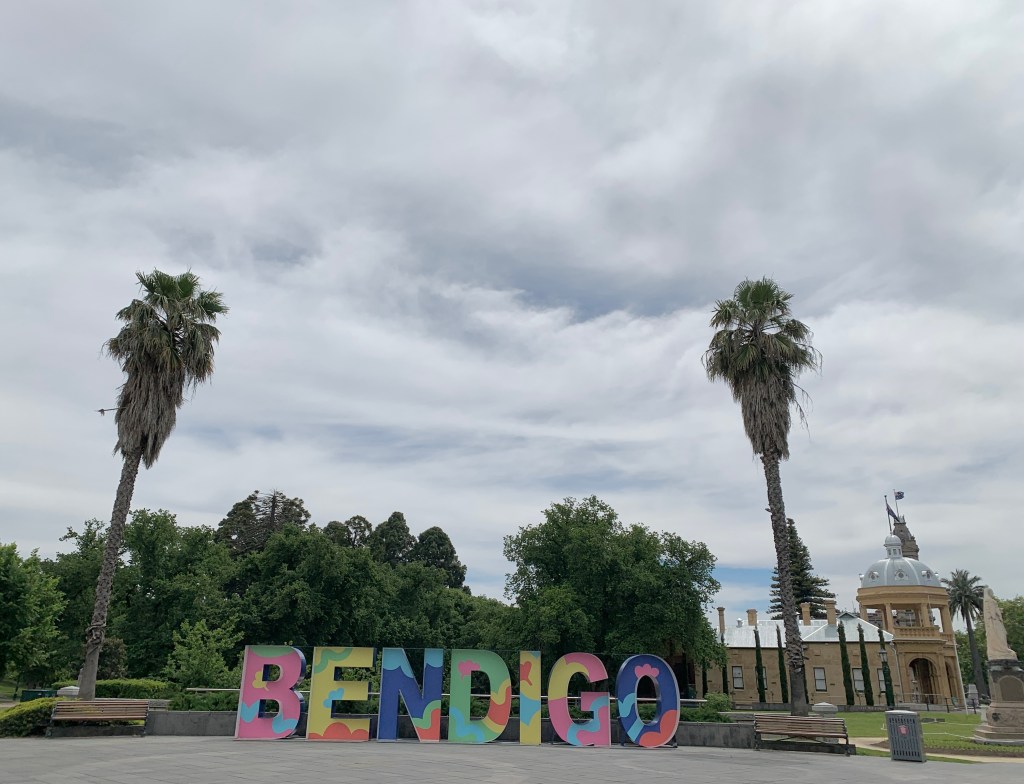
What a great day we had being tourists in Bendigo. We hadn’t been to Bendigo for many many years so it was fun to explore the city again.

Bendigo sits in the heart of the Victorian Goldfields and has grown to a city with a population of 153,000. It is the fourth largest city by population in Victoria after Melbourne, Geelong and Ballarat

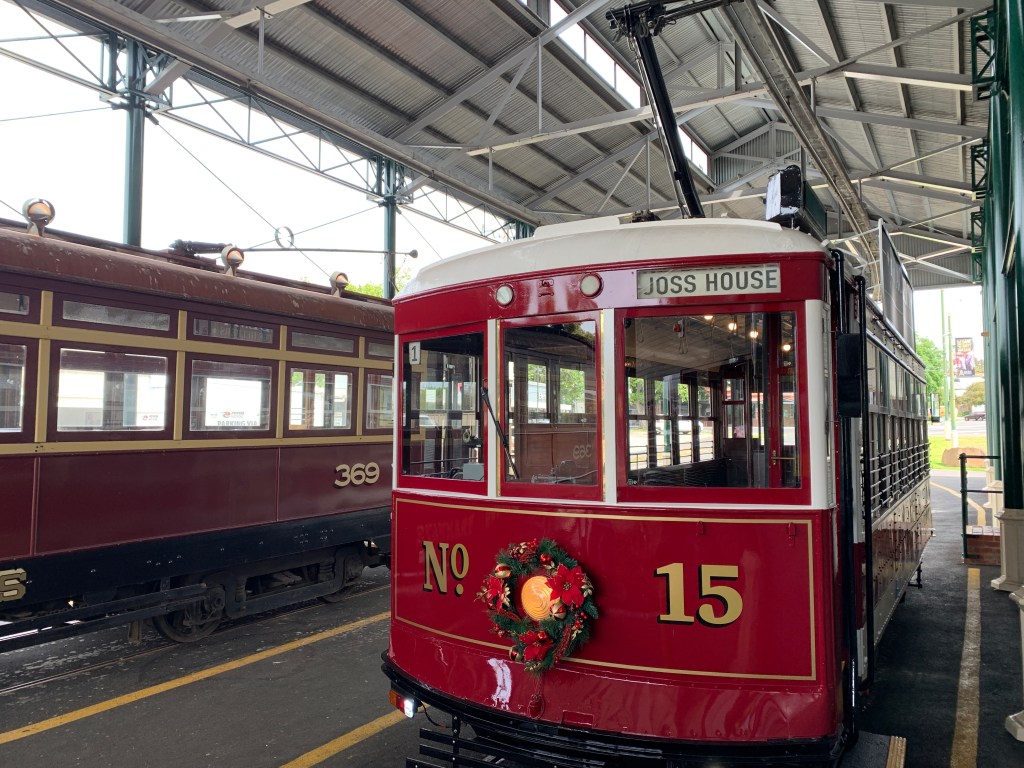
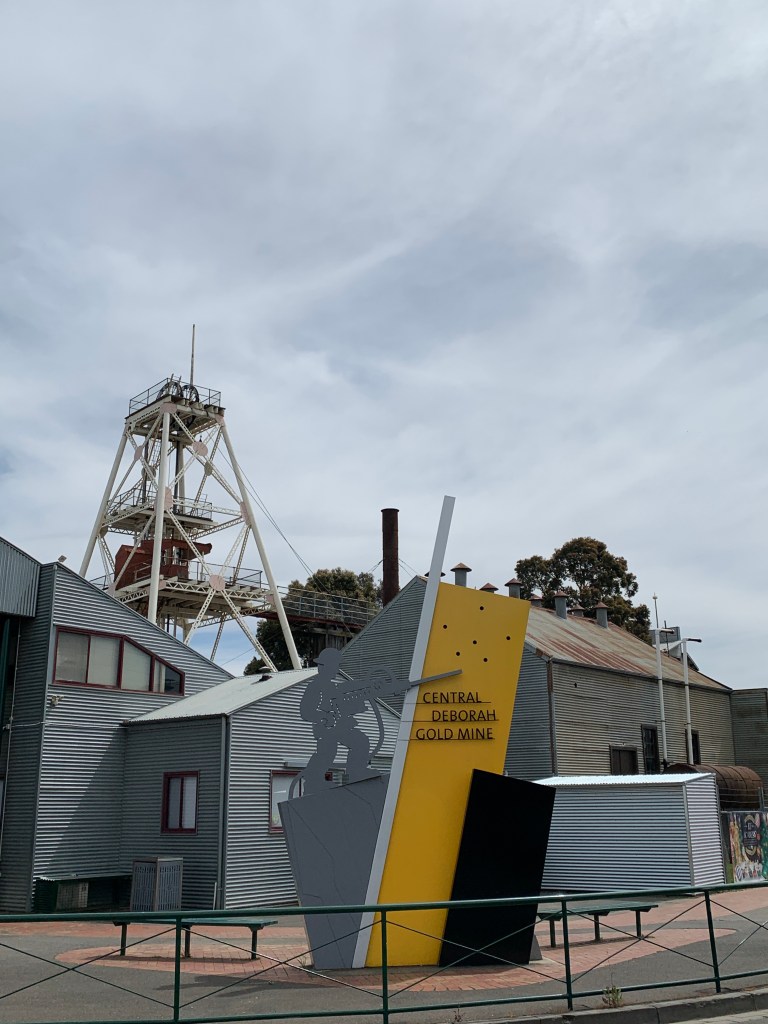
The number one thing to do in Bendigo is to ride one of their vintage trams on the Bendigo Tramway. The number 1 stop is located at the Central Deborah Gold Mine and travels along the Main Street before turning off and finally reaching the terminus at the Joss House. There are 5 other stops along the way. It is a hop on hop off system and you can hop on and off all day. You can purchase your ticket at the Central Deborah Gold Mine and you are given a wristband to wear. This is so the different drivers know you have a ticket. You just wave your wrist at them to show your band.

In the street around the back of the tram stop is very convenient parking for long vehicles. We made use of that and parked our motorhome behind another already there, turned the fridge onto gas so it would stay cold while we were being tourists, and set off to buy a tram ticket.

The all-day tickets were $25 for the two of us and a funny thing happened while we waited for the tram. Just near the tram are some info boards about how a dedicated group of volunteers saved the Bendigo trams. It’s a great story and we were so engrossed we didn’t notice the tram leaving!! Hey come back!

So we had to wait half an hour for the next one! Silly us!

We made sure we were ready and waiting when the next tram came along and took the short ride to the first stop at Charing Cross in the CBD. A commentary is played while you travel along and tells stories of the interesting sites or local characters along the way.

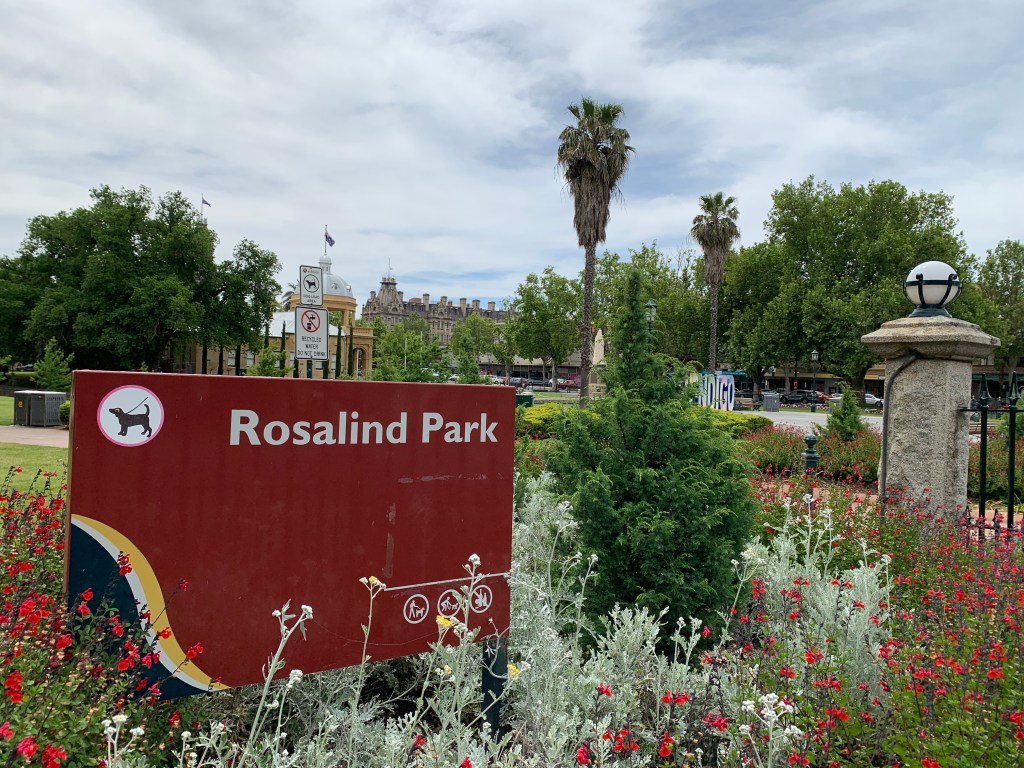
We alighted at Charing Cross stop and walked back past the entrance to Rosalind Park.

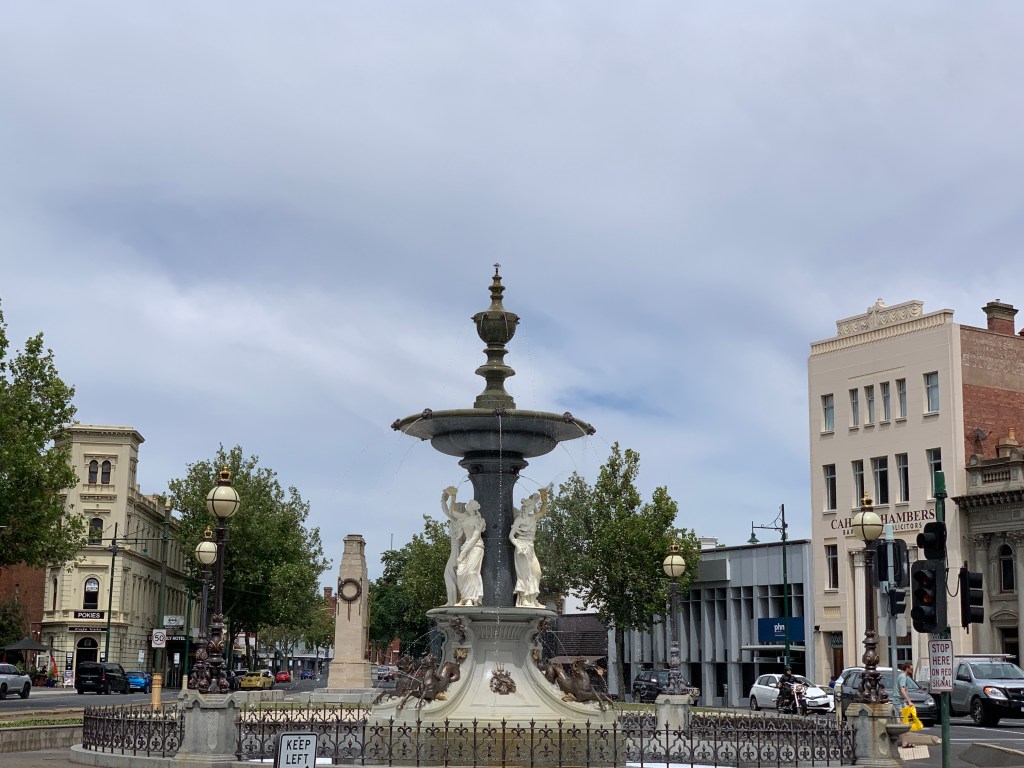
In the centre of the CBD is the Alexandra Fountain. The fountain is named for Alexandra, Princess of Wales and was opened in 1881. The grand opening was attended by two of the princesses sons Prince Albert and Prince George and the fountain is considered to be one of the city’s most prominent landmarks. The fountain it 8.5m high and sits in a circular pond 15m across and 0.6m deep. It was refurbished in 2017 at a cost of $350,000.

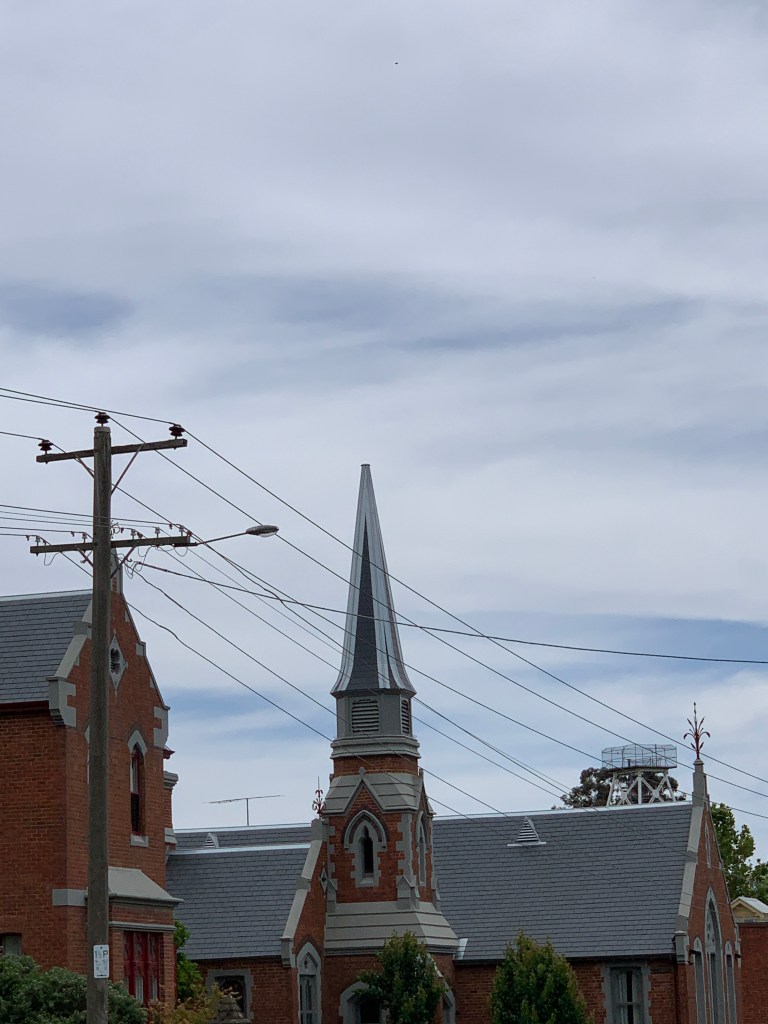
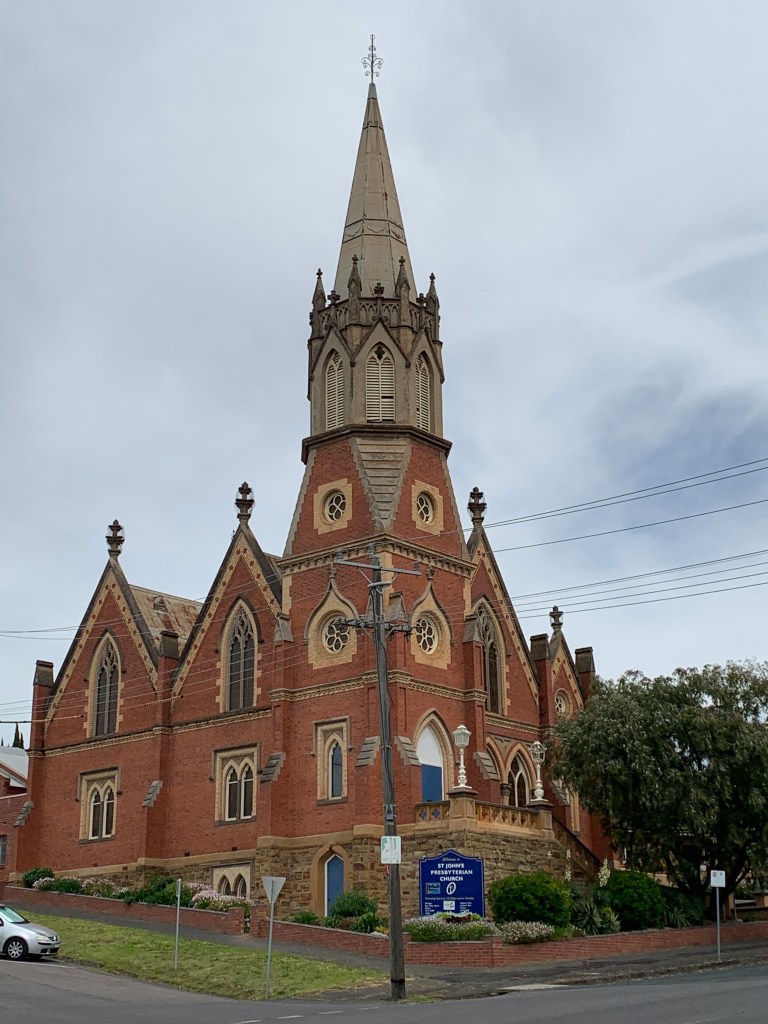
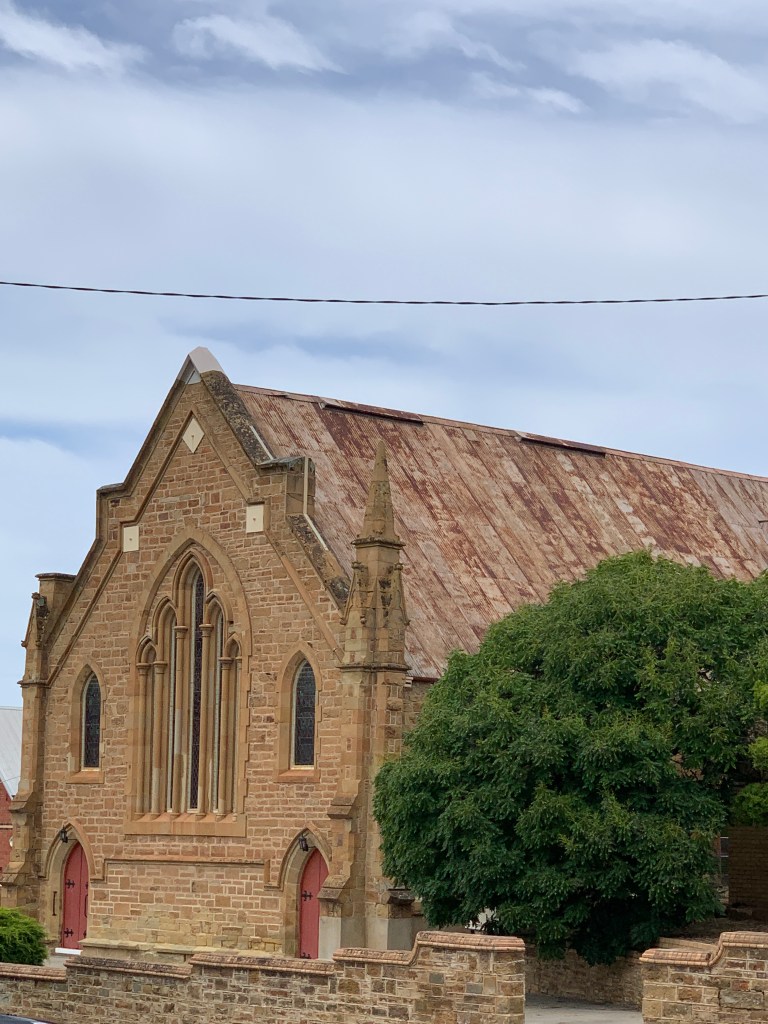
Strolling along the street towards the Art Precinct we then took a left up a very steep street. I stopped at the corner of Mackenzie and Forest Streets. As I stood on that corner I was able to take a photo of five different churches. Check them out.

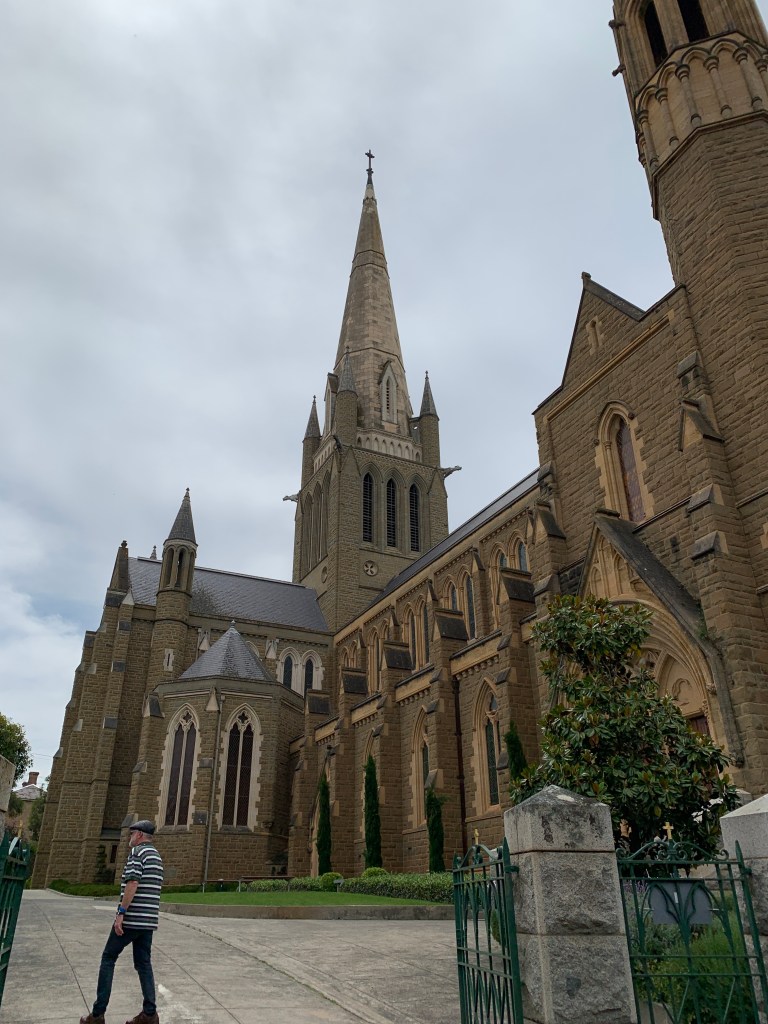
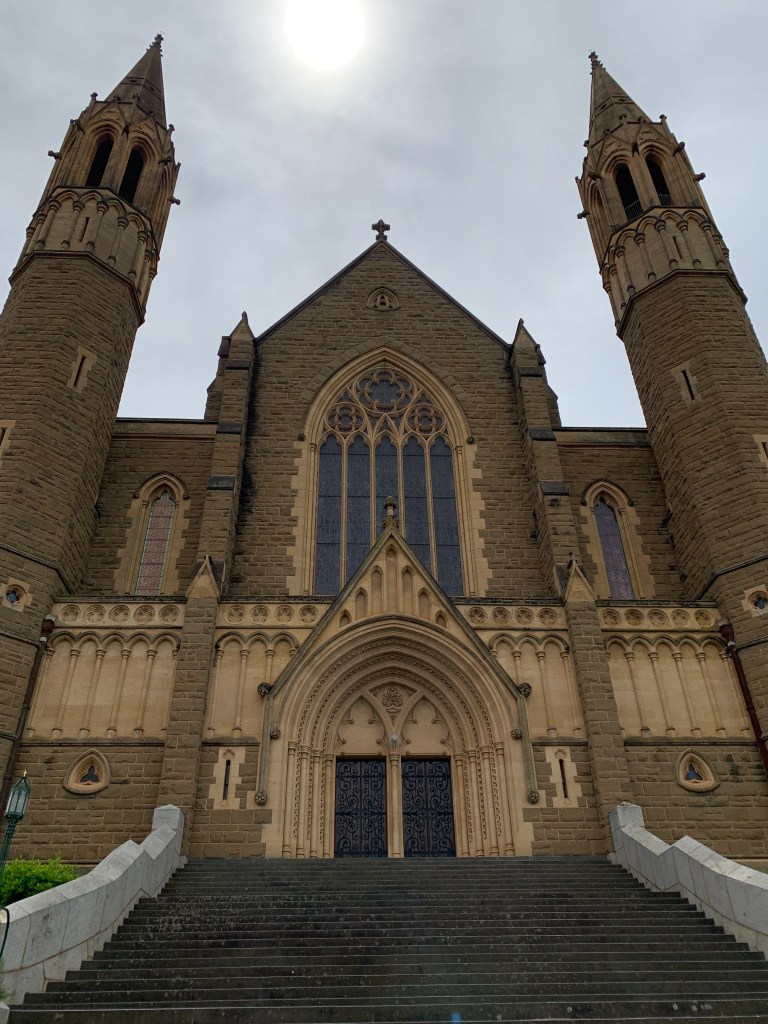
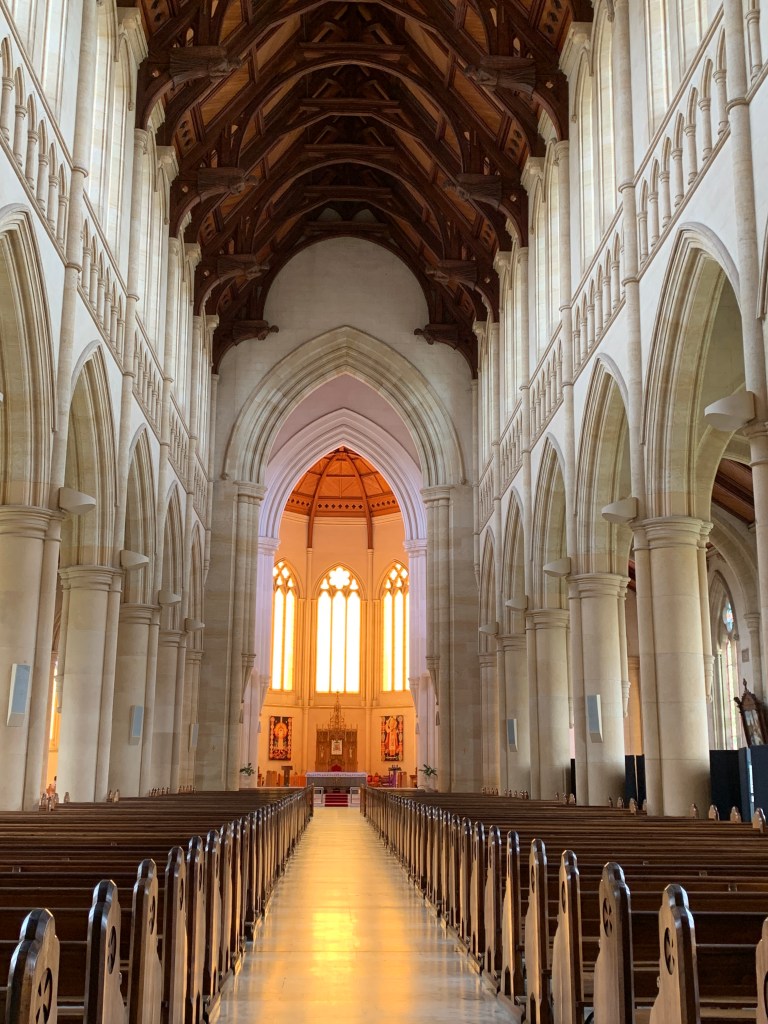
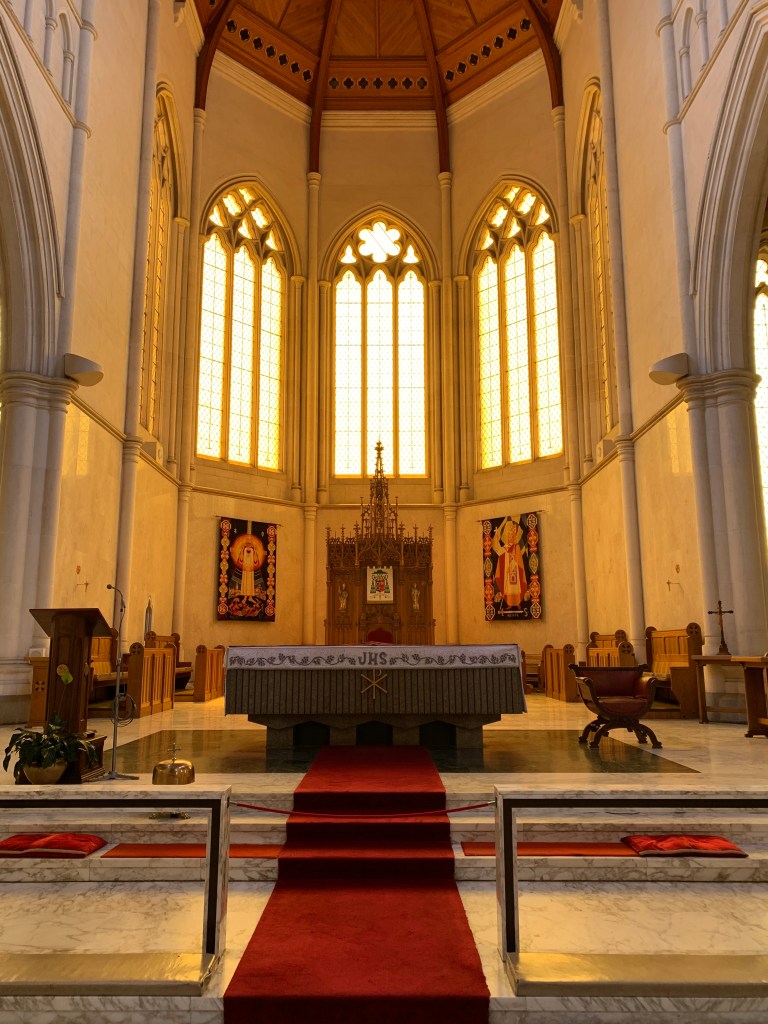
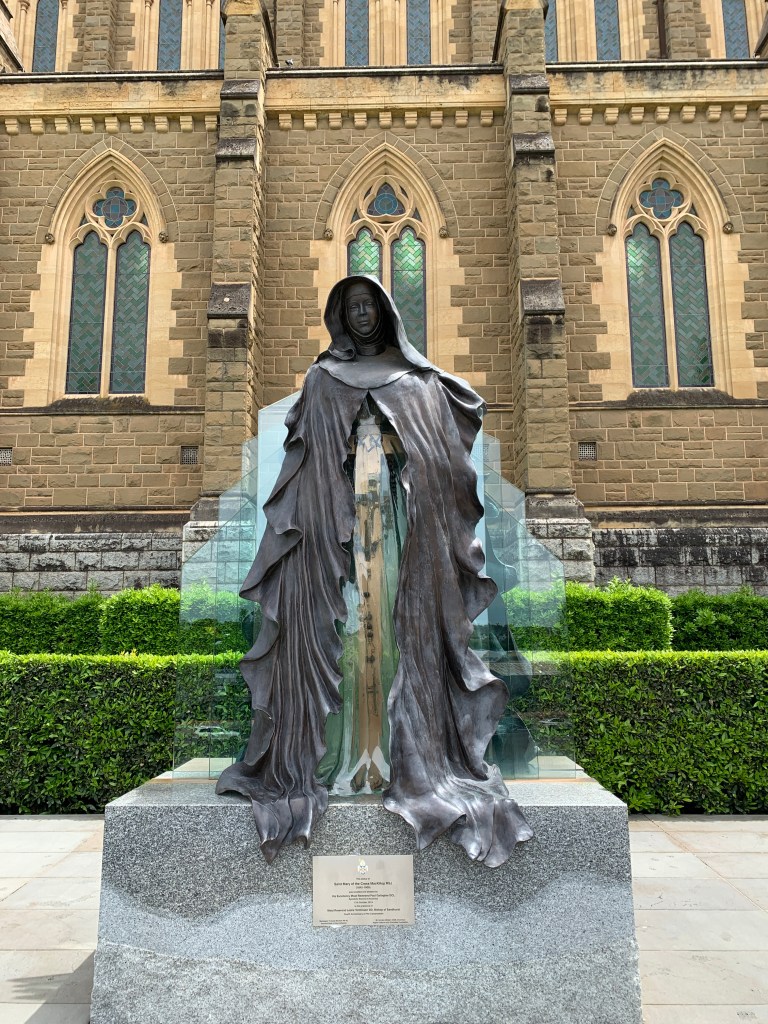
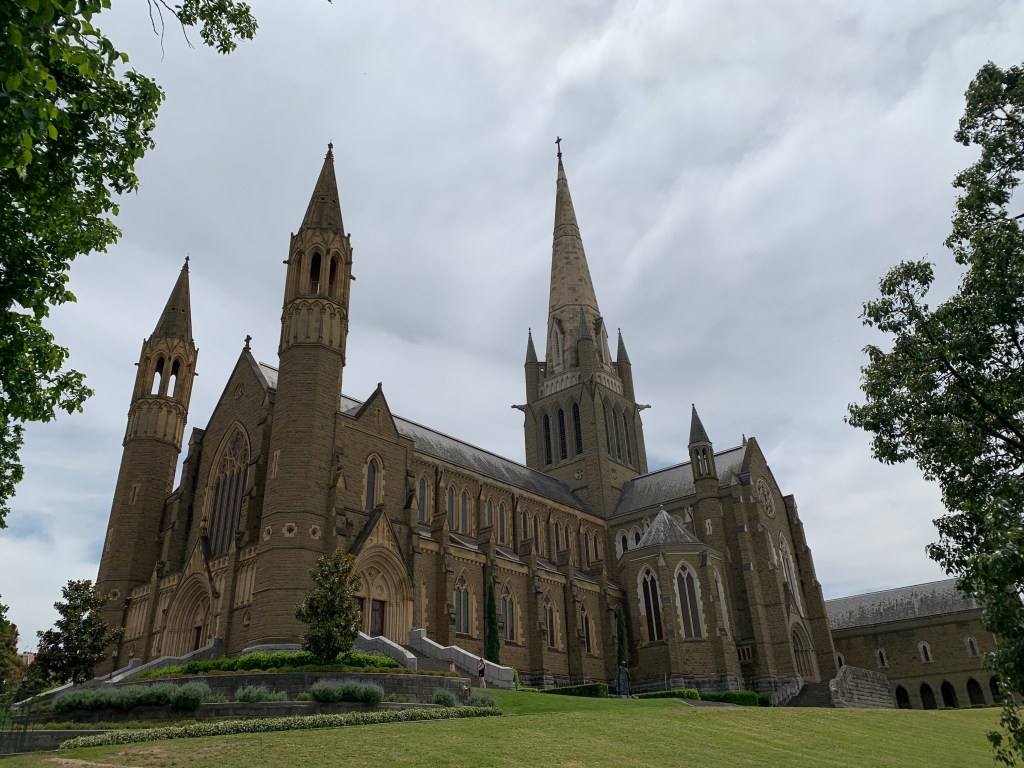
Dominating the Bendigo skyline is the Roman Catholic Sacred Heart Cathedral. It is a marvellous church built in the Early English Gothic style and, I believe, is the third largest in Australia. Construction was commenced in 1896 however the Cathedral was not completed until 1977. This is not unusual with buildings of this size. It took over 162 years to build St Peter’s Basilica in Rome!

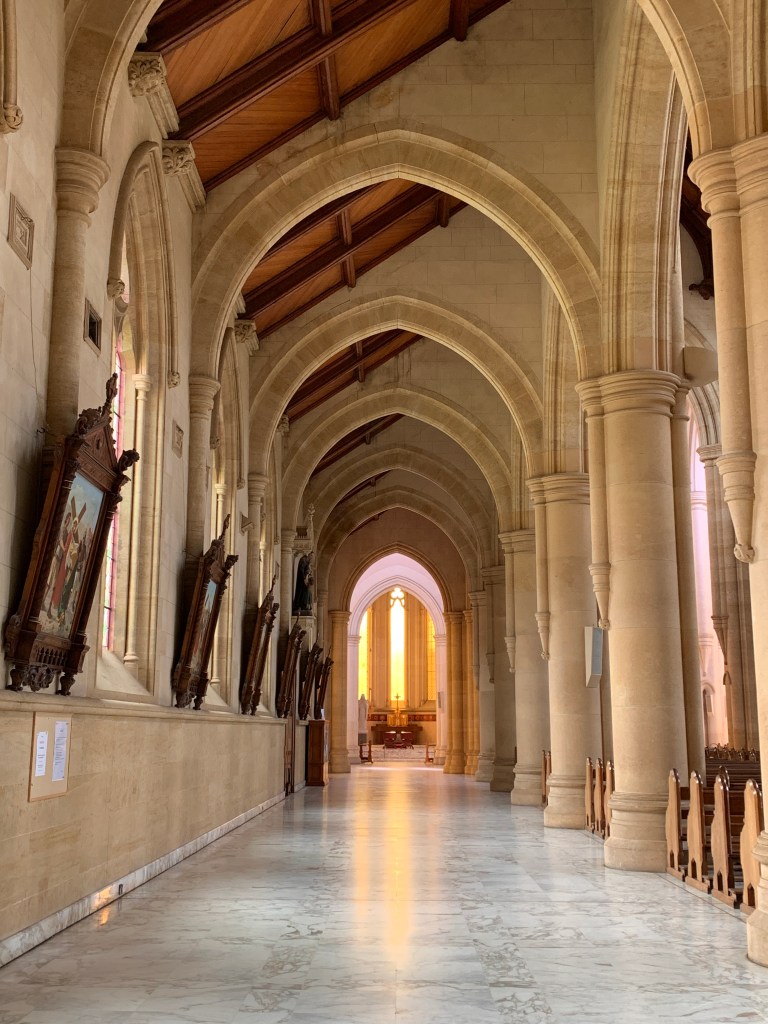
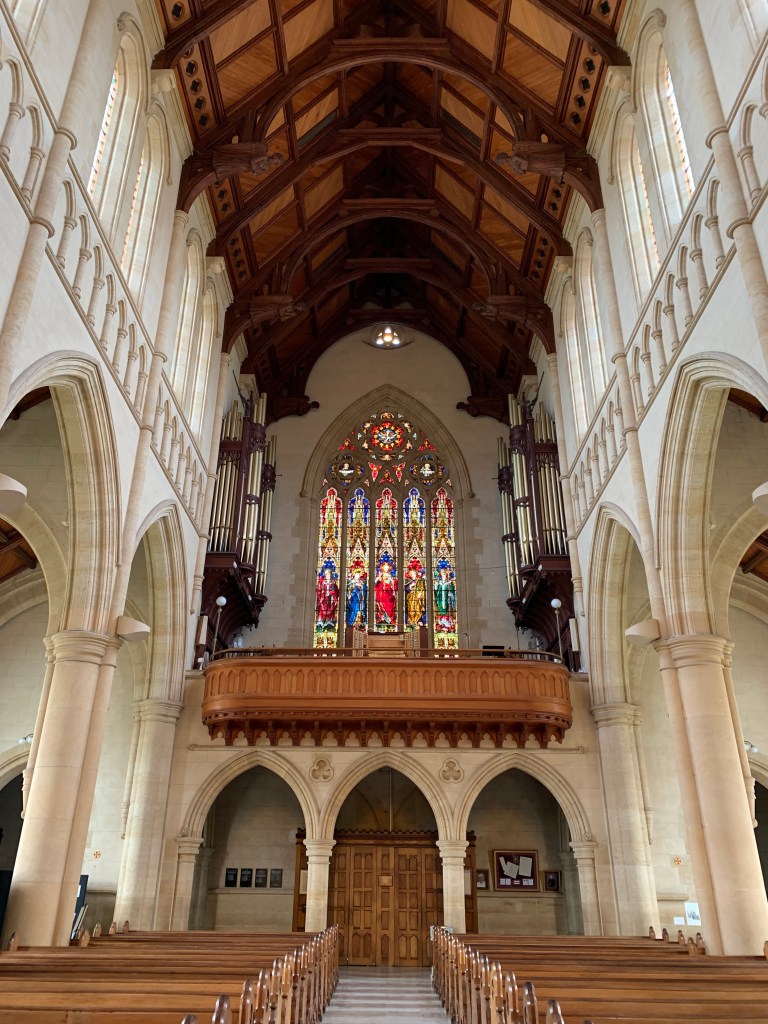
We had a wander around this beautiful building and appreciated the beauty of it. The pews are all made from Australian Blackwood.

The organ is a spectacular one and I’m sure it would sound amazing. The organ was built in London in 1904 and installed in 1906.

After spending an hour or so visiting the cathedral we wandered back to Charing Cross and caught the next tram and this time we went all the way to the end of the line so we could visit the historic Joss House.

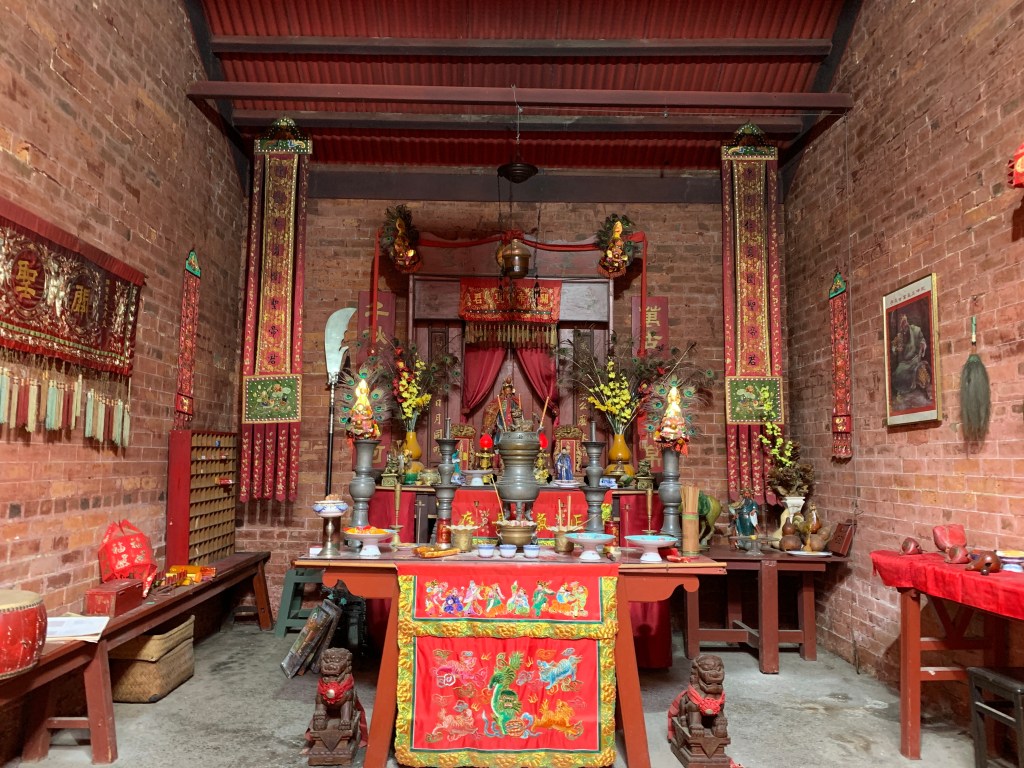
The Bendigo Joss House Temple is the oldest Chinese place of worship on its original site within Australia. It is 152 years old. Following the diccovery of gold in Bendigo people came from all over the world to seek their fortune. By 1855 there were some 5,000 Chines living around the diggings, about a quarter of the total population.

There were once at least eight other Joss Houses in the surrounding area but this one is the sole remaining one. It was built in the 1870’s using local hand made red bricks. Red is the traditional Chinese colour for happiness, strength and virtuality.

The building was also used by the Chinese Masonic Society as their meeting temple during the 1890’s- 1930’s.

In 1964 the National Trust rescued the temple from becoming a carpark and commenced restoration. It was opened to the public in 1972.

The Joss House consists of three small red brick buildings. The one on the left was the Caretakers Residence and has a large brick stove in the corner.

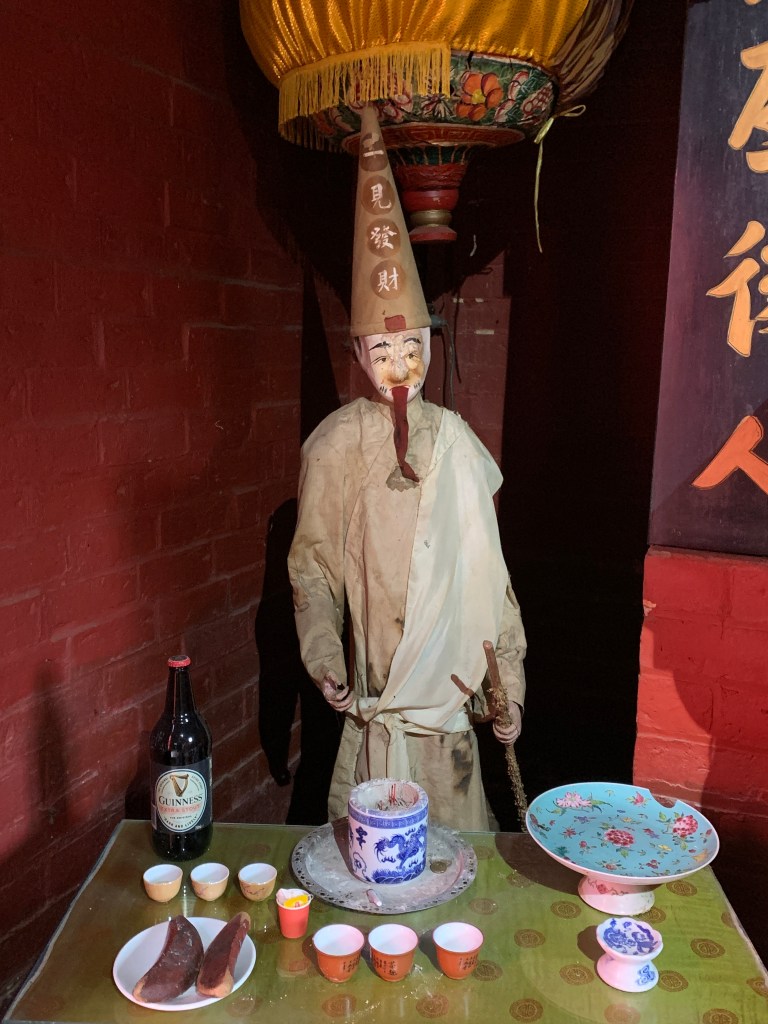
The Central Building houses the Entrance Chamber and the Main Altar. The main altar is dedicated to Guan-Di, the god of war and prosperity. Guan-Di was seen as a wise judge, guide, protector and provider of wealth and prosperity. Just what the Chinese who came to Australia seeking their fortunes needed.

The third building is the Hall of the Ancestors and is dedicated to the memory of ancestors. The altar here holds the few remains ancestral tablets that were dedicated to the Chinese who died on the goldfields. Sadly most of the tablets have been lost over time.

Out in the garden are Loquat trees and these were first brought to Australia by the Chinese. One was covered in fruit during our visit.

As the next tram was going to be a while, and our visit to the Joss House didn’t take very long, we decided to walk back to the next tram stop. To get there we passed by the Peppergreen Farm. This is where the Chinese used to have their market gardens. It was a common sight among the goldfields to see a Chinese man and his wagon of fresh fruit and vegetables for sale.

We also passed the old Bendigo Gas Works. This is where coal was burnt to make gas and was in operation from 1860 – 1973 until natural gas came to Bendigo. The existing infrastructure forms one of the most intact gasworks in Australia. It is listed on the Victorian Heritage Register.

The tram stop at Tysons Reef is right opposite the Tysons Reef Hotel. On the other side of the road is a very busy looking cafe. We chose the hotel for lunch and enjoyed some delicious pub grub.

The next tram took us back to the Joss House before it turned around and headed back to the CBD. Again we alighted at Charing Cross so we could walk to visit the Golden Dragon Museum.

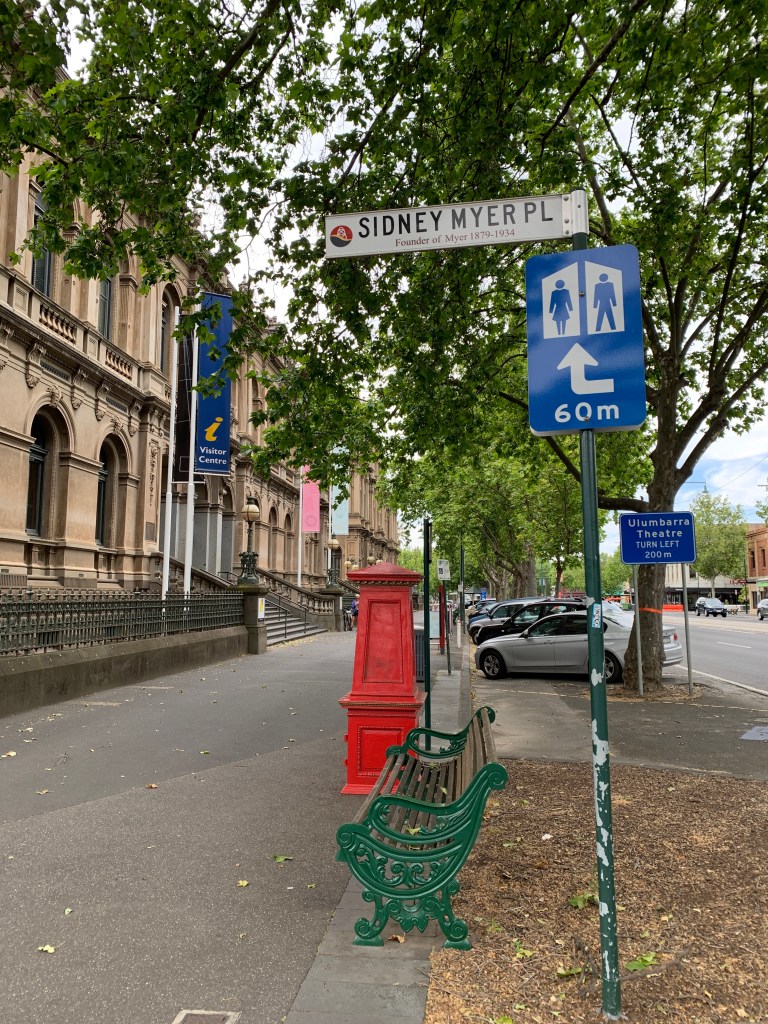
Along the way we passed Queen Victoria’s statue, the RSL Museum, George Lansell’s statue, Sidney Myer Place and the beautiful old buildings housing the tourist office, the Post office and the Law Courts.

George Lansell is one of the men responsible for Bendigo’s wealth. He is shown standing with a lump of quartz in his hand. George was born in England and educated in Bendigo and Melbourne, He inherited his mining father’s estate of six million pounds in 1906. He owned the Bendigo Independant newspaper and merged it with the Bendigo Advertiser, He was chairman of a number of media and other companies. During World War I he served in the AIF and was wounded on the Western Front. He was elected to the Victorian parliament in 1928. He was knighted in 1951 and died in Bendigo in 1959.

George is largely responsible for introducing diamond drilling to quartz mining in Australia and he was famous in Bendigo for his efforts to maintain the mining industry and provide employment.

George gave much to charity and was so highly thought of by the community that at his death flags were flown at half mast in Bendigo. No wonder there’s a statue to him in the CBD!

An interesting snippet we learnt on the tram was that Russian immigrant Sidney Myer started his first department store in Bendigo. Sidney migrated to Australia is 1899 with very little money and little English. He joined his brother in Melbourne and they both worked in an underclothing business before opening a small drapery shop. This was quite successful and they took their goods from door to door. Sidney bought a cart and took their wares to country towns. They later moved to a store on Pall Mall in Bendigo. This was the beginning of the Myer chain of department stores. The little square next to the current Visitors Centre is named Sidney Myer Place.


It was lovely wandering through the lush green Rosalind Park until we arrived at Dai Gum San, a large plaza where lots of market stalls were being packed away. It looked like a market had taken place that day but we missed it.

The Golden Dragon Museum is located in one corner of the Plaza and our entry fee was $10 each for seniors.

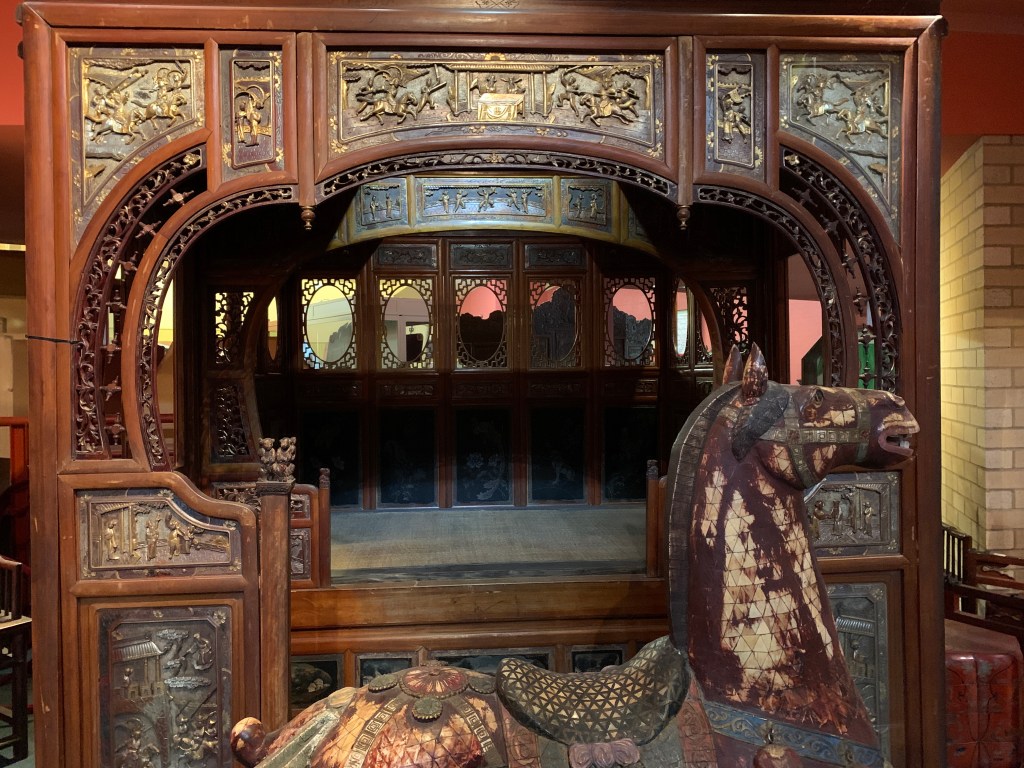
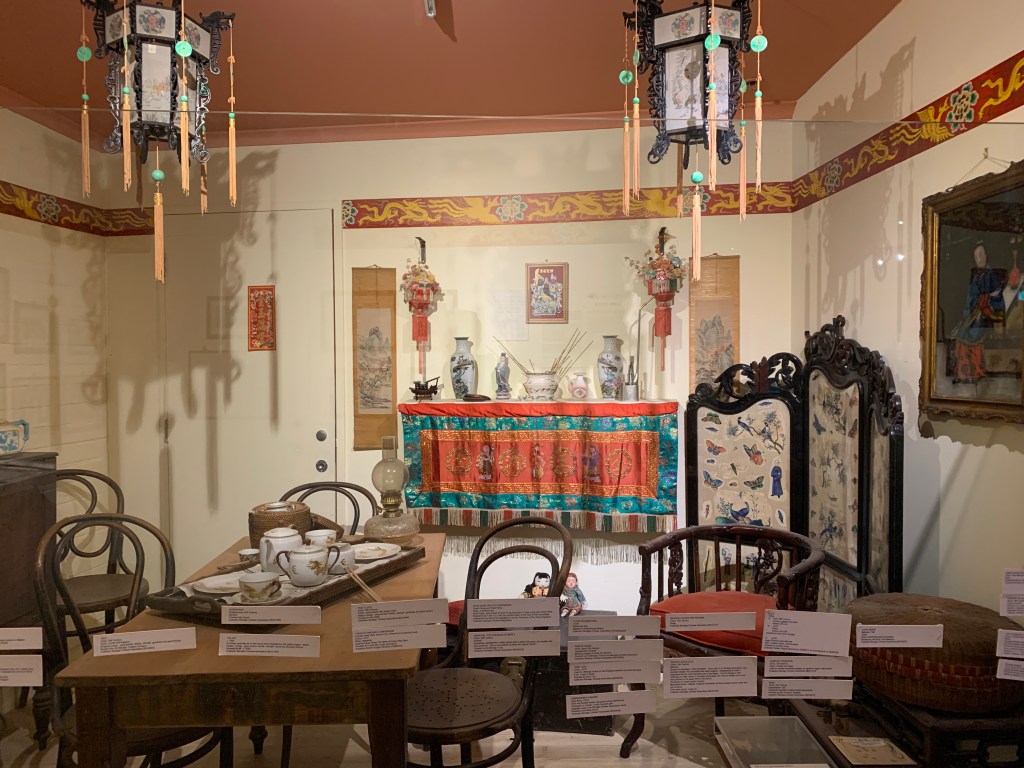
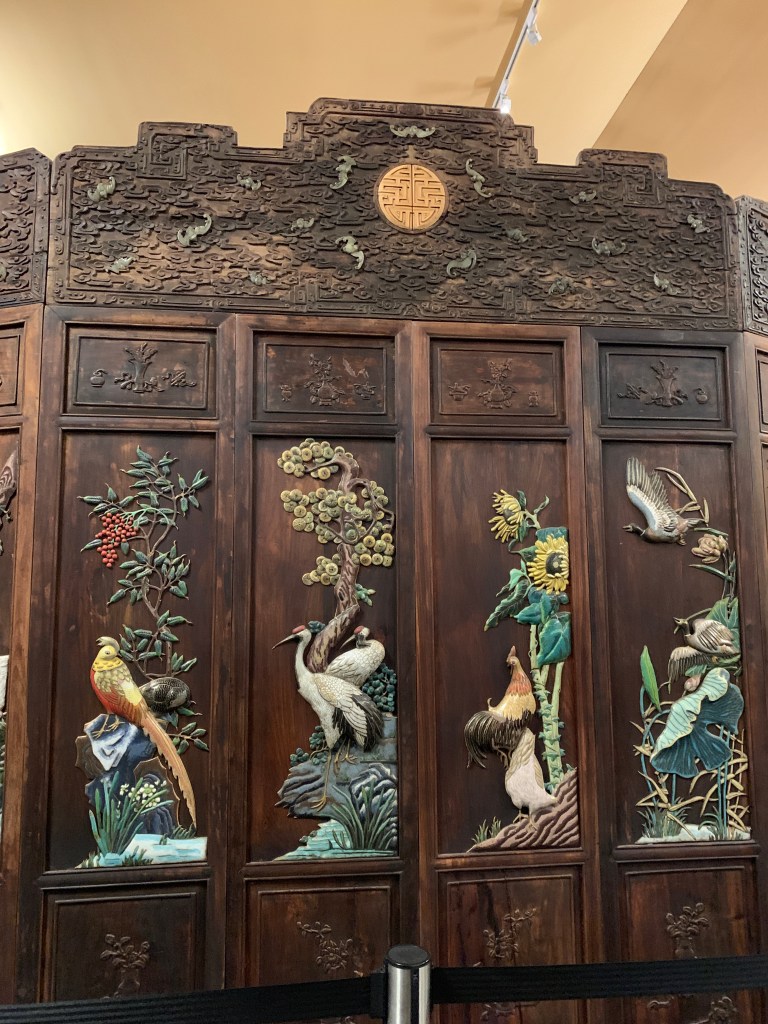
Wow, I don’t know what I was expecting but wow. What a lot of amazing artifacts are housed there. The various displays tell the story of the Chinese people in Bendigo (and Australia in general) and there are many objects on display that would have been brought from China with them.

One story was about how the Chinese would land at Robe in SA and walk to the goldfields so they didnt have to pay the 10 pound immigrant tax in Victoria. They walked 260km to save paying 10 pounds!

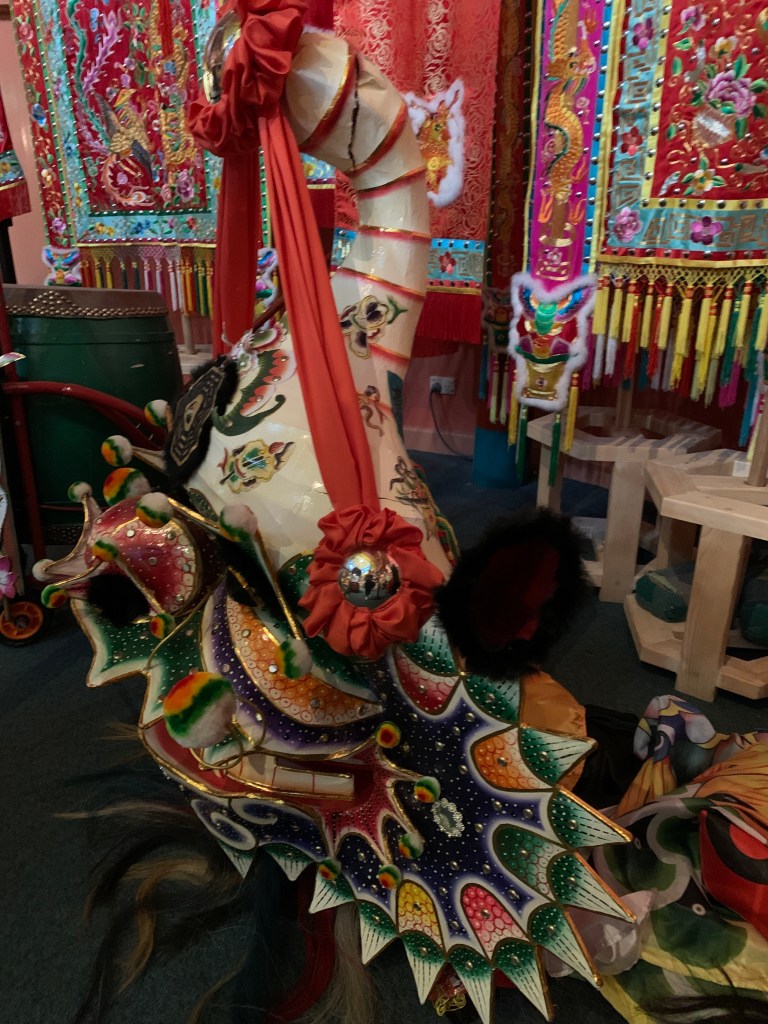
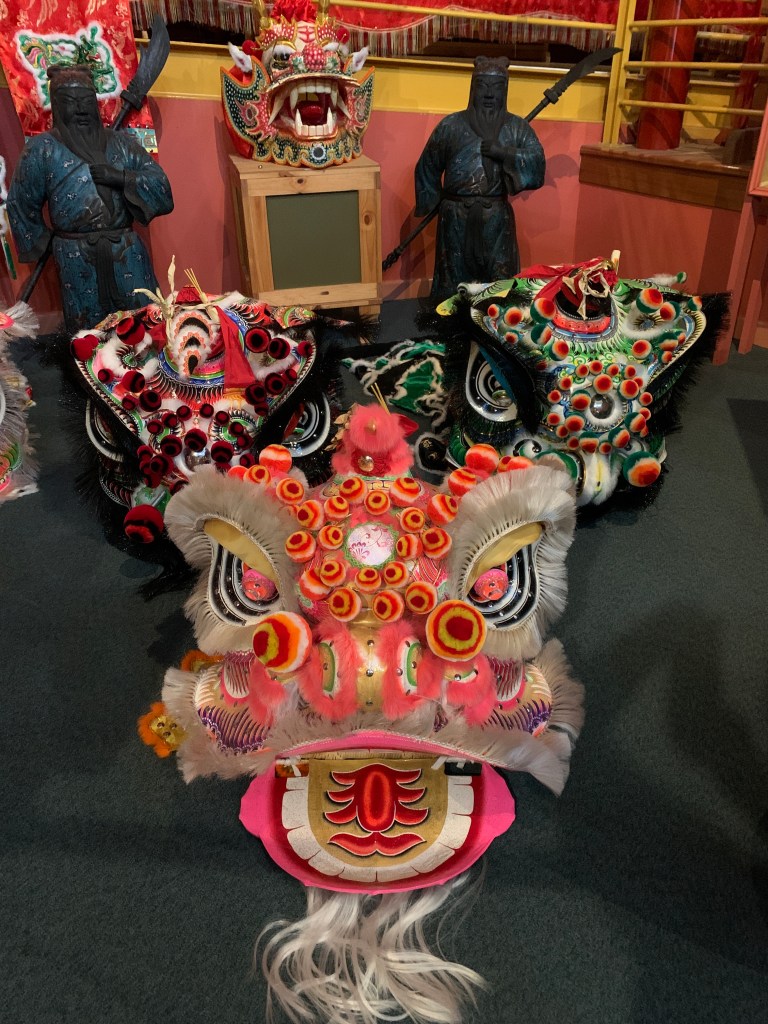
The most amazing exhibits are the dragons. These ceremonial dragons are used for parades.

Dai Gum Loong is the world’s longest Imperial Dragons. He is Bendigo’s newest dragon and parades every year at the Bendigo Easter Festival.

Loong is also on display and is the world’s oldest Imperial Dragon. He first appeared in Bendigo in 1892 and regularly paraded in the Easter Festival until he retired in 1970. Loong has been added to the Victorian Heritage Register.

Sun Loong is another Imperial Dragon on display. He is over 100 metres long and needs 1 person to carry his head, 3 to carry the neck, 52 people to carry the body, 1 to carry the tail and up to 52 relief people. His head weighs 20.5kg and he is covered in 6,000 scales, 90,000 mirrors and 40,000 beads.

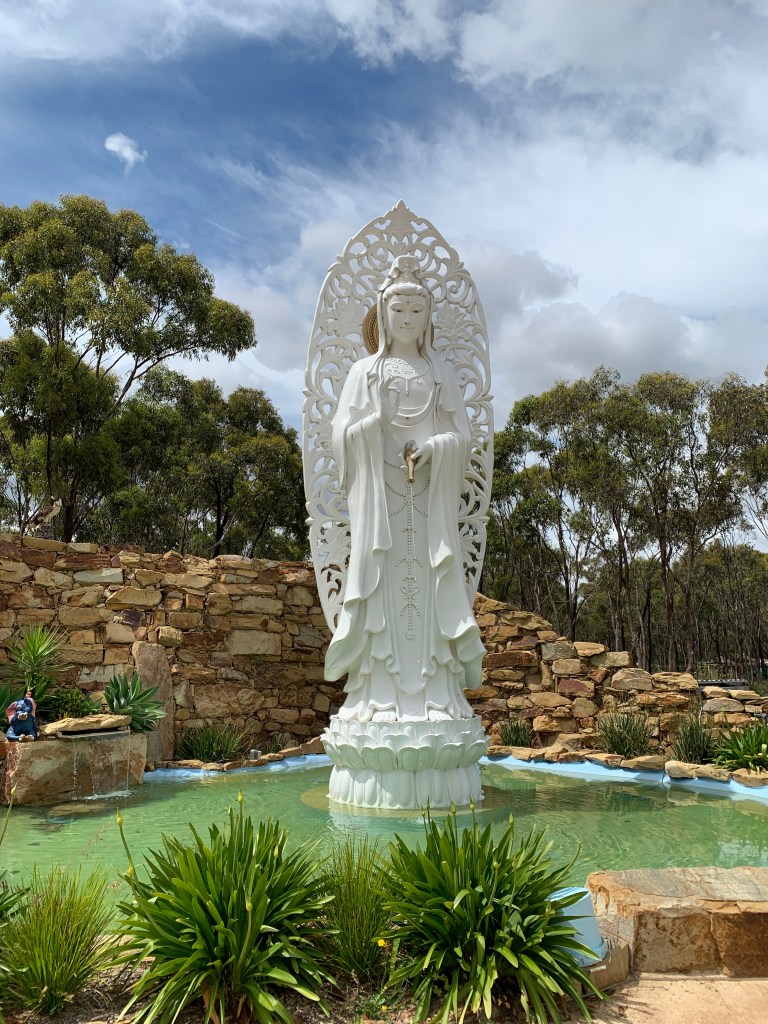
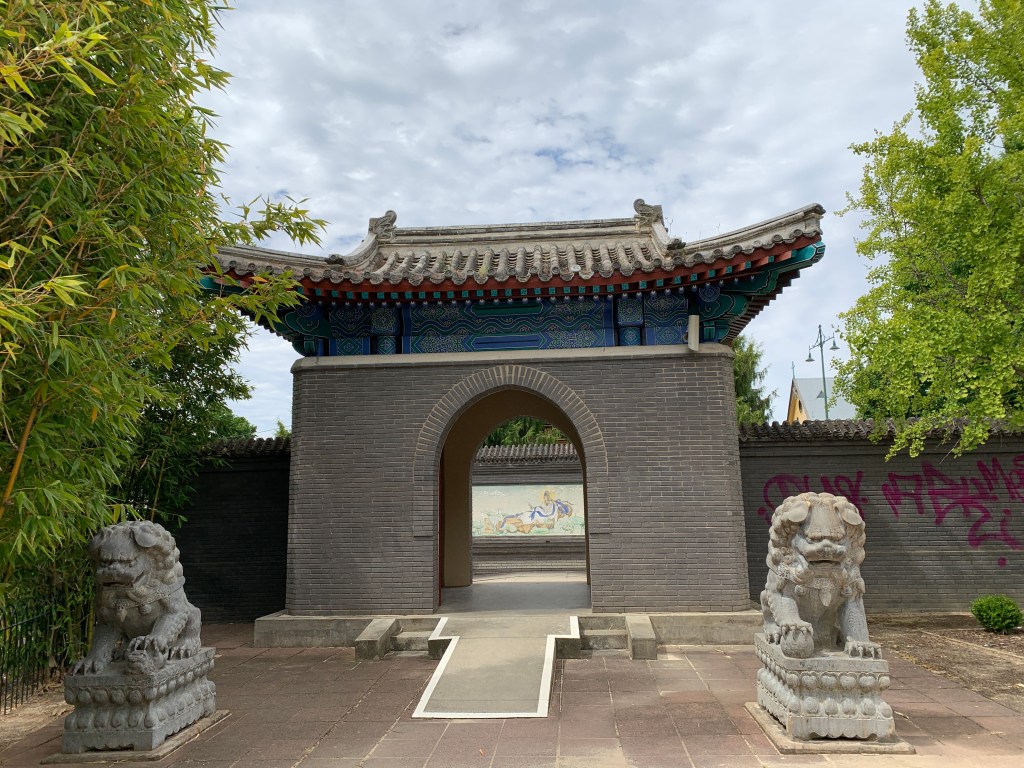
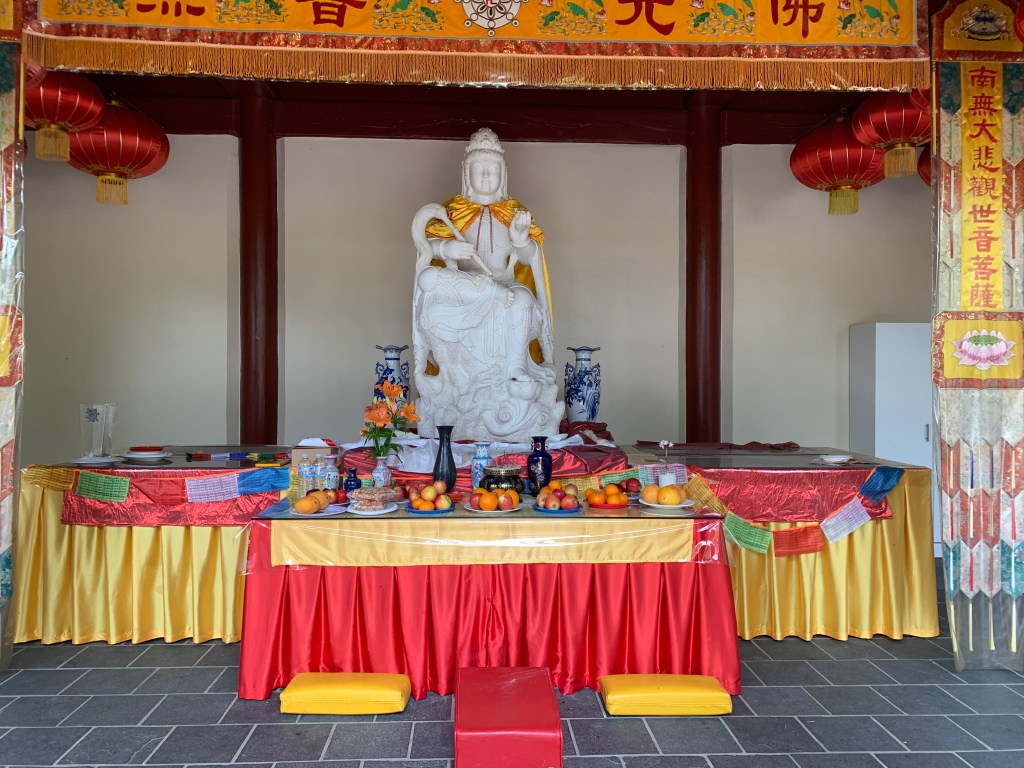
We could have spent a lot more time at this fascinating museum but we had to get back to catch the last tram. We had a quick walk through the Yi Yuan Water garden, a delightful tranquil spot in the middle of the city. We also had a quick look inside the Guan Yin temple next door. This temple is home to a beautiful marble statue of the goddess of compassion. Daily offerings are still made in the temple.

We wandered back to Charing Cross tram stop and were relieved to sit for a bit while we waited. A couple of young ladies came along and asked about the tram and how to get to the Central Deborah Gold Mine. We explained and told them to talk to the drive of the tram. They amused us greatly as they took photos of each other in various poses. No doubt these were uploaded to their ‘Insta’. It was very funny.

Our last little tram ride on the beautiful restored historic tram took us back to where we began the day. We’d had a lovely time being tourists in Bendigo.

Great street art, Bendigo

Motorhome or car? Motorhome or motel?

It was decision time. We had a business appointment in Ballarat, Victoria, some 500km from our home in Griffith, NSW. What should we do? Drive our car and stay in motels, pubs, cabin in caravan parks, B&B’s etc or do we quickly pack the motorhome and go in that?

What to do?

We were already in town doing some Christmas shopping when we realised we had the perfect 5 day window to get down to Ballarat and back before we had any other commitments. It was a no brainer really!!

How many of you just jump at the chance to go ANYWHERE in your RV? We do!!

We keep our motorhome well stocked with dry goods, wine, full water tanks and full of fuel. To go anywhere it’s simply a matter of throwing in some clothes, the cold food from our fridge and a few extras like a book or two and my technology bag. We make sure at the end of each trip the motorhome is thoroughly cleaned and any little issues fixed so she is ready to go any time.

So back home from shopping, quickly packed and we were driving out the driveway at 11.30am. Pretty good we thought!

Now Australia has been in the grips of a La Niña event and there had been floods all over the place. Even in places that don’t usually flood. Roads everywhere were in a shocking state and it would take months/years to repair all the potholes. Deciding on a route to Ballarat was going to be tricky. Consulting the NSW Live Traffic app and the VicTraffic app gave us a route from Griffith southwards through Darlington Point, Jerilderee, Tocumwal, Shepparton, Bendigo to Ballarat. It looked like all the roads were open but we were expecting to see roadworks.

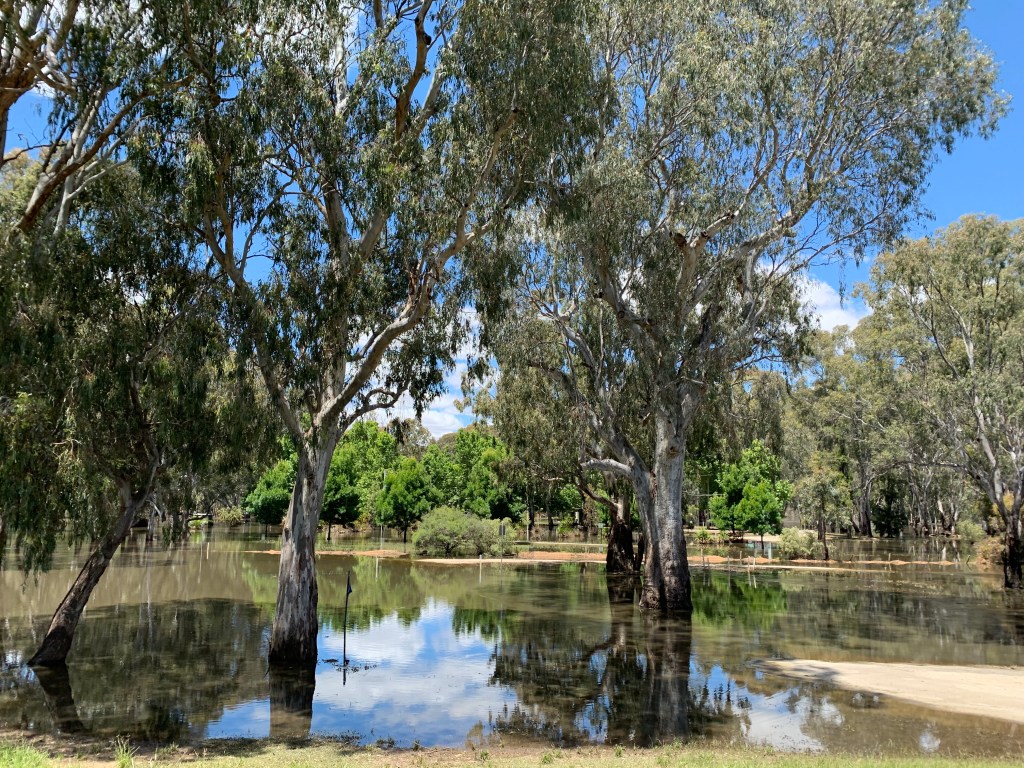
Driving through Darlington Point, which is right on the Murrumbidgee River, showed us how full the river was. The lovely little caravan park was underwater. The town was saved by the huge levee bank.

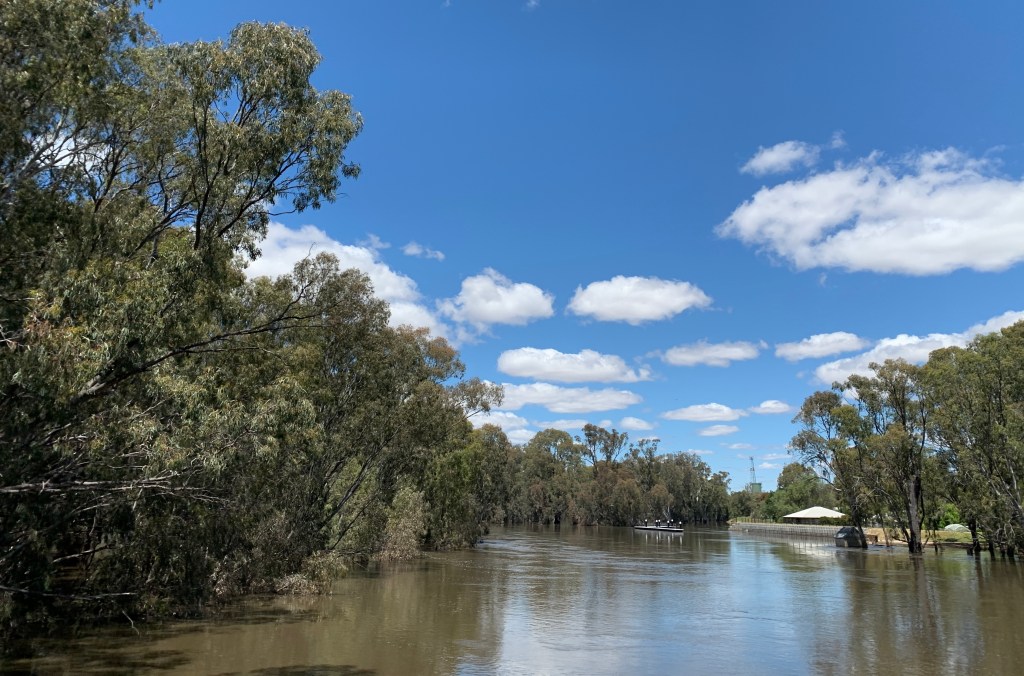
Continuing on we arrived at Tocumwal and again the town was saved by their levee bank. You can see from the photo below how the levee is holding back the water from the town. The mighty Murray River was huge as we crossed into Victoria.

We continued our journey via Shepparton where we discovered road closures in the CBD due to the flooding. It was a traffic nightmare getting through the city. Traffic was diverted into smaller side streets that really aren’t suitable for big trucks and motorhomes. It was a relief to be through and out on the road again.

We drove as far as a tiny place called Corop ad turned off the main road into Greens Lake. This is a lovely free camp alongside a large lake. There are toilets and dogs on a leash are allowed. There were quite a few campers already set up but we managed to find a nice spot and quickly set up camp.

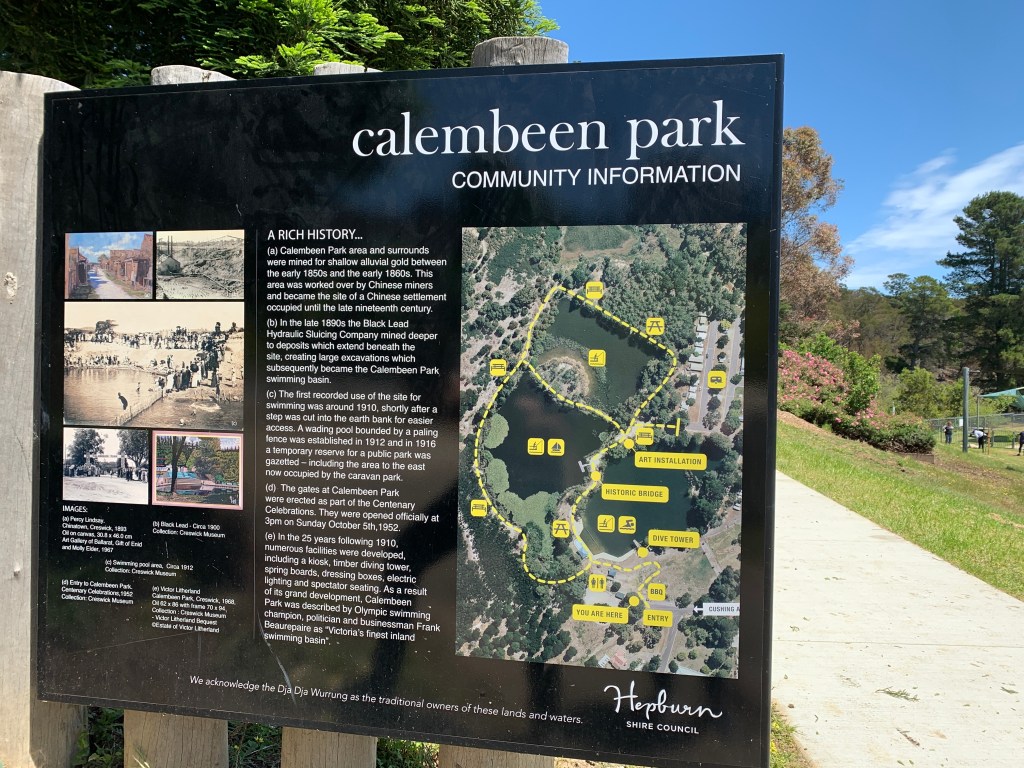
The next morning we headed to Ballarat. We had a brief lunch stop at Creswick where we pulled into Calambeen Park. Calambeen park is home to a large man-made swim ming hole. It even has diving boards!

Just before Ballarat we turned off to meet up with the owner of R&R Pods. They construct glamping pods for the accomodation industry and we were keen to check them out to see if they’d be a good fit for our own place. We have plenty of room.

After checking out the pods we had a quick drive into the city of Ballarat and found the CBD not very friendly for long vehicles and, as we didn’t really need to stay in Ballarat we turned north again towards Bendigo.

We stopped for a lunch break in Creswick and had a delicious meal at the local pub, The Farmers Arms. A quick stop at the IGA for groceries and we continued on.

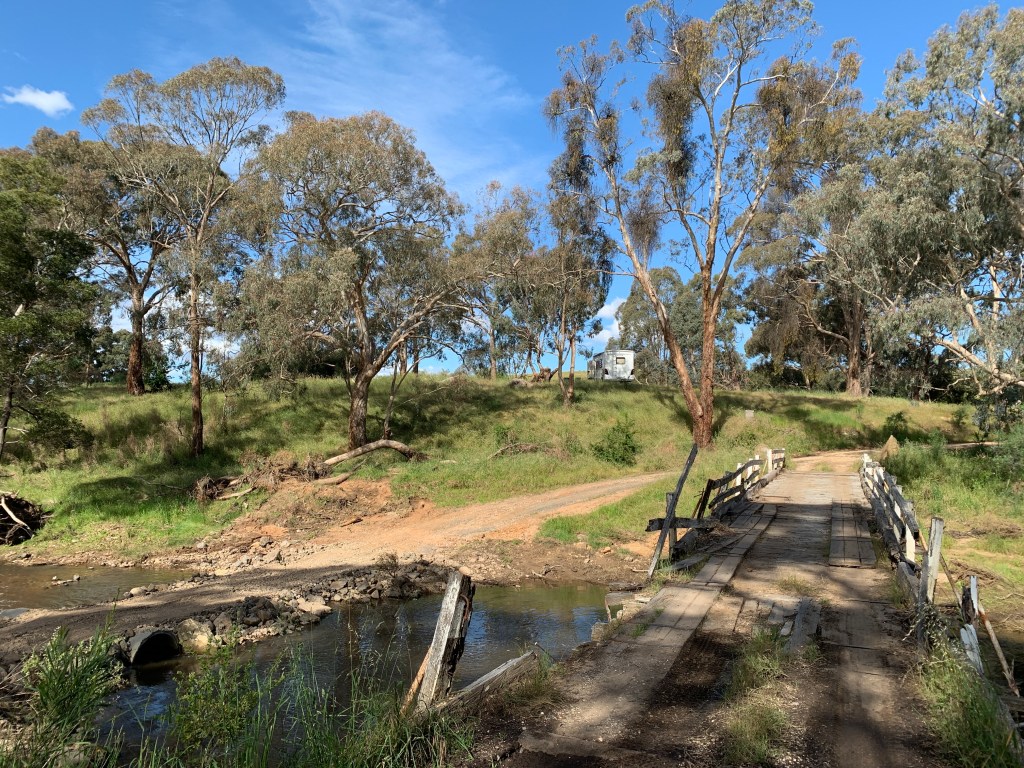
Around 4pm we started looking for a camp and found another great spot via the WikiCamps app at Franklinford Streamside Reserve. What a lovely spot. The road was a bit narrow and bumpy on the way in and there weren’t too many level spots but we managed to find a spot up high on the hill overlooking the fast rushing stream below. There were roadworks below that indicated the creek had flooded recently and the ford was under repair. It looked like it had been washed away and a lot of new rocks had to be brought in. It is a one way road in and provides access for the people who live on the farms along the way. We watched a few cars cross the precarious bridge and make their way to the other side. You wouldn’t have got me to drive across that rickety bridge! We had a little campfire and enjoyed camping there.

Heading for home – driving through the wet!

After a good couple of days in Canberra camping at the Epic Campground so we could attend the Caravan & Camping show it was time to head for home. I was seriously hoping we wouldn’t get bogged leaving our site like the other motorhome did yesterday. It had rained again since then and the ground was so saturated.

I needn’t have worried though as Rich drove the Moho straight off our site and onto the road with no drama at all. Didn’t even look like getting bogged. It was a relief.

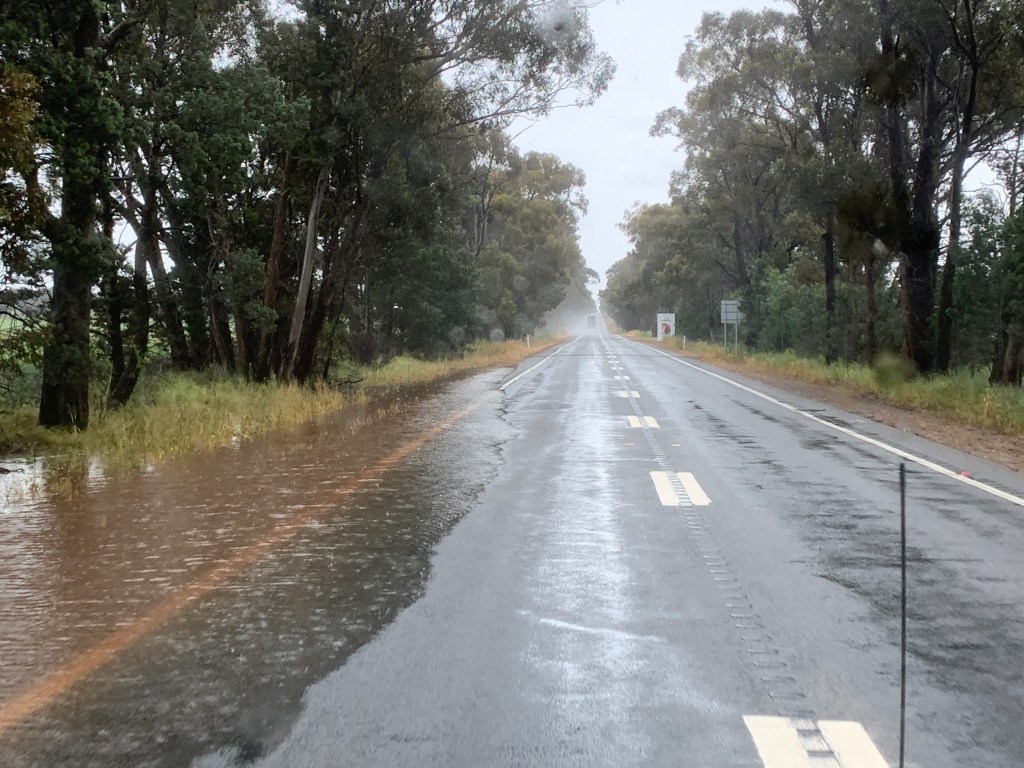
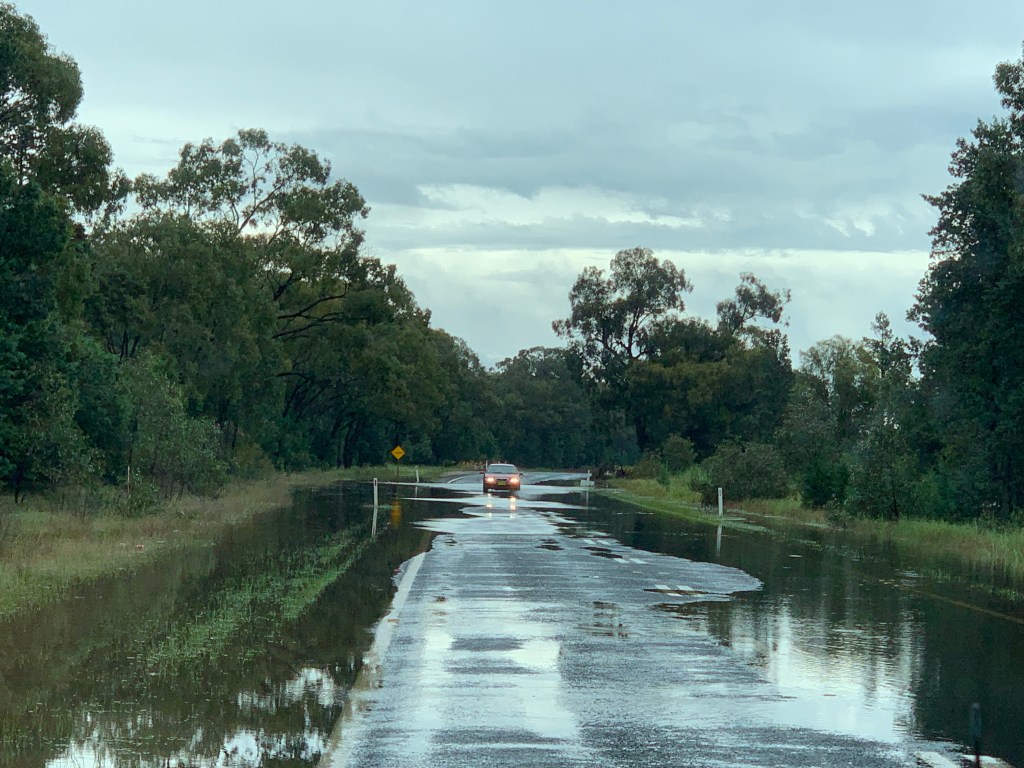
We set off from Canberra around 9am and had a quite uneventful journey home although it was a slow one. The roads were in a terrible state due to all the rain and there were some sections after Temora where there was still water over the road. The roads were open all the way though so we just went a little slower than usual so we could avoid the big potholes and the edges that have been washed away.
Once home it was unpacking then a big clean for the motorhome so she is ready for our next meander to who knows where!

Leaving our camp at EPIC Campground, Canberra