Day out to Silverton

We were woken to the excited sounds of the children as they watched the horses in training going by right past where their swags were set up. It made us laugh to see the children all rugged up in their fire coats sitting in their camp chairs that they’d line up against the fence so they could watch the horses.

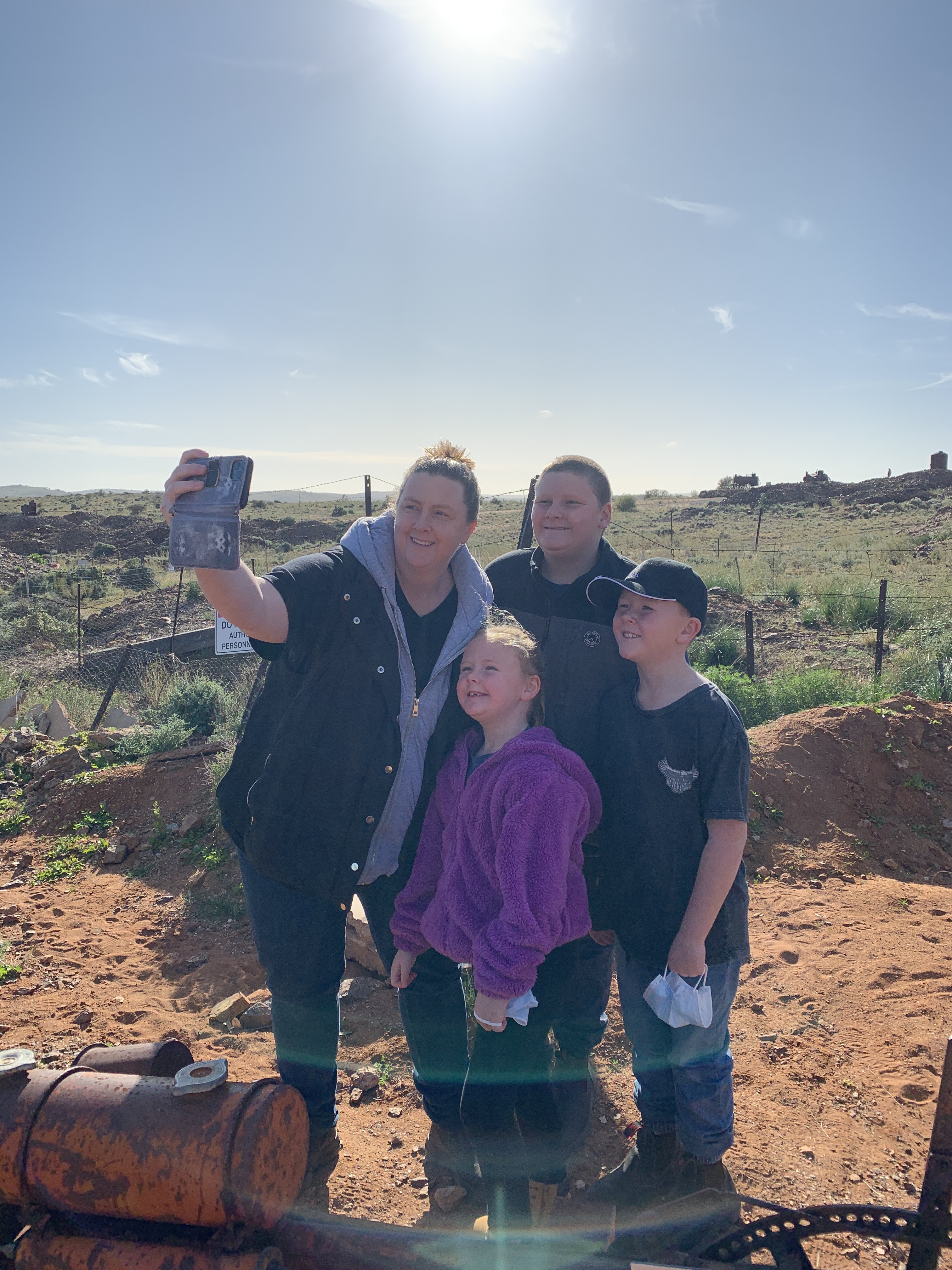
We were all up early and ready to go off to Silverton for the day. Our first stop was to the Historic Day Dream Mine to do an underground tour. The kids were very excited about going underground.

To get to Day Dream Mine you head out of town on the Silverton Road then take a right onto a gravel road. It is another 13km along this road and through a couple of gates to the mine site. The road was a typical outback gravel road with some good sections and others that were very corrugated. Katie enjoyed the drive.

I was astonished when we were approaching the mine to see a sign beside the road that said this was the site of a township in the late 1800’s and some 500 people lived there. It is such a remote location.

When you arrive at the Mine you check in with the lovely Maggie (who has a strong Afrikaner accent) and she takes your order for tea, coffee, milo and scones. Then you wait out on the verandah for the tour guide.

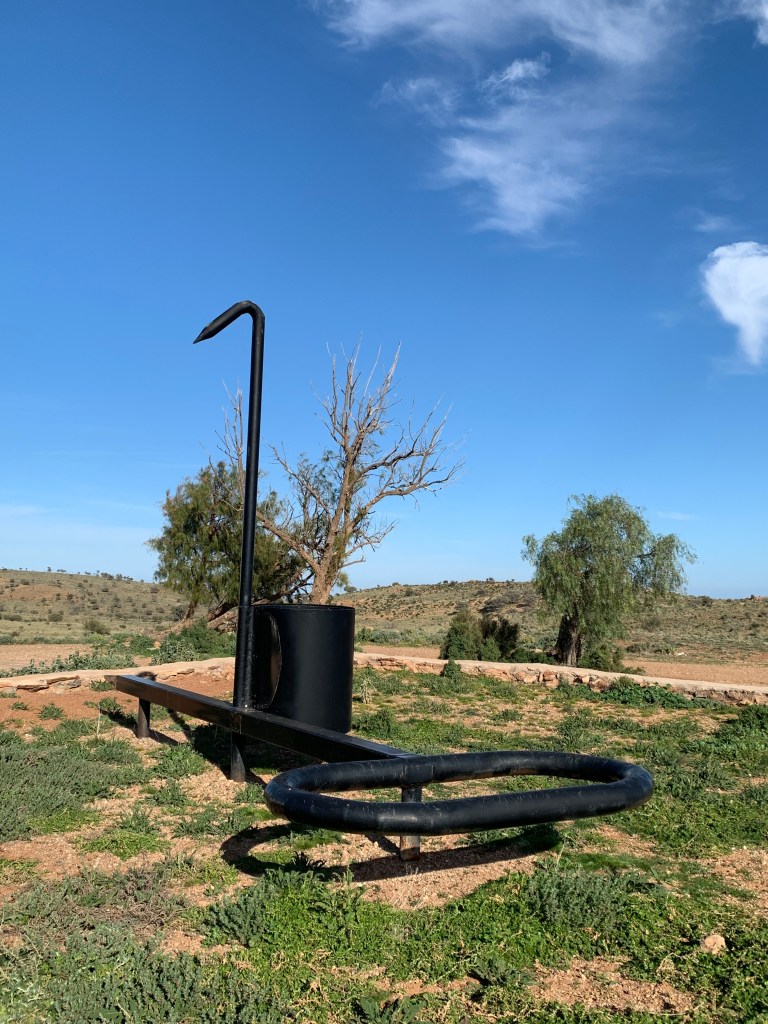
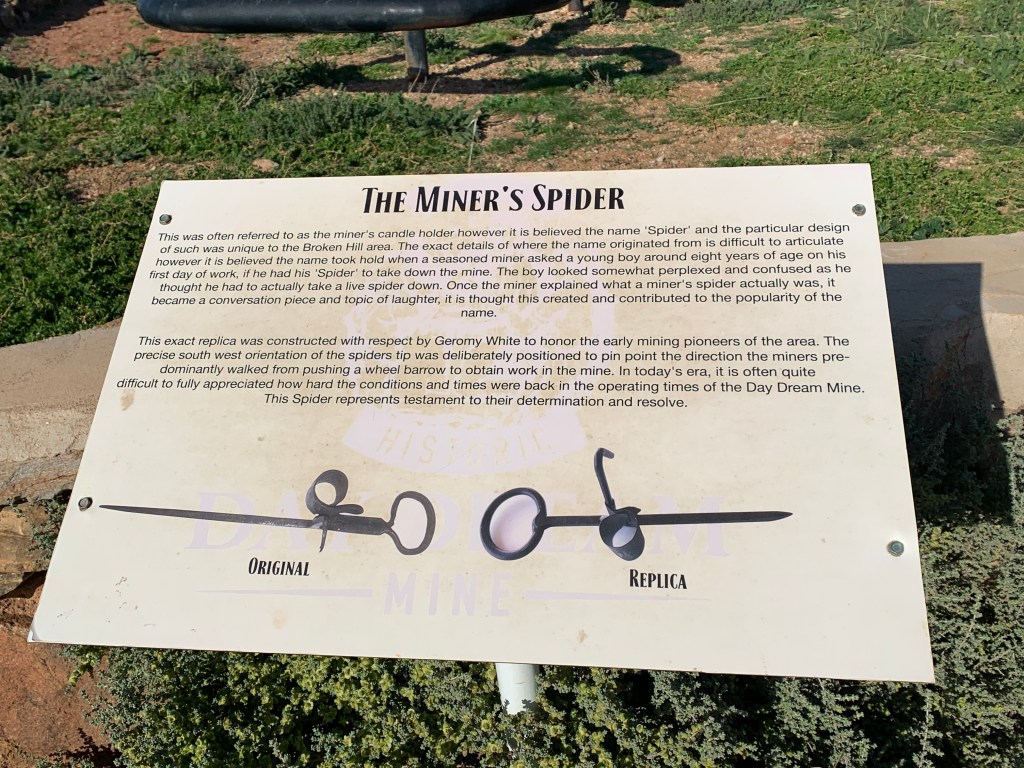
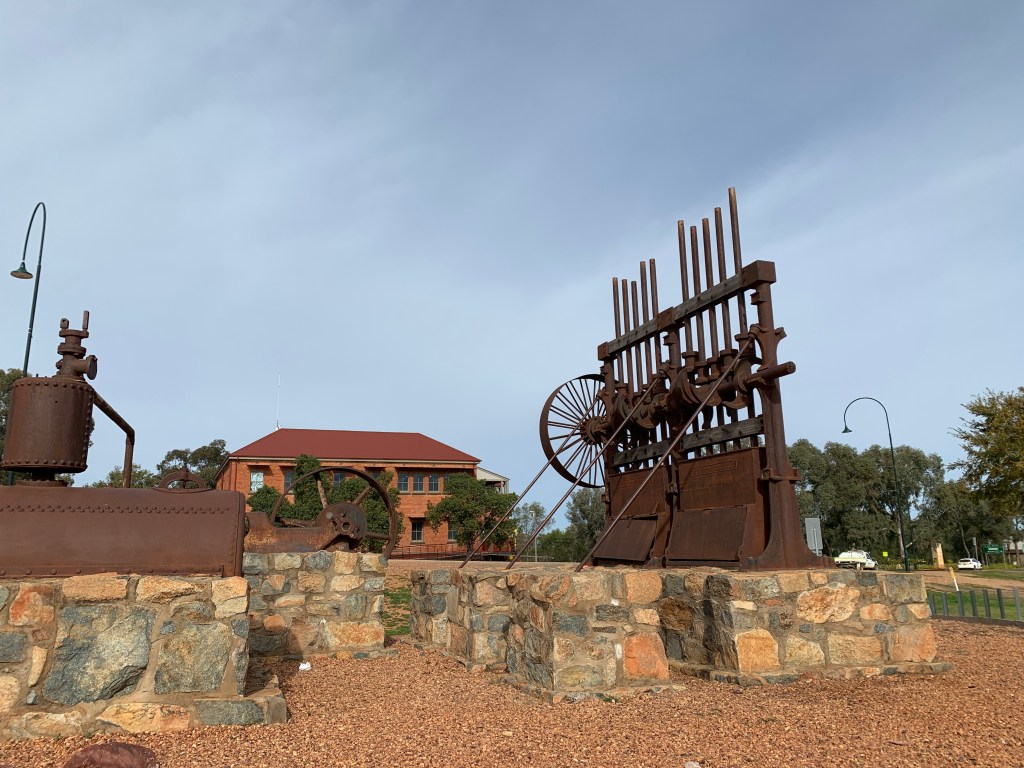
Scattered around the main building are lots of old mining machinery and tools. There is a toilet block back up the hill.

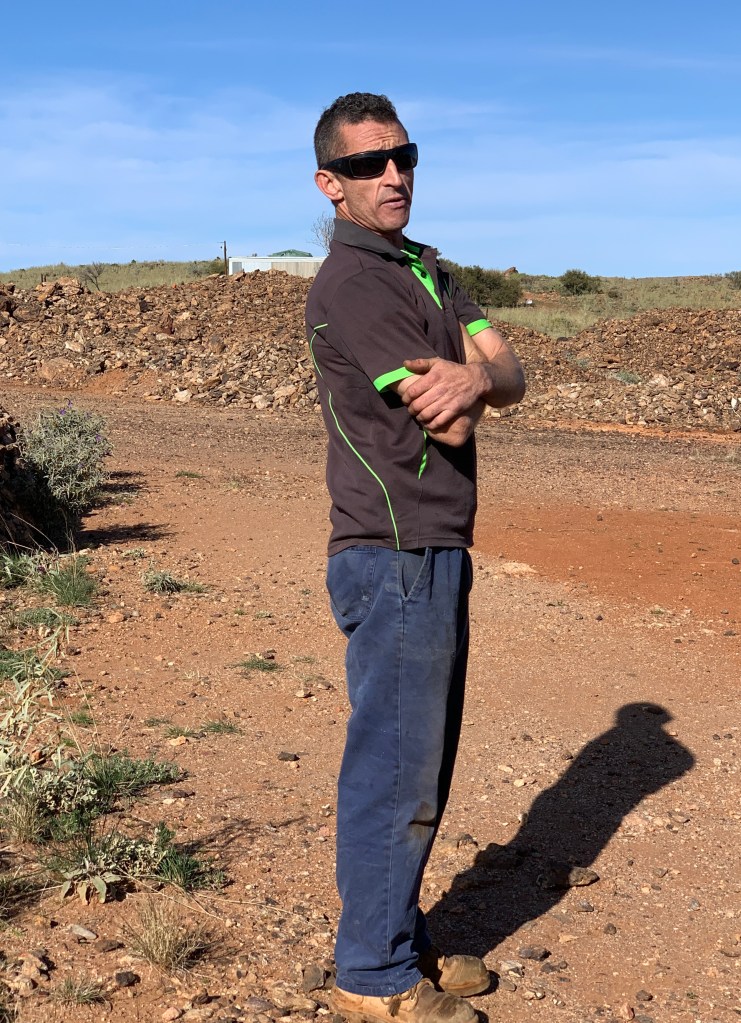
Our guide Jeremy arrived and gathered our mixed group. We had lots of grey nomads, a couple of young people and we had the only kids. Jeremy led us onto the mine site for the surface part of the tour and explained the mine was established by prospectors wandering through the area and finding substantial deposits of lead, tin, zinc and silver. Word got out and more prospectors followed. Remember these prospectors would have all come on foot.

The mine grew and we were shown where the black powder was stored in an underground dugout to keep it at the right temperature.

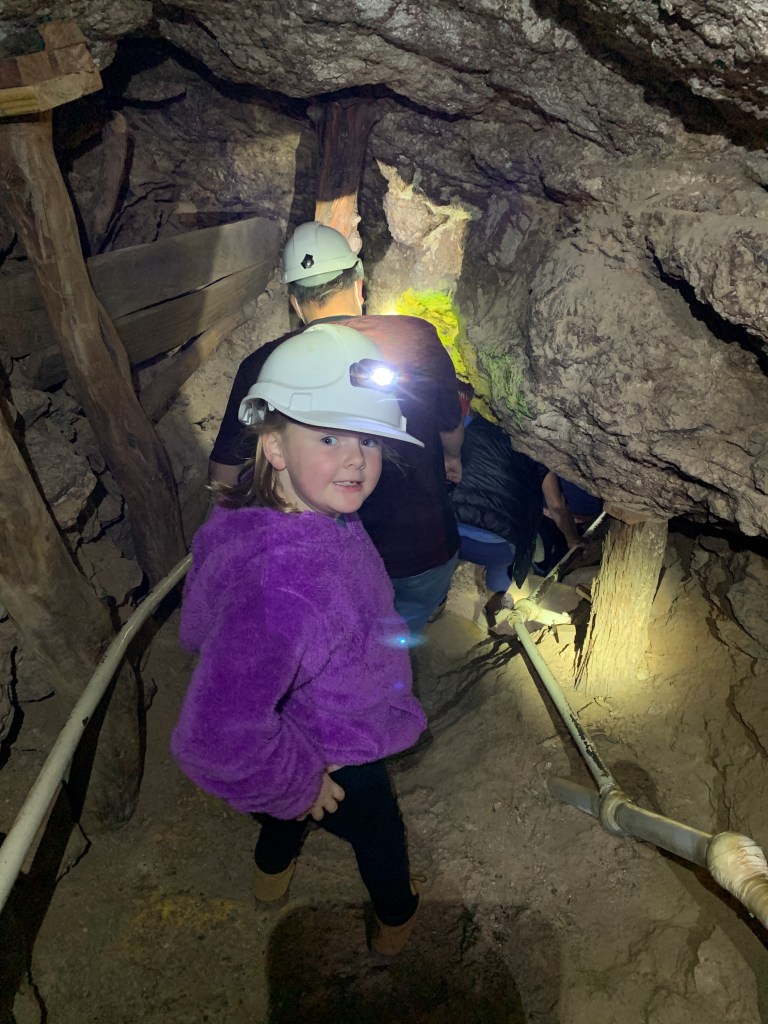
We were shown to where the windlass used to be above the shaft and then we were led to a shed where Jeremy gave a safety briefing and we were issued with hard hats with lights. We’d been told when we booked the tour to wear sturdy shoes so we’d all worn our boots.

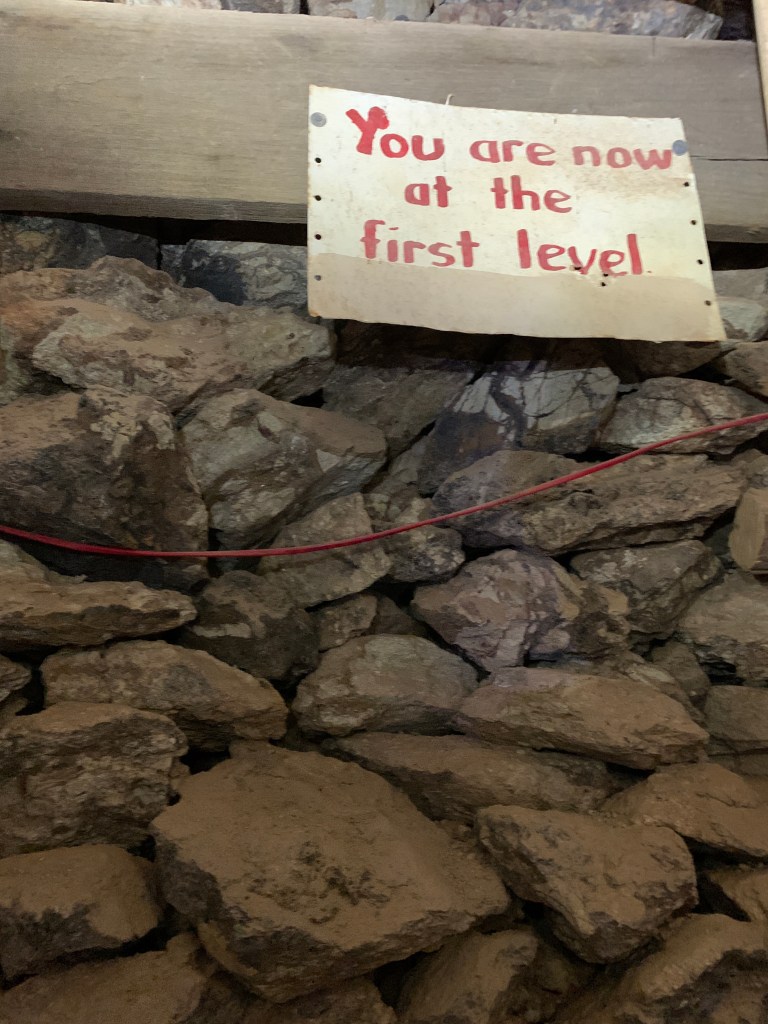
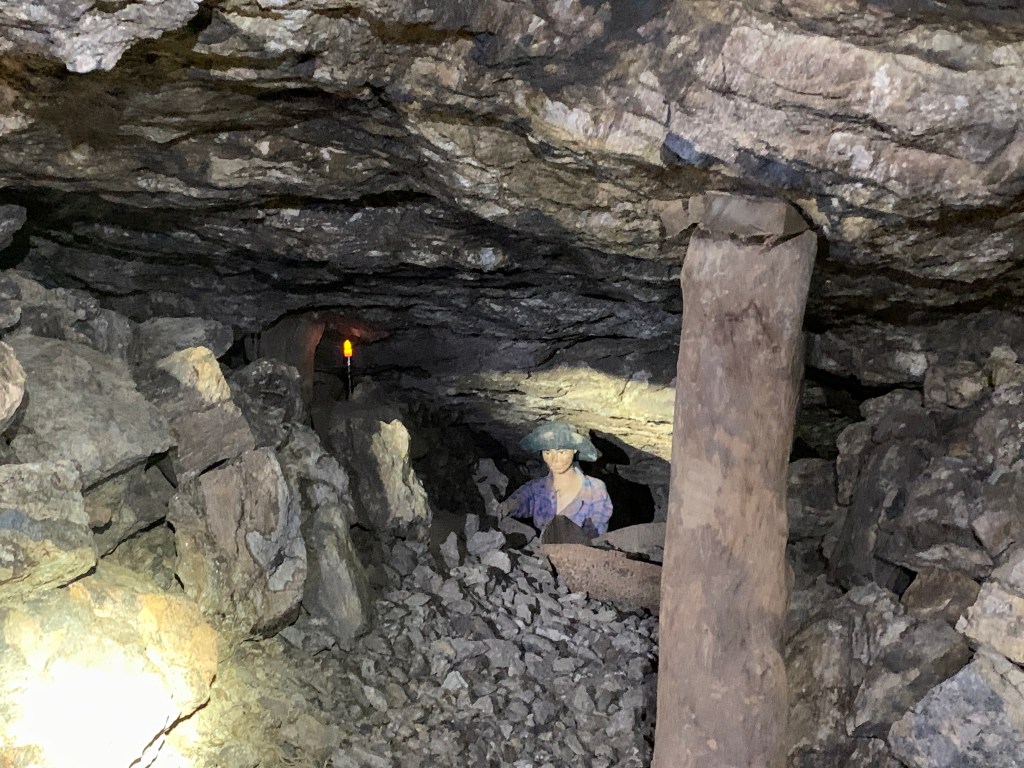
Jeremy led us down into the mine and it was very steep with steps just cut into the rock face. At times the ceiling was so low you had to bend over double. Luckily there’s a hand rail to hold on to.

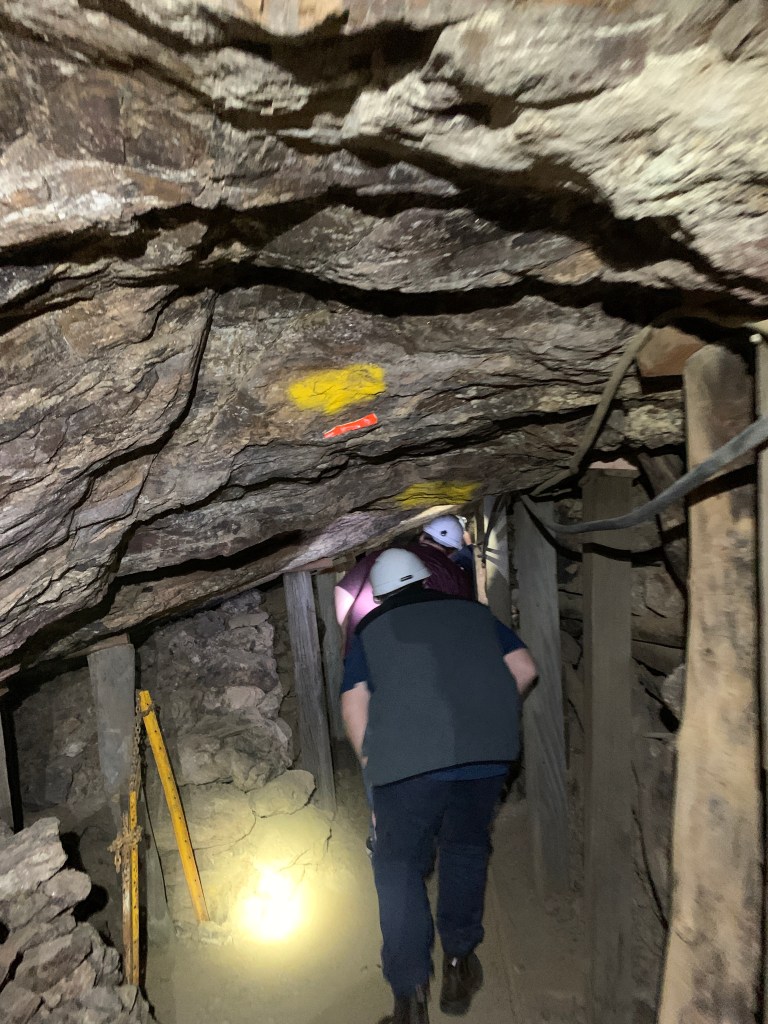
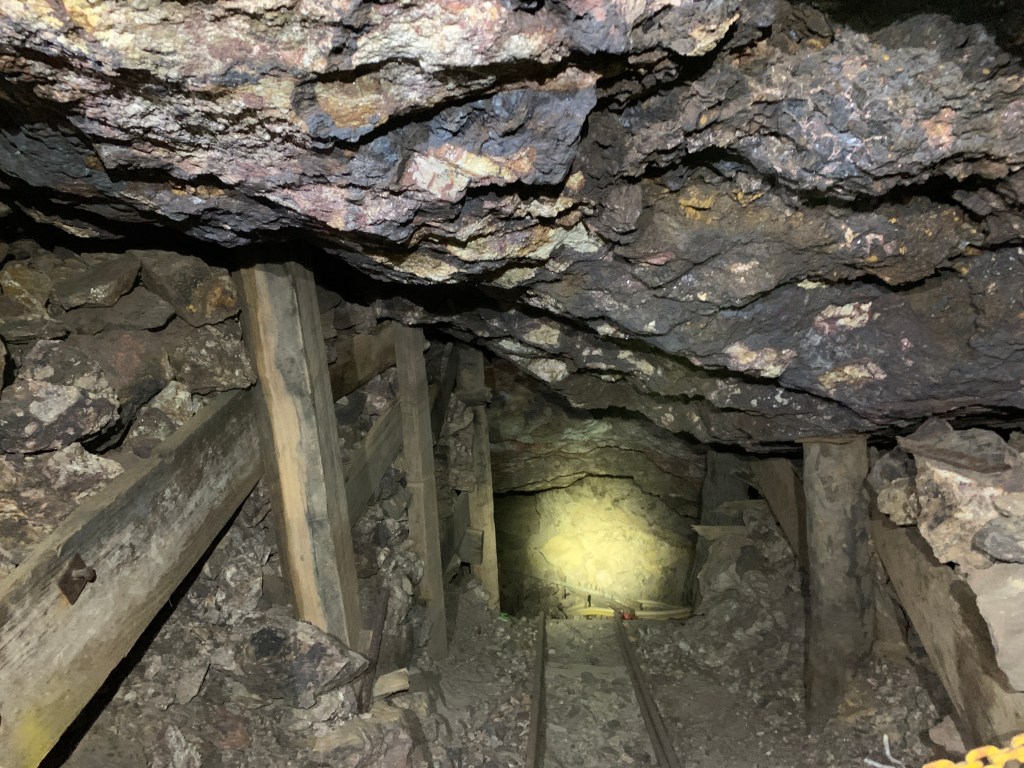
For the next hour we were led up and down tunnels all carved into the rock by hand. At the bottom we were about 130 feet underground. The tunnels were mostly very narrow and then occasionally opened up into wide spaces. Jeremy explained that this is because the ore body the miners were following must have widened there and all the ore had been removed creating a big wide space.

Children as young as 8 years old worked in the mine sorting ore. They were used because they were small and could fit in tiny spaces. Although about 3 years of doing this was enough for the children to start losing their eyesight so they were then moved above ground. Our kids were amazed by this.

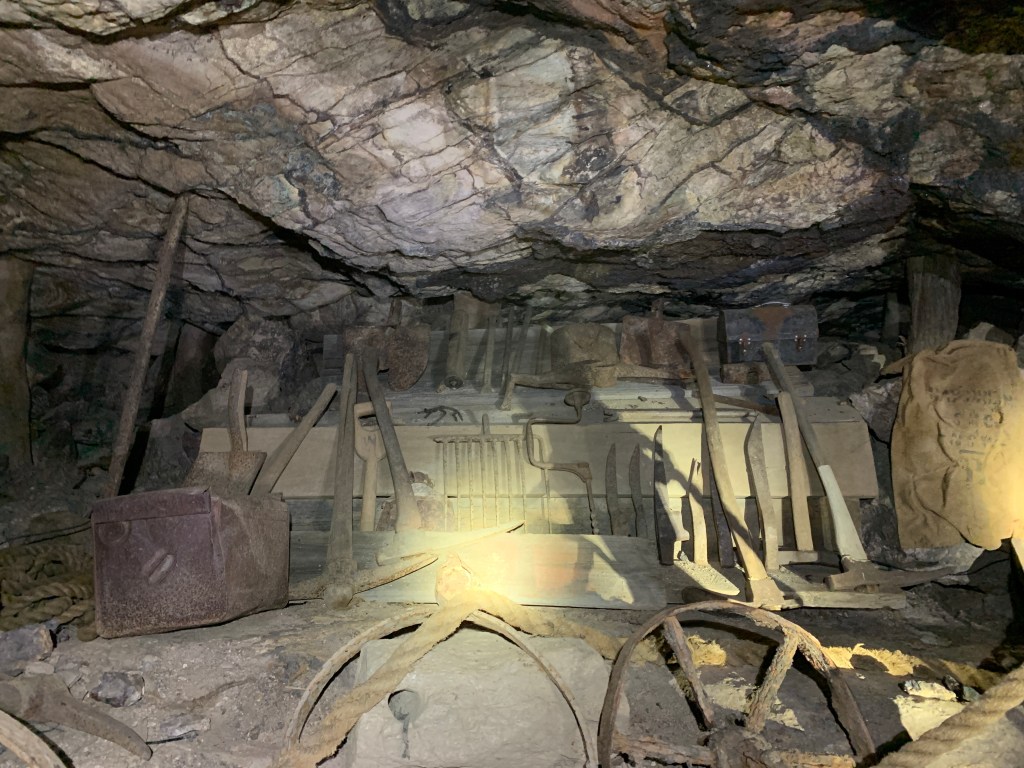
We passed an exhibit of old mining tools and a wooden wheelbarrow called a ‘Cornish barrow’. They were called that because they had no legs and were used to get in and out of smaller spaces than a usual wheelbarrow could fit.

At one part of the mine we came to a large opening and there was room for the whole group to sit around in a circle. Here Jeremy demonstrated how the miners working in threes would drill the holes in the rock. One would hold the spike and the other two would swing the sledge hammer in a rhythmic tap tap. Pity the poor guy holding the spike. It was his job to hold it steady and after each tap turn it a quarter turn so it drilled into the rock. Broken or sliced off thumbs was a common injury. Remember too that those miners were working by candle light.

Riley got to help with the demonstration and he was the spike holder!

There were two candles burning and Jeremy asked us all to turn off our headlamps. We were left with just the two candles and that is how much light the miners would have had. Incredible! Then Jeremy snuffed them out. It was pitch black. You could not see your hand held in front of your face! No wonder miners had horrific accidents such as falling down shafts.

As we had climbed down into the mine to exit we had to climb back up. Once back on the surface we had to hand in our hard hats and we were counted by Jeremy to ensure we had all returned to the surface.

The next tour group was assembling so we found a lovely sunny spot on the verandah where we were brought our previously ordered scones with jam and cream and hot drinks. The scones were delicious and the hot drinks were served in tin mugs. These were very welcome after our tour underground.

We left the Day Dream Mine and headed back out to the Silverton Road. On the way we asked everybody for a rating out of 5. We got 4.5 to 5 from everyone so we all thought it was a great experience.

A Mulga tree. These trees used to be everywhere around Broken Hill but most have been cut down to use as timber to shore up the mines. They are a very slow growing tree and this one could be hundreds of years old.

Silverton is only a short drive from Broken Hill and we’ve been there quite a few times already. However the children had never been and Katie hadn’t been there since she was a teenager.

Silverton is a lovely historic town with a current population of about 60. At it’s heyday in the late1880’s it had a thriving population of some 3,000. Silver and lead were found in the area and the town grew from there. The Silverton Tramway was built in 1888 to link with the SA railways and was Australia’s first private railway.

As Broken Hill mines were established Silverton fell into decline. Many of the buildings were transported to Broken Hill on jinkers pulled by camels, bullocks or donkeys. This is why so few buildings remain in the village to this day.

Although Silverton has a small population it is a vibrant community and the area has become famous for its popularity as a film set. Many movies and commercials have been made in and around Silverton. A Town Like Alice, Mad Max and many many commercials. The iconic Silverton Hotel has been used in many of those.

We stopped off at the old Gaol which is now a very good museaum housing memorabilia from Silverton’s past. Then we walked around the corner to the Silverton Hotel for some lunch. Our plan to drive out to Mundi Mundi Lookout was squashed as the road was closed due to the filming of a new Chris Hemsworth movie. Apparently he drove through just before we arrived at Silverton.

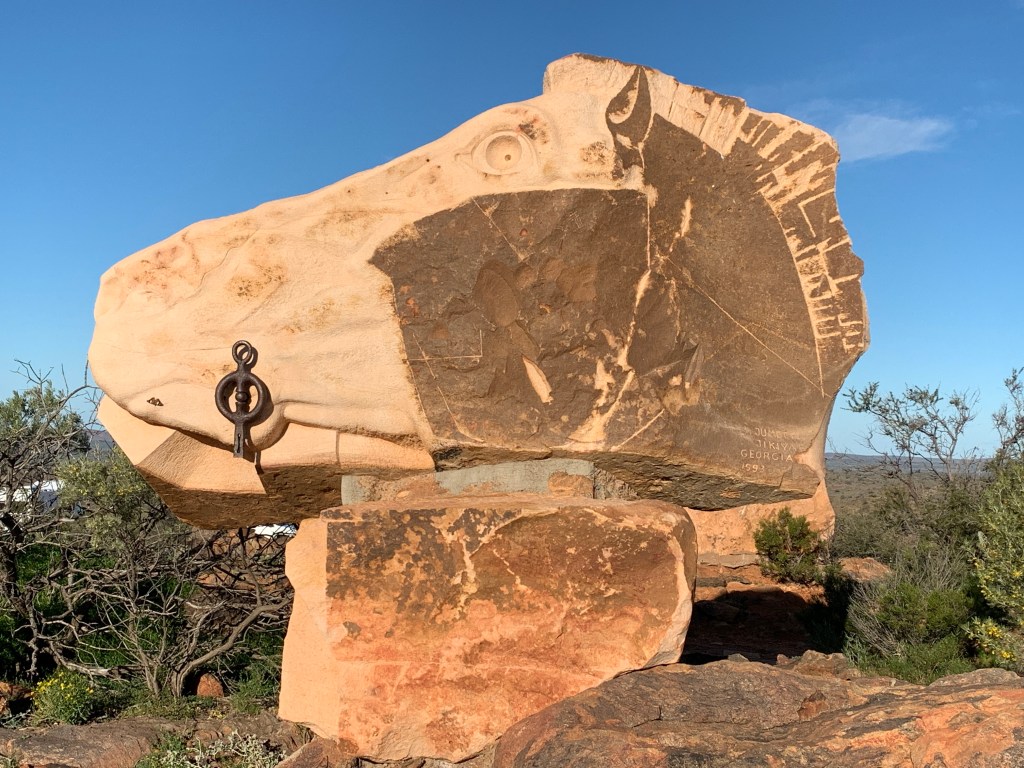
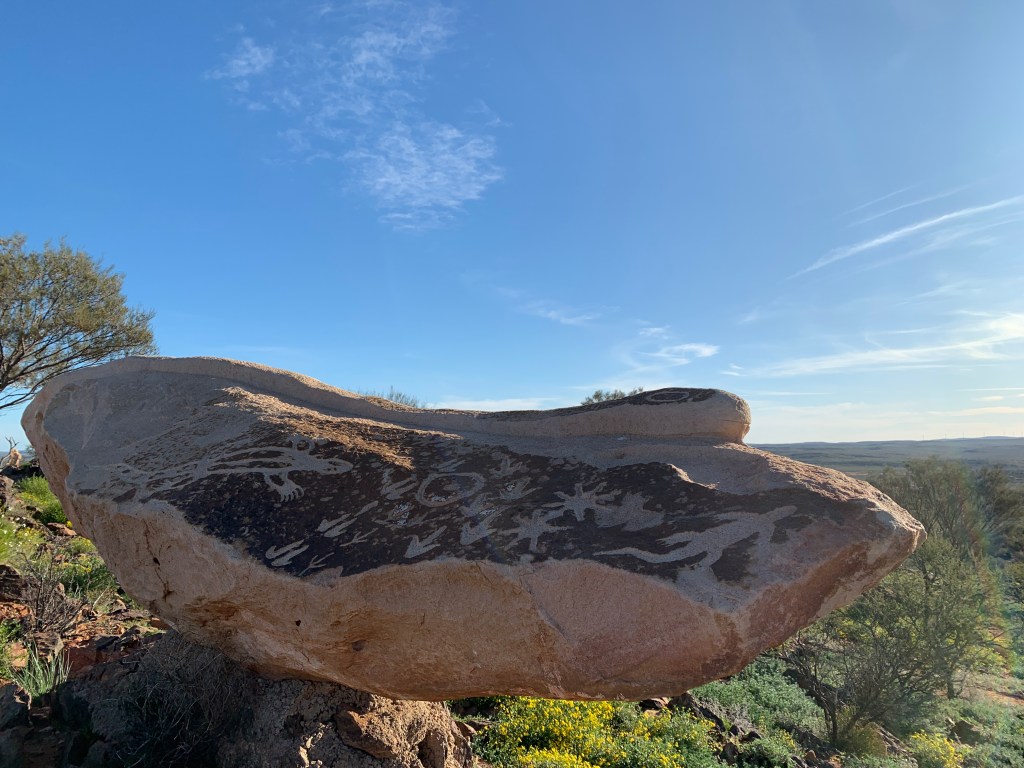
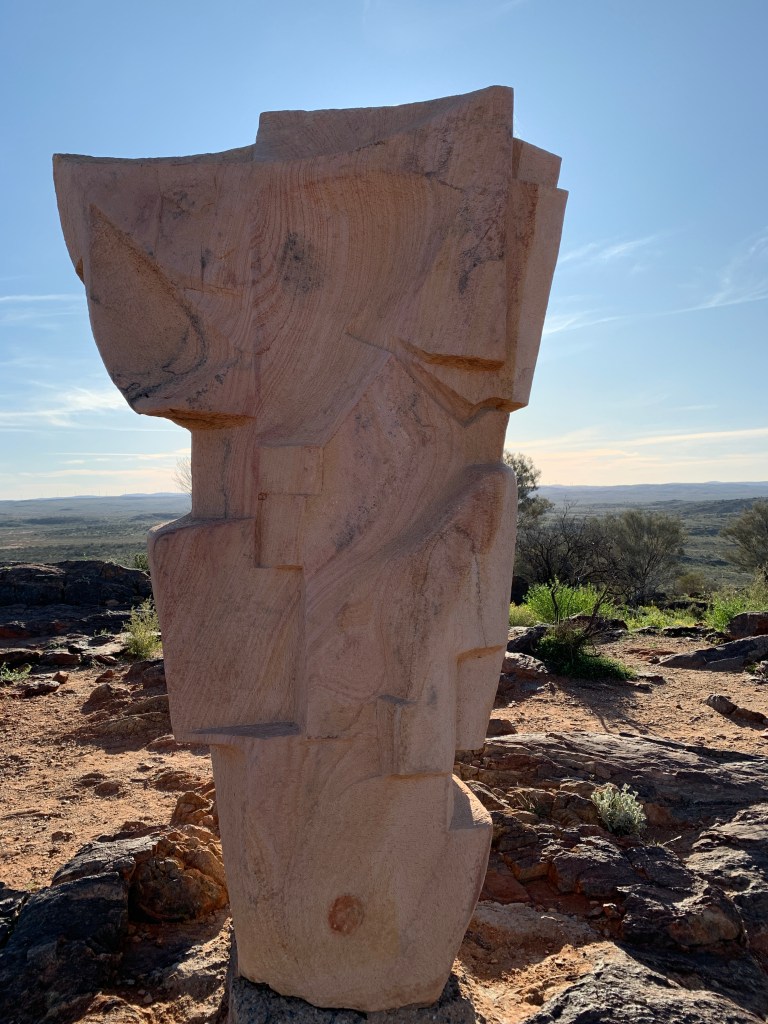
So after a quick drive around town we headed back to Broken Hill. We headed out of town again to visit the Living Desert and the Sculptures. The kids all declared the horse their favourite one. The view from the top of the hill is amazing. We recommend a visit here to any visitor to the area.

We had a quick stop at the Supermarket before heading back to camp. The kids played on their scooters, Katie met another couple camped with a New Age Bilby, and we all enjoyed delicious home made chicken burgers for dinner. What a great day!

Onward to Broken Hill

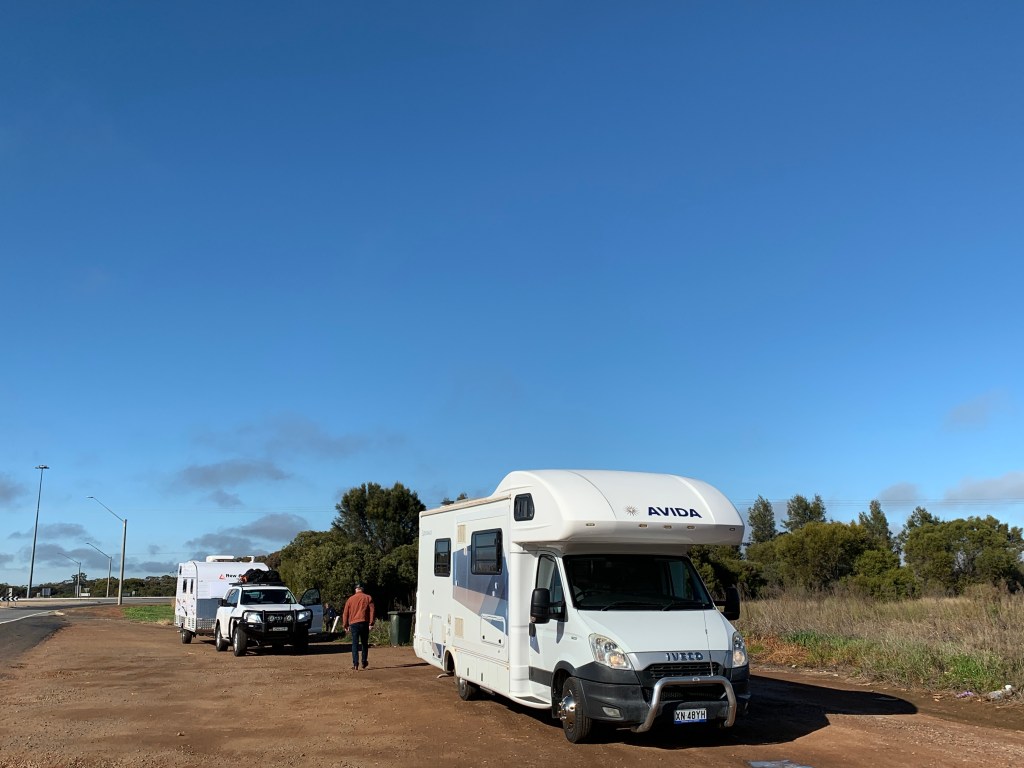
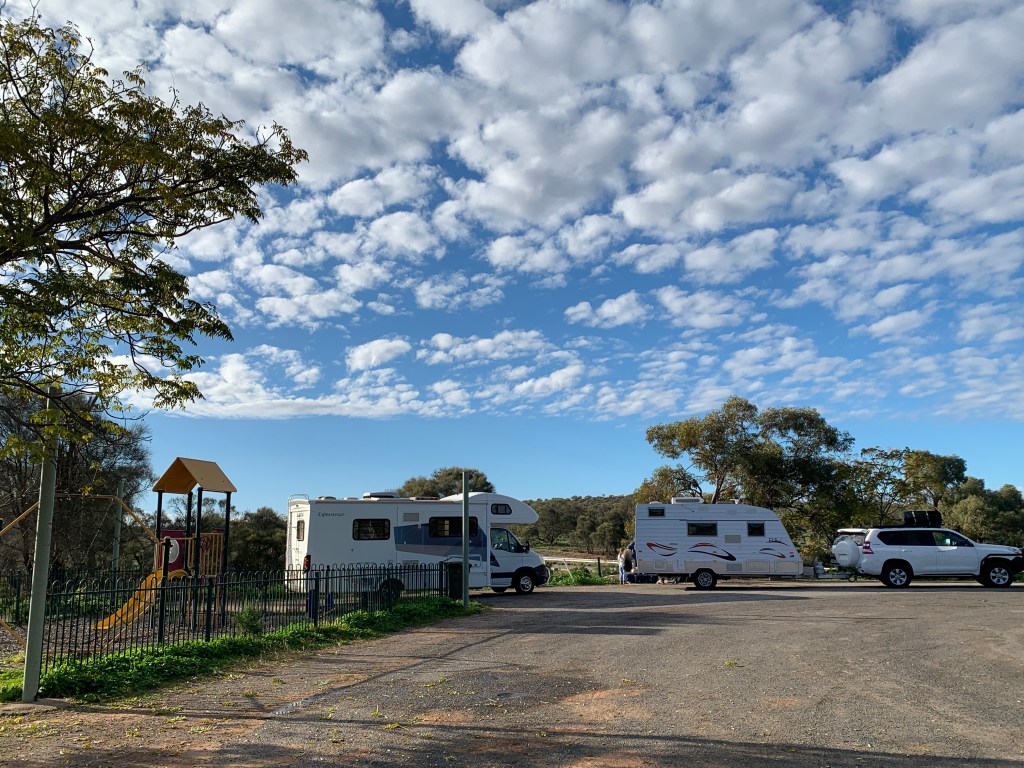
We were the last ones to leave the Spring Hills Rest Area. The other travellers all got away between 8am and 8.30. We were still eating our breakfast!

There was lots of traffic coming towards us from the direction of Broken Hill, mostly cars with caravans. There were lots of wavers on this day. Do you wave to other RV’s? I do.

The countryside around was very flat with lots of scrubby short trees and clumps of saltbush. The big difference from the last time we came this way is the green grass everywhere. I can see why early settlers thought this would make great sheep country. When it’s green like that there’s plenty of feed for sheep. However it doesn’t always look like that and is usually much drier with a lot more red dirt showing.

We did see emus, a huge mob of kangaroos and goats along the way.

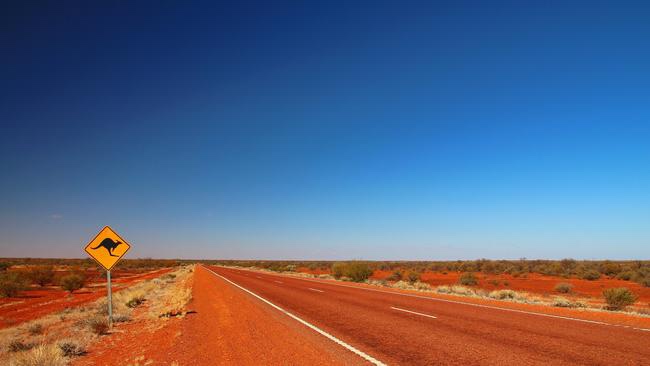
The roads are long and straight out here

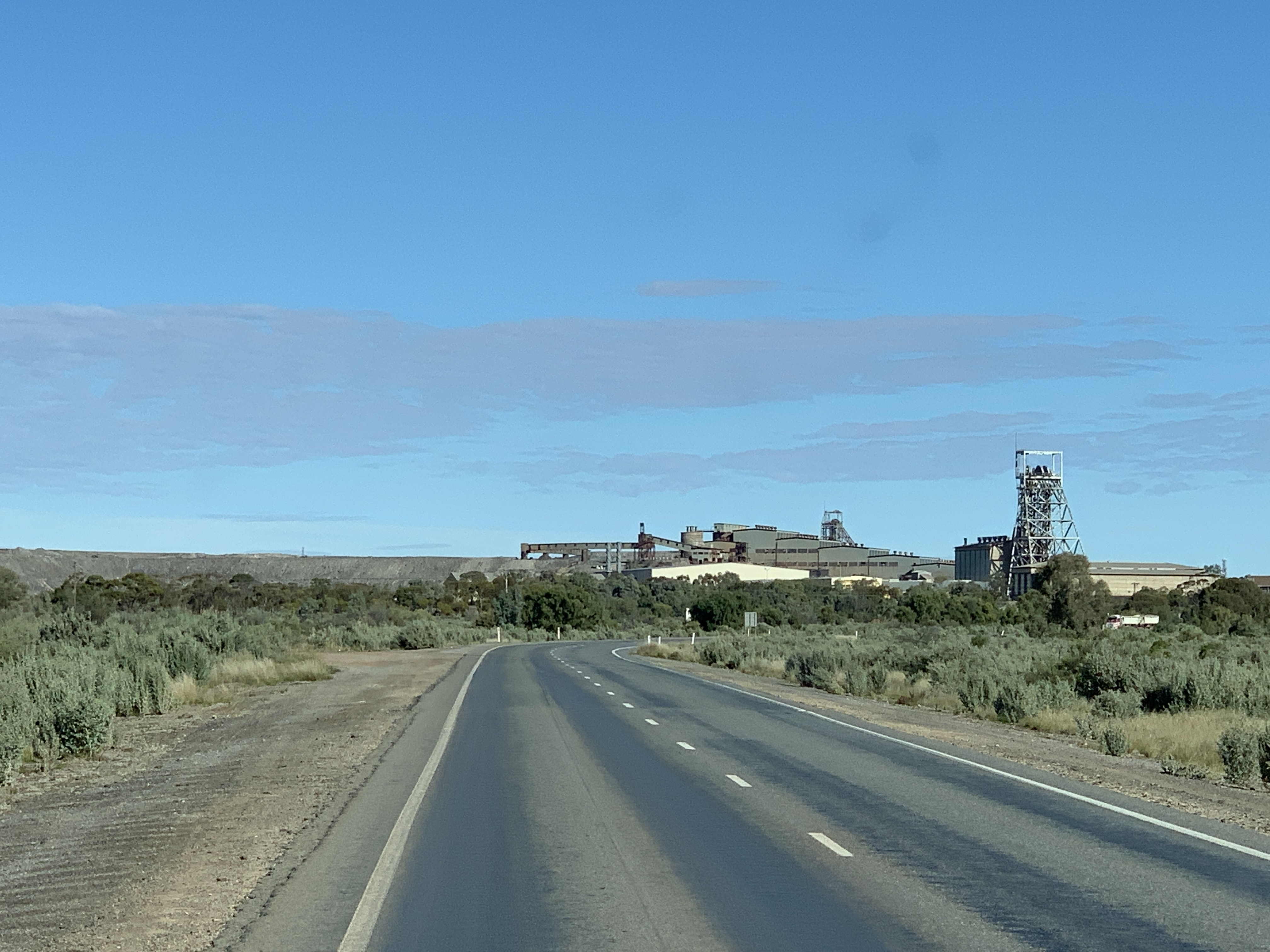
As you get closer to Broken Hill the land becomes hilly. Alongside the road you can see the main train line. I think it’s the same one that the Indian Pacific uses to cross from Sydney to Perth.

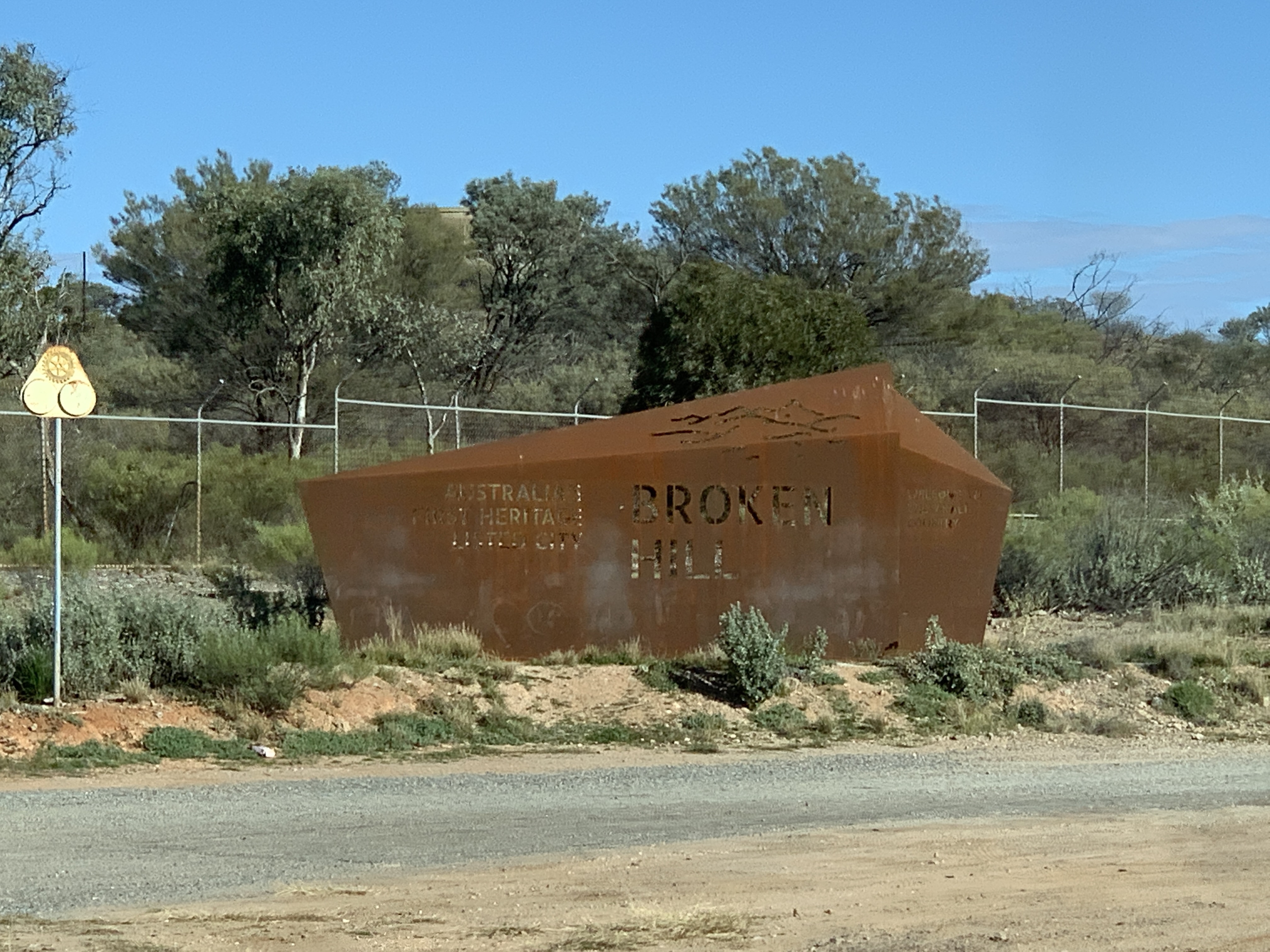
We arrived in Broken Hill late morning and headed directly to the top of the hill to visit the Line of Lode Miners Memorial. This is a memorial to all those who have died in the Broken Hill mines and makes for very sober reading. Some of them were so young and died horrendous deaths. Ben thought the one that was crushed by a Road Roller sounded the worst. He made very graphic noises of someone being squashed by a roller!!

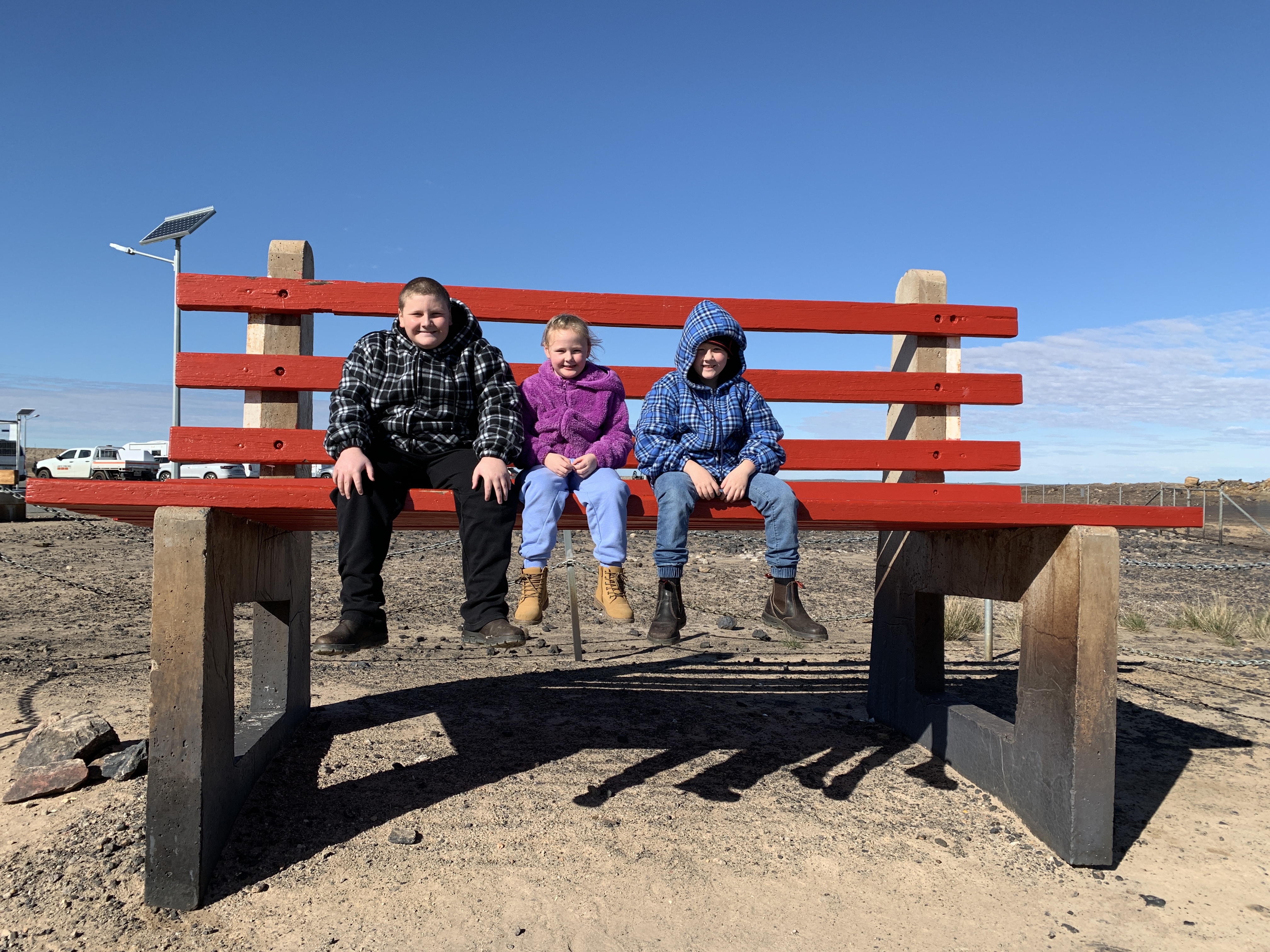
The Restaurant at the top of the hill was still undergoing renovations as it was when we were last here. However we did get to see the Big Bench and the kids just had to climb it so I could get a photo. You do get a great view across the town from the top of the hill.

Back in the carpark we had a cuppa and while we were doing that a huge black GMC truck pulled in. Ben was fascinated by the big American truck and got chatting to the lady. The kids just had to have their photo taken in front of the mighty truck.

Kids were impressed with this big truck

Our next stop was the Tourist Information Centre to pick up info on tours and opening times etc. The kids were a little disappointed that tours of the School of the Air have not restarted since Covid as they were looking forward to seeing how kids from remote properties go to school. Oh well. Another time for that one. We did learn that many places in Broken Hill are closed on a Monday so our choices were limited for the rest of the day.

By that time it was late enough that we could check in to our camp at the Broken Hill Racecourse. Rich and I have stayed there a couple of times previously and think it’s a great spot. It’s $35 per night for a powered site. If you are lucky you can get a site right up against the racetrack fence and in the mornings you can watch the horses training on the track. The water quality is very good and it’s a great spot to fill your tanks with good water.

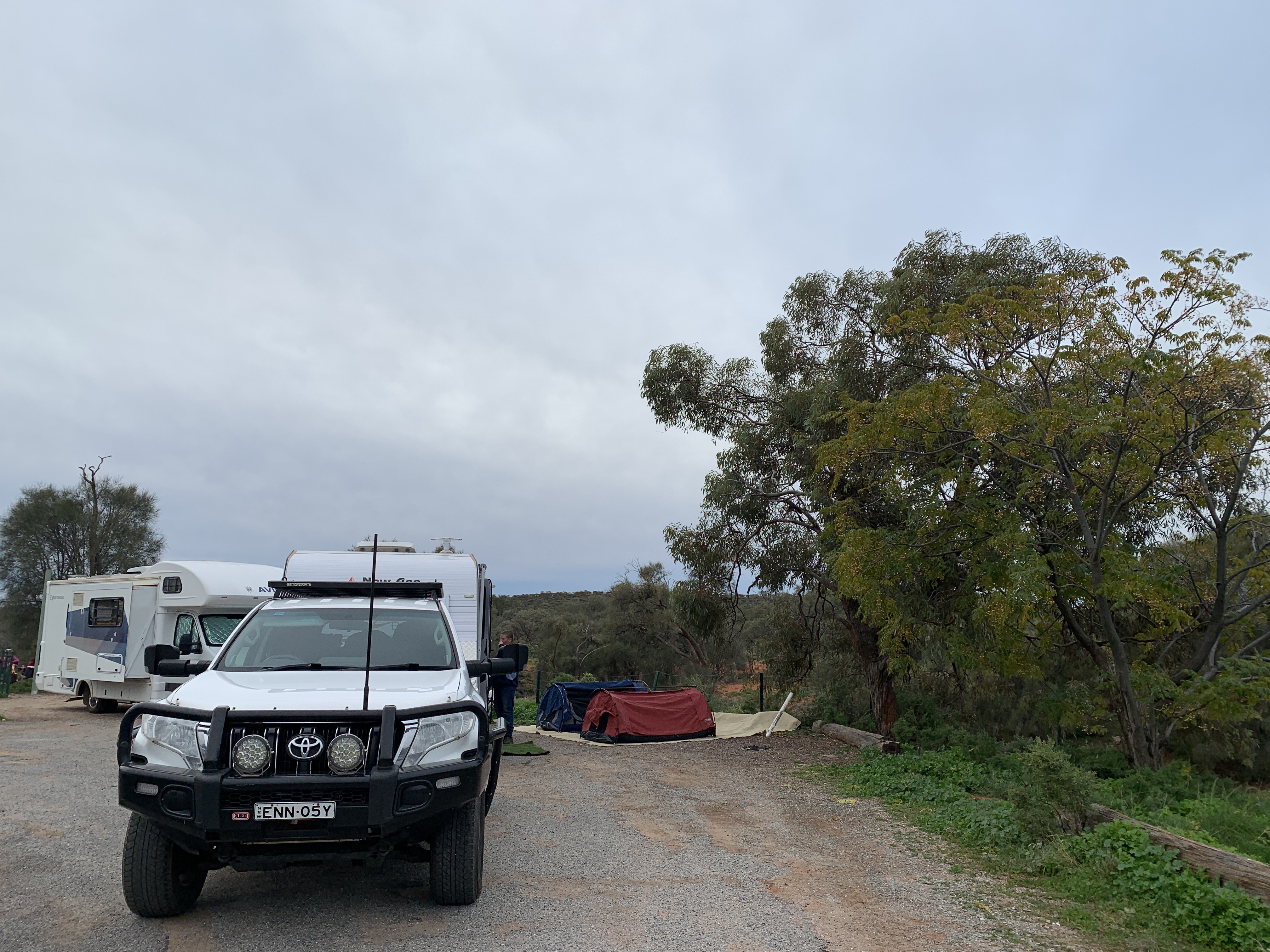
We were allocated two sites next to each other against the fence so we were very happy with those. The kids all chipped in and helped set up camp and as we were to be there for 3 days we set up our awnings and got out all the chairs and tables etc. The boys set up their swags behind the van. We were loving having lovely green grass to camp on. One thing they do well there is to provide 20L drums full of water for people to tie their awnings to. You cannot bang pegs into the ground as they have underground sprinklers everywhere so they provide the drums. Very thoughtful.

There is a dump point and separate toilet and shower blocks. The park was very full with rigs of all shapes and sizes. Katie even found another New Age Bilby 15 similar to hers.

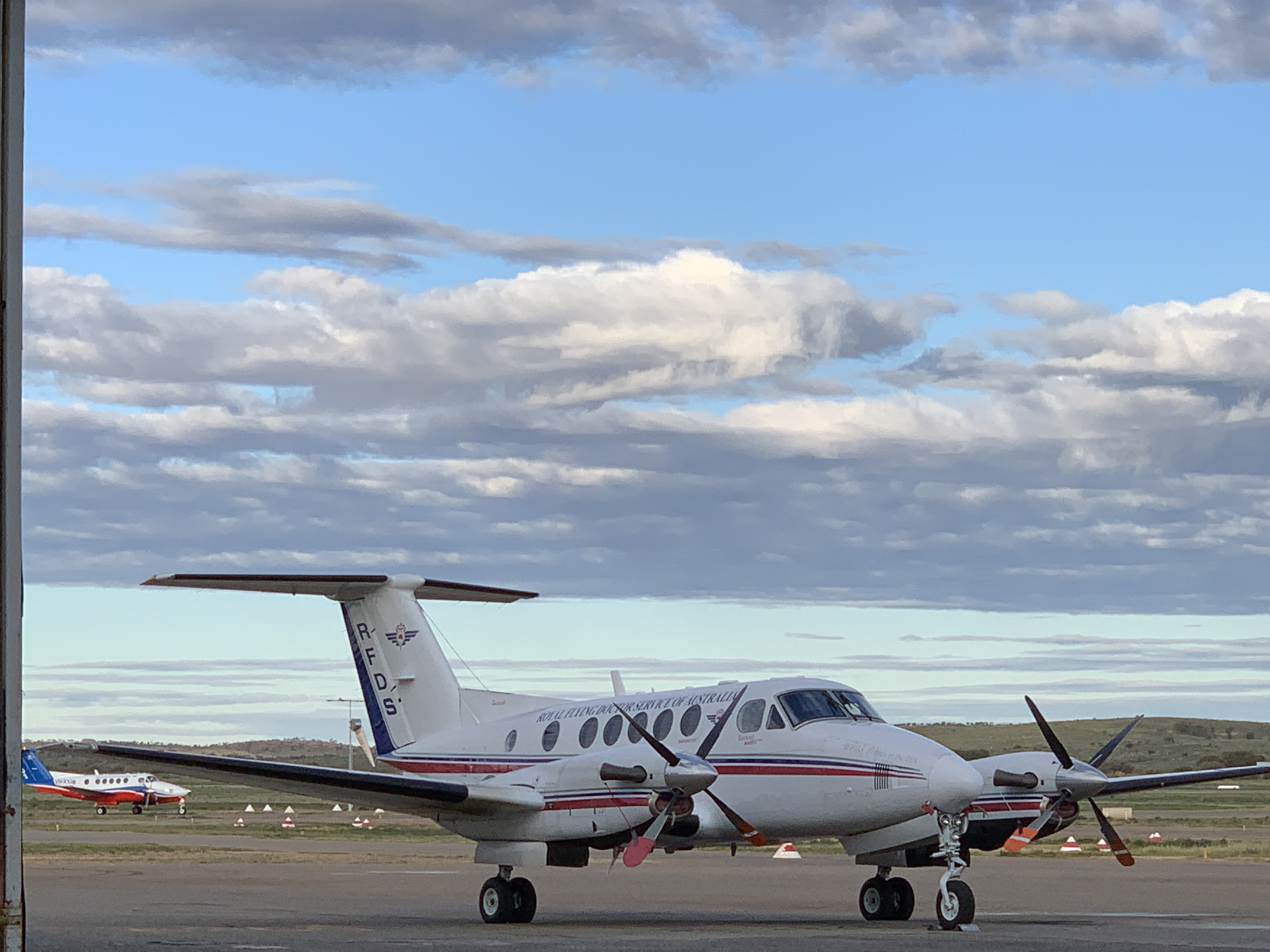
Katie got her car set up with the third row seat up for Ben to sit in. All 6 of us could now travel around together. We set off to drive out to the airport to visit the Royal Flying Doctor Service Visitors Centre and Museum.

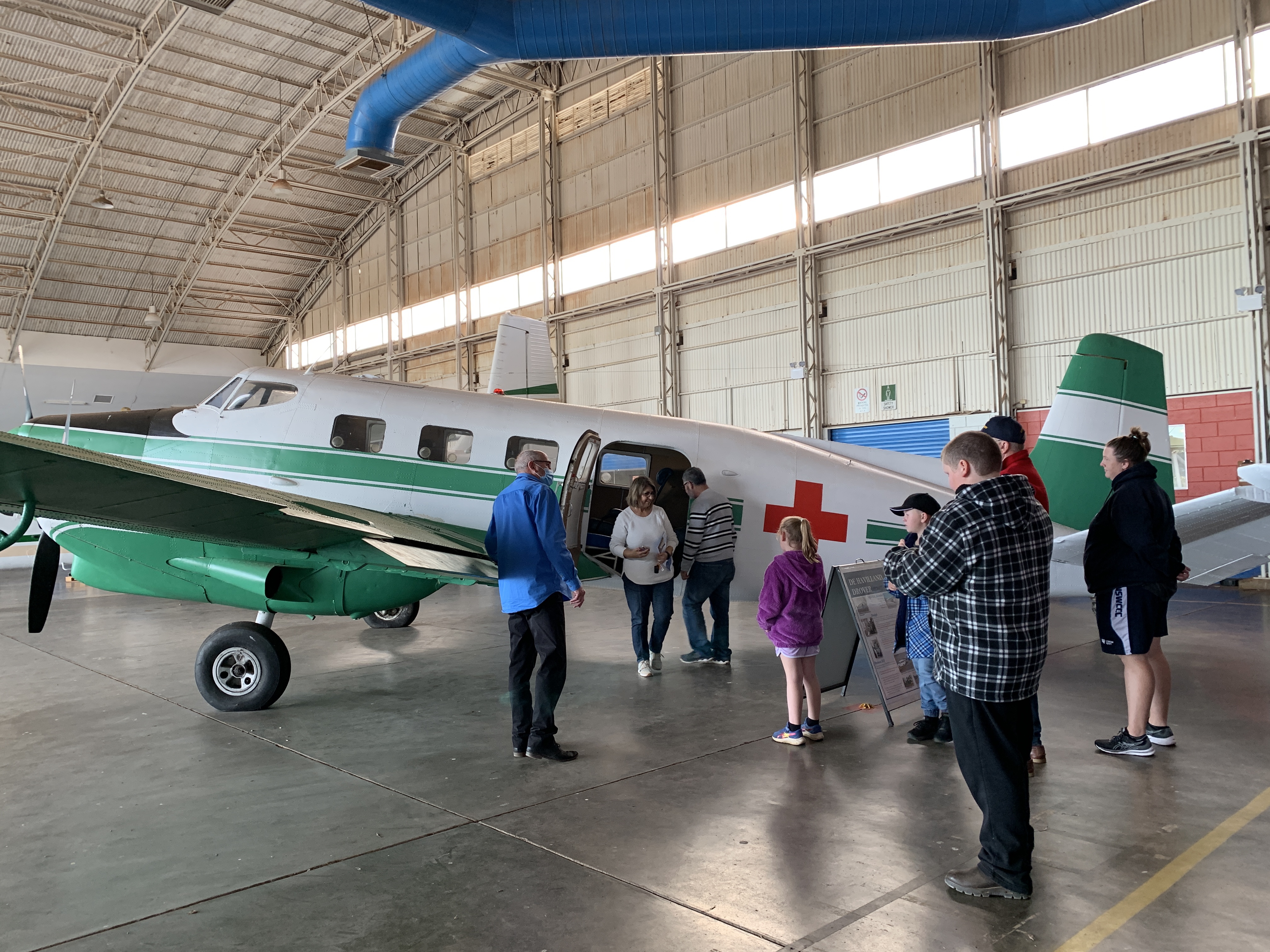
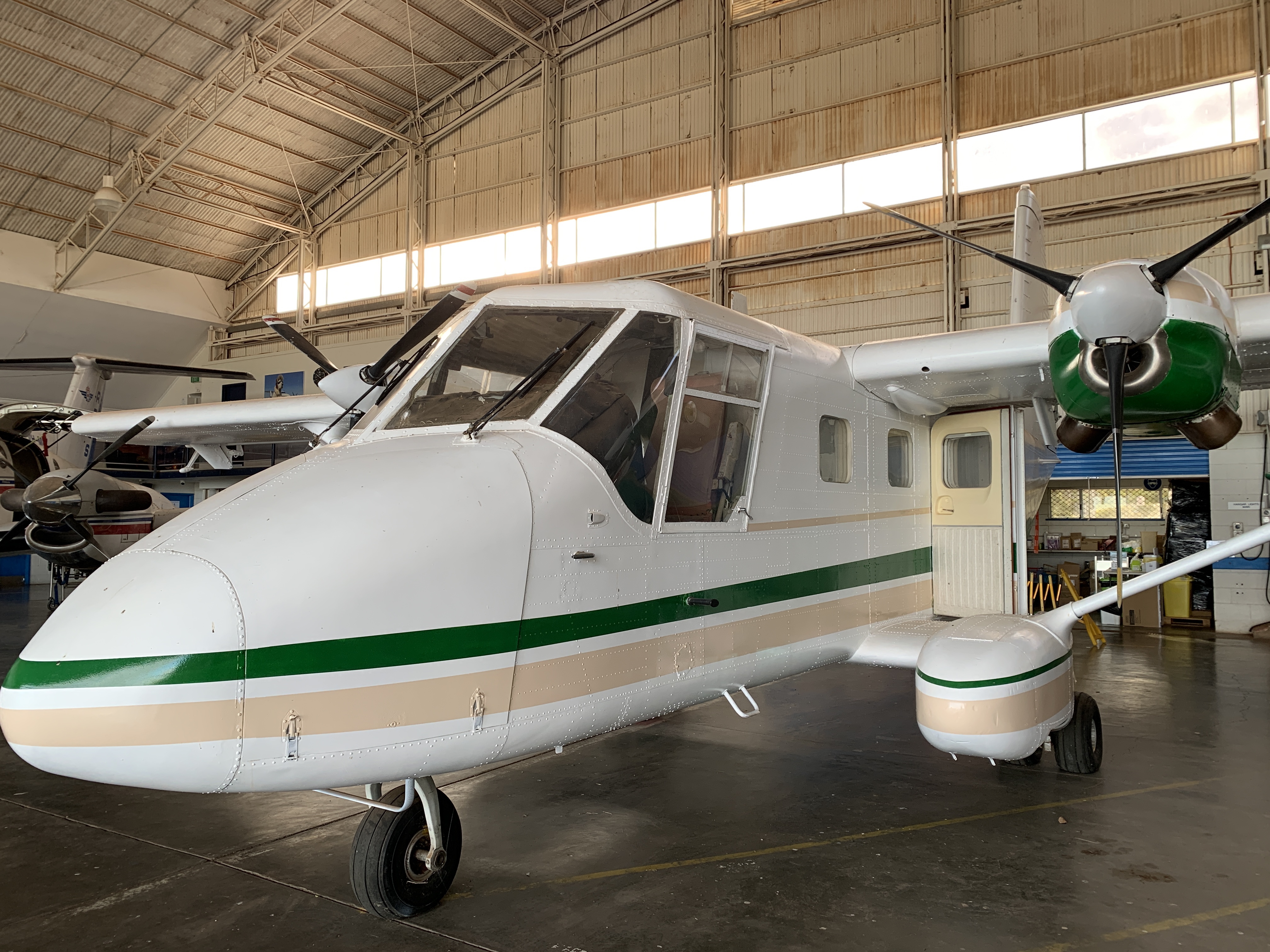
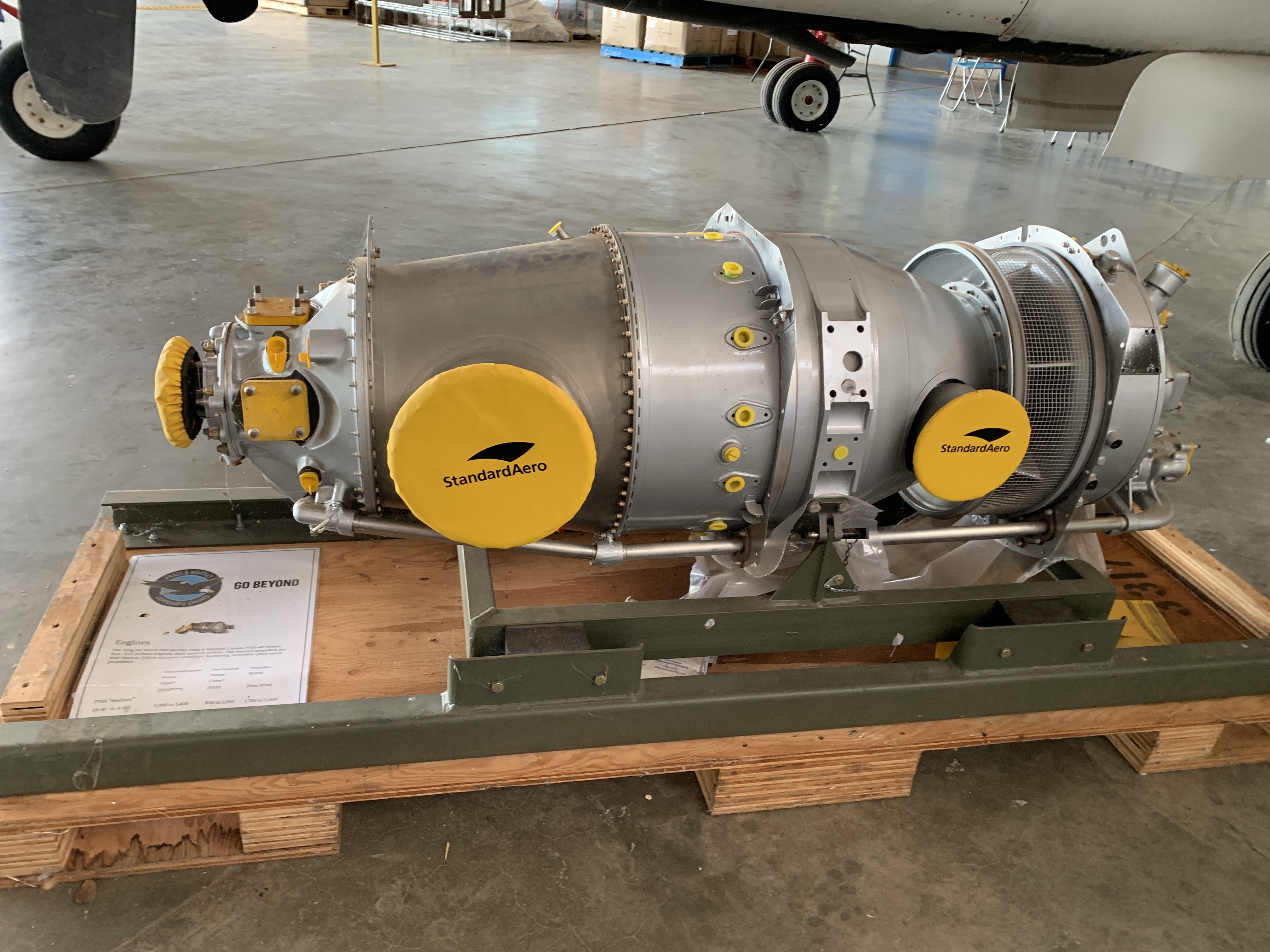
We arrived in time to catch a tour that was just starting and we joined in. Our guide Andrew started the tour with a 10 minute video on the RFDS then we were led into the museum where Andrew spoke about the history of the RFDS and it’s importance to outback communities. I learnt the the Broken Hill facility is the one where all the planes are brought to to be repaired or serviced.

Andrew led us out past the communications room where we observed the phones being manned for incoming emergency calls then we were led out into the hangar. Out there Andrew explained the different planes that the service uses and then we were lucky to have a special treat. One plane came in and landed bringing back doctors and other health professionals from a day out at a clinic. Then an ambulance arrived with a patient to be transported to an Adelaide hospital. The patient was transferred onto a different plane and we could watch it take off. Andrew explained that it is rare for one plane to come in and another to take off so close together so we were very lucky to see that.

I really liked the way Andrew included the children in his discussions and they all seemed to really enjoy the tour. I think they especially liked learning about the $20 note and how it shows all things to do with the RFDS. At the end of the tour the kids were given a copy of a $20 note and a set of worksheets for them to complete. Great home learning! They might be missing out on some school but they are already leaning so much and we are only on day 3!

Back at camp it was my turn to cook and we all enjoyed our spaghetti bolognese sitting outside under our awnings. We have an early start as we have booked to do an underground mine tour at 10am and we have to be there by 9.30am. It’s about a 45 minute drive out on the Silverton Road to get to the Day Dream Mine. Afterwards we will visit Silverton. The new Mad Max movie is currently being filmed around Silverton so we might see some of the film crew at work.

Funny story. While we were sitting outside I asked the children what the time was. We got different answers depending on what device and whether it was a connected one. That’s funny! Why are they different? We were now on South Australian time and had to set our watches back half an hour! The children thought that was very interesting.

Discovering some family history in Cobar

Family history is fascinating.

I’ve always know that one of my ancestors on my dad’s side discovered copper in Cobar but hadn’t really looked into it and it’s a really good story.

After a great nights camp at the Old Reservoir we packed up, got going about 9am and headed into town. I’m pleased to say the boys slept really well in their swags. Ben said it was really warm and toasty in there. It was pretty cold last night so if they manged to have a cosy nights sleep they’ll be right for the rest of the trip.

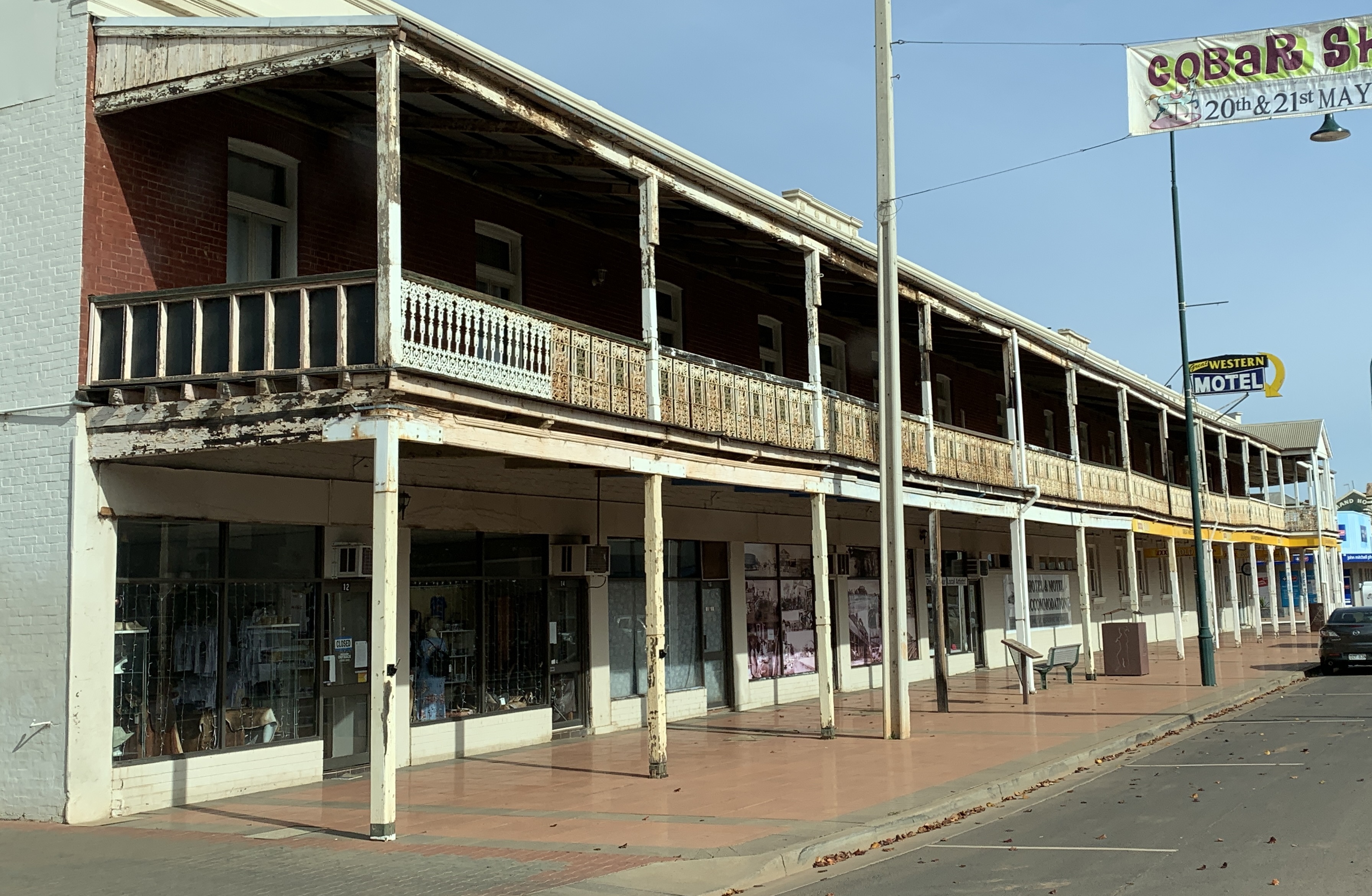
First stop was for fuel. We drove along the Main Street and I pointed out the Great Western Hotel, which claims to have the longest verandah in the Southern Hemisphere, and the Grand Hotel which has a ‘big’ Tooheys beer can on its verandah roof.

We utilised the new caravan parking spaces opposite the Cobar Heritage Centre. This great new facility has parking, a dump point, a water tap and a central area with shade shelters and picnic tables. All of this was still under construction last time we were there.

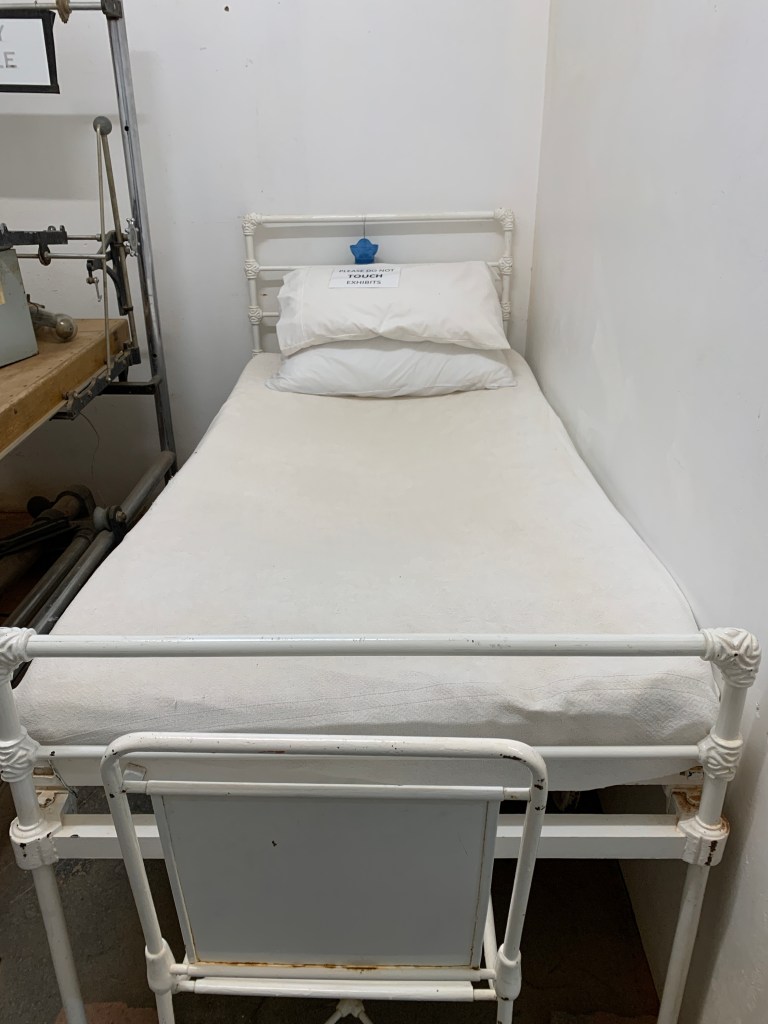
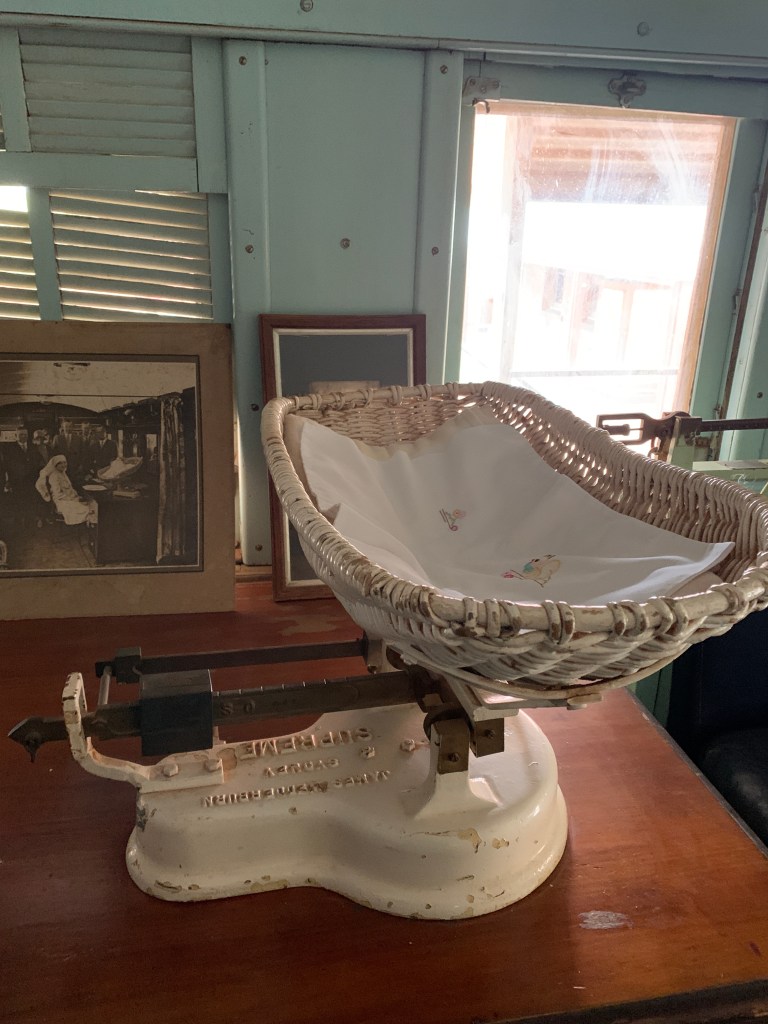
The Heritage Centre reopened in November 2021 after extensive renovations. The entry houses the tourist information centre. We were charged $20 as a family to enter the exhibition. I was pleased at the standard of the museum. It is very well laid out with exhibits about the discovery of copper and the impact that had, upstairs are a couple of rooms with objects from daily life of the old timers such as a bed, a sewing machine, pram, crib, and even some toys.

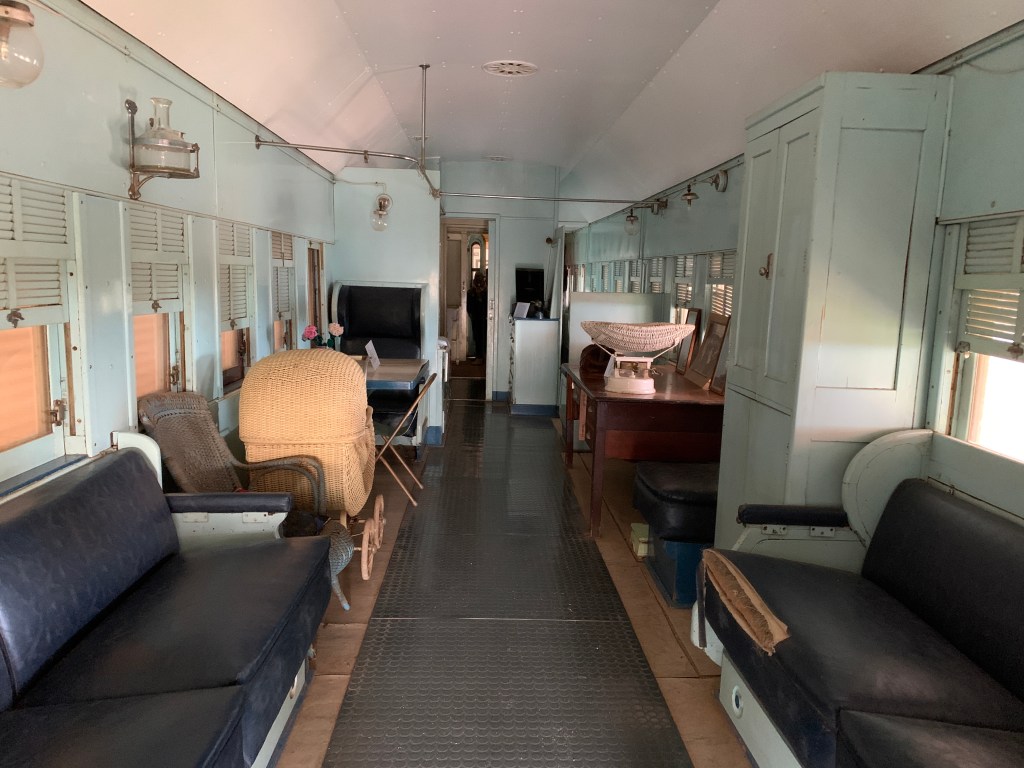
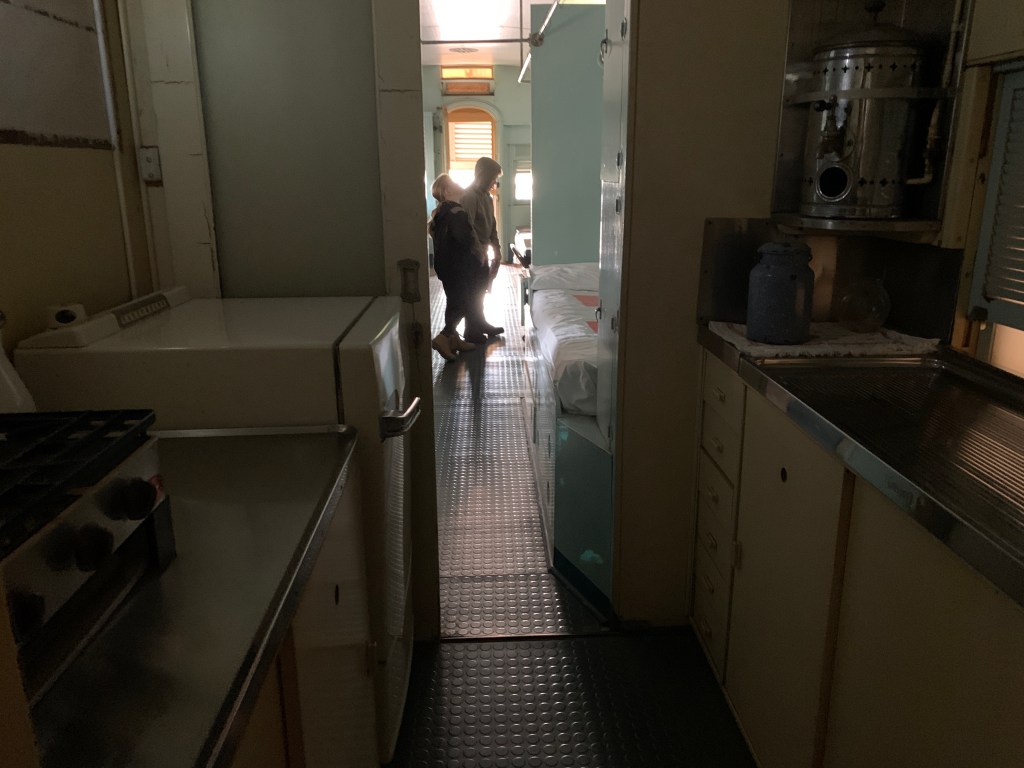
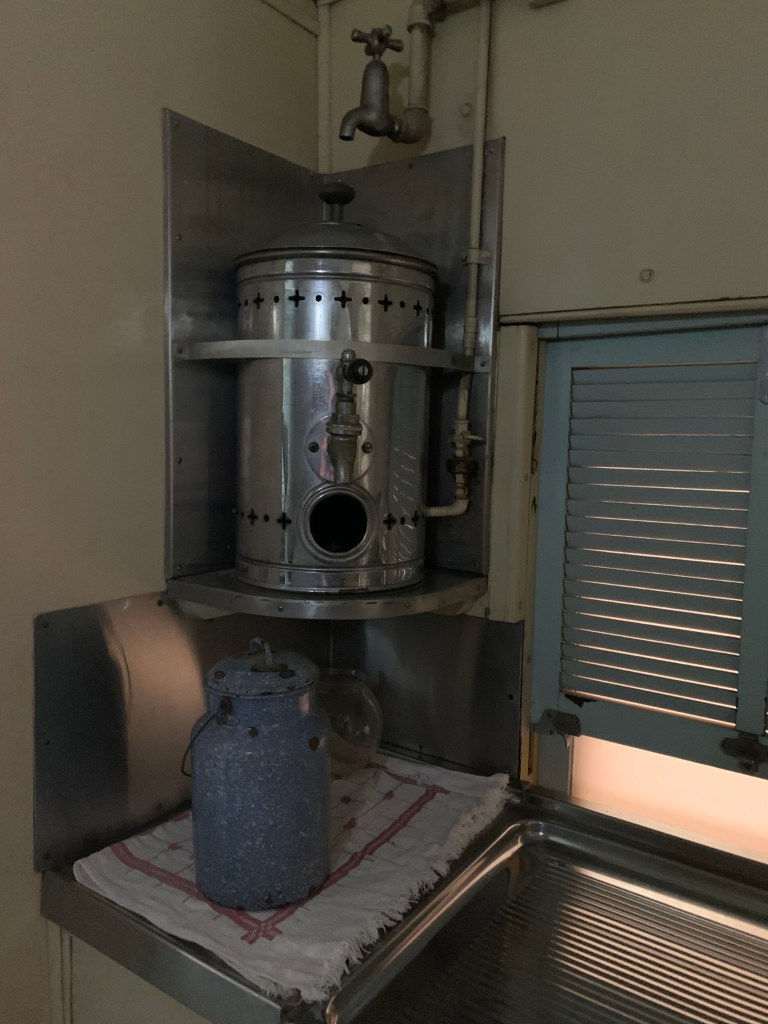
Outside is a fabulous exhibit of a railway carriage that was the Royal Far West Baby Health Clinic. You can walk through the carriage and see where the doctors and nurses lived and worked as they visited outback towns along the railway line. This would have been an amazing service to remote outback communities.

We all had a bit of a laugh when we found a gas fridge in the little kitchen. It was the same as the one in our Brumby View cabin at Mikala. Ours still works well and is in use each time we are there.

Anyway back to the family history story. My great great great grandparents Carl Emilius and Karen Maria Frederikke Dorthea Kempf lived in Denmark. They had 8 children.

Their eldest was a daughter Johanna Coraline Poulson Kempf and she moved to the USA.

Their third child Ferdinand Emilius Kempf (1839-1883) moved to Australia in 1859 when he was just 19 years old.

Their second child Joannes Carl Kempf and his sisters Marie Sophie, Olivia Ricki Wilhemina and Laura Henriette all migrated to Australia in 1872.

Olivia Riki Wilhelmina Kempf married Irishman George Leslie Hunter and their daughter Laura Frederika Hunter married Tomas Peadar Larsen, another Dane. Laura and Tomas were parents of my grandmother Grace Effie Cecilia Larsen who married Robert Malcom Budd.

When the Kempf’s moved to Australia some of them Anglicised their names and used the surname Campbell. Ferdinand Emilius Kempf became known as Charles Campbell.

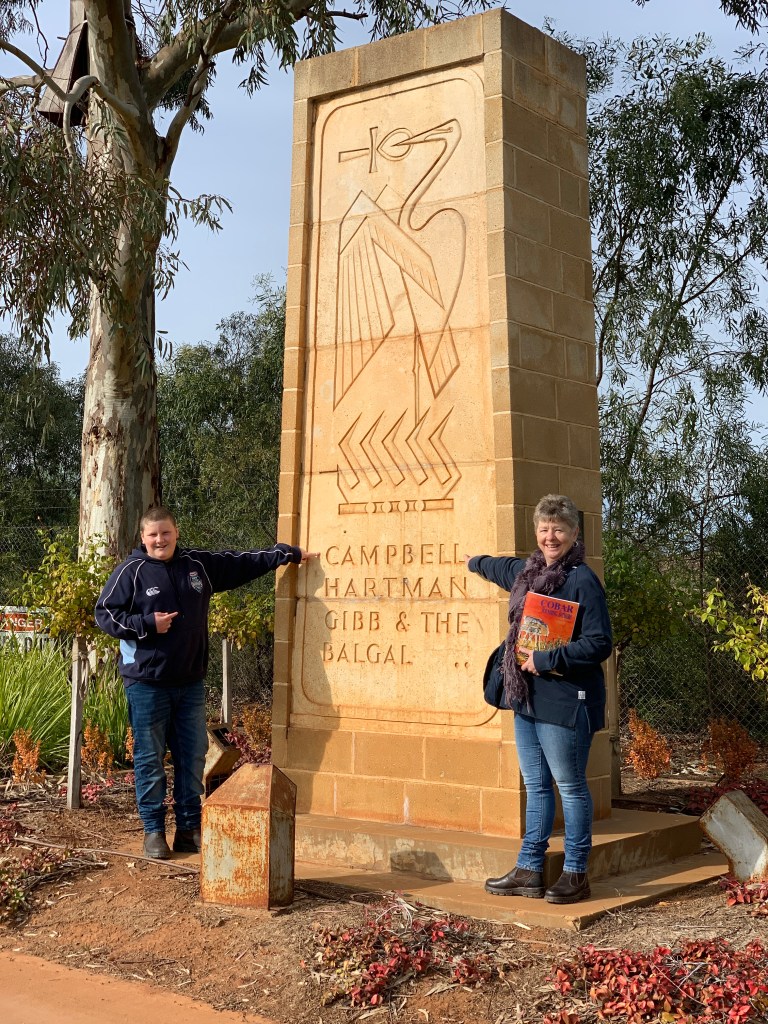
Charles was a bricklayer, having completed his apprenticeship in Denmark before coming to Australia. He and another Dane, Thomas Alfred Hartman and George Gibb had a business travelling western NSW and sinking tanks. Riley, Ben and Maddie wanted to know what ‘sinking a tank’ meant and luckily there was an old photo in the Hertiage Centre of a 4 horse team pulling a scoop and I could show them how a tank (a large dam) was built back then.

The team were working sinking tanks when floods came and the Darling River overflowed its banks and flooded the land for miles. No work was going to happen until the floodwater receded so the team headed south guided by two Aborigines, Frank and Boney. The team was lead to a natural waterhole called by the natives, Kubbar. It was here that the men found some green rocks. They took some samples with them and continued on their journey southwards

They stopped at Gilgunnia and it was here that the wife of the publican, a woman from Cornwall, recognised the ore and said in her broad Cornish accent ‘thart be copper’.

All plans of tank sinking were forgotten and the party set off at once for Bourke to lodge a claim. Campbell, Hartman and Gibb and the Postmaster at Bourke, a Mr Joseph Becker JP lodged a mining claim for 40 acres around Kubbar waterhole and so began the Great Cobar Mine.

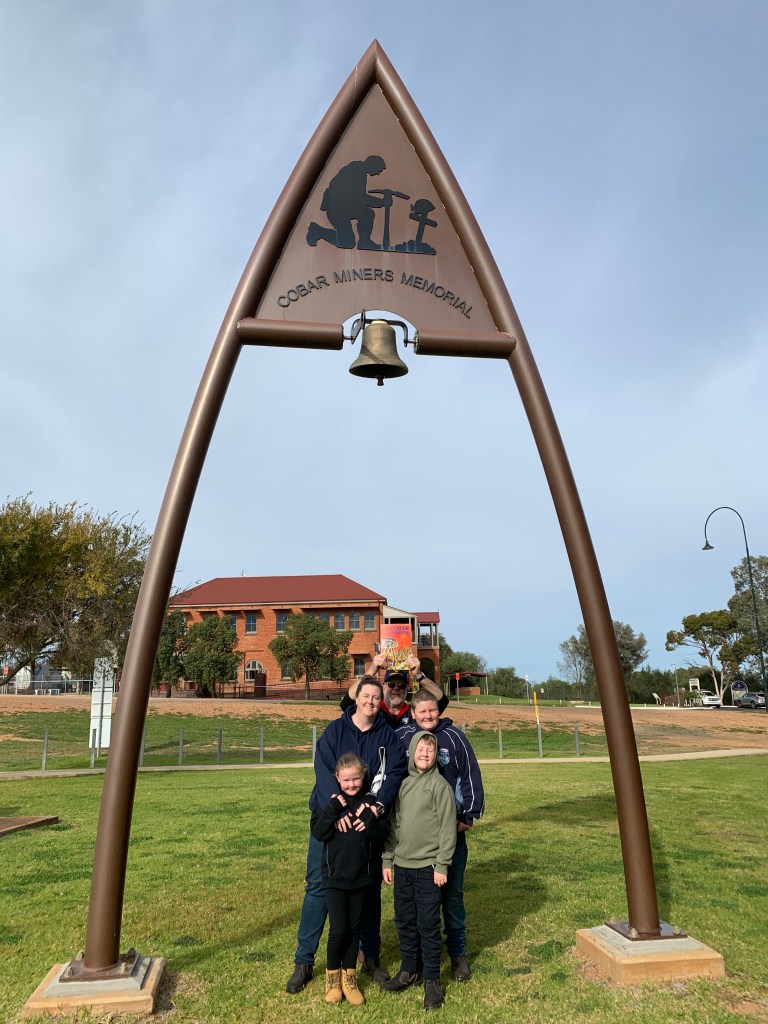
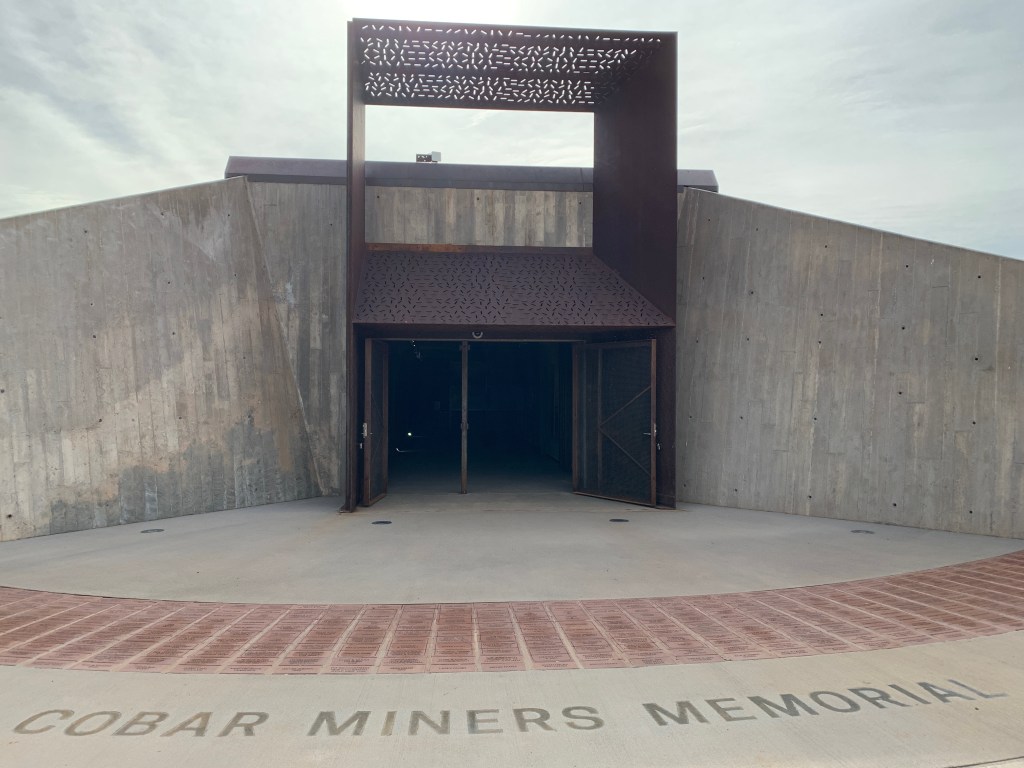
We all enjoyed our visit to the Cobar Heritage Centre and the park across the road that includes the Cobar Miners Memorial. This is a sobering display of all those who’ve died in the mines in and around Cobar. A stark reminder that mining is a dangerous activity.

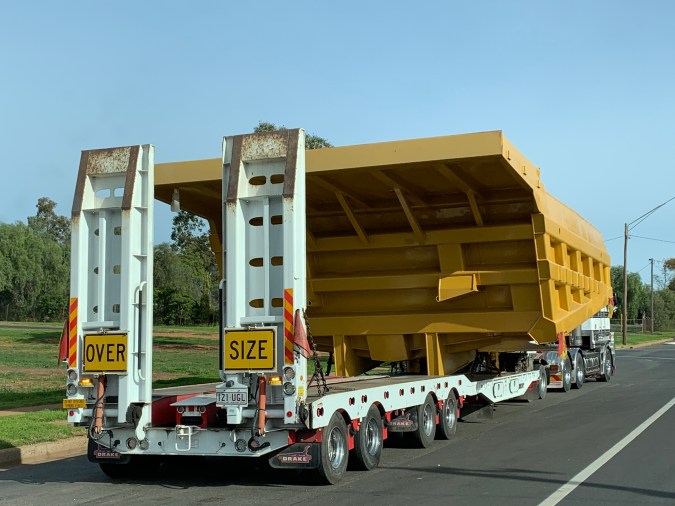
Whilst we were getting ready to depart a convoy of huge trucks went by. There were escort vehicles front and rear. The two big low loaders were each carrying the tray of a huge mining truck. Just the tray….not the truck it belonged to. They are huge!

It was time to continue our journey and we headed west towards Wilcannia. A short stop at a rest area for a lunch break saw the kids come and ask me to make ham & cheese toasties. I must make them better than mum!

Whilst at the rest stop the big trucks carrying the mining truck trays went by and the kids ran out and waved their arms to the truckies. They were thrilled when the truckies tooted their air horns in response and the kids jumped up and down and shouted yay.

Continuing on further west and we were surprised how green the countryside was. The recent rains meant there was green grass all around instead of the usual red dirt. Of course the scrubby trees and saltbush were still there but they were now surrounded by a sea of green.

Stopping in Wilcannia gave the kids a chance to burn off some energy and they quickly headed to the playground and were up the rope climber quick as a wink. Rich and I were surprised by the high level of water in the Darling River. We’d never seen it that high before.

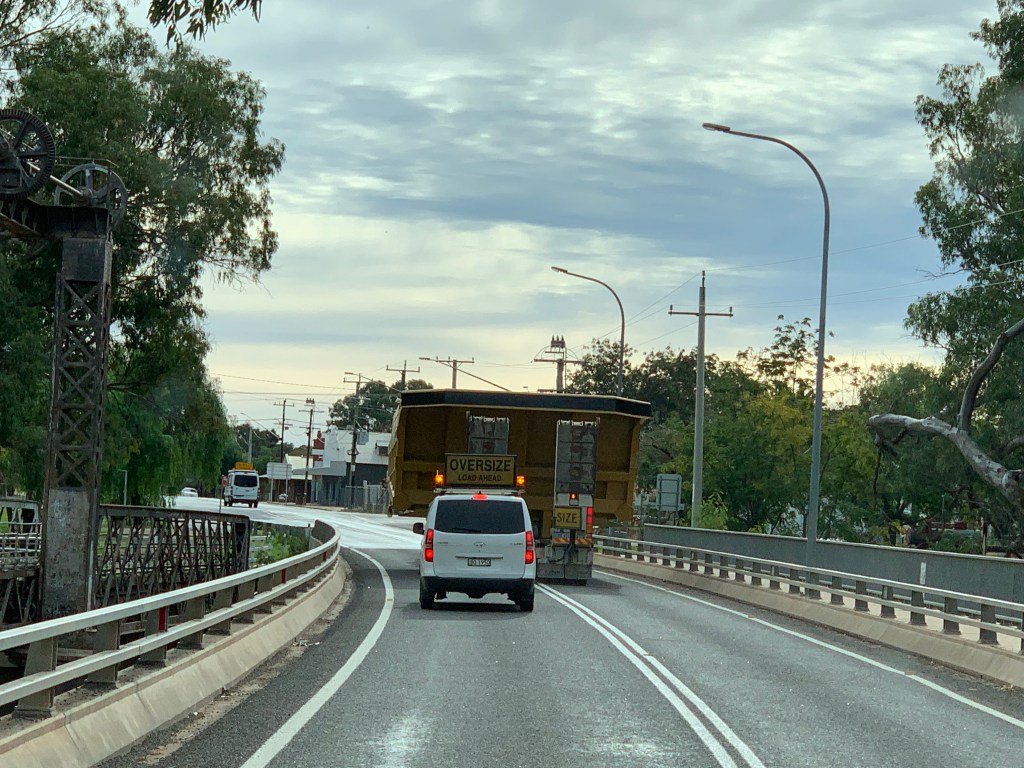
We caught up to the big rigs carrying the dump truck trays as we came into Wilcannia and we were right behind one of them as it crossed the bridge over the Darling River. It took up the entire bridge. All traffic was brought to a halt as it crossed over. What a sight to see.

After burning off steam we got the kids scooters out so they could scoot along to the various sites I wanted them to visit so I could tell them a little history of Wilcannia. They were amazed to learn that Wilcannia was once Australia’s third largest port and was once a boom town with 30-40 stage coaches arriving each day carrying goods and passengers. I think they found it hard to think of that when looking around at the dilapidated buildings.

We continued on and finally pulled up at Spring Hills Rest Area about half way between Wilcannia and Broken Hill. There were already a few vans and a motorhome pulled up but it looked like a reasonable spot and we could have a fire.

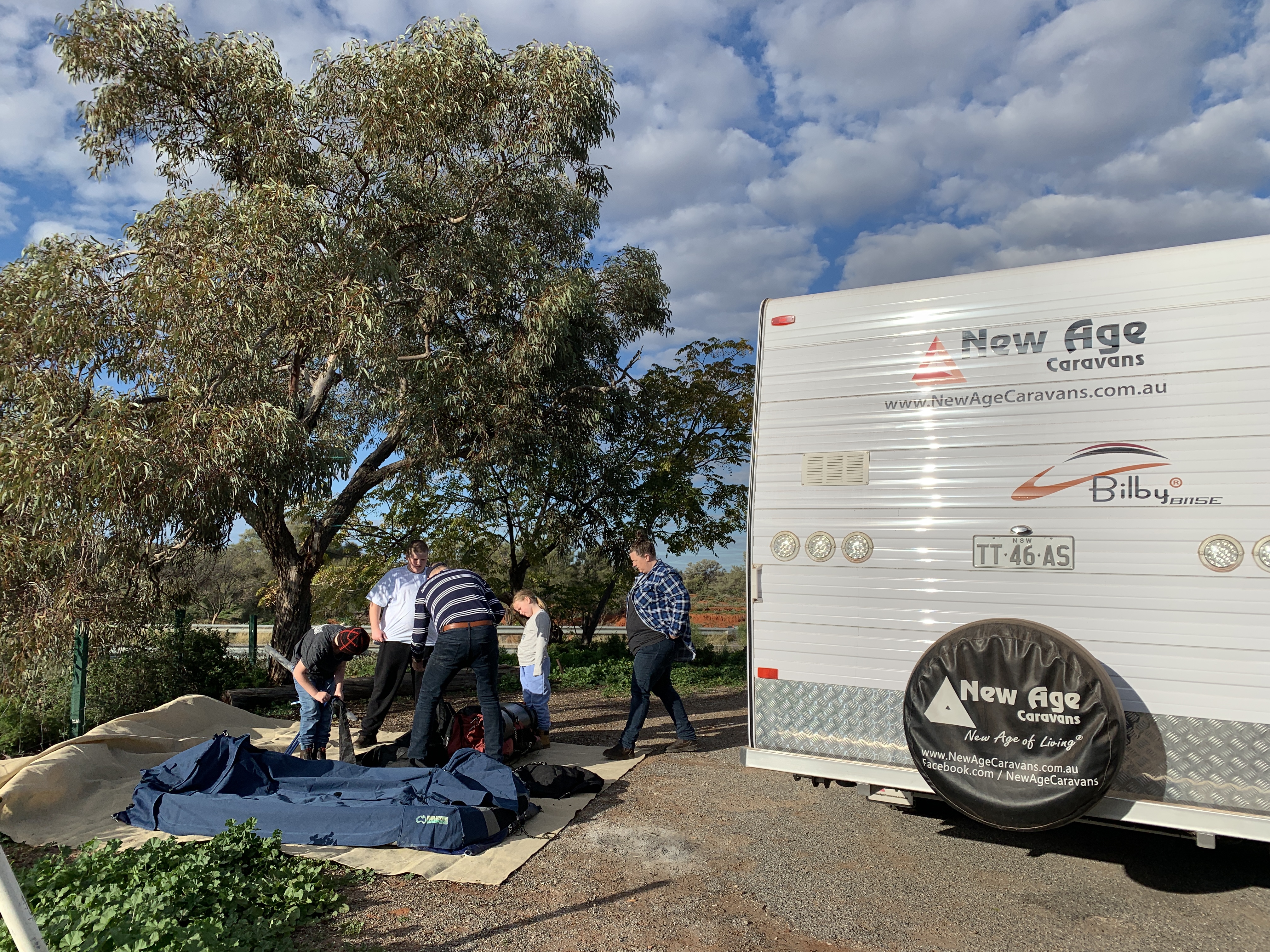
The kids quickly made use of the playground but were helpful setting up camp. The boys were great at getting their swags ready for the night. They’ll be experts by the end of our trip!

It was Katie’s turn to cook and our dinner this night was nachos. They were delicious. We enjoyed our dinner sitting by our little campfire with the occasional big rig going by on the highway. Most of the big rigs going by on this stretch have been road trains. Not many B Doubles along this highway. The rest area is at the bottom of a hollow and the big rigs thunder by in both directions as they are coming down and going back up a hill on either side. As I wrote this it was 8.45pm and the big rigs had stopped going by. They must have been catching up on sleep somewhere. I was sure they would start up again in the morning.

All the other RV’ers had gone into their vans and not many had lights on. Early to bed for this lot.

And we’re off to The Red Centre

The much anticipated morning had arrived. It was finally time to set off on our big adventure to The Red Centre. We had spent months planning for this trip and had many discussions about what we would do when we get to certain places along the way. We even had the Countdown+ app on our phones counting down the days until we left.

Finally it was ‘D’ day…….’D’ for departure.

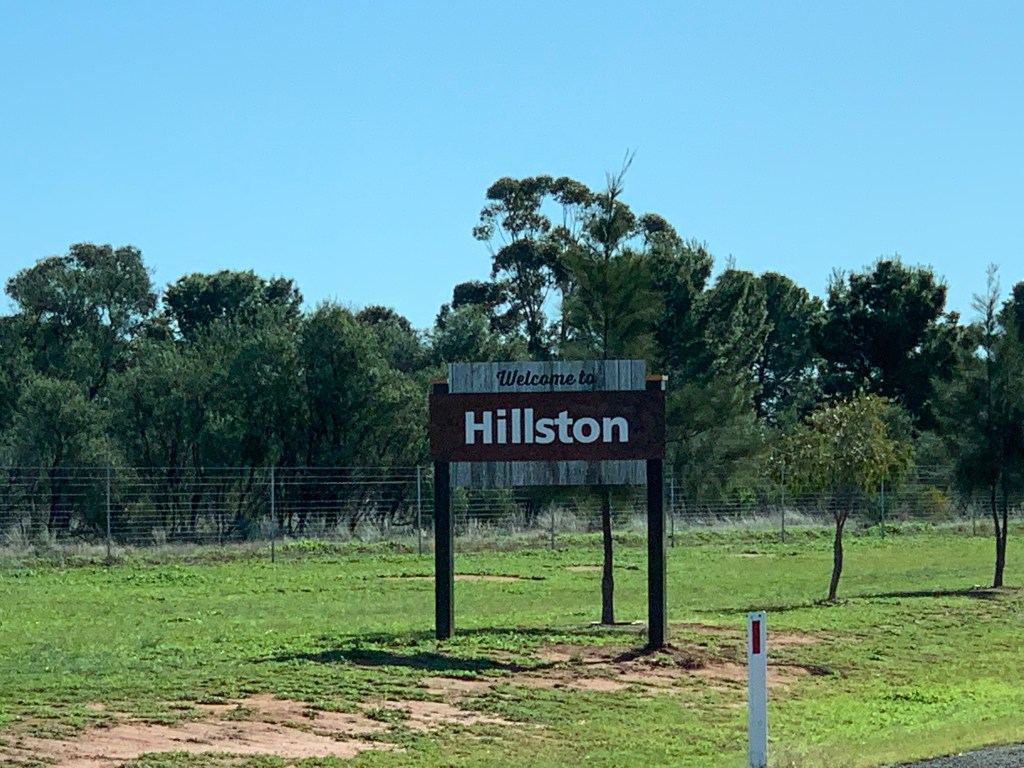
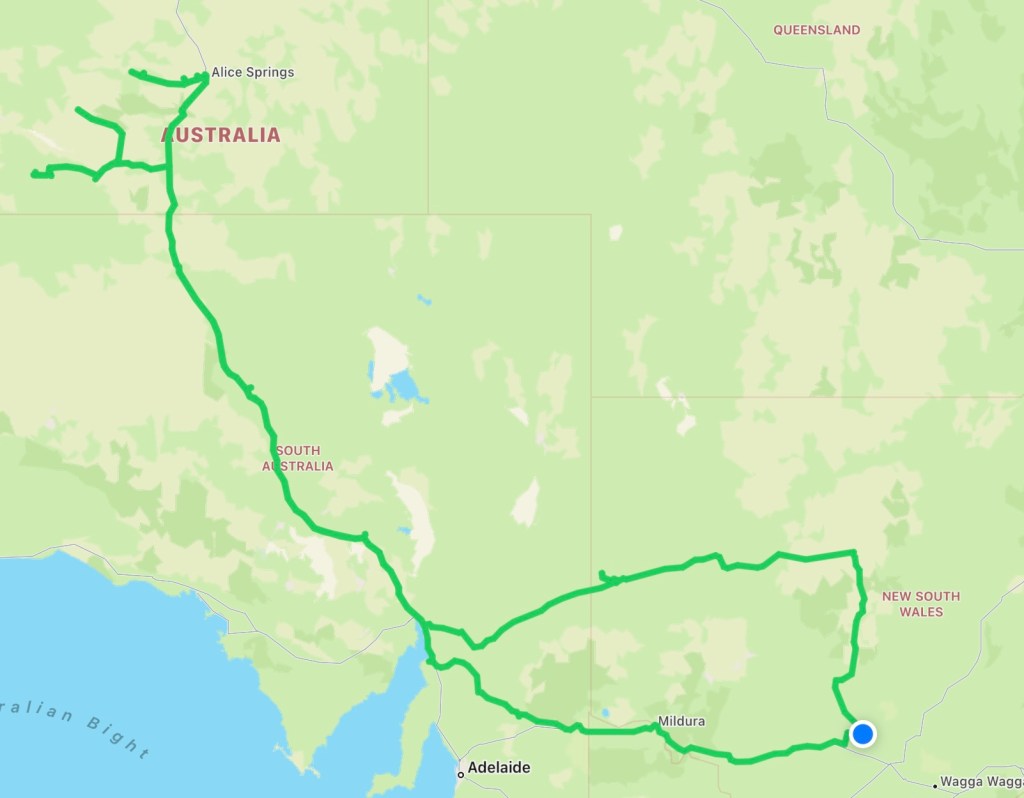
We are on this adventure with our daughter, Katie and her three children, Riley, Ben and Maddie. They are travelling in their 4WD and caravan and we are in our motorhome. Our route took us from Griffith to Hillston via Goolgowi then onto Cobar via Mt Hope. We had a short stop at Goolgowi to check our rigs and everything was traveling well. We traveled through the little town of Hillston and stopped for a lunch break alongside the Lachlan River at Willanthry. We have stopped at Willanthry a few times in the past and it’s always a lovely spot. The river was quite full and the children were amazed to learn that it is the same river that runs into the dam that we waterski on at Grabine each year. They found it hard to believe that the river comes all the way from there.

Stopped to check our rigs at Goolgowi

It was another 220km of travel to arrive in Cobar. Lots of emus and wild goats were seen on that stretch of road. We also commented on the number of caravans travelling. Good to see people out exploring our fabulous country. We made use of our UHF to let the others know when we spied emus or goats.

Just before we arrived in Cobar we turned off to check out the Fort Bourke Hill Lookout that looks over the huge open cut mine. We’d been there before and suggested to Katie that she leave the van at the bottom of the hill, they could all jump in the MH with us and we’d drive to the top. There is not a lot of room to turn around at the top especially if there’s lots of cars parked. So that’s what we did. Once at the top Katie was glad we’d made that suggestion when she saw how little room there is to turn around.

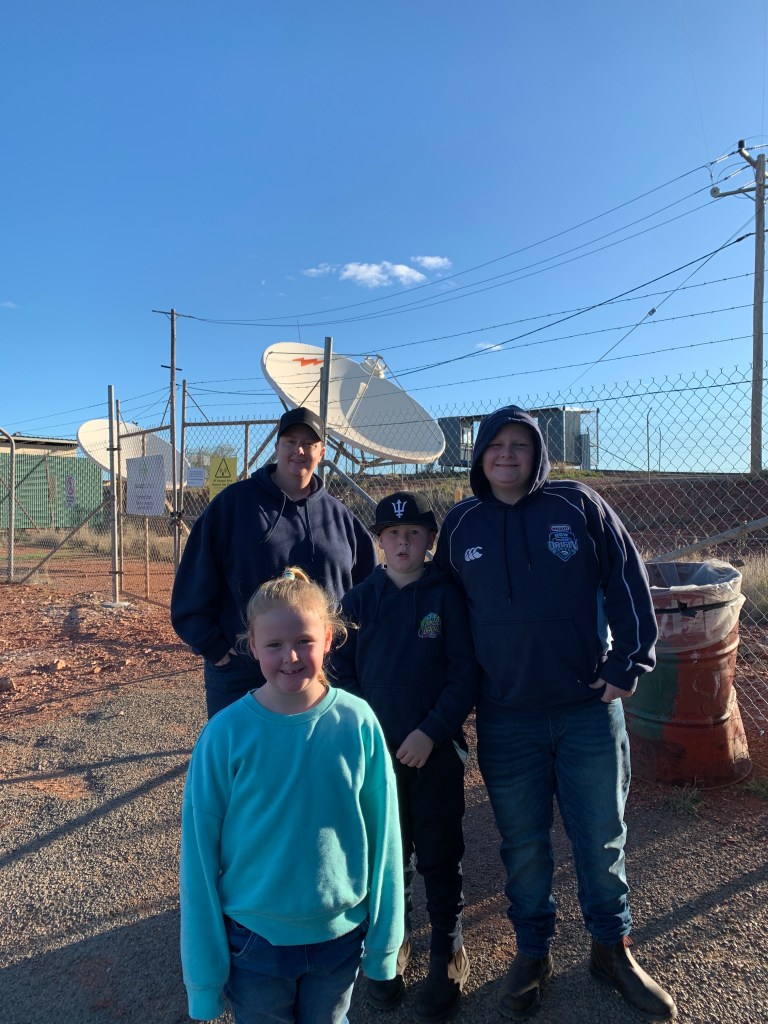
The children were amazed at the big hole in the ground. There is a viewing platform inside a wire cage (to prevent anyone going over the edge). Inside the cage are information boards with a bit of history of the New Cobar Open Cut and the other mines in the area.

At the top near the New Cobar Open Cut Mine

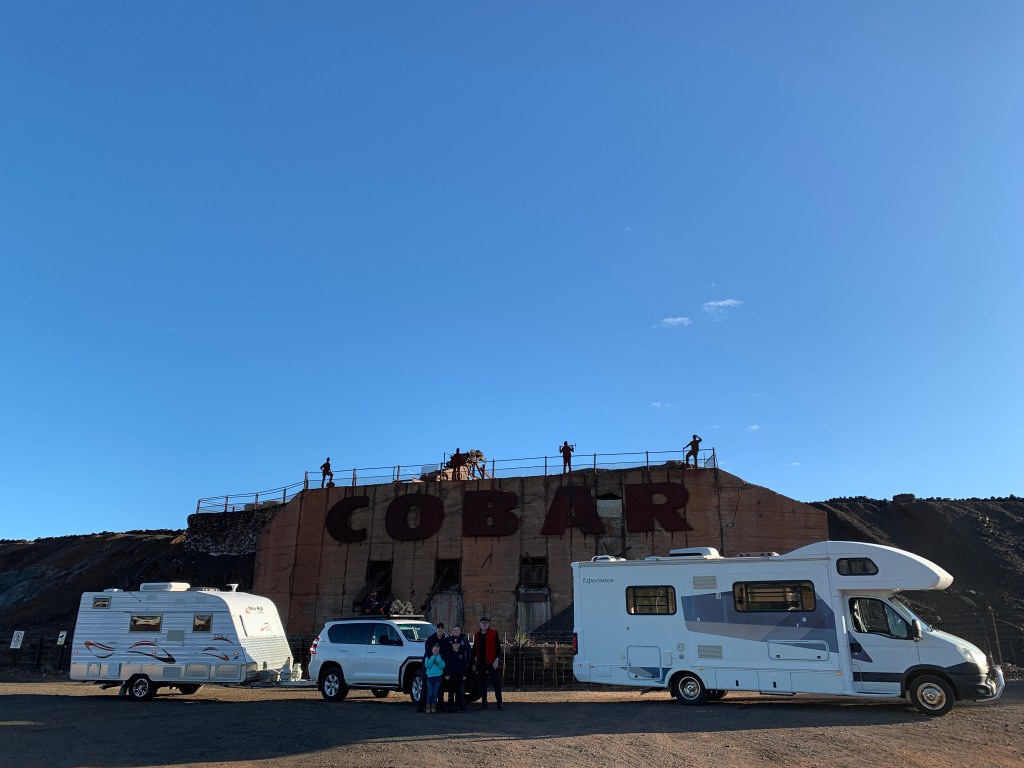
Of course we had to make a stop under the famous Cobar sign just as you come into town. We managed to park both our rigs under the sign and got the picture.

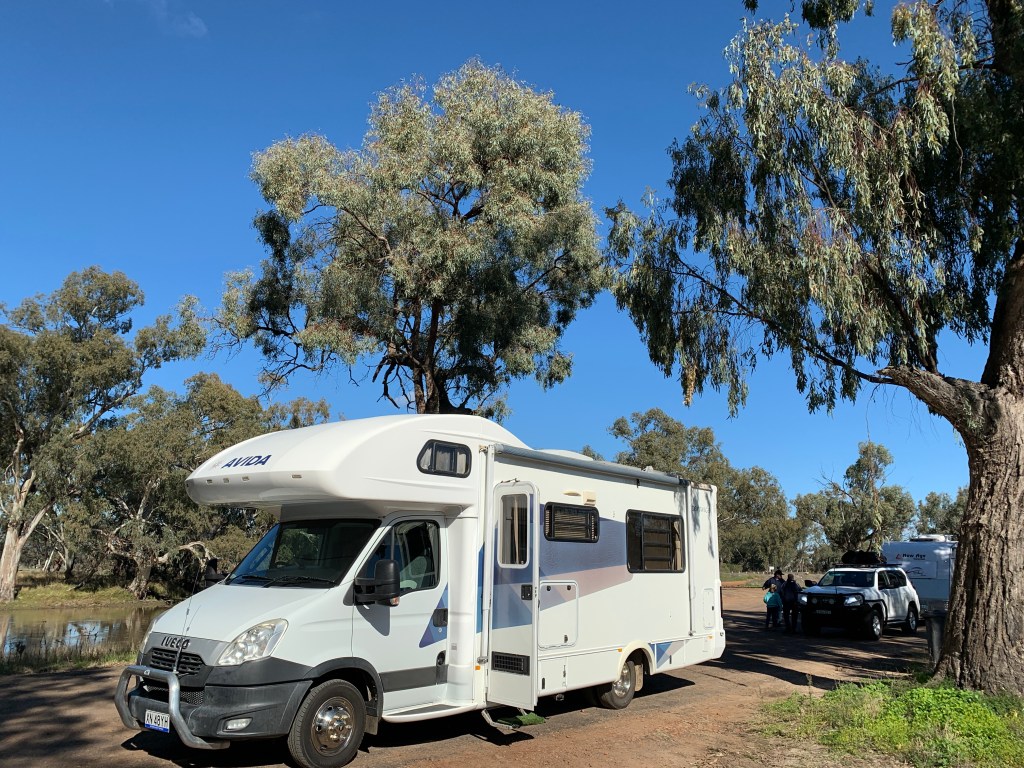
Our camp for the night is one we’ve been at a few times before and we really like it out at the Old Reservoir. It is a free camp with no amenities at all however it is a large flat area with room for lots of RV’s. We’ve been here when we’ve been the only ones here but this night there was lots of RV’s of every description. There’s lots of caravans, a big bus, a few motorhomes and camper trailers.

As we were setting up camp a couple walked by and came across to chat to Katie. They are also owners of a New Age Bilby caravan and wanted to meet the fellow Bilby travellers. Katie was happy to chat about her beaut little van.

The children were all willing helpers to get camp set up and the boys got their swags set up on the mat ready for later. Rich got a fire going. After camp was set up the kids went off exploring and it was lovely to hear their happy chatter.

Katie, the children and I went for a bit of a walk and found the other Bilby parked next to a Jayco motorhome. The MH people had their two dogs with them and the children loved seeing them. They even got to take the elderly pug, Ruby, for a walk in her stroller. Ruby has very bad arthritis and cannot walk very far but she loves to be pushed in her doggy stroller.

Pushing Ruby in her doggy stroller

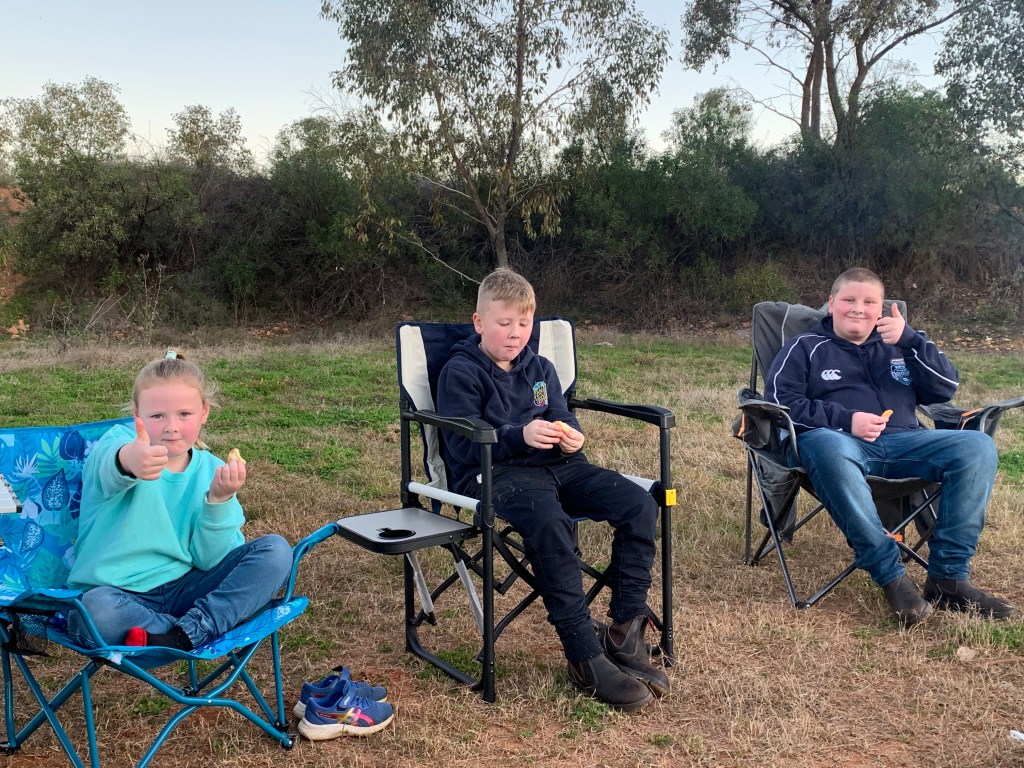
Back at camp Pa cooked up sausages on the Biji BBQ and we enjoyed our camp dinner under the stars sitting around our little camp fire. With all the lights off the children were amazed at how many stars there are in the night sky. It was a very clear, cold night and the children enjoyed spotting satellites passing overhead. All around the reservoir we could see the twinkling of camp fires. What a great spot!

And so our great adventure has begun. 360km travelled and the first of many free camps. I hope the boys sleep well in their swags.

Where to next?

Don’t you love planning your next trip? I do. I’m a bit of a researcher and love to read as much as I can about where we might go next. When we arrive at a new destination my husband, Richard, is known to say “So, tell me about this place!”

So where are we going next?

I’m excited to say our next adventure is one that’s been on our bucket list for a long time….we are going to The Red Centre.

What’s The Red Centre?

The Red Centre is the name given to Central Australia in the Northern Territory. The ‘red’ comes from the colour of the sandy desert. The Red Centre is famous for being home to the largest monolith in the world, Uluru (formerly known as Ayers Rock). We can’t wait to go there!

Other well known natural attractions include, Kata Tjuta (The Olgas) and Kings Canyon. Alice Springs is the largest town in the Red Centre and we will be visiting ‘the Alice’ on our journey.

One of the things I’m really looking forward to is camping in the Tjoritja West McDonell Ranges. The Tjoritja West McDonell National Park stretches some 150km west of Alice Springs and includes some spectacular gorges and water holes such as Ormiston Gorge, Ellery Creek Big Hole, Standley Chasm, Redbank Gorge and Glen Helen Gorge. We hope to visit as many of these as possible.

The Larapinta Trail winds some 223 kilometres through Tjoritja and was voted by National Geographic as one of the worlds top 20 trekking experiences. The trail is divided into 12 sections and you can do just one or more of each. We probably won’t be doing that but we will be doing lots of walking and maybe have a swim or two in one of the spectacular waterholes.

Here’s our planned route

We will be taking our motorhome and will be accompanied on this great adventure by our daughter and her three children. They have a caravan and swags. We are busy prepping our vehicles to get them ready for lots of free/low cost camping. This means extra water, a grey water tank for the caravan and ensuring everything is in good running order.

As some of our travel will be during the busy winter school holidays we recently decided to book some accomodation and I’m glad we did. When we tried to book for the time we wanted at Ayers Rock Campground they were already booked out, so, we changed our plans and will go to Alice Springs first, then the West McDonells before we go to Uluru and Kings Canyon. Having found Ayers Rock Campground booked out solid for the school holidays we went on and booked at Kings Canyon, Alice Springs, Coober Pedy and Broken Hill. The rest we plan to wing it. It’s comforting to know that when we finally arrive at these places we have our campsites booked.

It’s becoming a little exciting now the countdown has begun…..13 weeks until departure.