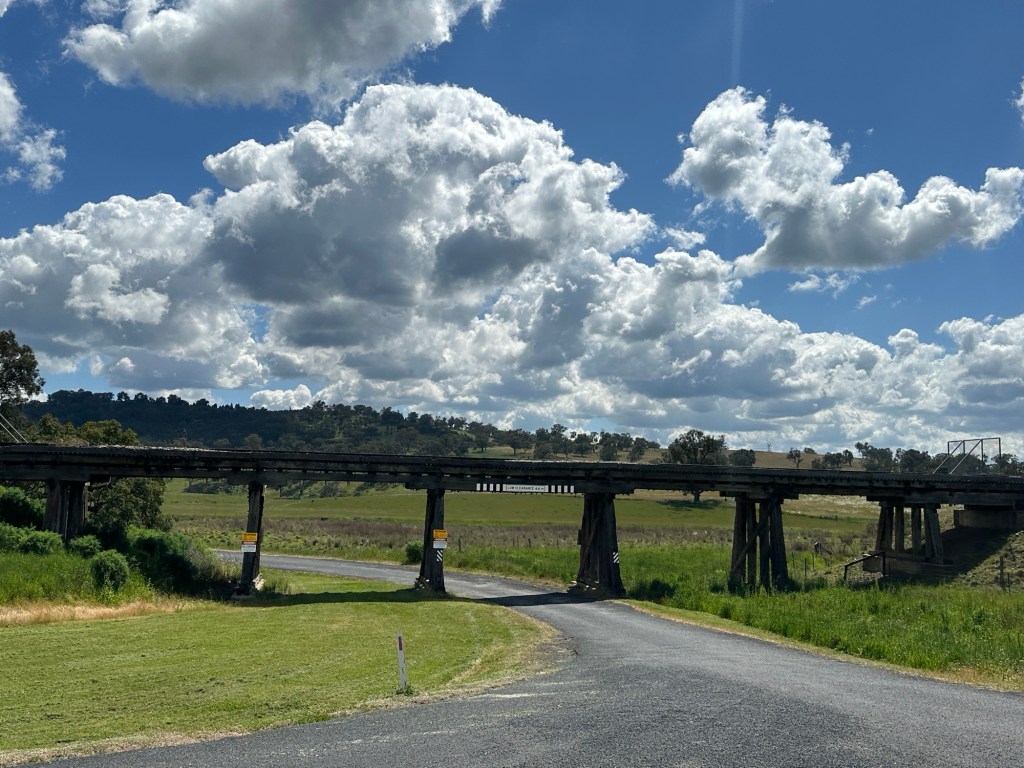
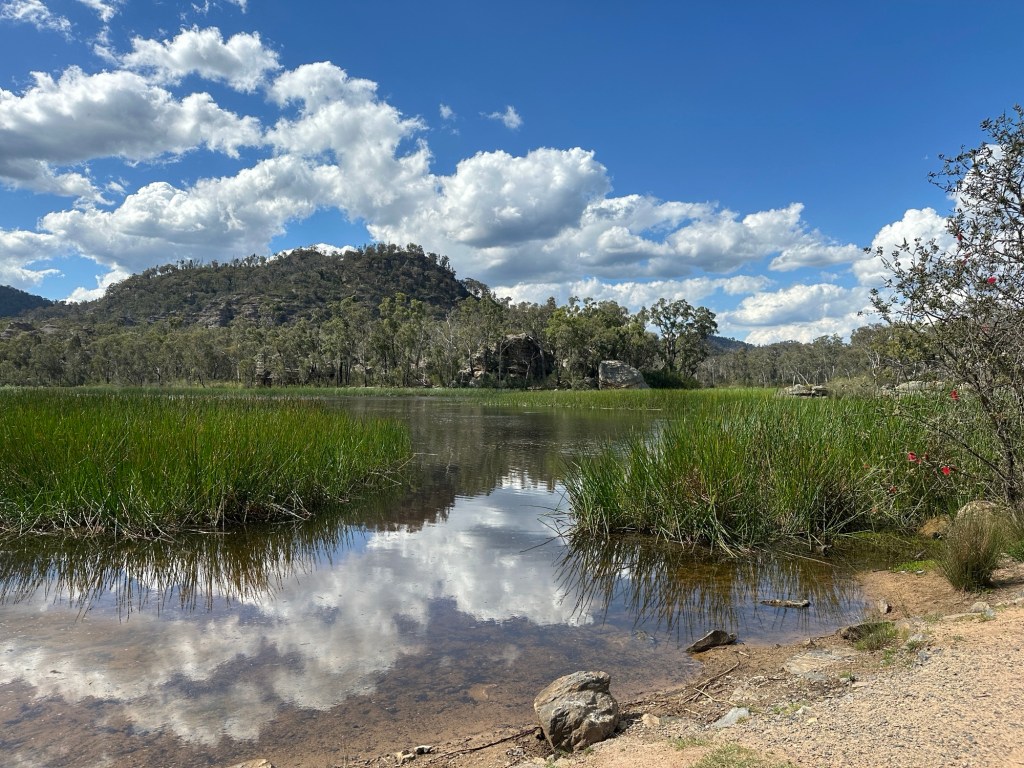
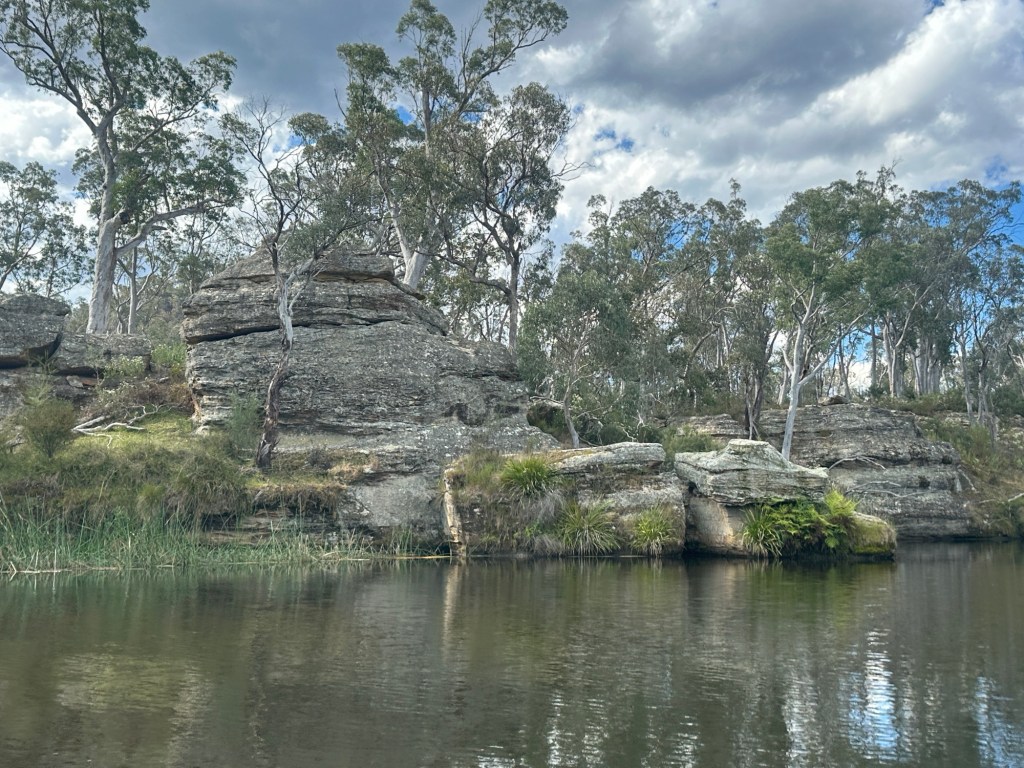
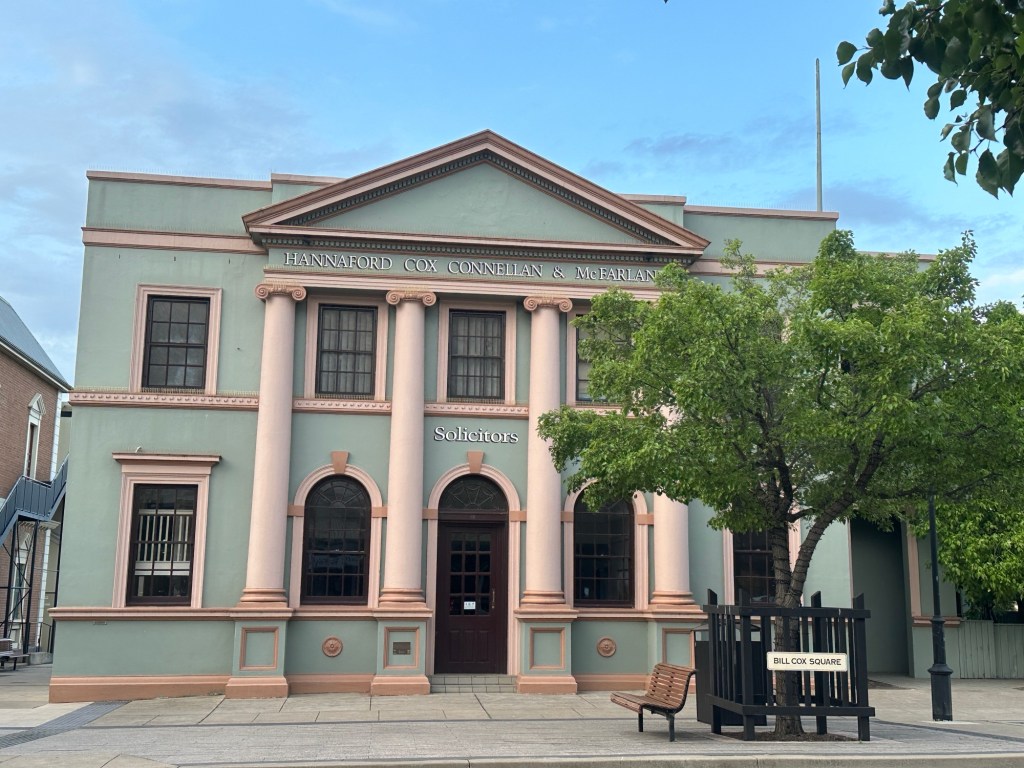
Off to Dunns Swamp

The day had finally arrived, we were off to Dunns Swamp. I’d been looking forward to this for a while. I hoped that it lived up to my expectations as they were pretty high. Cousin Catie says it’s one of her favourite spots and I usually love the same ones she does. So hopefully Dunns Swamp would be all I’d imagined.

It was an orderly and quick pack up from the Riverside Caravan Park in Mudgee and we were driving out of the park by 9am (that’s early for us!)

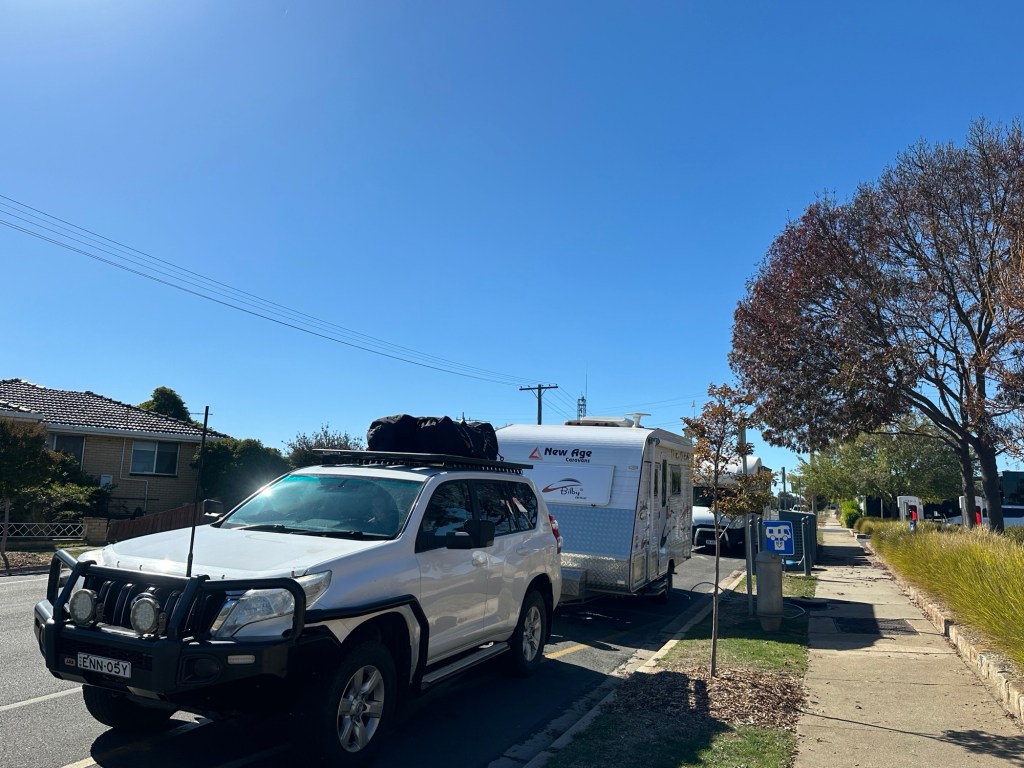
We needed groceries and had sussed out where we could park when we were riding around town on our ebikes the day before. Most of Mudgee CBD is angle parking and there’s not a lot of parking for long vehicles. We found a street (still with angle parking) that was not as busy and parked parallel across 3 parking spots. There was a car towing a trailer that had done the same thing in front of us.

Just as we parked the motorhome there was a cry from behind us and what a lovely surprise! Our daughter Katie’s best friend from school had pulled up behind us. She’d seen the motorhome and knew it was us. We had a quick chat before she had to head off to her appointment. How lovely it was to see her.

After visiting Woolies for groceries, Bakers’ Delight for bread and the chemist we left Mudgee about 10am headed out on the Lue Road towards Rylstone.

Don’t you love driving in the country? Just out of Mudgee we came across a tractor with a trailer hauling those big round bales of hay. He was so loaded up he took up most of the road. He was just driving along the road. We wondered where he was going.

Lue Road is a narrower back road and had lots of pot holes so it was slower going. There wasn’t a lot of traffic though so we could avoid the pot holes by driving in the middle.

We spied a big old house with lots of chimneys. I quickly googled it and found it is Havilah Station, famous for breeding merino sheep.

First taken up by Nicholas Paget Bayly some time in the 1850s, Havilah Station is located near Mudgee, on the central western slopes of New South Wales. The property, which received its name after a visiting clergyman discovered specks of gold and, citing from Genesis, referred to it as the ‘land of Havilah’, became famous for breeding a fine strain of merino sheep. By the 1870s, breeders were referring to the flock’s offspring as ‘Bayly bloods’ and ‘pure Baylys’. Bayly built an impressive homestead at Havilah, but died in 1879. The following year, Havilah was purchased by Henry Charles White, of Belltrees in the Hunter Valley. Believing that Bayly’s ten-room mansion was too small, White commissioned John Horbury Hunt to draw up plans for extensions. When these were finished in the mid-1880s, the homestead with its two-storey brick wings on the east and west of the house, chapel-like kitchen and massive chimneys was a magnificent building whch is today listed with the National Trust of New South Wales. White, a strong advocate of Bayly’s methods, continued to concentrate on sheep-breeding, but he also developed a stud of race-horses which became famous throughout New South Wales. These dual concerns still predominate on Havilah Station, which remains in the hands of HC White’s descendants.

https://www.nswera.net.au/biogs/UNE0204b.htm

The little village of Lue has two churches, a hall, a few houses, a public school, a pub and not a lot more. It is situated in a lovely valley.
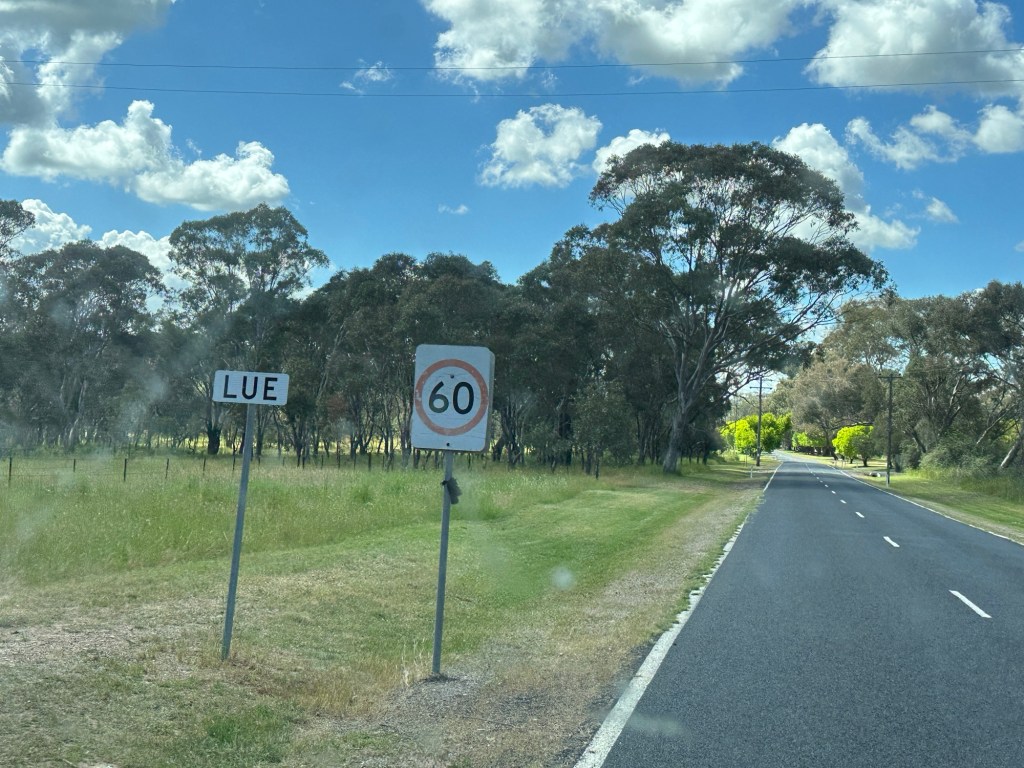

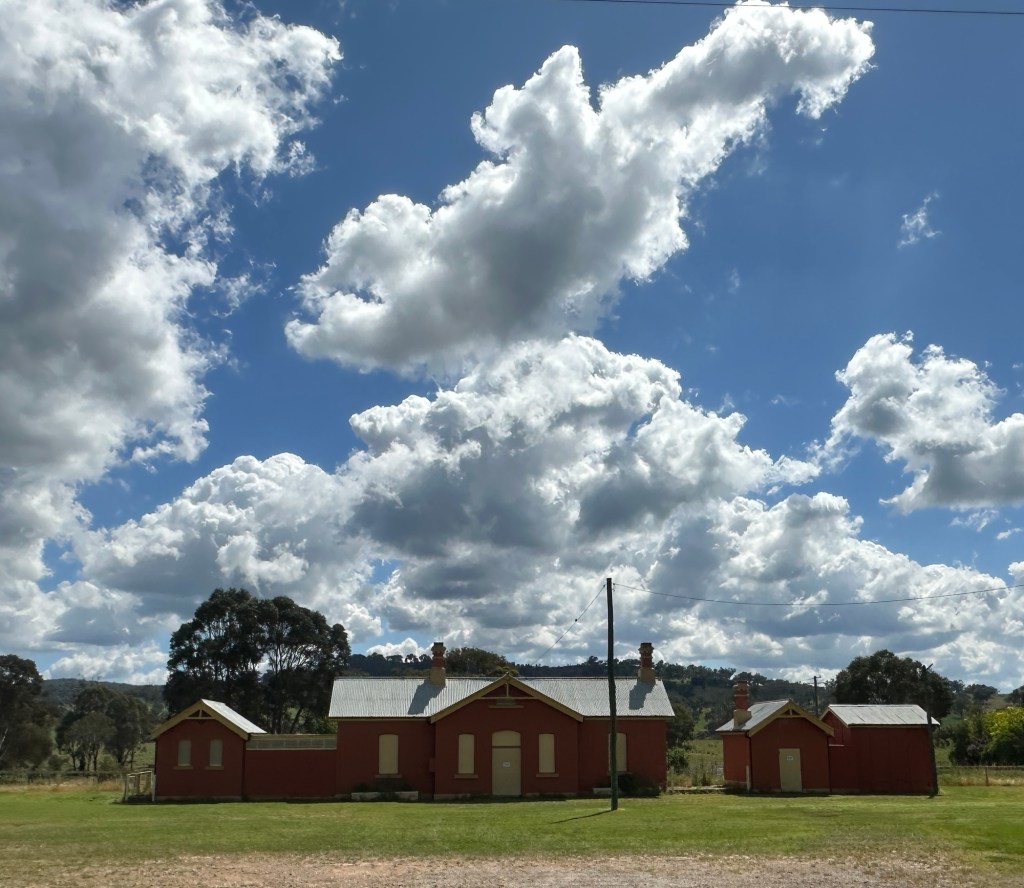
There were bright yellow signs up along the fences on the way protesting against Bowden’s toxic lead mine. Obviously Bowden’s want to build a lead mine and the locals are not having it! It was a very pretty drive through lush green valleys. It looked like perfect sheep and cattle country. No wonder the locals are protesting a mine being built.

On arrival in Rysltone we gave Richard’s brother, David and partner Anni a call to find out where they were as they were to join us for a few days at Dunn’s Swamp. They had camped at Sofala overnight in their motorhome. When Anni answered they had already passed through Kandos and were on the road to Dunns Swamp. We explained we’d fill with fuel and be not far behind them.

A quick refuel in Rylstone and we headed east towards Dunns Swamp. The road was noticeably narrower although it was still a tar road. There was an alert on the National Parks website for the road to Dunns Swamp saying there was roadworks and sure enough it wasn’t long before we came to those. It looked like the road was being tarred all the way with some of it tarred recently. I spied a Gravel Road sign next to where the road is now tar.

Almost at the entrance to Dunns Swamp we came across the roadwork crew. There was a lot of them and their big machinery. They were busy preparing the road for tarring.

We made the turn off and it was now a gravel road through bushland as we entered the Wollomi National Park. Arriving at the Campground we could see the well defined and numbered camp sites, each with their own fire pit. The camps are in set amongst the bush with bush in between each site. Each group of sites has a pit toilet and there is a large site that holds free firewood. Our site was number 3 and we found that quickly then drove around to see if we could find David and Anni. They were on site 66 not too far away.

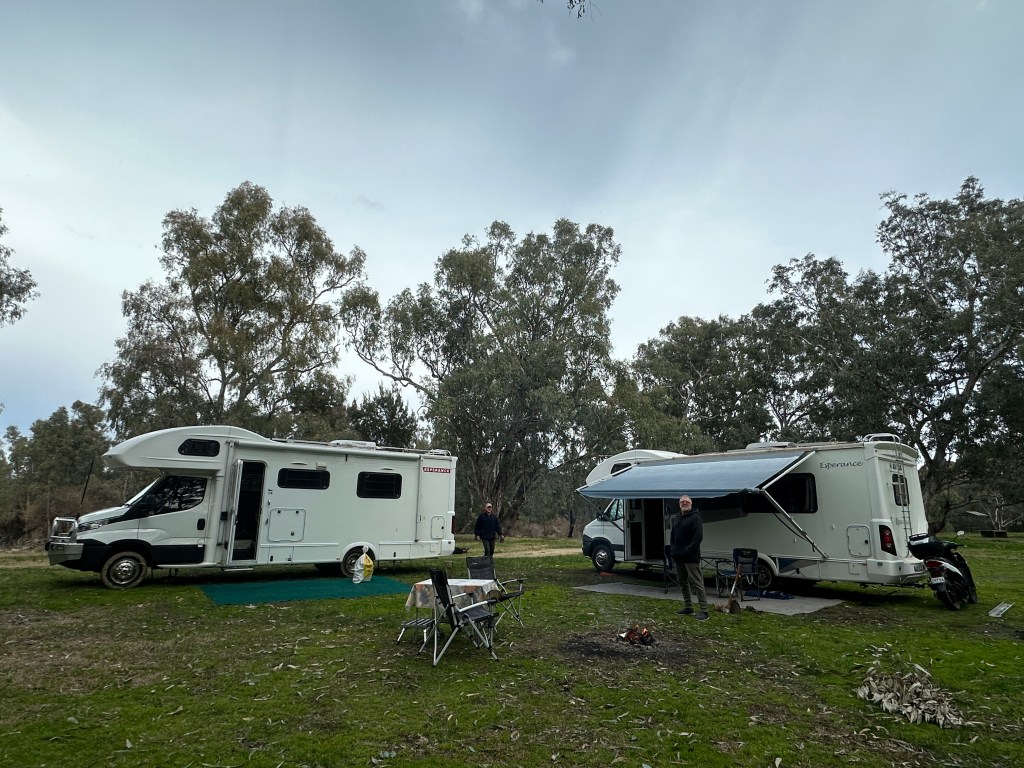
We quickly settled in to our site and, as we were staying for a week, out came the awning, the mat, the camp chairs and table etc.

Camp site #3 at Dunns Swamp

Late in the afternoon I got my inflatable kayak out, pumped it up, attached it to our beach wagon with an ocky strap and set off down to the water. Kangaroo Beach is only a 2 minute walk from our campsite. What a lovely place to go for a paddle. I had a 45 minute paddle and it was so relaxing paddling along in the quiet of the bush. I did meet other paddlers but very quickly they were past and I was on my own again.
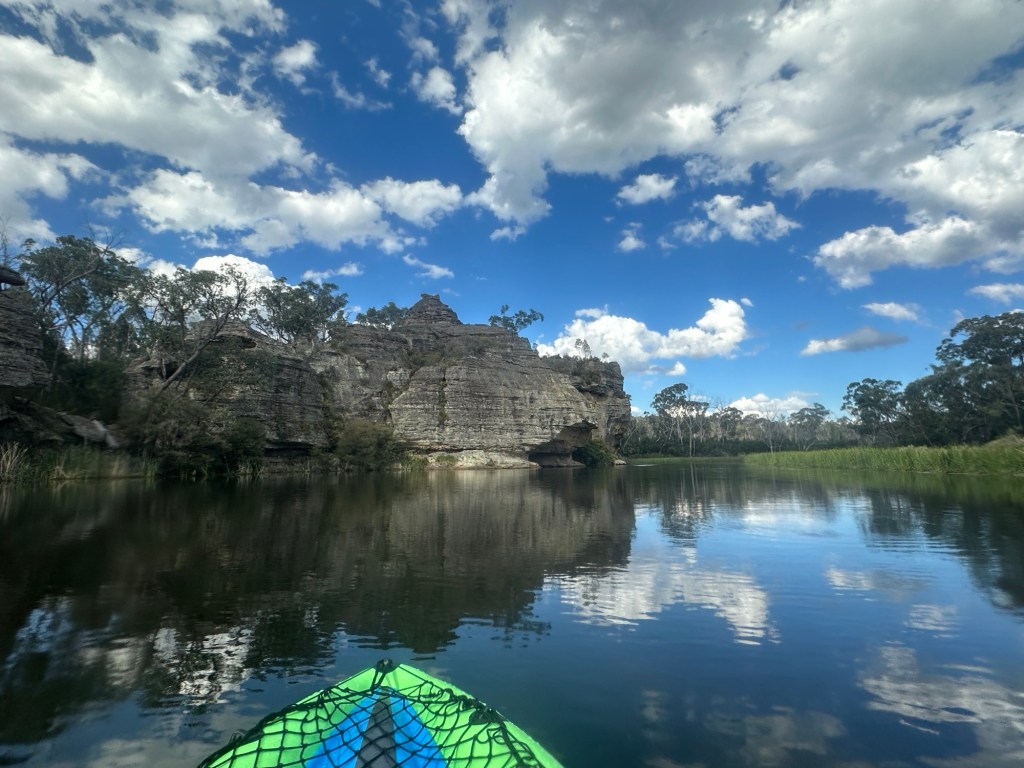
David and Anni joined us for dinner of steak, chips and salad and we thoroughly enjoyed their company as we sat under our awning. It was a very pleasant evening.

Another day in Mudgee

What to do on another day in Mudgee? I know go for a bike ride! We set off on our ebikes and by following the shared path found ourselves across the river at the Glen Willow Regional Sports Complex. This amazing sports complex has ovals, courts, grandstands, amenities blocks etc and covers a huge area. It looks relatively new and we guessed that Mudgee must have received a large grant to make it all possible. I think every outdoor sport was catered for in the huge complex.

Back at camp we both had a read of our books. It was a relaxing day.

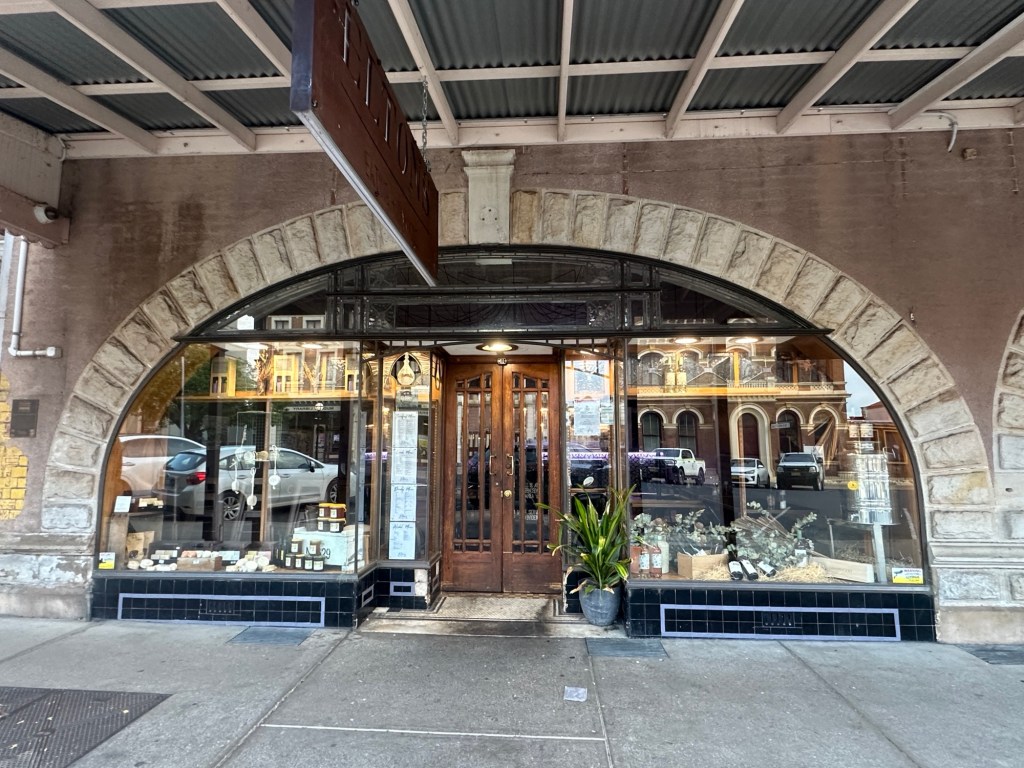
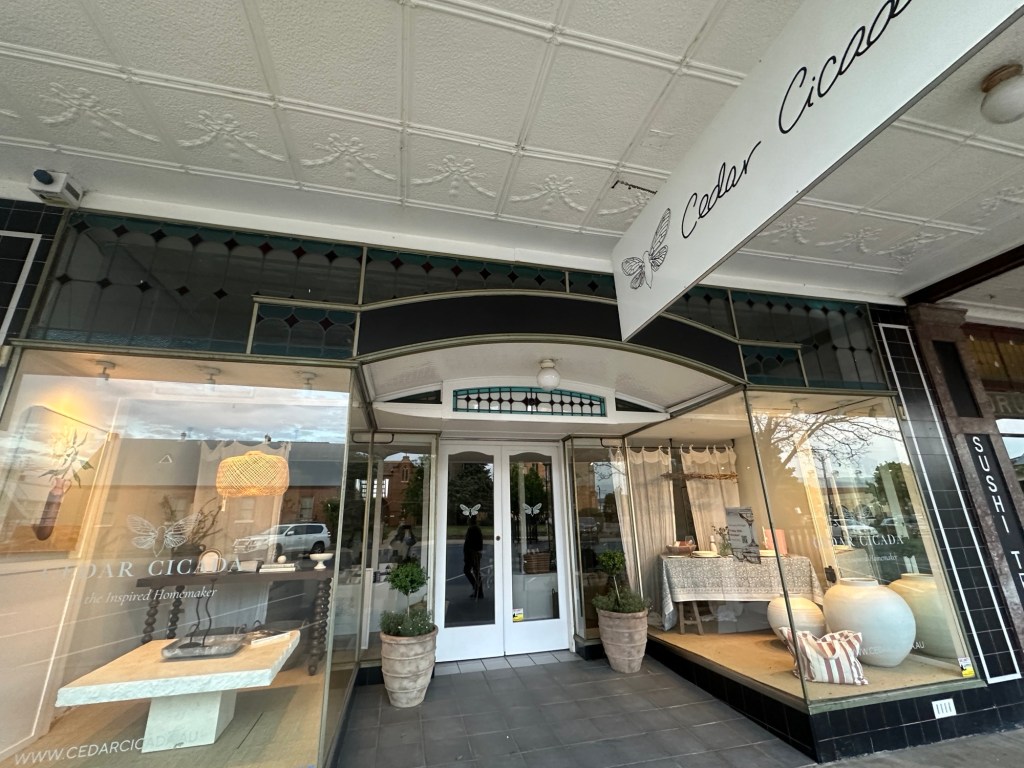
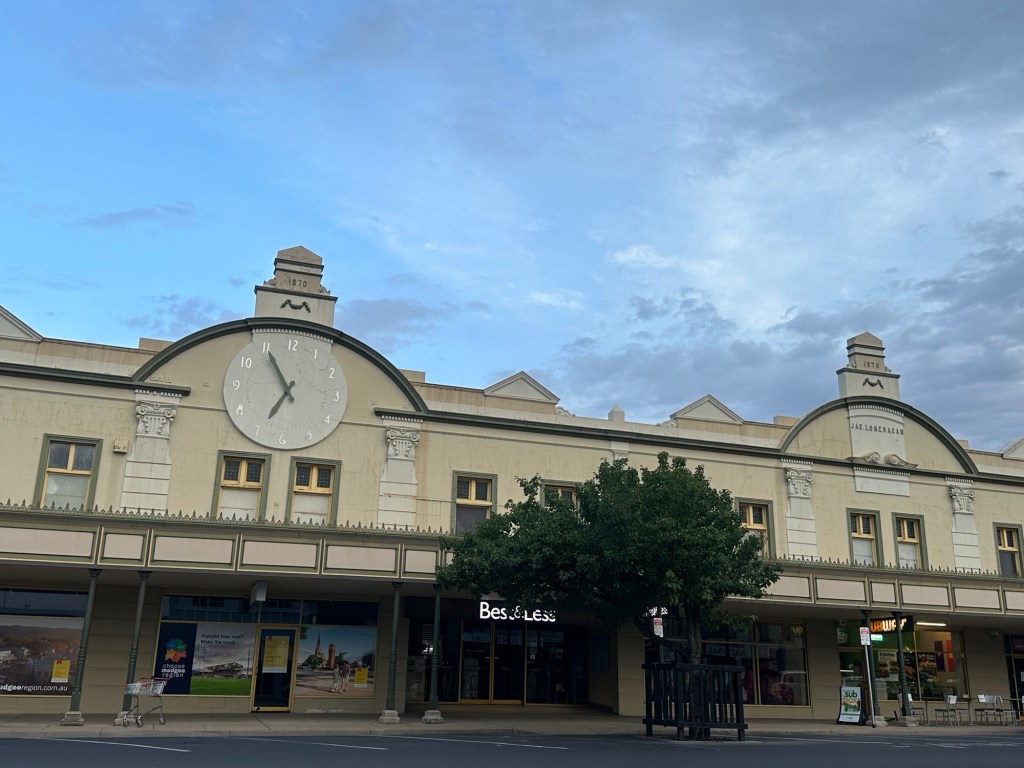
Late in the afternoon we went for another ride on our ebikes, this time up and around the CBD. Mudgee has some lovely old buildings. I found a few shops with gorgeous leadlight windows.

We stopped for ice-cream at the ice-cream shop on the corner of Church and Mortimer Streets and sat at an outside table to eat it while people watching.

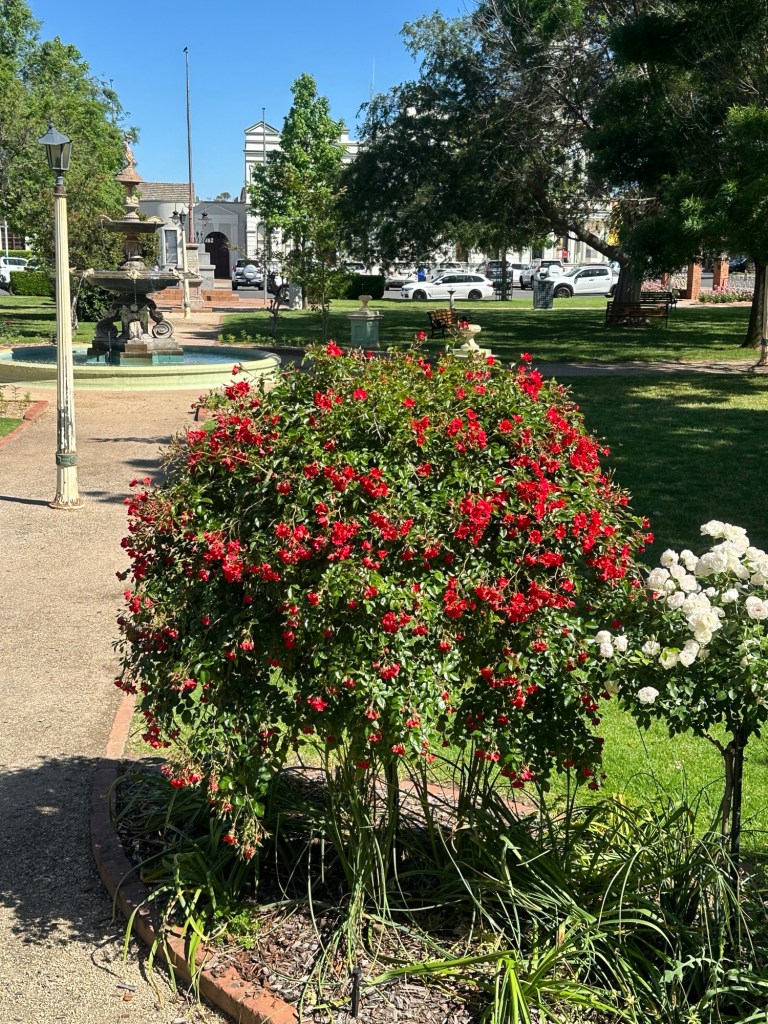
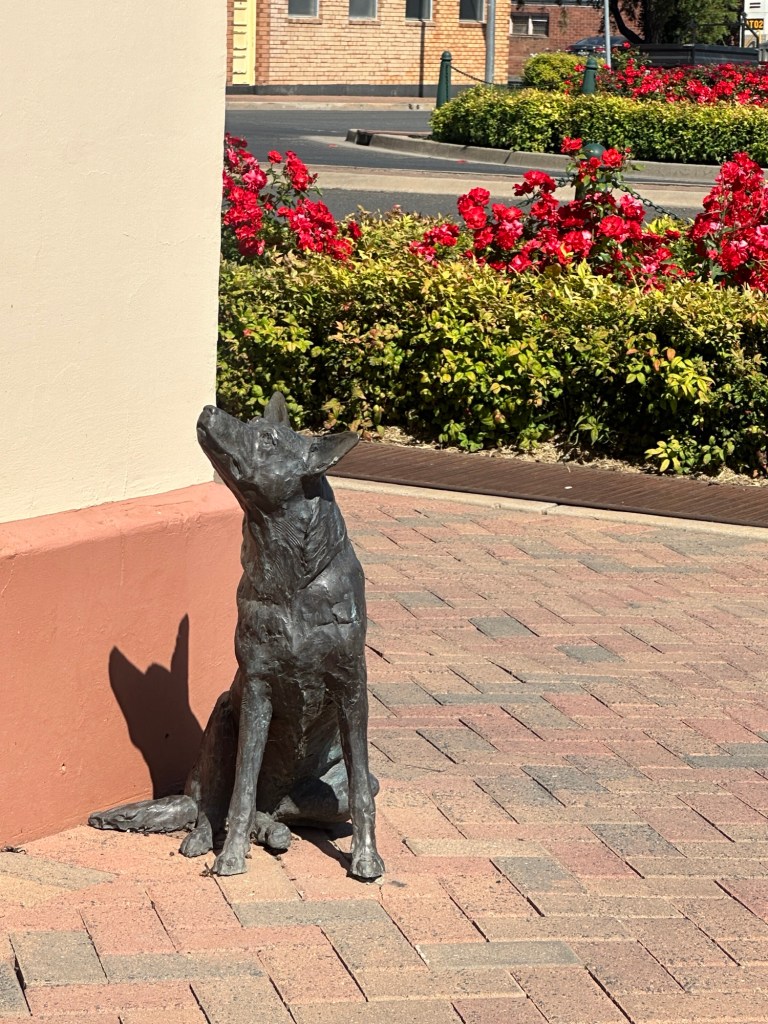
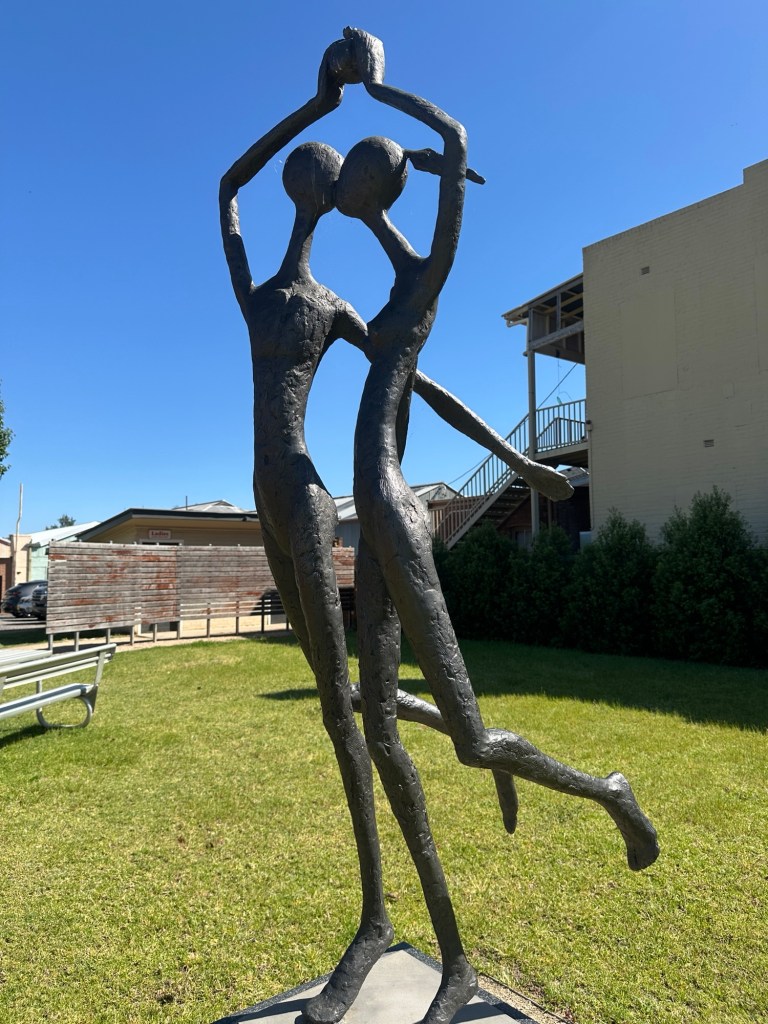
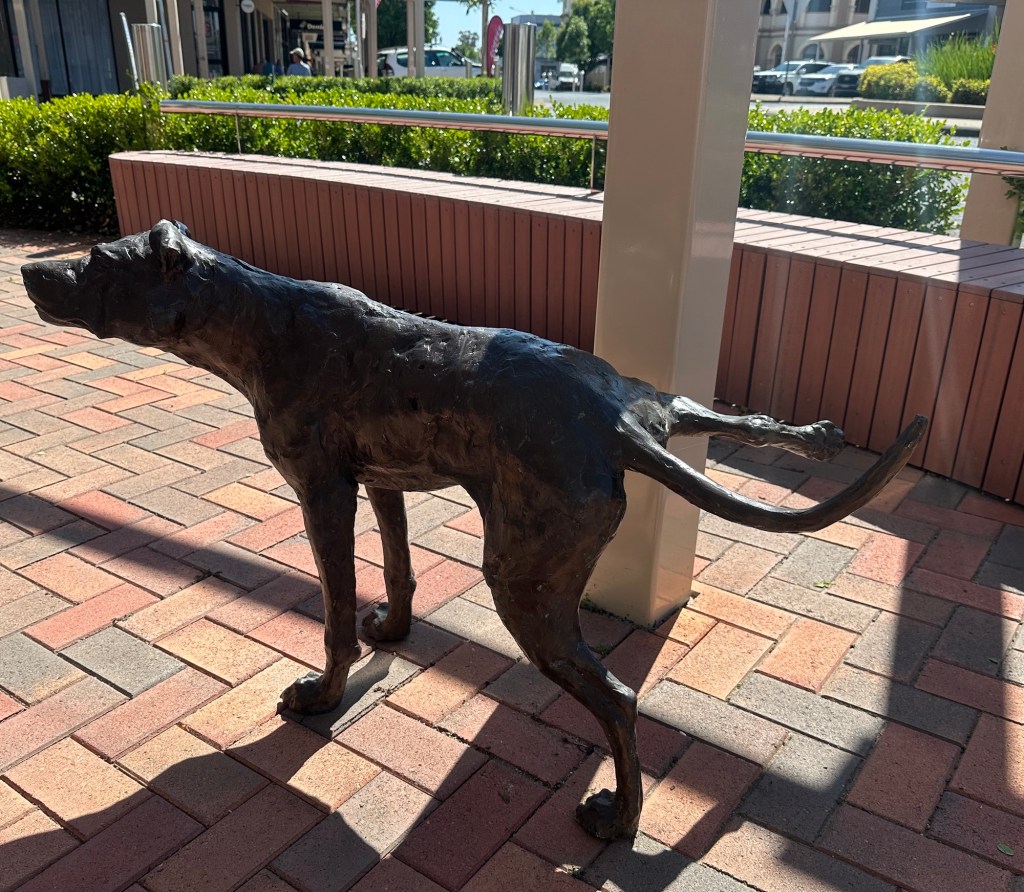
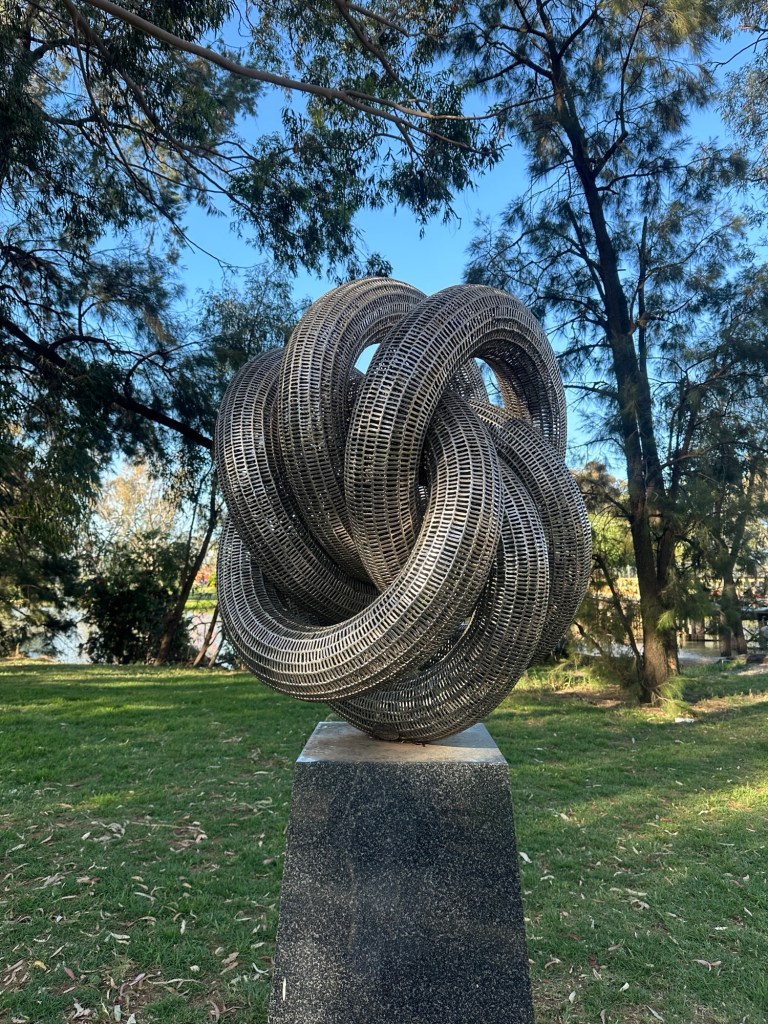
On the way back to camp we took the shared path through the gorgeous, and very well maintained, Lawson Park which runs alongside the Cudgegong River. There is a sculpture trail along the shared path with some very quirky sculptures. As we were riding along all of a sudden I was swooped by a Magpie. The stupid bird came in for the attack multiple times and I pedalled really fast to get out of its territory. I felt it hit my helmet about three times. How come it didn’t attack Richard’s bright green helmet? Mine’s a boring old white one!

Later we glammed up and walked back into town to have dinner at Kelly’s Irish Pub. This is a great pub and we really enjoyed our meals washed down with a pint.

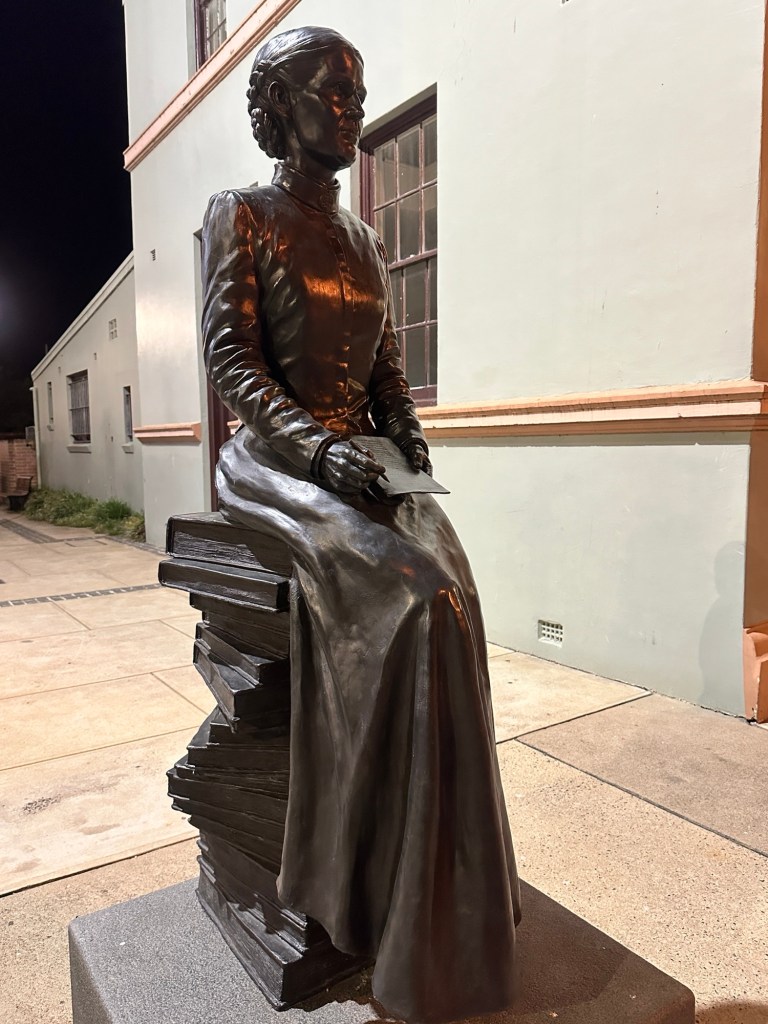
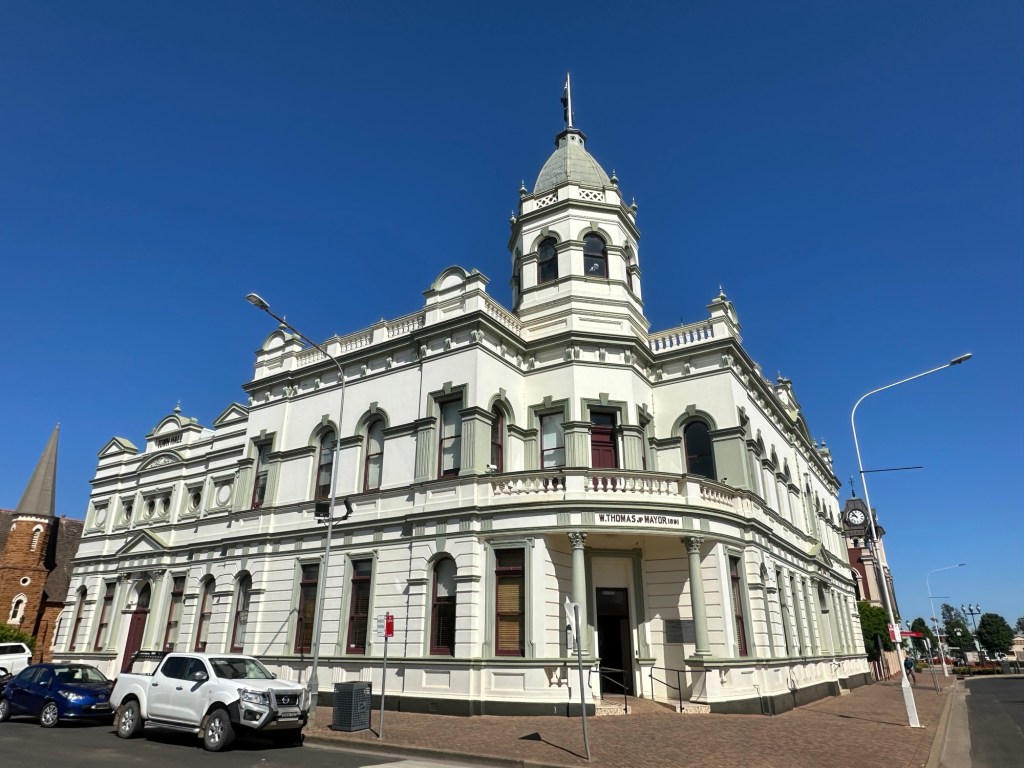
On the walk back after dinner we saw a sculpture of a woman near the Town Hall and wondered who she was. Turns out she’s Henry Lawson’s mother. Louisa Lawson was born in Mudgee in 1848 and was a publisher, poet, inventor, and mentor as well as Henry’s mother. She was one of Australia’s early suffragettes and worked tirelessly for women’s rights. Louisa died in Sydney in 1920.

Farewell Dubbo, hello Mudgee

First stop after setting off was to the Dubbo Showground to use the Dump point and fill up with water. Thank you Dubbo!

Then it was on to Wellington. As we were going directly to Mudgee, and we’ve been to Wellington quite a few times times, we took the Mudgee turnoff which is before you arrive in Wellington proper.

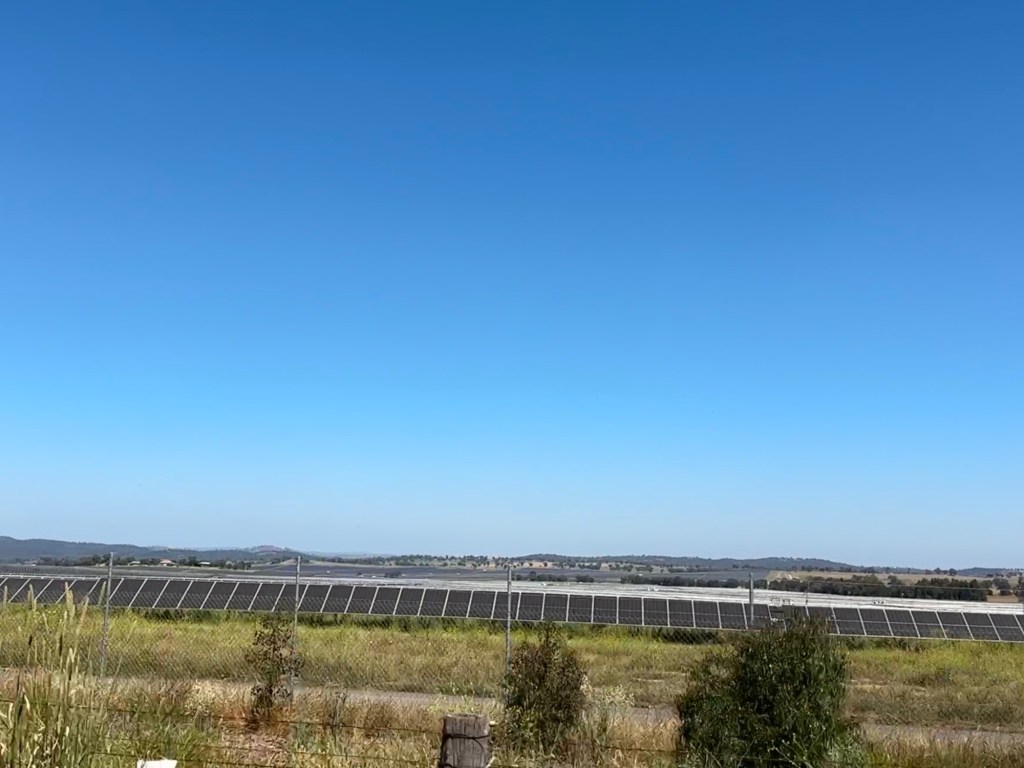
Only about 7 km out of town on the Goolma Road you come across a huge solar farm. It covers some 316 hectares of once grazing land. It was constructed in 2019 and supplies some 200MW. That’s enough to power 72,500 homes. Wellington Solar is adjacent to another lightsourceBP project, funnily enough, called Wellington North Solar. Wellington North solar produces 425MW. Enough to supply 152,500 homes.

A little further along the Goolma Road is the Wellington Correctional Centre and Macquarie Correctional Centre.

Wellington Correctional Centre is a 400 bed prison. This prison also houses prisoners ‘on remand’. These are prisoners who have been charged by police, refused bail and placed on remand to await trial.

Macquarie Correctional Centre is adjacent but it houses maximum security male offenders. It can hold up to 400 prisoners. Macquarie is an experimental prison where maximum security inmates work 15 hour days and don’t live in cells. Instead they live in dormitory-style pods and take part in art classes and get paid to design and weld furniture. The prison has been open since it was completed in December 2017 and has half the misconduct rates of other maximum security prisons. It also has an eighth of the staff assault rates and the governor attributes this to the safe atmosphere where inmates can focus on development instead of living in fear. One inmate has even completed a PhD!

The countryside from Dubbo to Wellington and onwards was looking quite green with lots of pasture on the rolling hills. Plenty of sheep and cattle were to be seen grazing.

A little further on from the two prisons we spied the huge wind turbines of the Bodangora Wind Farm. This facility produces 113.2MW from its 33 turbines, enough to power 49,000 homes.

After arriving in Mudgee our first stop was to the Tourist Centre to collect some brochures and find out what to do and see in the area. There are lots of wineries, boutique cheese factory, a Honey Haven, olive groves and more. Mudgee is certainly a foodie area.

We found a nice spot for lunch under a tree near the Showground and had a read of all the information we’d collected. Decisions, decisions! Which winery to visit first?

We chose Robert Stein Winery so we could check out their renowned restaurant called Pipeclay, known for its 6 course degustation dinners. It was a lovely sunny afternoon and we enjoyed a wine tasting of 4 different whites. This cost $10 for the two of us. The restaurant did look good however one of the courses contained watermelon and I’m allergic to that!

Next stop was the High Valley Cheese Co where we tasted their delicious range and spent up to supply us with cheese for our week out at Dunns Swamp.

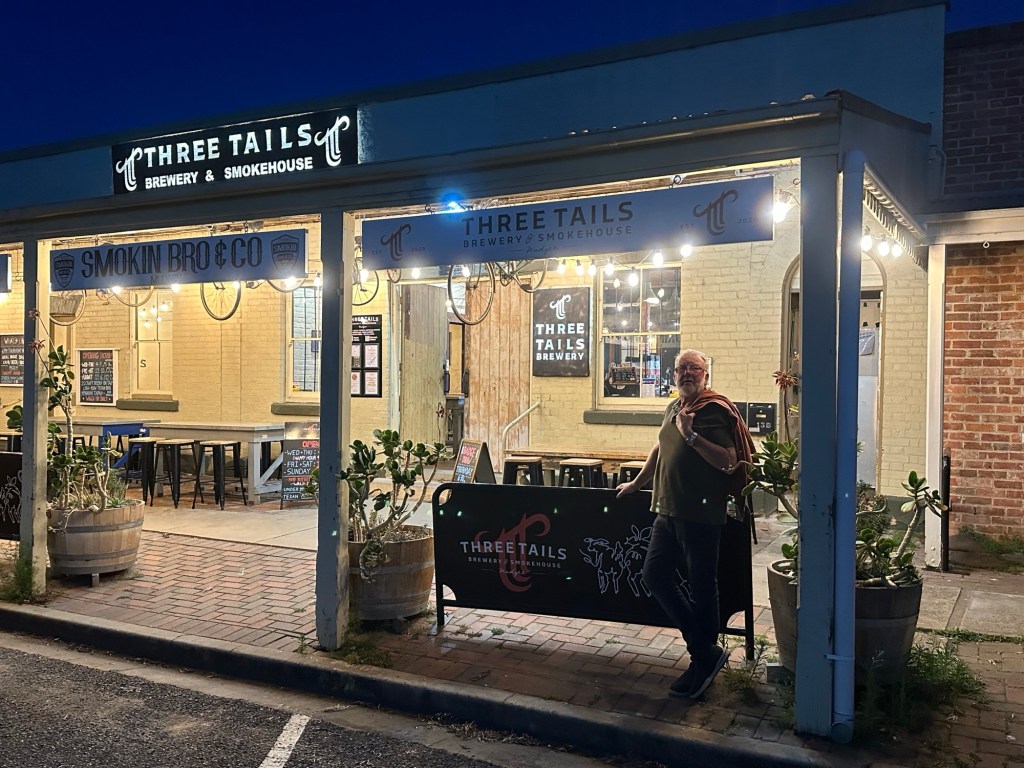
After a drive around town to get our bearings we decided to go to Three Tails Brewery & Smokehouse for dinner so we chose the Riverside Caravan Park to stay at as it was walking distance. The little park is right on the Cudgegong River, has large shady trees, grassy sites and although the amenities are old, they were extremely clean. It’s $42 per night for a powered site.

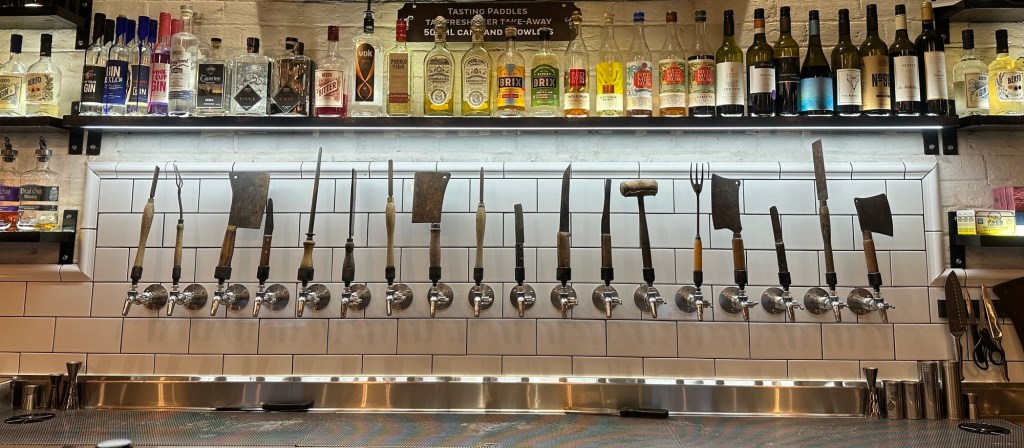
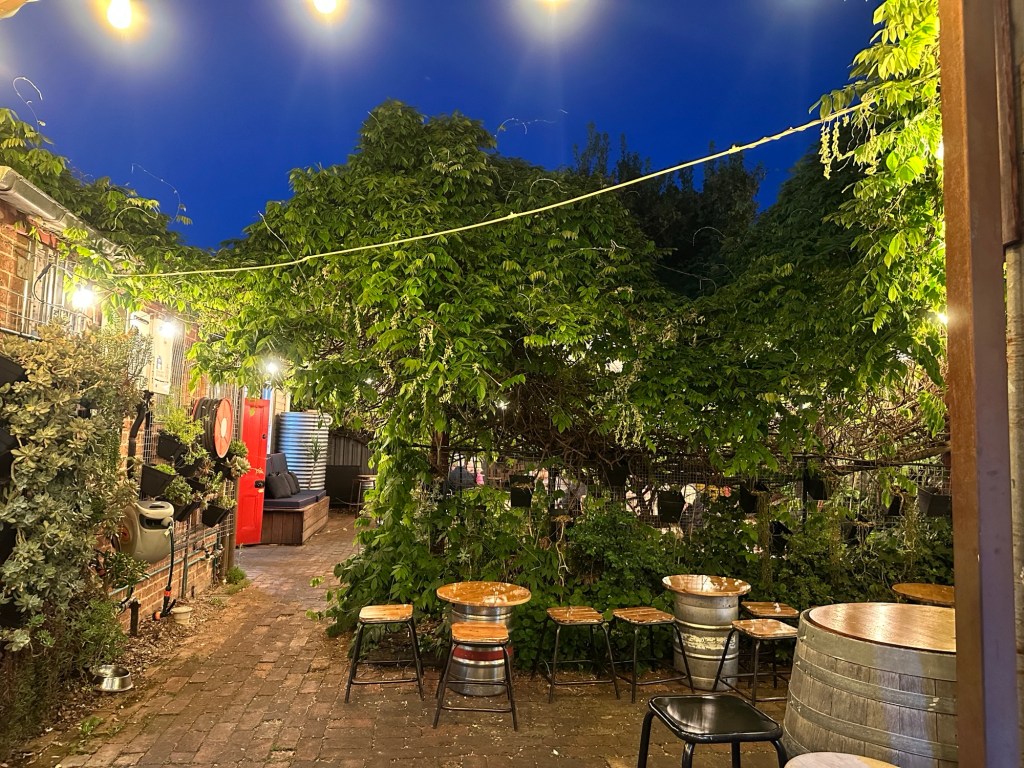
After a quiet afternoon we walked along the shared path next to the Cudgegong River and headed into town to Three Tails Brewery & Smokehouse. This fabulous boutique brewery sells their own craft beer on tap. They have 21 taps and they are the most unusual beer taps I’ve ever seen. Hope the knives are blunt!

Check those beer taps!

It is home to Smokin Bro & Co Texan style BBQ and the Three Tails Kitchen does pub grub and tapas style food. I remember going to a fantastic Texan BBQ in Llano, Texas 10 years ago and wondered if the food here would be as good.

Richard chose the smoky BBQ Chicken Wings and I chose the Tasting plate which came with two meats, 4 sides and a sauce. Rich really enjoyed his chicken wings and I loved the BBQ brisket. The pork was OK too. Both meats just fell apart on the fork. The sides were true Texan style and included BBQ’d corn, Mac & cheese, mixed beans and potato salad. It was way too much food however I did enjoy the corn and potato salad. Having Mac & cheese as a side just seems weird to me!

We both tried the craft beer and each had a schooner of their mid-strength pale ale. It was cold, refreshing and tasty.

Forbes, Parkes and on to Dubbo

After a great nights sleep at Wheogo Park in Forbes we took our ebikes off the bike rack and set off for a ride around Lake Forbes. The shared path goes all around the lake on both sides and it makes for a very pleasant ride or walk.

A couple of the sculptures are right in the town so we rode in there to find them.

We stopped for a delicious coffee at The Bakehouse after asking a local where the best coffee was to be had in Forbes. It was pretty good.

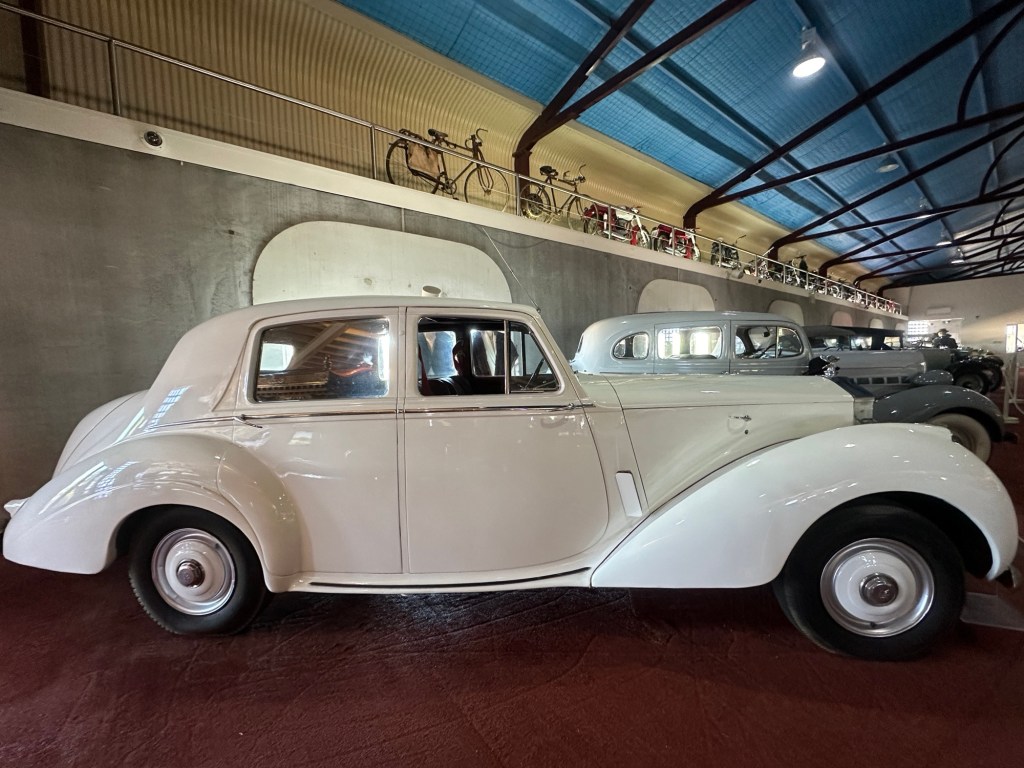
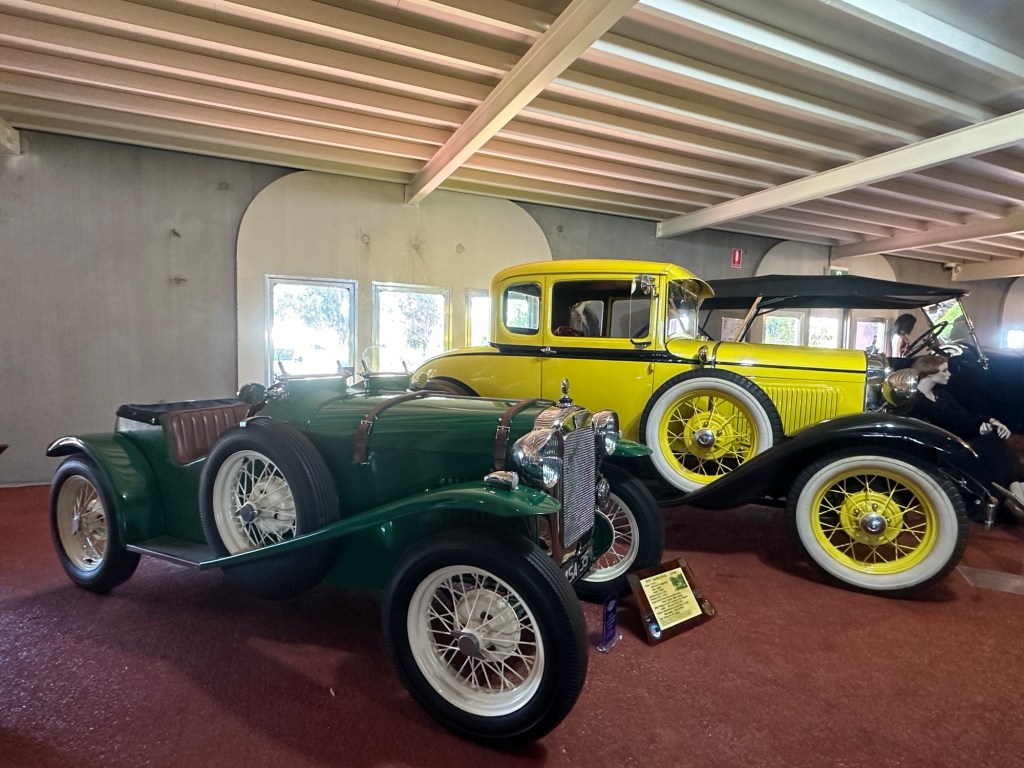
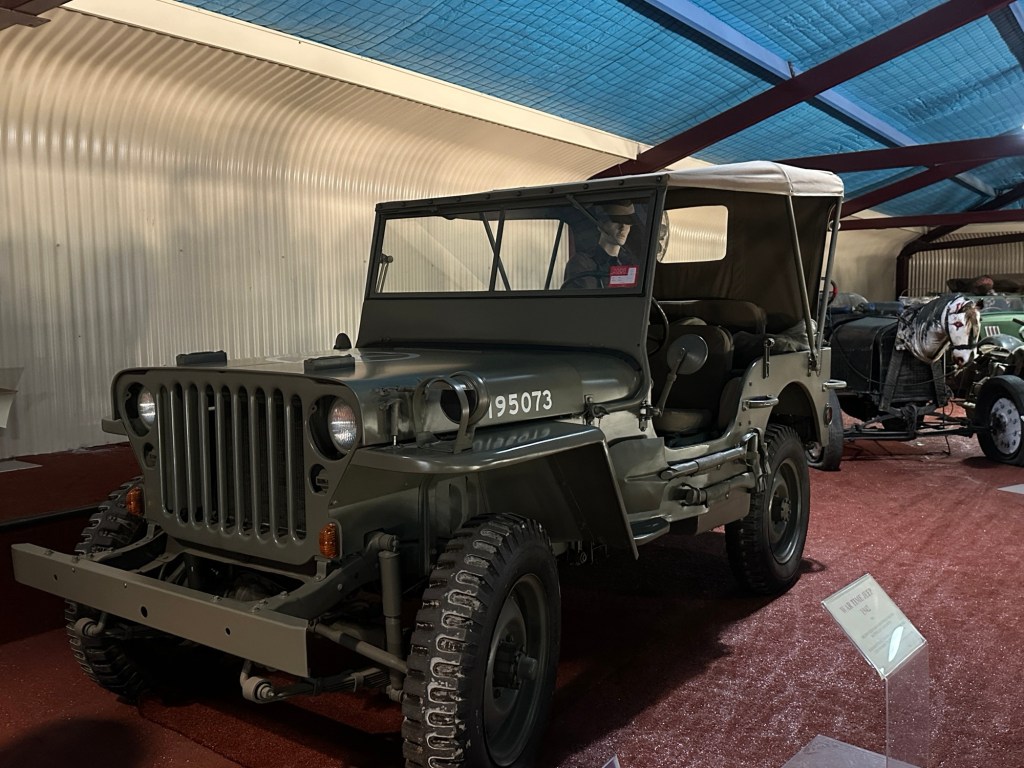
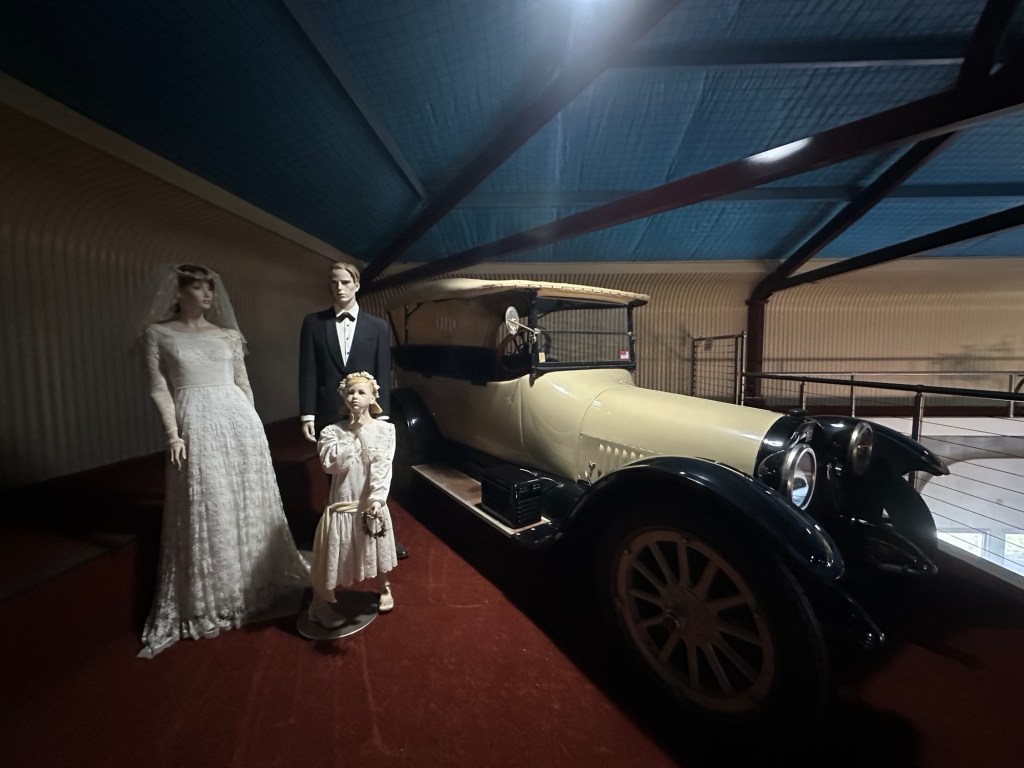
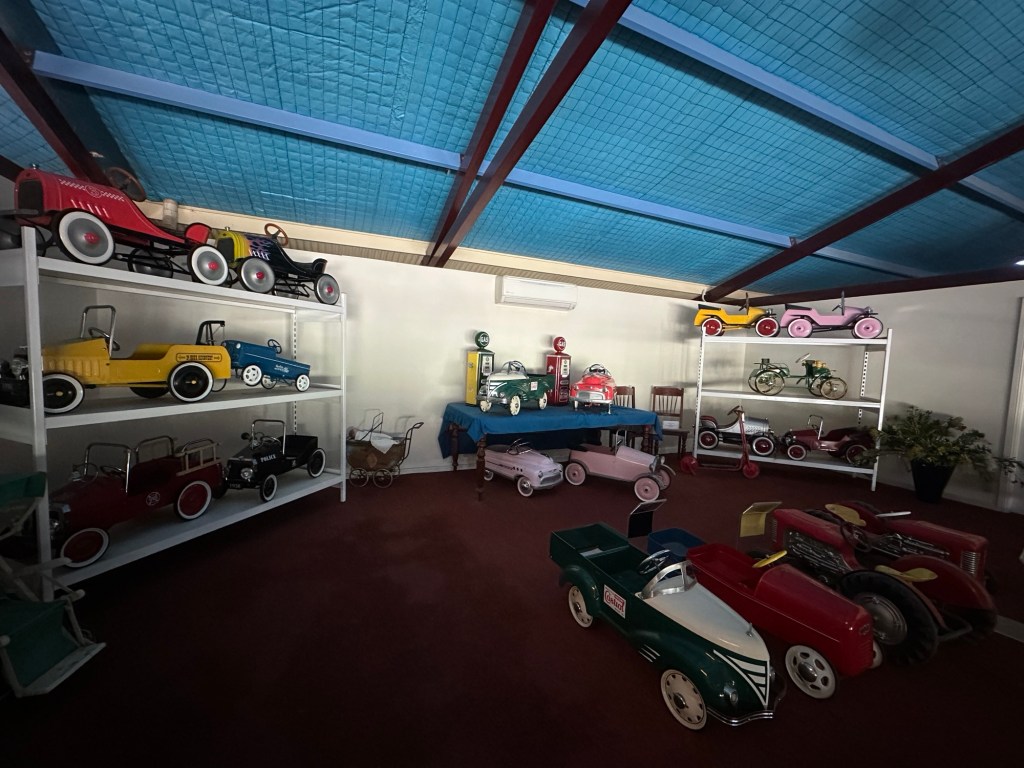
We continued our bike ride all the way back to the motorhome where we packed up and set off to visit to McFeeters Motor Museum. This place is right on the Newell Highway near the entrance to the south side of Forbes and many times we have passed by that way and said ‘we must go there one day”. Well that day we did and what a good thing that was because it’s for sale. Bob McFeeter was there to greet visitors and he told us he’s in his 80’s and is finding it all a bit hard now. He has tried to sell it as a going concern but finding someone with many millions to spare is difficult. He told us he’ll probably sell the building and sell all the cars, motorbikes and other memorabilia separately. He had one car there worth approximately $2,000,000. That’s right $2 million dollars for one car. We reckoned the building alone would be worth $2-3 million.

It was a fascinating display and we enjoyed our visit in spite of the museum looking a bit tired. The cafe was forced to close during Covid and the McFeeters haven’t been able to get anyone interested in taking it over. A bit sad. We wonder what will become of it.

McFeeter’s Motor Museum, Forbes

Continuing northwards and we stopped for lunch break at Billabong Creek Rest Area between Forbes and Parkes.

We came across lots of roadworks near Parkes. The road looked like it had been badly affected by floods previously.

The countryside was looking amazing around Parkes. Lots of ripening wheat fields and still plenty of green everywhere. Quite a pretty drive going north on the Newell with blue hills on the right. I think those blue hills in the distance are a uniquely Aussie thing and the colour is due to the eucalyptus trees.

Another thing we’ve never done while traveling on the Newell is to stop in Peak Hill and visit the Peak Hill Gold Mine Experience. Peak Hill began as a gold mining settlement back in the 1890’s and mining continued right up until 2006 with the large open cut mines. The Gold Mine Experience has a variety of walks and well constructed viewing platforms that overlook the open cut mining areas.

The largest of the open cut mines, The Proprietary Open Cut mined from April 1996 to June 2001 and took 95,000 ounces of gold out of the ground. I didn’t realise that Australia is the world’s third largest producer of gold and the third largest holder of gold resources.

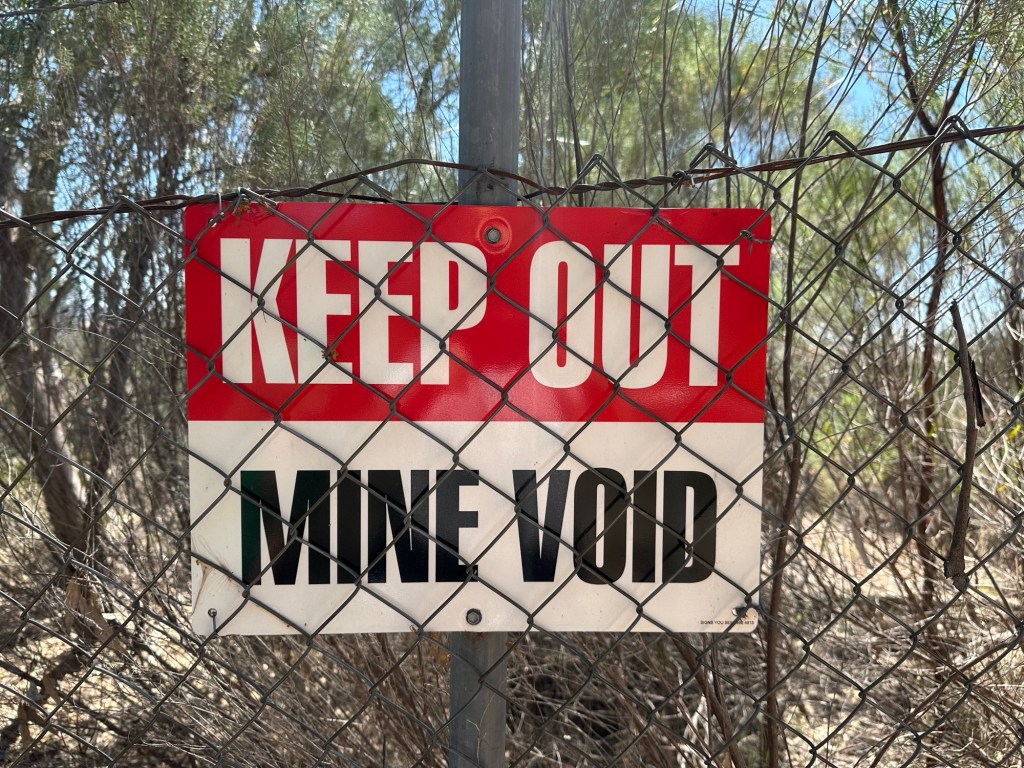
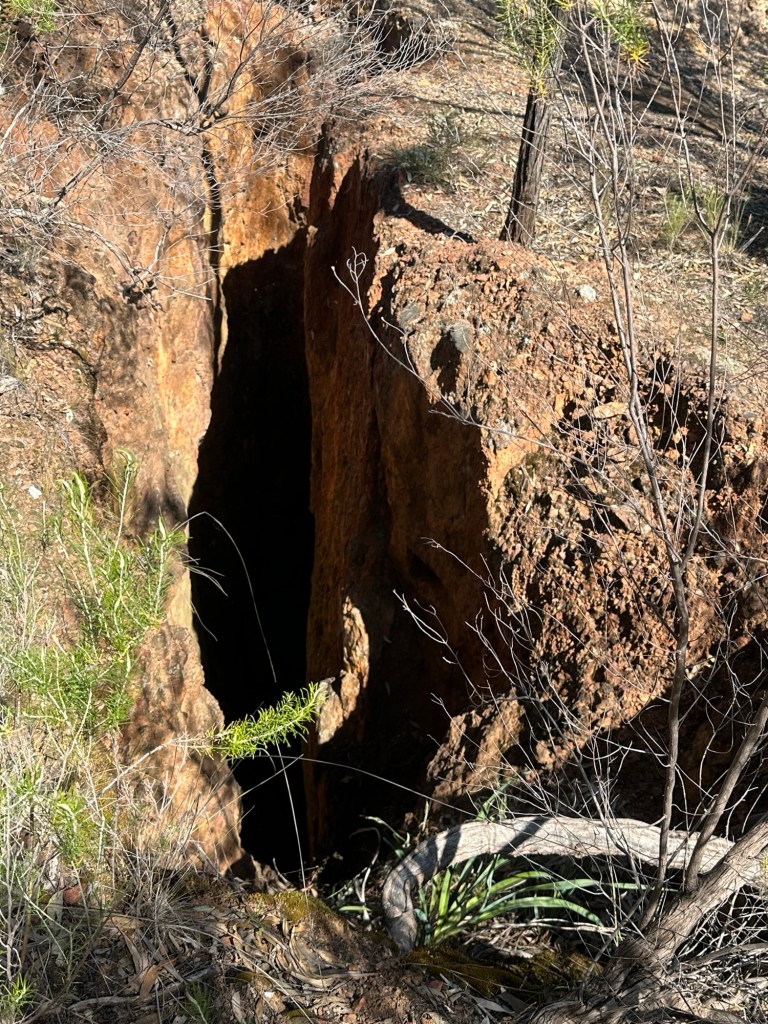
We did the walk up and over the hill and this walk goes by the five large open cuts as well as crossing over an area of deep mine shafts. Fortunately there’s a metal walkway over these as they looked very deep.

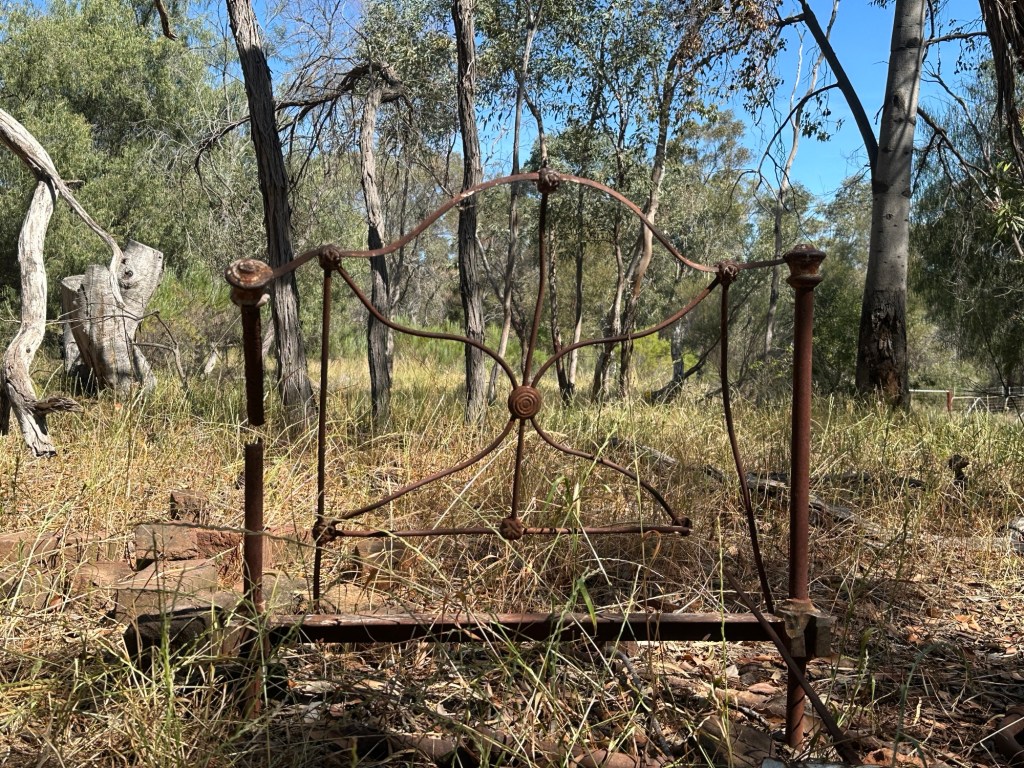
A sad sight was the remains of miner Paddy Nolan’s house. Not a lot left except some rusting metal, an old metal bed frame and a scattering of bricks from a chimney. Paddy and his wife, Norma raised 6 kids on the spot until Paddy’s death. The original house had a dirt floor and the original two rooms were added to by Paddy with a further two rooms, two sheds and a kitchen. The family had to carry water from the town and heated it over a wood fueled copper. Norma cooked in a camp oven over an open fire. Paddy was killed from a fall over the old open cut in 1969.

The walk around and over the hill took about 30 mins and was well worth the effort. We were glad we stopped to check it out.

About 18km north of Parkes is the tiny town of Tomingley. Just before you arrive the highway crosses over a mine road, part of the Tomingley Gold Project. This is a huge open cut and underground mining project that started in 2014 and has extended their operations to at least 2032. The project has yielded over 500,000 ounces of gold so far. With gold worth about $4,200 an ounce, that’s a lot of money!

Continuing northwards and finally arrived in Dubbo where we went directly to our cousins place and parked under a shady tree in their driveway. We enjoyed a lovely dinner with Richard and Robert enjoying sharing a 12 year old Coonawarra Cabernet Sauvignon. Richard says it was amazing. It was lovely to catch up with Robert and Fiona before heading off to bed.

Camped at Douglas’s

Off to somewhere we’ve never been!

Don’t you love going somewhere new? We do! We’d heard of this place but we’d never been there ourselves and we were looking forward to checking out a new camping spot.

So where were we going? Dunns Swamp in the Wollomi National Park, known as Ganguddy by the Dabee people of the Wiradjuri nation.

Dunns Swamp was formed when the Cudgegong River was dammed by the Kandos Weir in the 1920’s. The water was to supply the Kandos Cement Works. The town of Kandos grew to support the Cement Works which was constructed in 1914. For 97 years the Kandos Cement Works supplied cement for many major constructions such as the Sydney Opera House, the pylons of the Sydney Harbour Bridge, parts of the underground railway system and many office buildings in the CBD. The Kandos Cement Works finally closed in 2011.

Dunns Swamp is now a 5km long waterway and is a popular spot for kayaking, bush walking and camping.

Dunns Swamp

To get there takes a few days from home so it was on a cloudless, warm, sunny day we set off at lunchtime and headed up the Newell Highway towards Forbes, via West Wyalong.

I was just so pleased to be going somewhere in our beloved motorhome. It makes me cheerful just traveling along. I love how good the views are of the countryside when you sit up so high. We passed by vast fields of golden, almost ripe wheat, freshly baled hay and of course, lots of trucks. The Newell Highway is one of the major inland truck routes and is always busy with heavy transport.

On arrival in Forbes we went directly to the Tourist Centre only to find a lady in Tourist Centre uniform locking up the place and heading home. She did point out where we could get a welcome to Forbes bundle that they prepare for people who arrive out of hours so we grabbed one of those to read.

We drove to a camp spot we have stayed at many times over the years, Wheogo Park. This lovely park is on the banks of the man made Lake Forbes and is provided by the council as a ‘free camp’ for RV travellers. It has a 48 hour limit and a dump point and potable water are available. It is a short walk into the town and the Bowling Club is just across the lake. A walking track encircles the lake and it is often busy with joggers, cyclists, walkers and people walking their dogs.

Camped at Wheogo Park, Forbes


After setting up followed by a cuppa, we went for a wander along the path. Rich counted 17 RV’s camped for the night. The lake is a haven for water birds and we saw fish jumping. A couple of the sculptures from Sculptures Down the Lachlan are in the park and there are more scattered around town. We plan to ride our ebikes around in the morning to check those out and perhaps visit the Motor Museum.

We had previously followed the Lachlan River from Condobolin to Forbes to see all 13 of the sculptures along Lachlan Valley Way and there are another 12 in Forbes itself.

We crossed the lake and discovered that Griffith is not the only town with a ‘plane on a stick’. Forbes has one too!

On past the Public School and across the road we came to the ‘Bowlo’. A cold beer sounded like a good idea so we found our way to the bar and ordered a couple of schooners. There was no one in the bar and the funny barman said “I’m not sure where you’re going to sit” as though the place was packed!

Back at the motorhome I cooked up a delicious Chicken and Mushroom Rissotto and we ate sitting outside in the cool of the evening.

A busy mother bird

Dying to go camping!

Is there a word that means ‘it feels like so long since you went camping’? I was starting to feel that way. It was now August and we’d only been away in the motorhome for a couple of nights since April. I really don’t like to see her sitting under her carport and not being used.

Brother-in-law to the rescue. We received message from Richard’s brother, David to say that he and partner Anni were spending a few days camped at Oura Beach Reserve near Wagga Wagga. We jumped at the chance to join them. With a short window of 2 nights due to commitments with grandchildren we quickly readied the motorhome for the trip.

How do you leave your motorhome after a trip? Ours is cleaned thoroughly and packed again ready for the next trip. All we have to pack are our clothes, perishables and cold food. A quick check that the water tanks were full, wood bin was full of wood, clothes and food were packed and half an hour later we were ready to roll out the driveway.

It’s an easy 206km from home to Oura Beach Reserve via Wagga Wagga and we arrived around 4.30 in the late afternoon. What a great spot it is at Oura Beach Reserve. The reserve is right on the banks of the Murrumbidgee River and is a large area with plenty of flat grassy spots. There are BBQ shelters, fire pits, a toilet, good phone reception, generators are allowed and it is dog friendly. When the river is not too high there is a lovely big sandy beach to swim from, launch a boat or kayaks or enjoy a spot of fishing. You can find Oura Beach Reserve on Wikicamps and it is located about 20 minutes drive from Wagga Wagga.

Just something to be aware of when camping near the river, beware of the huge River Red Gums and avoid parking under them. Big branches from them fall and if one of those landed on your camp it could be a catastrophe.

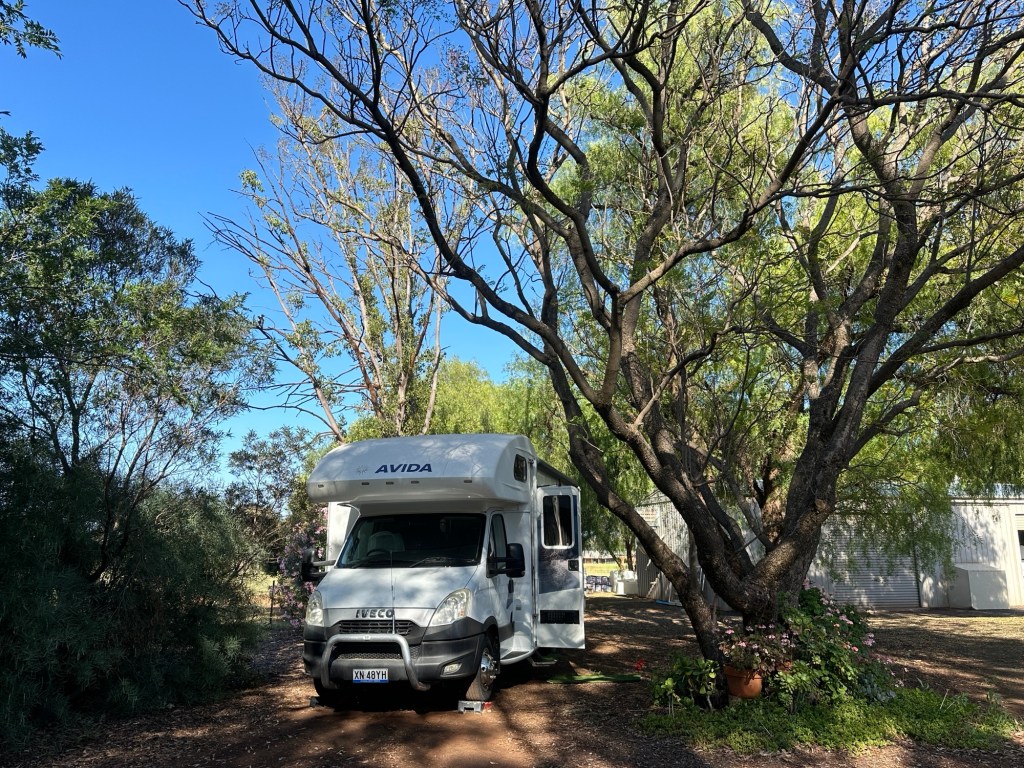
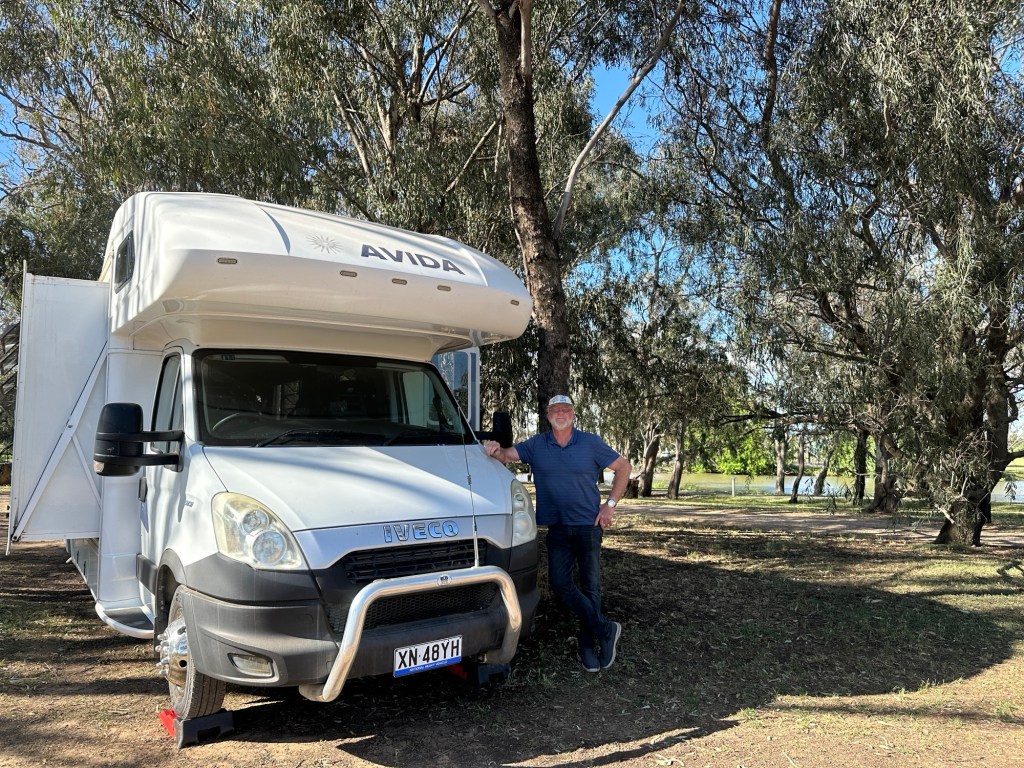
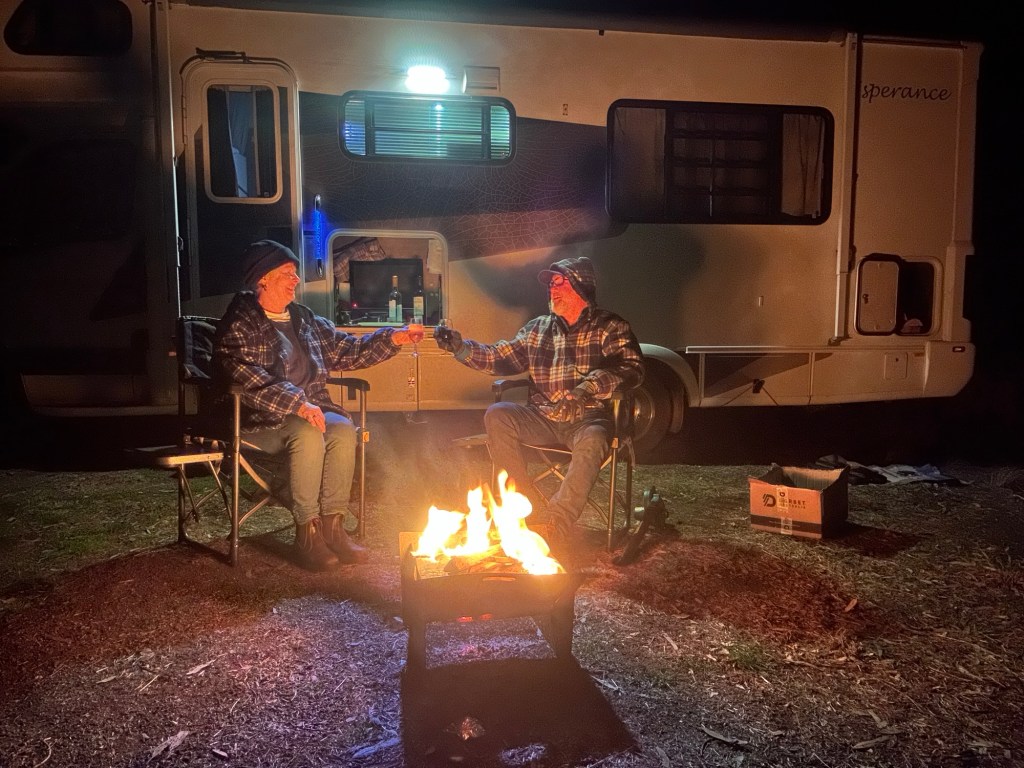
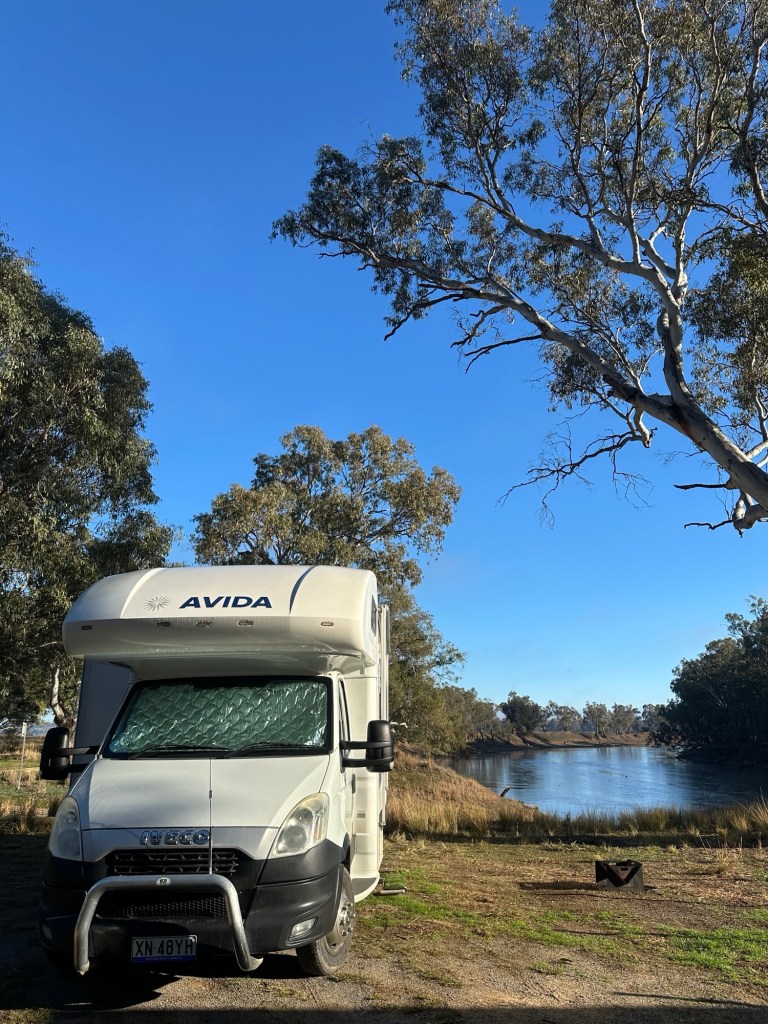
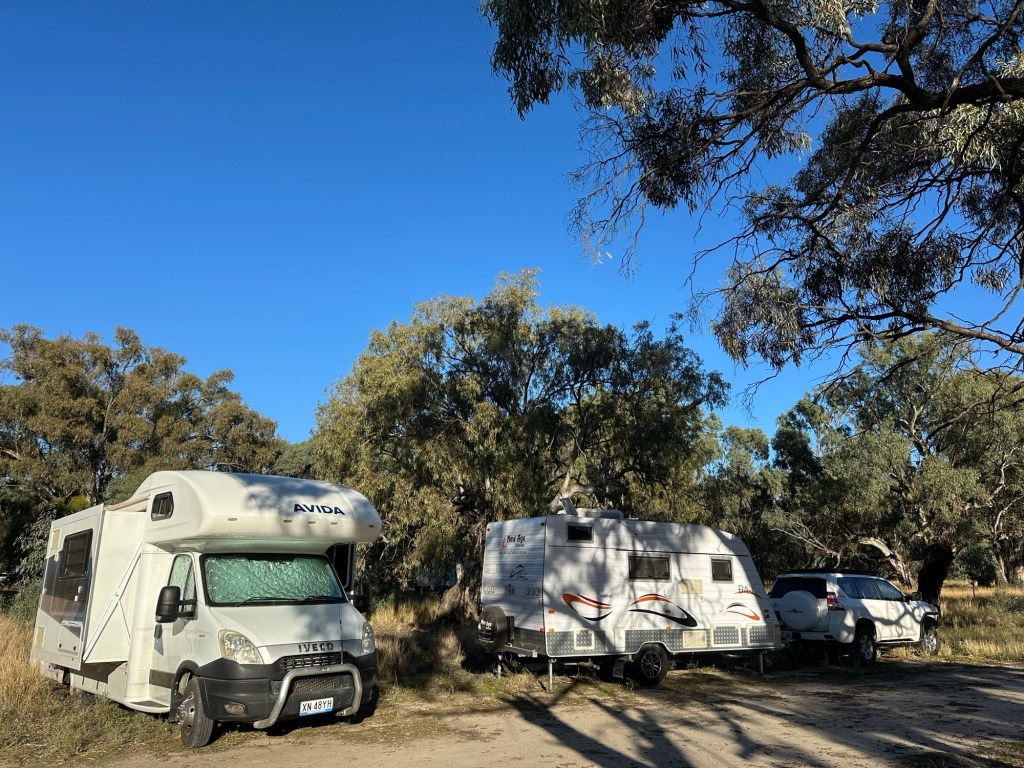
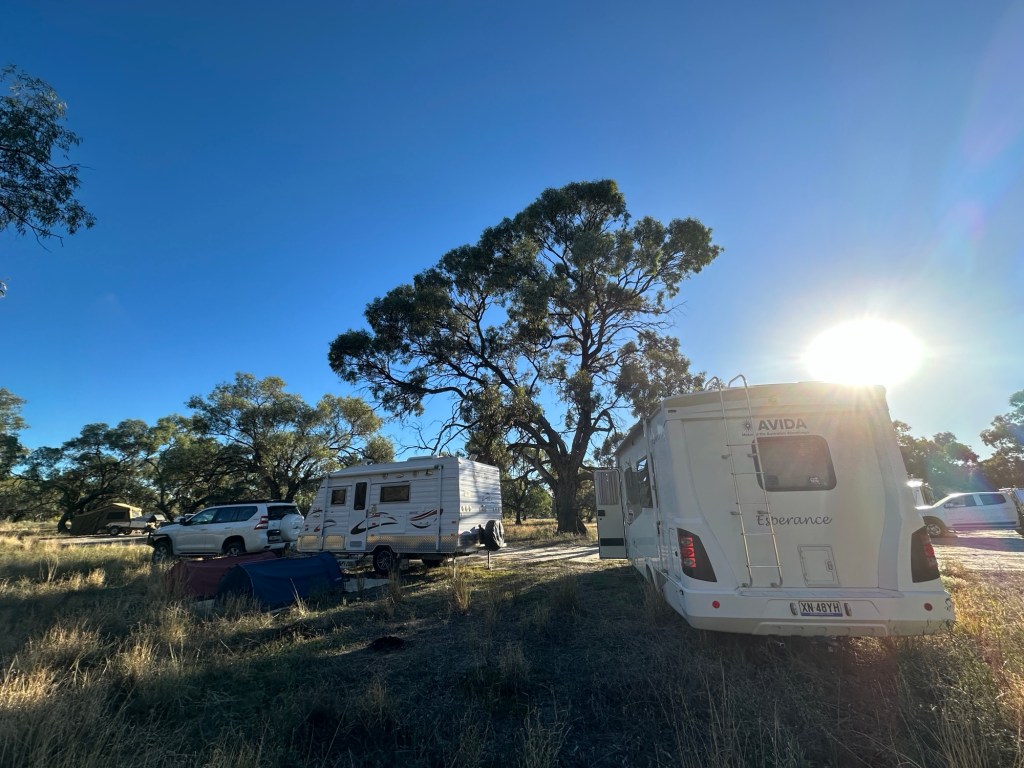
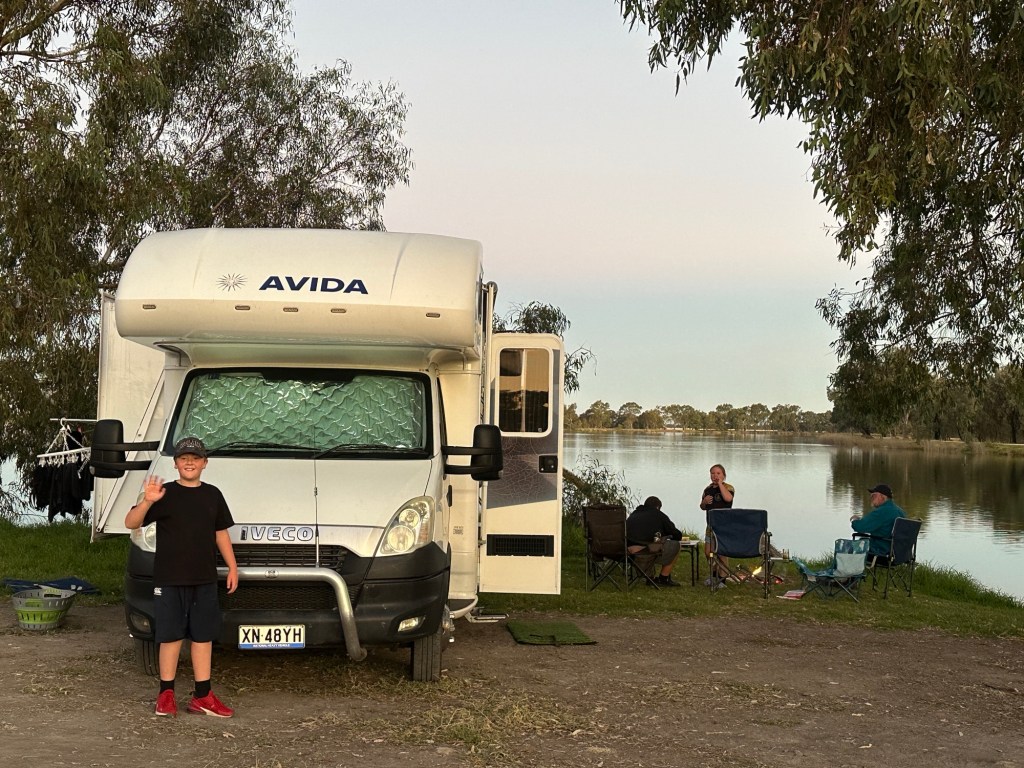
When we arrive David and Anni already had their Avida Esperance motorhome all set up, a fire going and Anni had prepared nibbles. We quickly set up our motorhome at 90 degrees to their camp and ten minutes later we were enjoying catching up around the fire.

David and Anni had recently purchased their 2014 Esperance and this was the first time they had ‘free camped’. What a learning curve that is. We’ve had our motorhome now for 8 years and have had some amazing adventures in it. We especially love free camping and finding those great spots away from the crowds. We are not fans of being squashed into a caravan park although we have stayed in some great ones and have even put up with being squashed into a busy park just so we could visit an attraction in the area.

But free camping is a learned thing! You don’t know what you don’t know!

We have discovered that the most important thing when free camping is battery management. We have AGM batteries in the motorhome and we have learnt how to manage them ensuring that our battery levels remain over 50% at all times. This is not easy to learn and we made lots of mistakes. Learning which lights and appliances draw what amount of power is the first thing. We quickly discovered that the strip lighting in our motorhome, whilst it looks lovely at night, draws a lot of power so we don’t use them at all. In fact I have taped up that switch so no one accidentally puts them on. I charge our devices during the day when our solar panels are charging the batteries. I use our washing machine powered by our inverter only when it is a sunny day. We turn off our diesel heater at night when we go to bed and turn it back on, if necessary, in the morning.
Of course, as newbies, David and Anni don’t know any of these and ran out of power overnight. David uses a CPap machine and had it on all night. This flattened the batteries and the next morning he had to start the truck to put some charge back in. There are Cpap machines that have low wattage and he will investigate those further.

The second important thing to learn when free camping is managing your water. It depends on how much water storage you have to how many days you can free camp for. It also depends greatly on how thrifty you are with water usage. We have 180 litres of water storage and can safely manage that for a week before we need to fill up. That means having very quick showers, minimising water use for cooking and washing up and not using the washing machine. We have often done a load of washing whilst filling up with water. One load of washing uses 20L of water in our little top loader. As we were only going to be a couple of nights we could have long luxurious showers without the fear of running out.

The third important lesson was how many days can your toilet cassette last. We’ve found that ours needs to be emptied every 3-4 days so we bought a second cassette and keep that for times when we are camped in such a great spot we don’t want to leave just because the cassette is full. Many campers have now changed to composting toilets and these can last for many weeks before needing to be emptied.

The next day David, Anni and I headed into Wagga to go to the dump point, fill up with water and go to Bunnings and Anaconda. Upon arrival at Wilks Park to use the dump point we discovered that the only hose they had was a 50m hose and we had no large fitting for the water tap, only a small one. Of course the potable water tap needed a large fitting. Oh well, add it to the list of shopping at Bunnings.

David emptied the cassette and the next stop was Bunnings. The Bunnings store in Wagga is a very large one. I can spend hours in there! We ended up with a new short hose, a variety of hose fittings to fit a variety of taps, a Makita blower and vacuum cleaner with a spare battery. A quick stop then to Anaconda where we picked up an extra large Muk Mat and a couple of large de-flappers for the awning.

What a great shopping trip! Then it was back to the Dump Point to fill up with potable water using the new short hose and large tap fitting.

Back at camp we found Rich had a relaxing morning reading a book and tending the fire. We all spent the rest of the day relaxing around the fire and chatting.

It rained a little during the night and I love the sound of the rain on the roof when you are warm and snug in bed.

The next morning it was time to pack up and head for home after a delightful couple of nights. It was great to spend a couple of days with David and Anni and help them get to know their motorhome capabilities. I’m sure we will have many more camping adventures with them in the future.

Pair of wallies with their blowers

Well, what a day!

I suppose everyone has a day like we had but it’s how you deal with it that matters. With everything that went wrong it could have been a very stressful day but I’m glad to say neither of us got flustered or upset and we both just calmly went about seeing what we could do to fix things and we laughed a lot.

Camped at Oura Beach Reserve near Wagga Wagga, NSW

Firstly, while camped at the lovely Oura Beach Reserve near Wagga Wagga in NSW, our power in the motorhome went out completely. It happened at night while I was inside preparing dinner. In a blink all the power went off, even the electronic monitor board went dark. After pressing the on/off button it came back on however the battery level was reading only 11. Oh no!

The last time that happened it meant new batteries. We turned off everything that could be turned off and managed to get through the night however the next morning we had to start the truck to be able to turn on the water pump to have showers.

So a stop at Battery World in Wagga was our first one for the next day. On the way back into Wagga the EDC error light came on the dash accompanied by a beep. Oh no! What now? This had never happened to our trusty Iveco 50c18 before.

We pulled over and made a call to Total Ag in Wagga as they are the Iveco dealers but no servicemen were at work….it was Saturday! So I called our usual mechanic in Griffith and discussed it with him. He determined that it is possibly dirty fuel or the fuel filter needs replacing but assured us it was OK to keep driving. It was disconcerting driving with an error light but we did what we were told and continued into Wagga.

After explaining to the auto electrician at Battery World what had happened it was decided to replace the batteries and we were fortunate that he had time to do it immediately. So two new house batteries all connected up and $830 poorer we set off again. We checked for the last time we had replaced the house batteries and it was exactly 4 years ago to the month and the ones prior to that were exactly 4 years to the month before that. It seems like 4 years is about all we can expect.

We replaced our batteries with two 120AH AGM batteries that have a 2 year warranty and were able to get back on the road in a very short time.

We decided we’d better head for home so we can book the motorhome in for a service to clear the EDC error so set off towards Narrandera. The motorhome was in limp mode and went OK until we came to a hill and then there was just no power and our speed dropped off. Oh well! We just went along slowly, which we do most of the time anyway.

We usually source our camp spots via WikiCamps, GeoWiki or word of mouth and on the way decided to check out Berembed Weir. Neither of us could remember ever going there and it plays a significant role in the irrigation area we live in. Berembed Weir is where the water of the Murrumbidgee is diverted into Bundidgerry Creek that eventually becomes the Main Canal that services the entire Murrumbidgee Irrigation Area. We live in the MIA so were interested to see this engineering marvel that supplies water for our very productive local area.

The turnoff from the Sturt Highway is at the village of Galore and is a good tar road for a while before becoming a reasonable gravel one. We passed the sign for Pipers Reserve but kept going towards the weir. You come to a T intersection. Left is towards Narrandera and right is to the weir. The good gravel road became a track alongside the river and it was quite muddy. It looked like a grader had been through recently.

We continued to follow the narrow track through the giant river red gums until we reached the weir. It is an impressive concrete structure and we could see the entrance into Bundidgerry Creek on the other side of the river. There wasn’t really anywhere that we felt safe to camp as there were too many of those big gums all around. We have a healthy respect for the ‘widow makers’ and never camp under one.

I’d been thinking along the way how bad things often happen in threes and we’d already had two things go wrong so far. What was the third thing going to be or were we going to beat the odds?

Back at the beginning of the track was a small clearing that looked like a possible spot to camp but as Rich was manoeuvring into place the drivers side rear wheels dropped into a muddy hole. Oh no! We were bogged. There was our number three!

Rich tried going back and forwards but each time the motorhome almost got out then the tyres would slip on the mud. I had the bright idea to use one of our chocks to provide a bit of grip and that worked a treat. Just that bit of grip was enough to get us out of the hole. Now we had a chock full of mud….a clean up job to do when we got home.

Getting bogged helped change our mind about staying at Berembed Weir and we set off towards Narrandera in the fading light and made it to Buckingbong Reserve. The reserve is just off the road and has a tar road all the way in to the boat ramp. There is a toilet, bin, and a large shade shelter with picnic tables and a fire place. A sign says Narrandera Fishing Club maintain the reserve and they do a great job.

We had a peaceful night camped by the bend in the river and we were the only campers. It was an uneventful drive home the next morning. Now to get everything fixed!
Day 10 – On our way home

What a gorgeous morning we woke to after the wild, windy night at Sandy Point in Hay. It was very still and there wasn’t a cloud in the sky. It was a cool 12 degrees and the forecast was for five sunny days in a row.

As we always do at the end of a trip we talked about the things we liked and didn’t like. I have to say I loved the whole trip. Visiting Echuca Historic Wharf is always a treat. Doing the gold mine tour at Central Deborah Mine in Bendigo was a trip highlight. Driving through the lovely Victorian goldfields towns of Castlemaine and Daylesford is always a pleasure.

Our three days in Ballarat were very wet as it rained and rained but we still managed to pack in a few things such as a couple of lovely drives around the city, spent all day at Soveriegn Hill, and we did a visit to the Ballarat Wildlife Park.

A little unexpected delight was our stop at the Cyril Callister Museum in Beaufort. Cyril invented Vegemite and Kraft Cheddar Cheese.

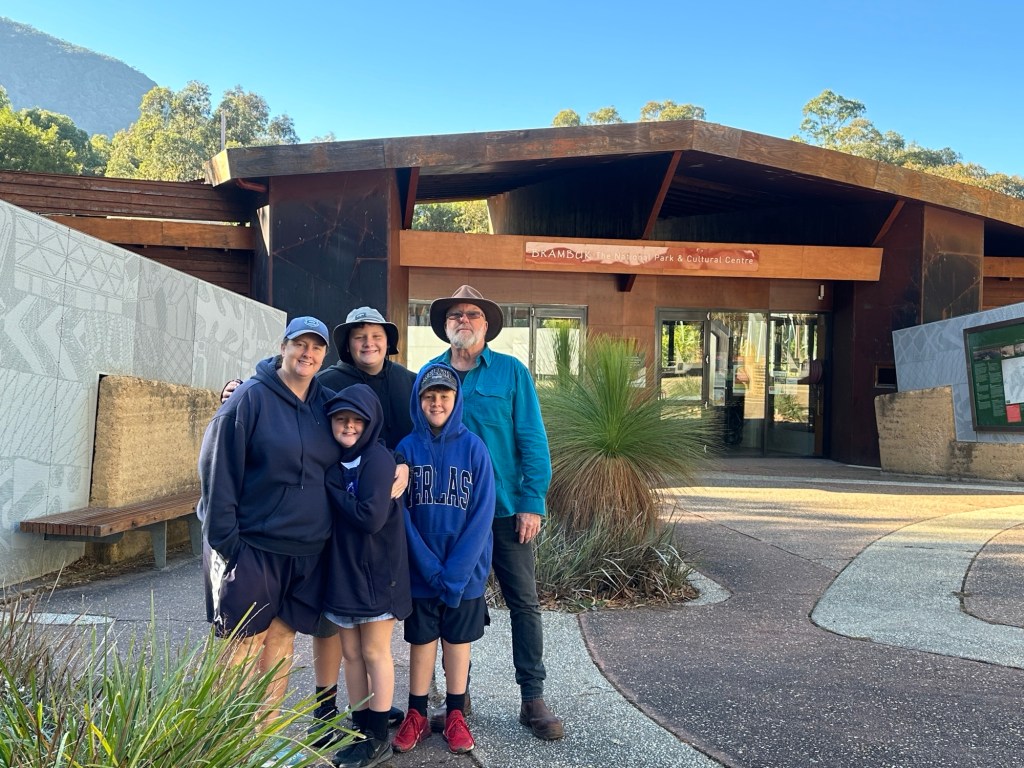
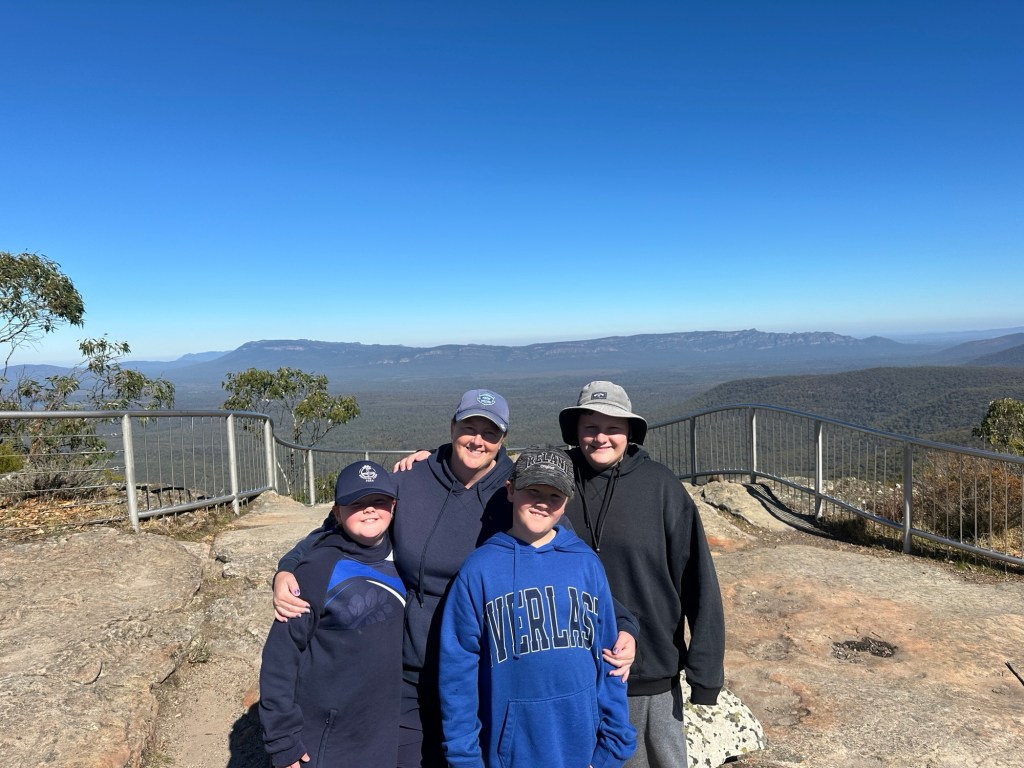
My highlight was our fabulous stay at The Grampians. Our camp at Old Man Emu Camp was perfect. The Grampians are stunning and we were all quite proud of our hiking to The Pinnacle. It was pretty hard going at times but we all made it to the top and back. Mind you, the hips have been protesting ever since!

Another unexpected delight was finding Tchum Lake to camp at. What a gorgeous little spot. I love finding these special places. Pa thought Tchum Lake was one of the best donation camps we’ve found. Green grass, a camp fire, on the edge of a lovely lake. What’s not to love?

Over breakfast I asked the children what they liked and didn’t like. All of them didn’t like the camp at Ballarat in the NRMA Holiday Park. Our site was a grass one and seeing it rained for 3 days it was very muddy. All of them prefer free camping.

Ben’s favourite was The Grampians. He loved it there especially The Pinnacle walk.

Maddie’s favourite was The Grampians, Ballarat and Sovereign Hill.

Riley’s favourite was Sovereign Hill and The Grampians.

Katie’s favourite was panning for gold after our mine tour at Central Deborah Mine in Bendigo. It was exciting finding flecks of gold.

Now to get home, unpack, clean the motorhome and start planning where we are going next.

Day 9 – Tchum Lake to Swan Hill and on to Hay

What a gorgeous camp spot is Tchum Lake. We really enjoyed our camp there. I cooked up a huge breakfast for everyone of eggs (fried or scrambled), bacon, hash browns & toast. It was a feast. We didn’t get going until after 10. It had been a lovely sleep-in camped at the lake.

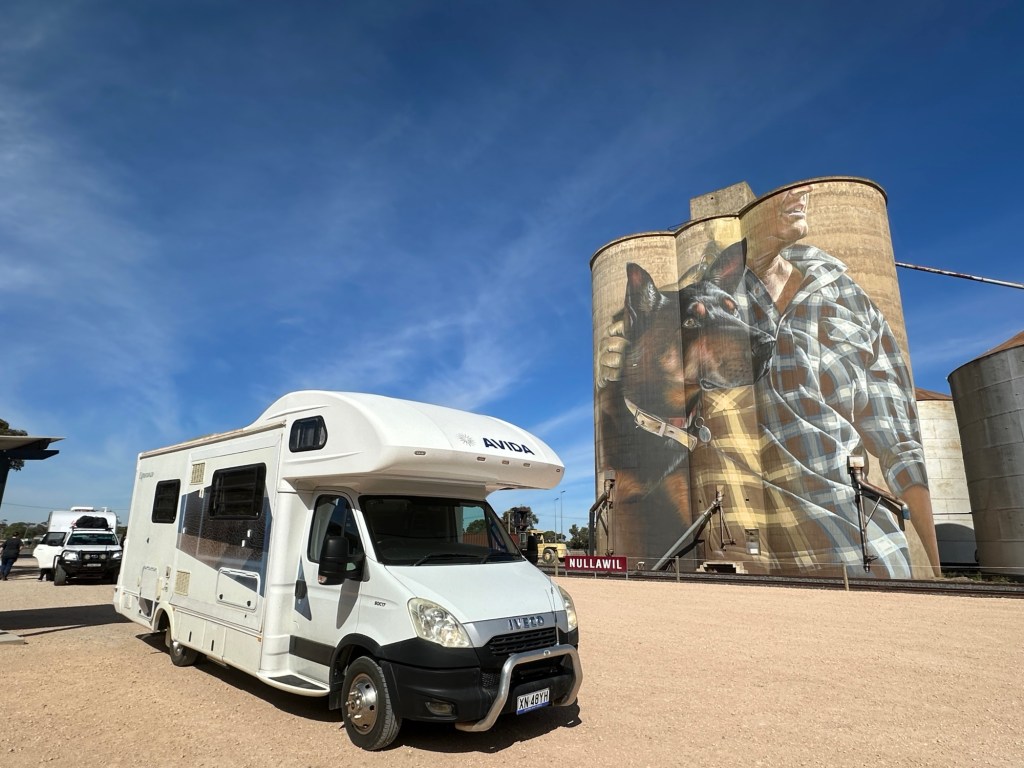
At Nullawil we stopped to check out the amazing silo art of the farmer and Jimmy the kelpie. Stunning

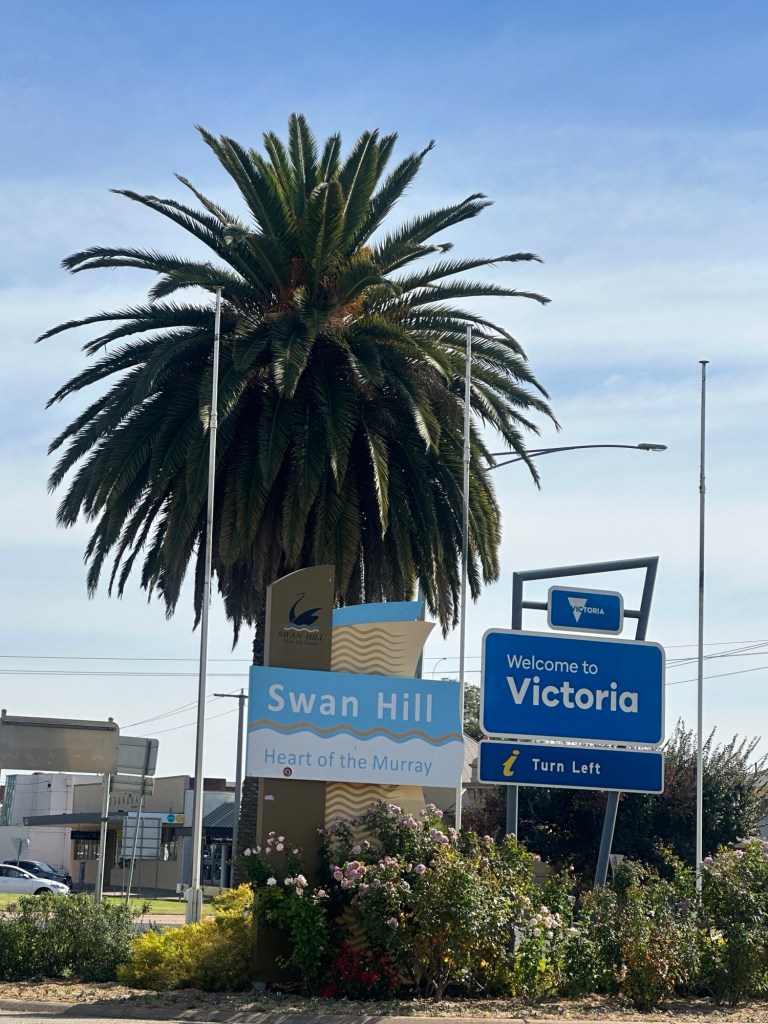
When we arrived in Swan Hill we went directly to the Showground to use their dump point however we could not find a water tap anywhere. We asked a couple of fellas and they said the only one was the one at the dump point. Not thanks! I’m not putting that hose anywhere near our tanks. They did think there was a tap in town where the parking for caravans is so we thought we’d give that a try.

The parking for caravans in in the same street as the Tourist Centre and next to the railway station. It is conveniently behind the Main Street and opposite an Aldi. There was a big coach parked already so we lined up next to it and quickly got the hose out to fill our tanks. Job quickly done!

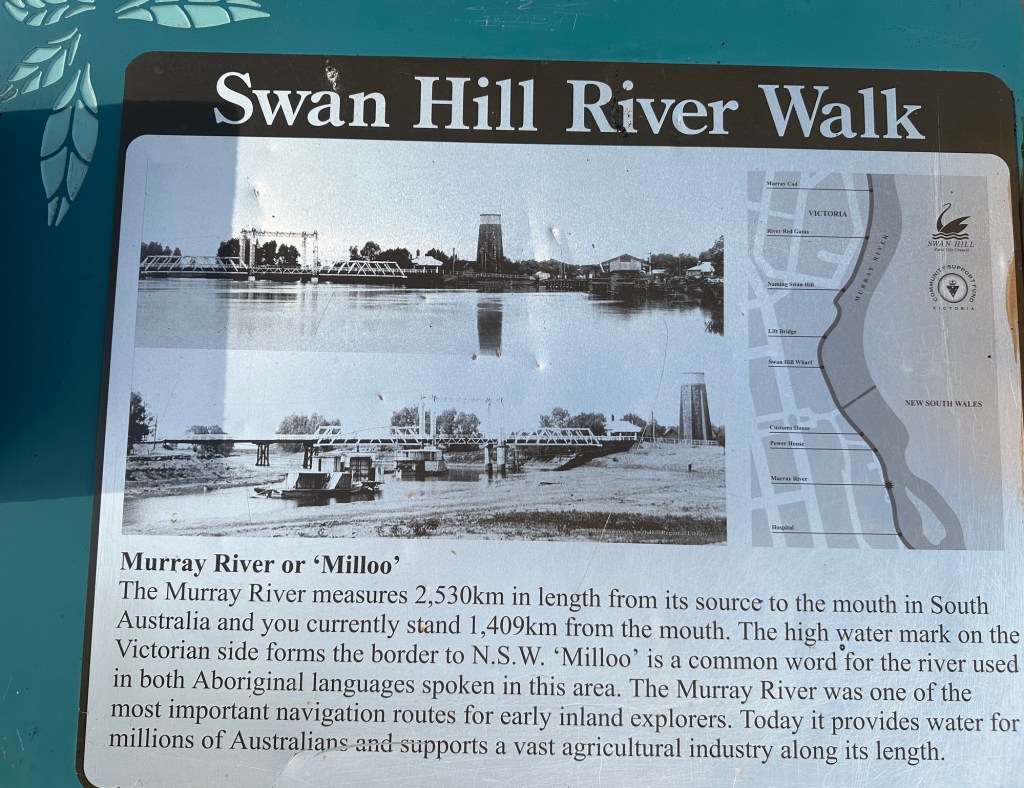
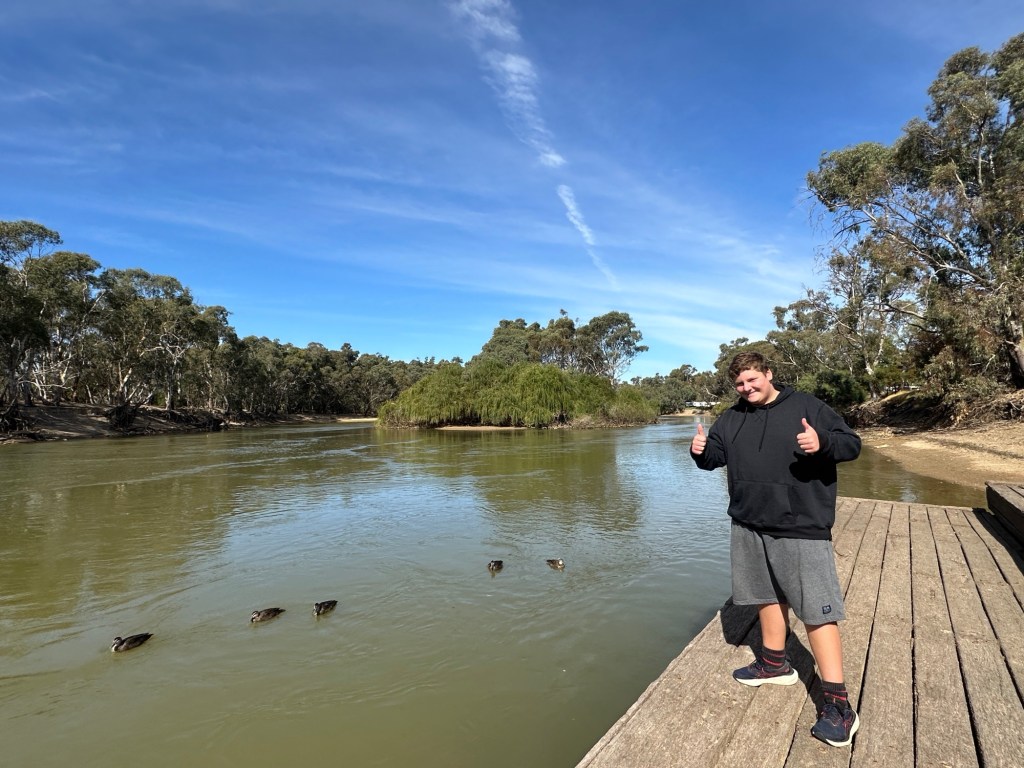
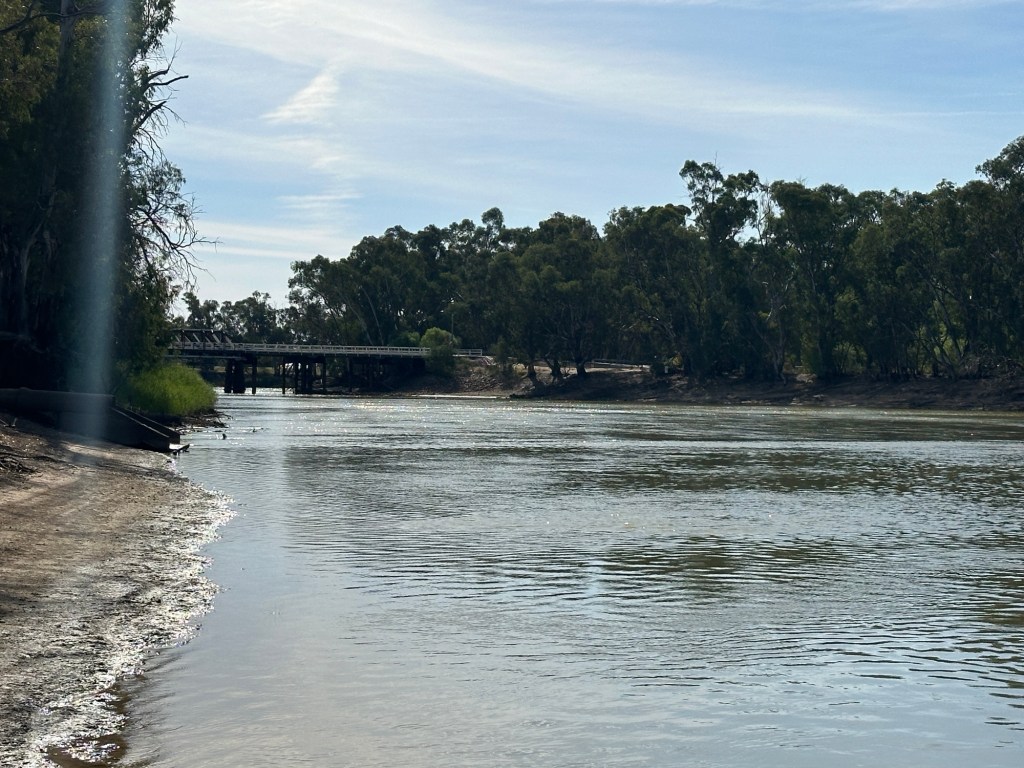
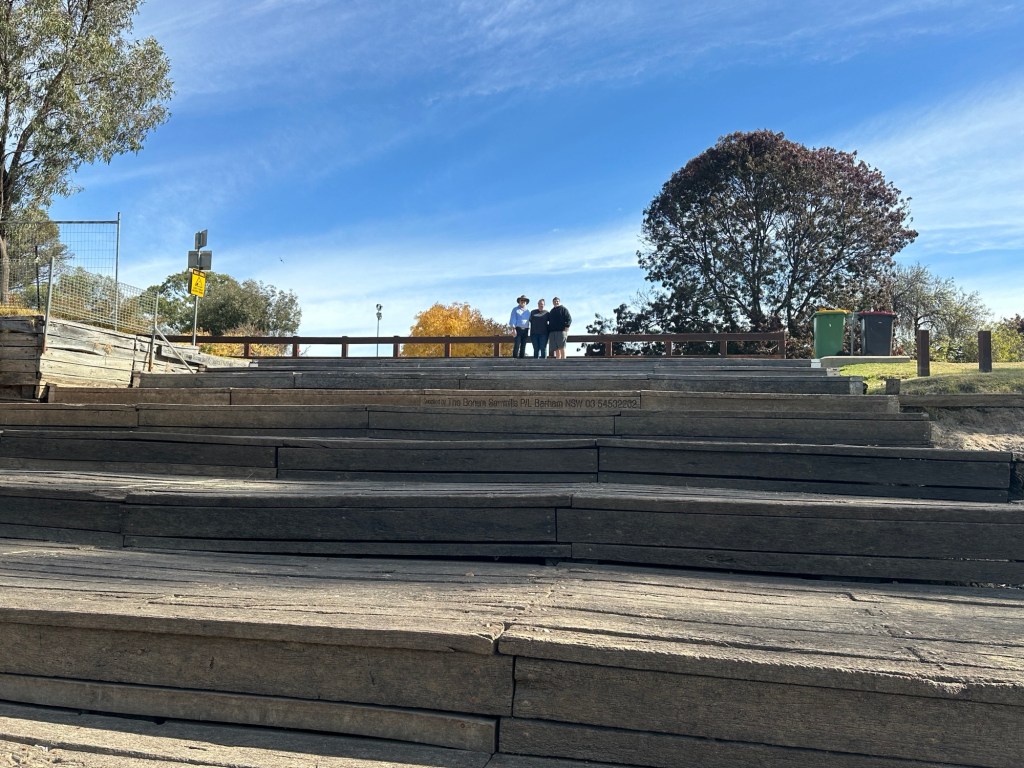
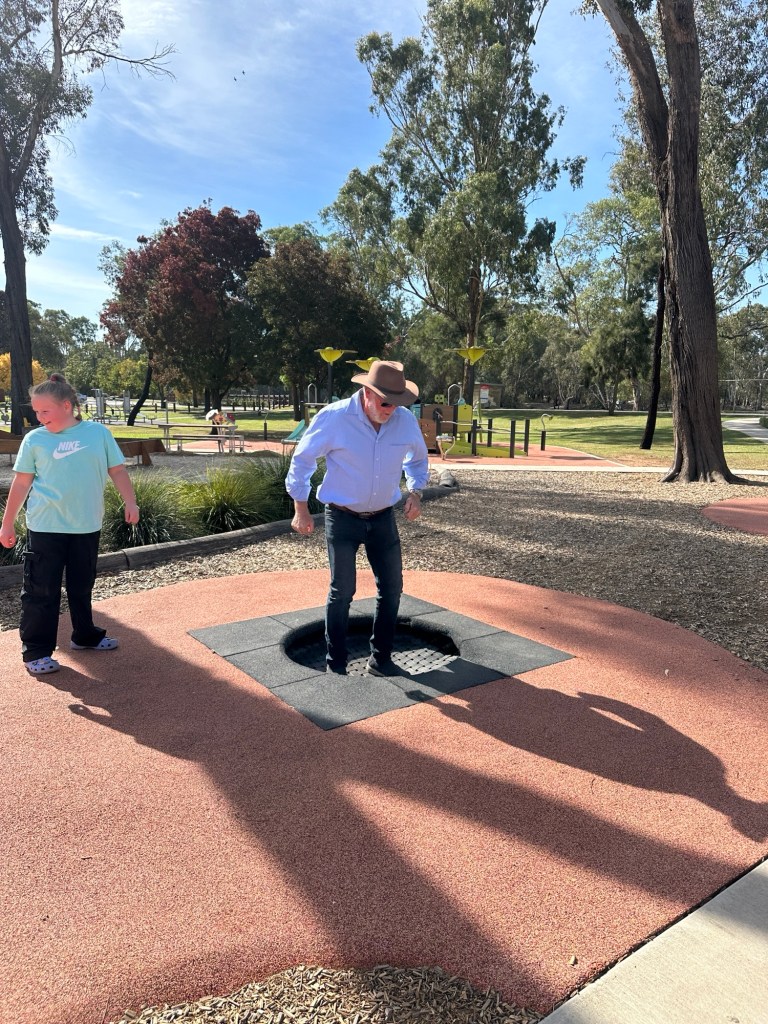
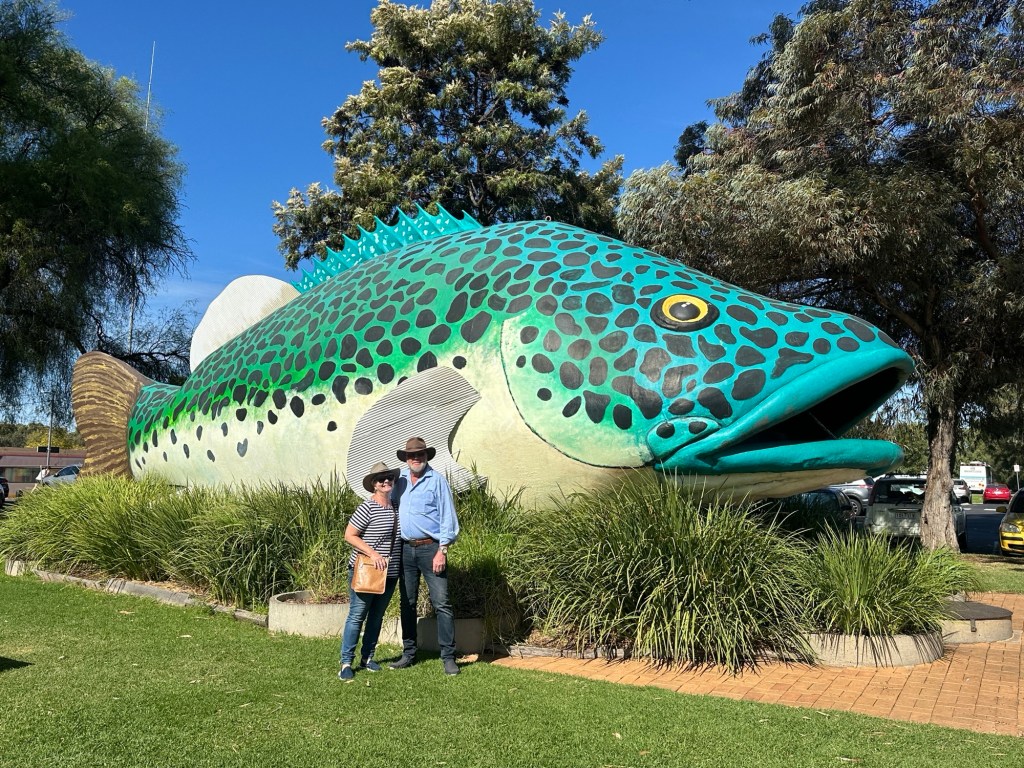
We visited the Tourist Centre, went for a walk along the Riverwalk, Ben and Maddie had a play in the playground, Pa even had a jump on a mini tramp, Riley and I climbed down the huge steps used by the Swan Hill Rowing Club to launch their boats, admired the Big Murray Cod and wandered back to our RV’s.

After a quick sandwich we decided to push on and see if we could make it to Hay then we wouldn’t have so far to go the next day.

We passed through the historic town of Moulamein in the middle of the afternoon and I was surprised to see a sign saying Moulamein is the oldest town in the Riverina. When you think of all the big towns there are in the Riverina today and once there was just Moulamein. The little town is situated on the Edward River and as we crossed the bridge we could see the water level was good.

Traveling along in the sunny afternoon and we really had left any mountains way behind us. The countryside around Moulamein is very flat with lots of salt bush in the huge paddocks on either side of the road.

The Moulamein/Maude Road eventually met up with the Sturt Highway and we turned eastwards towards Hay. The countryside along that stretch is not only flat but also devoid of trees with the occasional huge turkeys nest dam that would supply irrigation to the paddocks below. A lot of cotton is grown around Hay now and, at harvest time, you can see tufts of cotton along the roadside looking a bit like snow.

The Hay plains on the Sturt Highway

We arrived at Hay around 5.15pm and drove directly to Sandy Hollow to find a camp spot. Sandy Hollow is a huge free camp provided by the town of Hay for the travelling community. It is situated on a large bend of the Murrumbidgee River and there are toilets, BBQ’s, picnic shelters and usually a sandy beach. However there was not a lot of beach as the water level was very high. There’s a walking/cycling track to town and near the entrance is the town skate park.

We’ve camped at Sandy Point before a few times and we were surprised to see how many were already camped. Must have been at least 50 RV’s of all types. We found a spot where our two rigs could fit and quickly set up camp. For our last dinner on this trip I cooked up chicken schnitzels, mash, mixed veggies and gravy. Judging by the quiet that set in once people had served themselves I’m pretty sure it was enjoyed by all. Maddie did an excellent job being the wiper upper after dinner.

Katie and the kids retired to their van to play card and us old folk headed to bed.

What a wild old night it was! I was sound asleep at midnight when our fridge started beeping. Oh no! Why does it always run out of gas in the middle of the night? That bloody Murphy! So up to go outside to change the gas bottle over. I noticed then that the wind had really picked up and rushed back to our warm bed.
For the next couple of hours the wind really blew. I thought it sounded like waves crashing on a beach. It was blowing so hard the motorhome shook. Ben said the next morning he thought his swag was going to blow away. It must have died down because we all went back to sleep and woke to a beautiful, still, sunny morning.
It was time for our last breakfast on the road then head for home.
Day 8 – Farewell to The Grampians

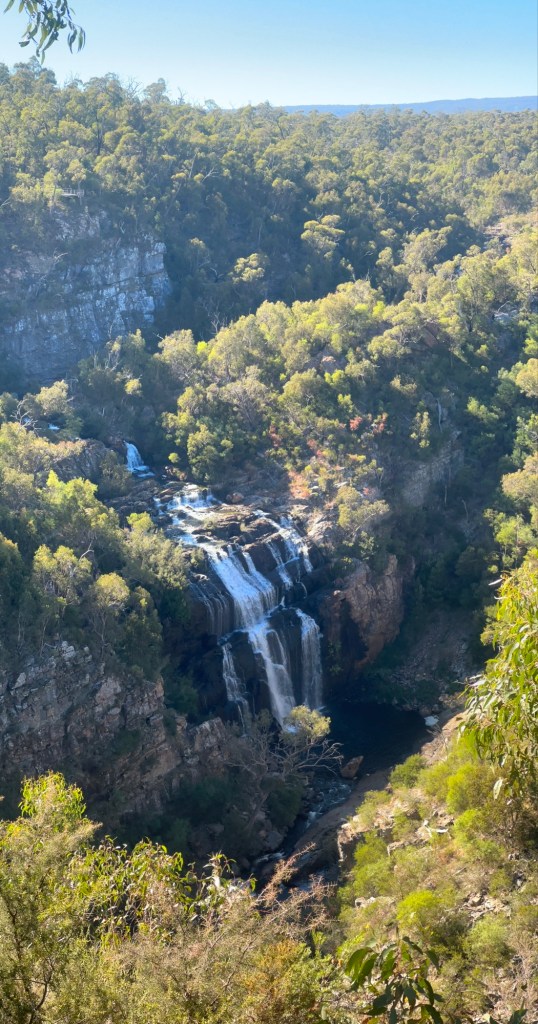
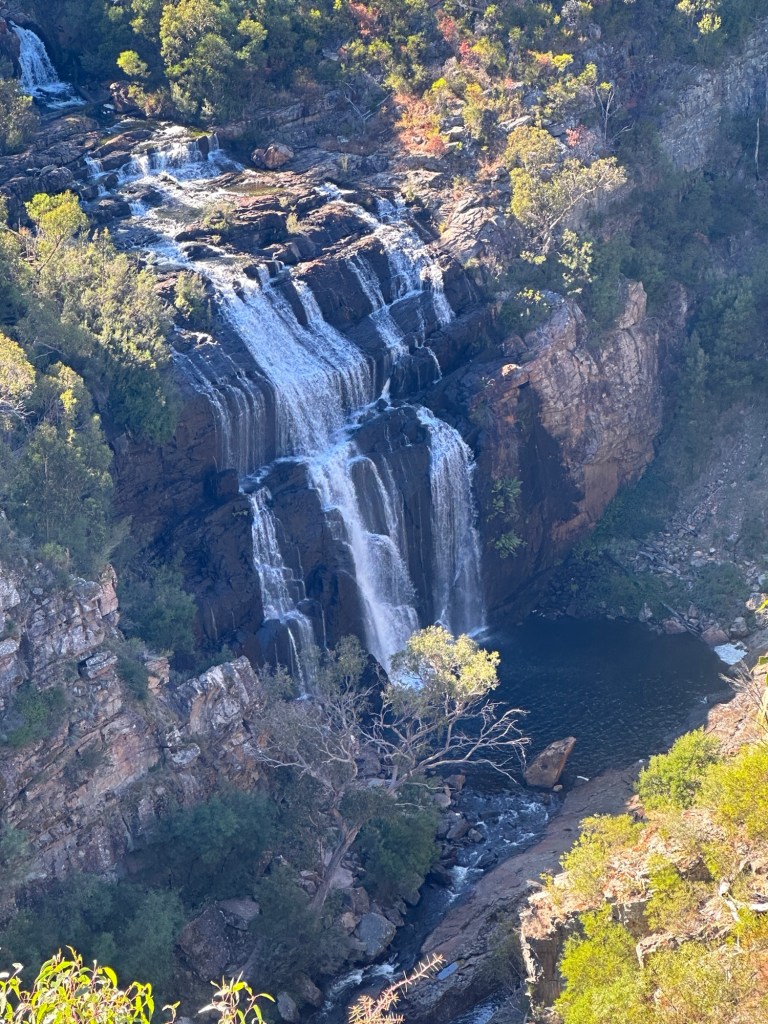
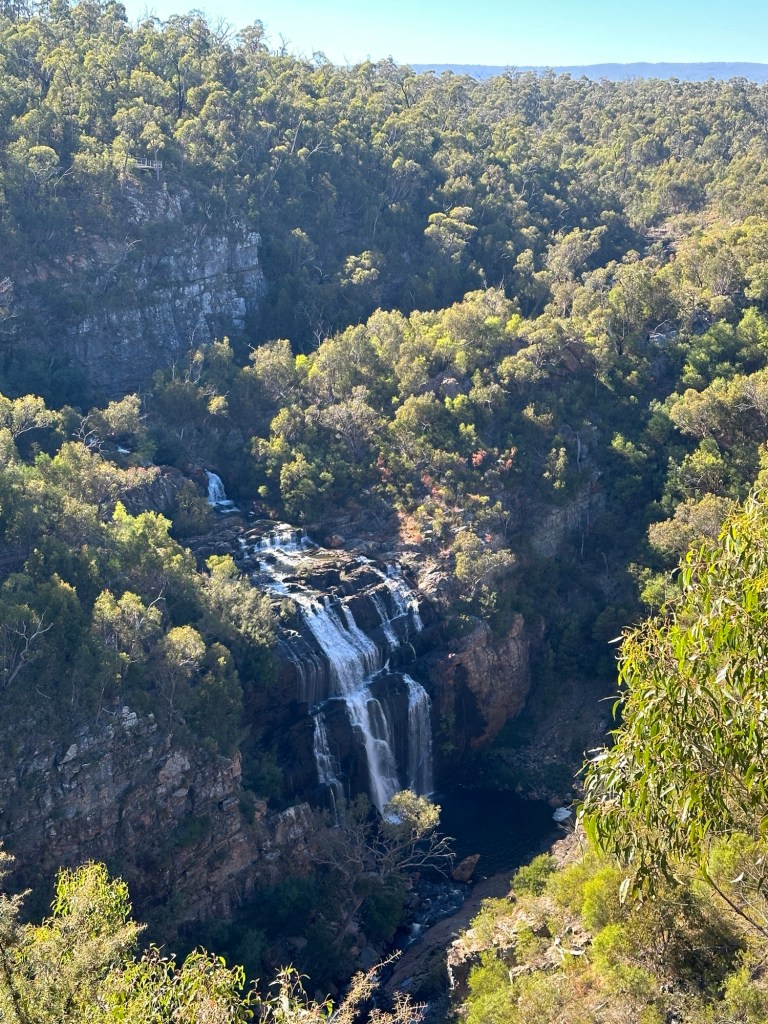
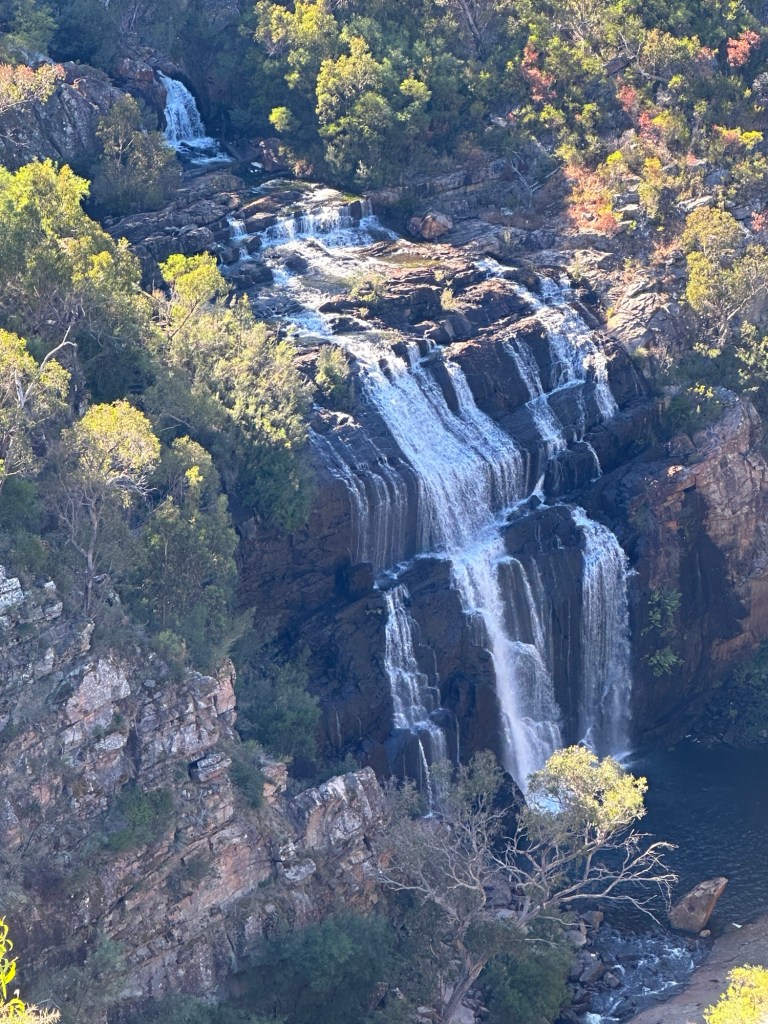
Before saying farewell to the beautiful Grampians we all piled in the Prado and drove to McKenzie Falls Lookout. Wow. It was worth it. They are quite spectacular. I can only imagine what they’d be like after winter with more volume of water flowing over the rocks.

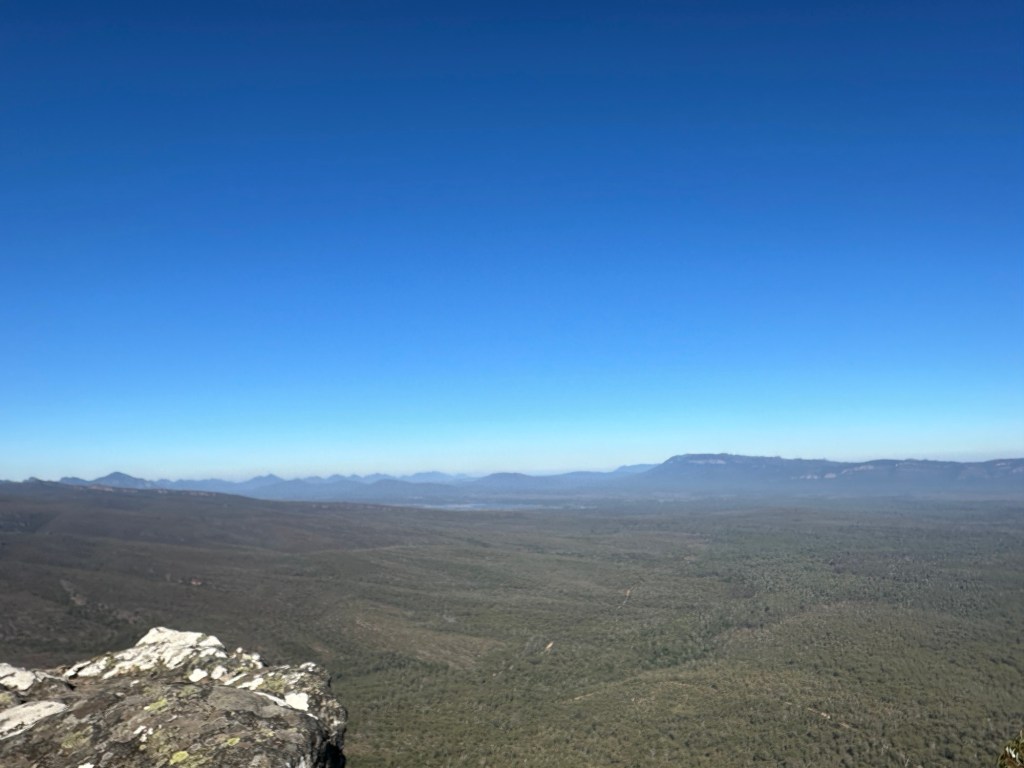
We also stopped off at Reeds Lookout for another wow vista across the mountains. Sadly Boroka Lookout was closed due to controlled burning going on. That burning also contributed to the smoke haze about. Glad it wasn’t there the day before when we climbed The Pinnacle.

We all declared that a couple more days would have been good so we had the time to explore further. Oh well. Another place to come back to one day.

Back at Old Man Emu Camp we very quickly packed up camp and headed towards Stawell. Stawell is famous for its annual running race called the Stawell Gift. There’s even a Stawell Gift Hall of Fame & Musuem. Pretty sure my great-grandfather ran in the Gift.

We stopped off in Stawell to use the dump point and fill up with water. It was the first time we’ve come across a dump point on the side of the main road. Oh well at least they have one AND there was a potable water tap a few metres along.

We had a short stop next to a grassy reserve for lunch. I cooked up toasties for everyone. The kids just hoover a toastie!

Over lunch we decided to push on to Lake Boga however along the way I made a phone call to Lake Boga Caravan Park who now manage the unpowered camping on the other side of the lake as well as the Big4 park. I made the call because I’d read on WikiCamps reviews that the price had gone up significantly. They were correct. It is now $7.50 per person now for a patch of grass to camp on with no facilities at all. What a rip off! Katies would have to pay $30 for her family. All the caravan park do for the area is mow it occasionally.

I started to look for alternatives and found a spot near Birchip that looked and sounded good. It had great reviews too.

We made our way to Tchum Lake which seems to appear in the middle of nowhere and what a lovely spot. There is a small Campgound with power & water sites and an amenities block however you can drive all the way around the lake and find yourself a spot for the fabulous price of $10 per vehicle per night. Perfect! What a credit to the shire. There’s an honesty box to pay your fees and we made sure we did that before we left the next morning.

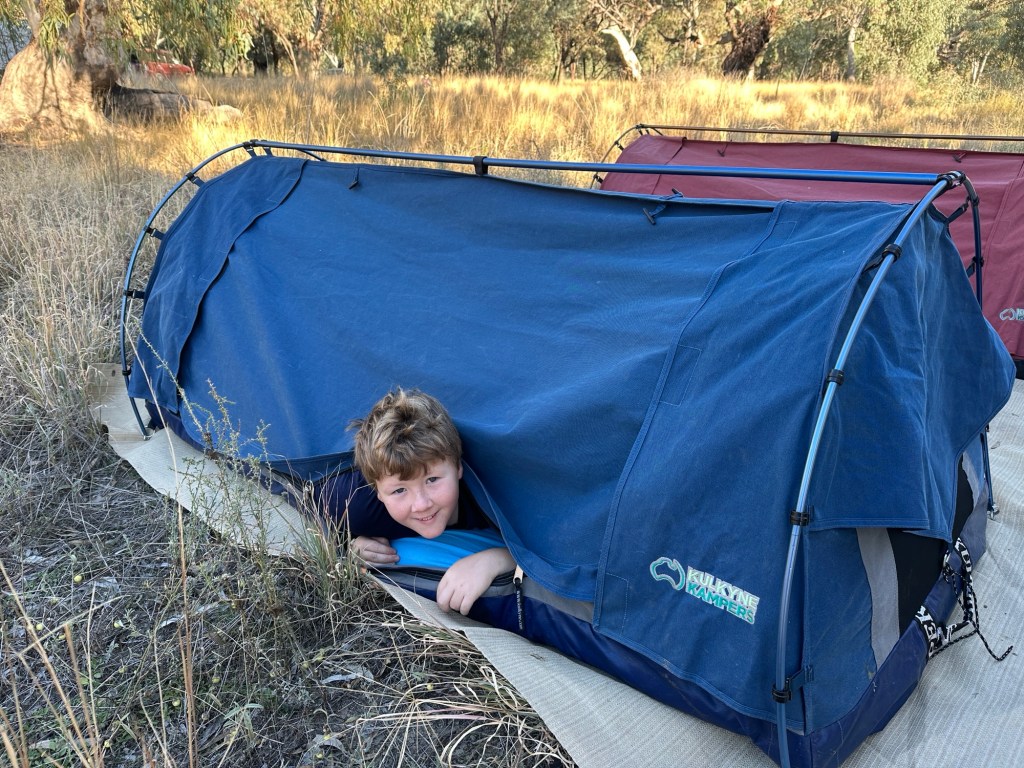
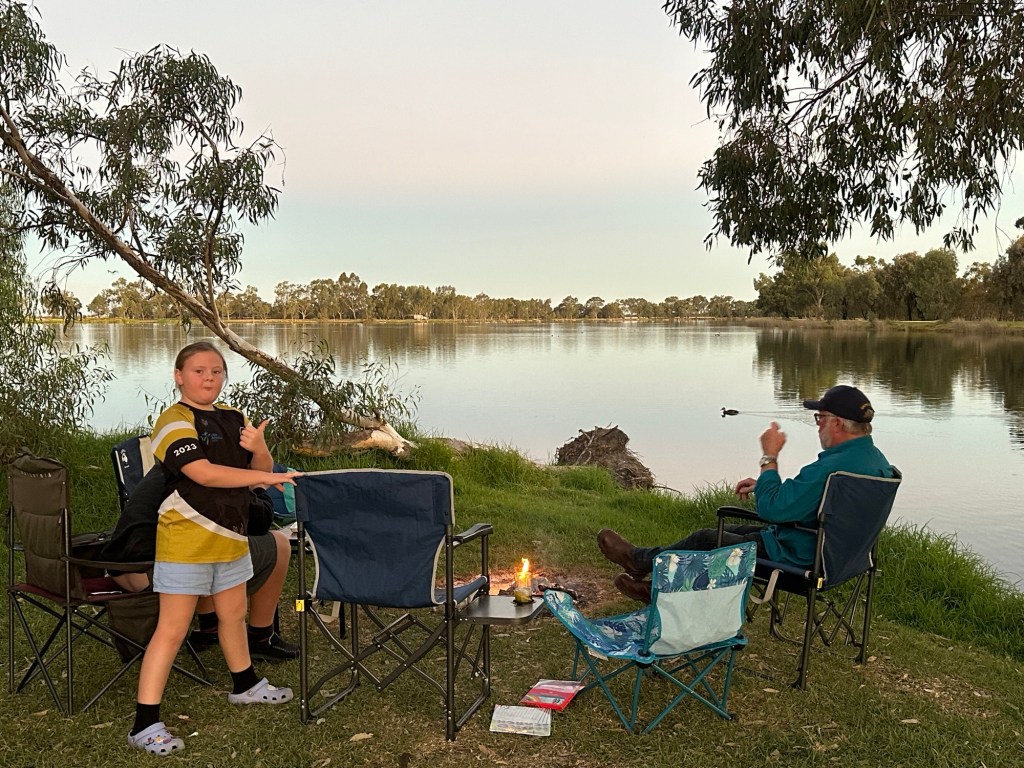
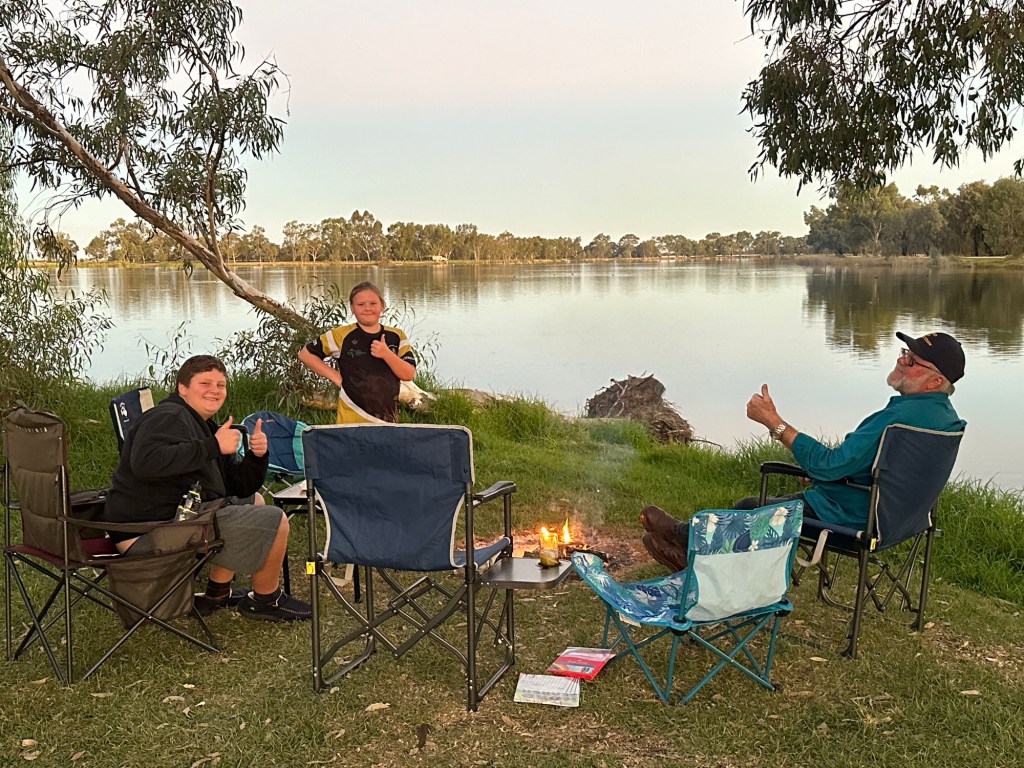
We set up camp with our two rigs, the boys quickly set up their swags, Pa got a little fire going and we had drinks and nibbles by the side of the lake watching the sun go down. Ahhh the serenity!