I was excited to get up and ready to visit Cruden Farm on a lovely overcast and gloomy Sunday morning. I wasn’t going to let a little rain stop me from ticking off this bucket list activity.
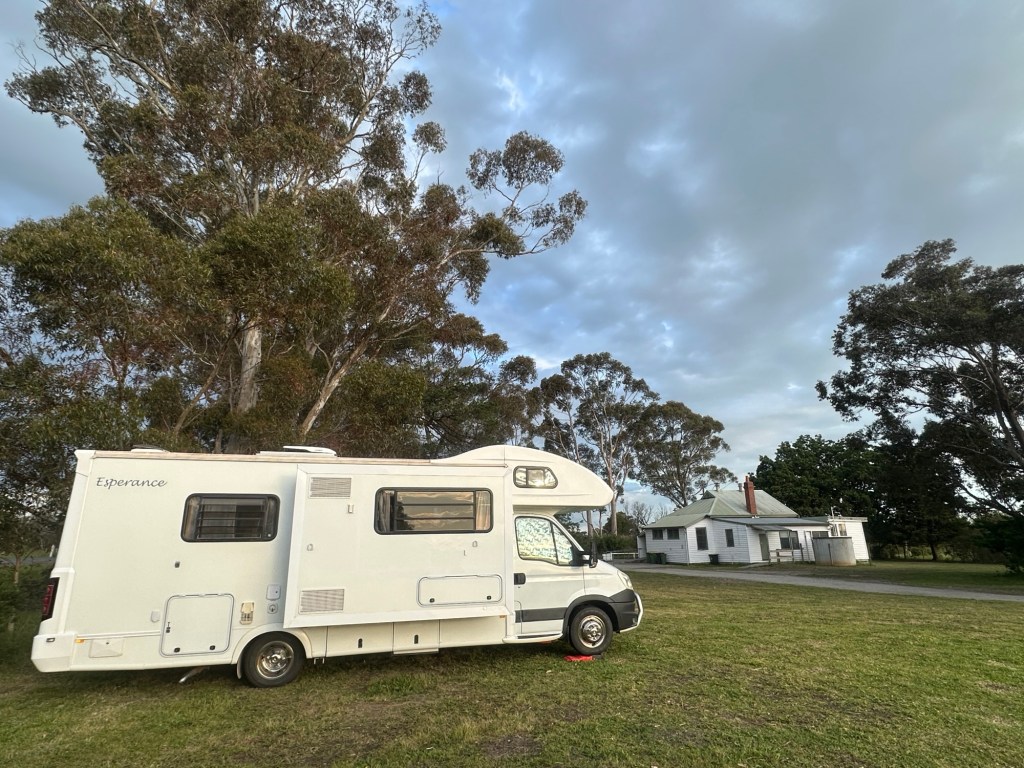
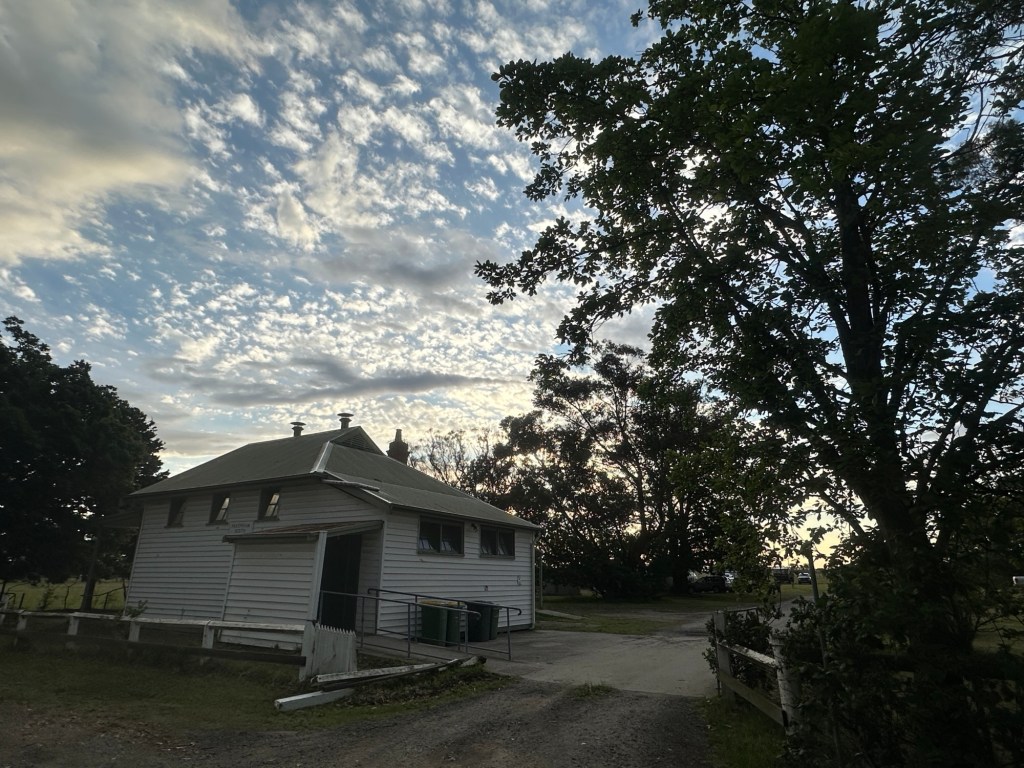
We’d had a great night’s sleep at our camp at Pakenham South Hall, a donation camp surrounded by farmland in every direction. We made sure to put our $10 donation in a zip lock bag with a thank you note and poked it under the back door of the hall. I did suggest that they attach a secure donation box to the wall as I wasn’t very comfortable just poking ours under the door but hey, that’s their instructions.


We packed up and set off back towards Frankston. Cruden Farm is located at Langwarrin inland from Frankston on the Mornington Peninsula. It only took us 40 minutes to drive to Cruden Farm with a brief stop at a bakery for some fresh bread.
We arrived to find the gate open already and a couple of cars parked. We found a spot to park where we thought we wouldn’t get parked in by cars if it became really busy later in the day.


We’d booked the guided tour so after checking in and receiving our garden map we had a short wait for our guide. We lucked in with our tour as we had Daniel Johnson, the Executive Director of Cruden Farm and Head Gardener Lewis Barratt, who has come to work at Cruden all the way from Kew Gardens in London.
Daniel is very passionate about the work they do at Cruden Farm and excited about all the plans they have for its future as a premier event space. Daniel brings that expertise with him from his previous position at Coombe in the Yarra Valley. Coombe was once the home of Australia’s most famous opera singer, Dame Nellie Melba, and it is now recognised as one of Victoria’s premier event venues. I remember passing Coombe as we came down via the Yarra Valley. It’s a bit hard to miss as the property is surrounded by huge, very tall hedges atop a brick fence. They are very impressive. I wish I’d managed to get a photo as we went past.
Having Head Gardener Lewis guide our tour was great as he has such a wealth of garden and plant knowledge and was happy to answer questions.
We began the tour at the side of the main house after entering the gates near The Gatehouse. Our first views of the garden were across the huge expanse of very green lawn that is home to the sunken lawn tennis court. White benches sit around the top of the green mounds surrounding the tennis court below so spectators can sit and watch the action.


Cruden Farm was a 1928 wedding gift to the 19 year old Elisabeth Greene from her husband Keith Murdoch. She lived there until her death at 103 years old in 2012. Michael Morrison was Head Gardener for over 40 years and between them they developed the 20 acres of garden we see now.
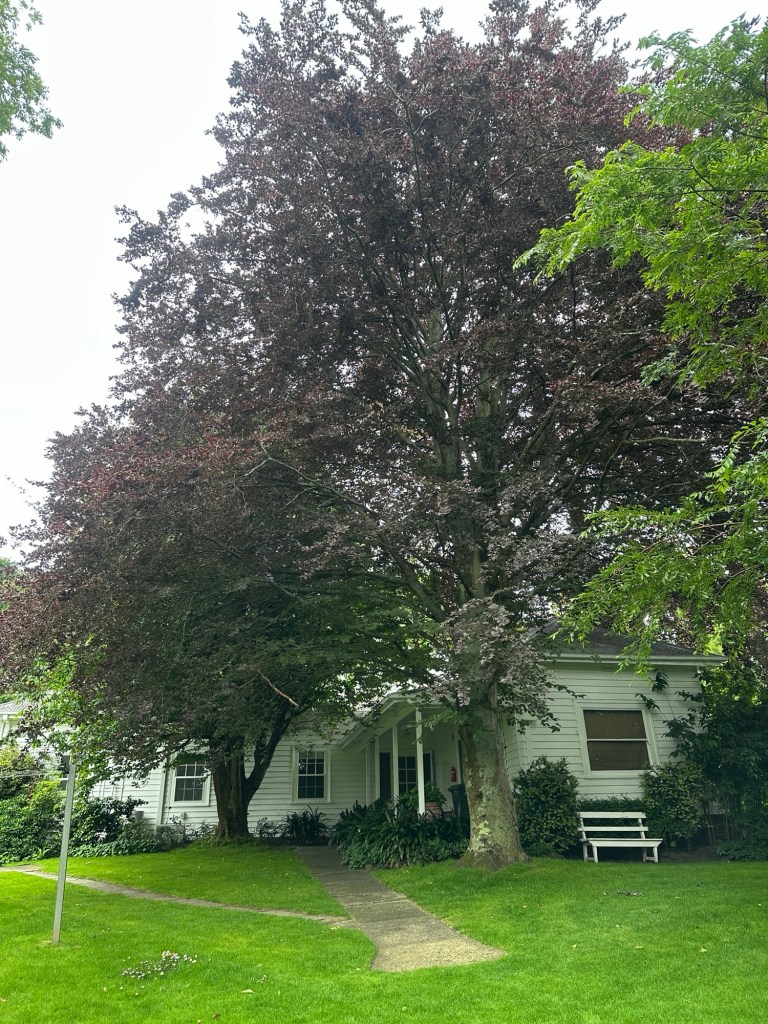
The house was once a simple unassuming farm cottage however while Keith and Elisabeth travelled overseas in 1929, Keith commissioned eminent architect Harold Desbrowe-Annear to enlarge the house. A three story addition was done and while it has retained the white weatherboard of the original farm house, huge columns have been added to the front facade, a bit like the Southern style in the US. The house would feel quite at home on a sugar plantation. When she returned Elisabeth didn’t like the renovations and spent years trying to plant trees to hide it.
The front driveway is lined with 130 lemon scented gum trees that Keith and Elisabeth planted in 1930. They were part of the Edna Walling plans for the garden. Edna Walling was considered to be the best garden designer of her day. She also designed the round lawn in front of the house and the low stone walls at the end of the driveway.

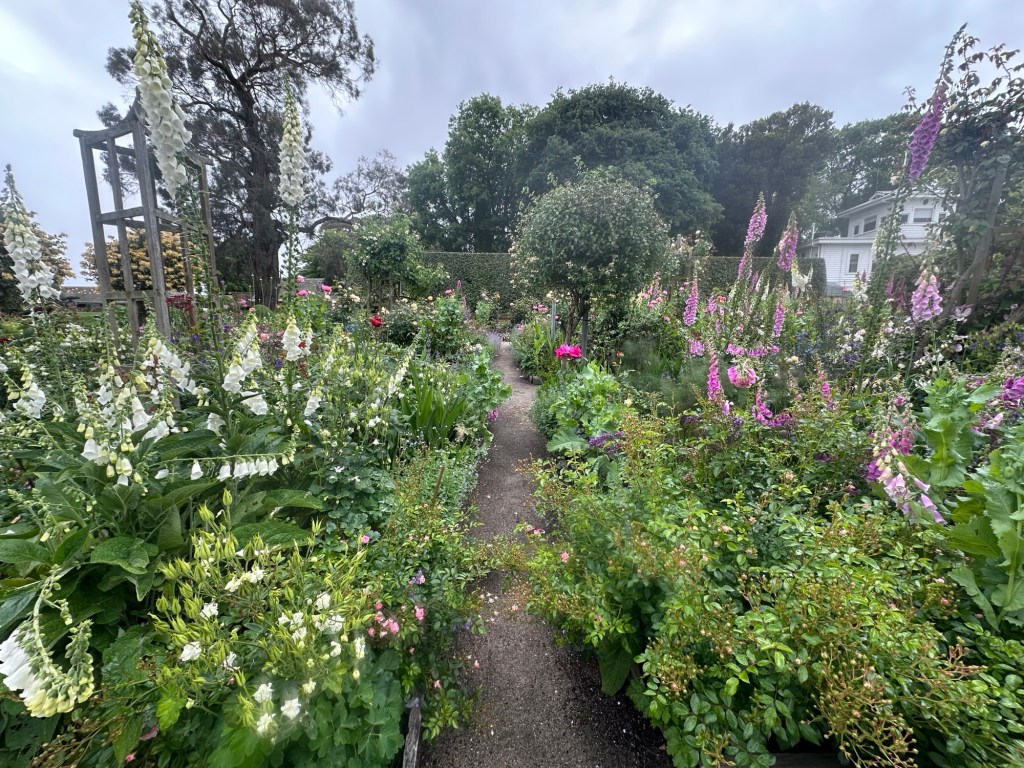
We continued our tour in a clockwise direction down past a delightful rose garden. Lewis explained that some of the roses are such old varieties that they have still not been able to identify some of them. The oval shaped rose garden is also full of perennial plants including spectacular tall foxgloves.


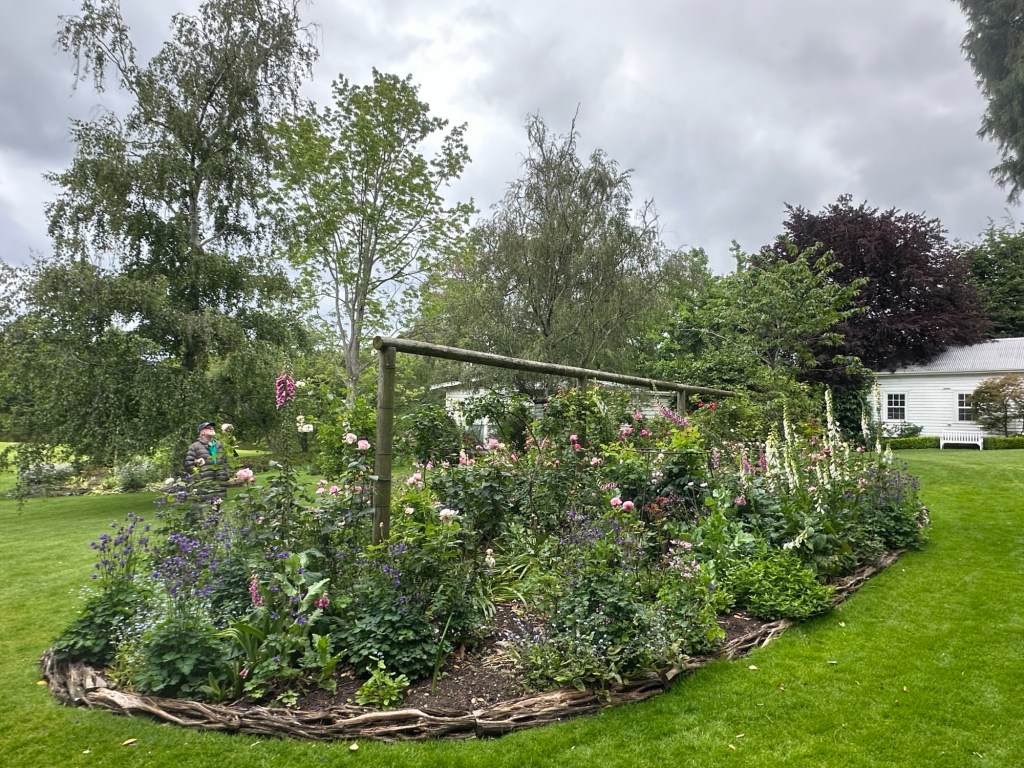

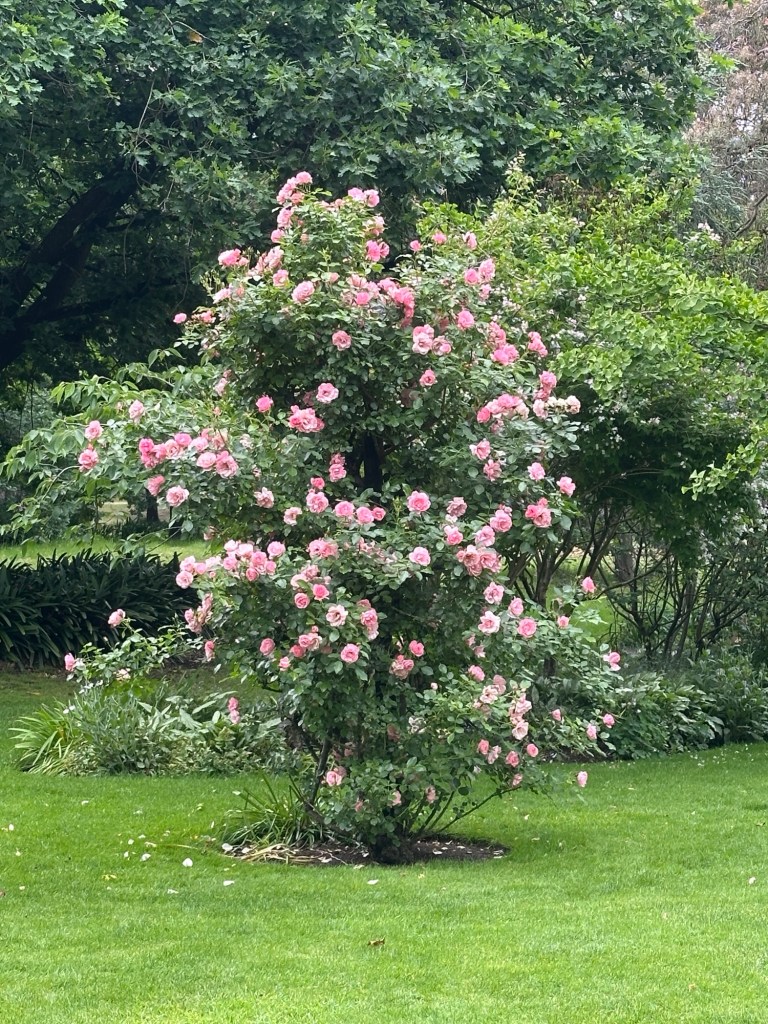

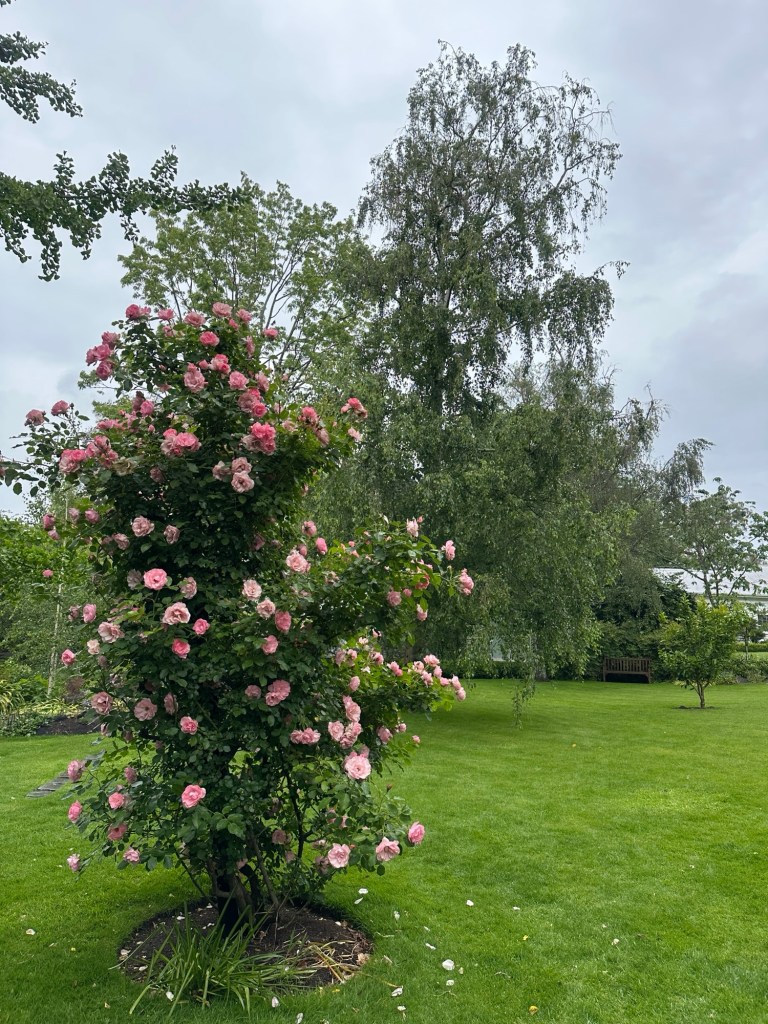
As we moved around the garden Daniel and Lewis told little anecdotes about Dame Elisabeth. Daniel had actually met her a few times. One little story I enjoyed was the garden bed behind The Gatehouse. Over the years many people gave Dame Elisabeth a plant for her garden as a thank you or gift. Dame Elisabeth wasn’t always sure whether she liked it or not, or where she would put it so they all got planted in the one garden bed until she decided on the plants future. Some are still there so it’s assumed she didn’t really like those!
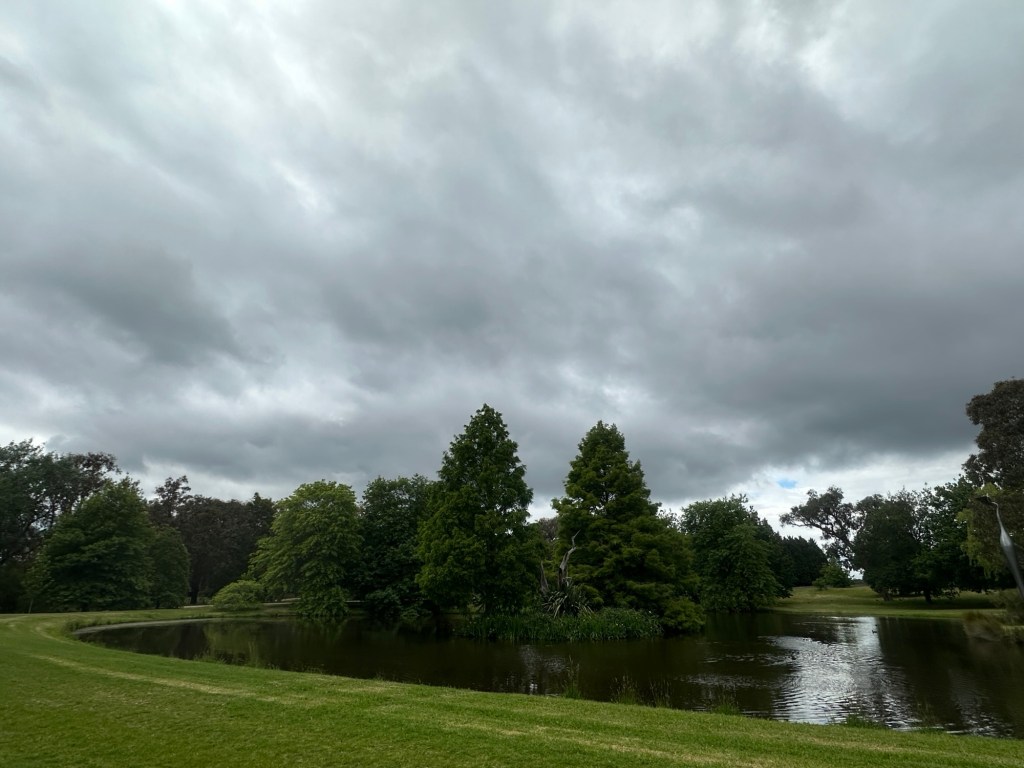
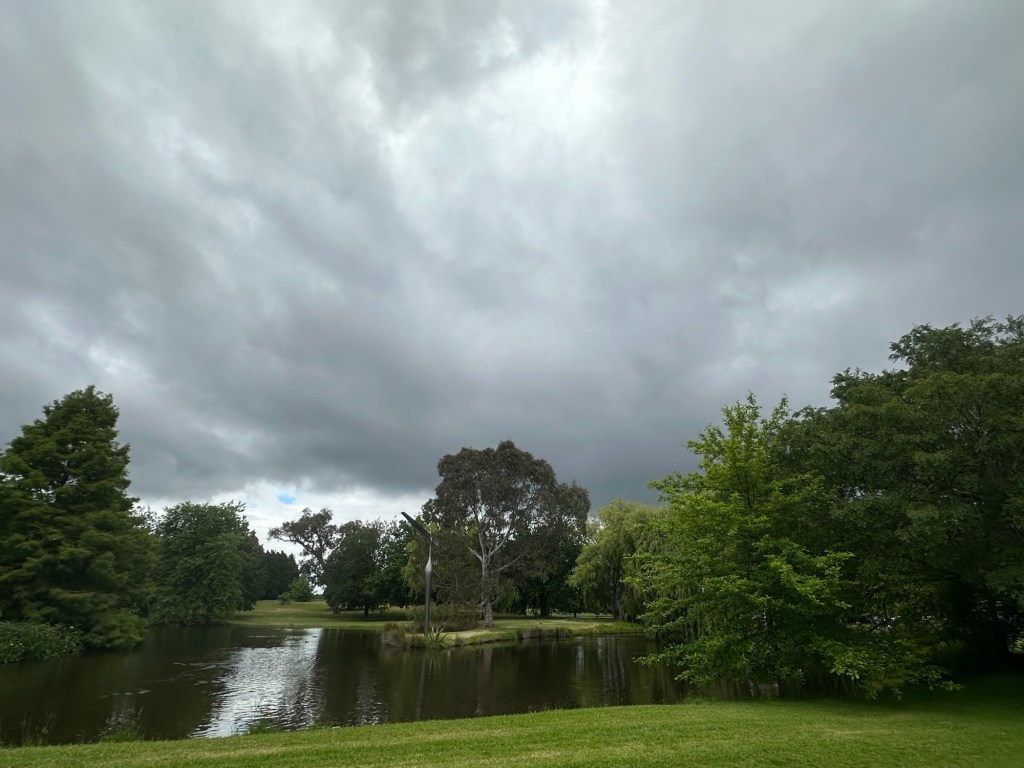
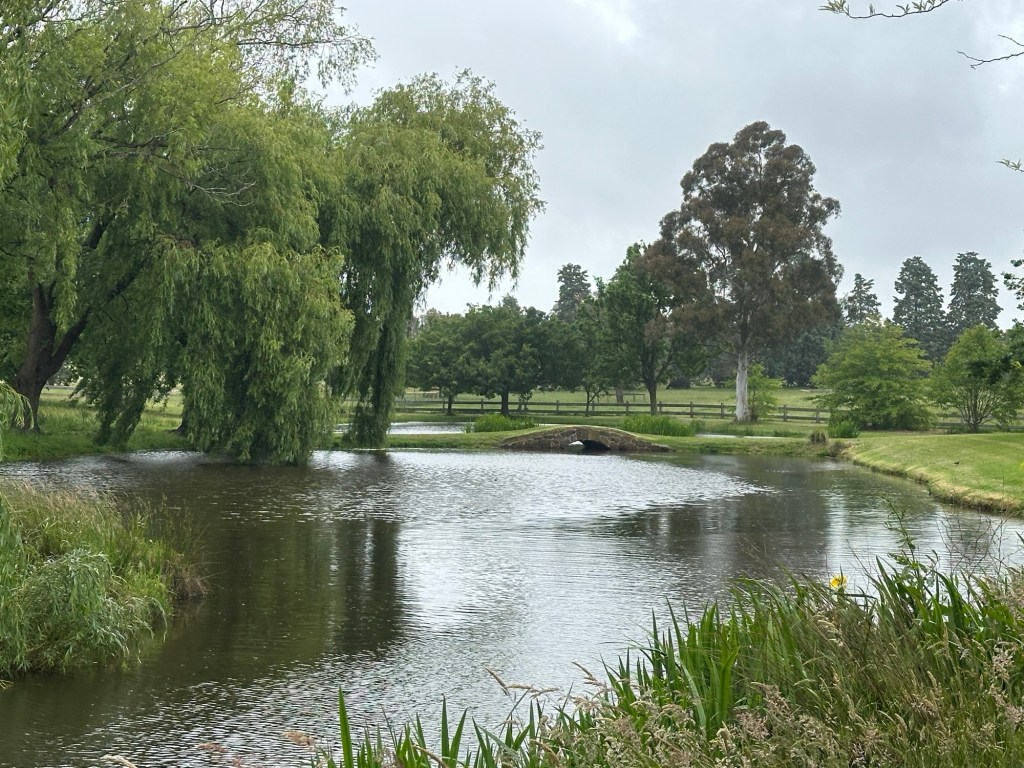
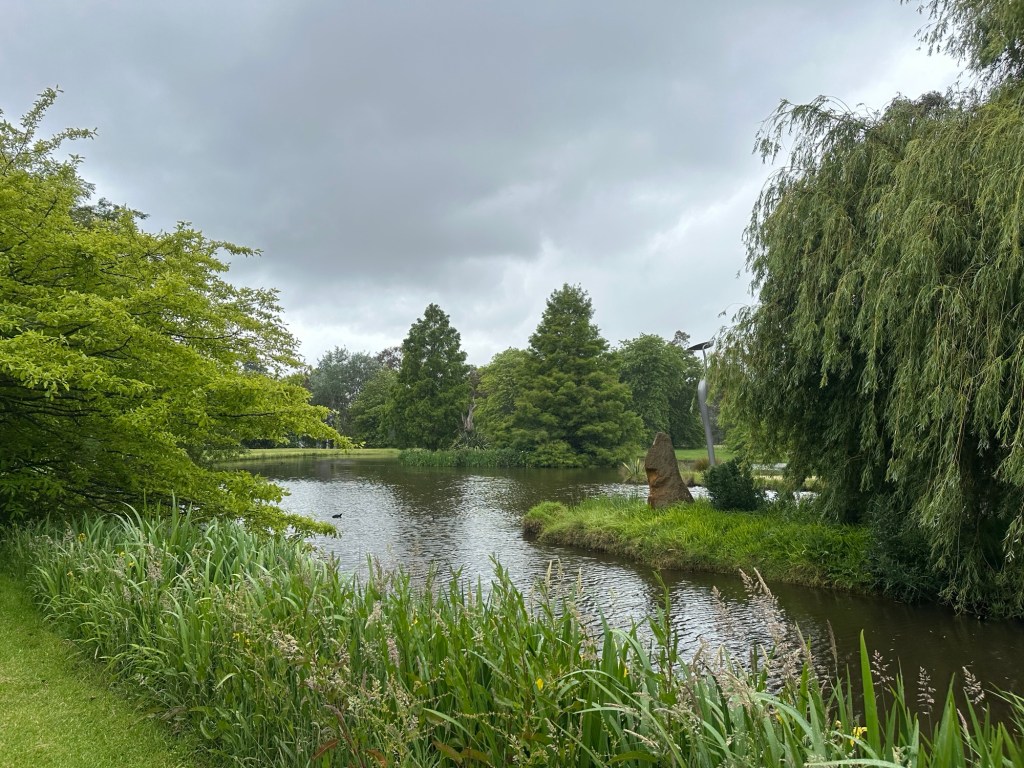
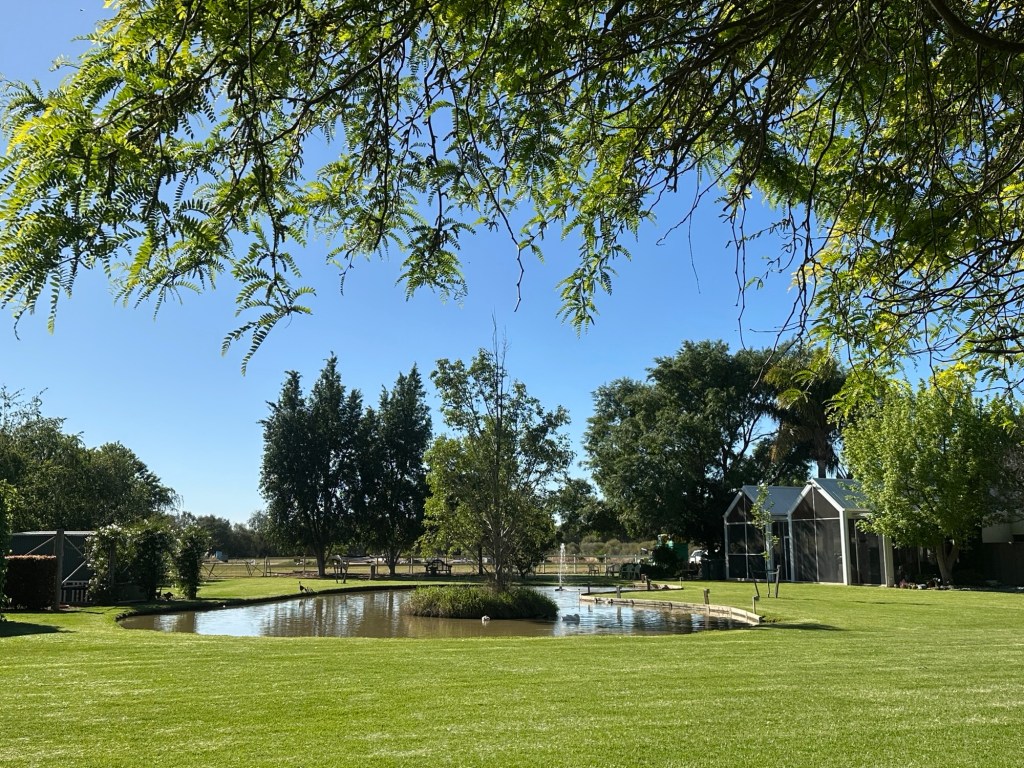
Continuing around The Cottage we came across a huge lake. The lake was constructed in 1987 to provide a sanctuary for birds. Dame Elisabeth was involved in all stages of the lakes development. Hundred of daffodils were planted behind the lake. Willow trees were planted and sadly they are almost at the end of their lifespan. Oaks and wattles were planted to complement the bulbs below. The lake has a couple of islands and a peninsula reached by a stone arched bridge. On the end of the peninsula stands a tall stainless steel ‘Ibis’ sculpture by the artist Phil Price. It has a large blade that moves in the wind and reminds you of an Ibis moving their long beak up and down. It was commissioned by the family for Dame Elisabeth’s 100th birthday and she loved it.
One story was about how to rid the lake of duck weed that was a continuing problem. Dame Elisabeth came up with the solution, dig the lake deeper. So they did. The lake is about 30 feet deep and they’ve never had a problem with duck weed since.

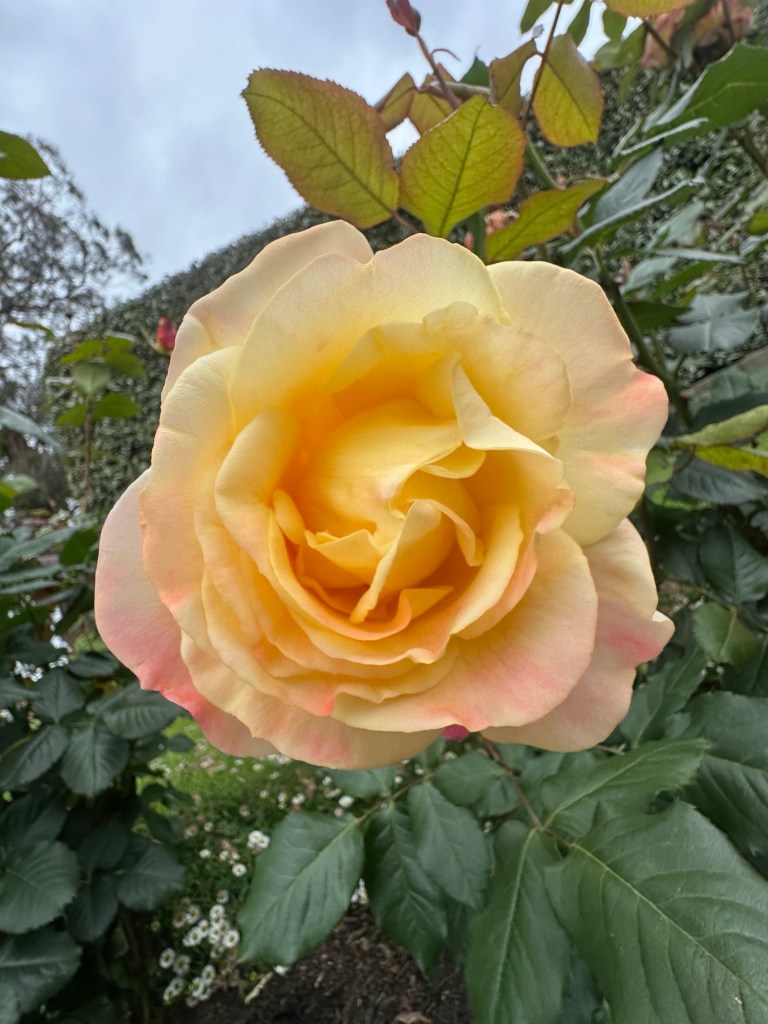
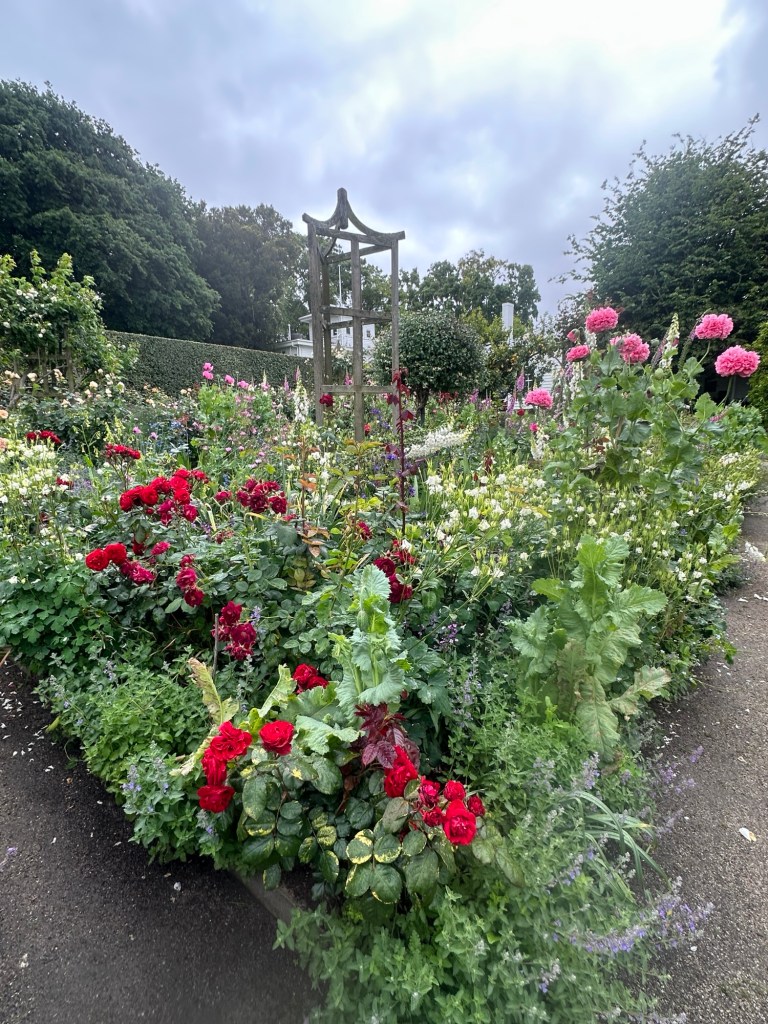
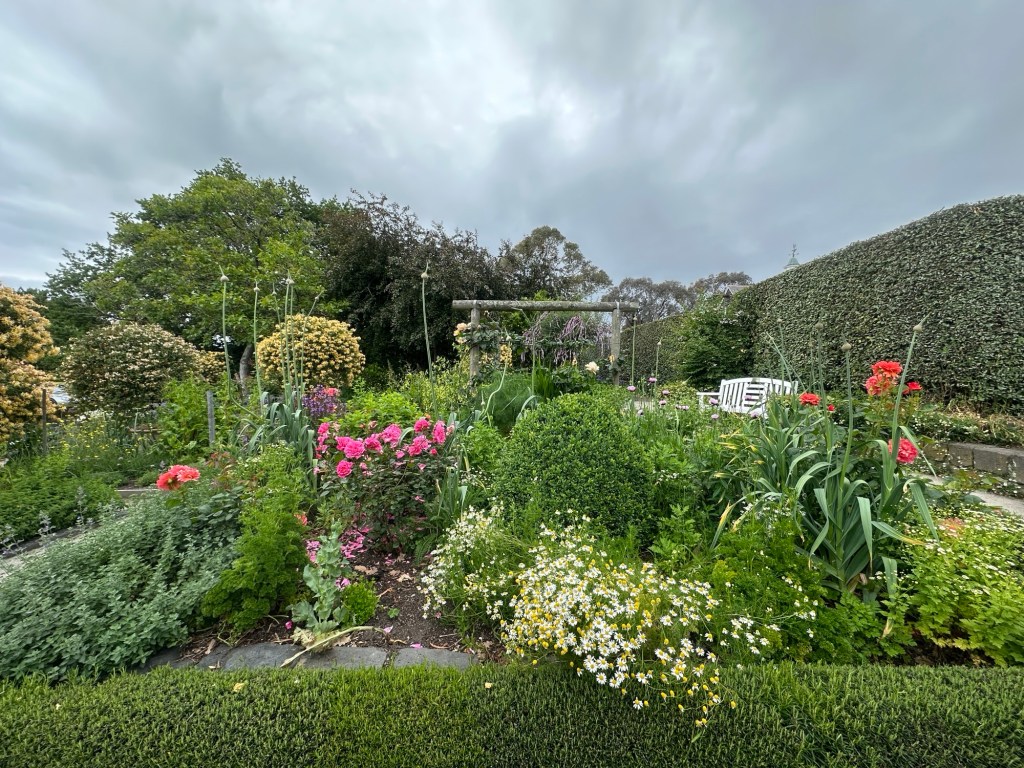
Further around our tour took us towards the Picking Garden and as the name suggests is where the flowers were cut for floral displays for the house. This continues to this day. There are over 125 variety of roses and the star of the show is a row of ‘Dame Elisabeth Murdoch’ roses along the back of the garden below the high hedge. It is a hybrid tea rose created in her honour in 2002 and in Dame Elisabeth’s own words, ‘It’s as tough as old boots, just like me’. It is the first to flower each year and the last to finish.

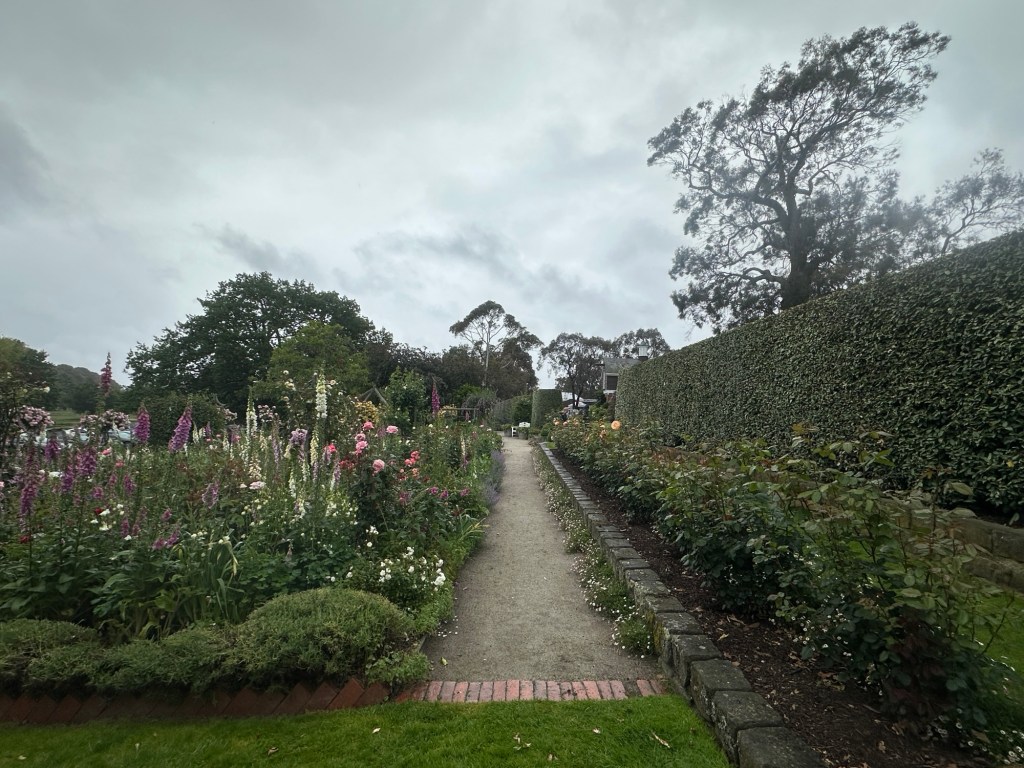
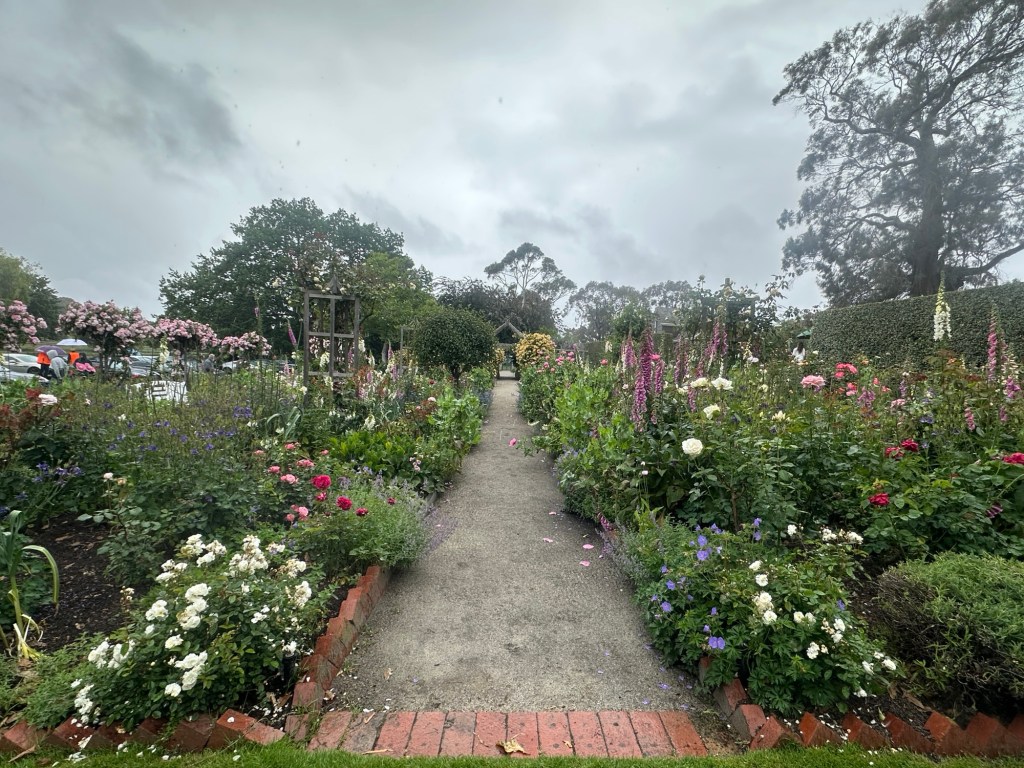
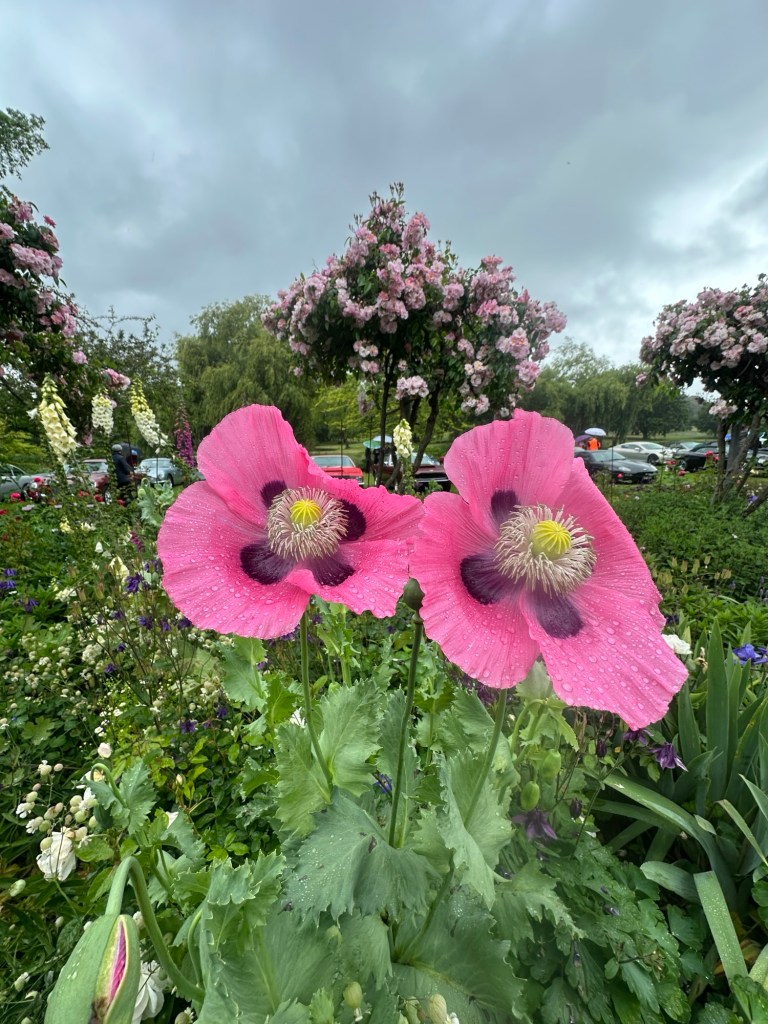
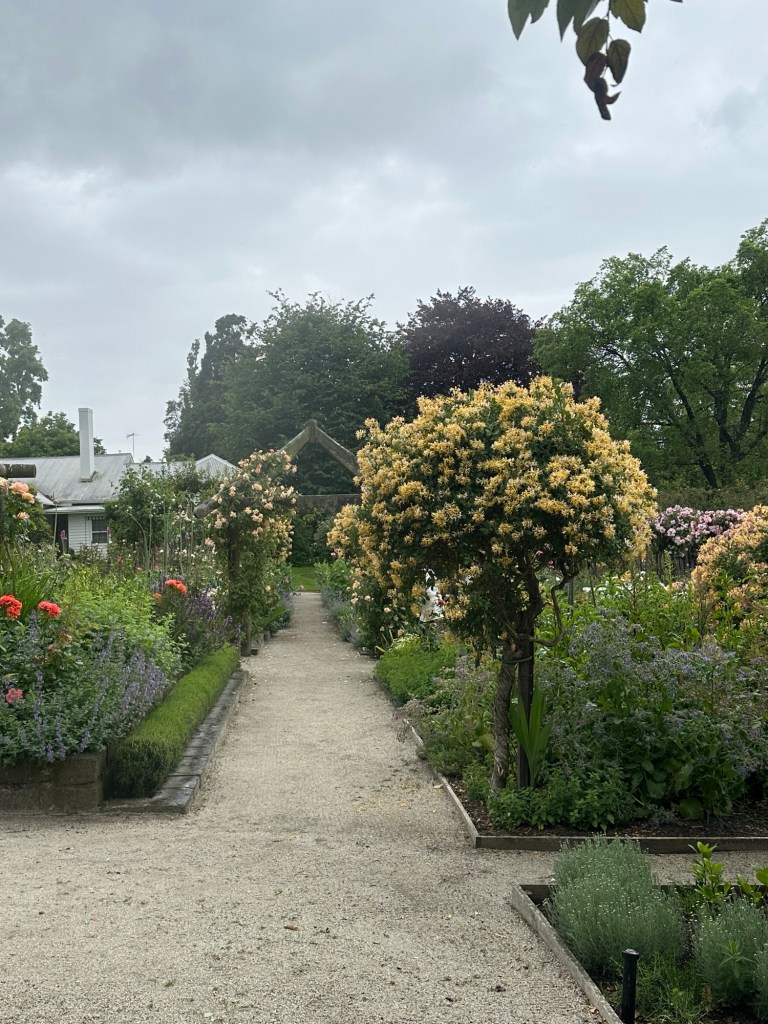
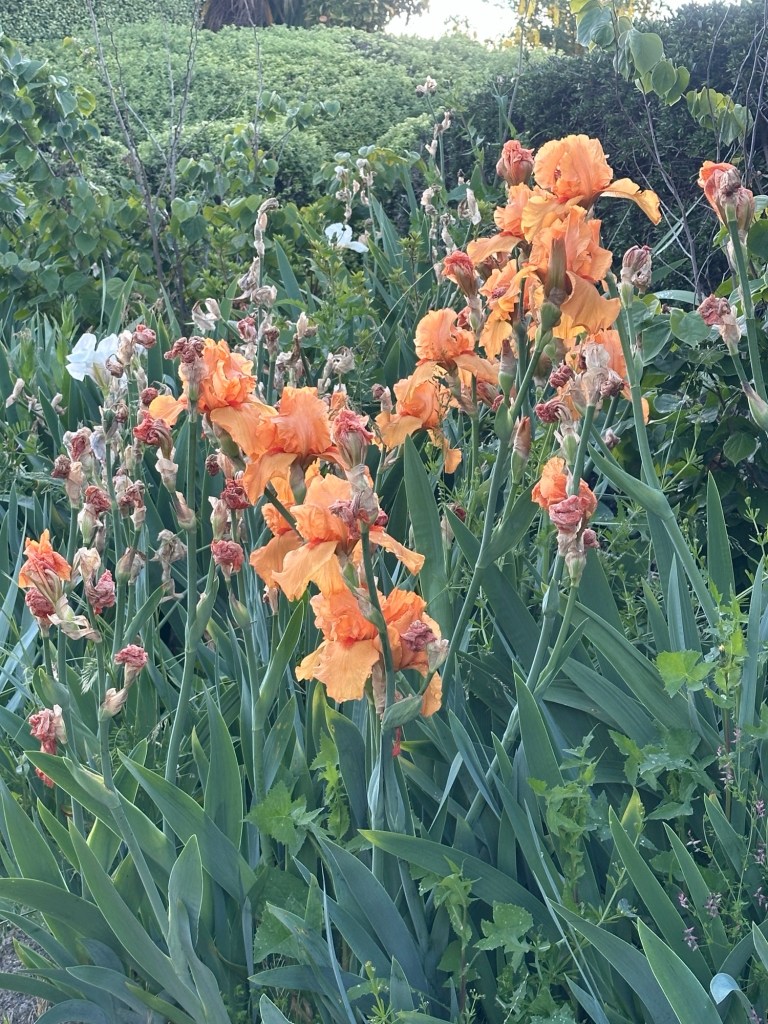
The Picking Garden has recently been extended by Lewis to make it more symmetrical and it is a riot of colour. Everywhere you look you see another special plant. I loved the standard honeysuckles, they were covered in blooms. Flowering perennials abound including catmint, salvias, poppies, foxgloves, and more.
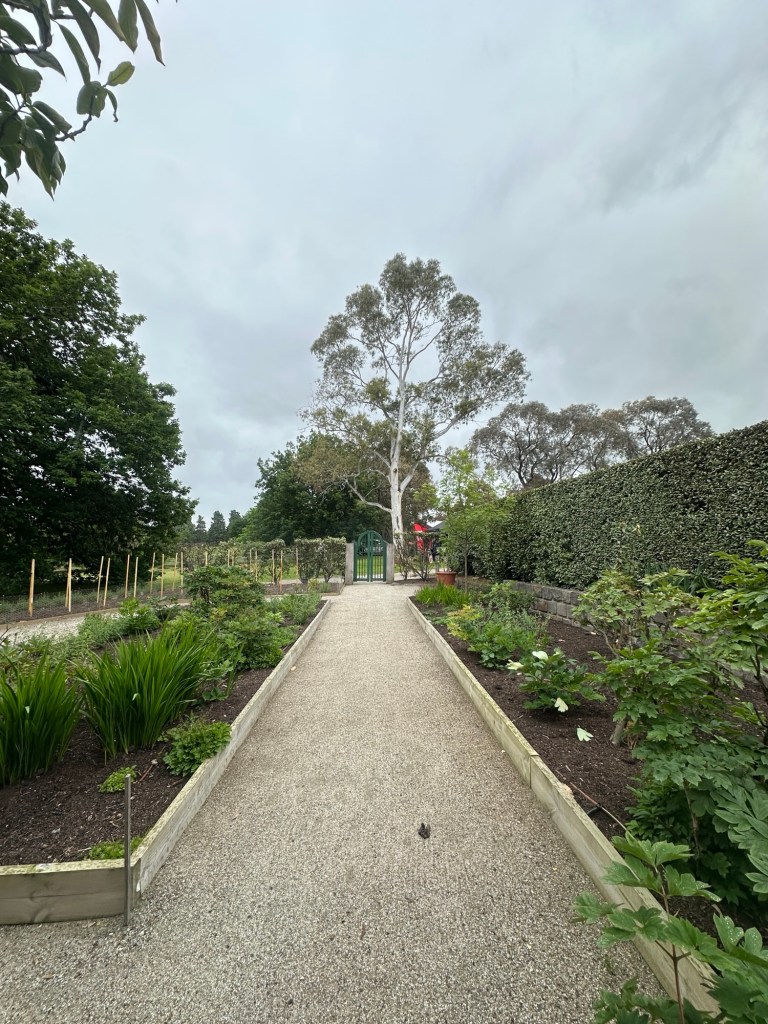
The picking garden beds are bounded by timber boards and crushed granite pathways surround each bed. There is a gorgeous square timber arbour in the centre with a climbing rose growing on each corner.
It started to drizzle rain while we were in the Picking Garden.





A wide set of stone steps leads from the Picking Garden up to The Stables. The Stables were built during the Depression. Sir Keith used local unemployed people to build the stables giving them work when there was none to be had. The stables were constructed with Moorooduc stone which has a high iron content and the stone definitely has a reddish colour.
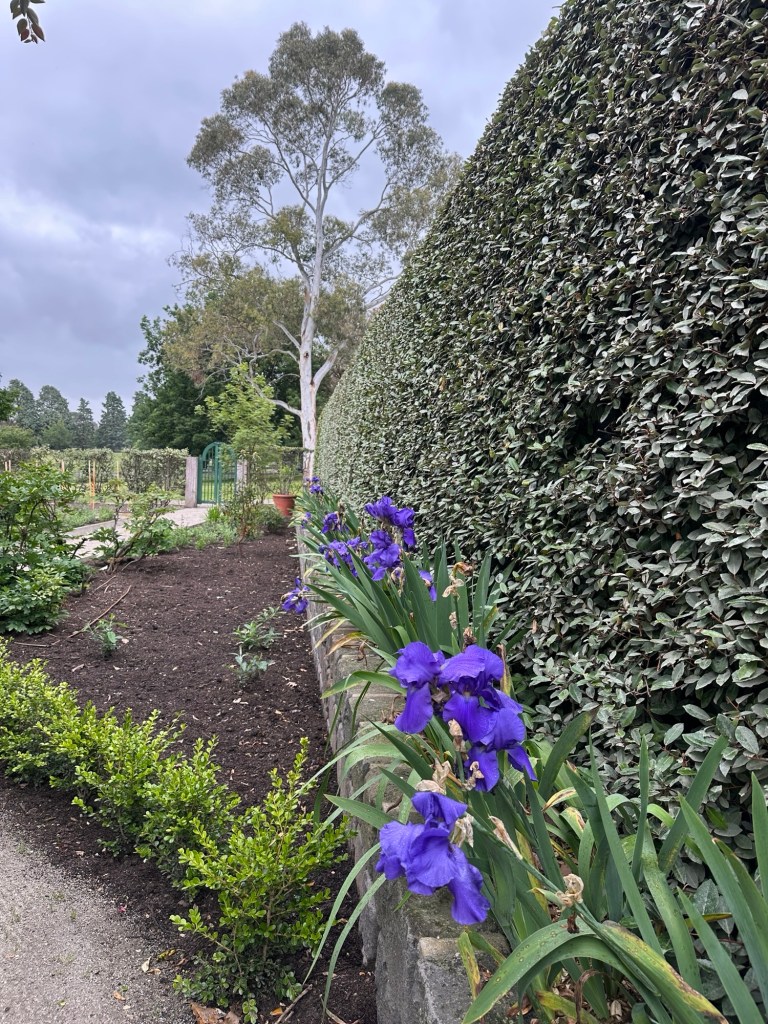
The same team of men built the stone walls at Cruden Farm however they were built with stone found on the farm and are a different colour.
Sir Keith and Dame Elisabeth were keen horse riders but these days the stables only house the buggy that the family gave to Dame Elisabeth for her 80th birthday.


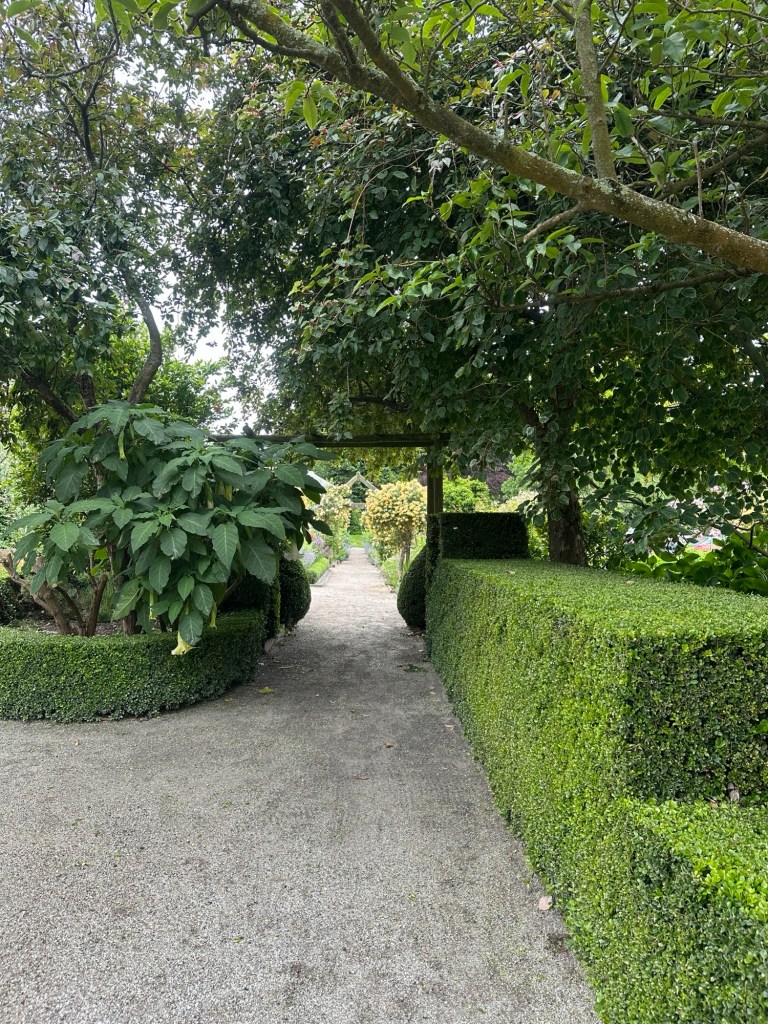
Our tour continued then to the Walled Garden designed by Edna Walling in the English style. The garden has changed over the years because it was found to be too hot inside the walls for the original plantings. The large walled garden was originally for fruit trees however only two of those remain and it now has a large perennial bed on either side of a grass walkway in the middle. At one end is a small lily pond. In the centre of the lily pond is a bird bath with a koala and baby statue. Dame Elisabeth bought it because she thought the grandchildren would like it.
The smaller walled garden was originally a rose garden but it was too hot inside the stone walls so they came out and a swimming pool went in. Apparently Dame Elisabeth loved to swim and was even in the pool every day even when she was over 100 years old, AND the pool is not heated.
When she was over 100 years old one of the gardeners found her attempting to climb up to pull out some daisy’s growing on top of the stone walls because there were just to many up there!
Lewis has spent a lot of time researching the plants that Dame Elisabeth planted in the walled garden and has tried to faithfully recreate it the way she would have liked.


Our one hour tour ended at the end of the Walled Garden and Richard and I enjoyed a brief chat with both Daniel and Lewis and thanked them for the tour. We were happy to hear about their exciting plans to add a restaurant and event spaces to Cruden Farm to help make it more commercially viable while still maintaining the simple style of its famous creator.
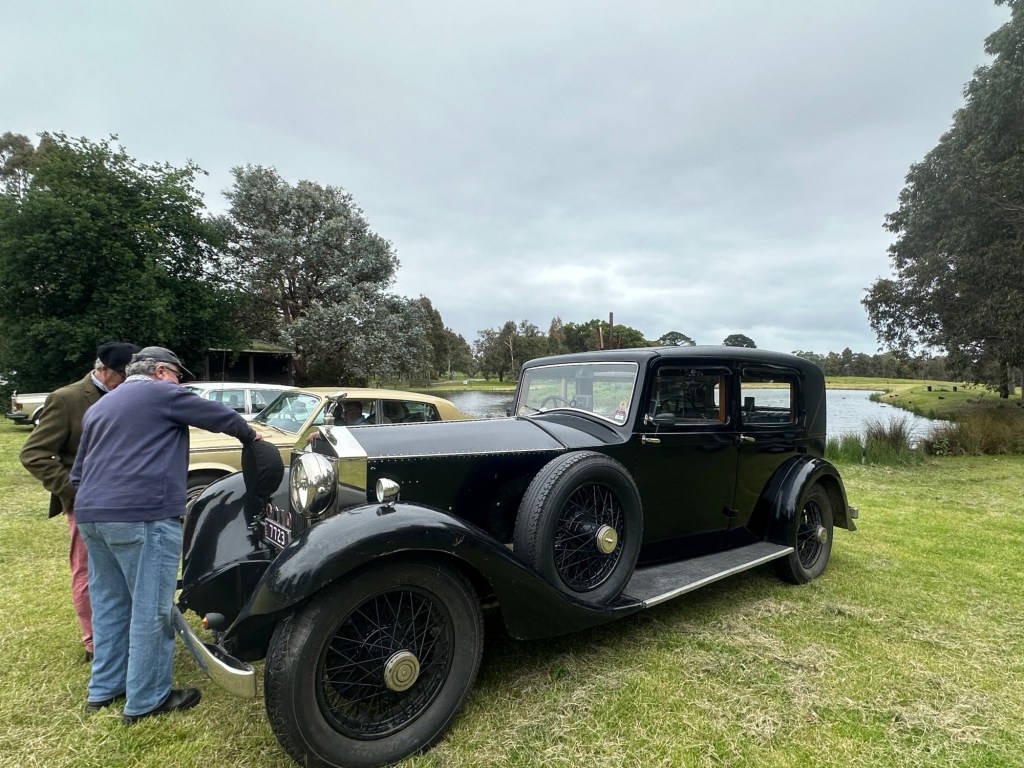
The Rolls Royce Car Club of Australia had a show on at Cruden Farm and the cars were all parked on the lawns behind the Walled Garden and Stables area. Richard wandered off to have a look at the Aston Martin cars as the Astin Martin Club also had their cars on display between The Lake and the Picking Garden. I wandered along the rows of Rolls Royces and admired the large Dam. The Dam was built in 1995 to take the run off from the Stables and other buildings. The Dam is very deep and has been invaluable in times of drought. There is a sculpture in the middle on an island called ‘Five Ways’ and it was designed by Dame Elisabeth and her farm manager Andrew Gobela and sculptor/gardener Ken Blum.
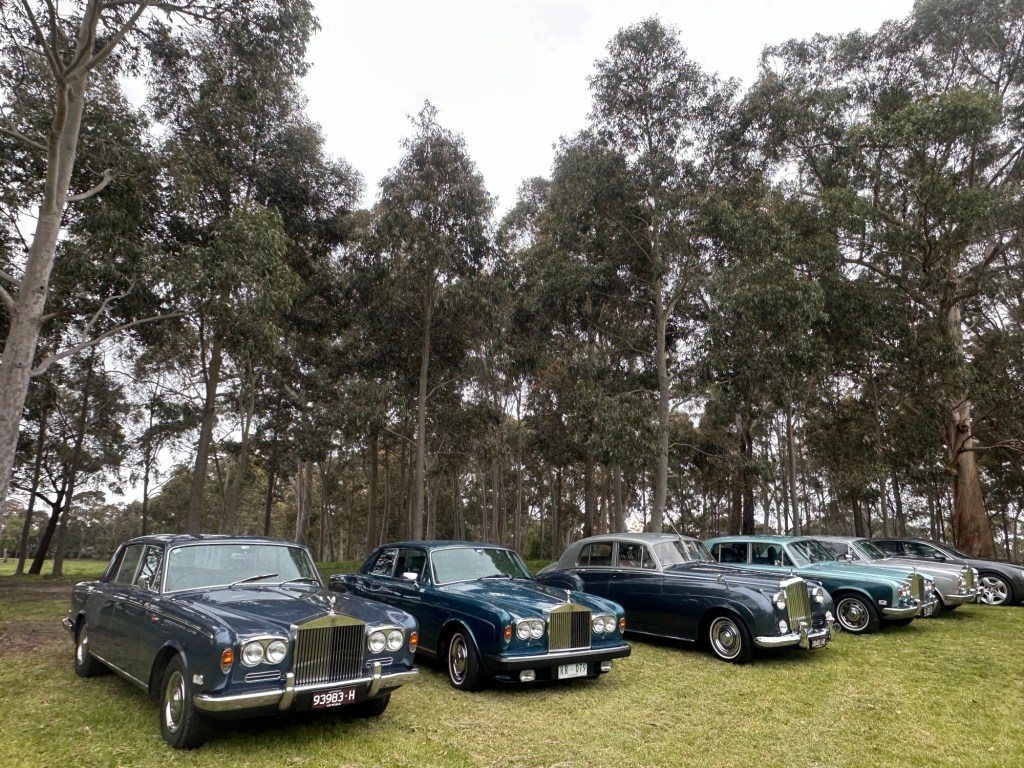
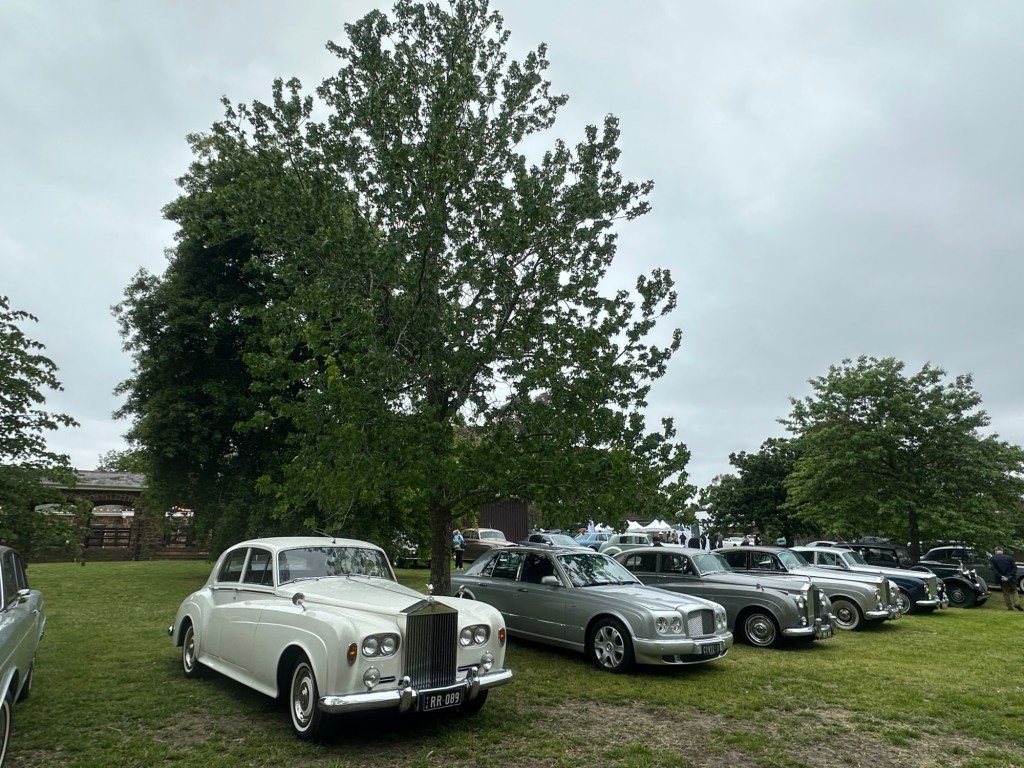

Beyond the Dam and Stables is the Farmyard and as Cruden Farm is still a working farm it is home to all the farming paraphernalia you need to run cattle and maintain 100 acres of farmland.
After wandering back past the Stables and down into the Picking Garden I found Richard admiring the Aston Martins and the rain was becoming heavier so we decided it was time to farewell Cruden Farm and get out of the city.


I had thoroughly enjoyed our morning at Cruden Farm and recommend it to any of you who are keen gardeners or have an interest in history.
It was an easy drive from Cruden Farm to the M3 motorway and we traveled northwards until we had to turn off and do a bit of a dog leg where the new North East Link is under construction. What a massive undertaking it is. It didn’t help that it started bucketing down rain as we drove through this section! Bloody Murphy!
The North East Link is ‘the missing link’ in Melbournes road network and will join the M3 to the M80 taking some 15,000 trucks per day off smaller roads. Most of it will be tunnels. It will even go under the Yarra River by tunnel.
Once we got through that nightmare of road construction we were quickly onto the M80 and followed that until it meets up with the M31 (Hume Highway) and we headed north on that. It had taken us about two hours to travel from Frankston down on the Mornington Peninsula, right through Melbourne and out the northern side onto the Hume Highway. That’s pretty amazing and it will be even faster once the North East Link is completed.
We pulled up for a lunch break at a road side Rest Area and over lunch and a cuppa decided to push on further to find a good camp for the night. We ended up at Murchison which is in between Seymour and Shepparton. We found a spot via WikiCamps that promised water views and we could have a fire.
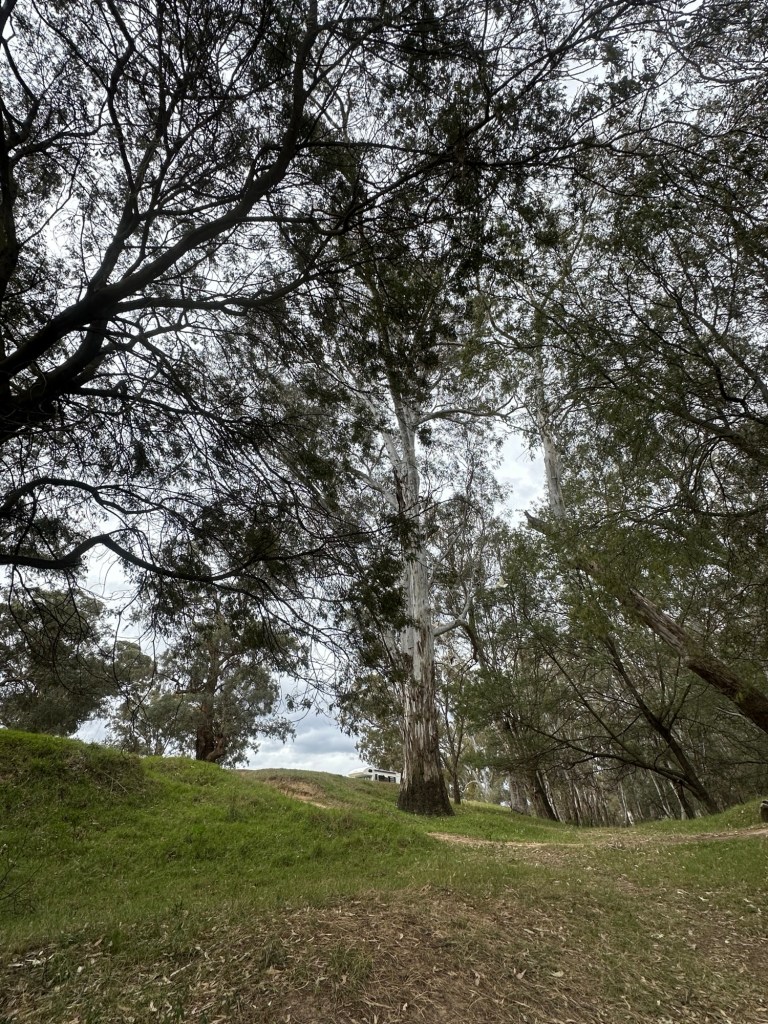
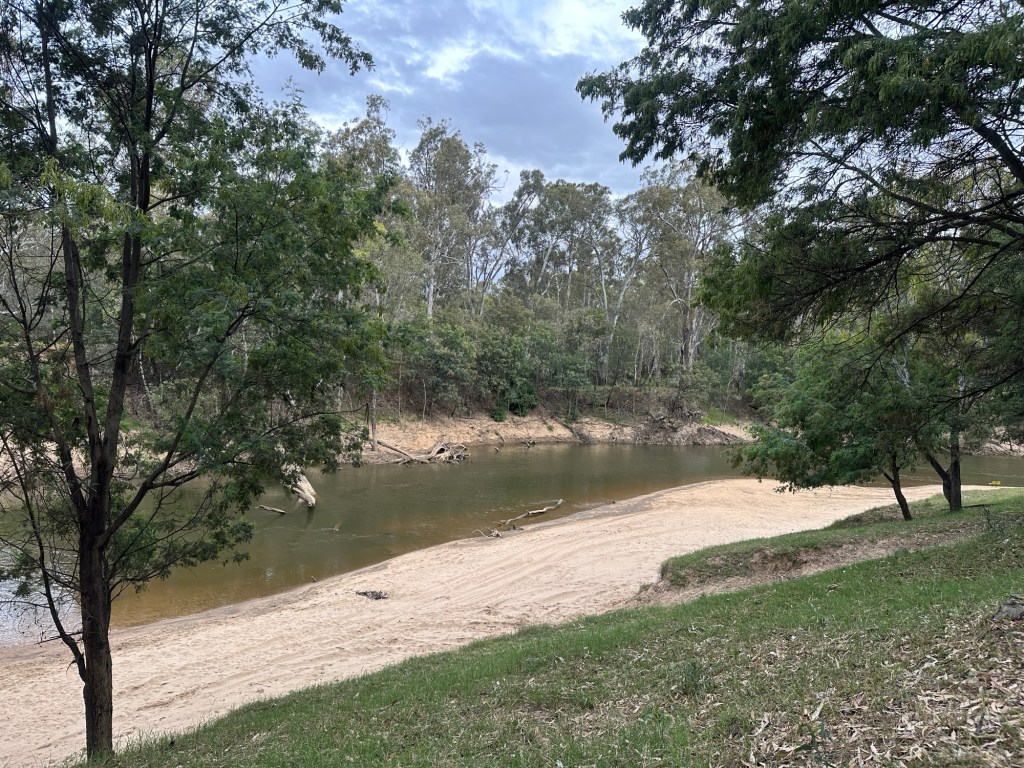
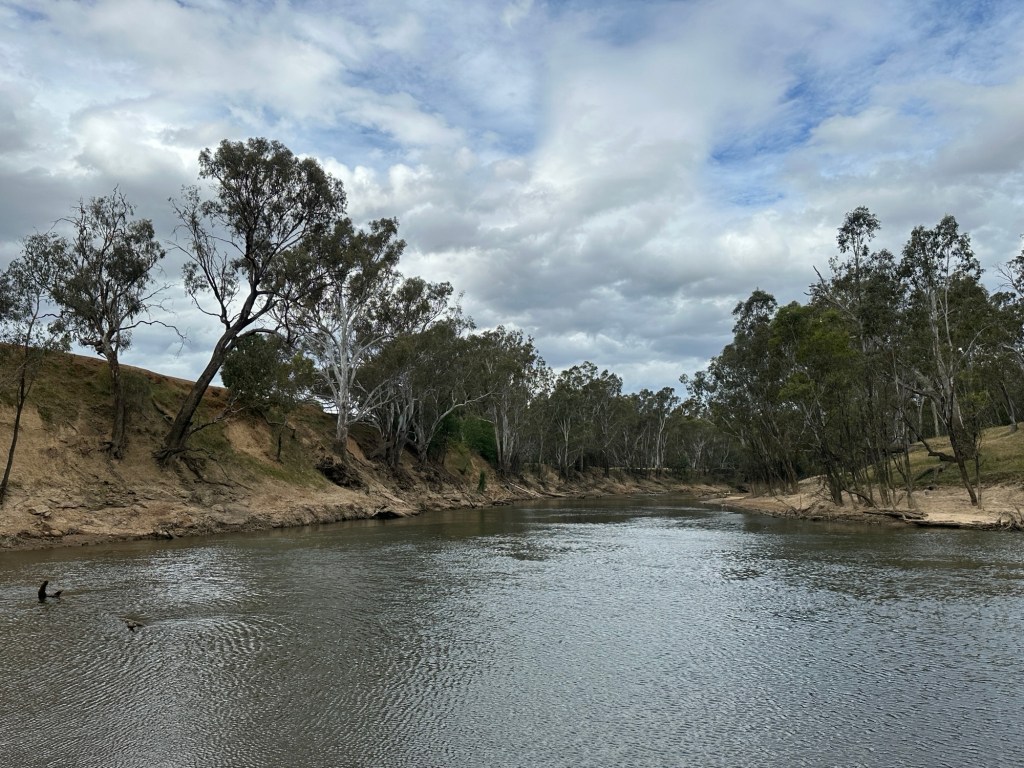
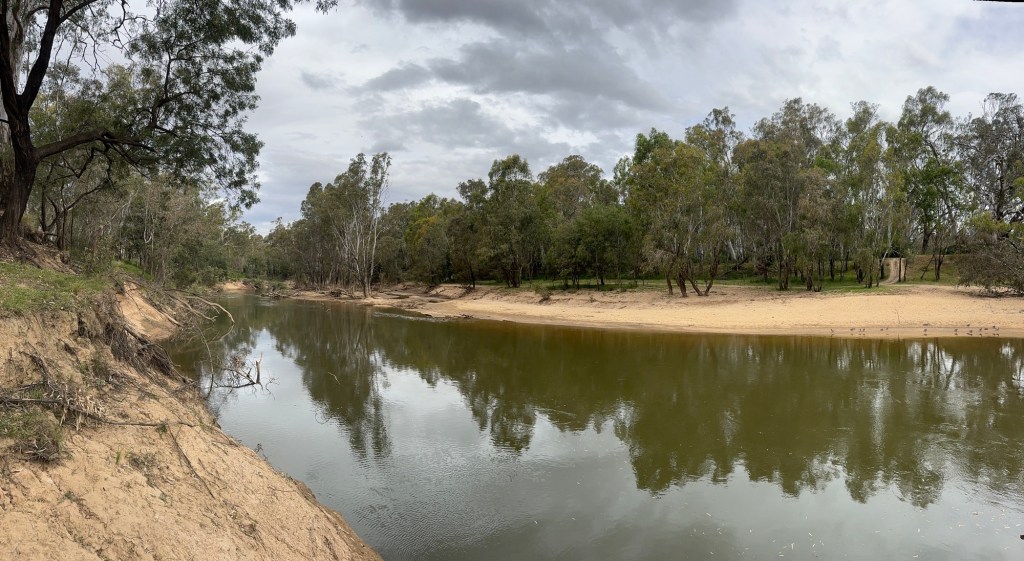
We found the spot at Murchison Reserve. Murchison Reserve consists of a couple of ovals with toilets and club buildings. On the back fence there is a cattle grid with a gate. If you go through that you are on the river bank. The Goulburn River has very tall river banks and from the top we could see the river below. There were quite a few tracks that led down to the river edge however they were definitely for 4WD’s and not 26’ motorhomes!
We wisely stayed up on top although I did go for a walk along and down around the river and found a couple of sandy beaches. There was one lot of campers down there with a 4WD and roof top tent but you wouldn’t get down there with a caravan or motorhome.
We sat around a little fire until rain drove us inside and we enjoyed a dinner of lasagne, garlic bread and salad before settling into bed to watch Netflix.
As we dozed off for the night we could hear the pitter patter of rain but it wasn’t forecast to rain much and we were parked on grass so not to worry. It’s only getting through the very narrow gate that’s the problem. I swear there was only an inch or two either side of the motorhome as Richard capably squeezed through.

























 motorhomemeanders.com