Rich decided to give our tour to the Australian Age of Dinosaurs Museum of Natural History a miss as he didn’t think getting in and out of the bus or the bus ride would be helpful. He is improving slowly and can move about more freely but he stayed home while the rest of us walked down to Reception to wait for our Red Dirt Tours bus to come and pick us up. We had to be at the meeting point at 8.10am.
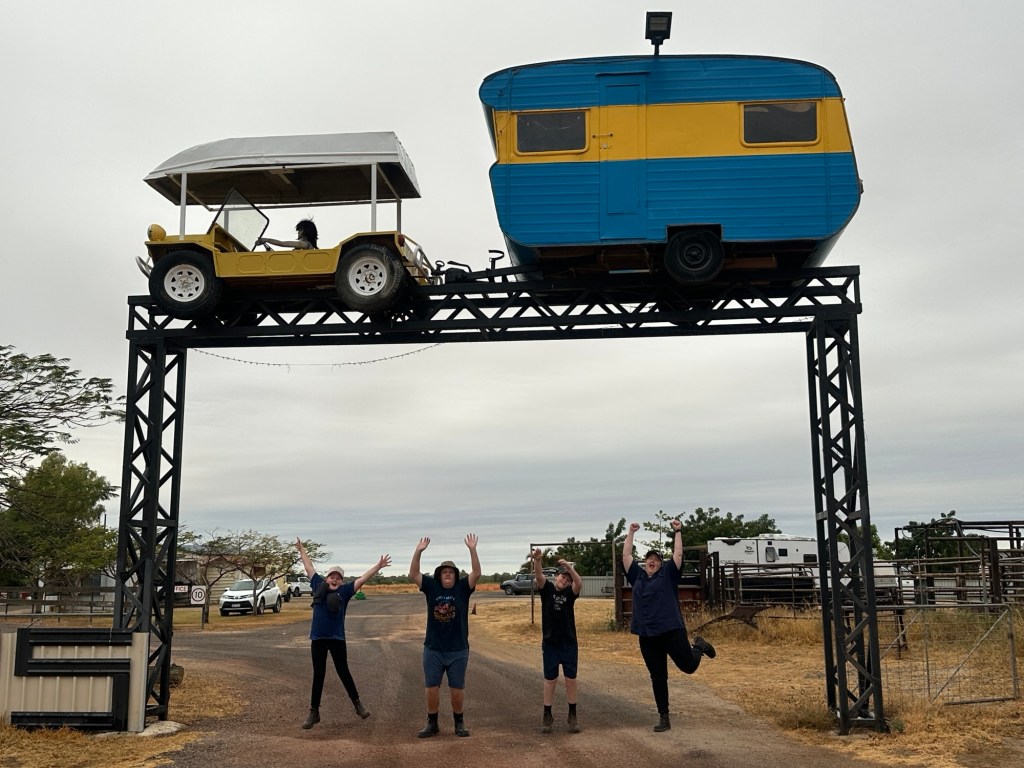

Our bus duly arrived and we met Kate our guide for the day. There was just us 5 and one other couple from the caravan park on the tour. As we drove out of town to where the museum is located Kate gave a running commentary on the history of the museum and the Winton area in general. It was very informative.
The museum was started in 2002 on the sheep station owned by David and Judy Elliot. Much of the dinosaur bone preparation was done on their dining room table! In 2006 and fellow grazing family, the Brittons donated land on the top of the ‘jump-up’, a rugged mesa wilderness area, and the museum moved there in 2009. Today the museum houses the world’s largest collection of Australian dinosaur fossils.
The museum has been built in stages and there are more exciting plans for future development.
The best part about doing the tour with Red Dirt Tours is that once you arrive at the museum you skip all the queues and go directly in to the tours. Red Dirt Tours have it all organised so you go from one tour to the next on the bus without having to line up.
Our first tour was at the Fossil Preparation Laboratory. This is where the bones that are collected in the field are brought to be prepared and eventually put on display. It is painstaking work and much of it is done by volunteers. Some of the volunteers come back year after year to work on the fossils. We were told it is a little addictive!


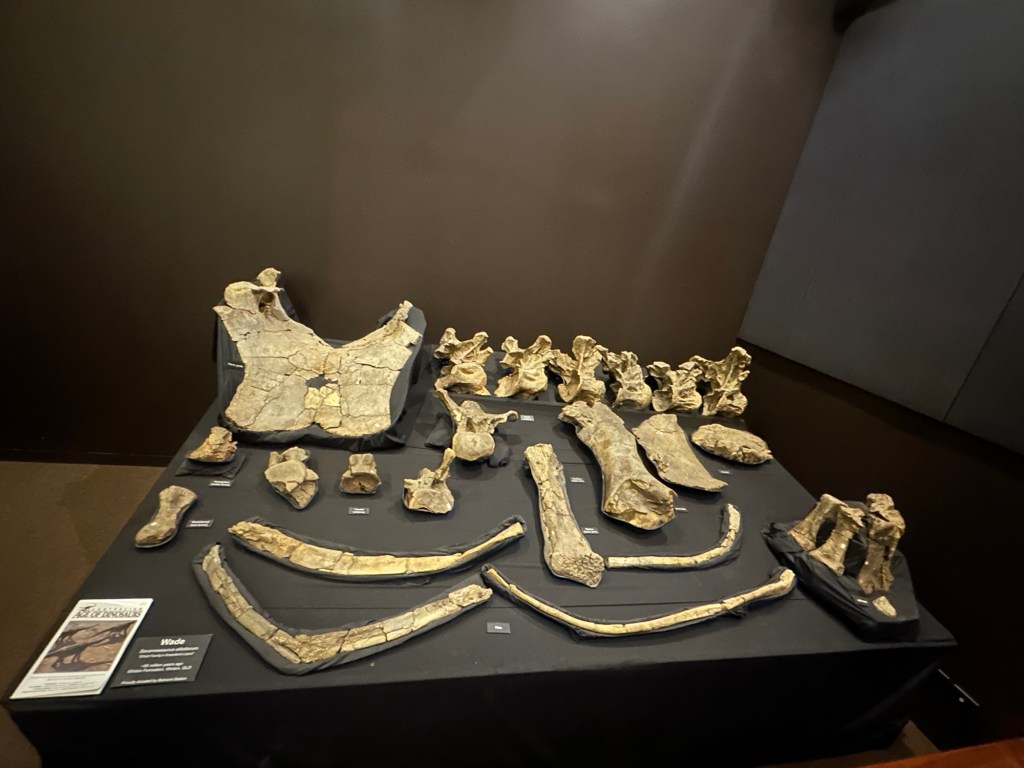
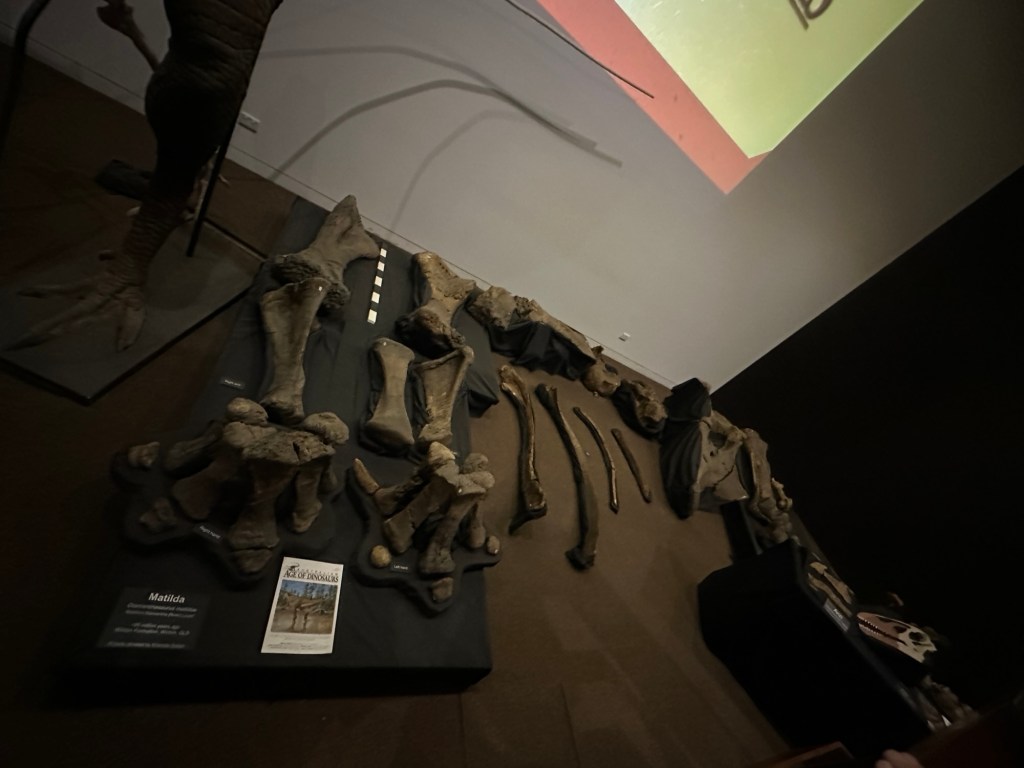
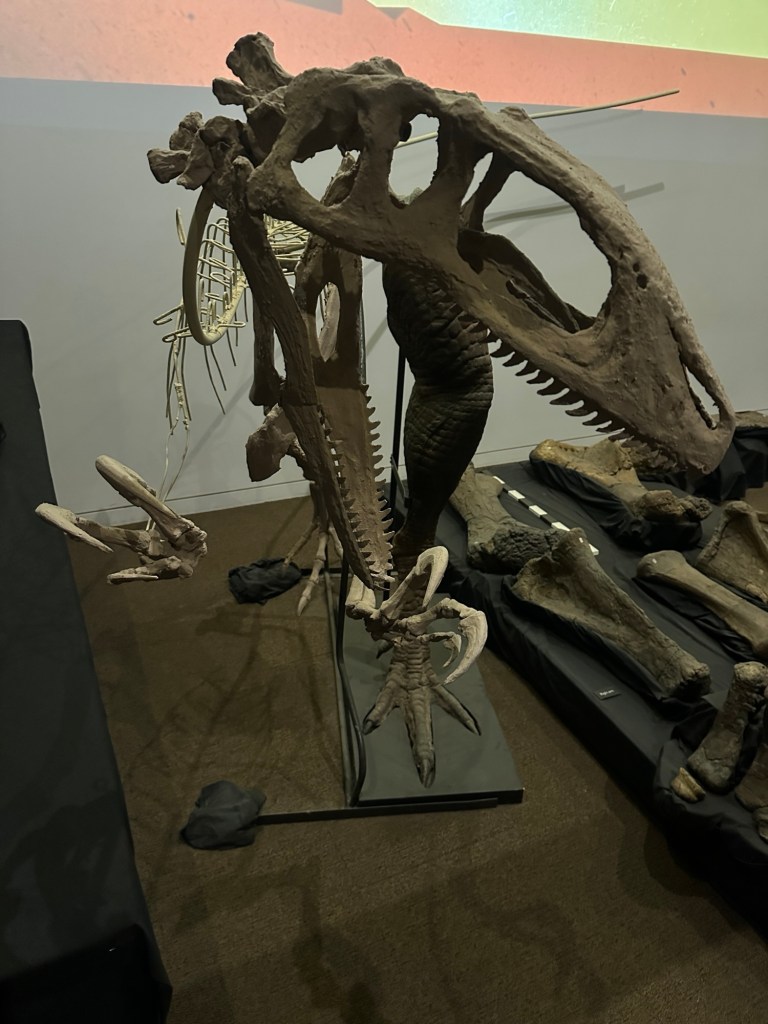
We had a half hour break for some morning tea and then headed into our next tour of the Collection Room which houses the very special and rare bones that have been discovered near Winton that indicate a new species of dinosaur. Some of the bones are only a small percentage of the actual dinosaur but are enough for the experts to recognise when they are looking at a new species. The bones can indicate the size of the dinosaur, what it ate, how it moved and, in some cases, what its skin looked like.



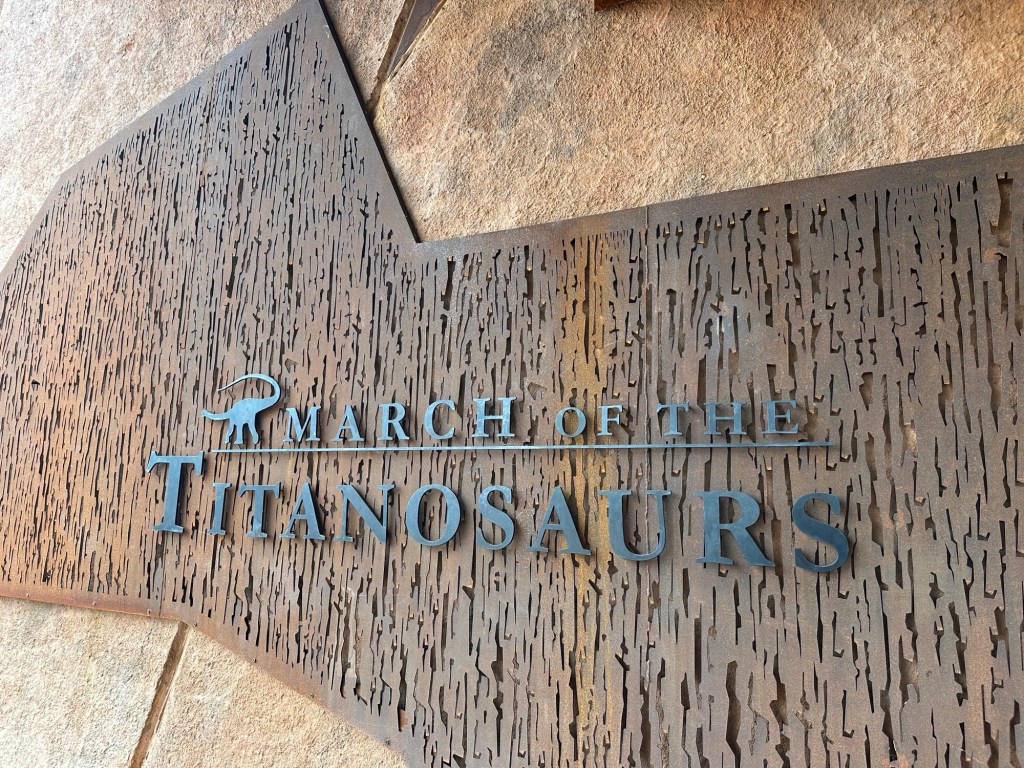
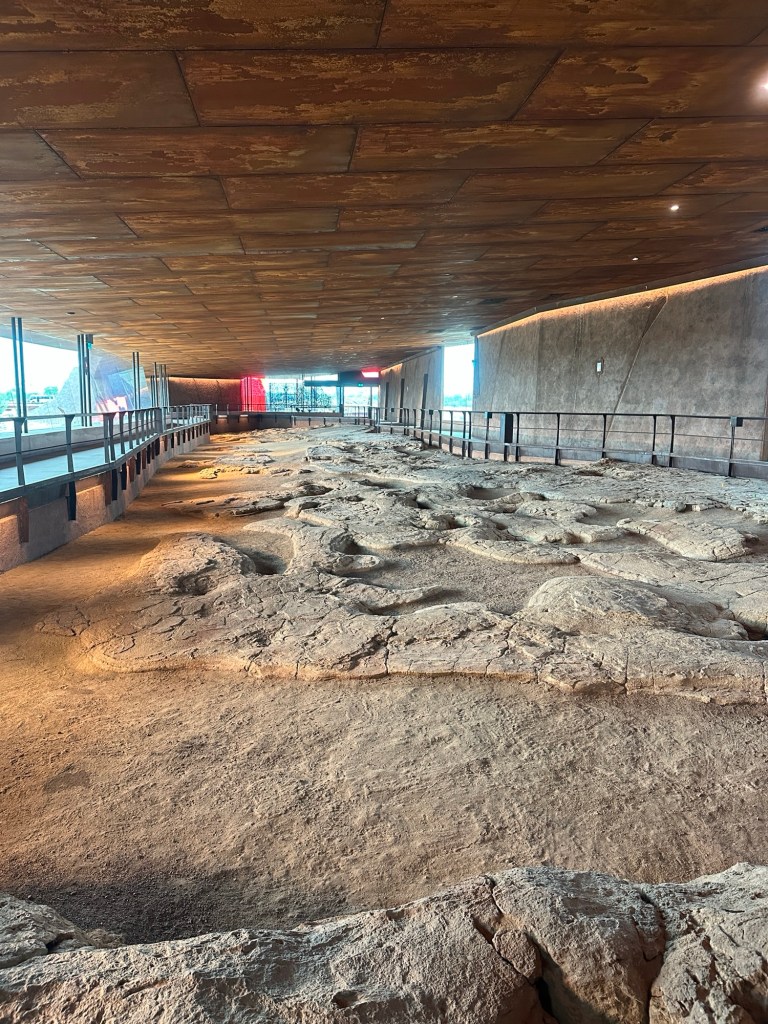
We got back on the bus and were driven by Kate to our next stop at the Dinosaur Canyon Outpost. From there we walked to the March of the Titanosaurs. This exhibition is an amazing creek bed full of dinosaur footprints. Out guide told the story of what we were looking at and used a laser light to highlight the footprints of the different dinosaurs as they must have walked or moved along the creek. There were huge sauropod footprints, tiny dino footprints , crocodile footprints and even a turtle. The entire trackway was painstakingly removed from the creek where it was found and moved to the museum where it could be preserved in the specially built air conditioned building for visitors like us to hear the stories.

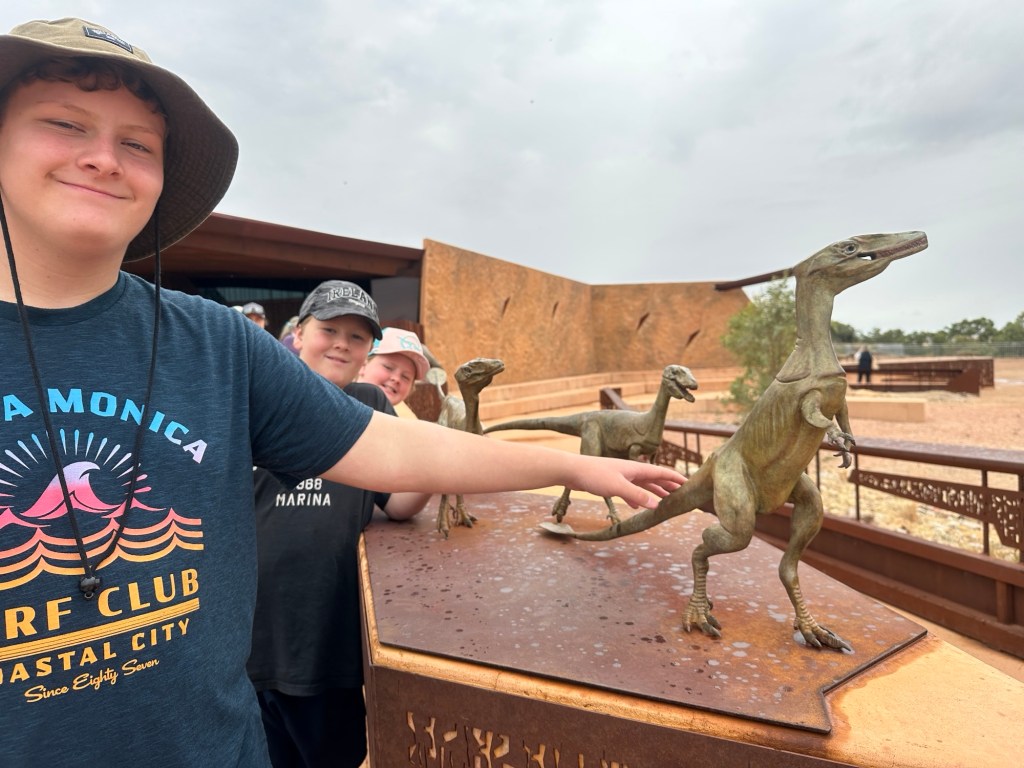

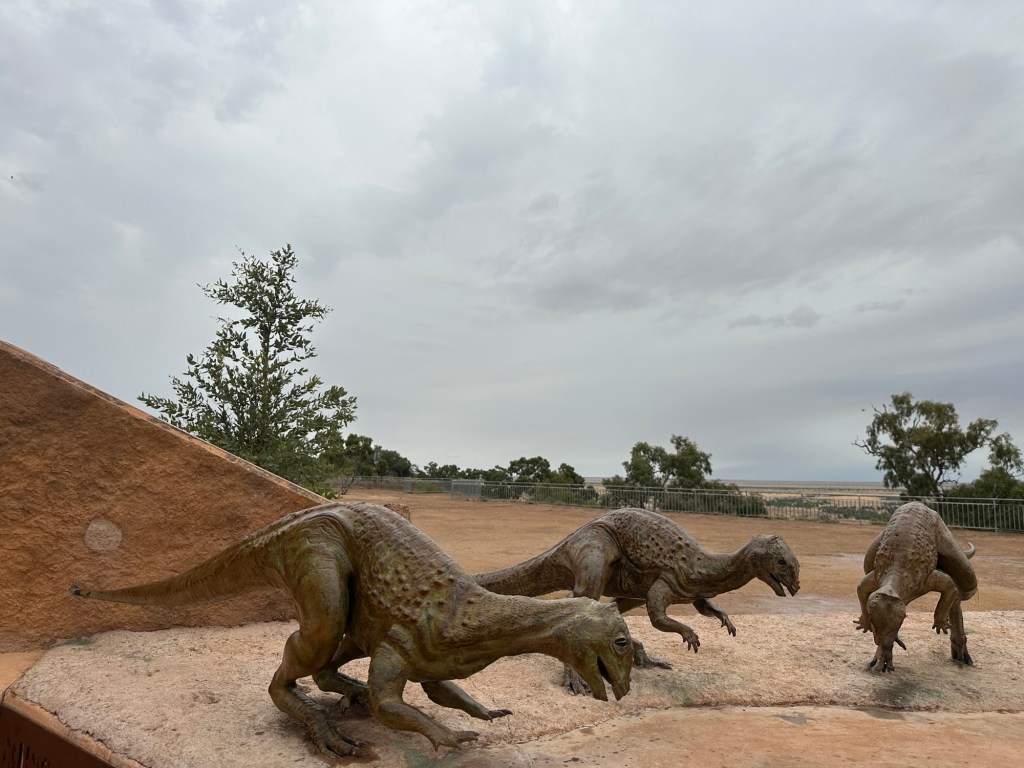


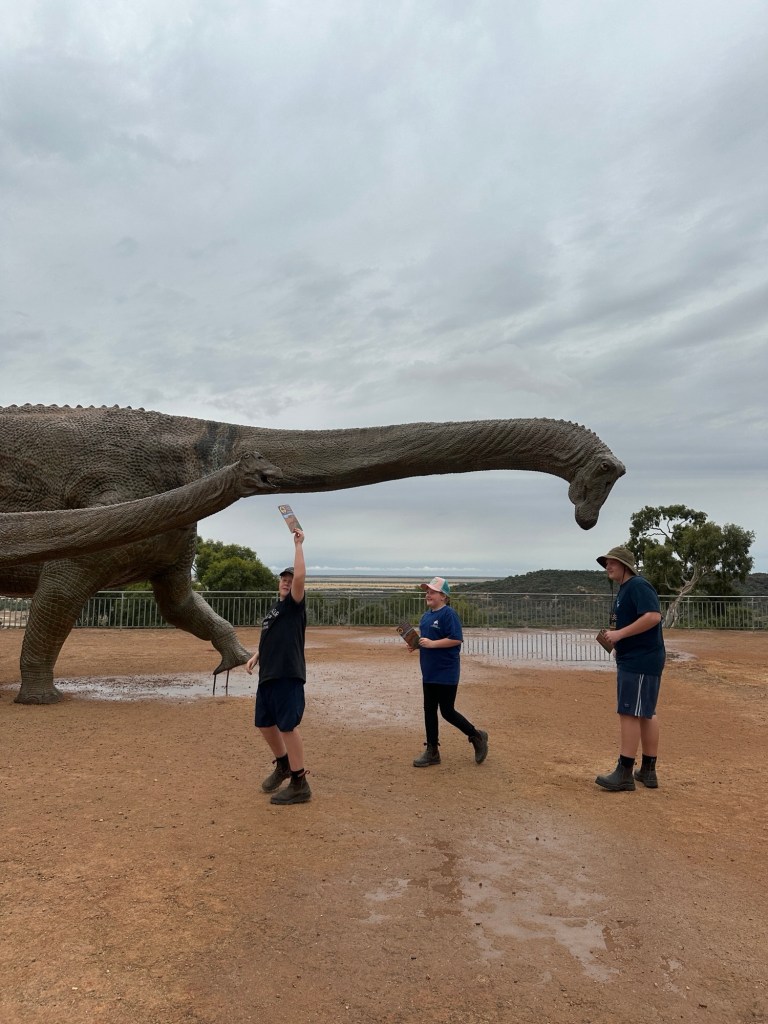
Following that we had the chance to walk along Dinosaur Canyon. Along the canyon are sculptures of the dinosaurs we’d learnt about.

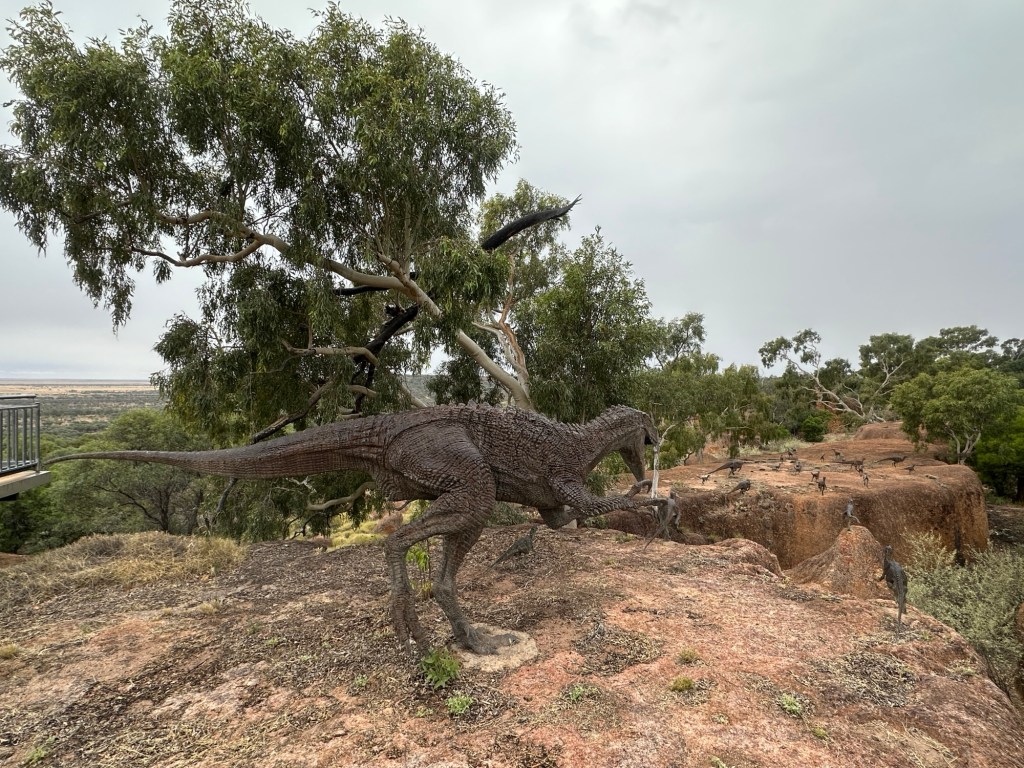
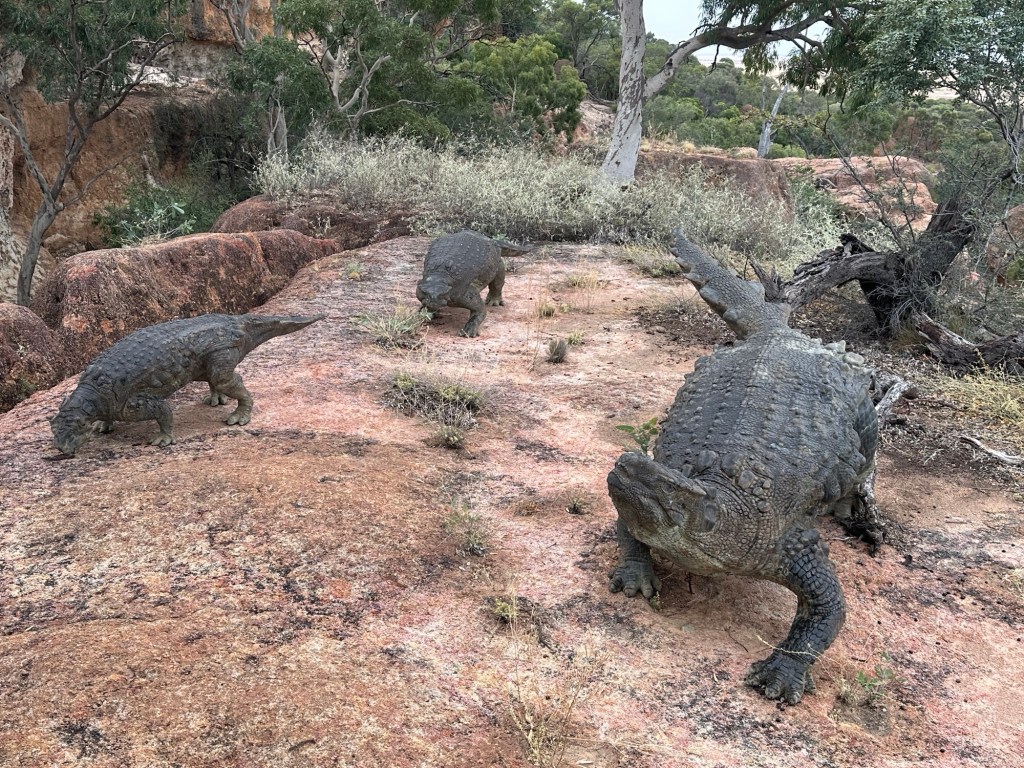
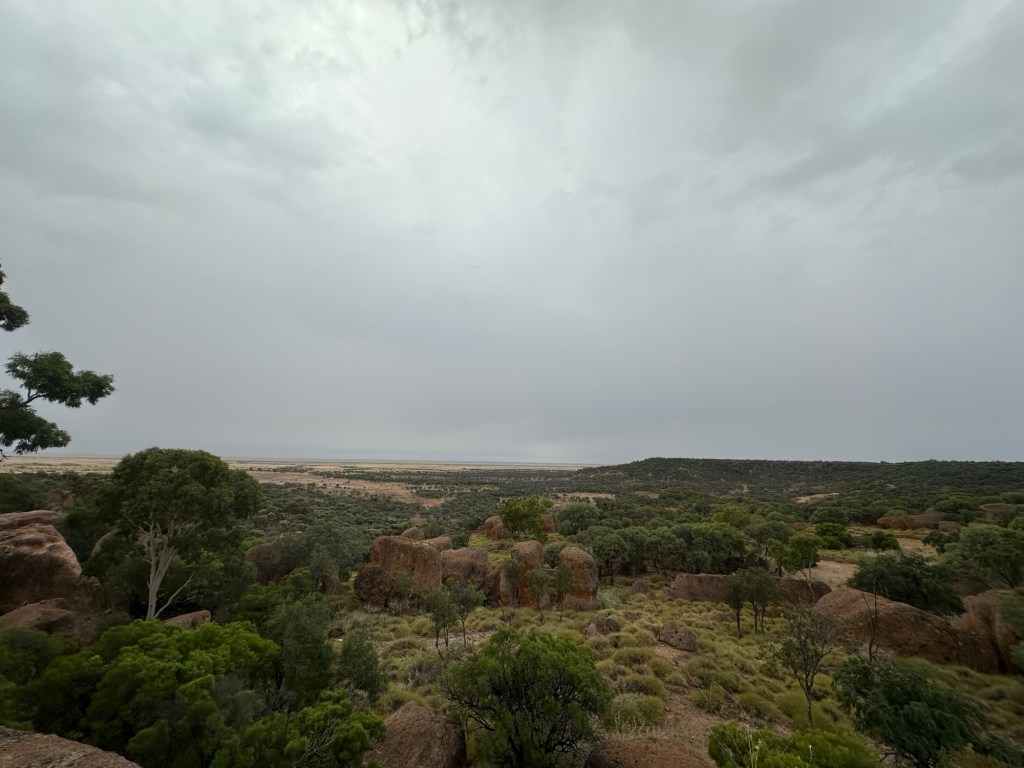
We got back on the bus and driver Kate returned us to our caravan park. We all thoroughly enjoyed our tour of Australian Age of Dinosaurs.
We got back to camp to find Rich up and about and glad to see us. I think he was getting a little bored without company. His back was still very sore and it was still hard for him to go from sitting to standing and vice versa however he was definitely improving. We had a quiet afternoon and it was Katie’s turn to cook. Spaghetti Bolognese was on the menu. Yum!
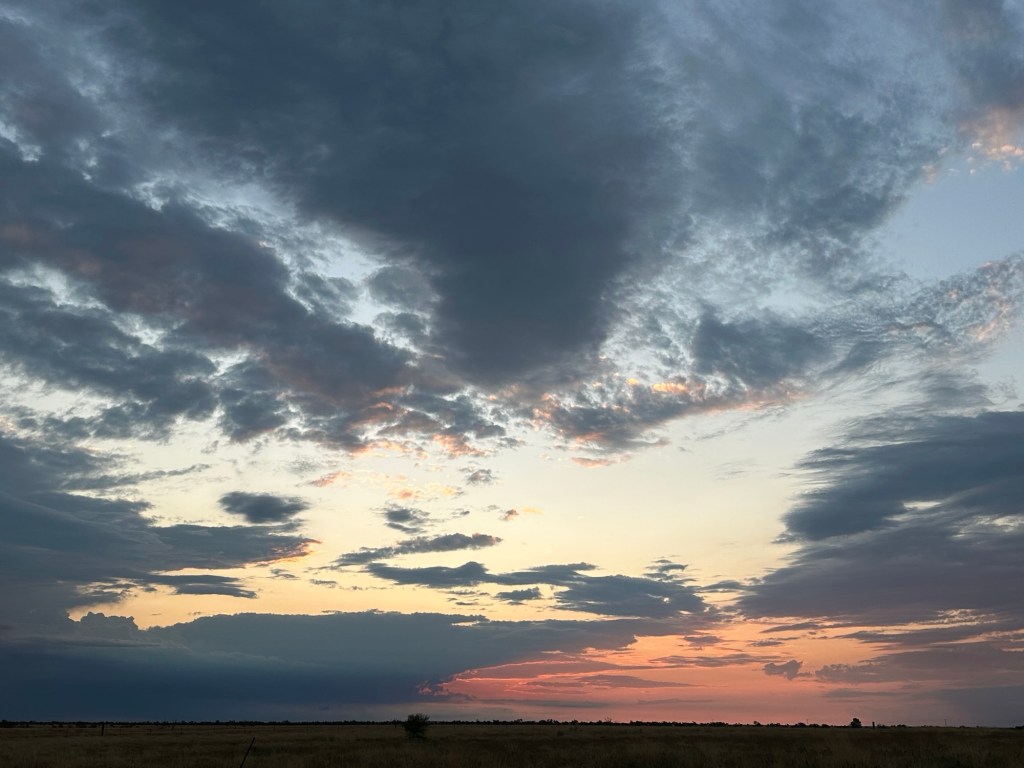
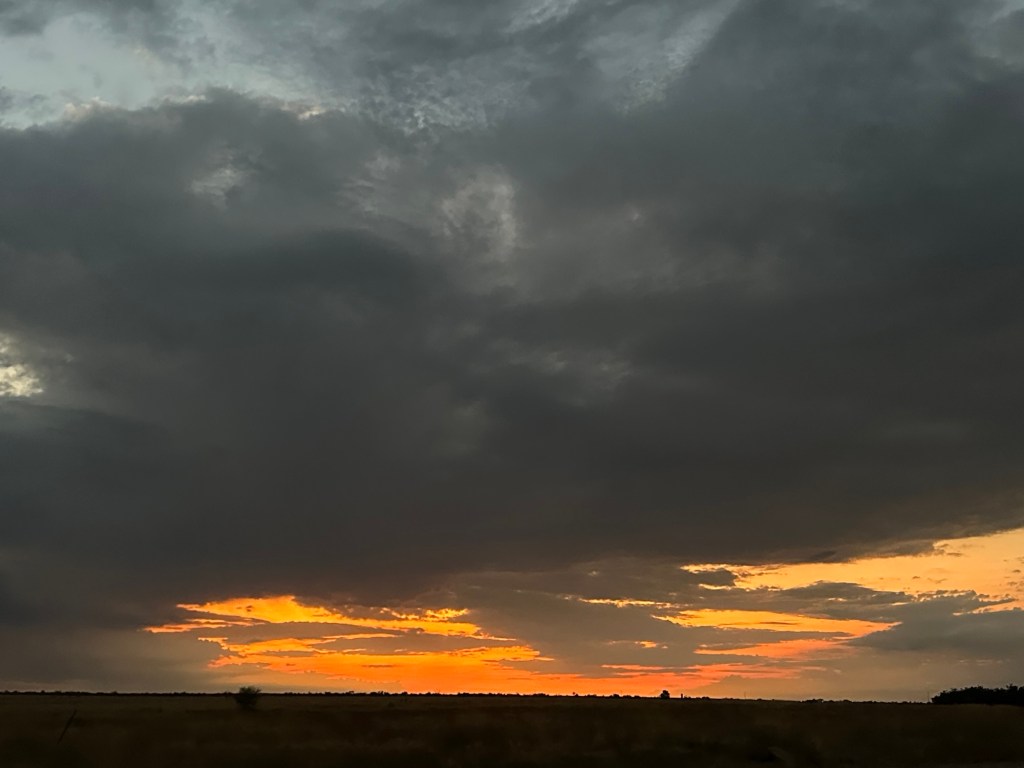
We set up our chairs in front of the motorhome so we could watch the sunset. Sunsets at Winton are usually spectacular because it is so flat.

 motorhomemeanders.com