The day had finally arrived, we were off to Dunns Swamp. I’d been looking forward to this for a while. I hoped that it lived up to my expectations as they were pretty high. Cousin Catie says it’s one of her favourite spots and I usually love the same ones she does. So hopefully Dunns Swamp would be all I’d imagined.
It was an orderly and quick pack up from the Riverside Caravan Park in Mudgee and we were driving out of the park by 9am (that’s early for us!)
We needed groceries and had sussed out where we could park when we were riding around town on our ebikes the day before. Most of Mudgee CBD is angle parking and there’s not a lot of parking for long vehicles. We found a street (still with angle parking) that was not as busy and parked parallel across 3 parking spots. There was a car towing a trailer that had done the same thing in front of us.
Just as we parked the motorhome there was a cry from behind us and what a lovely surprise! Our daughter Katie’s best friend from school had pulled up behind us. She’d seen the motorhome and knew it was us. We had a quick chat before she had to head off to her appointment. How lovely it was to see her.
After visiting Woolies for groceries, Bakers’ Delight for bread and the chemist we left Mudgee about 10am headed out on the Lue Road towards Rylstone.
Don’t you love driving in the country? Just out of Mudgee we came across a tractor with a trailer hauling those big round bales of hay. He was so loaded up he took up most of the road. He was just driving along the road. We wondered where he was going.
Lue Road is a narrower back road and had lots of pot holes so it was slower going. There wasn’t a lot of traffic though so we could avoid the pot holes by driving in the middle.
We spied a big old house with lots of chimneys. I quickly googled it and found it is Havilah Station, famous for breeding merino sheep.
First taken up by Nicholas Paget Bayly some time in the 1850s, Havilah Station is located near Mudgee, on the central western slopes of New South Wales. The property, which received its name after a visiting clergyman discovered specks of gold and, citing from Genesis, referred to it as the ‘land of Havilah’, became famous for breeding a fine strain of merino sheep. By the 1870s, breeders were referring to the flock’s offspring as ‘Bayly bloods’ and ‘pure Baylys’. Bayly built an impressive homestead at Havilah, but died in 1879. The following year, Havilah was purchased by Henry Charles White, of Belltrees in the Hunter Valley. Believing that Bayly’s ten-room mansion was too small, White commissioned John Horbury Hunt to draw up plans for extensions. When these were finished in the mid-1880s, the homestead with its two-storey brick wings on the east and west of the house, chapel-like kitchen and massive chimneys was a magnificent building whch is today listed with the National Trust of New South Wales. White, a strong advocate of Bayly’s methods, continued to concentrate on sheep-breeding, but he also developed a stud of race-horses which became famous throughout New South Wales. These dual concerns still predominate on Havilah Station, which remains in the hands of HC White’s descendants.
https://www.nswera.net.au/biogs/UNE0204b.htm
The little village of Lue has two churches, a hall, a few houses, a public school, a pub and not a lot more. It is situated in a lovely valley.
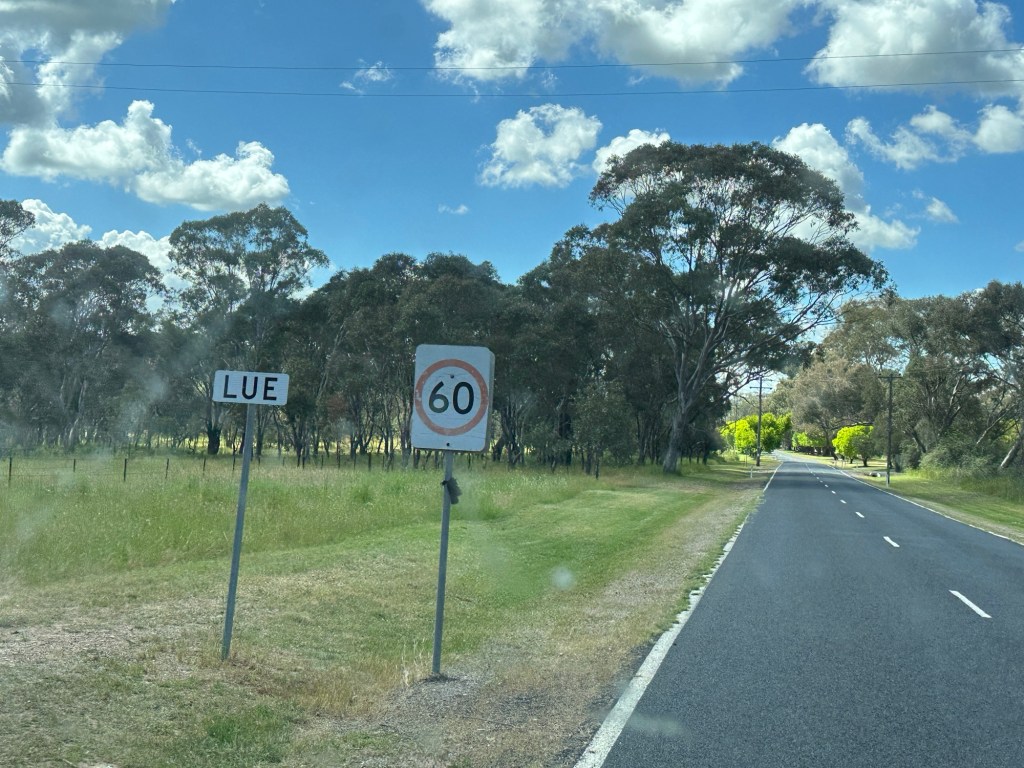

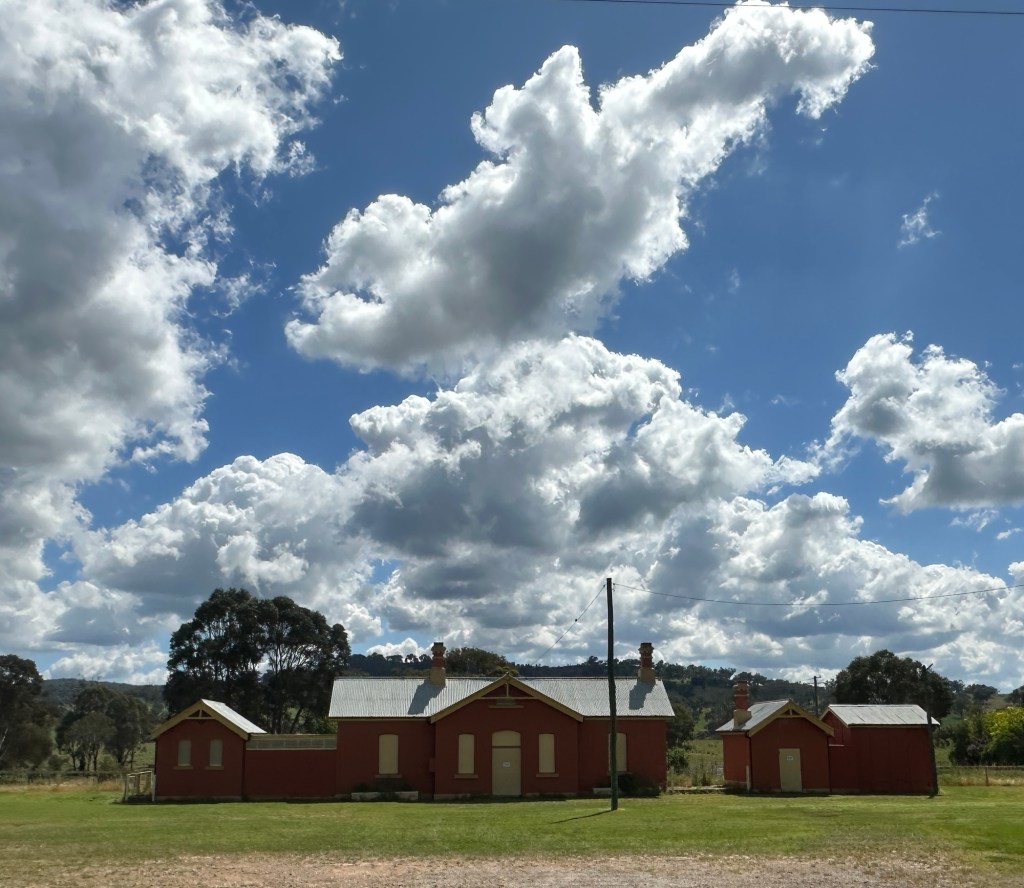


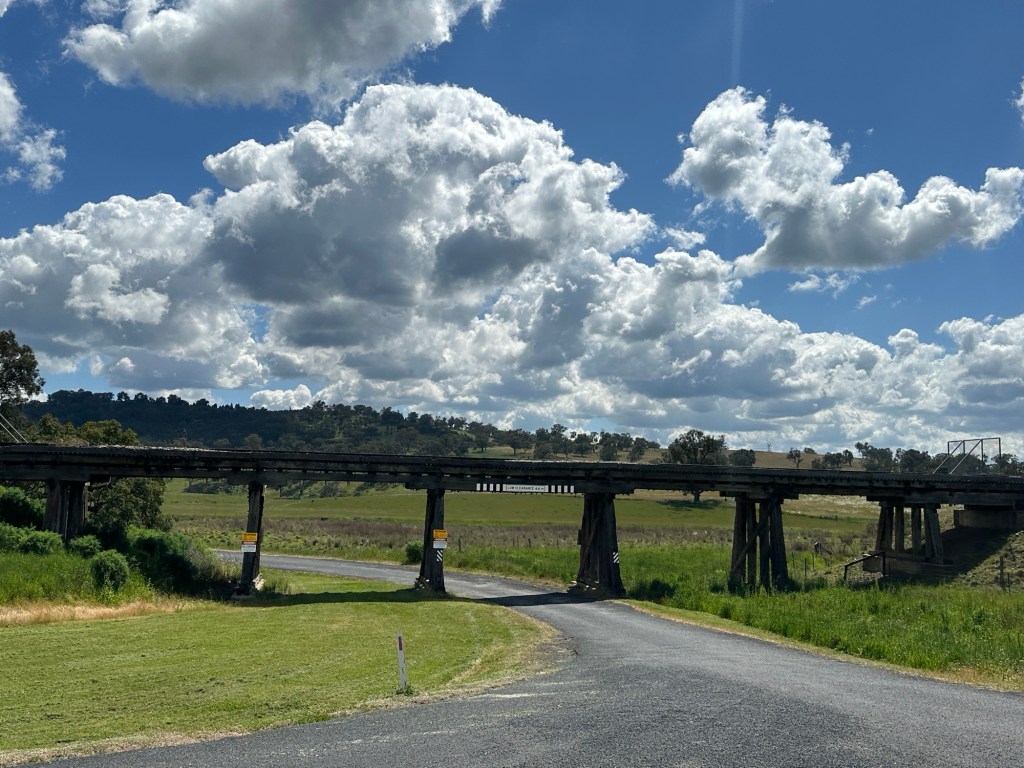
There were bright yellow signs up along the fences on the way protesting against Bowden’s toxic lead mine. Obviously Bowden’s want to build a lead mine and the locals are not having it! It was a very pretty drive through lush green valleys. It looked like perfect sheep and cattle country. No wonder the locals are protesting a mine being built.
On arrival in Rysltone we gave Richard’s brother, David and partner Anni a call to find out where they were as they were to join us for a few days at Dunn’s Swamp. They had camped at Sofala overnight in their motorhome. When Anni answered they had already passed through Kandos and were on the road to Dunns Swamp. We explained we’d fill with fuel and be not far behind them.
A quick refuel in Rylstone and we headed east towards Dunns Swamp. The road was noticeably narrower although it was still a tar road. There was an alert on the National Parks website for the road to Dunns Swamp saying there was roadworks and sure enough it wasn’t long before we came to those. It looked like the road was being tarred all the way with some of it tarred recently. I spied a Gravel Road sign next to where the road is now tar.
Almost at the entrance to Dunns Swamp we came across the roadwork crew. There was a lot of them and their big machinery. They were busy preparing the road for tarring.
We made the turn off and it was now a gravel road through bushland as we entered the Wollomi National Park. Arriving at the Campground we could see the well defined and numbered camp sites, each with their own fire pit. The camps are in set amongst the bush with bush in between each site. Each group of sites has a pit toilet and there is a large site that holds free firewood. Our site was number 3 and we found that quickly then drove around to see if we could find David and Anni. They were on site 66 not too far away.
We quickly settled in to our site and, as we were staying for a week, out came the awning, the mat, the camp chairs and table etc.

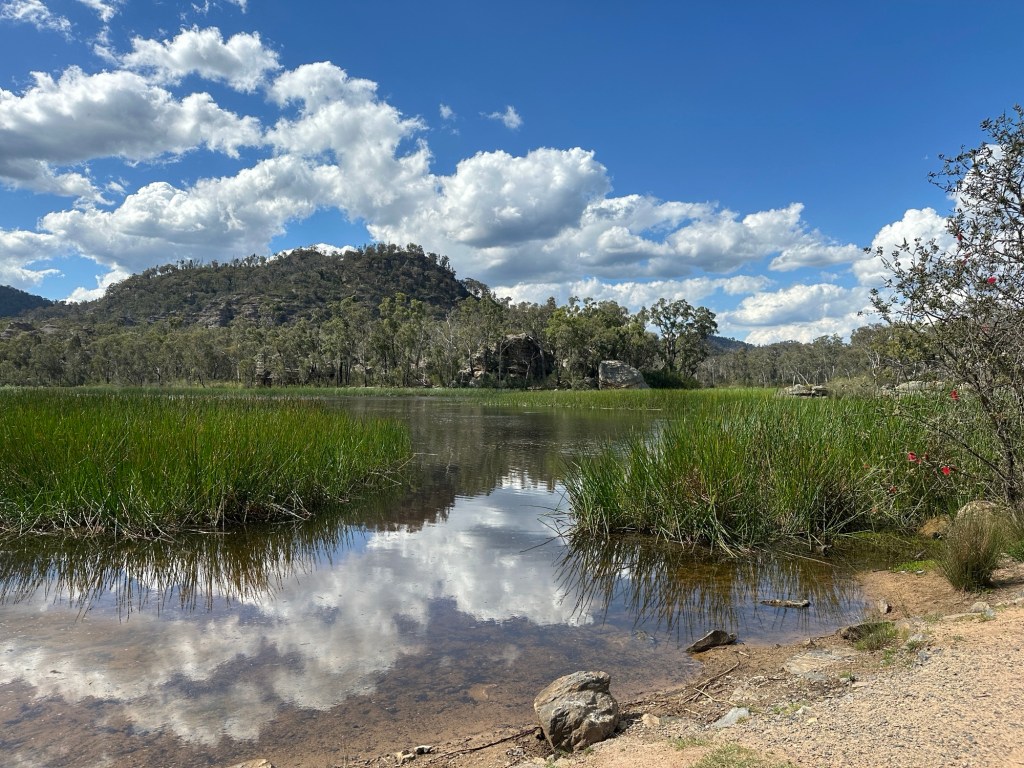
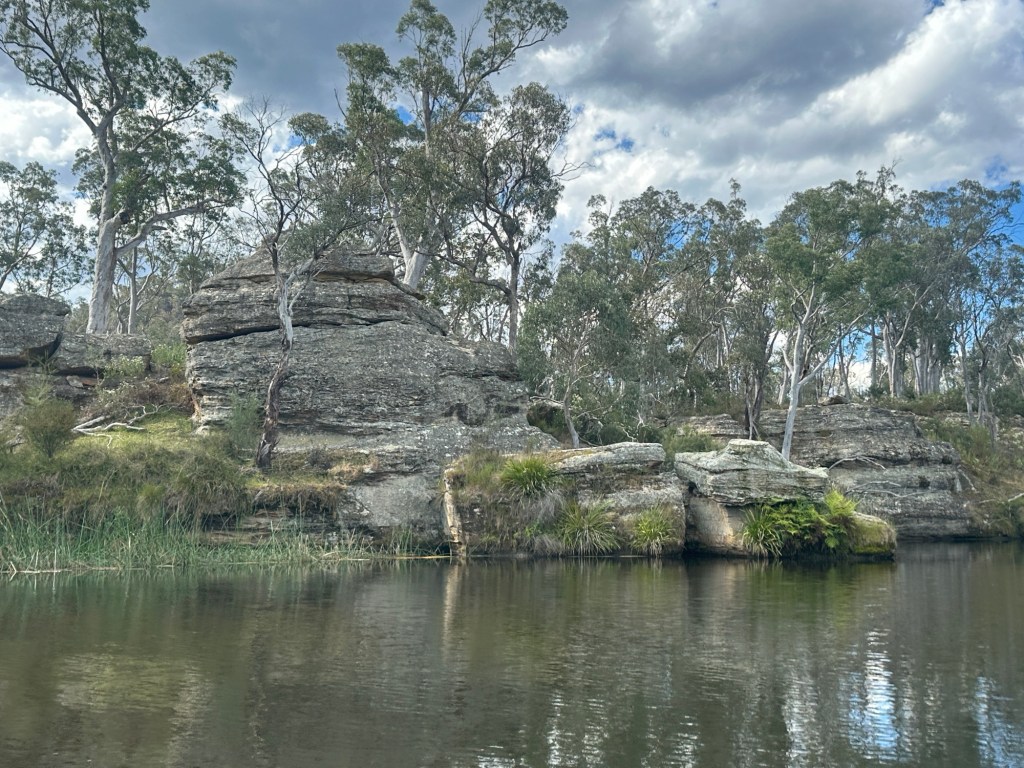
Late in the afternoon I got my inflatable kayak out, pumped it up, attached it to our beach wagon with an ocky strap and set off down to the water. Kangaroo Beach is only a 2 minute walk from our campsite. What a lovely place to go for a paddle. I had a 45 minute paddle and it was so relaxing paddling along in the quiet of the bush. I did meet other paddlers but very quickly they were past and I was on my own again.
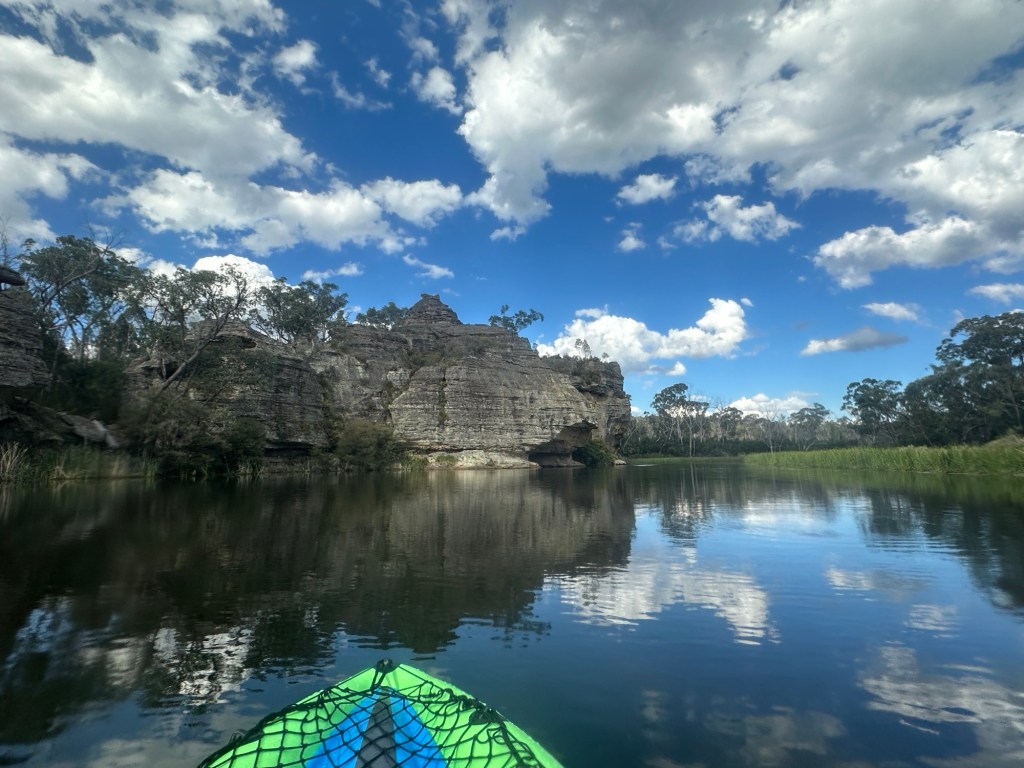
David and Anni joined us for dinner of steak, chips and salad and we thoroughly enjoyed their company as we sat under our awning. It was a very pleasant evening.




 motorhomemeanders.com